
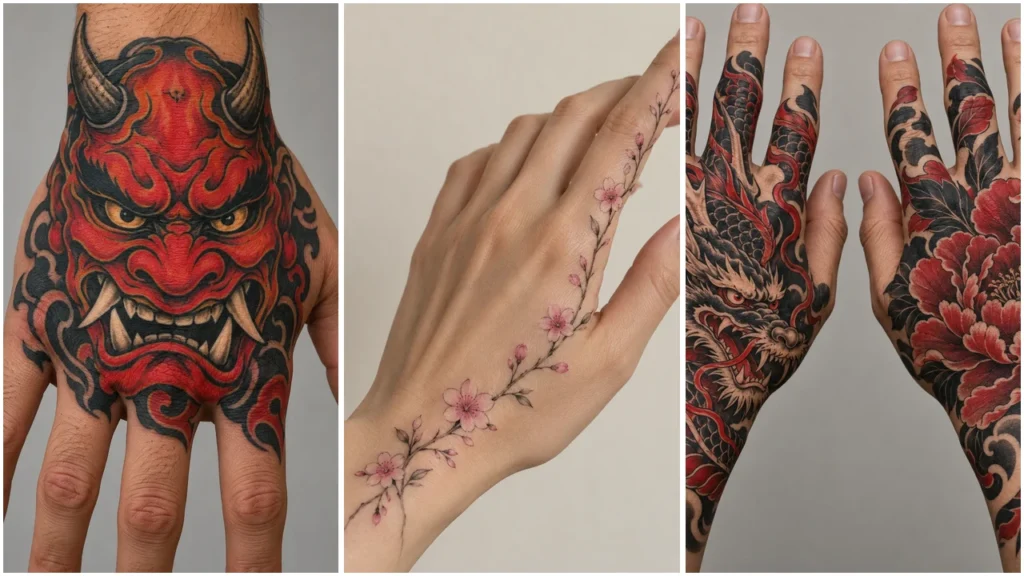
Japanese hand tattoos can feature a bold mask, a single flower, or flowing shapes that continue onto the wrist. These 20 concepts offer different ways to approach color, coverage, and composition. The planned illustrations are design concepts, not photographs of completed client tattoos.
As you compare them, consider whether you want a centered design, a narrower side placement, or a connection to existing wrist work. These contemporary adaptations are starting points to discuss with an artist; details and scale need to suit your hand.
Masks and Figures
1. Red Oni Mask Hand Tattoo
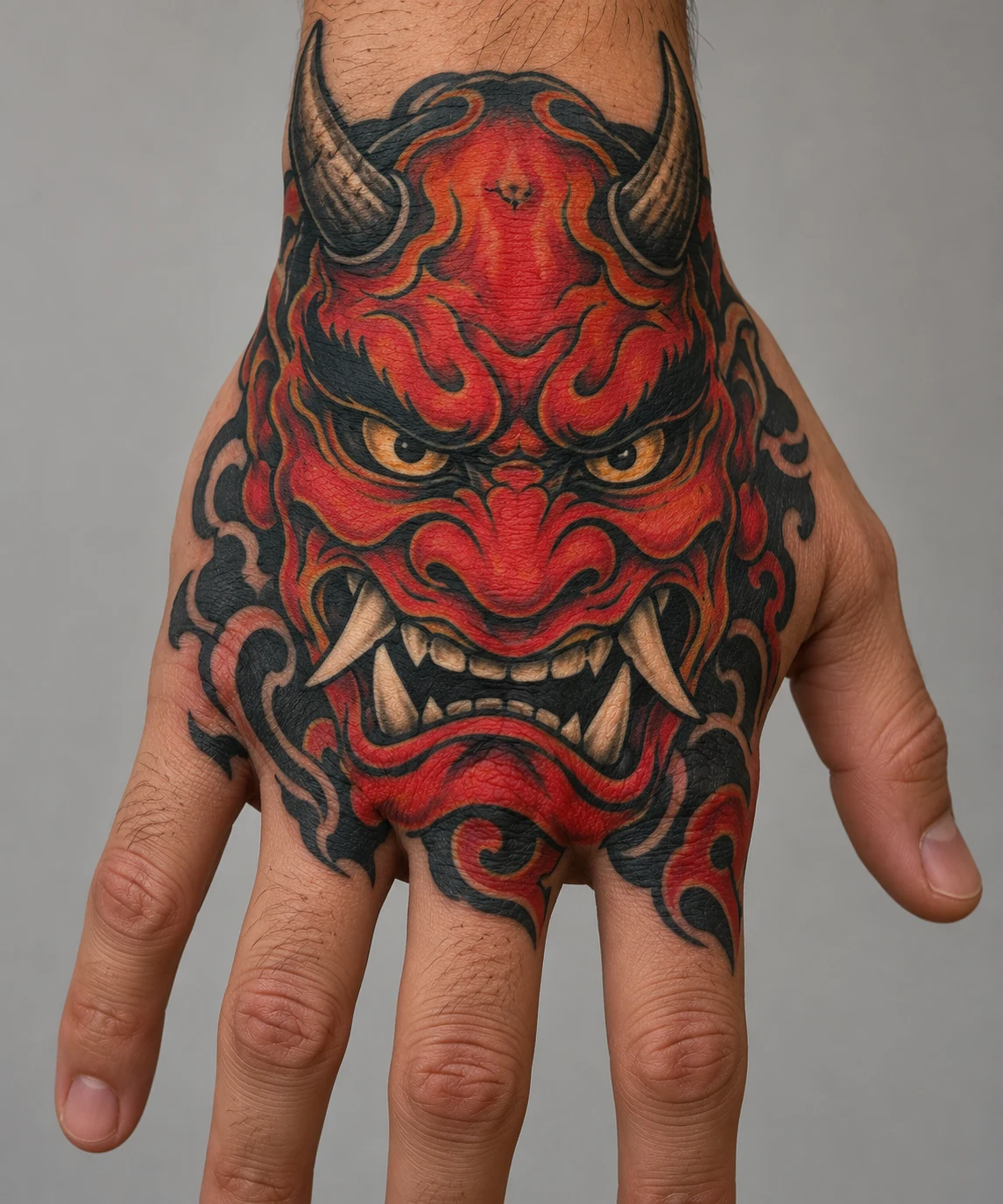
Broad horns, red panels, and strong black contours define this frontal mask’s central shape. Choose it if you want saturated color and a face that fills the hand. Keep the eyes and mouth distinct, with room around the knuckles.
2. Black and Grey Hannya Mask
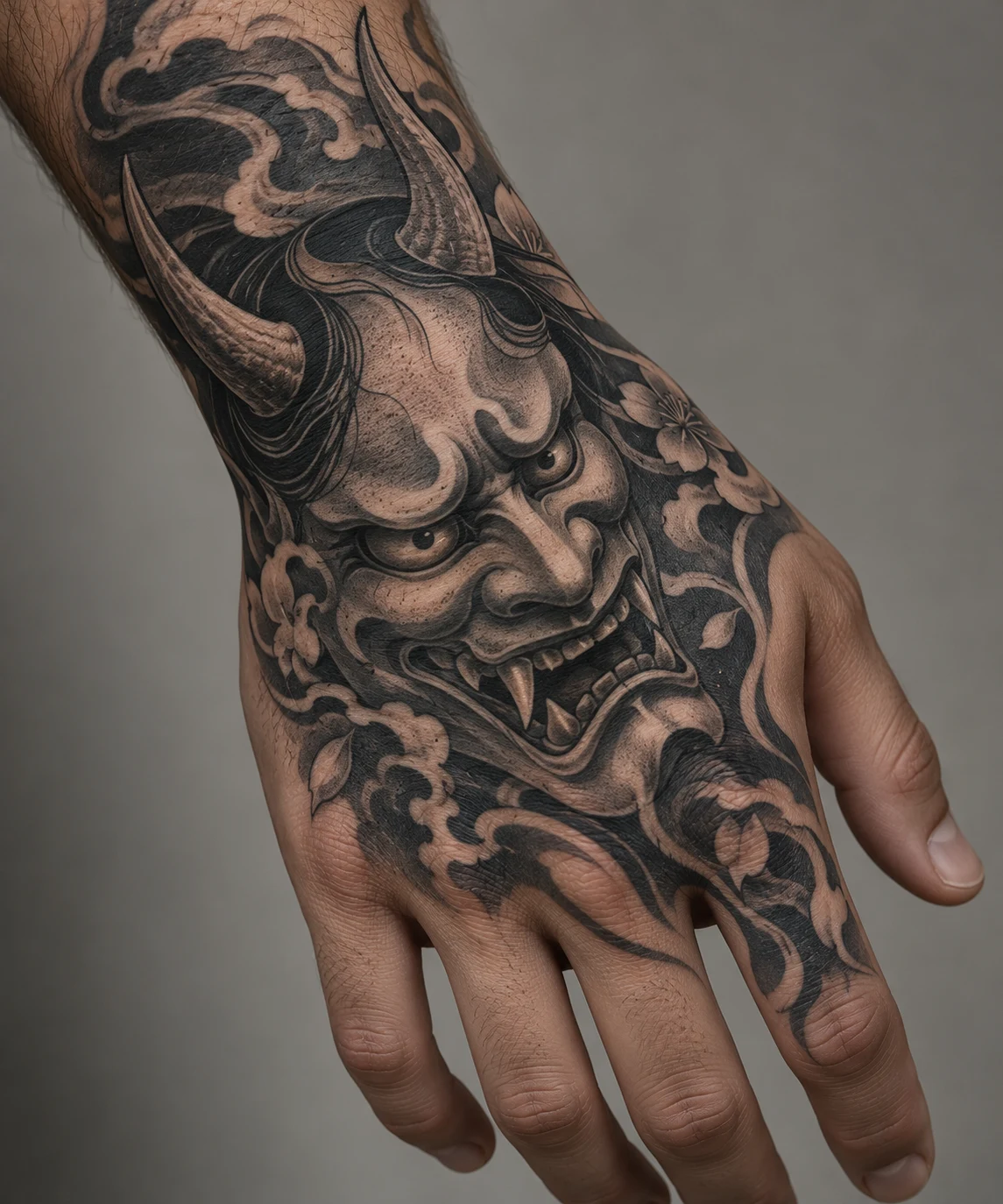
An angled face and elongated horns create a different composition from the frontal oni concept. Grey shading adds depth while open skin separates the features. This direction suits readers who prefer an expressive mask without large areas of color.
3. Kitsune Mask on the Outer Hand
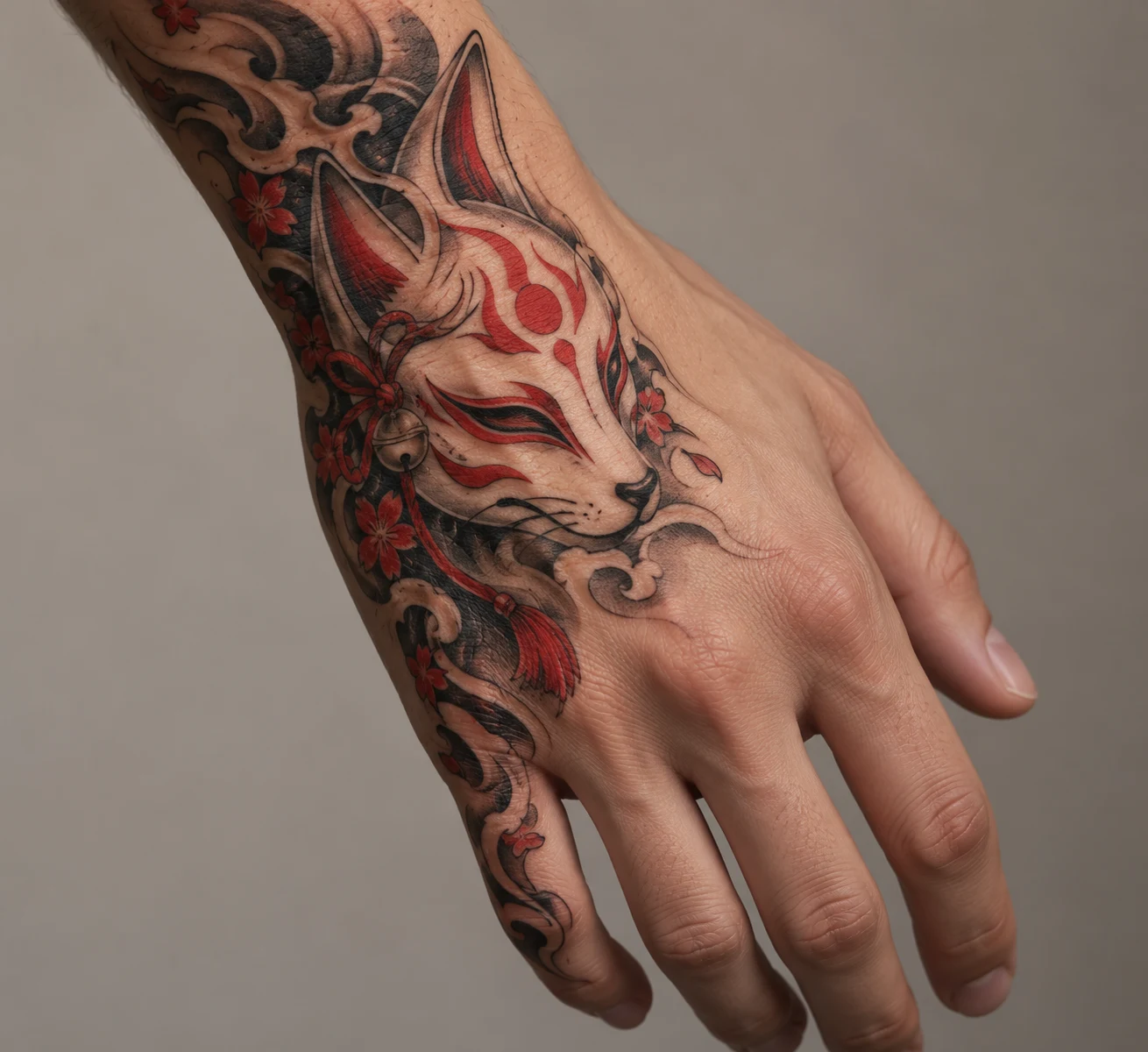
A narrow fox-mask silhouette follows the little-finger side of the hand. Black outlines and selective red markings define the face, with uninked areas suggesting its white surface. Consider this arrangement if you prefer side placement to full back-of-hand coverage.
4. Daruma With Bold Red Panels
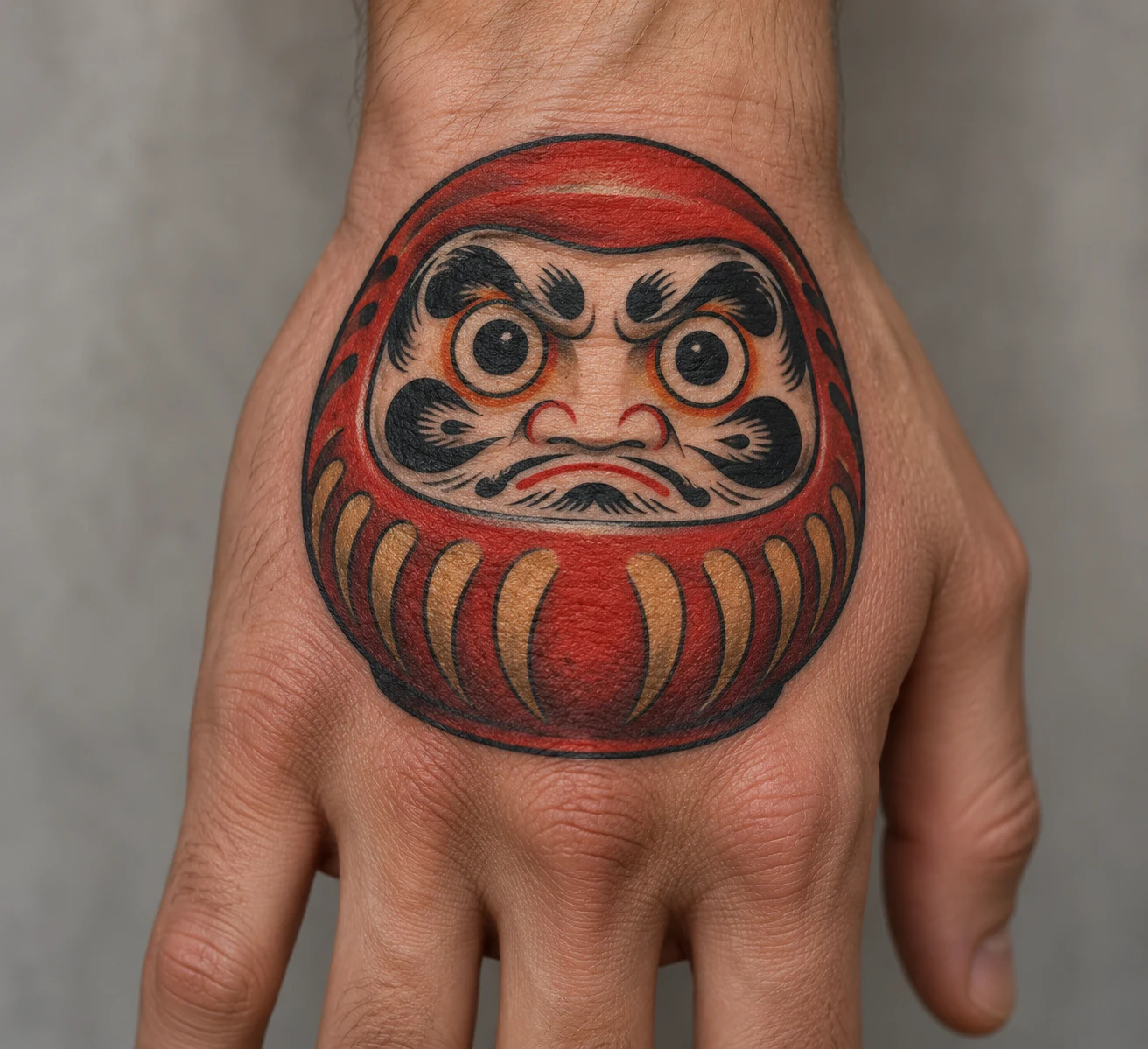
The rounded figure creates a compact composition with broad red sections and a clearly framed face. Simplified ornament keeps attention on its silhouette. Before settling the drawing, ask your artist to check the eye treatment and any proposed lettering.
5. Samurai Helmet Across the Hand
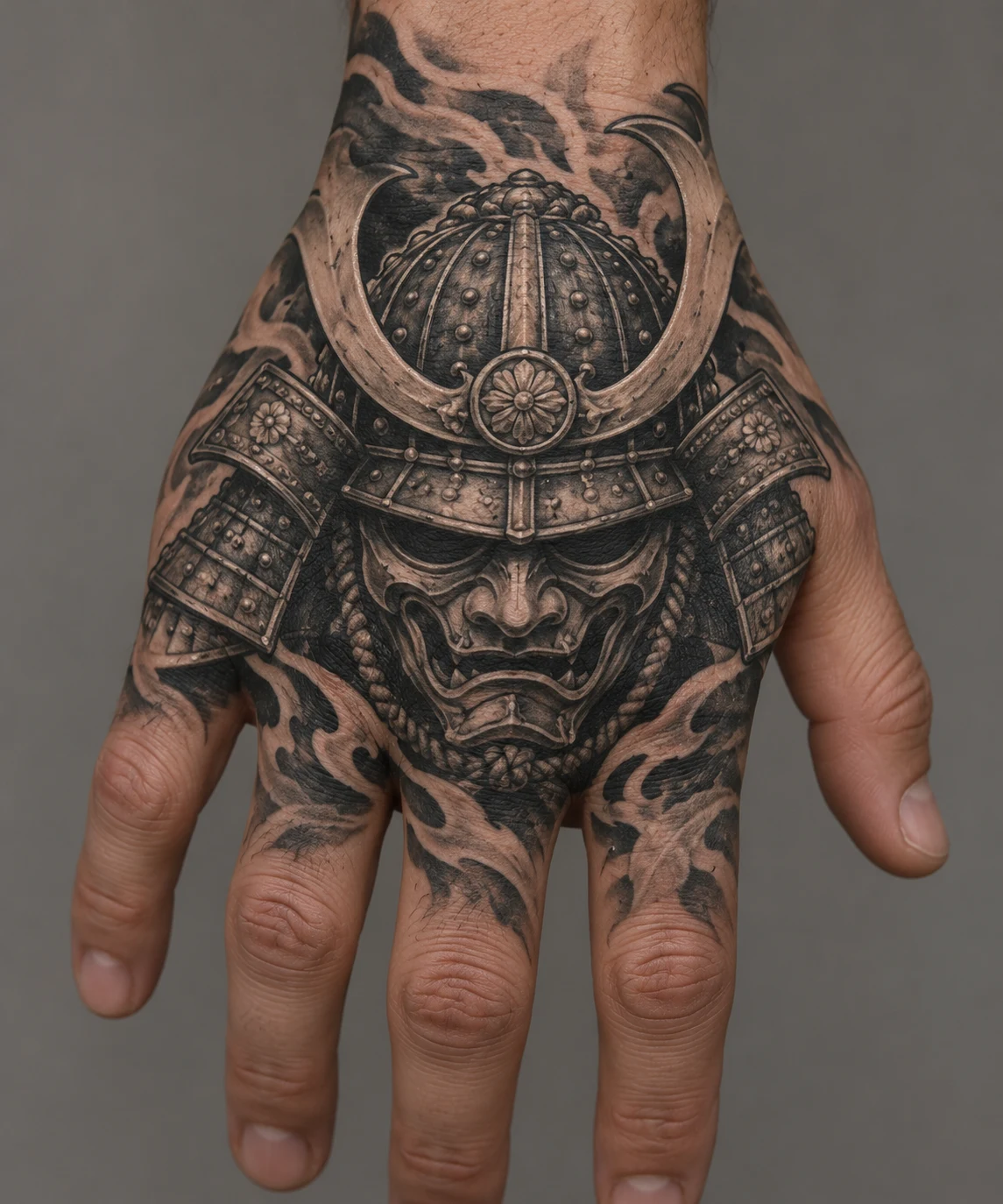
A broad crest and angular armor panels give this helmet a structured outline. It offers an alternative to fitting an entire warrior portrait into the same space. Choose a few prominent details, and use a checked reference for any specific historical helmet.
Animals and Mythical Creatures
6. Dragon Head With a Wrist Connection
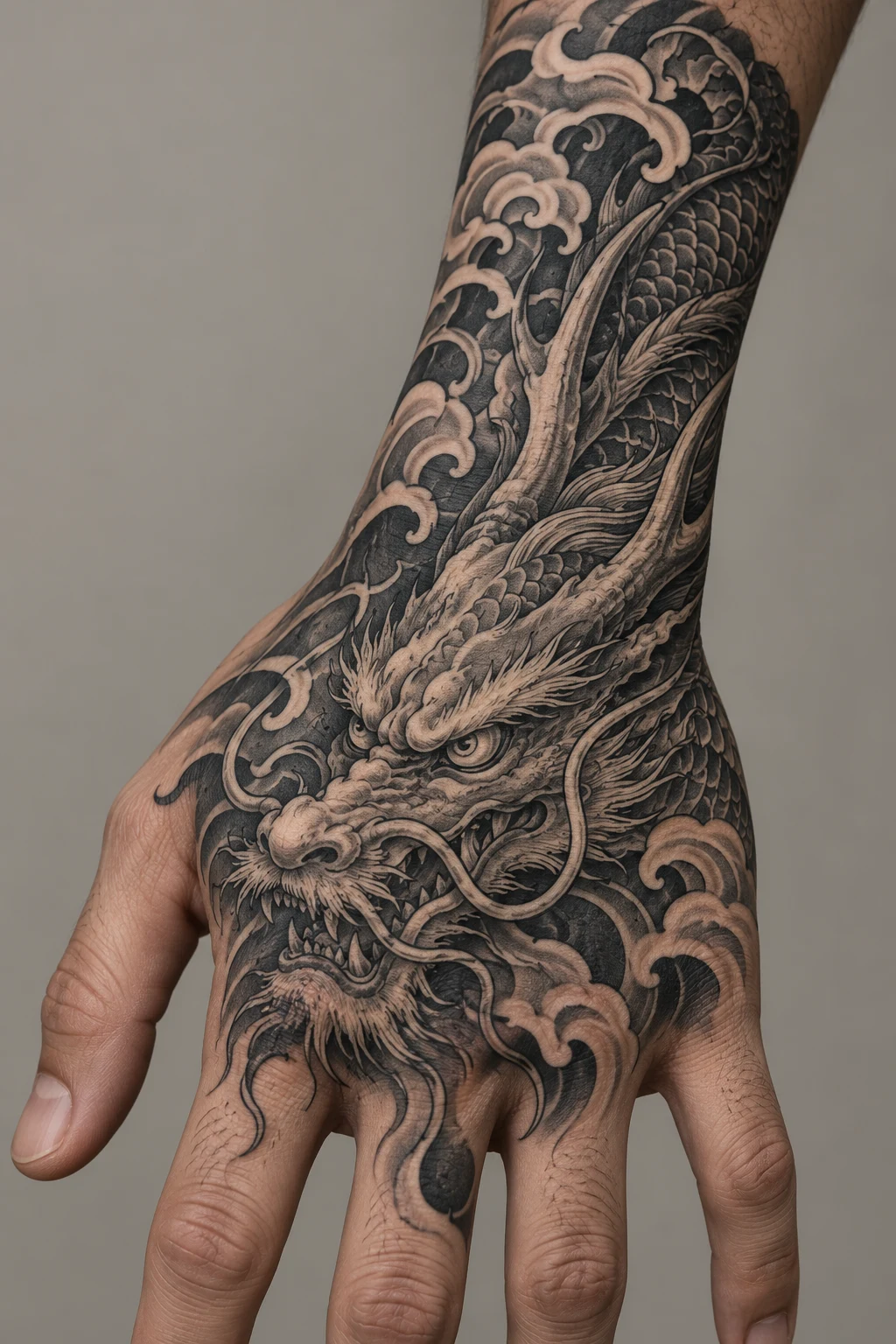
Place the dragon’s head on the hand and let its neck continue toward the wrist. A clear brow and jaw anchor the design without requiring densely packed scales. Consider how the neck could connect with existing wrist work or a planned sleeve.
7. Tiger Face With Orange and Black Contrast
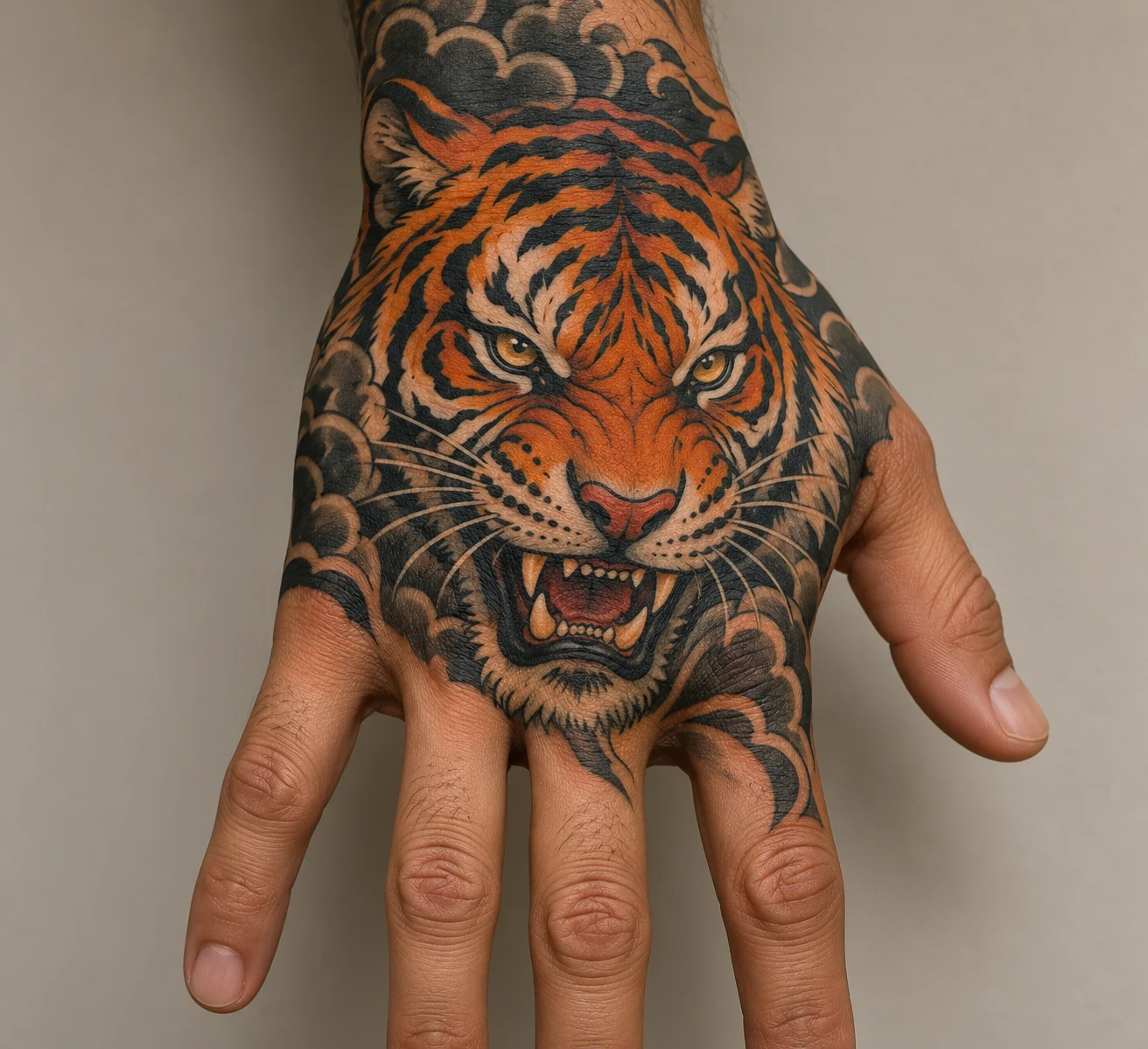
Orange sections and black stripes frame a frontal tiger face. Keep space around the eyes so the expression remains the focal point. The balanced arrangement suits readers who like a centered animal portrait with a strong, contained outline.
8. Curved Koi Around the Thumb Base
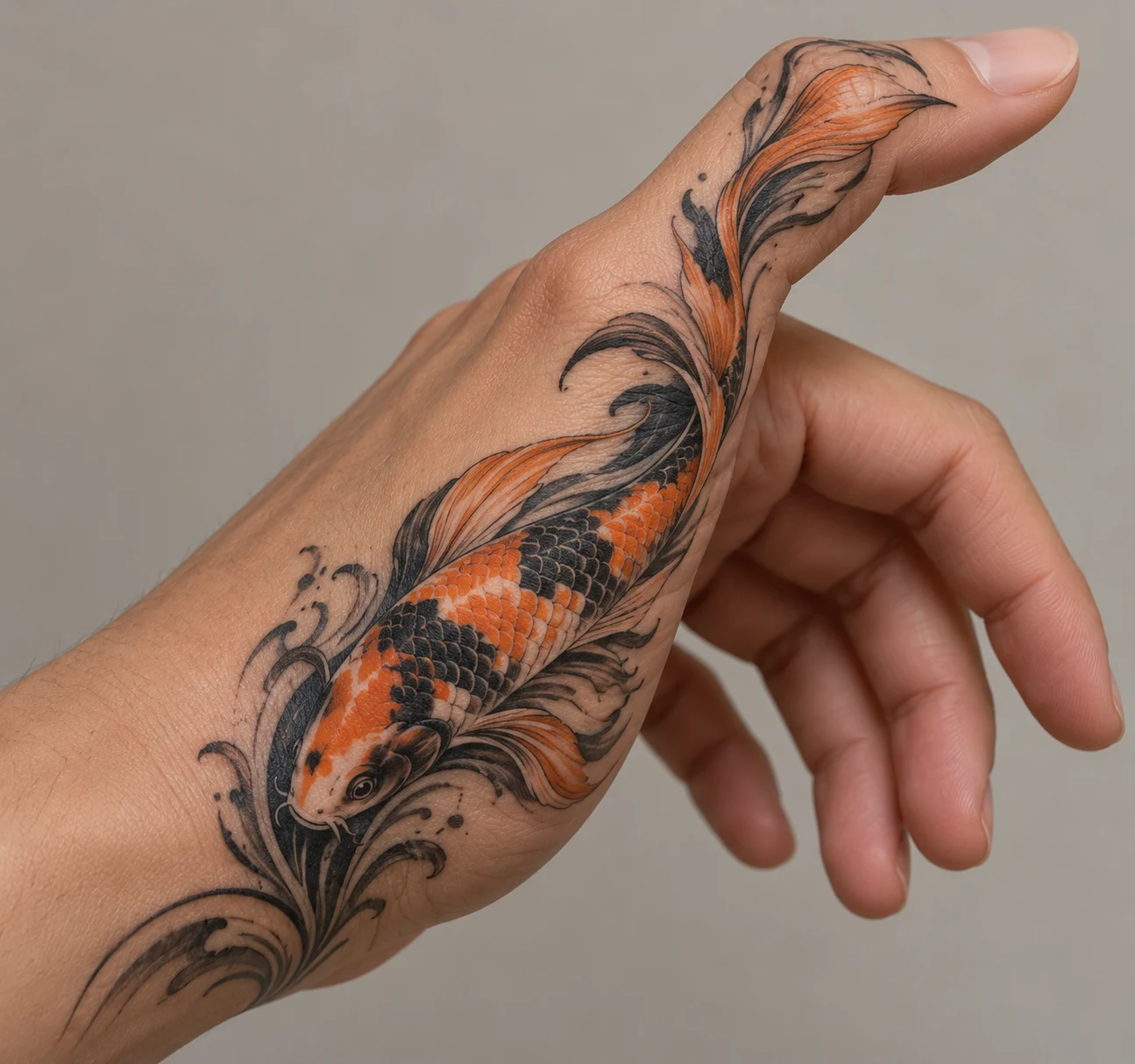
A single koi curves along the thumb side, with a small water accent reinforcing its movement. Favor a recognizable body and tail over individually detailed scales. Choose this if you prefer a flowing silhouette to a face-centered composition.
9. Coiled Snake With Open Skin
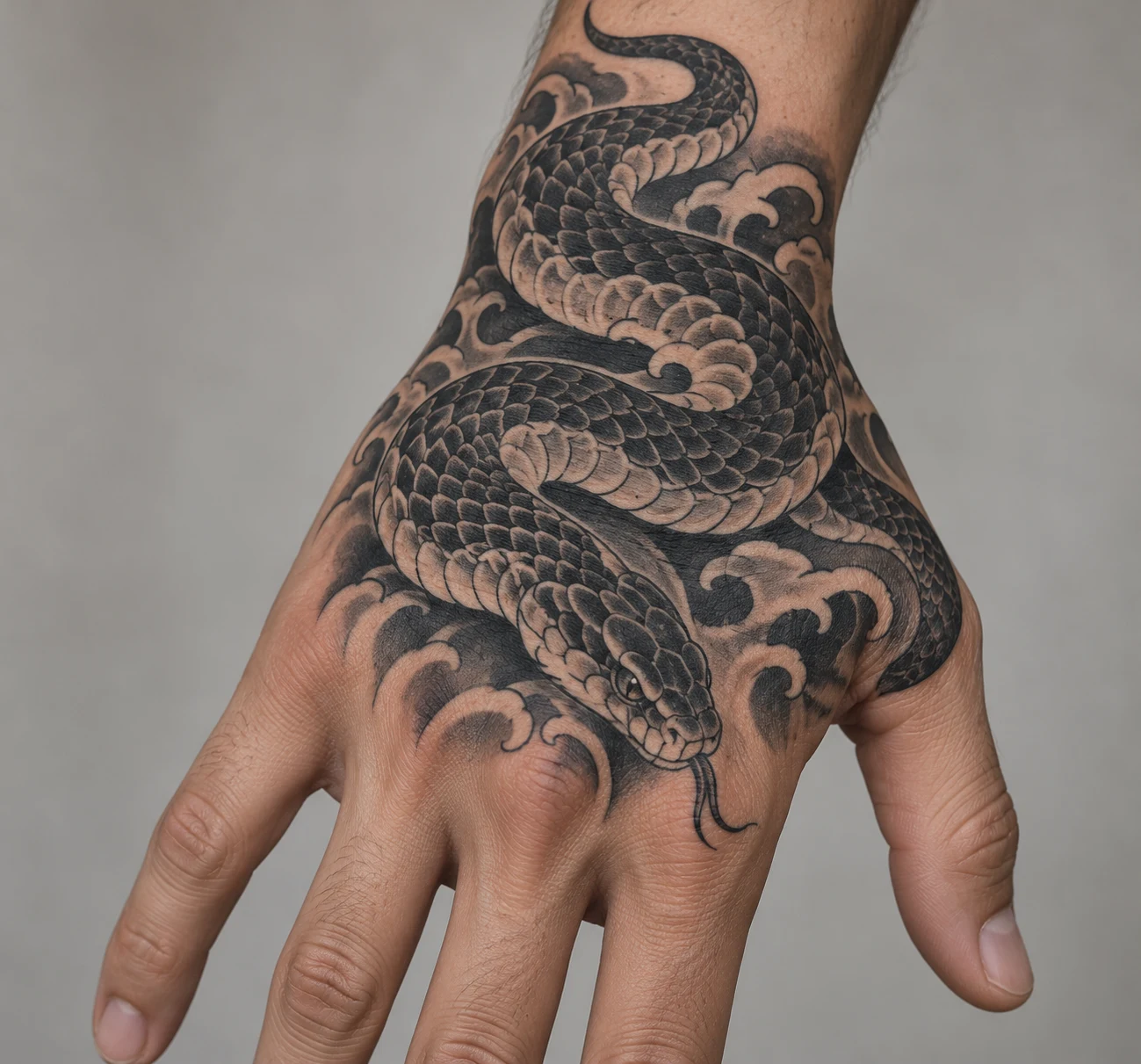
One broad coil leaves visible skin between the snake’s body segments. Position the head where it remains distinct from the overlapping curves. This monochrome option suits readers who enjoy winding shapes and want to keep some space within the design.
10. Crane With Sweeping Wing Shapes
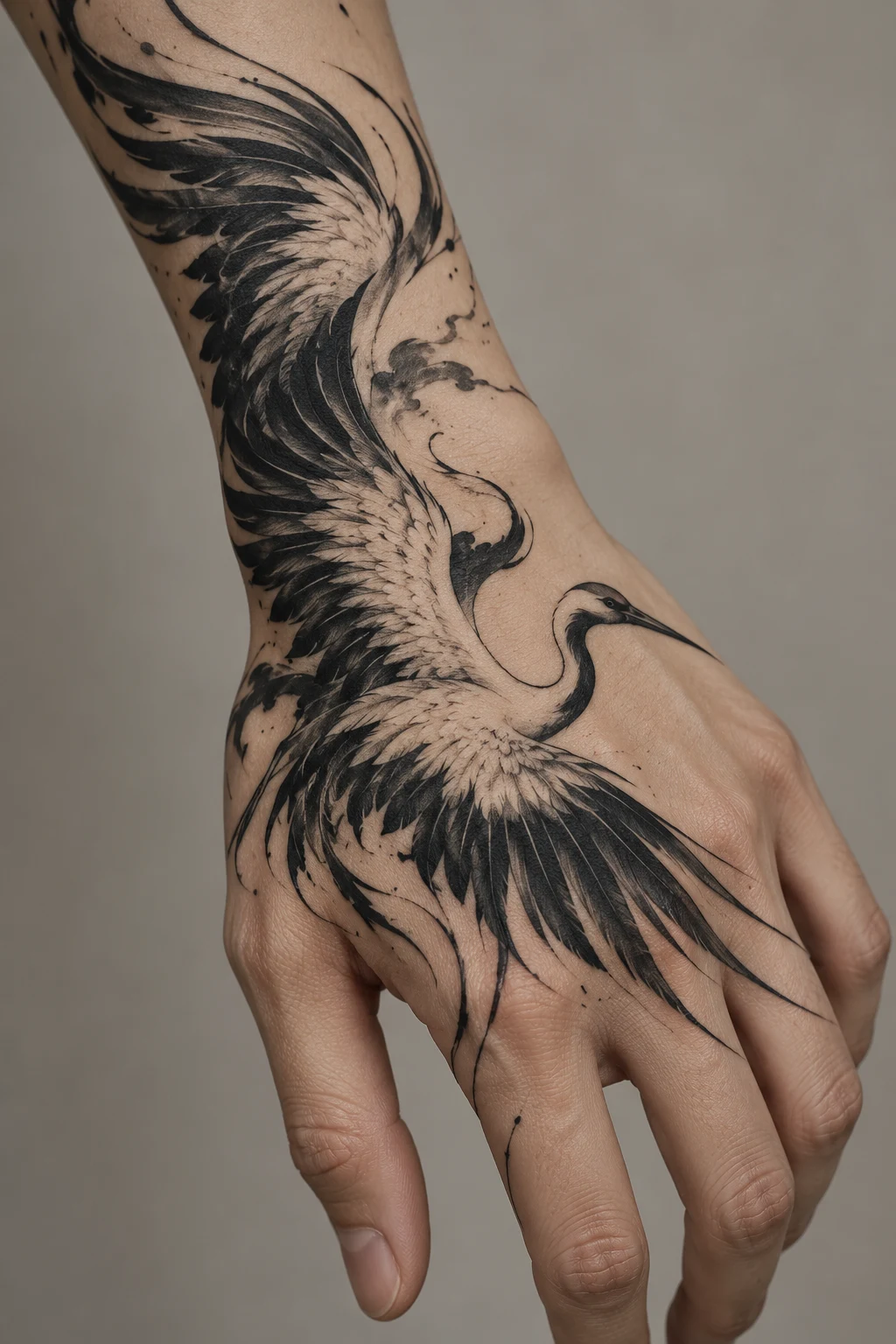
The crane’s body sits on the hand while simplified wings reach toward the wrist. That extended arrangement gives the bird more room than a tightly contained portrait. Consider it if you welcome wrist coverage and prefer broad feather shapes to intricate detail.
Flowers and Seasonal Motifs
11. Cherry Blossom Branch Along the Hand
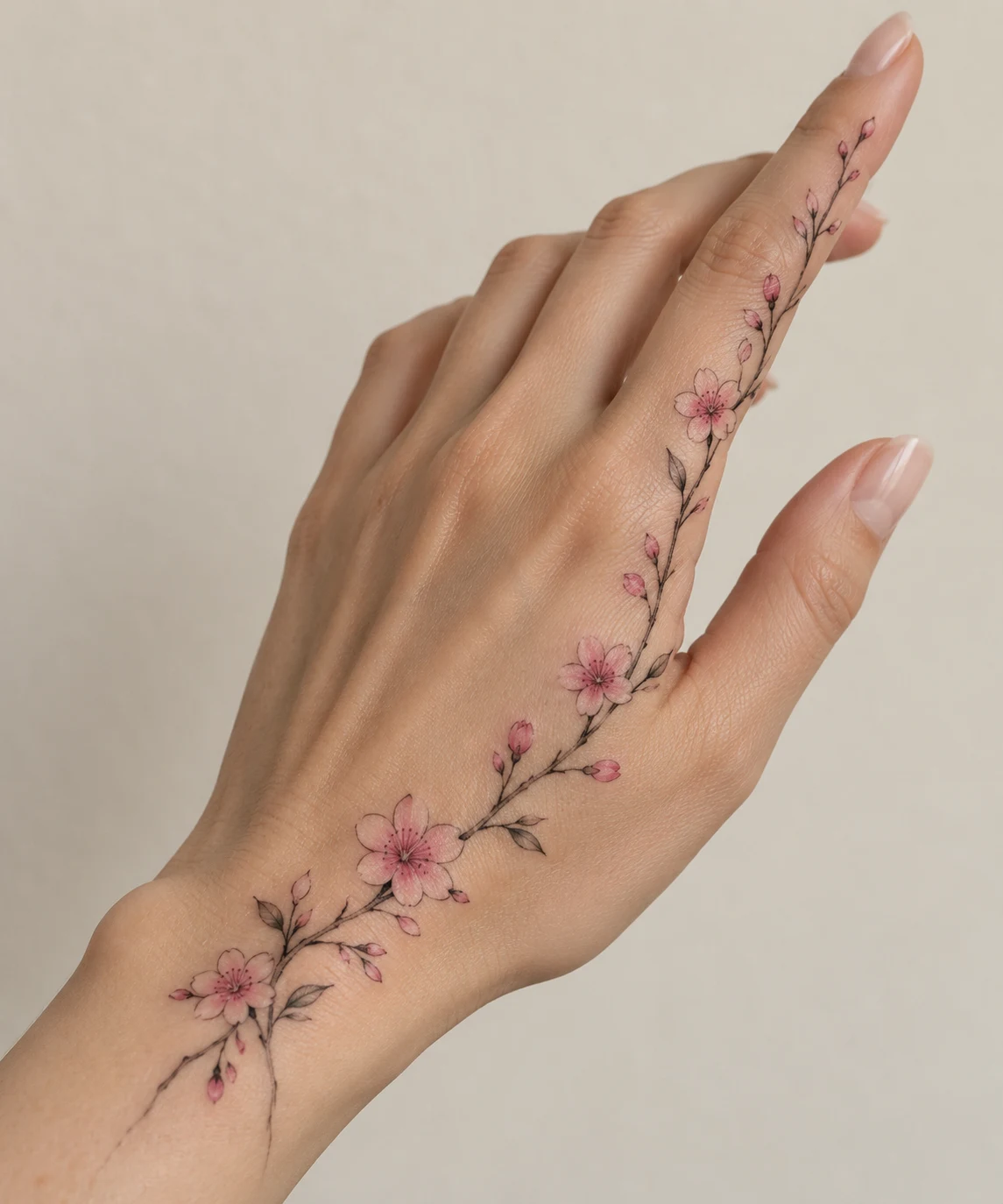
A short branch with separated pink blossoms follows the index-finger side. The visible twig connects the flowers into one composition, with open skin between them. Keeping the blossoms small and separated gives the branch a lighter feel than a large central bloom.
12. Peony Covering the Back of the Hand
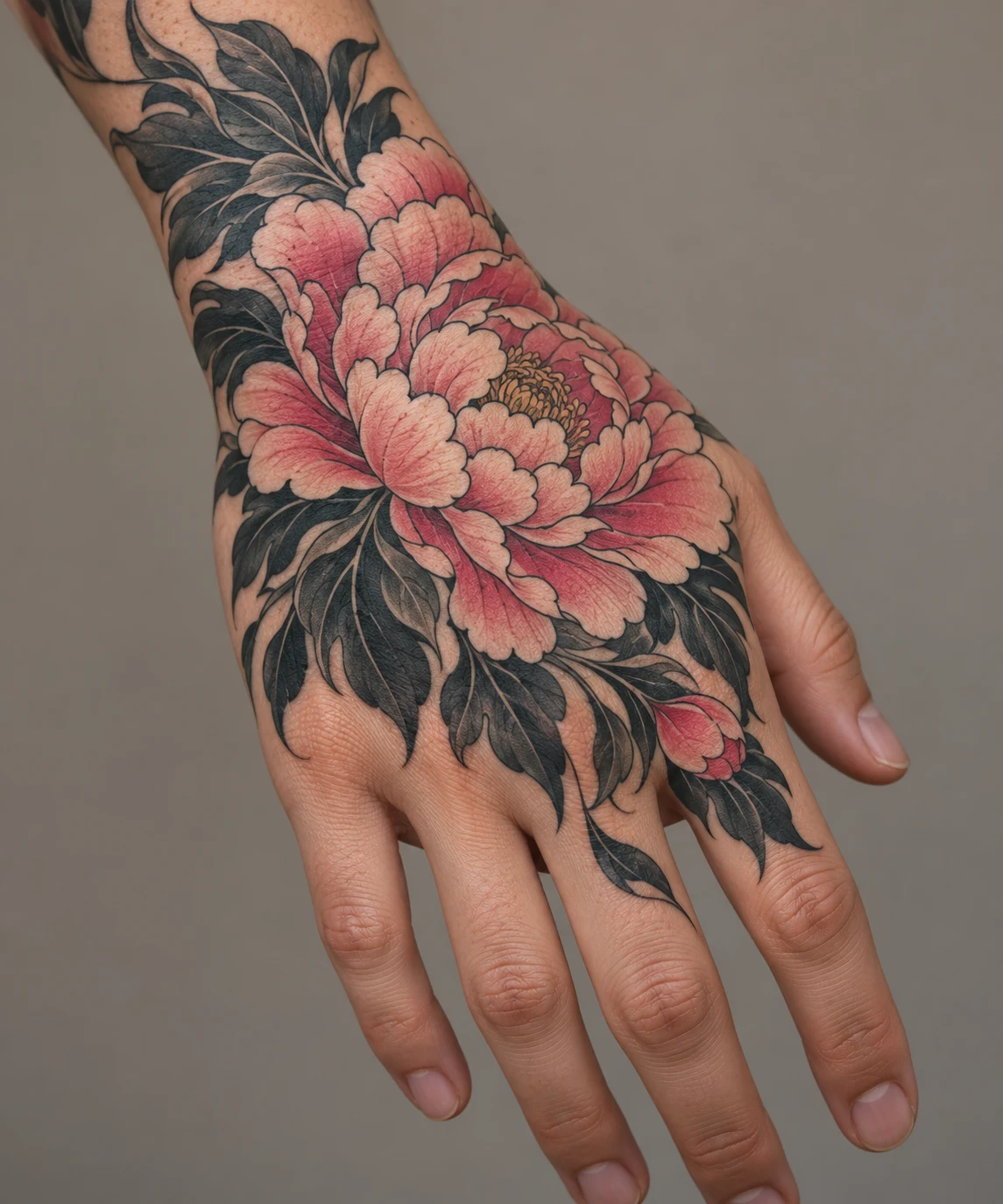
Broad overlapping petals and dark leaves give one large peony substantial coverage. Let the outer petals establish the shape without crowding the center with fine lines. Decide with your artist whether the bloom should stay within the hand or reach the wrist.
13. Radial Chrysanthemum in Black and Grey
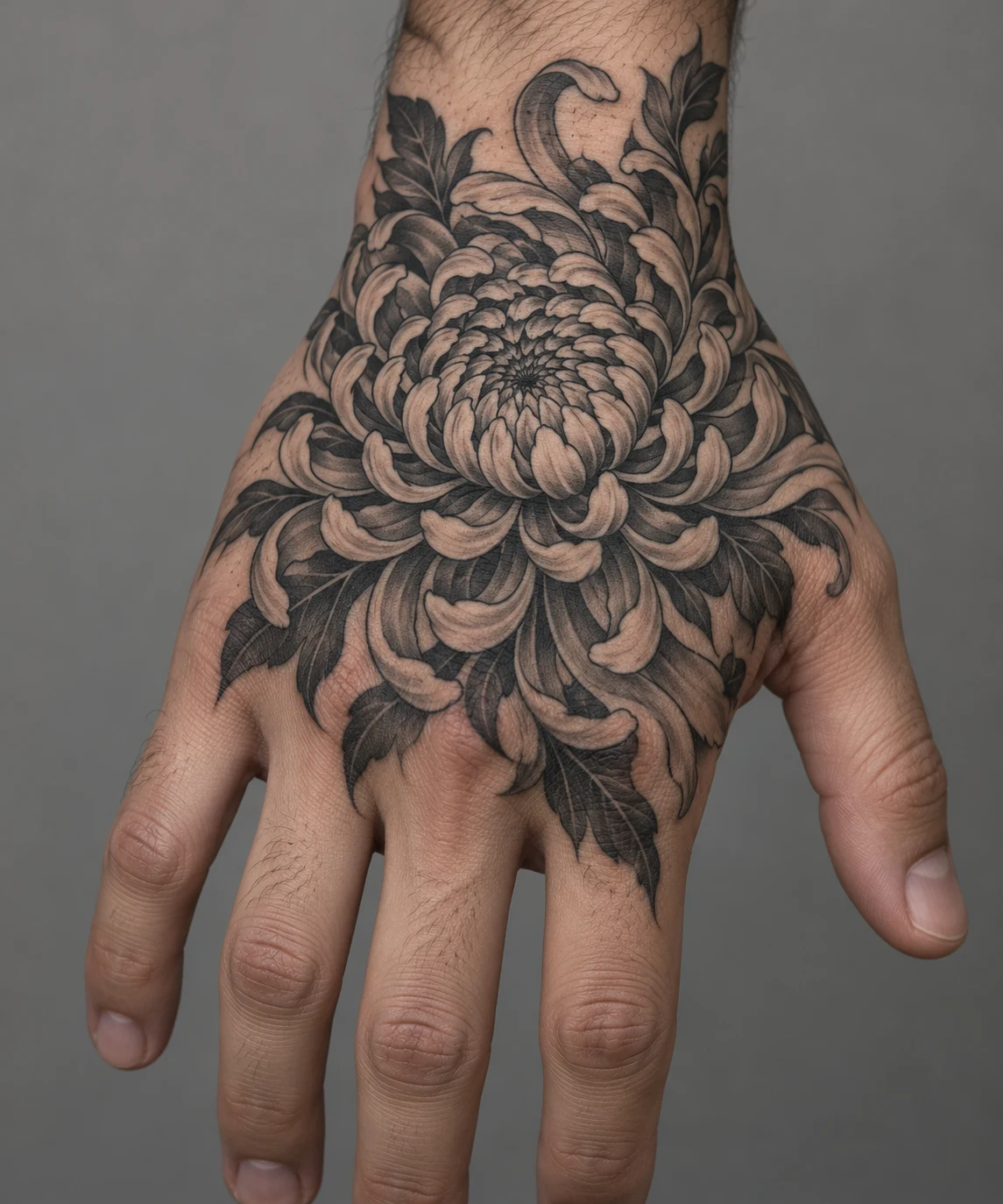
Layers of petals radiate from a central point, creating a more regular pattern than the peony concept. Black and grey shading emphasizes that repeated structure. Choose this direction if you prefer an orderly floral arrangement, with clear separation between petal layers.
14. Plum Blossoms on an Angular Twig
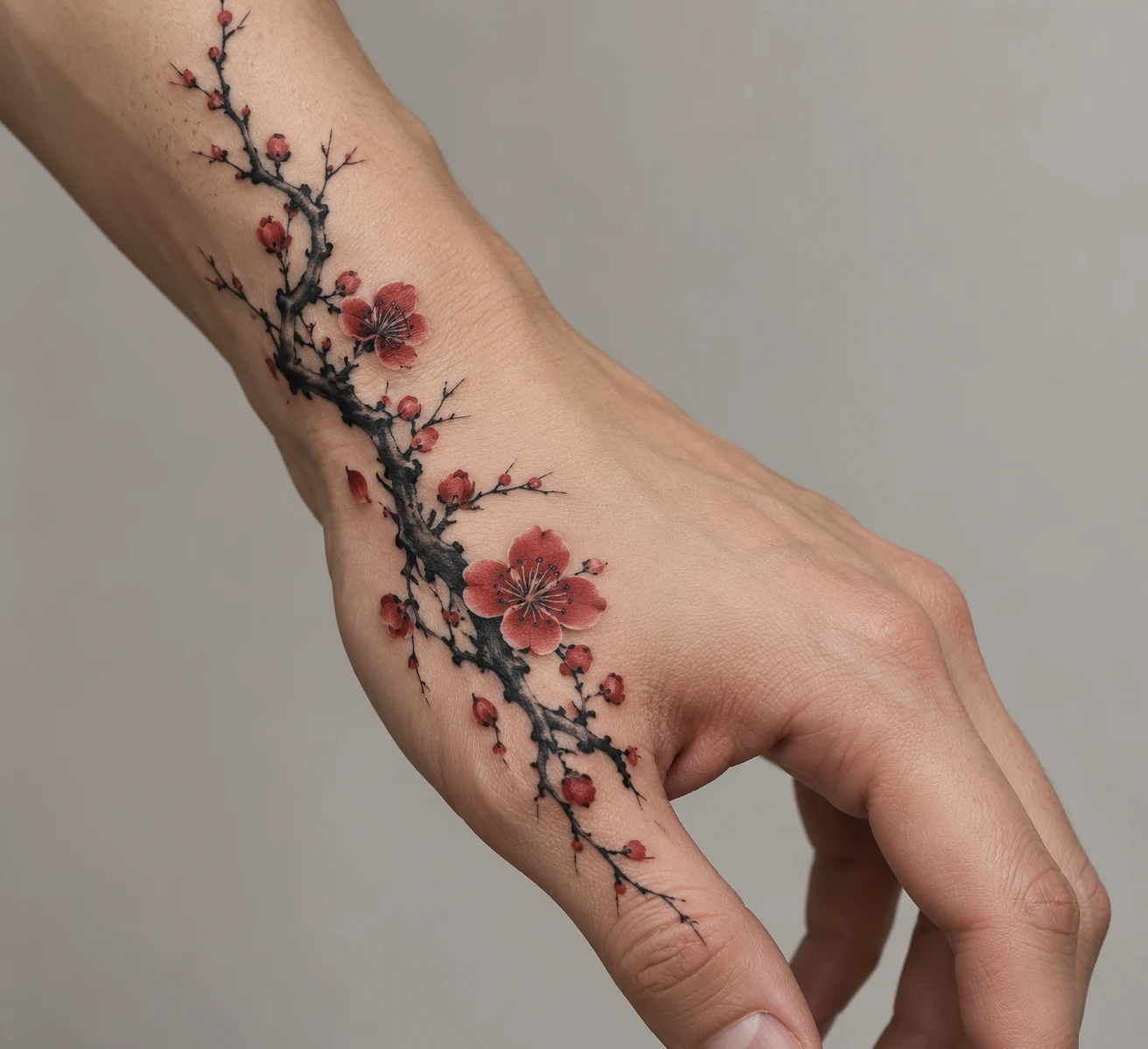
An angular twig and restrained red accents give this sparse composition its character. Compared with the cherry blossom entry, the emphasis falls on sharp branch turns. Use a checked botanical reference so the intended flowers remain identifiable in the final drawing.
15. Maple Leaves Crossing the Wrist
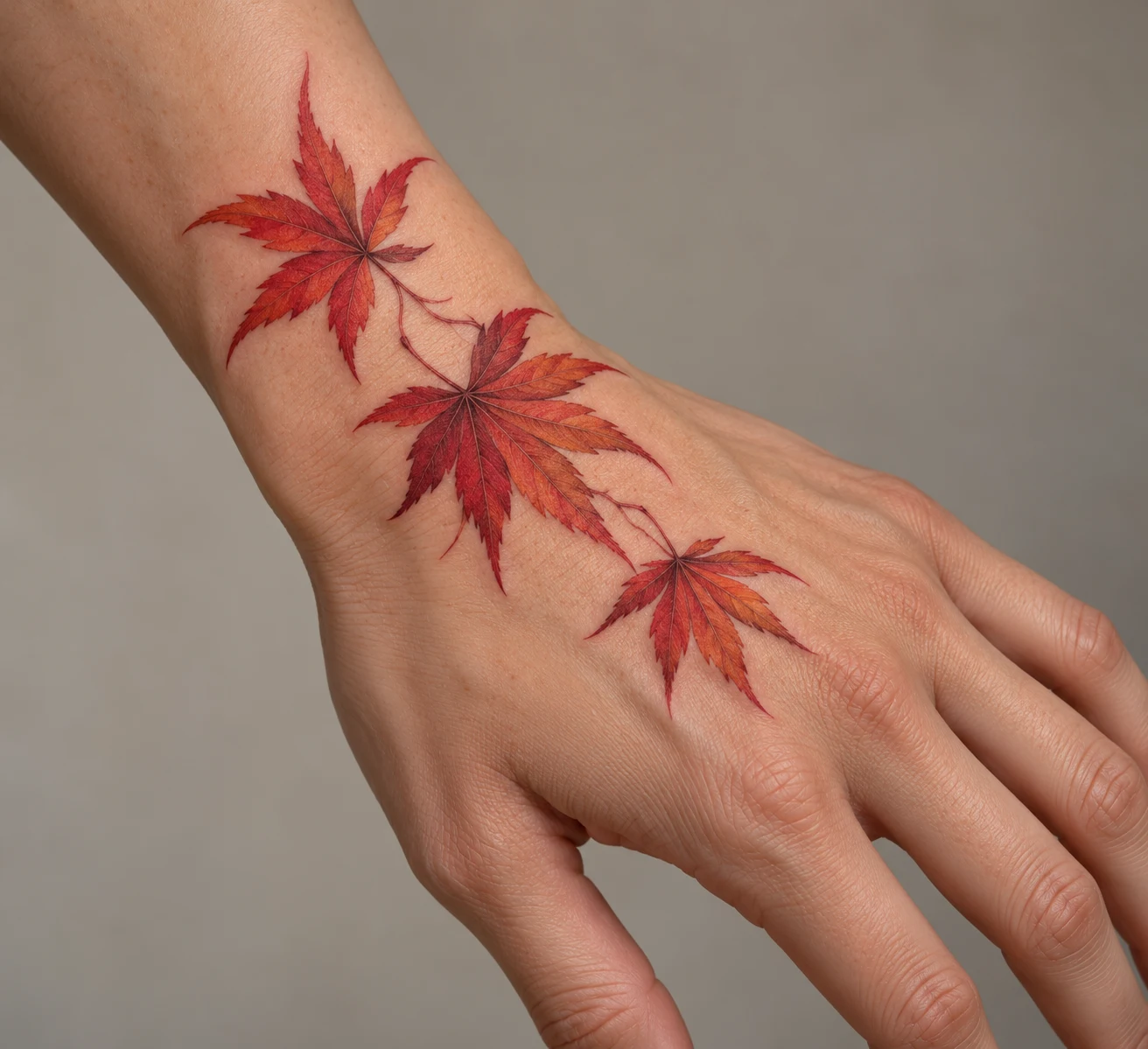
Three leaves travel diagonally from wrist to hand, alternating red and orange. Vary their size and angle while keeping space between their outlines. The gaps between the leaves keep the composition from becoming one dense focal point.
Waves, Objects, and Connected Compositions
16. Japanese Wave Hand Tattoo With Open Foam
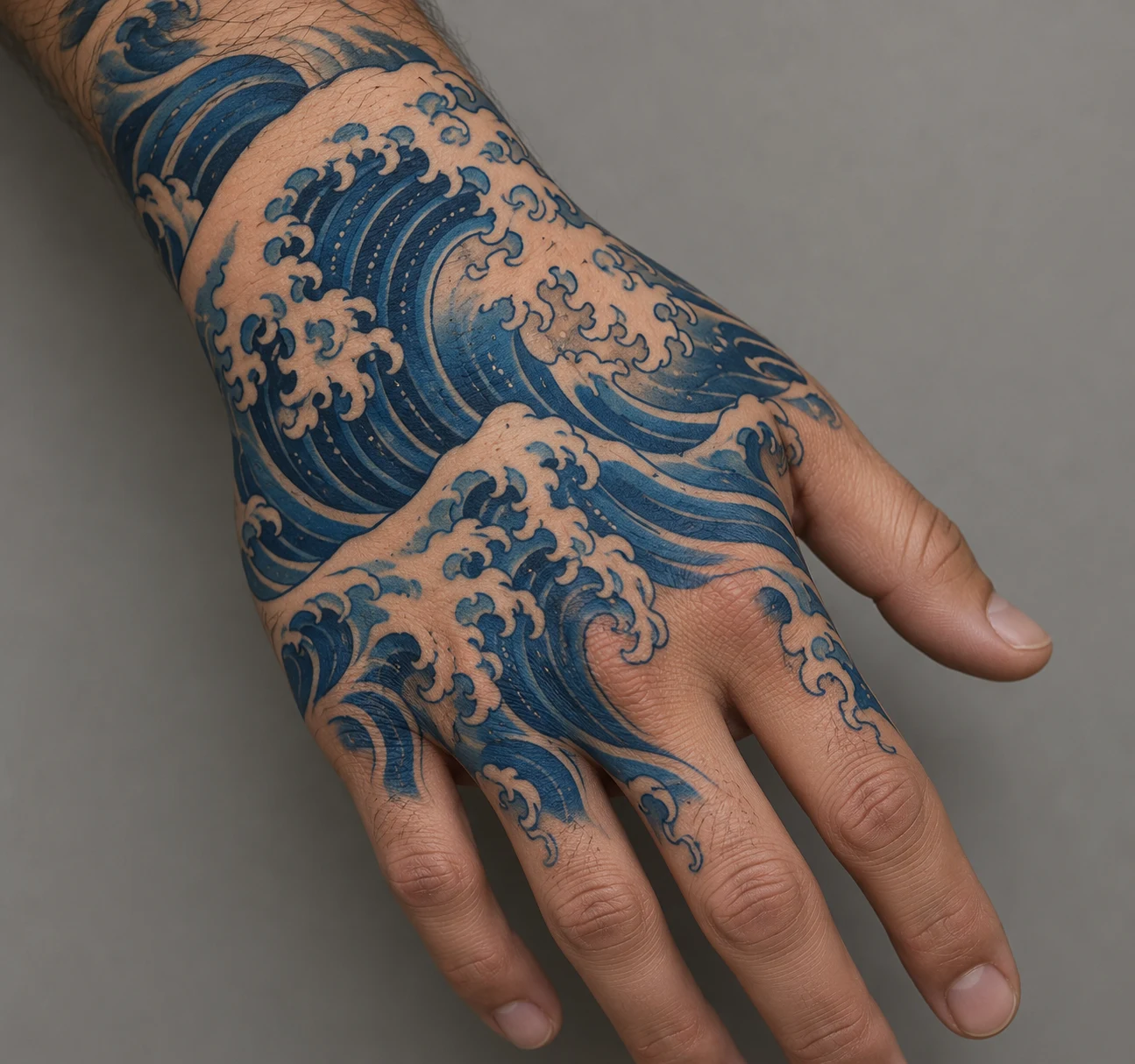
Blue curves form the water while uninked areas define the foam. The contrast makes movement the main feature, without a face or animal centerpiece. Try different curl directions in the drawing to see which best follows your hand’s outline.
17. Folding Fan With a Simple Floral Panel
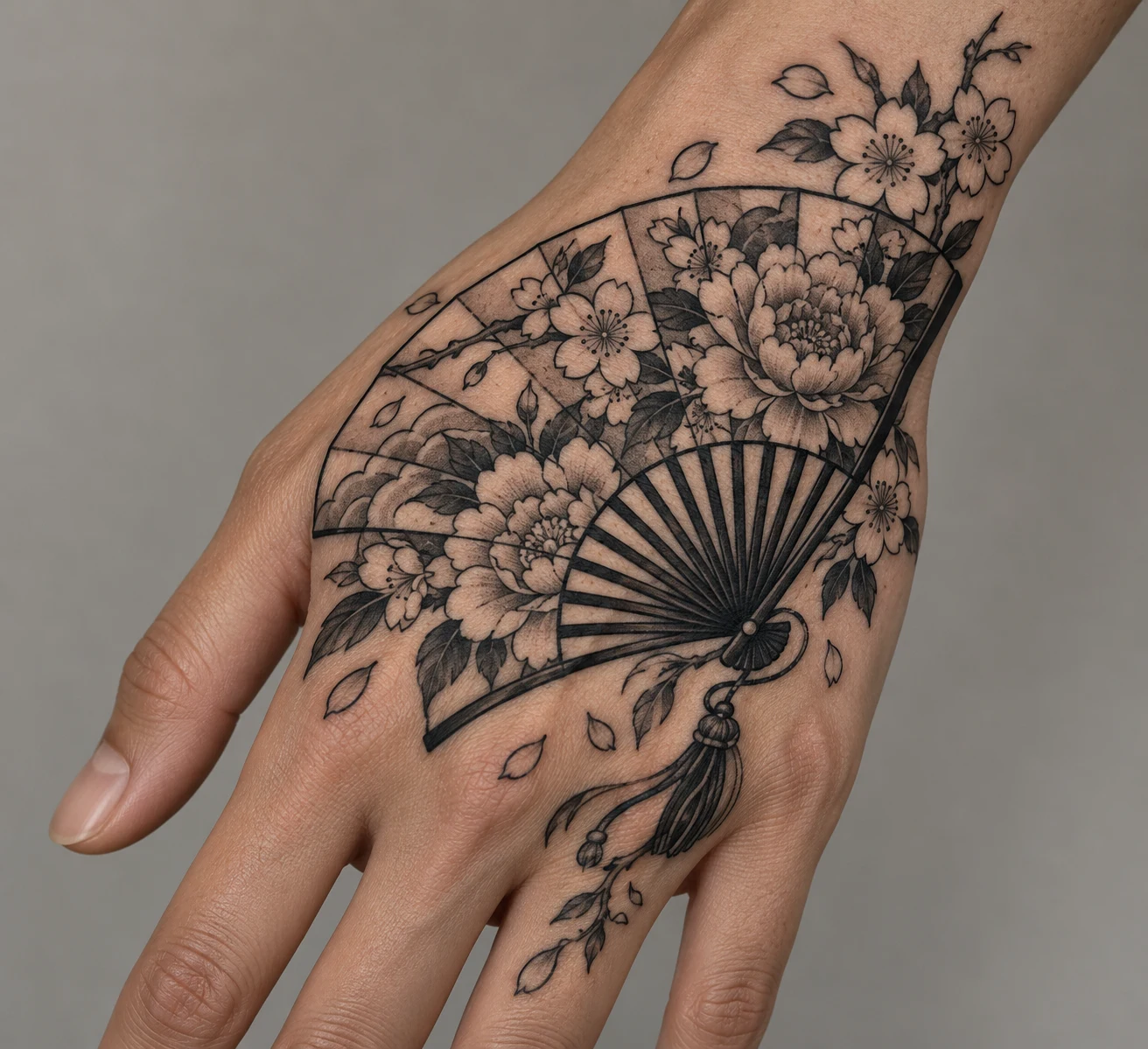
A partially opened fan combines a geometric outer shape with one floral detail. Broad ribs establish the structure; a restrained interior pattern keeps it readable. Consider this if you like decorative objects but want a clearly defined silhouette.
18. Uchide no Kozuchi Mallet With a Cord
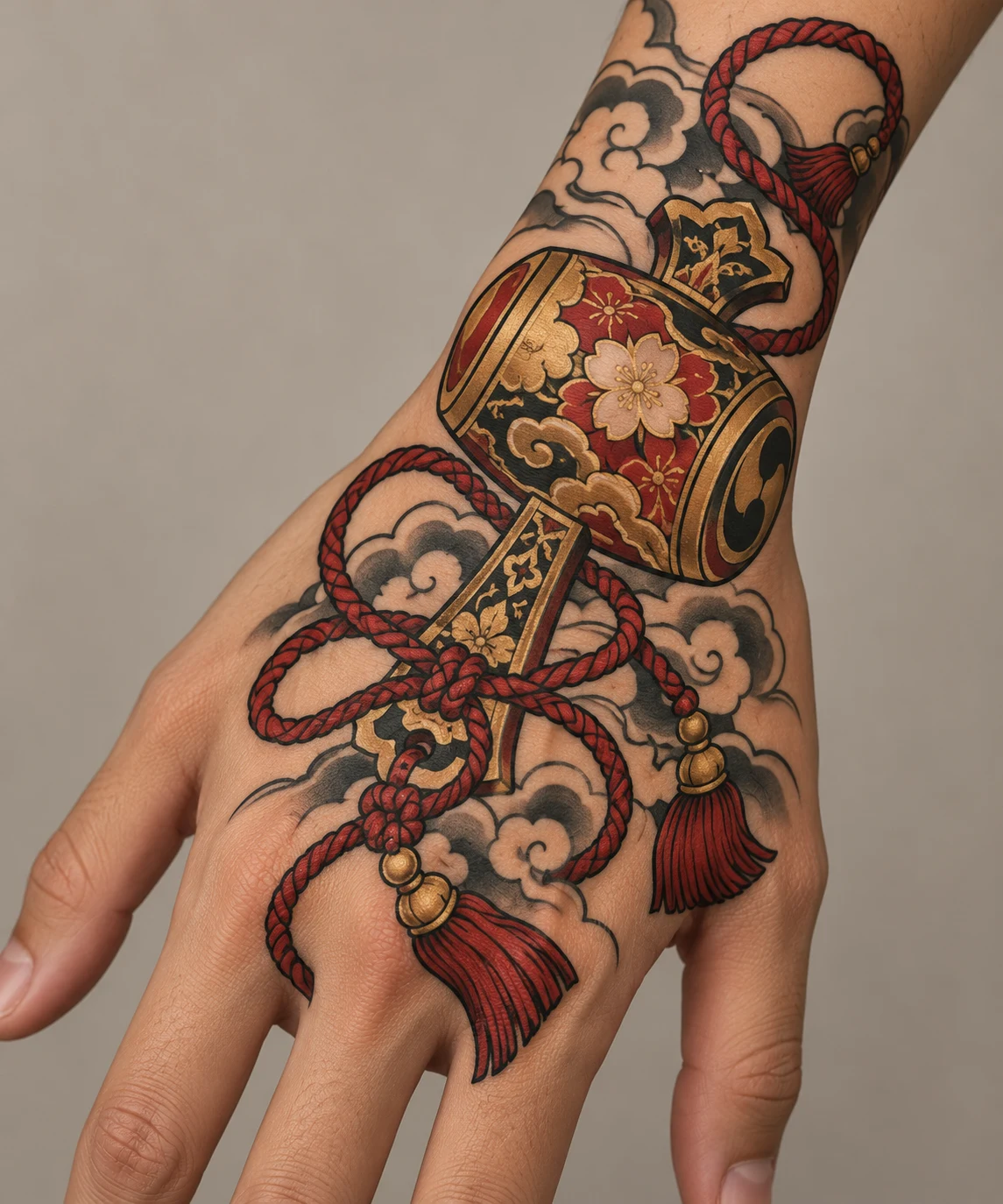
A compact decorative mallet anchors the hand, with a looping cord continuing toward the wrist. It offers an object-based design with a flowing extension. Have the intended uchide no kozuchi identification and ornament checked against a reliable reference before finalizing this concept.
19. Wind Bars Connecting a Wrist Tattoo
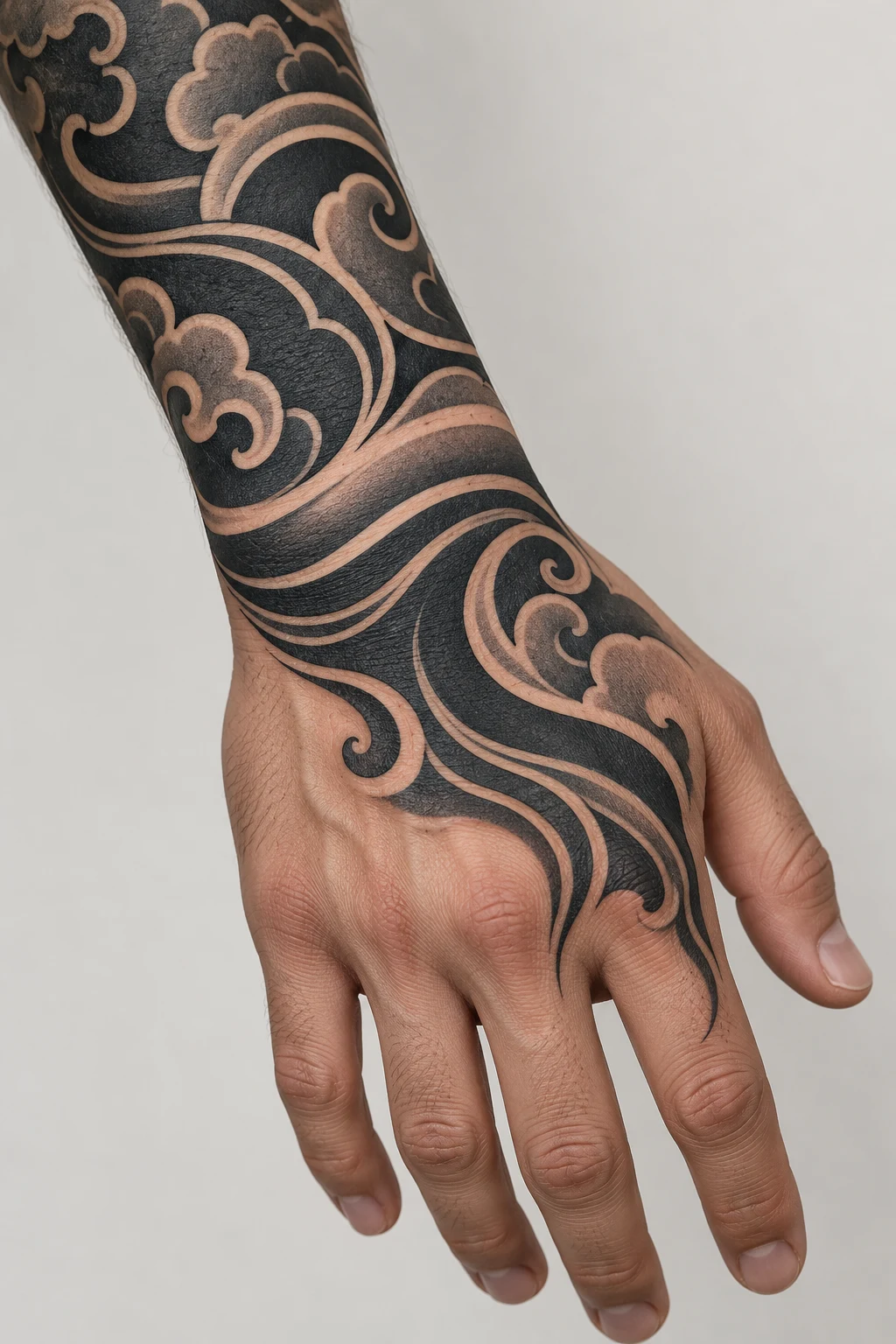
Sweeping black bars and open skin extend the rhythm of existing wrist work. This approach suits readers who want continuity without another centerpiece. The curves, spacing, and stopping points should be drawn around the tattoo already there rather than copied from a standalone example.
20. Paired Dragon and Peony Hand Tattoos
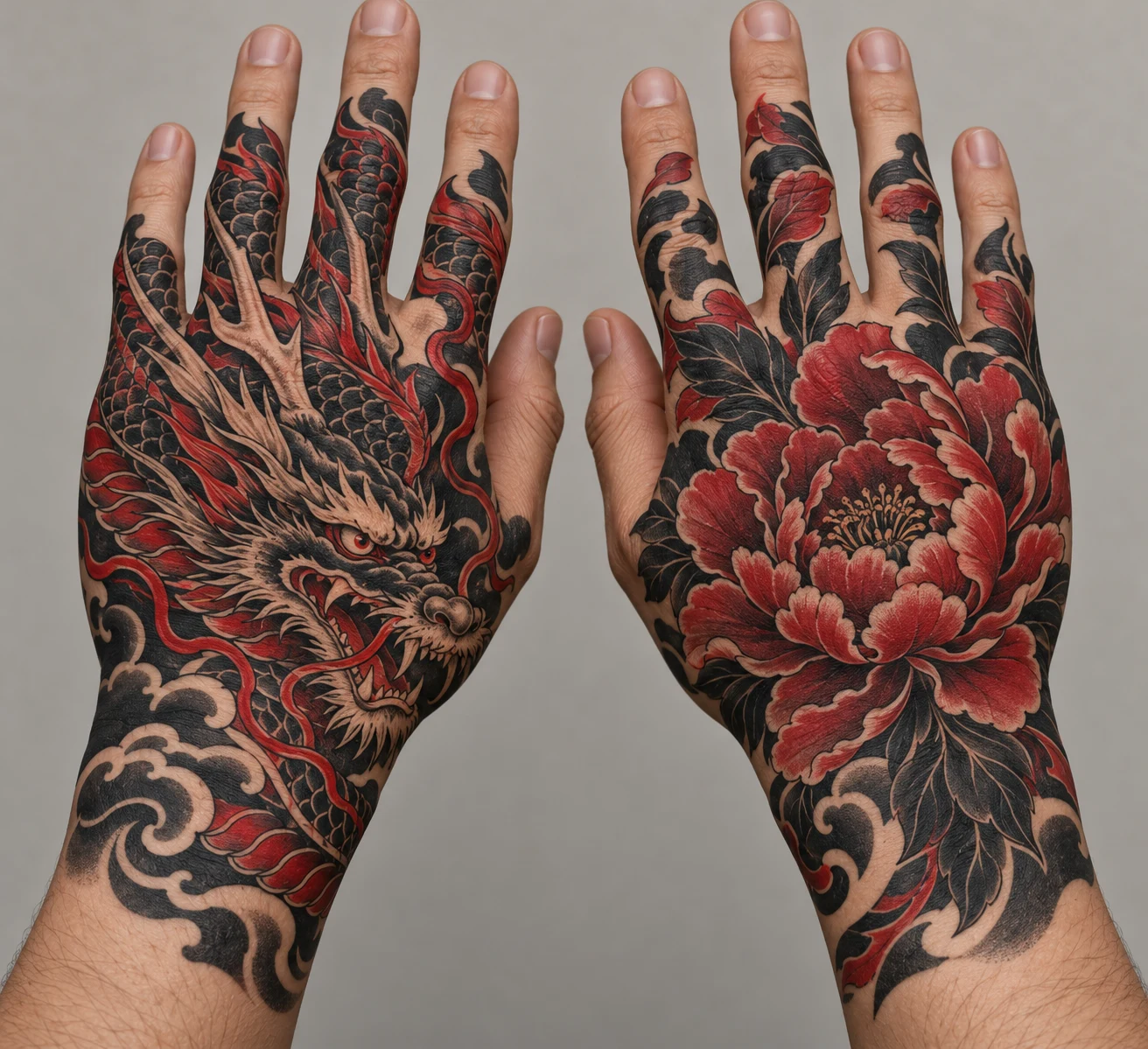
A dragon head on one hand and a peony on the other form one coordinated pair. Matching line weight and red accents connect the different subjects. Choose this arrangement if you’re considering both hands together and want complementary motifs rather than mirrored designs.
Shortlist two or three concepts by subject, palette, and coverage. Then ask your artist to compare their scale on your hand, including how each design meets the wrist. For broader placement comparisons, explore the hand tattoos guide.

