
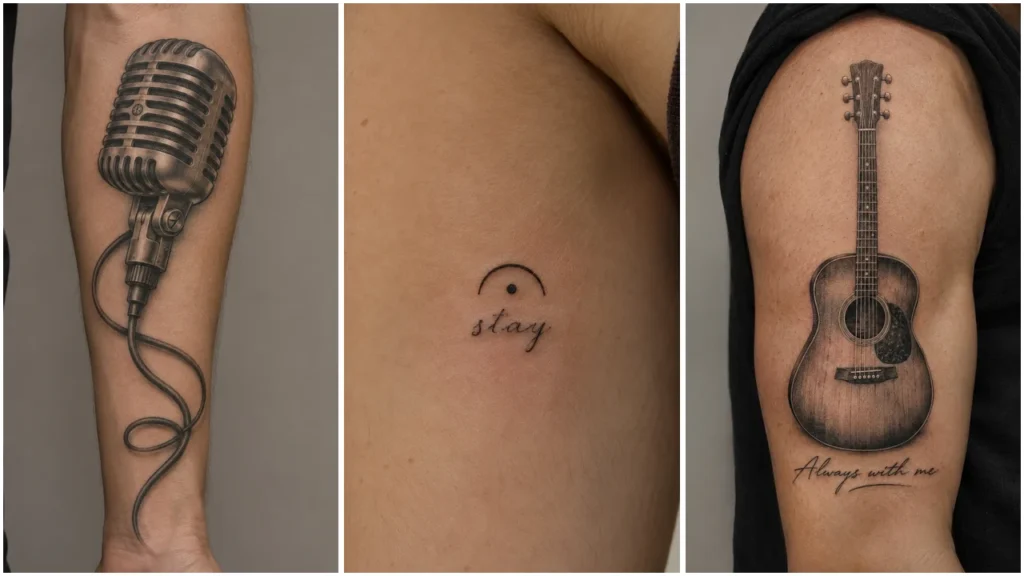
Tattoos for music lovers can capture a voice, an instrument, a favorite recording, or a memory only you recognize. These 25 ideas span performance, instruments, notation, listening, and personal keepsakes. Start with what you want to remember, then compare shapes, styles, and placements.
The planned images are tattoo concept illustrations. Their personal meaning comes from the details you choose.
Singing and Performance
Think about whether your connection centers on your own voice, a favorite performer, or the experience of a live show.
1. Vintage Microphone With a Winding Cable
A shaded microphone with a cable winding along the forearm.
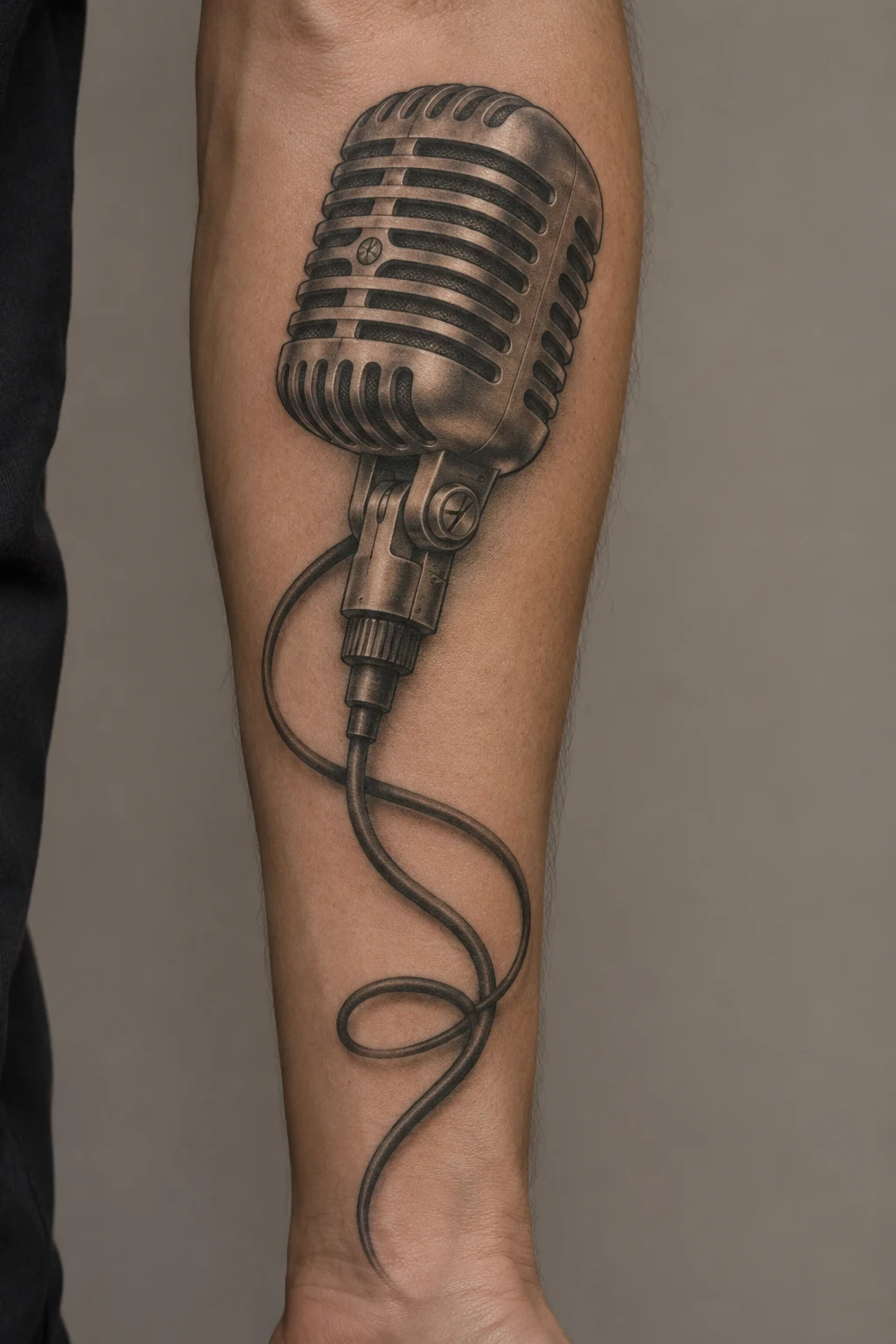
Choose detailed metalwork for a vintage equipment feel, or simplify the grille for a cleaner silhouette. The cable gives the design a flowing shape.
2. Singer Silhouette in a Personal Stage Outfit
A singing figure defined by flared trousers and an expressive pose.
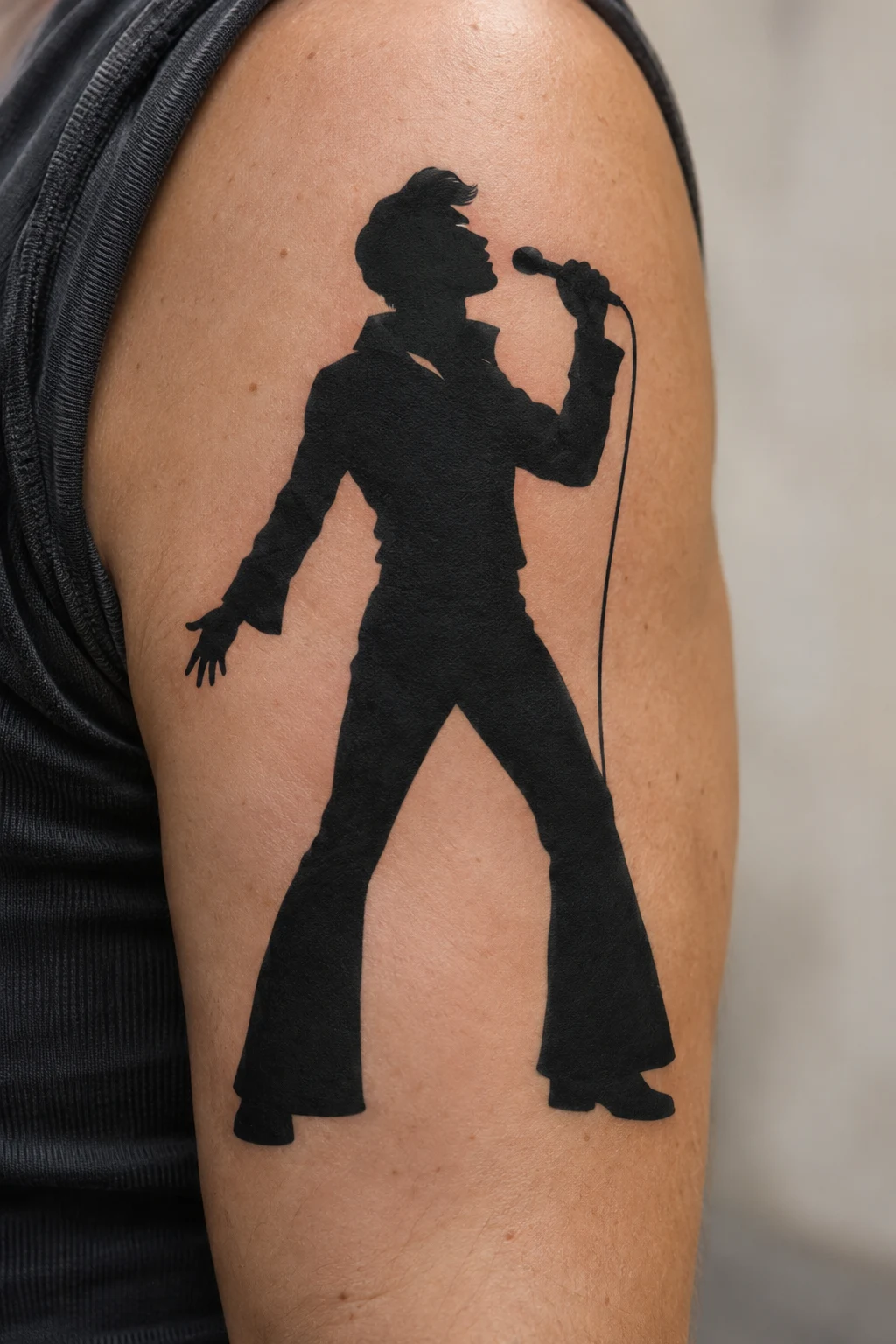
For singer tattoos without portrait detail, clothing can carry the connection. Choose an outfit and stance you associate with a particular performance.
3. Hand Holding a Microphone
An illustrated hand gripping a wired microphone on the calf.
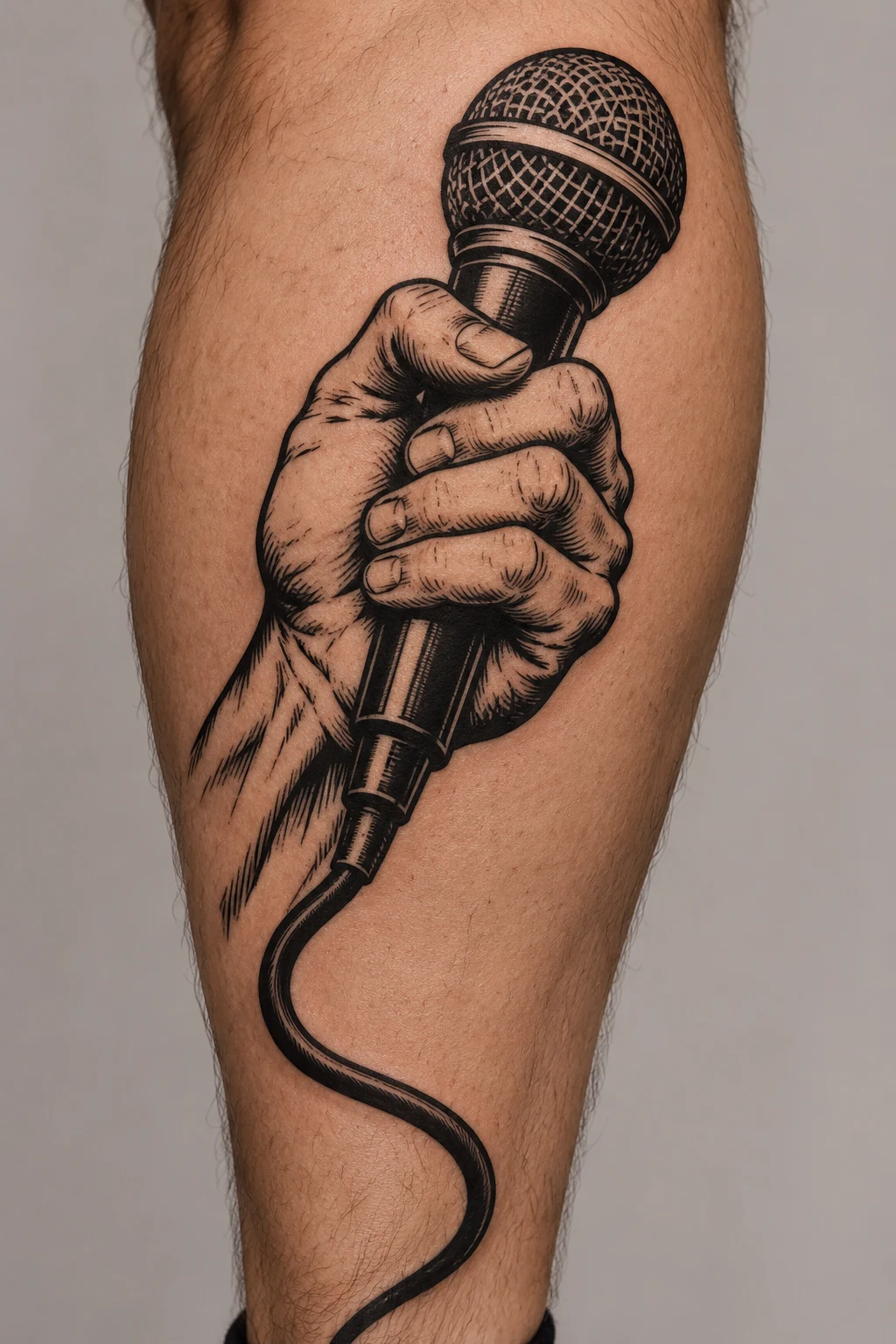
This puts the act of singing at the center. A relaxed grip feels different from an outstretched, expressive gesture; choose the one that fits your experience.
4. Small Spotlighted Stage
An empty microphone stand framed by a triangular spotlight.
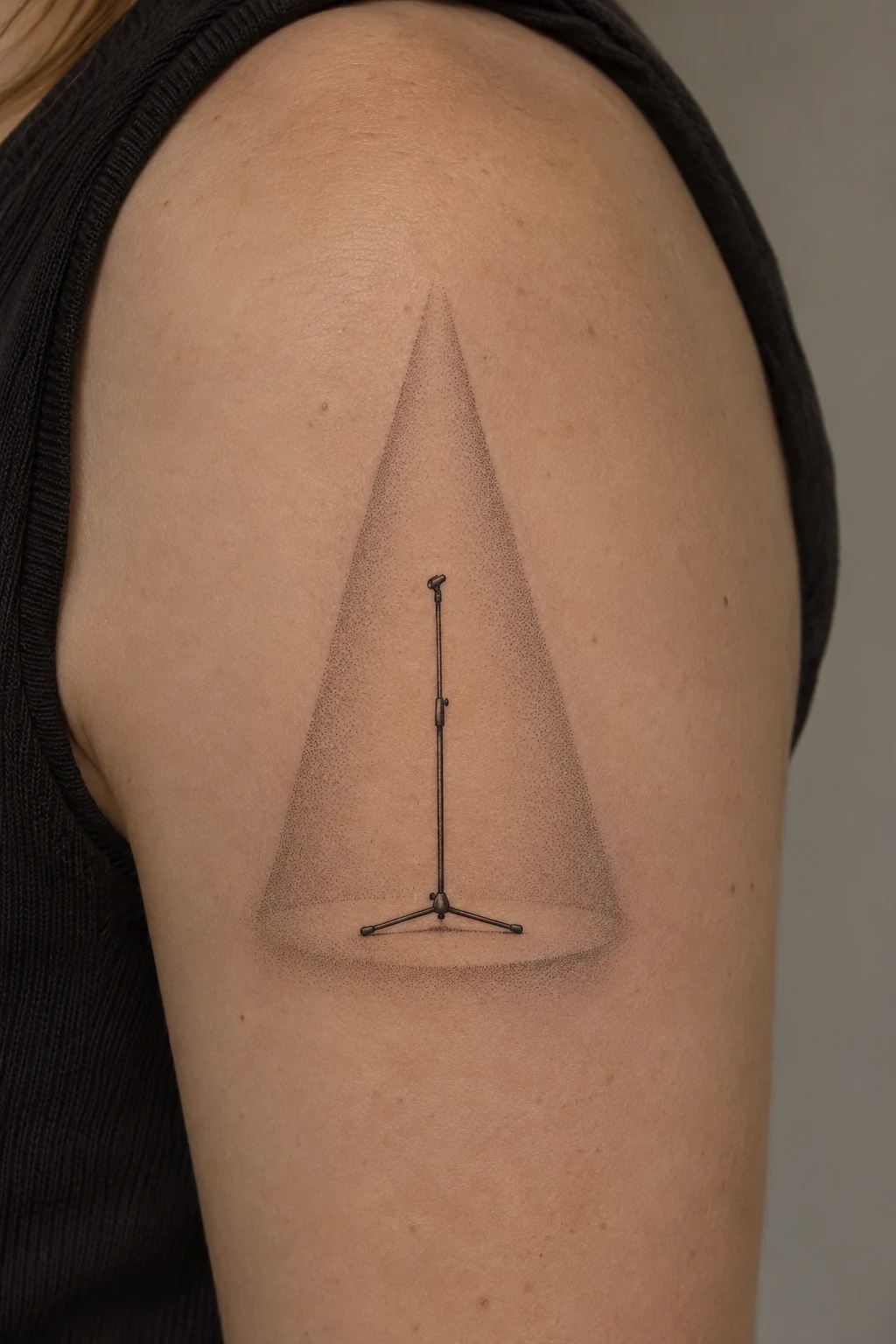
The sparse scene could recall anticipation before a show. It suits readers who connect more with the stage itself than with a particular performer.
Instruments You Play or Love
Choose an instrument detail you recognize immediately. A familiar shape can make the design feel specific to your own music history.
5. Guitar Headstock With Personal Details
A cropped guitar headstock with six tuning pegs.
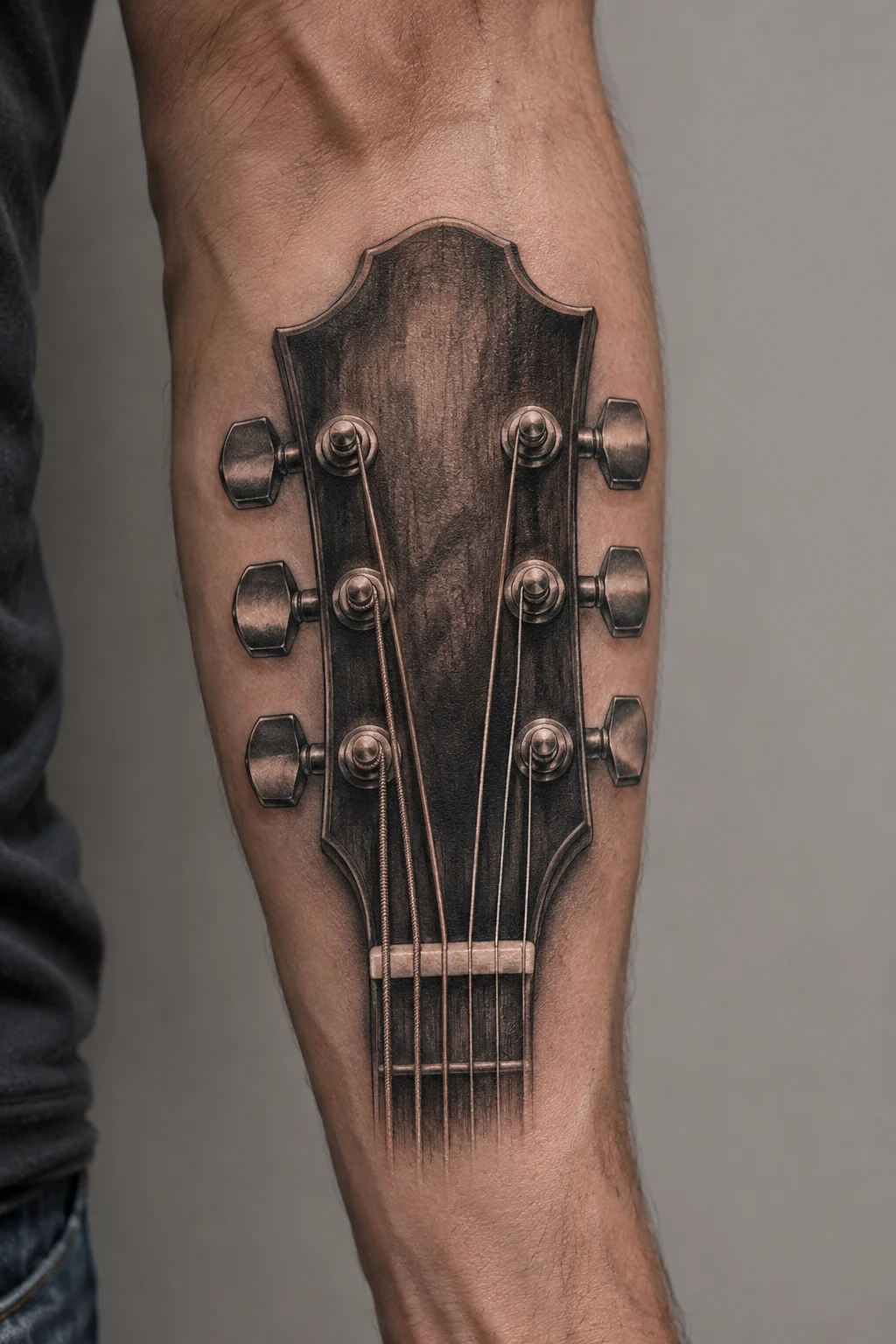
Use a reference of the actual instrument you love. Check its outline, peg arrangement, and construction before settling on the drawing.
6. Piano Keys Following the Forearm
A short strip of keys curving along the inner forearm.
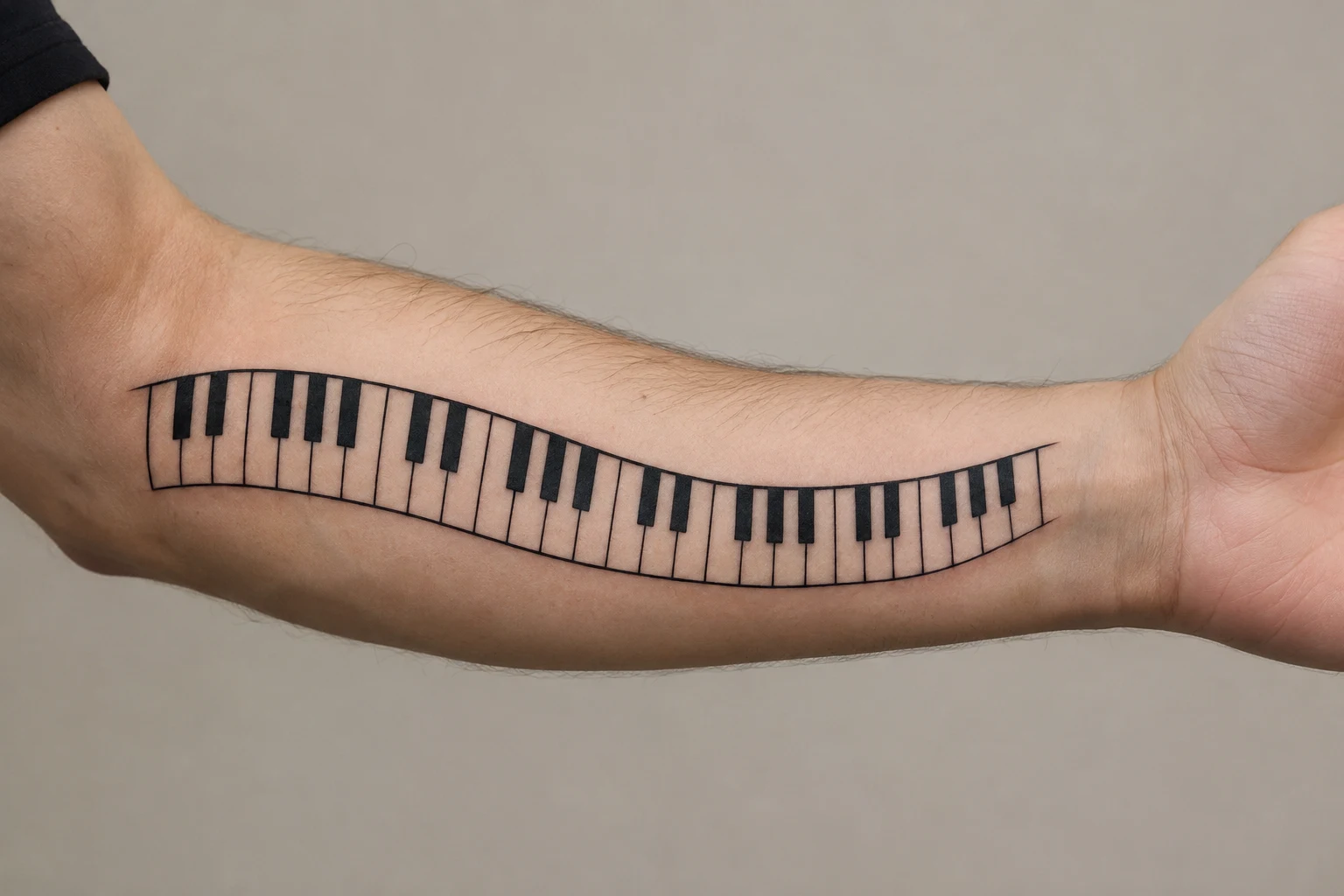
A keyboard fragment keeps the subject focused. Preserve the correct black-key pattern and discuss how the curve will follow your arm with your artist.
7. Crossed Drumsticks With Initials
Crossed drumsticks with small initials beside their intersection.
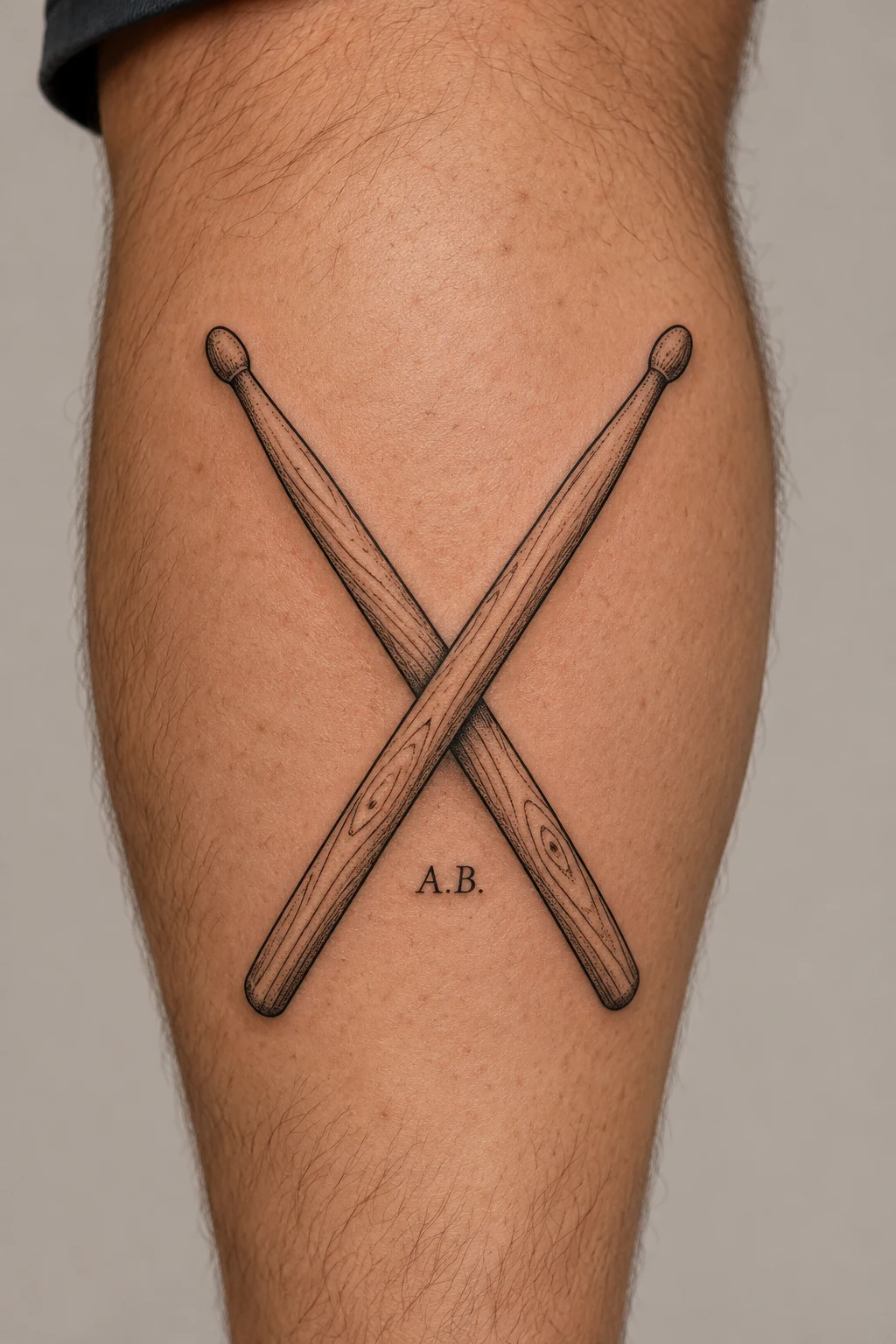
This compact arrangement suits drummers who want a personal identifier. Keep the initials separate enough from the crossing sticks to read clearly.
8. Violin Scroll With Botanical Detail
A violin scroll paired with a single olive sprig.
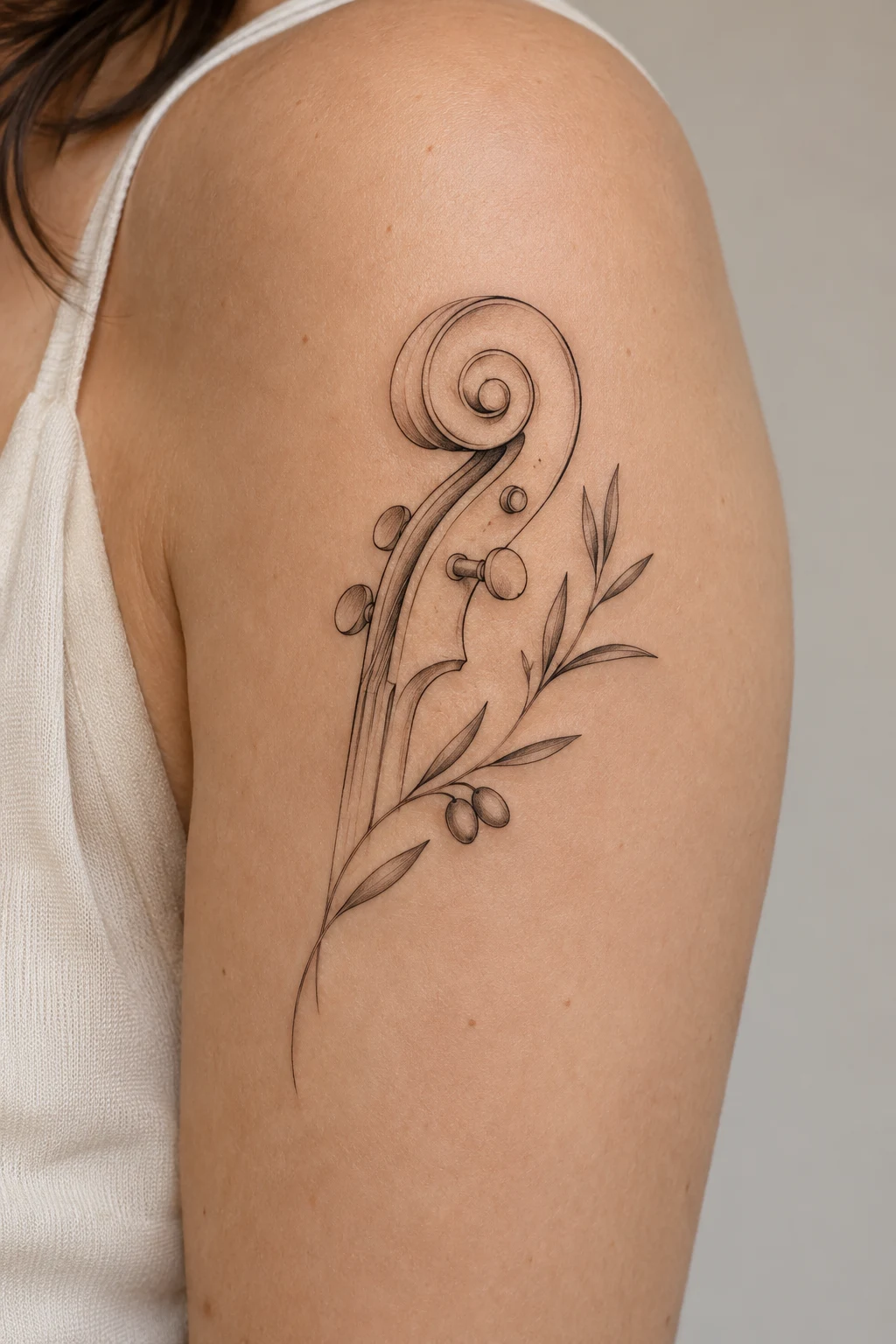
Let the carved curve lead the composition. Choose the plant for its appearance or your own association; it doesn’t need an assigned symbolic meaning.
9. Trumpet With Bold Color Accents
A diagonal trumpet with ochre and rust accents.
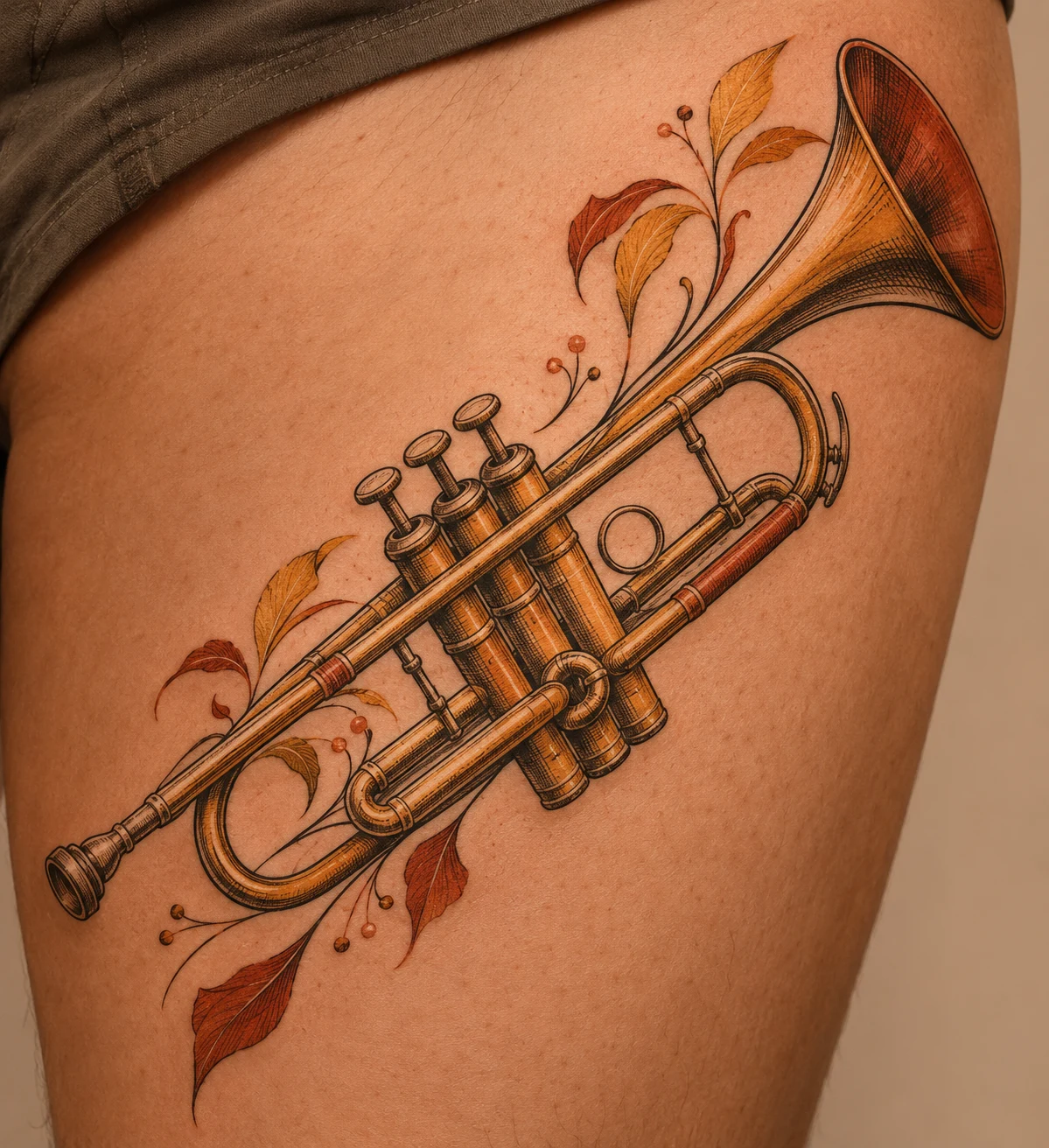
Ochre and rust accents give the trumpet a stronger graphic presence. Keep the valves and tubing recognizable, with color supporting the instrument’s shape.
Music Notes and Notation
Decide whether you want decorative music imagery or a passage someone could actually read and play. Real notation needs careful checking.
10. Small Beamed Eighth Notes
Two beamed eighth notes placed above the ankle.
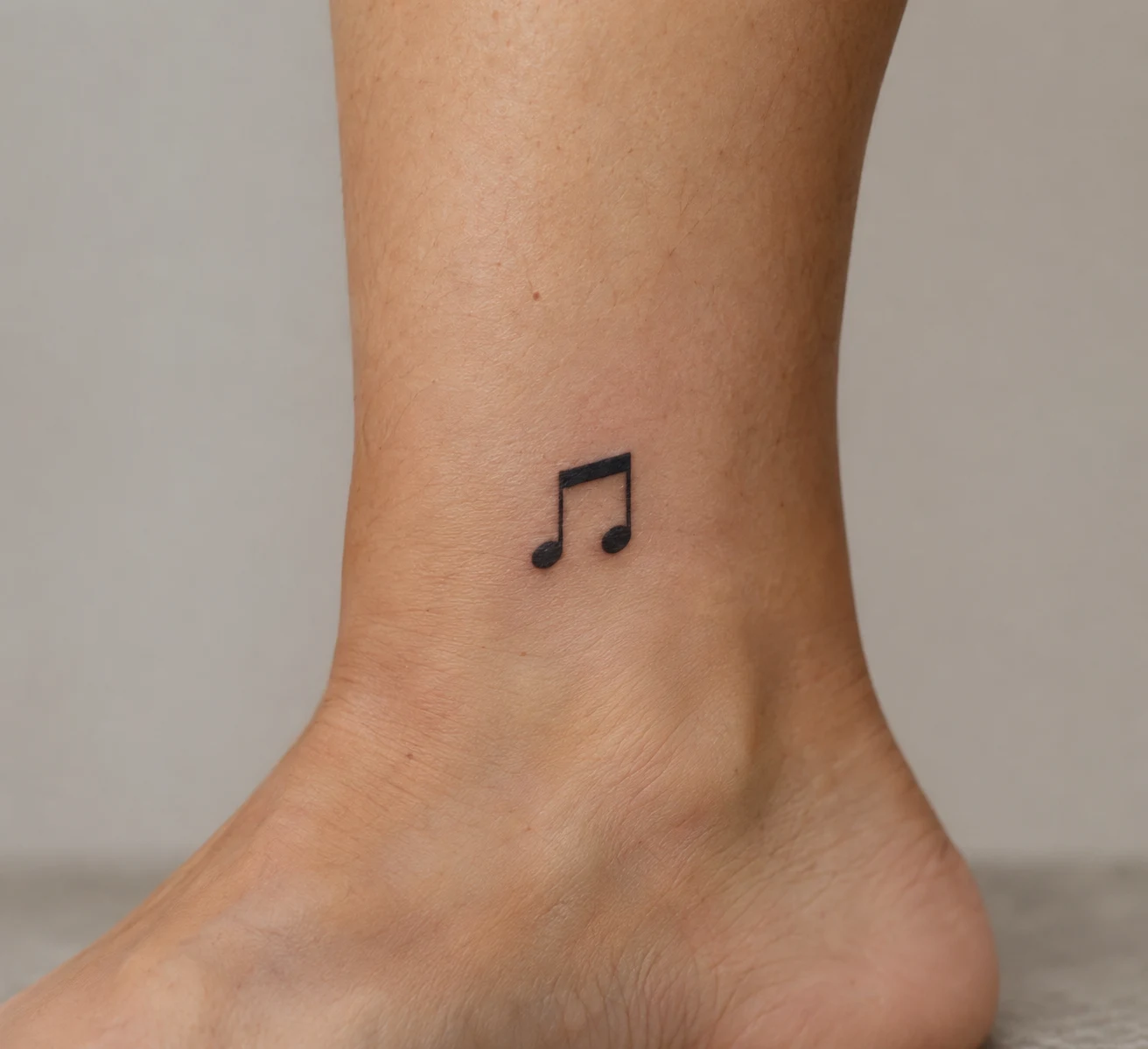
For small music tattoos, this offers a compact starting point. Ask your artist about scale and spacing rather than choosing the smallest possible version.
11. A Measure From Your Favorite Passage
One musical measure running across the inner forearm.
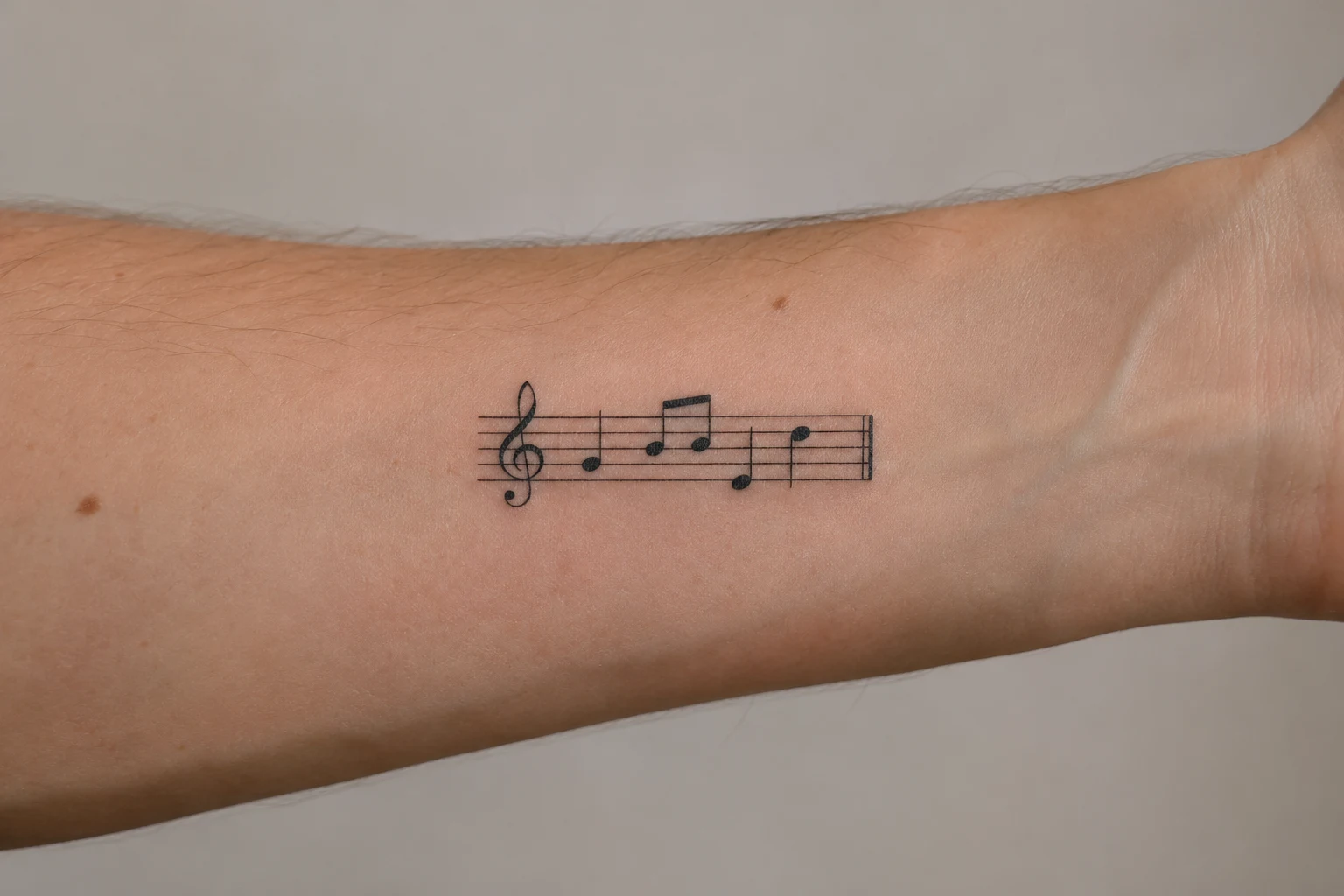
Select a passage with personal significance. Have a knowledgeable musician check the notes, rhythm, clef, and necessary markings before the stencil is approved.
12. Bass Clef With Open Space
A bold bass clef with two clearly separated dots.
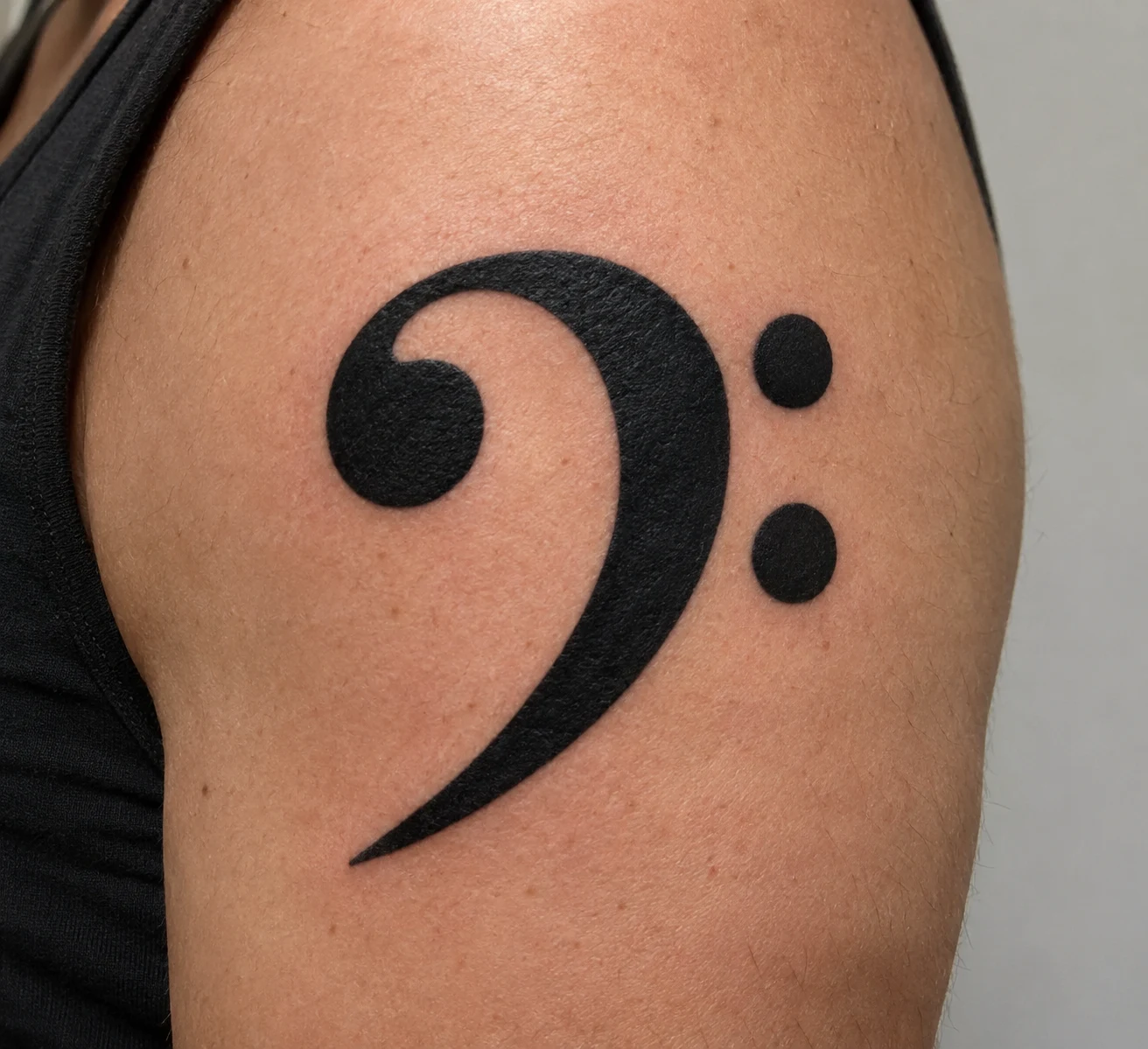
This may suit your connection to bass notation or lower-register parts. Give the symbol room so its curve and dots remain visually distinct.
13. Fermata Above a Personal Word
A minimal fermata placed above the handwritten word “stay.”
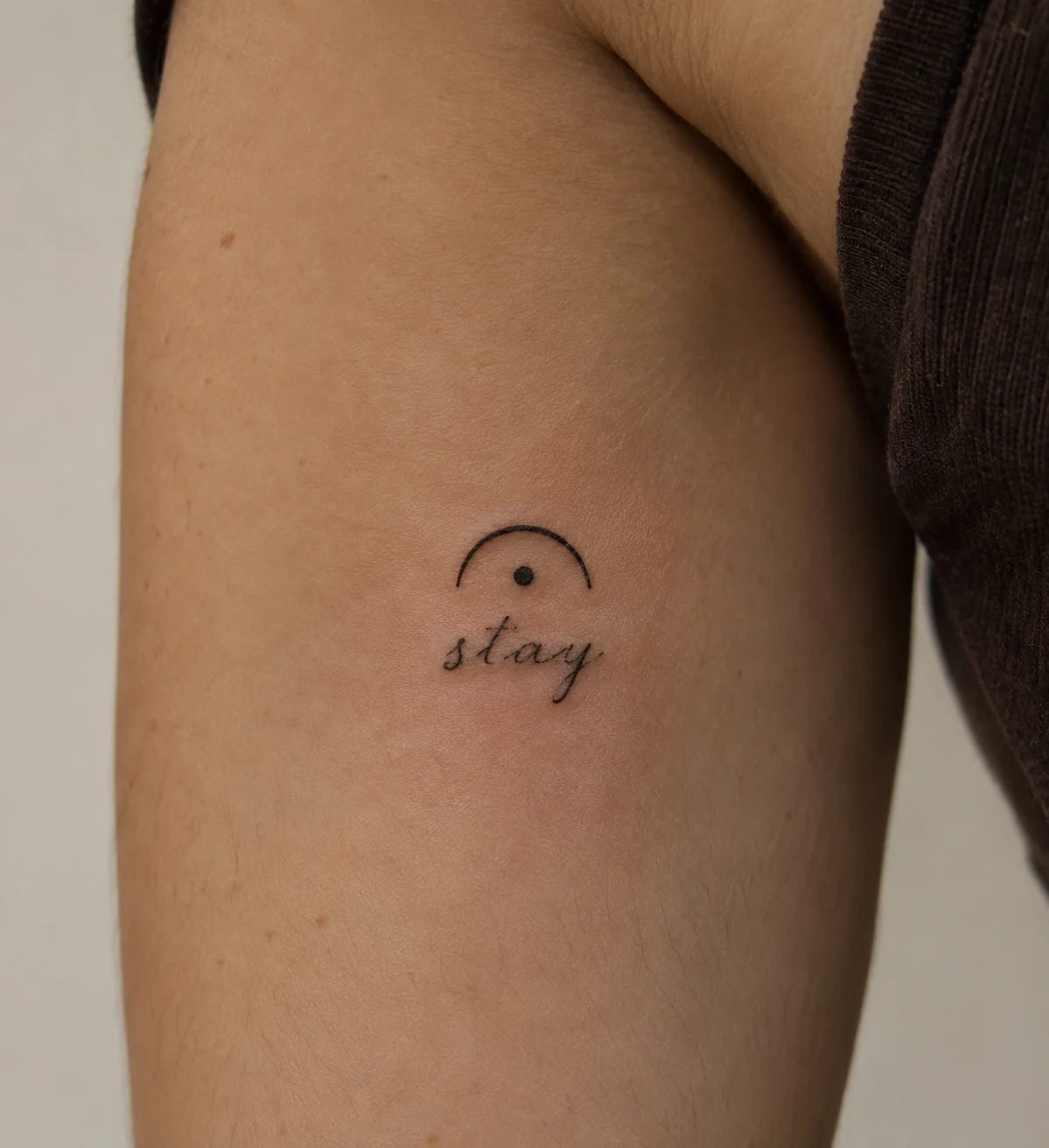
A fermata indicates holding a note or rest beyond its written duration. Pair it with your own word if that musical pause has personal resonance.
Listening, Records, and Sound
Consider the objects you use to listen, collect, or record. Their shapes offer different ways to represent your relationship with music.
14. Over-Ear Headphones With a Looping Cord
Padded headphones with a cord forming a loose loop.
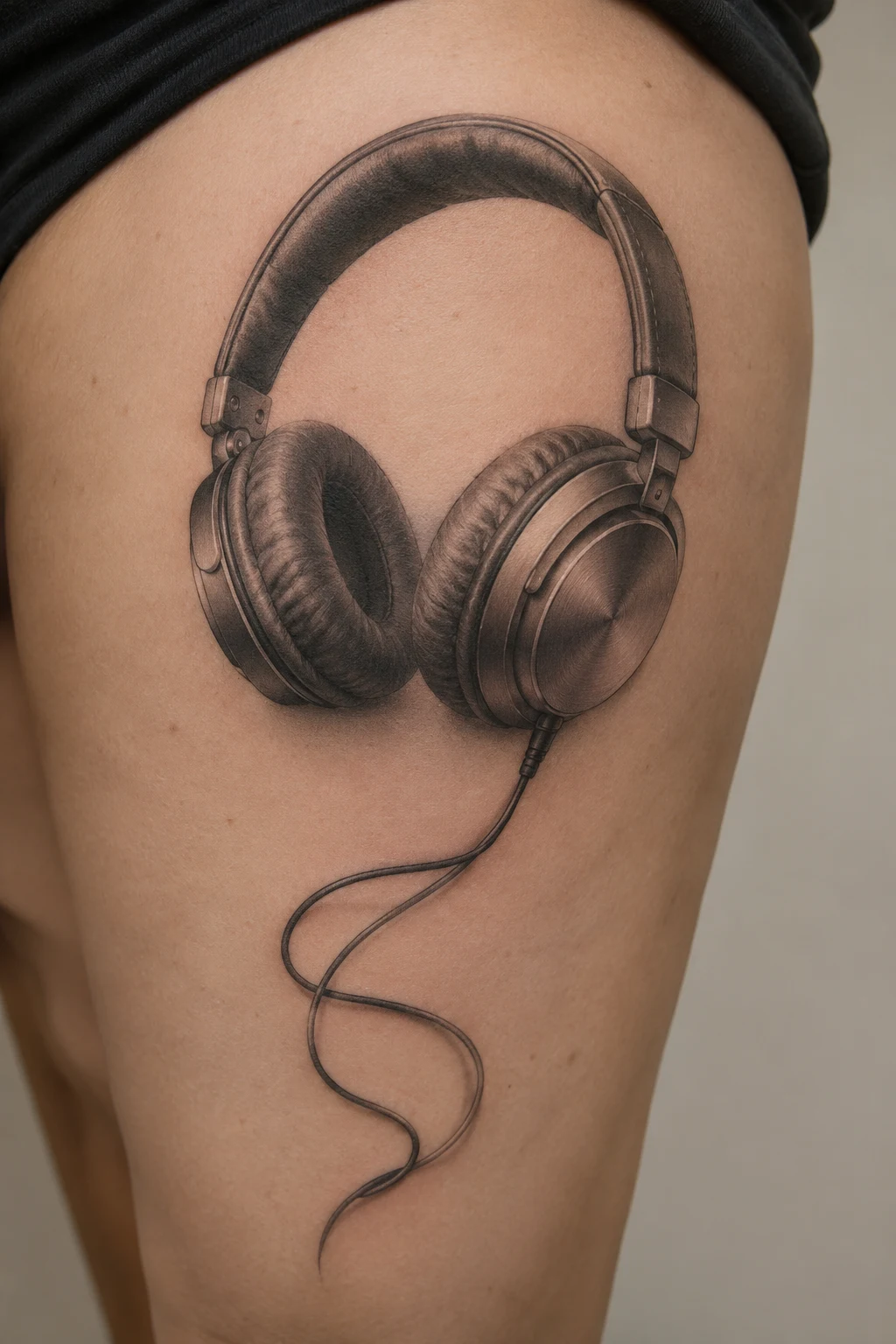
A familiar headphone shape can recall private listening or making mixes. Use the cord to connect the earcups into one flowing composition.
15. Vinyl Record With a Custom Center Label
A black record with a contrasting cream center label.
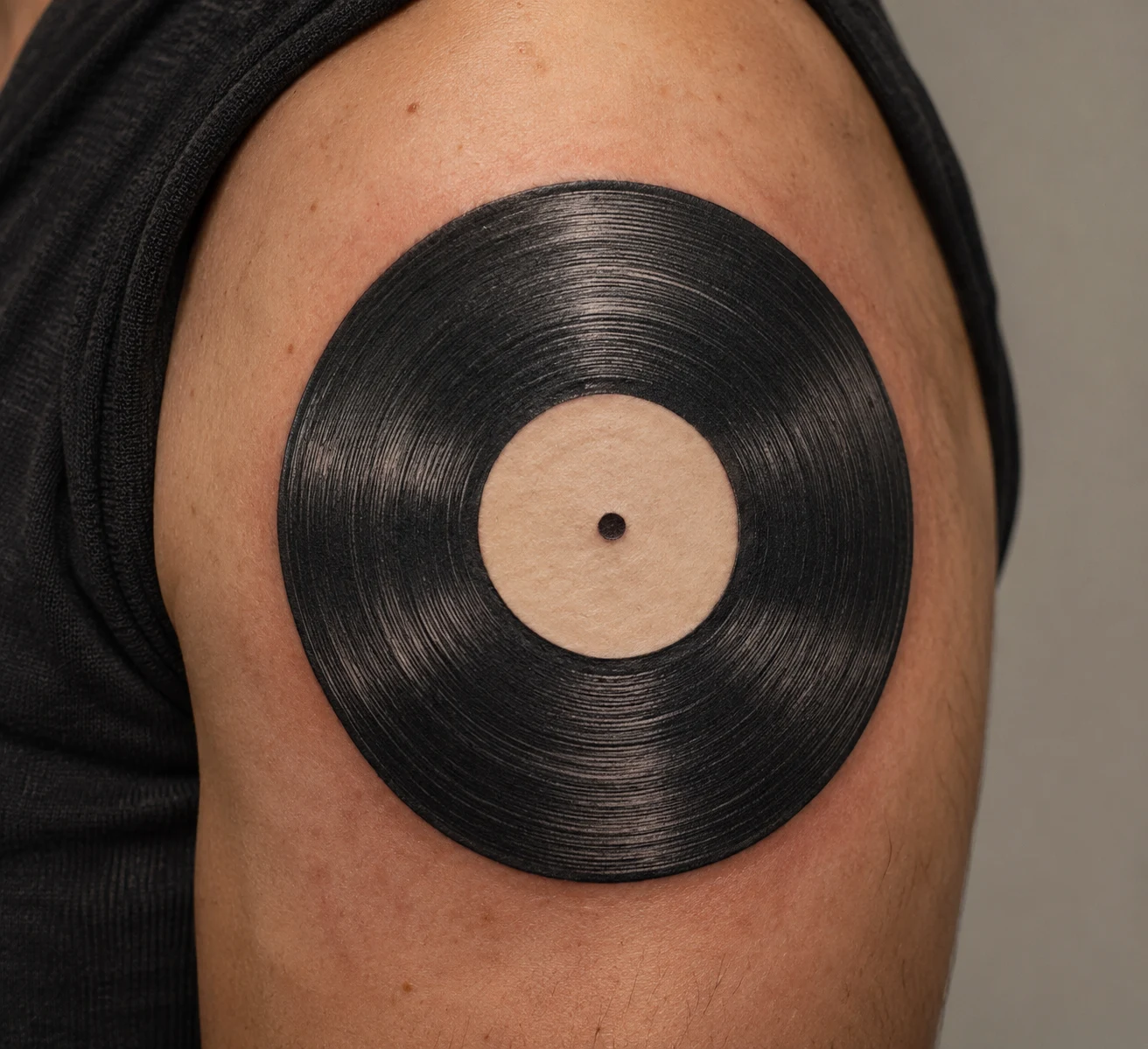
Personalize the label with initials or a short title. Balance lettering and groove detail against the size you want to wear.
16. Cassette With a Handwritten Mix Name
A cassette with a handwritten label and muted red accents.
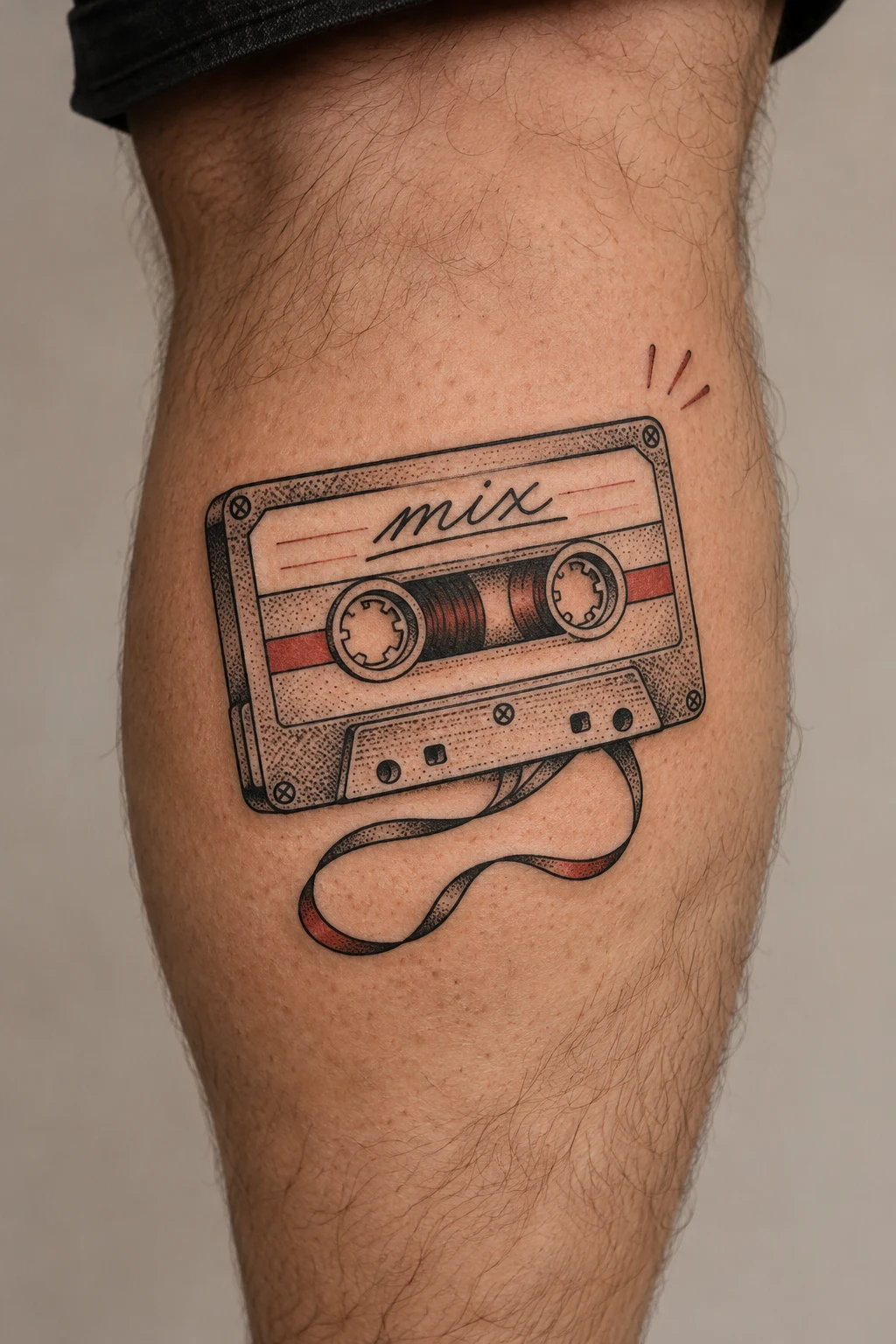
Use a real mixtape name if you have one, or choose your own title. The label makes an otherwise familiar object yours.
17. Soundwave From a Chosen Recording
A horizontal waveform with varied black peaks.
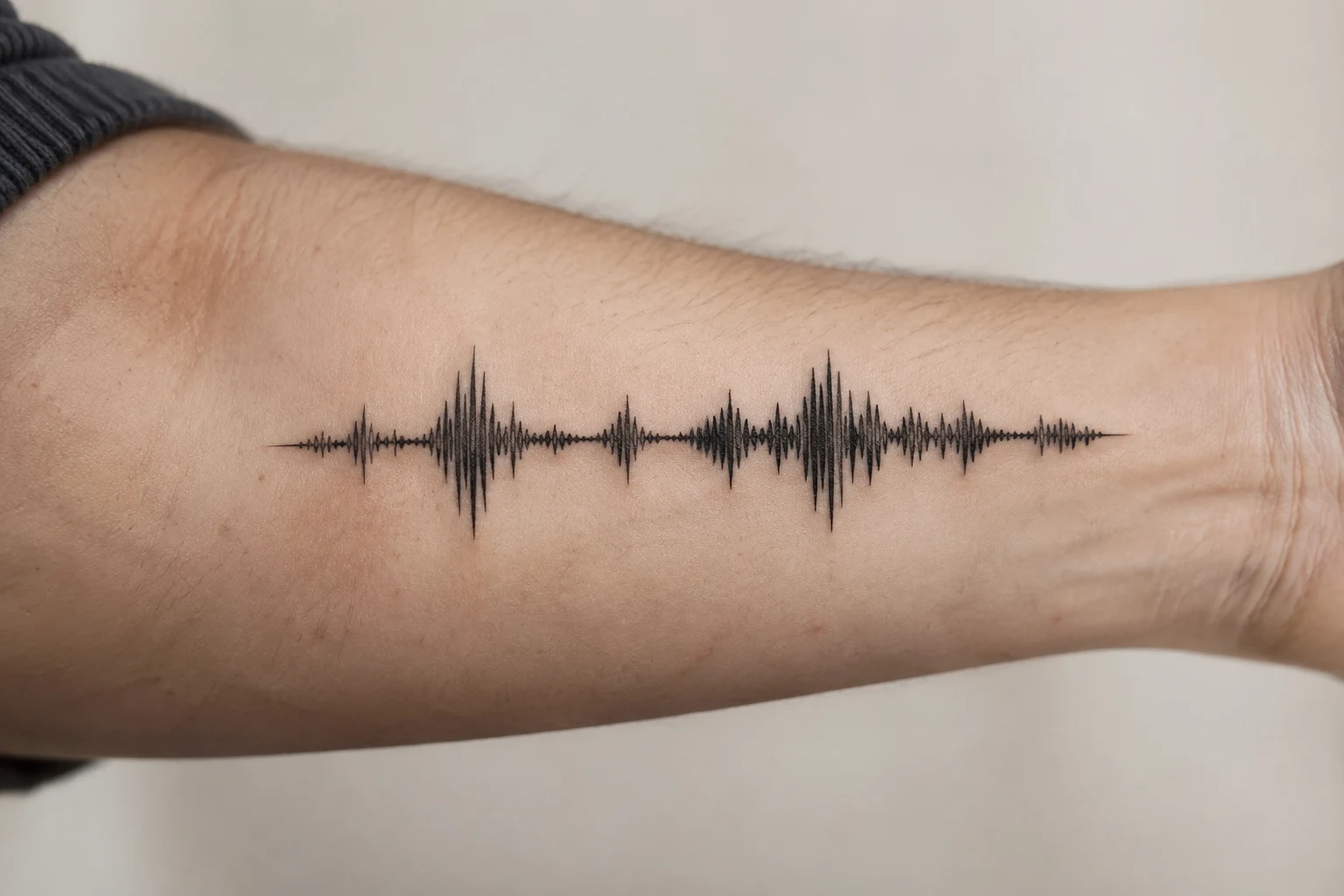
Base the shape on a specific recording excerpt. A tattooed waveform alone doesn’t guarantee playback or tell viewers which sound it represents.
18. Portable Music Player With Earbuds
A compact music player with wired earbuds curling beneath it.
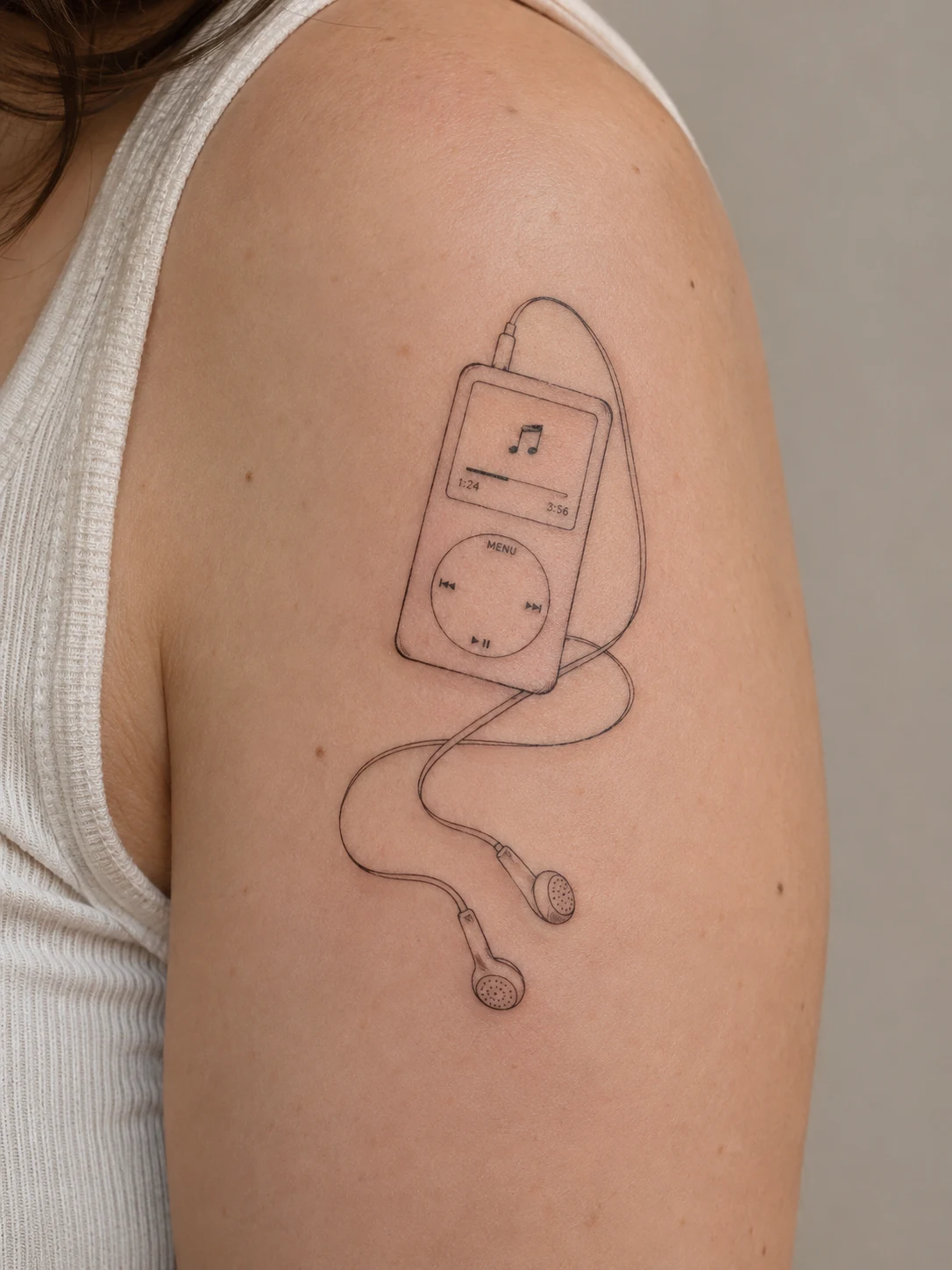
Choose a player shape connected to your listening history. A simple interface keeps the focus on the object without crowding the design with track text.
Personalized Tattoos for Music Lovers
Distinctive designs often begin with something specific: your handwriting, a shared night, a familiar building, or an object tied to a song.
19. A Short Lyric in Your Own Handwriting
A brief lyric written in spacious black script.
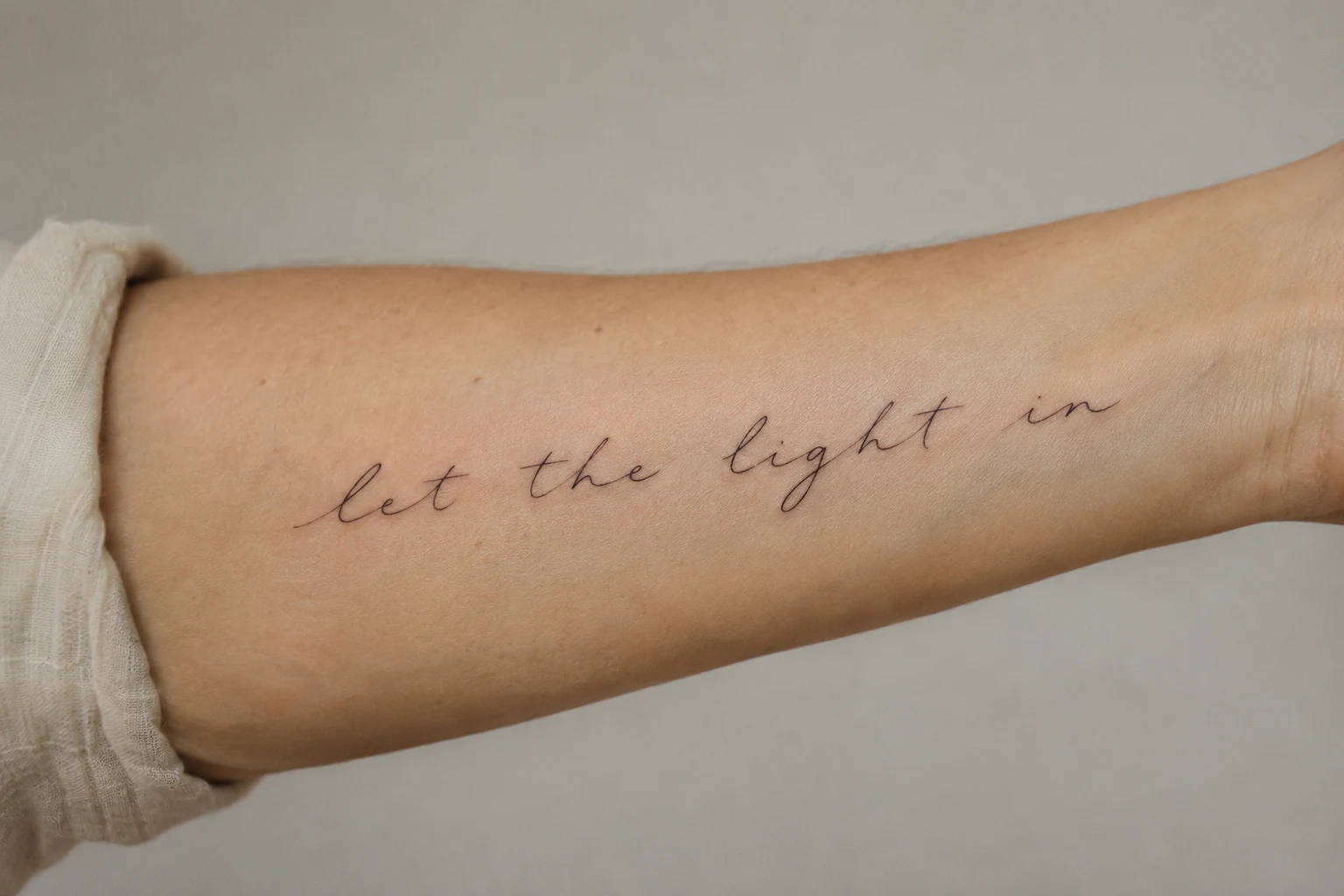
Choose words that still matter outside the full song. Verify the exact wording, then provide a handwriting sample for your artist to adapt.
20. Concert Ticket With a Meaningful Date
A simplified ticket with perforated edges and a prominent date.
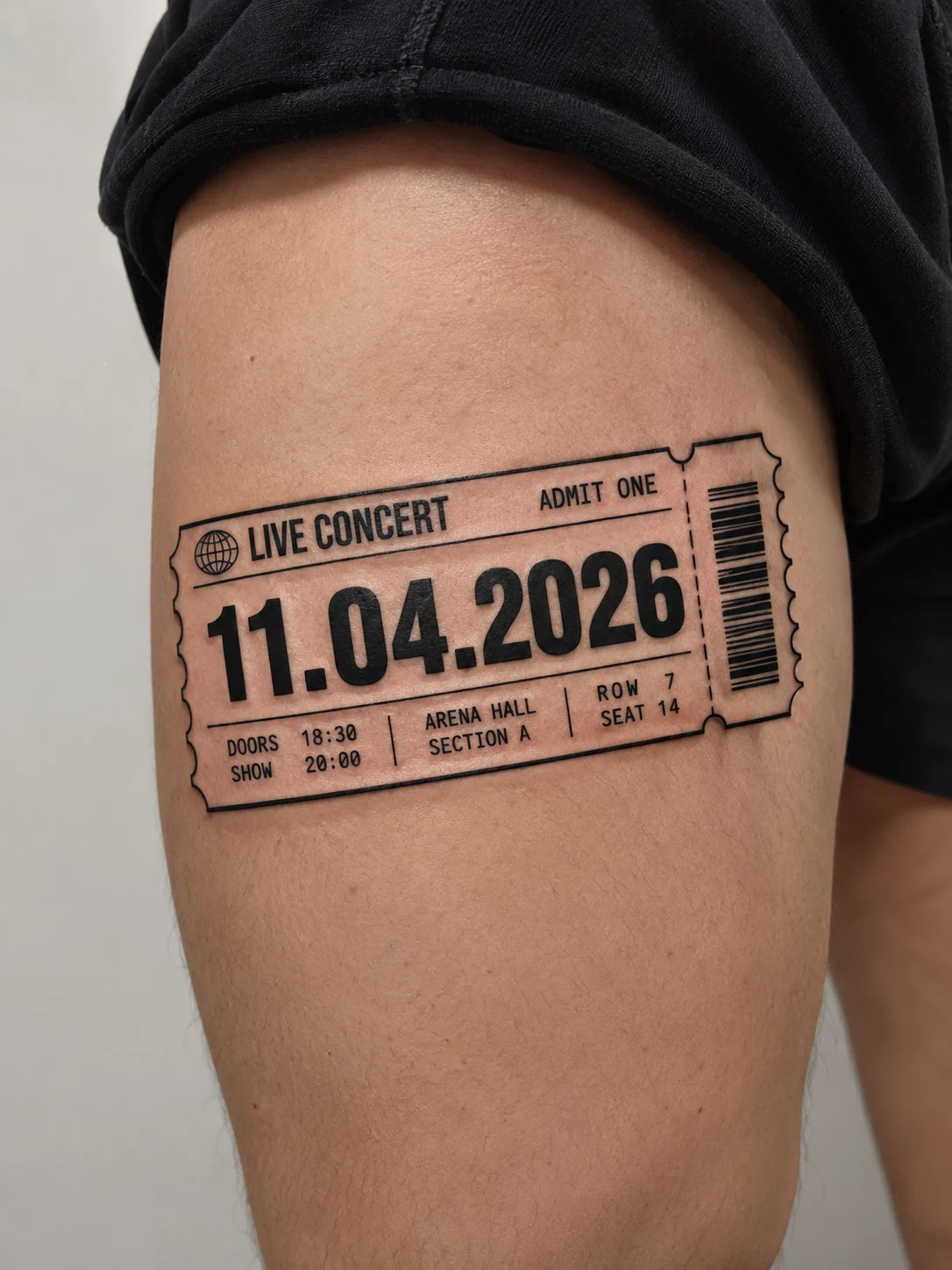
Keep the details that identify the night for you. Check them against the original ticket or event record before approving the lettering.
21. Venue Outline With Verified Coordinates
A venue facade with a small coordinate line beneath it.
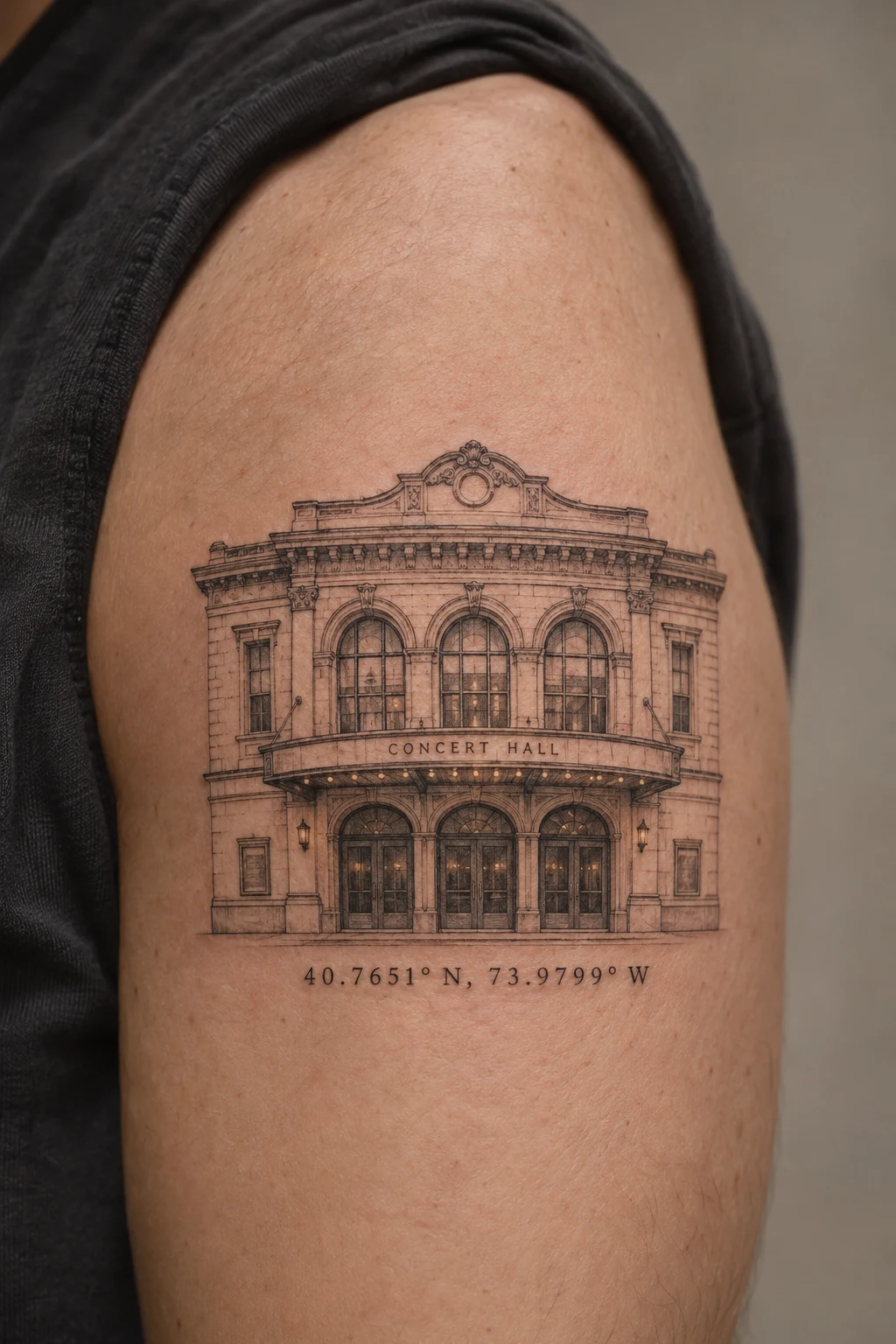
Use a clear building reference and confirm the coordinates. If the outline already captures the memory, you can leave the numbers out.
22. Setlist Scrap With One Highlighted Song
A folded paper shape with one underlined song title.
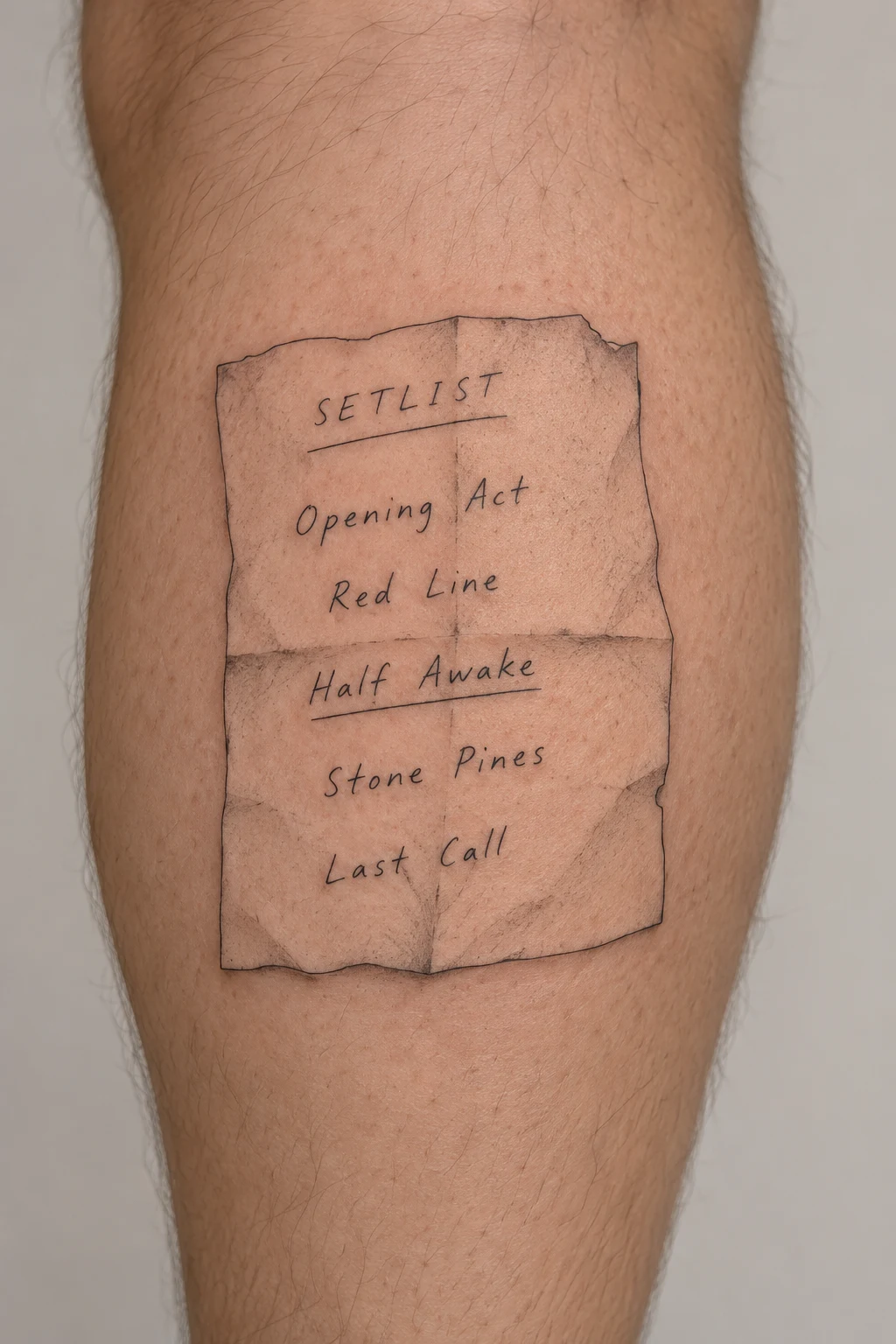
Work from a real setlist when commemorating a show. Emphasize the song you remember most and simplify surrounding text to avoid a crowded composition.
23. Matching Guitar Picks With Individual Initials
Two outlined guitar picks, each carrying different initials.
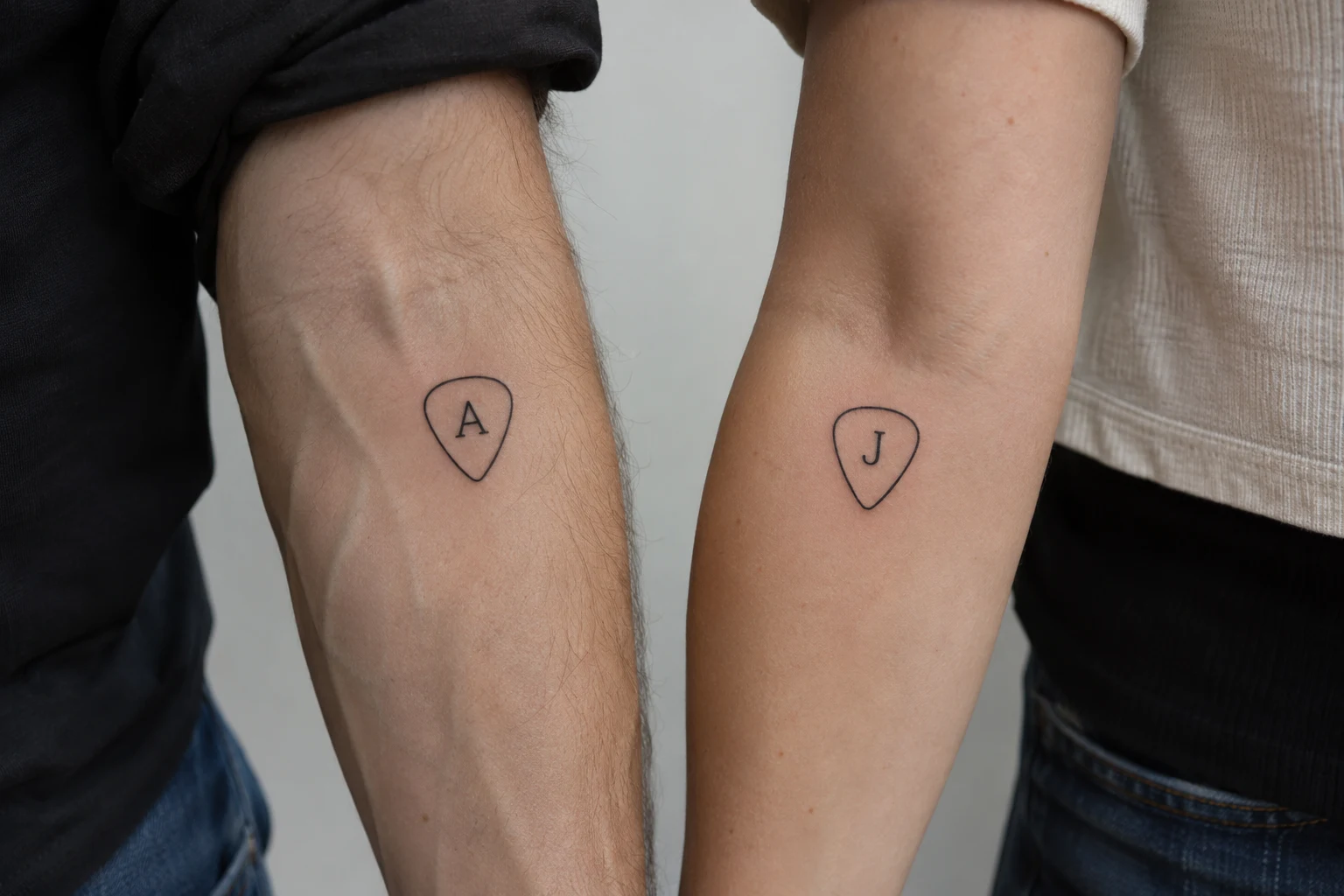
This suits friends, partners, or bandmates with a shared connection. Keep the pick shapes coordinated while letting each tattoo stand on its own.
24. A Song Memory Told Through Objects
A coffee mug beside a rain-streaked window inside a small frame.
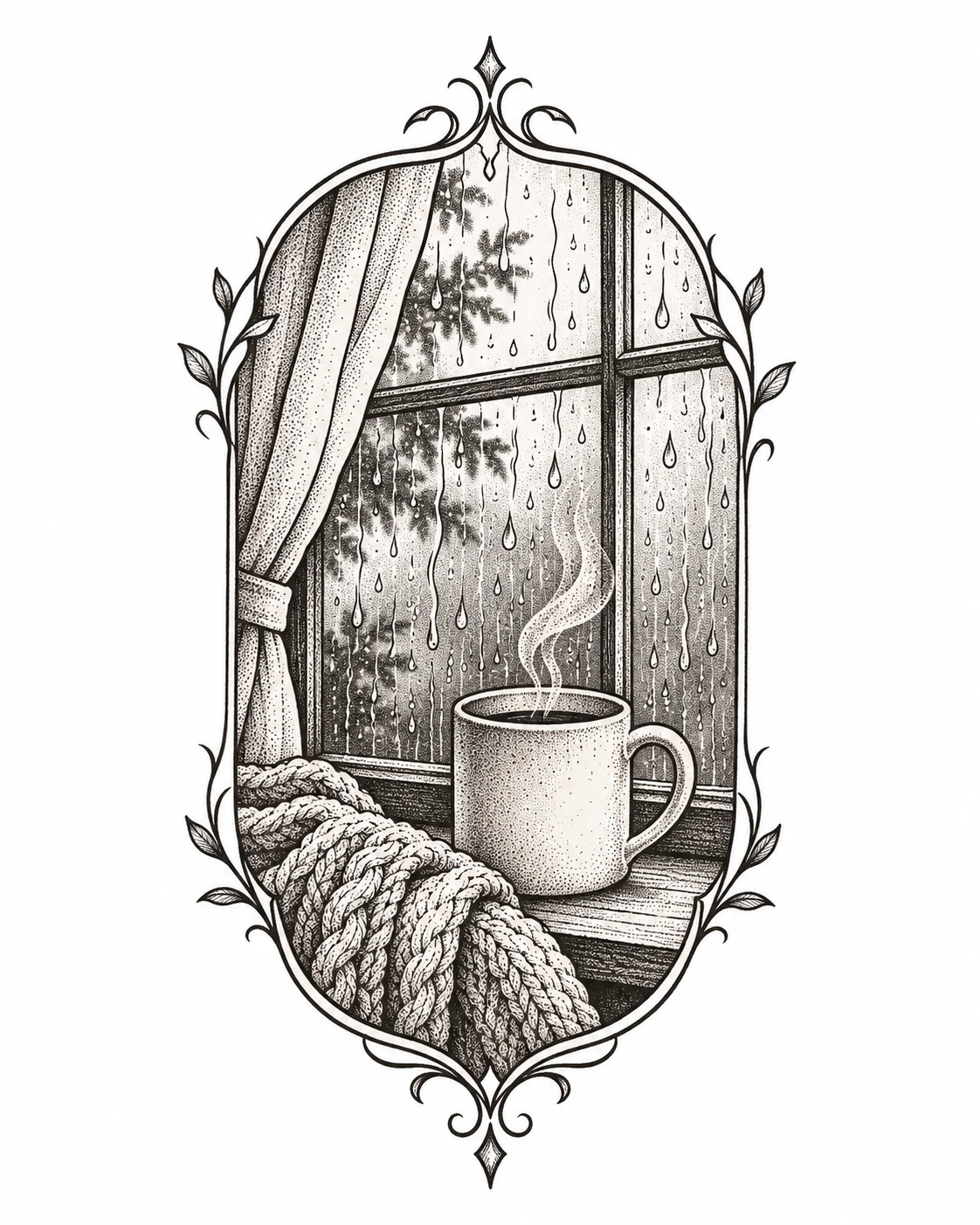
These objects are an example, not a reference to a particular song. Substitute two details that recall where you were when your song mattered.
25. A Family Instrument With a Handwritten Dedication
An acoustic guitar paired with a short handwritten dedication.
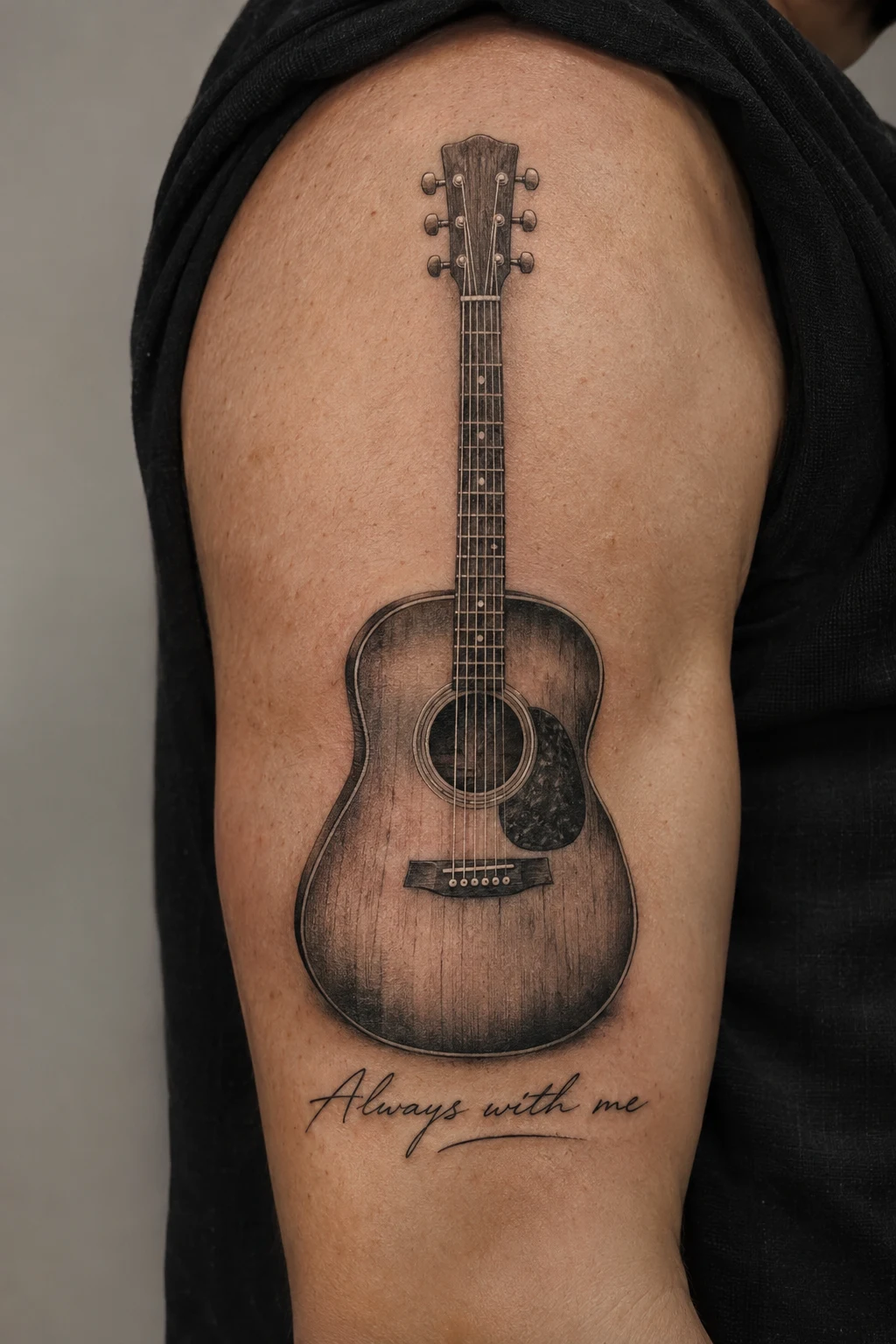
For a keepsake or memorial, use photographs of the actual instrument and an authentic handwriting sample. Choose the details that make the connection personal.
Choosing Your Design
Narrow your saved ideas to one subject, one visual style, and one personal detail. Bring that shortlist and any original references to a tattoo artist. Discuss placement, scale, and readable detail together before committing to the final drawing.

