
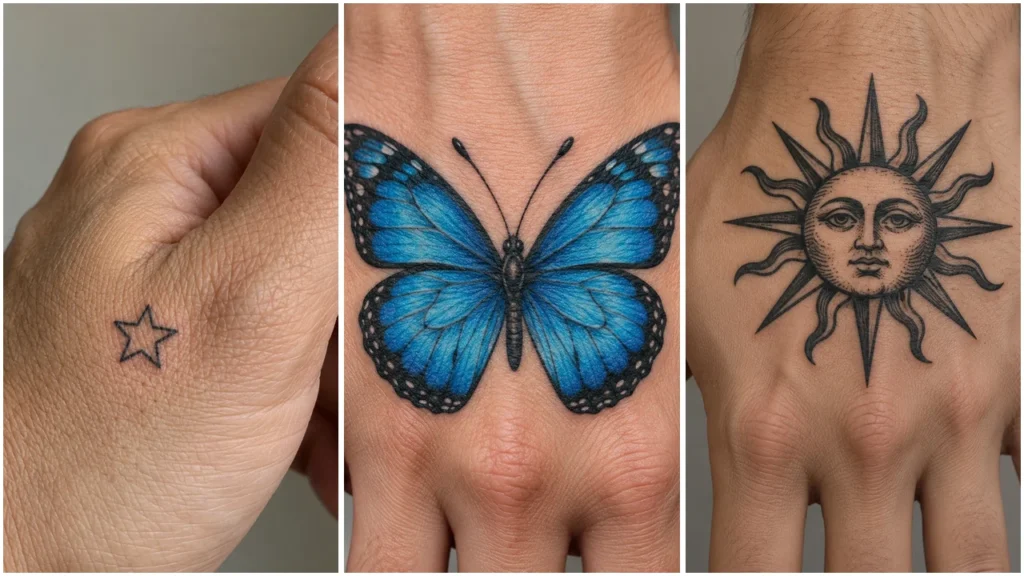
Hand tattoos can be a small symbol beside the thumb, a flower across the back of the hand or a bold design extending onto the fingers. These 20 concepts compare motifs, coverage and ink styles to help you choose a direction. Use them as starting points for an original design with your artist.
Small and Simple Hand Tattoos
Compact symbols leave plenty of visible skin. Compare their silhouettes and placement; a smaller design still needs careful planning.
1. Small Outline Star
A five-point outline star makes a compact accent near the thumb.
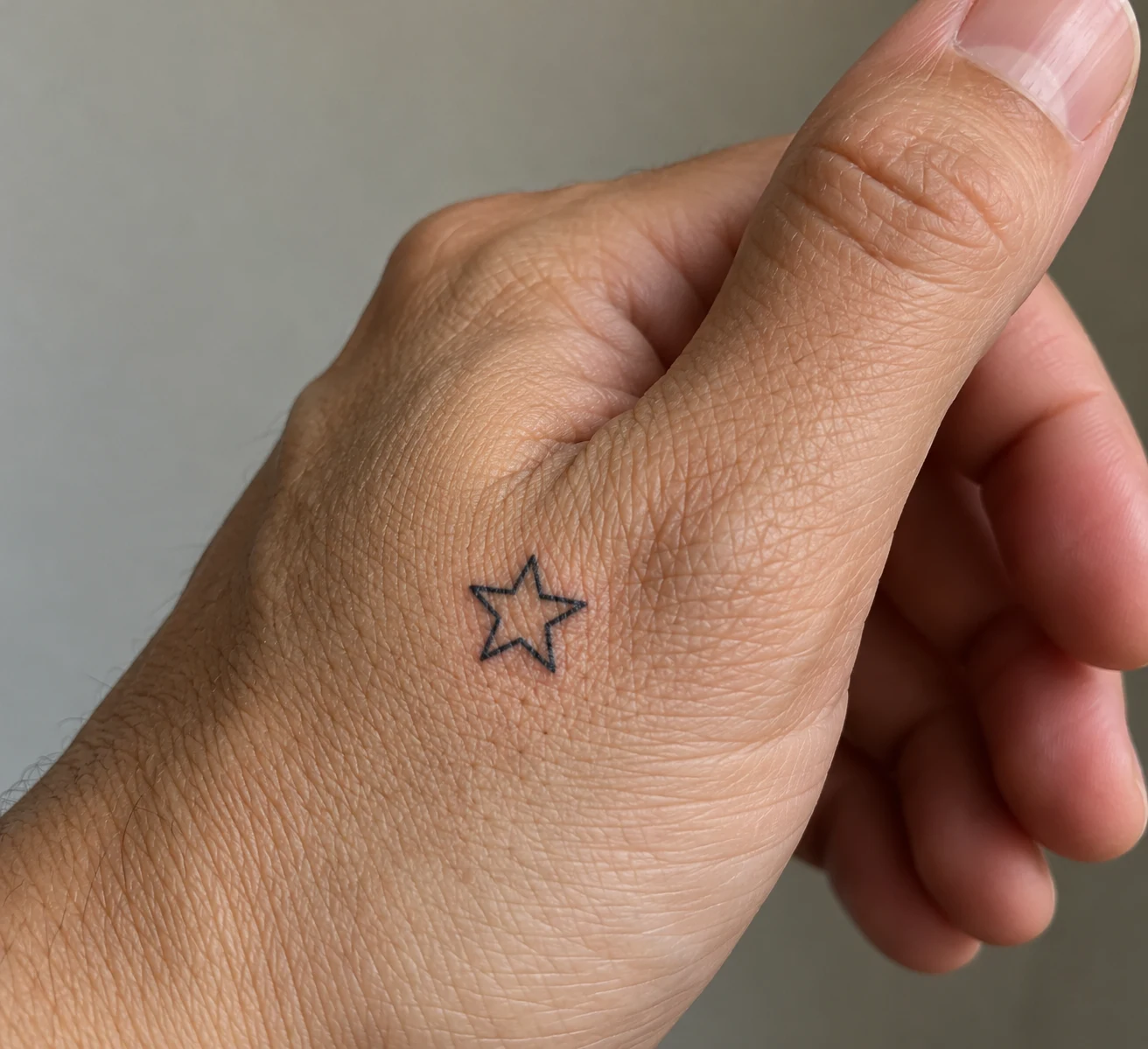
Choose this if you like angular shapes with an open center. Consider whether you want it tucked beside the thumb or more visible from above.
2. Simple Cross
Straight black lines create an unembellished cross on the back of the hand.
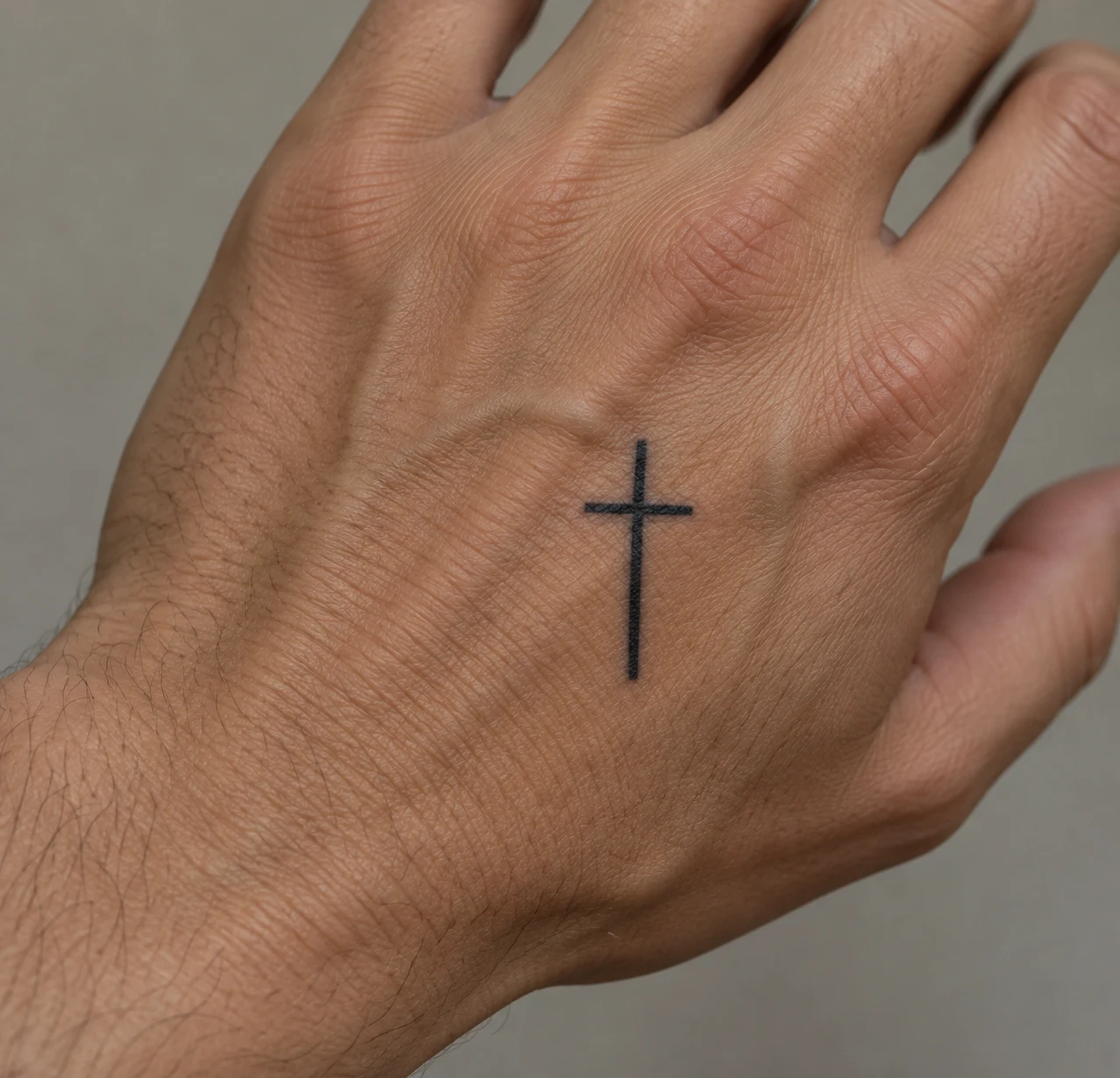
For someone choosing a faith-related design, this keeps the focus on the symbol. Discuss orientation with your artist so it faces the direction you intend.
3. Tiny Crescent Moon
A solid crescent adds a curved silhouette near the hand’s outer edge.
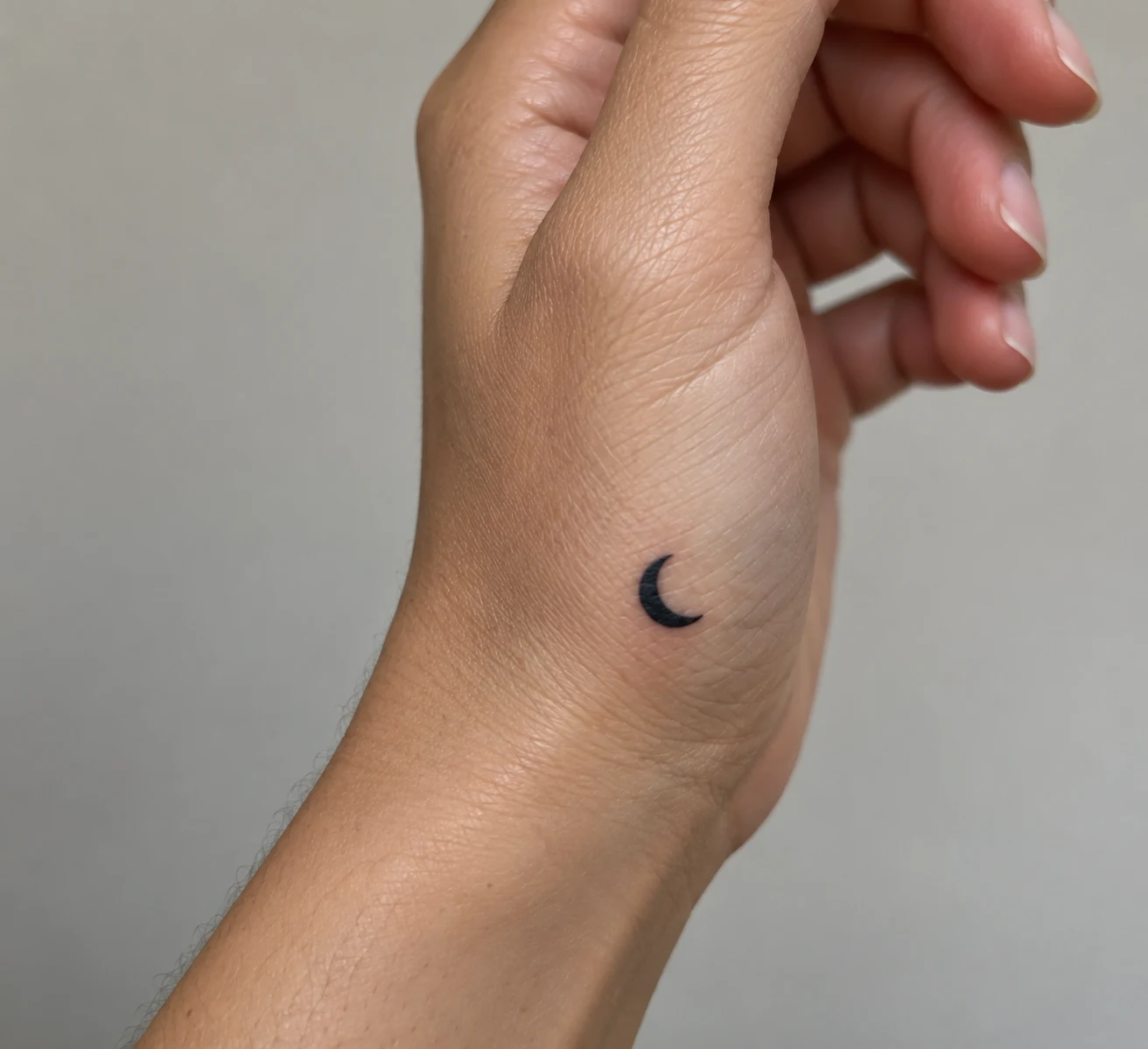
Its filled shape offers more visual weight than a thin outline. Keep it solitary if you prefer a small accent with space around it.
4. Open Geometric Diamond
An elongated diamond brings symmetry to the center of the hand.
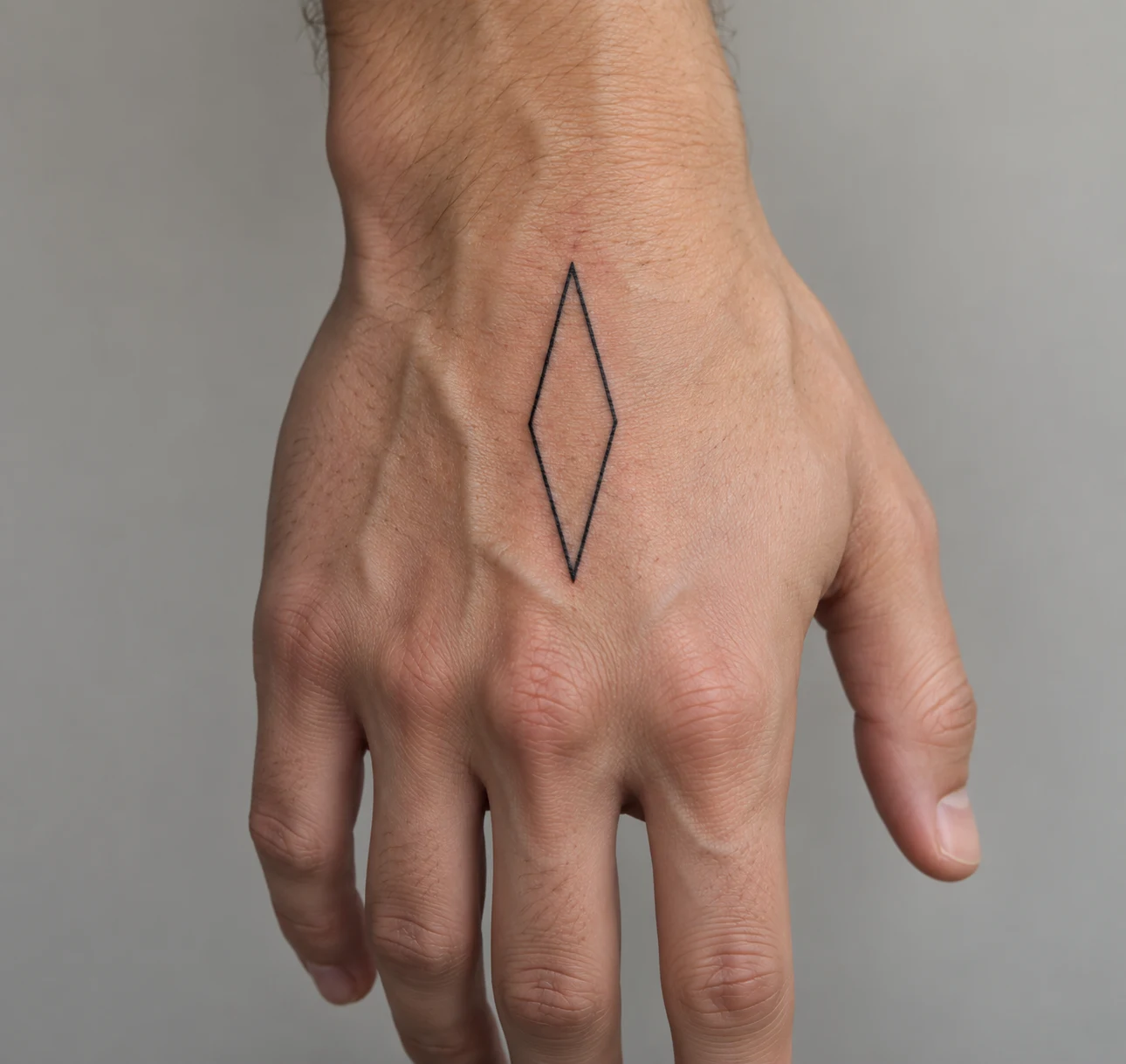
If you like spare linework and abstract shapes, consider this open outline. Compare centered and slightly offset stencil placements before choosing the position.
5. One-Word Lettering
Plain lowercase lettering gives a short word room to stand on its own.
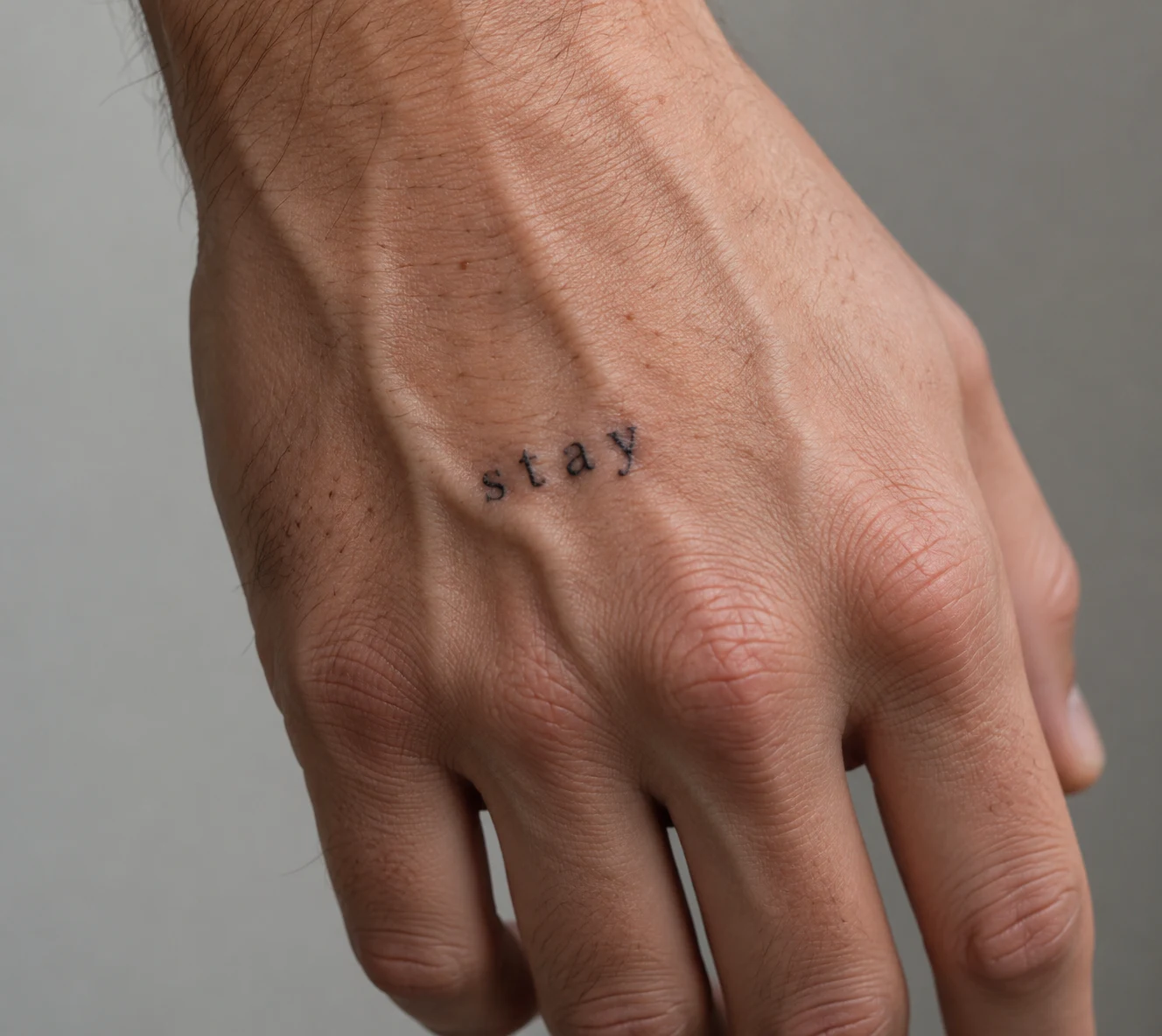
“Stay” illustrates the layout; choose wording that matters to you. Ask your artist to assess letter size and spacing instead of squeezing text into a fixed footprint.
Floral and Botanical Hand Tattoos
A rounded flower creates a central focal point, while stems and fronds can follow the hand toward the wrist.
6. Traditional Red Rose
Red petals, green leaves and bold black outlines form a colorful centerpiece.
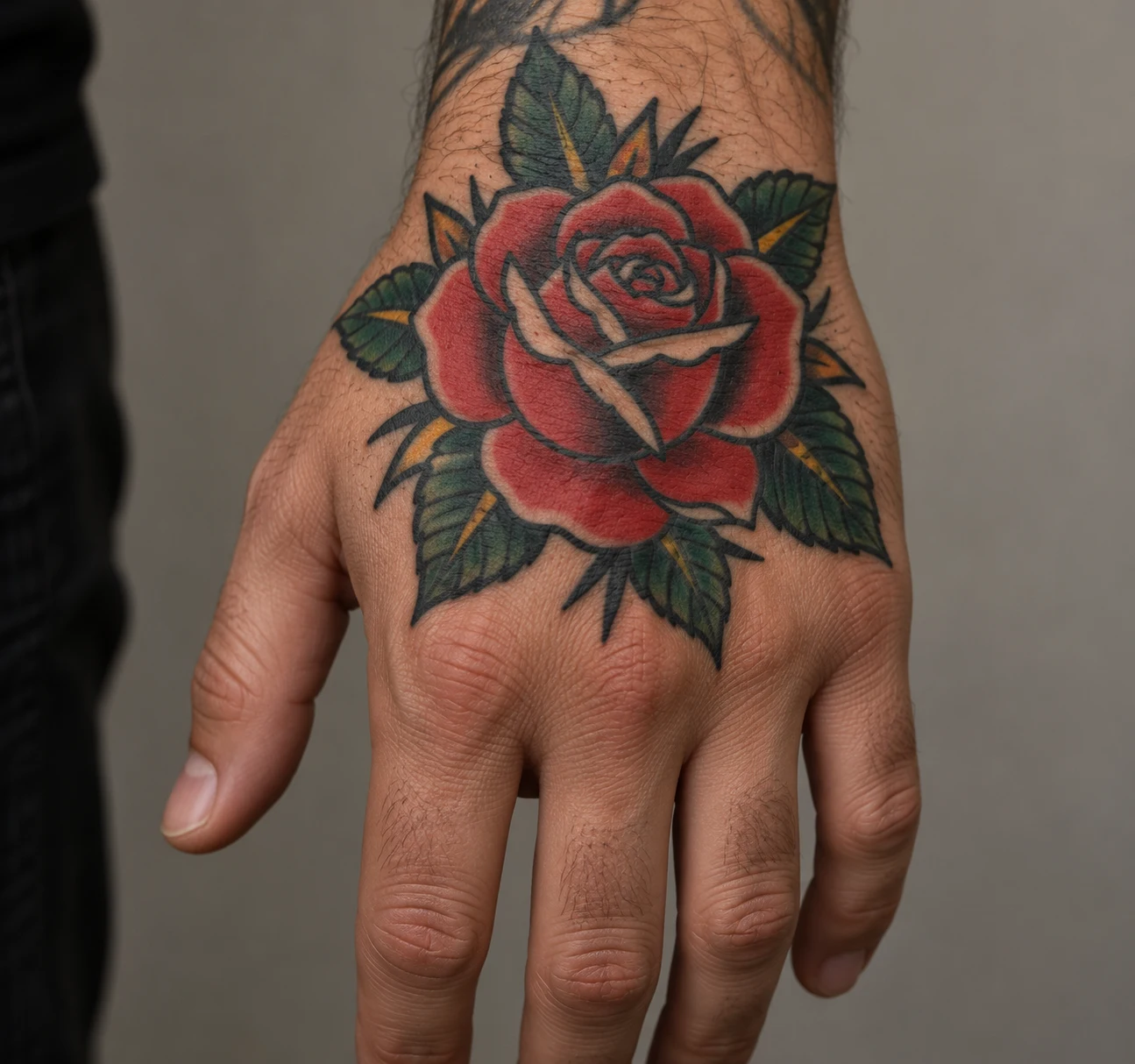
This rose suits readers who want clearly separated shapes and strong color. Consider how its palette would sit beside existing wrist or arm tattoos.
7. Black and Grey Peony
Layered petals spread across most of the back of the hand.
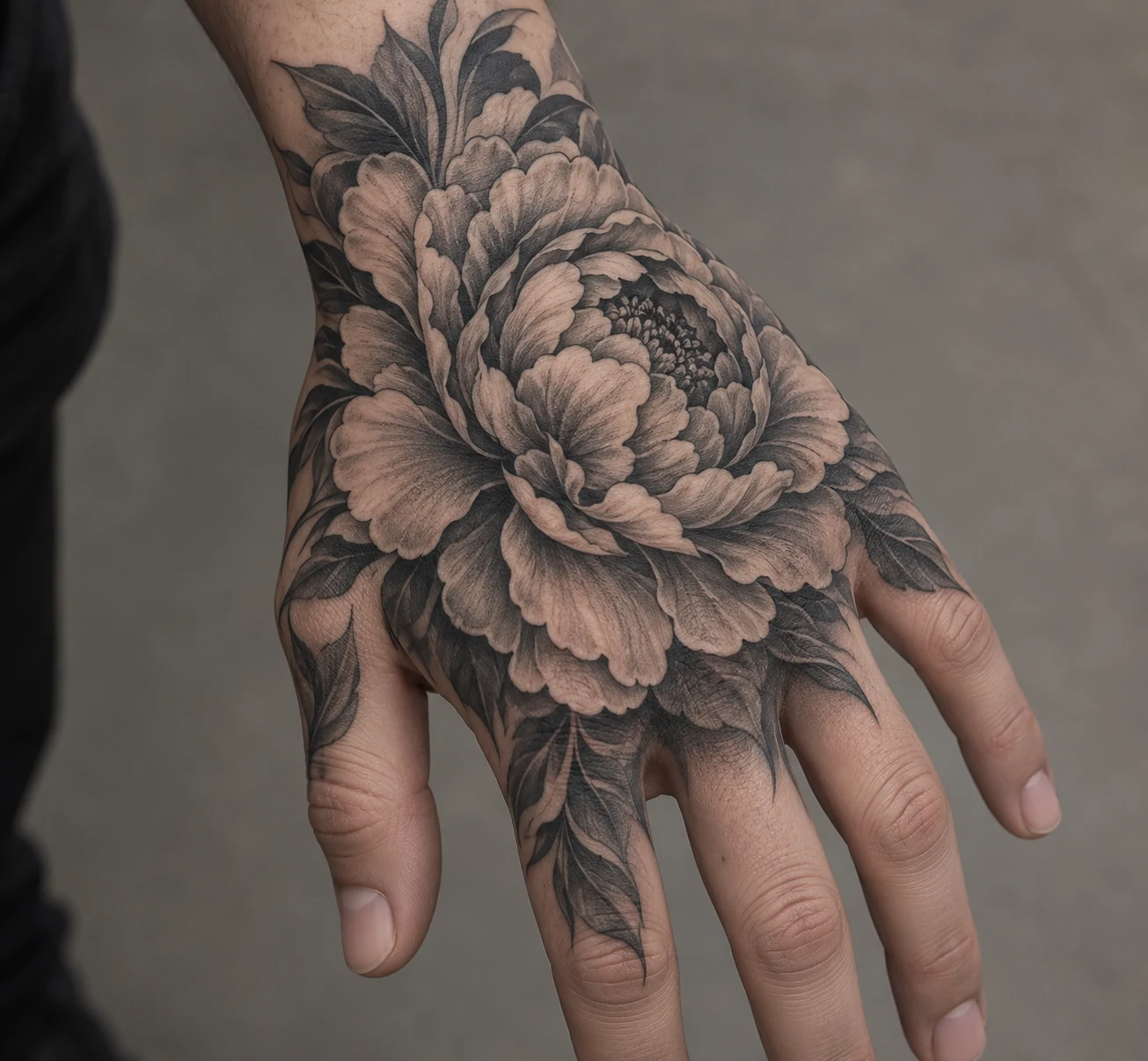
Layered shading gives this broad floral composition depth. The outer petals determine how close the design reaches to the knuckles and wrist.
8. Fine-Line Daisy Sprig
A small daisy and slender stem make an airy botanical arrangement.
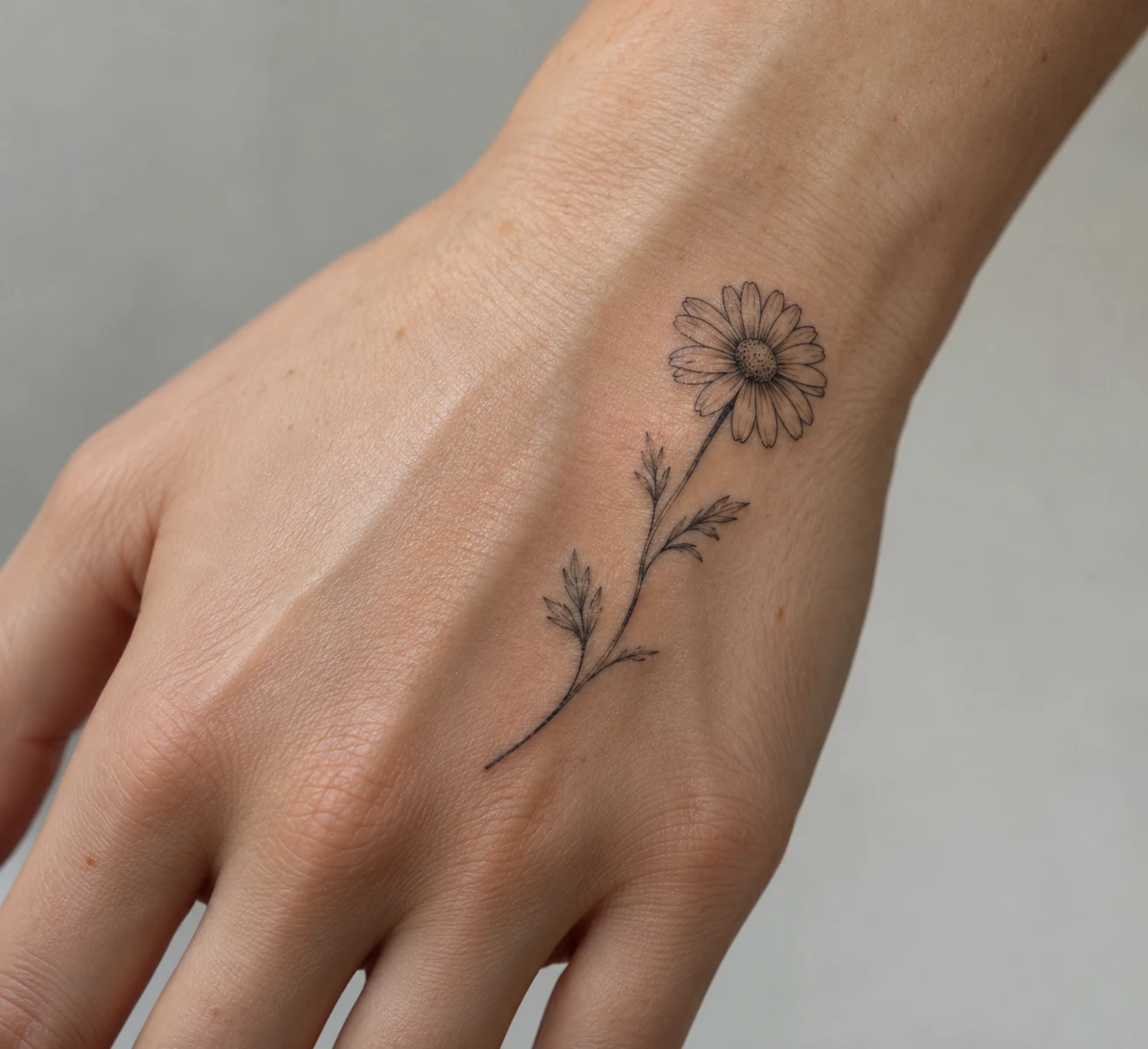
Leave space around the flower if you prefer a more open composition. Angling the stem toward the wrist gives the sprig a clear direction.
9. Leafy Vine Along the Thumb
A curved vine traces the thumb side of the hand.
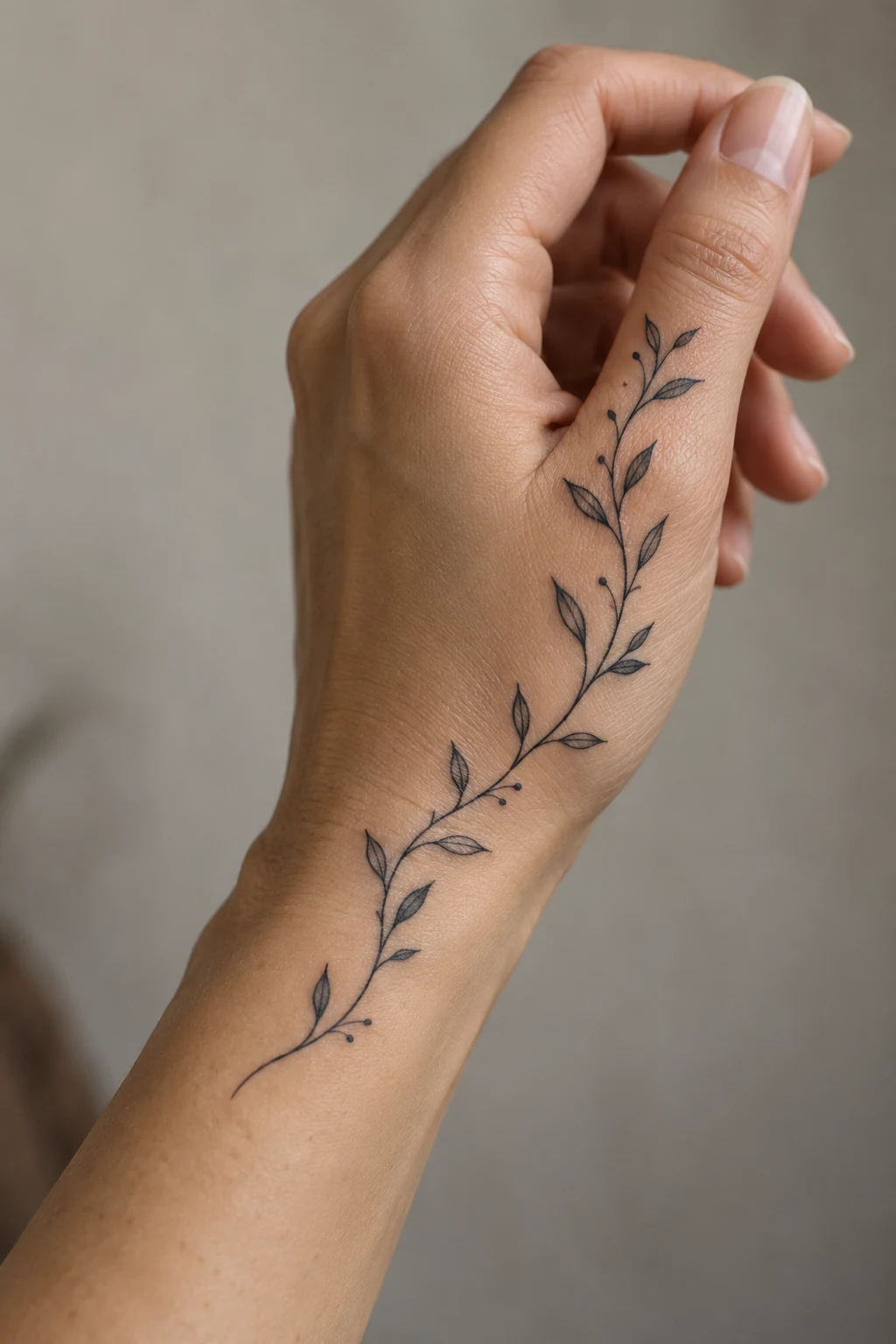
Its edge placement leaves the center open. Decide whether the vine should finish on the hand or continue into a wrist design.
10. Fern Frond
Spaced leaflets form a tapering diagonal across the hand.
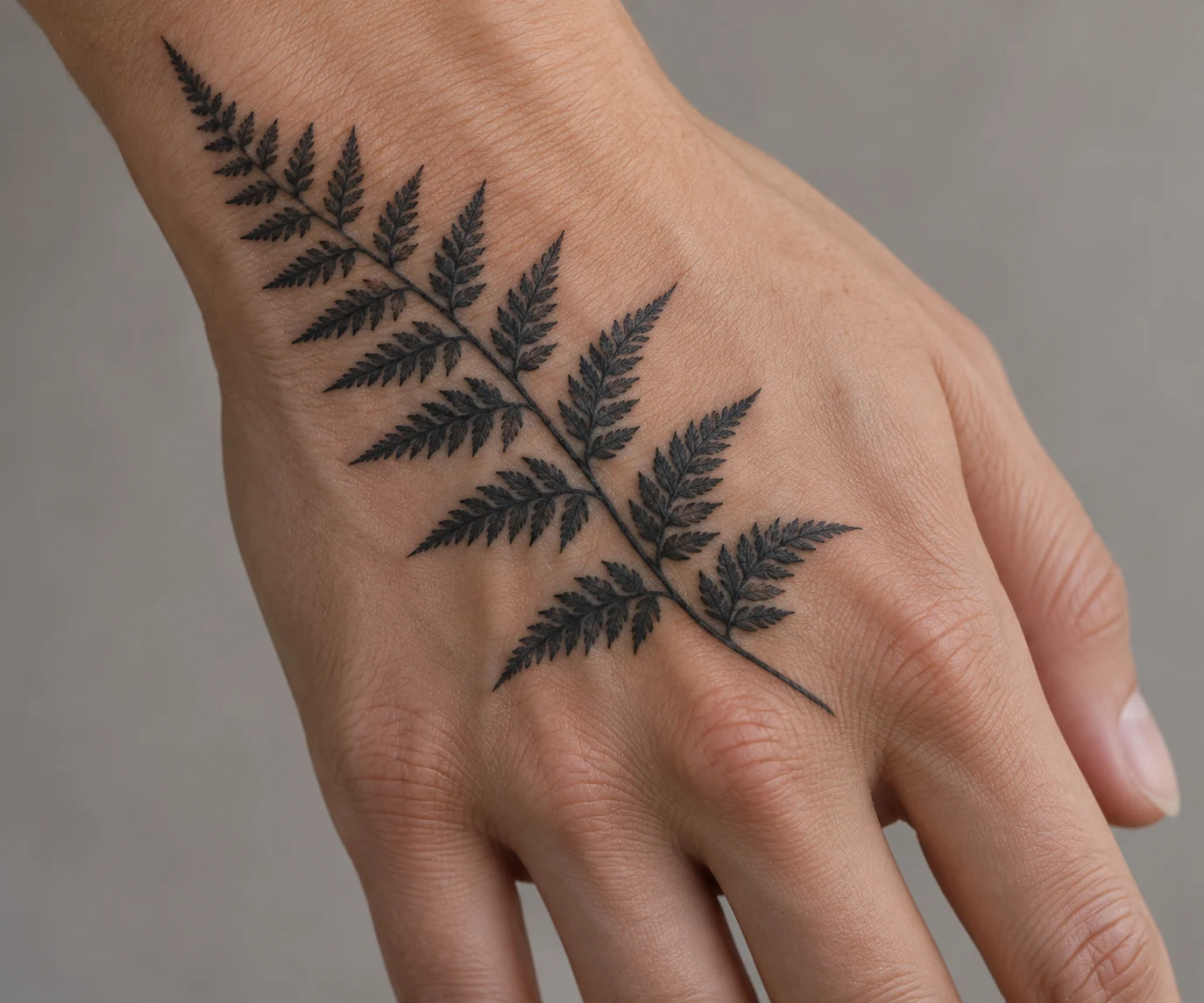
A fern offers a more structured outline than a rounded bloom. Try the stencil at different angles to find the sweep you prefer.
Animal and Insect Designs
Compare balanced wings, winding bodies and expressive portraits to choose how the design occupies the hand.
11. Blue Butterfly
Open blue wings create a symmetrical focal point above the knuckles.
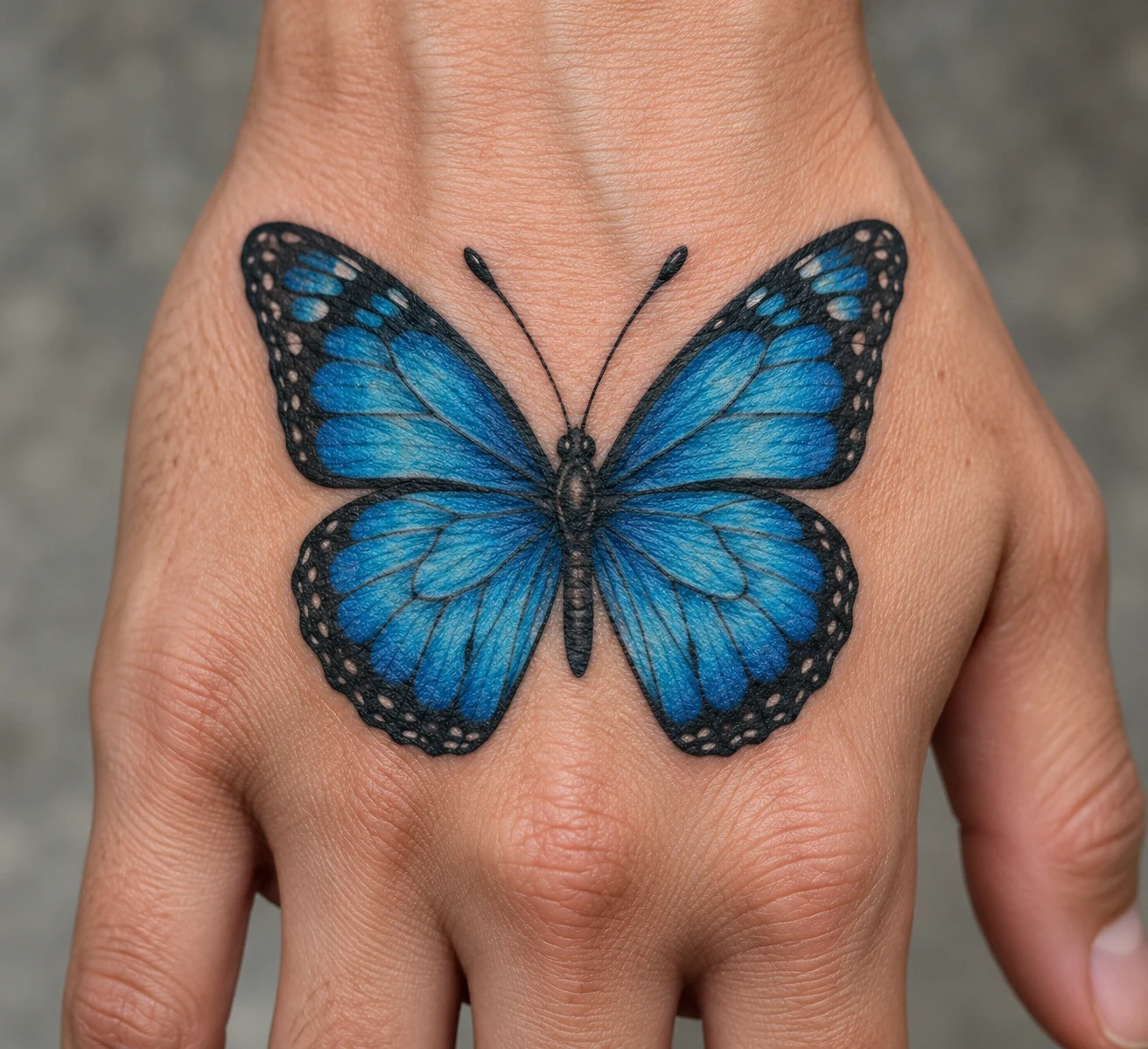
Choose this for a balanced composition with color. Blue is one option; another palette or black ink can change the overall feel.
12. Coiled Snake
A loose coil curves across the hand, ending near the index knuckle.
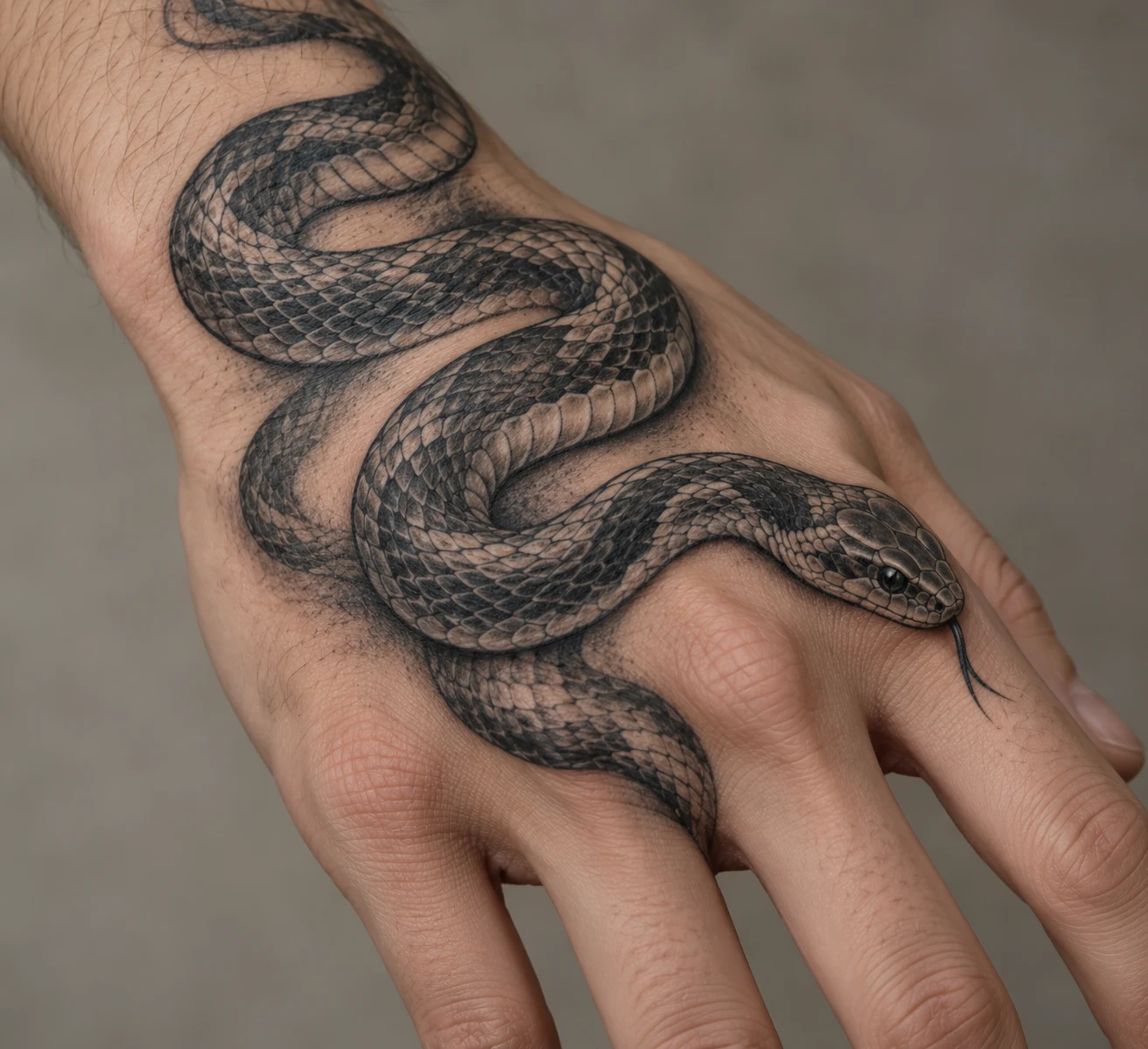
If you prefer flowing shapes, compare a compact coil with a longer body extending toward the wrist.
13. Dotwork Moth
Broad patterned wings combine a dark silhouette with stippled shading.
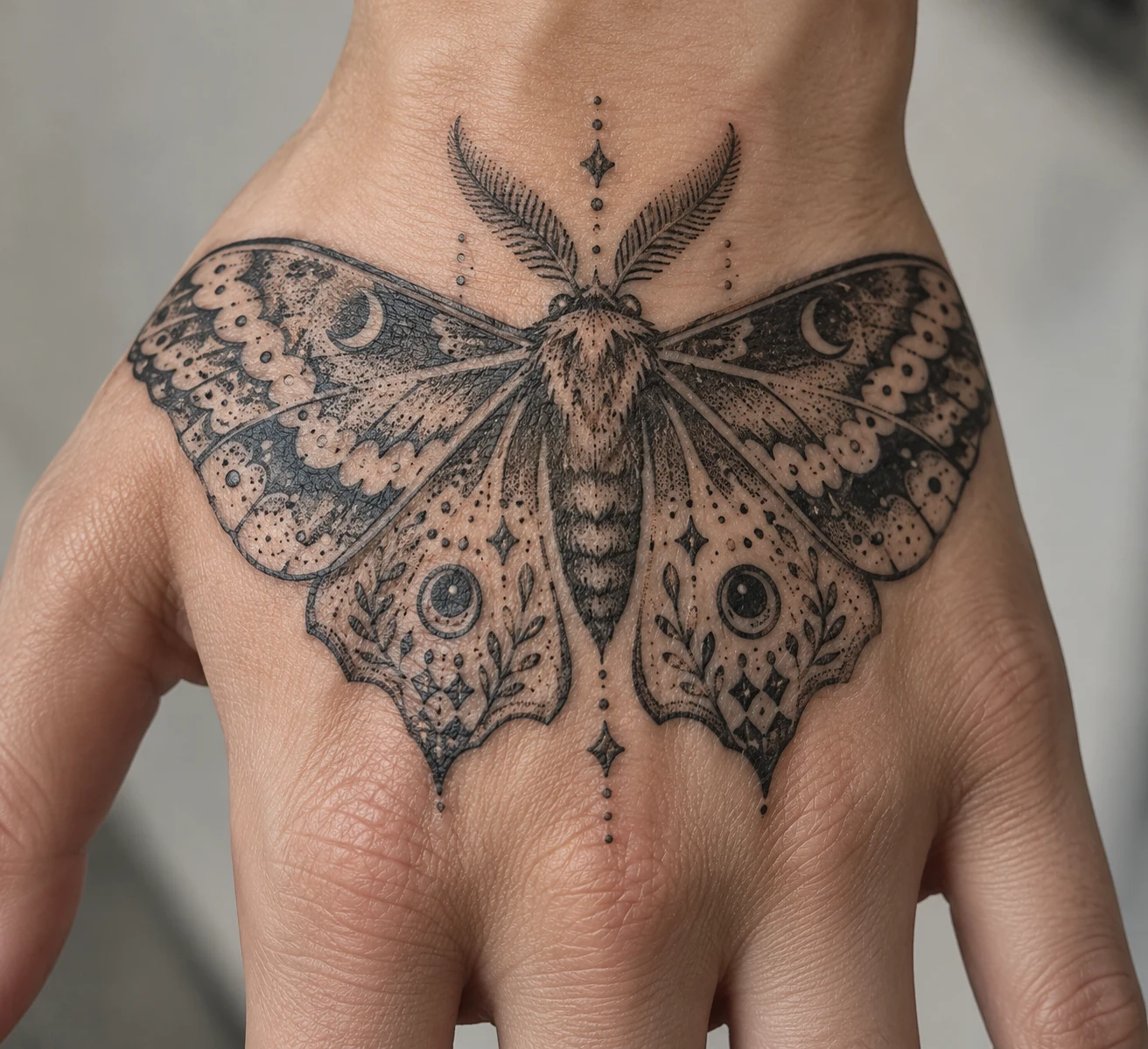
The stippled shading suits readers who prefer texture to bright color. Keep the wing pattern selective so the composition has a clear focal point.
14. Swallow in Flight
Blue wings and a forked tail give this bird a directional shape.
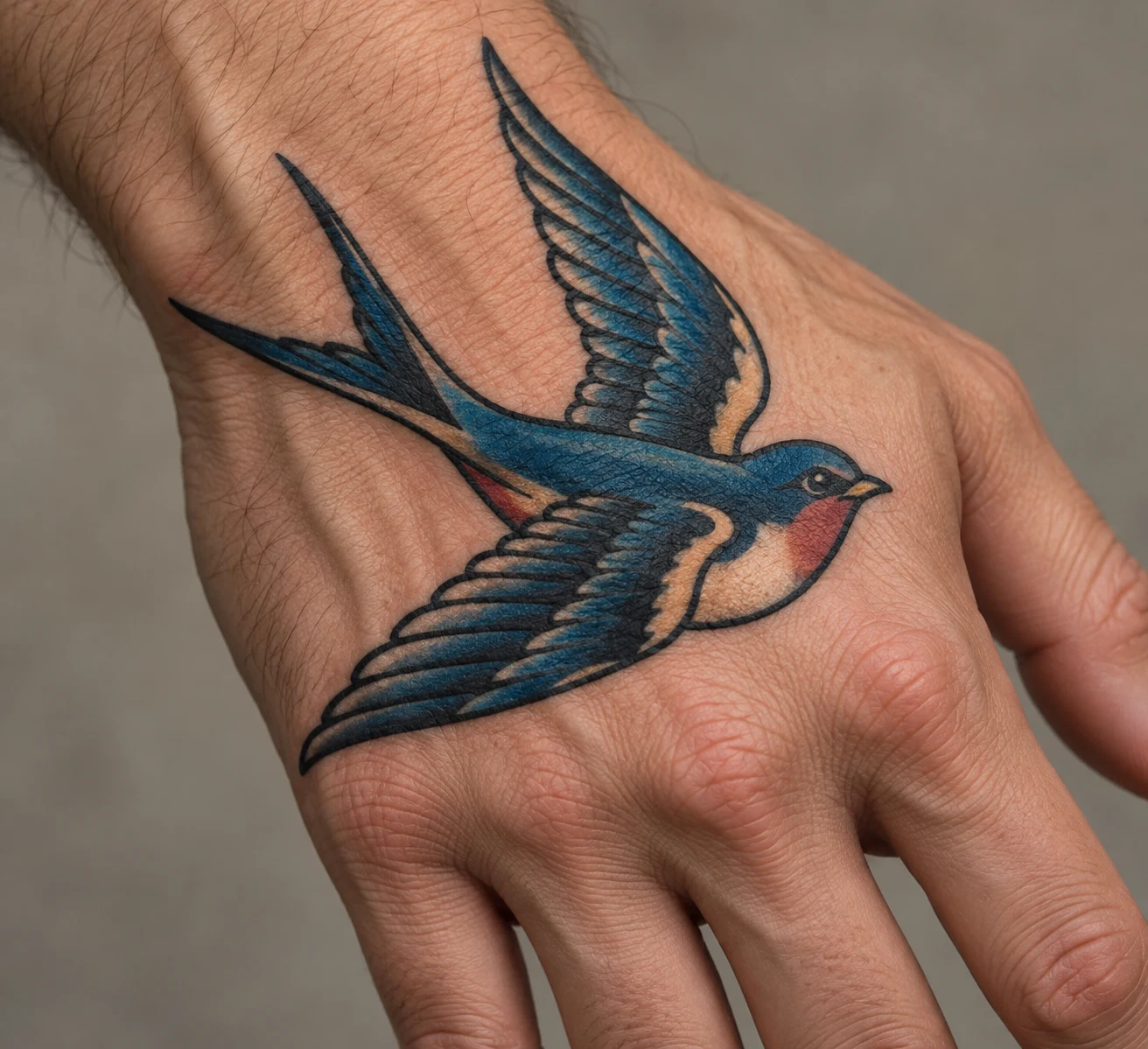
The angled pose suits readers who prefer movement over symmetry. Consider where the head and tail sit relative to nearby tattoos.
15. Black and Grey Tiger Face
A frontal tiger portrait fills the hand with stripes and expression.
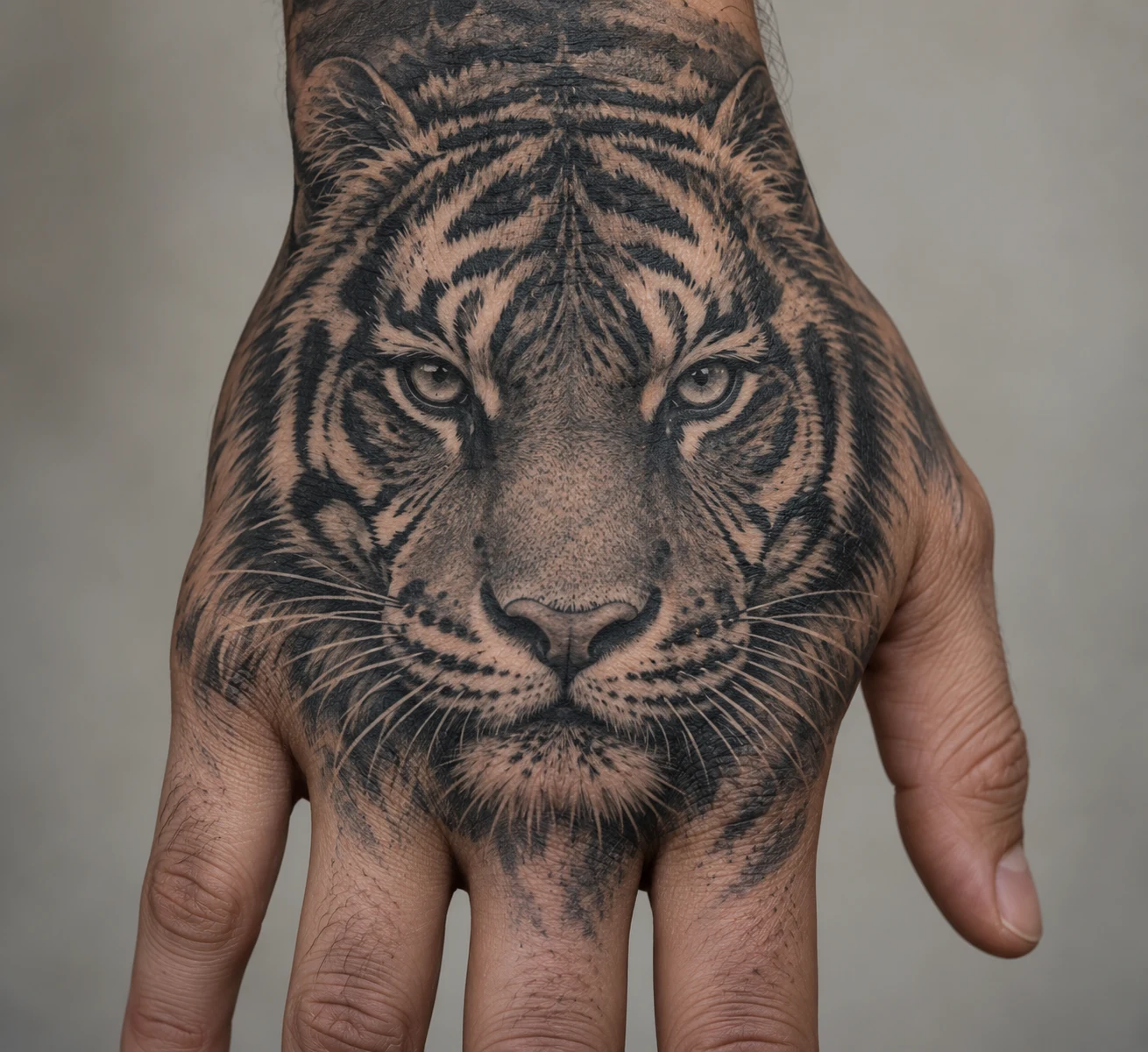
This is a fuller-coverage choice. Discuss whether you prefer detailed shading or a more graphic interpretation with larger, simpler shapes.
Bold Hand Tattoos and Statement Pieces
These concepts use broader coverage, stronger contrast or extensions toward the fingers and wrist.
16. Skeleton Hand
Bone-inspired shapes run across the hand and onto the fingers.
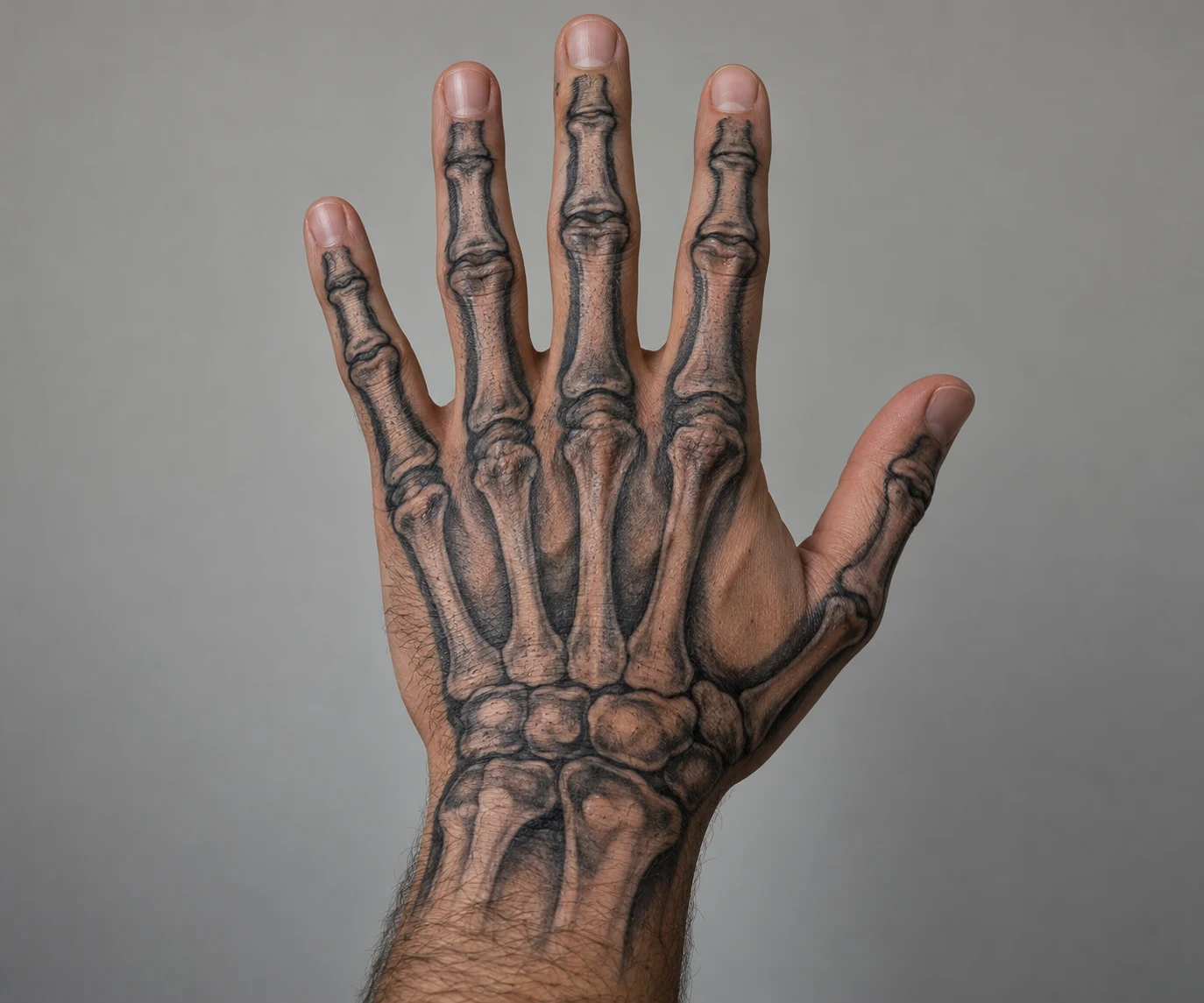
Choose this for a design that echoes the hand’s structure. Explore more skeleton hand tattoo ideas if finger coverage appeals to you.
17. Ornamental Radial Pattern
Scalloped edges, lines and dots radiate from a central point.
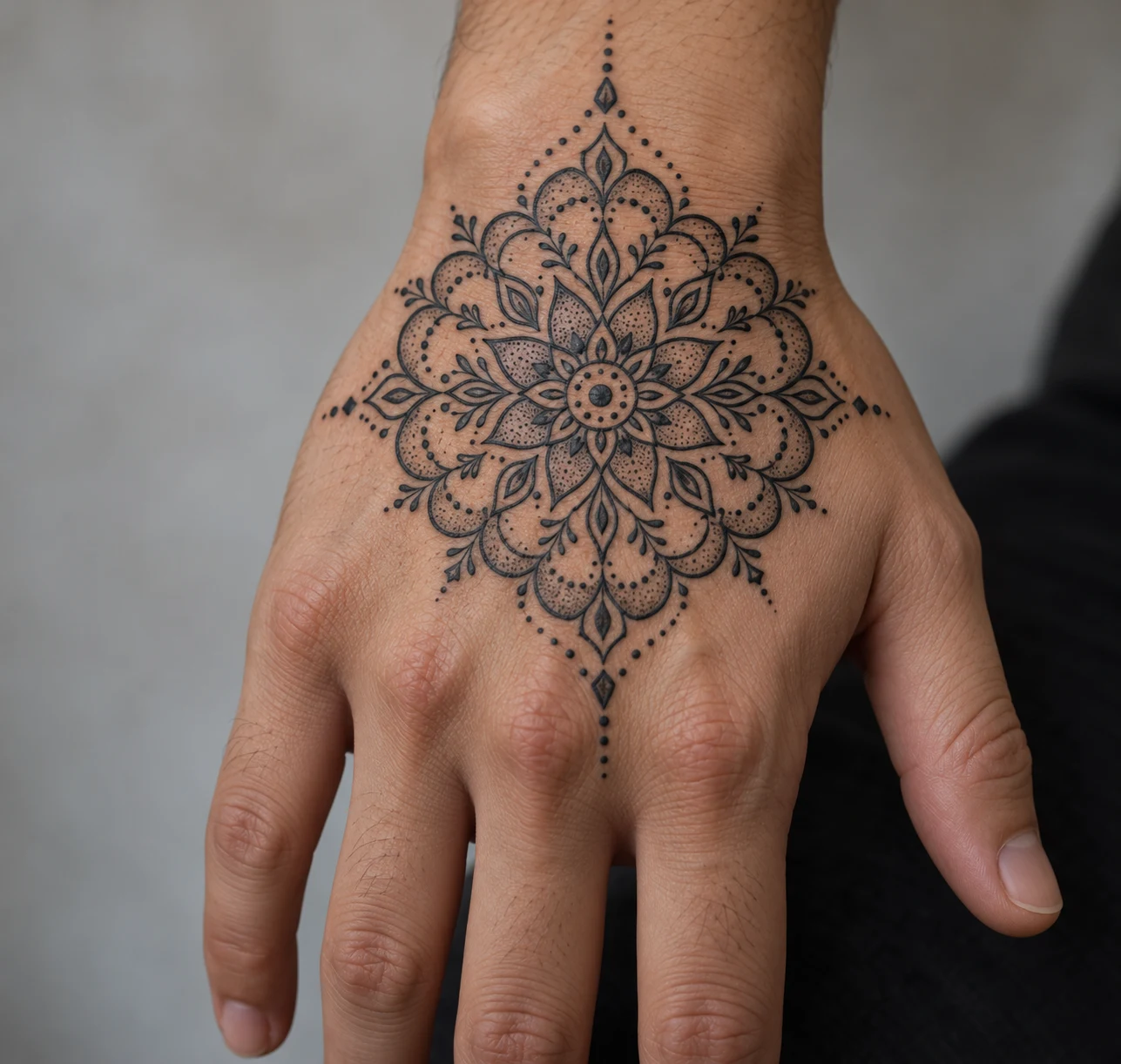
Symmetry and repeating detail are the focus here. Decide whether the ornament should stay compact or spread toward the knuckles.
18. Flowing Blackwork Ribbon
A broad black ribbon curves from the wrist across the hand.
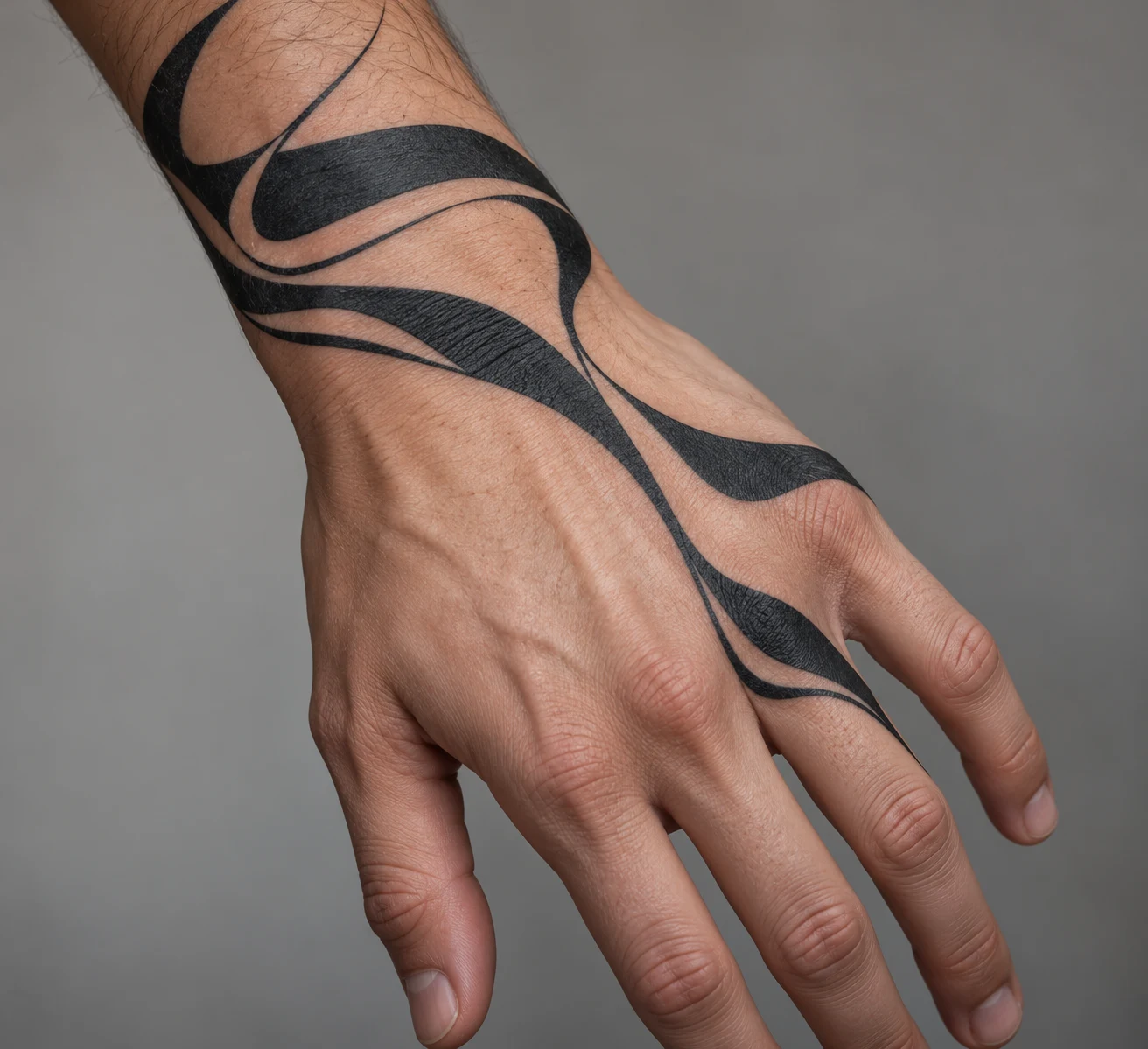
Open skin gaps separate the sweeping shapes. Choose this direction if abstract movement and areas of solid black match your style.
19. Traditional Dagger
A decorative handle and grey blade create a strong central axis.
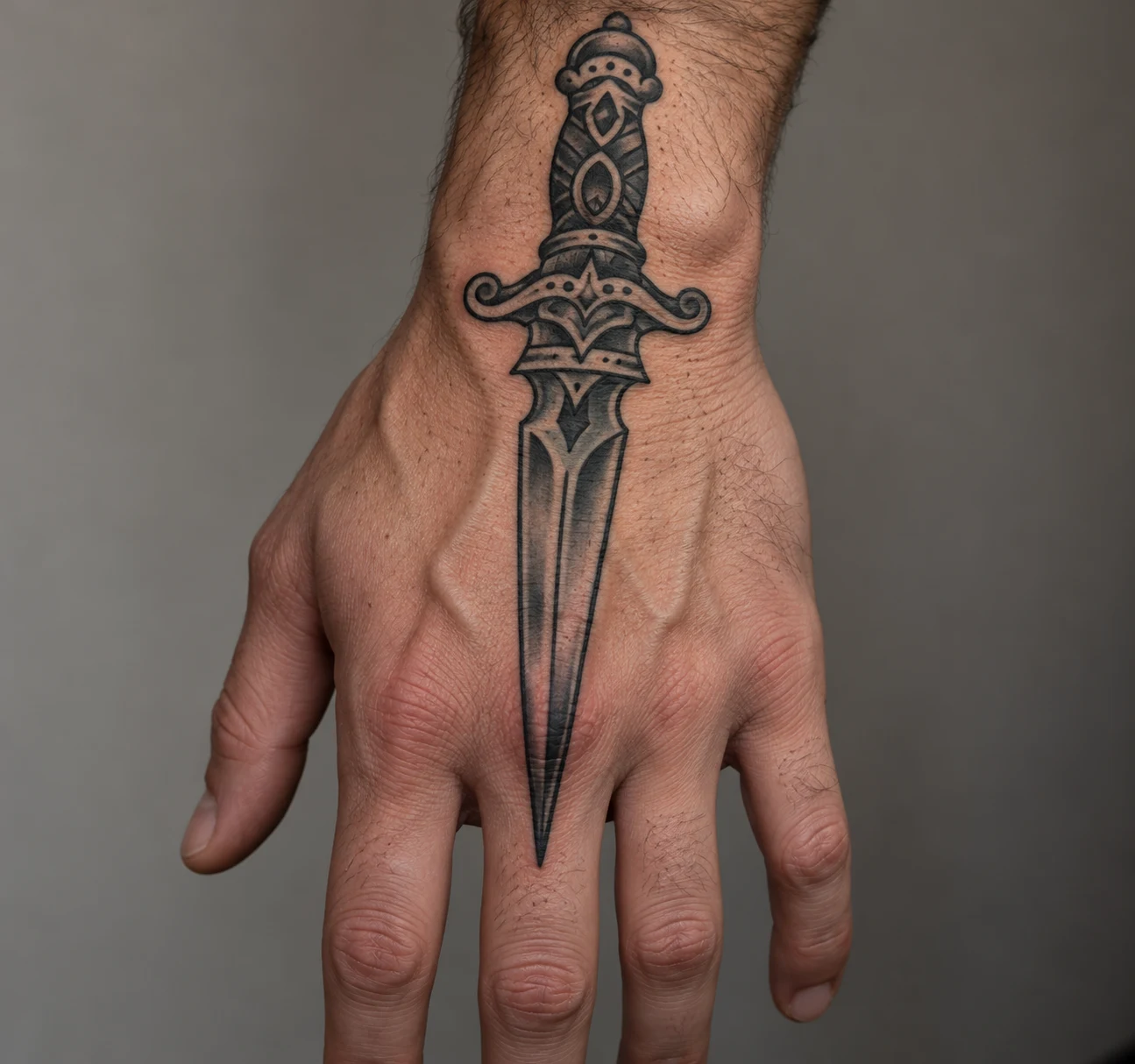
The wrist-to-knuckle alignment suits an elongated composition. Leave surrounding space if you want the dagger to remain the main feature.
20. Sun Face
A circular face sits inside alternating straight and curved rays.
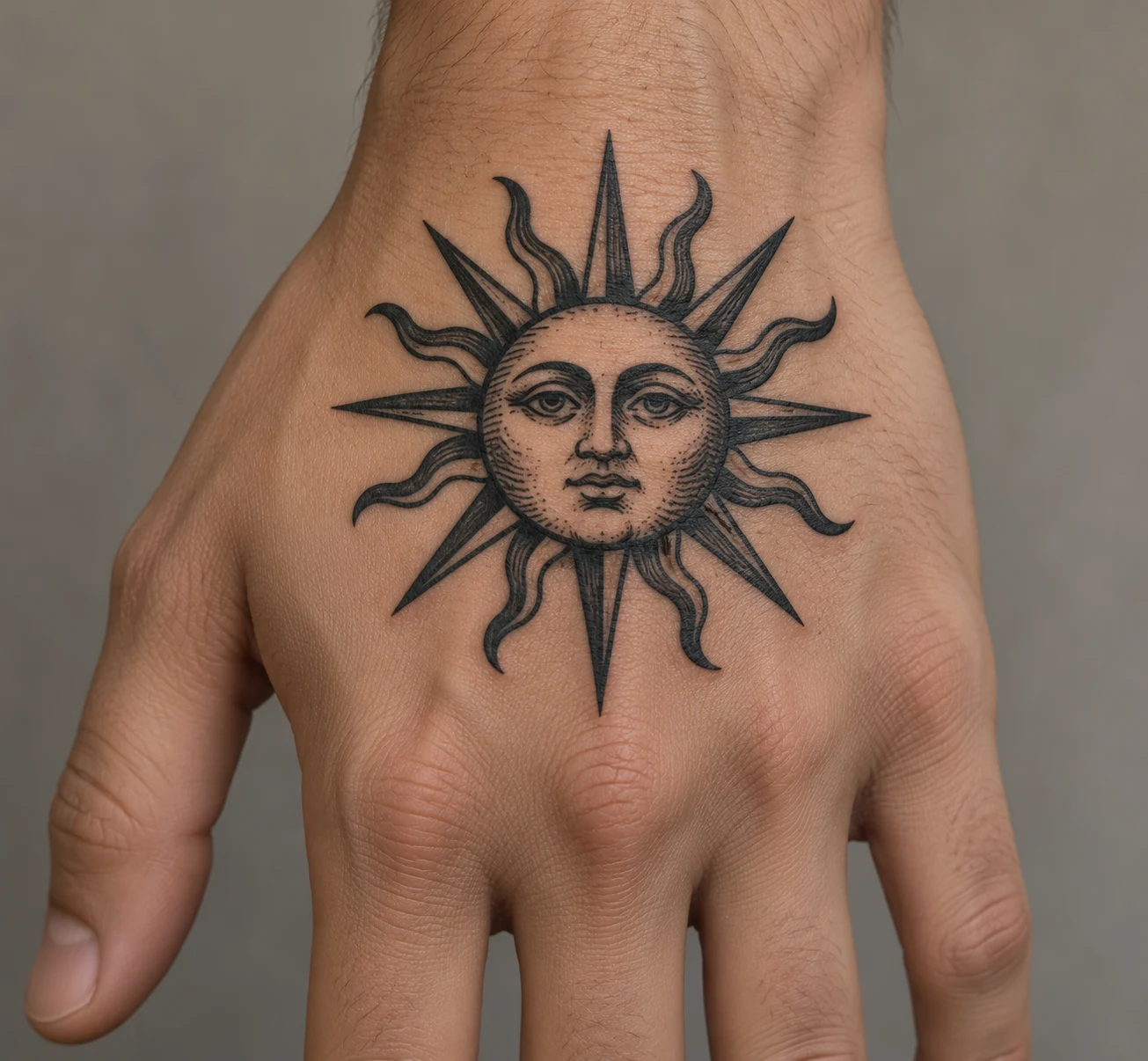
The rounded layout makes an expressive centerpiece. A face adds character; a plain central disc would give the same basic layout a simpler appearance.
How to Narrow Down Your Hand Tattoo Ideas
Start with coverage: a small accent, the back of the hand, or a composition reaching onto fingers or wrist. Then shortlist two motifs and compare outline weight, shading and color.
Whether you’re searching for hand tattoos for men or hand tattoos for women, compare designs by the style, placement and coverage you prefer. Ideas 1–5 also offer starting points for small or simple designs.
Before committing, ask an artist about suitable spacing, expected wear, pain, aftercare and healing considerations for your placement. Request a personal quote based on the proposed design.
Save two contrasting ideas and note what you like about each: the motif, placement or ink treatment. Those details give your artist a useful starting point for an original composition.

