
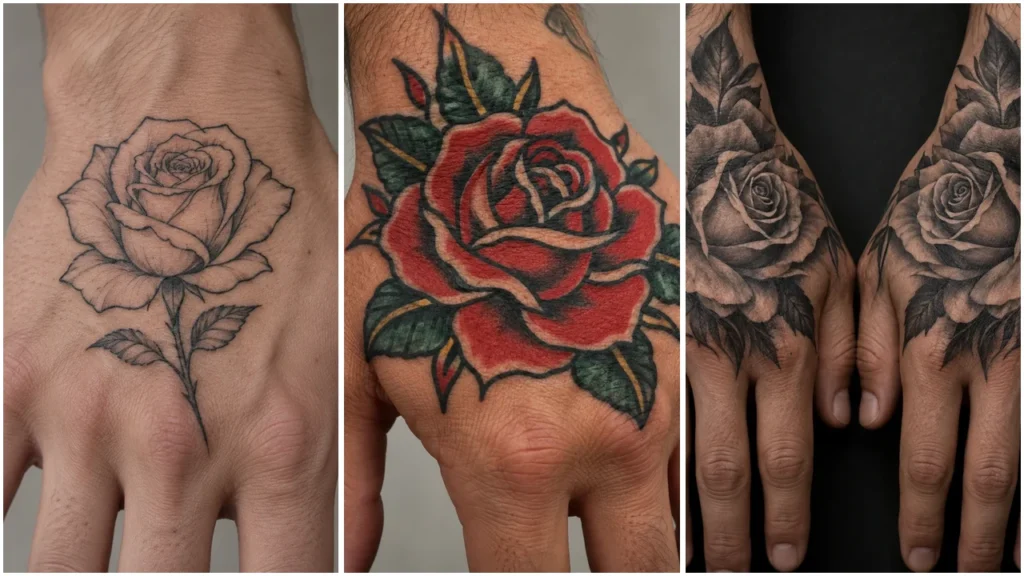
Rose hand tattoos can feature a single outlined bloom, a shaded flower across the back of the hand, or a stem that follows its edge. These 20 ideas are grouped by visual style to help you compare petal detail, color, and placement before choosing a direction.
The images planned here are tattoo concepts, not client results. Use them to identify details you’d like an artist to adapt to your hand.
Minimal and Graphic Rose Hand Tattoos
These five designs use outlines, open space, and strong shapes to give the rose its character.
1. Single Outline Rose
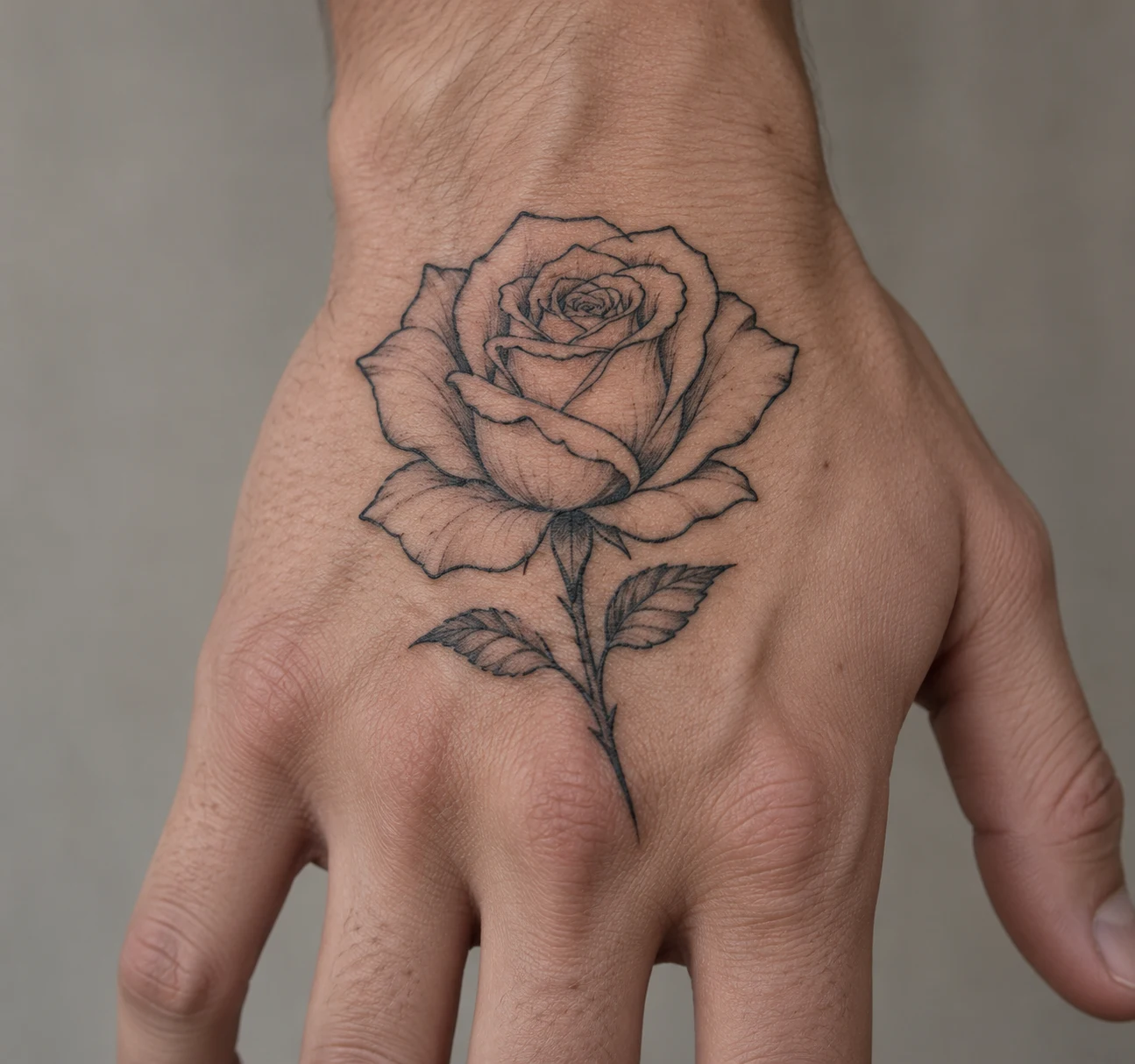
An open bloom keeps the design airy. A clear outer contour and a few curved petal lines suit someone who wants a simple floral focal point. Decide how much interior detail you want before adding shading.
2. Continuous-Line Rose
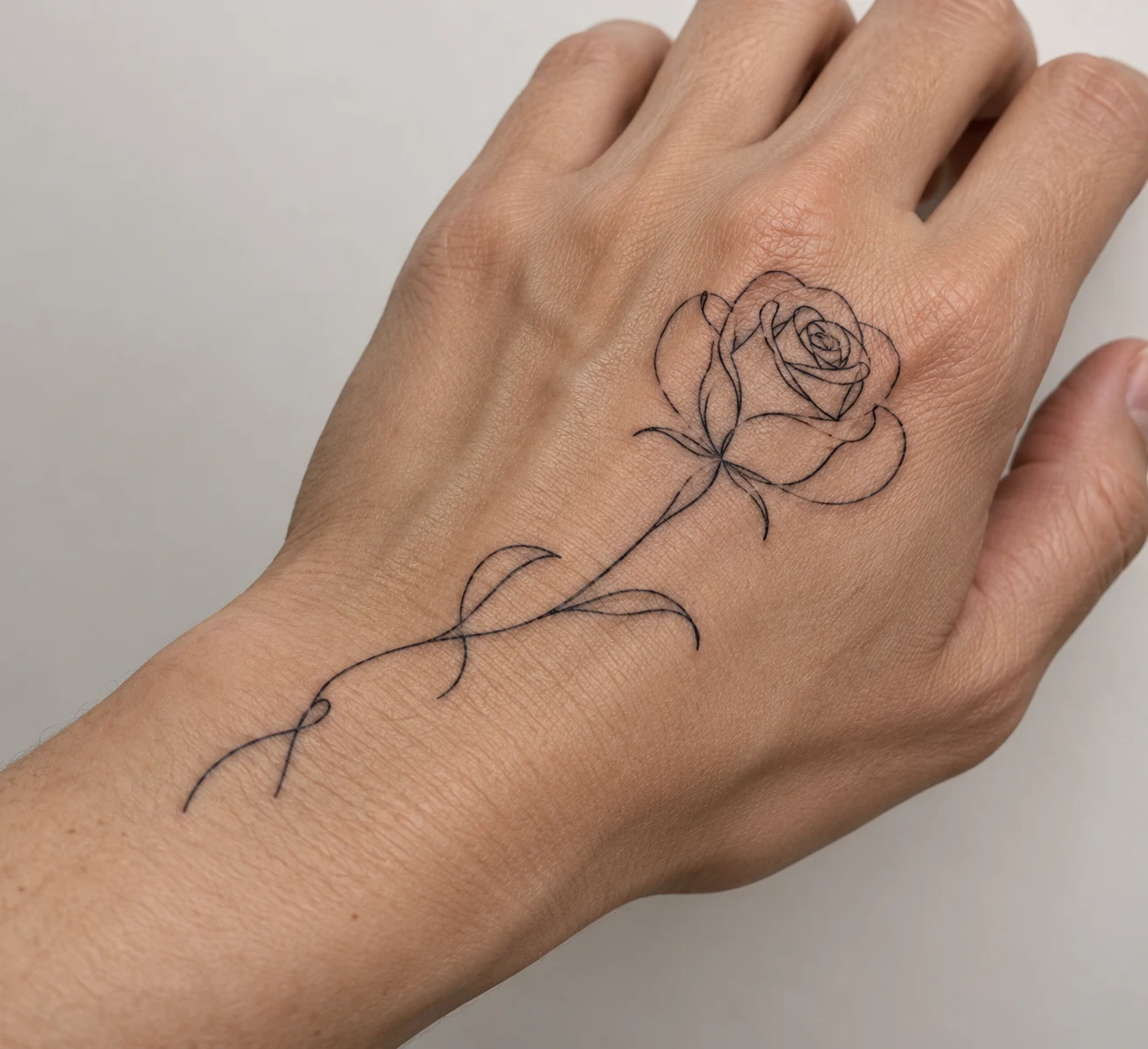
Looping lines suggest petals without separating every fold. Choose this direction if you enjoy abstract florals; its flowing shape feels more gestural than a carefully outlined bloom. Keep enough structure for the flower to remain recognizable.
3. Rosebud Along the Outer Hand
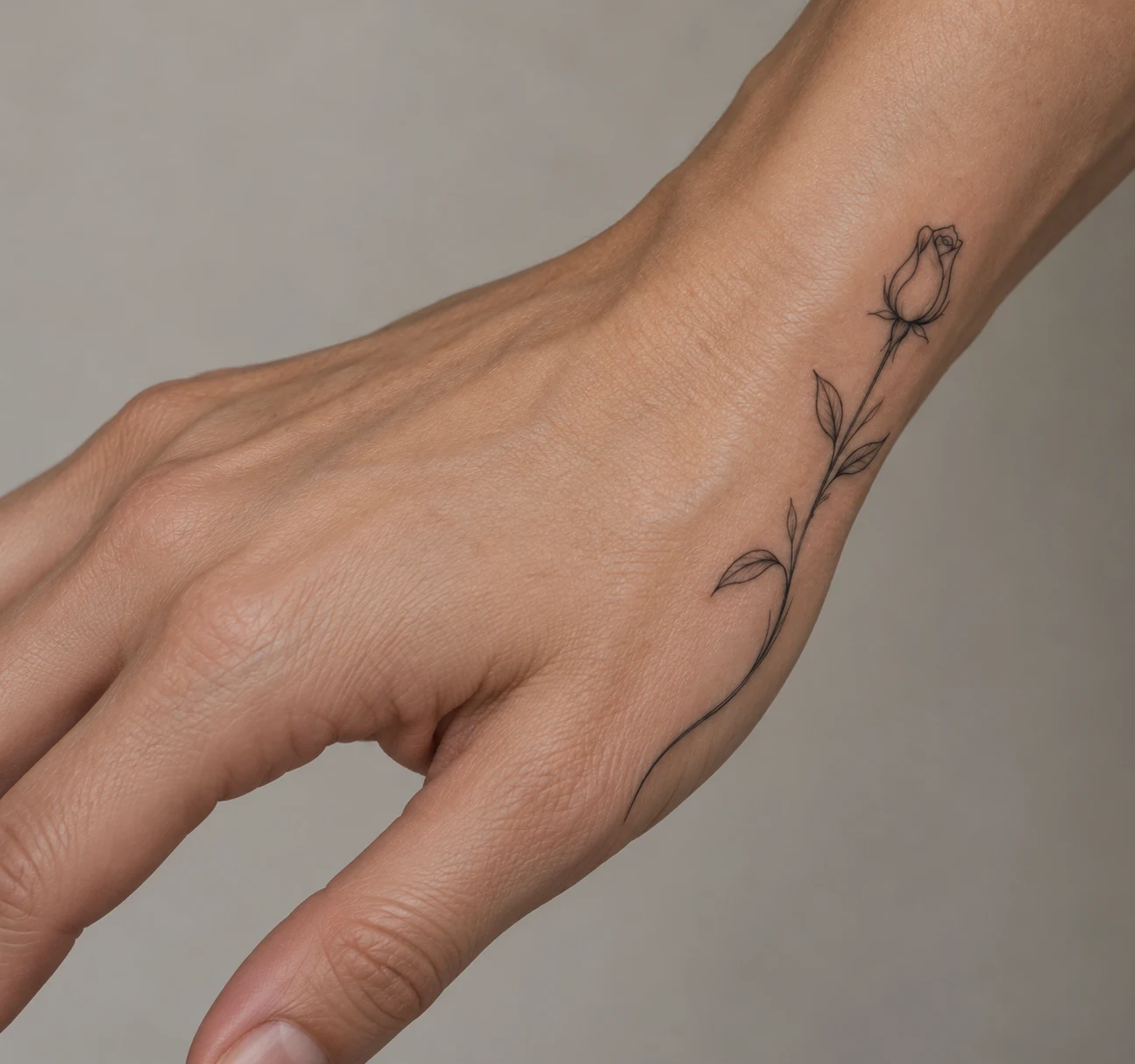
A closed bud creates a narrow, lengthwise composition. This suits readers who prefer a design along the little-finger side over a broad central flower. Compare the bud pointing toward the fingers with the opposite orientation.
4. Solid Black Rose Silhouette
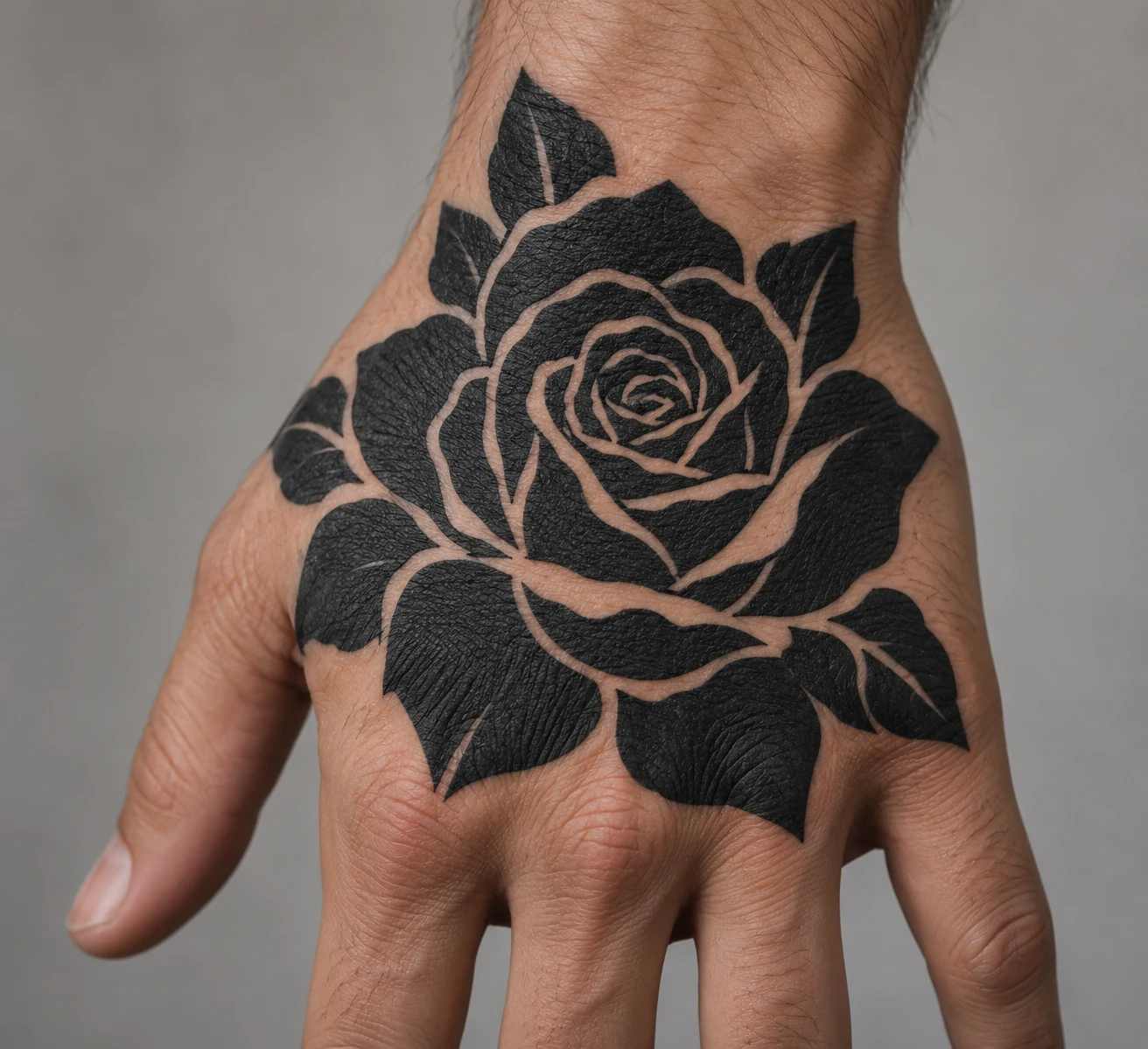
Solid petals give this rose a bold graphic presence. Small areas of exposed skin separate the folds, making their arrangement central to the design. Choose it if strong shapes appeal more than delicate botanical detail.
5. Rose Inside an Open Diamond
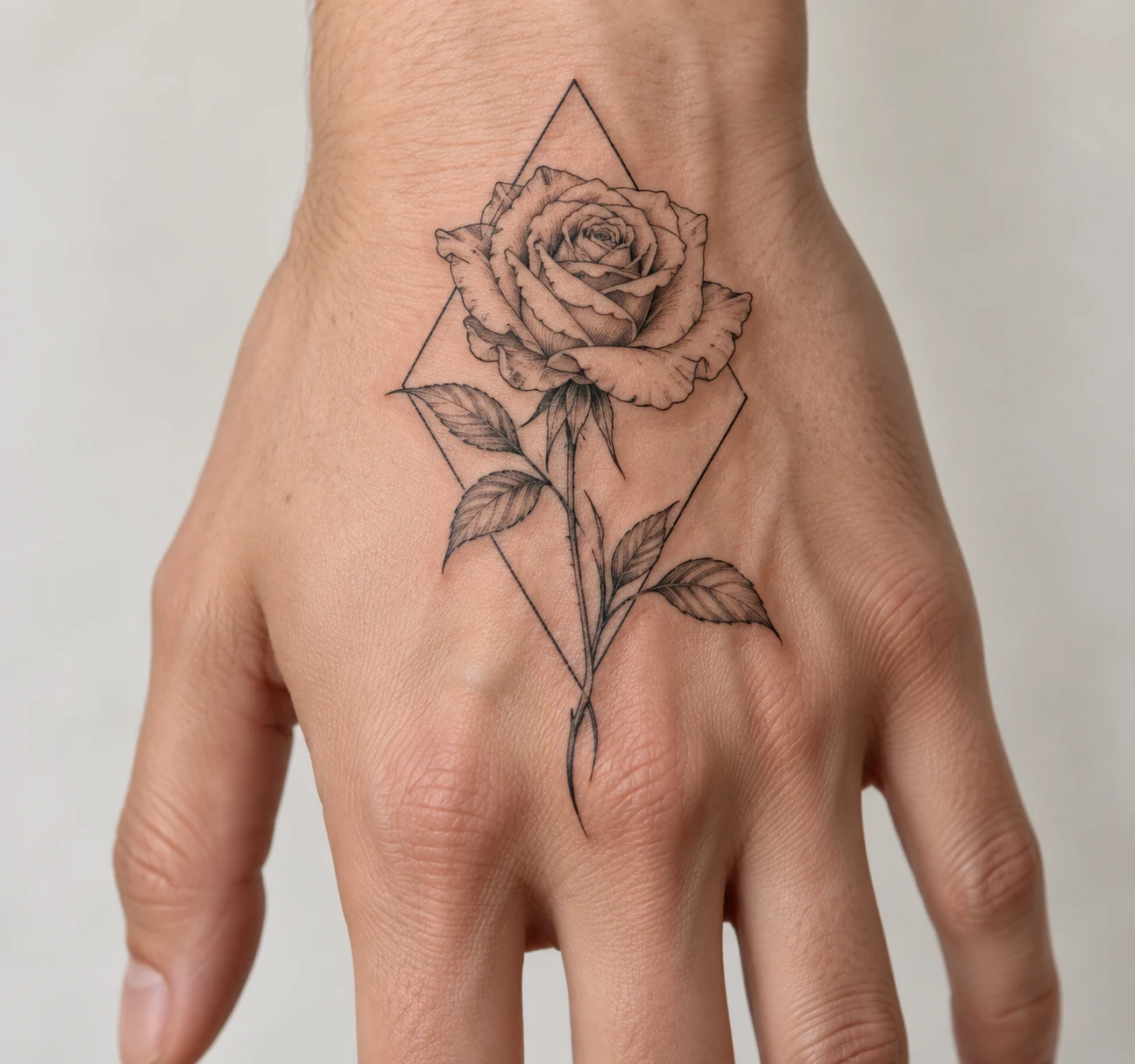
An interrupted diamond adds angular structure around soft petals. Let a few petals cross the frame for a less contained composition, or keep the bloom inside it for a tidier outline. This suits a preference for geometric accents.
Shaded and Textured Roses
Compare smooth shading, visible marks, and dark surrounding shapes to find your preferred texture.
6. Black and Grey Realistic Rose
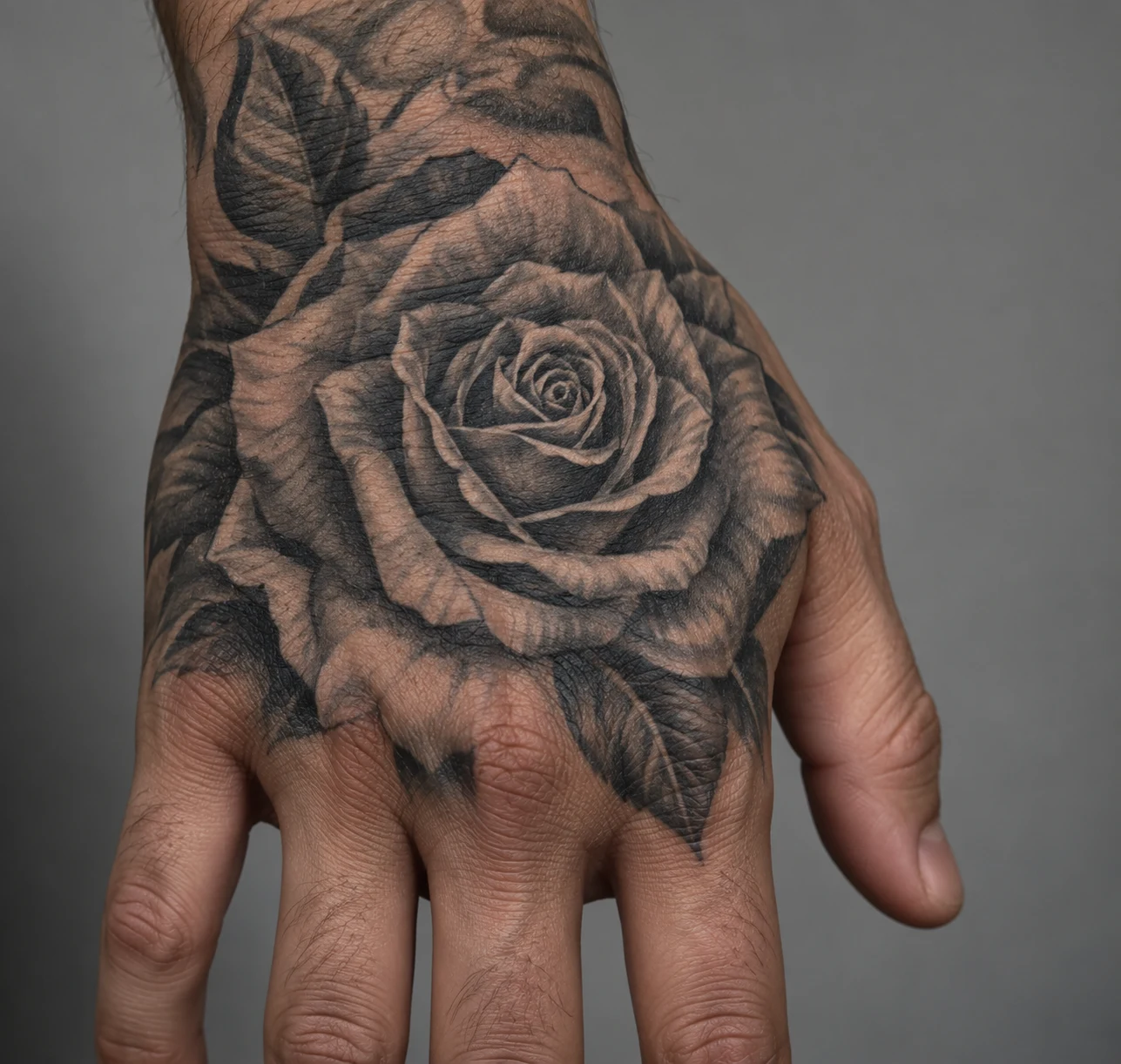
Layered petals and gradual shading create a dimensional flower. This concept suits someone who wants the bloom to occupy much of the hand. Start by choosing its overall size, then discuss how much detail fits within it.
7. Dotwork Rose
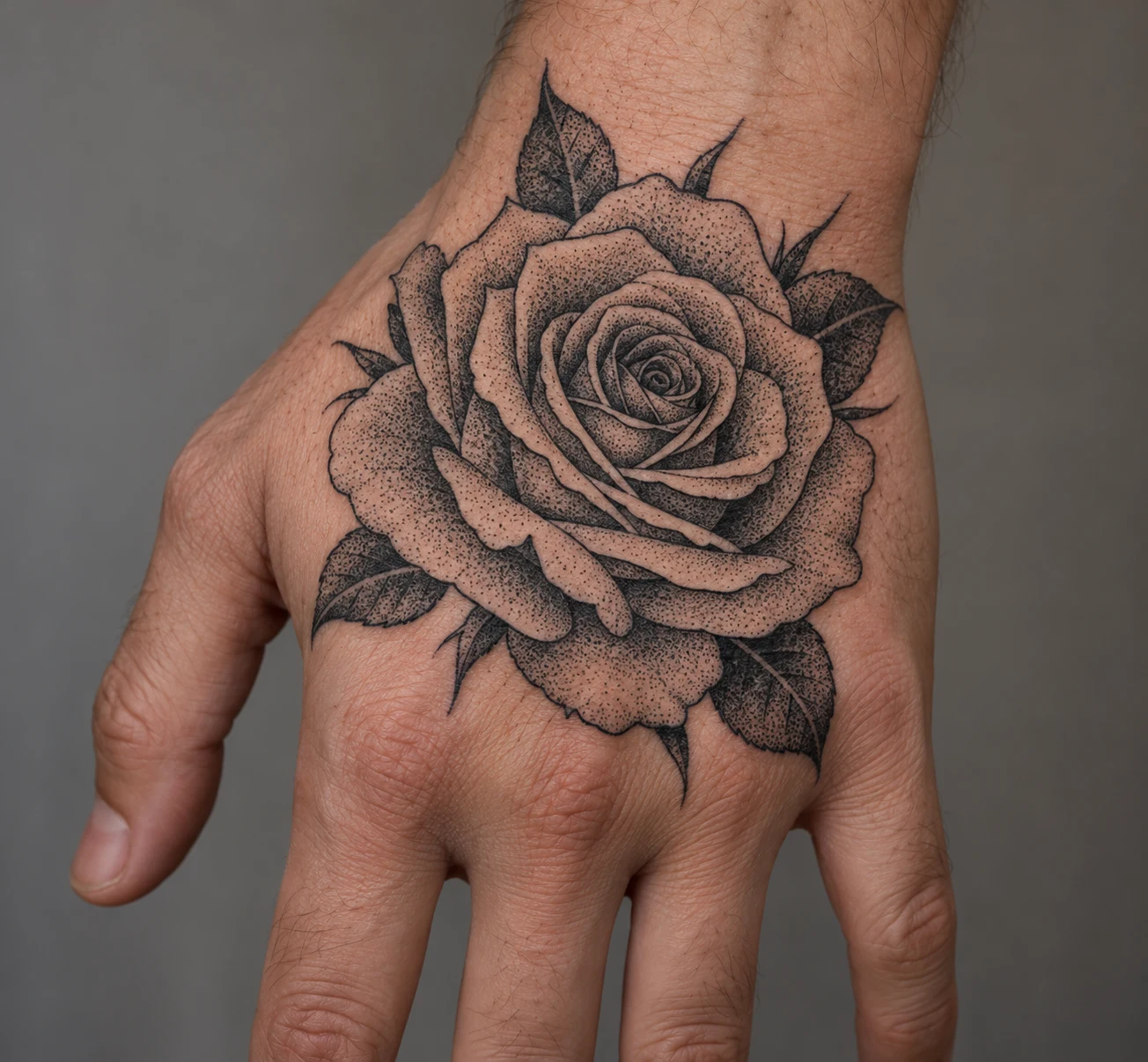
Stippled petals give the flower a visibly dotted texture. Sparse dots suggest lighter areas, while denser clusters deepen the petal bases. Consider this approach if you prefer granular shading to smooth transitions.
8. Etching-Style Rose
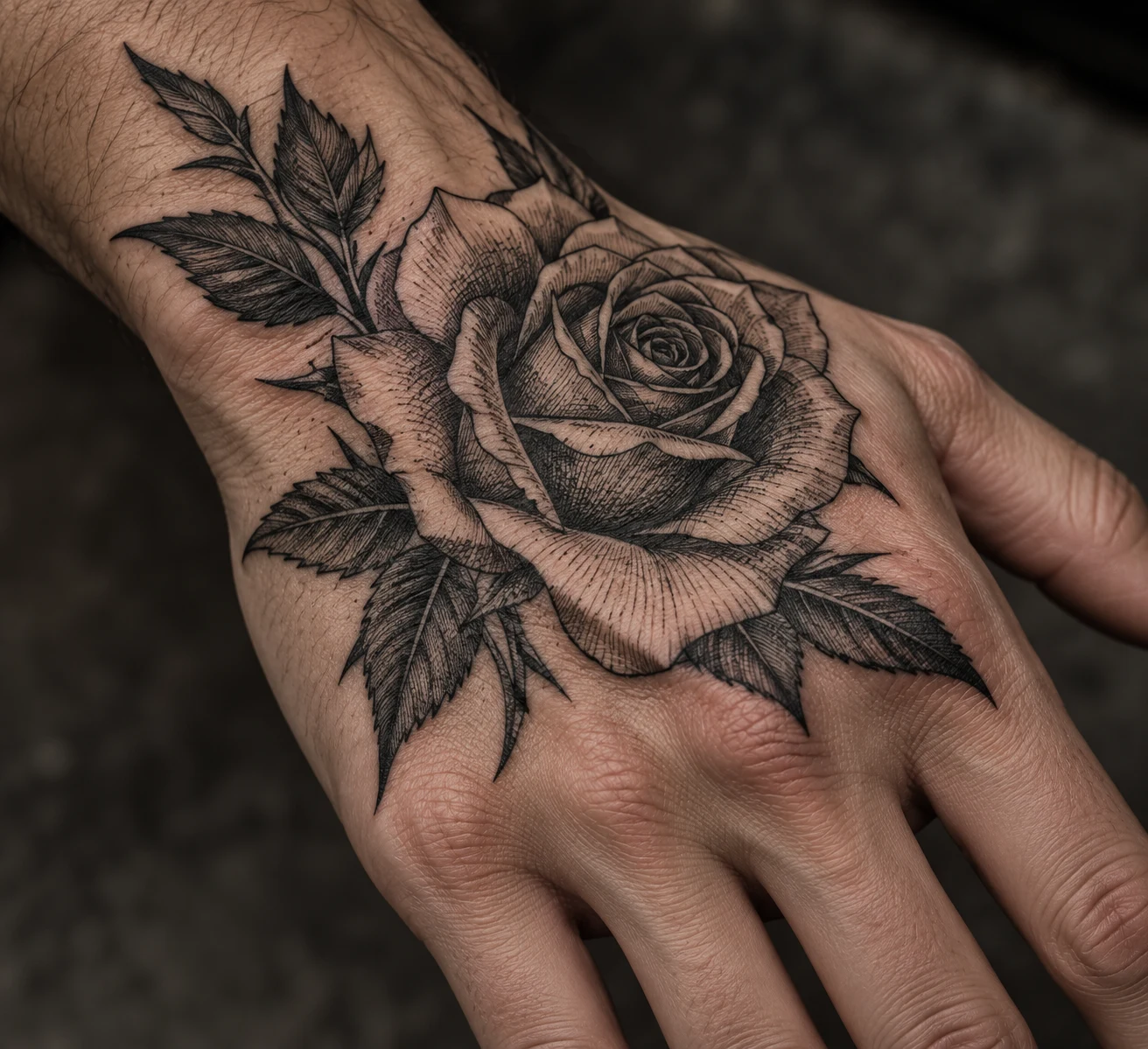
Directional hatching gives this rose the appearance of an engraved botanical drawing. Pointed leaves reinforce its crisp character. Choose wider spacing between marks for a more open design, or denser hatching for a darker appearance.
9. Sketch-Style Rose
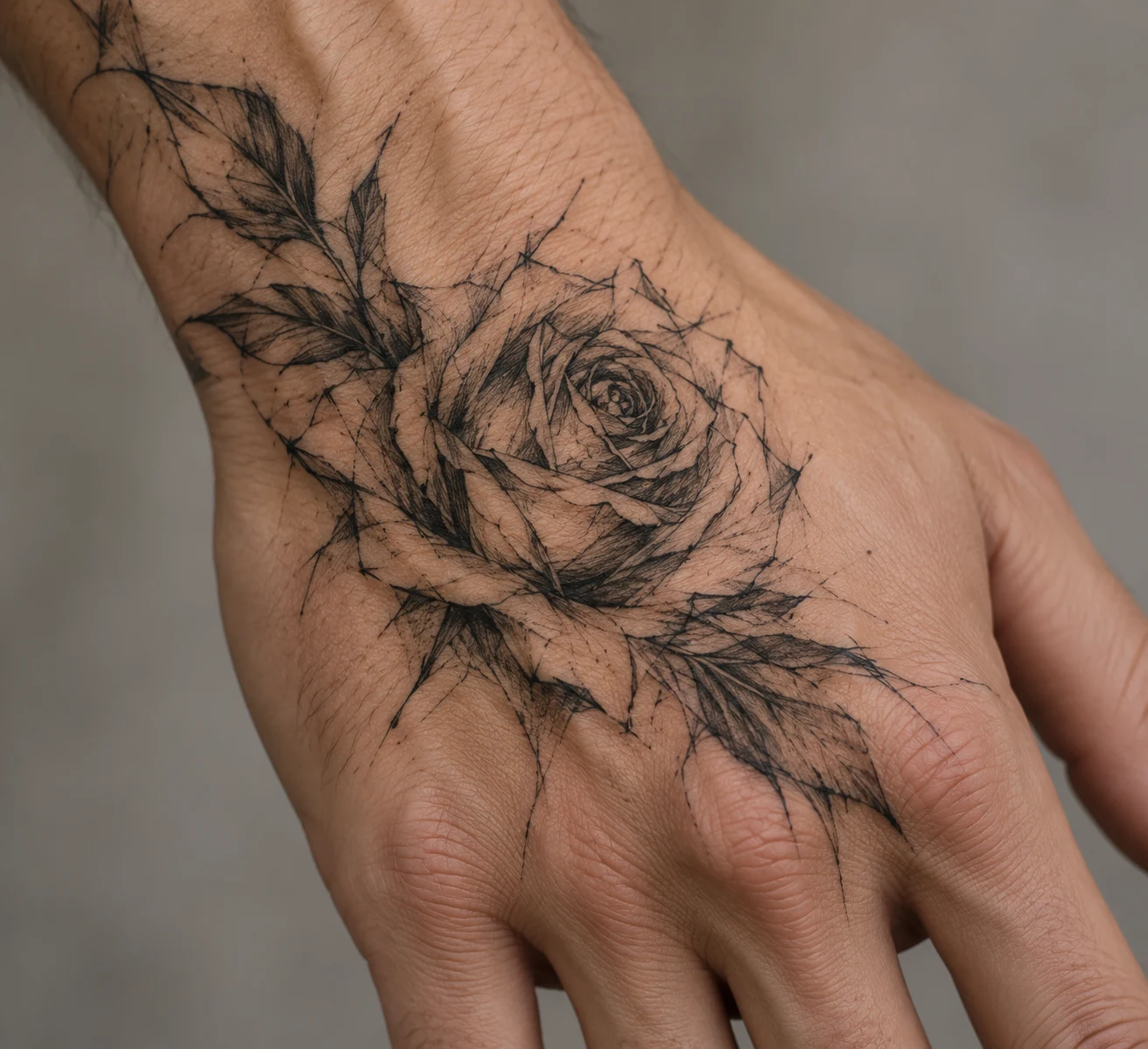
Overlapping strokes give the rose a loose, drawing-like finish. Unlike the continuous-line idea, this version builds its shape through repeated marks and selective shading. It suits readers who enjoy visible construction lines around a defined bloom.
10. Rose Against a Black Crescent
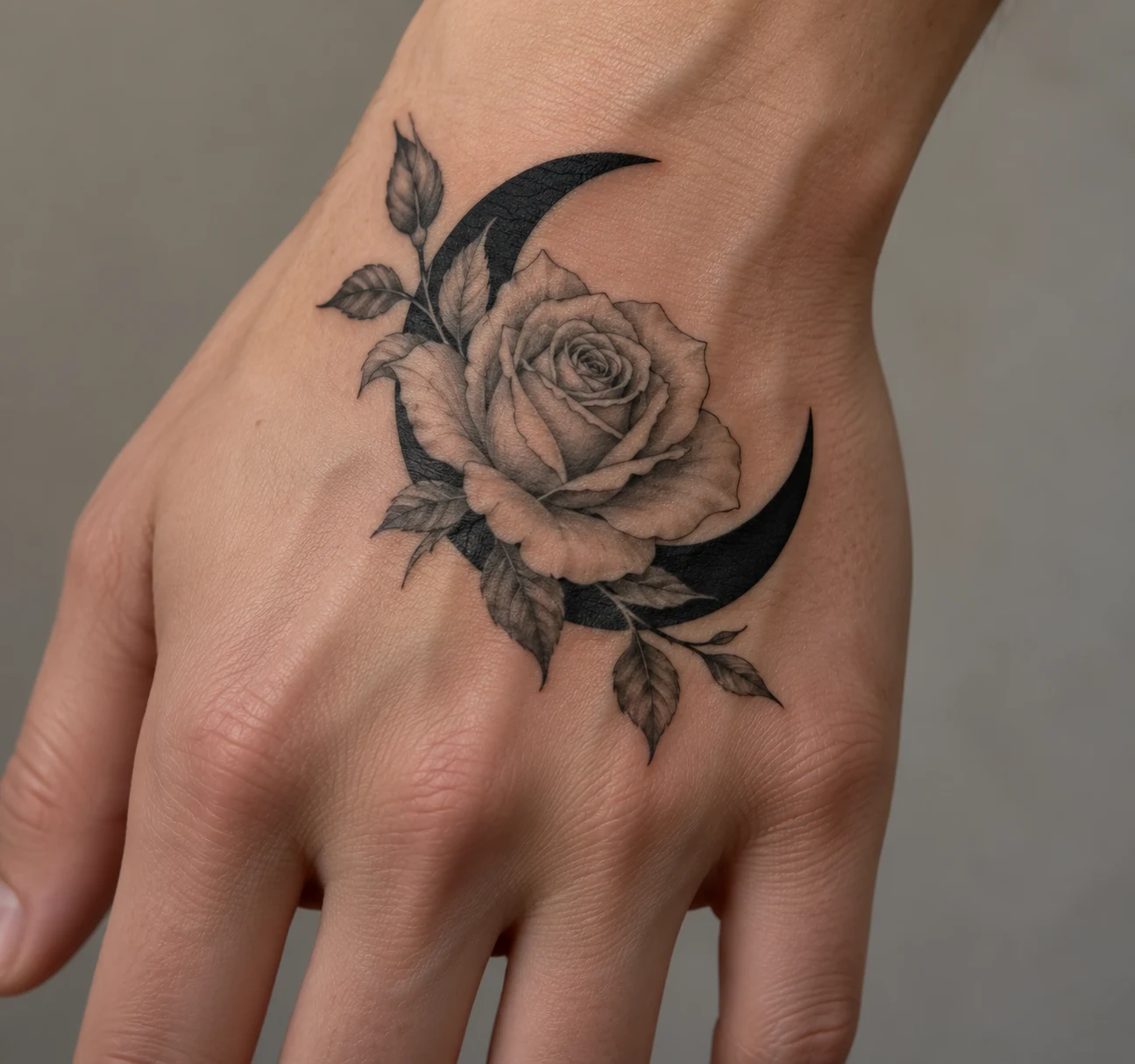
A dark crescent frames one side of a lightly shaded flower. The contrast gives the composition a strong edge while leaving other areas open. Choose which side carries the black shape based on the outline you prefer.
Color-Focused Rose Designs
These five palettes offer different visual directions, from bold red petals to painterly washes.
11. Traditional Red Rose
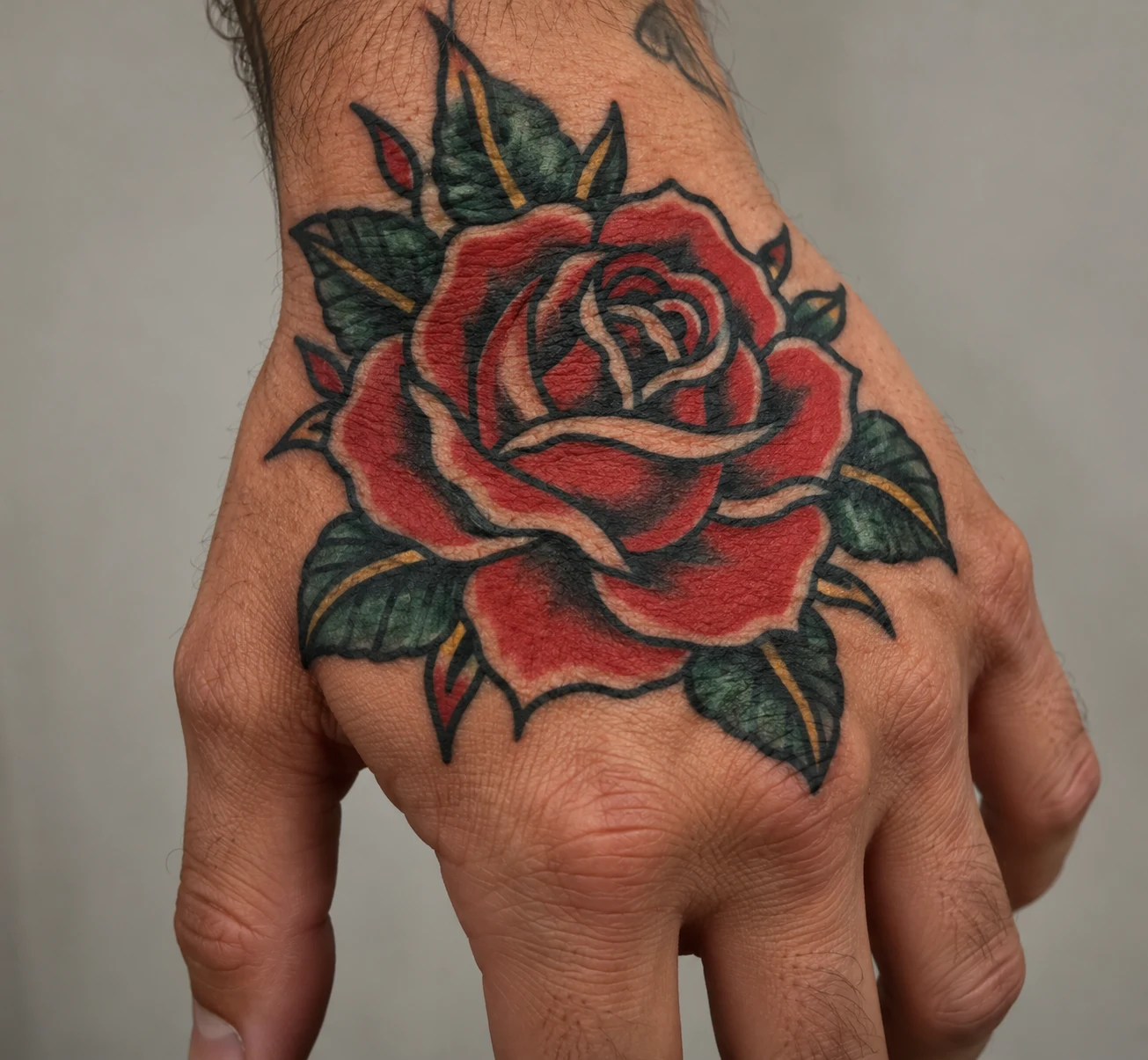
Red petals, green leaves, and bold black outlines form a clearly defined flower. This suits someone who likes simplified shapes and a compact palette. Leaves can spread sideways or point toward the wrist to change the overall silhouette.
12. Pink Rose with Soft Shading
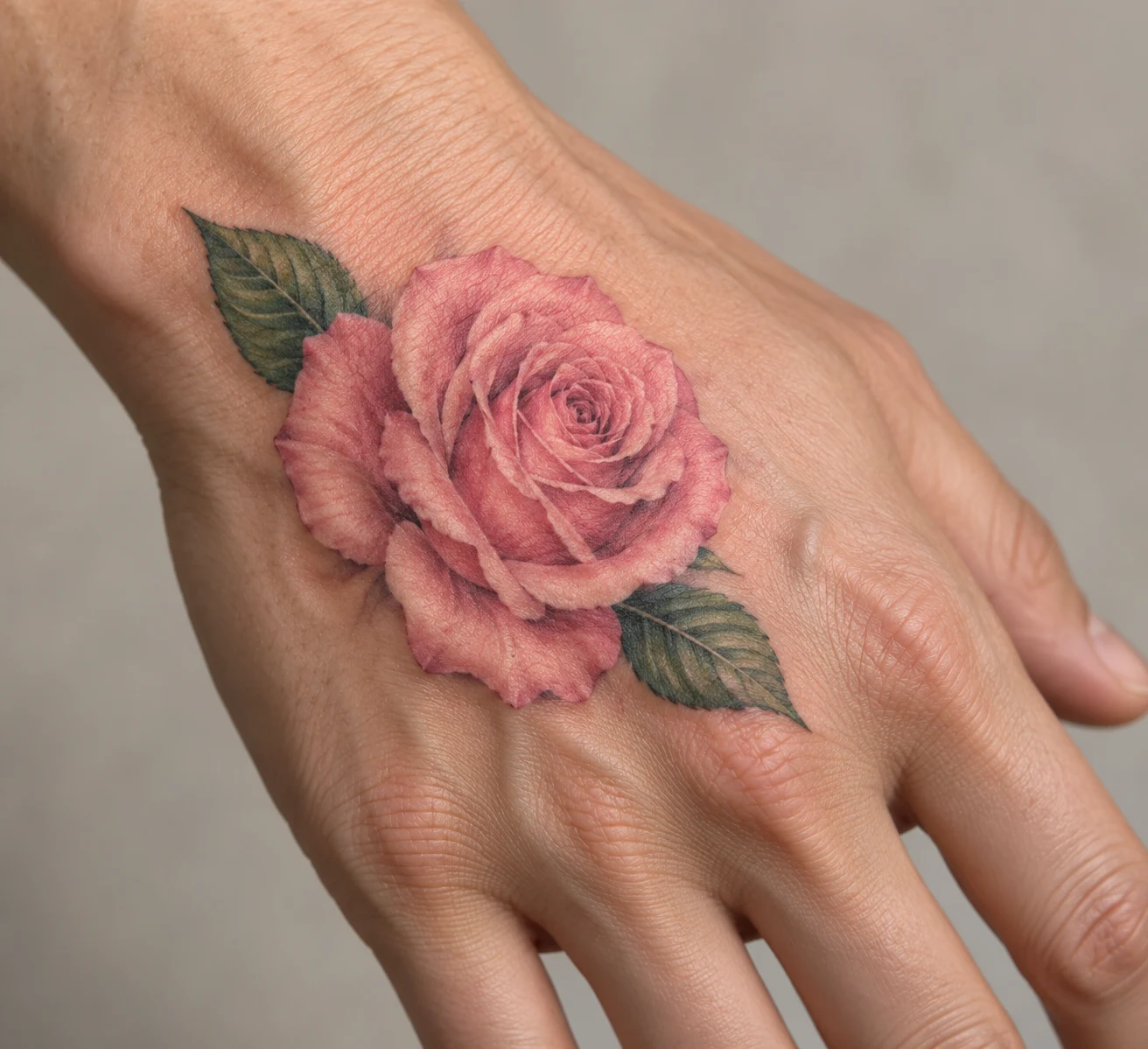
Layered pink petals offer a softer visual treatment than the traditional example. Keep the foliage restrained if you want the flower to dominate. Compare pale outer petals with a deeper pink center when choosing your reference palette.
13. Yellow Rose with Dark Leaves
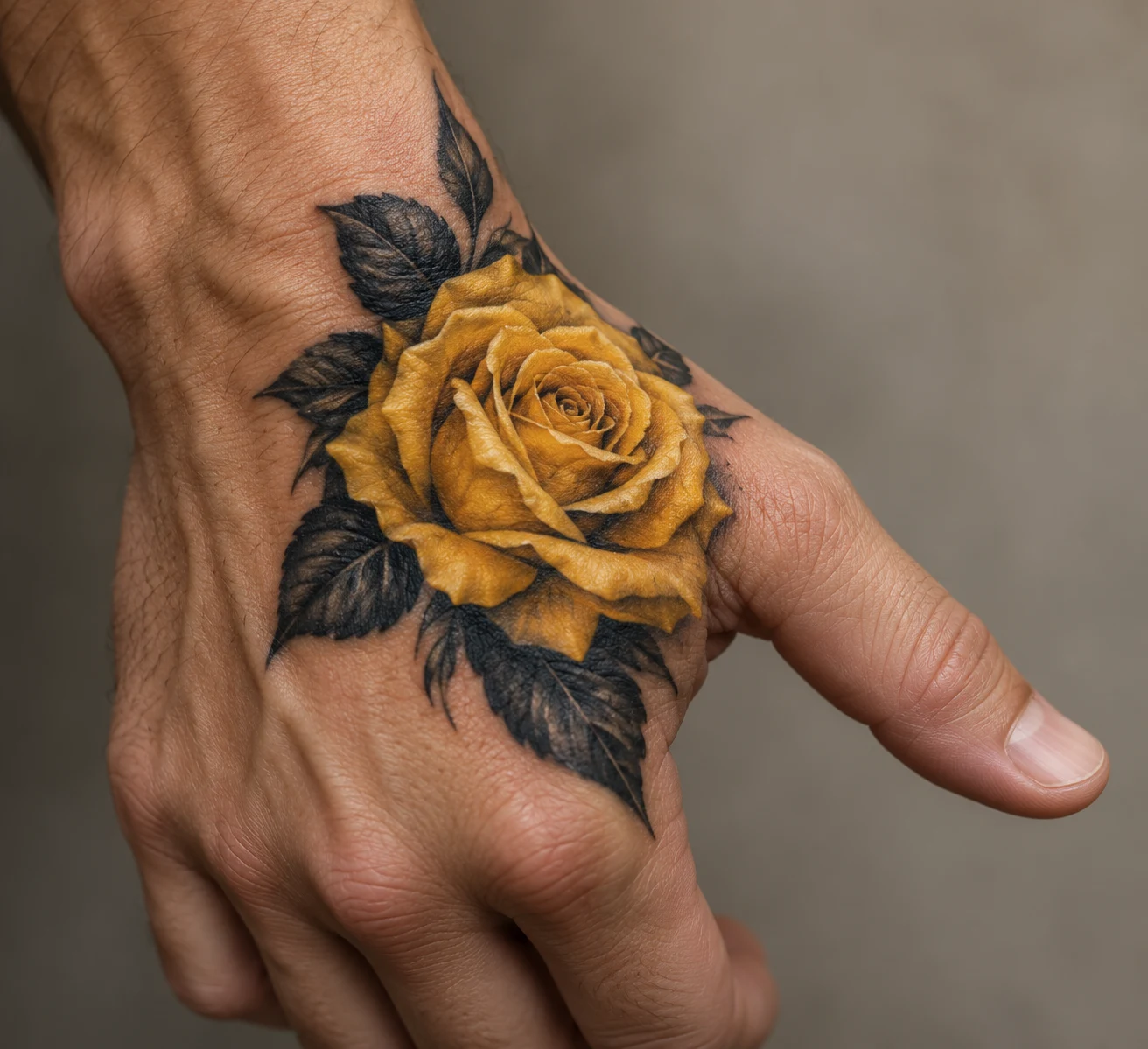
A yellow bloom stands against dark foliage near the thumb. This is a warm palette for readers who want clear contrast between flower and leaves. Limit the foliage if you prefer the petals to command more attention.
14. Blue Rose with Teal Accents
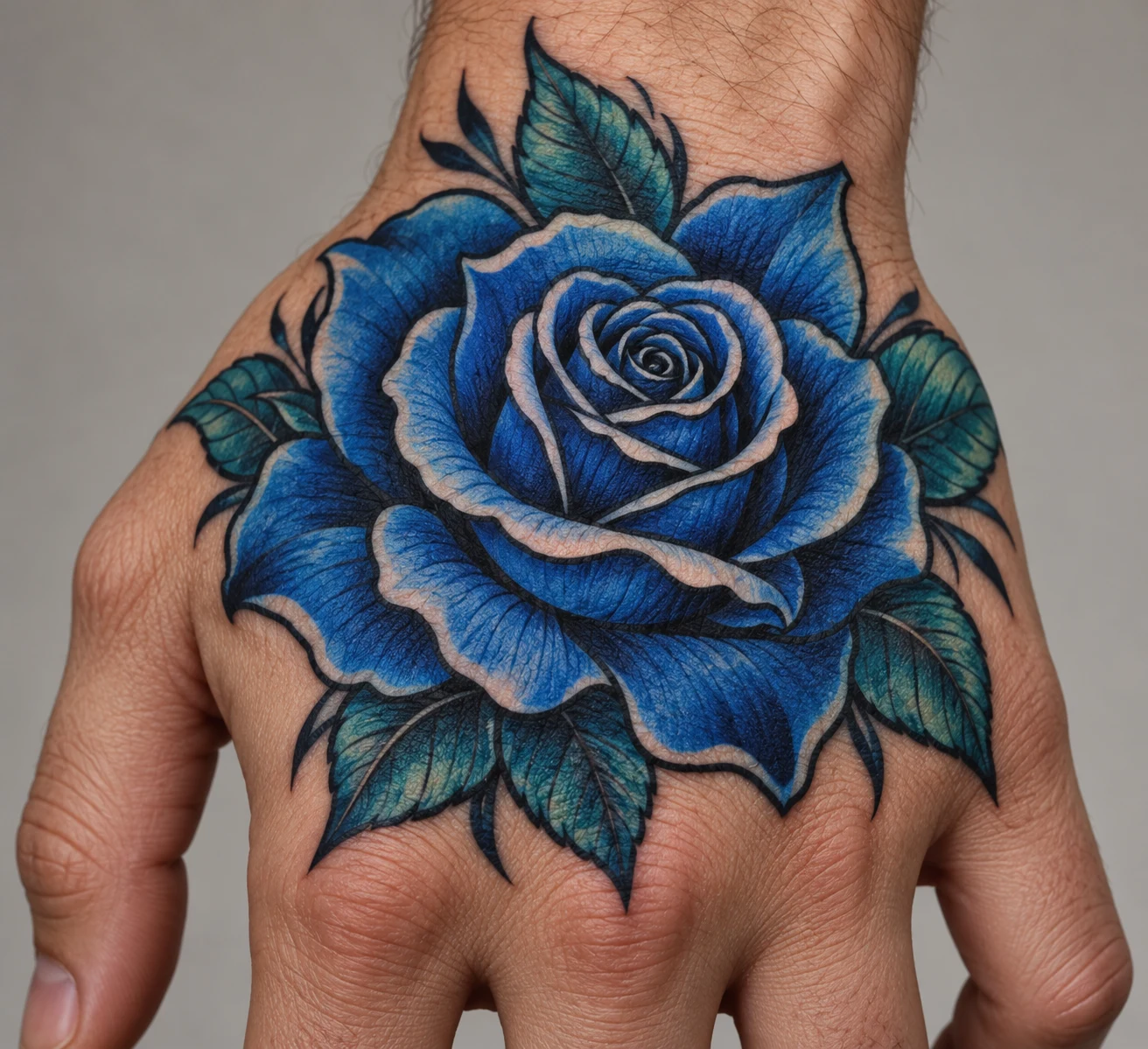
Blue petals and teal leaves create an intentionally imaginative flower. Dark outlines give the colored shapes definition. Choose this concept for its stylized palette, then decide whether muted blue or a stronger shade better fits your taste.
15. Outlined Rose with Watercolor-Style Washes
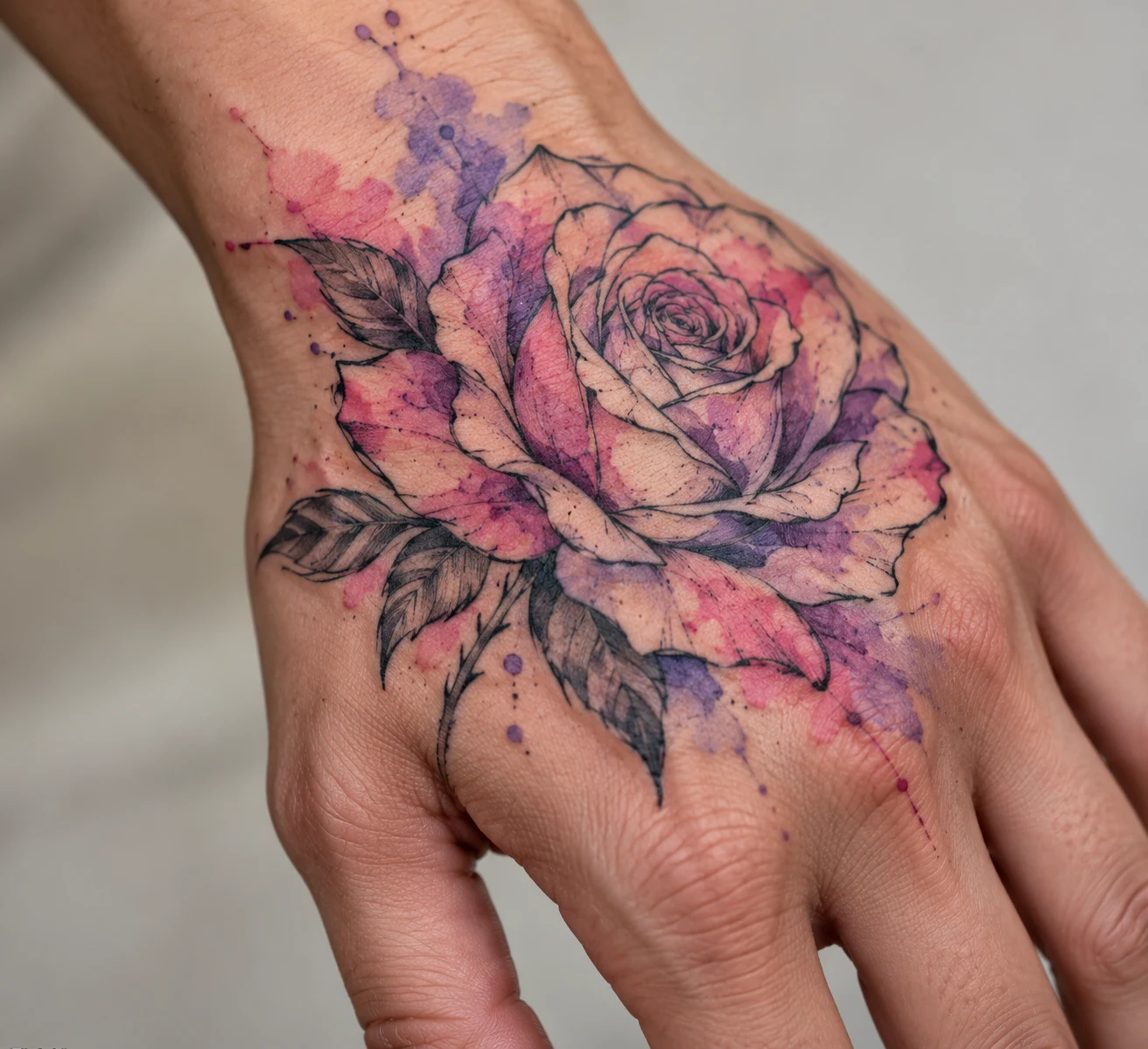
A black outline anchors irregular pink and violet washes. This suits a preference for painterly color with a recognizable flower underneath. Letting the washes extend beyond the petals creates a looser composition than keeping them contained.
Placement and Personal Details
These compositions change how the rose follows the hand or combines with another element.
16. Rose Stem from Wrist to Hand
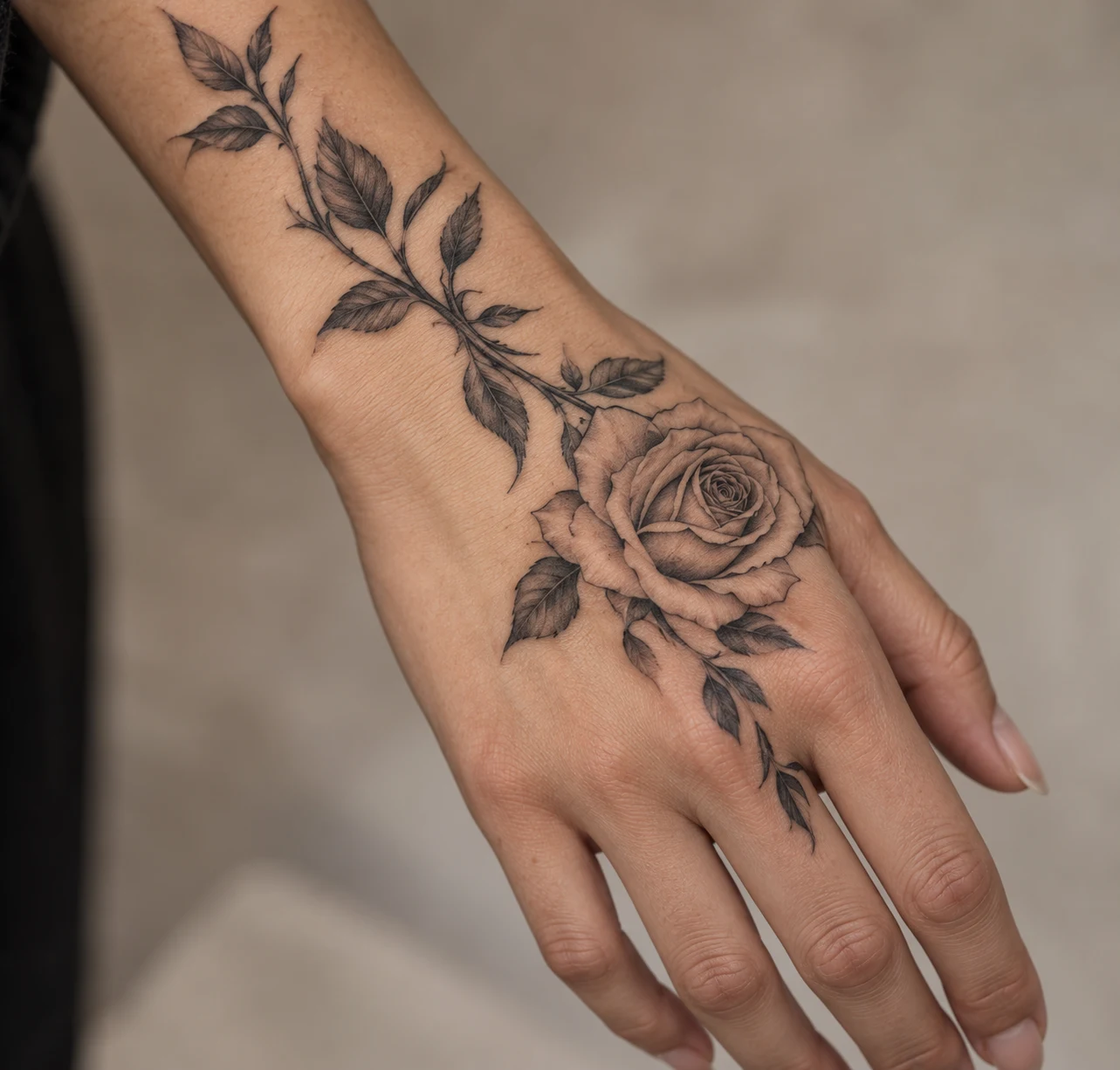
A leafy stem connects the wrist to a bloom on the hand. Choose this direction if you want an elongated composition. Consider where the stem should end, especially if it will sit beside an existing wrist tattoo.
17. Rose and Thorn Branch Across the Knuckles
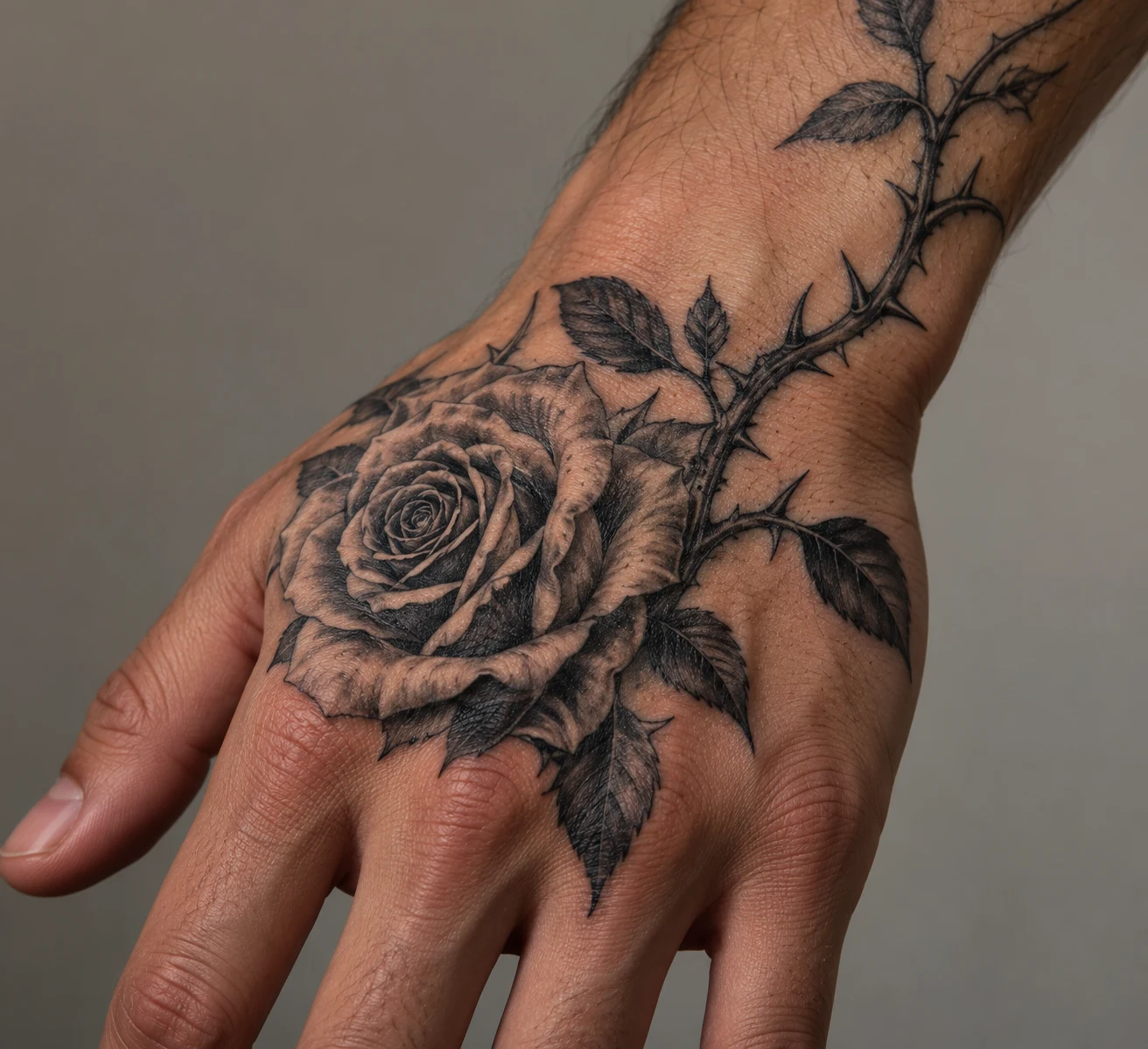
Set below the knuckles, the bloom anchors a horizontal thorn branch. This suits someone who wants the design to spread across the upper hand. Ask an artist to assess spacing around the joints before deciding how close the branch should sit.
18. Rose with an Initial Ribbon
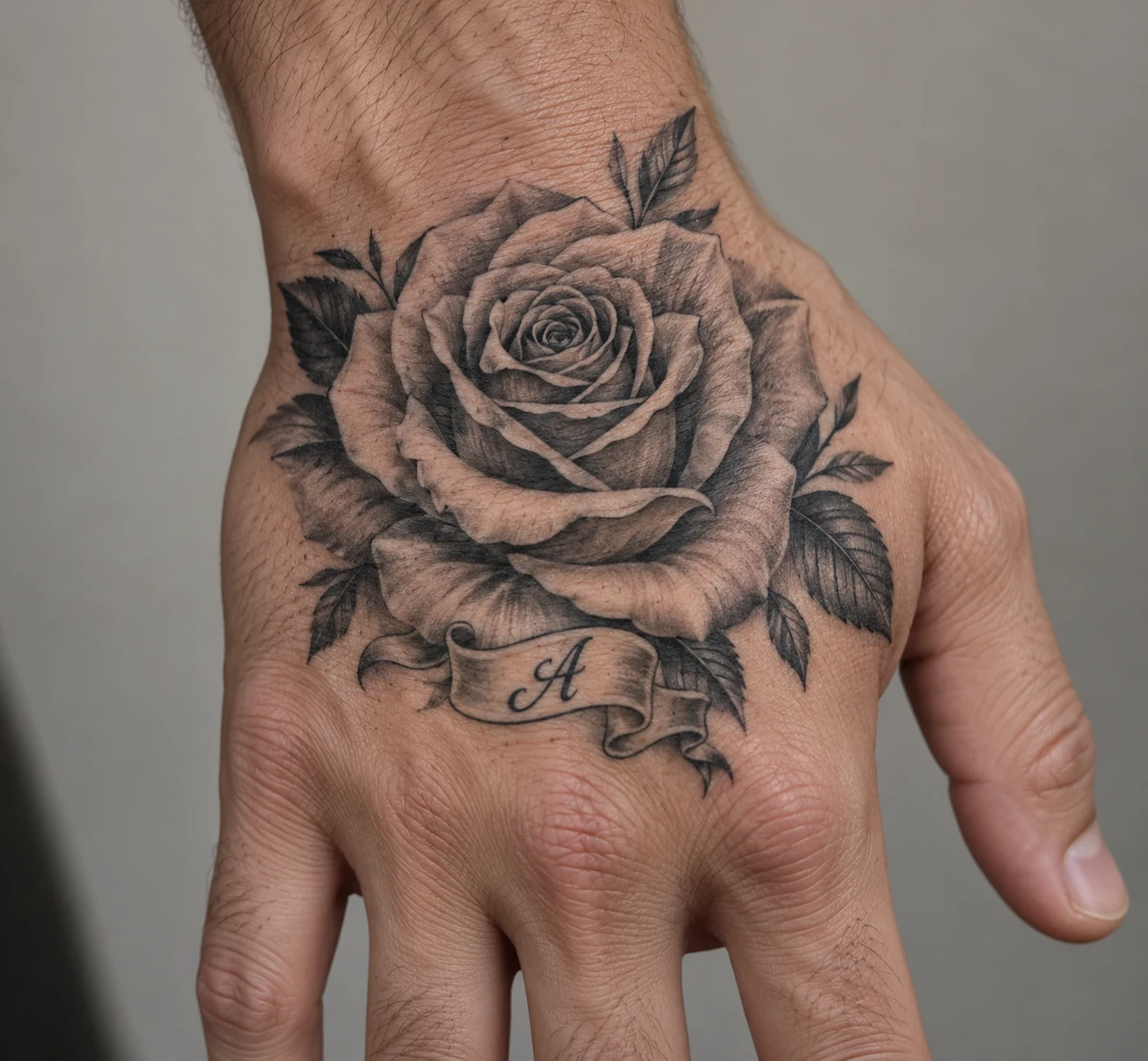
A short ribbon adds room for one personally chosen initial. Keep the flower dominant by placing the lettering beneath the bloom. Discuss the ribbon’s size with your artist so the initial has enough space within the composition.
19. Rose and Moth Composition
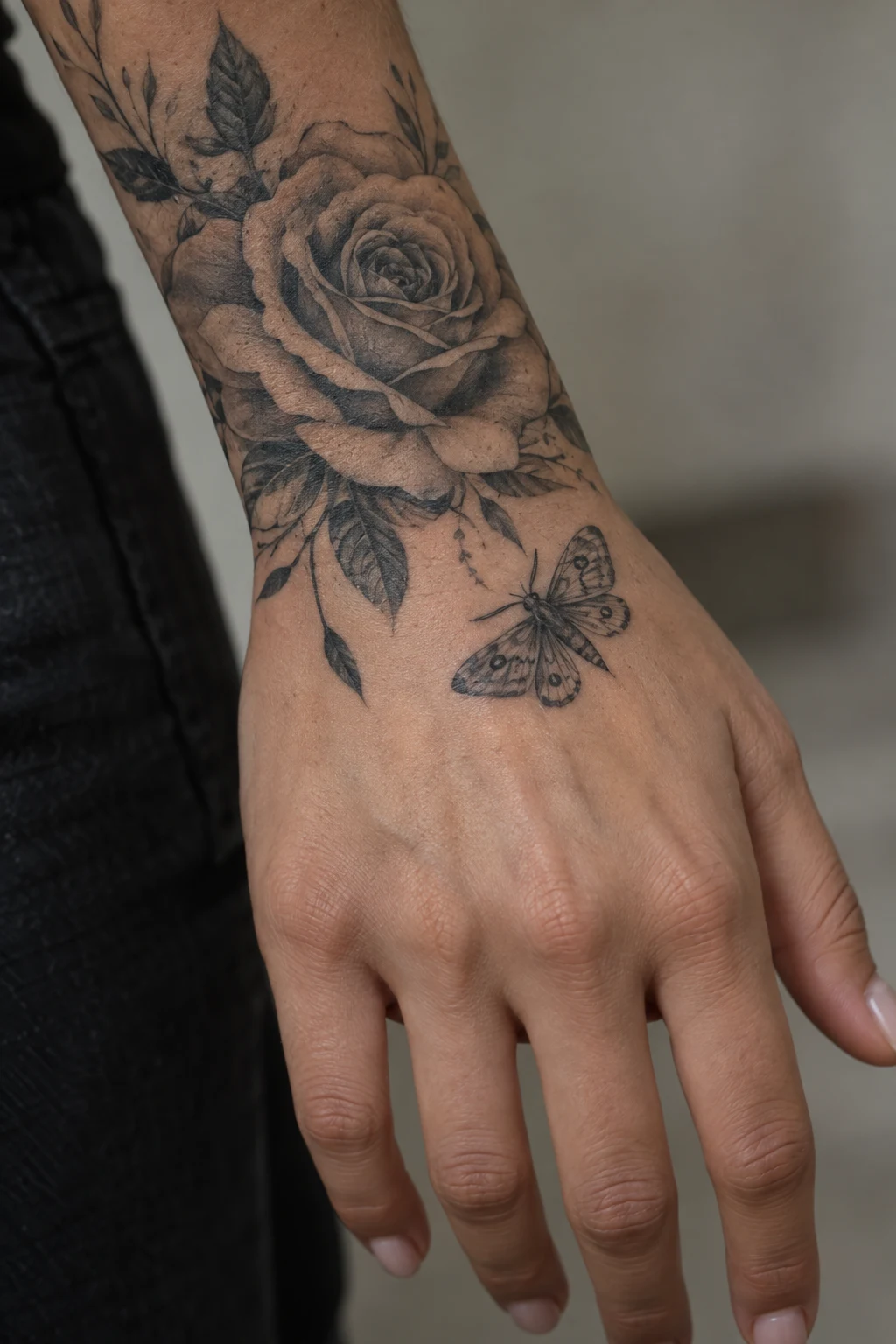
Placing the rose near the wrist leaves room for a moth above it. This two-part arrangement suits readers who want more than a single flower. Choose one larger focal point so the rose and moth have a clear visual relationship.
20. Paired Roses Across Both Hands
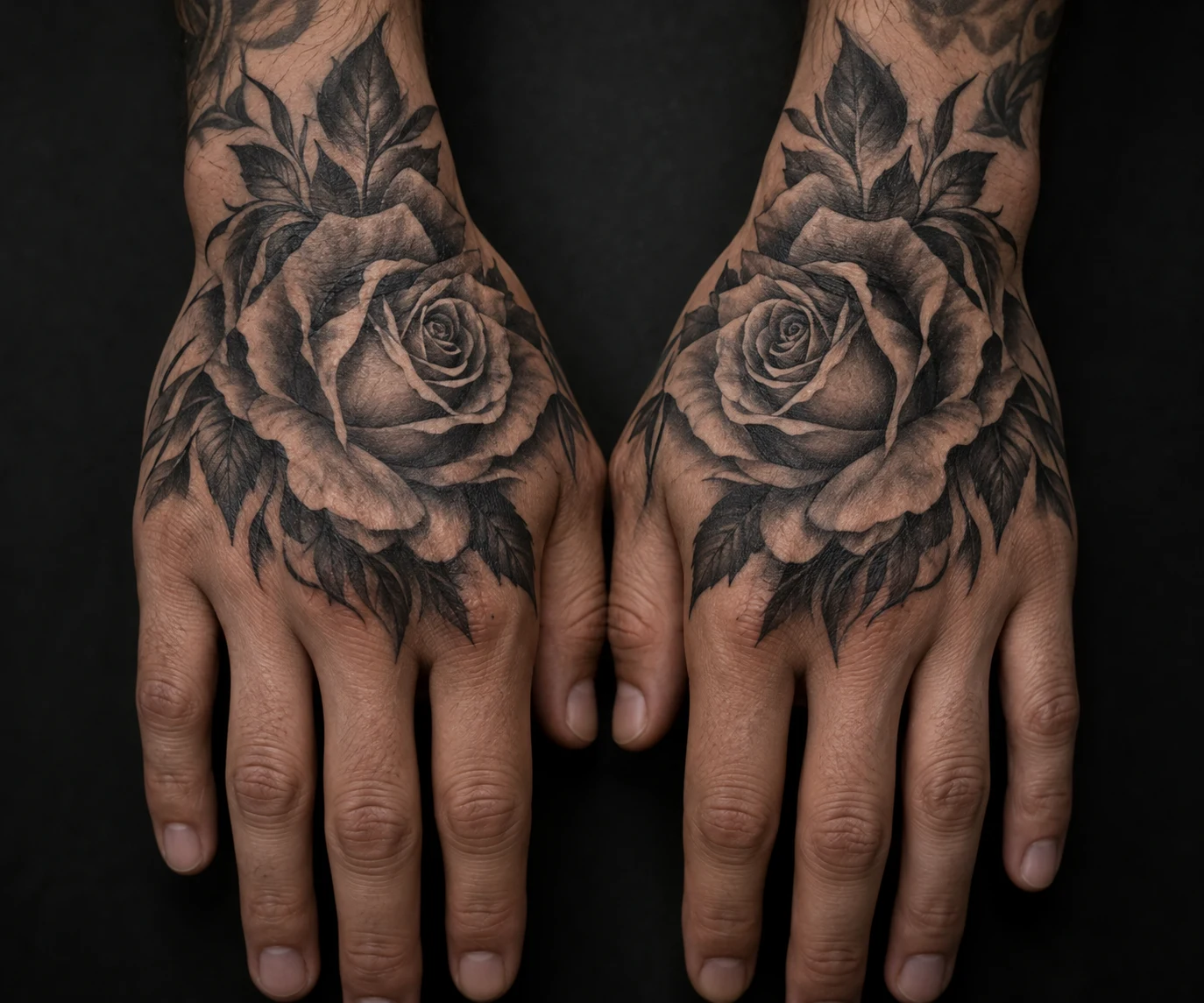
One rose on each hand creates a coordinated pair. Match their scale and shading for a close relationship, or vary the petal shapes while keeping a shared palette. Compare the designs with your hands together and apart.
How to Narrow Down Your Rose Design
Shortlist two or three ideas, then identify what you like about each: outline weight, petal texture, palette, or coverage. You might combine the simplicity of an outline rose with the placement of a wrist-to-hand stem.
For broader placement comparisons, explore these hand tattoos. Bring your shortlist to an artist and discuss scale, spacing, and how the composition fits your hand both relaxed and moving. Start with your preferred flower style and placement; refine the smaller details together.

