
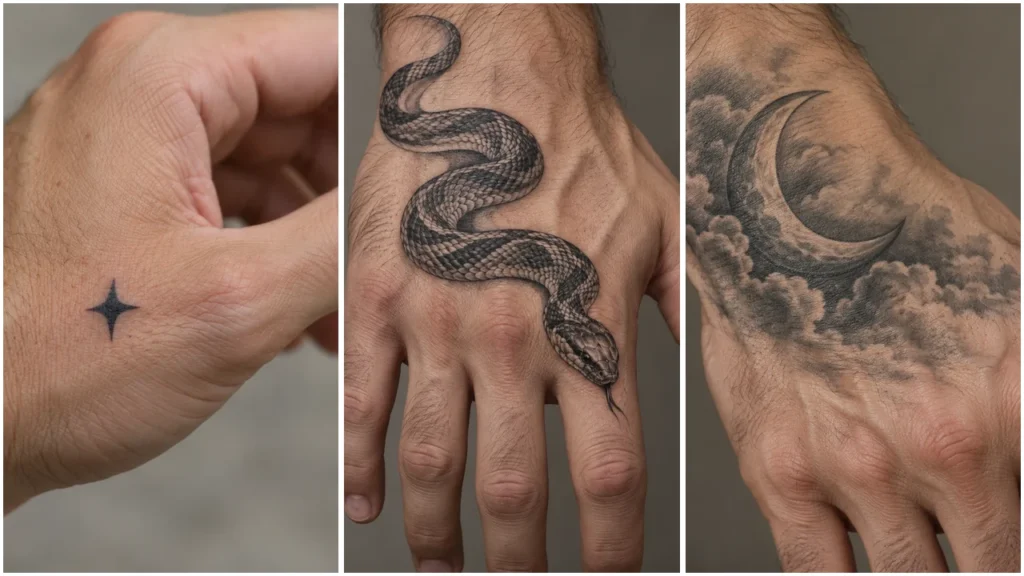
Hand tattoos for men range from a small symbol beside the thumb to a shaded composition covering the back of the hand. These 20 design concepts span minimal graphics, botanicals, animals, and illustrative compositions. Compare their coverage, contrast, and placement to find a direction that fits your taste. The planned visuals are tattoo concepts, not client results.
How to Choose Hand Tattoos for Men
Choose the coverage first. An isolated motif leaves generous open skin; a centered composition becomes the main feature; a design extending toward the wrist or fingers creates a more connected arrangement.
Then compare outlines, solid black areas, color, and shading. Consider whether the tattoo should stand alone or connect with existing work. Keep two or three favorites and ask an artist how their proportions and detail could fit your hand.
The first five ideas focus on minimal graphics and abstract shapes.
1. Small Four-Point Star
A compact black star beside the thumb.
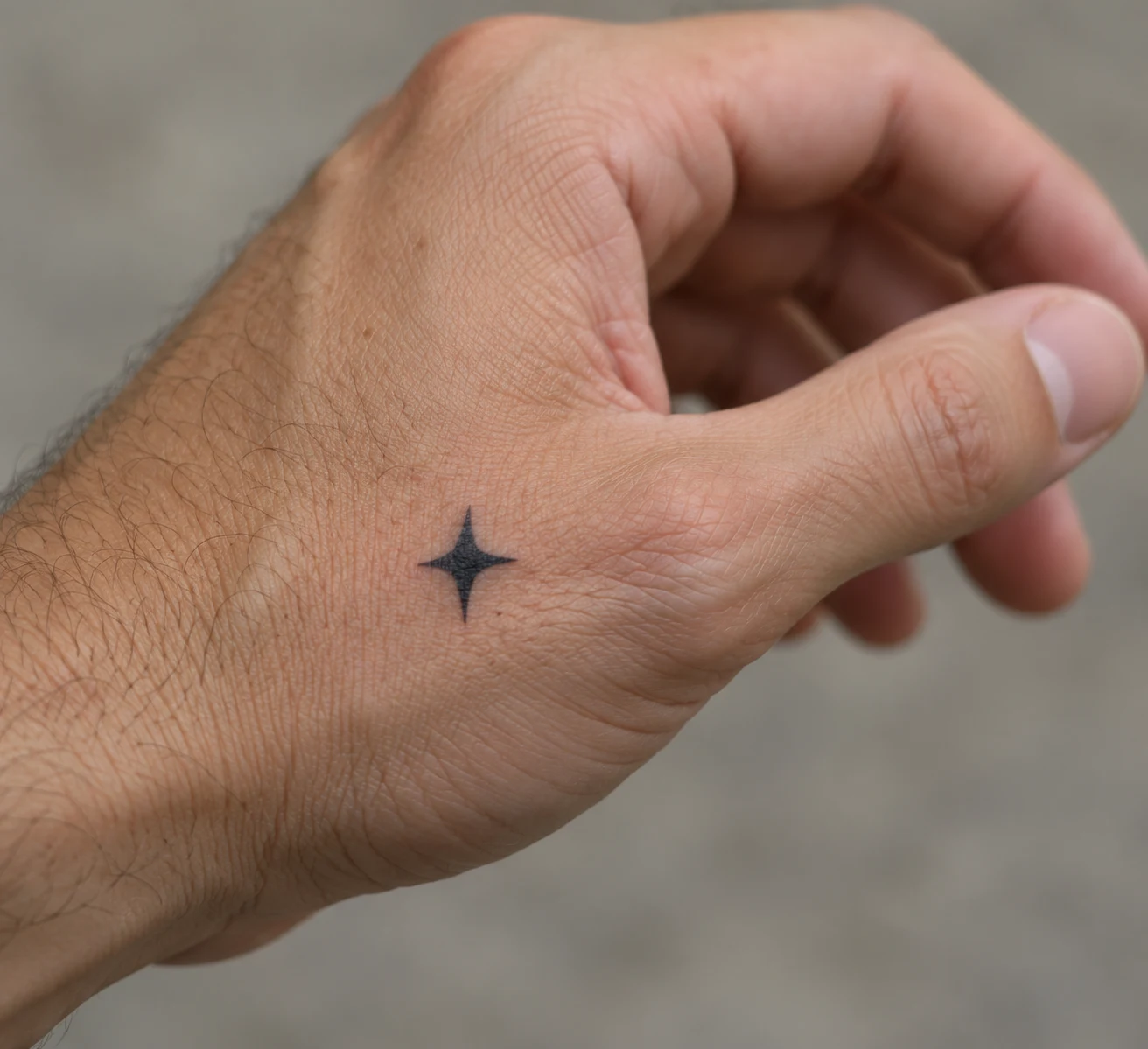
This suits someone who wants one isolated accent with plenty of surrounding space. Choose a solid silhouette for stronger contrast or discuss an outlined version for a lighter appearance.
2. Single-Line Mountain Ridge
An angular ridge with an open interior.
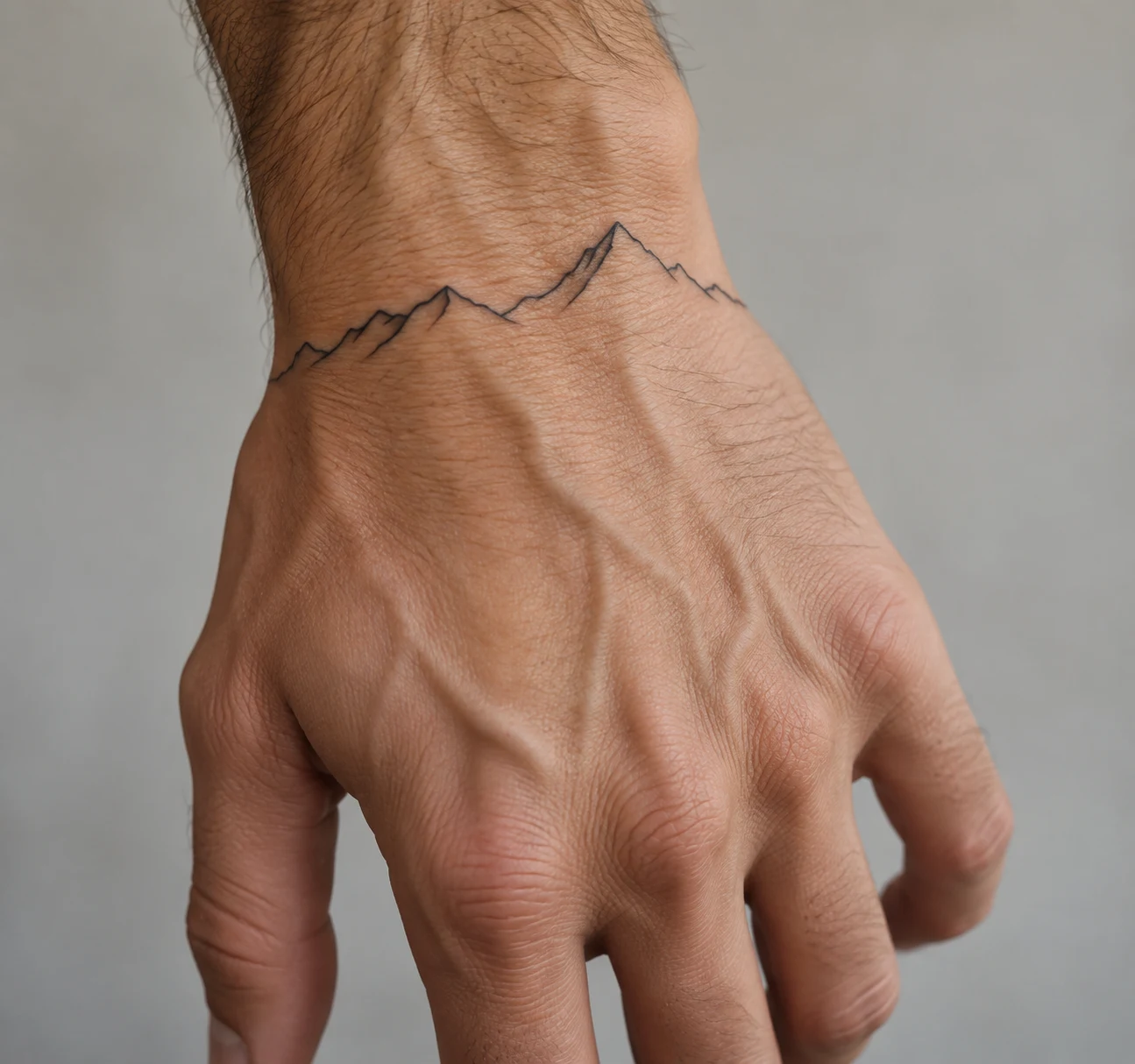
The low, horizontal shape suits readers drawn to spare landscape imagery. Keep the ridge unfilled to emphasize its contour, or consider one shaded slope if you want more depth.
3. Short Lettering Along the Hand Edge
One personally relevant word in restrained lettering.
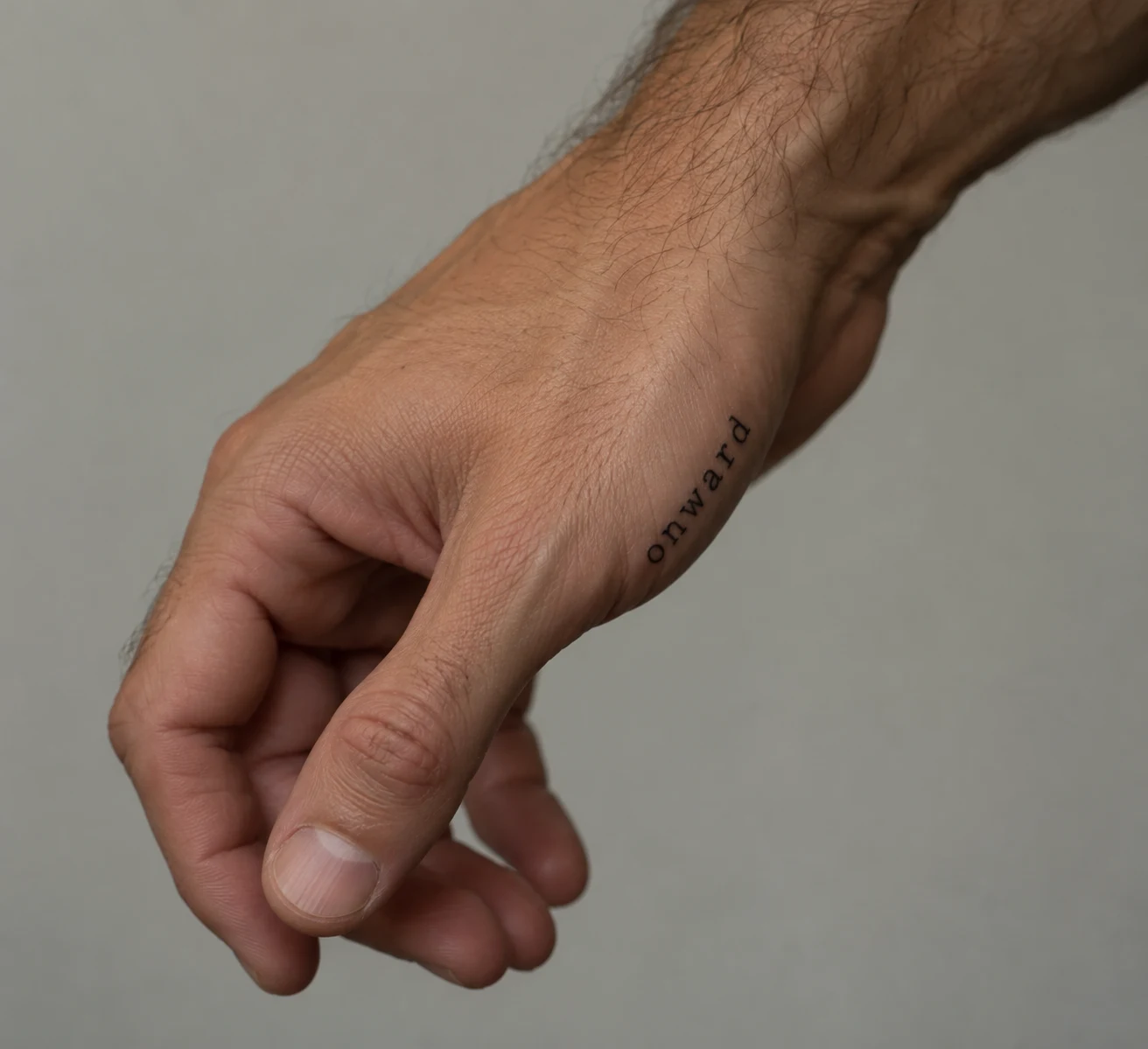
“Onward” illustrates the concept; your word should earn its place without extra decoration. Have an artist assess the letter size, spacing, and edge placement before settling on the layout.
4. Geometric Diamond Emblem
A centered diamond built from open facets.
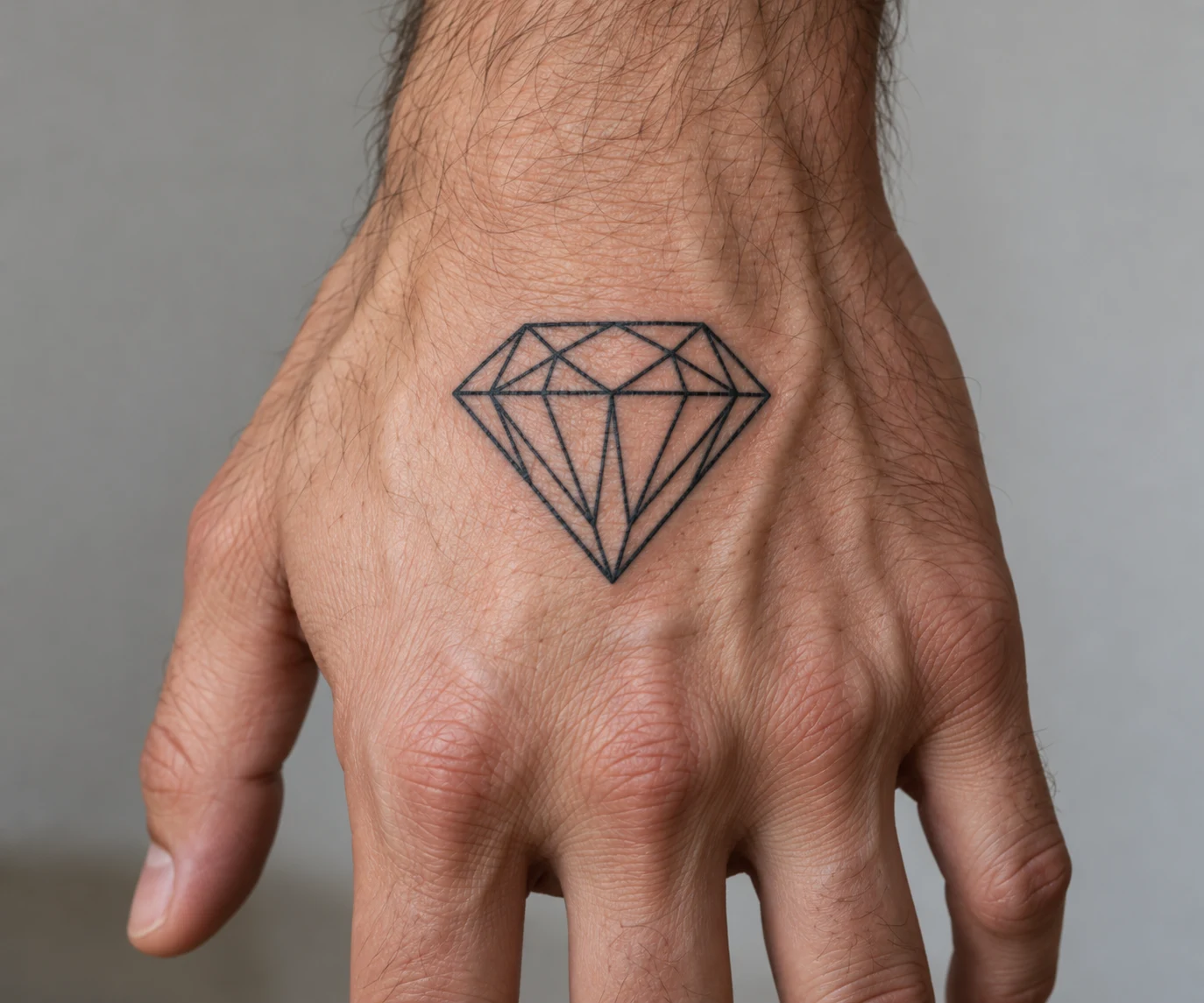
Straight edges and symmetry give this idea a structured appearance. It suits someone who prefers a clear emblem, with selected black facets as an option for increasing contrast.
5. Abstract Blackwork Sweep
A curved black shape reaching toward the index knuckle.
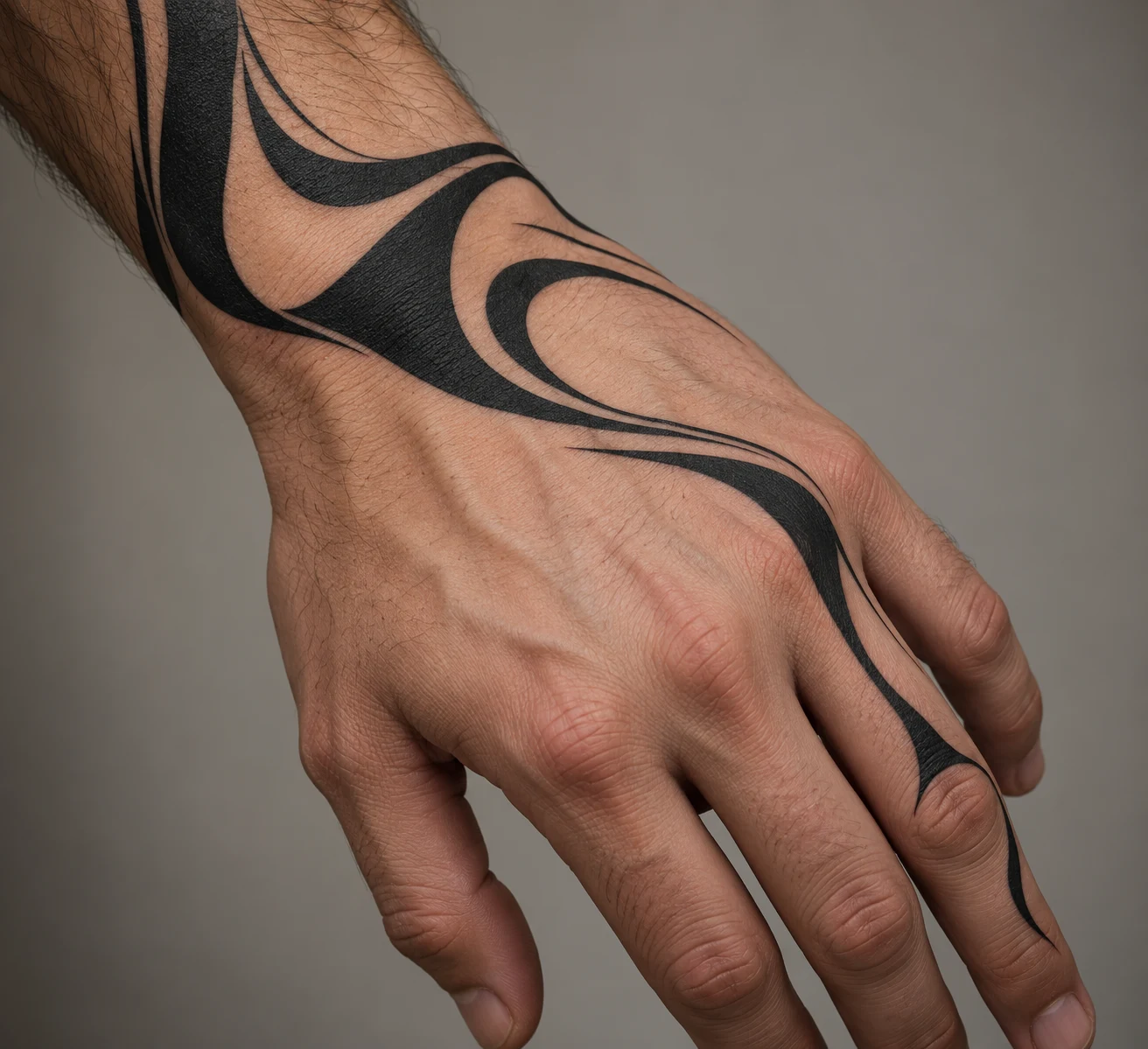
Here, the shape and surrounding open skin carry the composition. Choose this direction if flowing movement appeals more than a recognizable subject, and decide how much solid black you want.
The next five concepts explore different botanical shapes, from rounded flowers to narrow stems.
6. Traditional Red Rose
A red bloom framed by black outlines and green leaves.
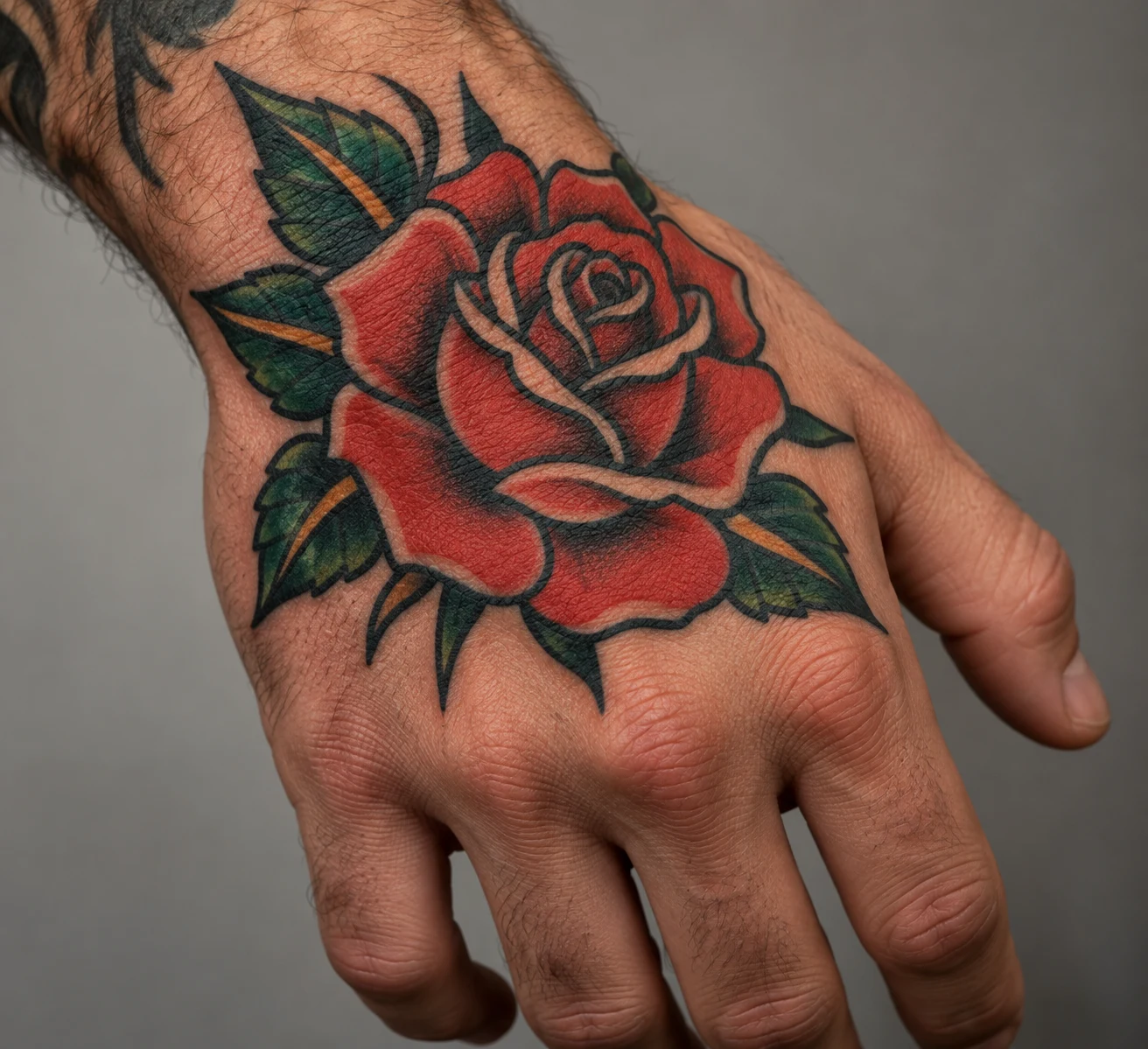
If color is your priority, the red bloom makes a strong focal point. Let the bloom fill the central hand, or leave a visible border of skin for a more contained composition.
7. Black and Grey Chrysanthemum
Layered petals forming a rounded floral centerpiece.
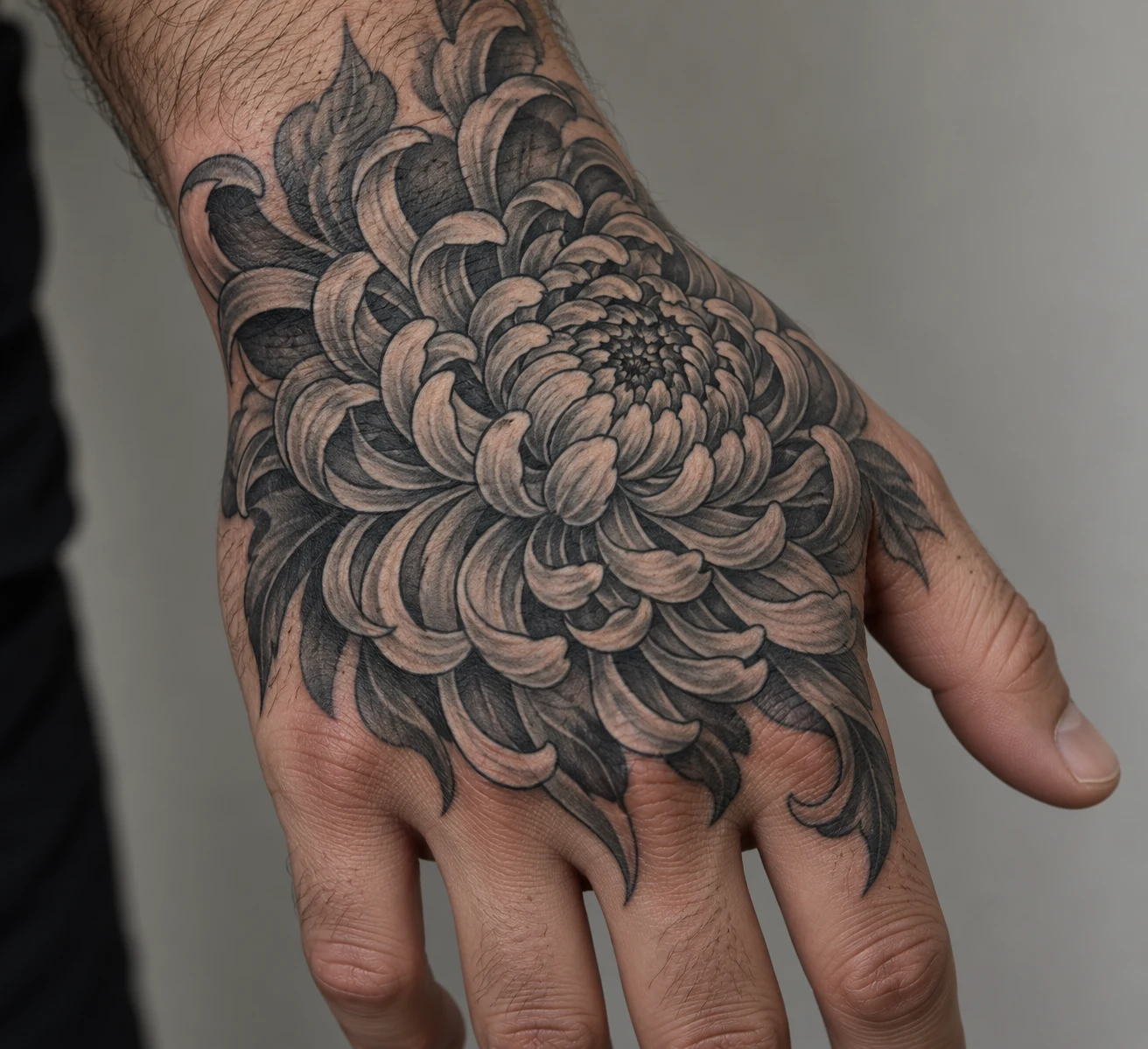
The repeated curved petals create a denser pattern than the rose. It suits readers who enjoy intricate floral forms; discuss how much separation to leave between shaded folds.
8. Fern Frond
A tapered stem running diagonally onto the hand.
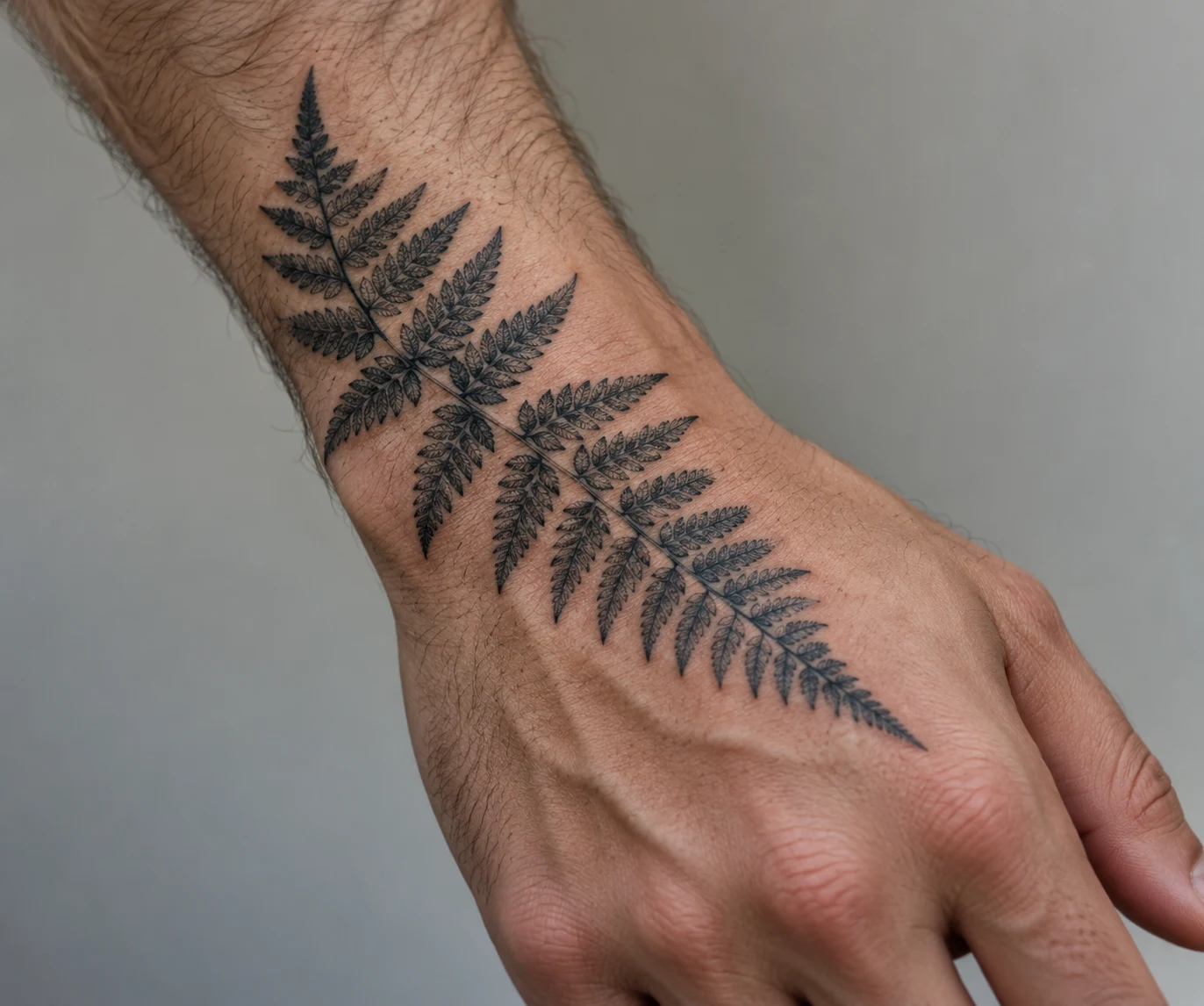
Repeated leaflets give the fern a narrow, directional shape. Consider it if you prefer an elongated botanical design or want a composition that visually connects with wrist artwork.
9. Oak Leaves and Acorn
A small botanical cluster across the thumb side.
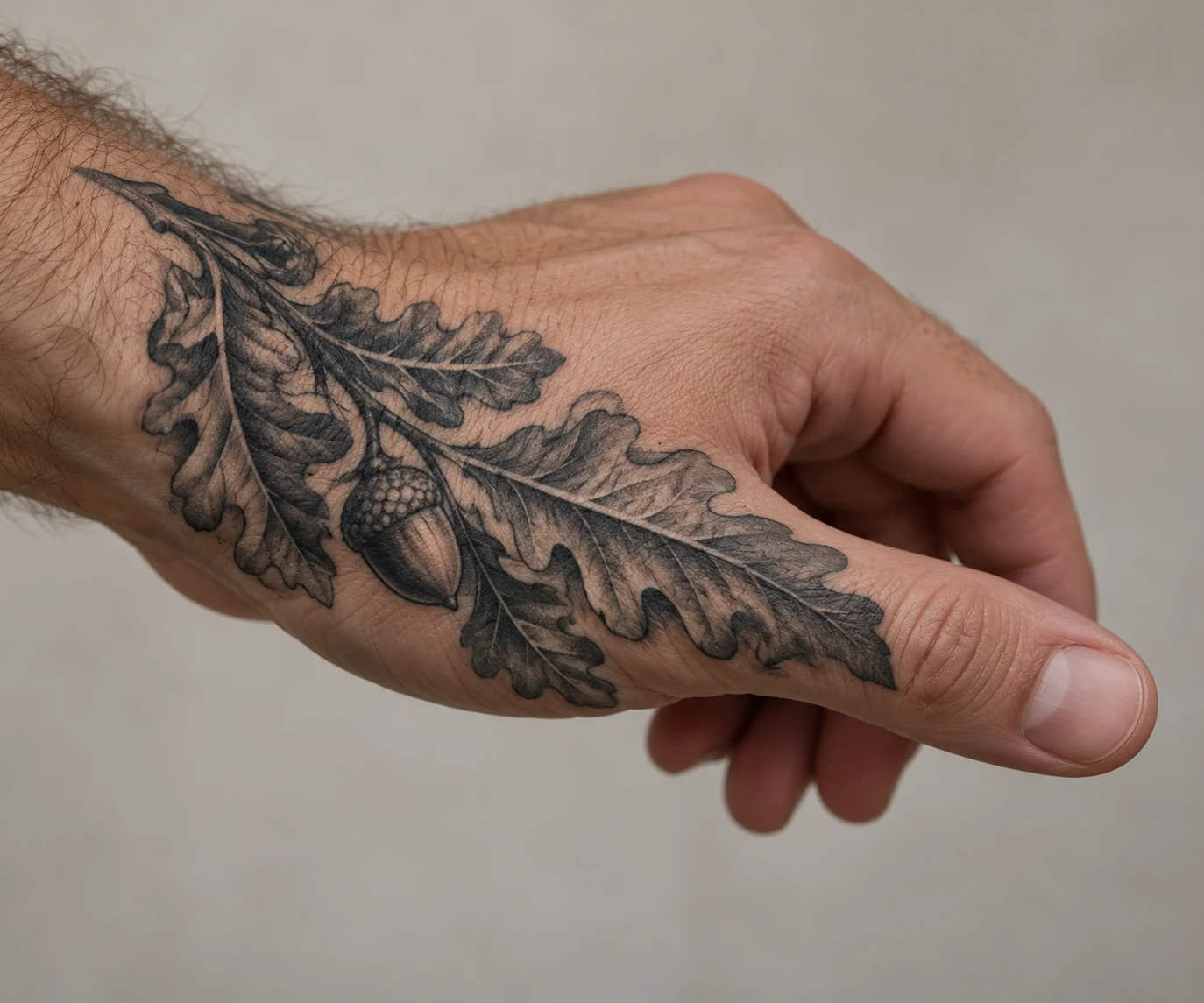
Lobed leaves and a single acorn give this cluster distinct shapes. It suits someone who wants several related elements without a full floral centerpiece. Any personal association can remain your own.
10. Ginkgo Leaf Fan
One fan-shaped leaf with radiating veins.
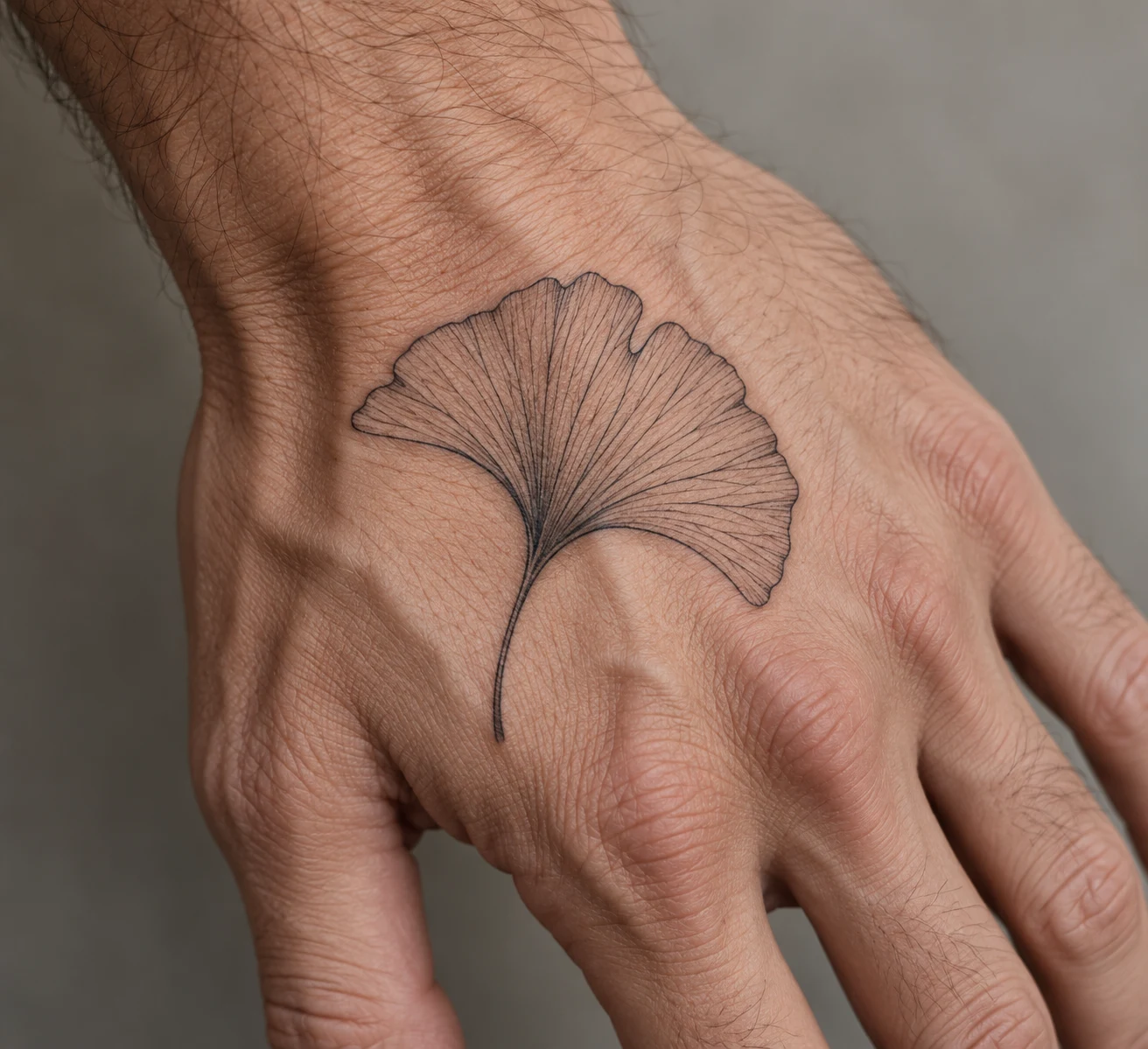
The broad silhouette offers a botanical focal point with fewer overlapping forms than a layered flower. Try a central position or an angle toward the thumb when comparing layouts.
Animal concepts introduce winding bodies, portraits, and spread-wing silhouettes.
11. Coiled Snake
A loose S-shaped snake across the hand.
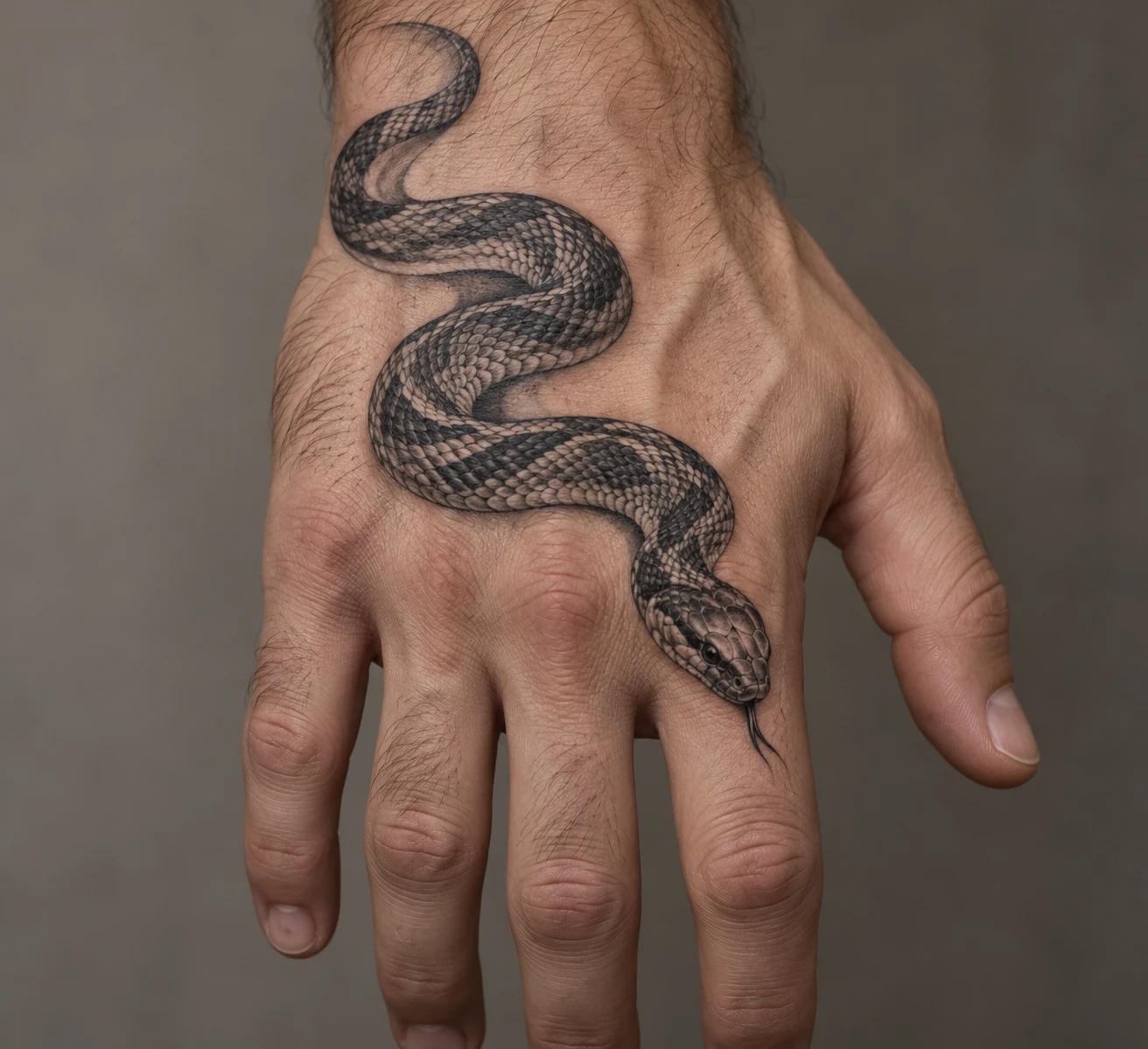
The curved body creates movement without filling every surrounding space. This suits someone who prefers a winding composition; decide whether the snake stays on the hand or continues toward the wrist.
12. Frontal Tiger Face
A centered portrait defined by bold stripes.
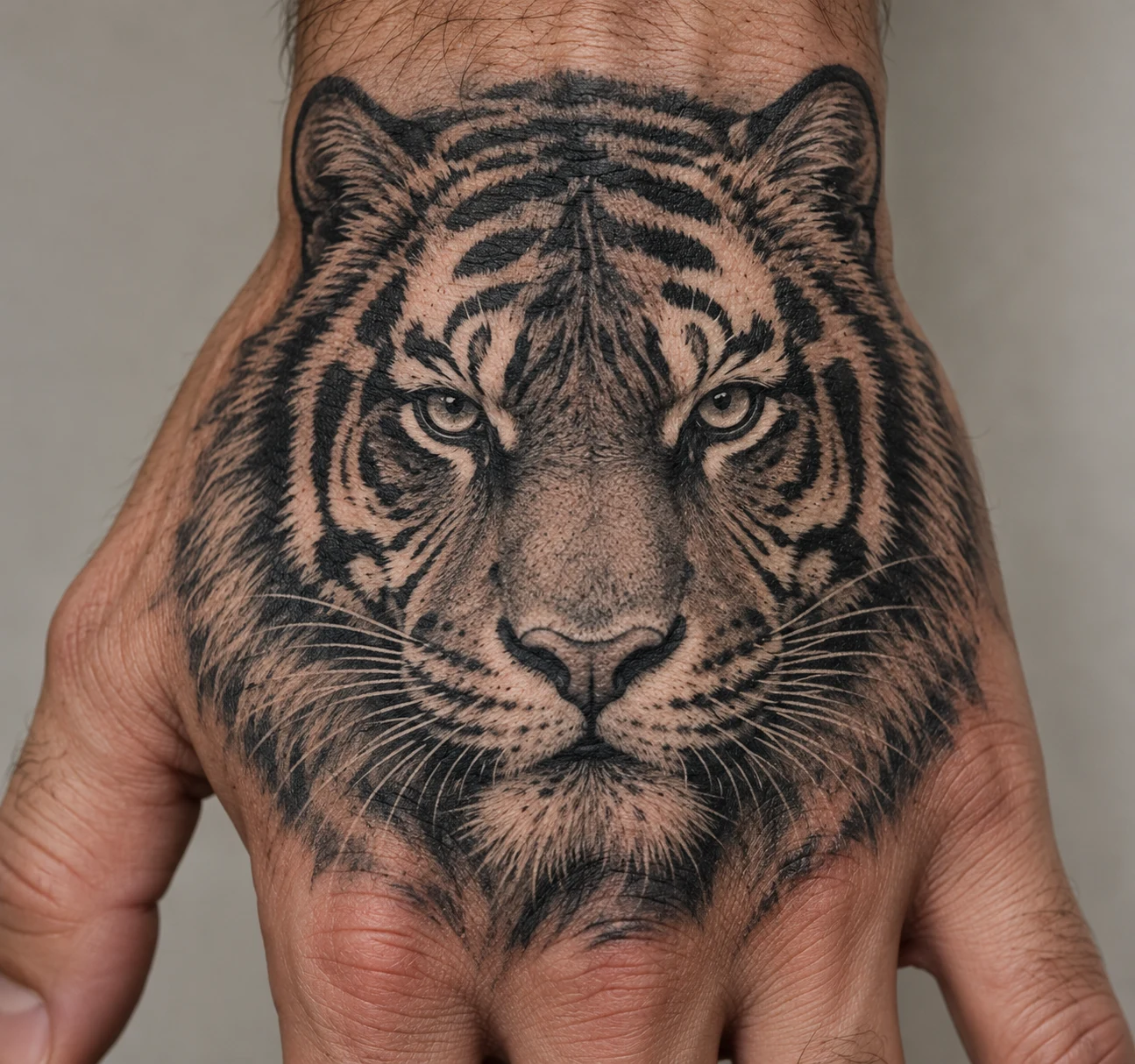
Choose this for a symmetrical animal focal point. Strong stripes provide the main contrast, while restrained grey shading adds form. Consider how much open skin should frame the face.
13. Raven in Profile
A dark bird with a clearly defined beak.
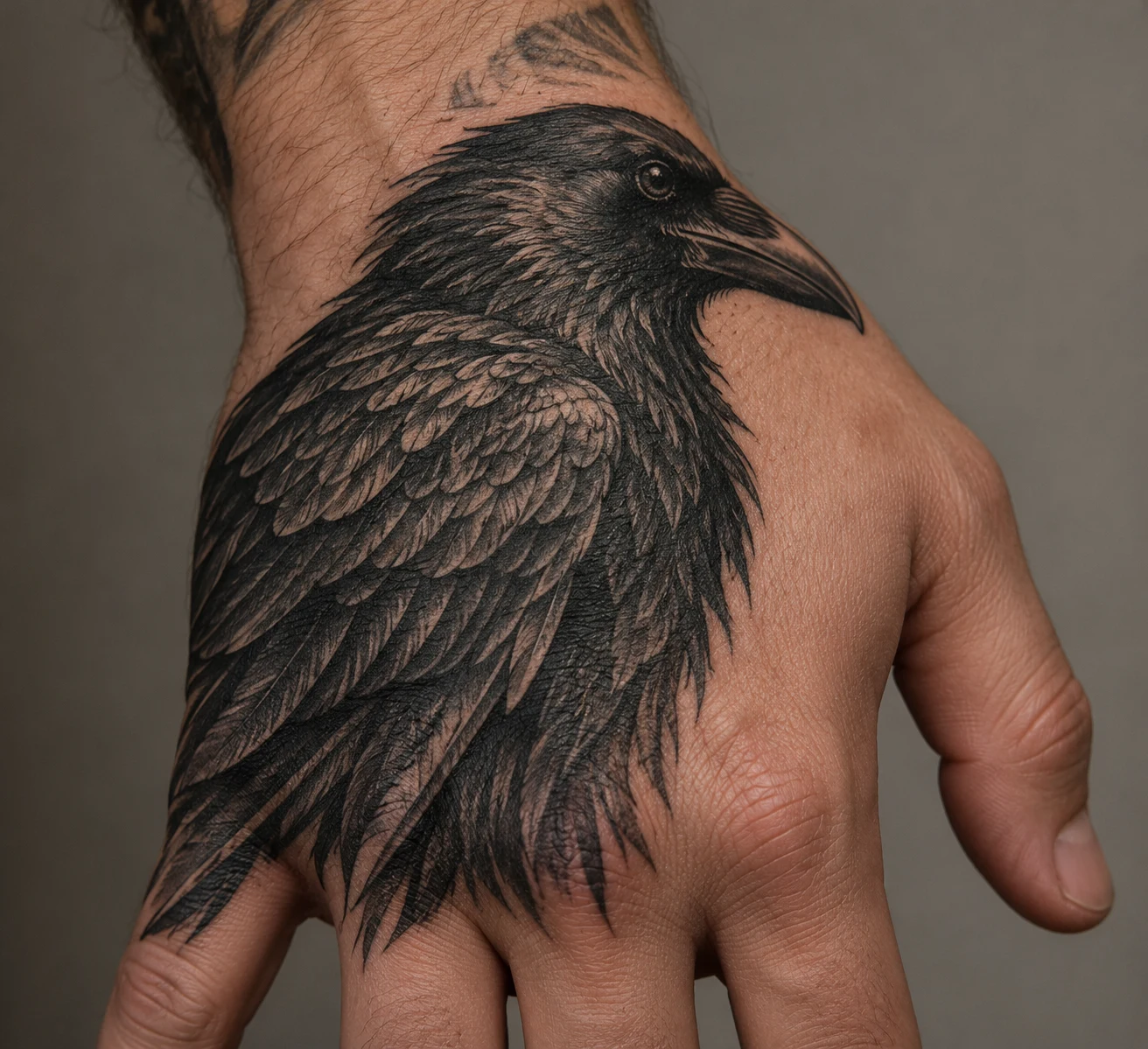
For a predominantly black composition, consider the raven’s angled profile. Select a few feather details, then compare which facing direction works best within the hand’s available space.
14. Moth with Spread Wings
Balanced wings with decorative black markings.
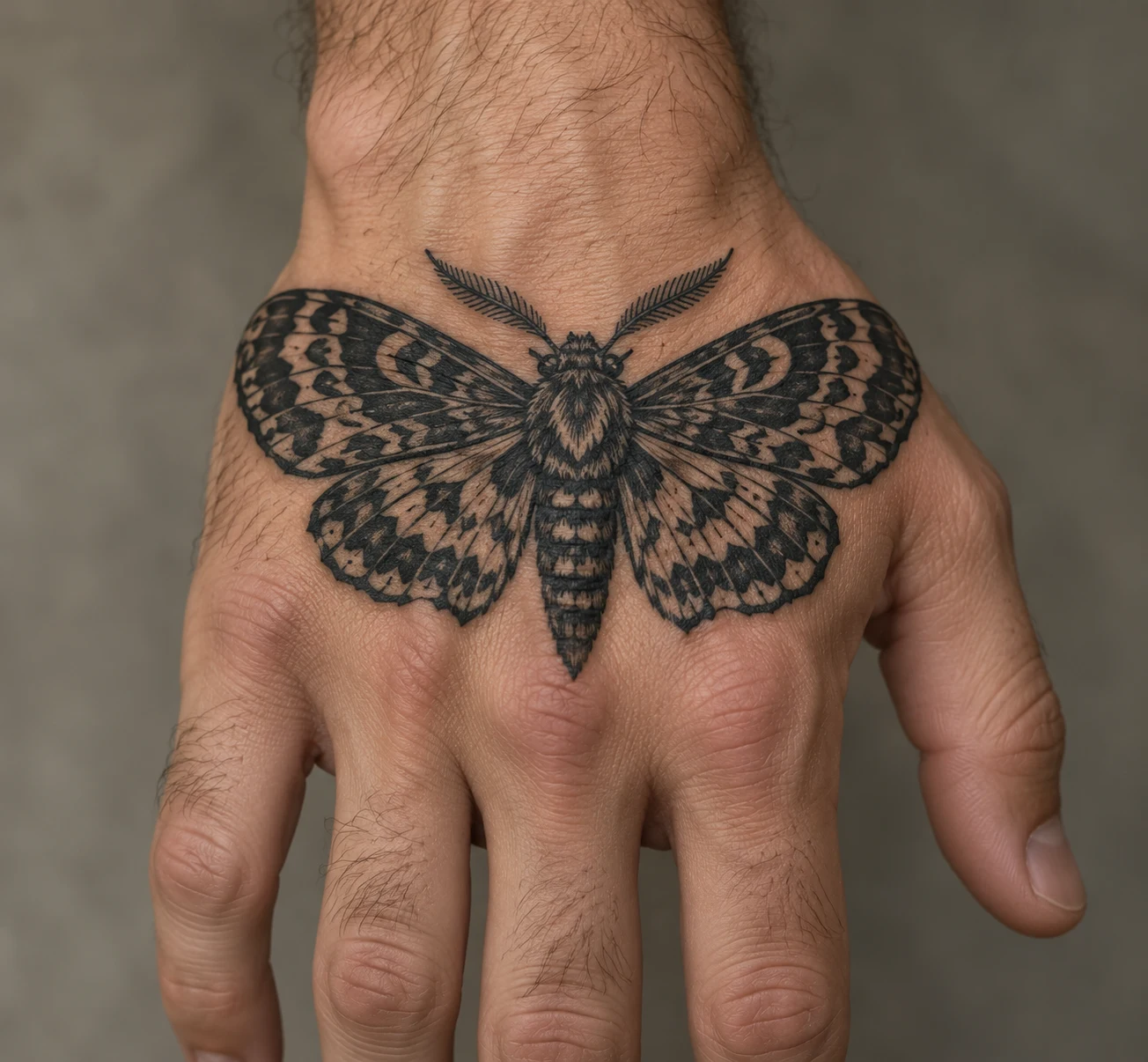
The broad wings suit someone who wants a composition extending across the hand’s width. The decorative markings don’t need to represent a particular species; compare open outlines with larger solid sections.
15. Scorpion
Separated claws and a curved, segmented tail.
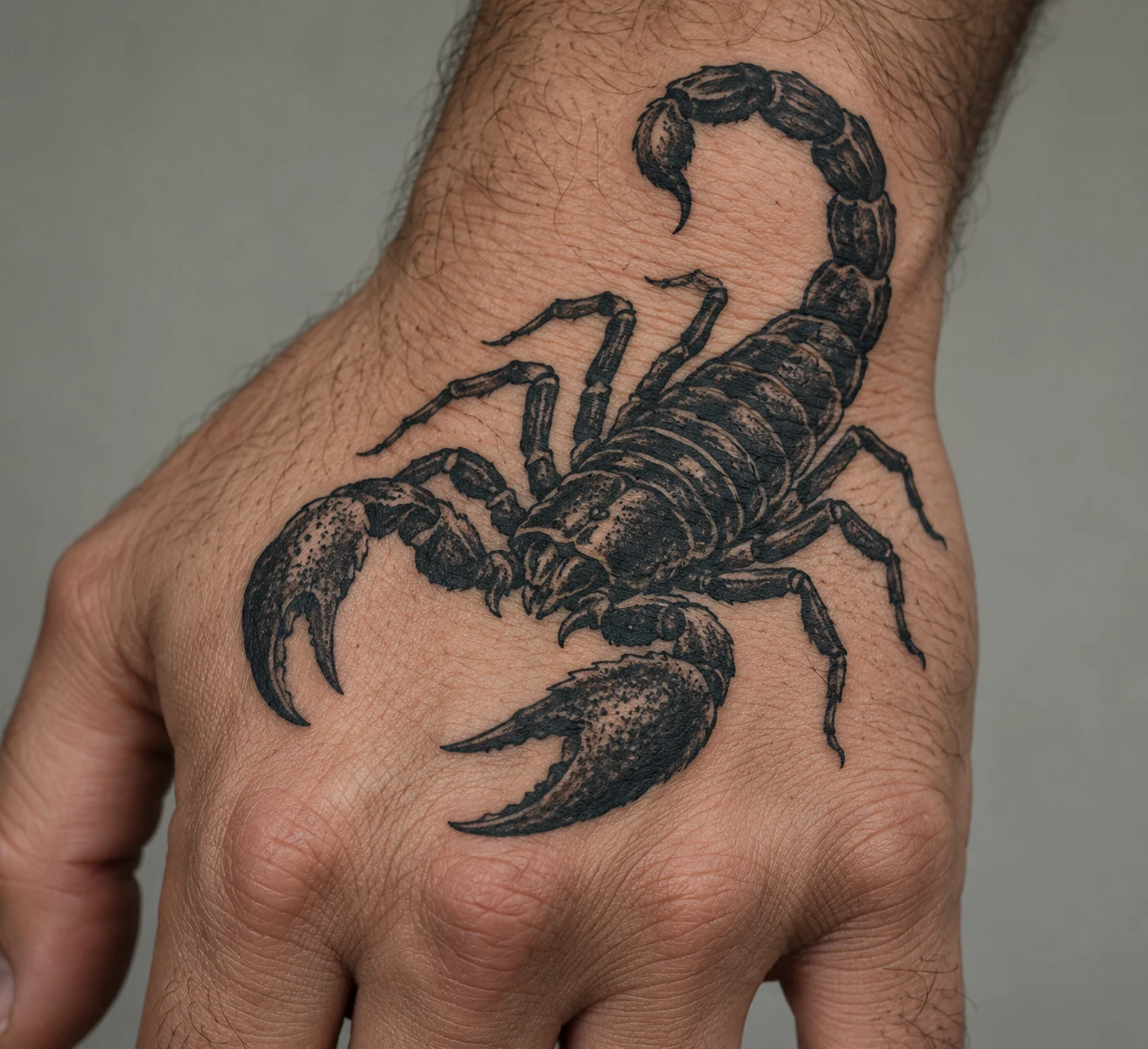
This angular creature offers several distinct shapes within one compact design. Ask the artist to assess whether the claws, body, and tail remain clearly separated at your chosen scale.
The final five ideas use illustrative objects, anatomy-inspired forms, and atmospheric elements.
16. Skeleton Hand
Bone imagery following the hand and fingers.
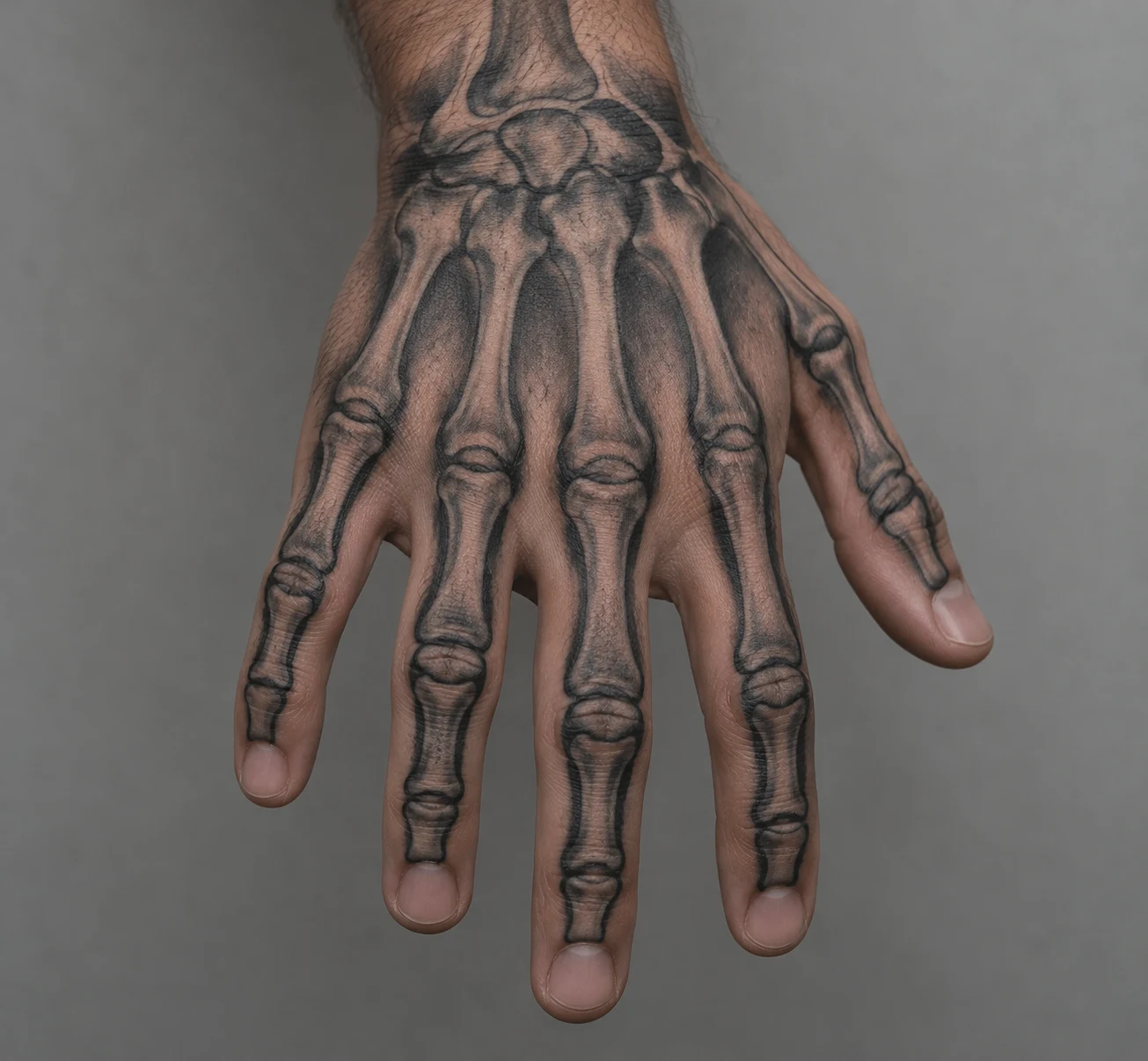
This concept uses the hand’s structure as part of the design without requiring medical precision. It suits readers interested in extensive coverage; decide how far the imagery should reach along each finger.
17. Engraved-Style Dagger
A narrow blade with etched-looking shading.
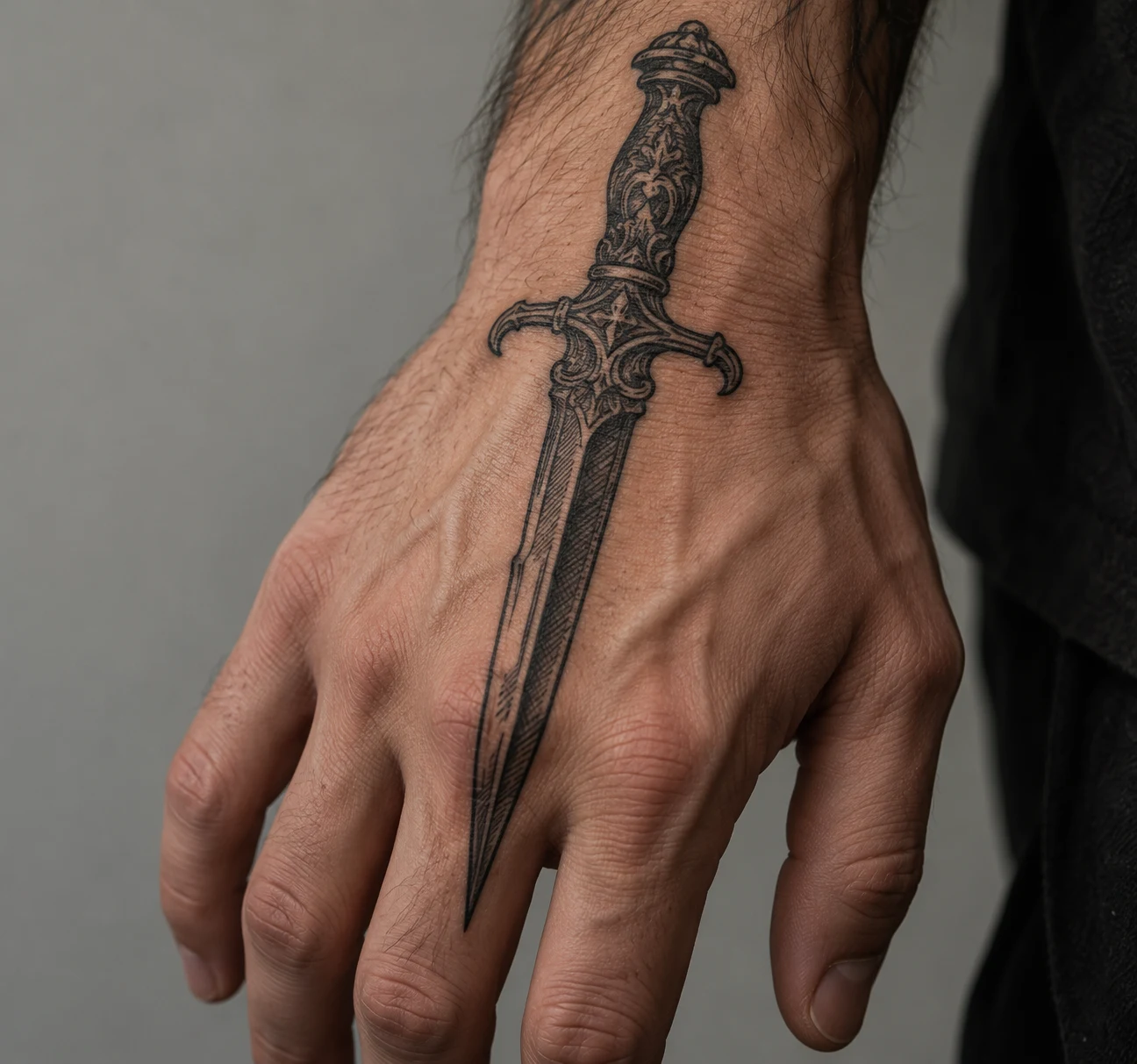
The handle-to-point arrangement creates a clear lengthwise direction. Choose a plain handle for a restrained object design, or add limited ornament if you want a more decorative focal point.
18. Compass Rose
Alternating points around a clear central circle.
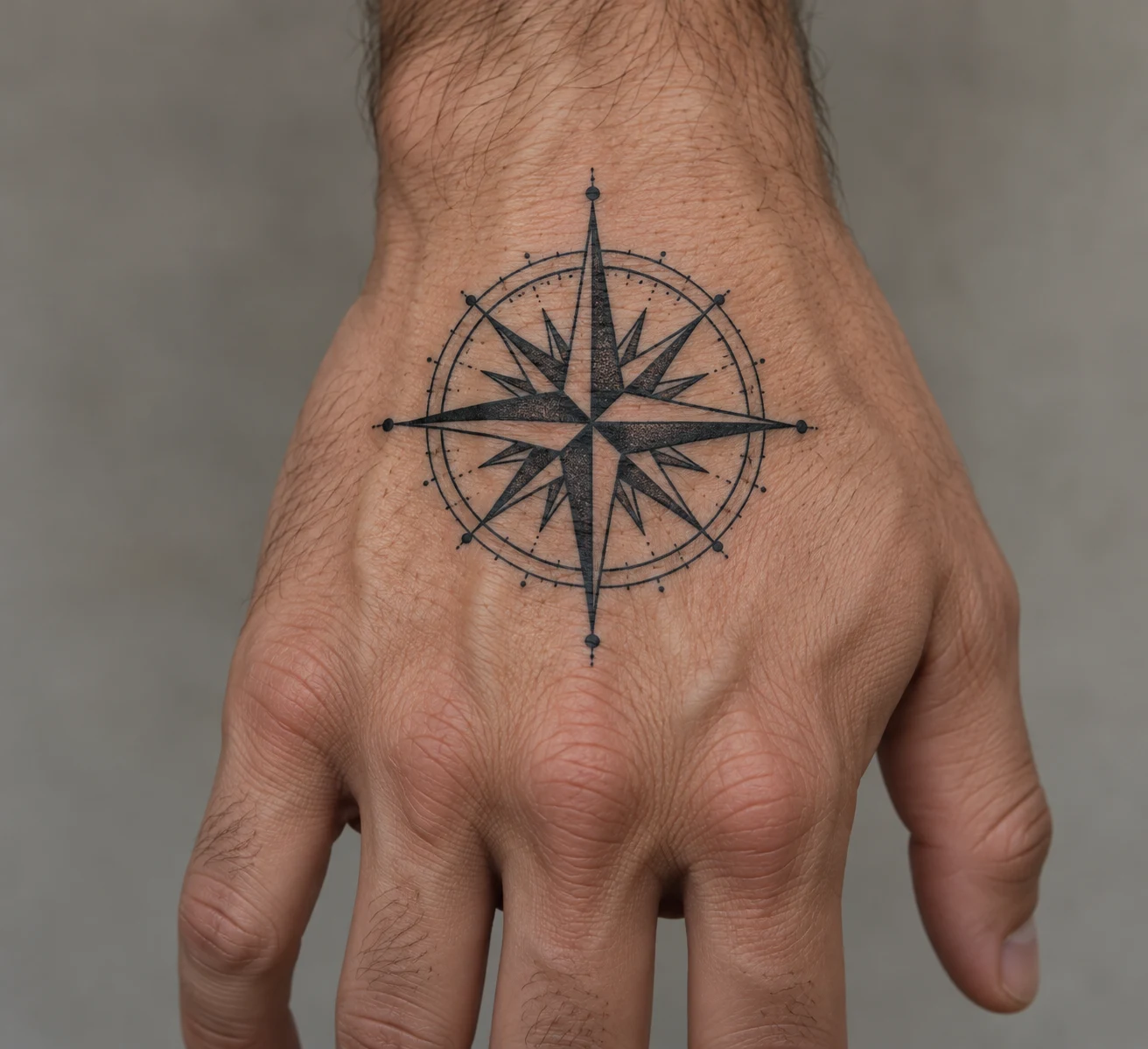
Radial geometry makes this an option for readers who like a defined center. Directional letters are optional. A personal connection to travel can inform the choice without dictating the design’s meaning.
19. Breaking Wave
A curling wave with open foam shapes.
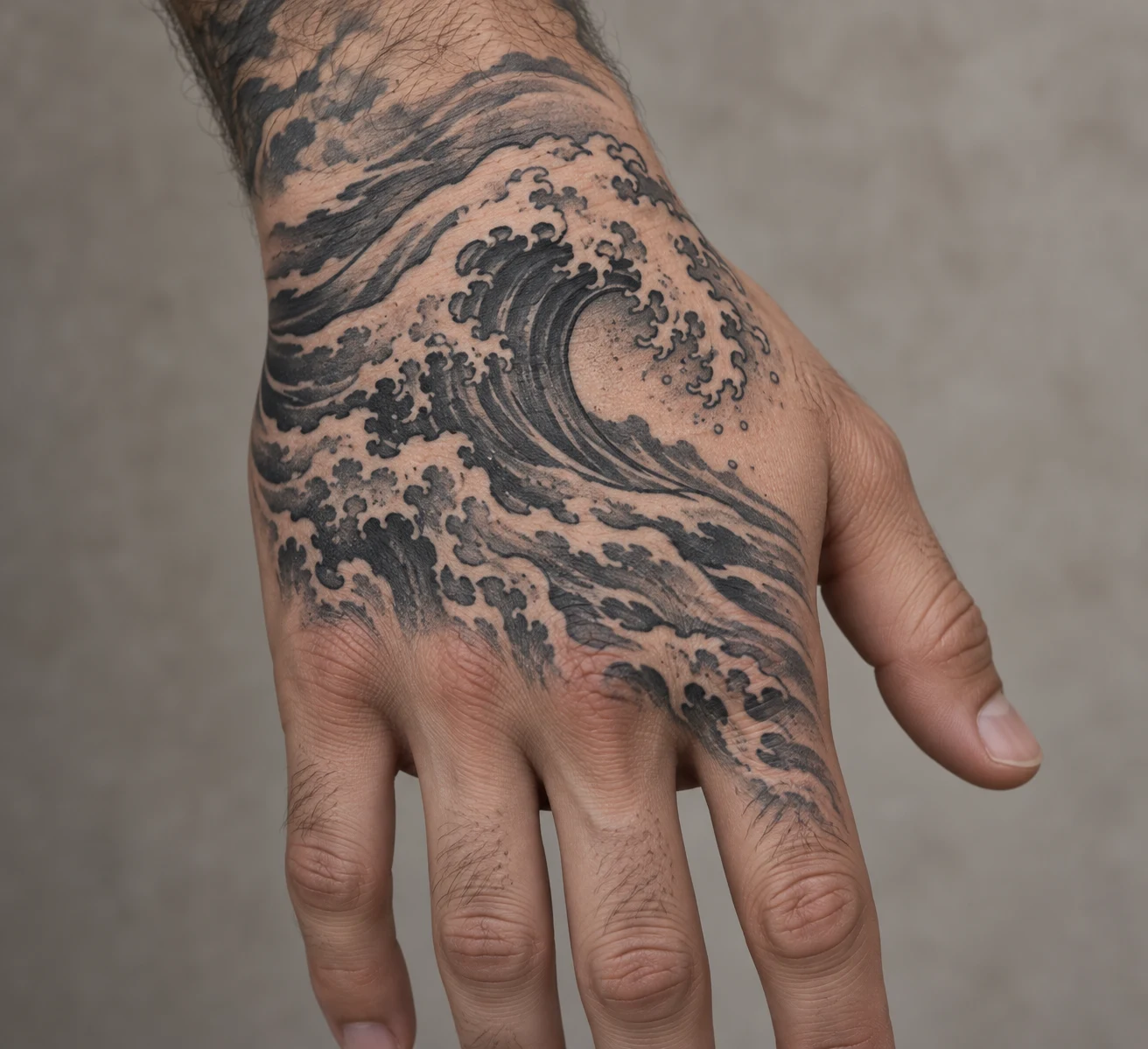
Black contours and grey shading give this composition flowing movement. It suits someone who wants a landscape element without a full scene, either contained on the hand or extending toward existing wrist work.
20. Crescent Moon and Clouds
A clear crescent framed by soft grey forms.
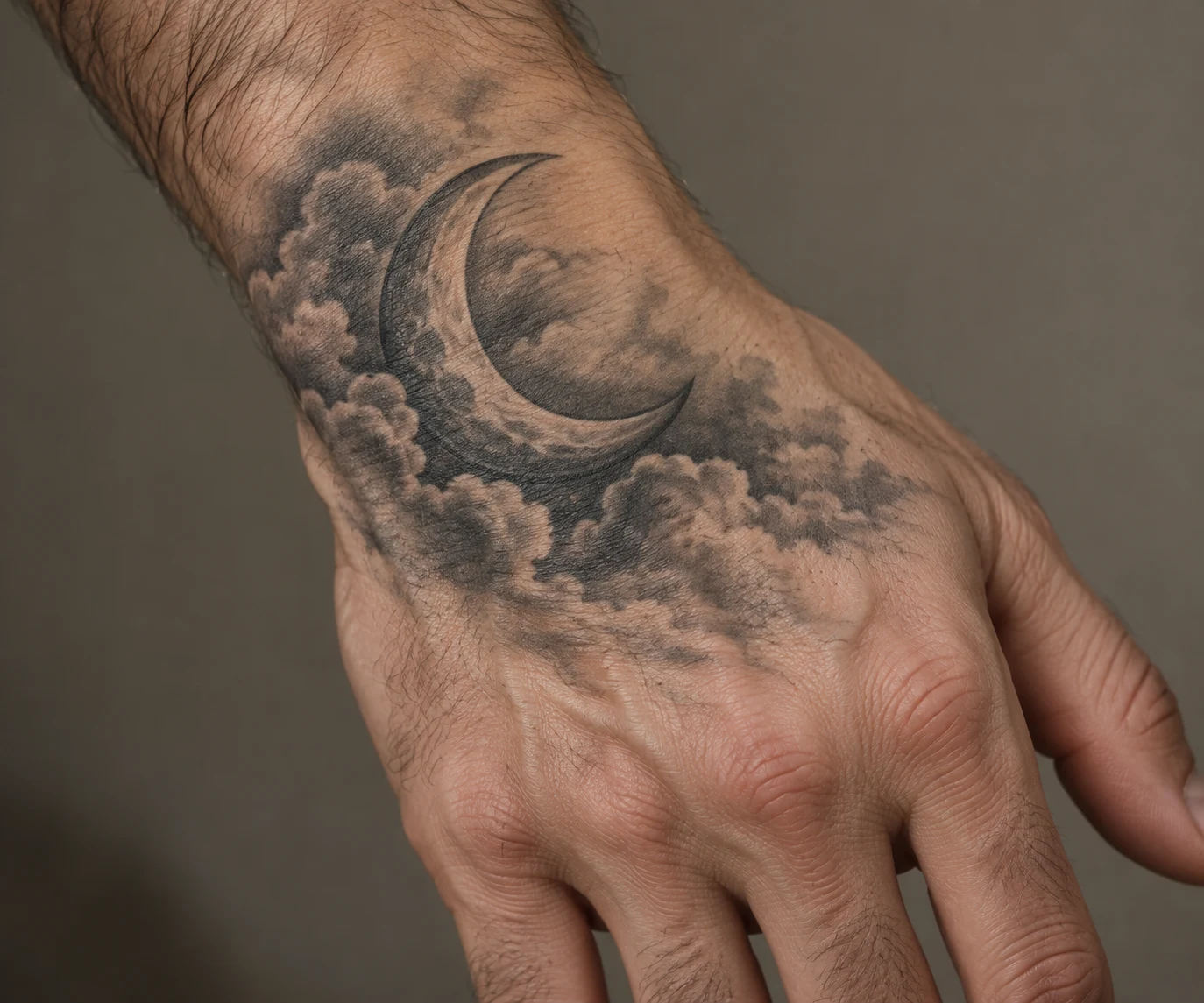
The crescent provides a simple focal shape while the clouds soften its surroundings. If you’re drawn to celestial imagery, consider this pairing. Keep the cloud arrangement sparse enough for the moon to remain prominent.
Shortlist two or three concepts by subject, coverage, and contrast. Take those references to a tattoo artist to discuss placement, proportions, and workable detail on your own hand.

