
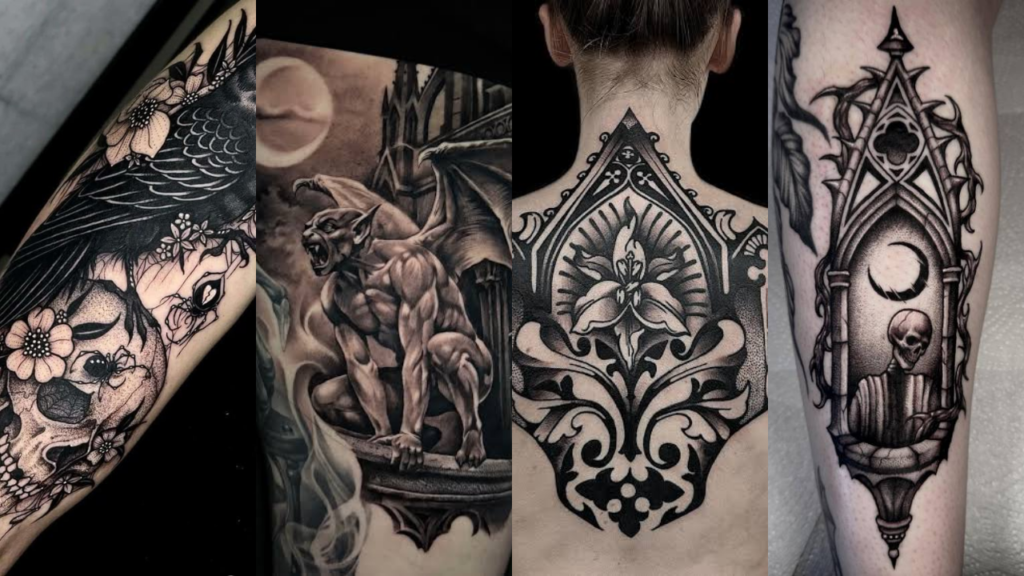
Gothic tattoos carry a mood that few styles match. Dark ink meets soft shading, and the skin turns into a small cathedral. Think of ravens, roses, skulls, and stained glass patterns drawn in black. Some designs whisper. Others shout. Artists build these pieces with heavy blackwork, fine lines, and shadows that fall in the right places. People choose them for beauty, not fear. Each piece tells a story about loss, love, faith, or survival. You can wear one small on the wrist or large across the back. Below, real designs show how dark art can look stunning on skin.
Gothic Architecture Tattoo
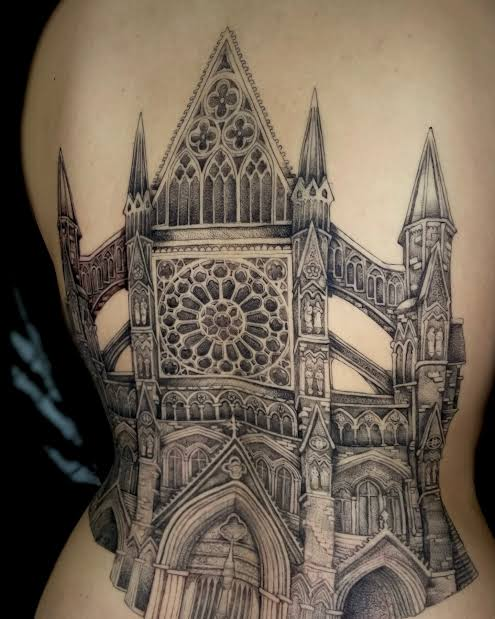
Cathedral tattoos turn the body into stone and glass. Artists use dotwork and fine black lines to build rose windows, pointed arches, and spires. Depth comes from thousands of tiny dots, not heavy shading.
These pieces work best on large flat areas like the back, thigh, or ribs. Sessions run long, so patience matters. Many wearers pick them for faith, memory, or a love of old European buildings.
Dark Ornamental Tattoos
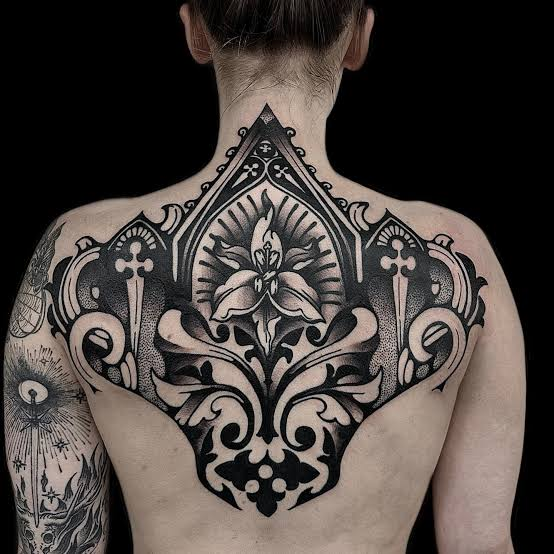
Ornamental blackwork leans on symmetry and solid black shapes. Filigree scrolls, arched frames, and pointed finials mirror each other across the spine. Negative space does half the work here, letting bare skin carve out petals and curves.
Placement follows the body. Shoulders and upper back give the design room to spread like a crown or collar. Bold fills age well over the years, though the crisp edges need a skilled hand and steady linework.
Realistic Gargoyle Tattoos
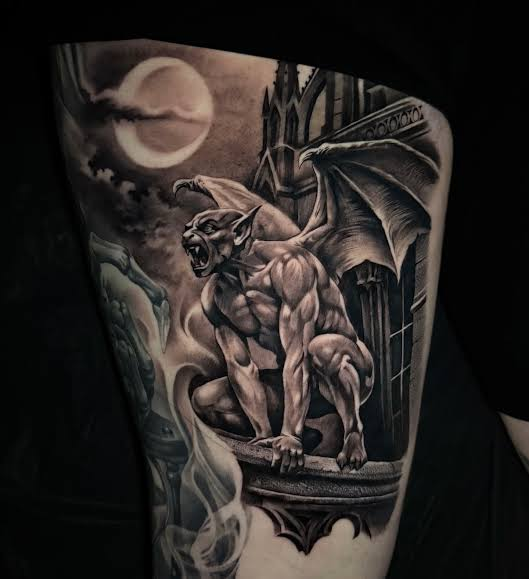
Gargoyle pieces sit in the black and grey realism camp. Artists sculpt muscle, wing membrane, and weathered stone through smooth gradients rather than hard outlines. Background elements like a pale moon, drifting clouds, and a cathedral ledge push the creature forward and sell the illusion of carved rock.
Thighs, calves, and upper arms suit this style because curved skin mimics a perched statue. Contrast keeps it readable, so the artist saves the deepest blacks for shadows behind the figure. Expect several sittings and steady sunscreen use afterward to protect those soft mid tones.
Romantic Macabre Tattoos
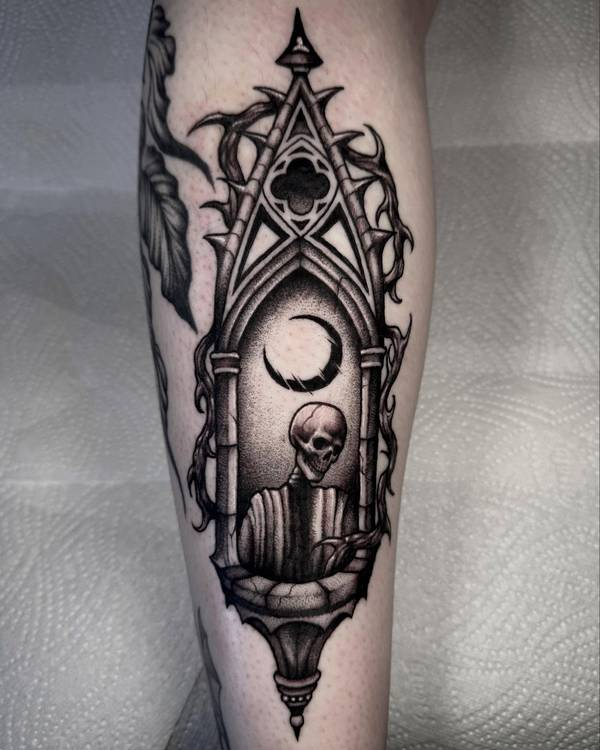
Romantic macabre blends beauty with decay. Here a hooded skeleton sits inside a pointed arch, framed by a crescent moon, quatrefoil tracery, and thorny vines that creep along the stone. Death appears calm rather than violent, which is the whole point of the style.
Dotwork shading builds the soft grey glow behind the figure while crisp lines hold the frame. Narrow shapes like this suit the calf, forearm, or spine. Symbols carry weight too, so pick vines, moons, or candles that mean something to you.
Gothic Fauna Tattoos
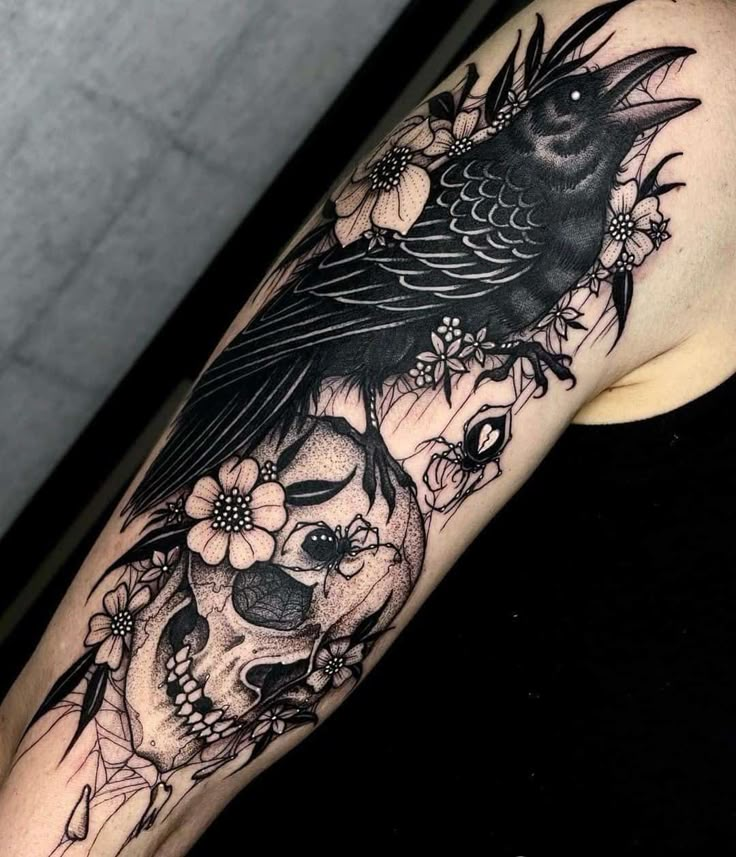
Gothic fauna pulls dark creatures from folklore and nature into one scene. Ravens, moths, spiders, bats, and wolves lead the style, often paired with blossoms, cobwebs, or a bare skull. Solid black feathers against stippled bone create the contrast that defines this look. The arm piece above shows it well, with a raven perched over a flower wrapped skull.
Mixing textures keeps these designs alive. Fine dotwork softens bone and petals while sharp brush strokes shape wings and claws. Upper arms, forearms, and thighs give the composition room to flow. Choose animals with personal meaning, since each one carries its own old superstition.
Dark Realism Tattoos
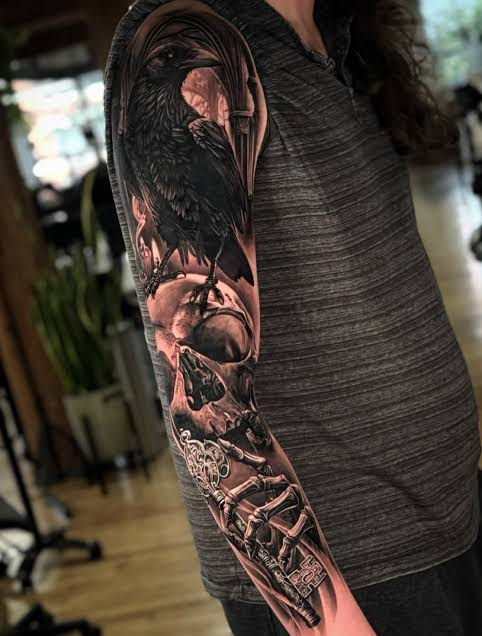
Dark realism trades outlines for pure light and shadow. Artists build every form with soft grey washes, deep blacks, and small pockets of untouched skin that act as highlights. Full sleeves suit the approach because one long canvas lets separate elements flow together without visible seams. The arm above stacks a raven, a skull, and a skeletal hand holding a key into a single vertical story.
Planning matters more than any other gothic style. Your artist maps the flow around muscle before the first line goes in. Budget several long sittings and expect touch ups, since soft grey tones fade faster than solid black.
Symmetrical Sternum Gothic Tattoo
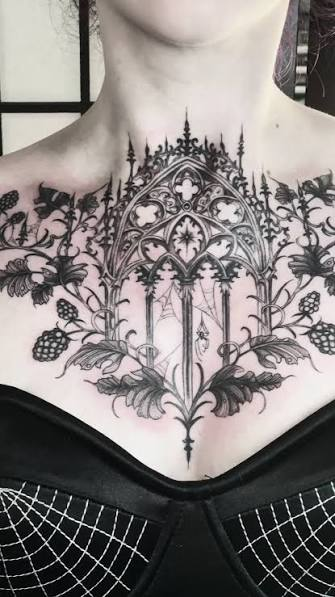
Sternum work follows the body’s own mirror line. Artists center a spire or arch on the breastbone, then fan matching shapes outward across the collarbones. Fine linework and light stippling keep the piece delicate rather than heavy. The chest design above pairs cathedral tracery with berry vines, leaves, and a small spider tucked into its web.
Symmetry rules this placement, so stencil work takes real time before any needle touches skin. Ribs and sternum rank among the sharper spots to sit through, though sessions stay shorter than a sleeve. Necklines matter too, since the top edge peeks above most shirts.
Dark Angel Tattoos
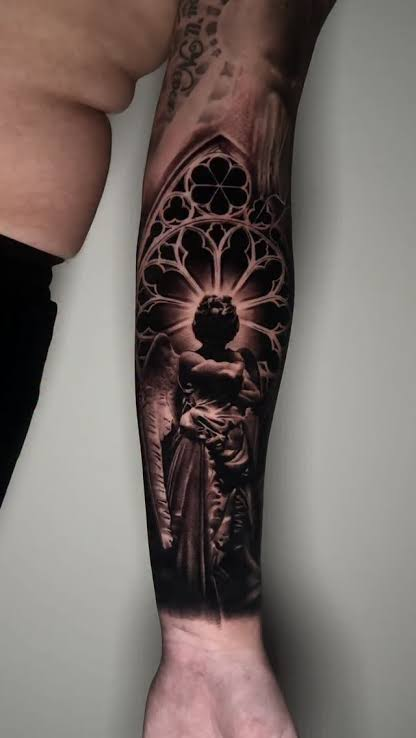
Angel pieces in gothic work lean toward grief rather than glory. Statues, mourners, and folded wings replace bright halos, and the figure usually looks down or away. Backlighting drives the whole effect, with a bright glow behind the subject pushing the body into silhouette. This forearm example sets a stone angel against a rose window, letting light pour through the tracery.
Long limbs frame these designs well since the vertical shape mirrors a church niche. Heavy black backgrounds do the hard work, so trust your artist when they pack in shadow. Choose your source pose carefully, because posture carries most of the emotion.
Vibrant Stained Glass Tattoo
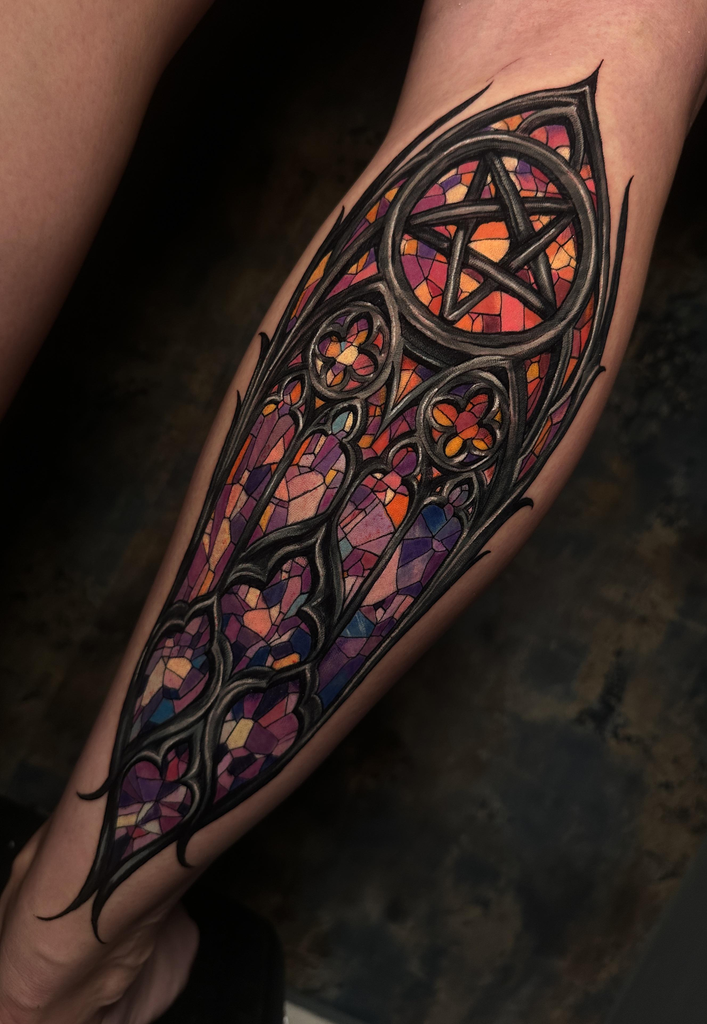
Stained glass tattoos bring color into a style built on black. Artists lay down mosaic shards in violet, crimson, orange, and blue, then wrap them in thick leaded lines that read as dark metal. Quatrefoils, arches, and star motifs supply the framework. The forearm piece above centers a pentacle inside a ring of warm glass, with cool purples cooling the lower half.
Shading inside each shard sells the illusion of light passing through. Color choice drives the mood, so warm palettes feel lit from behind while cool ones read as dusk. Saturated ink needs protection, meaning sunscreen becomes part of your routine for life.
Dark Calligraphy Tattoos
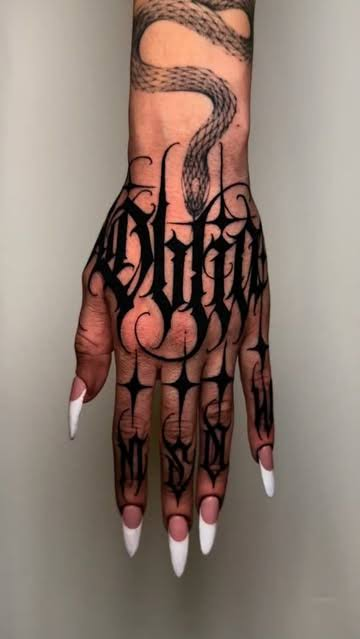
Blackletter lettering turns words into ornament. Artists draw heavy vertical strokes, sharp diamond serifs, and long tapered flourishes that spill past the letters themselves. Readability drops as the script gets fancier, which many wearers treat as part of the appeal. The hand above stretches one bold word across the knuckles while thin spikes run down each finger.
Hands, necks, and fingers suit this style since the script follows a straight baseline. Fading hits these spots hard, so plan on touch ups every few years. Spelling deserves triple checking too, because a misplaced letter lives with you.
Final Thoughts
Gothic tattoos cover more ground than most people expect. Stone cathedrals, mourning angels, ravens, glass mosaics, and heavy blackletter all live under the same roof. Each one leans on contrast, shadow, and patience from the artist.
Pick the style that matches your reason for getting inked. Bold ornamental work holds up longest, while soft grey realism asks for touch ups and sunscreen. Research artists who specialize in the exact look you want, since gothic work rewards a steady hand above all else.
Take your time with placement too. Large designs need flat canvas like the back or thigh, and smaller pieces sit well on the forearm or sternum. Whatever you choose, let the meaning come first and the darkness follow.

