
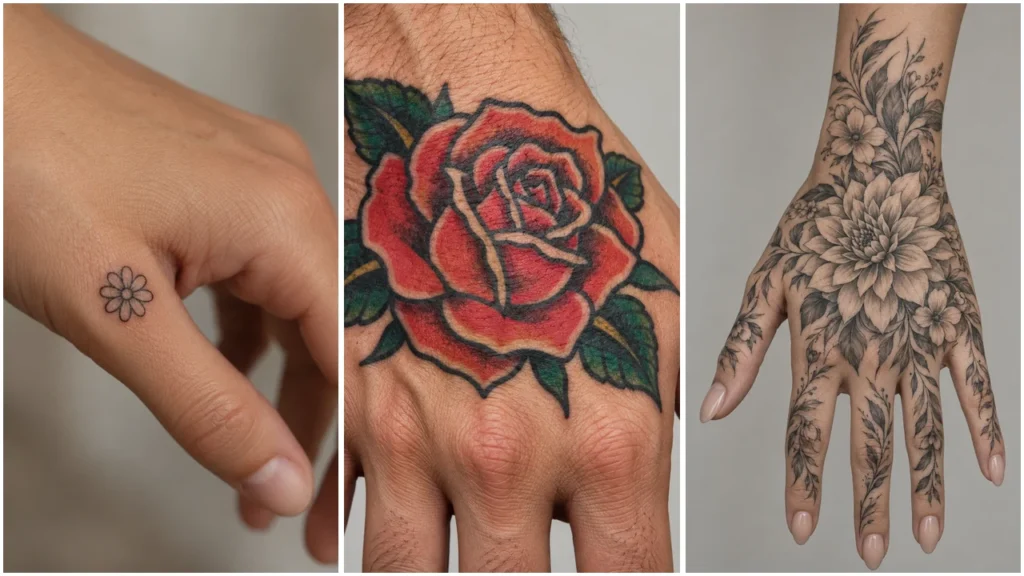
Floral hand tattoos can follow a finger with a single stem, place an open bloom across the hand or connect flowers from wrist to knuckles. These 20 concepts explore different flower shapes, ink styles and amounts of coverage. Use them to narrow your preferences before discussing a design with an artist. The illustrations represent design concepts rather than client results.
Small and Fine Line Floral Hand Tattoos
These five ideas keep coverage limited, with individual flowers and slender stems surrounded by open skin.
1. Single Daisy on the Side of the Hand
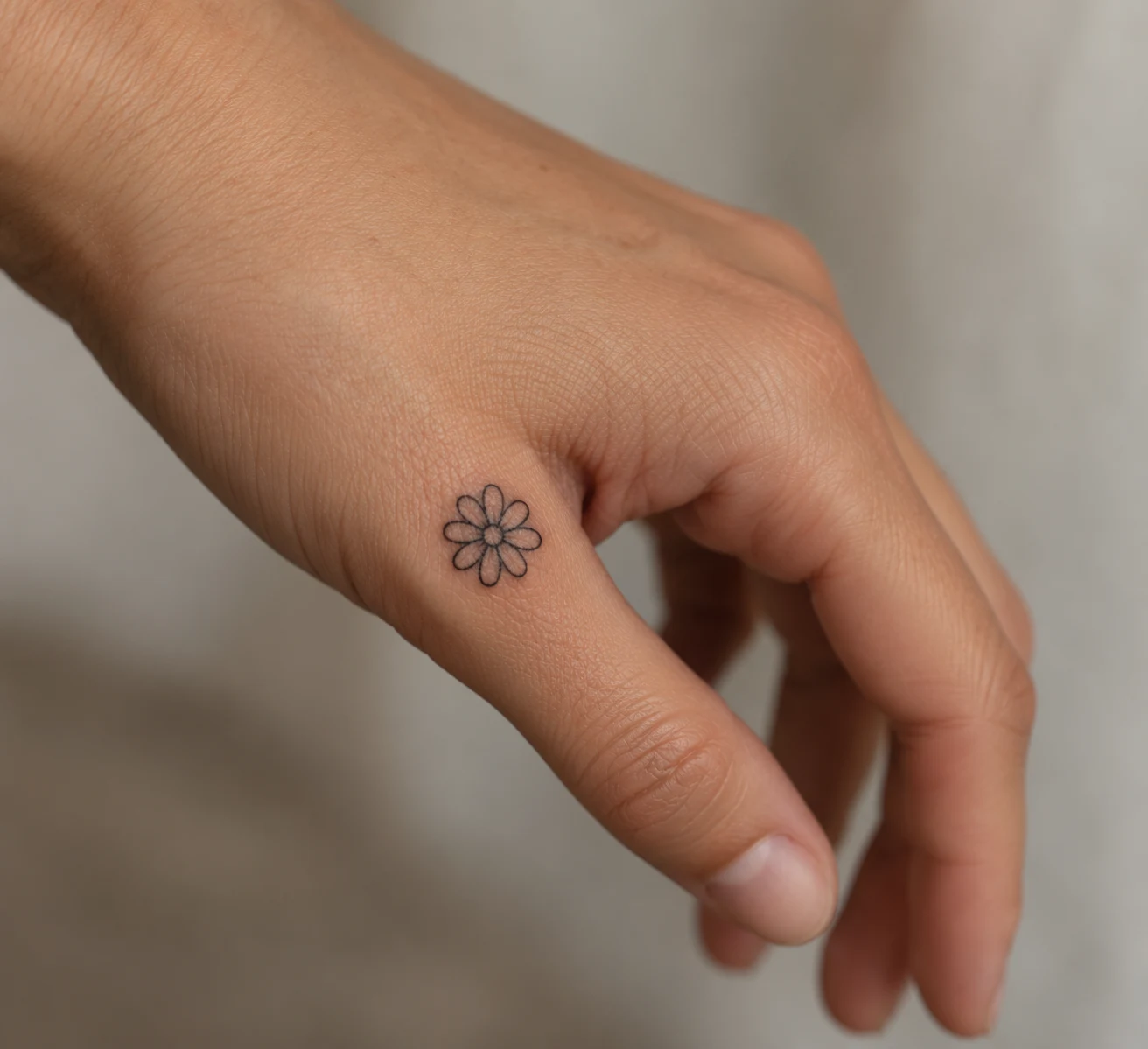
Spaced petals leave skin visible around the flower’s center.
A stemless daisy keeps the design compact. Adding a short stem carries the outline along the hand’s edge, making this a useful option if you prefer a small, off-center flower.
2. Fine Line Rose Along the Thumb
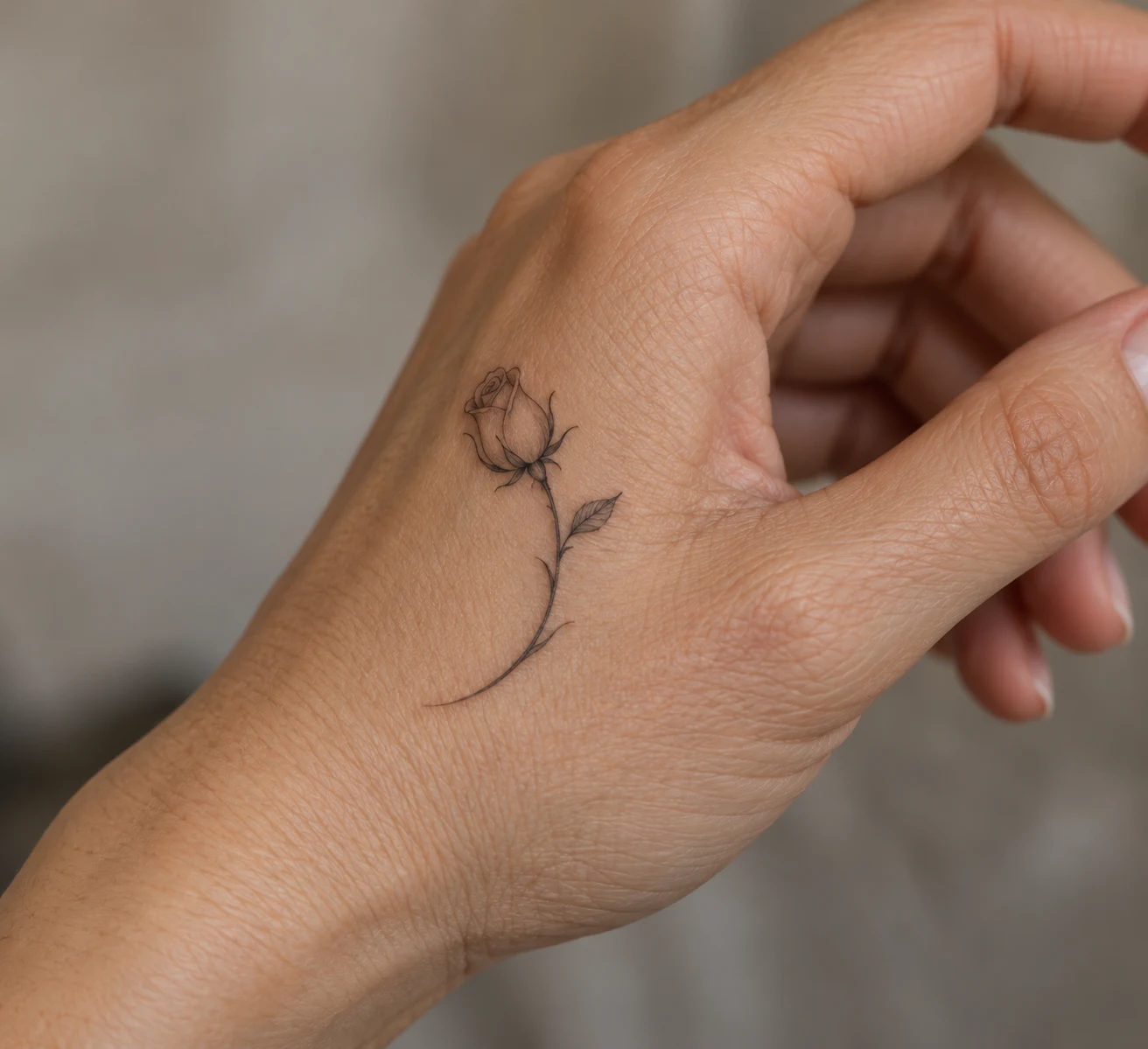
A curved stem traces the thumb’s base.
The rosebud sits to one side of the hand, leaving the center open. A closed bud keeps the composition narrow; a partially open rose adds width around the petals.
3. Tiny Tulip on a Finger
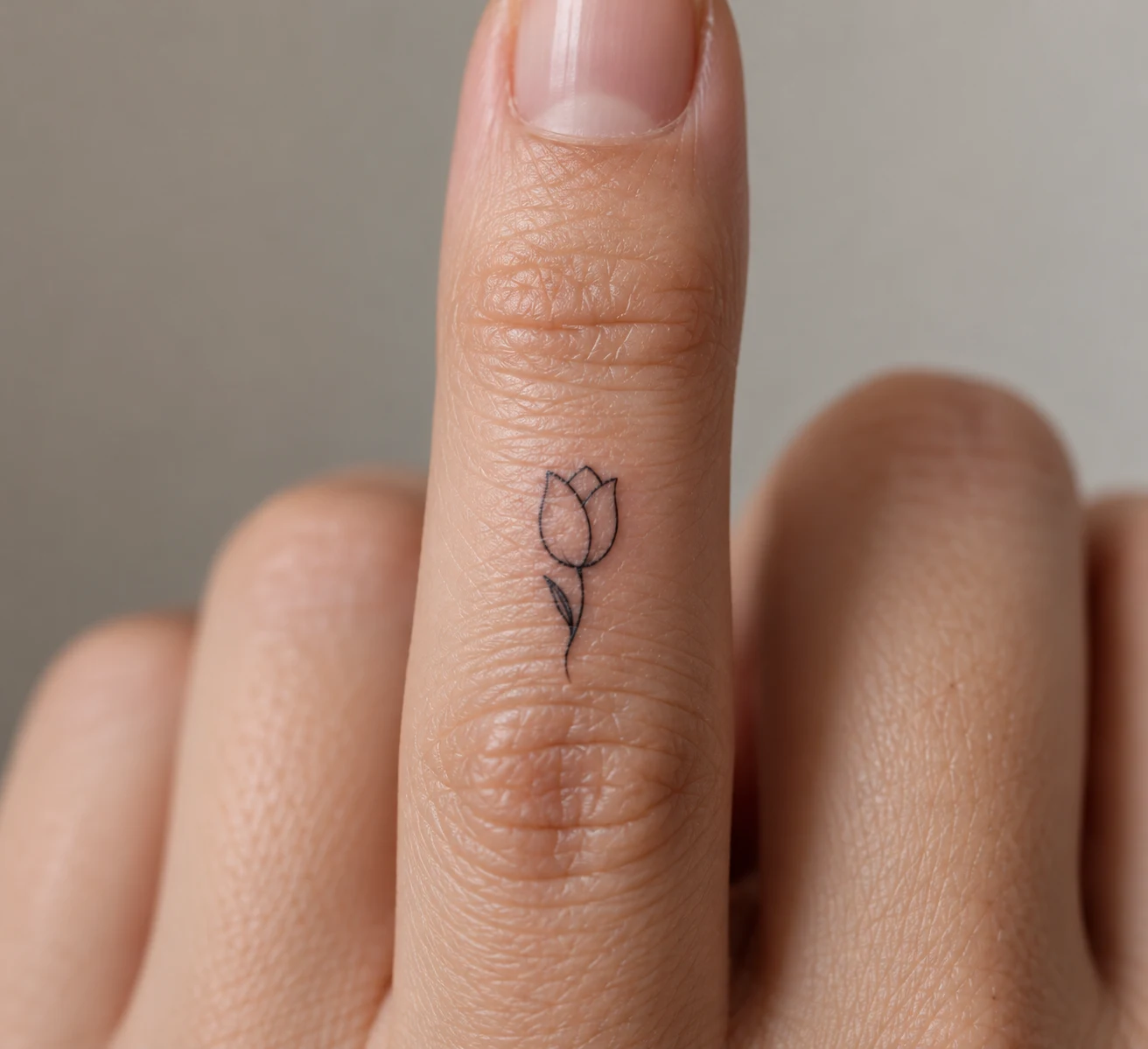
One small tulip gives a finger a focal point.
Keep the silhouette restrained, with a short stem and a few clear petal divisions. Decide whether the bloom should face your fingertip or wrist, then ask your artist to assess the size and spacing.
4. Lily of the Valley Beside the Little Finger
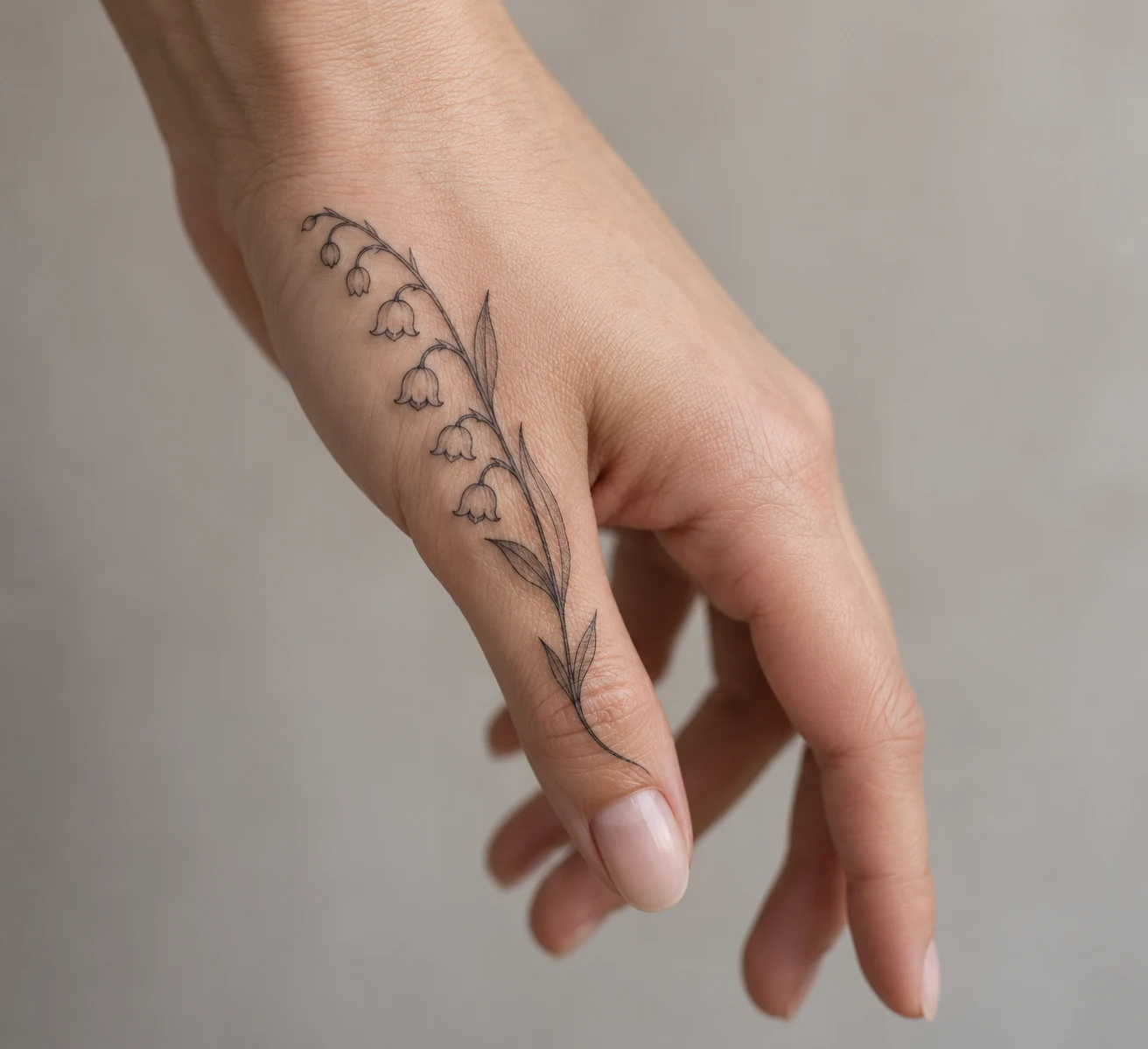
Hanging bells create a slender botanical trail.
The bending stem gives this concept a longer outline than a round flower. Consider it if you’re drawn to trailing shapes, with space around each bell to keep the arrangement open.
5. Small Lavender Sprig Near the Wrist
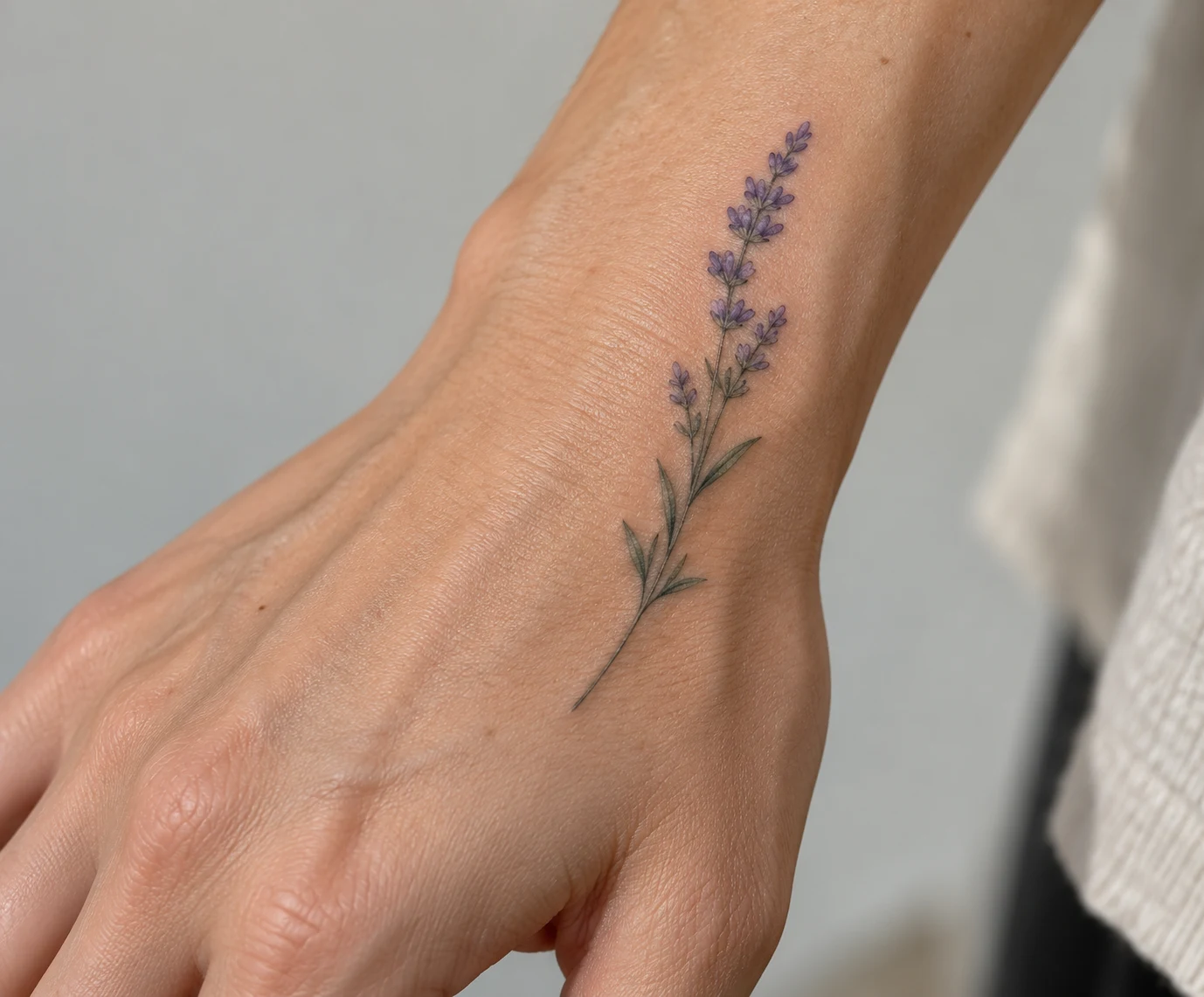
Muted purple accents pick out a narrow sprig.
Its tip points toward the fingers while most of the hand stays bare. Purple adds a small patch of color; black linework offers a monochrome version of the same botanical shape.
Centered Blooms and Structured Shapes
A central flower or balanced arrangement gives these designs a clear focal point on the back of the hand.
6. Black and Grey Rose Across the Hand
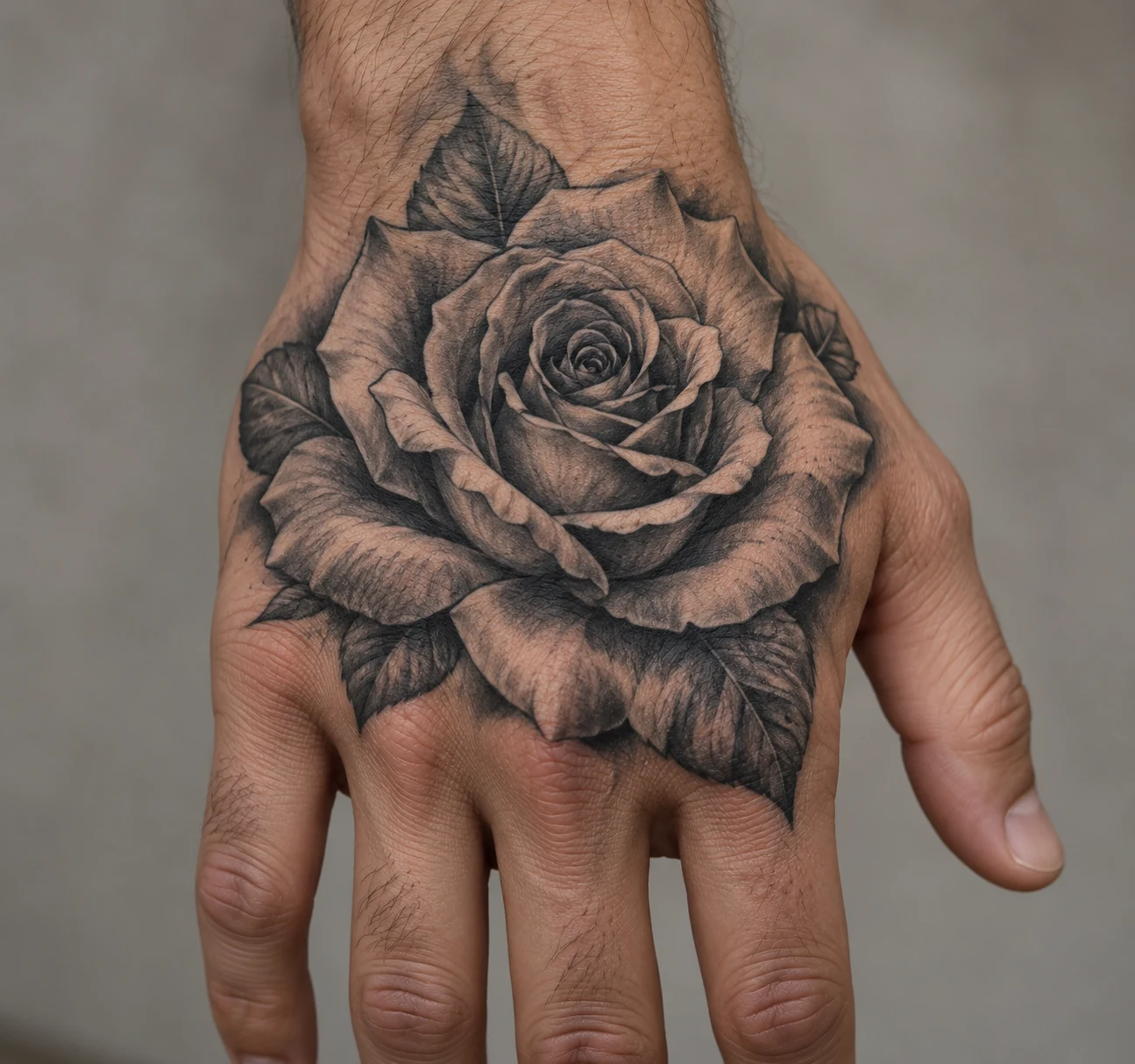
Shaded folds give the petals depth.
Choose this if you want one large flower rather than a cluster. Its outer silhouette determines coverage: compare a bloom contained at the center with one spreading toward the knuckles.
7. Peony With Leaves Framing the Knuckles
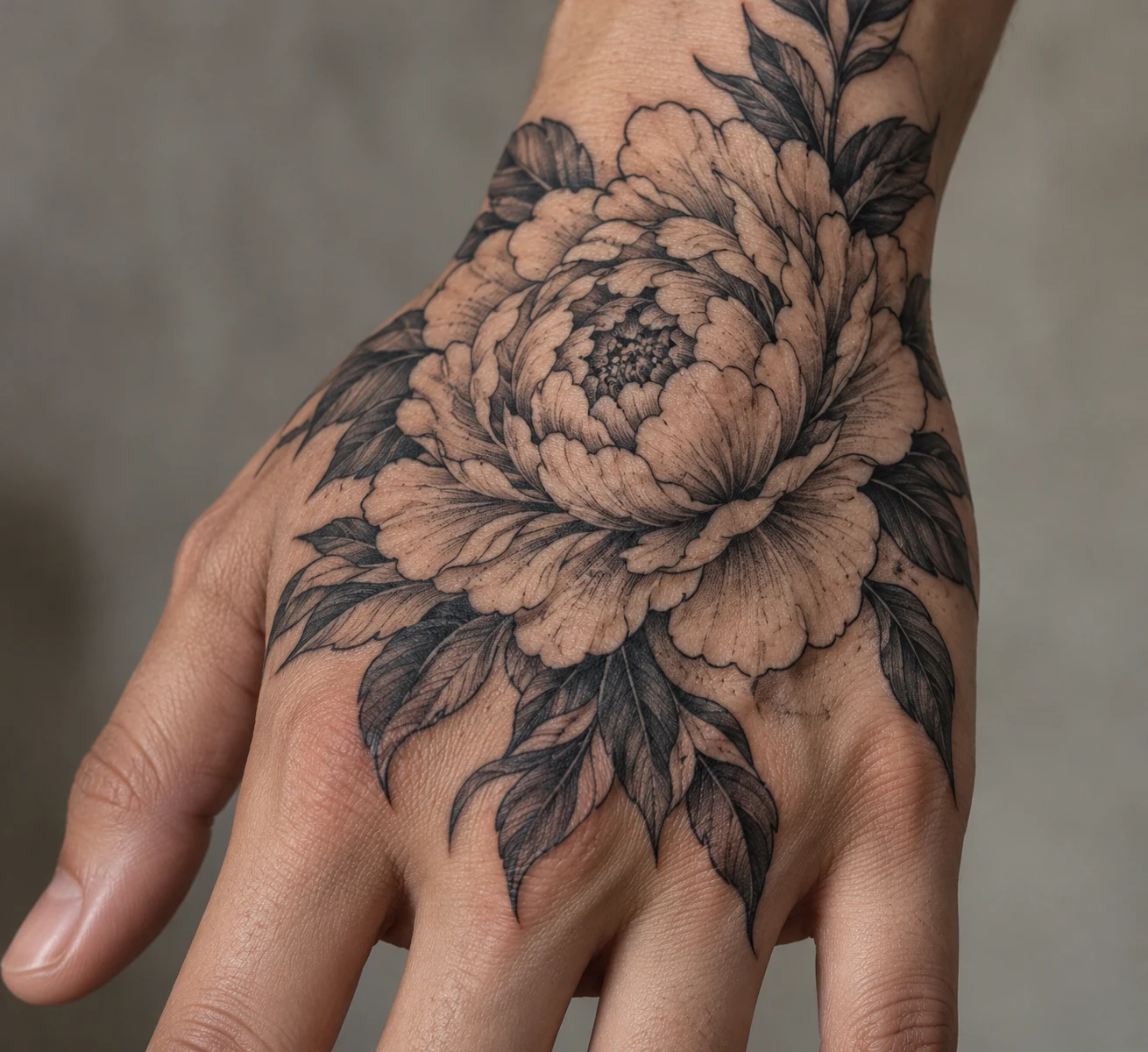
Foliage adds width around the layered bloom without introducing more flowers. Smaller leaves keep attention on the peony, while larger ones spread the arrangement toward the knuckles.
8. Chrysanthemum With Radiating Petals
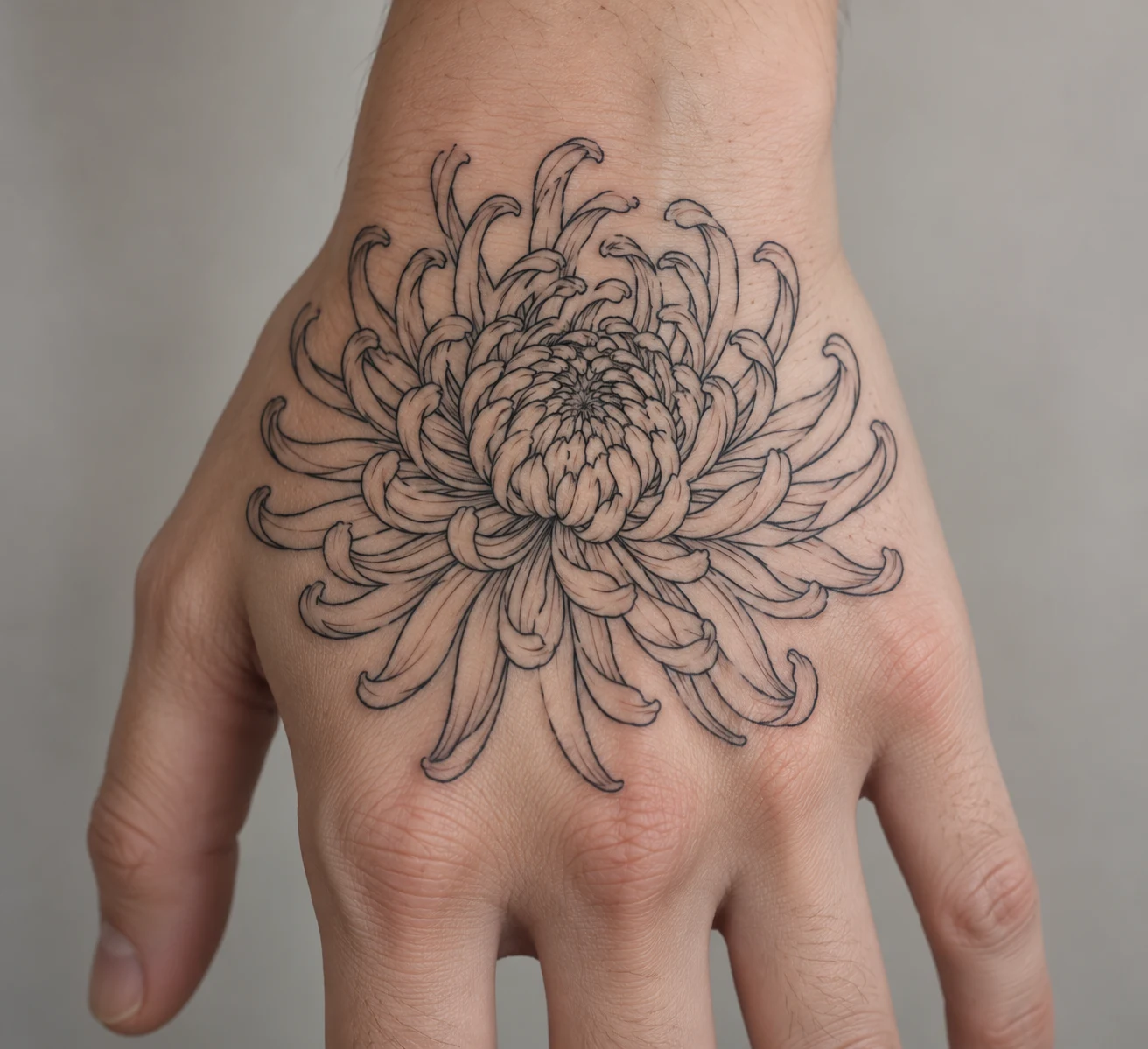
Narrow petals spread outward from a central bloom.
This concept has a more intricate rhythm than the broader folds of a rose. It’s a good fit if you like patterned linework. Discuss how much space to leave between the repeated petals.
9. Lotus Above the Knuckle Line
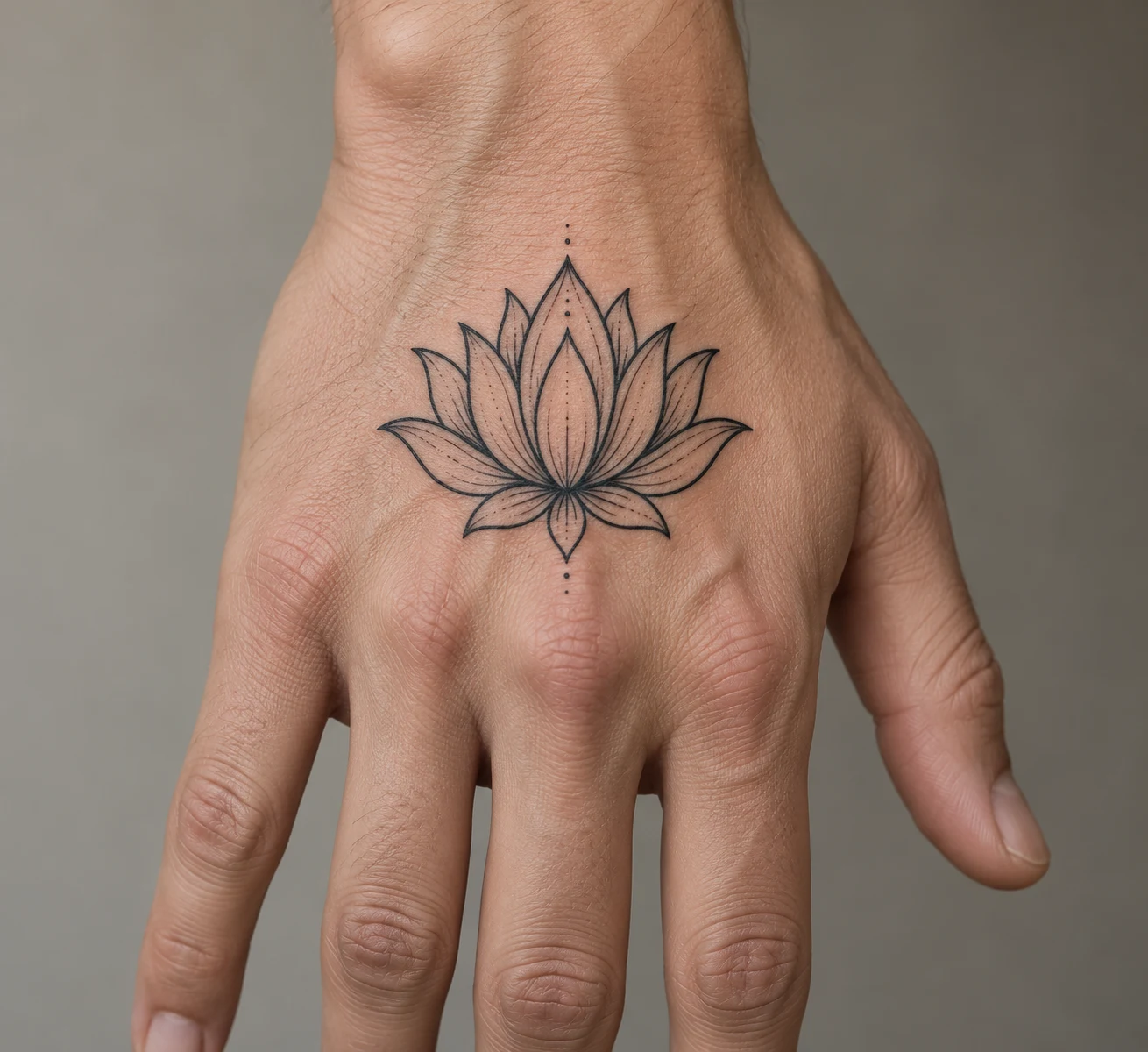
Upward-pointing petals form a symmetrical outline.
A simple outline emphasizes the balanced shape above the knuckles. Light shading adds definition inside the petals. Any meaning you attach to the design can be personal.
10. Floral Wreath With an Open Center
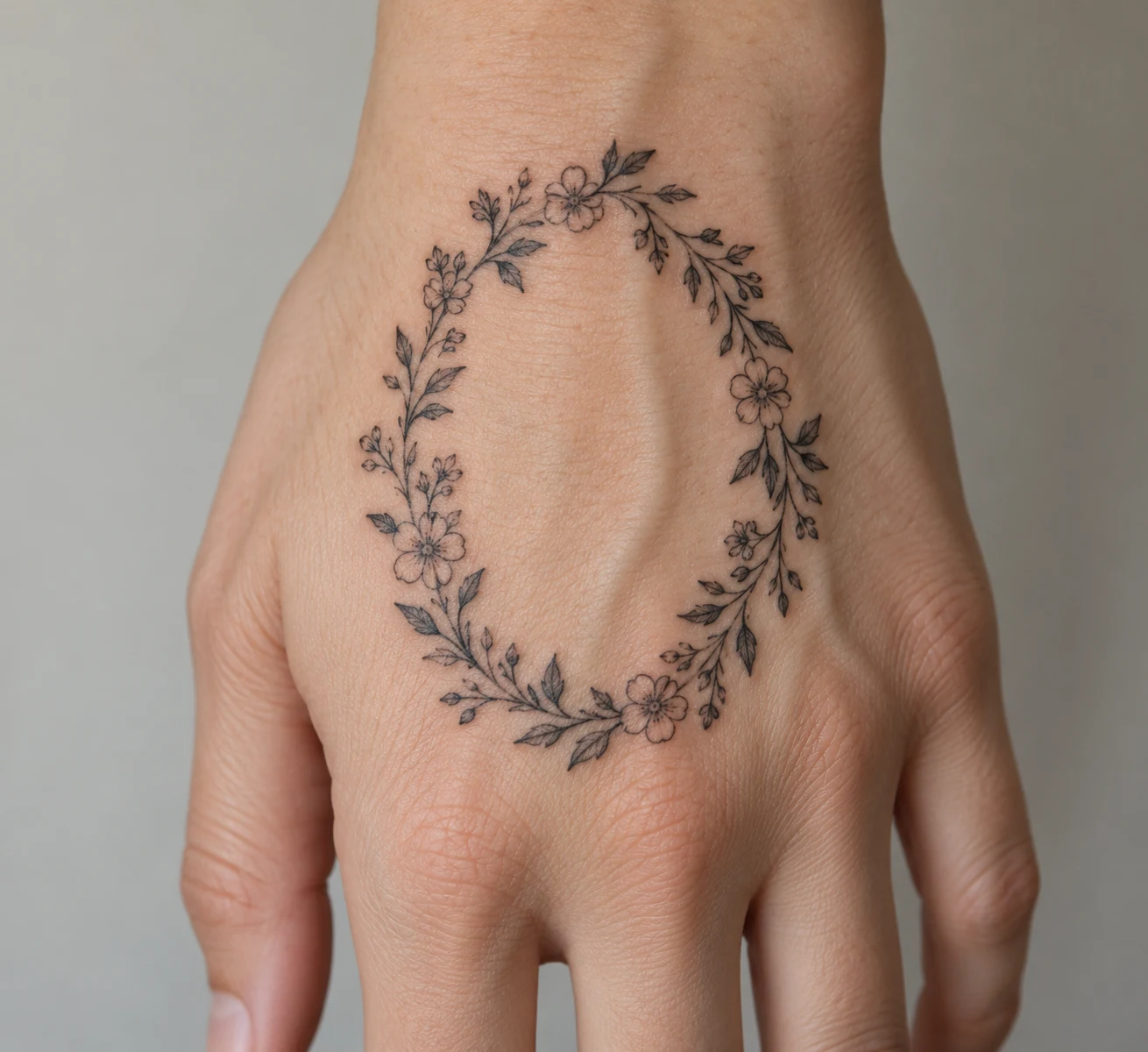
Small flowers and leaves frame an oval of exposed skin. A complete wreath creates an enclosed shape; a gap near the wrist gives it an open end. Consider this arrangement if you’d like flowers around the hand’s center while leaving that area bare.
Color and Bold Outline Designs
These ideas use distinct color palettes, heavier outlines or broad black shapes to define the flowers.
11. Traditional Red Rose With Bold Leaves
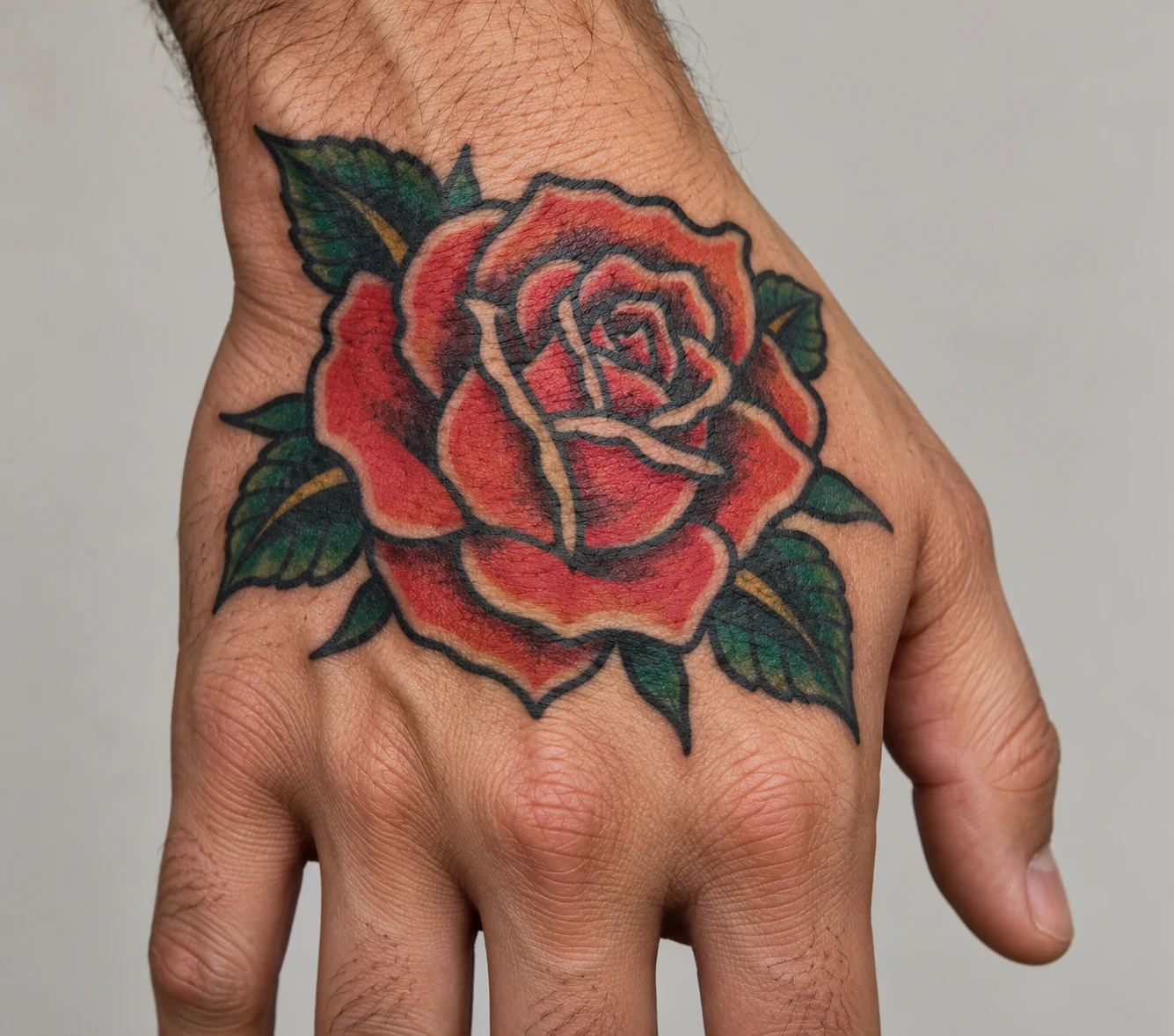
Heavy black outlines separate red petals from green leaves.
The limited palette suits a preference for clearly separated shapes. Minimal surrounding detail keeps attention on the rose, while the leaves extend its outline across the hand.
12. Yellow Sunflower With a Dark Center
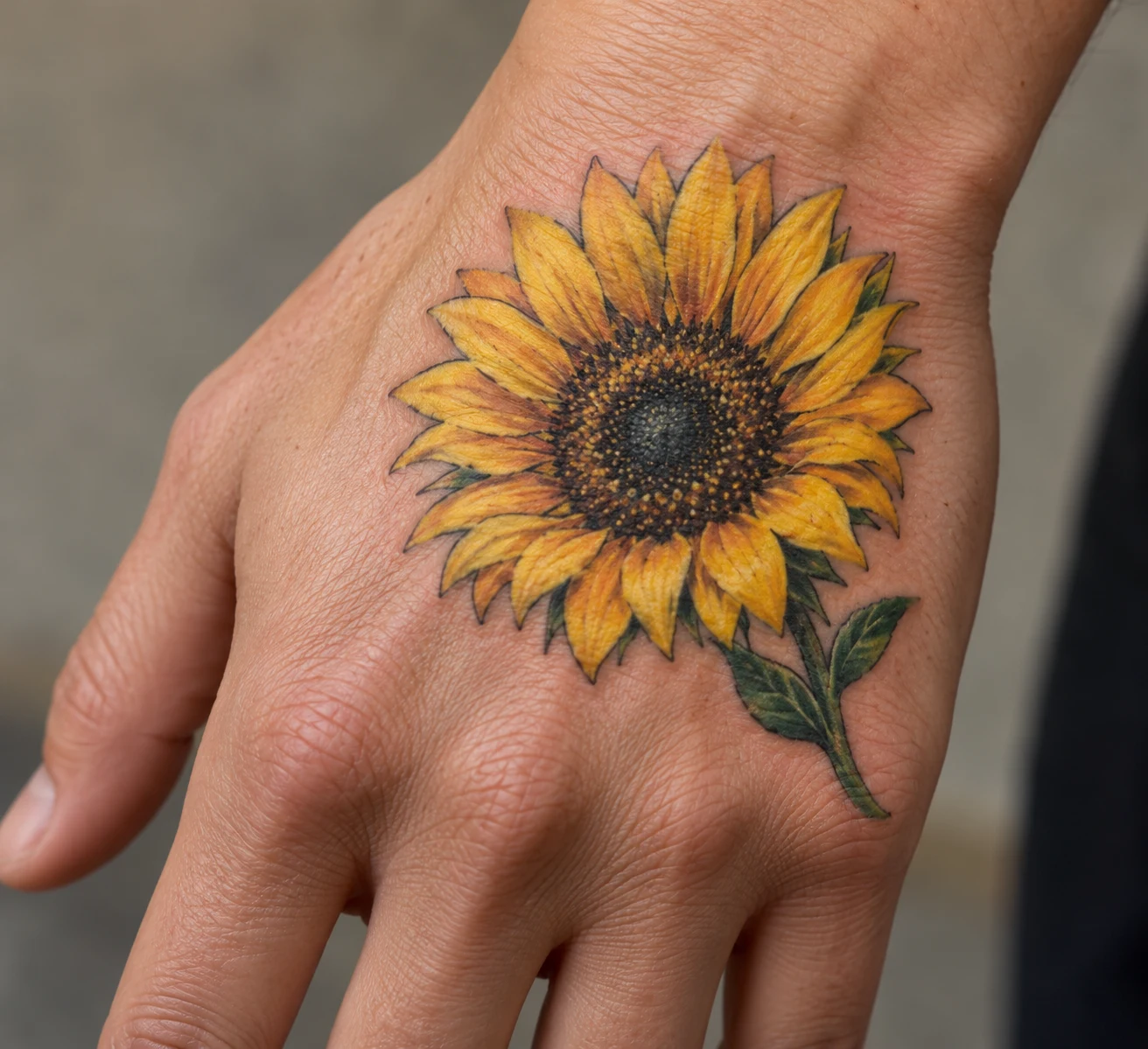
A short stem points toward the wrist.
For a centered placement, consider the rounded sunflower head. One small leaf can break up the circular silhouette if you’d like a less symmetrical arrangement.
13. Orange Poppies on a Diagonal Stem
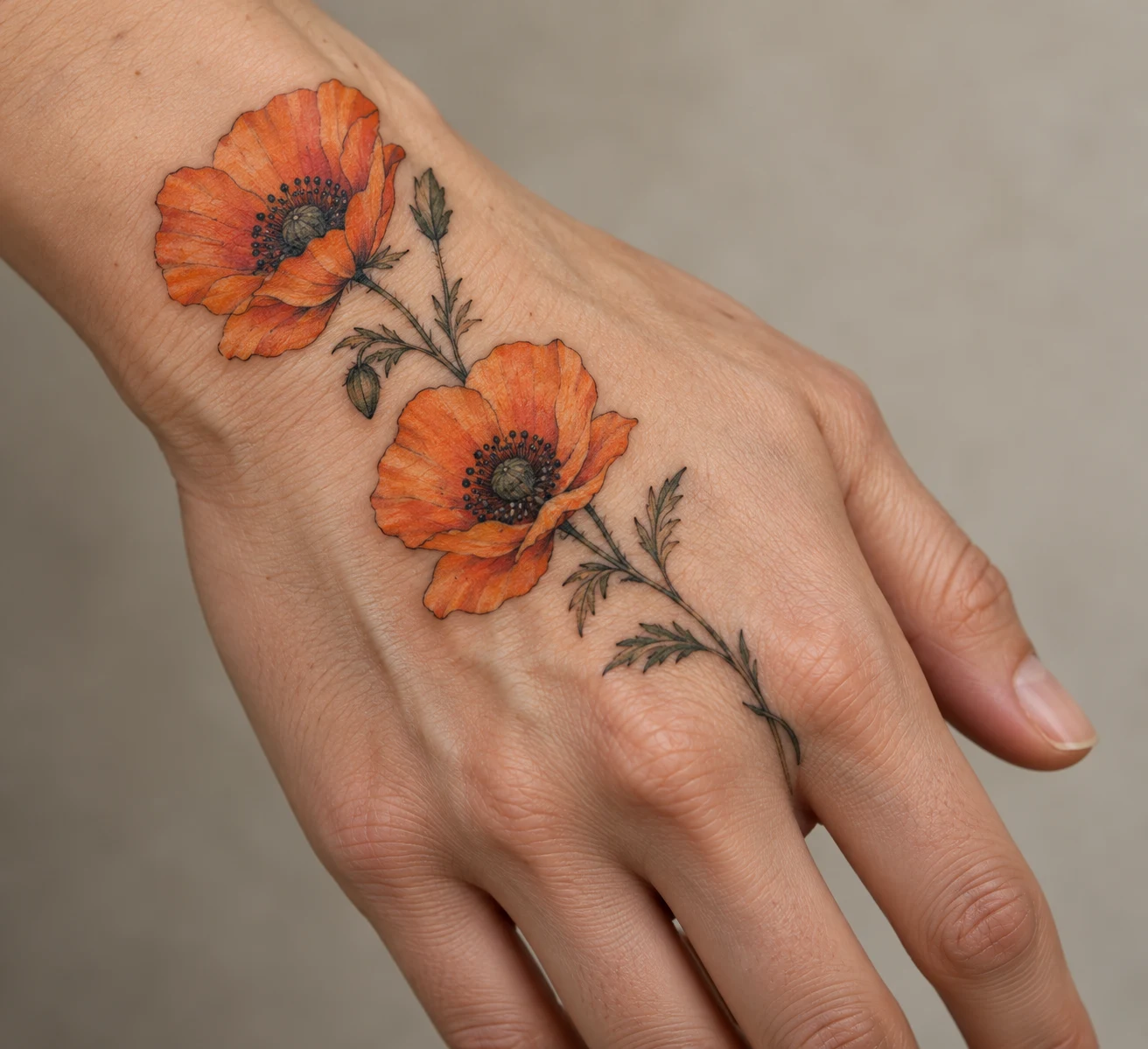
Leaving space between the orange flowers keeps the composition airy, with dark centers drawing attention to each bloom. Compare both diagonal directions on your hand before choosing the stem’s path.
14. Purple Iris With Elongated Petals
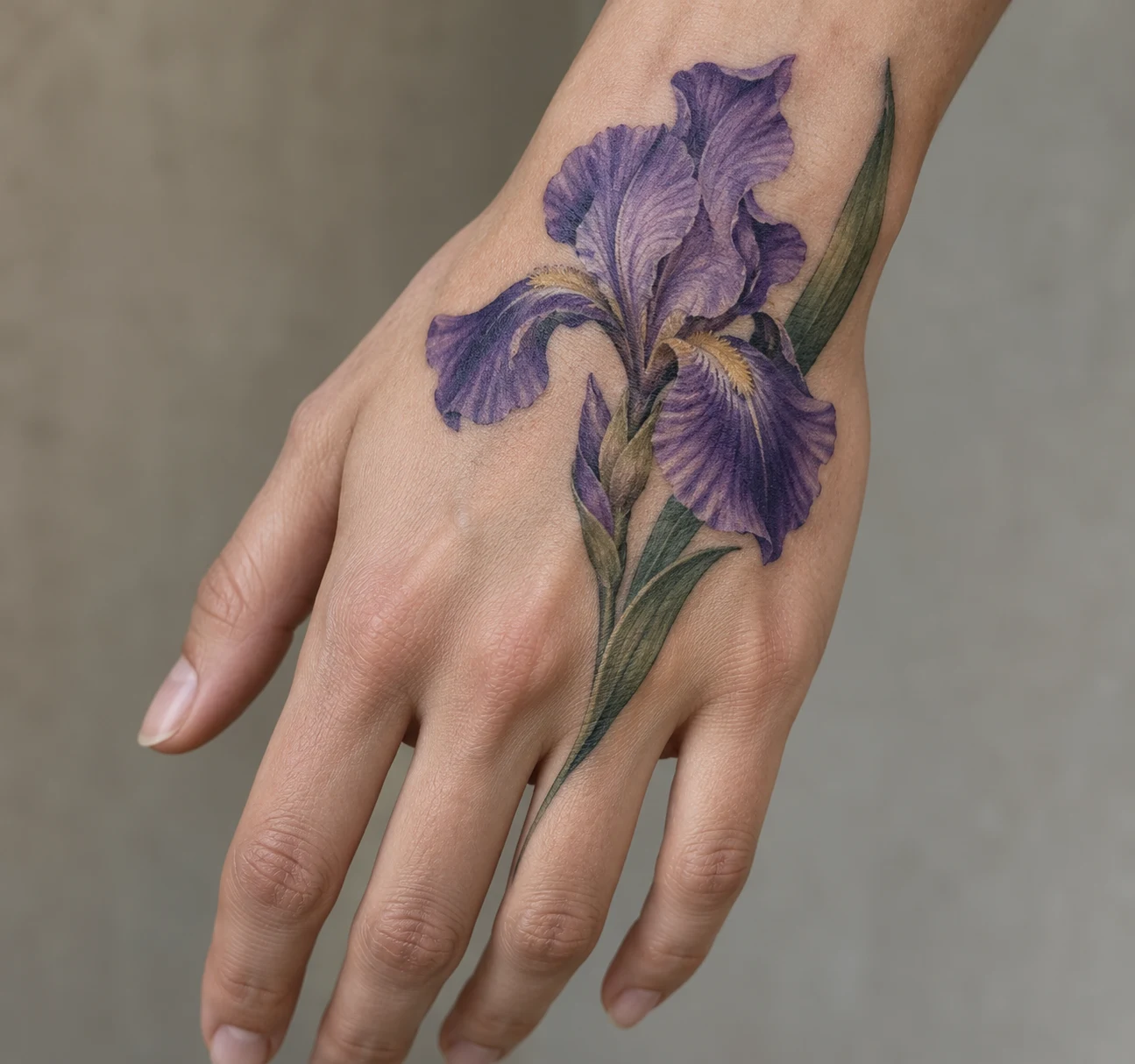
A narrow leaf extends beyond the purple flower.
An asymmetrical placement complements the iris’s elongated, uneven silhouette. More stem lengthens the composition toward the wrist; a compact flower head limits its coverage.
15. Blackwork Flowers With Open Petal Centers
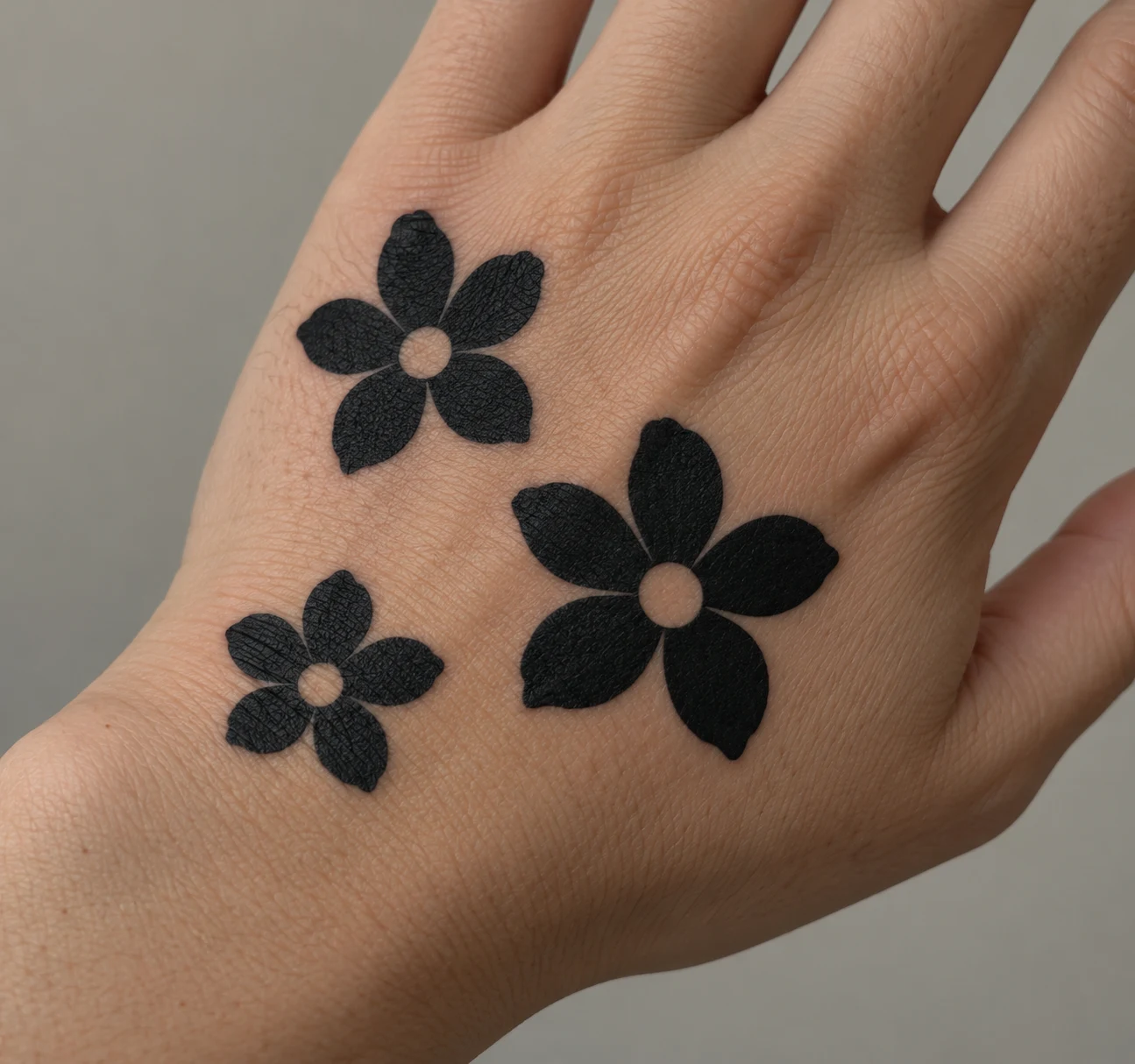
Uninked centers interrupt the solid black petals.
Choose this arrangement if you prefer solid silhouettes to detailed petal linework. The gaps between blooms matter as much as their outlines: wider spacing lets each flower stand apart.
Trailing and Full-Hand Floral Arrangements
These compositions connect placements, follow the hand’s contours or extend toward the wrist and fingers.
16. Cherry Blossom Branch Across the Hand
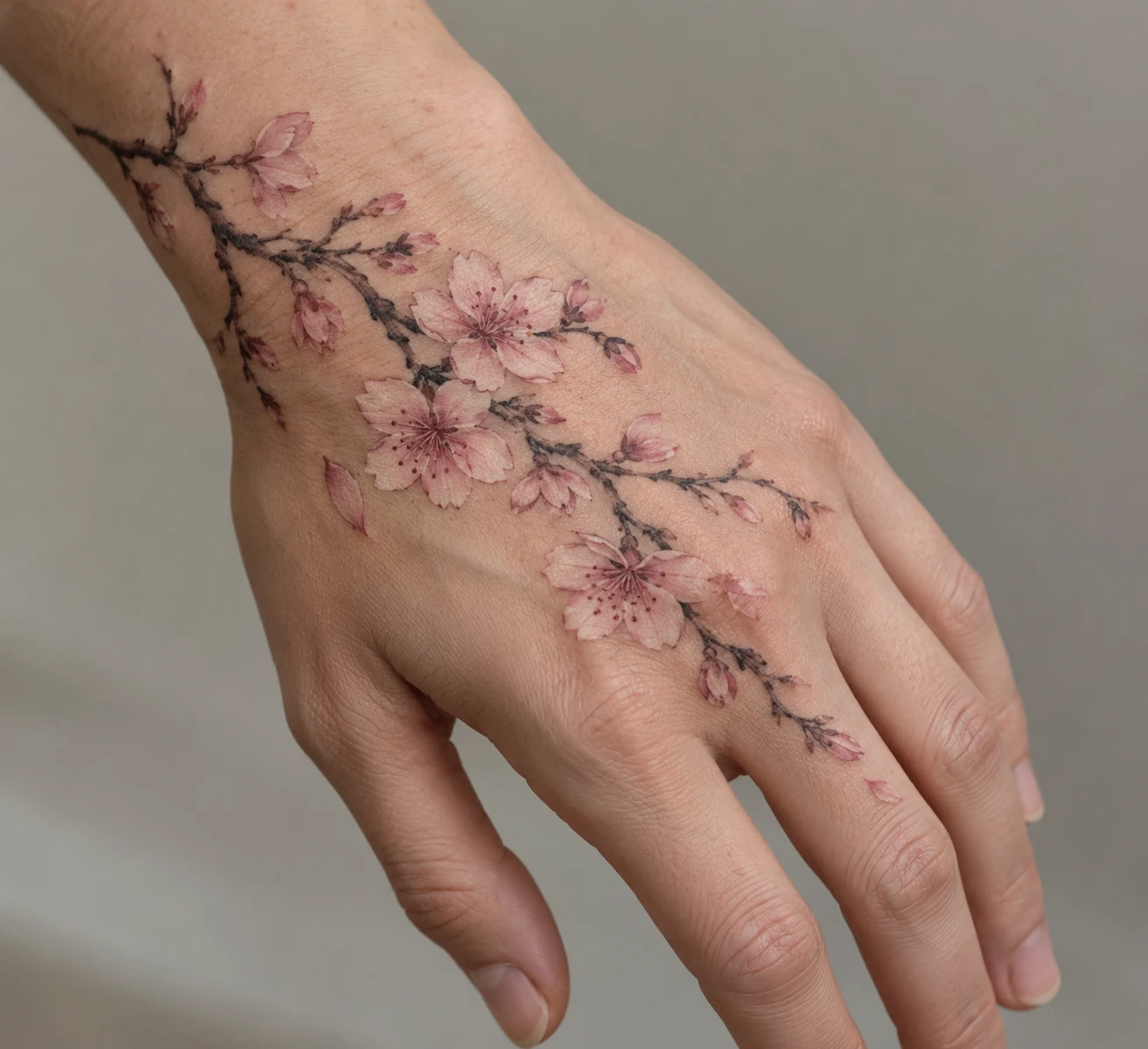
Pale pink blossoms appear at intervals along a branch.
The diagonal runs from the wrist side toward the index knuckle. Uneven spacing creates a less formal arrangement, while a mixture of buds and open flowers adds variety along its length.
17. Wildflower Bouquet From Wrist to Hand
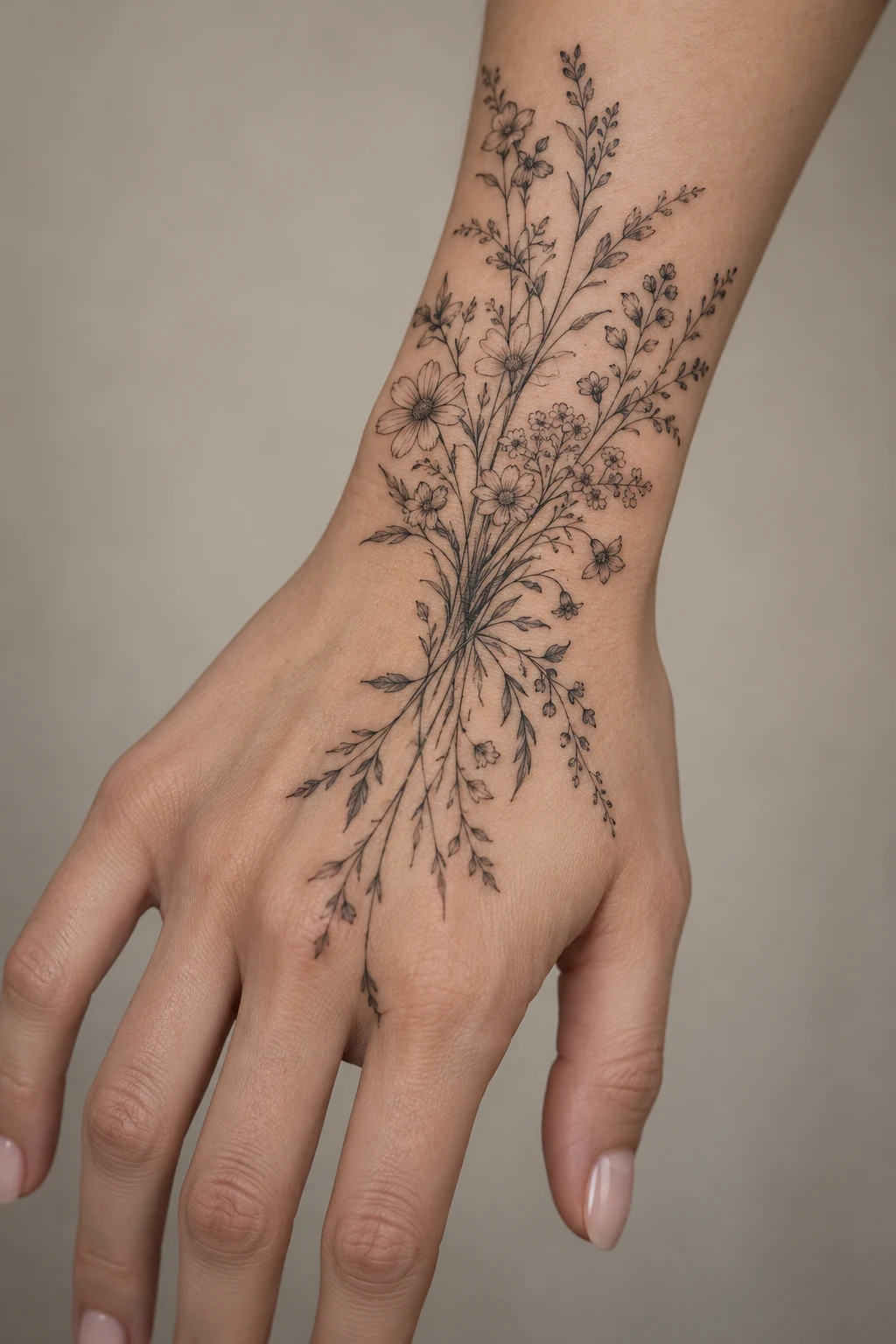
Gathered stems open into a mixed bouquet.
A daisy, a poppy and smaller filler flowers bring several shapes into one composition. Keeping the filler flowers smaller gives the two main blooms room to stand out.
18. Flowering Vine Along the Index Finger
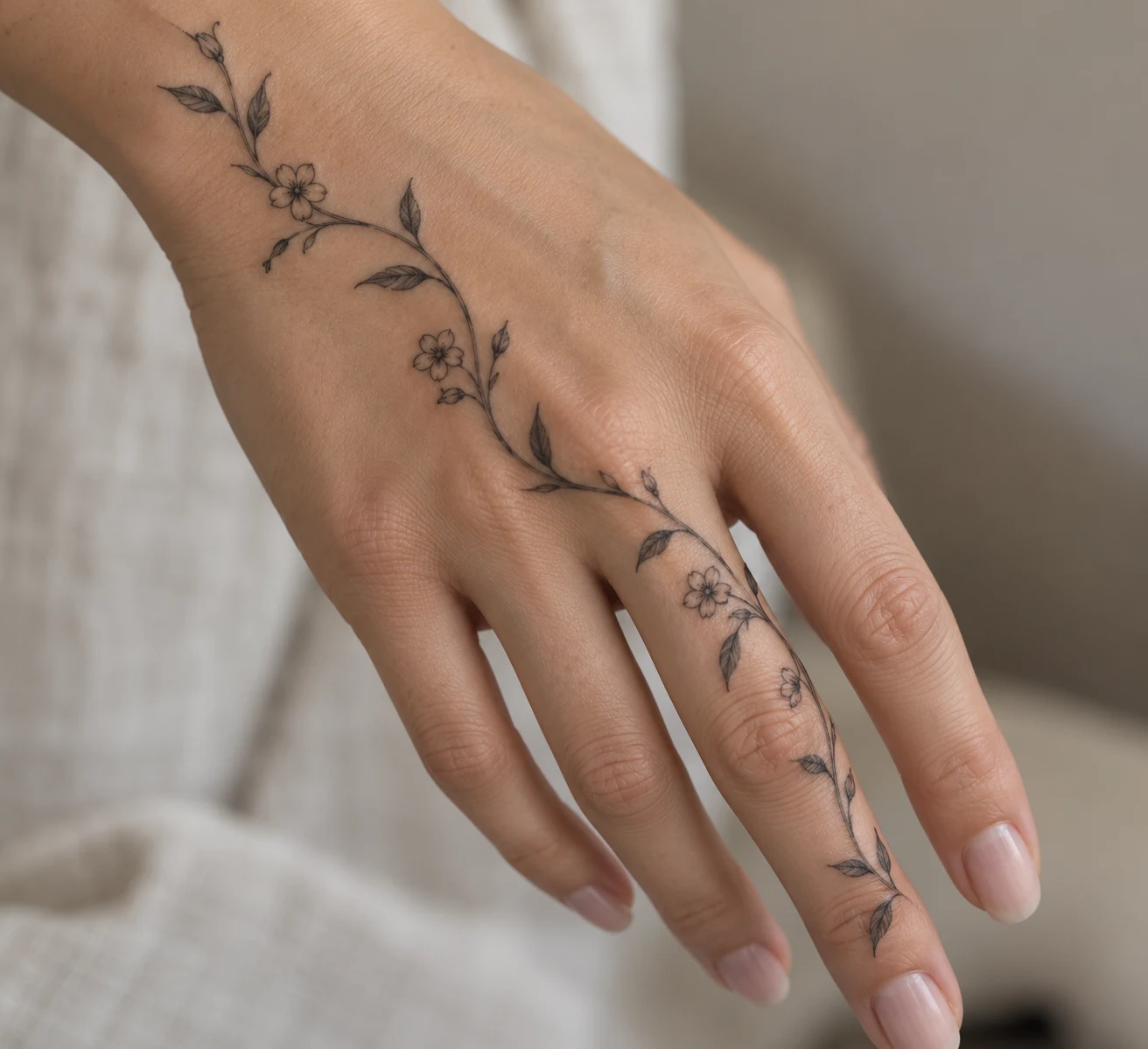
Alternating leaves and small flowers follow a curve from the hand onto the finger. Decide where the vine should end before adding details; a tapered tip gives the extension a clear stopping point.
19. Orchid Spray Along the Outer Hand
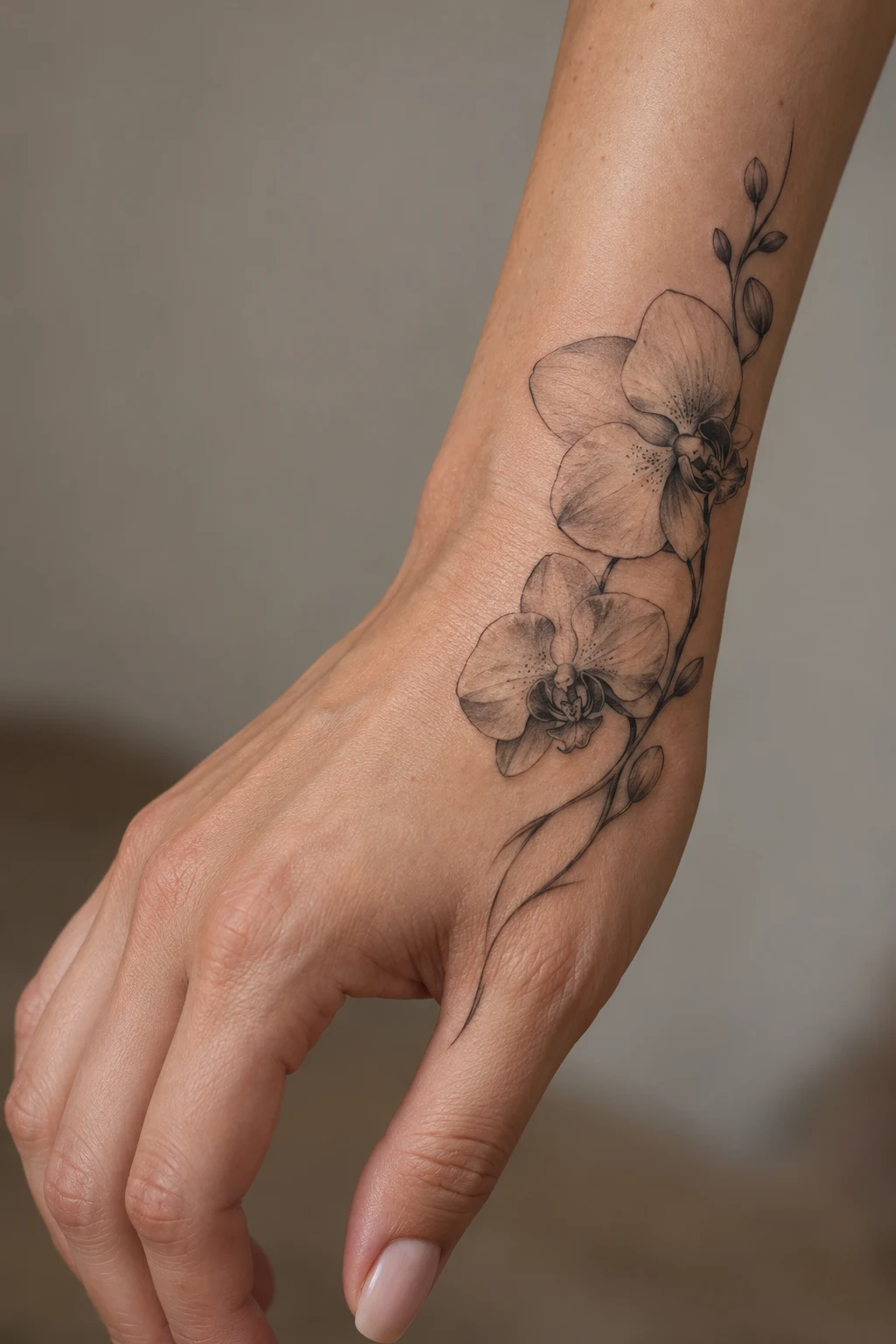
Two orchids and a bud form an elongated cluster.
Along the little-finger side, the irregular petal outlines give this concept its character. Inward-facing blooms lead the composition across the hand; outward-facing flowers place more emphasis on its edge.
20. Full-Hand Floral Arrangement With Finger Extensions
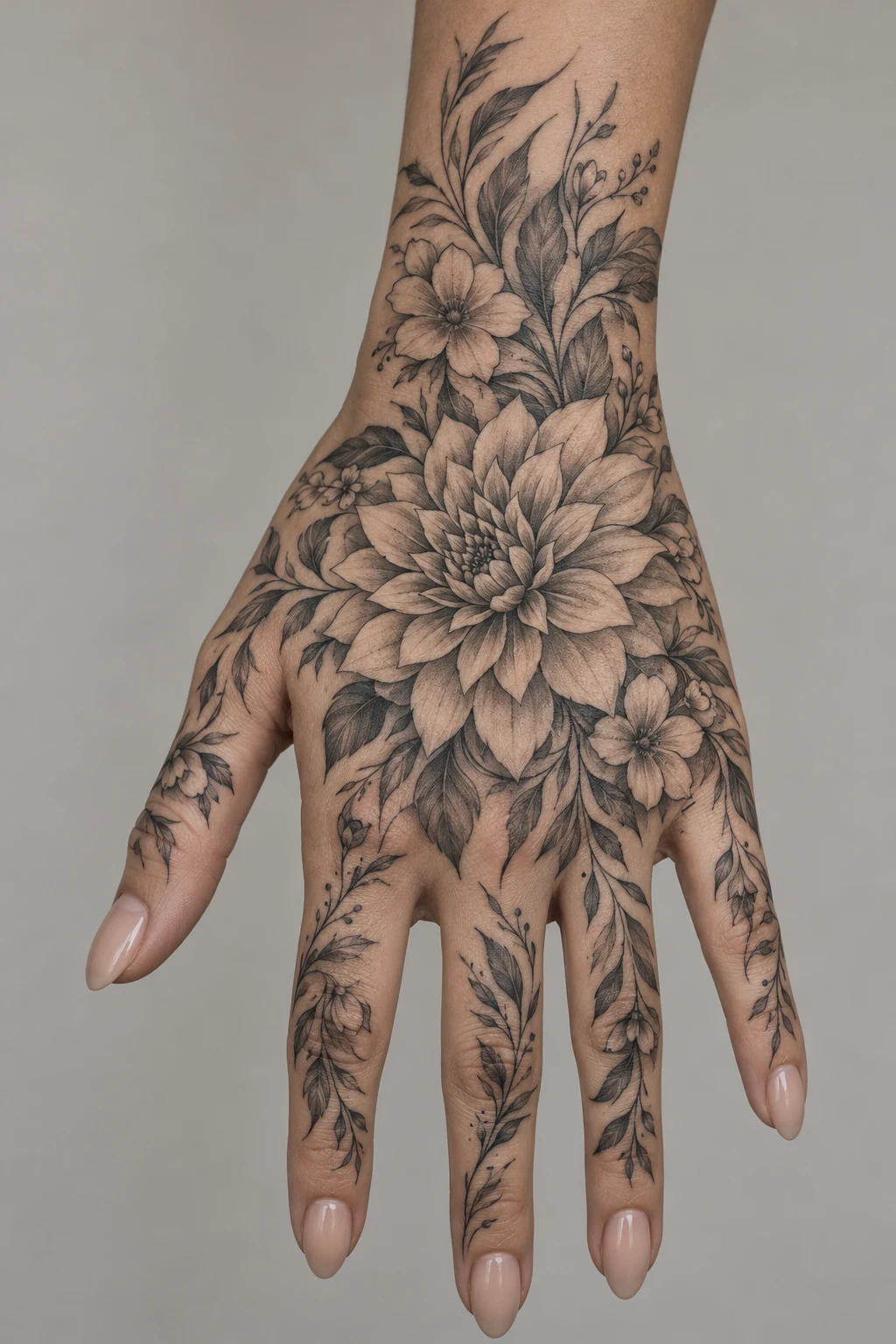
Smaller flowers surround a large central dahlia.
Short leafy extensions carry the arrangement onto the fingers. For this broad-coverage concept, open spaces help separate neighboring flowers and keep the dahlia recognizable as the main bloom.
To narrow your choices, compare the daisy or tulip for a compact design, the rose or peony for a central bloom, and the vine or full-hand arrangement for connected coverage. Save two or three favorites, then discuss scale, spacing and placement with your artist. For a broader placement comparison, explore the hand tattoos guide.

