

Small hand tattoos offer plenty of variety: an open outline, a slender botanical sprig or a compact shape in solid black. These 20 ideas help you compare motifs across the fingers, thumb area and back of the hand. The planned illustrations are tattoo concepts; discuss their size, detail and placement with your artist.
Simple Symbols
1. Outline Heart Beside the Thumb
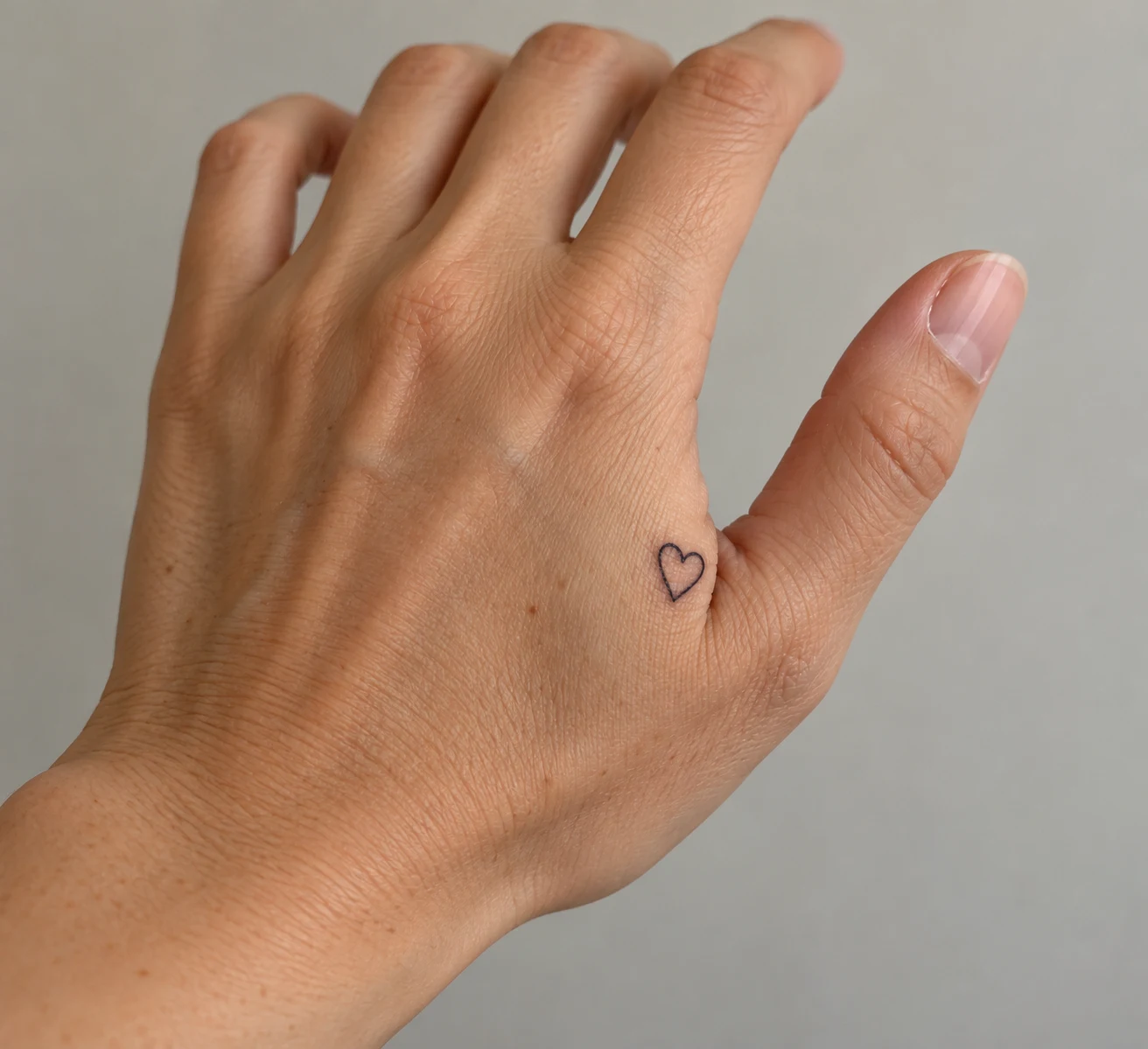
A simple heart with an open center.
Choose this familiar motif if you prefer an uncluttered outline. An upright heart creates a level focal point; angling it beside the thumb gives the composition a gentle tilt. Its personal meaning is yours to decide.
2. Four-Point Star on the Index Finger
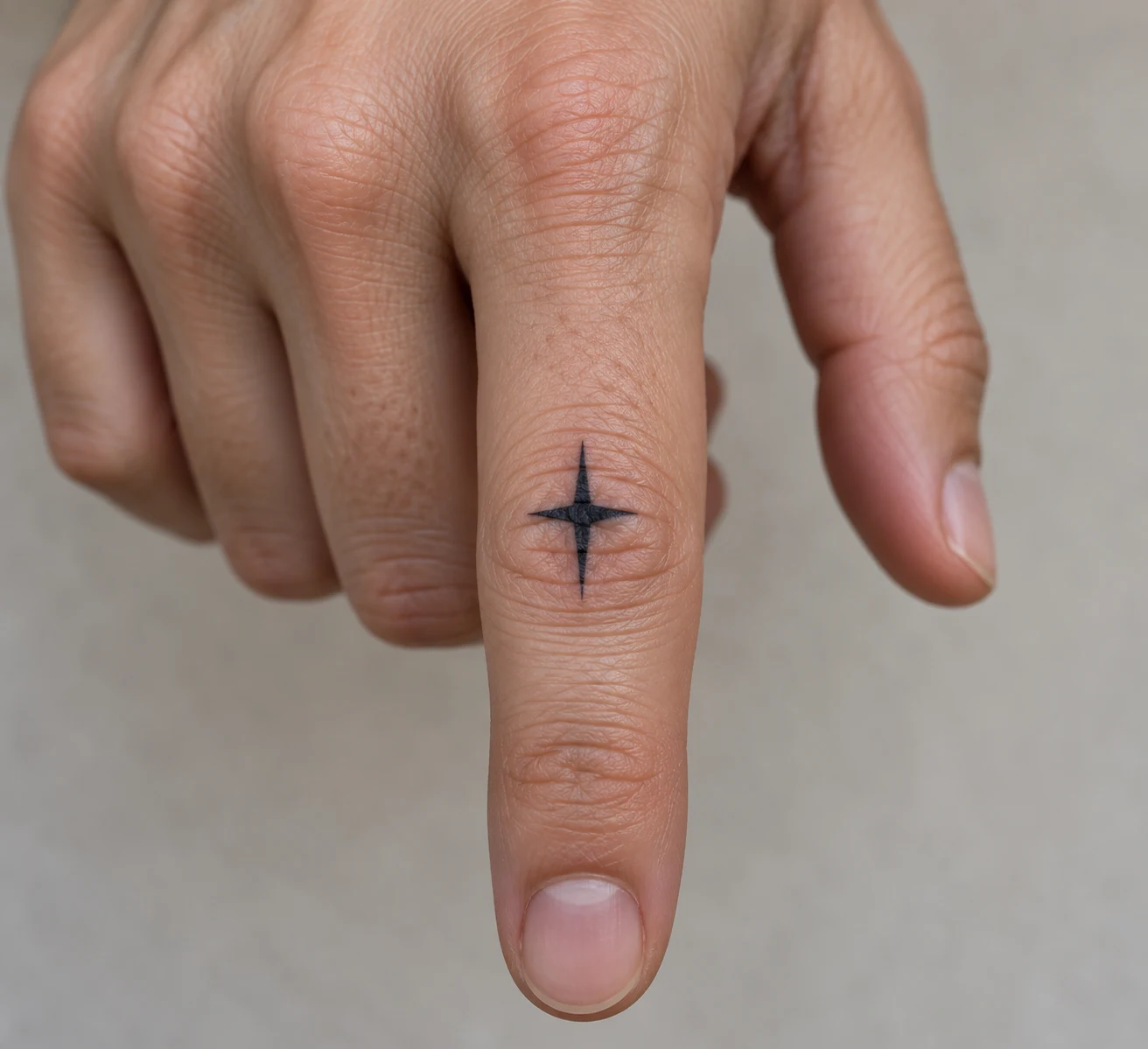
An elongated star that follows the finger.
Long upper and lower points give this design a narrow profile. Keep the side points shorter for a slender shape, or bring all four closer in length for a more compact decorative mark.
3. Crescent Moon on the Outer Hand
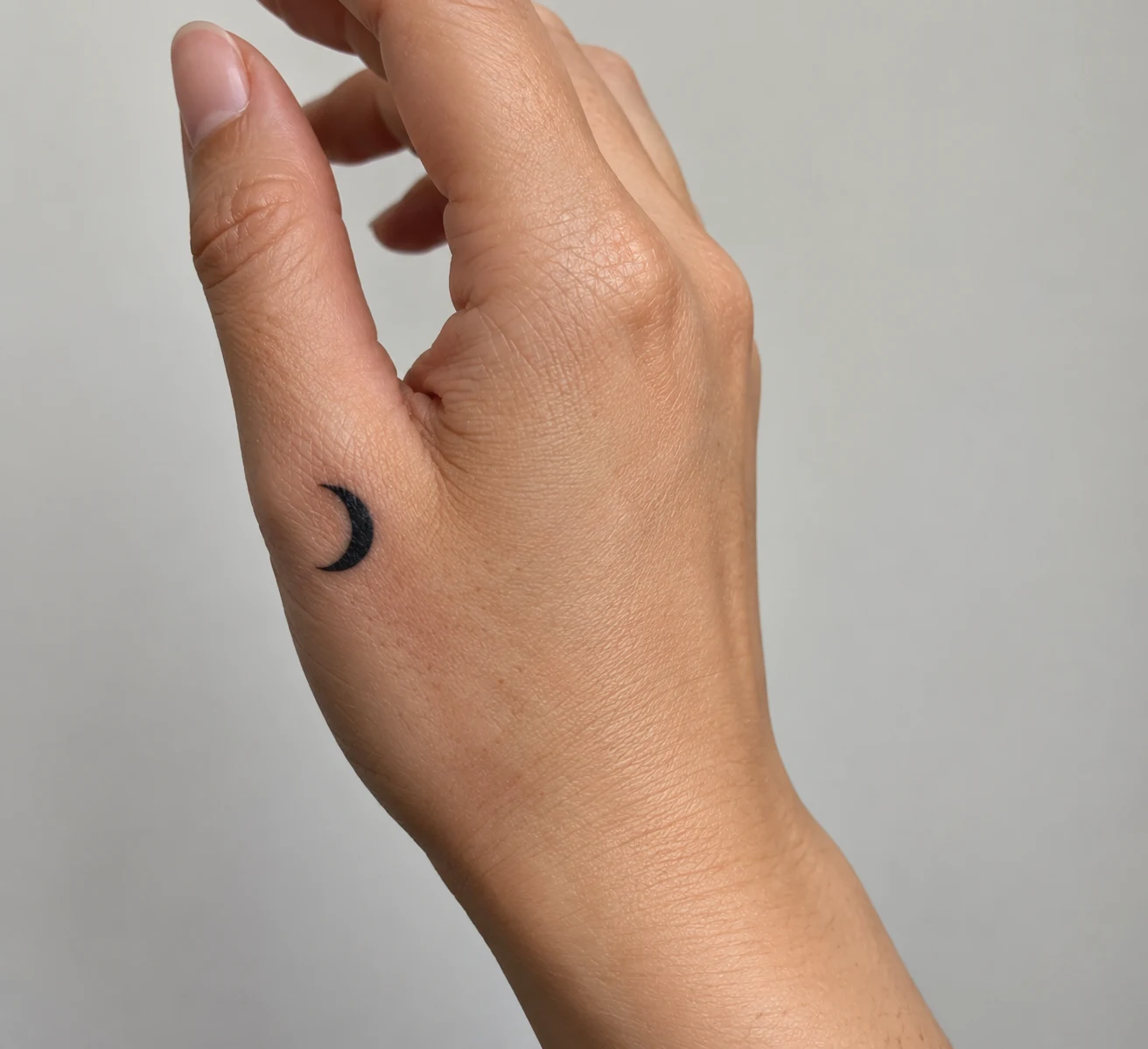
A curved silhouette in solid black.
The crescent offers a rounded alternative to angular symbols. Compare its direction with your hand resting naturally: the opening can face toward the fingers or toward the wrist, changing how the curve sits beside the hand’s edge.
4. Open Triangle Below a Knuckle
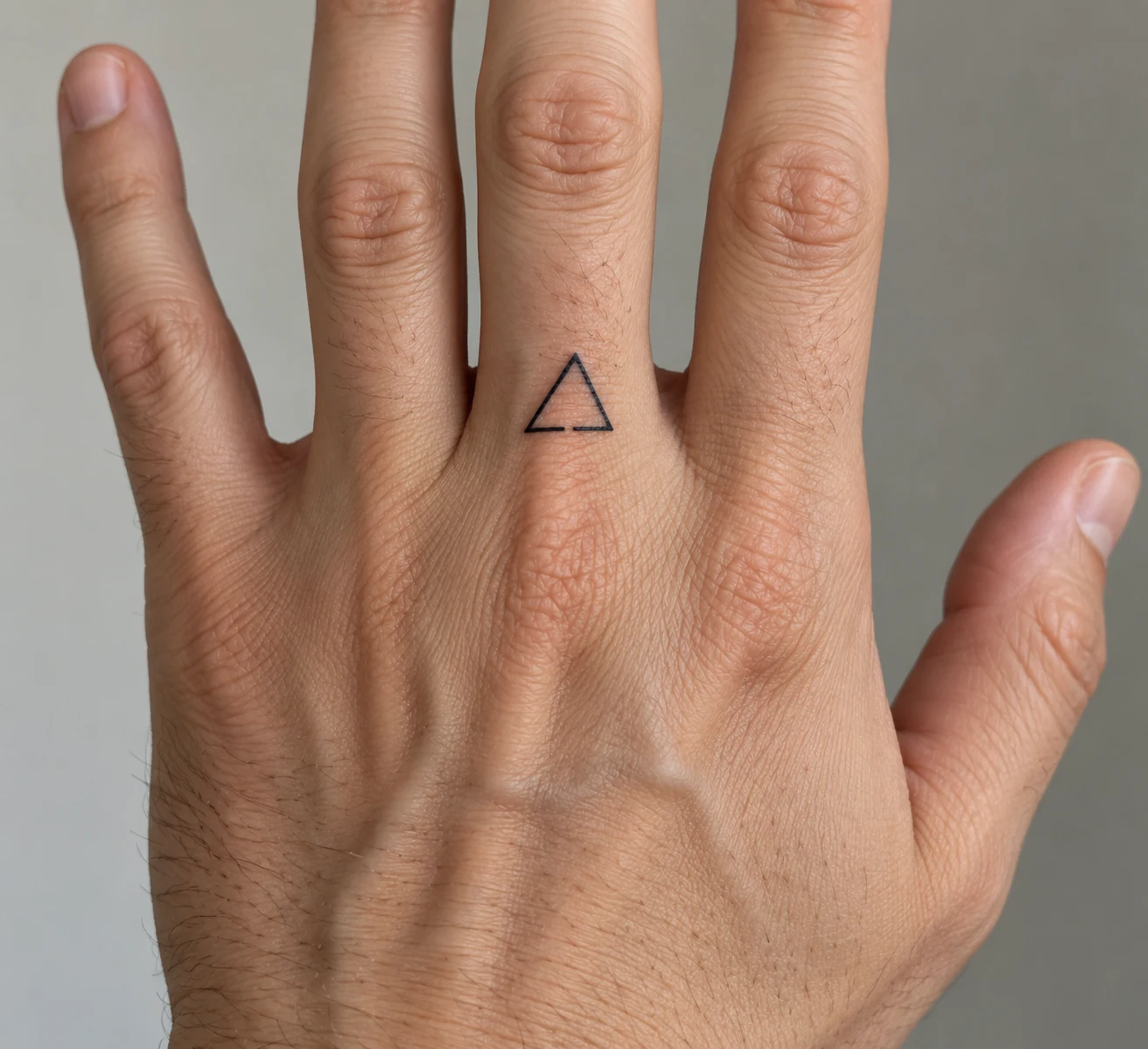
Three straight sides surrounding an empty center.
This suits a preference for geometry and visible space around a design. Try both upward and downward orientations below the middle-finger knuckle before choosing; each gives the small composition a different direction.
5. Three Dots Along a Finger
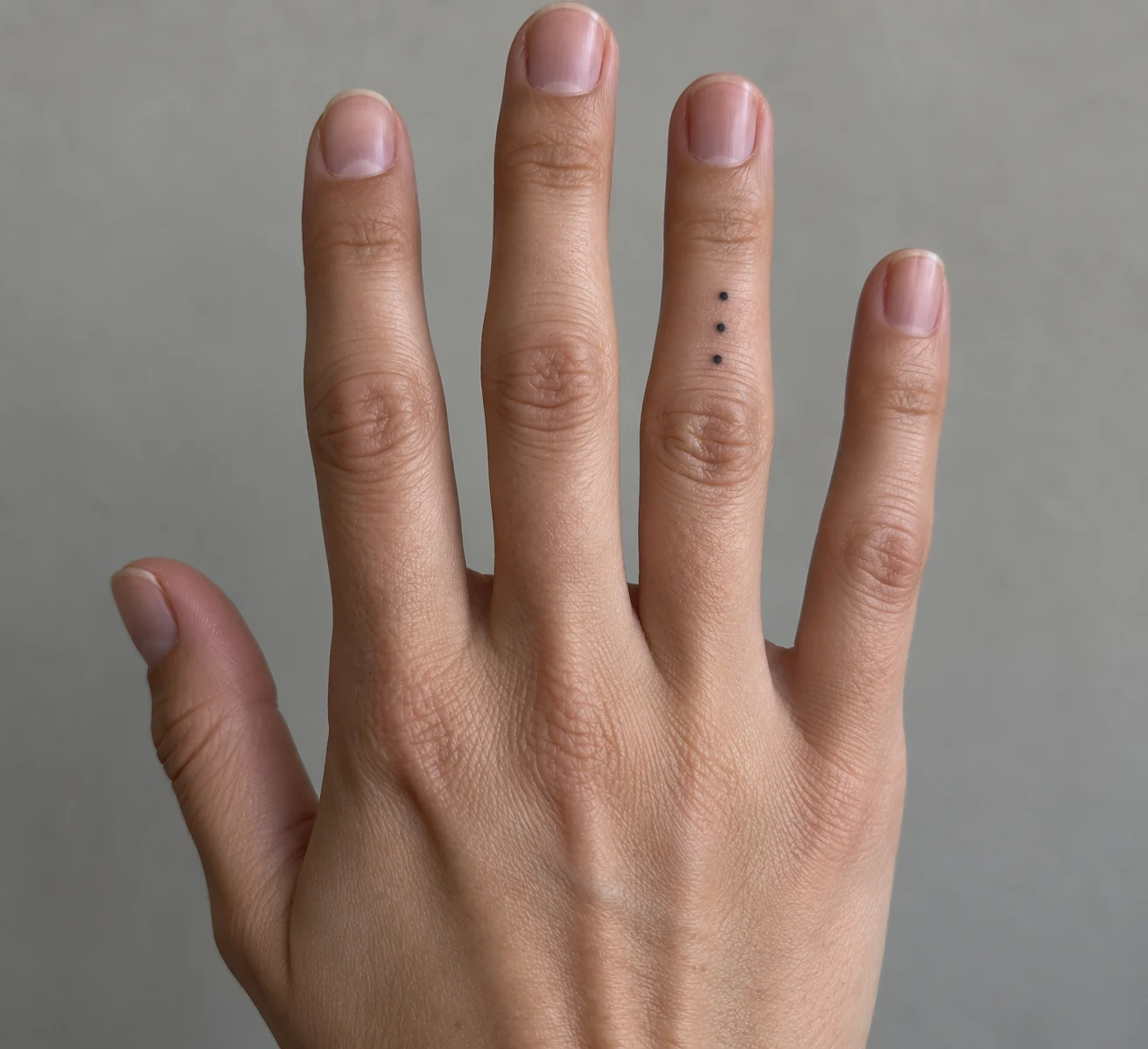
Three evenly spaced marks along the finger.
Equal dot sizes and deliberate spacing define this arrangement. Dot patterns can carry cultural or group-specific associations, so check the exact configuration and relevant context before choosing it solely for its appearance.
Botanical Small Hand Tattoos
6. Fine Line Daisy on the Back of the Hand
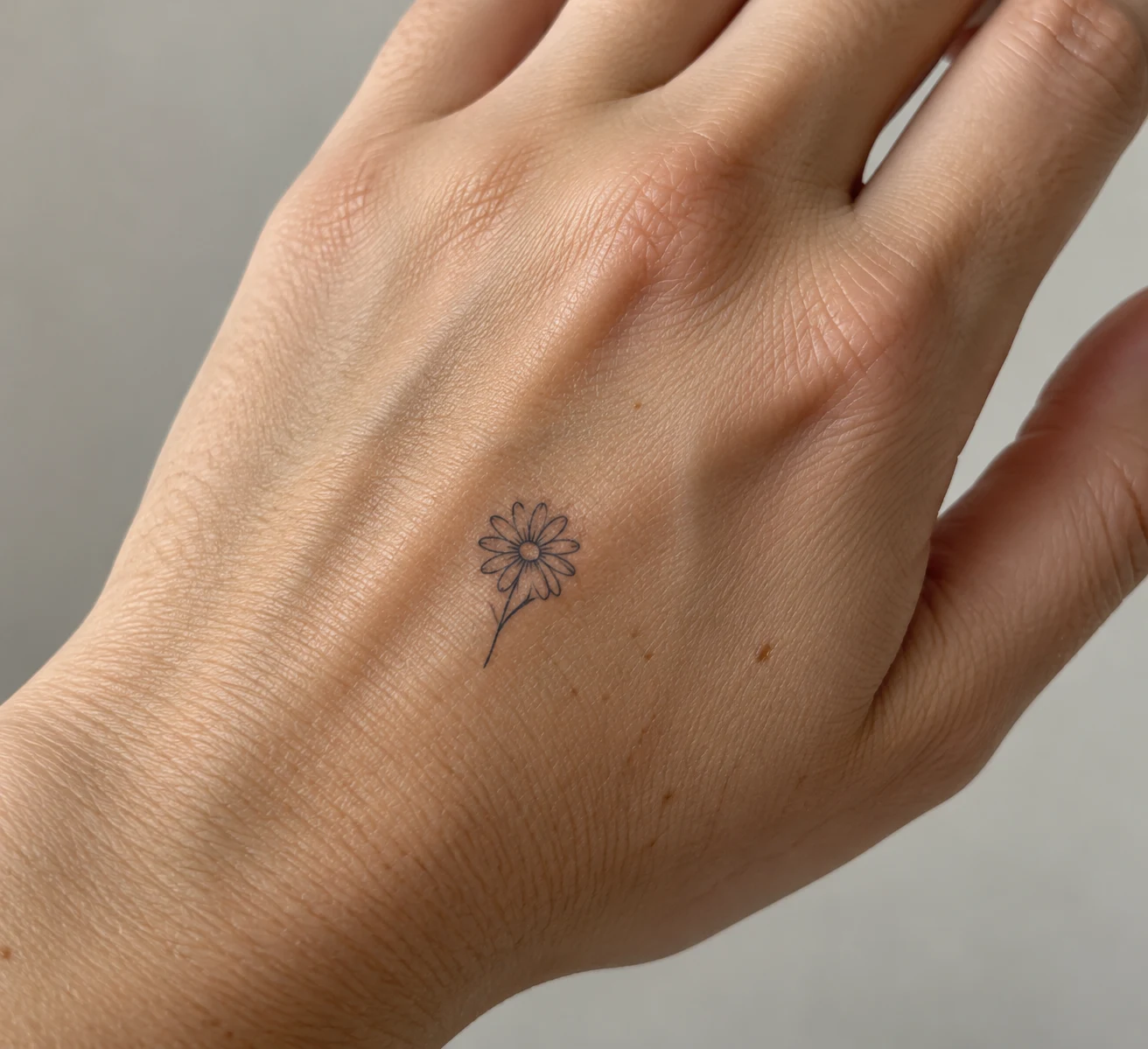
Open petals above a short, slender stem.
The daisy suits readers who want a recognizable flower with little ornament. A short stem adds direction without turning the design into a long sprig. Keep the petals separate and the center simple in the proposed drawing.
7. Compact Rose Near the Thumb Base
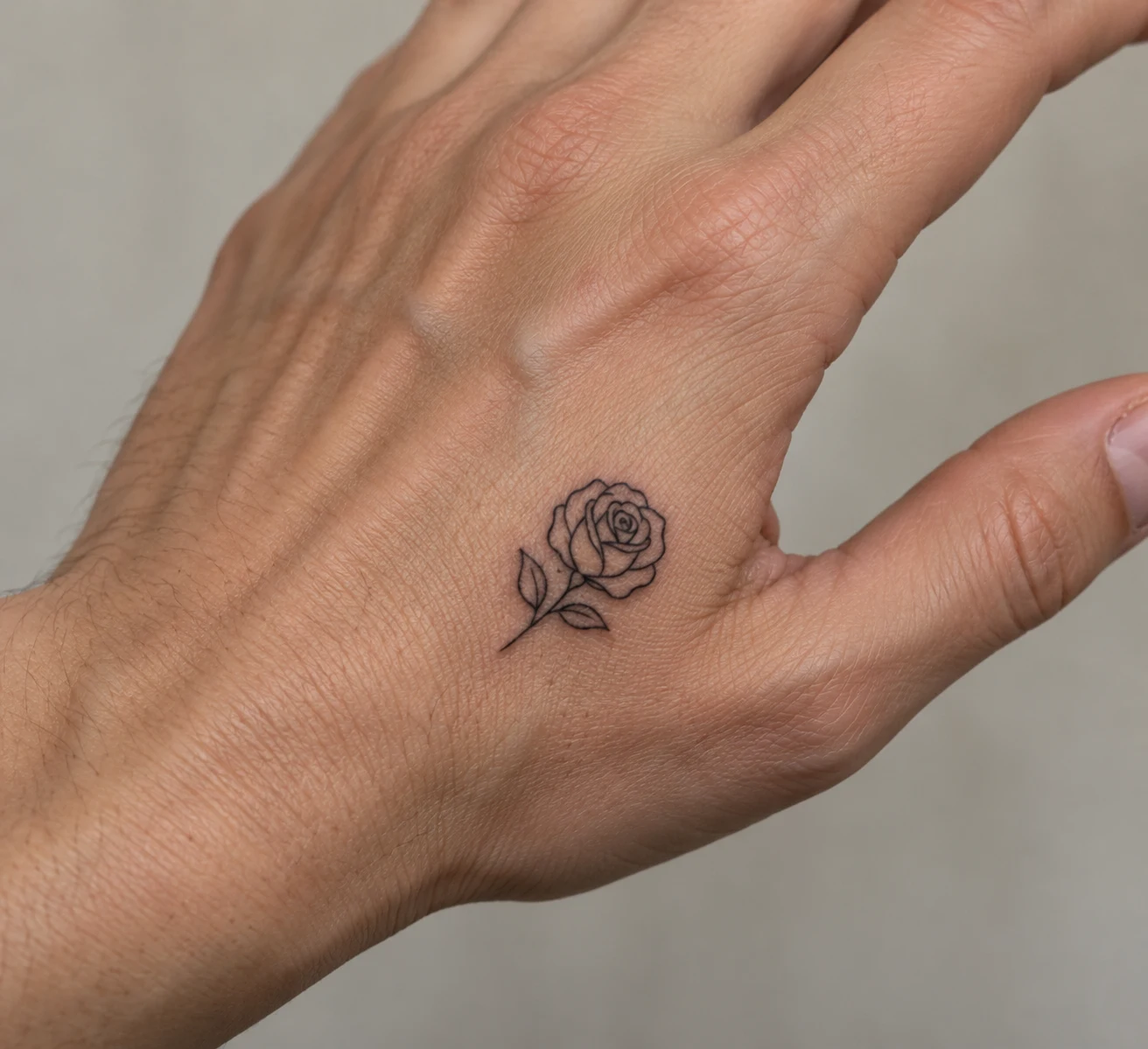
A rounded rose built from broad petal contours.
Choose a rose for a fuller floral shape. A few overlapping petal outlines establish the bloom; ask your artist which inner folds to retain at your intended size rather than squeezing in a detailed miniature.
8. Lavender Sprig Along the Outer Hand
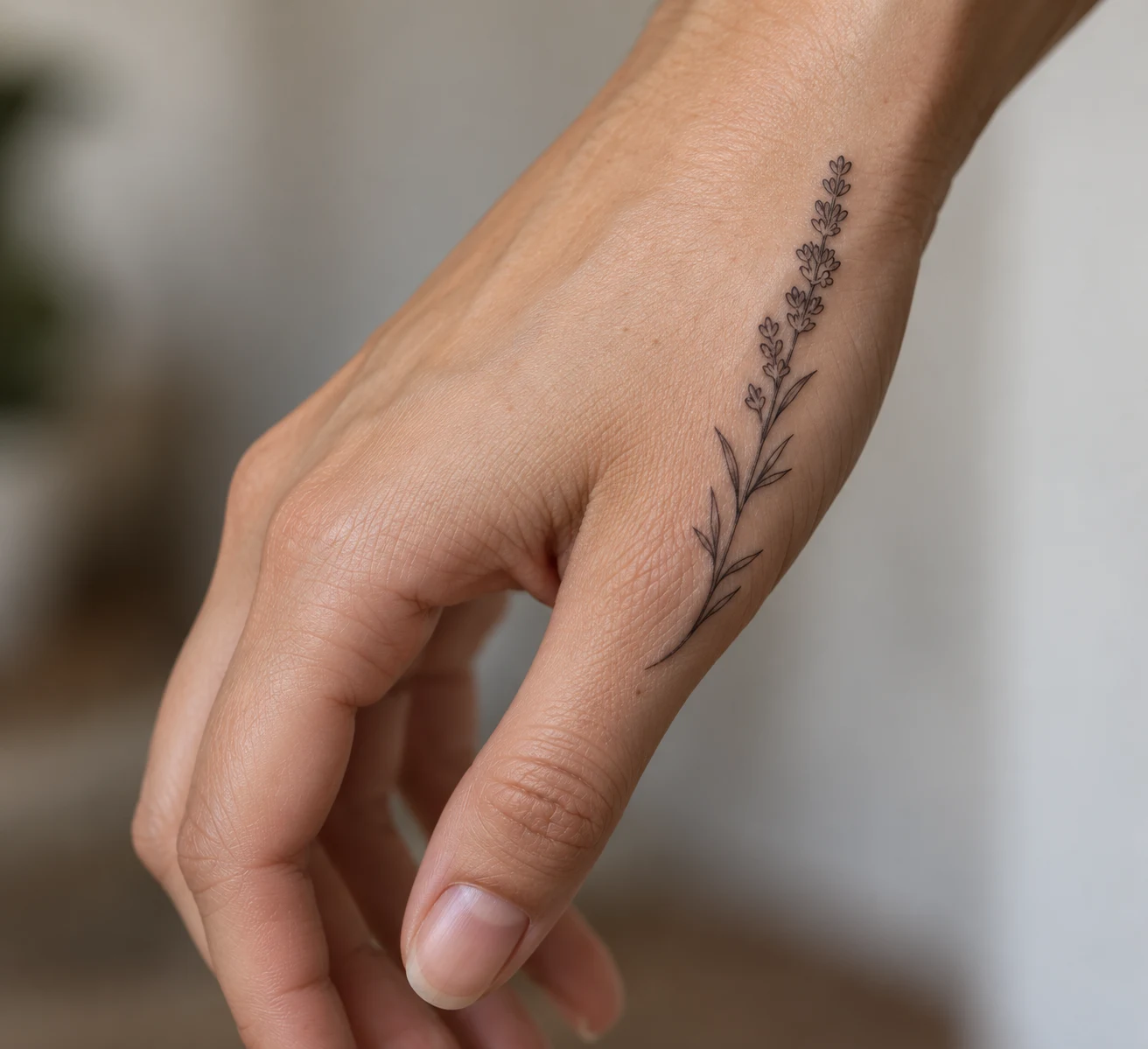
A slender stem with small flower clusters.
Lavender introduces a longer, narrower botanical shape. Positioning the sprig along the outer back edge suits readers who prefer a design that follows the hand’s contour. Compare stem length with the clustered flower section to balance the proportions.
9. Single Ginkgo Leaf Below the Index Knuckle
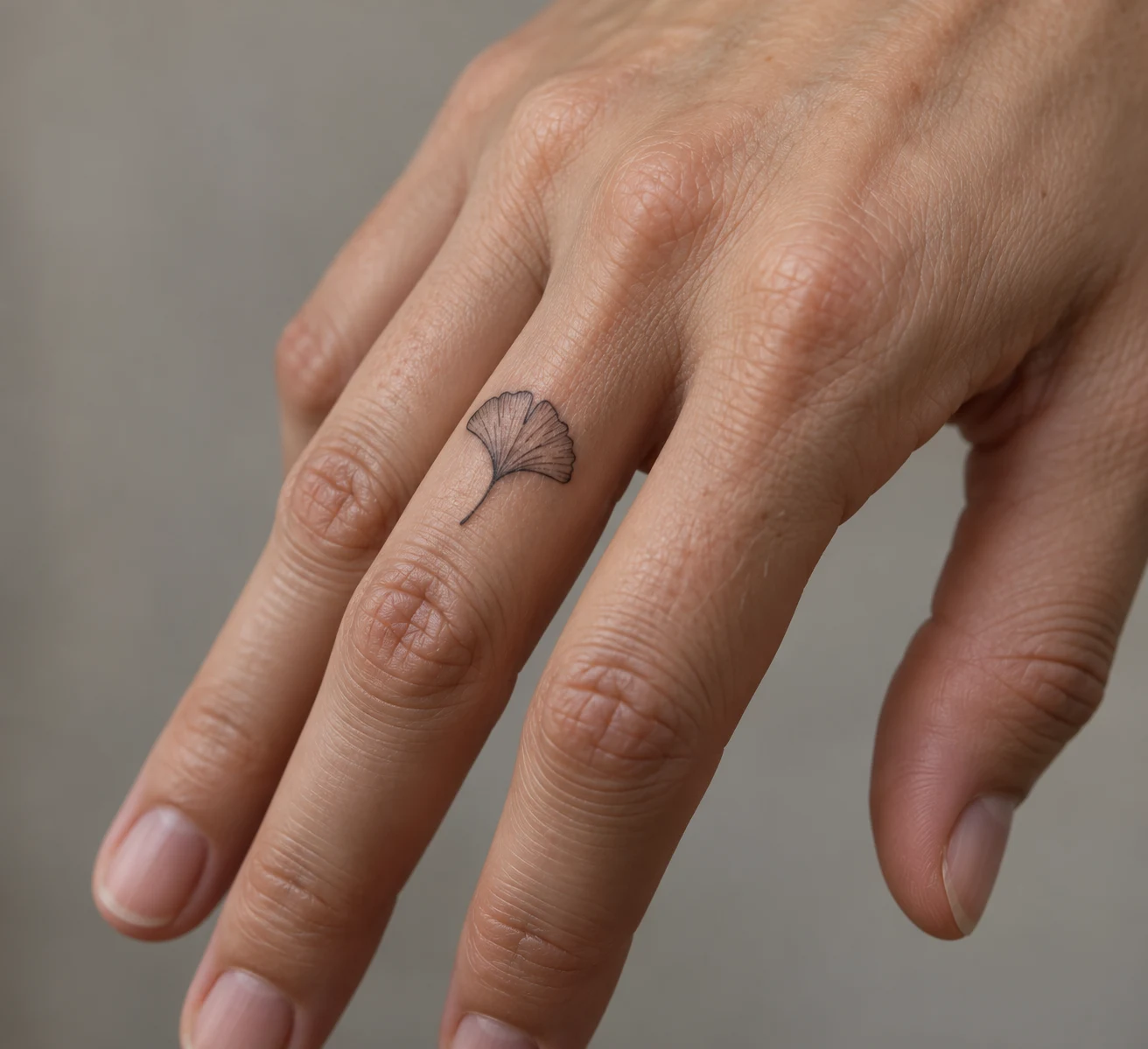
A fan-shaped leaf with sparse interior lines.
The broad leaf offers a botanical focal point without a flower or branching stem. An outline emphasizes its scalloped contour, while a few interior strokes suggest the leaf’s structure without filling the fan with detail.
10. Leafy Branch Across the Back of the Hand
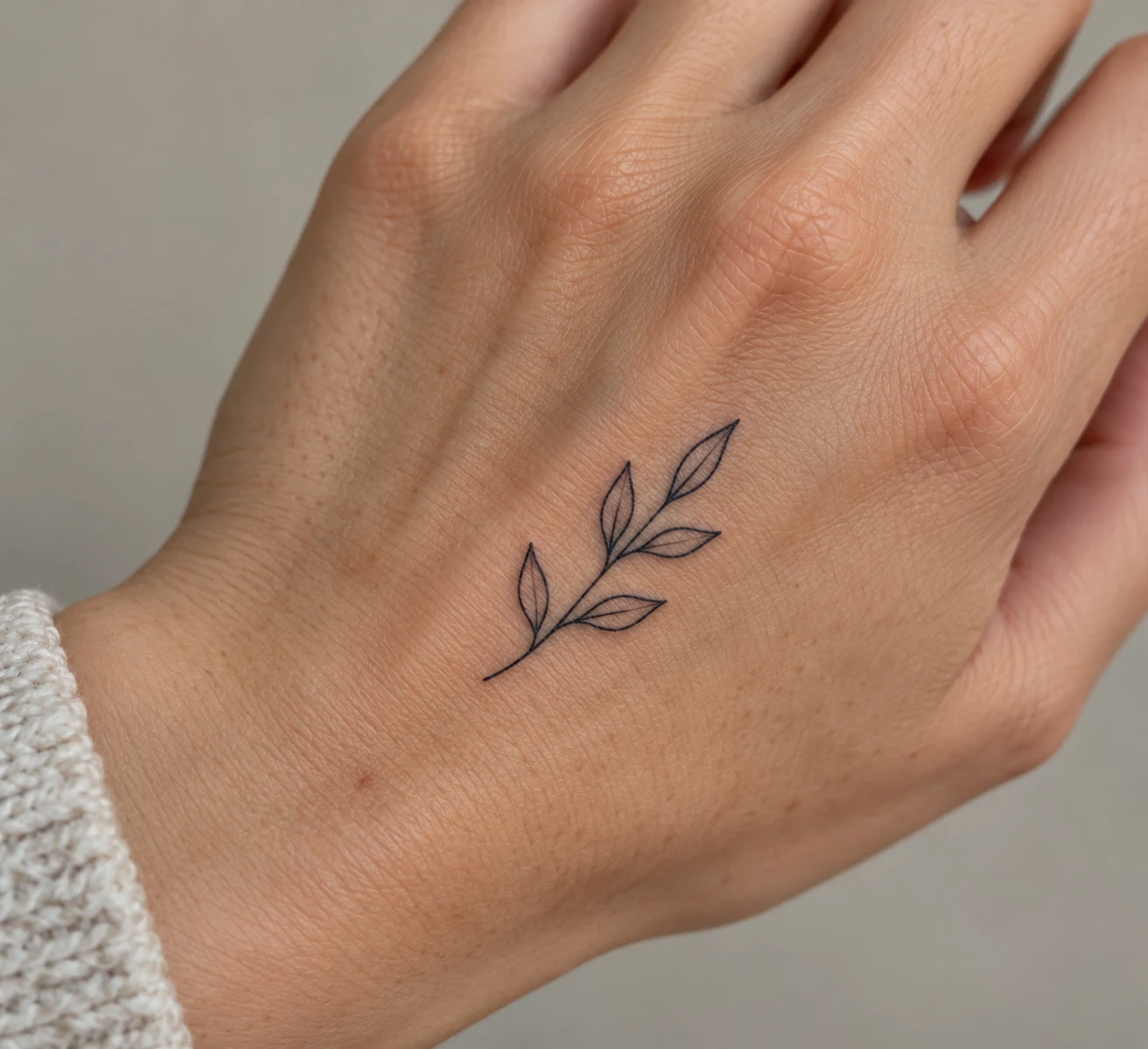
Three pairs of leaves along a short diagonal.
The spreading branch brings gentle movement across the hand. Compare both diagonals with relaxed fingers, leaving space between the paired leaves so the branch has a clear, open rhythm.
Animals and Winged Designs
11. Outline Butterfly Between the Knuckles
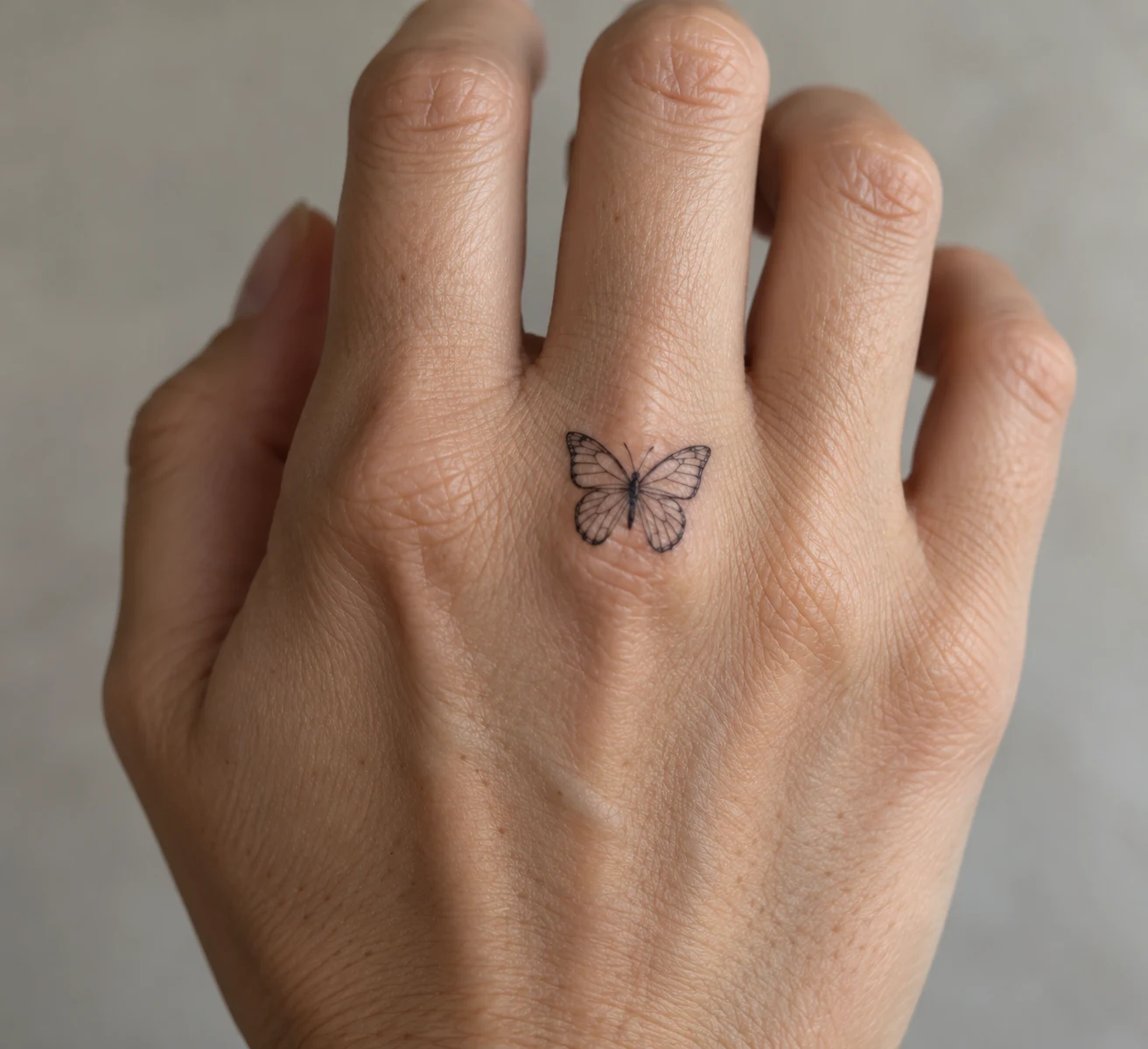
Open wings form a symmetrical focal point.
A butterfly suits readers who like a balanced shape. Place it below the gap between two knuckles and keep interior wing markings sparse, letting the outer contours carry the design.
12. Coiled Snake Near the Thumb
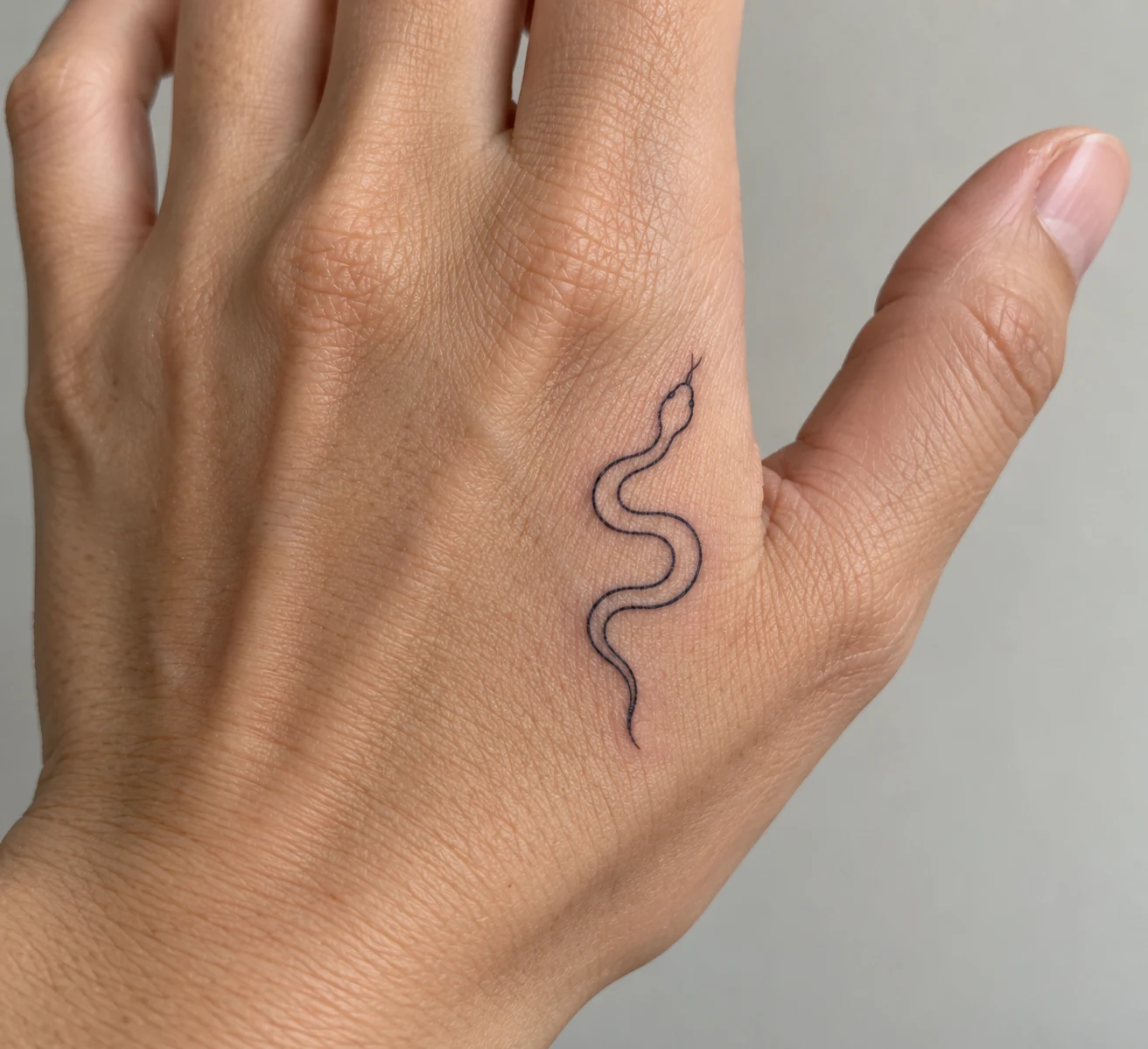
A loose S-curve with a defined head.
The snake creates movement within a compact area. A simple body outline keeps attention on the curve; compare a loose bend with a tighter coil beside the thumb. Omit scale patterns from this pared-back concept.
13. Cat Profile on the Side of a Finger
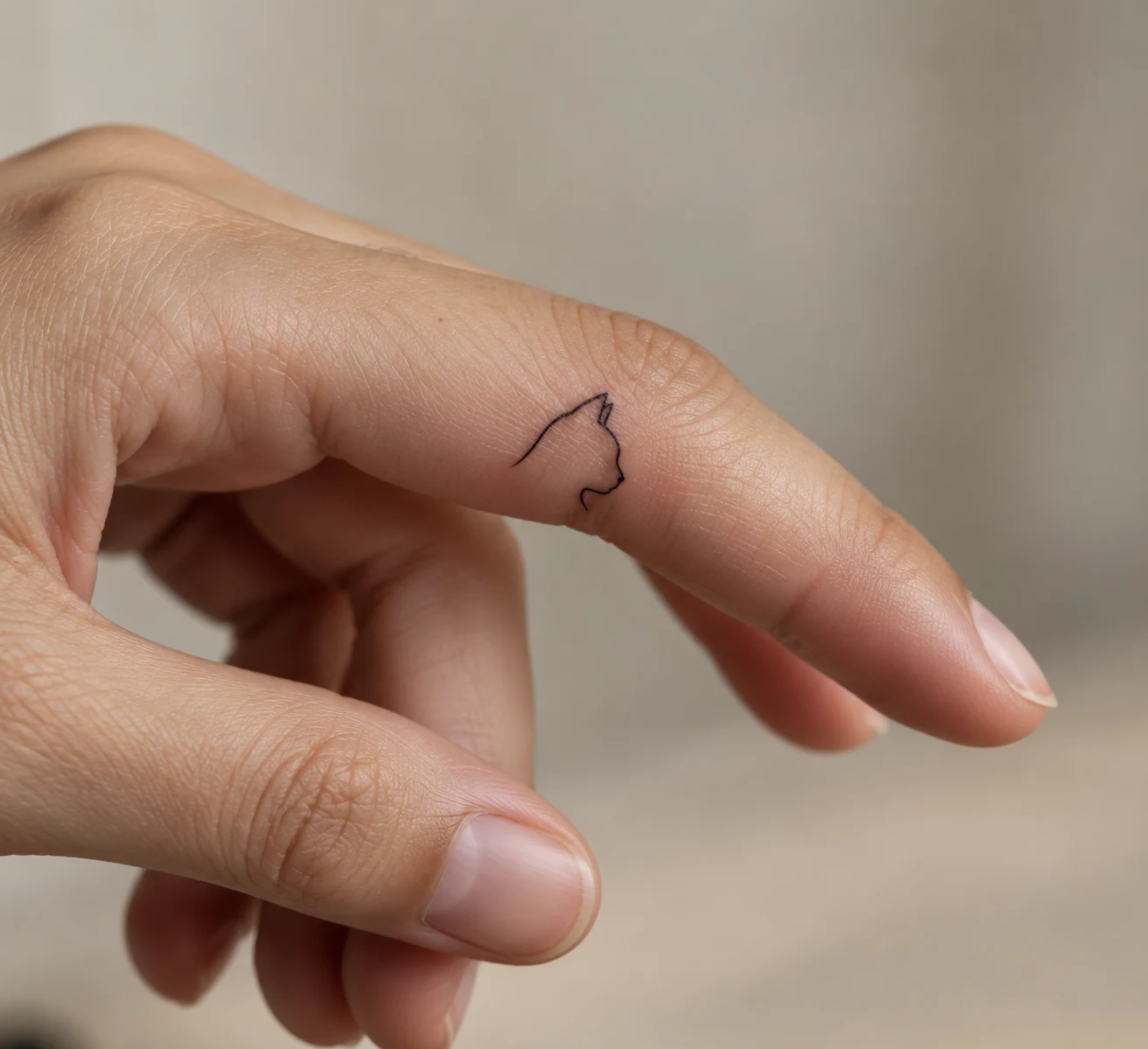
A pointed ear and short muzzle suggest a cat.
If you’re drawn to animal designs, this profile offers a reference with few details. The ear, forehead and muzzle provide the main contours, so discuss their proportions before adding whiskers or other tiny marks.
14. Swallow Silhouette on the Back of the Hand
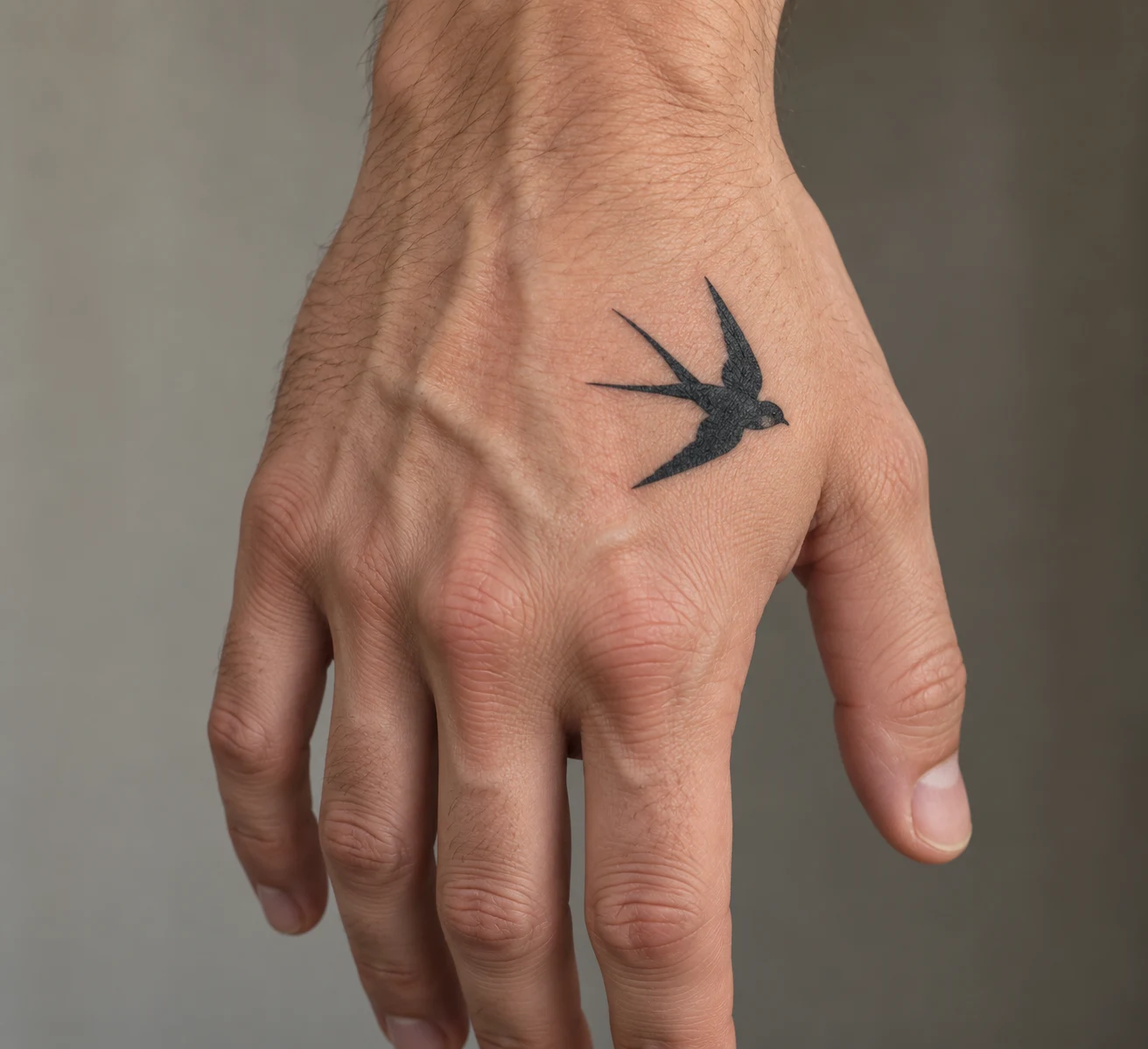
Swept wings and a forked tail in black.
This concept suits readers drawn to strong contrast and a directional shape. Angle the bird toward the fingers or wrist, checking that the wing and tail outlines remain distinct in the proposed size.
15. Tiny Fish Along a Finger
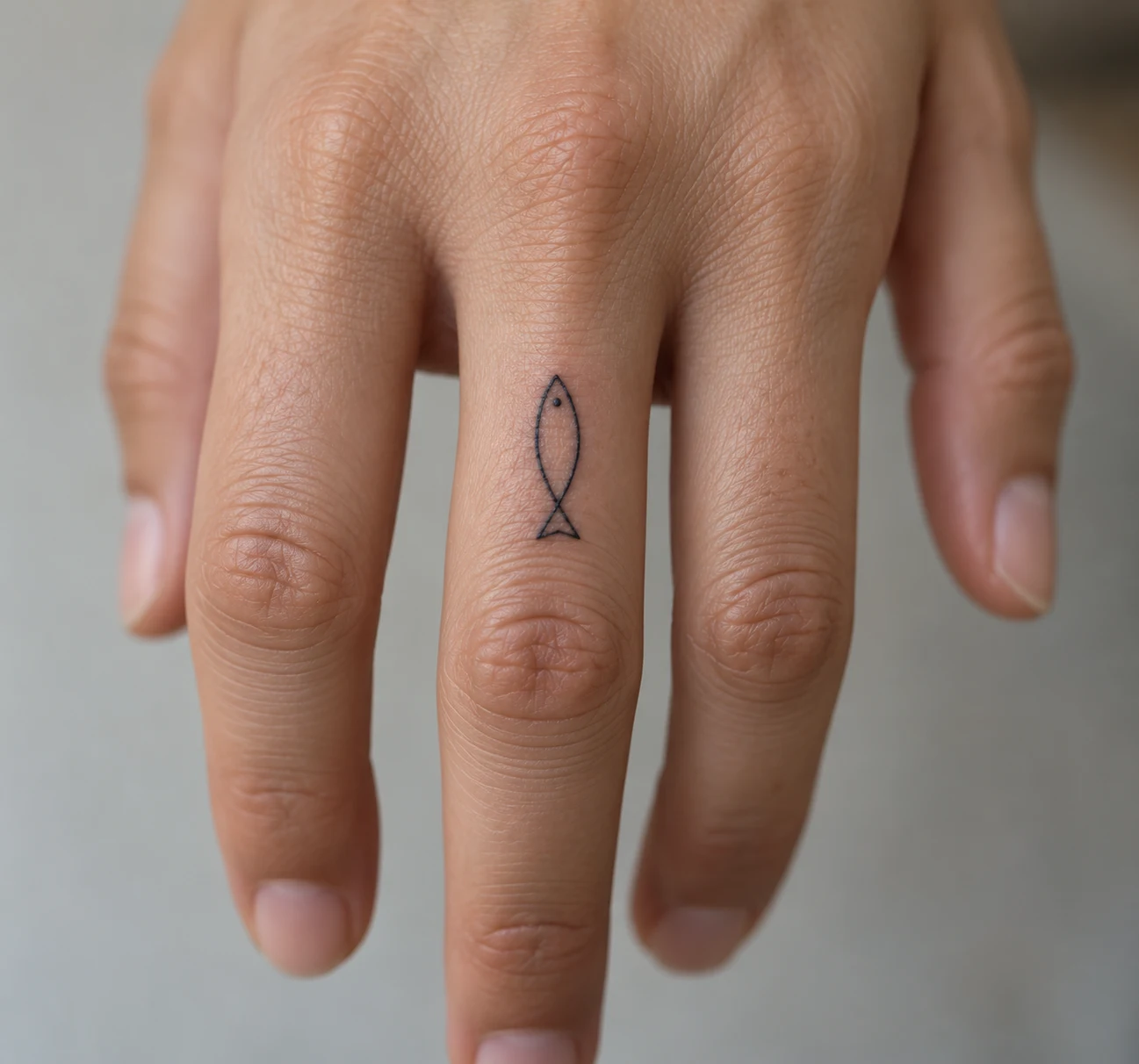
A side-view fish with a simple triangular tail.
The fish offers a horizontal animal motif. Keep the body outline, tail and single eye dot as the main features, with enough separation for the tail to read clearly beside the body.
Personal Marks and Bold Motifs
16. Single Initial Below a Finger
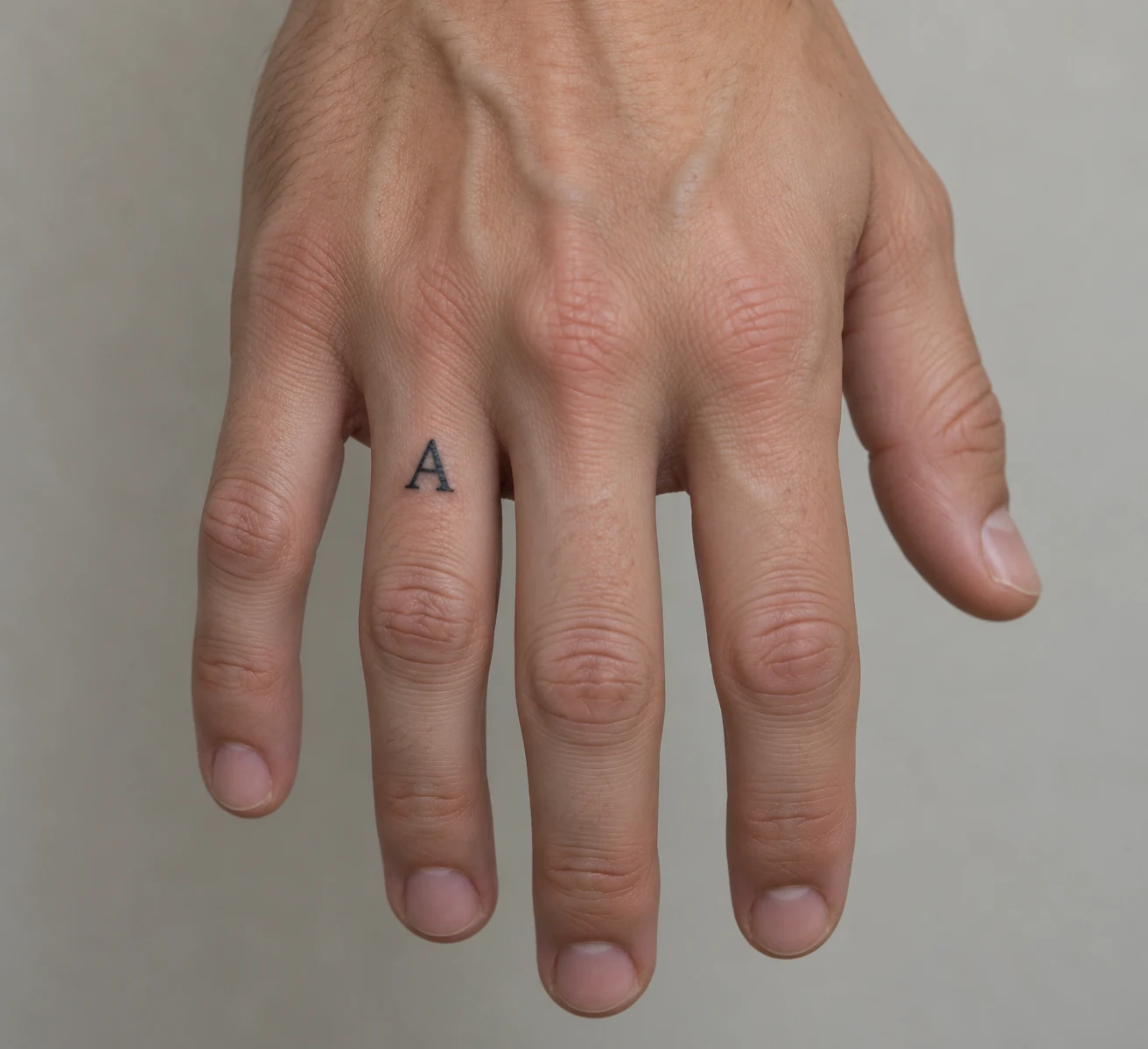
One uppercase letter in plain black lettering.
An initial gives the design a personal reference without a full name. Compare letterforms and decide whether it should read upright to you or to someone facing you before settling on its orientation.
17. Meaningful Number on the Outer Hand
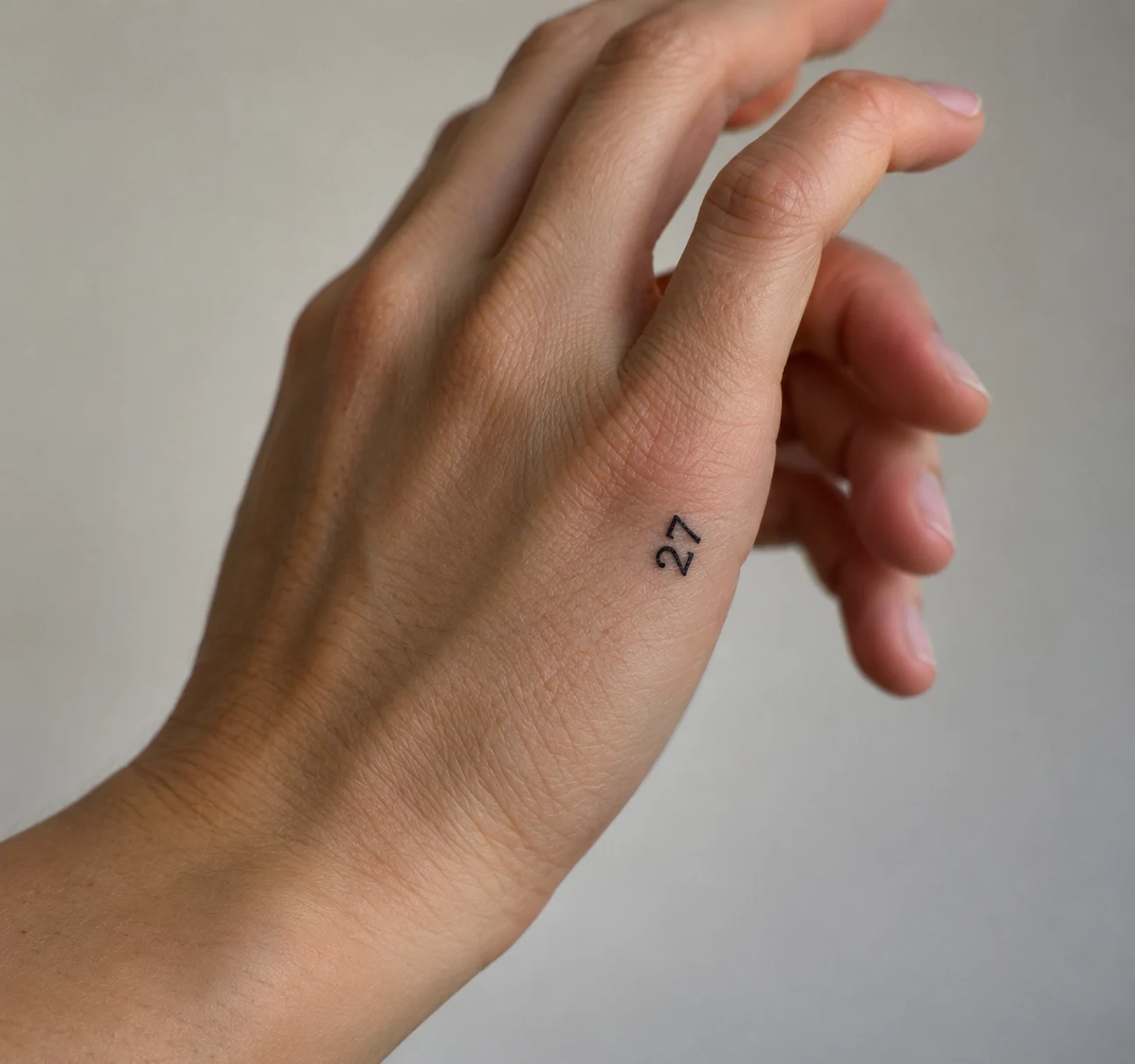
Two upright numerals near the hand’s outer edge.
Use a number with a personal connection; 27 is simply the example shown in this concept. Plain numerals keep attention on the choice itself. Check spacing and reading direction together.
18. Solid Lightning Bolt on a Finger
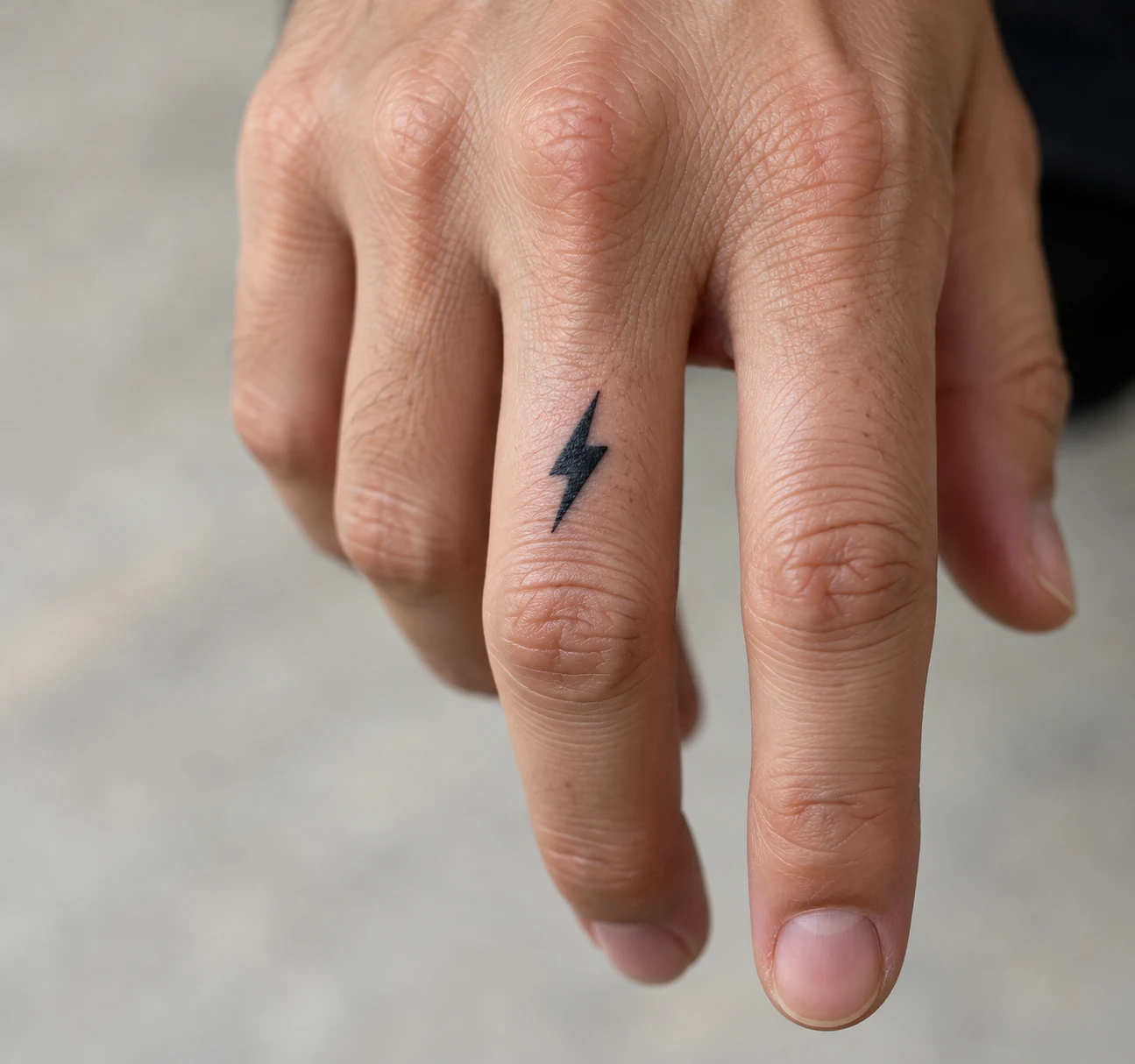
A sharp zigzag filled with black ink.
Choose a bolt if you prefer a graphic mark with strong contrast. A narrow version follows the finger’s length, while a wider zigzag gives the silhouette more visual weight.
19. Miniature Dagger on the Back of the Hand
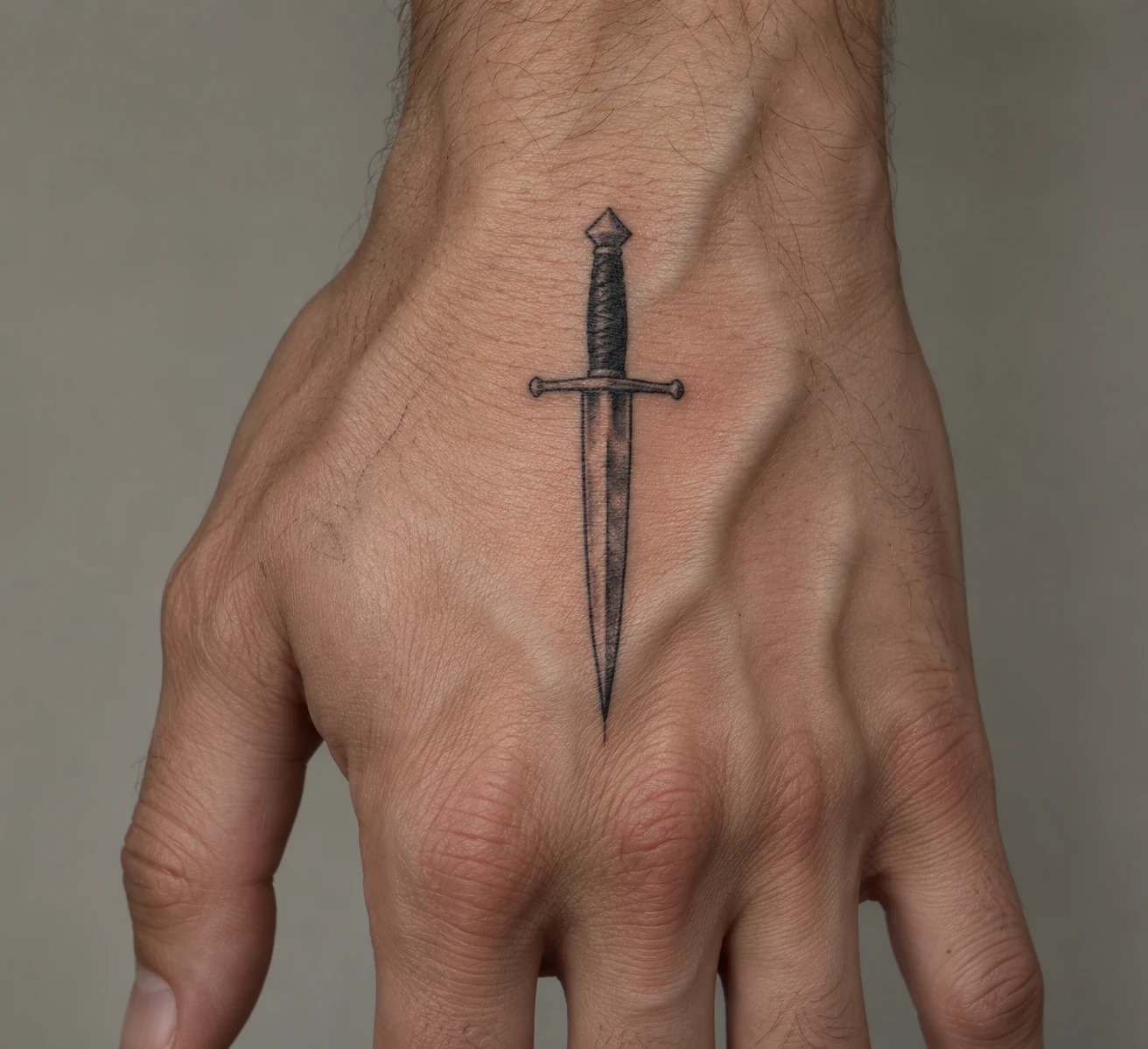
A straight blade beneath a compact handle.
The dagger supplies a vertical object motif with a defined center line. Keep the crossguard simple and discuss which handle details suit the intended scale. Compare the blade pointing toward the fingers with the reverse orientation.
20. Black Ink Bow Below the Knuckles
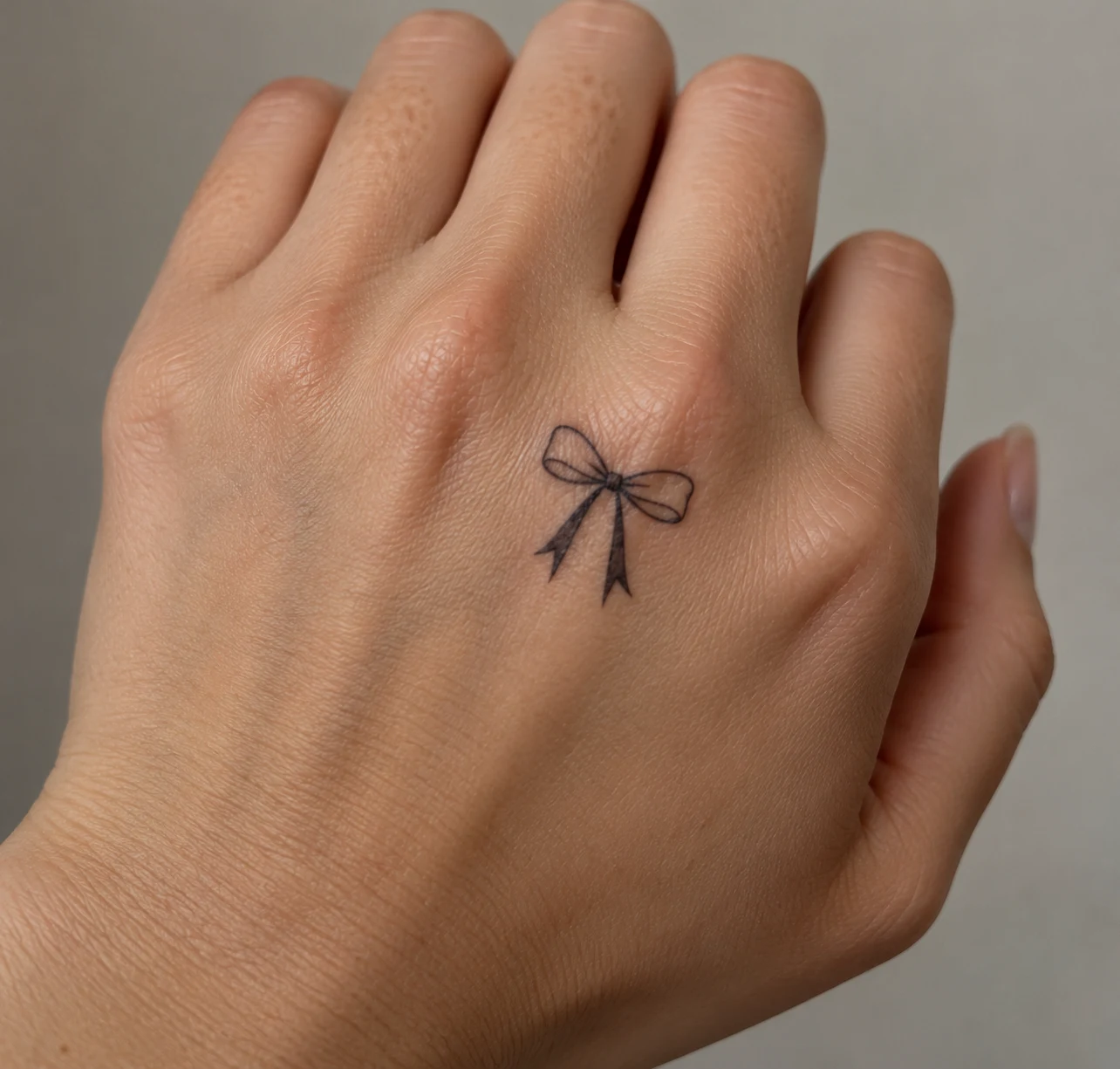
Two outlined loops above short black tails.
If you’d like a decorative ribbon shape, rounded bow loops give it a softer outline; angular folds create a crisper version. Keep the center knot distinct from the loops and tails.
Shortlist two or three motifs, choose an outline or filled treatment, and take your preferred placements to an artist for a size and detail discussion. If you’re still comparing overall coverage, explore the broader hand tattoos guide.

