
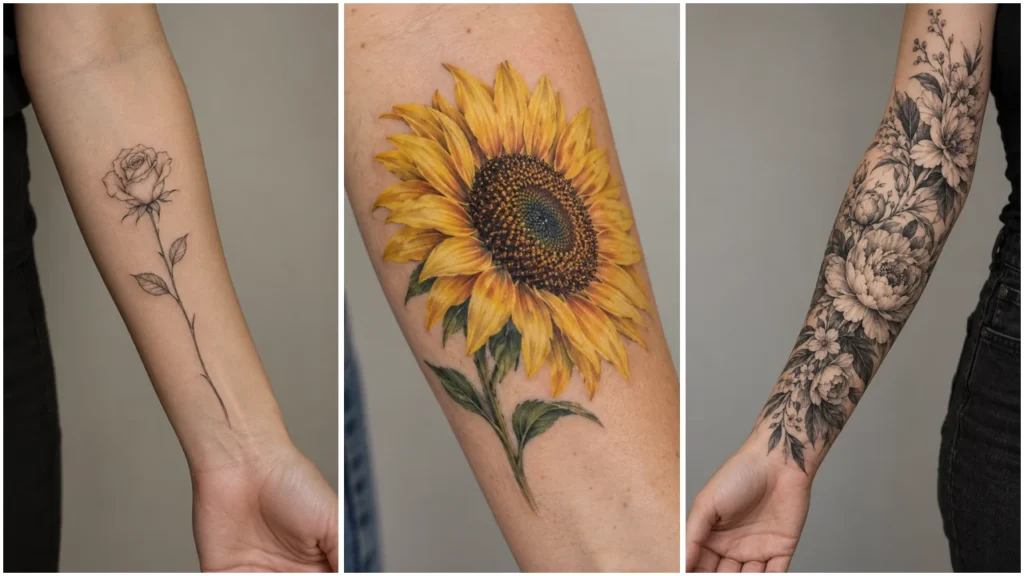
Floral forearm tattoos can follow the arm with a single stem, create a colorful focal point or curve around it in a leafy band. These 20 ideas explore different flower shapes, line weights and amounts of coverage to help you choose a direction.
Compare the overall silhouette as well as the flower itself: a narrow sprig and a broad bouquet use the same space very differently. The designs below are tattoo concepts, not client results.
Simple Stems and Open Space
These five designs leave visible skin between stems, leaves and blooms.
1. Fine Line Rose on the Inner Forearm
A single rose above a long, lightly leafed stem.
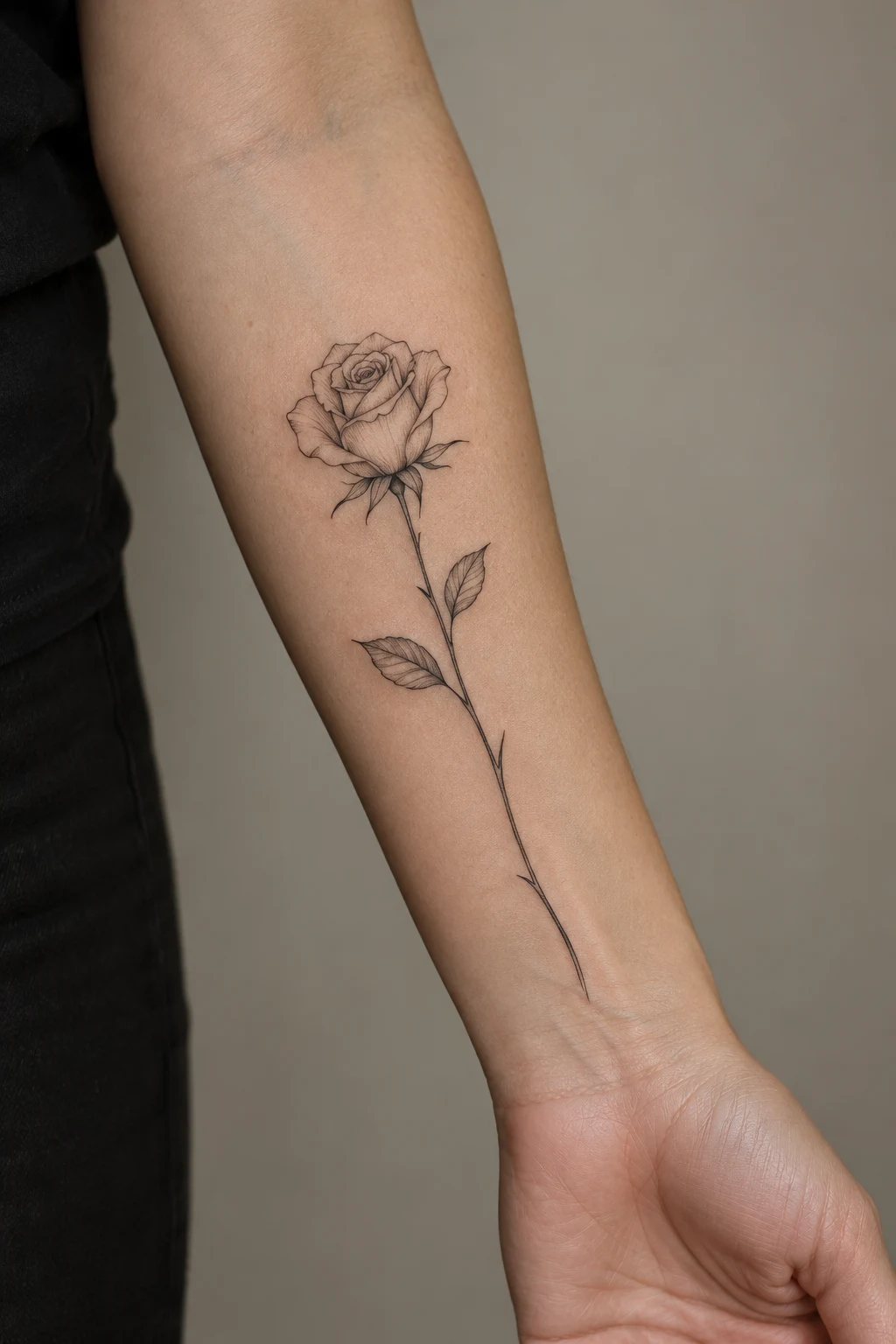
Choose this for a recognizable flower in a narrow arrangement. A longer stem gives the design more reach, while a larger bloom shifts attention toward one end of the forearm.
2. Lavender Sprig Near the Wrist
A small sprig placed lengthwise just above the wrist.

If you’d like to keep most of the forearm open, a compact lavender sprig leaves plenty of space. One sprig creates a simple silhouette; two offset stems would add fullness without becoming a bouquet.
3. Minimal Tulip Pair
Two tulips at different heights, with gently curved stems.

Broad leaves balance the simple flower heads. Keep the stems upright for an orderly arrangement, or let the blooms lean toward each other for a softer curve.
4. Cosmos Flowers With Open Petals
Two open blooms separated by fine stems and sparse foliage.
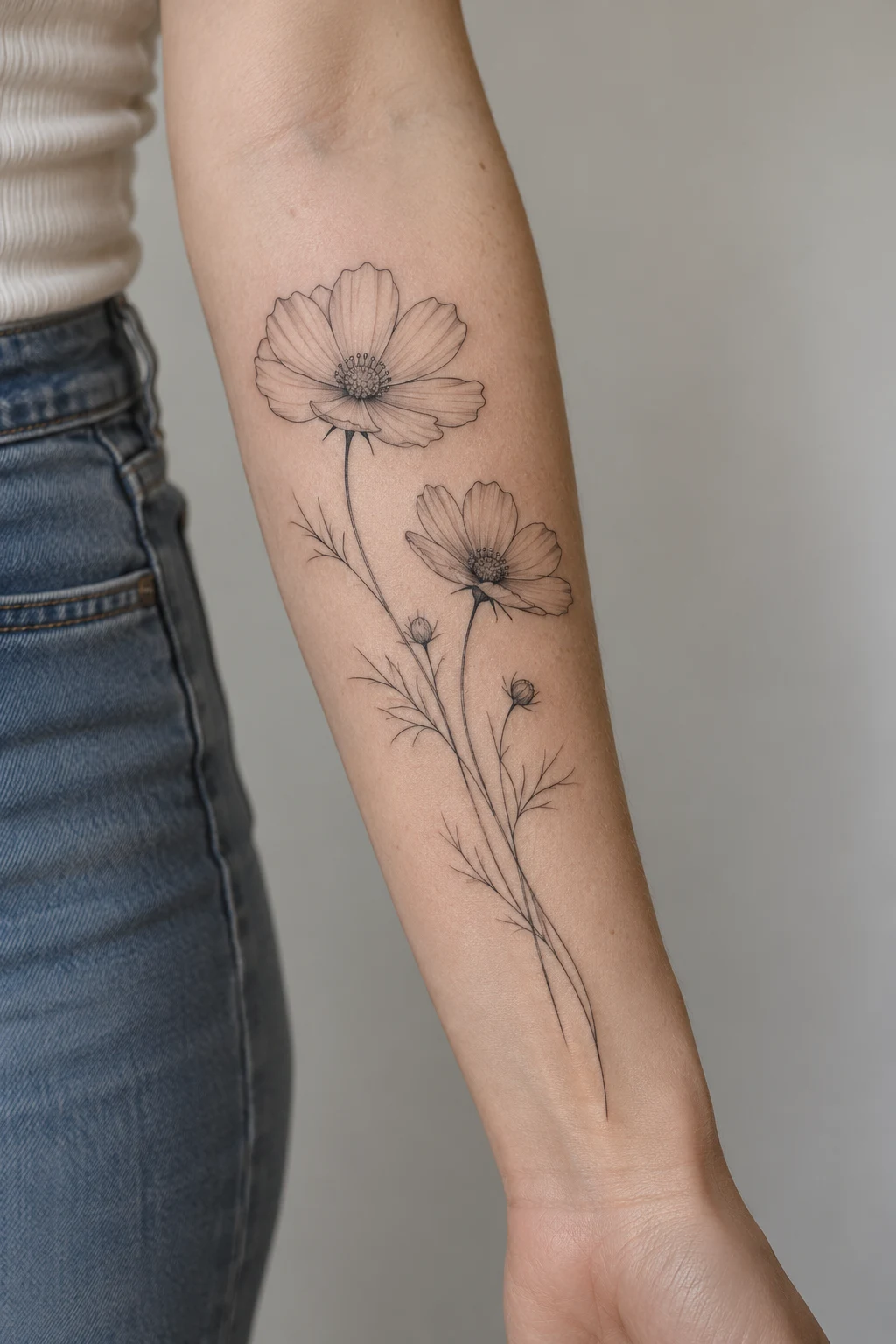
The widely spaced petals offer an airy alternative to layered roses or peonies. A front-facing bloom paired with an angled flower adds variety while keeping the composition light.
5. Botanical Lily of the Valley
Hanging bells framed by two long leaves.
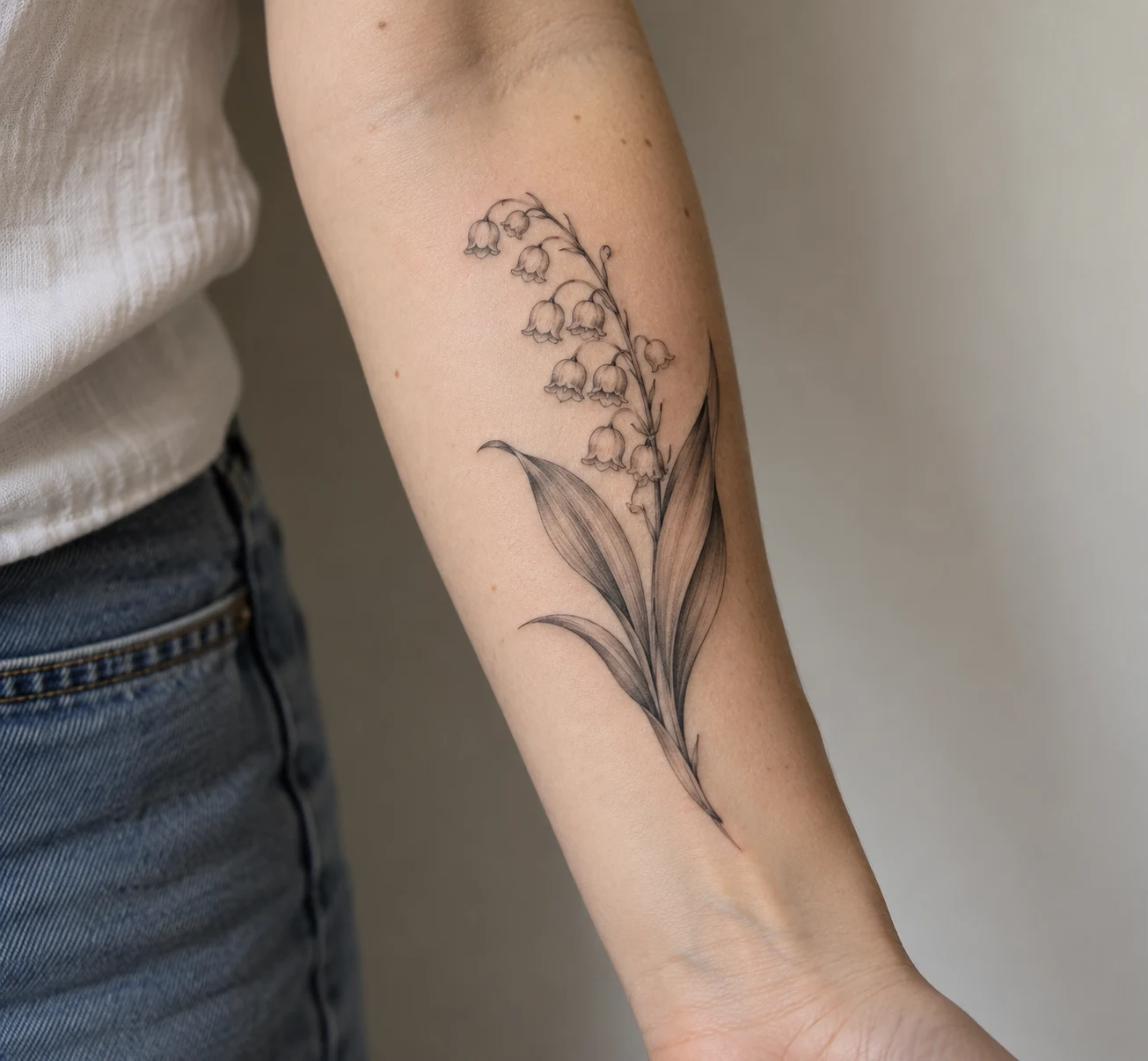
Hanging bells give this design its distinctive outline. Ask your artist to explore spacing between the bells so each shape has room within the curved stem and surrounding leaves.
Shaded Flowers and Bold Outlines
Shading, repeated marks and heavier outlines give these flowers different kinds of texture.
6. Black and Grey Peony
A rounded bloom with layered petals and restrained foliage.

For one substantial focal flower, consider a peony. Grey shading separates the overlapping petals, while a small leaf cluster can extend the shape toward the wrist.
7. Etching-Style Chrysanthemum
Narrow petals filled with directional line shading.
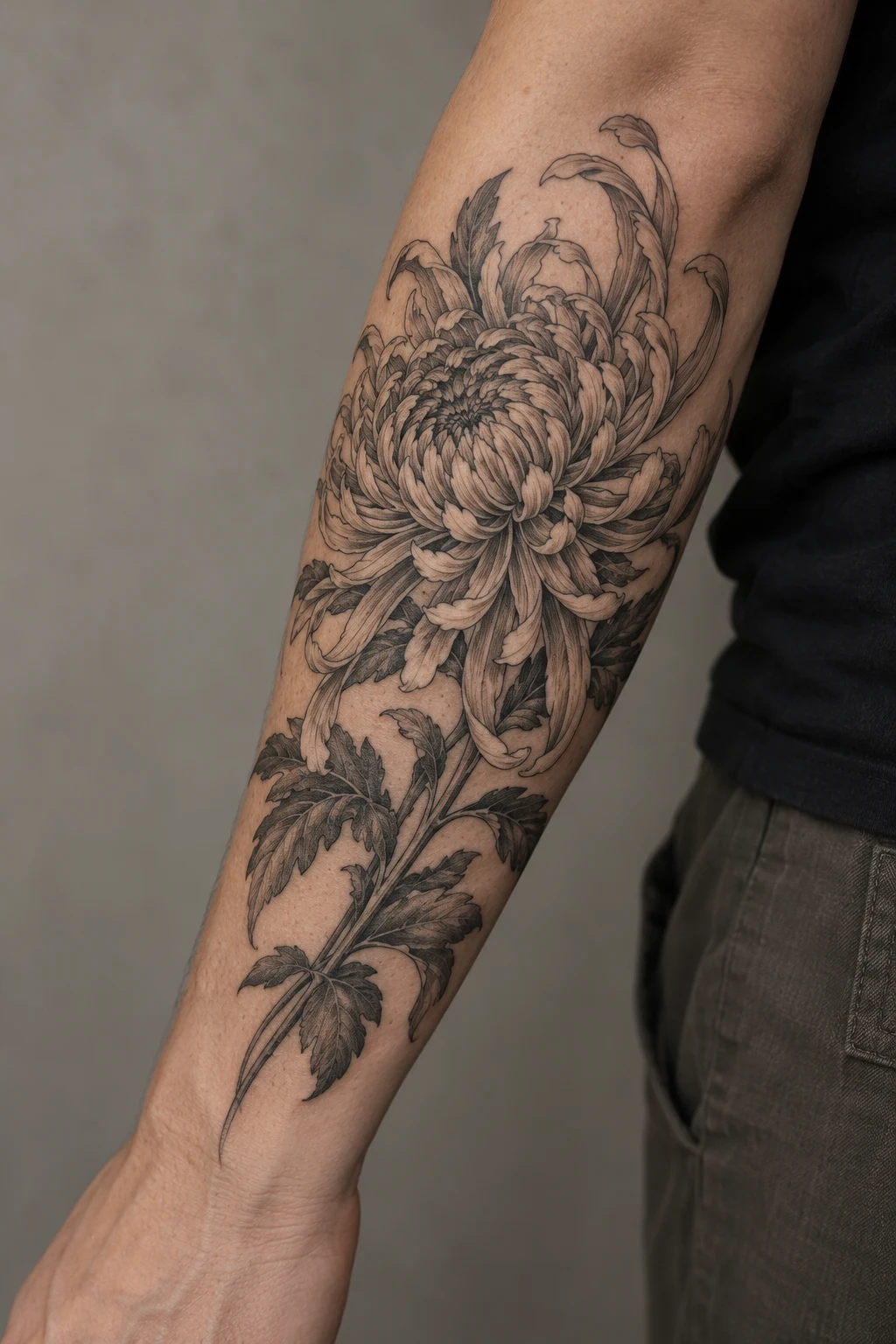
Choose this if you enjoy the texture of botanical prints. Dense hatching creates a busier surface; more visible skin between marks gives the intricate flower a lighter appearance.
8. Dotwork Dahlia
A circular bloom with pointed petals and stippled shading.

The repeating petals create a structured focal point. Let the flower stand alone to emphasize its round shape, or add a short leafy stem to draw the composition lengthwise.
9. Traditional Rose With Bold Outlines
A compact rose with simplified petals and solid black accents.
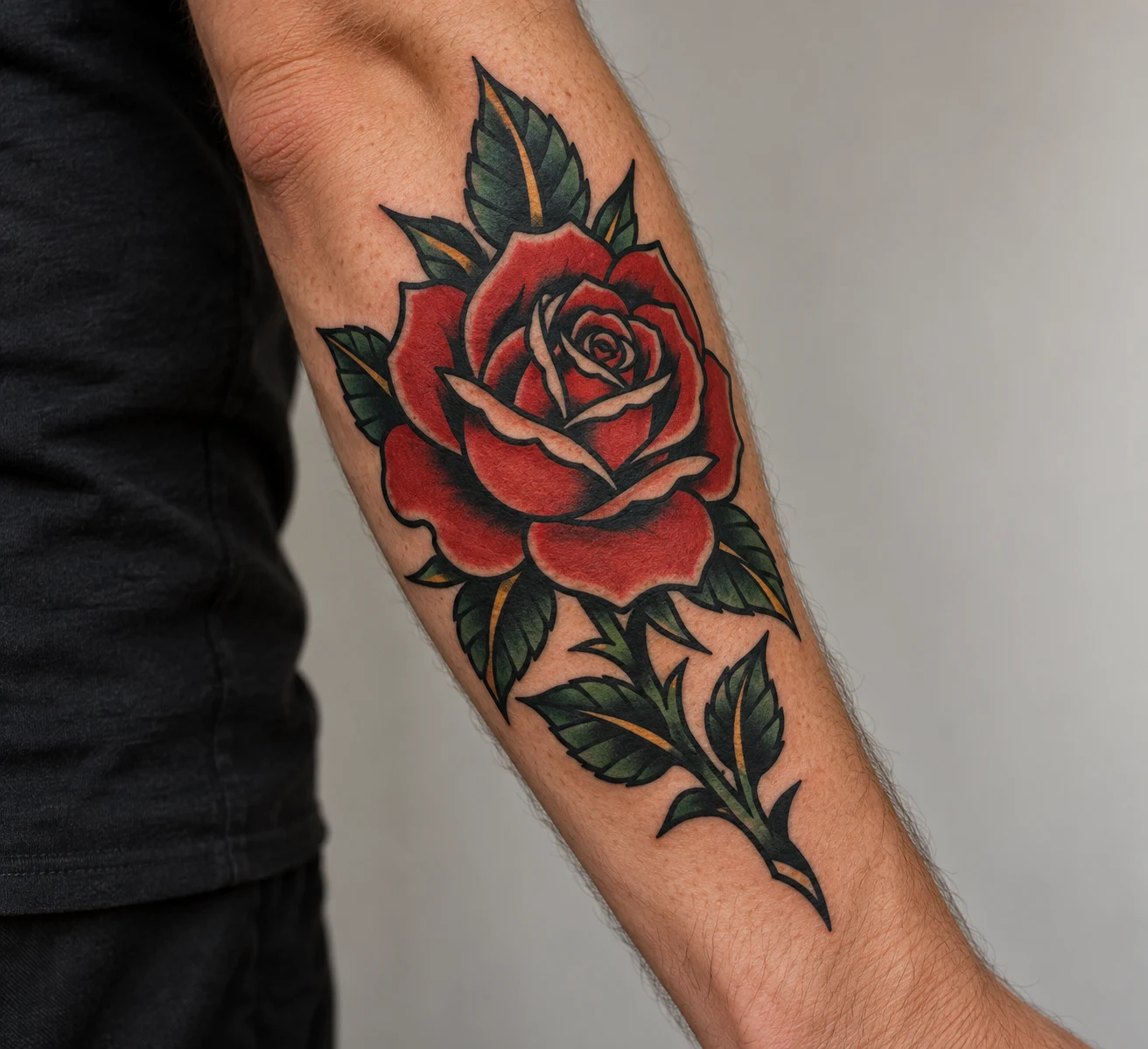
If you’re drawn to strong outlines and clearly separated shapes, try this graphic approach. A compact emblem concentrates the design in one spot; an extended stem would occupy a longer strip.
10. Magnolia Branch With Soft Shading
Broad petals arranged along a short branching stem.

Soft grey shading distinguishes the overlapping petals without filling every open area. One open flower and a bud offer variation for readers who prefer a spacious composition to a dense cluster.
Colorful Floral Forearm Tattoos
Compare both the palette and the shape each flower brings to the arm.
11. Yellow Sunflower With a Textured Center
Yellow petals surrounding a dark, textured center.

The contrast makes the flower head the focus. A forward-facing sunflower emphasizes its circular shape, while a tilted bloom creates a more angled outline along the forearm.
12. Red Poppies With Curving Stems
Two red flowers connected by long, flowing stems.
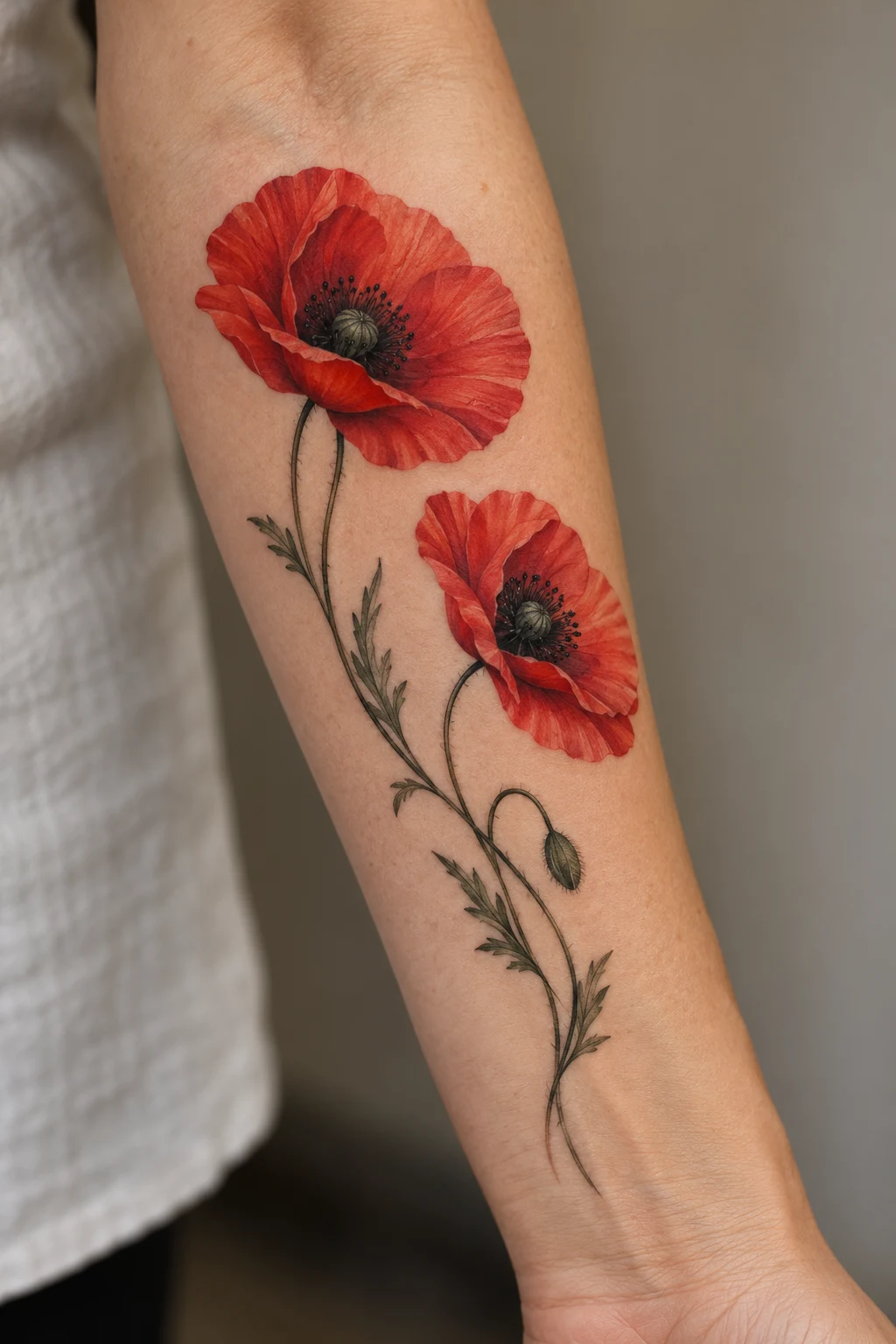
Staggered heights and irregular petals give this pair a loose arrangement. Turn one bloom sideways if you want less symmetry, leaving the curving stems to connect the flowers visually.
13. Blue Iris With Long Leaves
Folded blue petals above tall, blade-shaped leaves.

If you’re looking for color in a narrow composition, consider an iris. Let the petals supply most of the width and the leaves carry the design down the arm.
14. Watercolor-Style Wildflower Bouquet
A small mixed bouquet with loose washes of color.

Readable flower outlines anchor the painterly treatment. Keeping the washes close to the petals creates a contained bouquet; extending them beyond the outlines produces a looser edge.
15. Pink Orchid Spray
Three spaced blooms following an arching stem.
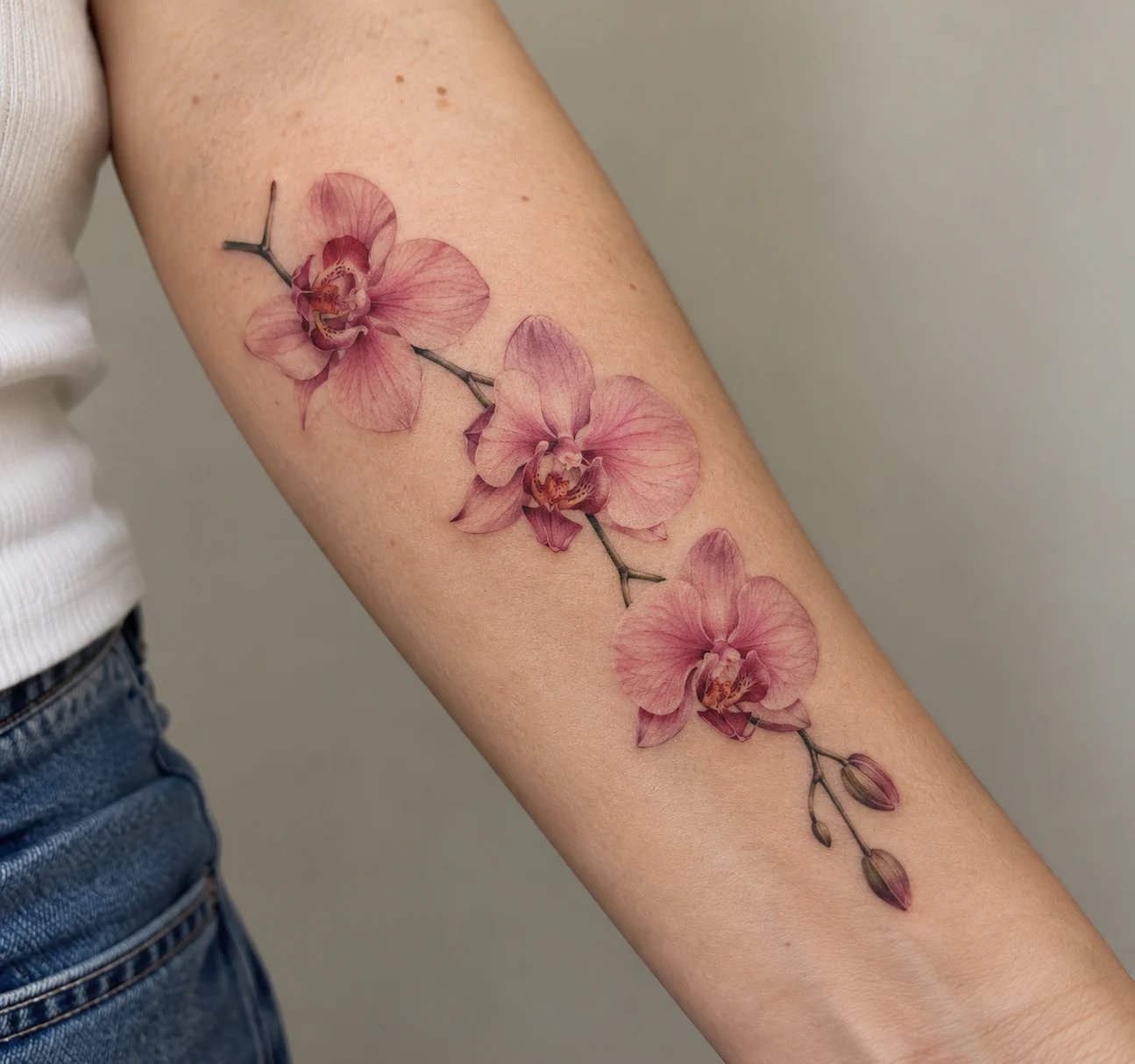
The gaps between flowers distinguish this spray from a tightly gathered bouquet. Run the stem lengthwise for a tall design, or curve it slightly around the side of the arm.
Wraparound and Larger Compositions
These ideas use diagonal paths, bands and connected clusters to occupy more of the forearm.
16. Diagonal Cherry Blossom Branch
Small blossom clusters following a diagonal branch.

A diagonal branch extends the design across the forearm, with gaps keeping the blossom clusters separate. Decide where it should begin and end before adding blossoms, especially near the wrist and elbow.
17. Daisy Chain Wrist-to-Forearm Wrap
Linked daisies winding upward from above the wrist.

Unlike a level band, this chain follows an ascending path. A partial turn keeps more of the design on one side; a longer chain carries the pattern around the arm.
18. Mixed-Flower Forearm Cuff
An interwoven band of blossoms and leaves.
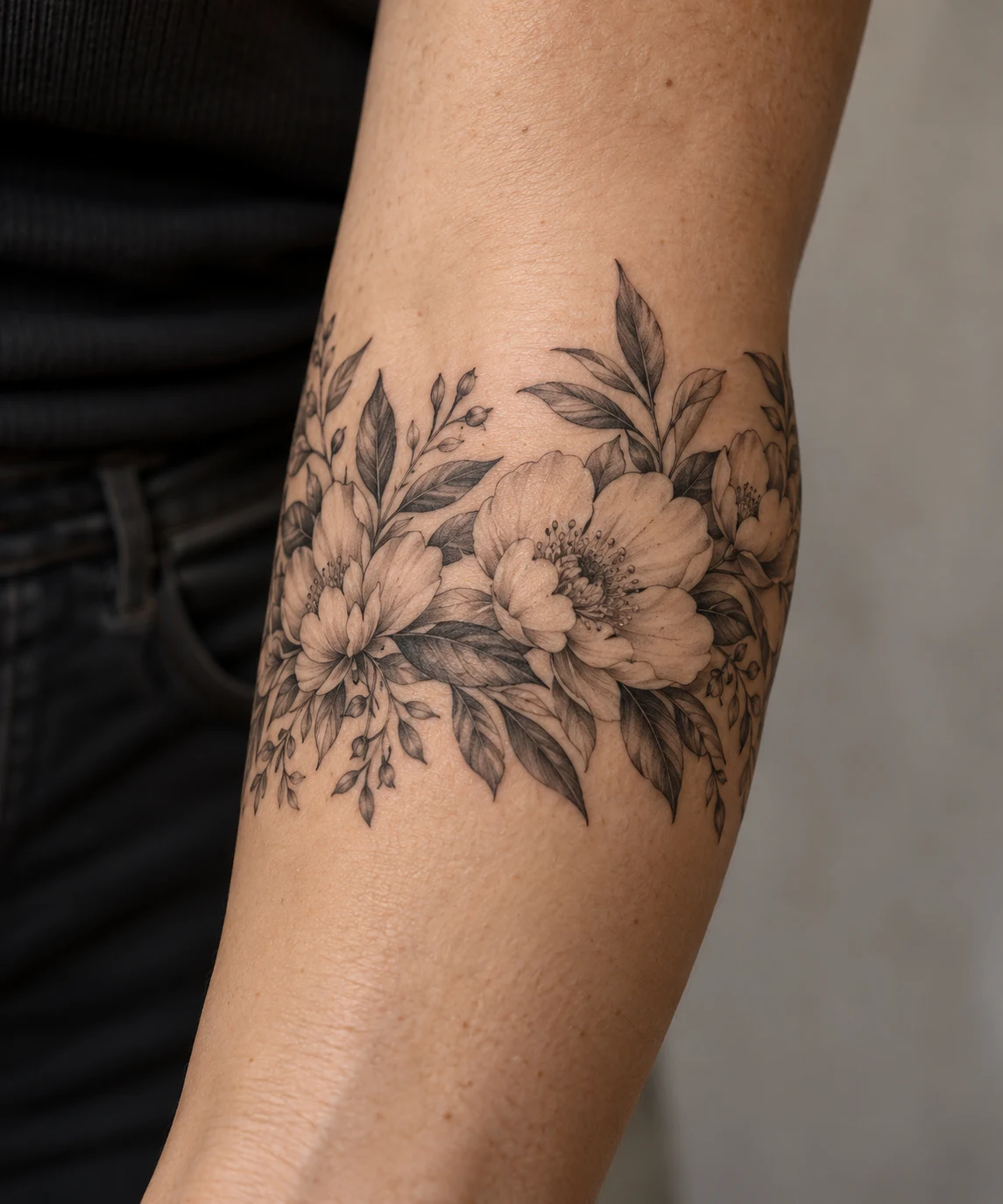
Choose this for a composition that travels across the arm. An open gap creates distinct endpoints, while a continuous band connects the flowers around the full circumference.
19. Floral Frame With an Open Center
Flowers and foliage surrounding an elongated oval of bare skin.

The empty center is the defining feature. A larger opening makes the border feel lighter; a thicker floral edge gives the flowers more prominence while retaining the frame.
20. Layered Floral Forearm Half Sleeve
Large blooms connected by smaller buds and leaves.

This offers broad coverage from below the elbow to above the wrist. Choose a main focal flower first, then discuss where smaller clusters and visible skin should separate the larger blooms.
Shortlist two or three ideas by flower shape, line weight, color and coverage. Bring those references to a tattoo artist and explain which details you like in each, then discuss scale and placement on your own forearm.

