
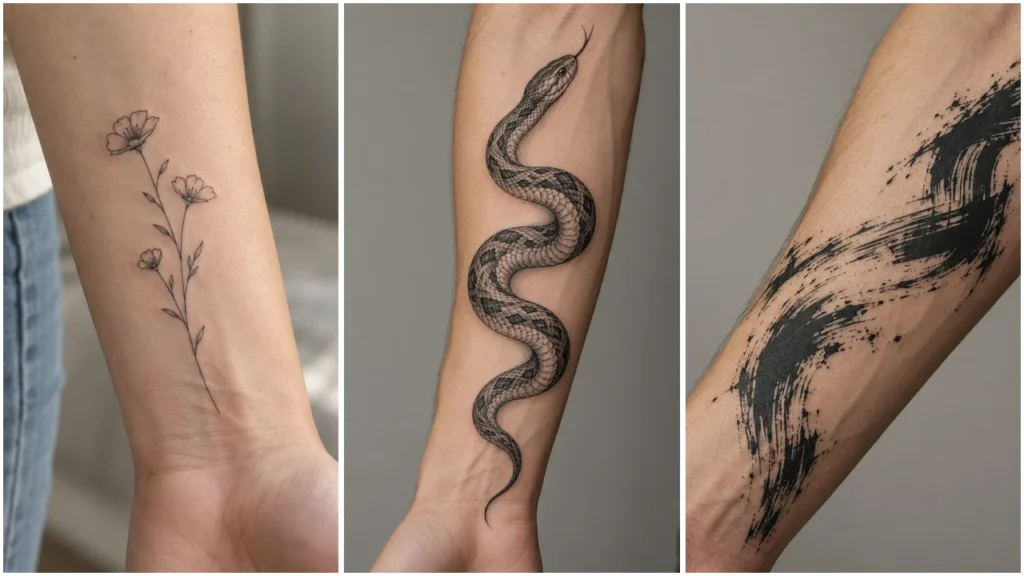
Inner forearm tattoos can be small and spare, long and flowing, or built around bold shapes. These 20 ideas span botanical designs, minimalist marks, illustrative subjects, and blackwork, giving you different ways to use the space between wrist and elbow.
Compare the silhouette as well as the subject: a narrow stem, a wide moth, and a compact tiger head each create a different composition. The planned images are tattoo concepts, not photographs of client results.
Botanical Inner Forearm Tattoos
Start with the overall shape: a single stem leaves open space, while layered petals or repeated leaves introduce more detail.
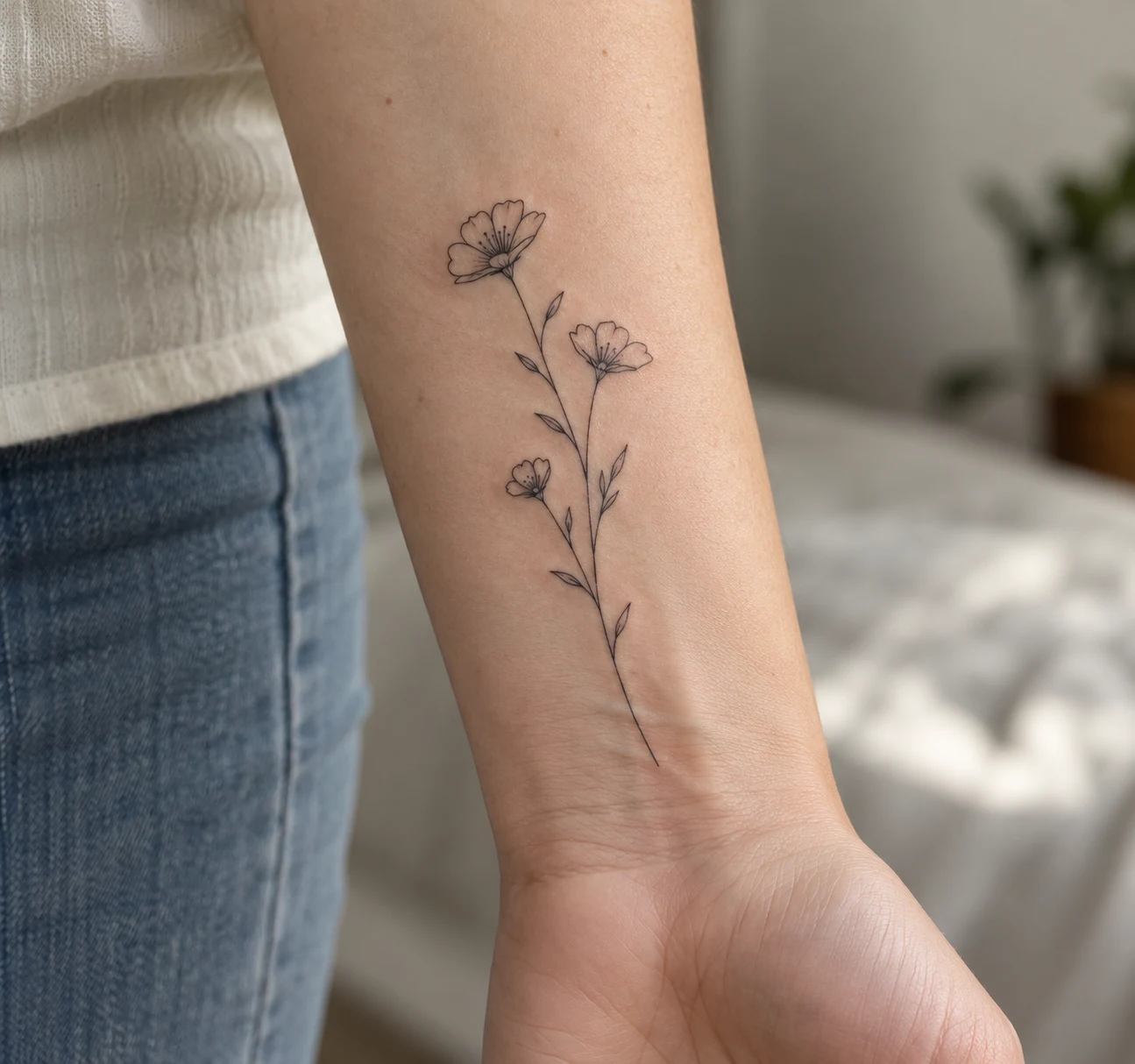
1. Fine Line Wildflower Stem
Three small blooms branch unevenly from a slender stem through the middle of the forearm. Space around each flower keeps the composition airy. Choose one bloom for a simpler version, or keep the cluster for variety.
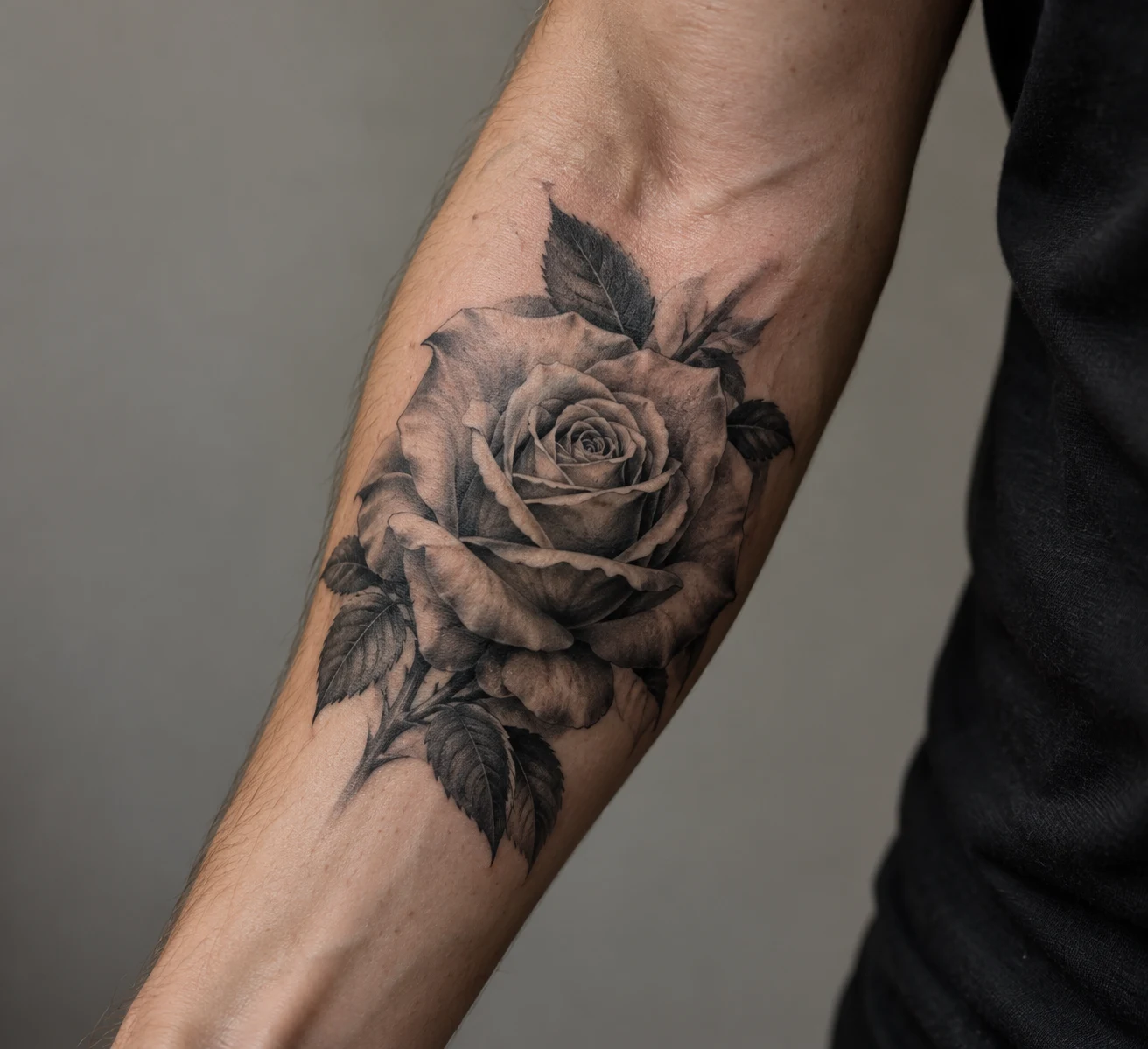
2. Black and Grey Rose
A single rose on the upper inner forearm uses overlapping, shaded petals to create depth within a compact shape. Keep the stem short to emphasize the bloom, and decide whether you prefer soft grey shading or darker petal edges.
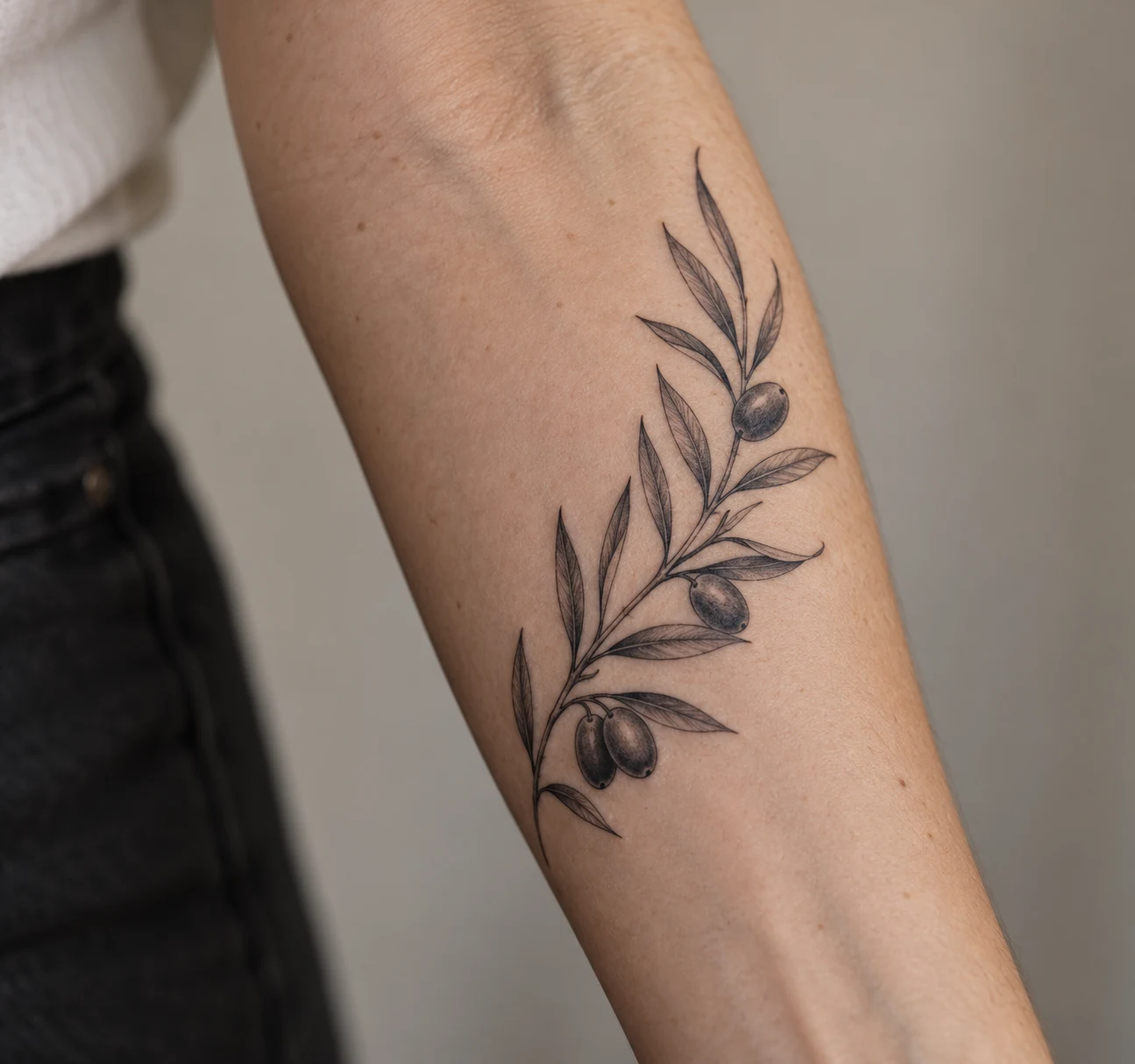
3. Branching Olive Sprig
Paired leaves follow a gently curved branch diagonally across the arm. This offers a foliage-focused alternative to flowers, with an asymmetric outline. Try the branch centered and angled toward one side when considering placement.
4. Color Poppy Pair
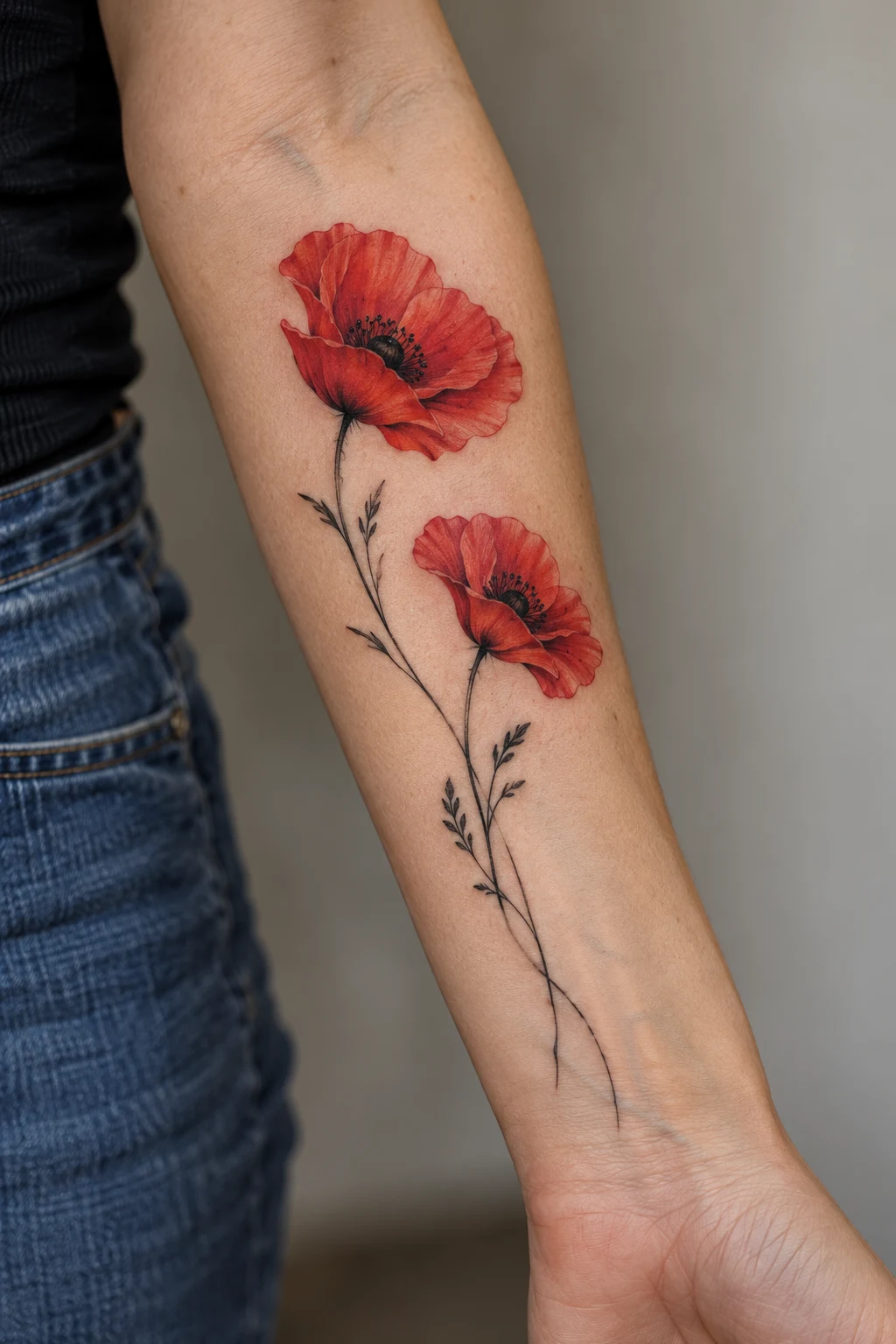
Two red poppies add a clear color accent above thin black stems. Different bloom sizes give the pair an uneven rhythm; matching sizes feel more ordered. Keep the surrounding composition open if you want the red petals to lead.
5. Fern Frond
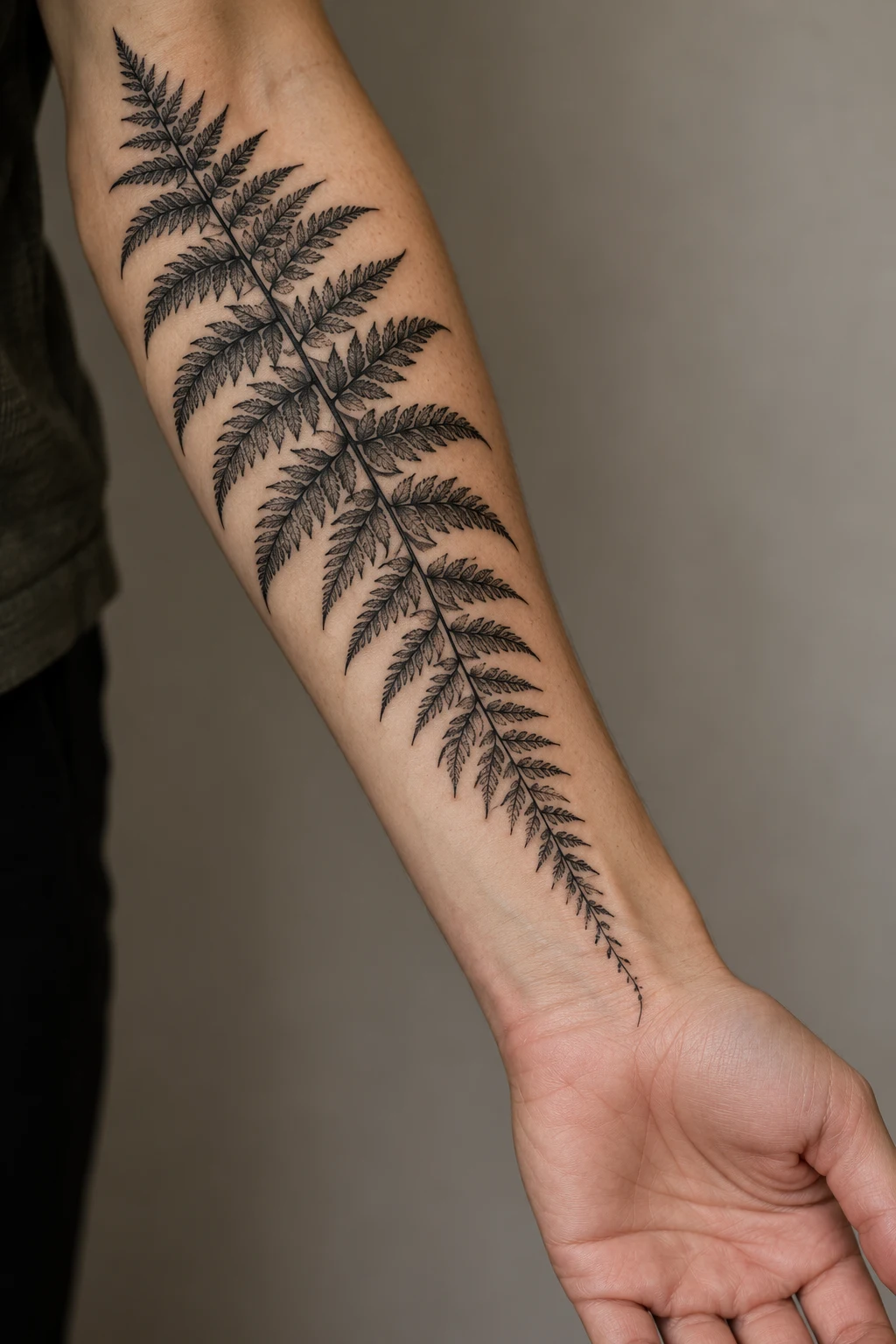
A fern stretches lengthwise, with repeated leaflets narrowing toward the wrist. Its long silhouette suits readers who want botanical detail across much of the placement. Shortening the frond creates a more contained version of the same idea.
Minimalist and Personal Designs
These ideas use lettering, simple contours, and deliberate spacing. Personal significance can come from your choice without requiring a universal symbolic meaning.
6. Short Handwritten Word
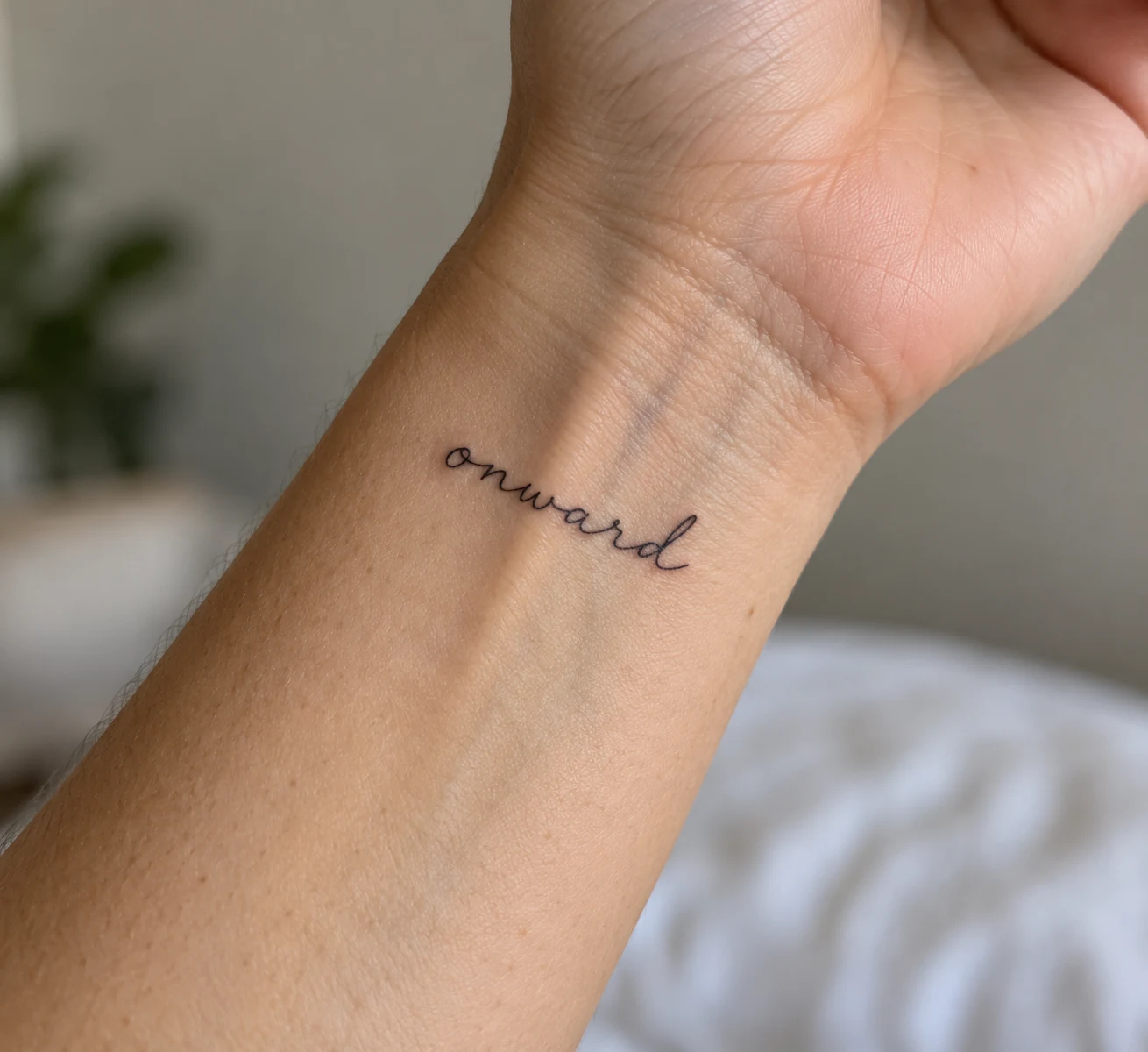
A small handwritten “onward” near the wrist makes text the focal point. Substitute a word that matters to you, then discuss letter size and spacing with your artist. Decide whether it should face you or read outward.
7. Roman Numeral Date
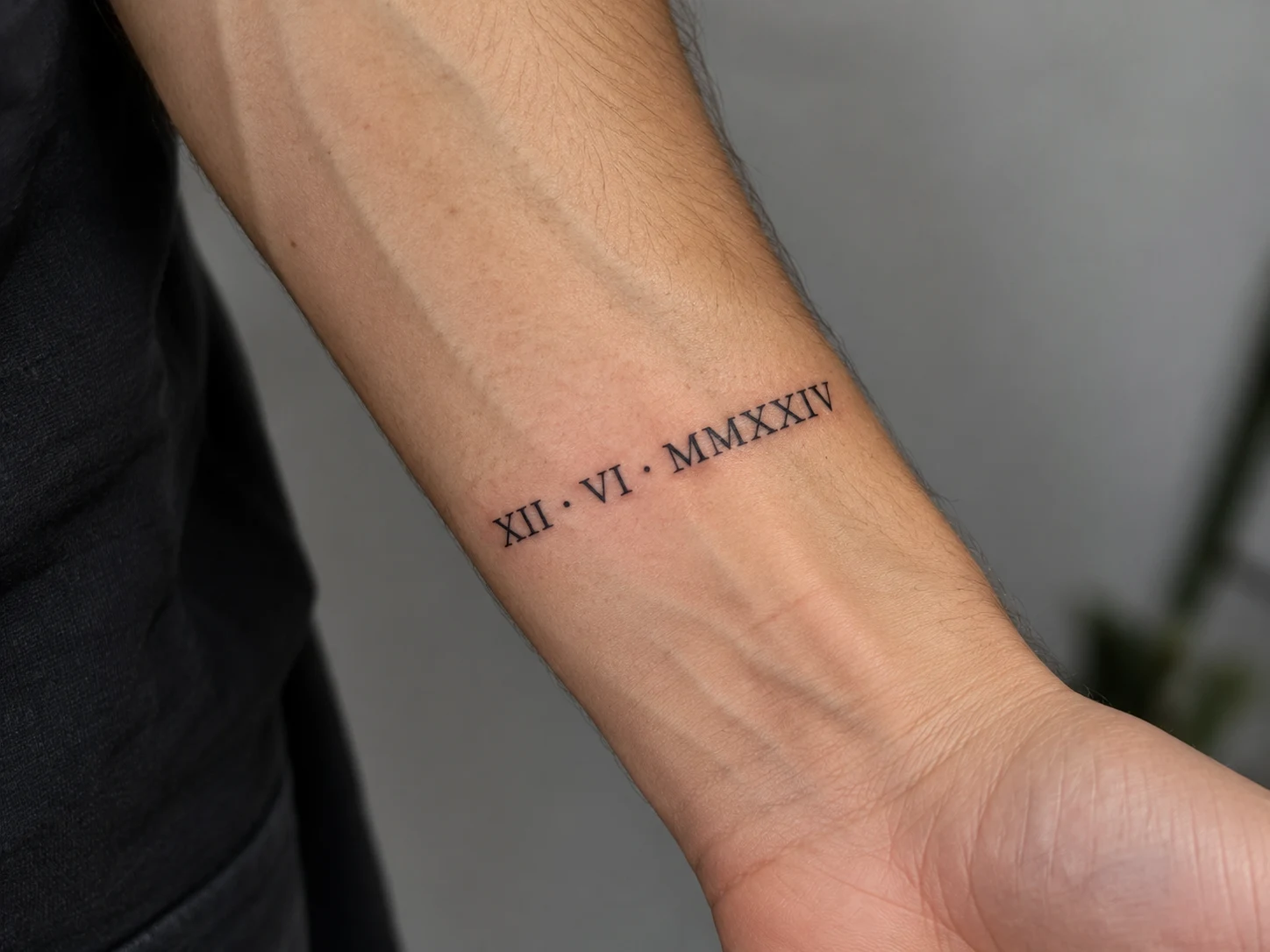
An evenly spaced numeral date creates a structured horizontal line across the lower forearm. Compare that arrangement with a lengthwise version if the date is long. Check the date, numeral conversion, and separators before approving the stencil.
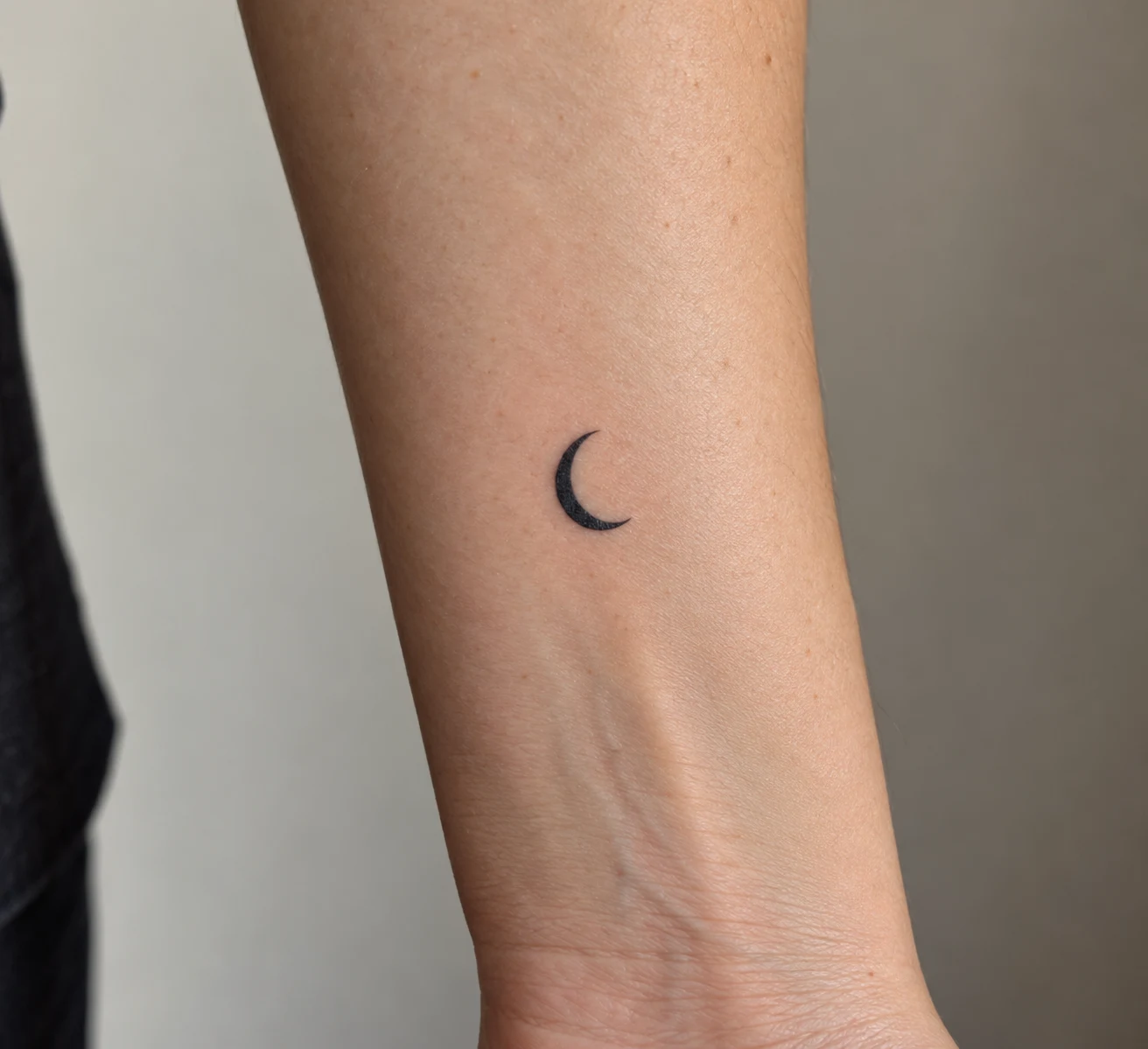
8. Small Crescent Moon
Surrounded by open skin, a solid black crescent sits alone on the lower inner forearm. If you’re drawn to a single compact shape, ask your artist to show sizes that preserve the crescent’s curve and pointed tips.
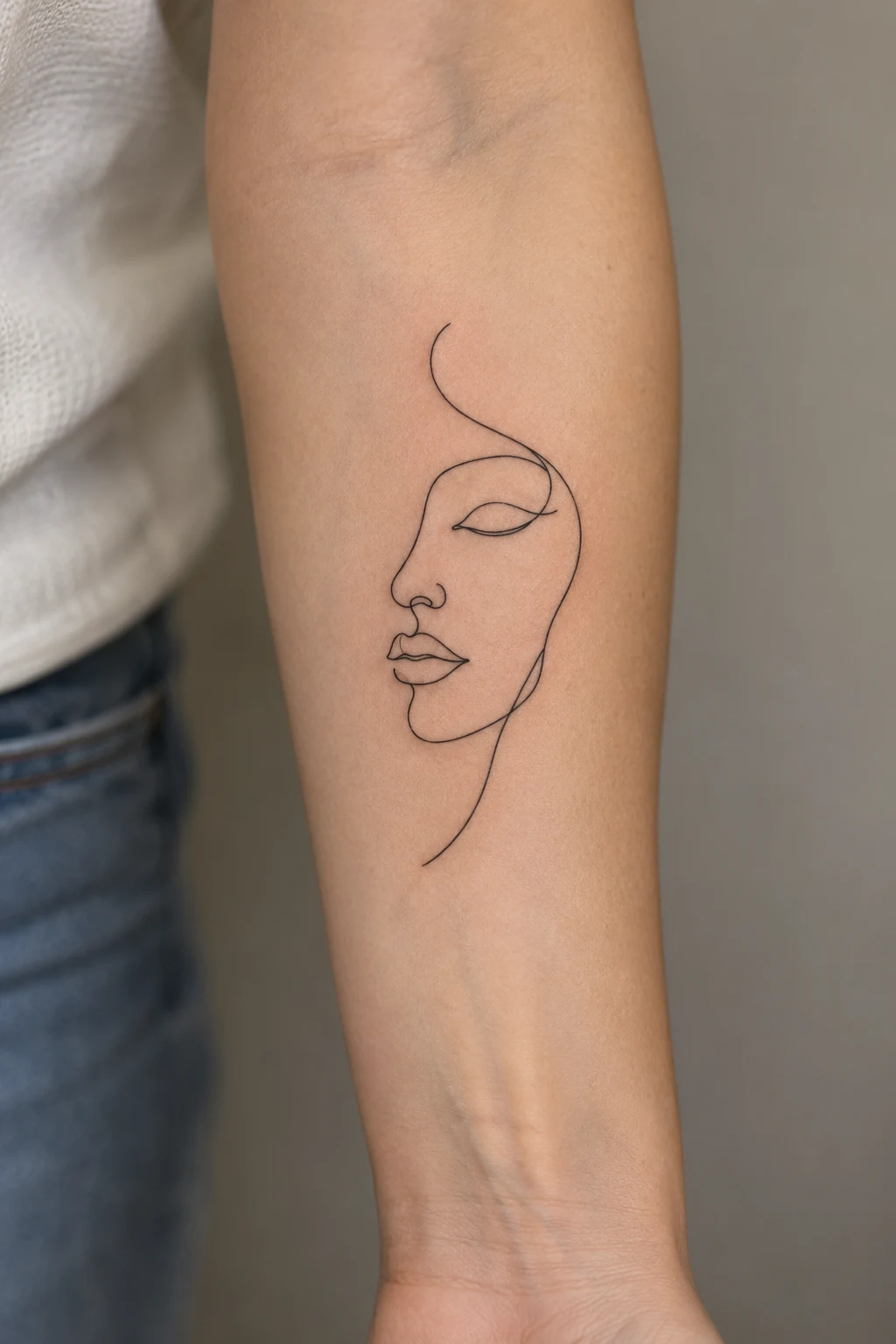
9. Continuous Line Face
A flowing line traces an abstract profile through the middle of the arm. The appeal lies in the recognizable contour with very little internal detail. Choose a side profile for a clear silhouette or a front-facing interpretation for more abstraction.
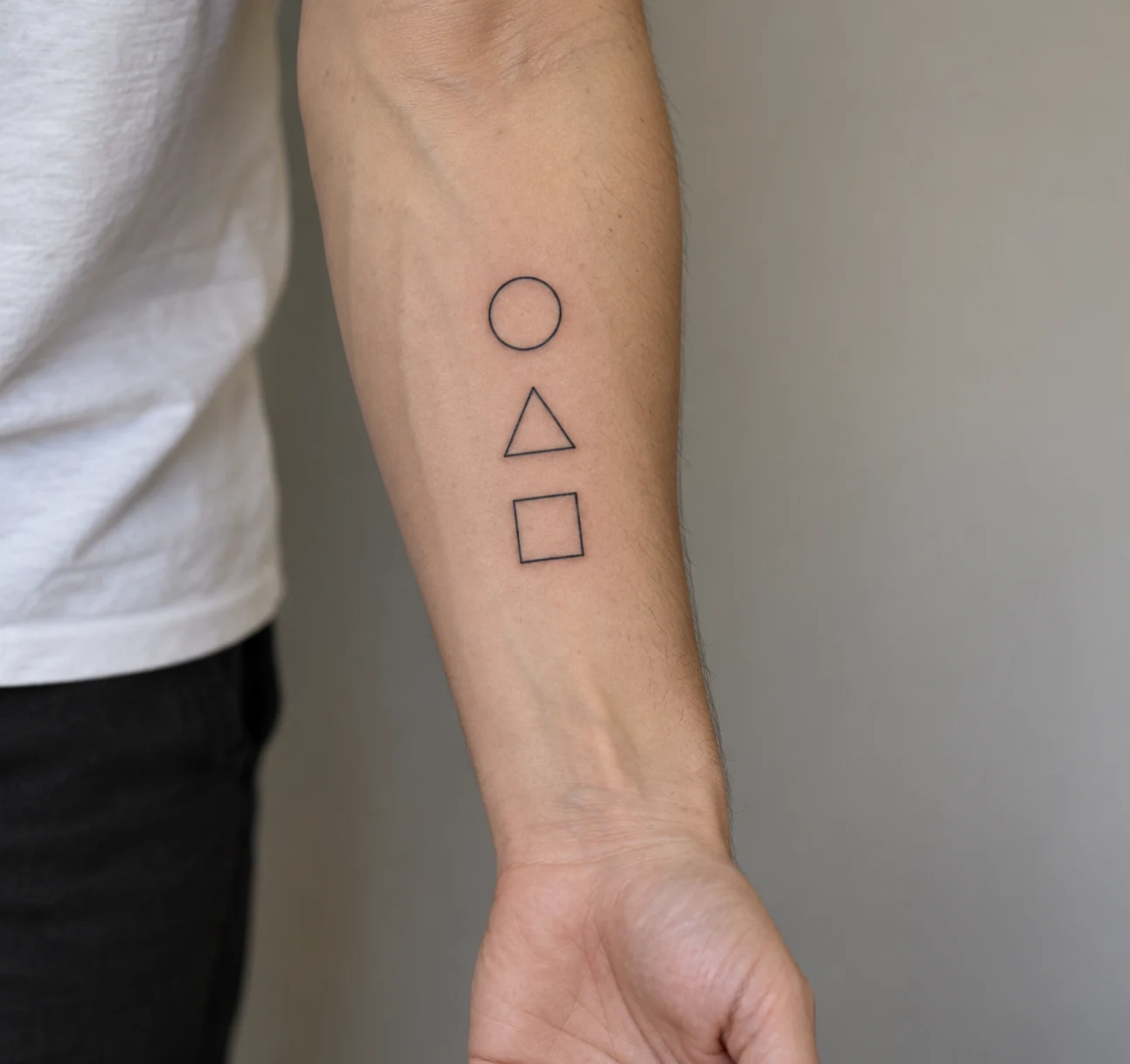
10. Stacked Geometric Shapes
With deliberate gaps between them, an outlined circle, triangle, and square form a lengthwise stack. Equal widths make the arrangement feel ordered; varied sizes introduce a different rhythm. This suits a preference for geometry without a literal subject.
Illustrative Animals and Landscapes
Compare how each subject occupies the arm: some follow its length, while others spread across the middle.
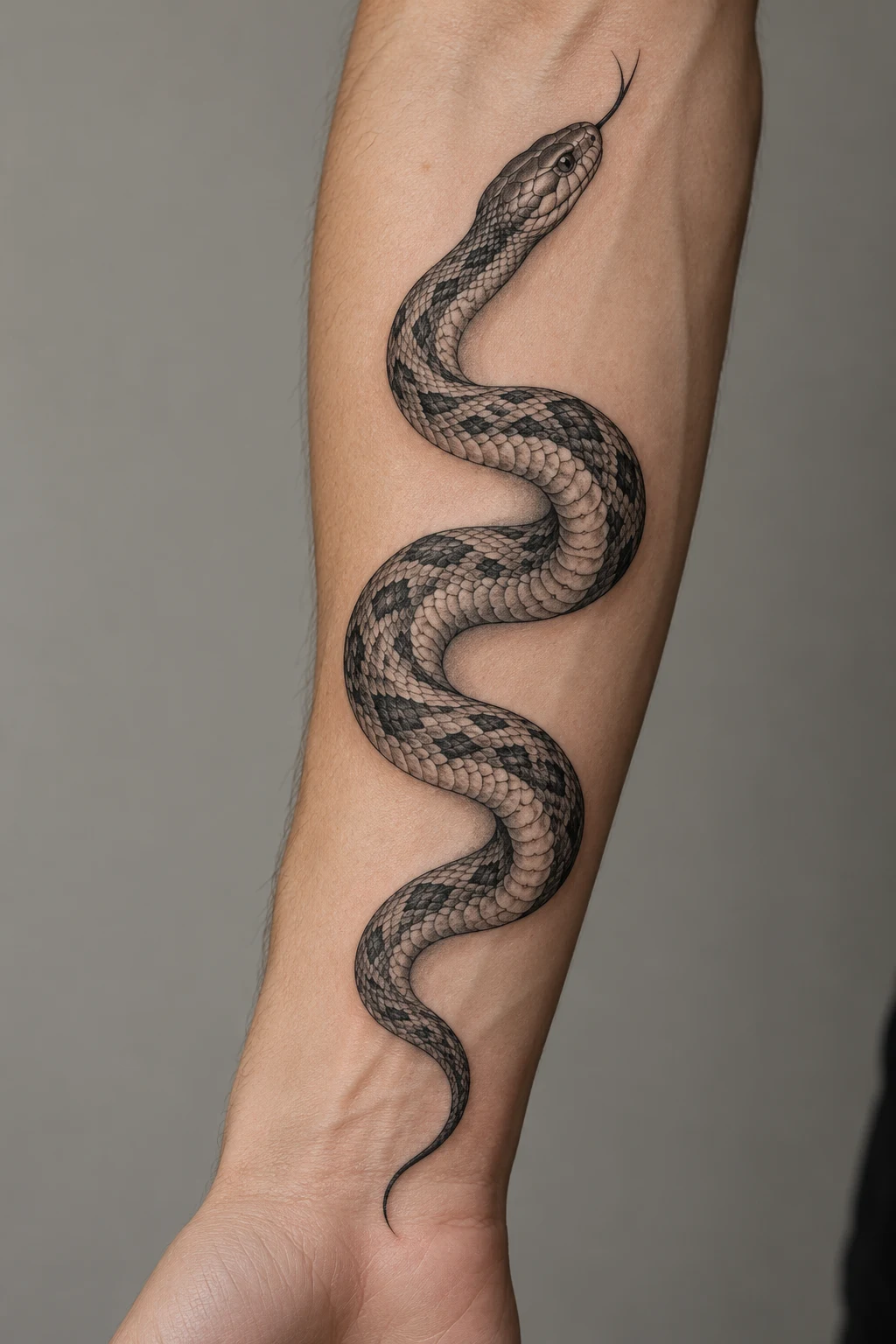
11. Coiling Snake
An elongated S gives this slender snake a flowing shape down the inner forearm. Selective scale detail adds texture while keeping the curve prominent. Choose this direction if you want a flowing animal composition, then compare a detailed surface with simpler graphic markings.
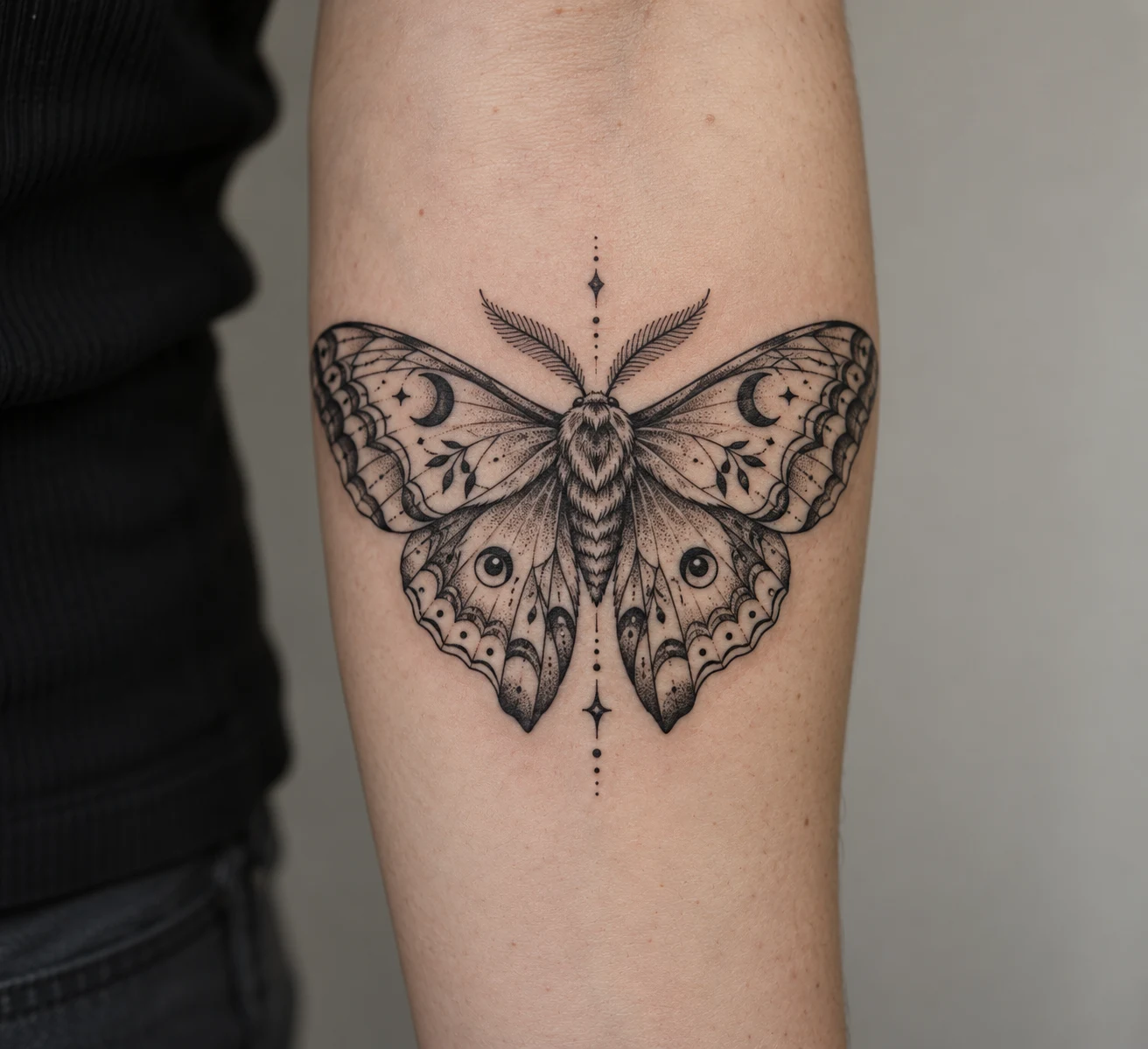
12. Symmetrical Moth
Spread wings create a balanced silhouette across the middle of the forearm. Patterned wing sections offer detail within a contained shape. Delicate markings keep the design open, while dark wing panels give it more visual weight.
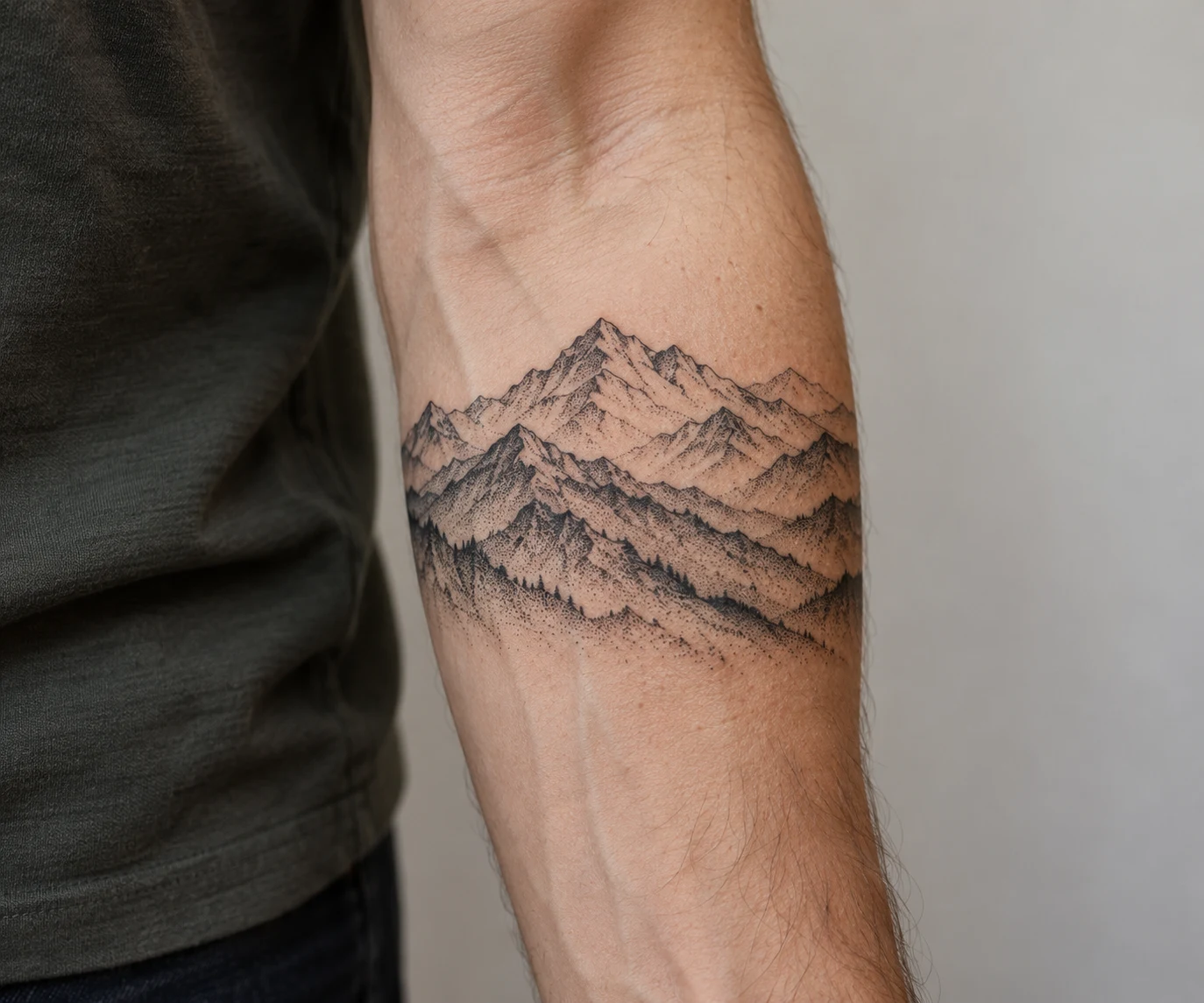
13. Mountain Ridge
Overlapping peaks and restrained stippled shading create a narrow landscape across the arm. For scenery in a compact composition, use a particular mountain range as a reference if the location matters, or choose an imagined skyline.
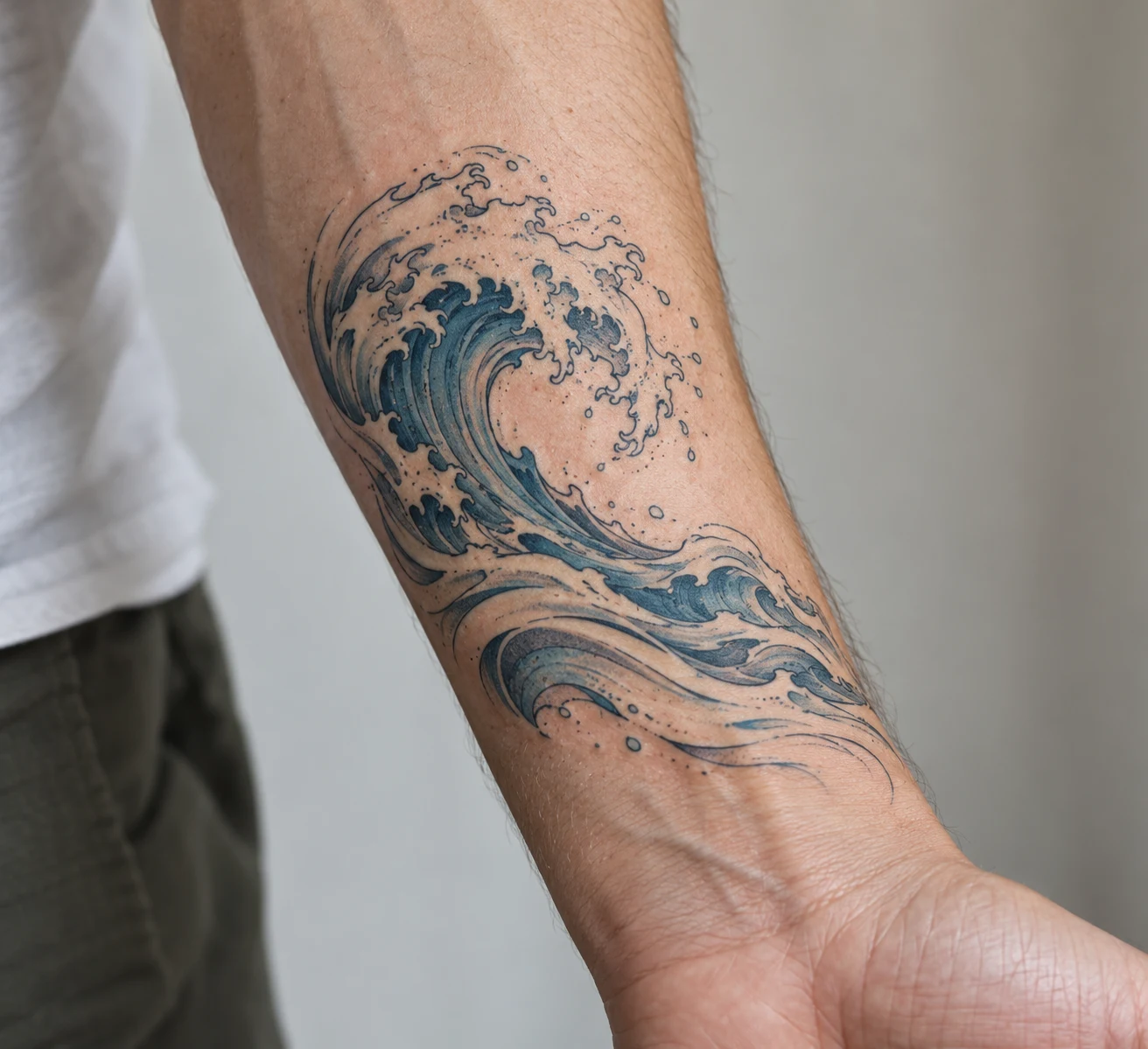
14. Single Ocean Wave
One curling wave combines a defined crest with sparse blue accents on the lower forearm. Its rounded movement offers a different feel from angular peaks. Keep the blue limited for a small color accent, or explore black ink alone.
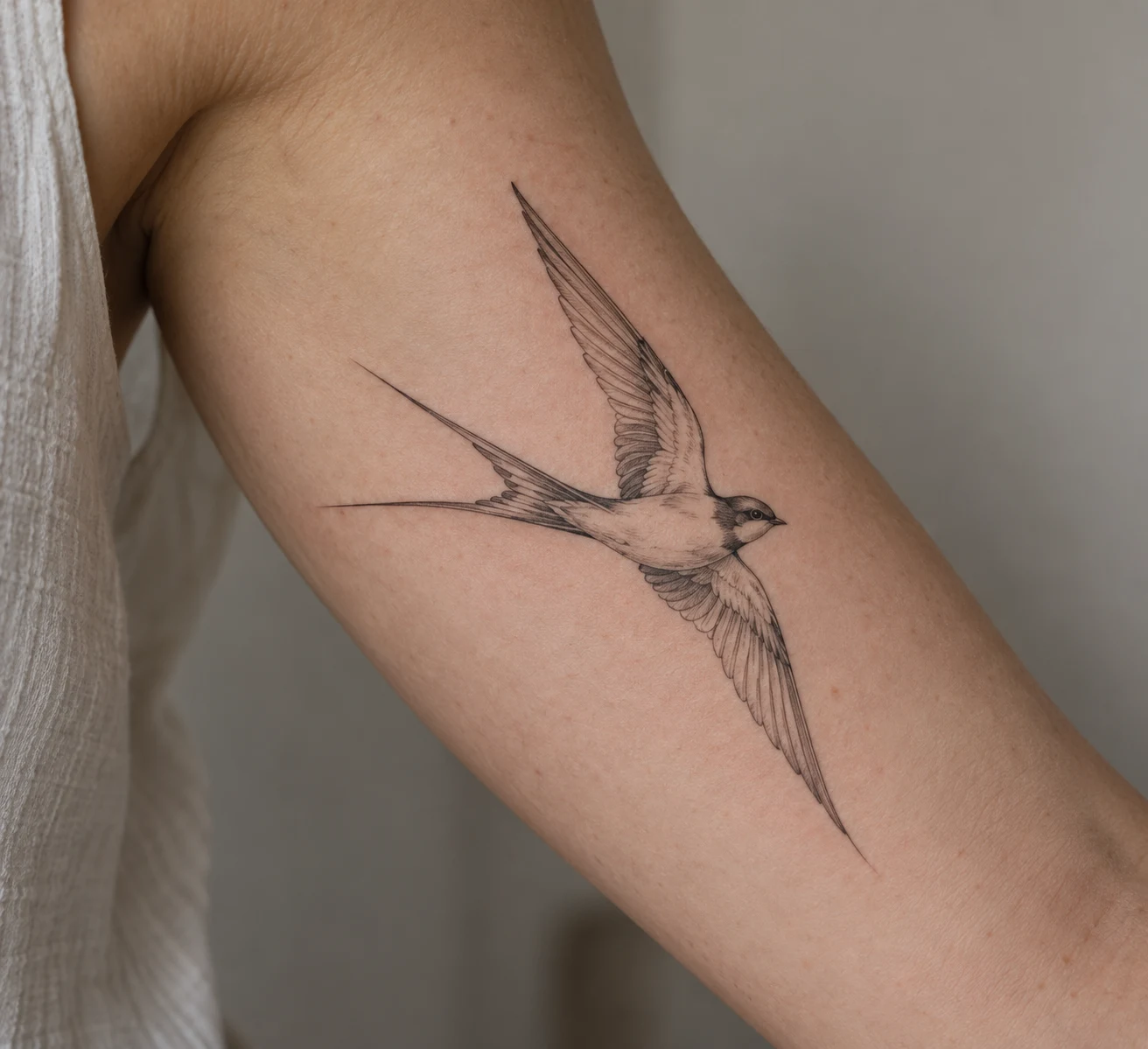
15. Fine Line Swallow
Open wings and a forked tail give this small bird a sense of movement along the upper inner forearm. It suits a light illustrative approach. Compare the bird pointing toward the wrist and toward the elbow before choosing its orientation.
Bold Blackwork and Decorative Designs
These concepts emphasize stronger outlines, larger dark areas, or decorative structure. Compare the amount of ink coverage you want alongside the subject.
16. Blackwork Dagger
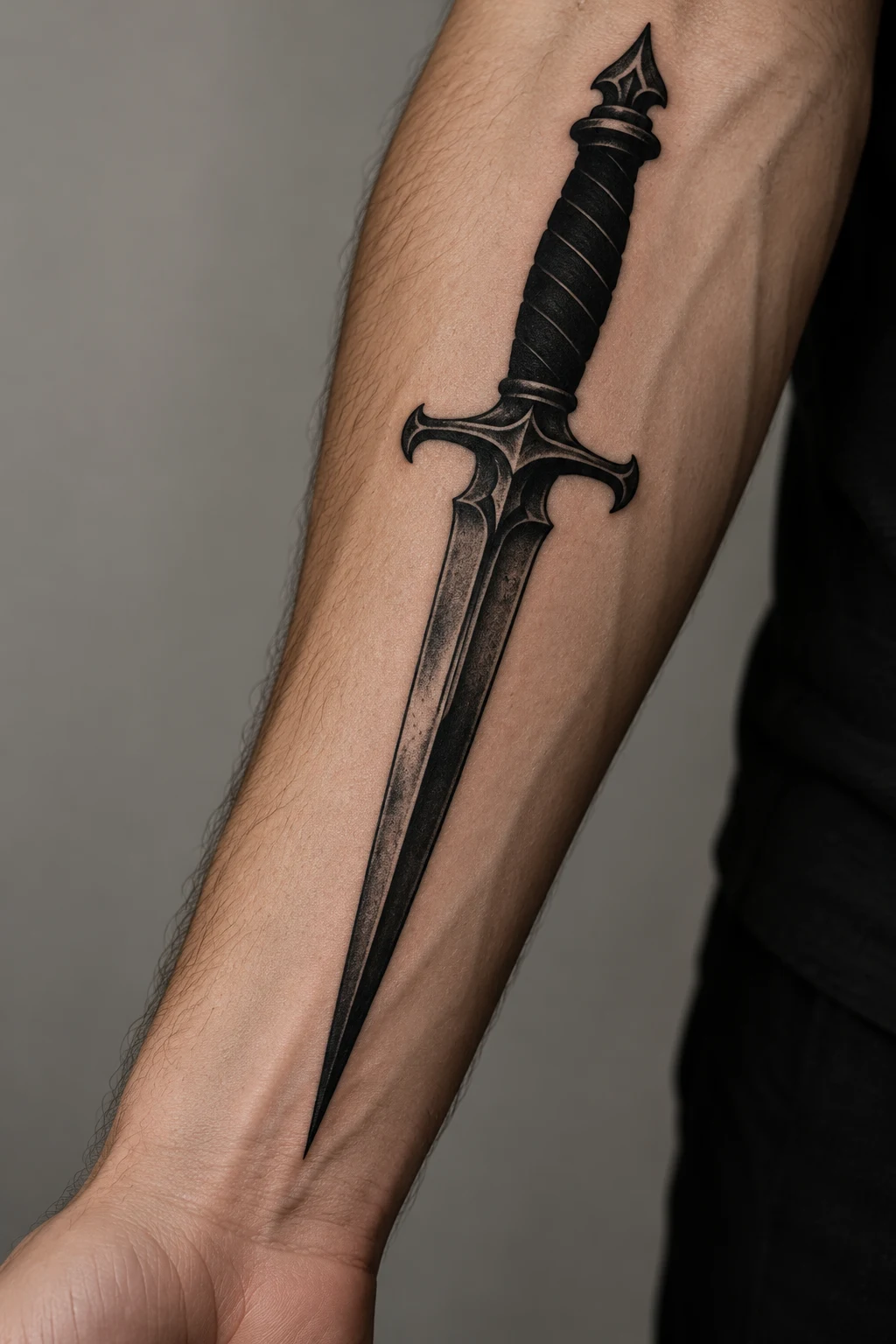
A straight dagger places a strong central axis along the forearm, pairing a dark handle with a clearly outlined blade. A plain grip keeps attention on the silhouette; a decorative guard adds detail near the upper end.
17. Ornamental Pendant
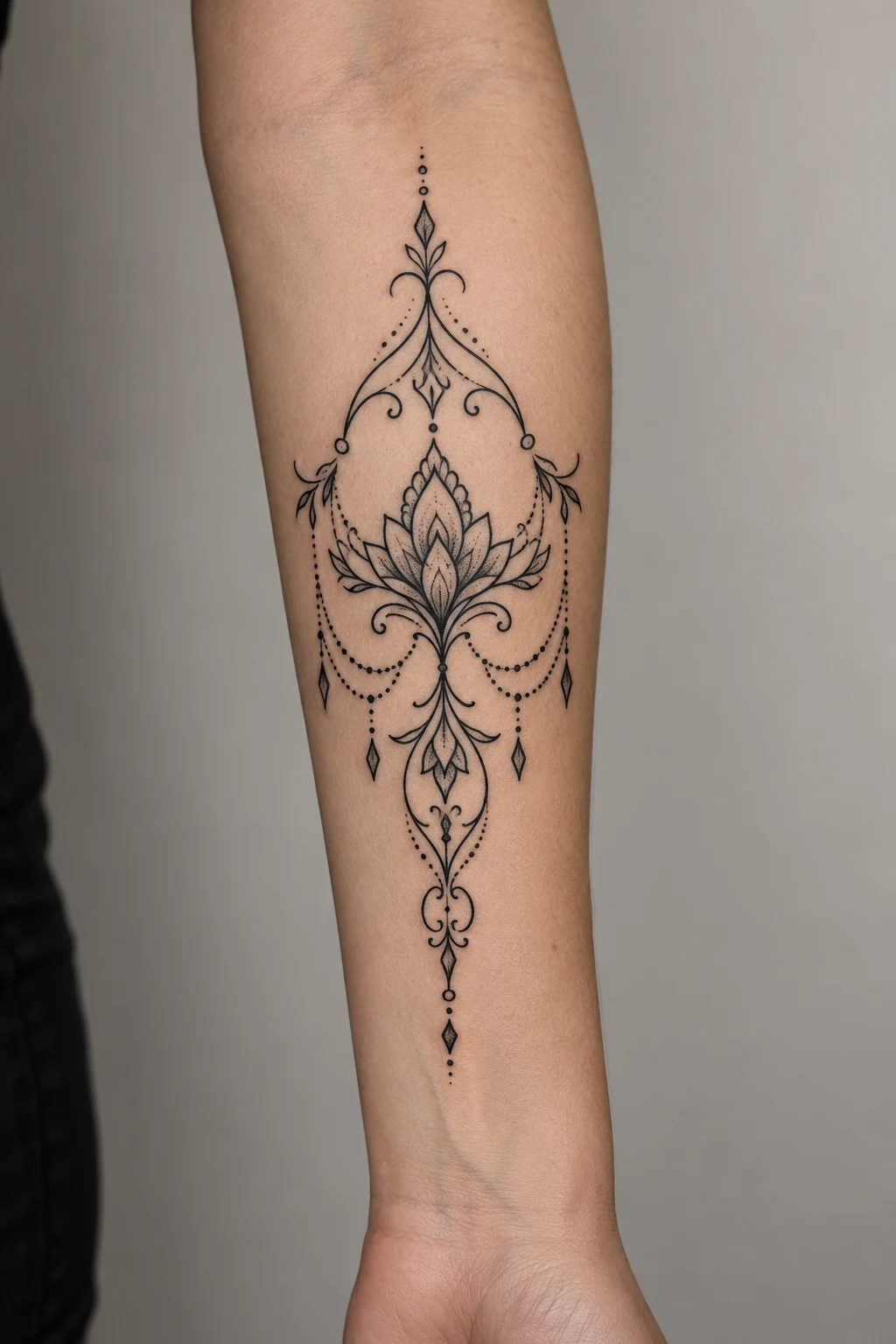
Scalloped edges and a tapered lower point define this symmetrical pendant shape. Choose open, lacy spacing or a denser pattern depending on your taste. Develop an original ornament with your artist, considering cultural context if specific traditional motifs enter the design.
18. Negative Space Lightning Bolt
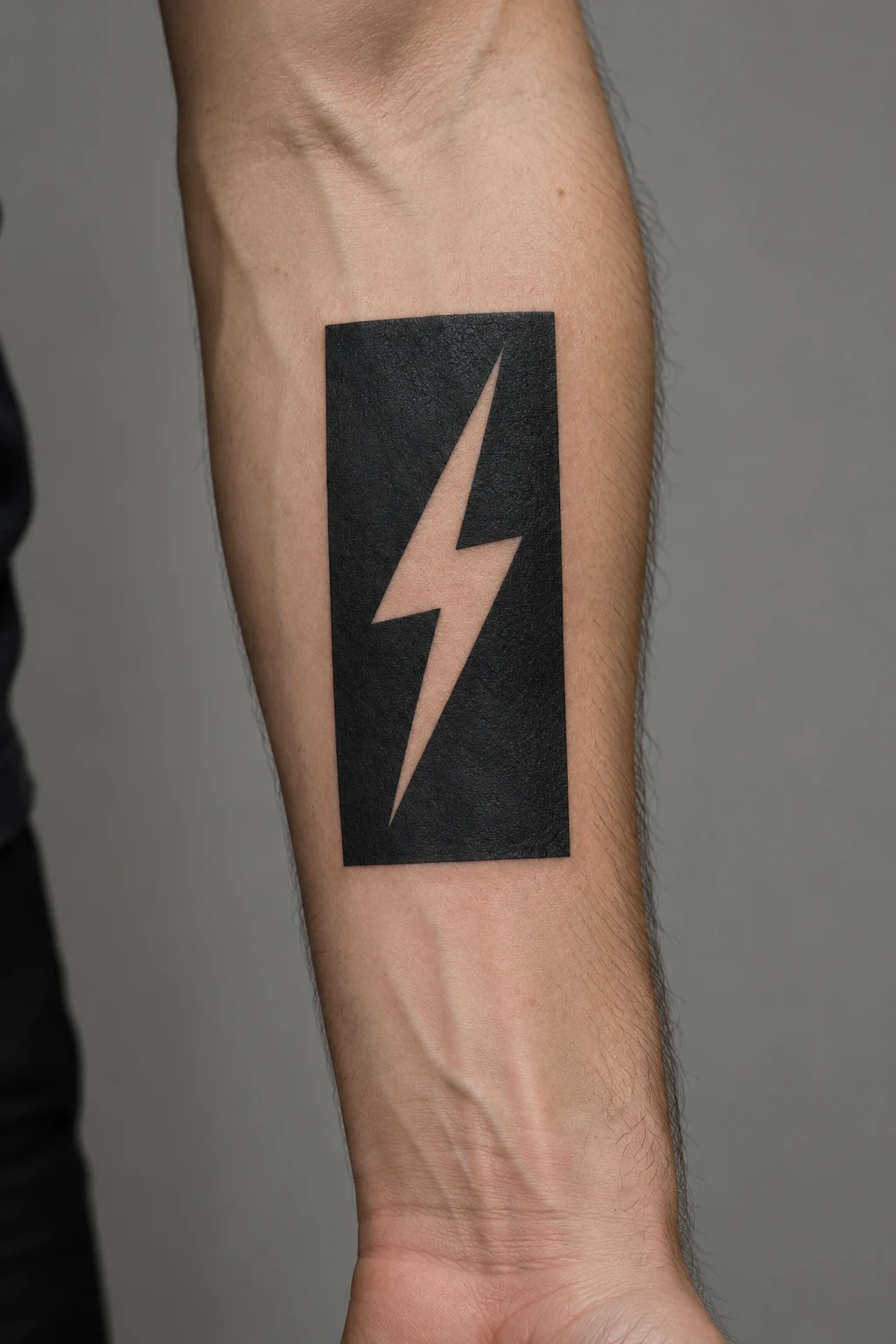
Within a compact solid black panel, an uninked lightning bolt forms the central shape. The surrounding black defines the bolt, making the panel’s proportions part of the design. Compare narrow and broad versions to decide how much dark coverage you prefer.
19. Traditional Style Tiger Head
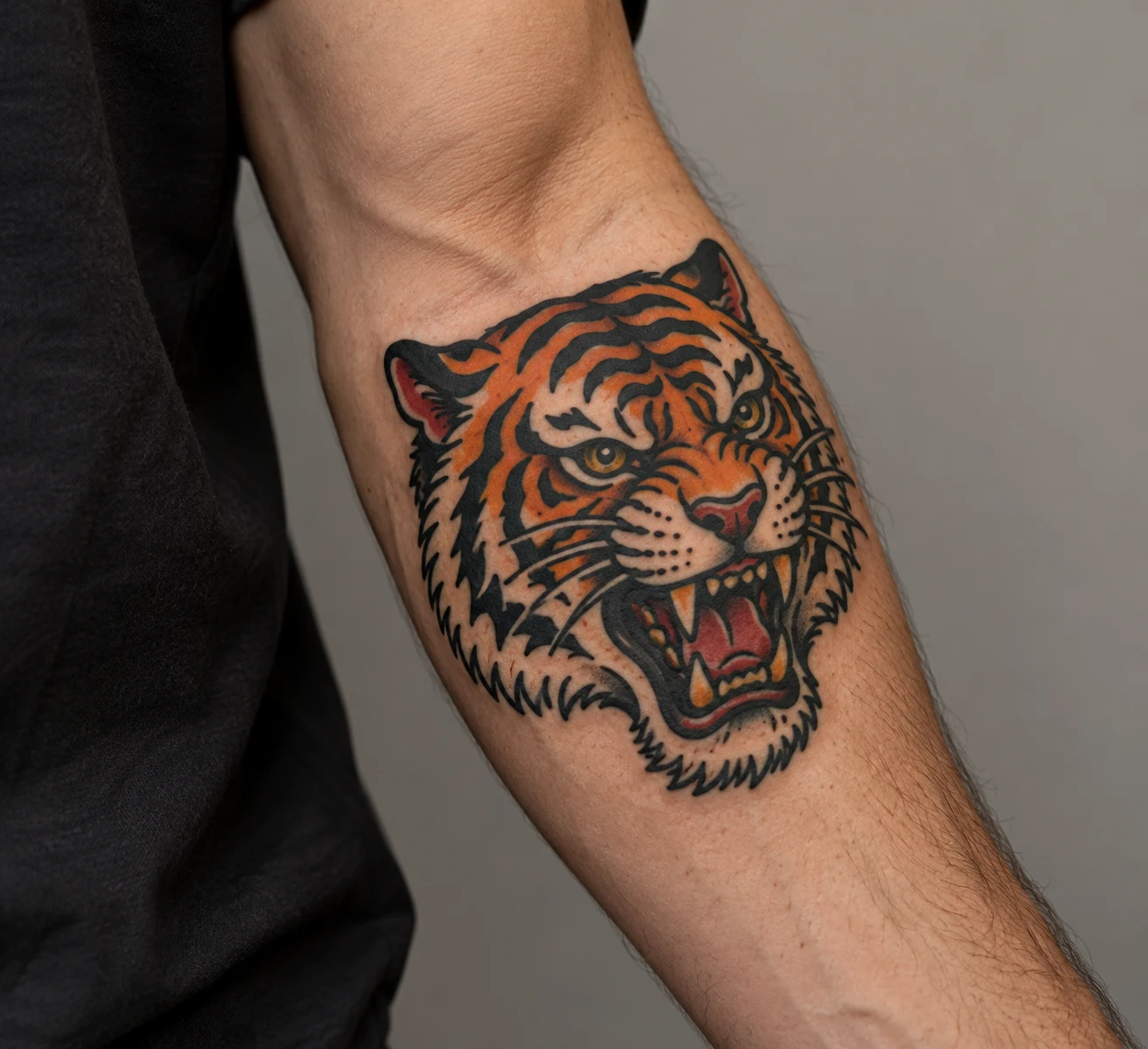
A front-facing tiger head uses bold outlines, black stripes, and restrained orange accents on the upper forearm. The compact animal portrait has strong visual weight. Choose color for the orange contrast or discuss an entirely black ink interpretation.
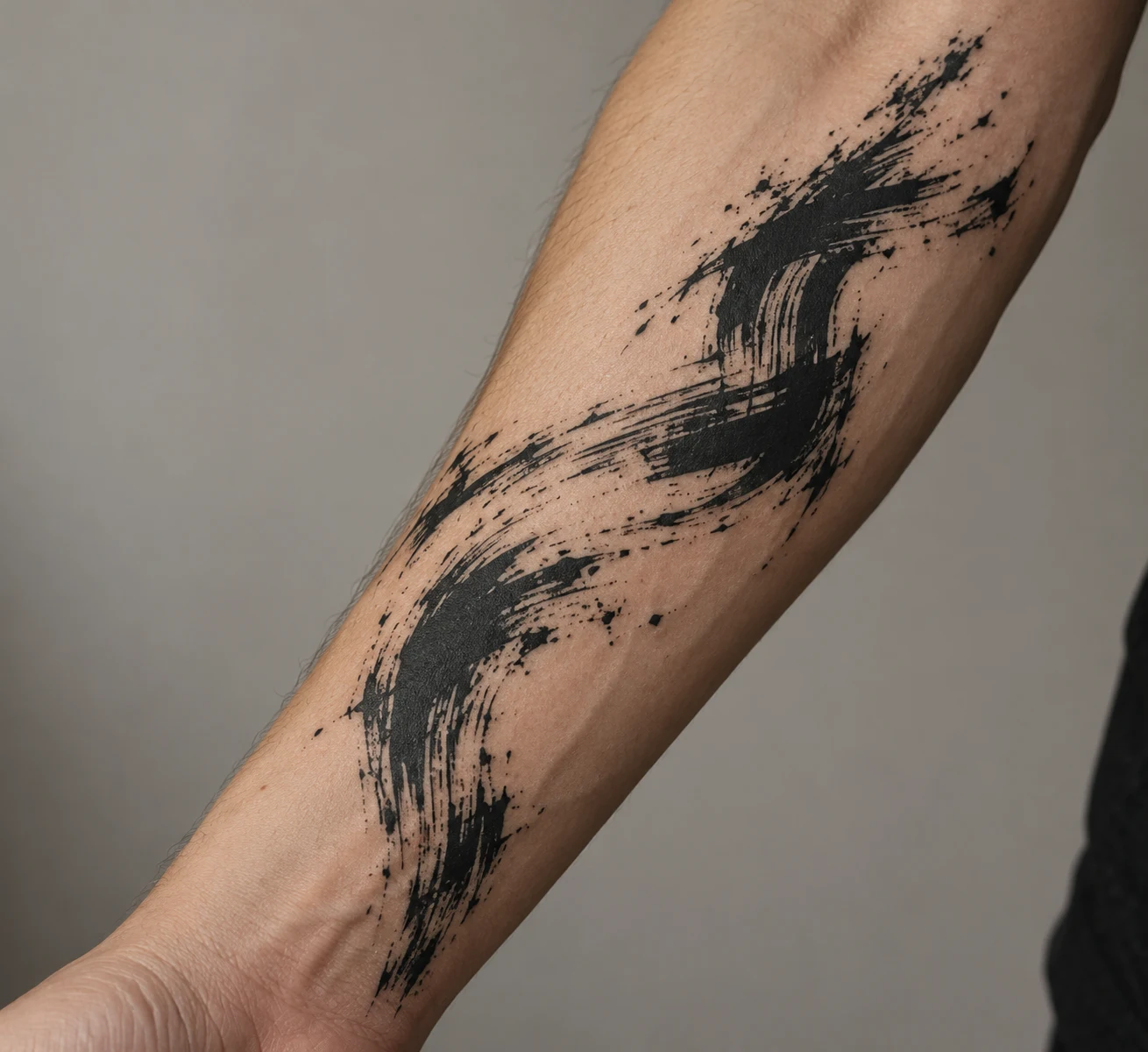
20. Abstract Brushstroke
Broken edges give texture to a broad black stroke sweeping diagonally across the arm. If you’re drawn to gesture rather than a recognizable subject, keep it to one compact mark or extend the sweep across more of the forearm.
Shortlist two or three ideas by comparing subject, color, ink coverage, and orientation. Bring those references to an artist and identify exactly what you like about each. Then review a custom composition and its stencil placement with your arm relaxed and turned.

