
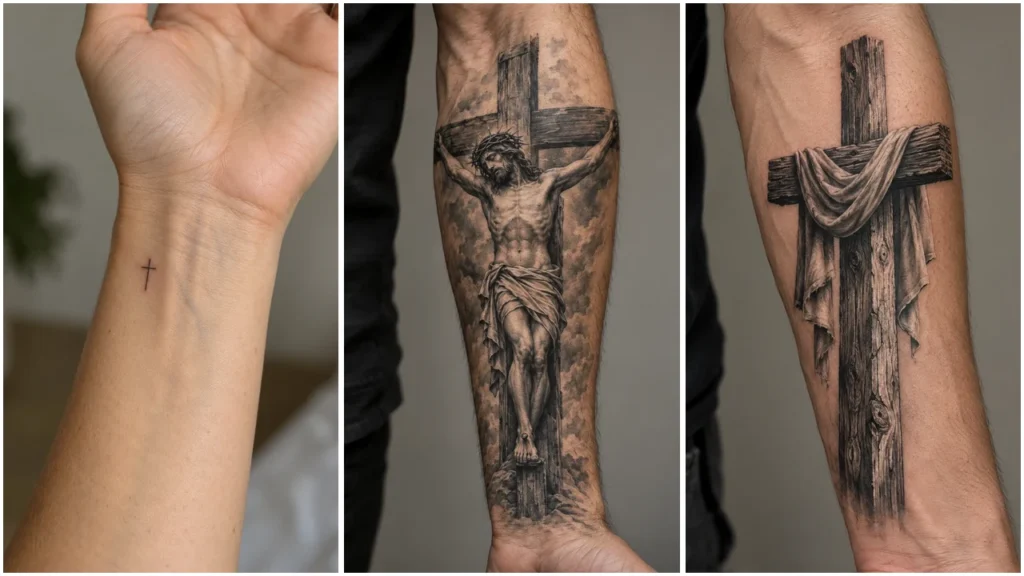
Cross forearm tattoos can be a small pair of intersecting lines near the wrist, a solid black silhouette or a detailed religious composition. These 20 ideas compare simple, decorative, devotional and illustrated designs so you can narrow down the shape and placement you prefer.
The planned images are tattoo concepts, not client results. Compare how much space each composition uses, which details draw your eye and whether you prefer the inner or outer forearm.
Simple Cross Forearm Tattoos
Start with the cross itself: line weight, fill and proportions give these five designs different visual characters.
1. Small Fine Line Cross
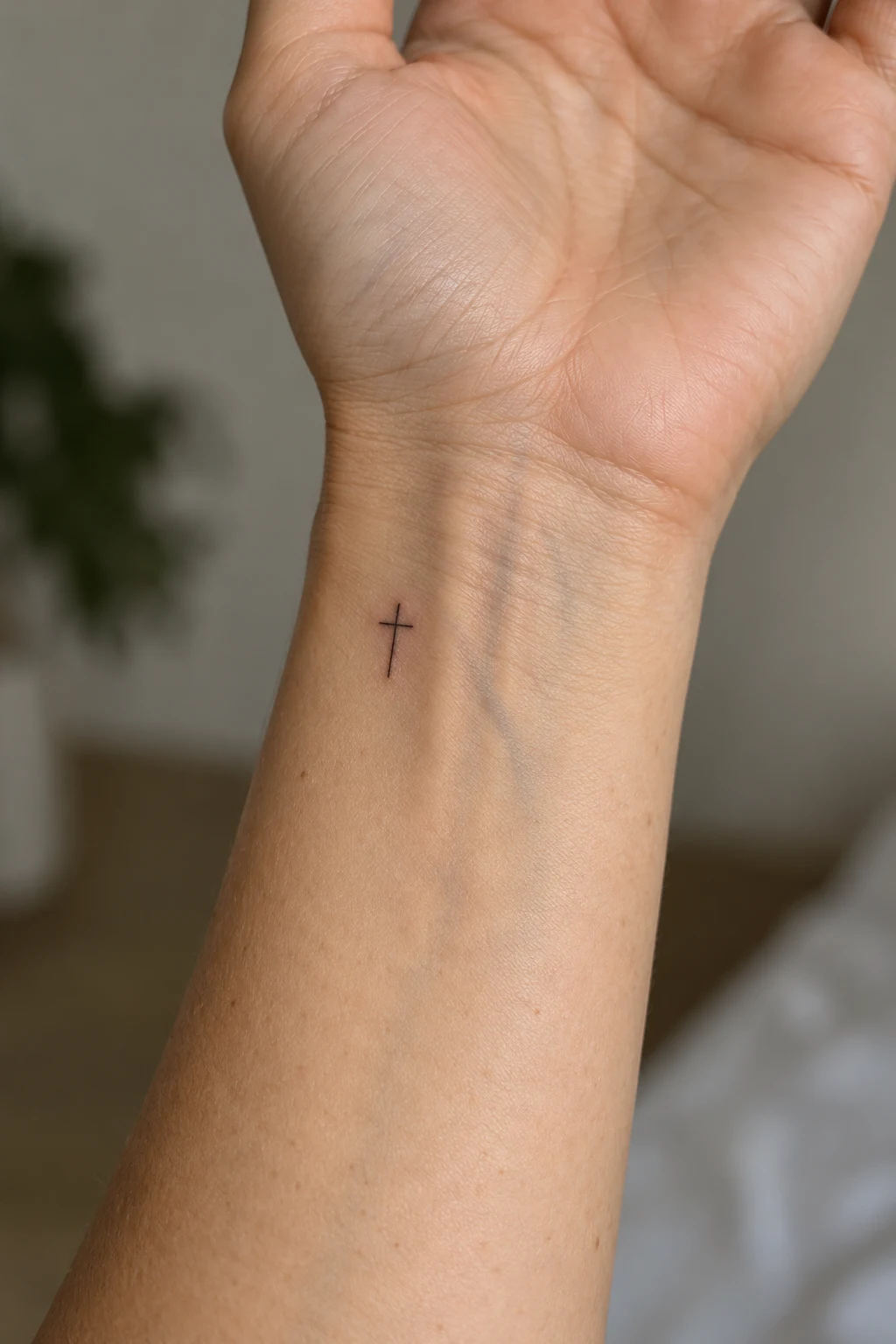
Two fine strokes form a compact cross above the wrist.
If you’re drawn to minimal detail and plenty of bare skin, consider the space around the cross as part of the design when choosing its position.
2. Solid Black Cross
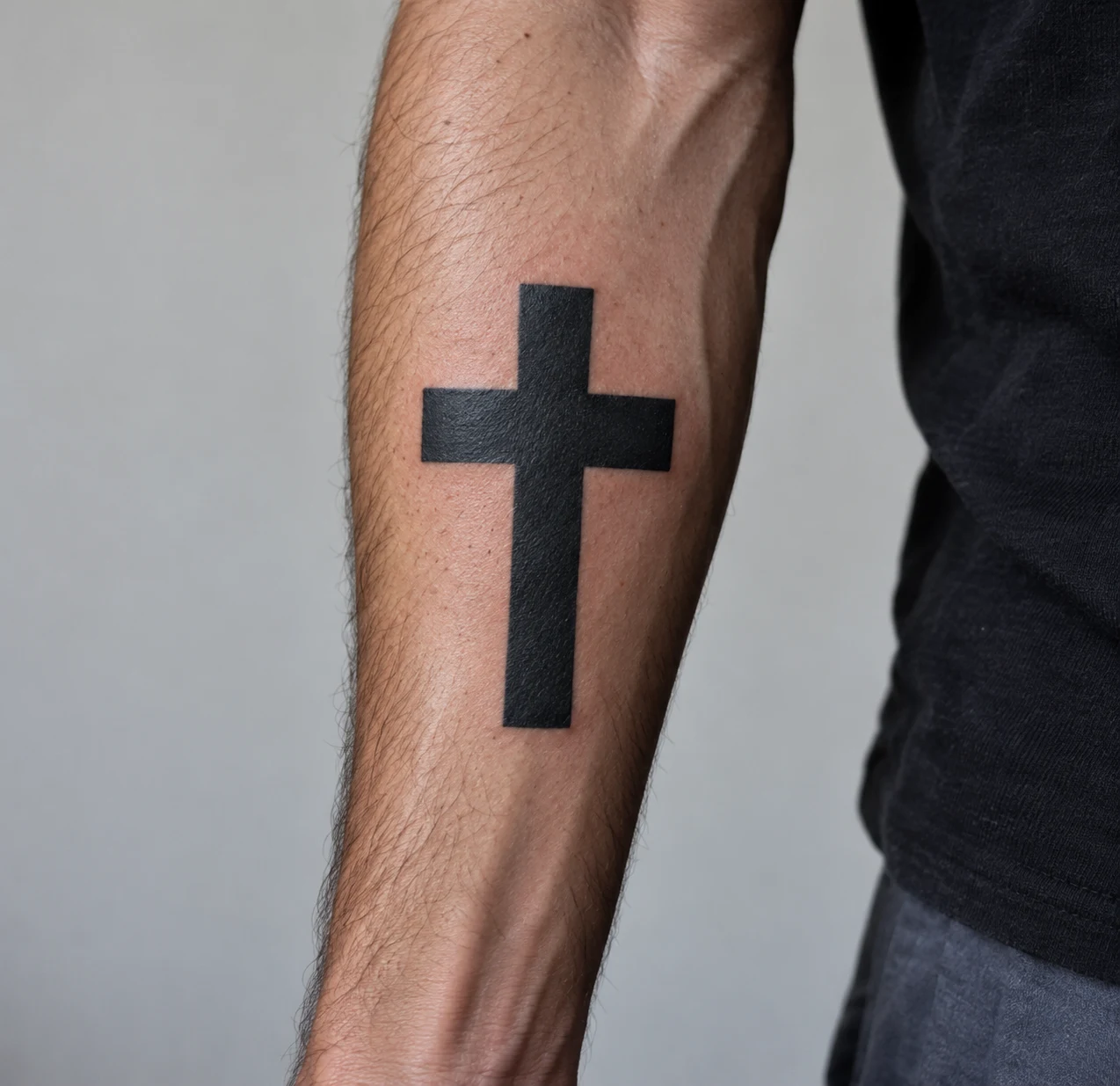
A filled cross puts the emphasis on its silhouette.
Choose this direction if you like a clearly defined shape without decoration. Compare narrow and broad arms in the stencil; their proportions change how substantial the cross looks.
3. Open Outline Cross
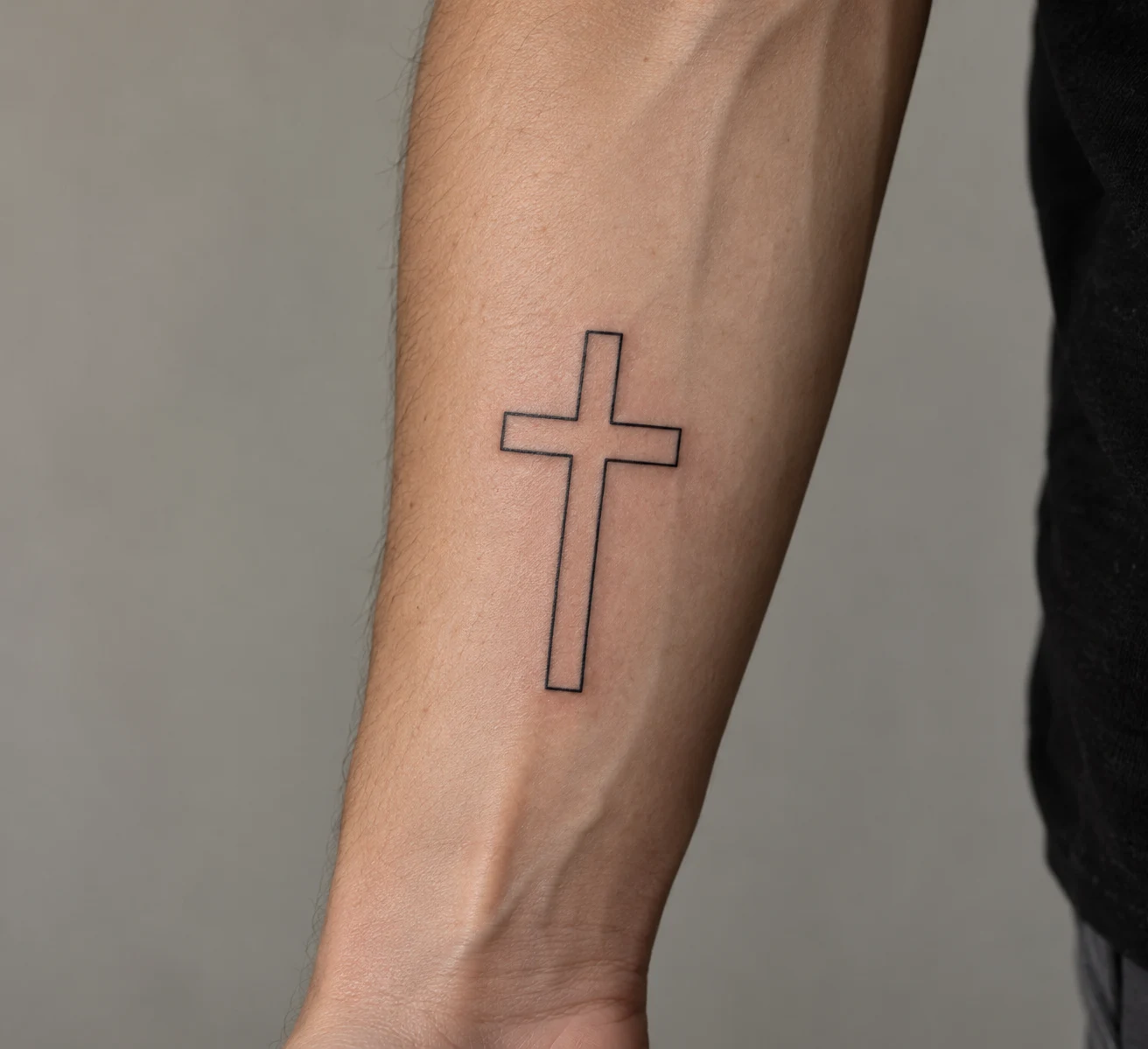
An enclosed outline leaves the center unfilled.
Unlike the two strokes of the fine line version, this design defines the cross’s full perimeter. It suits readers who want a distinct shape while keeping visible skin inside it.
4. Long, Narrow Cross
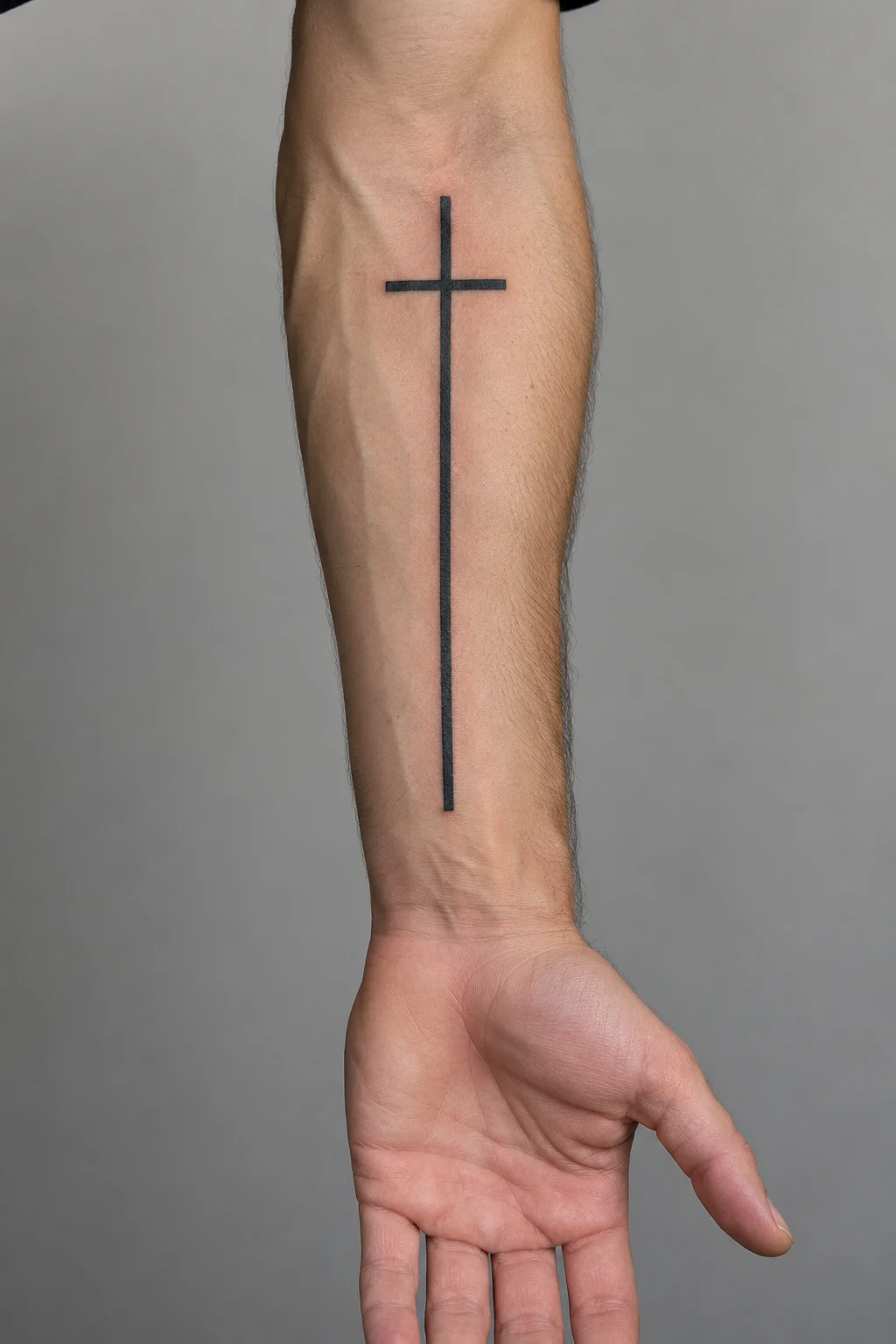
An elongated stem follows the forearm toward the elbow.
This spare composition uses length as its main feature. Decide where the stem should begin and end, then compare its placement with your arm relaxed and turned outward.
5. Brushstroke Cross
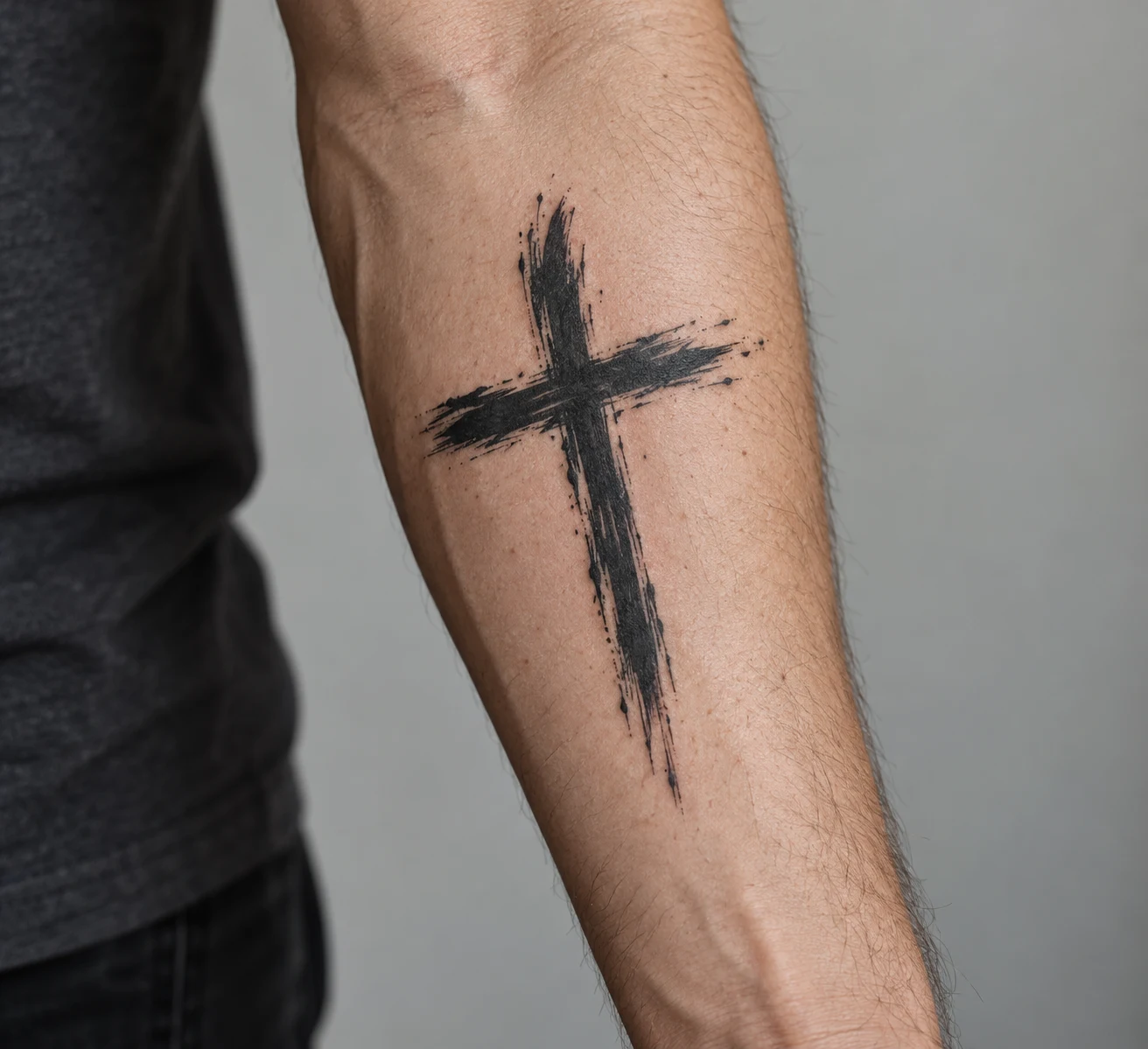
Uneven strokes give the cross a brush-painted appearance.
Tapered ends and broken edges suit an expressive design. Choose whether you prefer broad, rough marks or a more restrained shape with just a few irregular edges.
Decorative Cross Designs
These options introduce contrast, pattern and color. Choose the decorative feature you want to notice first.
6. Negative Space Cross
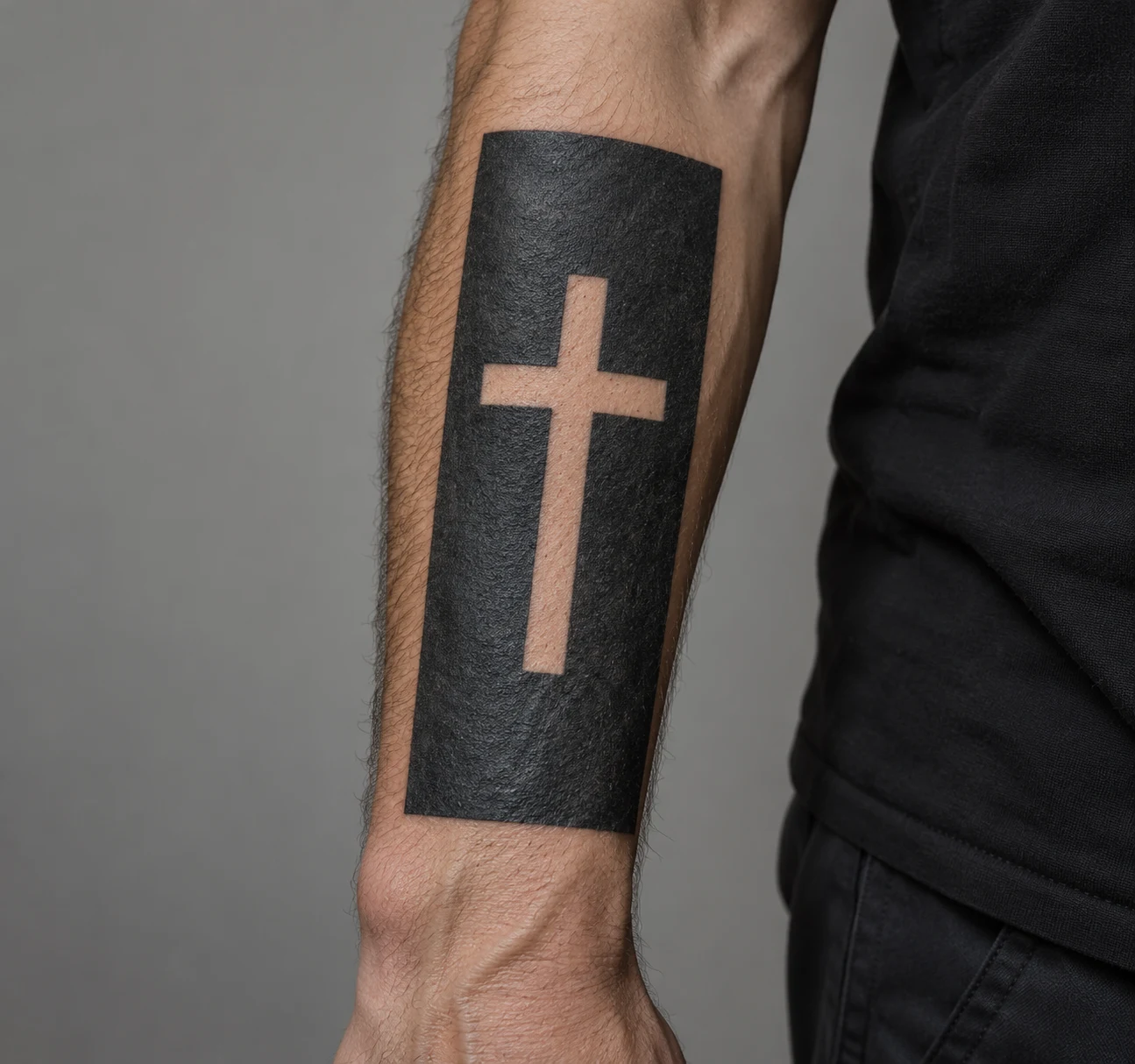
A bare-skin cross sits inside a dark rectangular panel.
The surrounding ink gives this design its contrast. It suits someone comfortable with a larger filled area; compare the panel’s width as carefully as the cross itself.
7. Geometric Dotwork Cross
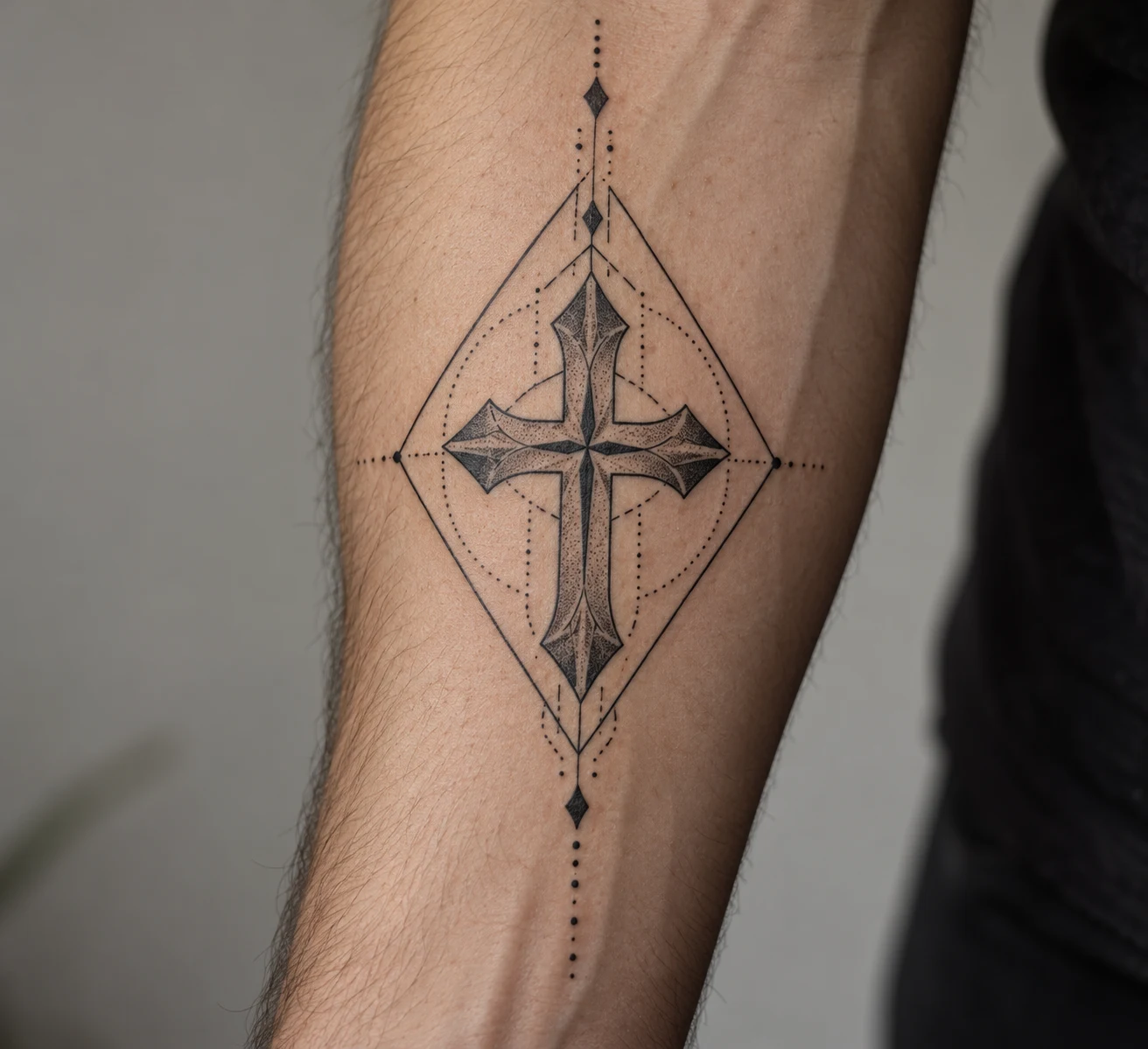
A diamond outline and graduated dots frame the cross.
Choose this for symmetry and patterned shading. A narrow frame emphasizes the forearm’s length, while a wider diamond gives the surrounding geometry more presence.
8. Ornamental Cross
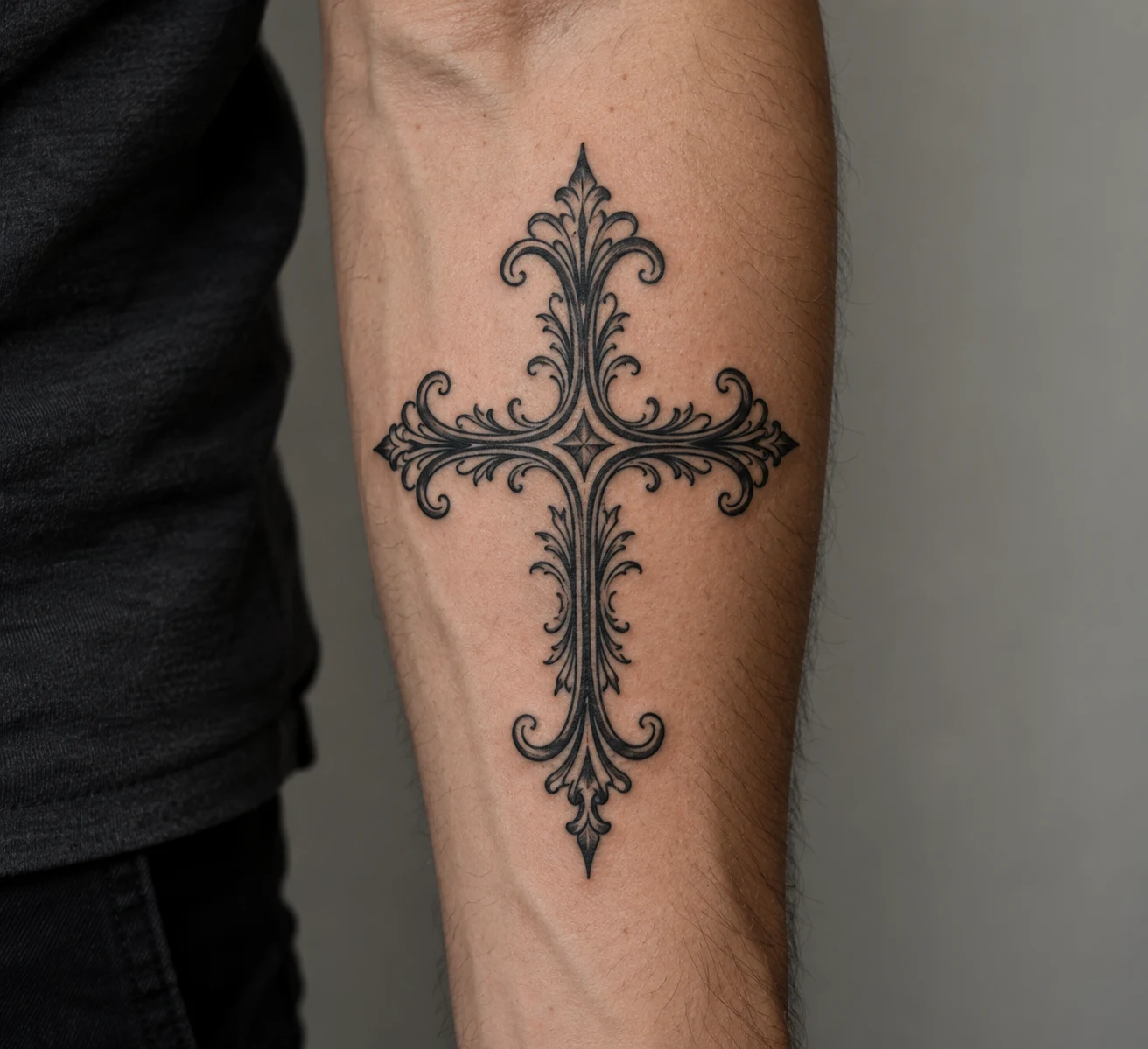
Curled flourishes decorate the ends of the cross.
The ornament stays within one central shape. Select a few larger curls or more intricate flourishes, then ask your artist how much separation the details need at your chosen size.
9. Celtic Cross With Knotwork
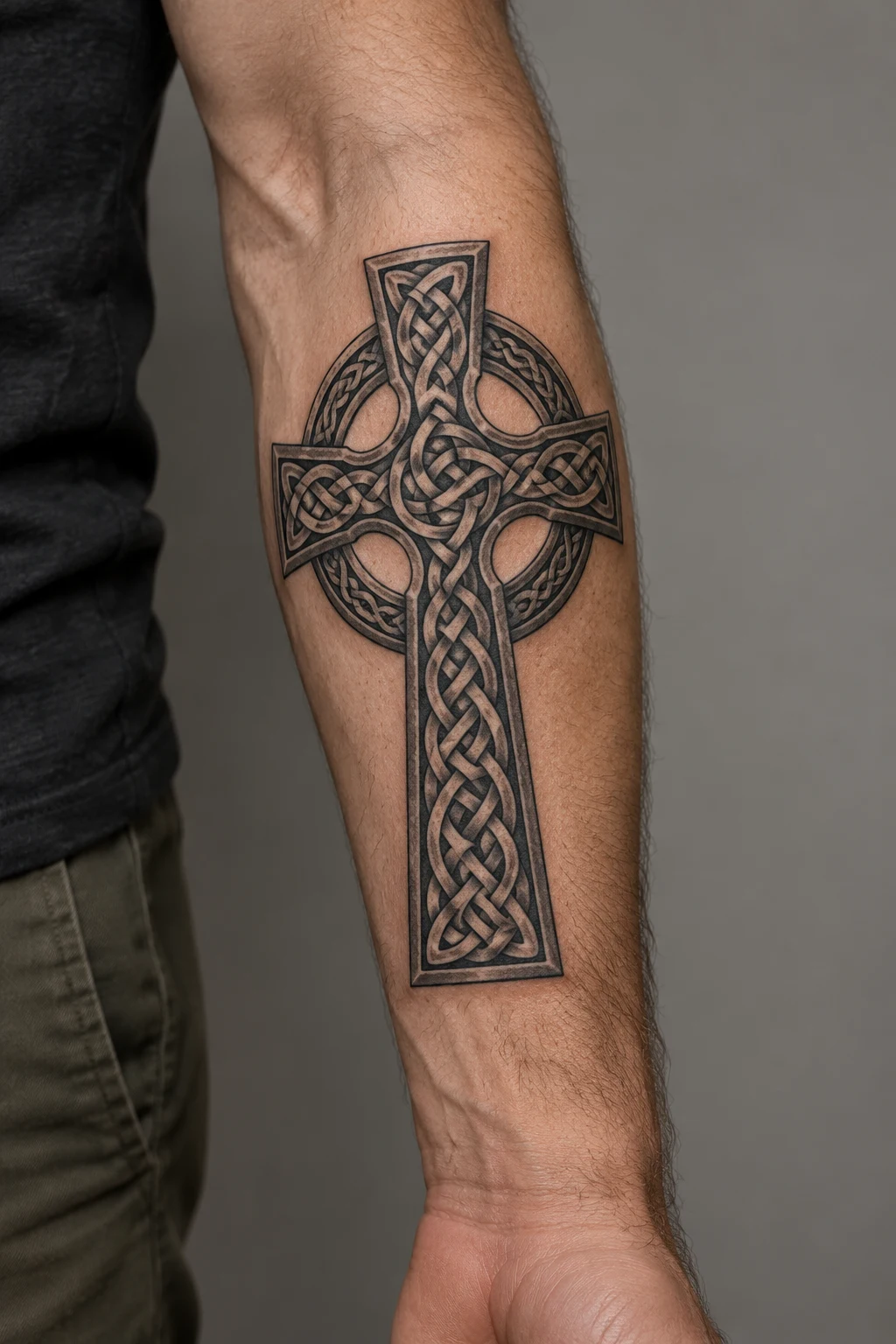
A circular ring surrounds the intersection, with knotwork inside the cross.
The ring creates a distinct outline, while the knotwork adds woven detail. If cultural or religious significance guides your choice, discuss the specific reference you want rather than assuming every variation carries the same meaning.
10. Cross With Watercolor Accents
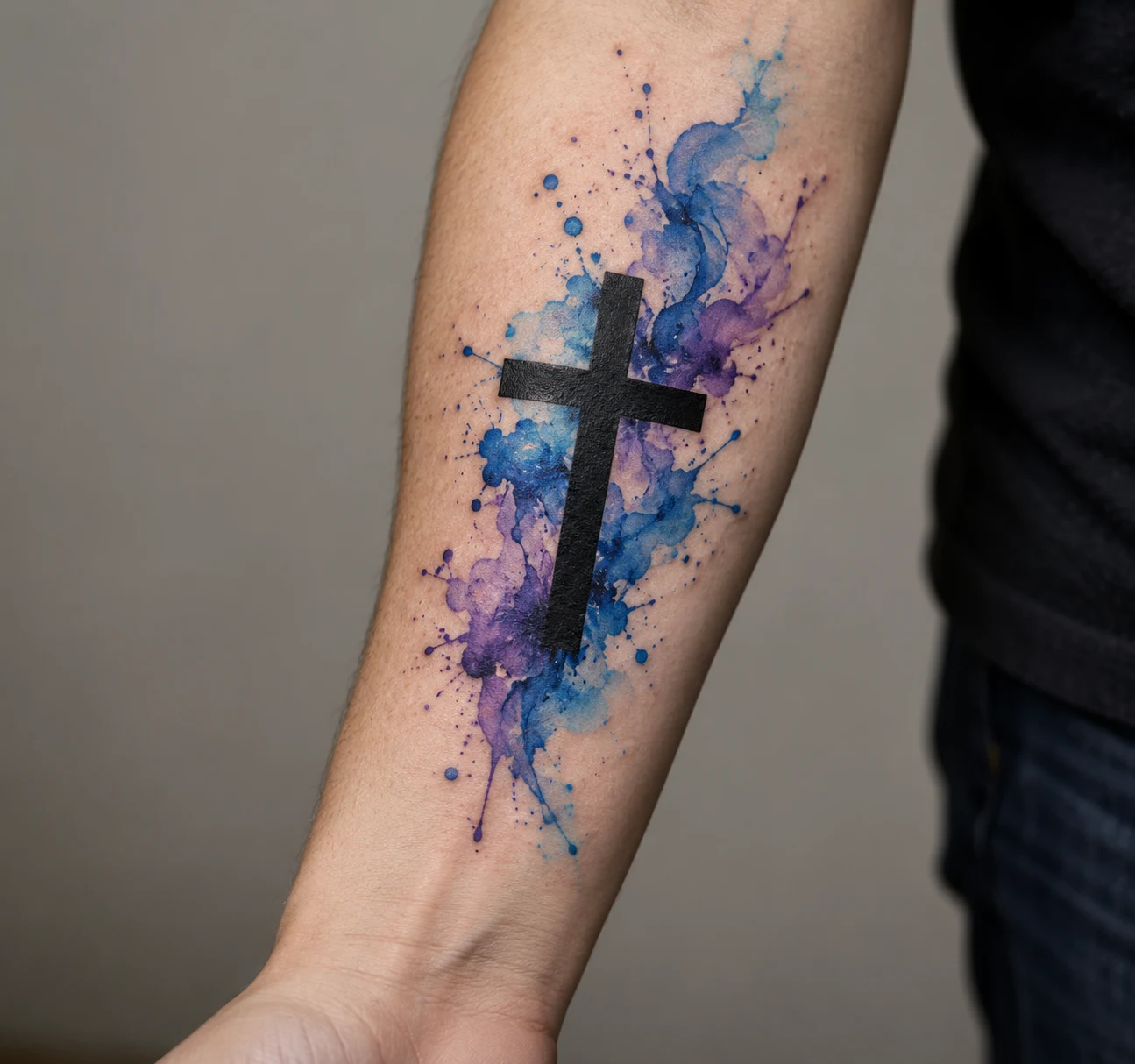
Blue and violet washes surround a crisp black cross.
If you’d like color alongside a clear central shape, decide whether the washes should stay close to the cross or spread into a broader, asymmetrical composition.
Religious and Personal Cross Compositions
Choose devotional details that reflect your own beliefs or dedication. A figure, beads or lettering also changes the space the composition needs.
11. Crucifix With a Figure of Jesus
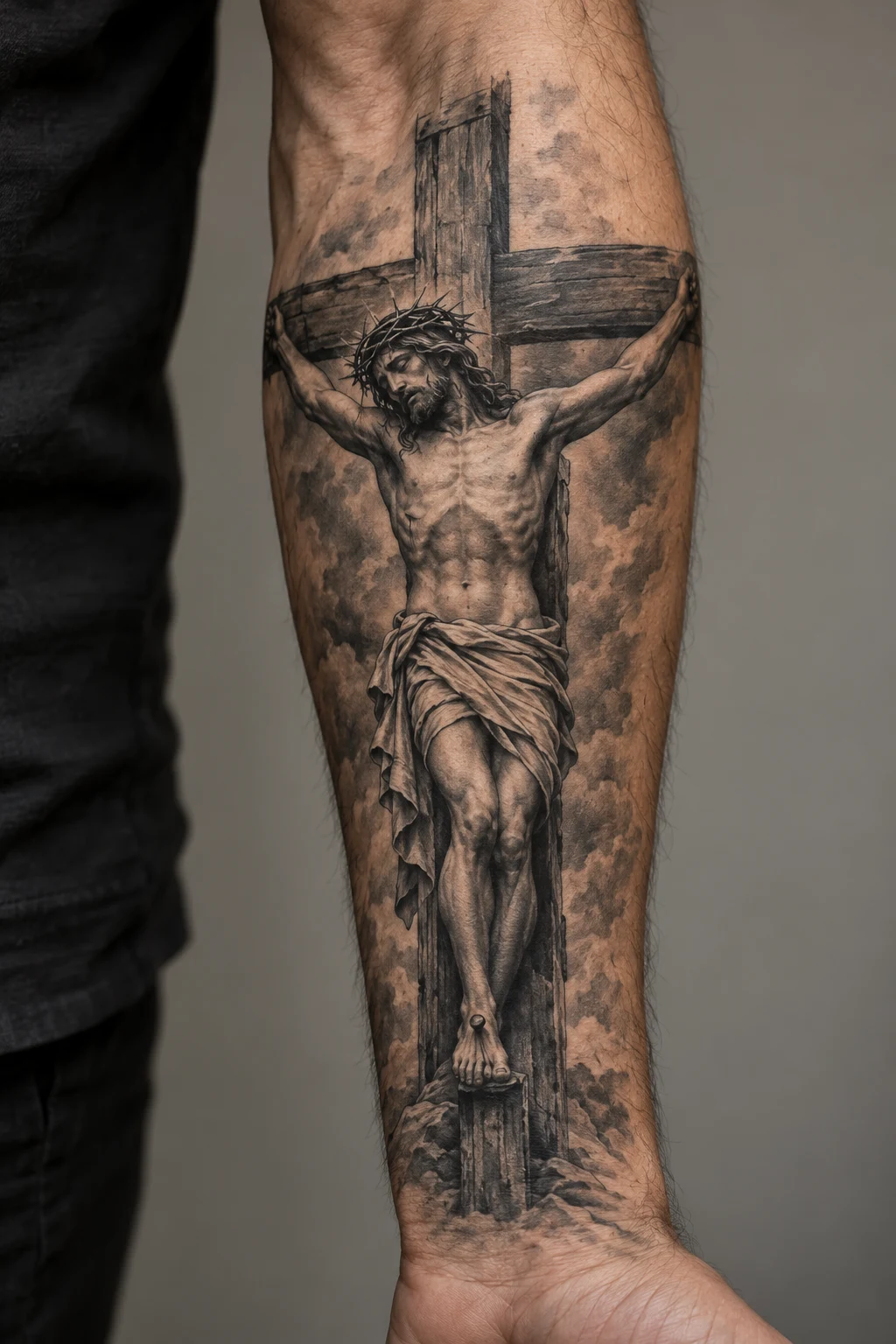
A black and grey crucifix includes the figure of Jesus.
Choose this when that specific depiction matters to you. The figure introduces facial and anatomical detail, so discuss scale before settling on a compact version.
12. Cross With Rosary Beads
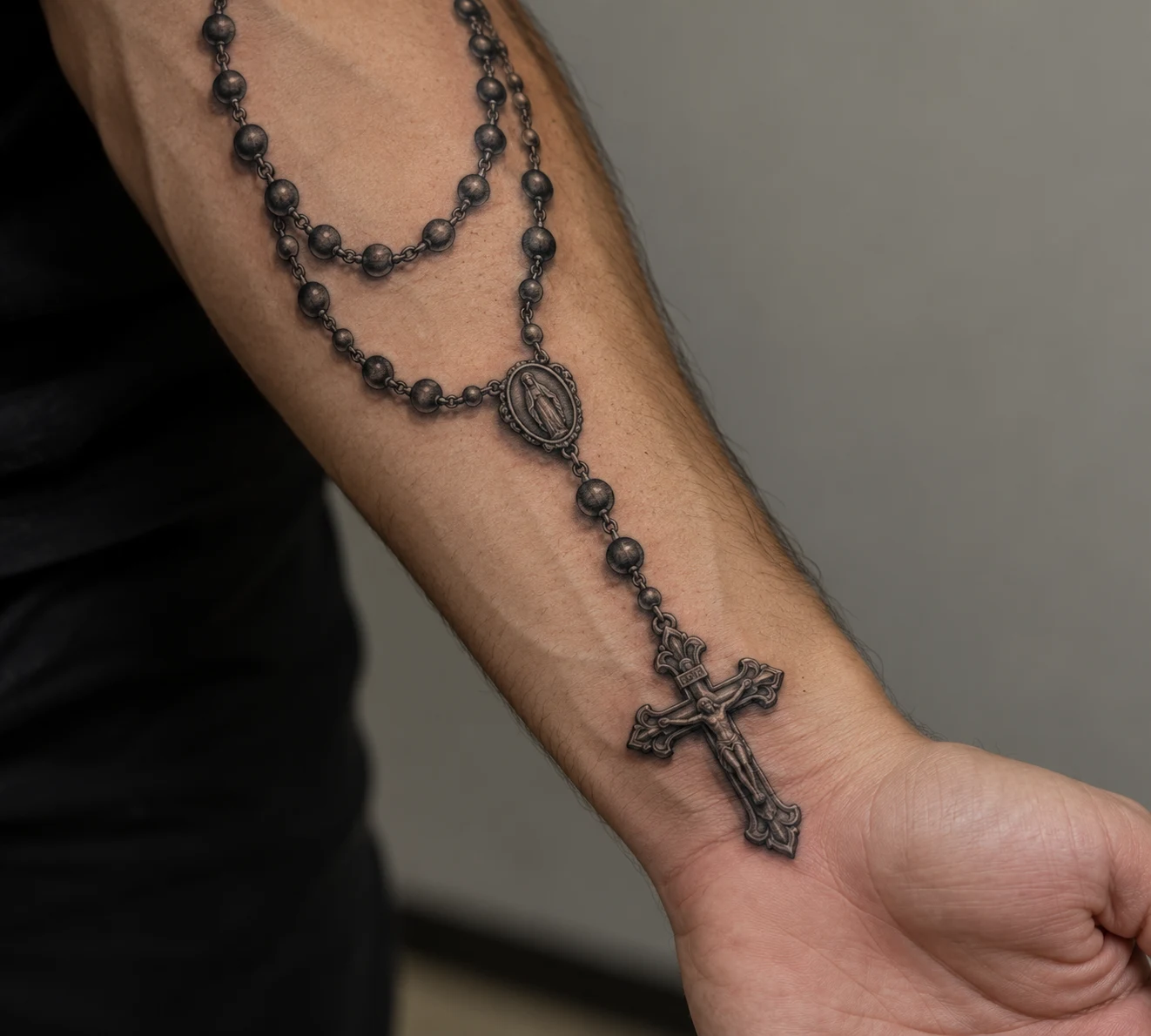
Draped beads lead down to a cross pendant.
The rosary has a Catholic devotional context. For this composition, compare a compact loop with a longer arrangement, keeping the pendant’s position in mind as you turn your forearm.
13. Cross With a Crown of Thorns
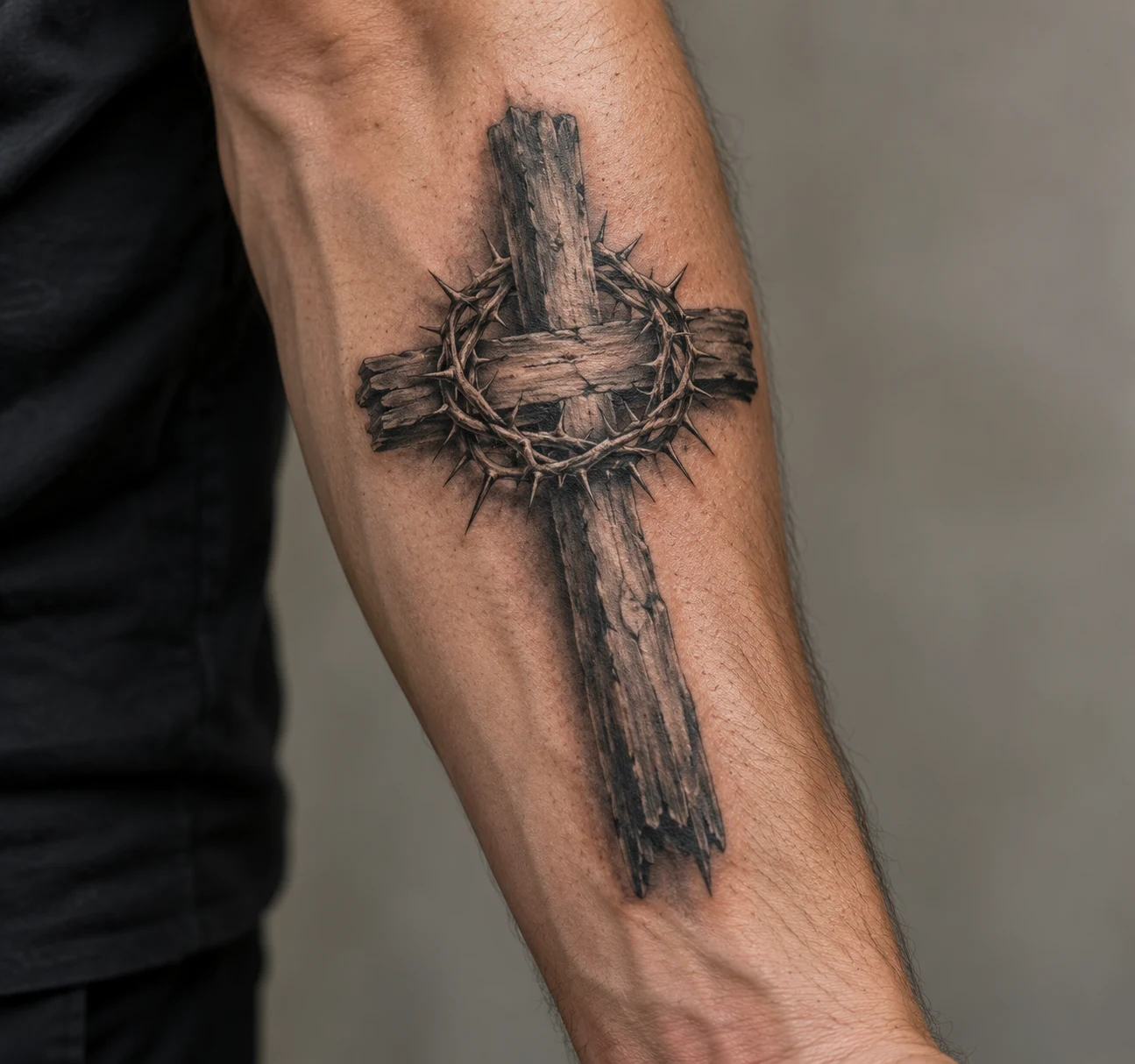
A thorned crown encircles the cross’s intersection.
For readers drawing on imagery of Christ’s Passion, this adds a focused devotional element. Decide whether the thorn pattern should dominate or remain a smaller accent around the beam.
14. Three Crosses on a Hill
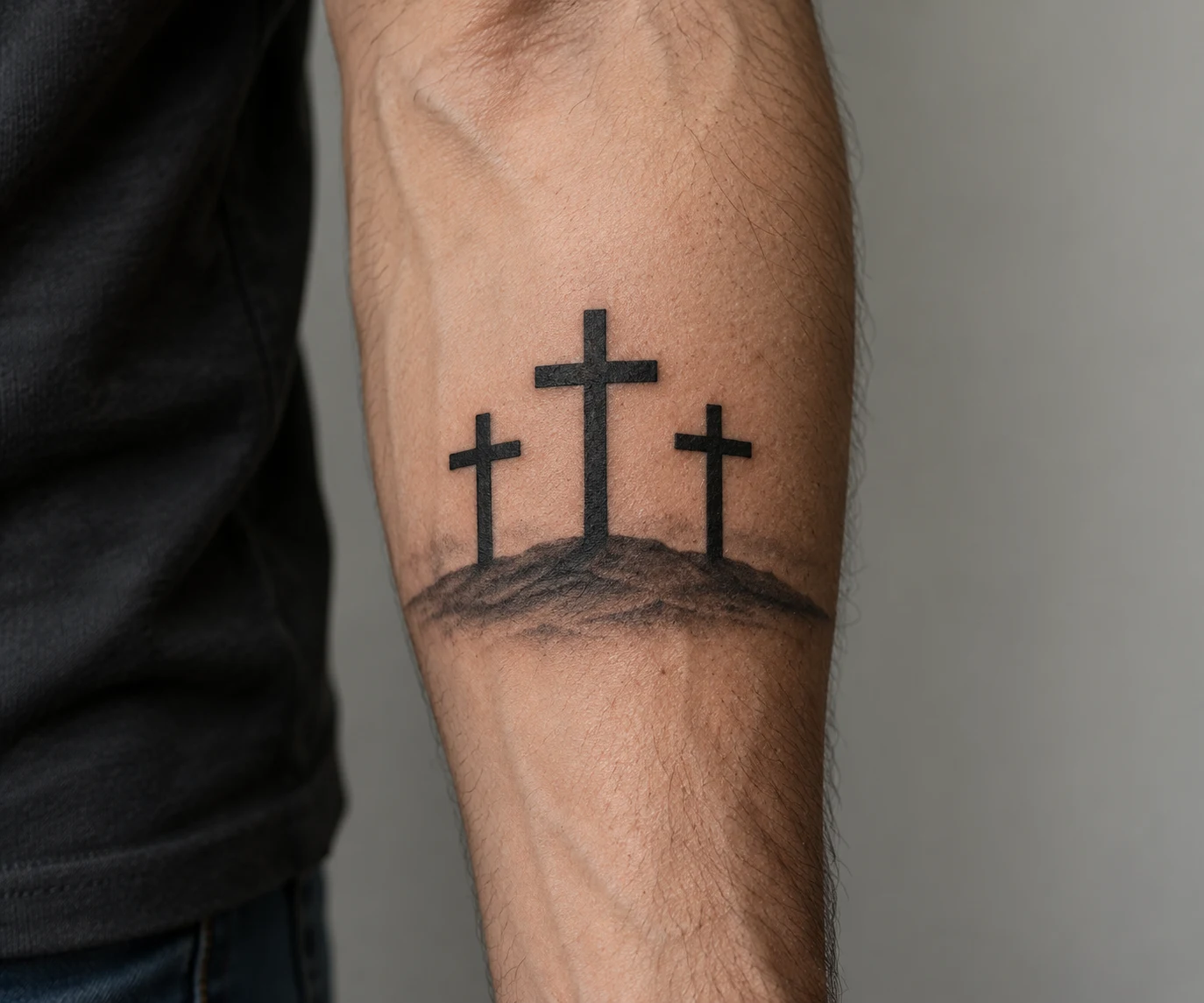
Three silhouettes stand on a low hill, with the central cross taller.
This suits a preference for a small scene. Keep the hill shallow for a compact composition, or allow more space beneath the crosses for shaded ground.
15. Cross With a Memorial Name and Date
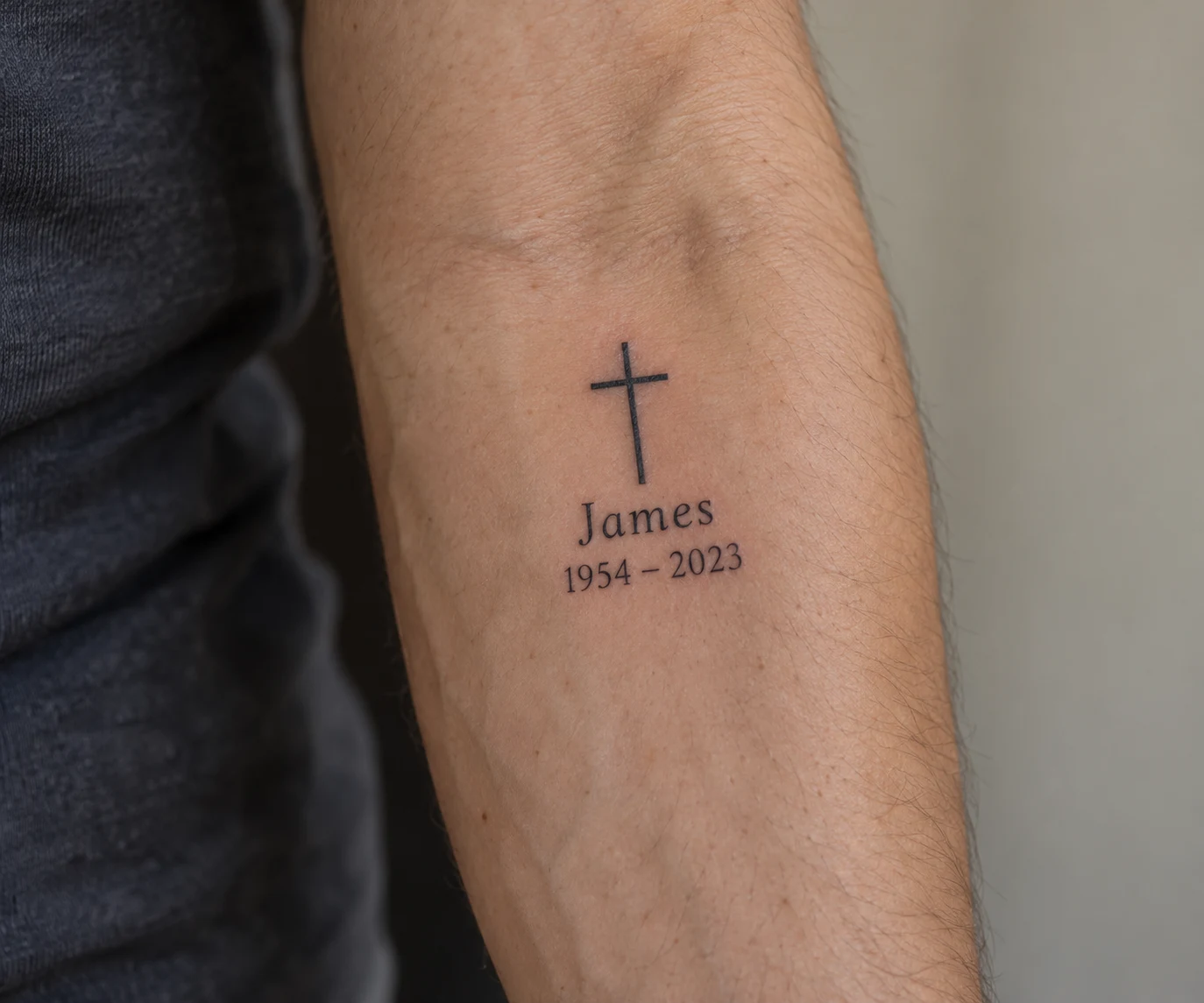
A simple cross sits above a name and meaningful date.
For a personal dedication, start with the exact lettering. Check spelling, date format and spacing on the stencil, and give the text enough room to remain distinct from the cross.
Illustrative Cross Pairings
These designs pair the cross with another subject. Decide which element should lead the composition without assigning every flower, bird or wing a fixed meaning.
16. Cross With a Rose
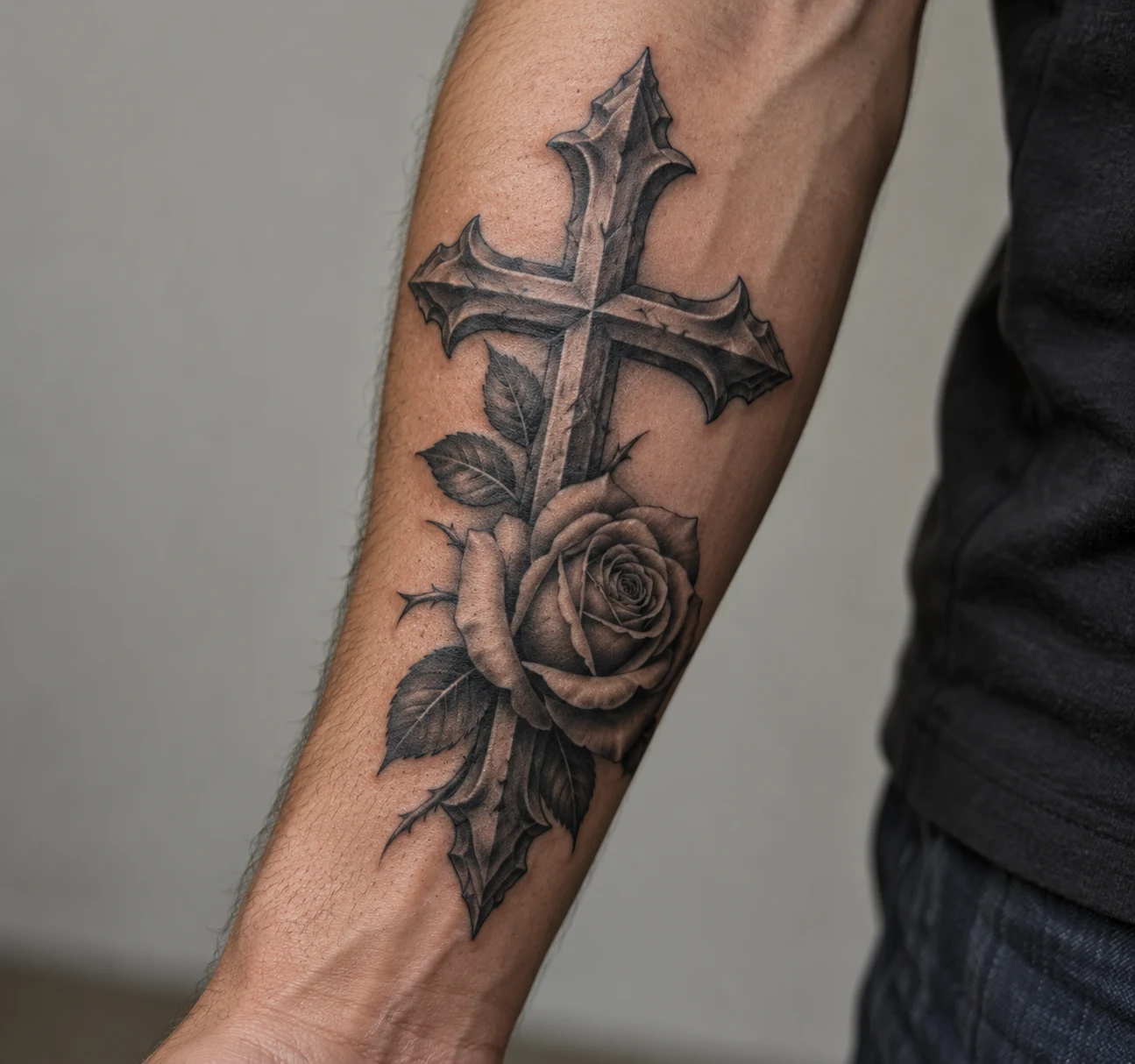
One shaded rose overlaps the cross’s lower stem.
Choose this for a substantial floral focal point. Keeping the bloom lower leaves the upper cross visible; increasing the overlap gives the flower more visual weight.
17. Cross With an Olive Branch
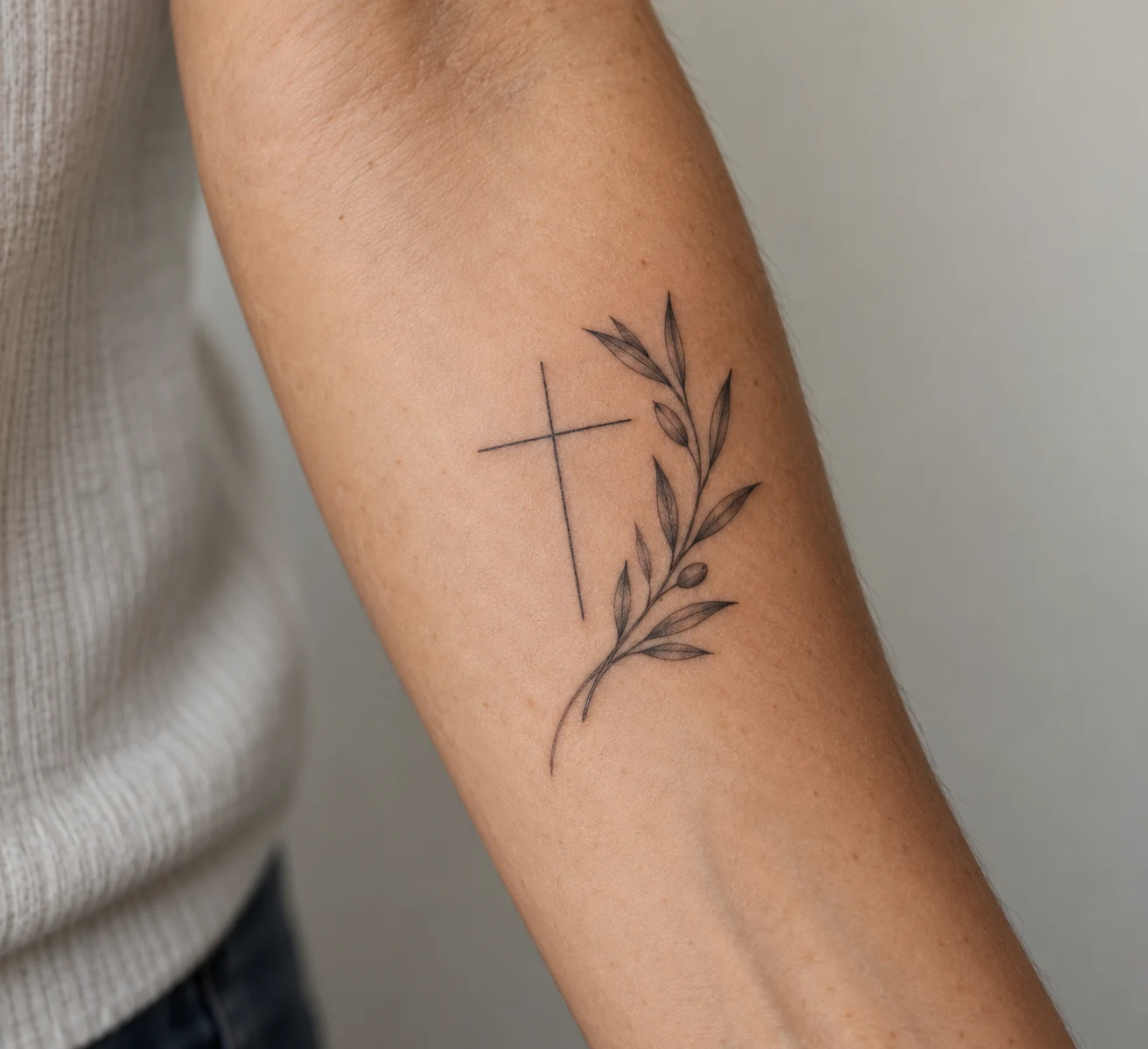
A slender olive branch curves beside an outline cross.
Gaps between the leaves give the botanical arrangement an airy feel. Keep the branch to one side for an open composition, or let it curve gently beneath the stem.
18. Cross With a Dove
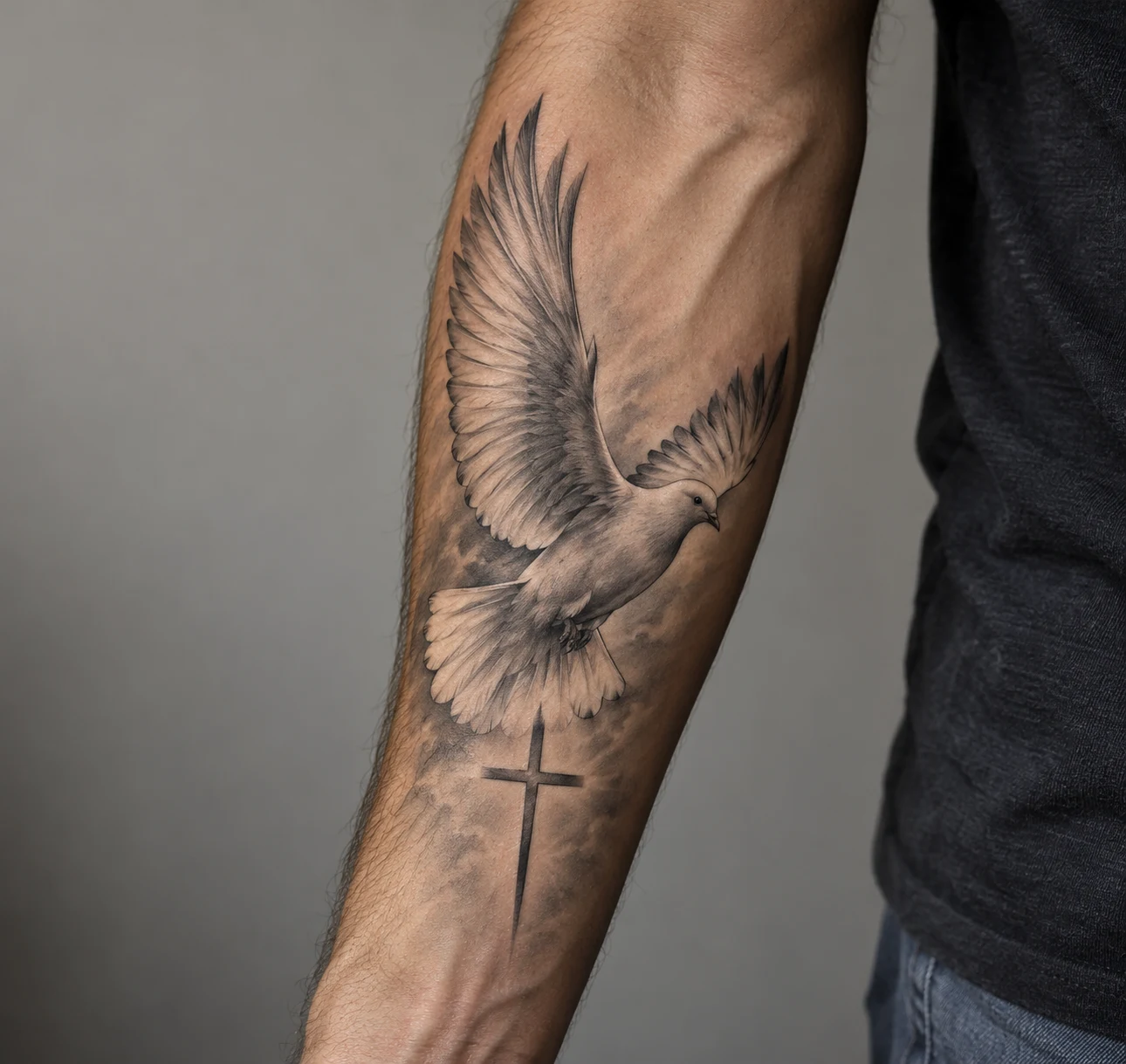
A dove in flight sits above a smaller cross.
Let the dove lead the composition. Compare upward-reaching and outward-spreading wings with your artist so the bird’s silhouette fits the available width without crowding the cross below.
19. Cross With Angel Wings
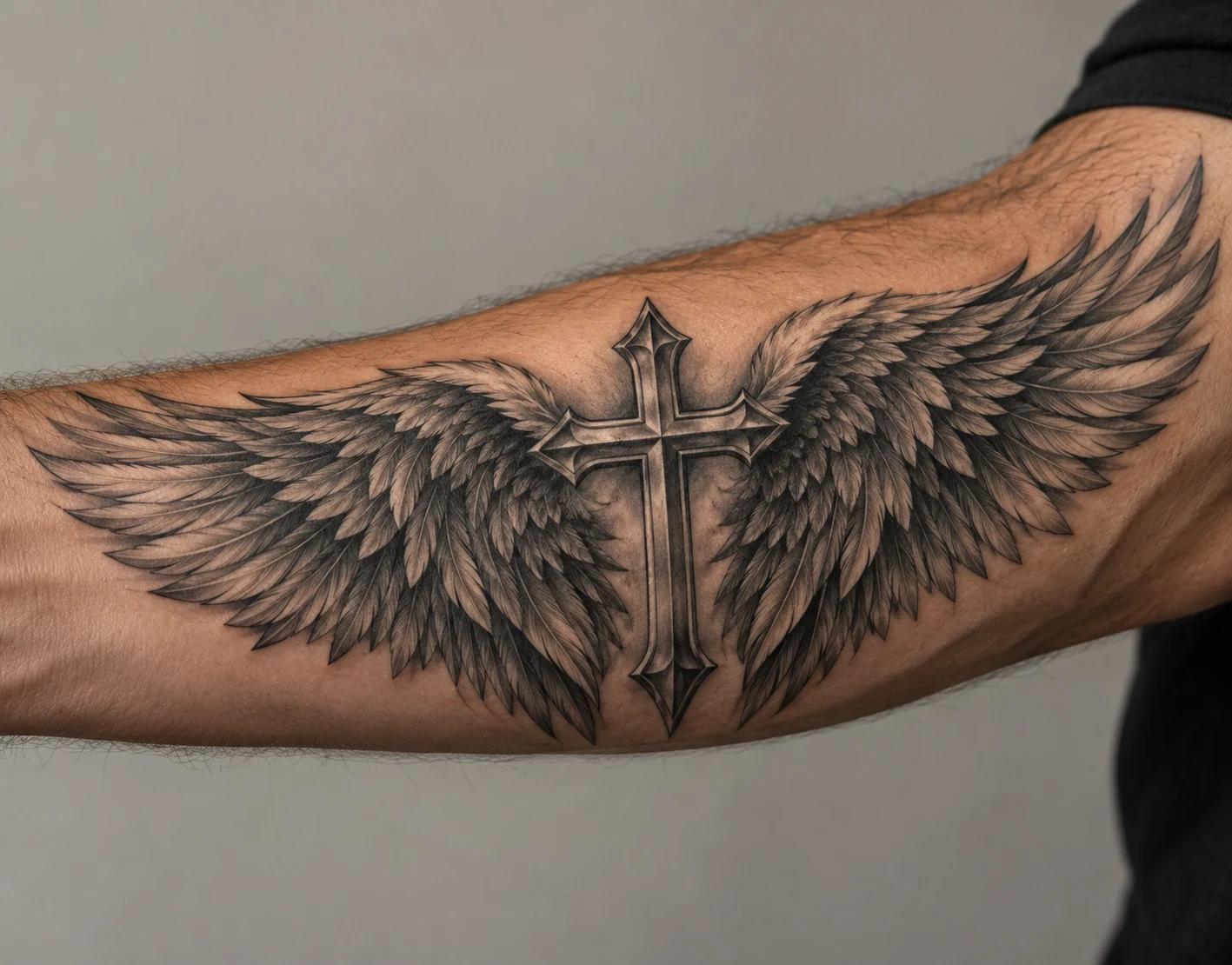
Paired feathered wings extend from a central cross.
Choose this for a symmetrical arrangement. Wing width determines much of its footprint; discuss whether a few defined feather groups or more detailed layers suit the intended scale.
20. Woodgrain Cross With a Draped Cloth
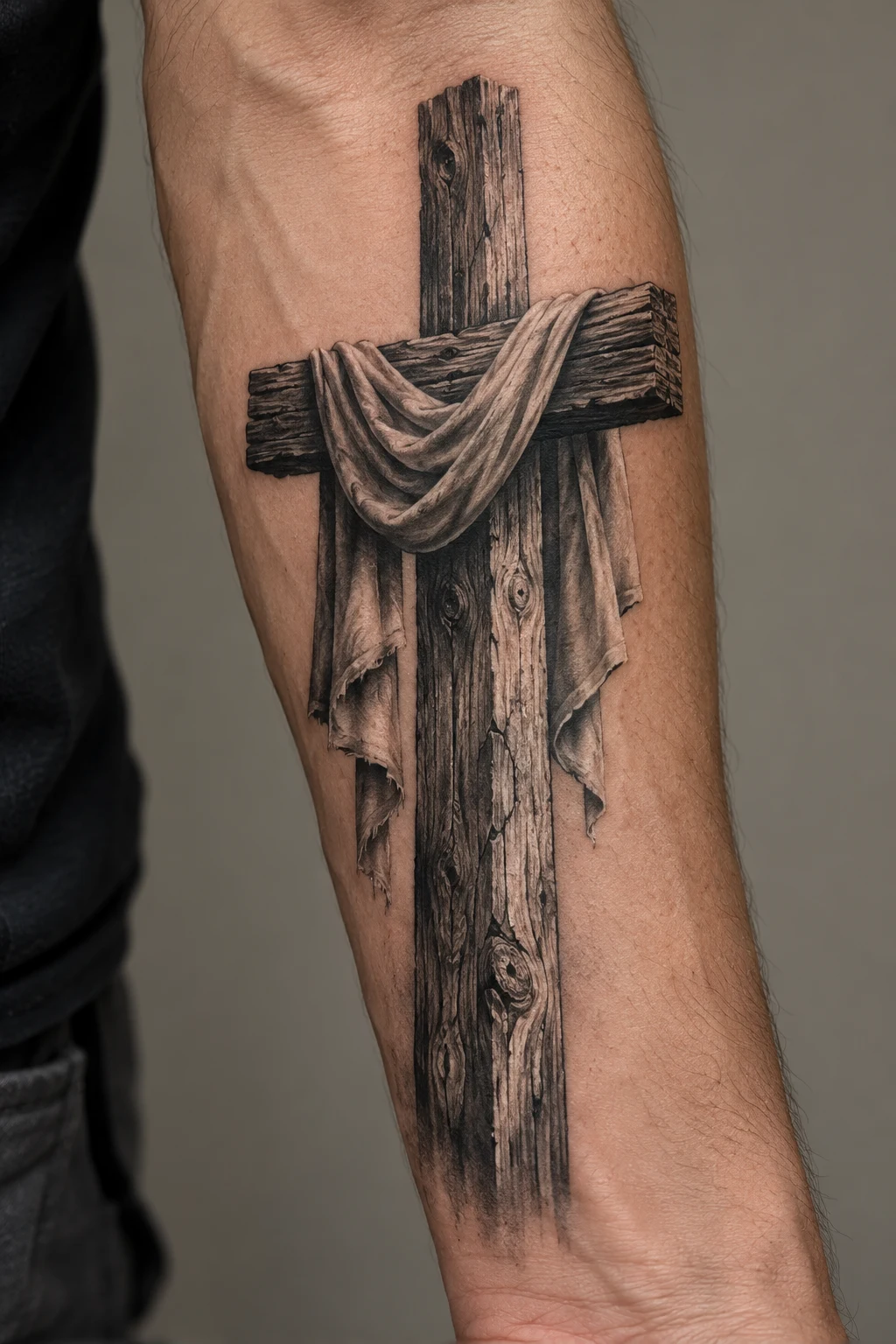
Folded cloth hangs over a wood-textured crossbeam.
This composition emphasizes materials and shading. Choose whether the woodgrain or fabric folds should receive more attention, leaving enough separation for both textures to be distinguishable.
Shortlist two or three designs, then compare their cross shapes, surrounding detail and placement. Bring those references to a tattoo artist to discuss scale and orientation. For lettering or devotional imagery, settle the exact wording and reference before approving the stencil.

