
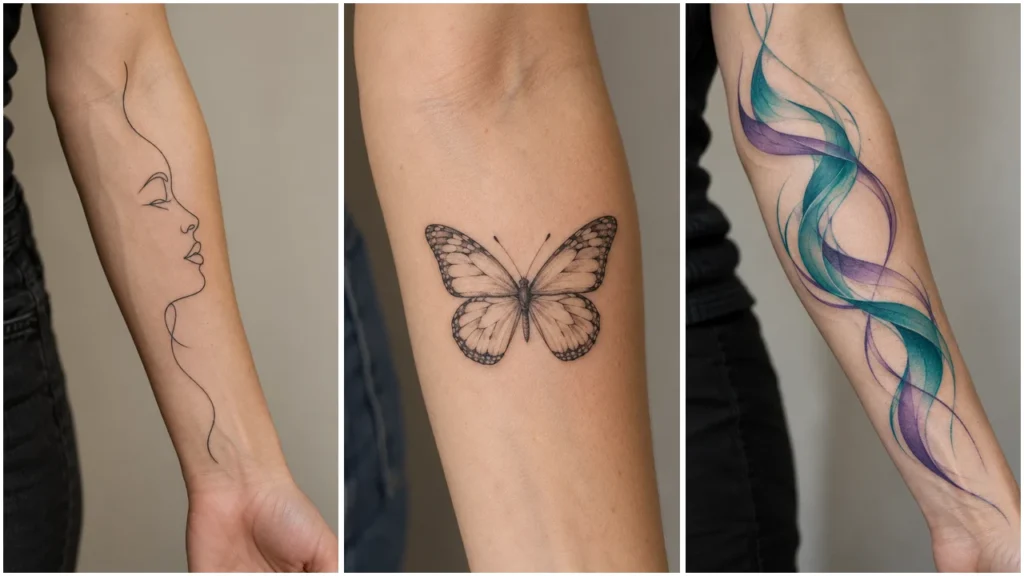
Forearm tattoos for women can range from a small outline near the wrist to a colorful design that fills the outer forearm. These 20 concepts span minimal designs, botanicals, animals, and larger compositions. Compare the artwork, its placement, and how much space it occupies as you choose a direction.
This collection presents tattoo concepts for inspiration.
Minimal Forearm Tattoos for Women
Simple shapes, lettering, and open space give these five designs their distinct character.
1. Single-Line Abstract Profile
A continuous face outline follows the inner forearm.
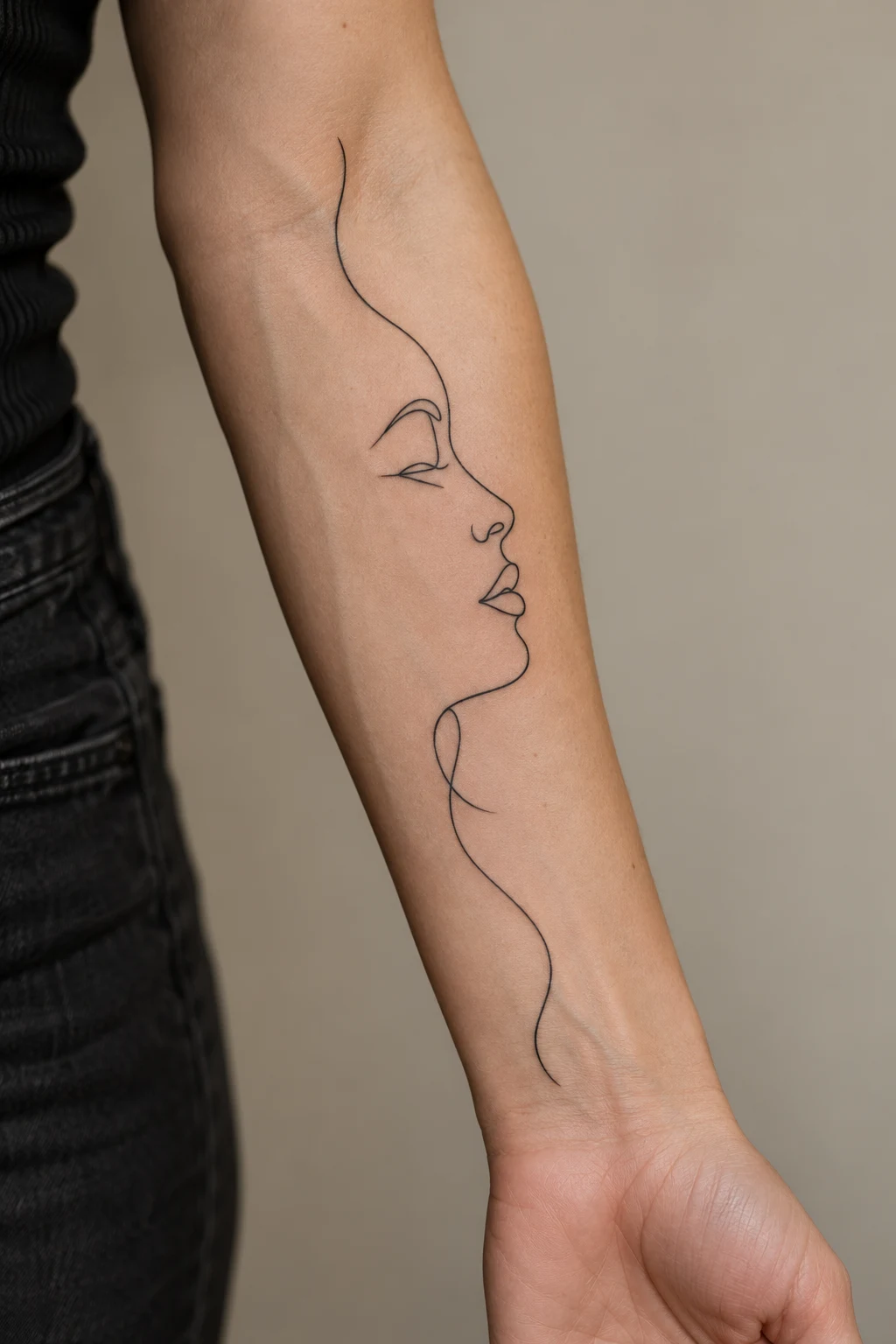
An uninterrupted line connects the facial features, leaving the surrounding skin open. If you like spare figurative art, consider whether you want a recognizable face or a more abstract silhouette.
2. Small Crescent and Star
Two small celestial shapes sit just above the wrist.
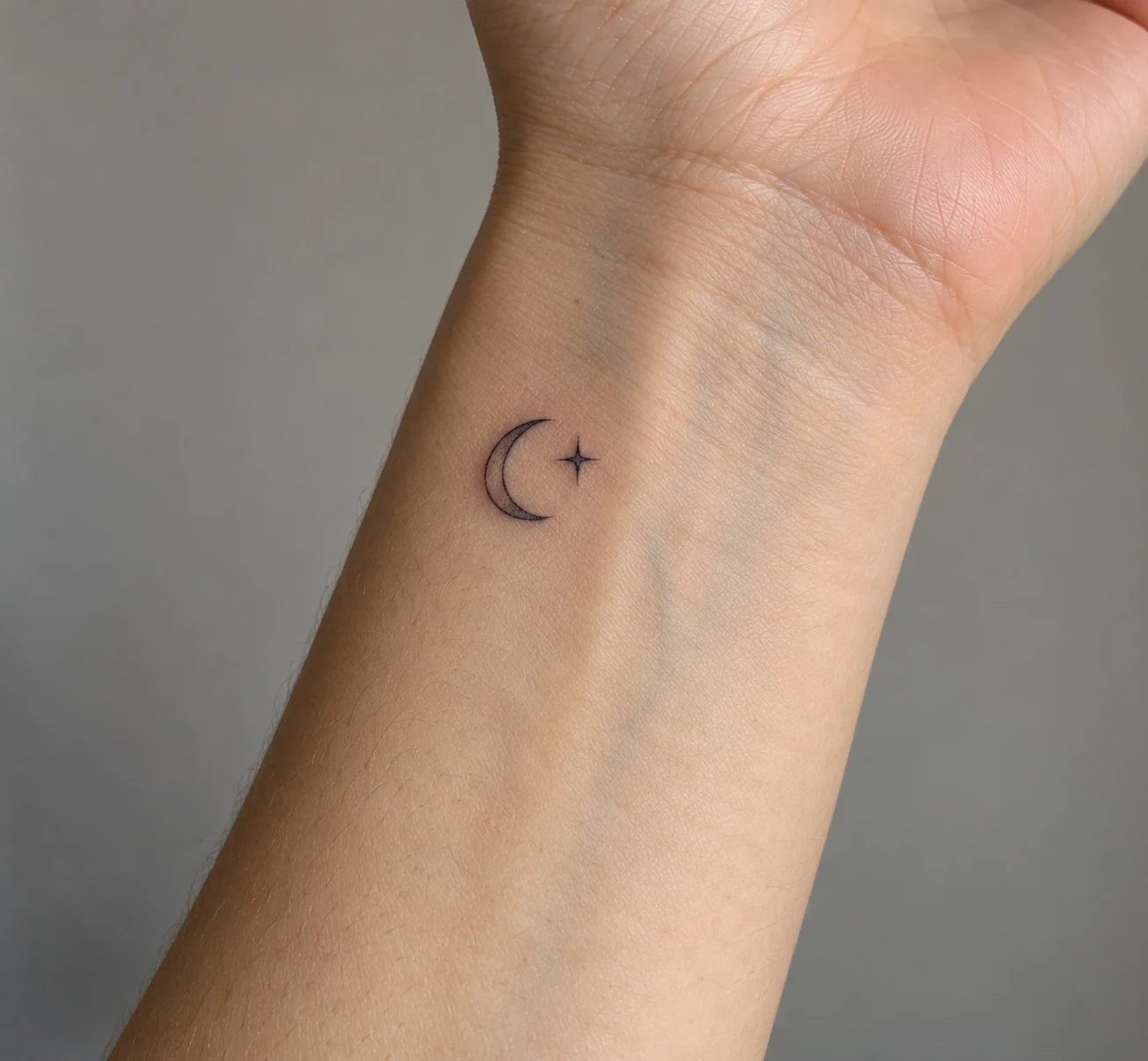
For a contained accent, keep the crescent and star close together. Separating them slightly gives each shape its own space without turning the pair into a larger celestial scene.
3. Short Handwritten Word
A personally chosen word becomes the central detail.
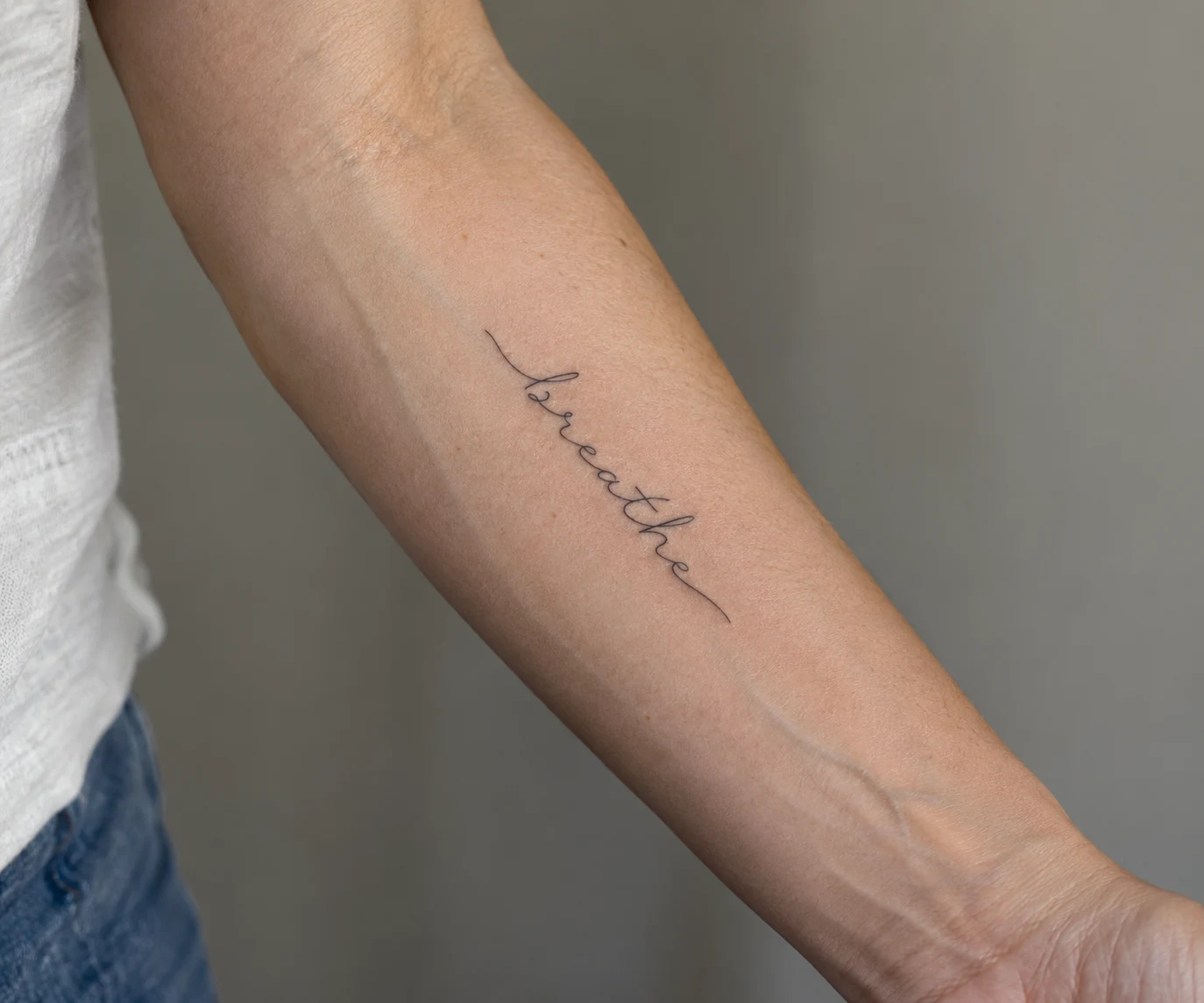
Let the handwriting carry the design. Try the word in both orientations on a temporary layout: facing you and facing someone looking at your arm. Check the letter spacing at the intended size, too.
4. Open Geometric Diamond
An offset circle interrupts a narrow diamond outline.
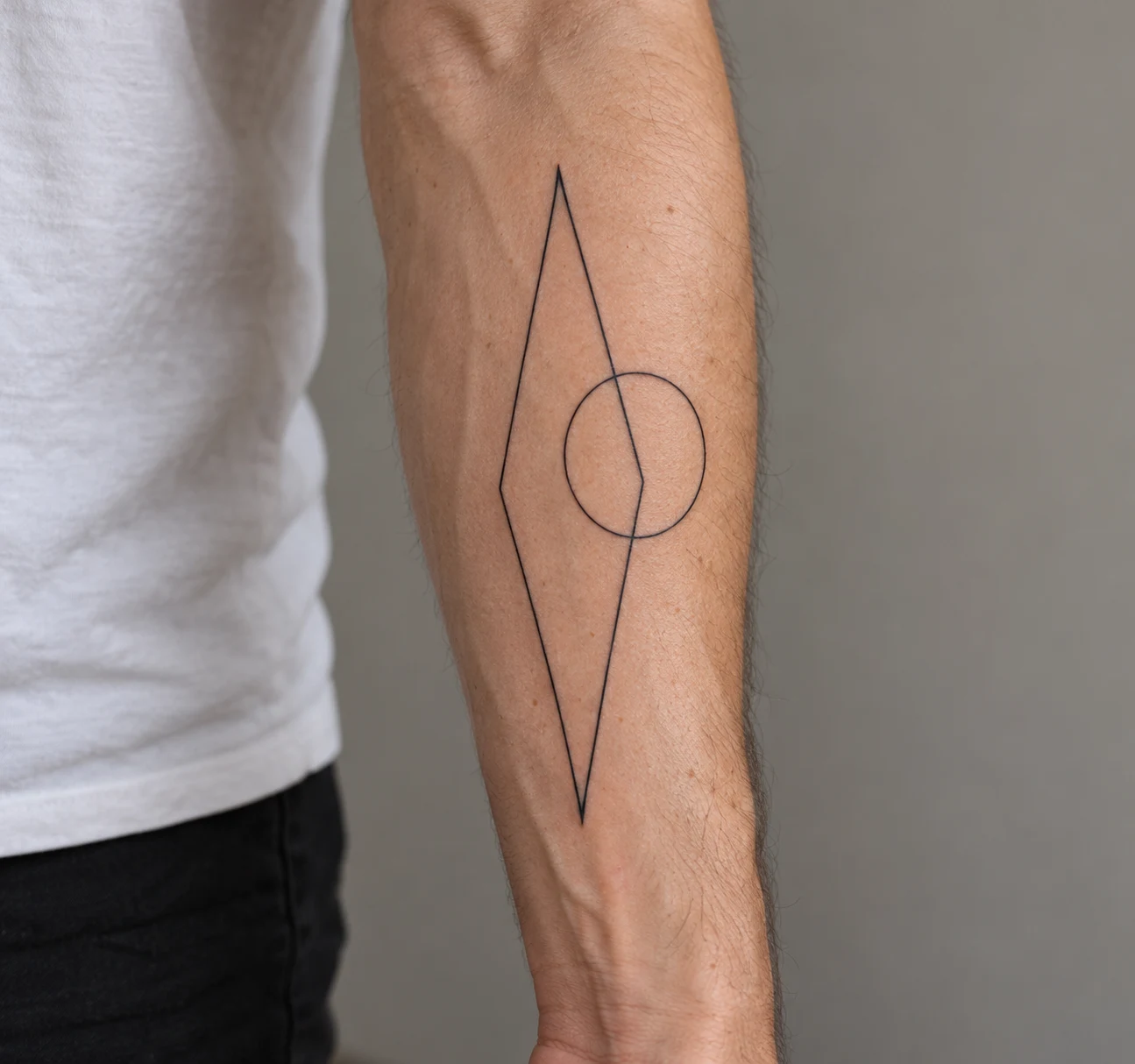
The elongated shape offers a structured alternative to a figurative motif. Move the circle off-center for asymmetry, or bring it toward the middle if you prefer a more ordered arrangement.
5. Tiny Red Bow
A red ribbon outline adds a small, playful accent.
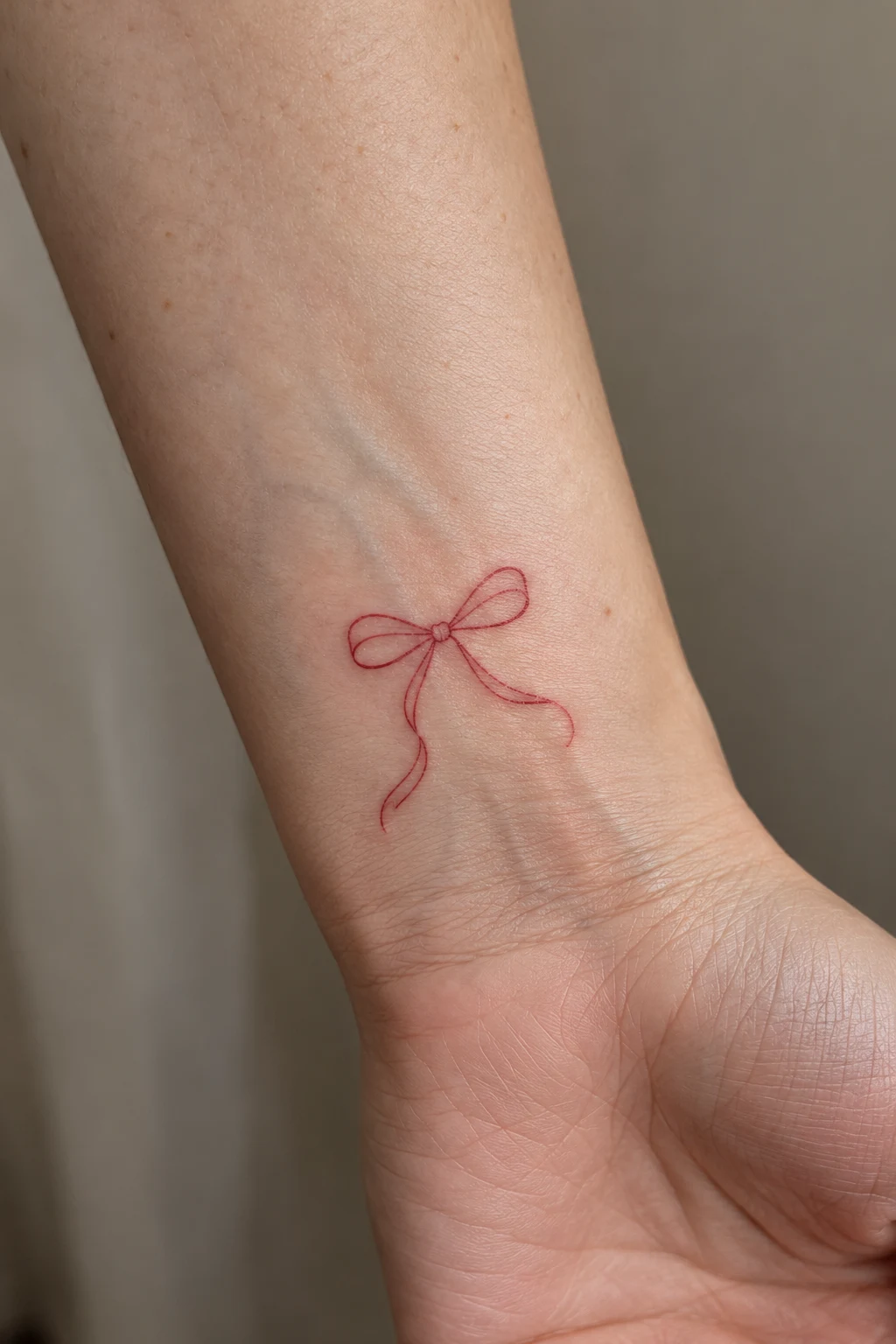
Loose tails soften the shape of a tightly symmetrical bow. Keep them short for a compact design or extend their curves slightly along the arm. The outline can also be adapted to black ink.
Botanical Designs That Follow the Forearm
Stems, leaves, and petals offer different ways to build a vertical arrangement or a wrapping design.
6. Fine-Line Wildflower Stems
Three staggered blooms form a loose botanical arrangement.
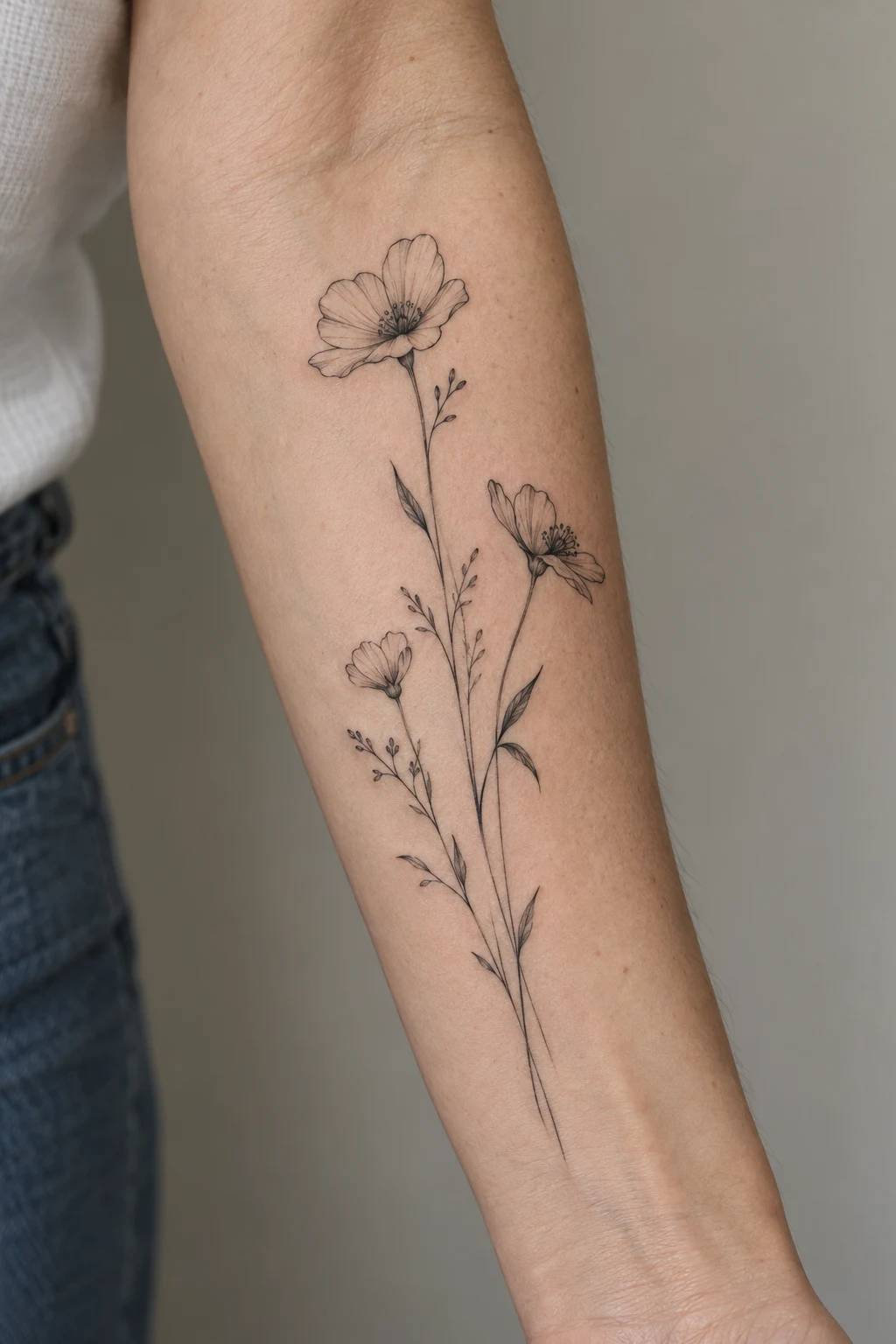
Vary the flower shapes and stem heights to keep the grouping informal, with space between the blooms. Choose flowers for their appearance or a personal connection, then compare how their outlines work together.
7. Black and Grey Peony
One large bloom anchors the outer forearm.
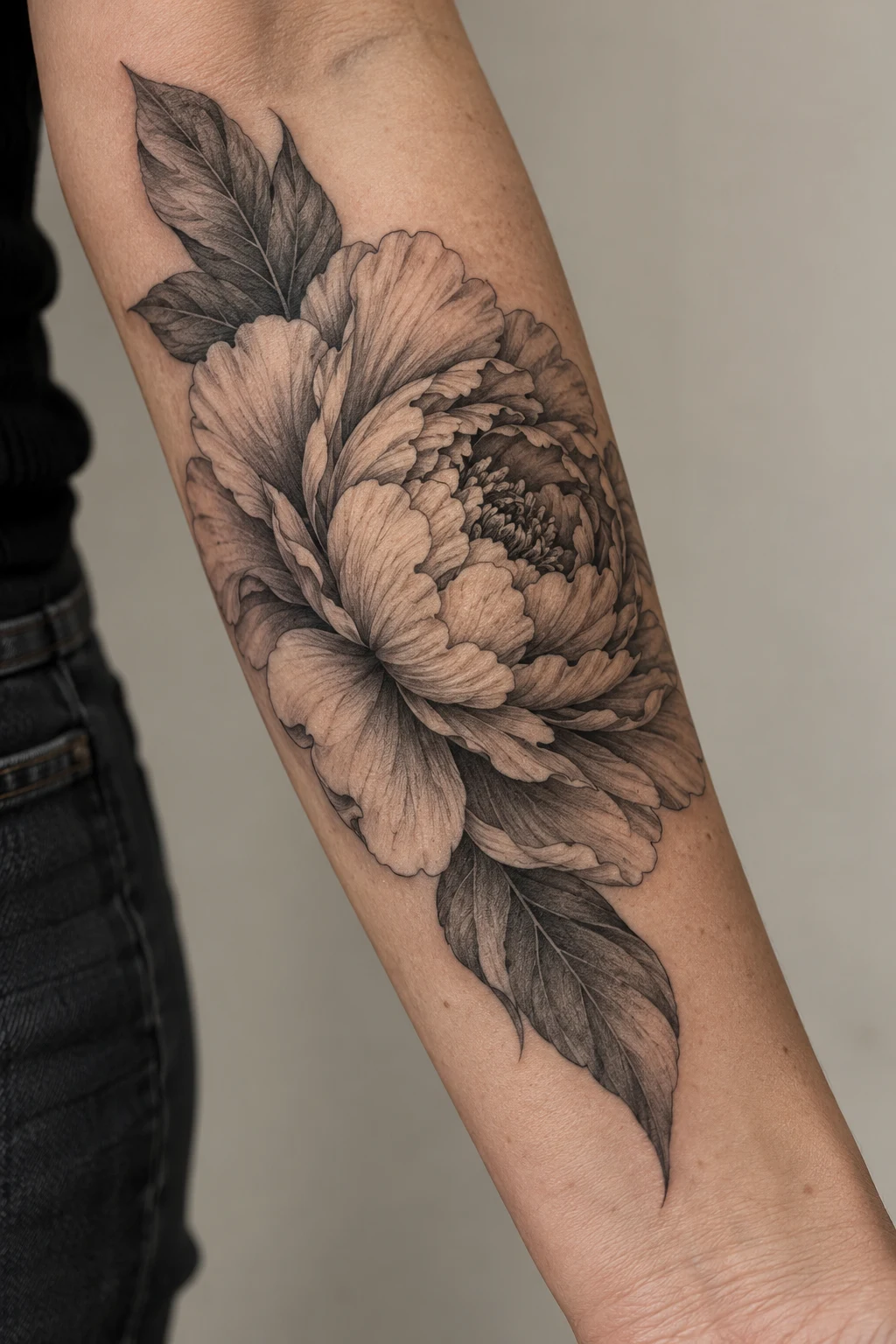
This is the fuller floral option in the group, with layered petals and shaded leaves. Extending the leaves along the arm gives the rounded bloom a longer composition; keeping them close makes it more compact.
8. Fern Frond
A tapered fern creates a long foliage silhouette.
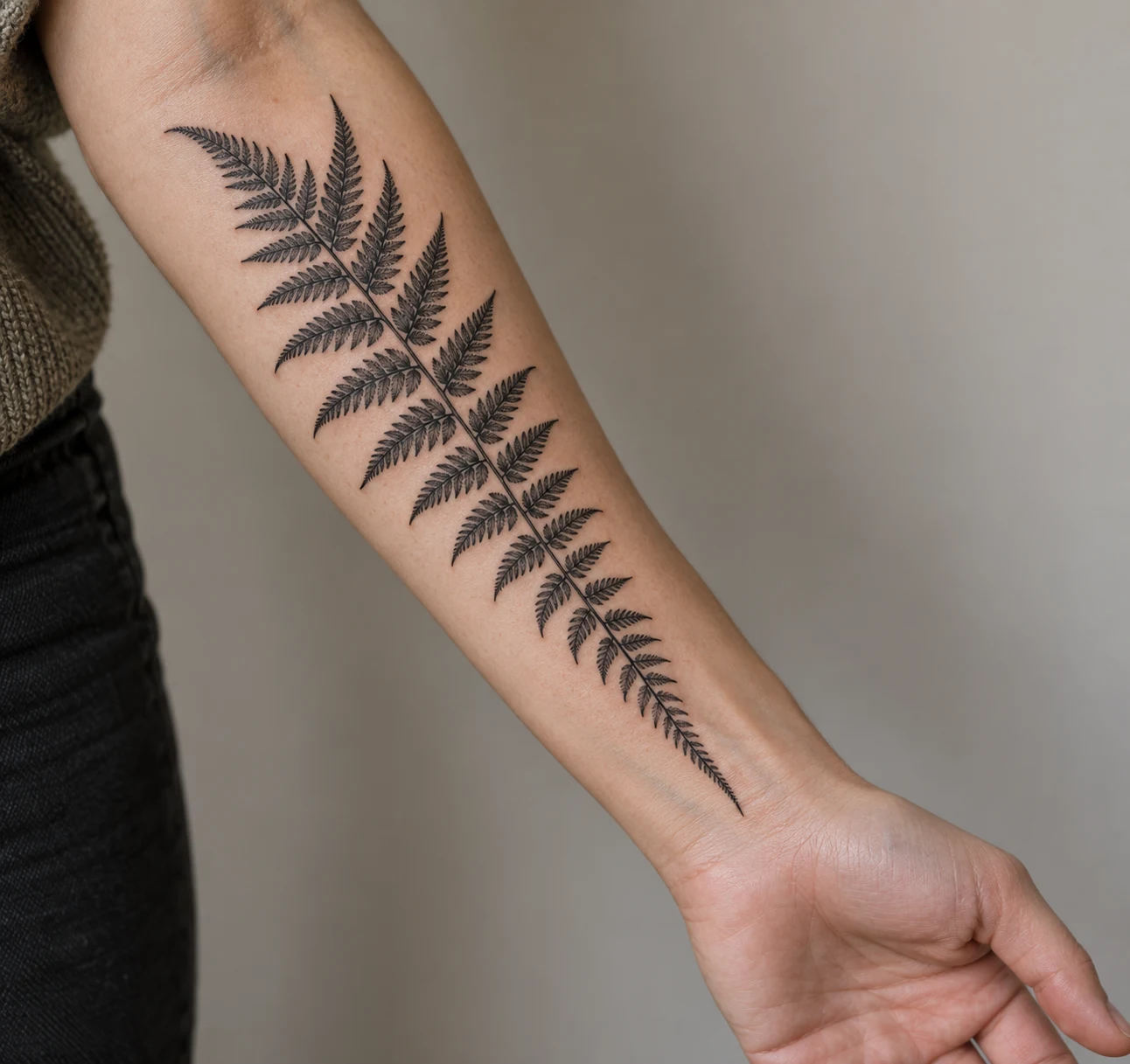
Repeated leaflets provide detail without adding flowers. A straight central stem gives the arrangement structure, while a gently curving frond makes the outline feel more fluid. Try both layouts along your forearm to see which shape you prefer.
9. Colorful Poppy Pair
Red-orange petals bring color to two slender stems.
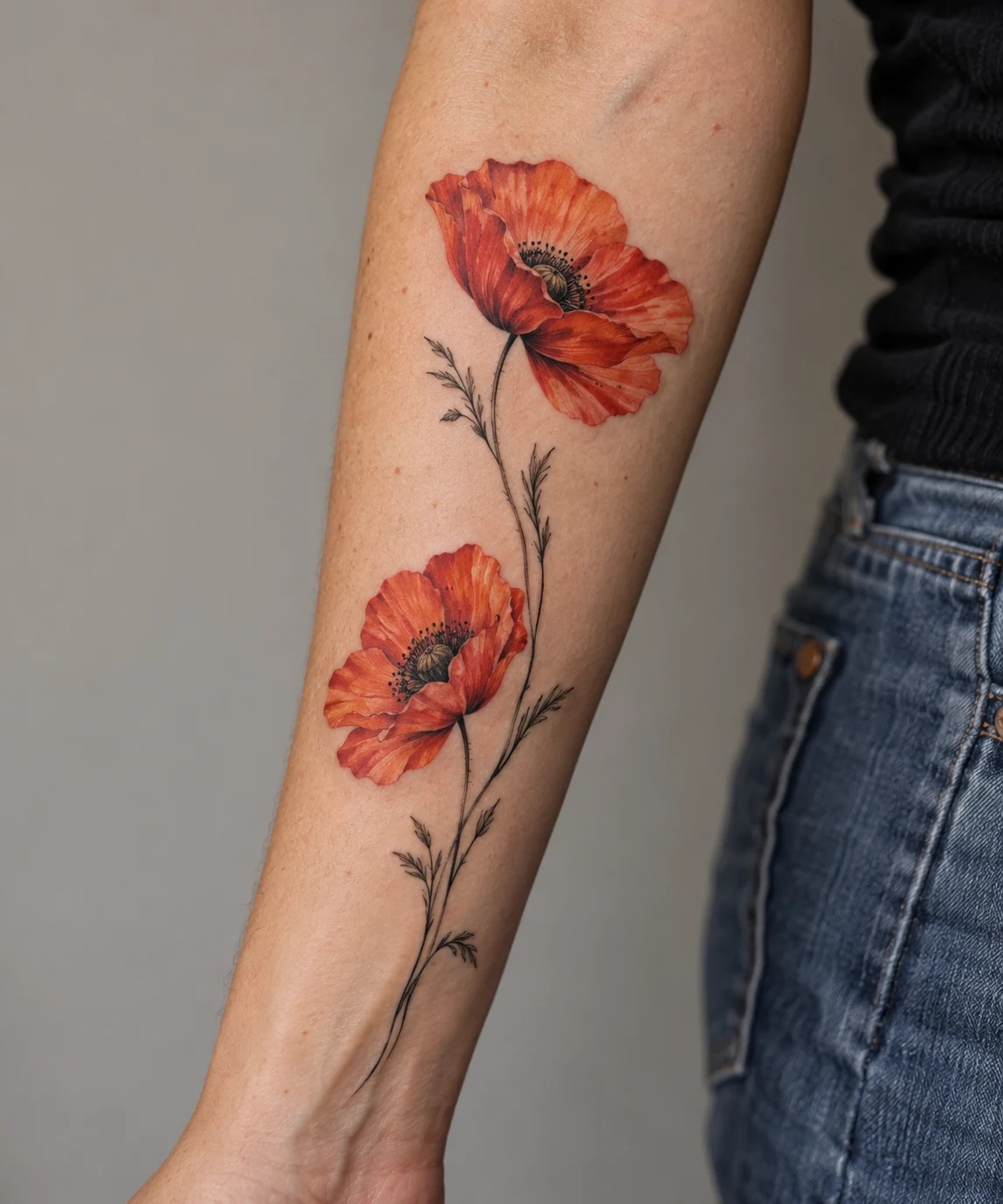
Blooms at different heights create a vertical arrangement without covering the whole forearm. Concentrate color in the petals for a clear focal point, or discuss adding green leaves and stems.
10. Wrapping Leafy Vine
A loose vine curves around the middle forearm.
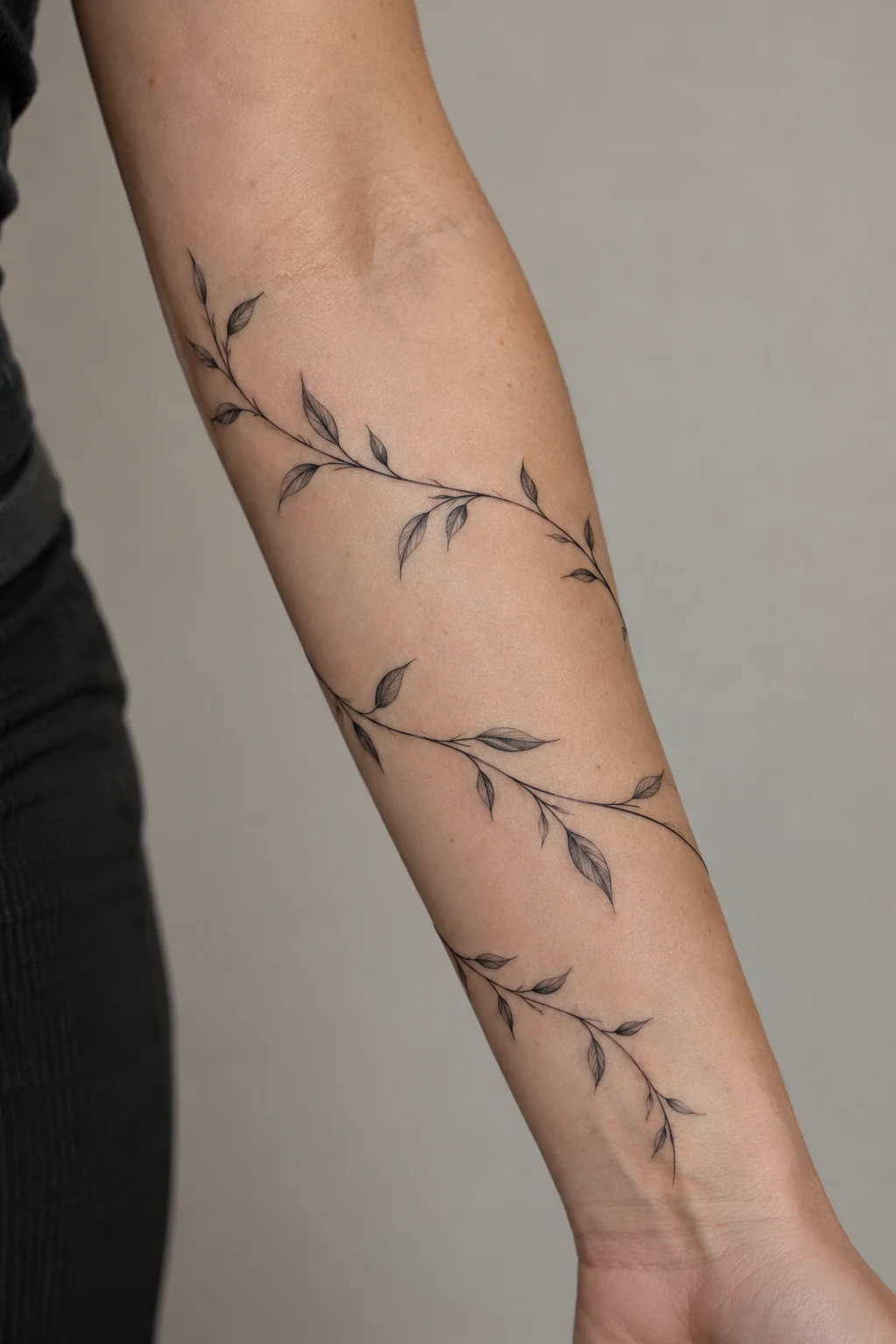
A partial turn keeps the coverage restrained; a longer spiral carries the design around more of the arm. View the layout with your arm turned, and leave gaps between leaves to preserve its open character.
Animals and Winged Motifs
Compare open wings, elongated bodies, and compact animal shapes to find a silhouette you enjoy.
11. Fine-Line Butterfly
Open wings give a single butterfly a balanced outline.
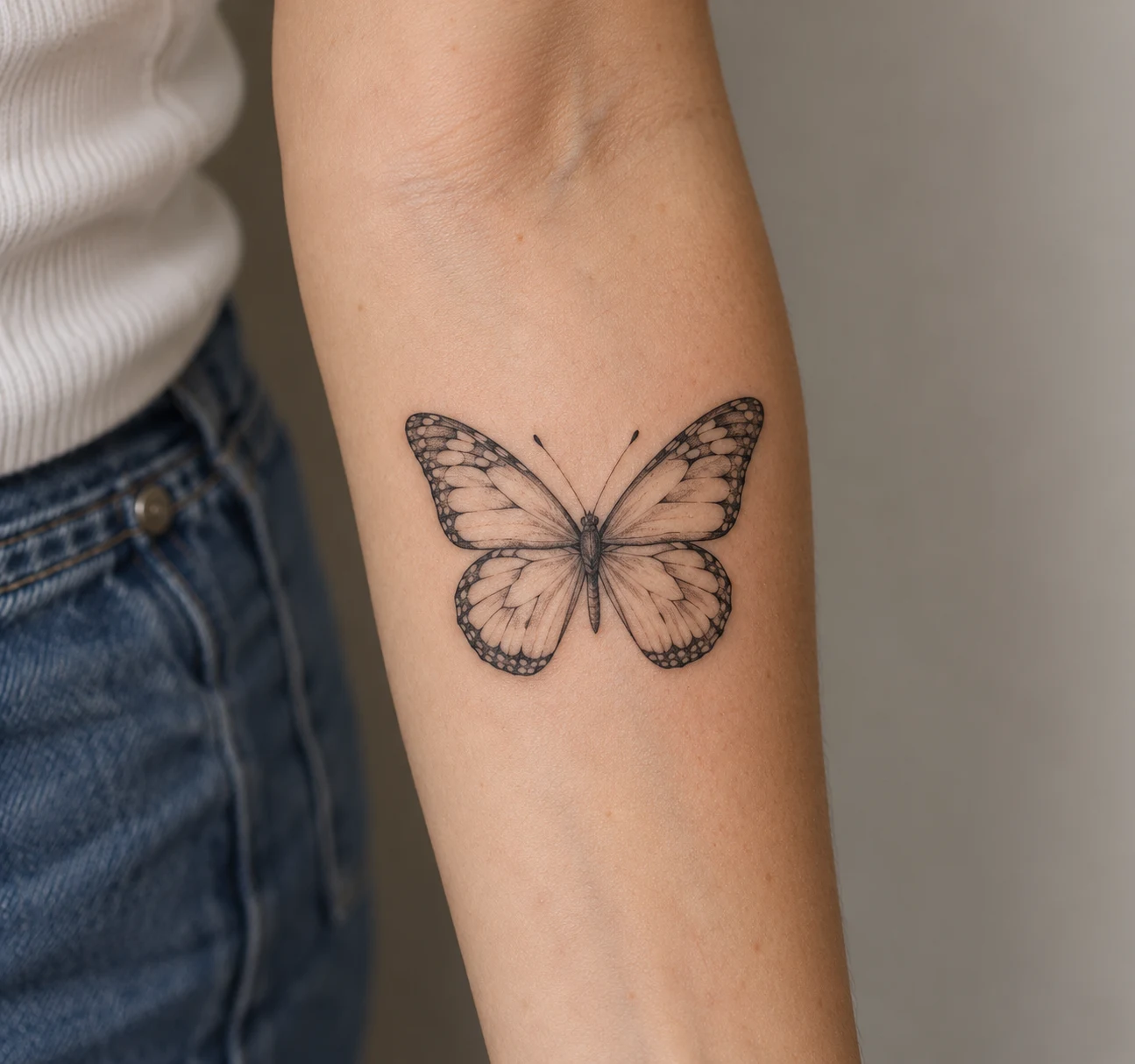
Keep internal markings sparse if you want the wing outline to lead. A side-view butterfly offers a narrower, less symmetrical alternative to the open-wing version.
12. Ornamental Moth
Patterned wings combine dark borders with dotted accents.
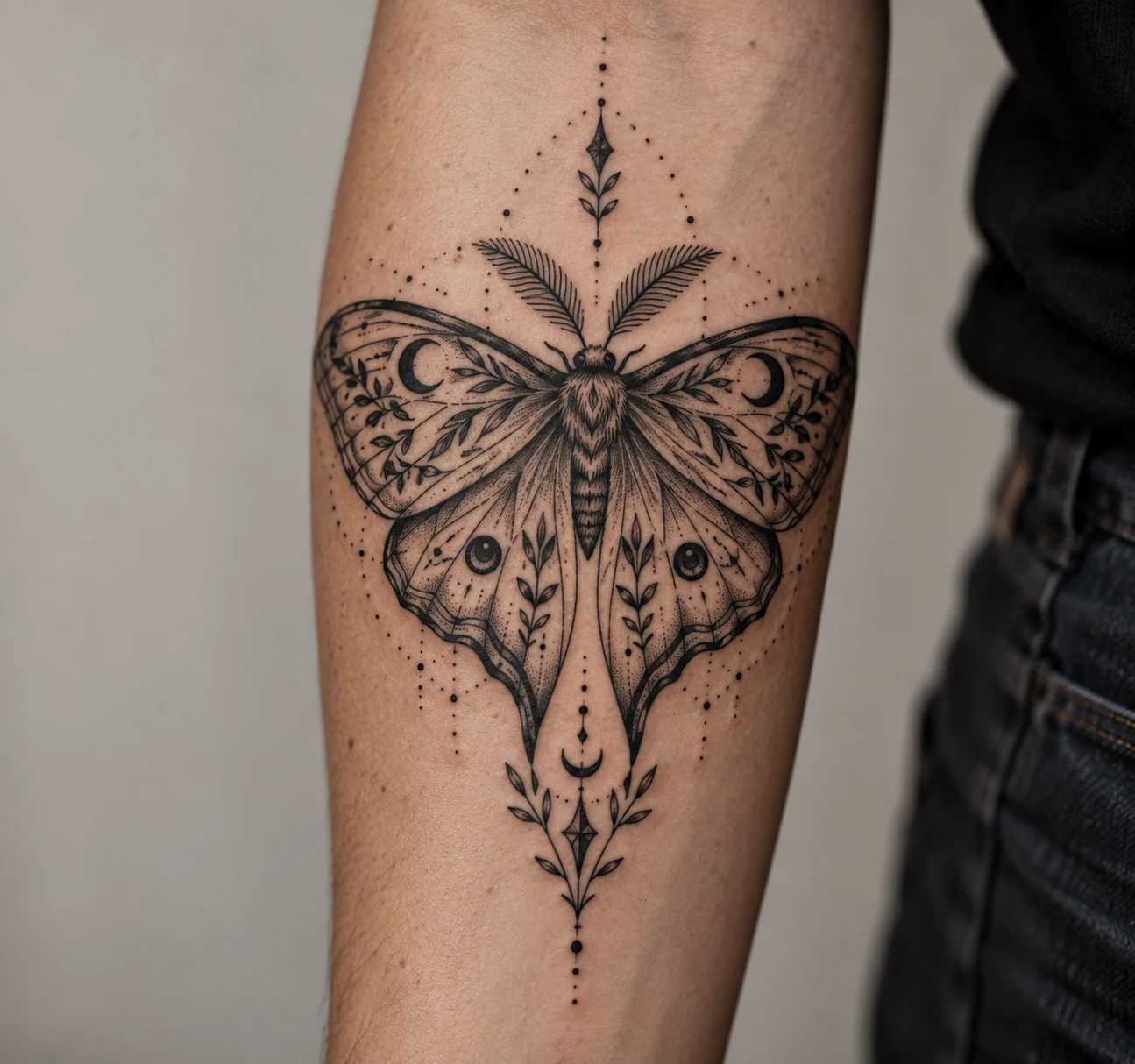
For a more decorative winged design, consider this symmetrical moth. Decide how much of each wing should be solid black, leaving open areas to separate the internal patterns.
13. Curving Snake
An elongated S curve carries the snake along the arm.
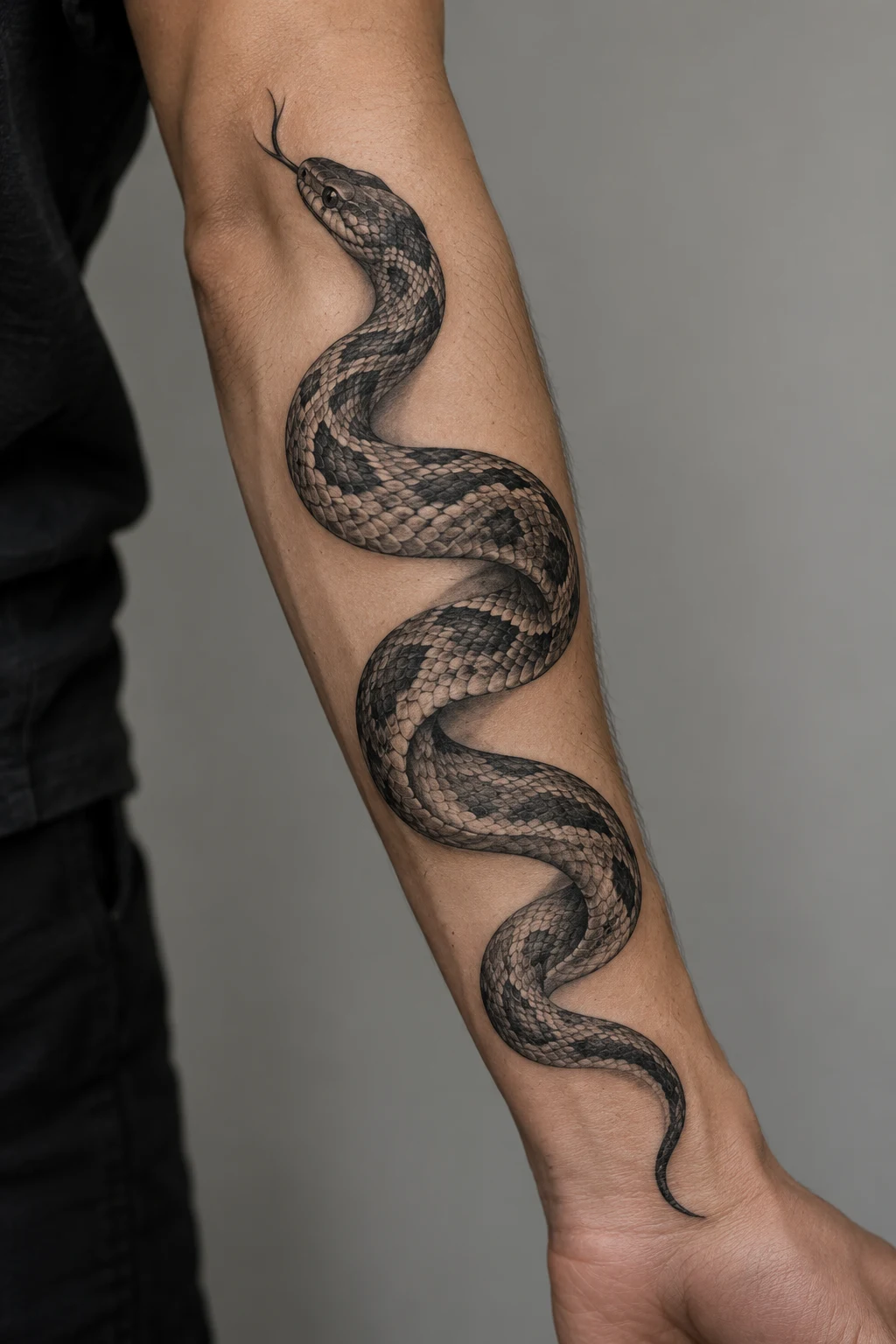
Adjusting the bends changes how much width the design occupies. Selective scale detail adds texture, while smoother sections keep the body outline prominent. A narrow pose leaves more skin beside the snake; broader curves spread the composition across the arm.
14. Swallow in Flight
Blue wing accents punctuate a bold flying silhouette.
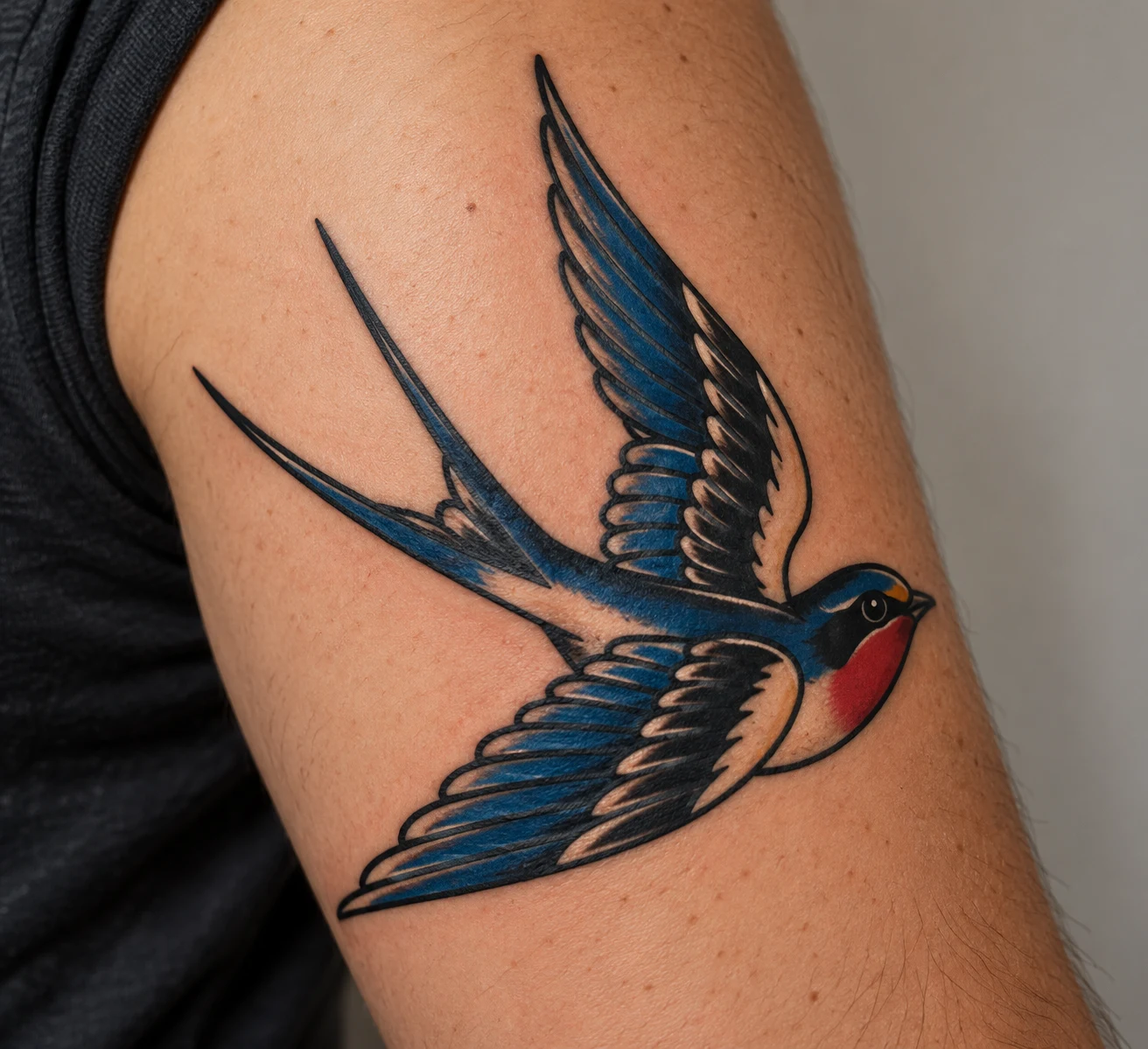
Spread wings and a forked tail give this bird a sense of movement. Try layouts traveling toward the elbow and toward the wrist to see which direction you prefer with your arm relaxed.
15. Curled Sleeping Fox
A sweeping tail completes a compact, rounded fox.
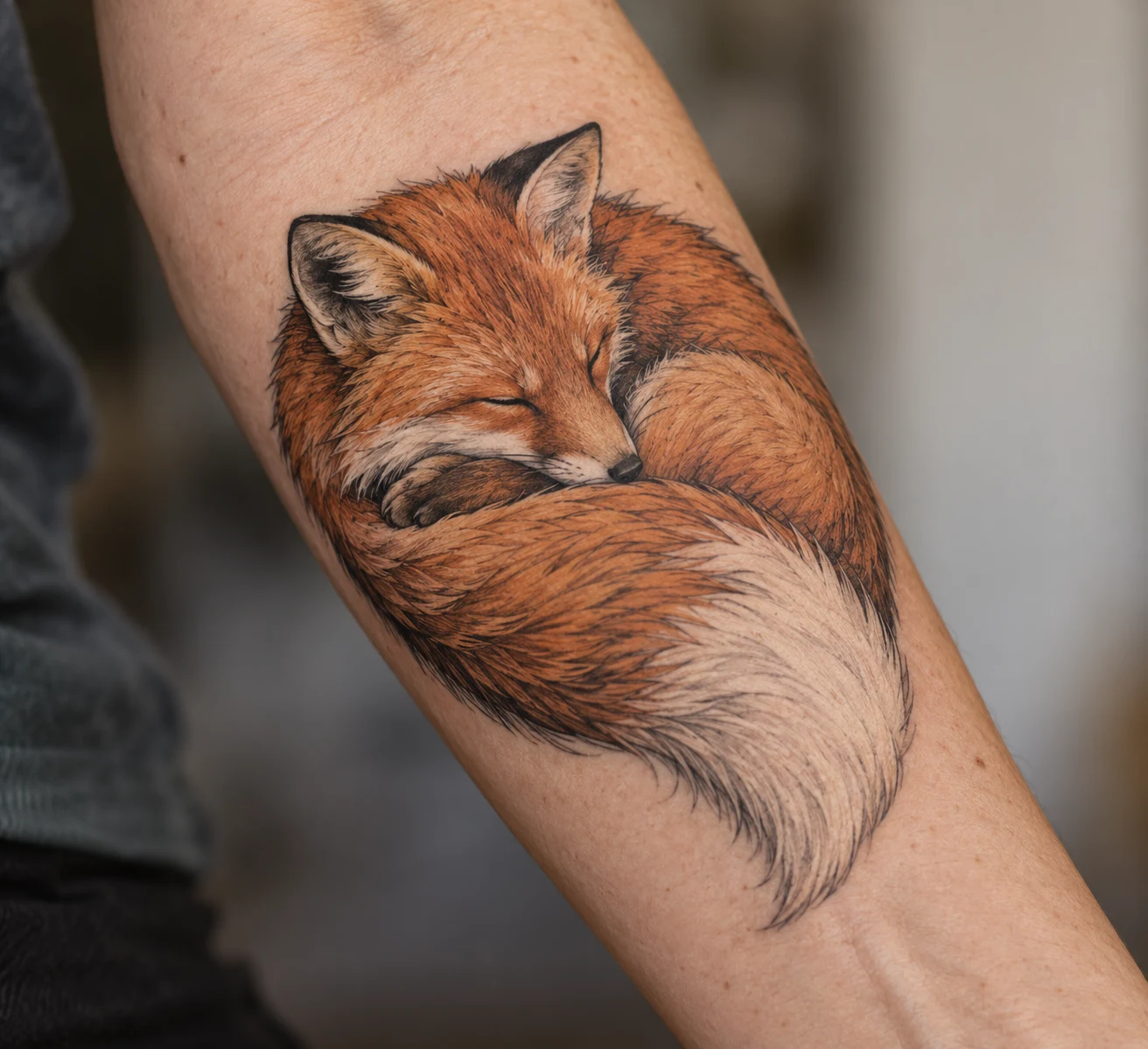
The curled pose offers a contained alternative to the longer animal designs. Keep the face and tail simple for a graphic treatment, or discuss how much fur detail to include at the intended size.
Landscapes, Abstract Art, and Bolder Compositions
These designs use borders, broader marks, and larger areas of color to organize the artwork.
16. Mountain Landscape in an Oval
A narrow oval contains peaks and a small sun.
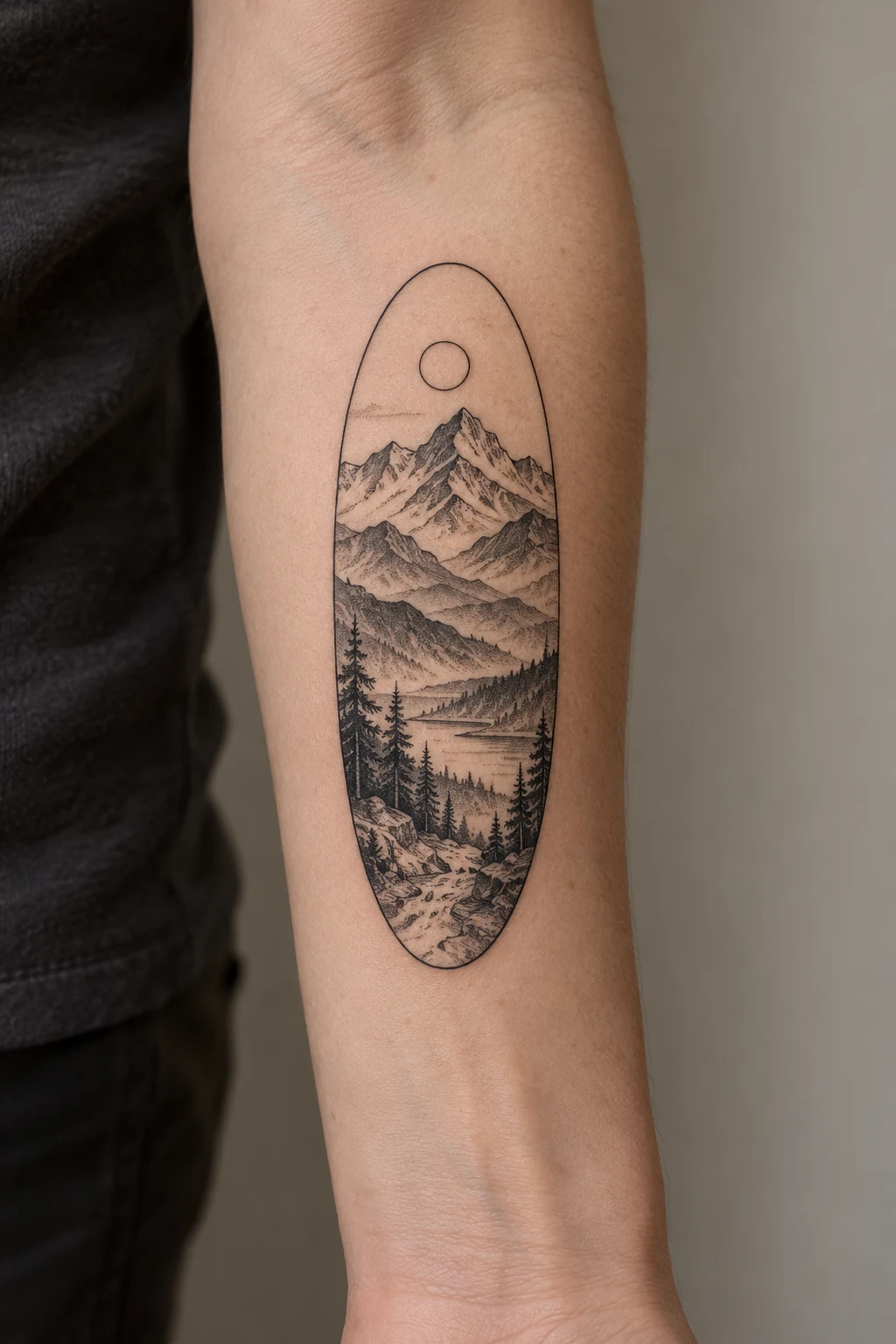
A defined border keeps the scene self-contained. Leave space between the peaks and sun for a sparse composition, or add a foreground ridge if you’d like more layers within the frame.
17. Japanese-Inspired Wave Panel
Curling blue waves fill a curved panel.
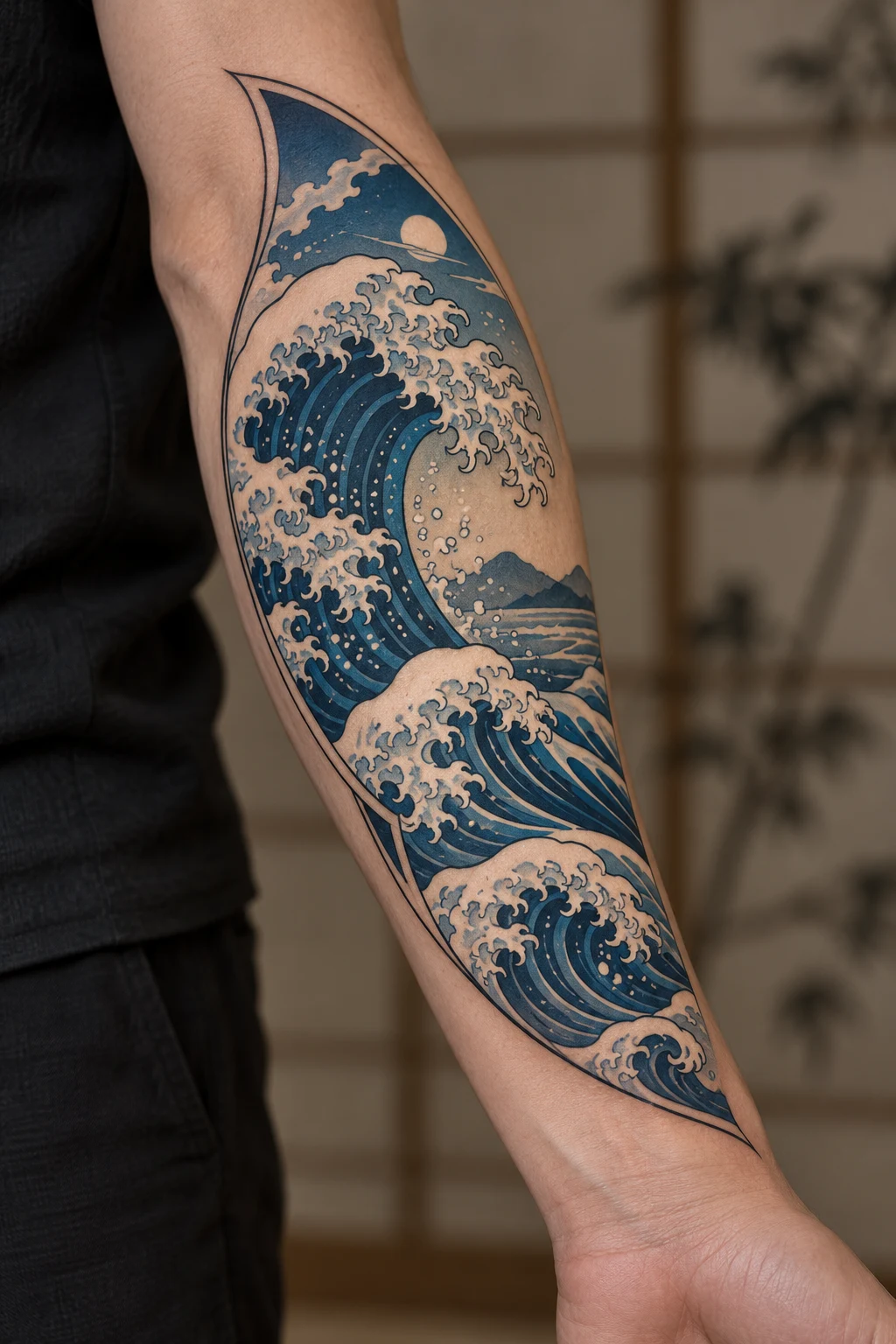
This concept draws on Japanese wave imagery, with uninked skin forming the foam. A firm panel border contains the graphic color piece, while an open edge lets the waves extend beyond the frame.
18. Abstract Black Brushstroke
One broad sweep crosses the outer forearm diagonally.
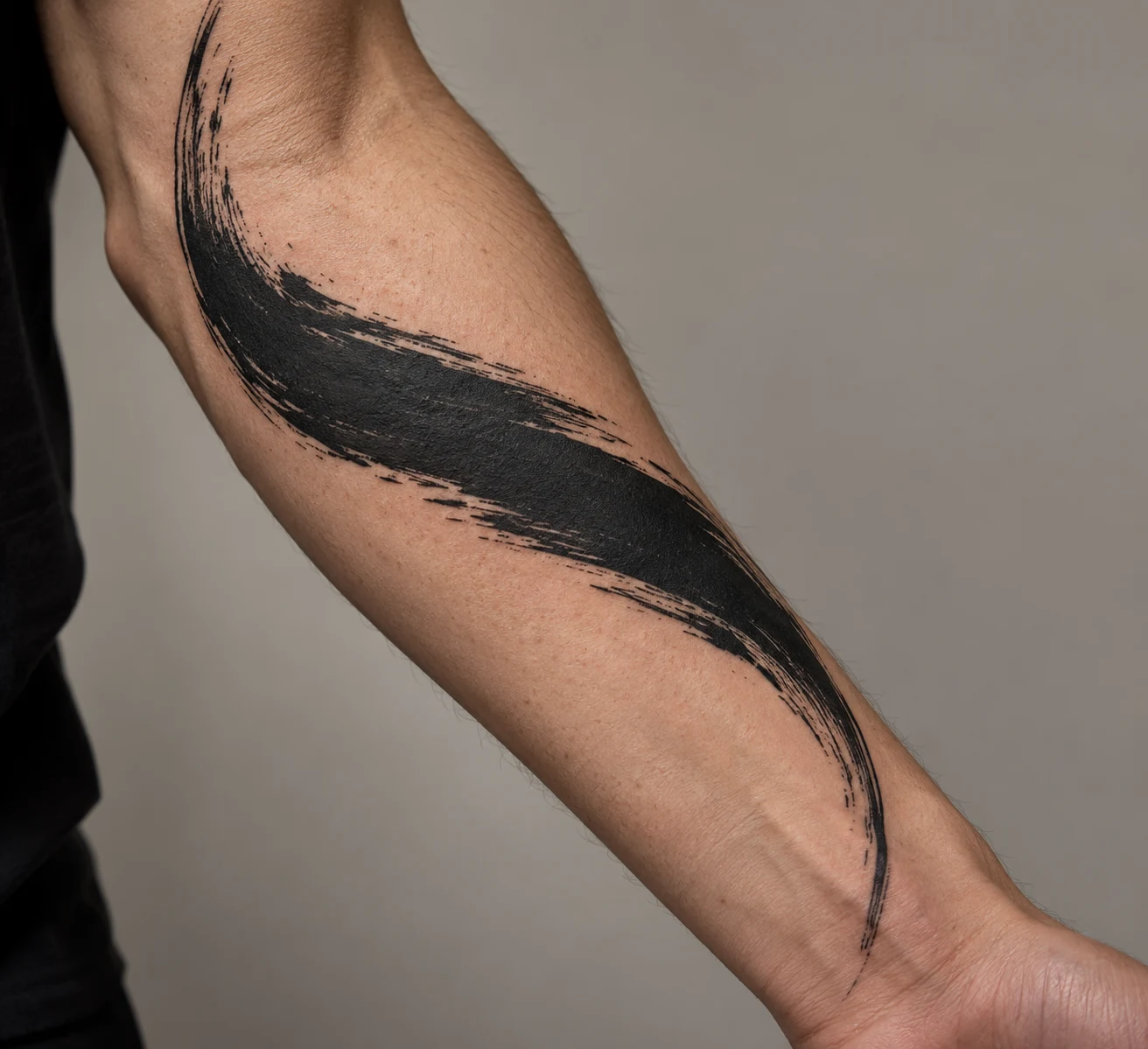
Tapered ends and broken edges suggest a brush mark. If you want bold abstract coverage, discuss with your artist how to translate that texture into a tattoo at your chosen scale.
19. Geometric Negative-Space Cuff
Uninked triangles break up a broad black band.
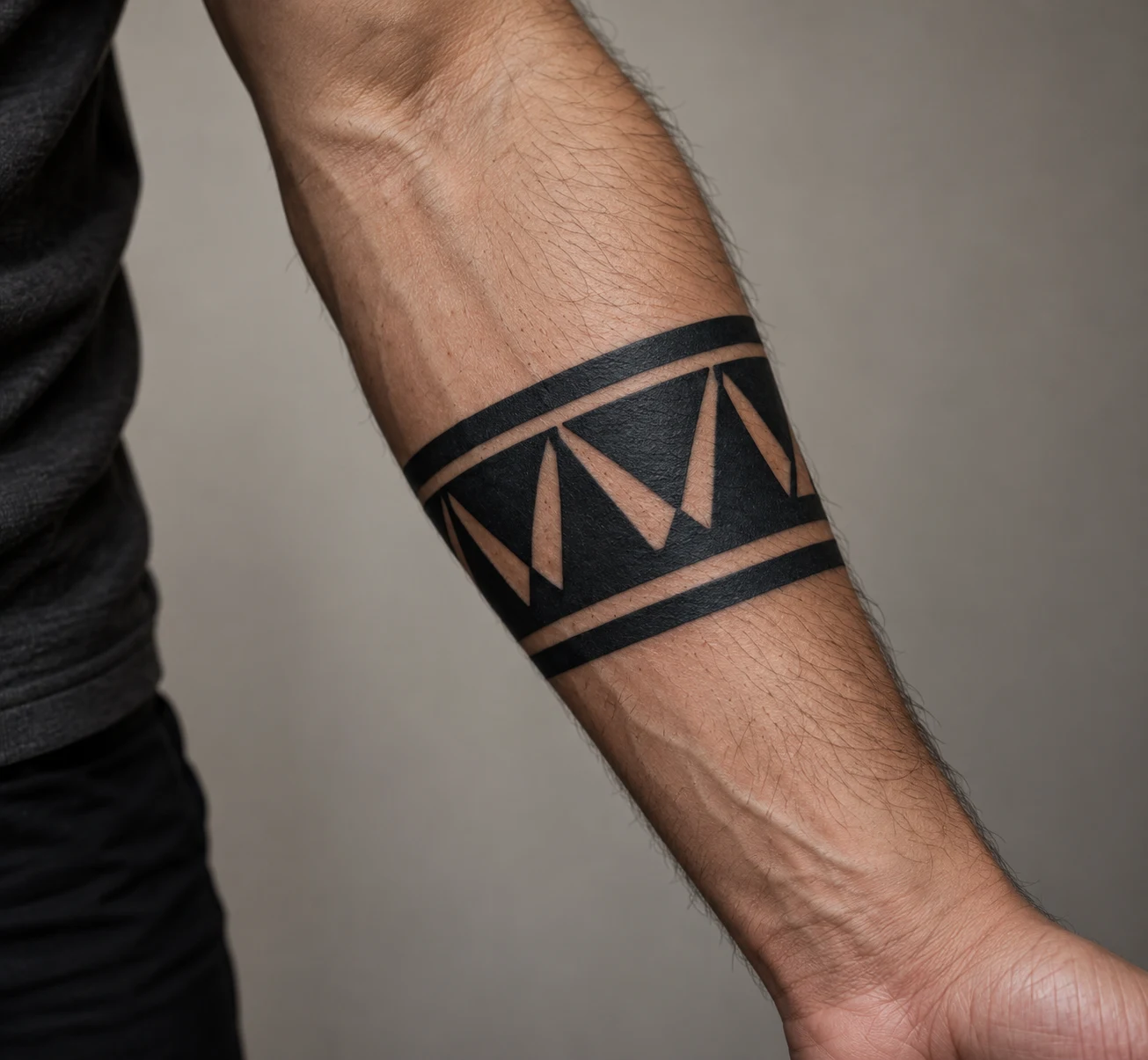
The cuff can wrap continuously or leave an opening on the inner forearm. Adjusting the band’s width and the triangular gaps changes the balance of black ink and visible skin.
20. Flowing Abstract Color Ribbons
Teal and violet curves overlap along the forearm.
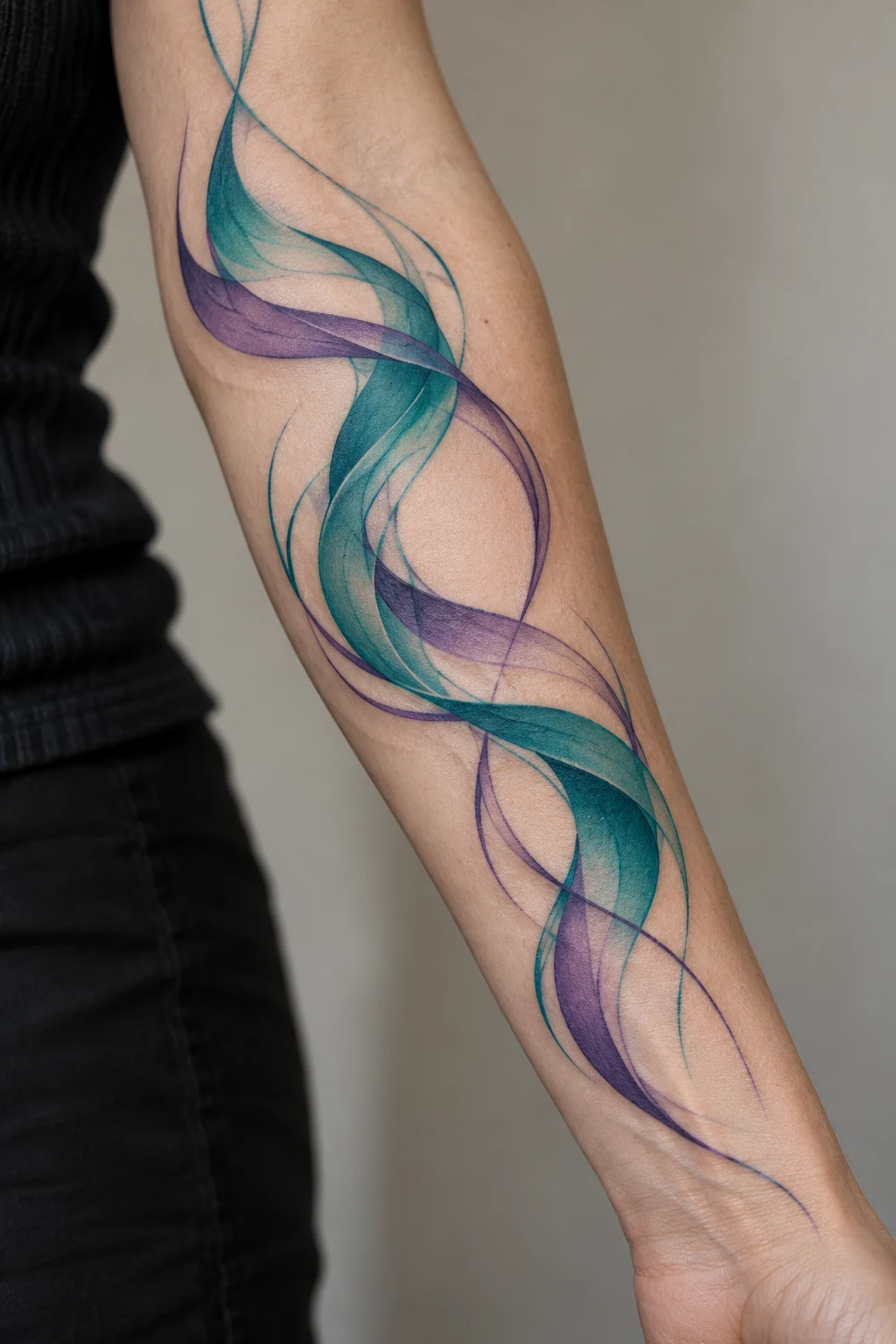
Let color and movement lead the artwork. Keep the contrasting palette or explore shades from one color family. Tightly overlapping ribbons create a clustered composition; a looser arrangement leaves more skin between curves.
Shortlist two or three concepts by subject, coverage, color, and inner versus outer placement. Bring those references to an artist to discuss scale and orientation, including how the design looks with your arm relaxed and turned.

