
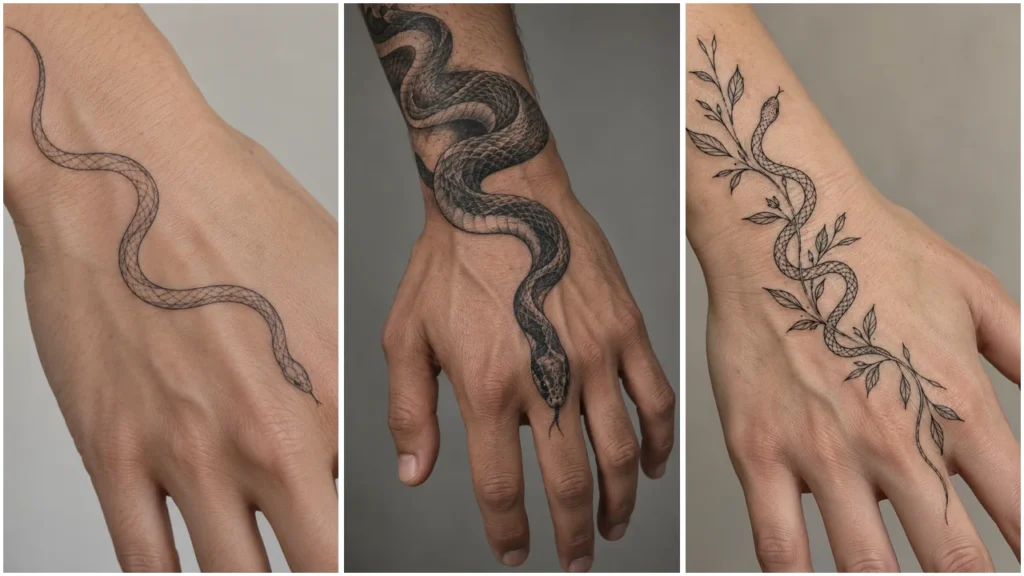
Snake hand tattoos can follow a finger, curve across the back of the hand, or stretch from wrist to knuckle. Start with three choices: how much coverage you want, how bold the lines should look, and whether the snake stands alone or shares space with another motif.
These 20 tattoo concepts offer different ways to combine those choices. Use them to identify shapes and details you want an artist to adapt to your hand.
Minimal Snake Hand Tattoos
1. Fine Line S-Curve Snake
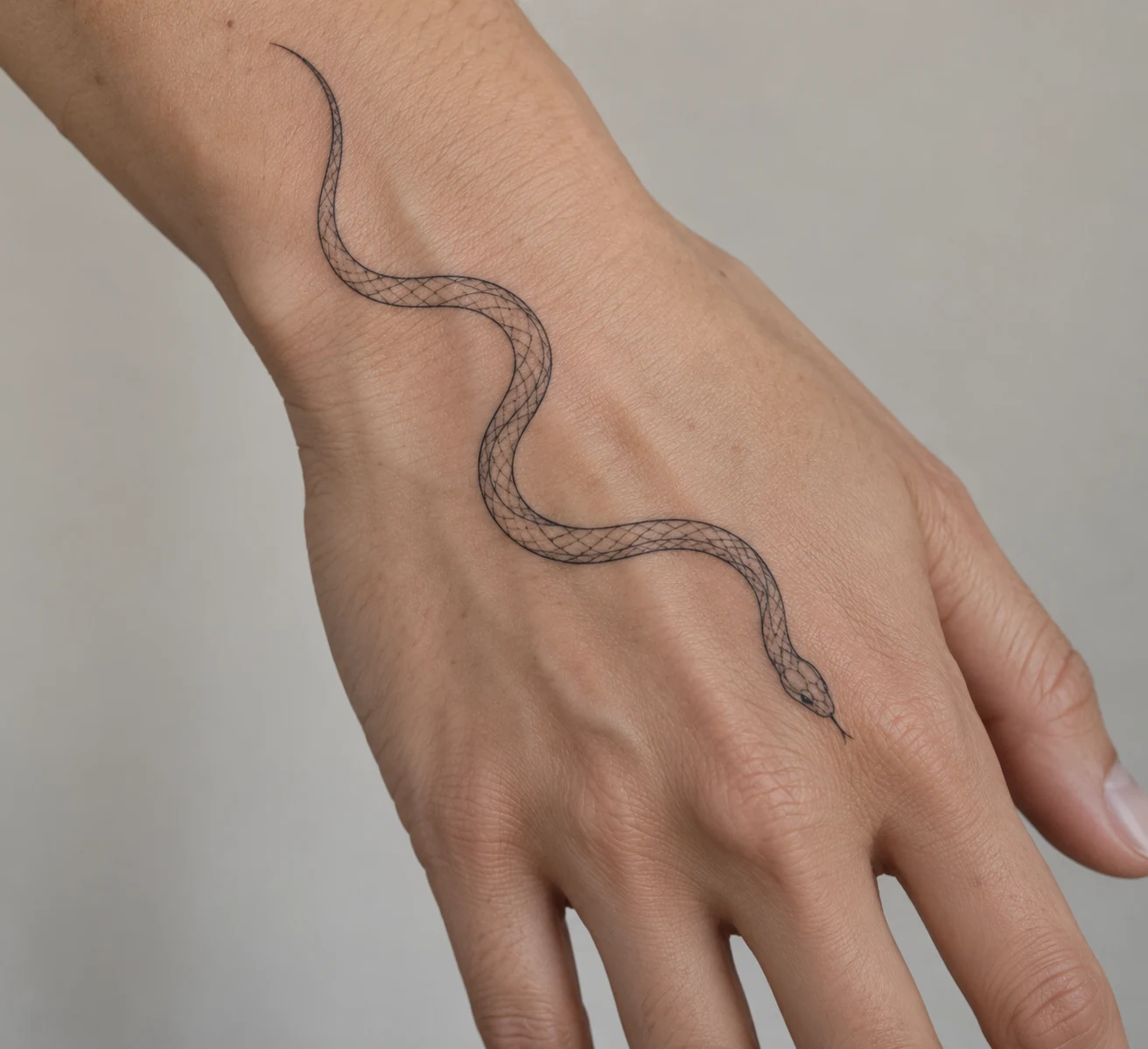
An open S-curve lets the snake’s outline carry the design. Leave the body mostly unfilled, with a defined head and tapering tail. This suits a spare composition; discuss how much detail fits before adding tiny scales.
2. Single-Finger Snake
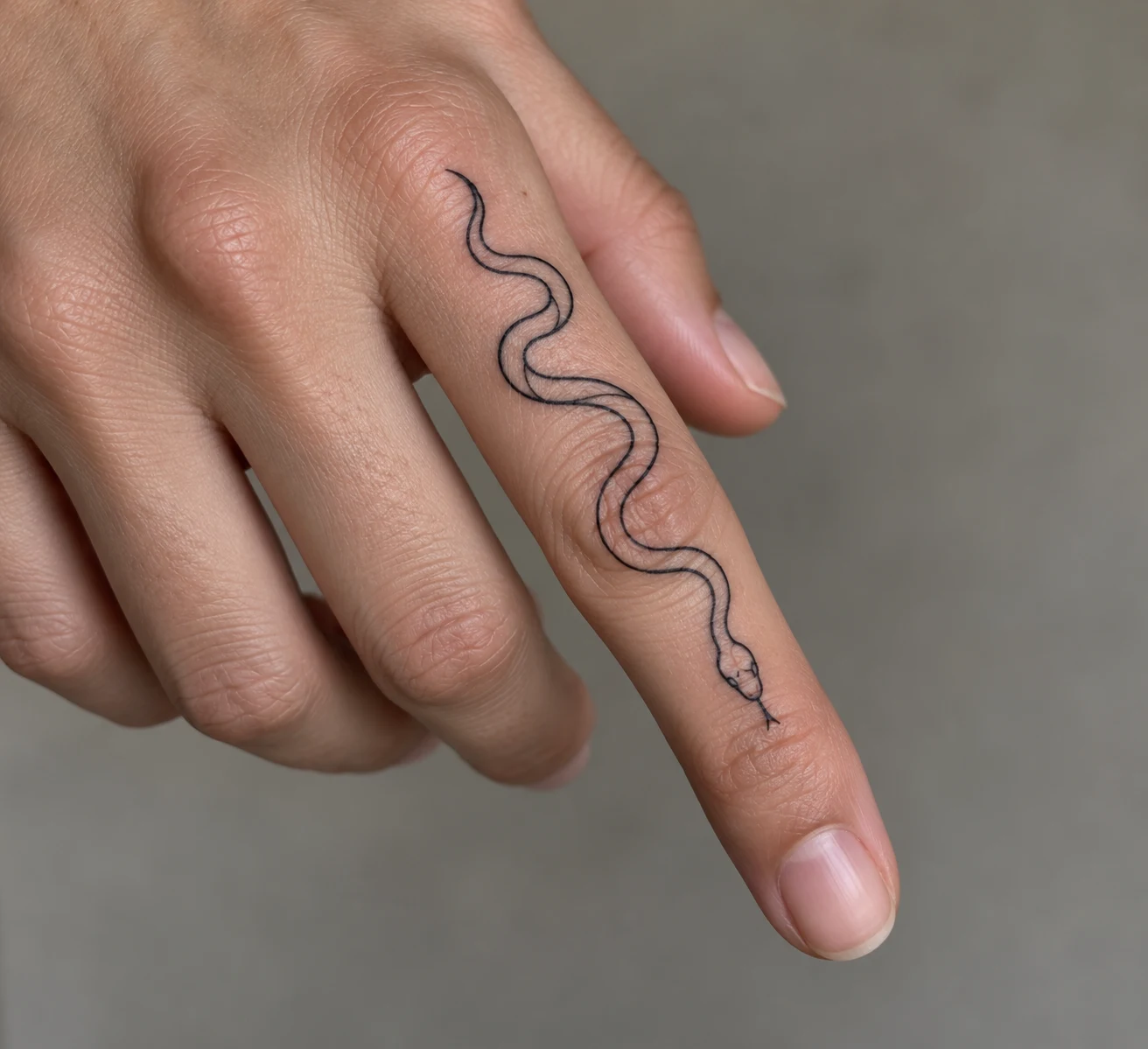
Place the head near the finger’s base and let the tail travel toward the fingertip. The lengthwise arrangement gives the snake a clear direction within a narrow footprint. Choose the finger and body width together so the shape has room.
3. Snake Ring Around a Finger
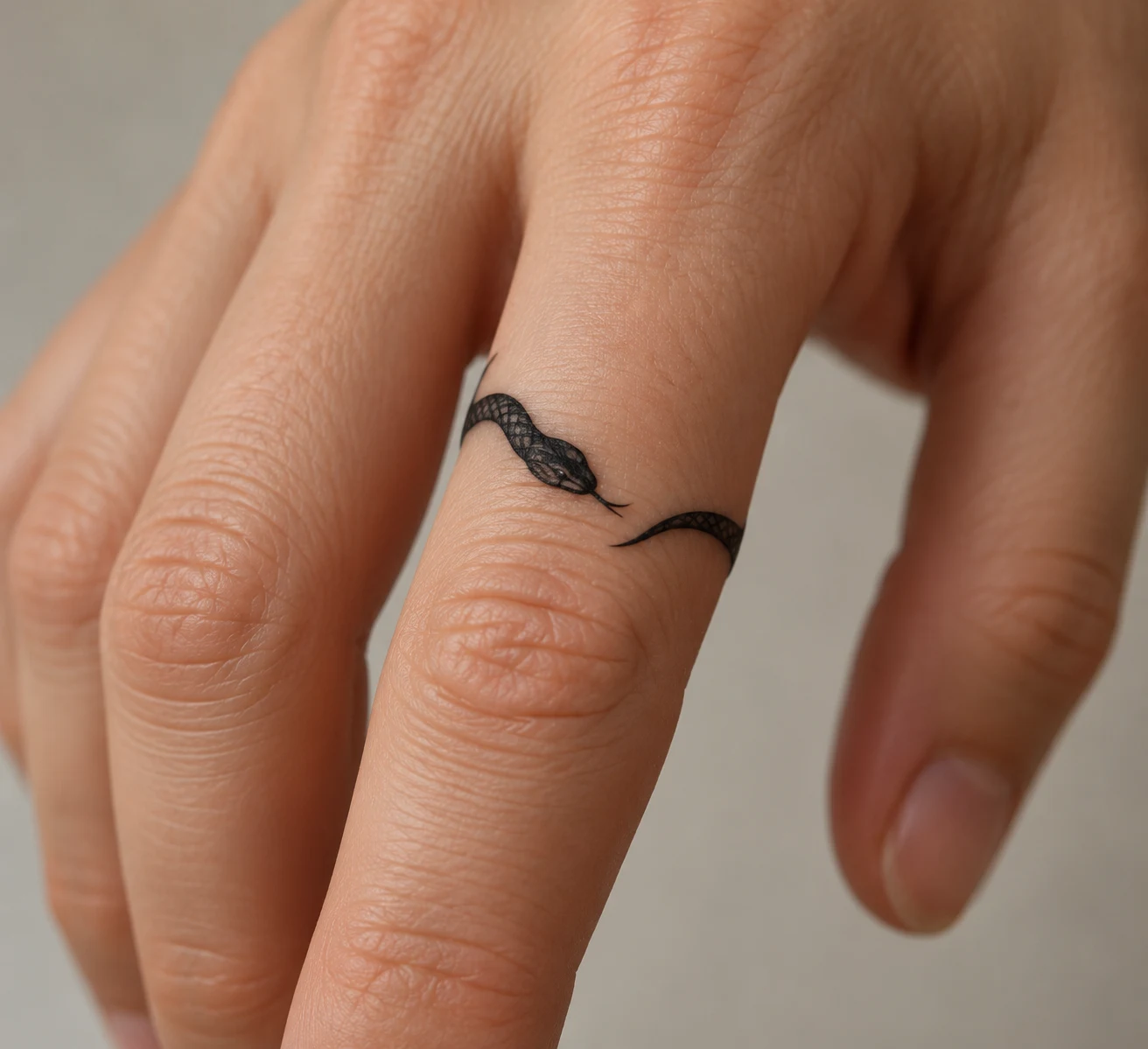
A snake curving around a finger creates a jewelry-like arrangement. Keep the head visible on top, with a small gap between head and tail. For this compact concept, a clear wrap matters more than a full set of scales.
4. Snake Along the Thumb Side
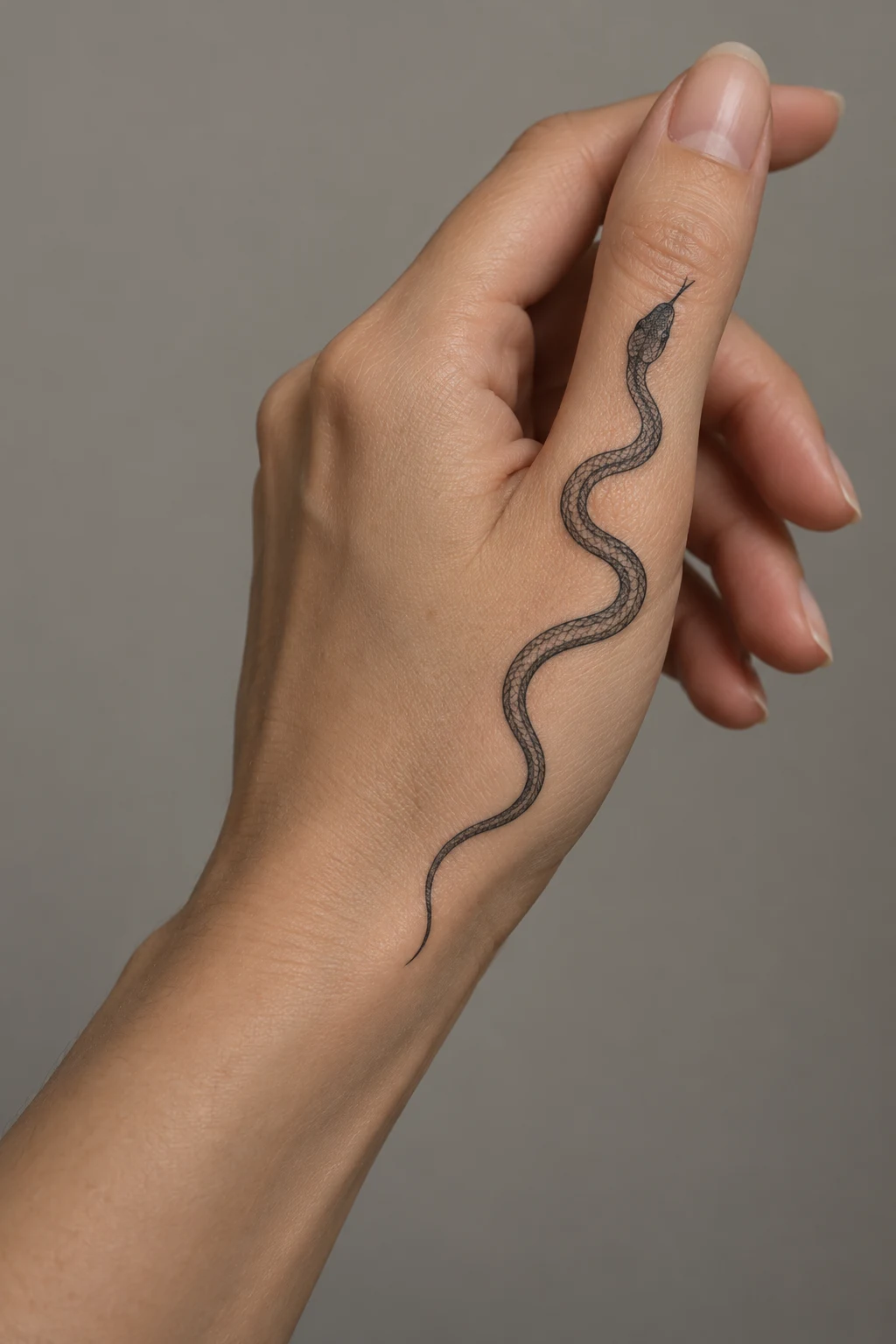
Follow the hand’s thumb-side contour with a gently bending body. This placement suits readers who prefer an off-center design. Ask to see the proposed shape with the thumb relaxed and extended before settling on its exact position.
5. Small Coiled Snake
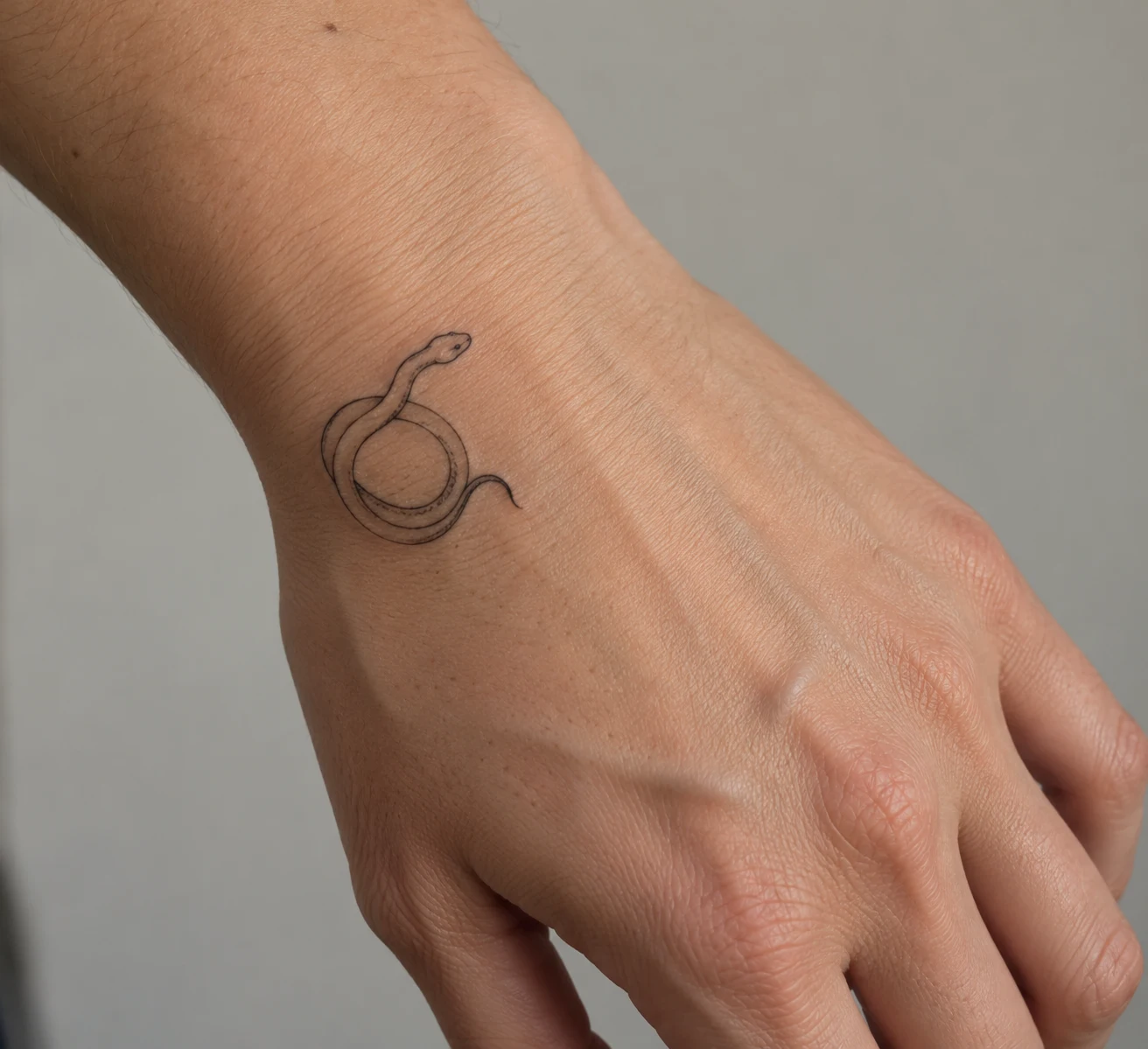
A loose coil near the wrist keeps the motif contained, with bare skin around it. Leave an opening through the center and keep the head separate from nearby curves. Choose this if you like a compact, rounded composition.
Bold Lines and Textures
6. Solid Black Snake
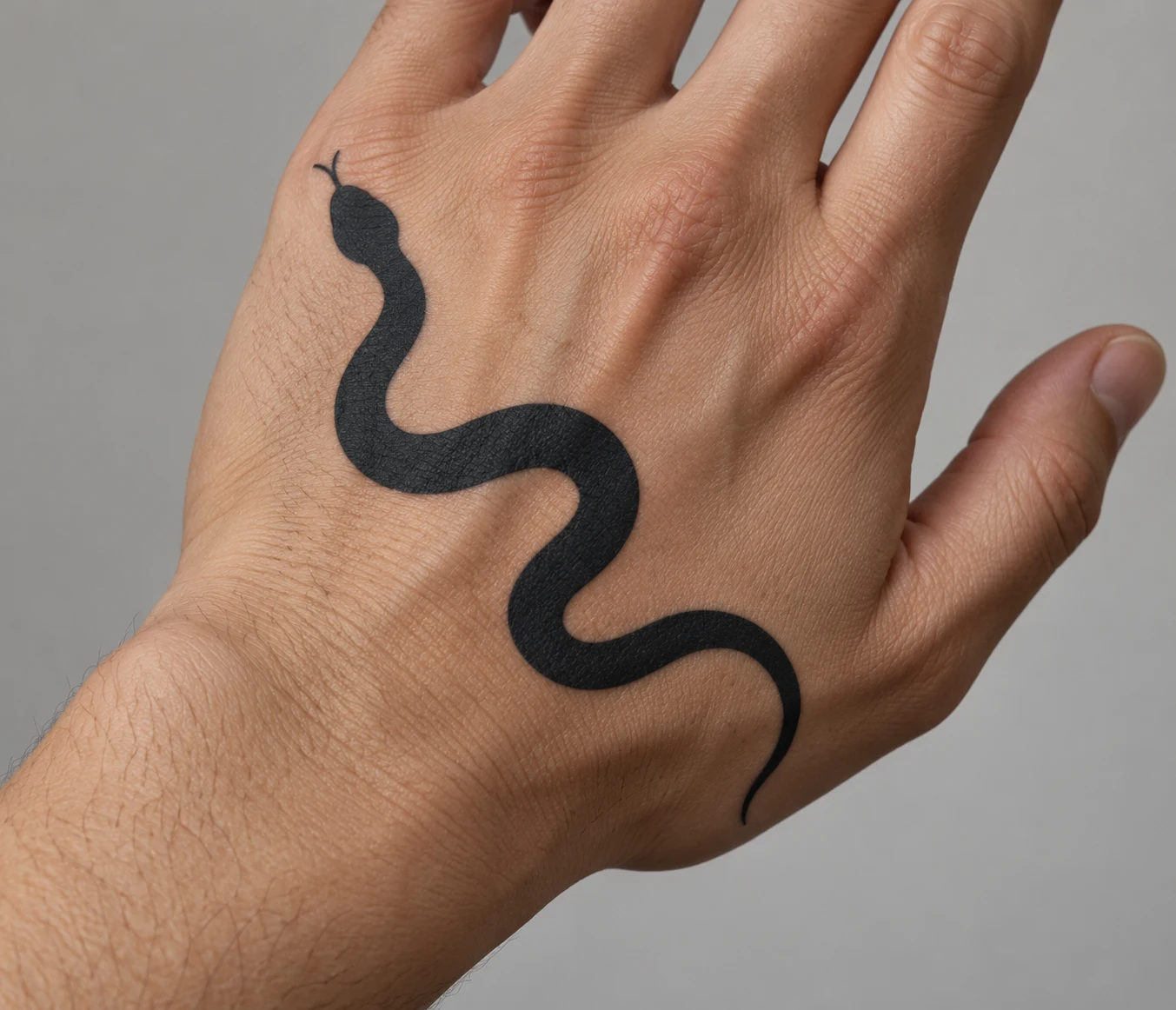
With a filled silhouette, body shape carries the design. The broad diagonal curve gives this version its graphic character without scales or shading. Keep visible skin between approaching sections so the snake’s path remains easy to follow.
7. Traditional Snake With an Open Mouth
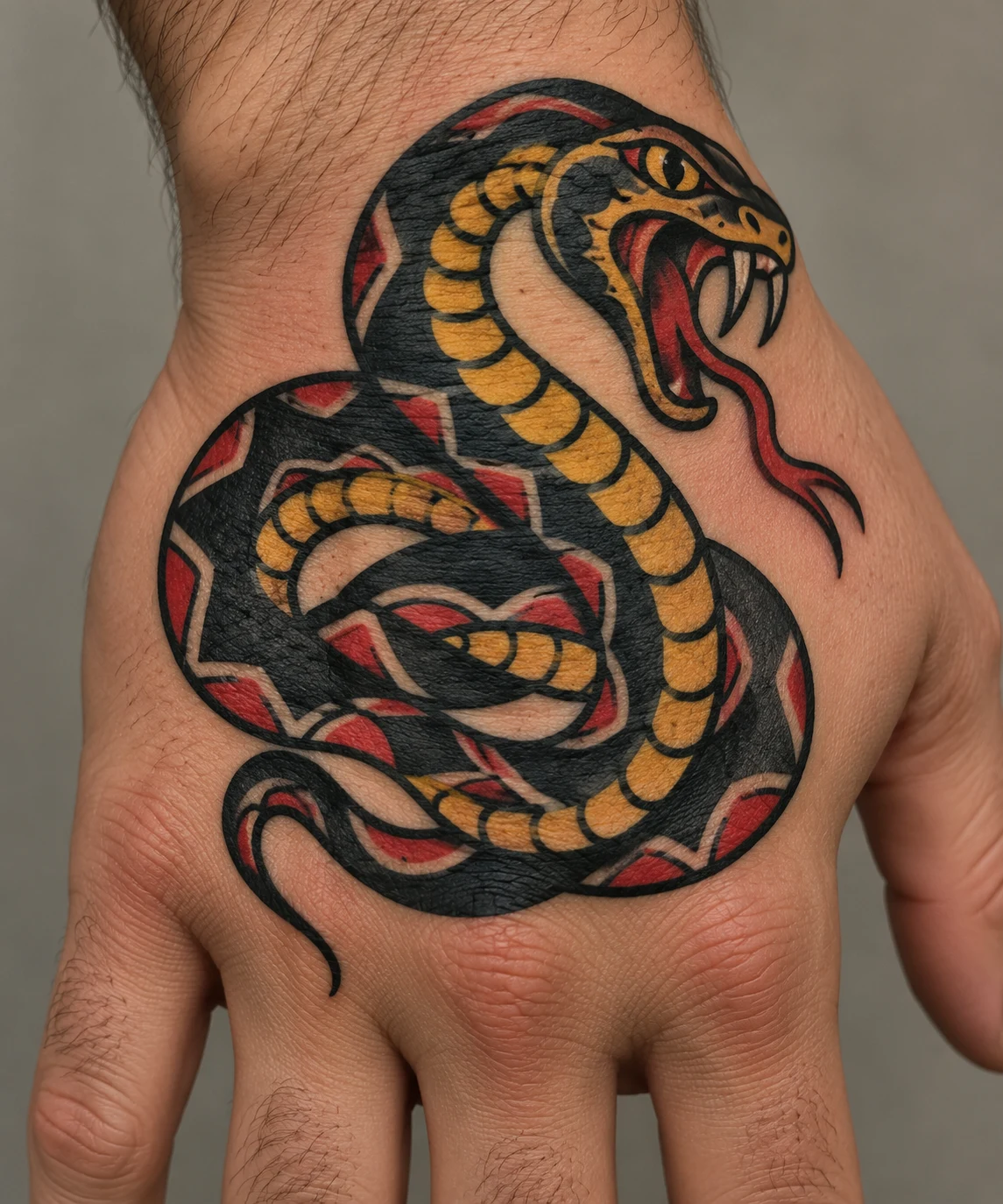
Thick outlines, simplified markings, and red and yellow accents frame an expressive open mouth. This suits readers who want a bold illustrative focal point. Give the head enough space, then fit the winding body around it.
8. Black-and-Grey Realistic Snake
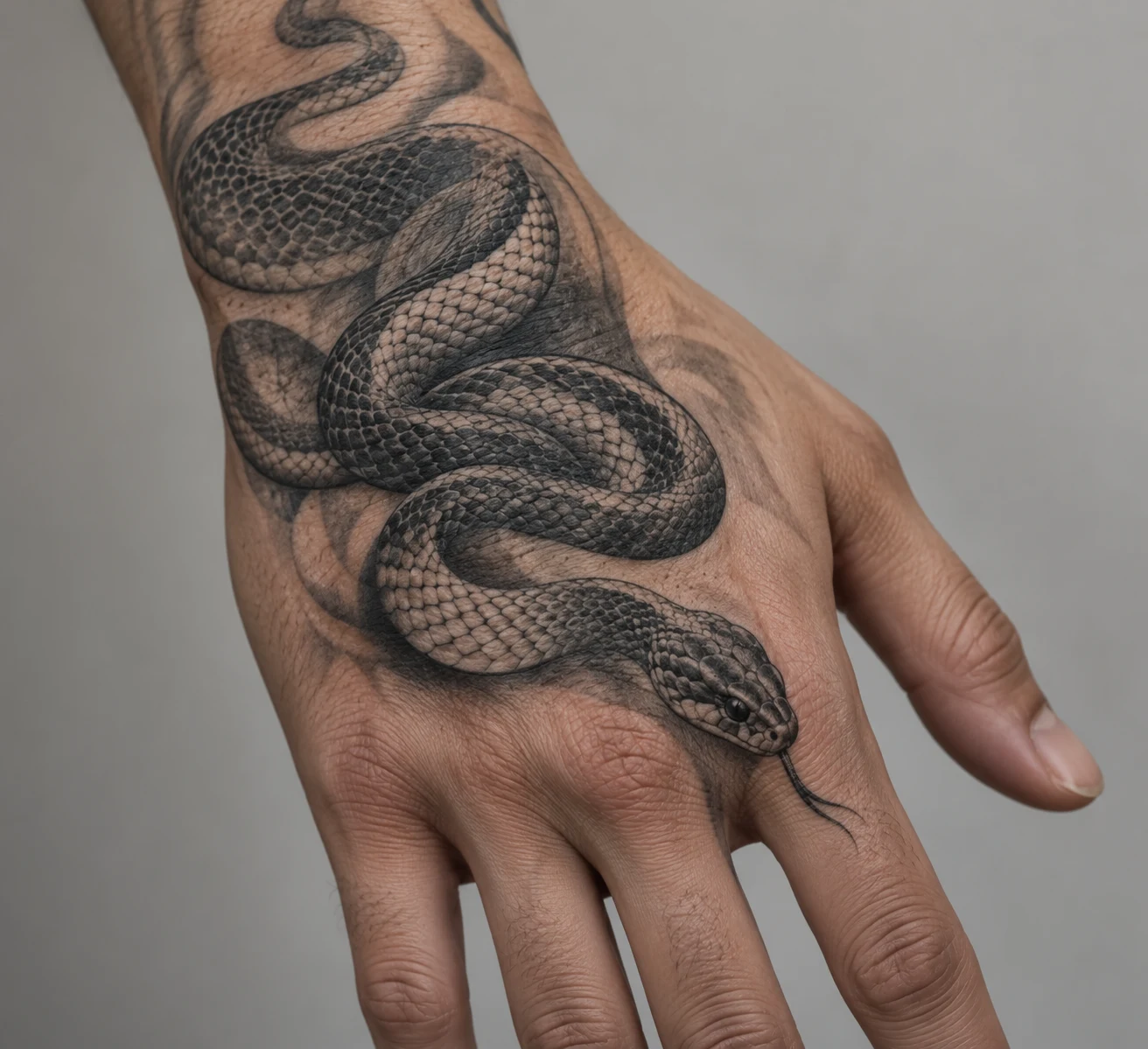
Shaded coils and a defined head create a naturalistic appearance. Selective scales add texture without covering every surface. If realism appeals to you, decide which features deserve the most space and let that guide the overall coverage.
9. Stippled Snake
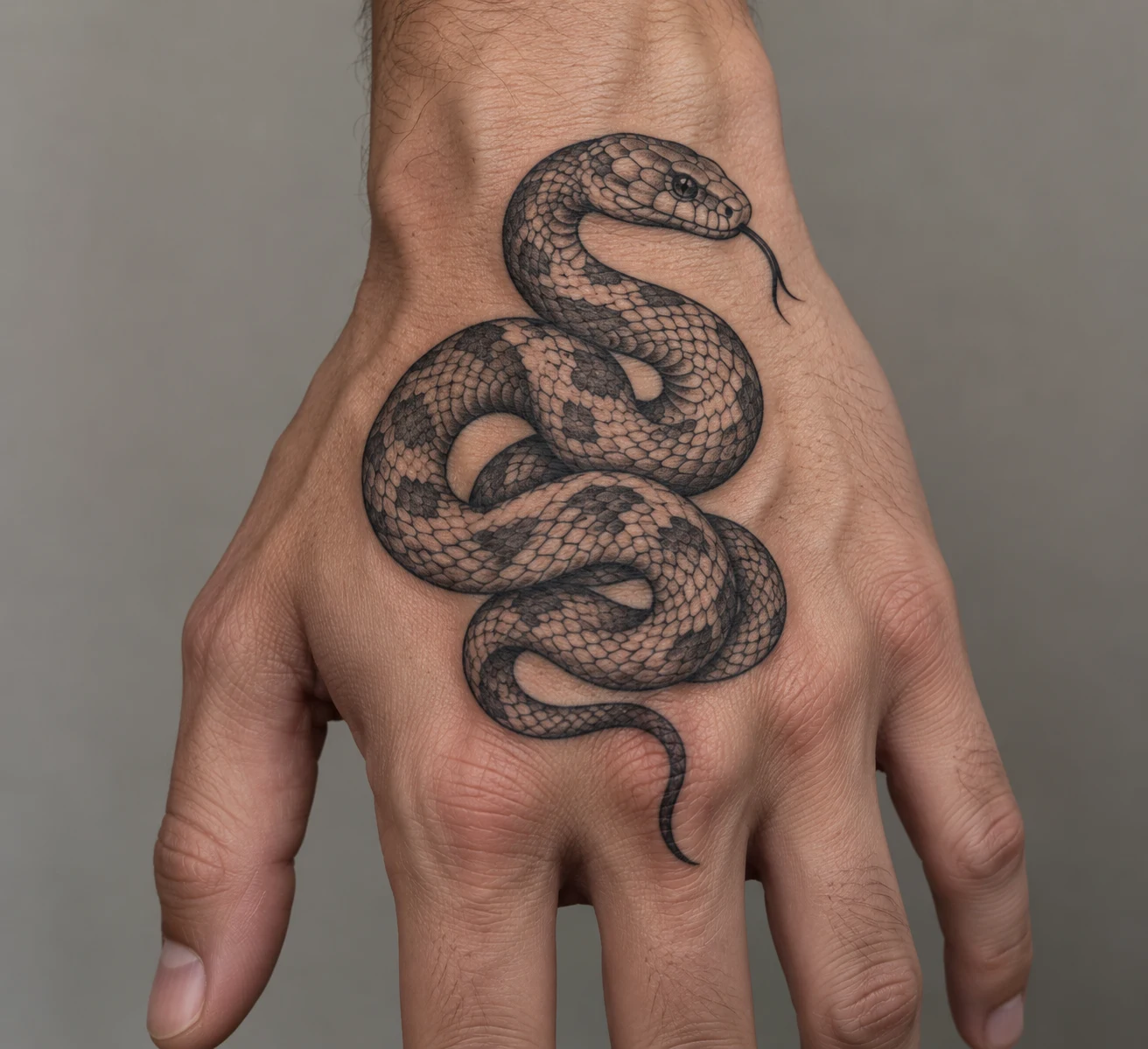
Dot shading gives the body a visibly textured finish. Denser dots can define overlapping coils, while lighter areas keep the composition open. This is a useful direction if you want a black design with texture inside the outline.
10. Snake With Geometric Body Patterns
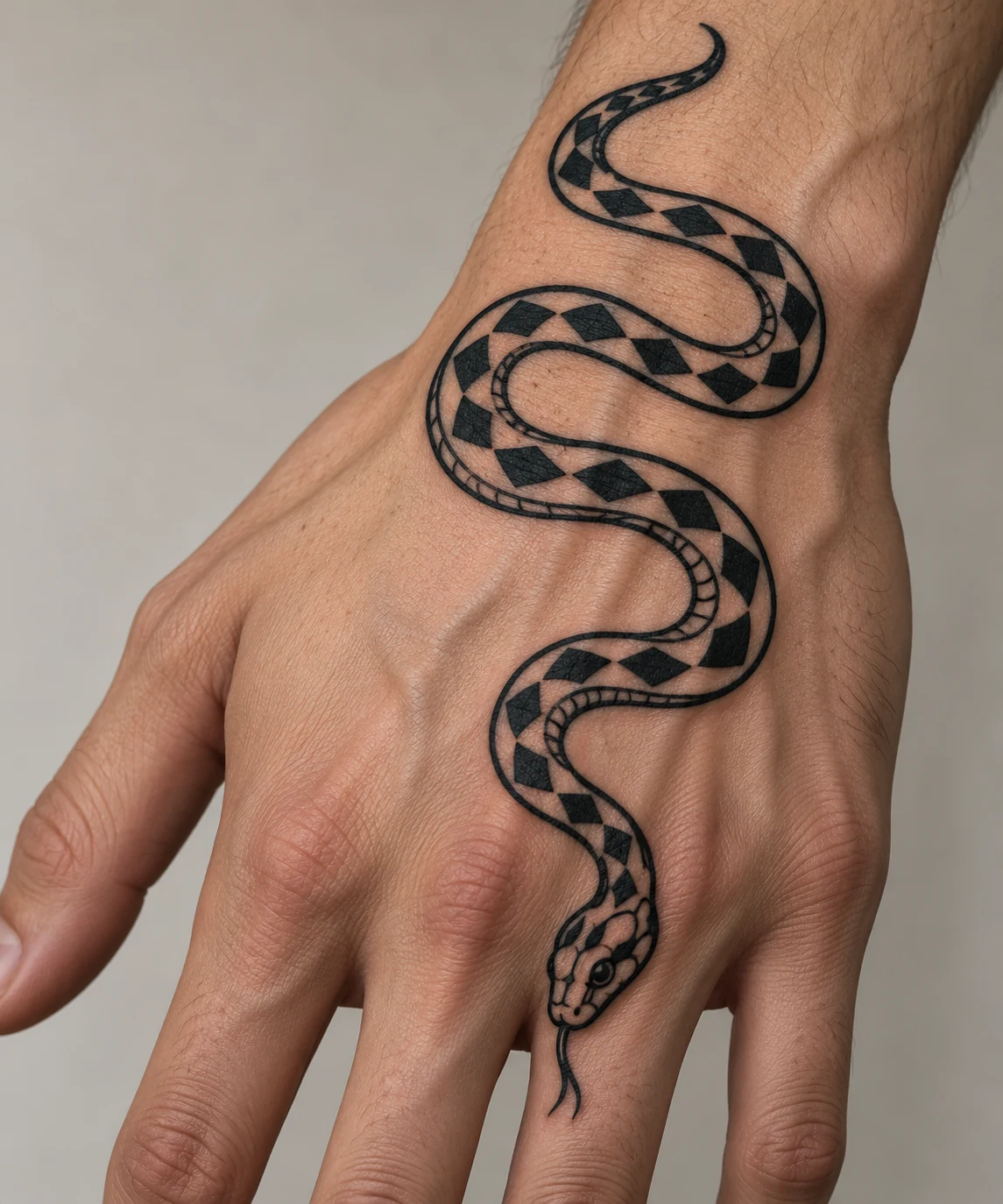
Repeating diamonds introduce a graphic rhythm along the snake’s body. Keep the outer curve simple enough to show the pattern clearly. If you like angular decoration, consider this approach; the markings need no assigned symbolic meaning.
Shapes That Follow the Hand
11. Snake Stretching From Wrist to Knuckle
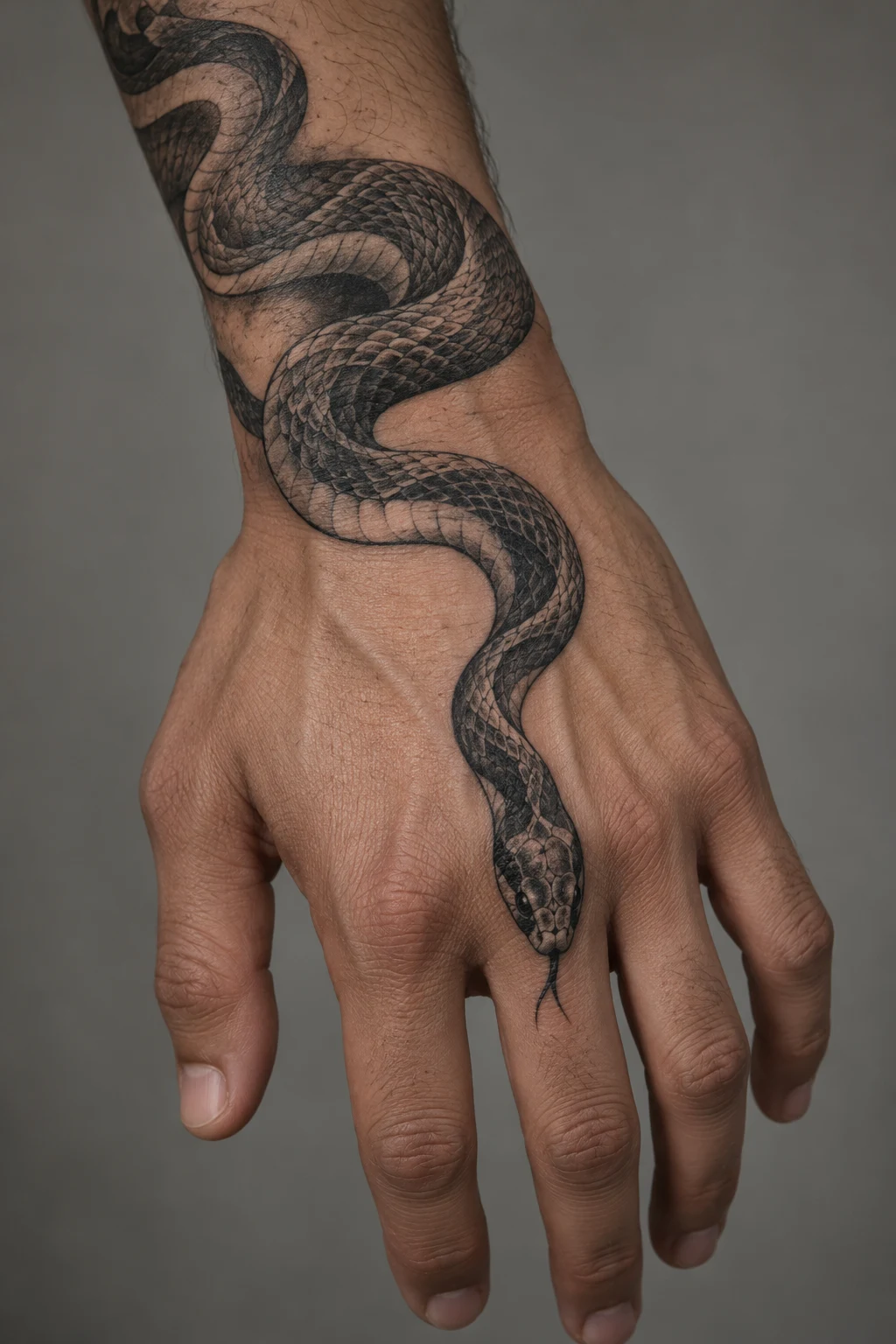
An extended body connects the wrist with the middle knuckle. Place the head at the knuckle end for a clear destination, then use broad bends along the hand. Choose this for a design that bridges both areas.
12. Snake Weaving Between the Knuckles
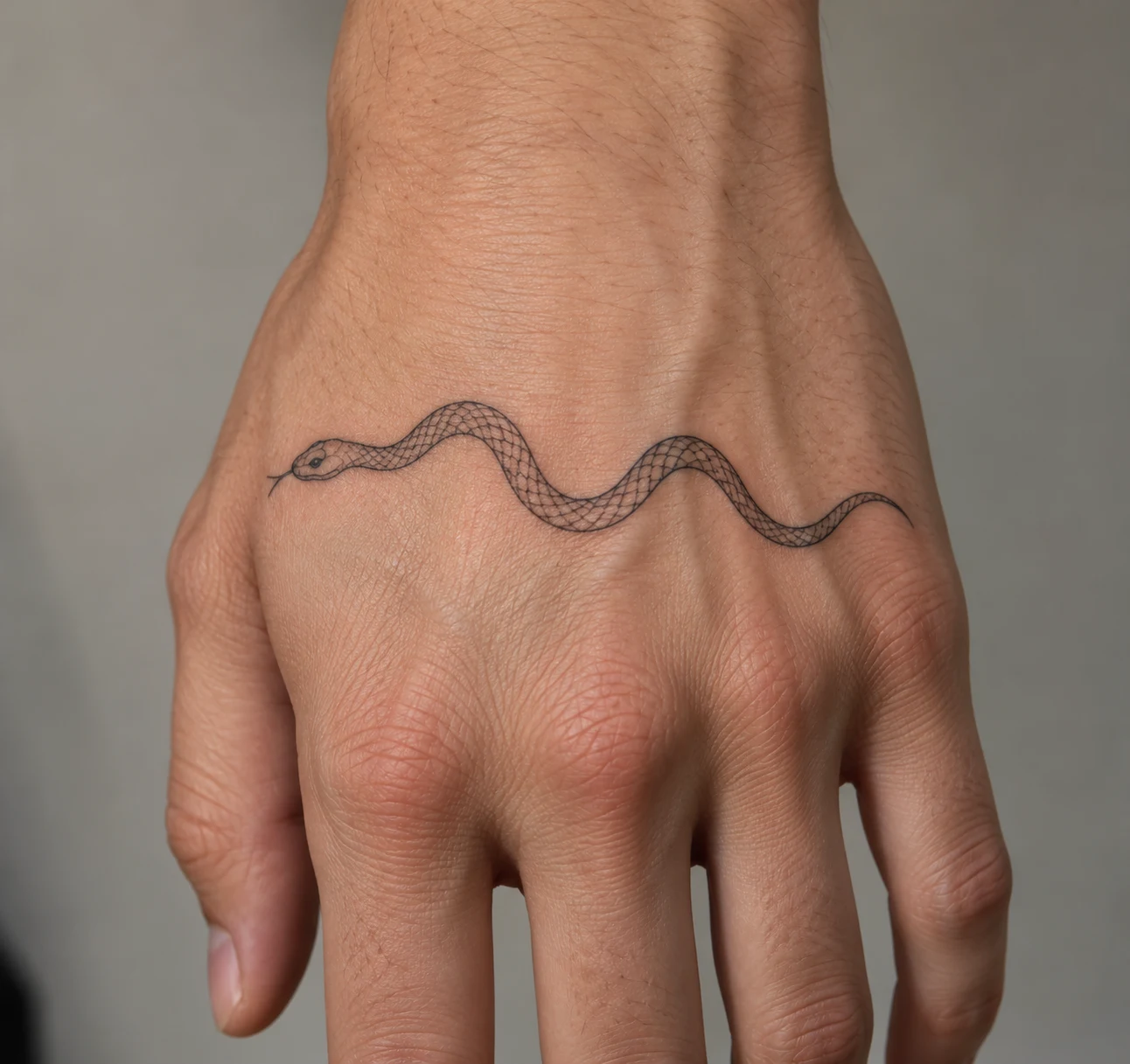
A shallow sideways wave follows the arc below the knuckles. It offers a horizontal layout with several gentle bends. Review the drawing on a relaxed hand and a loose fist to judge how the arrangement looks in both positions.
13. Broad Spiral Snake
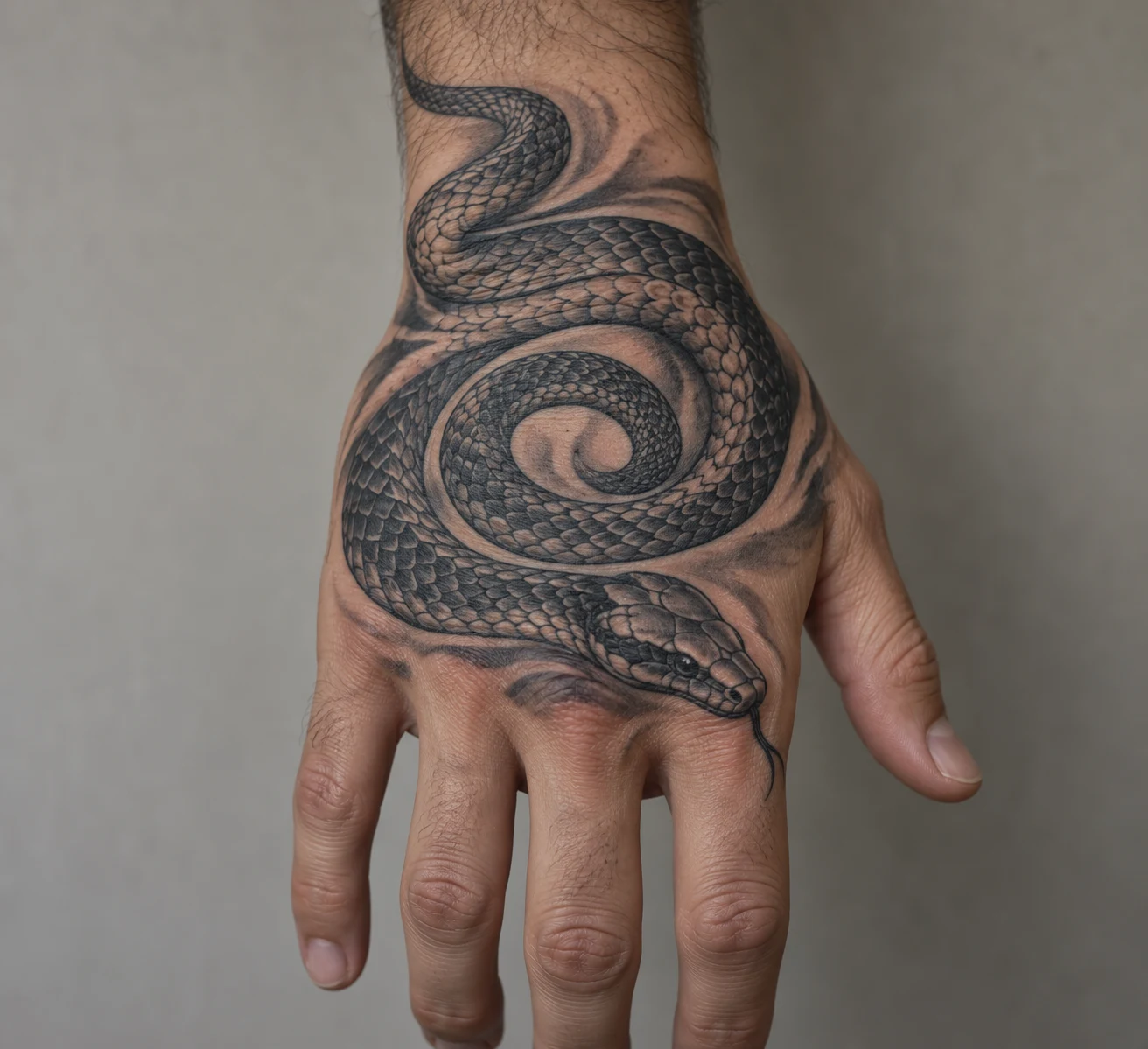
An expansive spiral makes one snake the central feature across most of the hand. Leave generous channels of bare skin between turns. Compared with the small coil, this concept suits someone who wants broader coverage from a single motif.
14. Two Intertwined Snakes
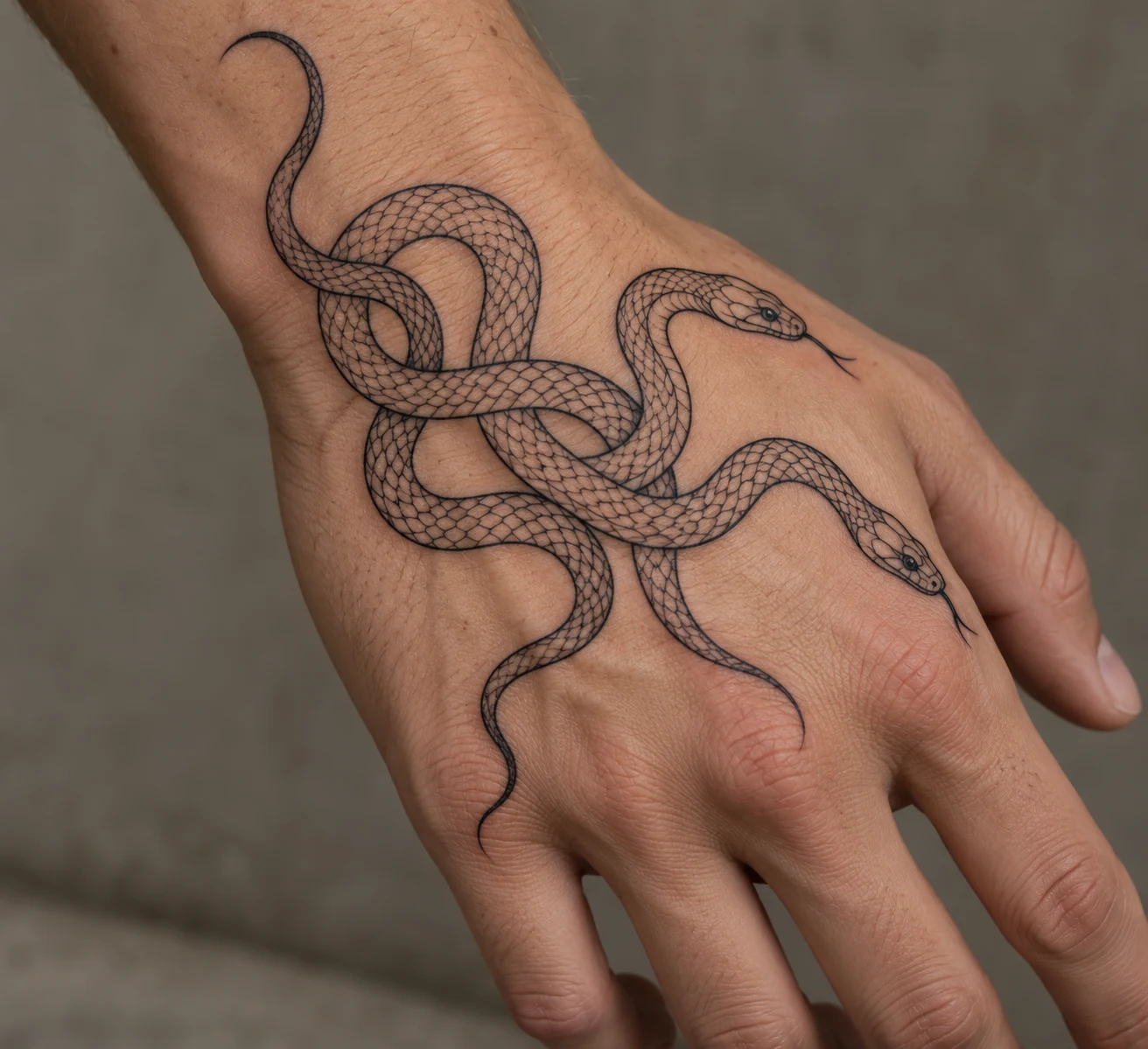
Two crossing bodies create an interwoven composition. Give each snake a distinct marking pattern or different shading so both paths can be traced. Choose this for the interaction between the forms, with any personal meaning left to you.
15. Cobra With a Spread Hood
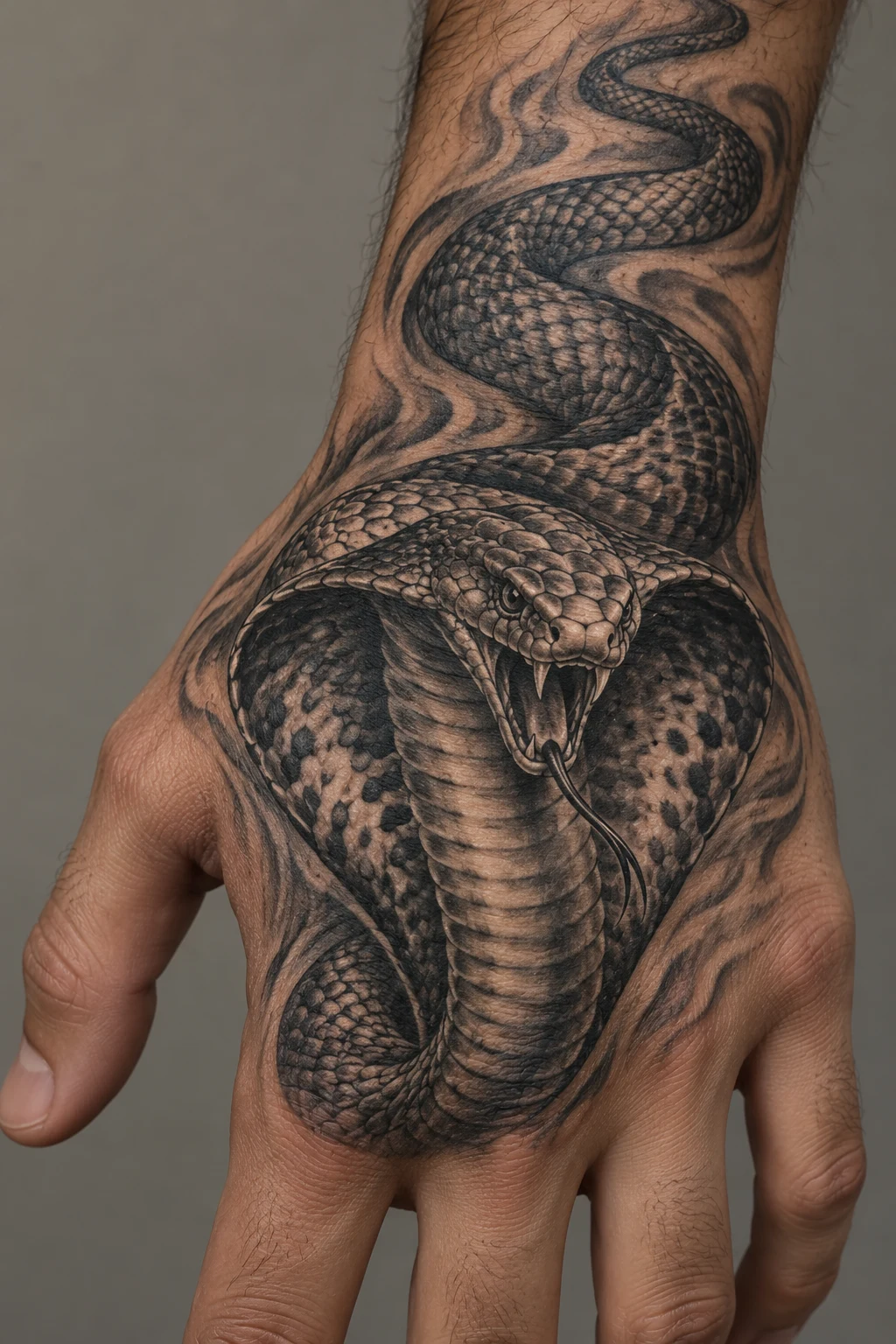
A frontal cobra places a broad hood near the knuckles, with the body curving toward the wrist. The hood supplies a strong focal point and a more symmetrical upper shape. Keep surrounding details restrained if that silhouette is your priority.
Snakes With Other Motifs
16. Snake Winding Around a Rose
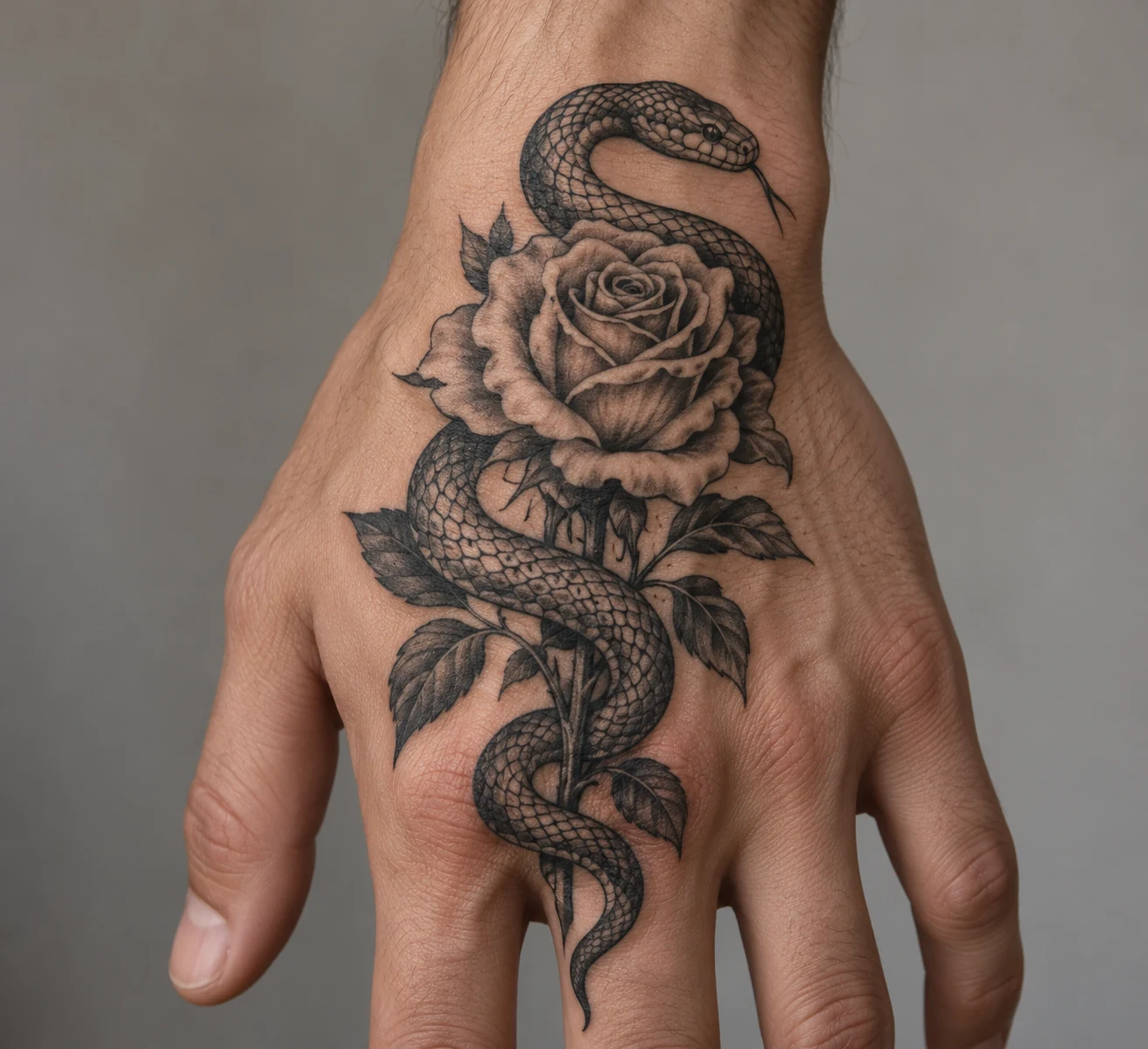
Rounded petals contrast with the snake’s continuous body. Decide whether the rose or snake should draw attention first, then give that element more space. Open loops around the flower help keep both subjects recognizable.
17. Snake Wrapped Around a Dagger
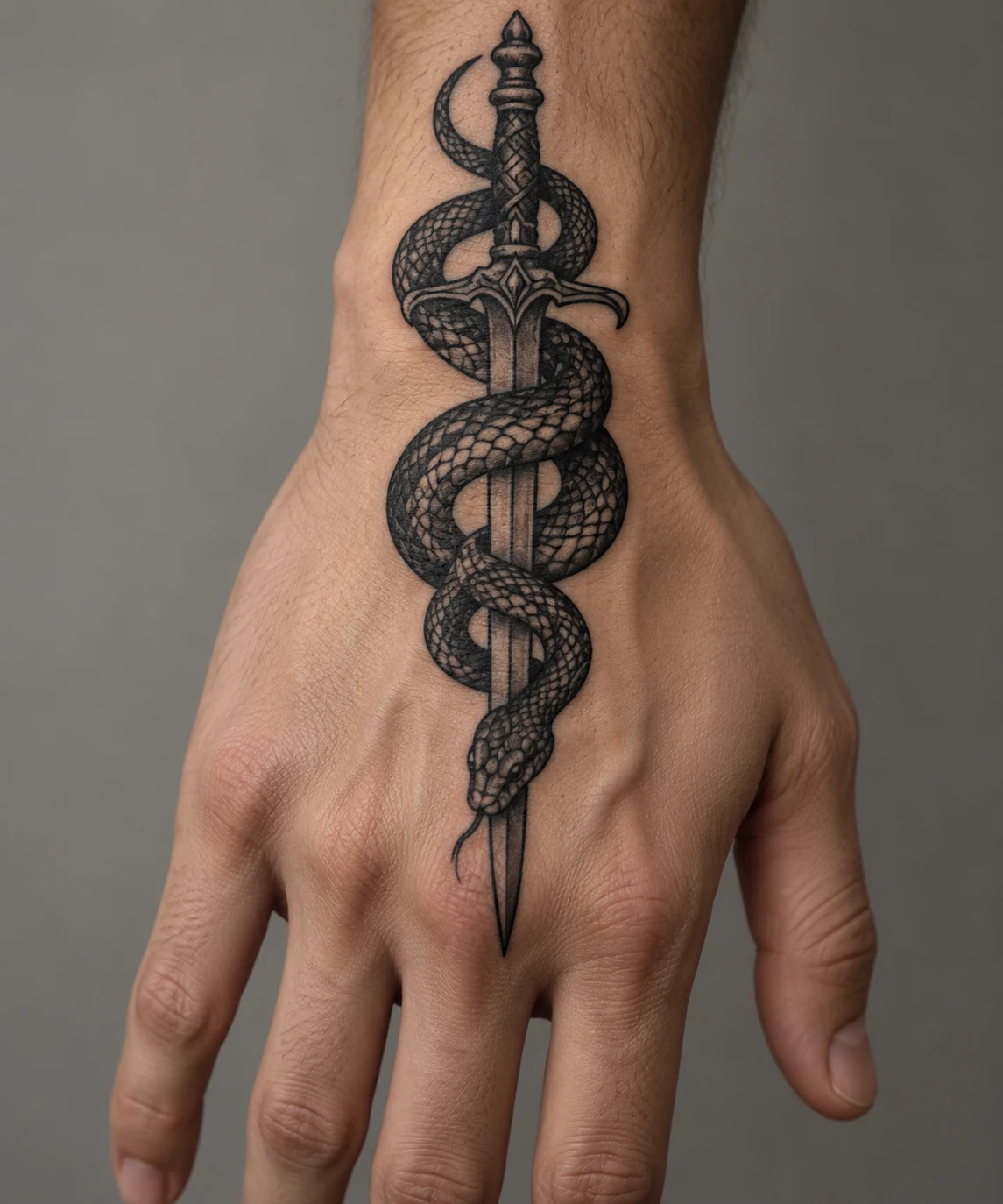
A slender dagger creates a straight axis for the snake’s loops. This suits readers who like a structured, directional composition. Make the crossings clear so the blade remains visible and the body doesn’t disappear into the handle.
18. Snake Threading Through a Skull
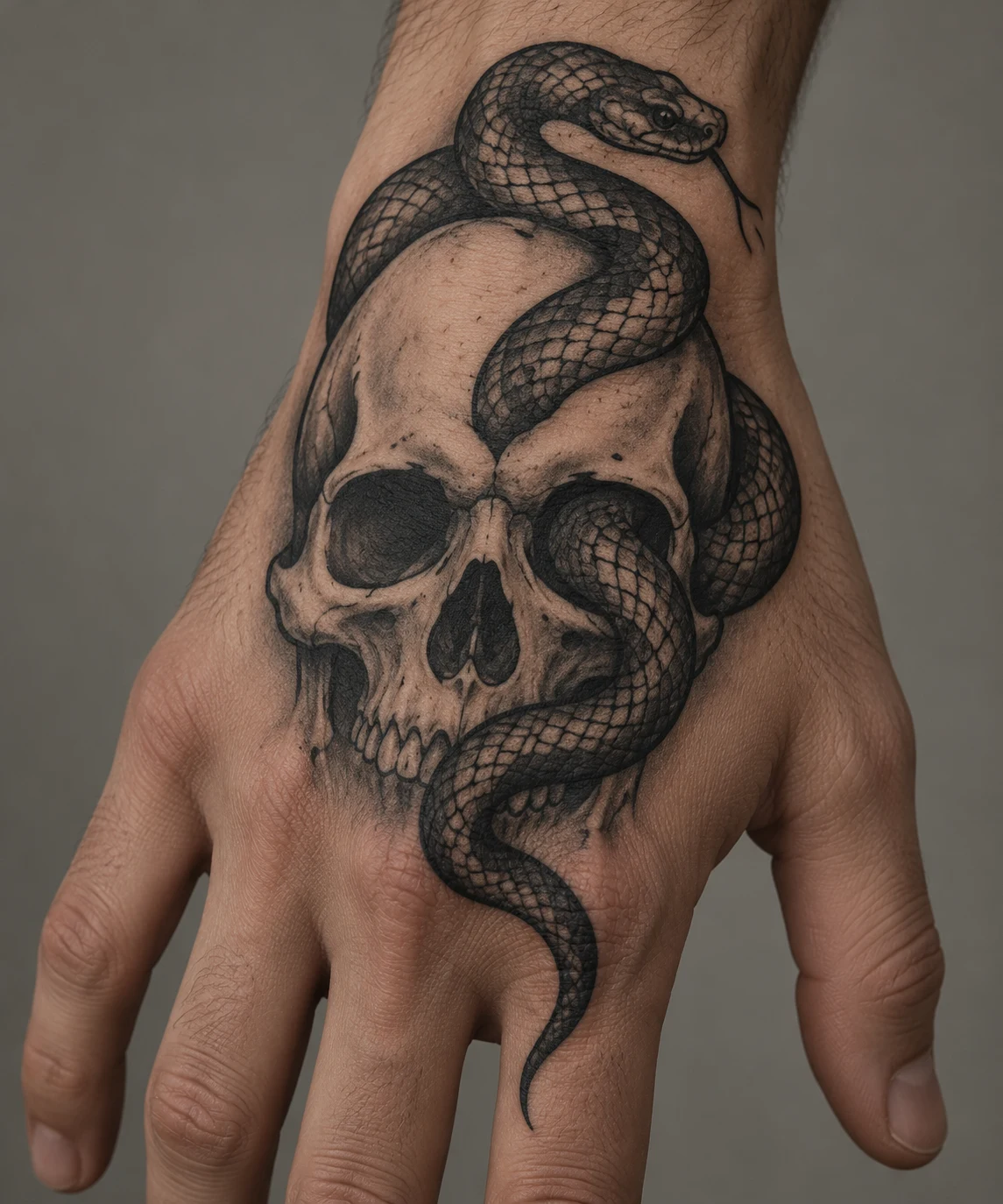
Thread the snake through one eye socket and curve its body beside the skull. Simplified teeth and shading leave room for the snake. This offers darker imagery while keeping the composition focused on two identifiable subjects.
19. Snake With a Crescent Moon
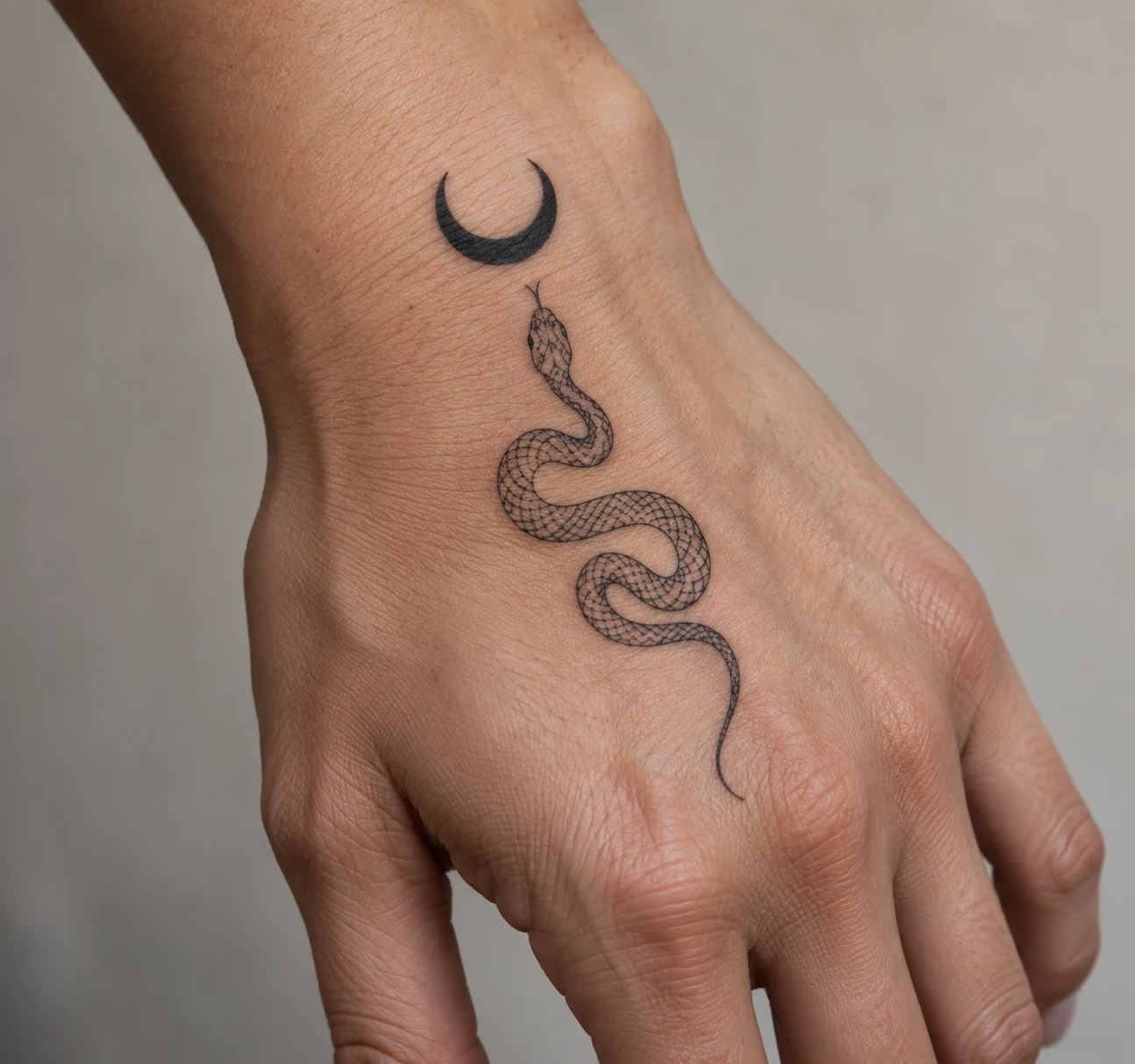
One crescent adds a celestial accent above a gently curved snake. Leave space between them so each silhouette stays distinct. Consider this pairing if you want a small companion motif without filling the hand with additional symbols.
20. Snake Woven Through a Leafy Sprig
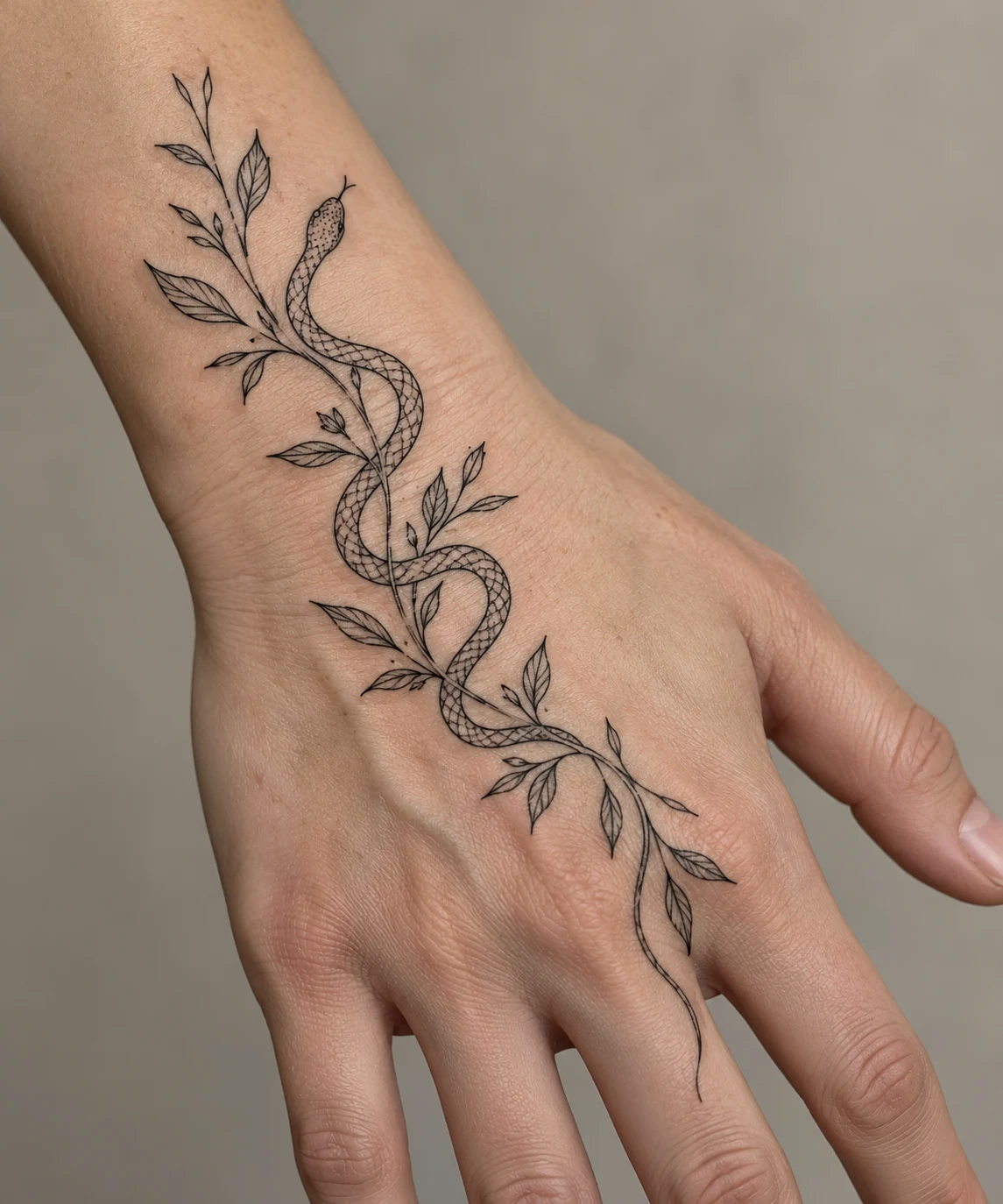
A leafy stem adds small organic accents along a diagonal snake. Use a few separated leaves so the body remains easy to trace. Choose this if you prefer an elongated botanical arrangement with no large flower at its center.
Choosing Your Direction
Shortlist two or three concepts, then compare coverage, line weight, head placement, and accompanying motifs. Bring those preferences to an artist for a drawing fitted to your hand. If you’re still comparing overall layouts, explore the broader hand tattoos guide.

