
Hand tattoo pain varies from person to person, so a pain score can’t reliably predict your experience. The exact placement, design and time spent tattooing all matter. Before booking, focus on what your design involves, how you’ll communicate discomfort and what you need to manage healing afterward.
How bad is hand tattoo pain?
Hand tattooing can be painful. You should prepare for discomfort, but neither a pain chart nor someone else’s account can tell you how intense your appointment will feel. There’s no dependable universal score for a hand tattoo, and describing the whole hand as one placement overlooks the area your artist will actually work on.
Other people’s experiences can help you form questions, but they aren’t promises. Someone describing a small outline on one finger is discussing a different session from someone describing extensive shading across the hand.
It also helps to distinguish pain during tattooing from discomfort afterward. During the appointment, you can tell the artist what you’re feeling and request a pause. Afterward, the issue becomes how the area is healing and whether symptoms are improving or need medical attention.
Pain by placement: back of the hand, knuckles, fingers and palm
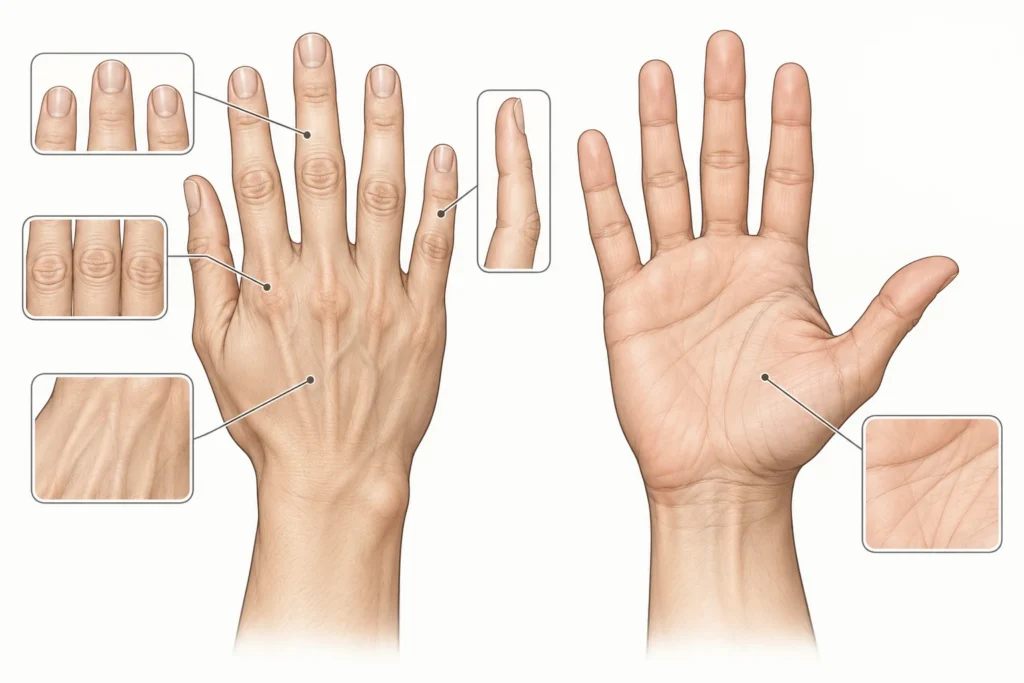
Use this table to identify the placement you mean before discussing pain. The table offers consultation questions; it can’t predict which area will hurt most for you.
| Placement | What to clarify with your artist |
|---|---|
| Back of the hand | Does the design stay in the central area, or extend toward the wrist, knuckles or thumb? Ask about the full footprint. |
| Knuckles | Which joints will the design cross, and how much linework or shading will sit directly over them? |
| Finger tops | Is the tattoo on one finger or several? Ask how the artist will position and support each finger. |
| Finger sides | Ask the artist to mark the exact surface; a design wrapping around a finger involves more than the visible top. |
| Palm | Confirm that the artist offers this placement and discuss their experience, technique and healing instructions for it. |
A placement name alone can’t tell you how the tattoo will feel. Ask the artist to explain the practical implications of your chosen area, while treating any pain prediction as an estimate.
An anatomical explanation may sound convincing without proving that one spot hurts more than another. Claims about skin thickness, nerves or proximity to bone need evidence before they can support a dependable pain comparison.
The illustration below identifies locations only.

How design and session length affect the experience
Two designs with similar outer dimensions can involve different amounts of tattooing. An open outline leaves much of the space untouched; a densely filled design involves work across more of that space. Ask your artist to explain the planned linework, shading, solid areas and any repeated work within them.
Distinguish the amount of time spent being tattooed from how intense a particular moment feels. A shorter session doesn’t guarantee mild pain, and a longer estimate doesn’t mean every part will feel the same. Small tattoos and fine lines aren’t guarantees of an easy appointment.
For example, a skeleton hand tattoo may extend across the back of the hand and several fingers. Its relevance to pain planning is the territory and work involved, rather than the skeleton motif itself.
For planning, get an estimated session length and ask whether the plan allows breaks. Treat that estimate as a planning aid, with room for adjustment during the appointment.
Planning for discomfort before and during the appointment
Discuss pain concerns before the session starts. If you previously struggled during a tattoo appointment, explain what happened rather than simply describing your pain tolerance as low. Mention whether you needed frequent pauses or had to stop early.
Agree on a clear way to request a pause, especially while your hand is being held in position. You don’t need to wait until discomfort becomes overwhelming to speak up. Ask how breaks will work and what happens if you can’t finish the planned session.
Get preparation instructions directly from the studio. If you’re considering a numbing product, discuss it with the artist before applying anything. Don’t assume a product is suitable because it’s sold for tattoos. Questions about its safety, your medications or a health condition belong with a qualified clinician; do not change prescribed medication based on tattoo advice.
Pain after a hand tattoo: healing and warning signs
Some early tenderness, redness and swelling can occur after tattooing. Their presence alone can’t tell you whether healing is normal. Pay attention to how symptoms change, and follow the individualized aftercare instructions you receive.
Seek prompt medical advice for worsening pain, redness spreading beyond the tattoo, pus or other concerning discharge, or fever and feeling unwell. These symptoms can indicate a complication that needs assessment. If changes are rapid or you feel seriously ill, seek urgent medical care. Breathing difficulty or swelling of the face or throat requires emergency help.
An artist can clarify aftercare instructions, but suspected infection or a significant reaction needs a healthcare professional. This guide can’t diagnose a healing tattoo or give an exact deadline by which pain should disappear.
Before booking, discuss how work and everyday hand use will fit with aftercare. Explain tasks involving gloves, frequent washing, gripping or friction so you can plan around the instructions you’re given.
What to ask your artist before choosing a hand placement
Bring the design or a clear reference to your consultation, then ask:
- Where exactly will the tattoo sit, including any areas it wraps around or crosses?
- How much linework, shading and solid coverage does it involve?
- What is the estimated session length, and how will we arrange breaks?
- How should I signal that I need a pause or want to stop?
- What preparation and aftercare instructions apply to this placement?
- What should I arrange around work and everyday hand use afterward?
For broader design and placement options, explore the hand tattoos guide. Before proceeding, make sure you understand the proposed work, have a way to communicate discomfort and know when healing concerns need medical advice. Those details are more useful than a promised pain score.

