
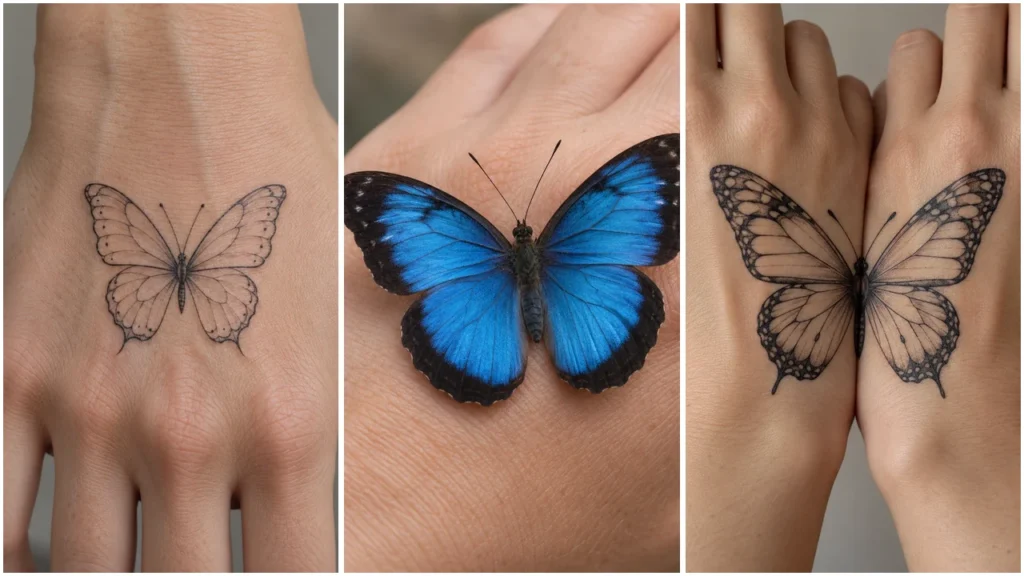
Butterfly hand tattoos can be a small outline beside the thumb, a colorful centerpiece, or a composition that connects both hands. These 20 ideas cover minimal linework, shaded and graphic wings, color treatments, and decorative pairings.
Compare the space each design occupies as well as its style. A butterfly you like as a large drawing may need a different level of detail for a finger or the edge of your hand. The images planned below are tattoo concepts to discuss with an artist.
Minimal Butterfly Hand Tattoos
These five ideas use simple contours, compact shapes, and open space. Start here if you want the butterfly’s shape to carry the design.
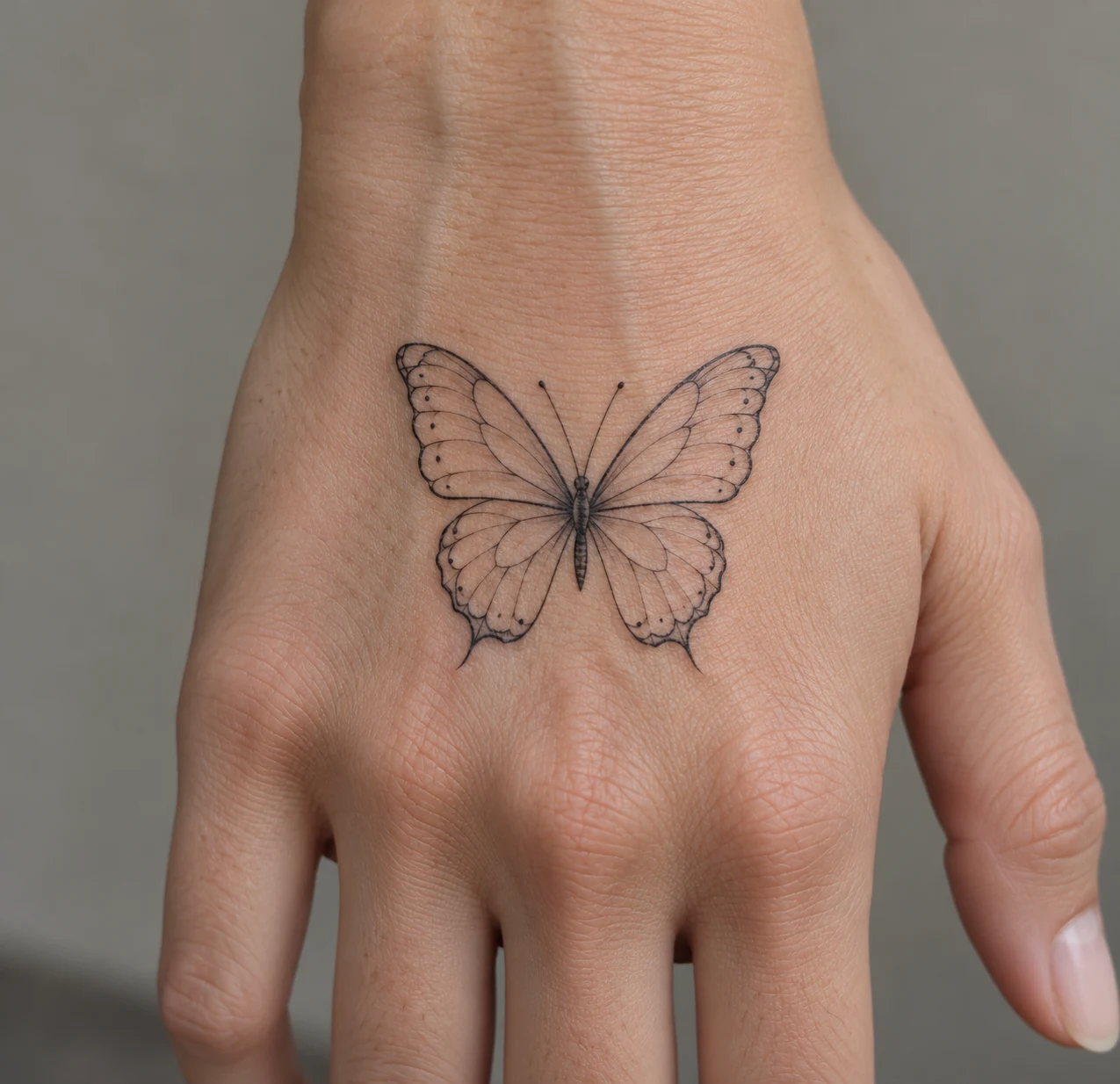
1. Fine Line Butterfly on the Back of the Hand
A thin outline and a few interior wing lines give this central butterfly an airy appearance. Choose it if you like open wings without dense patterning, and decide which details matter most before adding more lines.
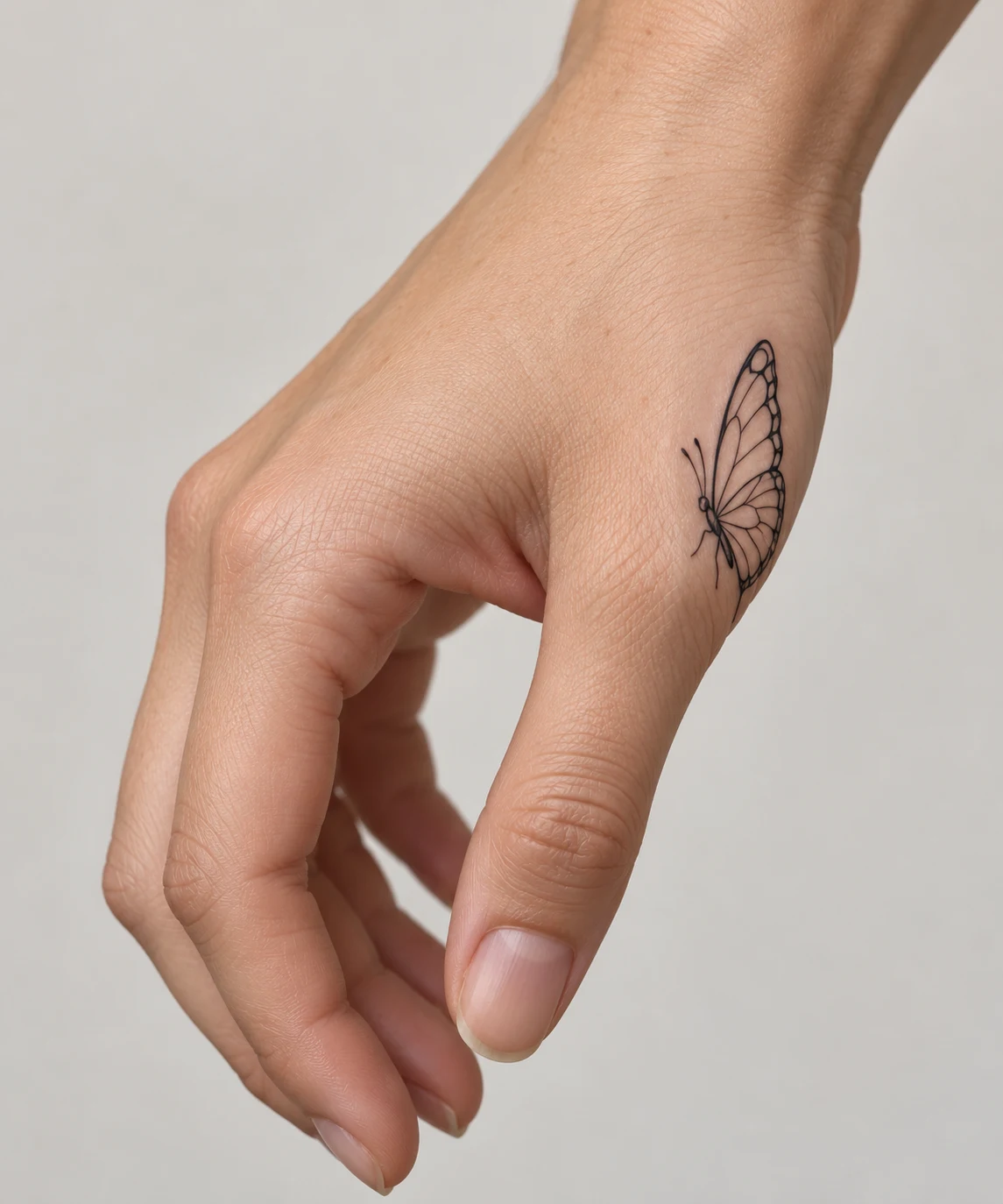
2. Small Butterfly Beside the Thumb
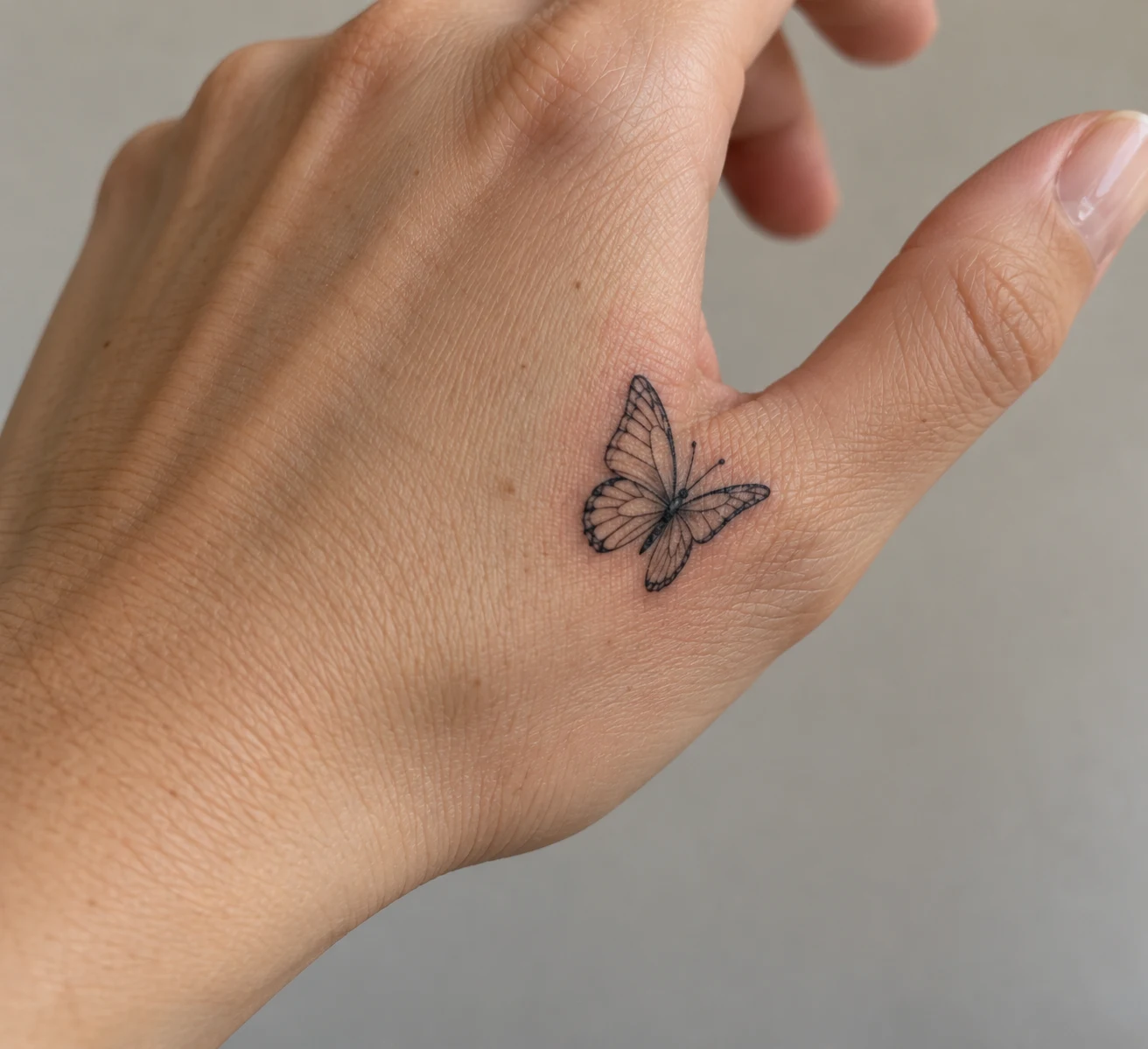
Angling a compact butterfly beside the thumb gives the design an off-center position. It suits someone who wants a small accent while leaving the middle of the hand open. Compare a gentle tilt with a more upright arrangement.
3. Single-Line Butterfly
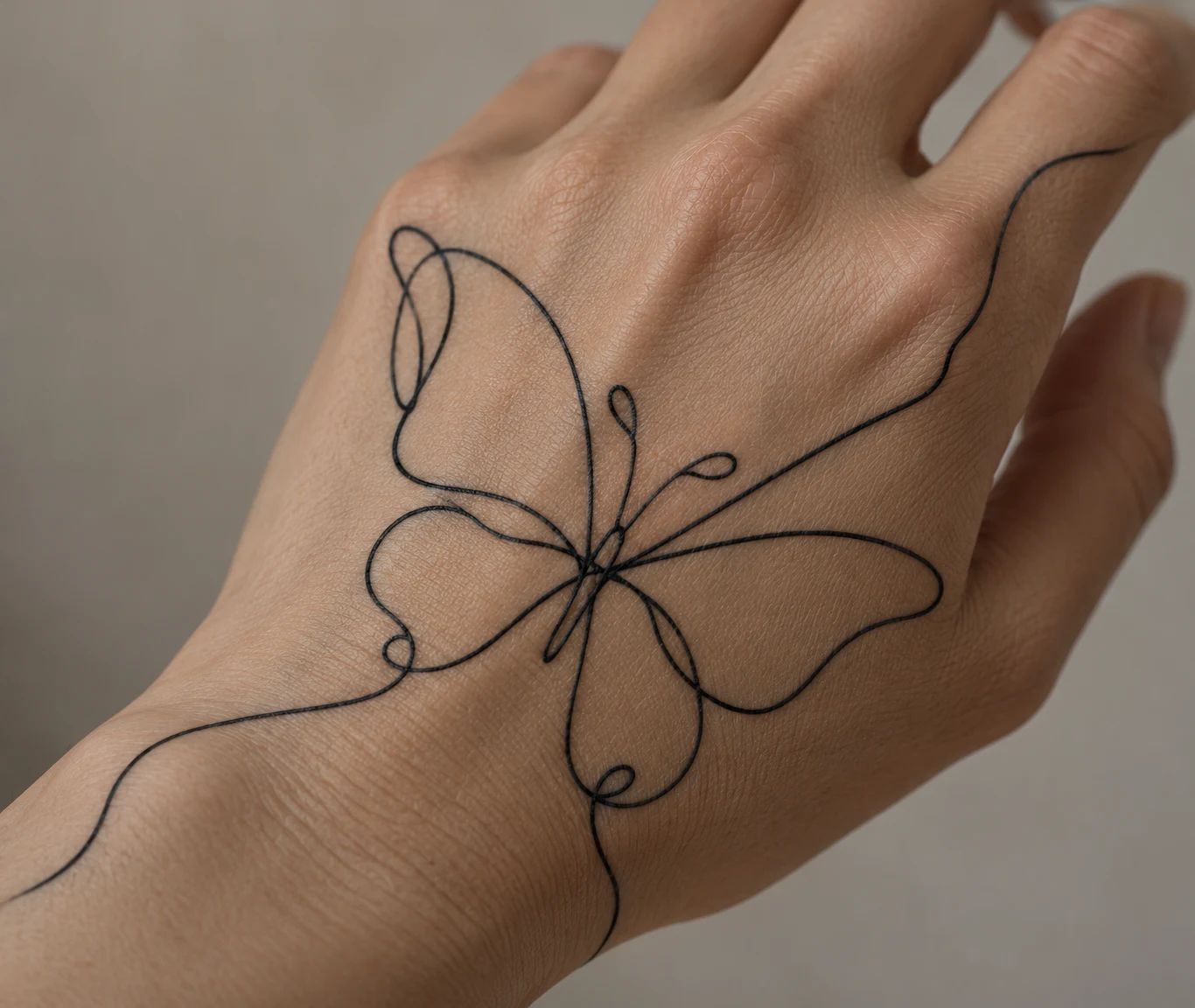
One flowing line suggests the wings and body without conventional wing markings. This abstract approach suits readers who enjoy curved shapes more than realistic detail. Keep the overall butterfly silhouette clear enough for the design to feel intentional.
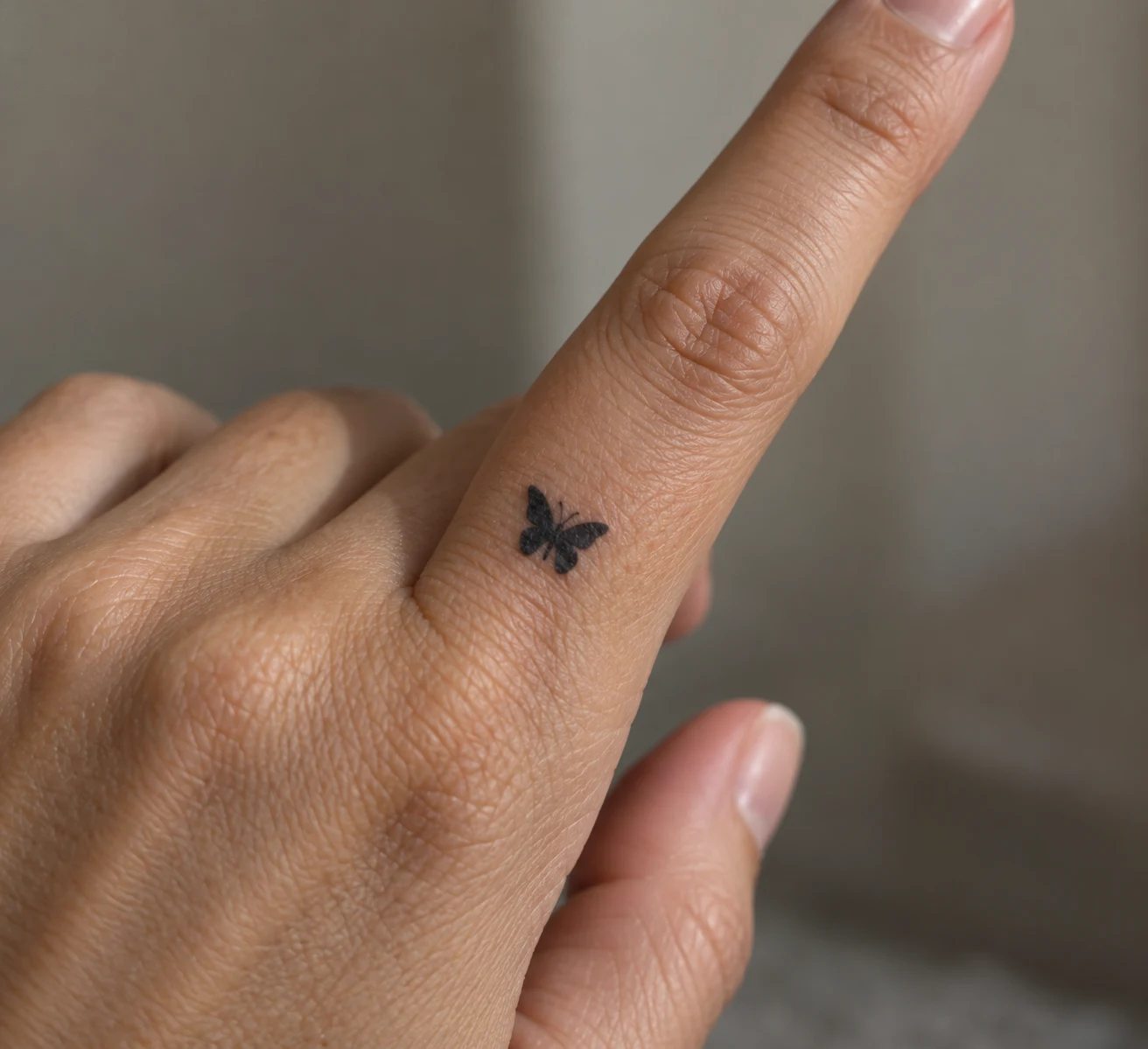
4. Tiny Butterfly Silhouette on a Finger
A solid black silhouette makes the butterfly’s outer shape the entire design. Position it near the base of the finger for a compact accent. Ask an artist to assess the size and spacing between the wings before committing to a tiny version.
5. Side-View Butterfly Along the Outer Hand
Folded wings create a narrow profile along the little-finger side of the hand. This angle offers a different shape from the familiar open-wing butterfly. It suits readers who prefer a slim composition with a clear direction.
Shaded and Graphic Designs
Compare how shading, solid black, open skin, dots, and angular panels change the same basic wing shape.
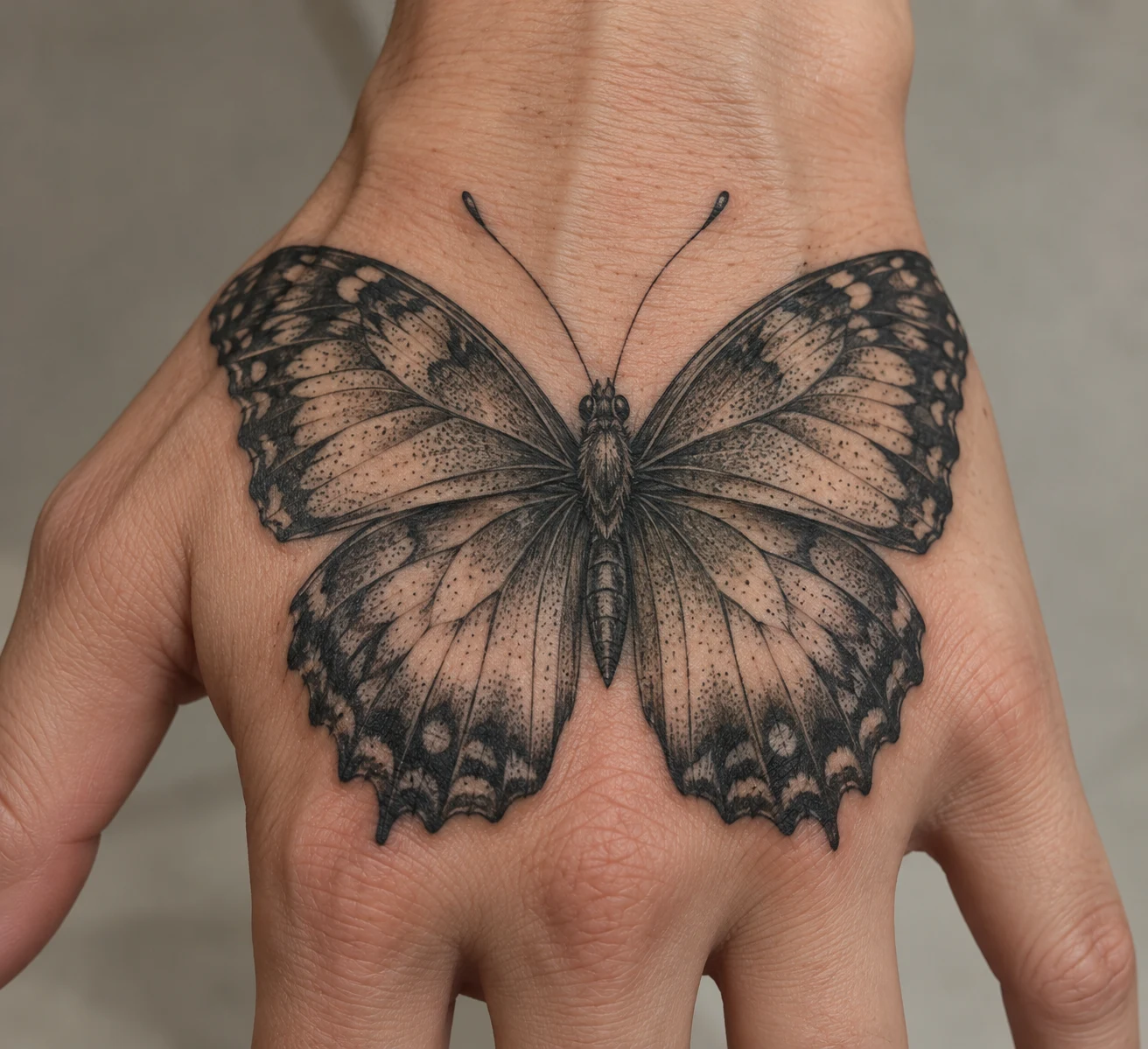
6. Black and Grey Butterfly With Textured Wings
Soft shading and visible wing veins give this butterfly a more detailed appearance. It works as a central focal point for readers drawn to naturalistic forms. Choose a few prominent wing features so the composition has a clear visual hierarchy.
7. Bold Blackwork Butterfly
Broad black panels and thick contours create a strong graphic shape. Choose this direction if you prefer substantial ink coverage and clearly defined wings. Compare how much black you want in the upper and lower wings before settling on a pattern.
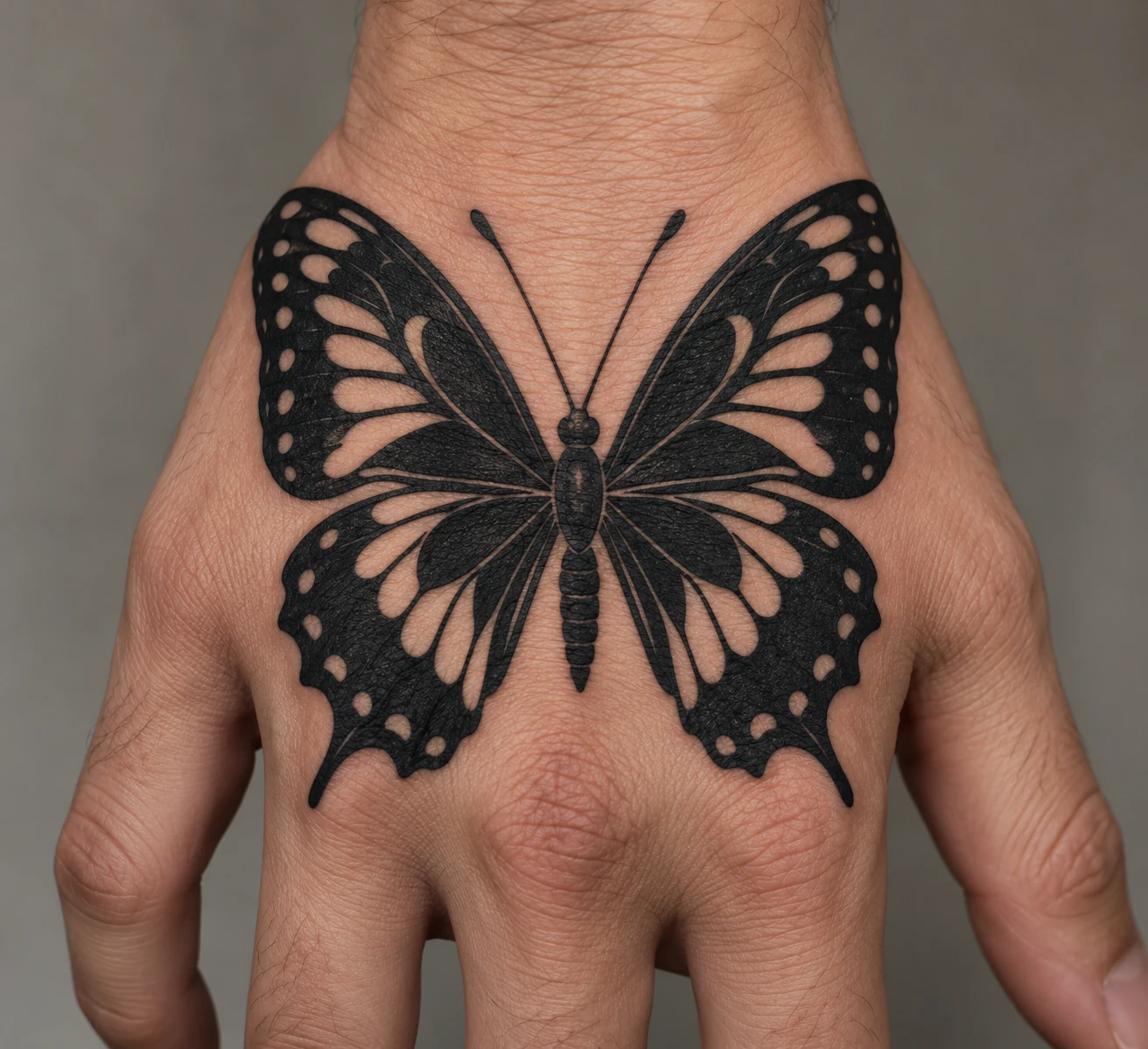
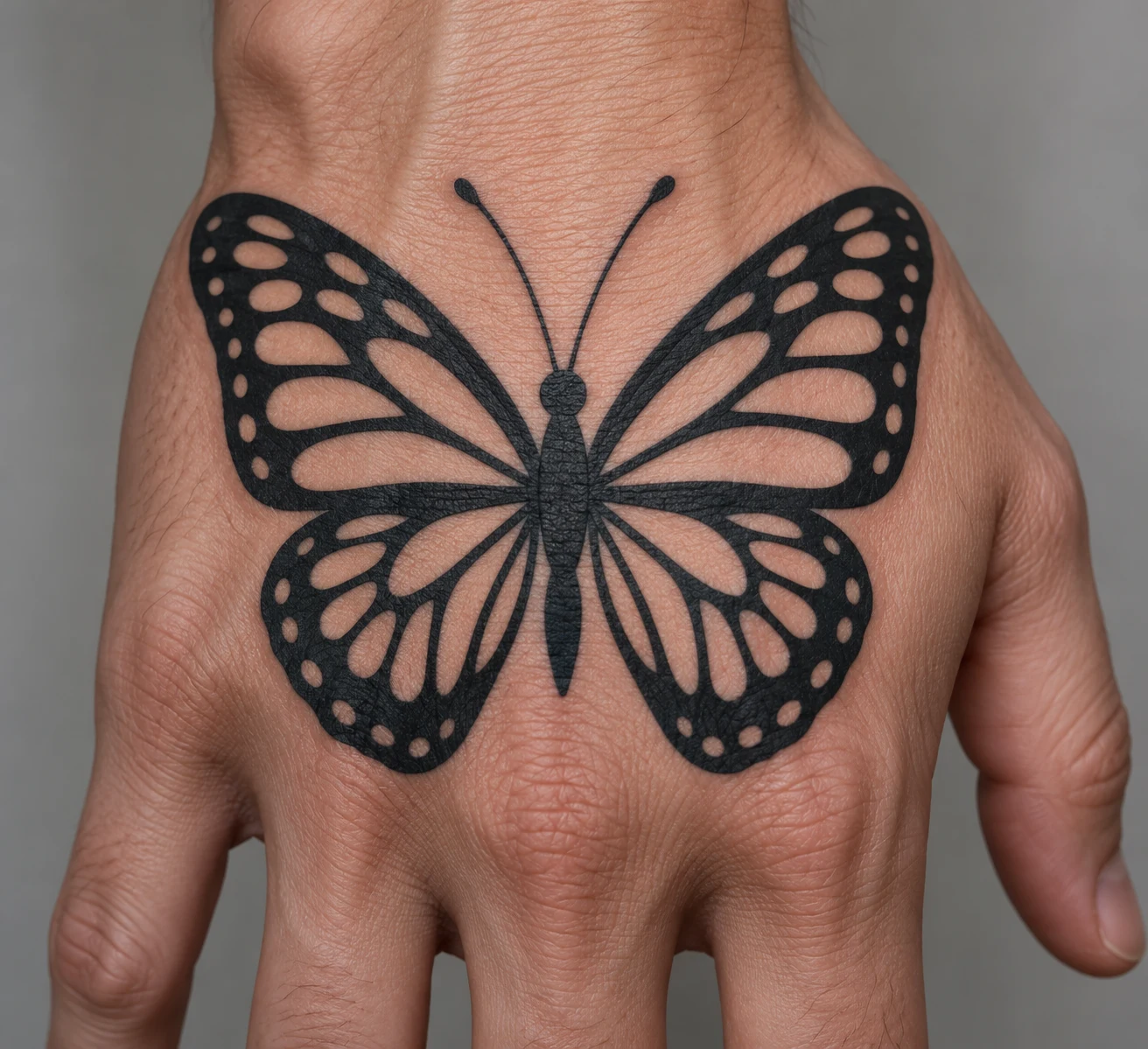
8. Negative-Space Butterfly
Uninked channels and oval gaps form the pattern inside dark wings. This design suits readers who like strong contrast with visible open skin. Consider where those gaps should sit so the wing pattern feels balanced across both sides.
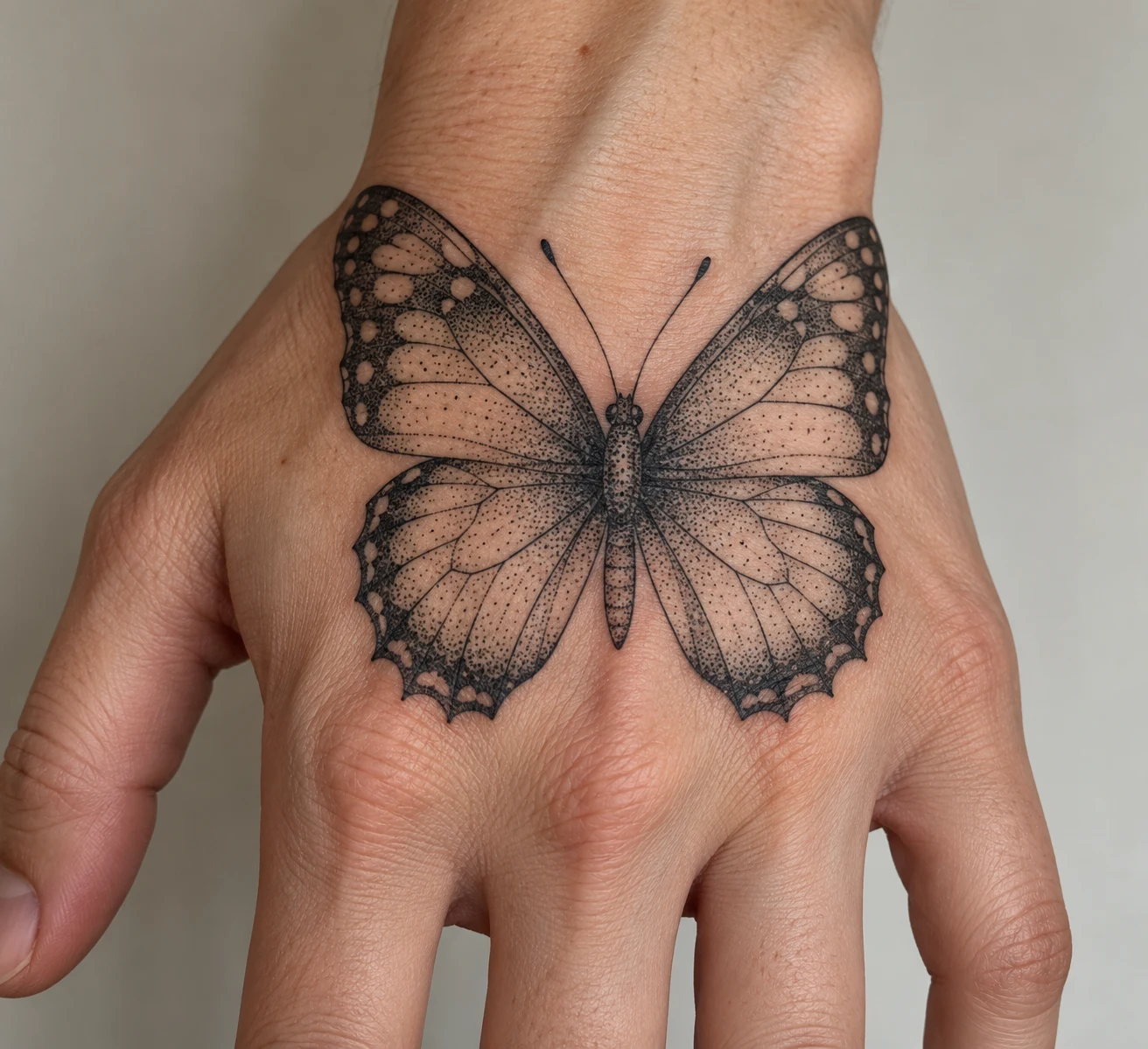
9. Dotwork Butterfly
Stippled dots build texture inside a clear outer contour. Sparse dots create a lighter-looking design, while denser clusters give parts of the wings more visual weight. Choose this approach if you want the shading itself to be a noticeable feature.
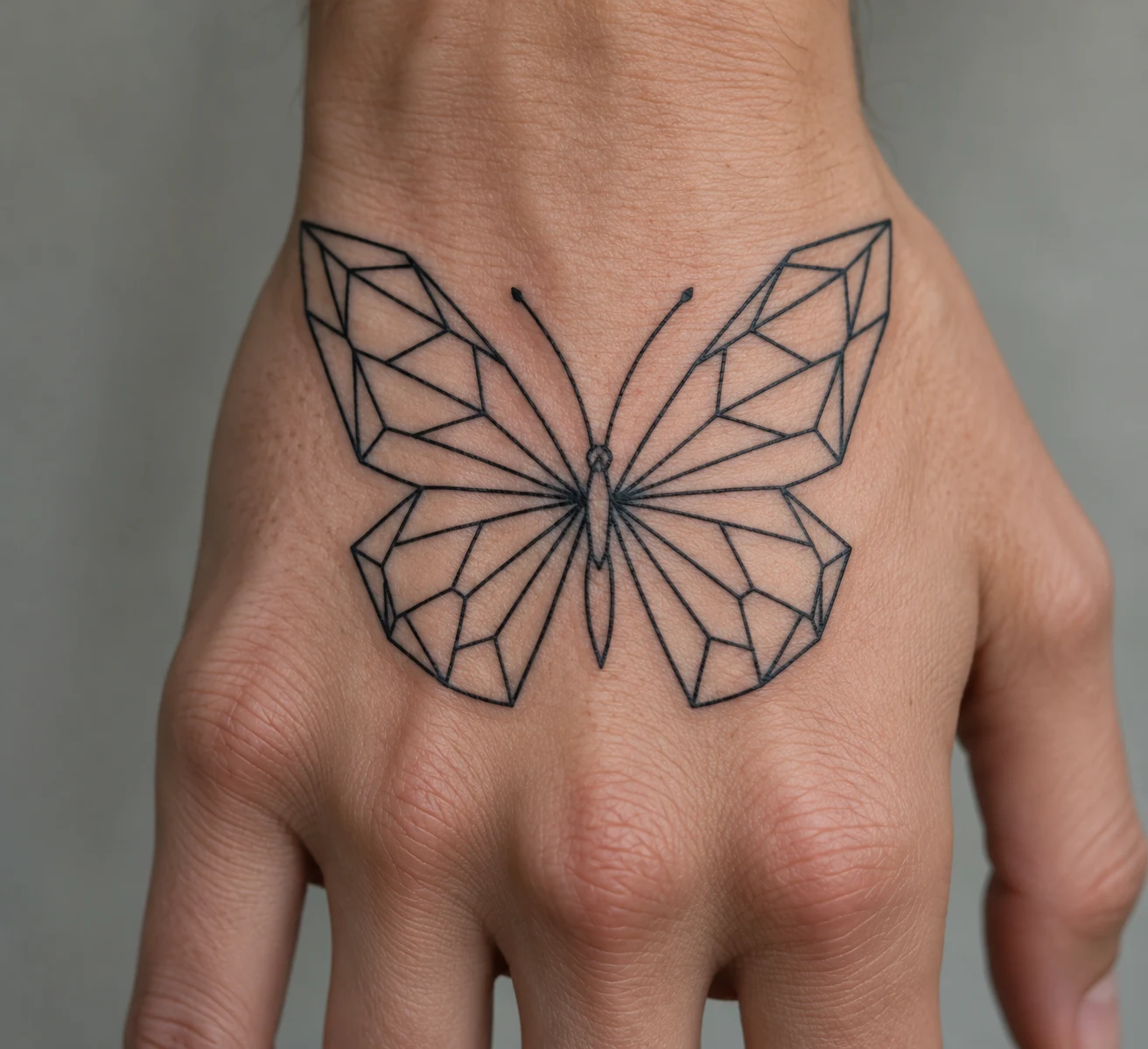
10. Geometric Butterfly With Faceted Wings
Angular panels replace curved wing markings in this structured design. Keep the outer silhouette recognizably butterfly-shaped, or extend the geometry into its edges. It suits readers who like symmetry and repeated shapes more than organic texture.
Color Butterfly Designs
These ideas explore different palettes and ways of placing color within the wings. Pick the treatment you enjoy visually; the colors can hold whatever personal significance you choose.
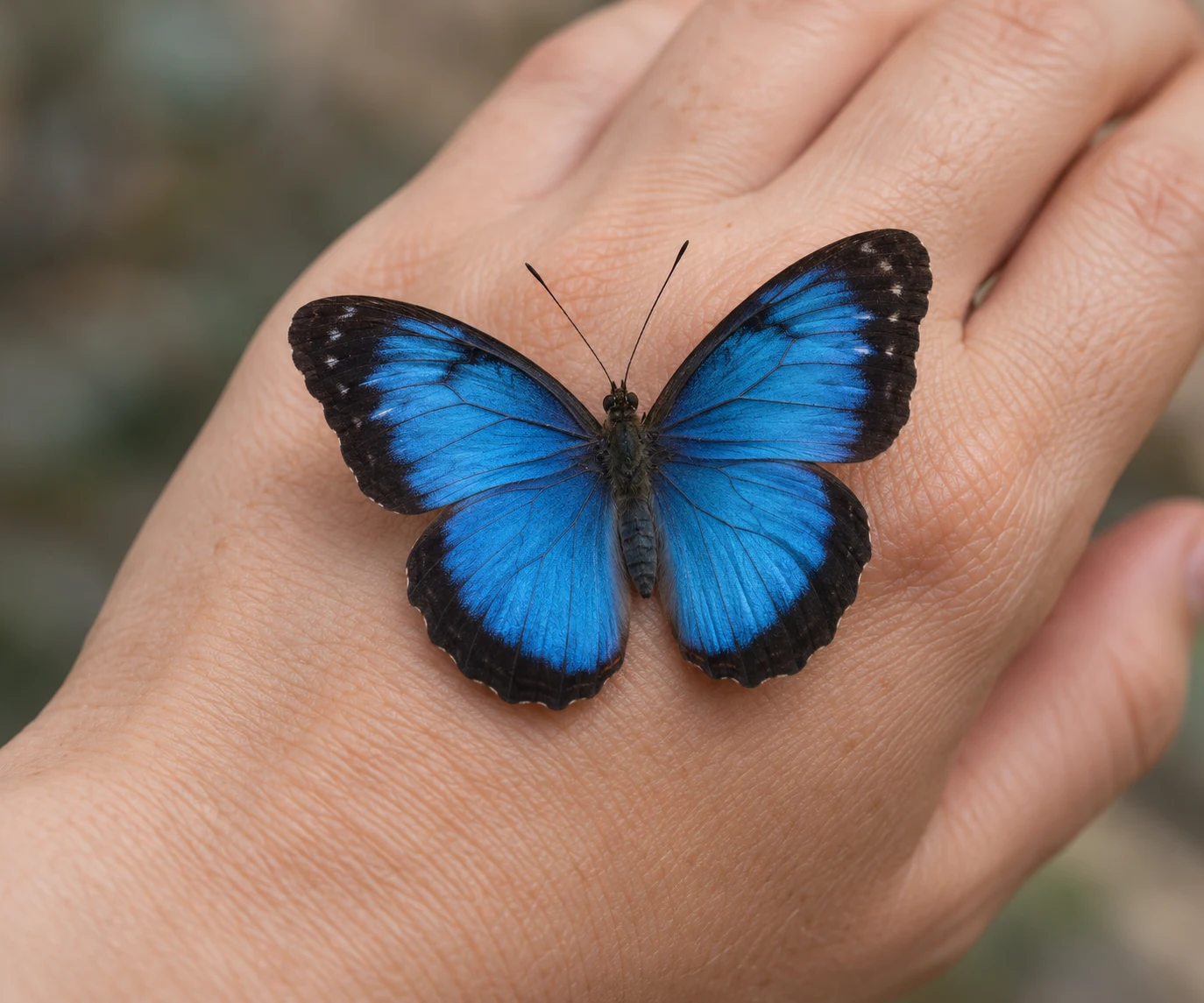
11. Blue Butterfly With Dark Wing Edges
Blue panels framed by dark borders give this butterfly a defined silhouette. Choose pale blue for a softer palette or a deeper shade for greater color intensity. Simple interior markings keep attention on the blue wings and their outline.
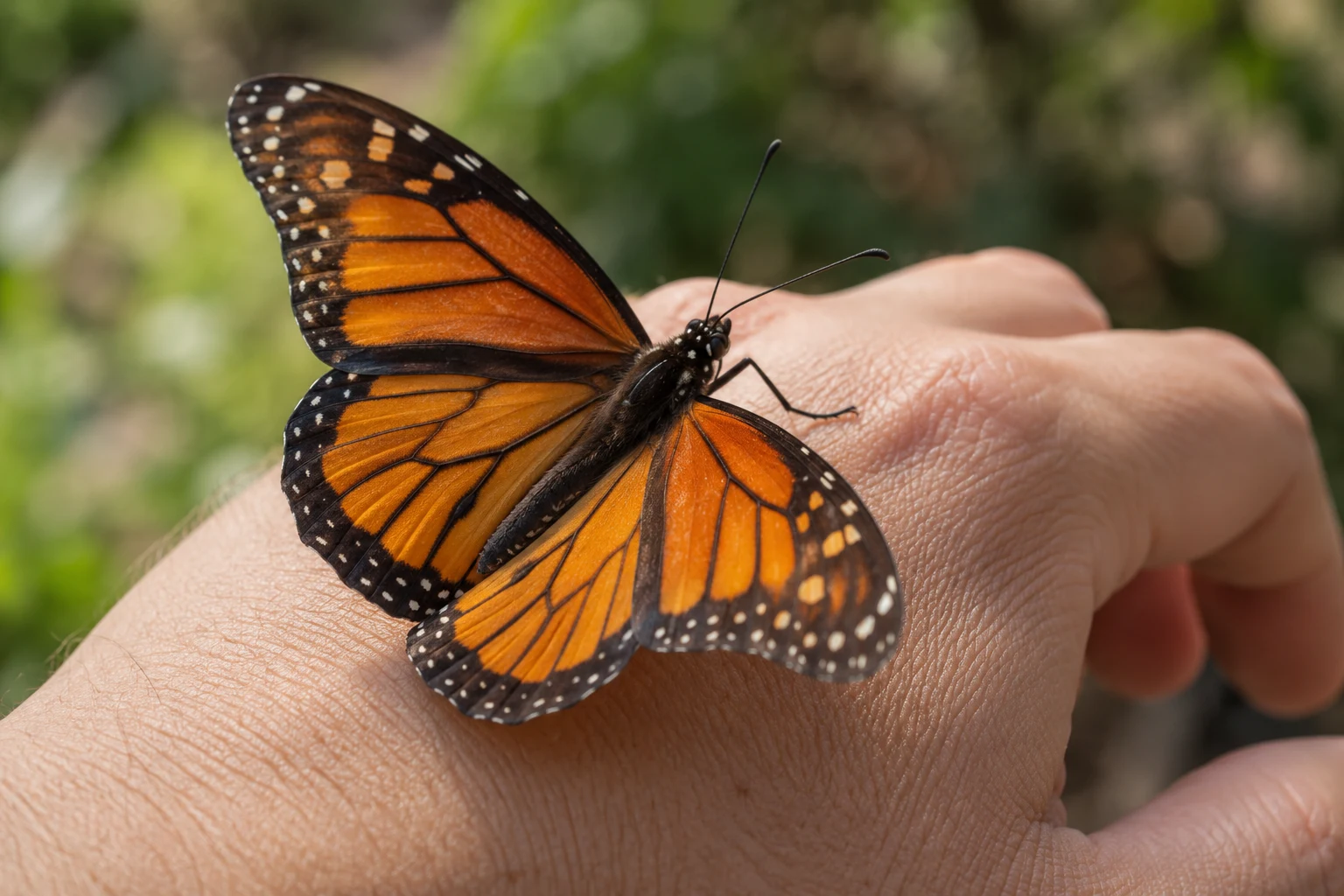
12. Orange Butterfly With Black Veins
Orange wings, black veins, and pale border spots create a patterned color design. If you want a particular species depicted accurately, bring a reference; otherwise, the palette can guide your design. The vein layout is a useful detail to compare between sketches.
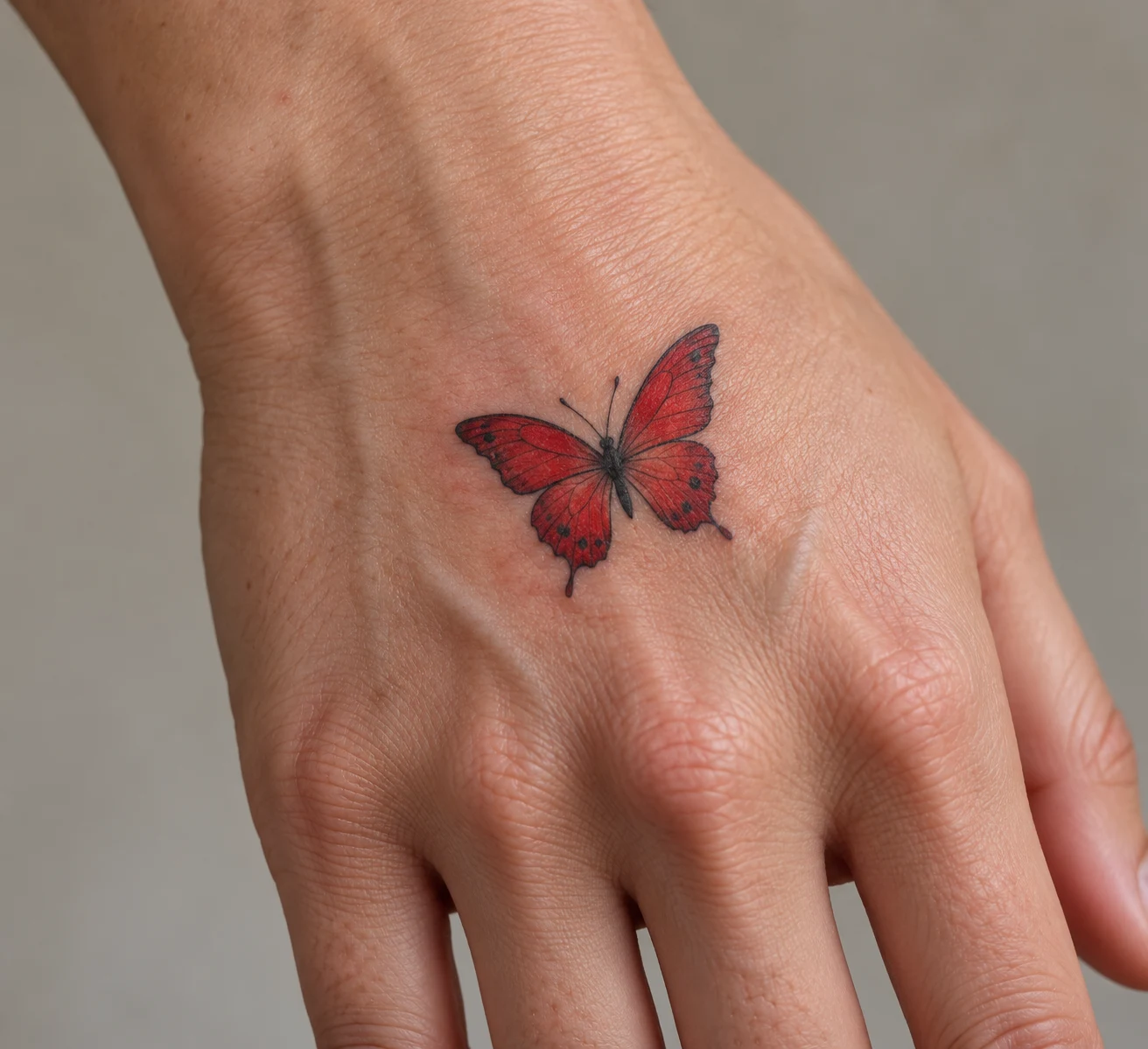
13. Red Butterfly With Simplified Wings
A compact red butterfly below the knuckles concentrates color in one small shape. Restrained black accents give the wings definition without a busy interior. This suits readers who want a distinct color accent while keeping the composition simple.
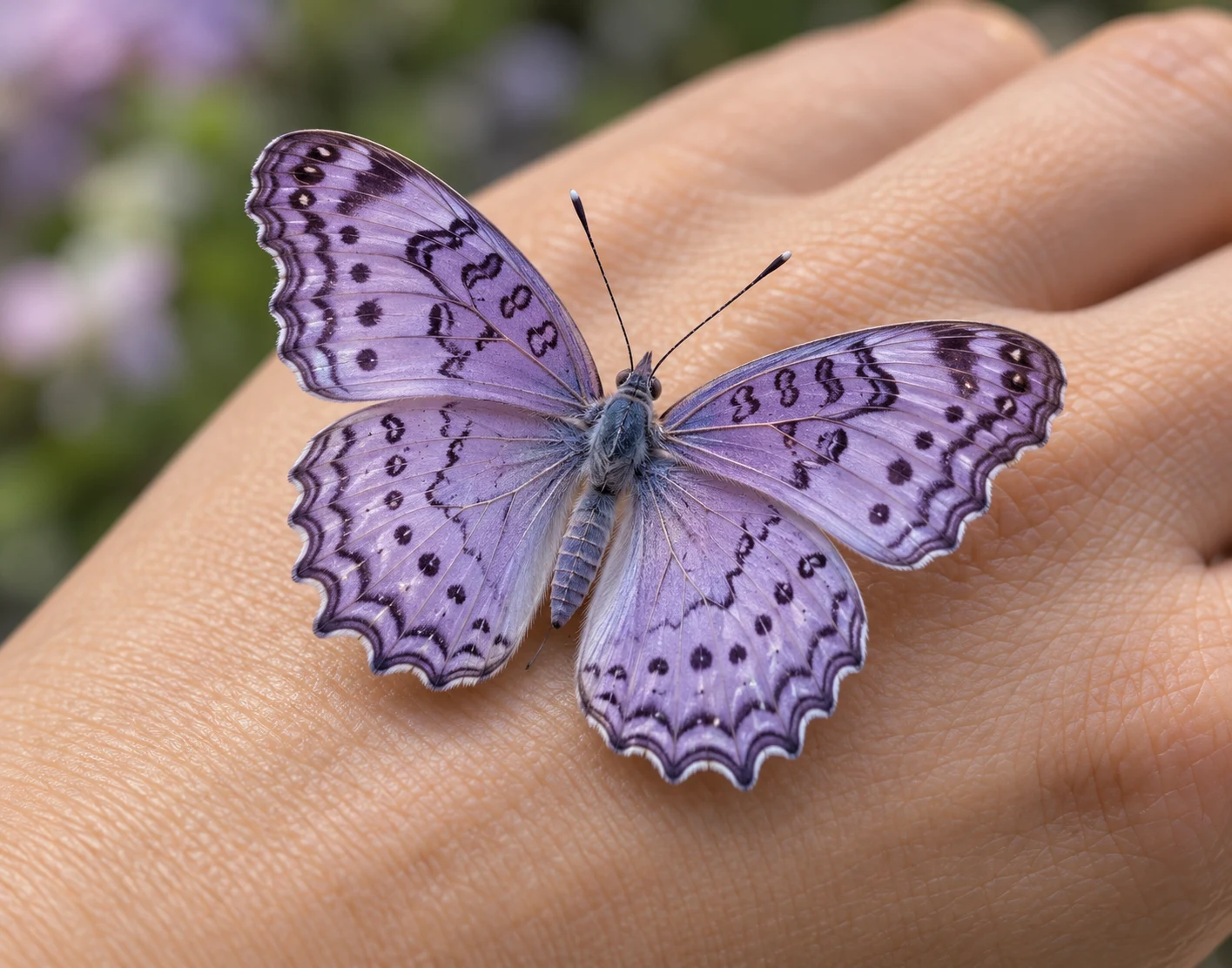
14. Lavender Butterfly With Ornamental Wing Markings
Lavender fill, scalloped edges, and dark decorative markings give this butterfly a stylized appearance. The combination works well for readers drawn to pastel palettes with ornamental details. A few well-placed markings can establish the pattern without filling every part of the wings.
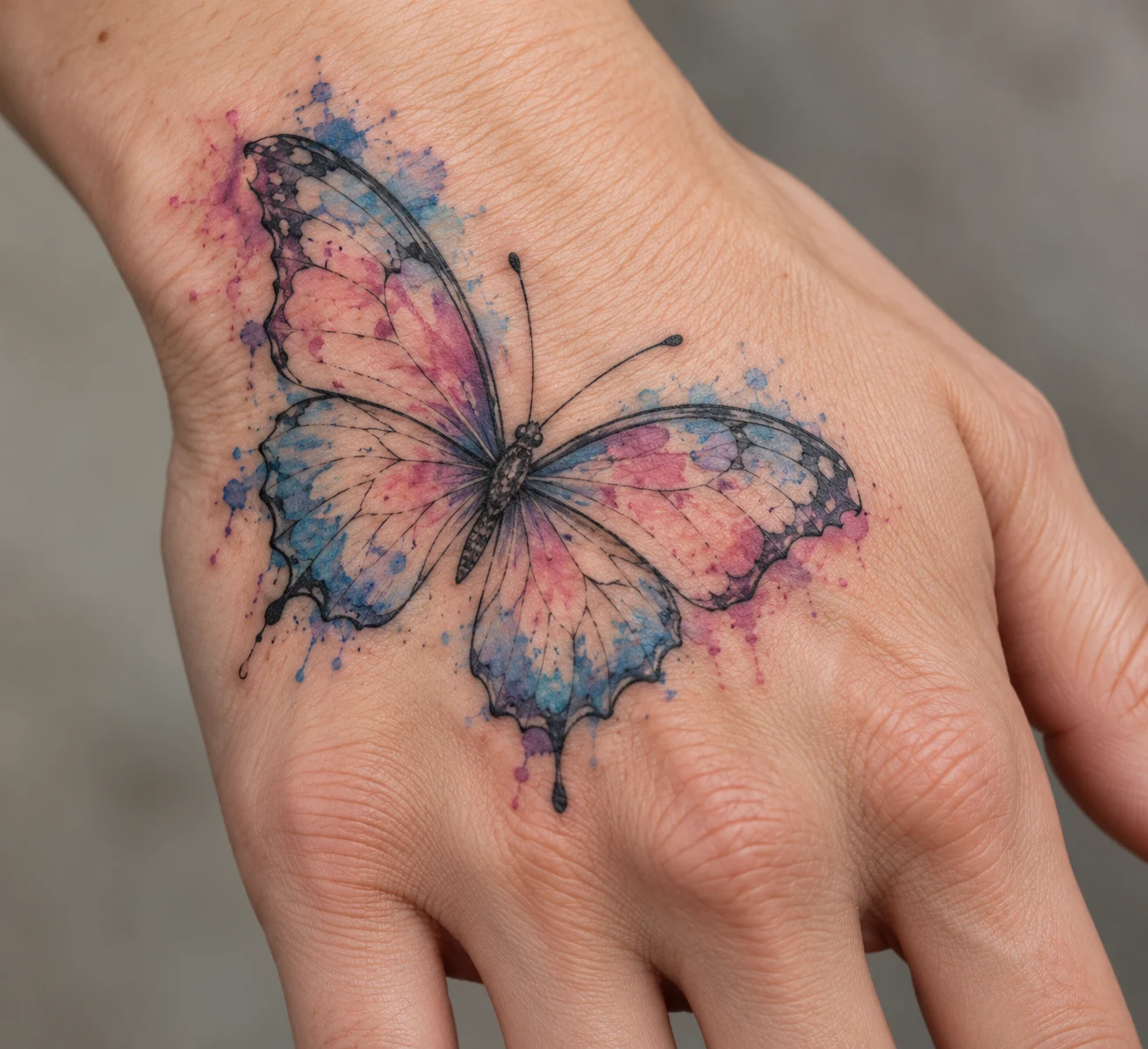
15. Watercolor-Style Butterfly
Loose pink and blue fills give this design a painted appearance around a black outline. Decide whether the color should stay within the wings or extend slightly beyond them. It suits readers who prefer irregular washes over neatly divided color panels.
Decorative and Connected Compositions
These arrangements add another motif, repeat the butterfly, or connect two placements. Compare the whole composition as well as each individual element.
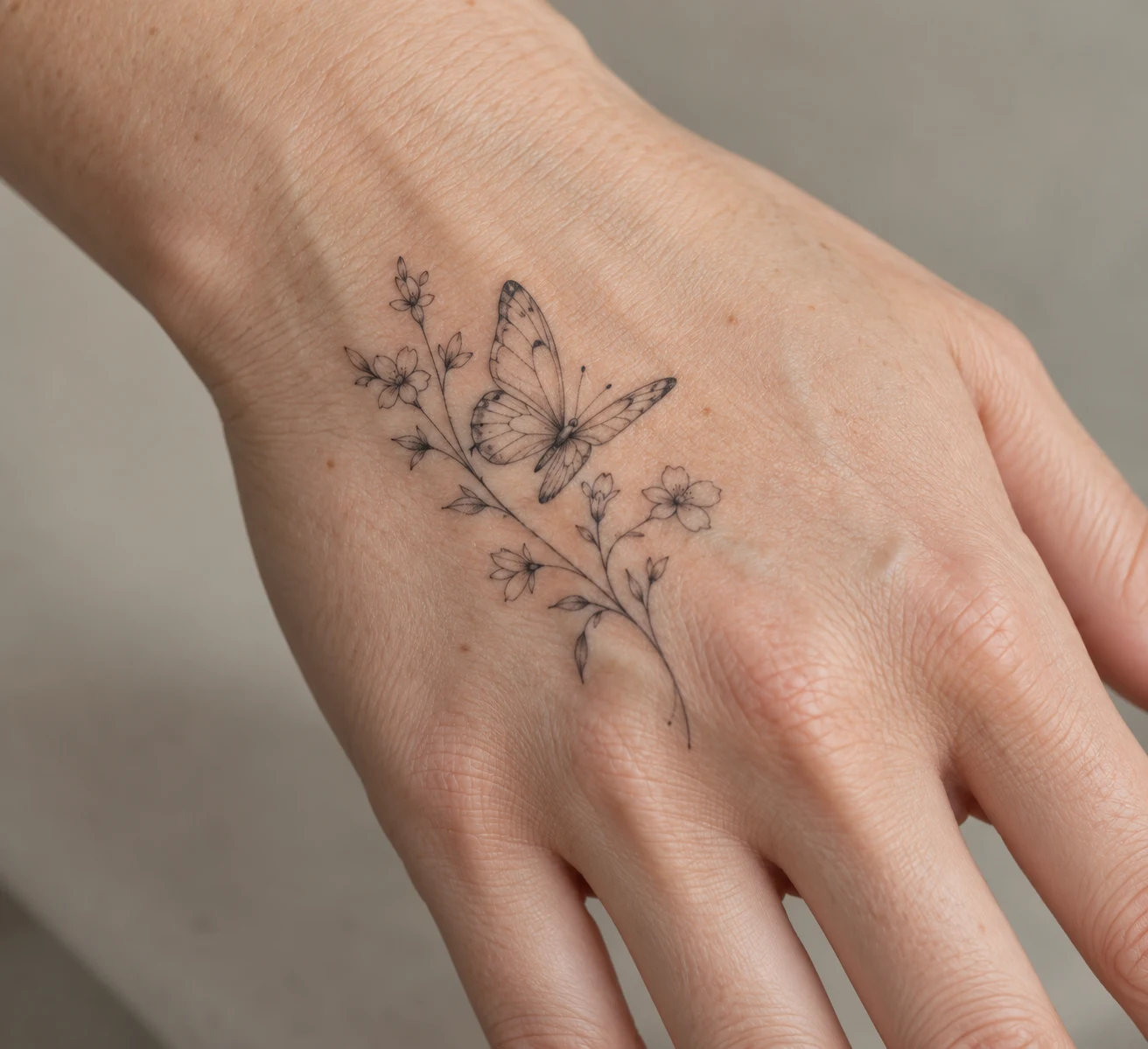
16. Butterfly With a Small Flower Sprig
A short flowering stem creates a diagonal arrangement beside the butterfly. Keep one element larger if you want a clear focal point. This pairing suits readers who want a botanical detail without building the design around a full bouquet.
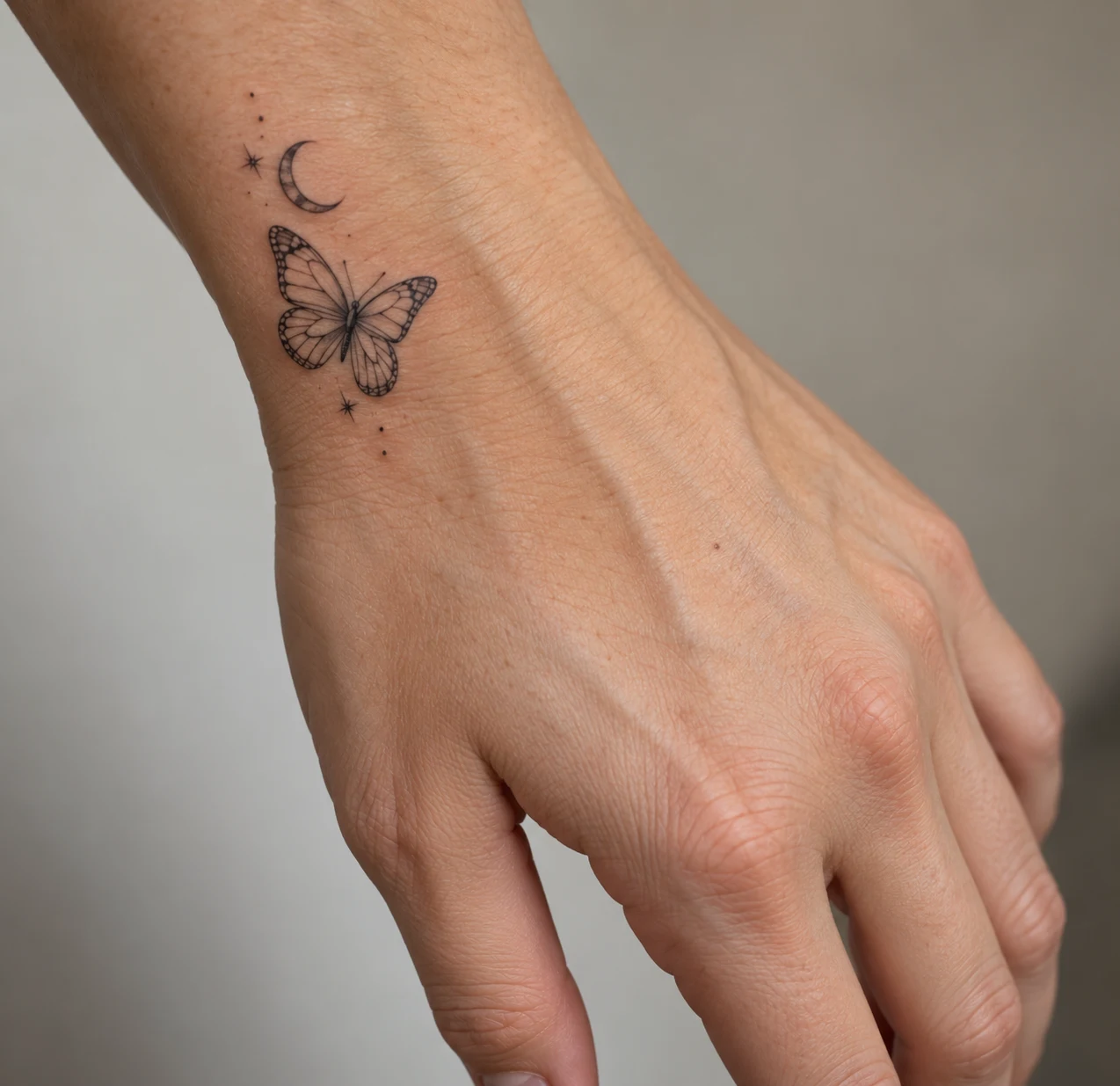
17. Butterfly With a Crescent Moon
Near the wrist end of the hand, a small crescent adds a second curved shape. Place it beside the butterfly or let it frame one wing. Choose this pairing for its composition, with any personal symbolism left to you.
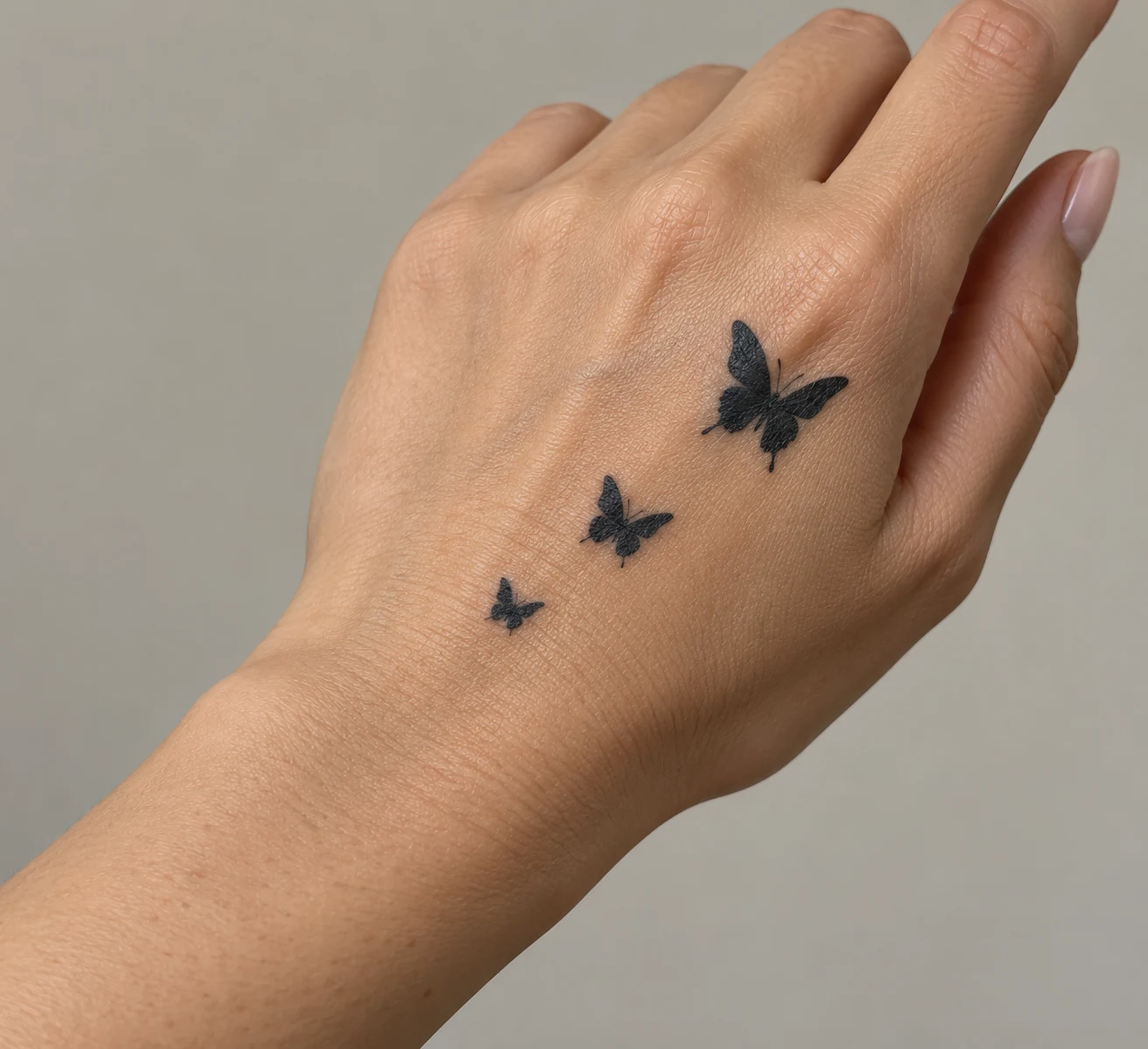
18. Three Butterflies in a Diagonal Trail
Three graduated butterflies lead the eye from the wrist toward the index knuckle. Try this arrangement if you prefer several small shapes to one centerpiece. Compare their spacing: wider gaps make each butterfly feel separate, while closer placement creates a tighter group.
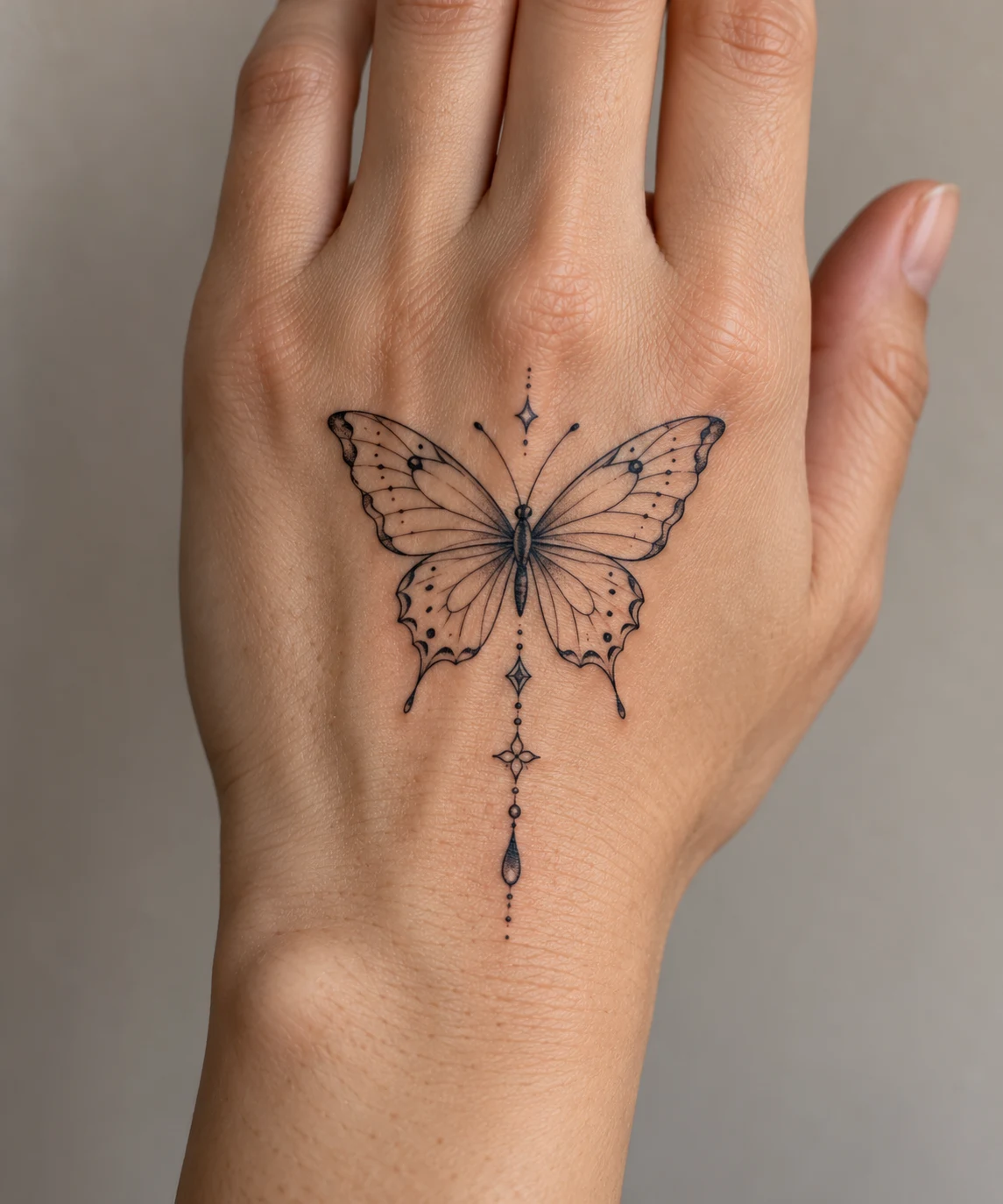
19. Butterfly With a Beaded Ornament
Dots and teardrop shapes extend beneath the butterfly in a short, symmetrical ornament. Choose this direction if you like jewelry-inspired arrangements. Decide how far the decorative tail should reach toward the wrist while keeping the butterfly as the main feature.
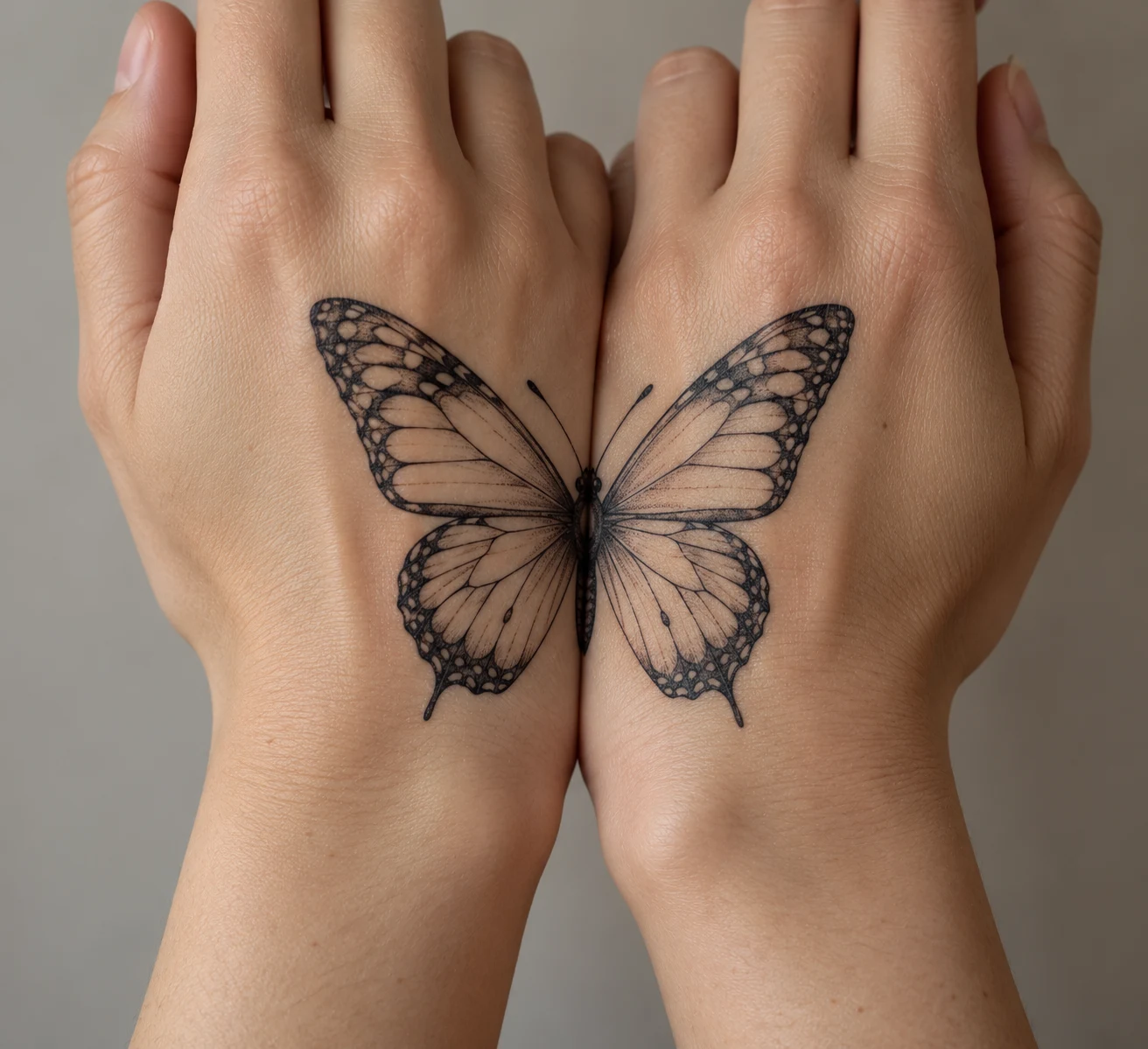
20. Split Butterfly Across Both Hands
One wing on each hand forms a complete butterfly when the hands meet. Consider how each half looks independently, too. Work with an artist to assess alignment in your chosen hand position before settling on the wing shapes and placement.
Shortlist two or three concepts by comparing placement, ink coverage, palette, and added motifs. Bring those preferences to an artist for a custom composition and sizing discussion. If you’re still weighing where the design should sit, explore the broader hand tattoos guide.
For more detail, see butterfly hand tattoo meaning.

