

Cross hand tattoos range from a small finger silhouette to a broad cross framed by flowers, ornament or rays. These 20 design concepts help you compare three choices: placement, line weight and surrounding detail. Start with the shape you like, then consider how much of your hand you want the composition to occupy.
These images show tattoo concepts, not client results. Use them to develop a direction to discuss with your artist.
Simple Cross Hand Tattoos
These first five ideas keep the focus on shape and spacing. Compare the open skin inside an outline with the visual weight of a filled cross.
1. Fine Line Cross on the Back of the Hand
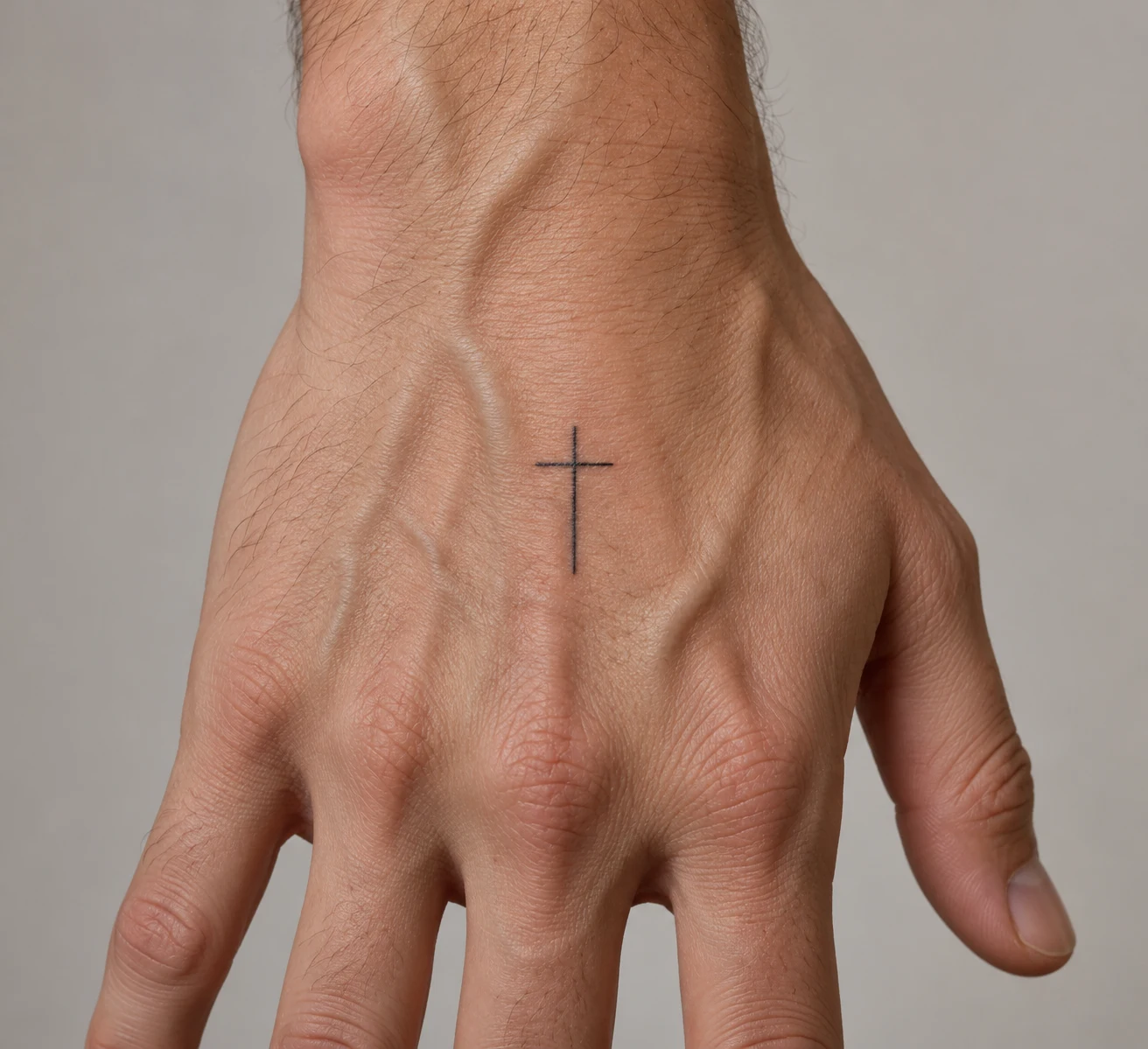
A slender cross with space around each arm.
The thin strokes keep the central motif restrained. Consider whether the stem should occupy just the middle of the hand or extend closer to the wrist.
2. Small Solid Cross on a Finger
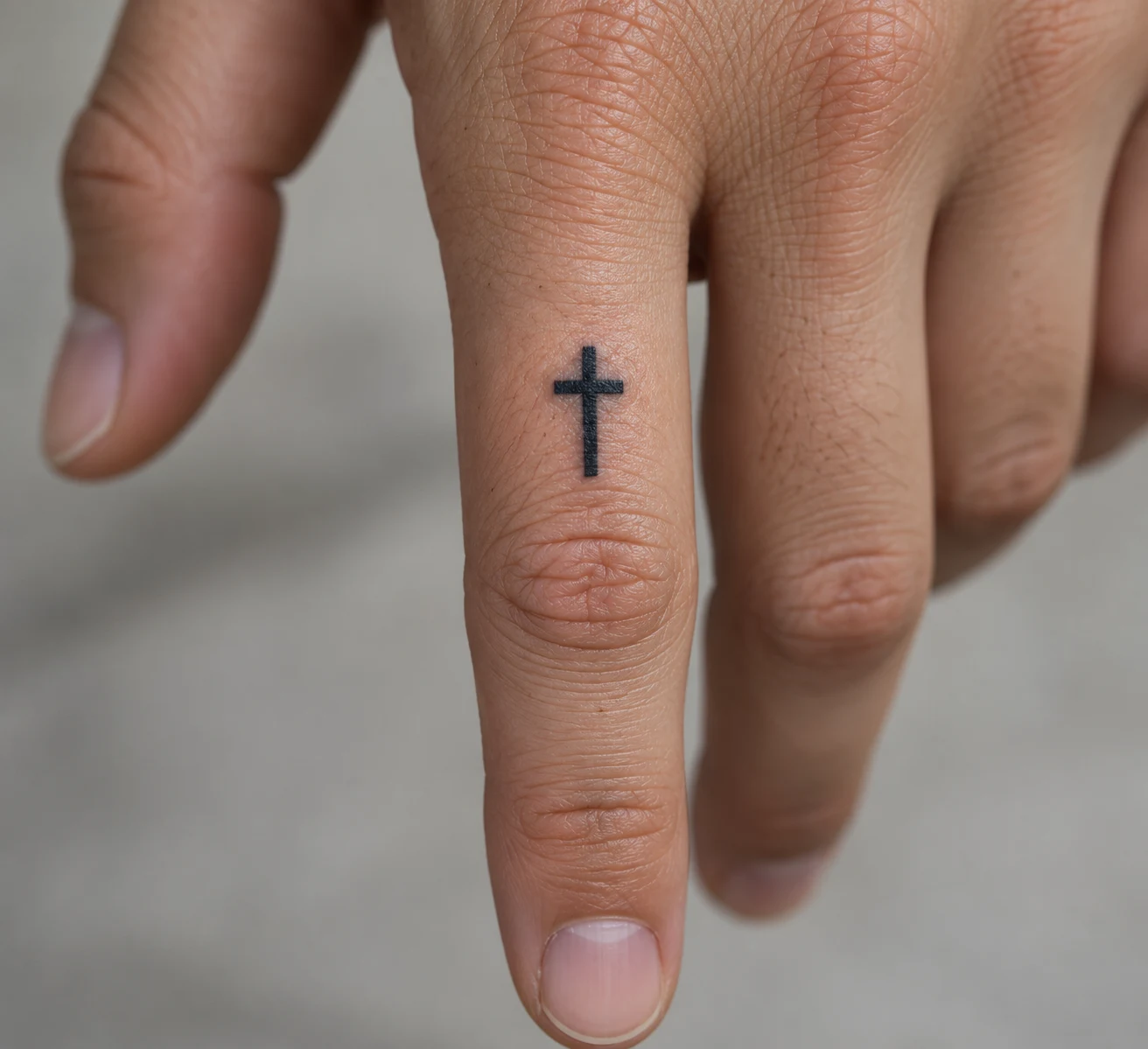
A compact silhouette on the index finger.
The filled shape gives this small design a stronger visual presence than thin intersecting lines. Try the orientation both ways on a stencil before choosing which direction the top should face.
3. Outline Cross Beside the Thumb
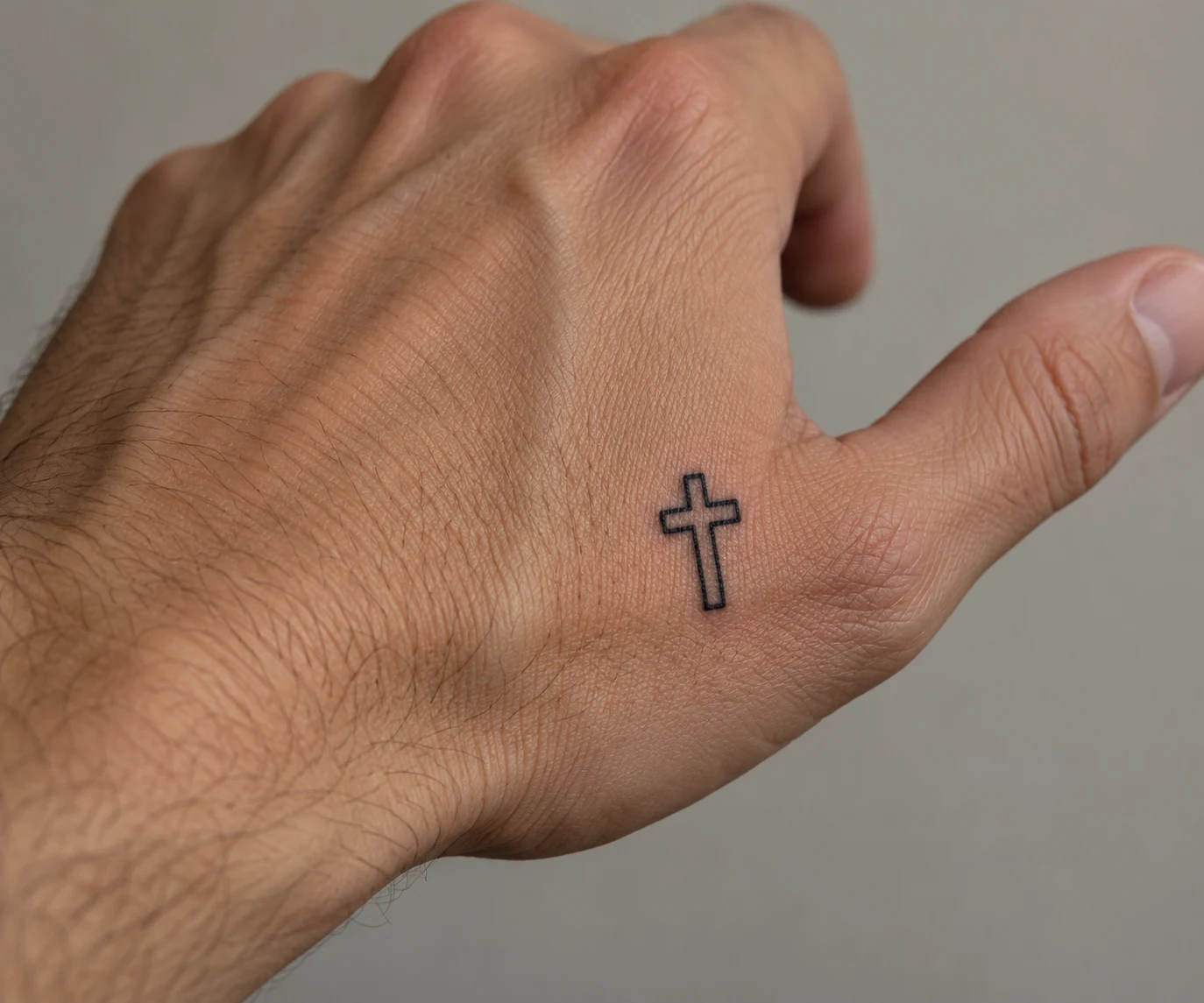
An open interior and an offset position.
This placement leaves the center of the hand available for other work or simply as open space. The border can stay slender or become a more prominent part of the design.
4. Long Cross Along the Side of the Hand
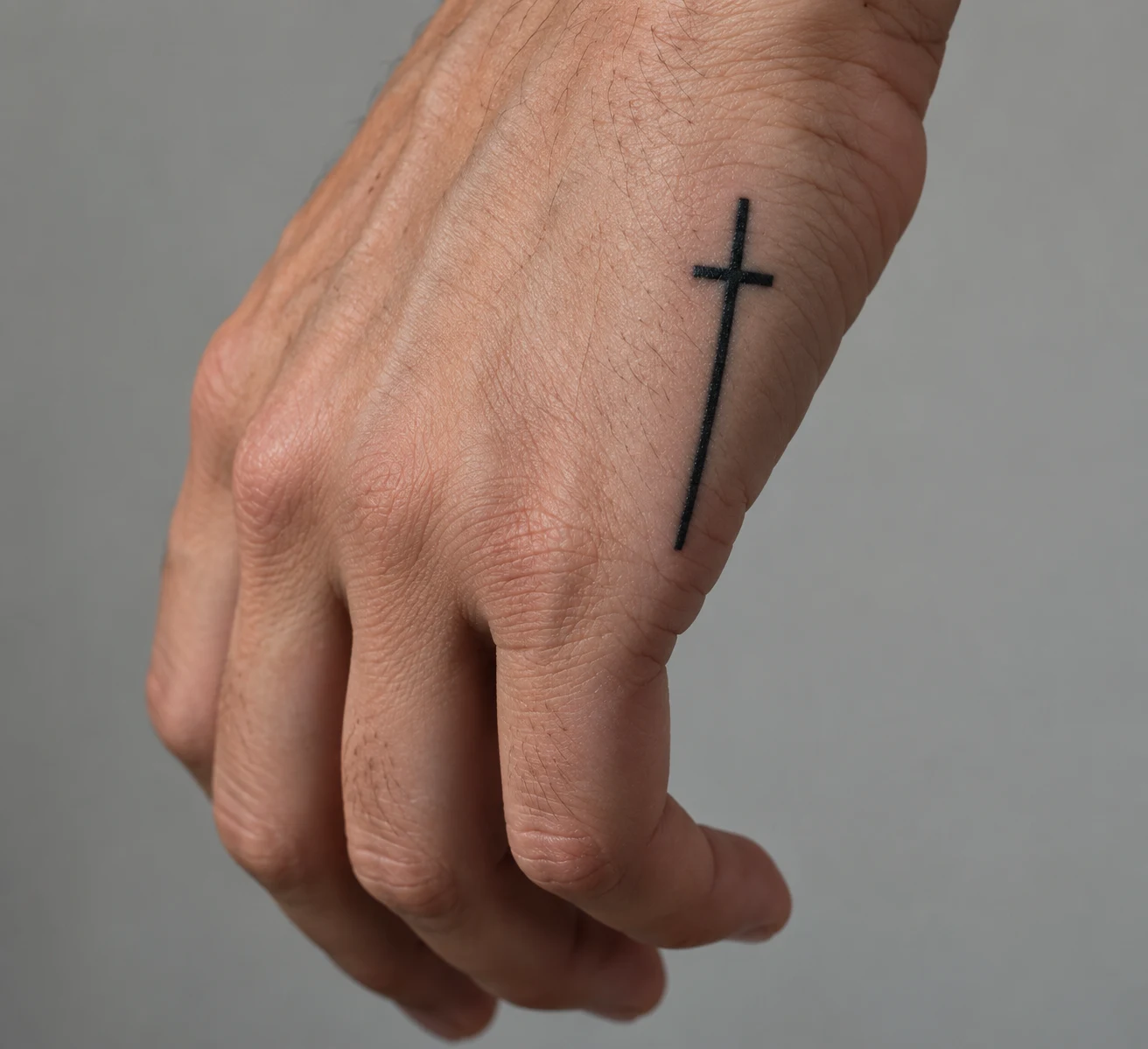
An elongated stem follows the hand’s outer edge.
A narrow composition makes the placement part of the design. Check its position with your hand resting naturally, as well as held flat.
5. Open-Ended Cross Near the Knuckles
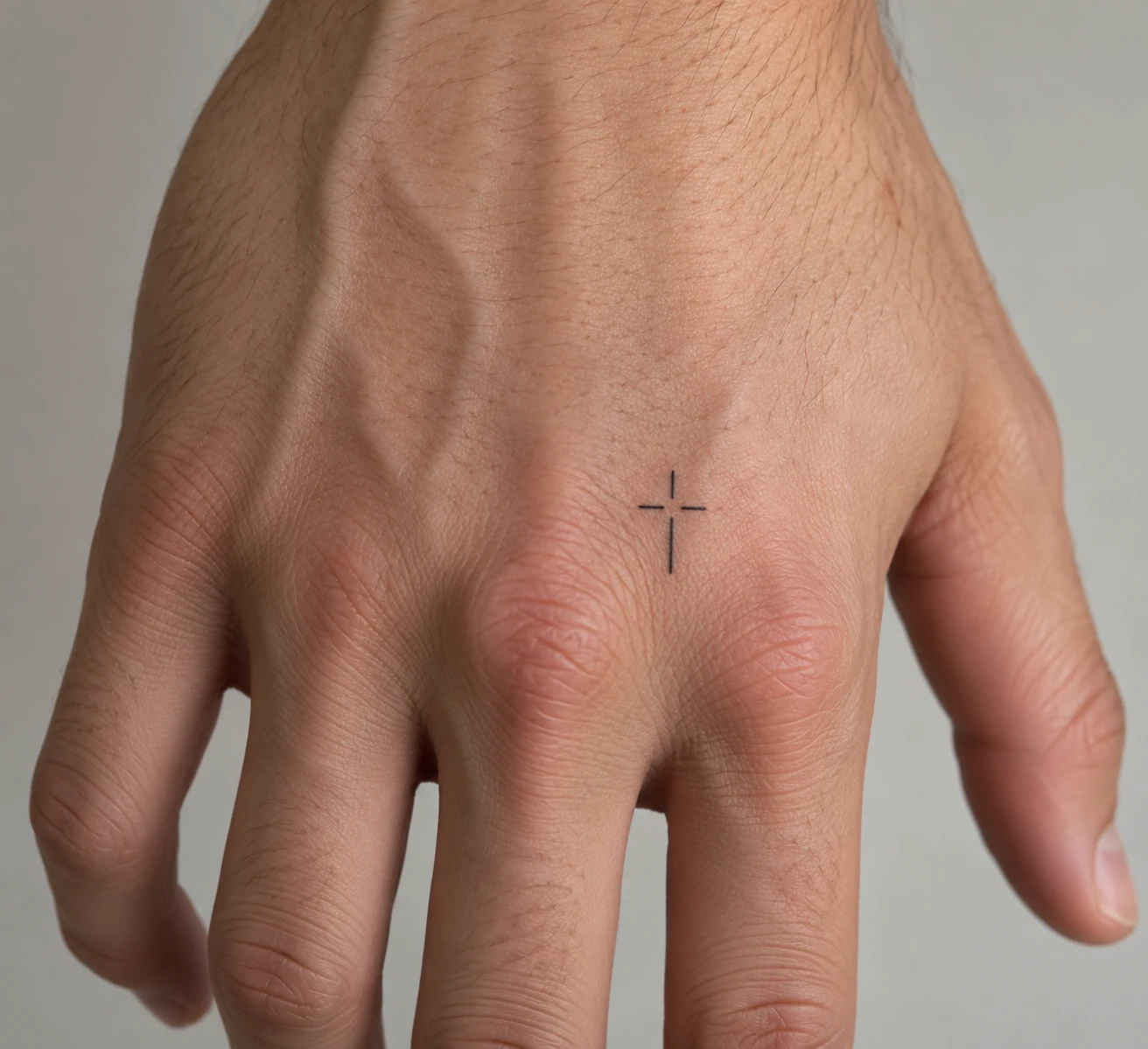
Separated line tips give the cross an abstract finish.
Intentional gaps interrupt the outline instead of enclosing it completely. Ask your artist to compare gap widths on the drawing so the breaks look deliberate.
Bold and Graphic Cross Designs
These concepts use larger areas of black, textured marks or shading. Decide whether you want a flat silhouette or a cross that suggests depth.
6. Broad Blackwork Cross
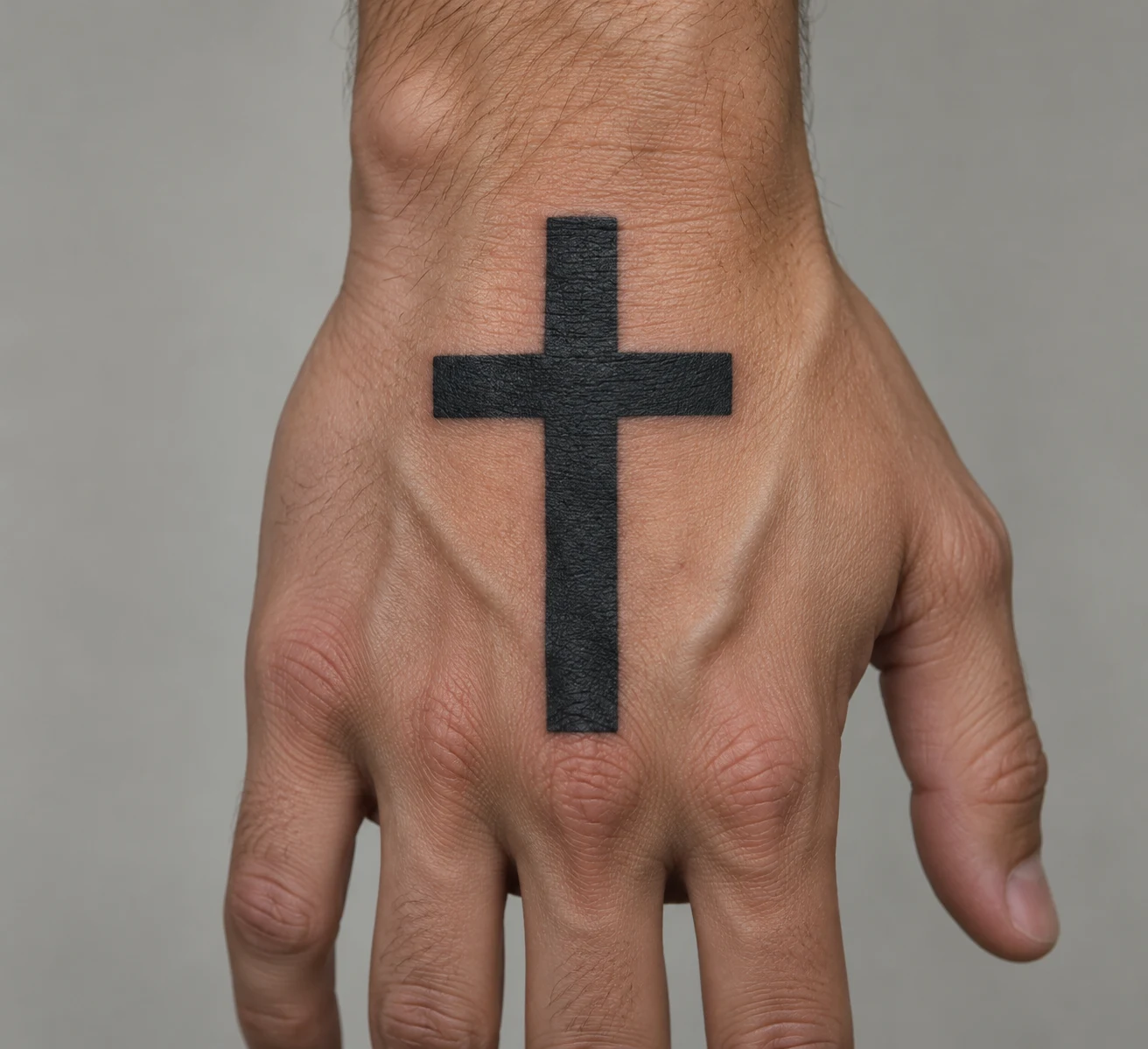
Wide arms create a substantial central shape.
Compare different arm widths on a stencil, leaving enough space around the tips for the proportions you prefer. This suits someone who wants the cross to dominate the back of the hand.
7. Negative Space Cross in a Black Panel
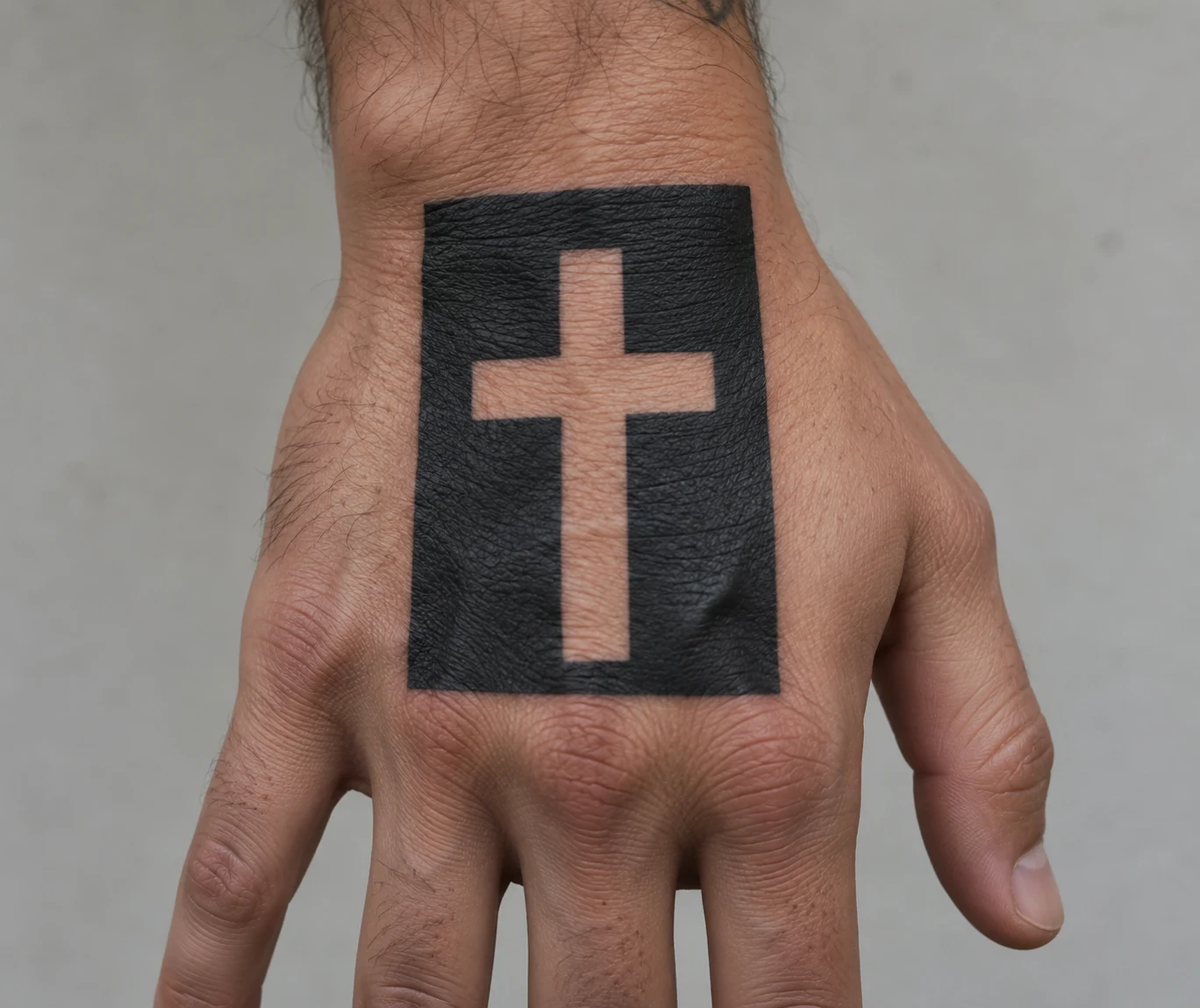
The cross appears as skin within a dark rectangle.
Here, the surrounding panel carries the ink. Its strong rectangular boundary is as much a part of the design as the cross, so consider their sizes together.
8. Brushstroke Cross
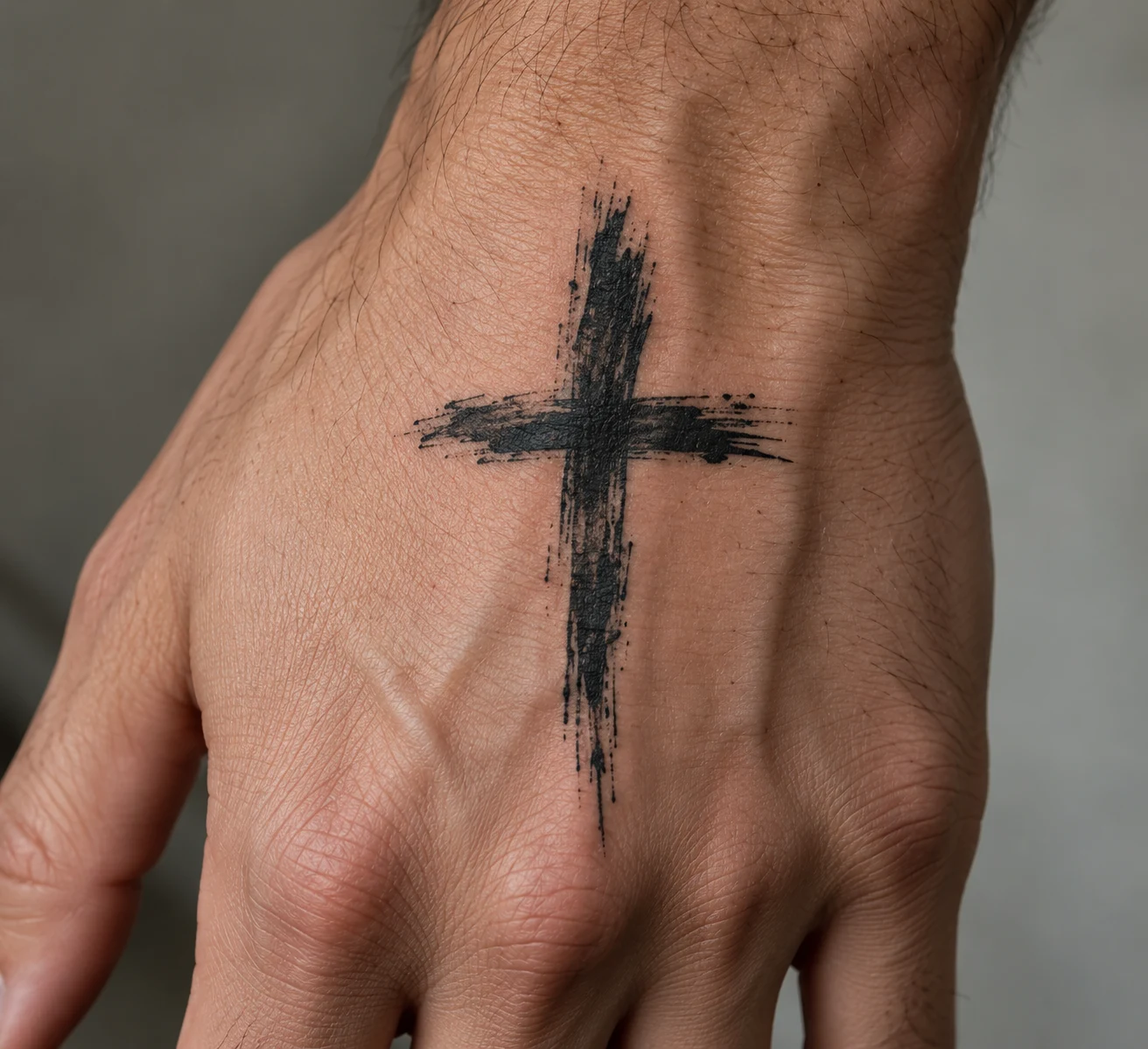
Tapered, uneven edges suggest painted marks.
One broad stroke crossed by a shorter, rougher mark creates a loose, expressive appearance. The irregular edges provide the detail without extra symbols.
9. Engraved-Effect Cross
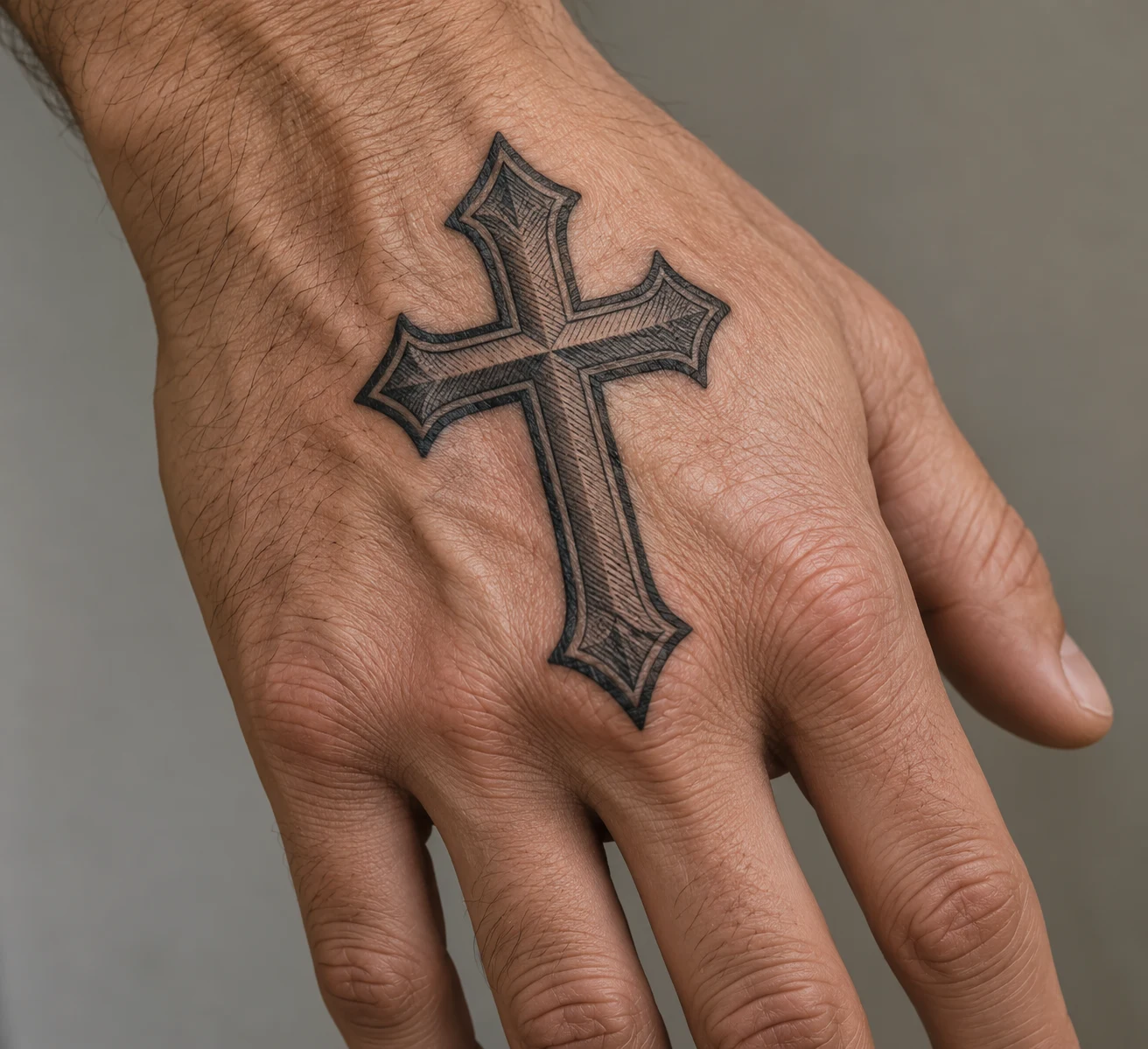
Parallel hatching adds texture inside a crisp border.
This illustrated treatment adds internal detail while preserving a clear silhouette. Let your artist assess how much hatching the proposed size can accommodate.
10. Beveled Cross With Grey Shading
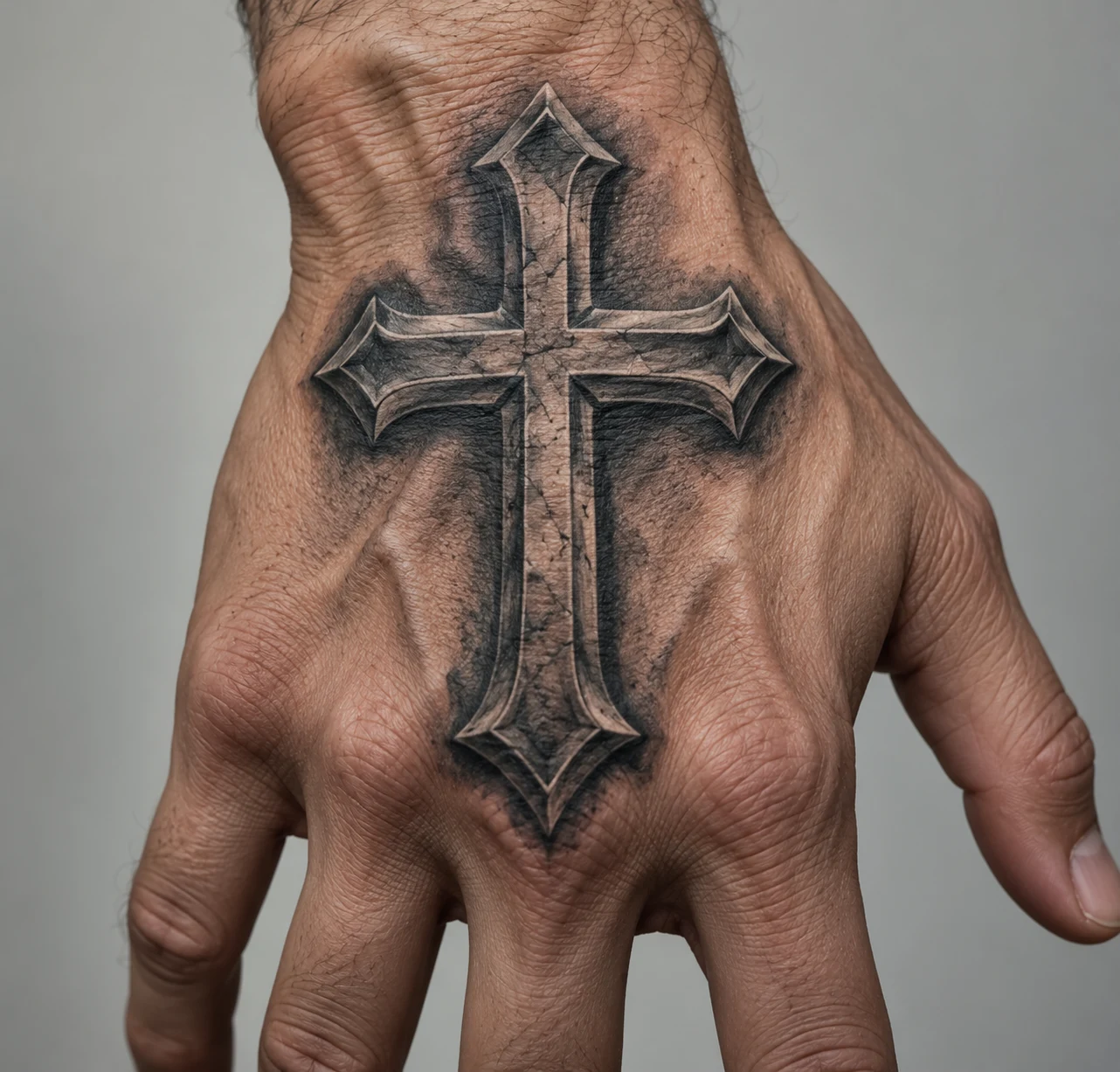
Shaded edges suggest a raised surface.
For a more dimensional treatment, use the drawing to compare narrow and broad bevels. Consistent edges around the arms help the intended effect read clearly.
Ornamental and Traditional Cross Forms
Compare the outlines first: pointed, ringed, flared or textured. Where a form connects with faith or heritage, consider that context alongside its appearance.
11. Gothic Cross With Pointed Tips
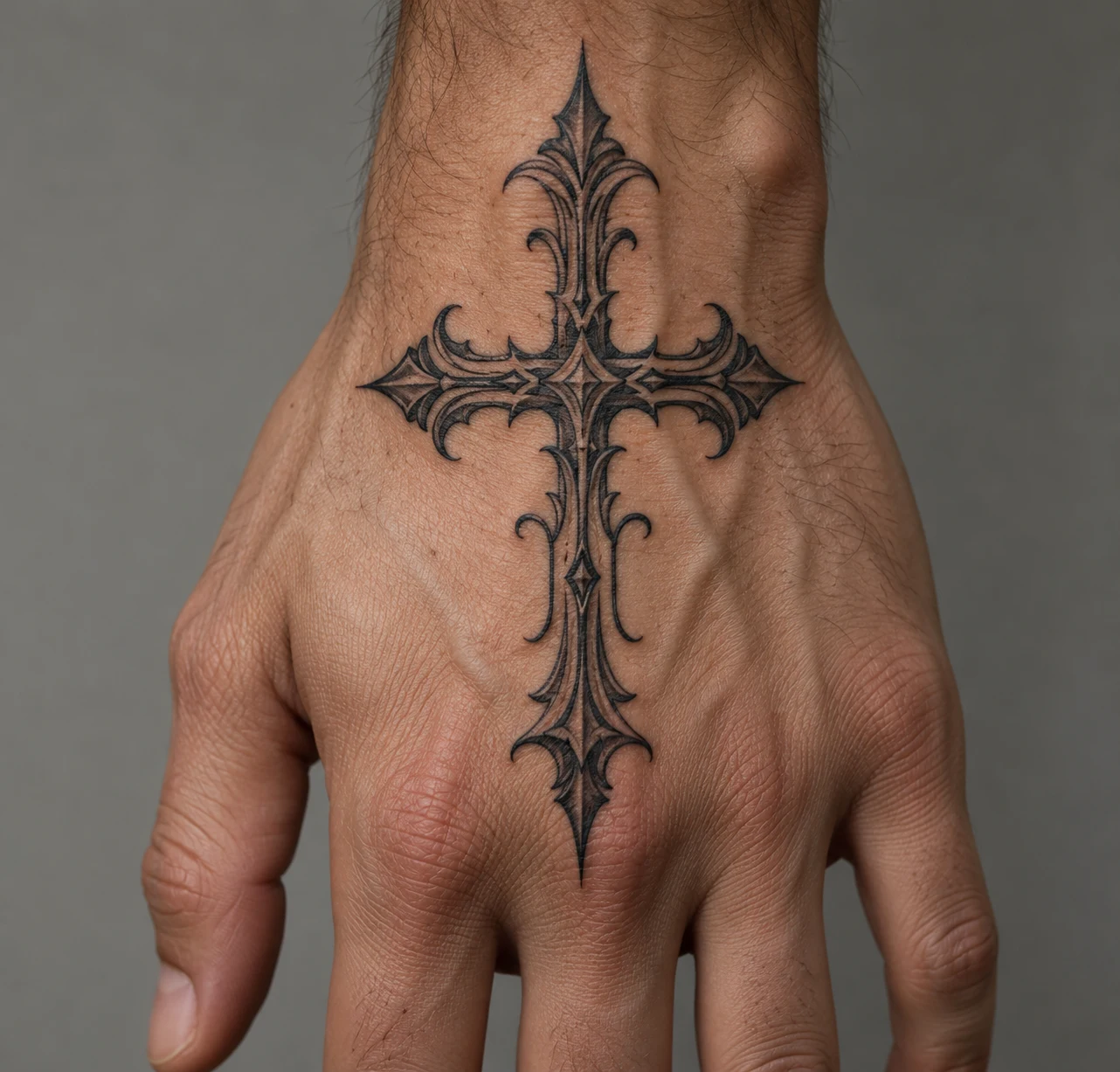
Pointed terminals and narrow flourishes extend the silhouette.
Here, Gothic describes the decorative style. The pointed tips give it an architectural look. Keeping flourishes close to the arms contains the ornament within a defined boundary.
12. Celtic Cross With Open Knotwork

A central ring frames spacious interlaced details.
Celtic crosses have cultural and Christian religious associations, though personal meanings vary. If this form connects with your heritage or faith, discuss the specific reference as well as the knotwork.
13. Cross With Flared Arms
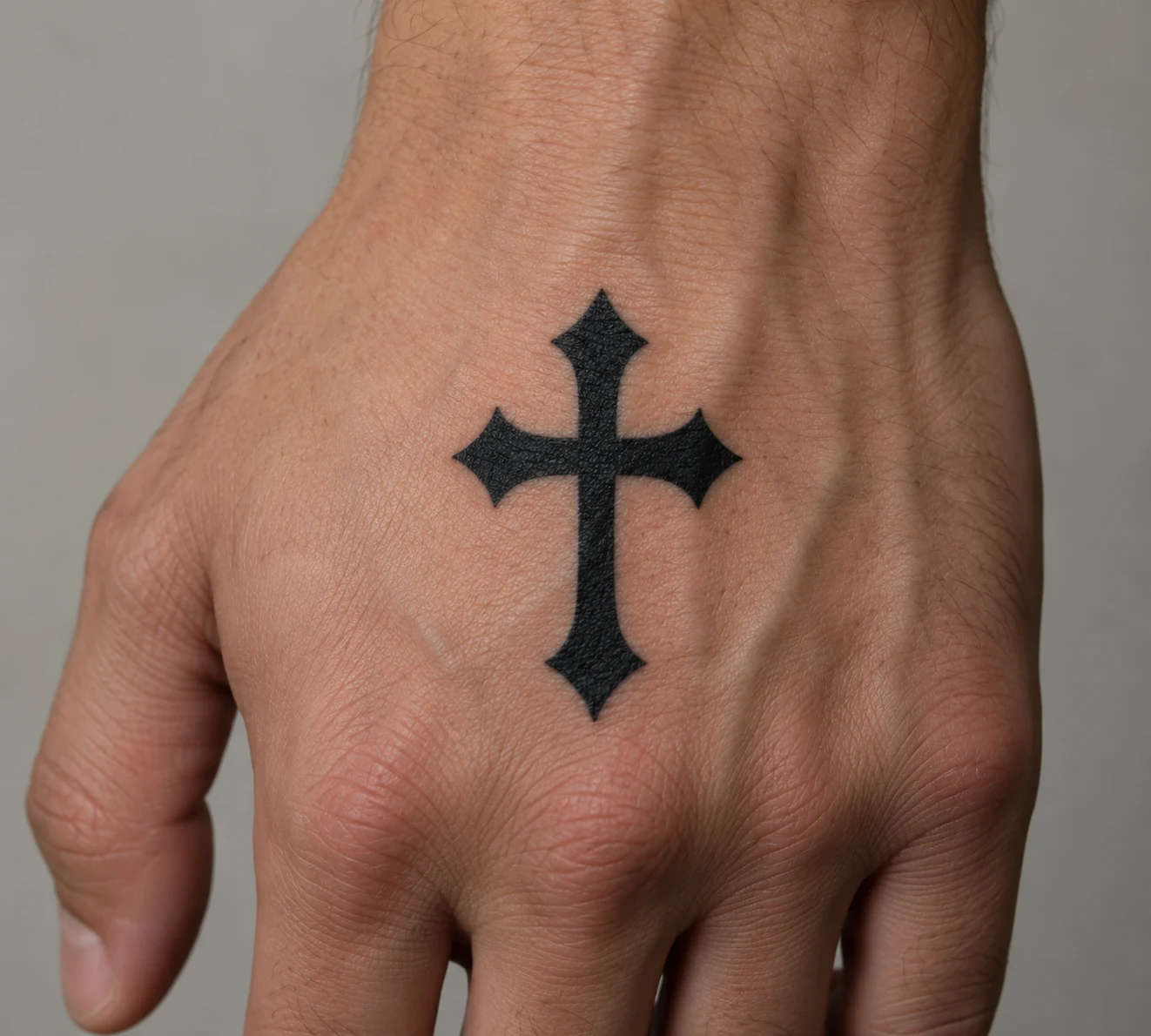
Each arm widens toward its outer end.
Try subtle flares and more pronounced ones in the drawing. It’s an option if you want a distinctive silhouette without surrounding imagery.
14. Woodgrain Cross
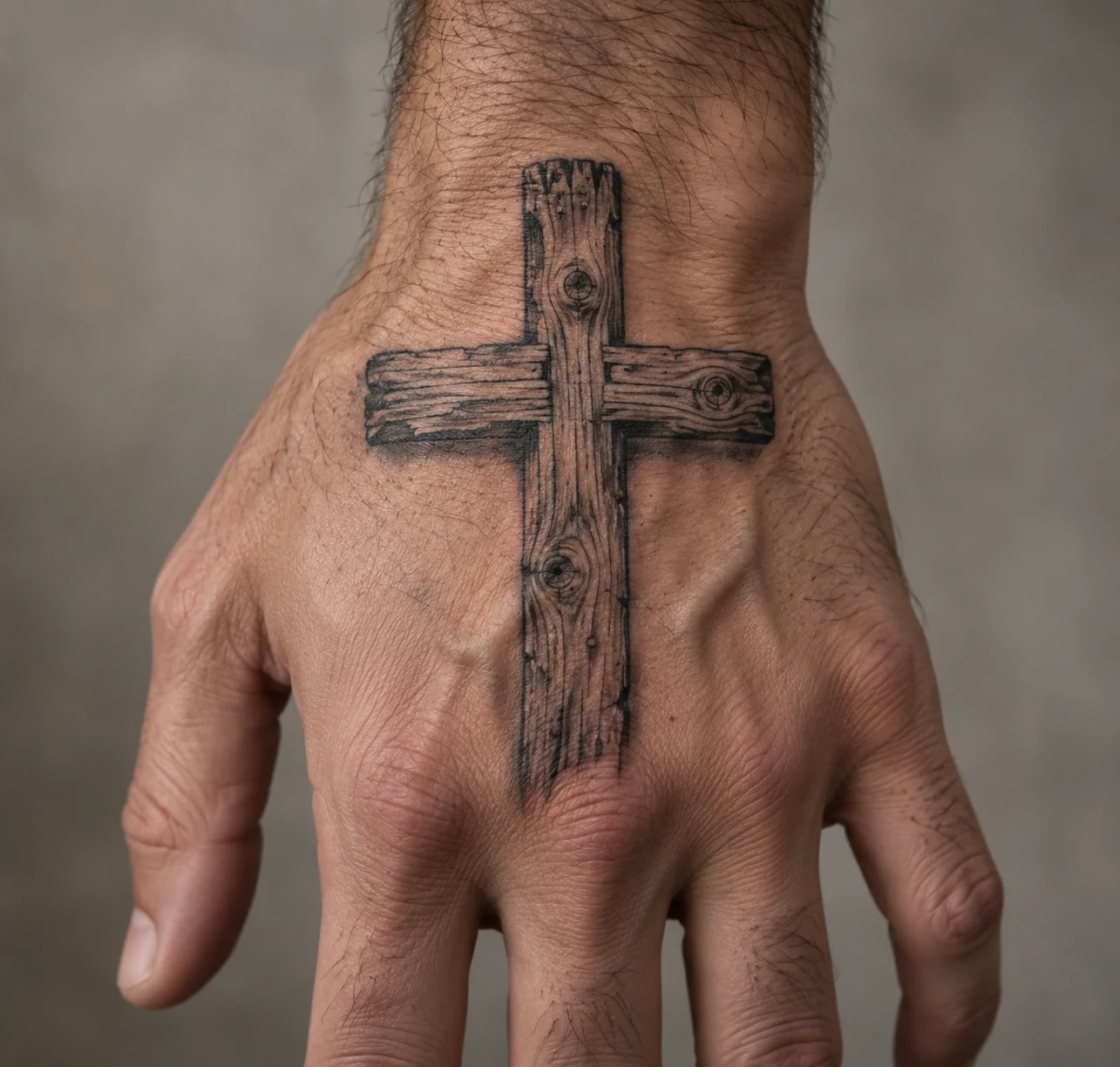
Grain lines bring texture to the stem and crossbar.
Woodgrain offers an alternative if smooth geometry feels too formal. A few distinct grain marks and slightly irregular edges can establish the wood effect without filling every surface.
15. Red Cross With a Black Ornamental Border
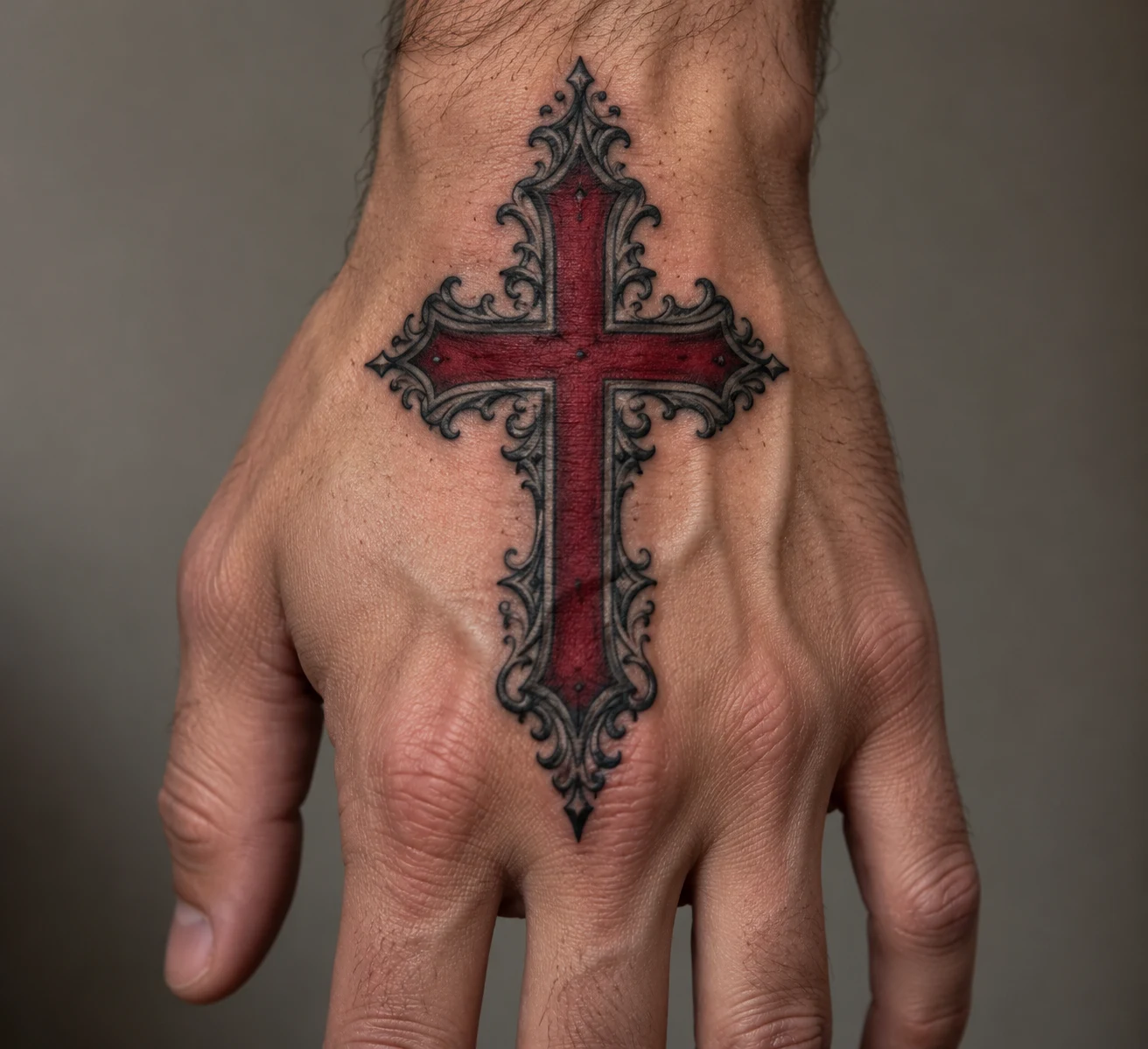
A deep red interior sits within decorative black edging.
Keep red in selected sections if you’d prefer a smaller color accent, or carry it throughout the interior for a larger area of color. Compare both versions before settling on the balance.
Cross Tattoos With Personal Details
An accompanying motif changes the balance of the whole design. Choose one addition that matters to you, then decide how much space it needs.
16. Cross With a Single Rose
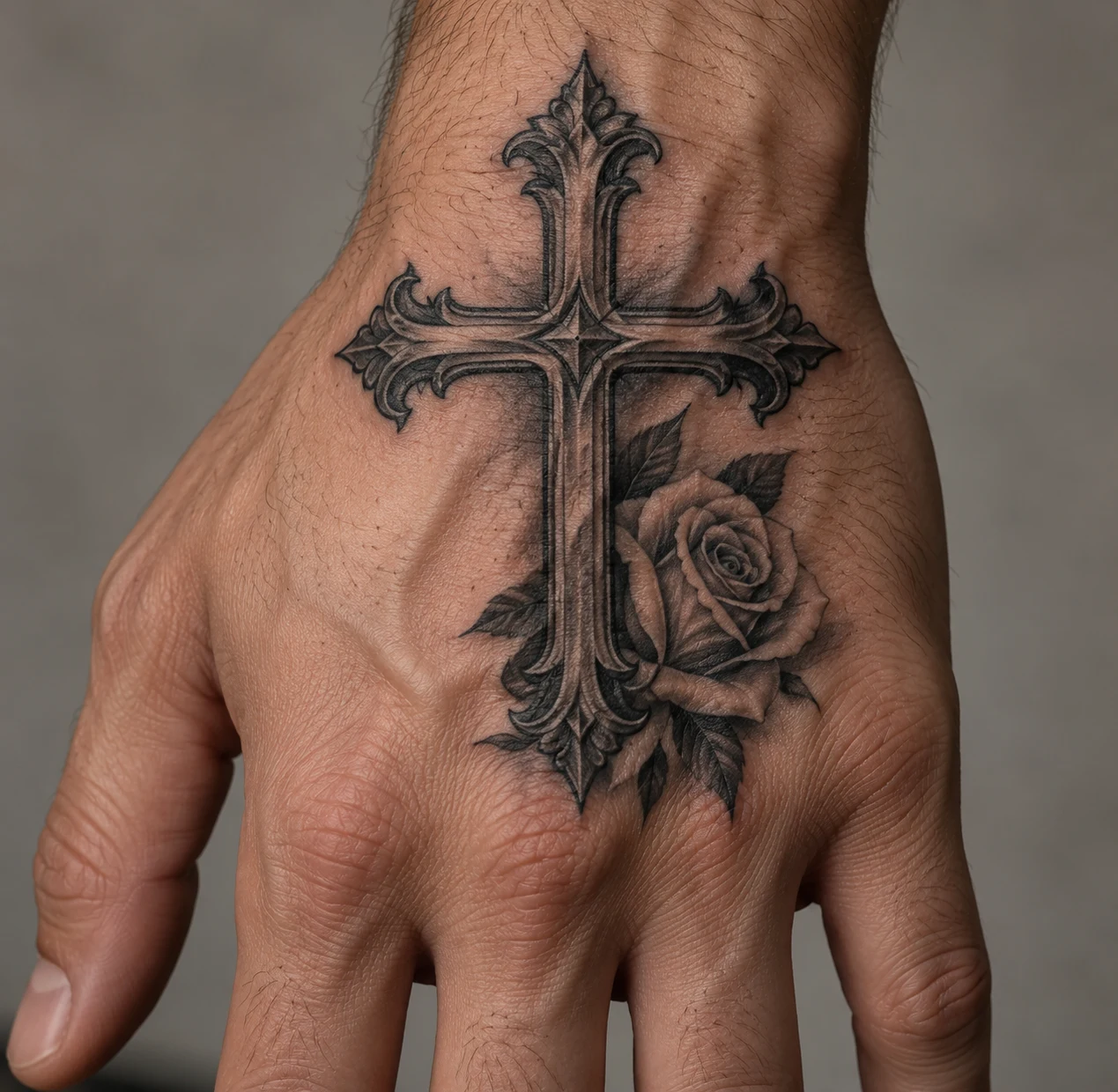
One rose sits beside the lower stem.
A slight overlap joins the motifs visually, while placing them alongside each other keeps their shapes separate. Keep the flower smaller if you want the cross to remain the focal point.
17. Cross With an Olive Sprig
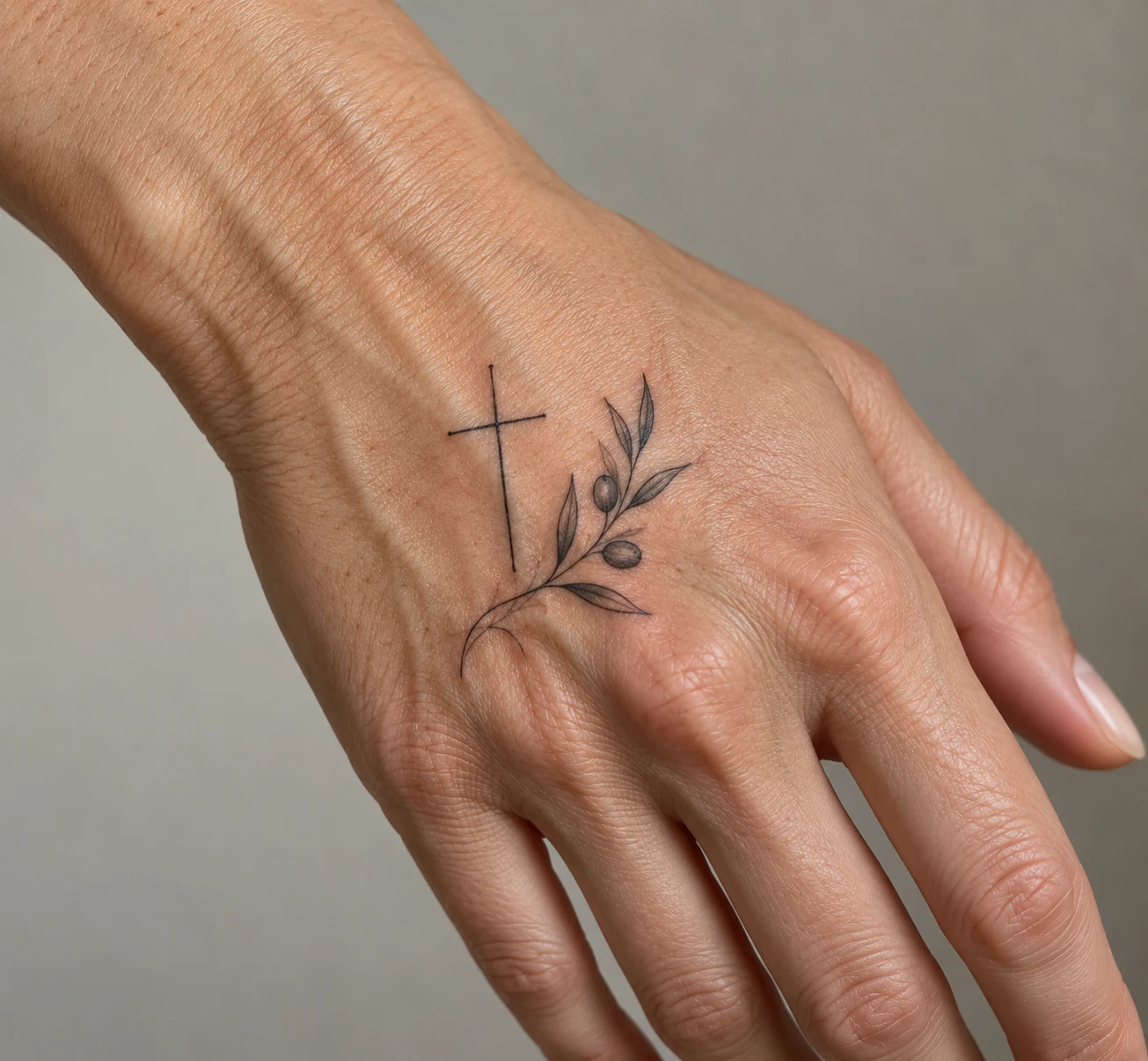
A curved leafy stem softens a slender cross.
Compared with the rose, the sprig creates a more open composition. Let it curve along one side if you prefer an asymmetric arrangement with visible space between the leaves.
18. Rosary Draped Across the Hand
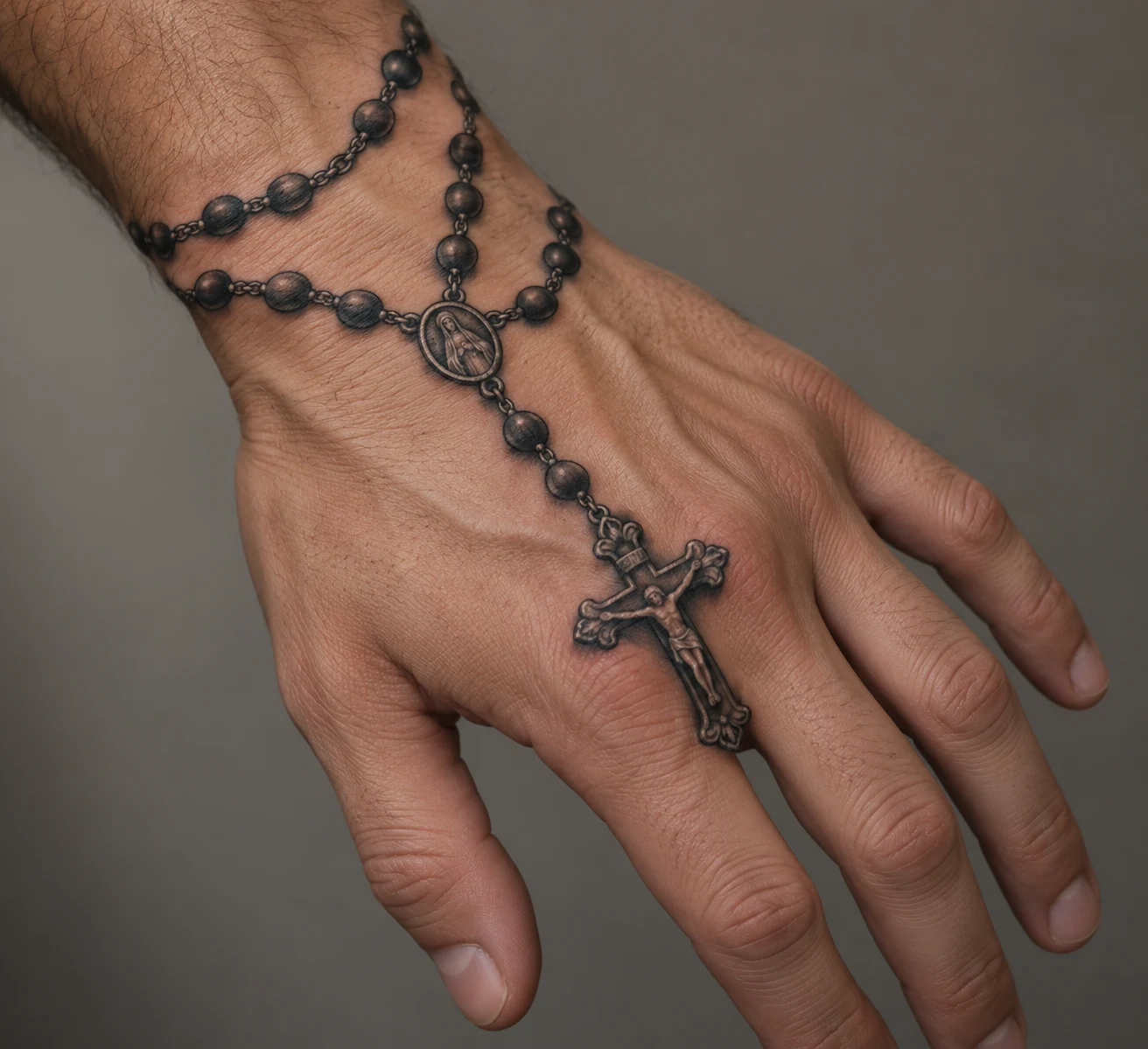
Beads lead across the hand toward a small crucifix.
The rosary carries a Catholic devotional context. Choose this if that connection fits your intention, and give the bead arrangement and crucifix enough room to remain distinct.
19. Cross With a Memorial Date
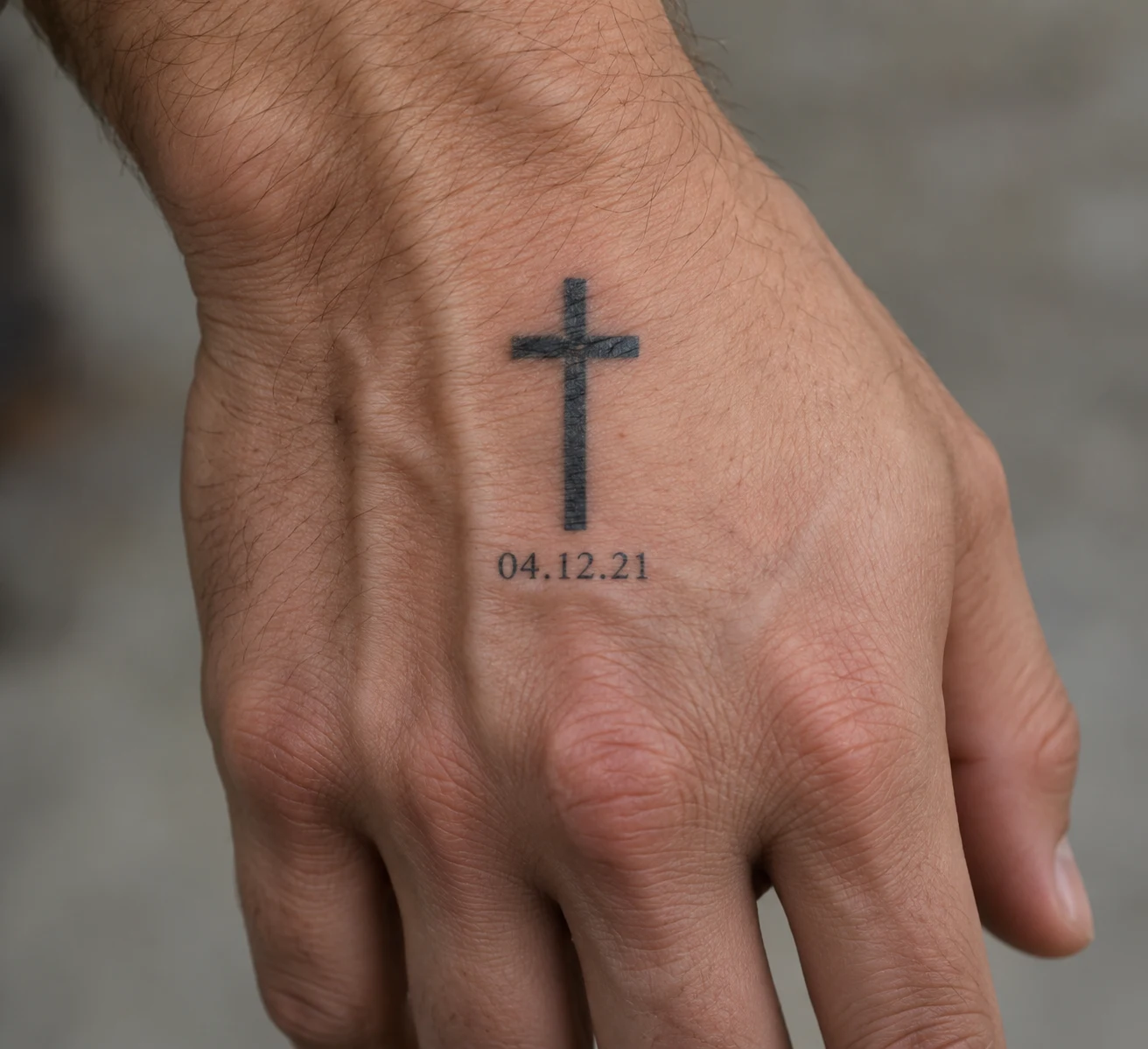
A short numeric date sits beneath a plain cross.
For a memorial direction, keep the numerals secondary to the cross. Confirm every digit, the date order and the spacing on the final stencil before tattooing.
20. Cross With Radiating Lines
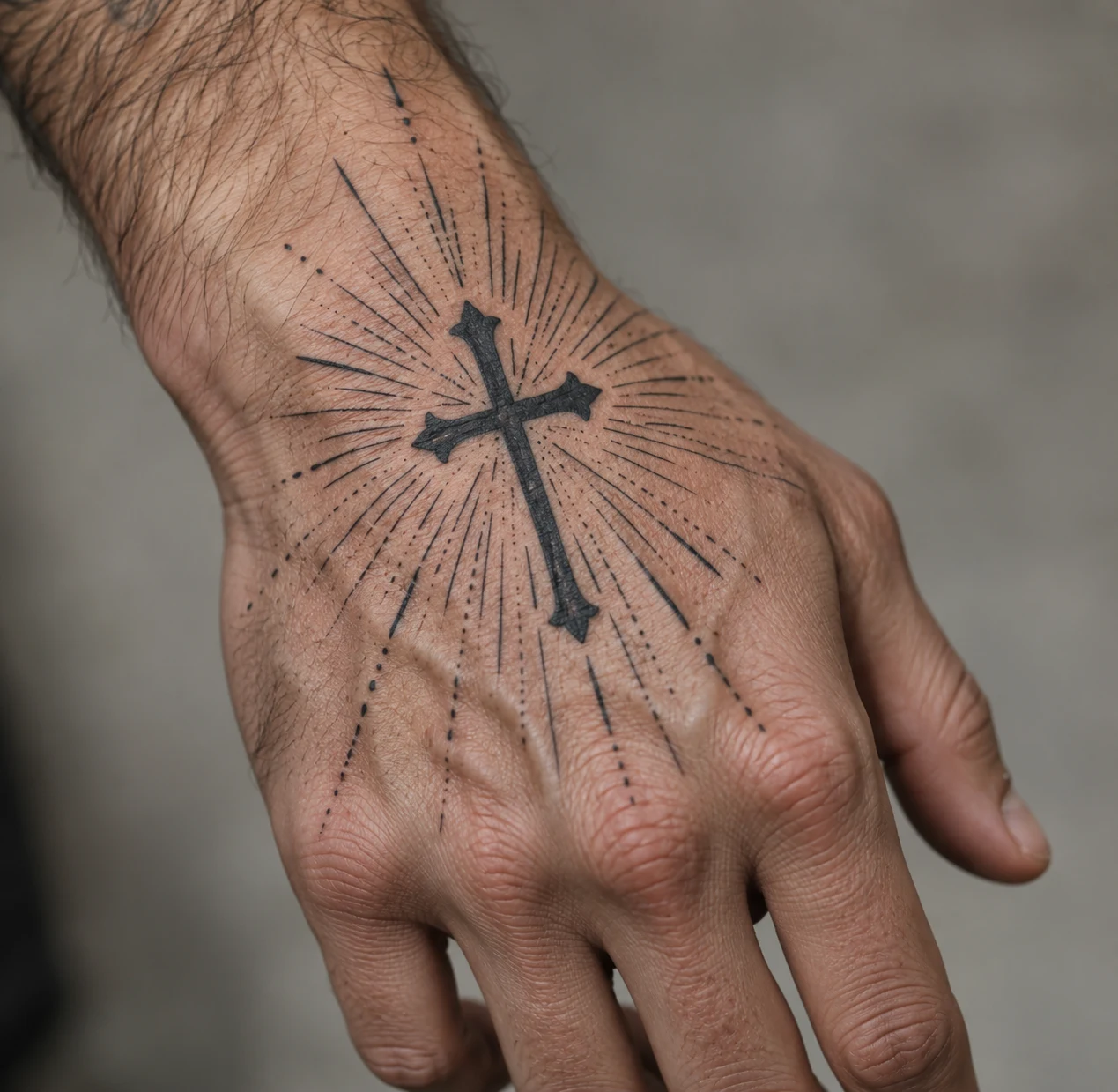
Fine rays spread outward from a central cross.
The rays widen the composition without adding another object. A small fan above the cross feels more contained; rays around several sides occupy more of the hand.
Shortlist two or three concepts by silhouette, placement and detail. Ask your artist to compare their scale and orientation using stencils on your own hand. For broader placement inspiration, explore the hand tattoos guide.
For more detail, see cross hand tattoo meaning.

