
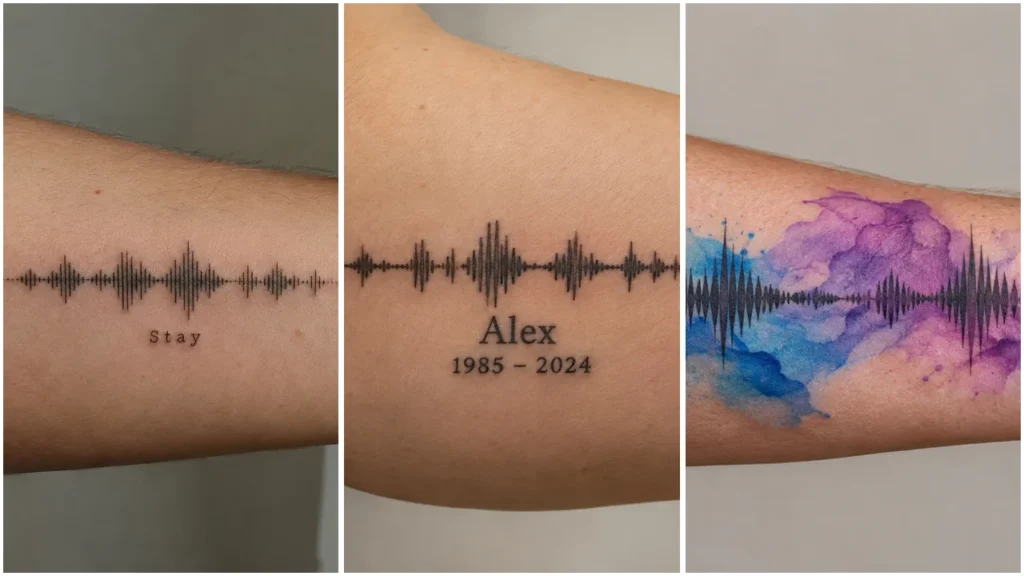
A soundwave tattoo can represent a favorite song, a familiar voice, or a sound tied to a place you love. These 20 ideas explore music, spoken words, personal memories, and graphic styles, with placements to help you picture each option.
The waveforms shown in these concepts are illustrative. To represent your own audio, use that recording as the design reference. A decorative waveform doesn’t necessarily correspond to particular words or sounds, and a tattoo isn’t automatically scannable or playable.
Music-Inspired Designs
1. Favorite Song Soundwave Tattoo
A horizontal waveform with a small song title underneath.
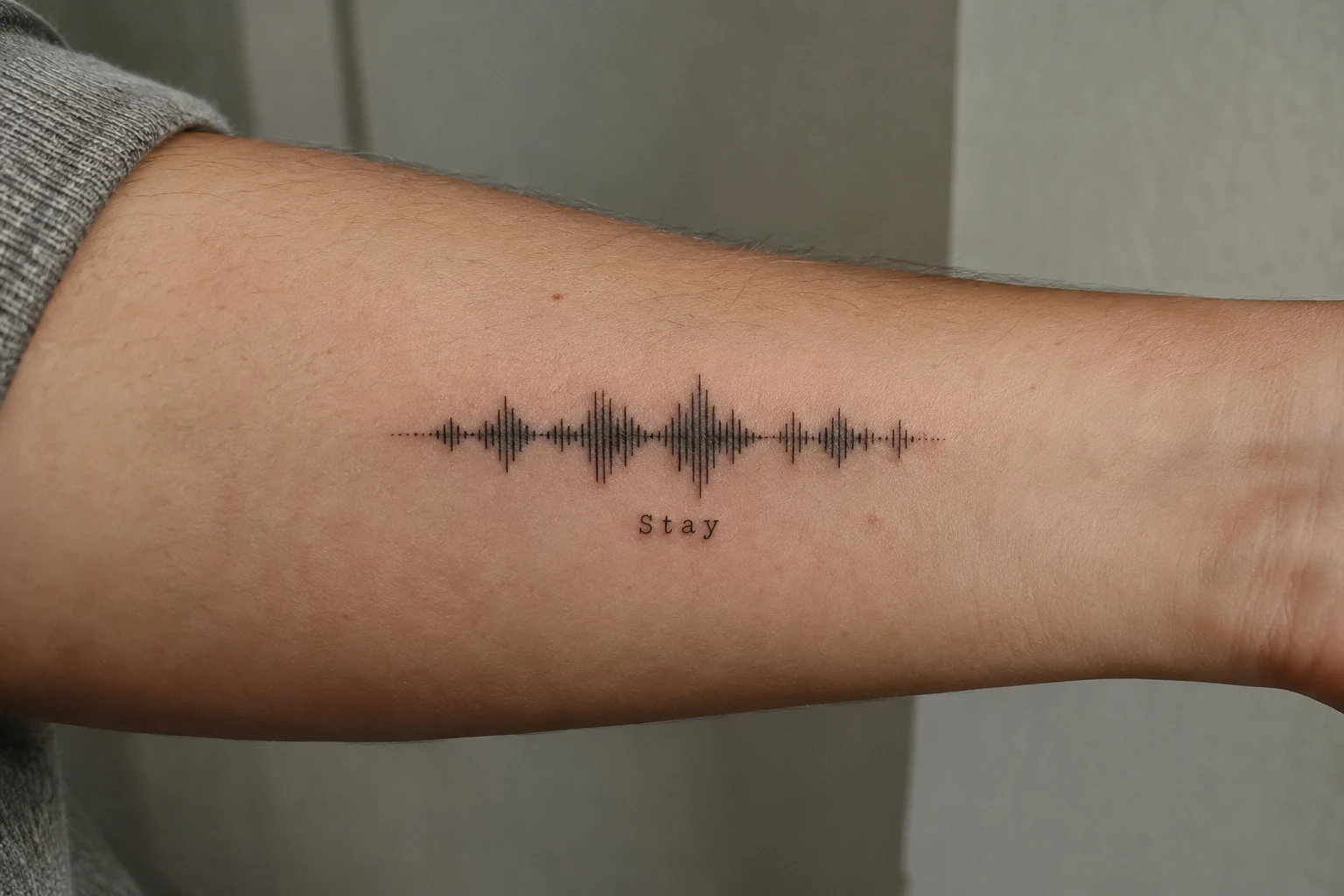
Choose a passage that holds the strongest memory: an opening, a chorus, or a few instrumental seconds. The title makes the connection readable; leaving it off keeps the reference personal.
2. Piano Keys and a Waveform
Compact piano keys sit beneath a short waveform.
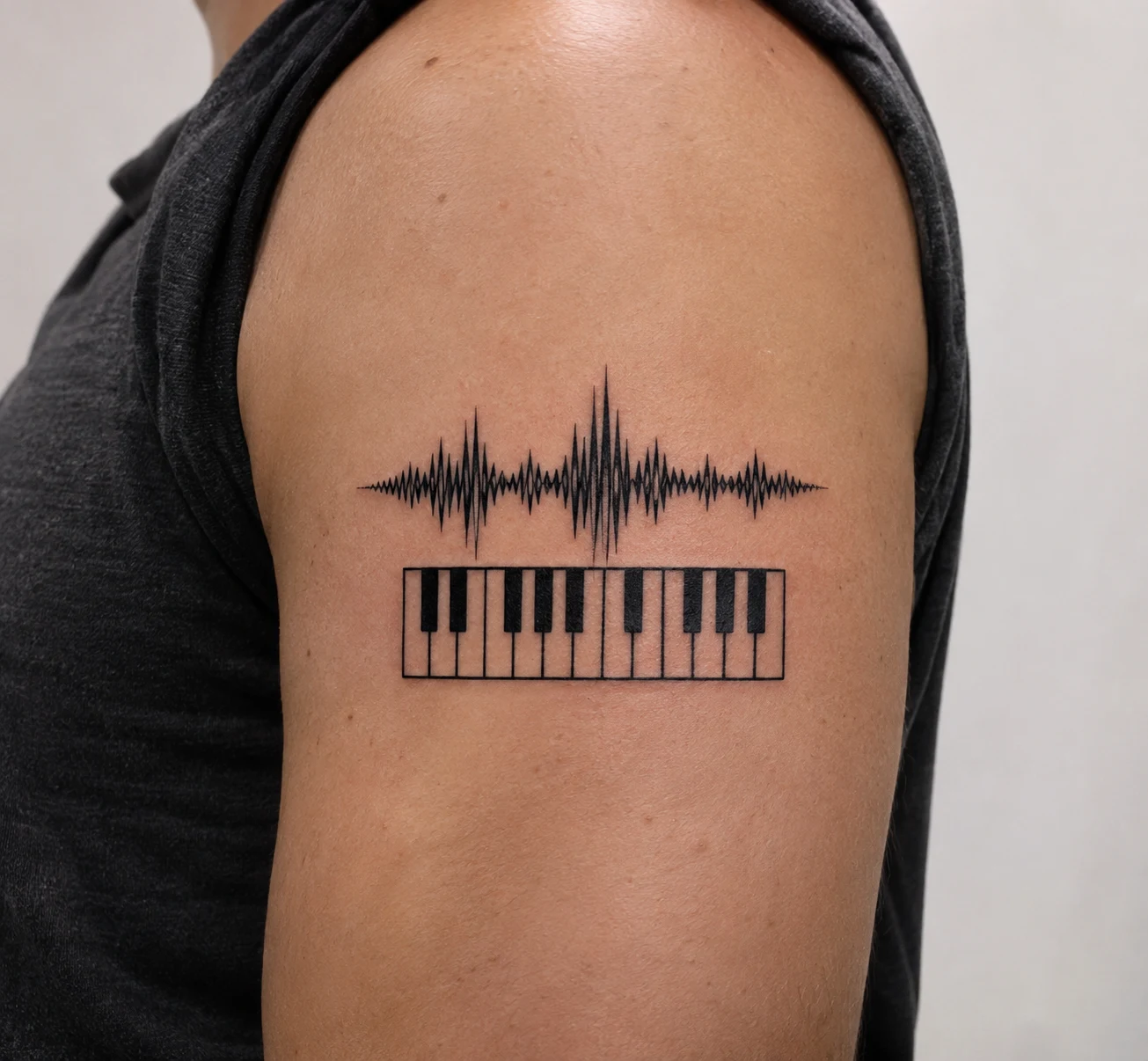
This pairing suits a pianist or someone remembering a piano performance. Decide which element should lead, then leave enough space between the keys and waveform to distinguish their shapes.
3. Acoustic Guitar and a Soundwave
A fine line guitar outline anchors a waveform extending alongside it.
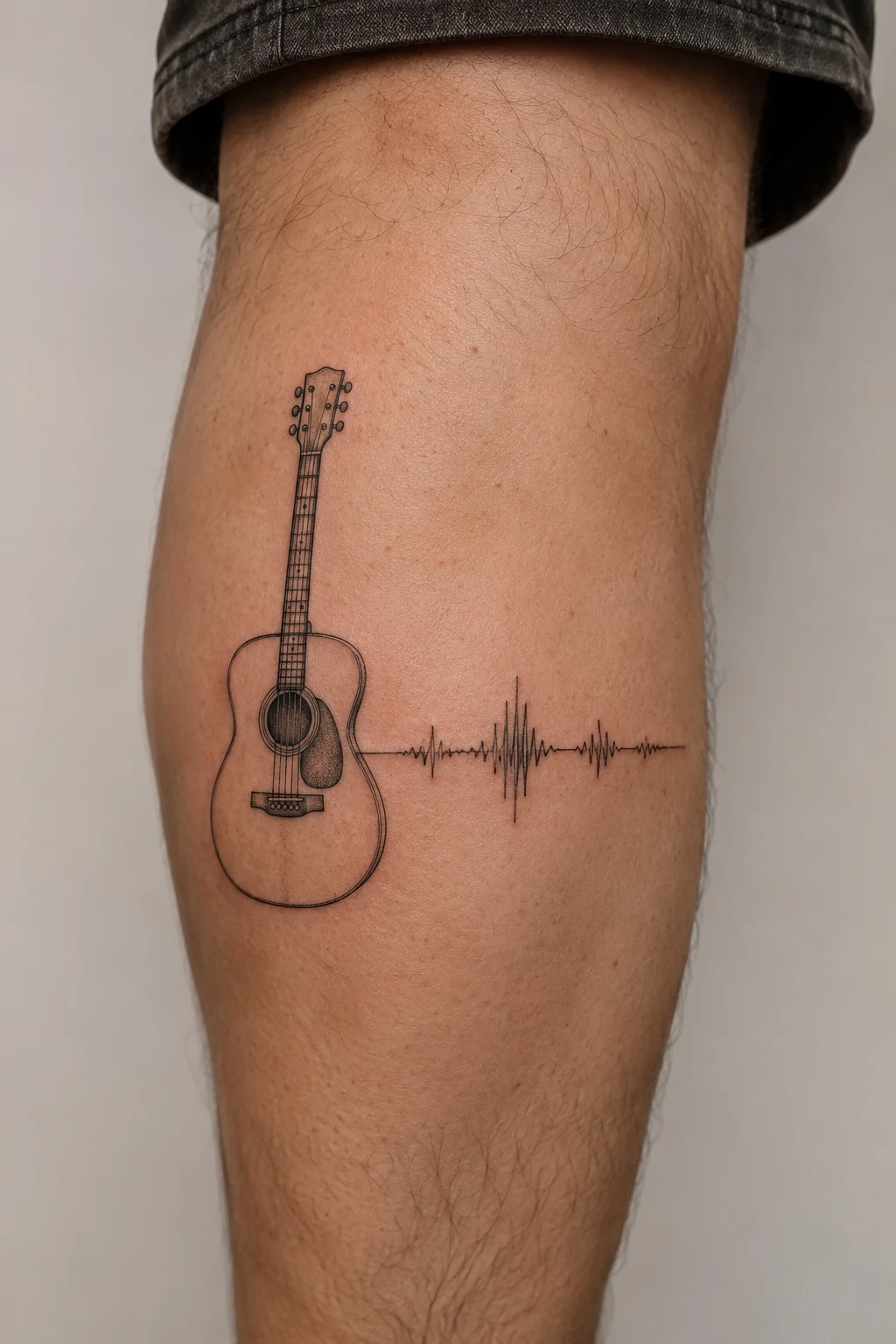
Use this direction for your own playing or a memory of someone playing for you. Keep the guitar simple if the recorded passage is the main reason for choosing the design.
4. Microphone and Voice Waveform
Beside a short waveform, a small microphone adds a visual reference to the voice.
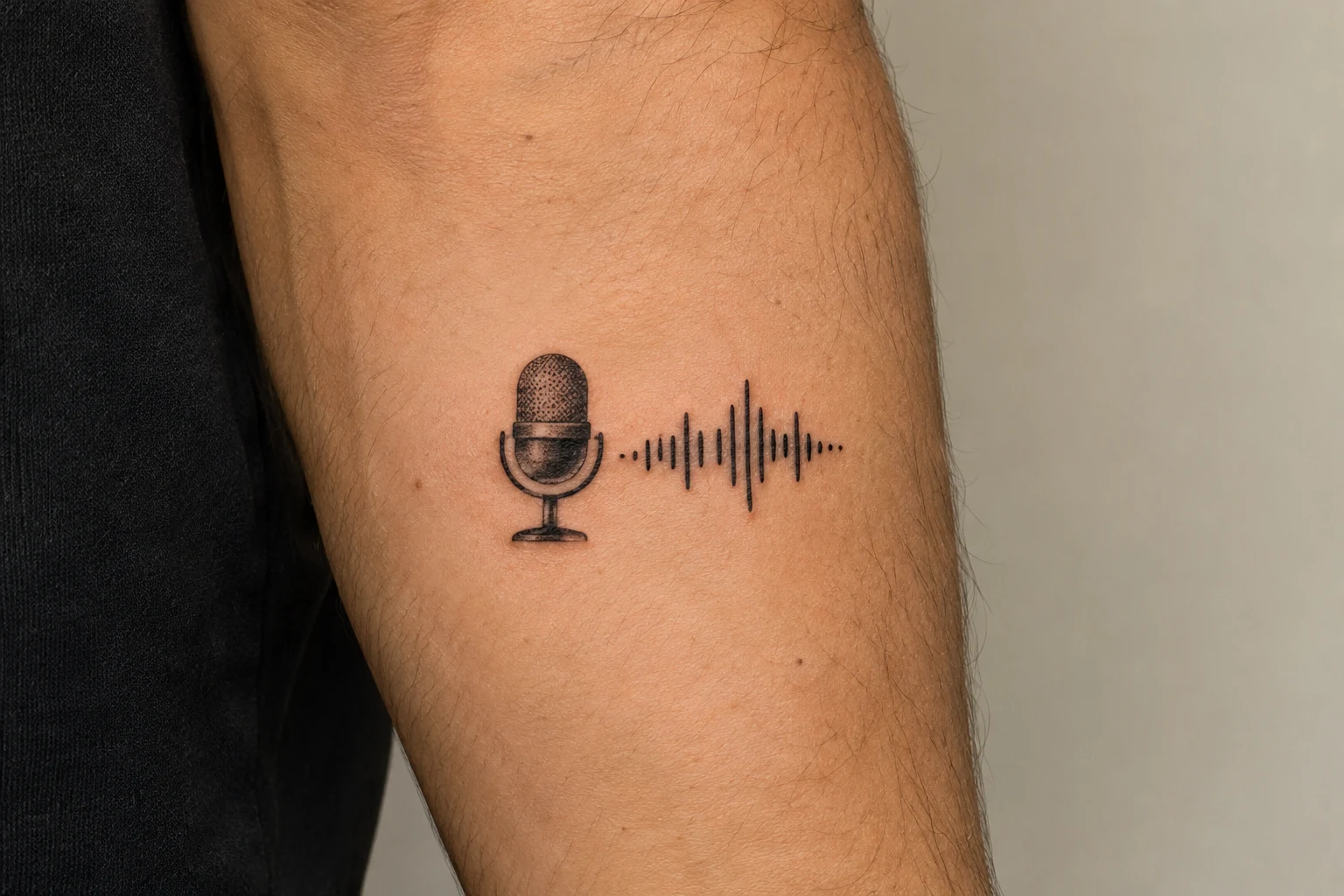
A sung line or spoken performance could provide the personal audio reference. Compare microphone tattoo ideas if you want to refine the microphone’s shape before combining the elements.
5. Concert Memory Soundwave
A ticket-shaped frame surrounds the waveform, with a date below.
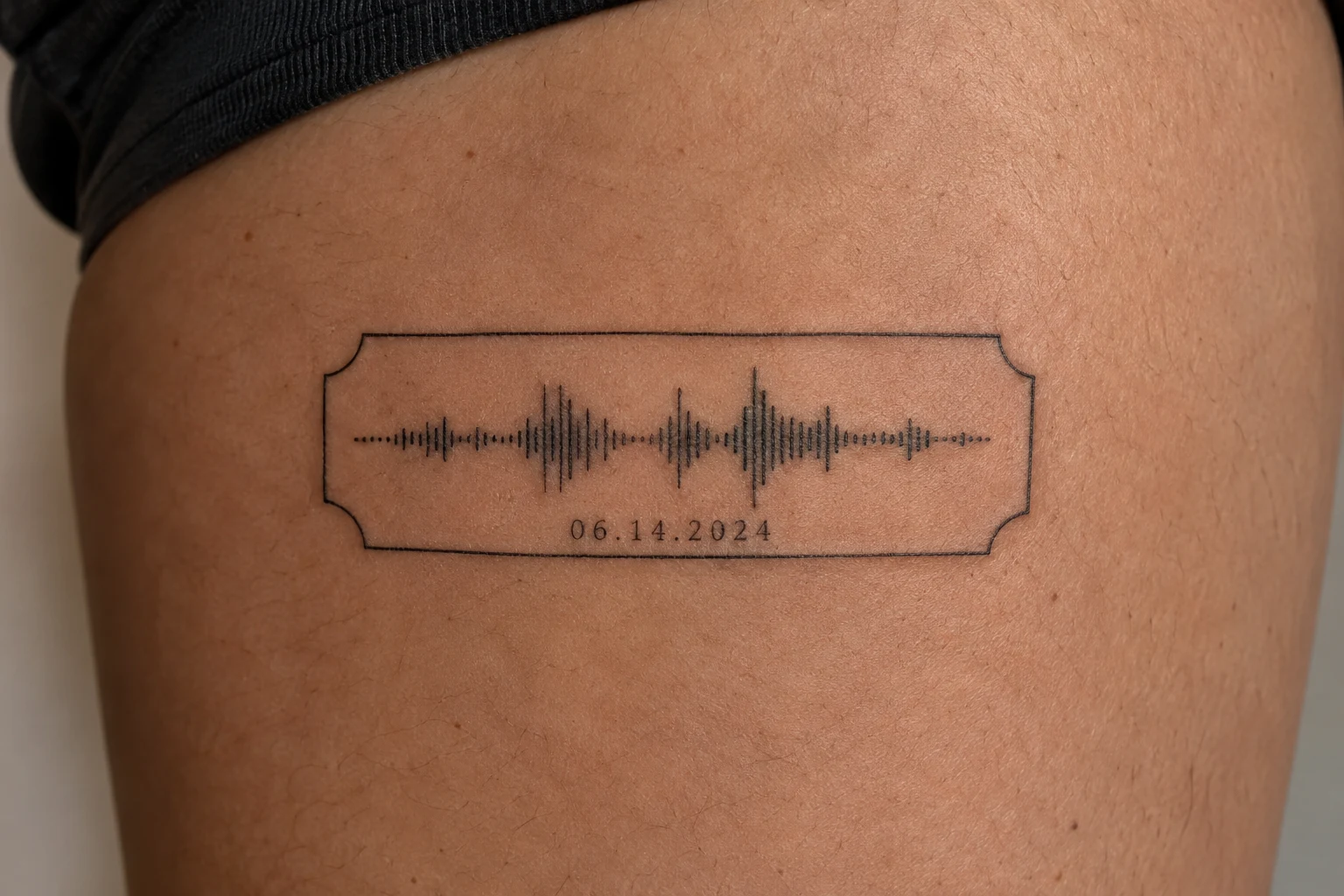
Choose one identifying detail, such as the show date, to keep the composition focused. Without a recording from that performance, treat the waveform as a decorative tribute to the event.
Voices and Spoken Moments
6. A Loved One’s Spoken Phrase
The words “love you” sit beneath a short waveform.
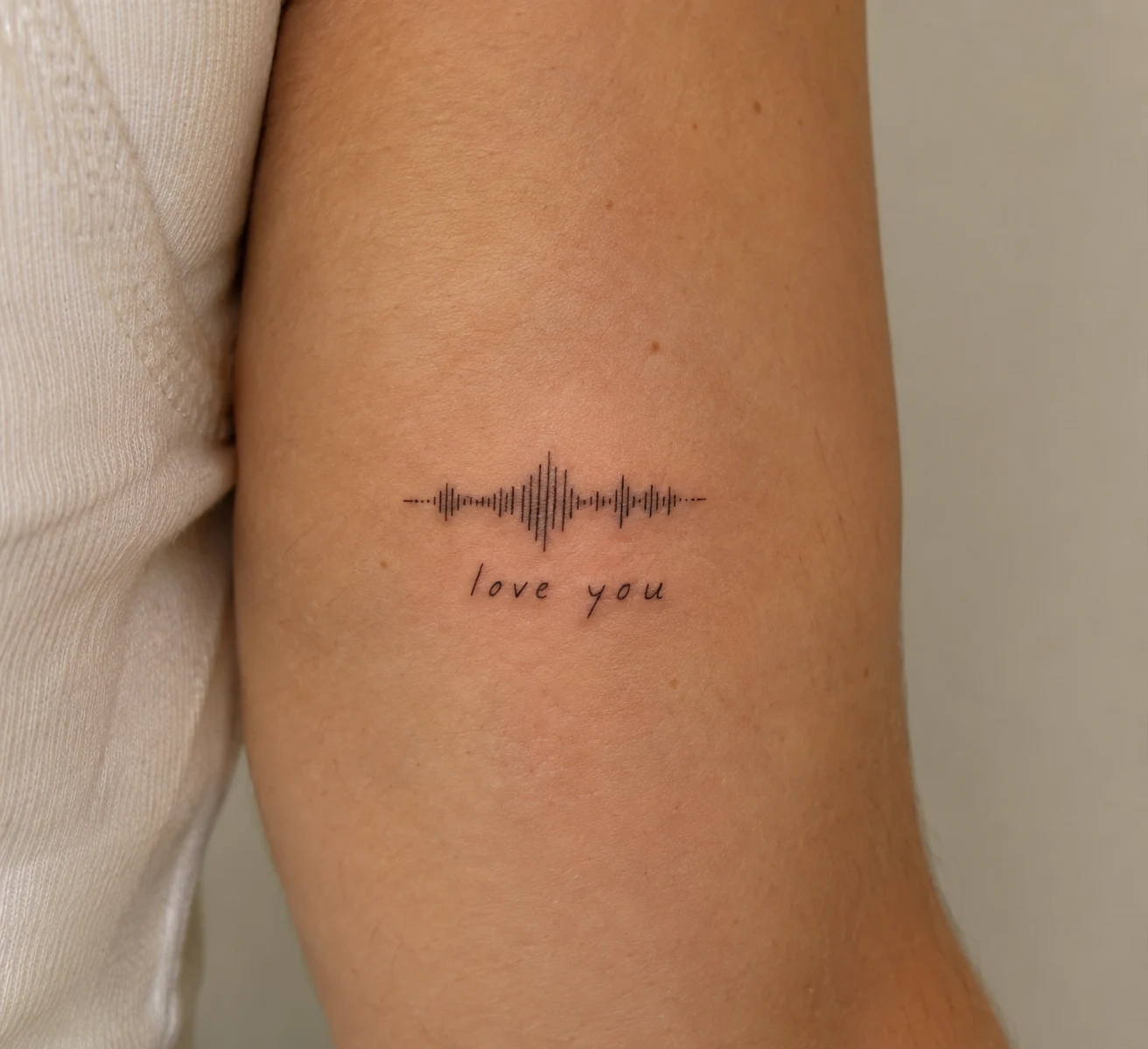
A greeting or familiar expression can guide this design. For the waveform to correspond to that person’s exact words, it needs to come from their recording; the lettering alone doesn’t establish that connection.
7. Laughter Waveform
Separated clusters of peaks create an unlabelled, irregular silhouette.
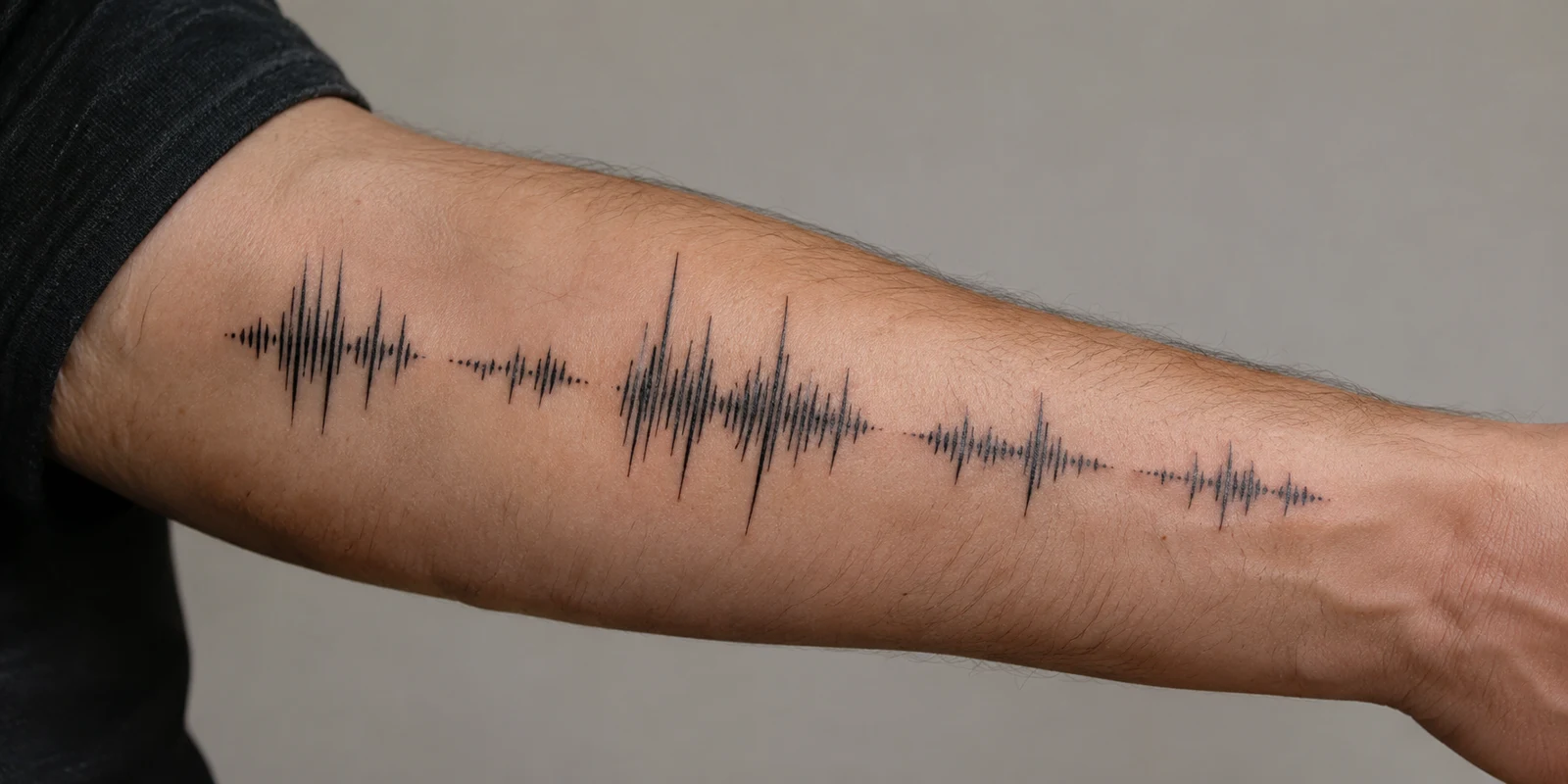
Choose this approach if you want the memory to remain private without adding text or a portrait. A saved laugh can supply the reference, while the surrounding empty space keeps attention on its changing shape.
8. Voicemail Waveform With a Timestamp
A restrained message-style layout pairs a waveform with a small timestamp.
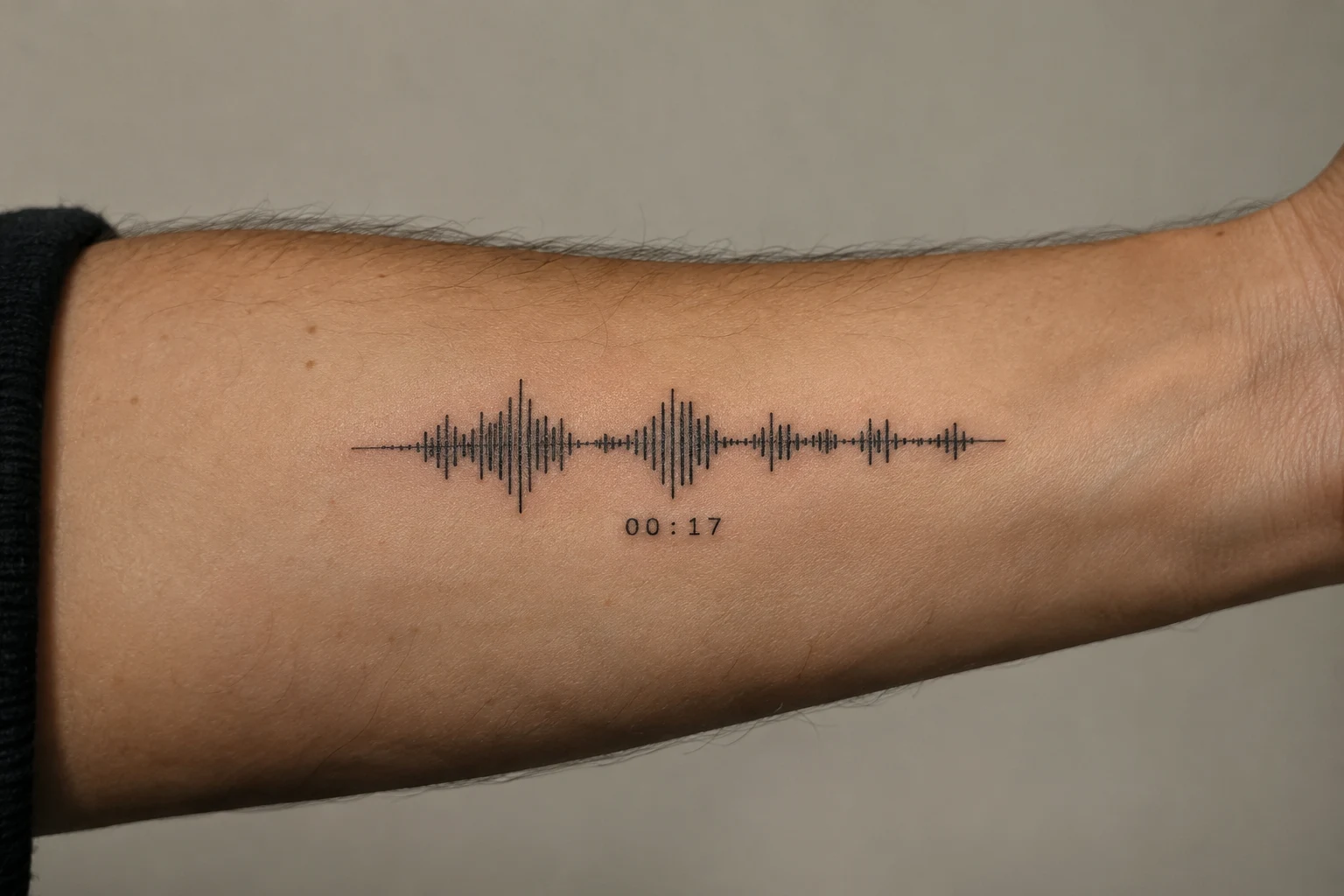
Include the time only if it contributes to the memory. Keep the original voicemail separately so the recording remains accessible independently of the tattoo or any playback service.
9. A Child’s First Words
Handwritten-style words sit beneath a short waveform.
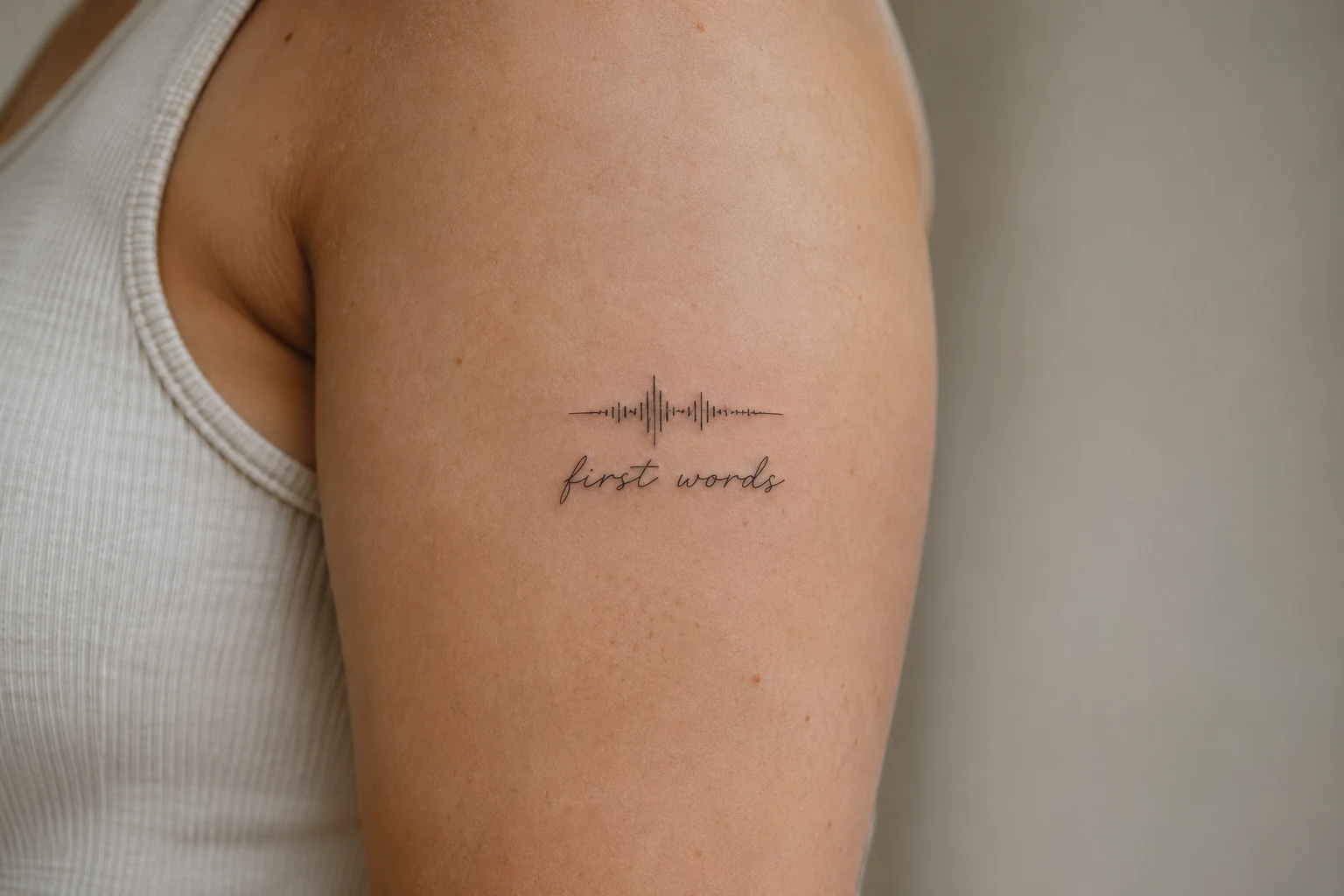
A brief recorded moment gives this concept a specific starting point. Choose a transcription you want to read often, and discuss lettering size with your artist before settling on the overall scale.
10. Wedding Vows in Two Waveform Rows
Two stacked rows give each person’s voice its own space.
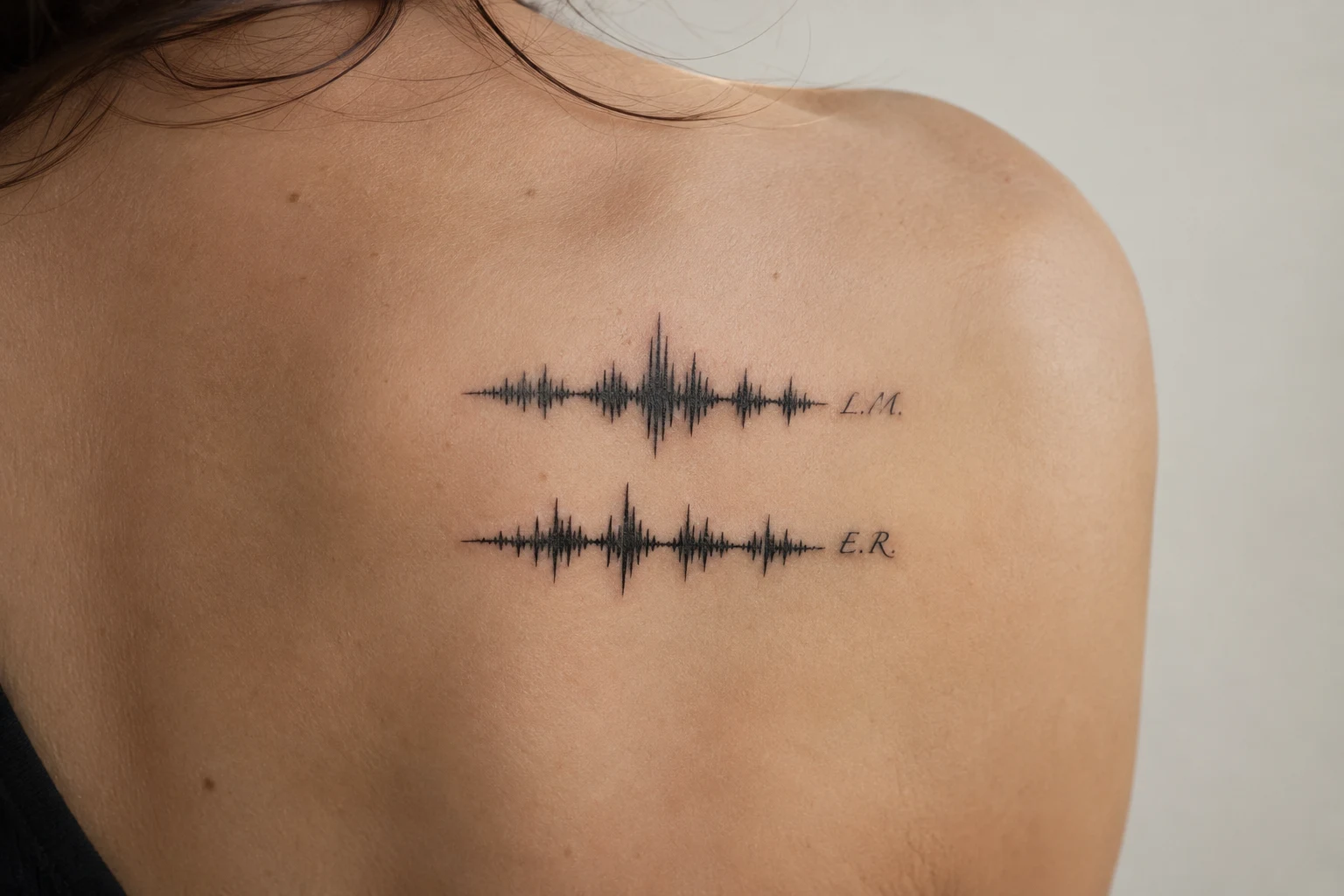
Select a short line from each recording and identify the rows with initials. This arrangement lets both contributions remain distinct, making it useful for couples who want one composition containing two voices.
Memories of People, Pets, and Places
11. Memorial Soundwave With a Name
A waveform sits above a name and optional dates.
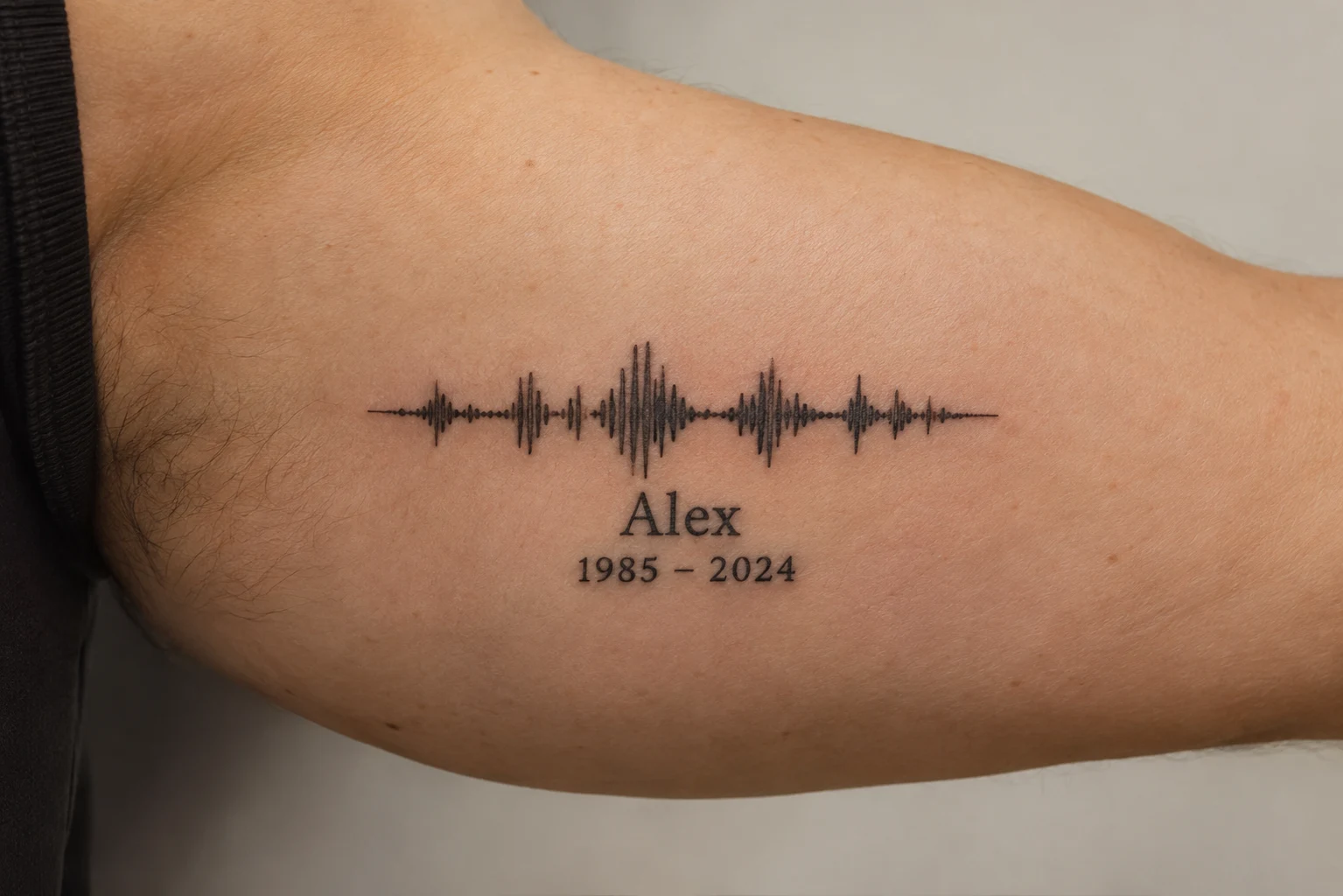
A familiar greeting or saved message can become the reference for a personal memorial. Include only the details that feel right to you; a name alone may say everything you want.
12. Pet Soundwave and Paw Outline
Beside a short waveform sits a small paw illustration.
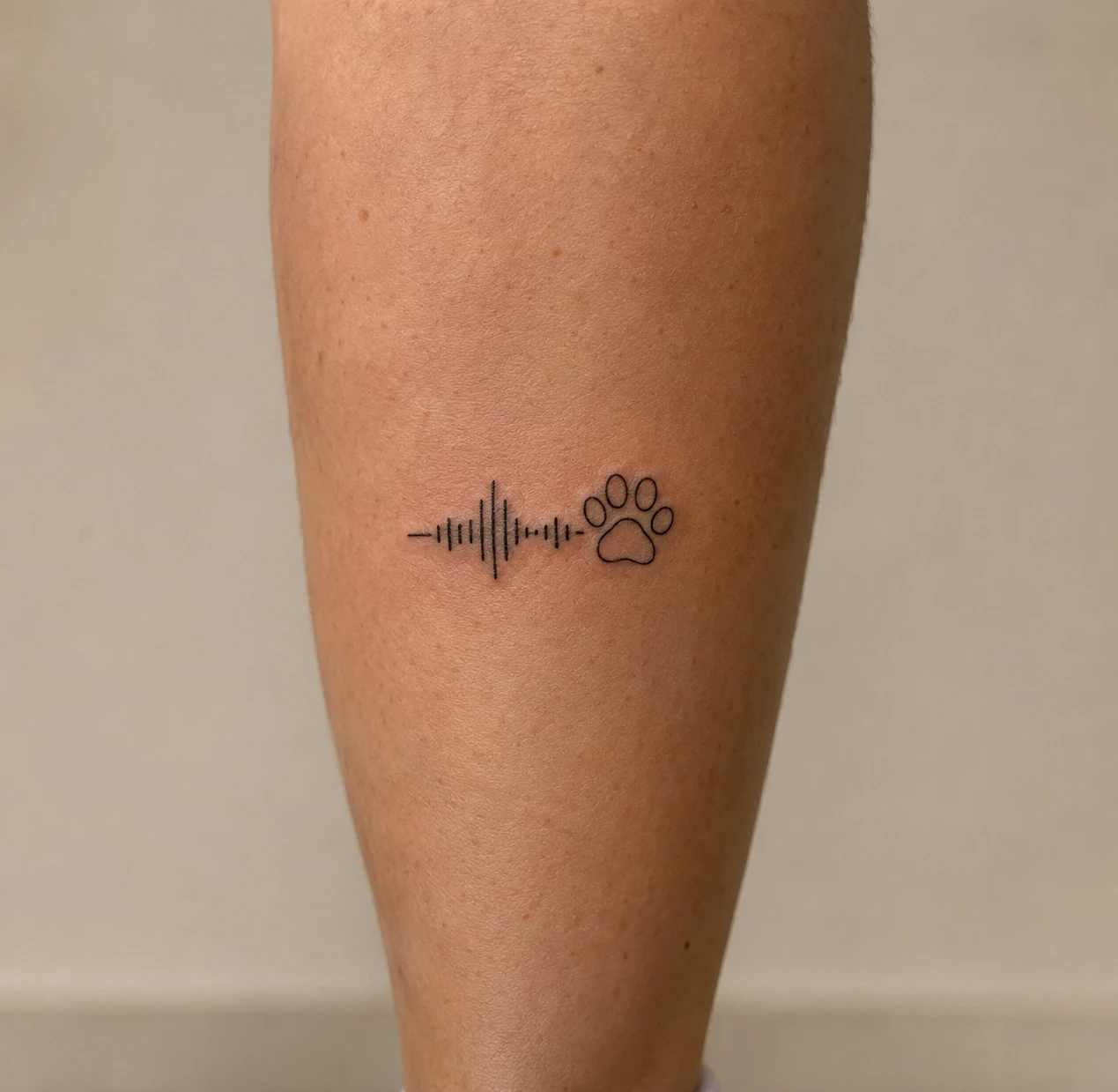
Consider a bark, purr, or another recorded sound you associate with your pet. The paw can remain a simple symbol; it represents an individual paw print only when drawn from that print.
13. Lullaby Soundwave With a Crescent Moon
A small crescent floats above a fine line waveform.
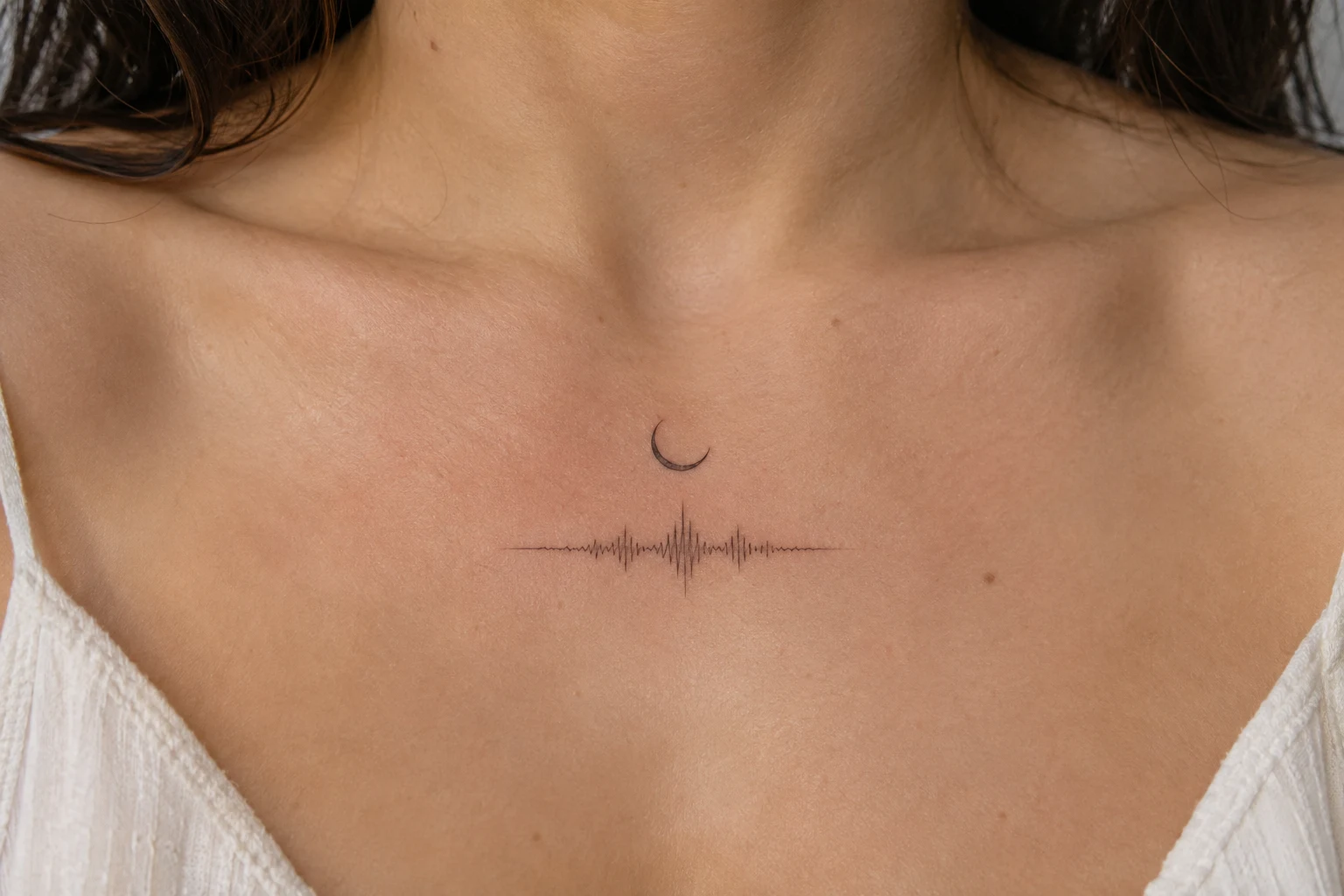
This combination can suggest a bedtime-song memory. Decide whether the connection rests with the melody or a particular person’s singing, then choose your audio reference accordingly. The moon is an optional visual accent.
14. Ocean Recording With a Wave Outline
Above the audio waveform, a separate curling wave suggests the ocean.
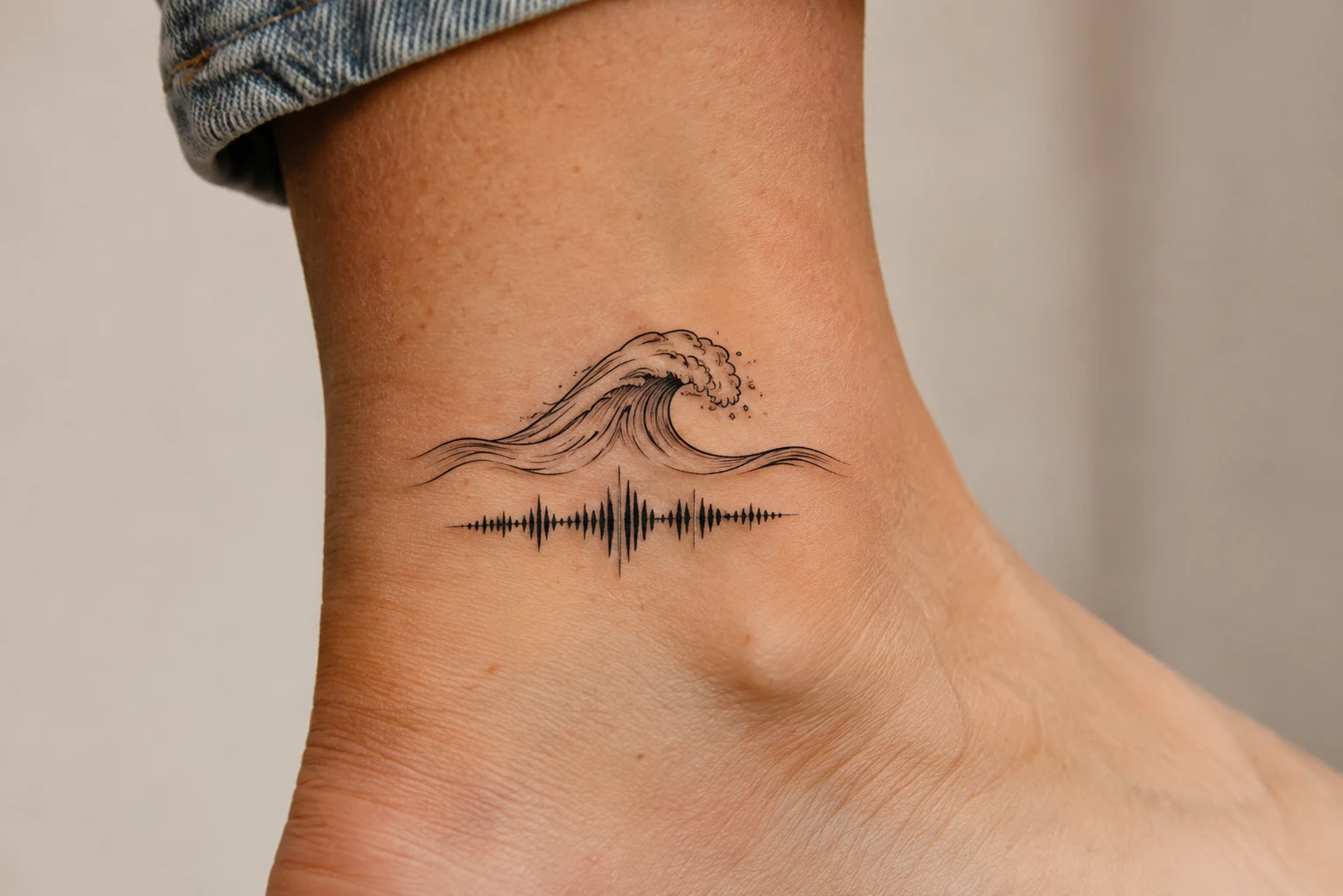
The illustration identifies the coastal theme, while a recording from a meaningful beach can personalize the audio element. Keep the two shapes separate so each has a clear role in the design.
15. Hometown Sounds With Coordinates
A compact coordinate line identifies the place beneath the waveform.
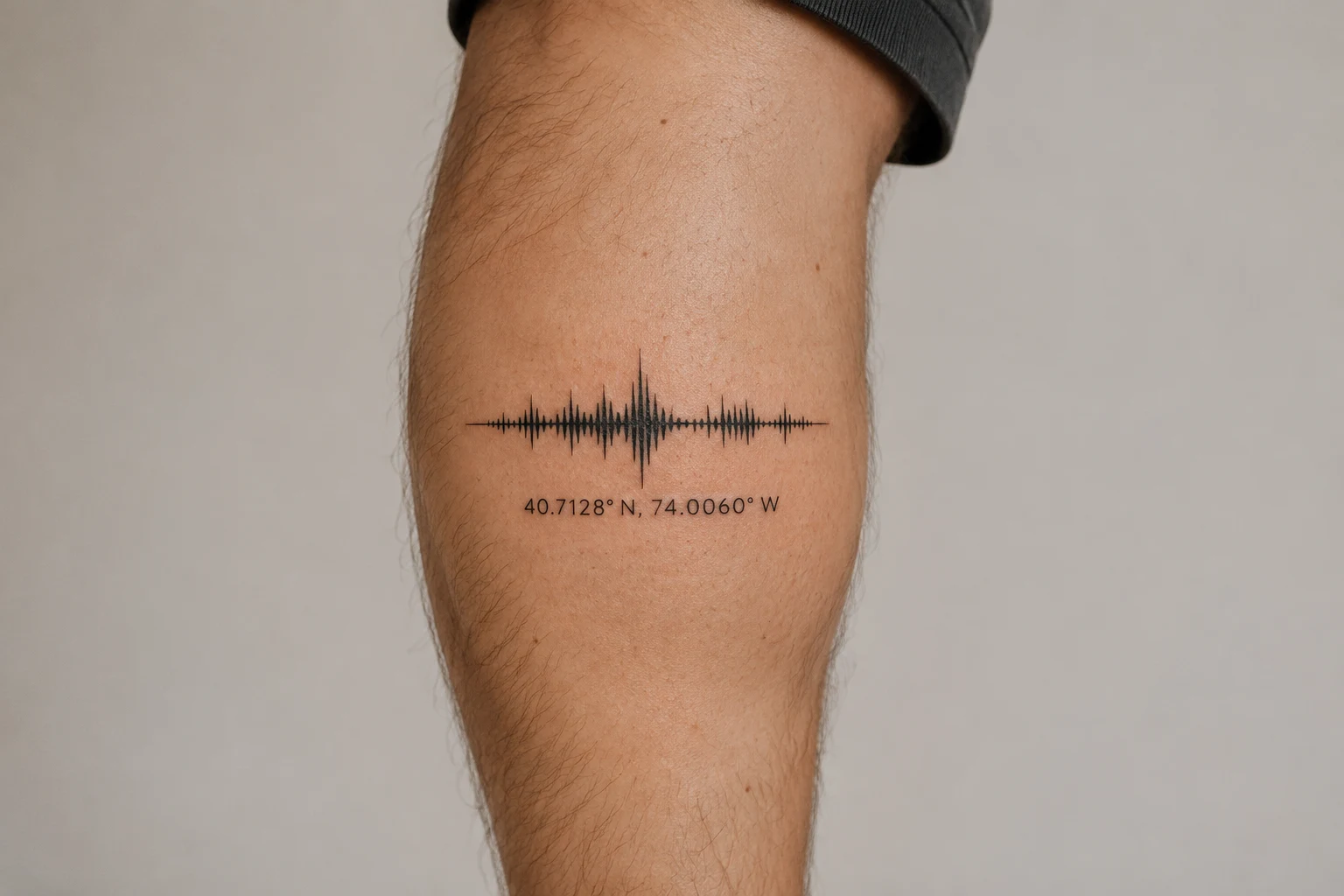
Think of a sound you connect with home, such as bells or a familiar street. Check the coordinates before approving the stencil, or use a place name if that feels more meaningful.
Graphic Styles and Compositions
16. Minimal Fine Line Soundwave Tattoo
Sparse peaks form a short waveform without lettering or symbols.
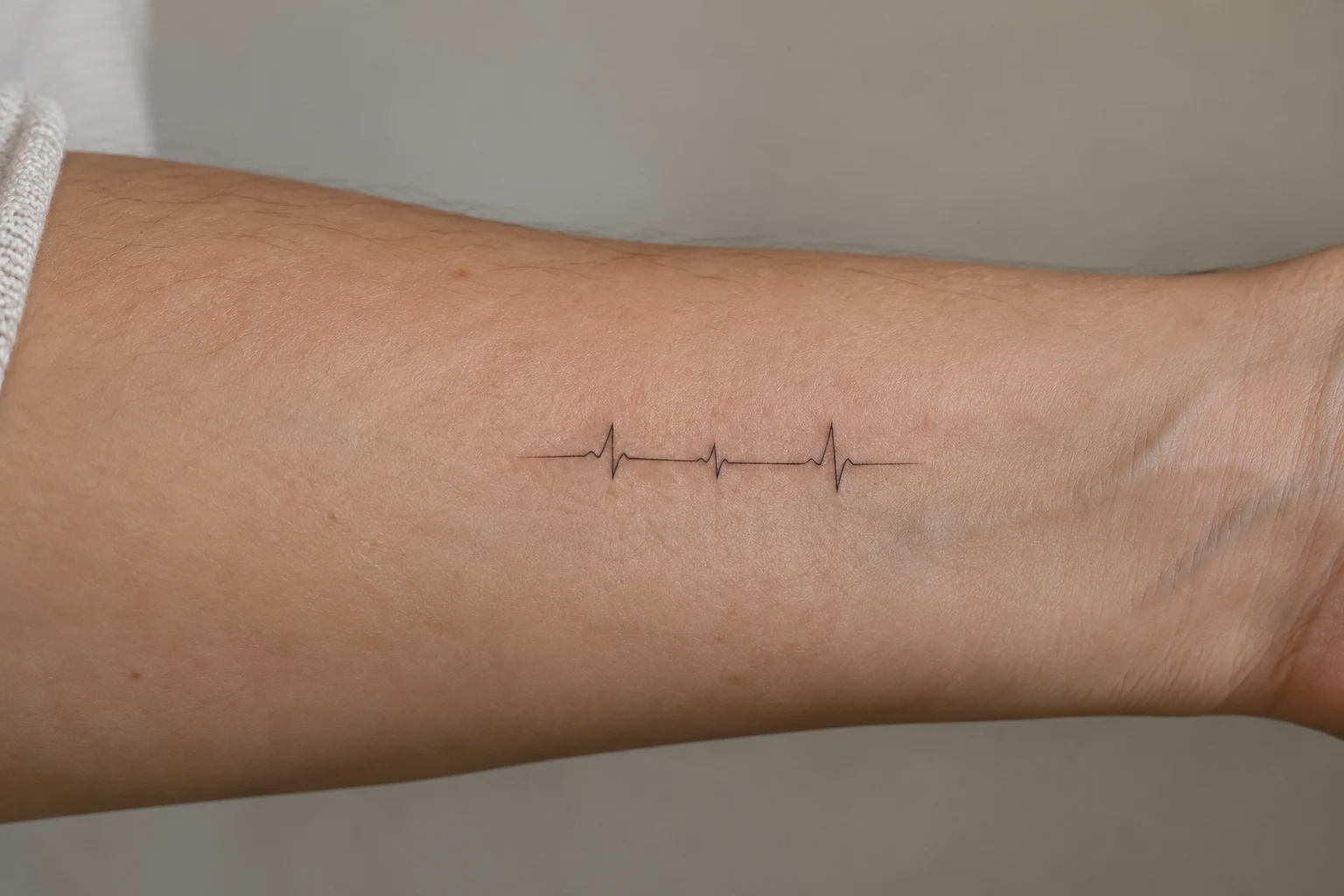
Choose this direction when the silhouette itself appeals to you. Discuss scale and spacing with your artist, especially if simplifying an audio-derived reference would remove details you want to preserve.
17. Bold Waveform Armband
Broad black peaks form a band around the upper arm.
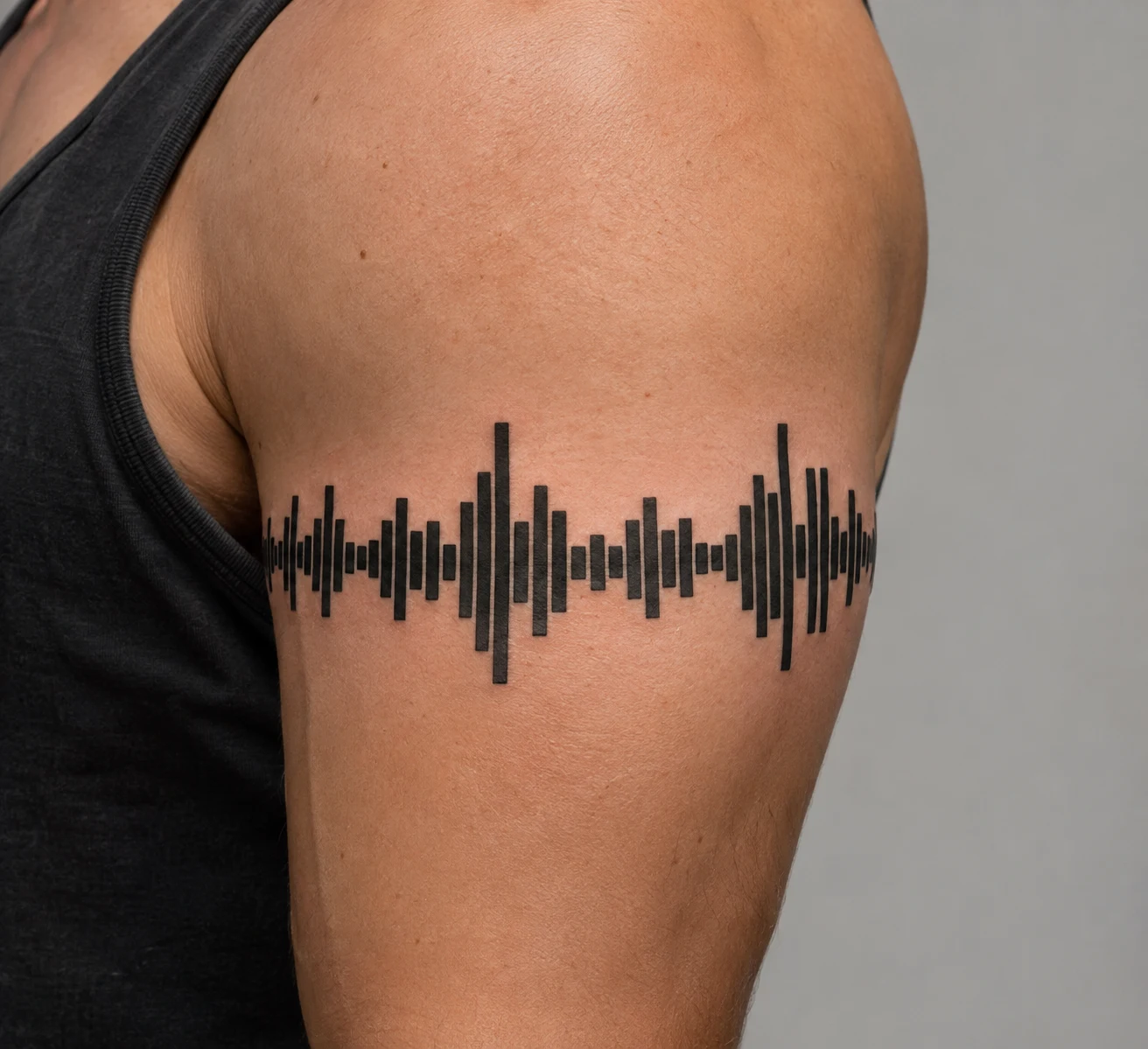
This option gives the waveform a larger presence. Decide whether one segment should wrap around the arm or repeat as a pattern; repetition changes how the original audio reference is presented.
18. Circular Waveform Medallion
Radial peaks surround an open center in a compact circular composition.
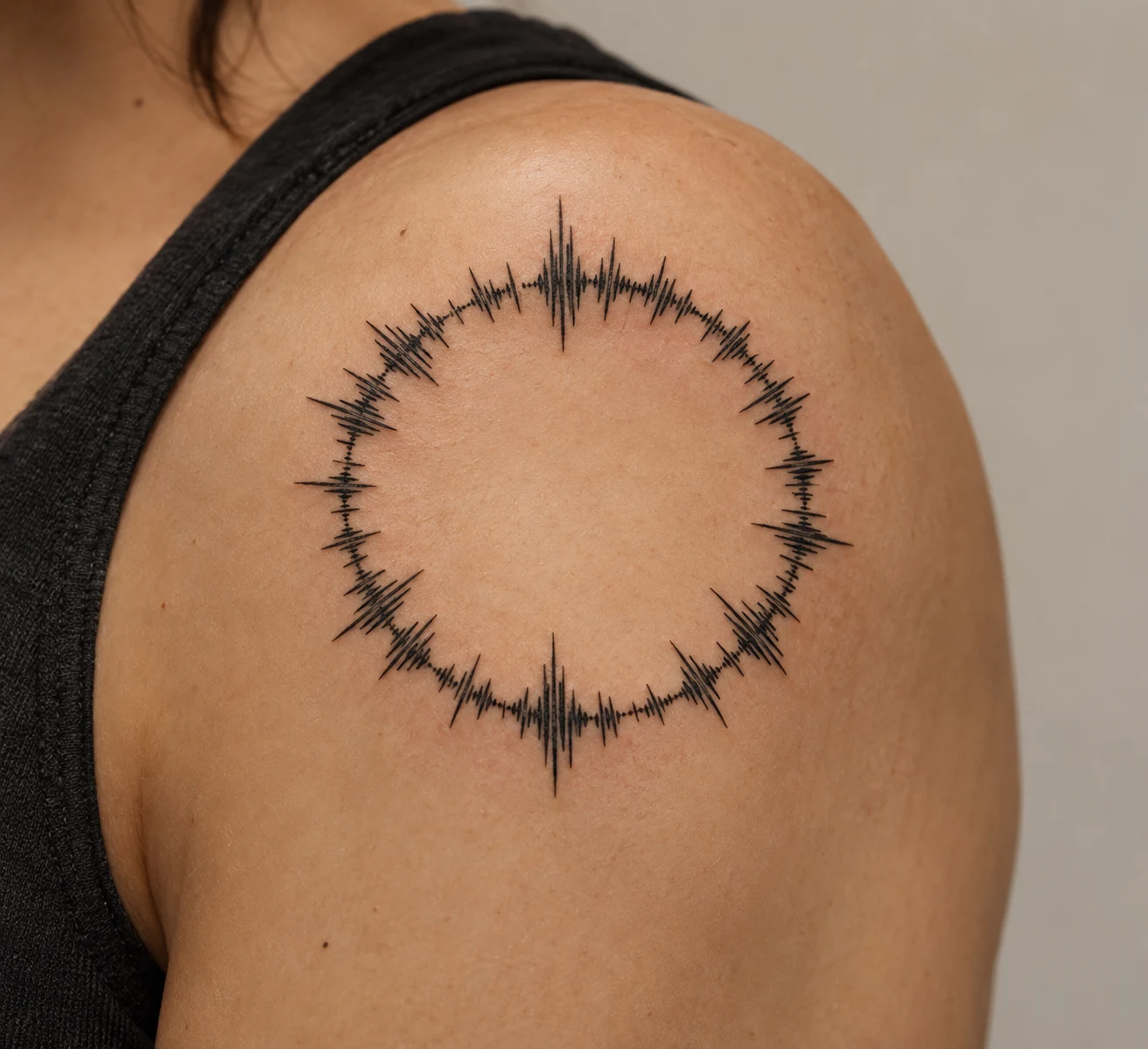
The circular arrangement suits readers drawn to a graphic emblem. Treat it as a stylized adaptation, and consider whether that shape matters more to you than retaining a linear waveform display.
19. Soundwave Inside a Heart Outline
A separate heart outline encloses a short waveform.
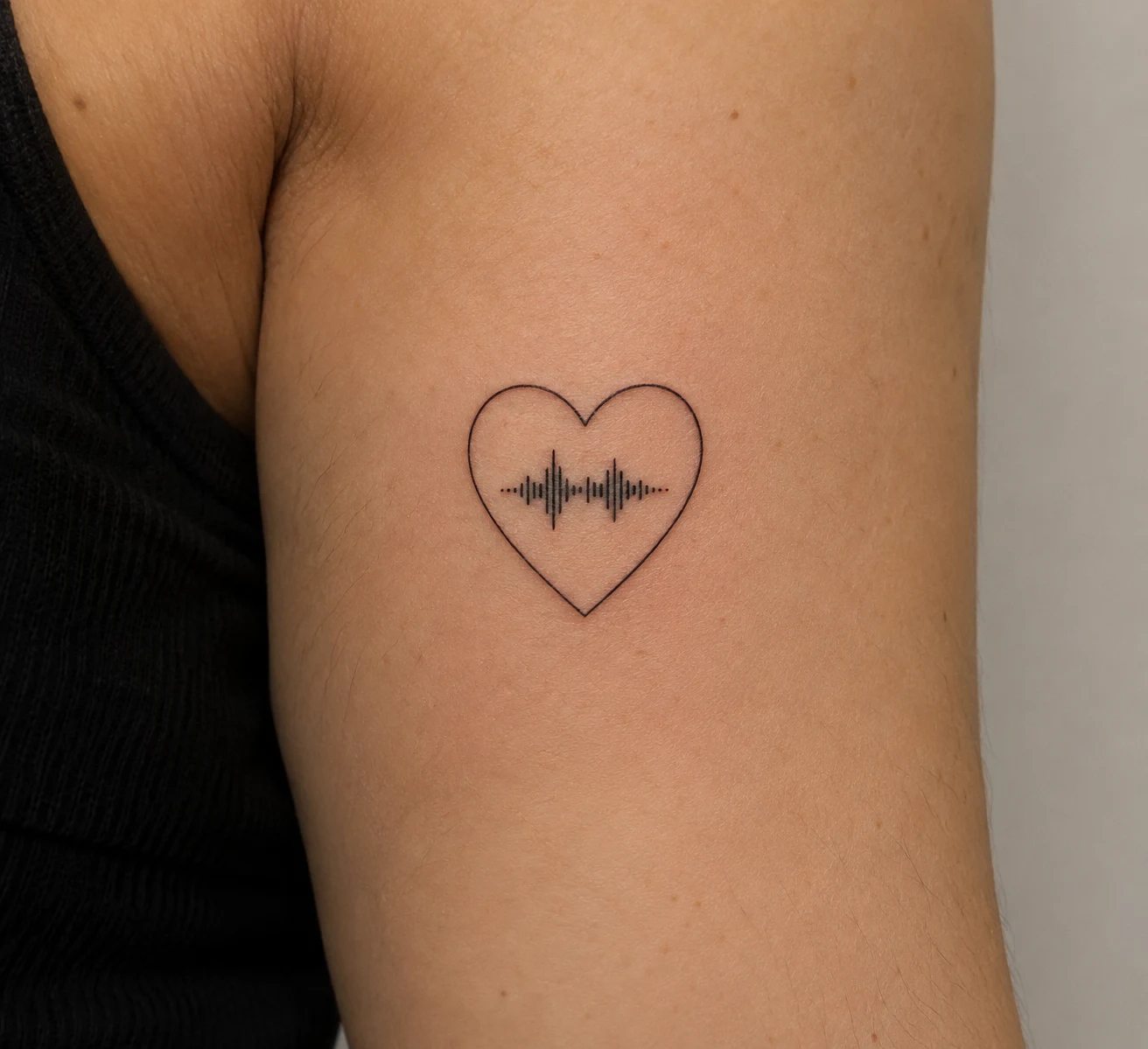
The heart adds an immediately recognizable affectionate element. Leave room inside it if preserving an audio-derived shape matters, rather than reshaping the peaks to fill every curve of the outline.
20. Soundwave With Watercolor Accents
Blue and purple patches add color behind a black waveform.
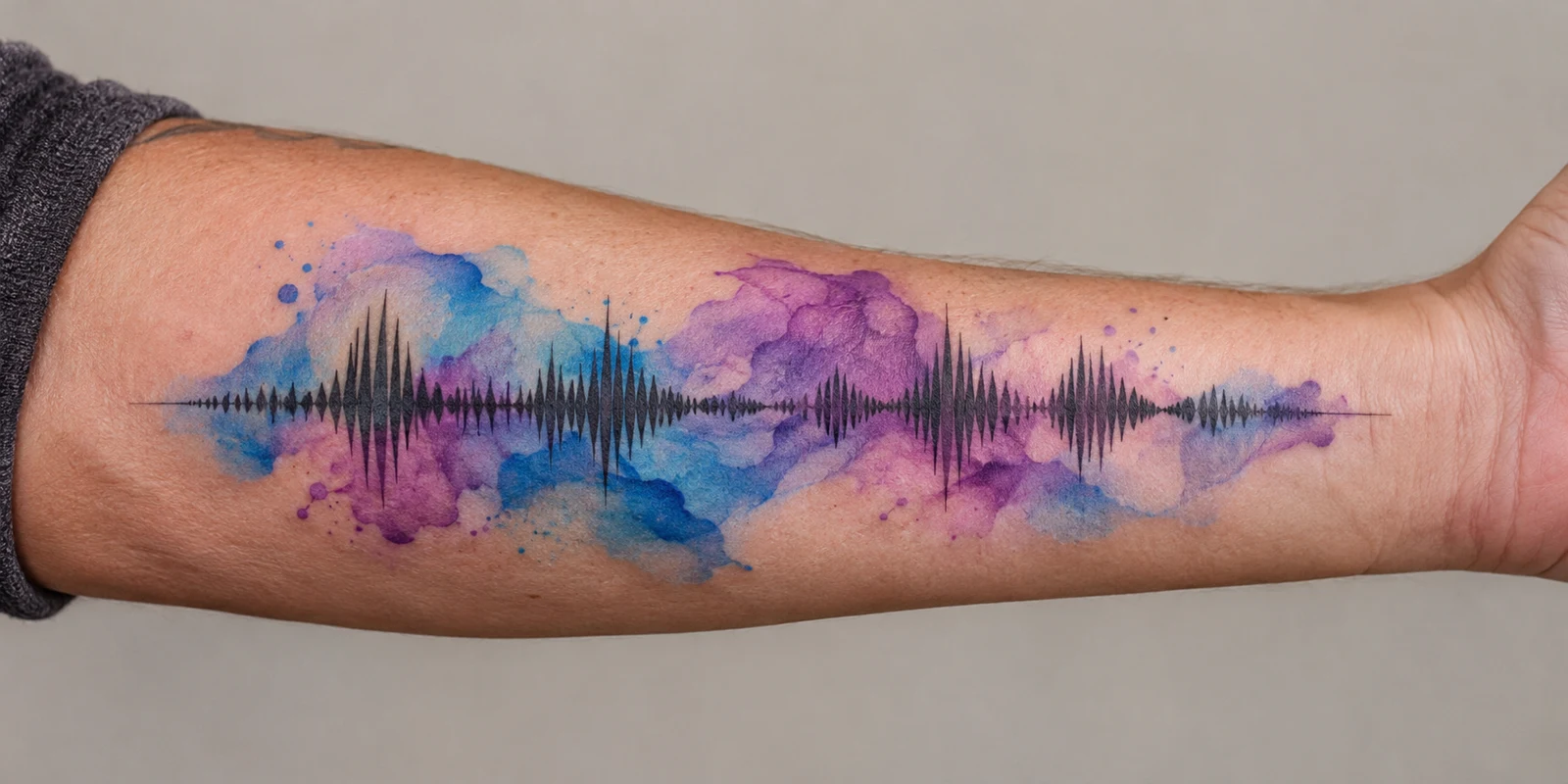
Choose colors connected to your memory or simply a palette you enjoy. Keep the black silhouette distinct so the waveform remains the focal point within the looser color treatment.
Choosing Your Sound and Design
Shortlist a sound, a visual treatment, and a placement. If personal audio matters, bring the recording and a waveform reference to your artist, and retain the original file separately. Compare the design at its intended size before approving lettering and smaller details.
For other motifs to consider alongside a waveform, explore tattoos for music lovers.

