
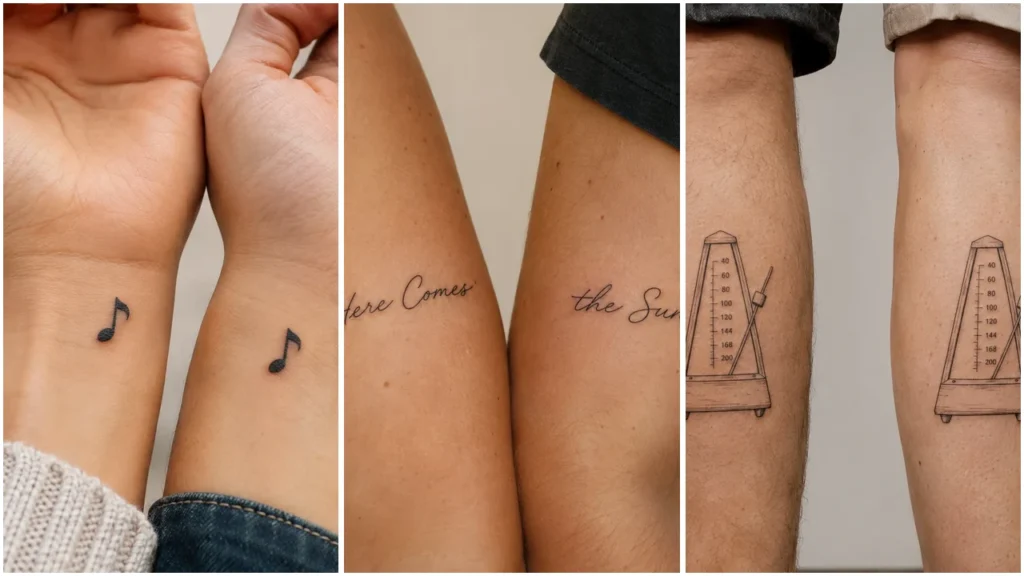
Matching music tattoos can repeat a favorite symbol, pair different instruments, or reveal a shared design when you stand together. A useful starting point is a musical connection you both recognize: a song, a concert, or time spent playing together.
These 20 tattoo concepts cover musical notation, listening memories, and making music together. As you compare them, consider whether each tattoo should feel complete alone and whether everyone wants the same placement.
1. Matching Music Tattoos With Tiny Eighth Notes
Two small eighth notes make a simple, recognizable pair.
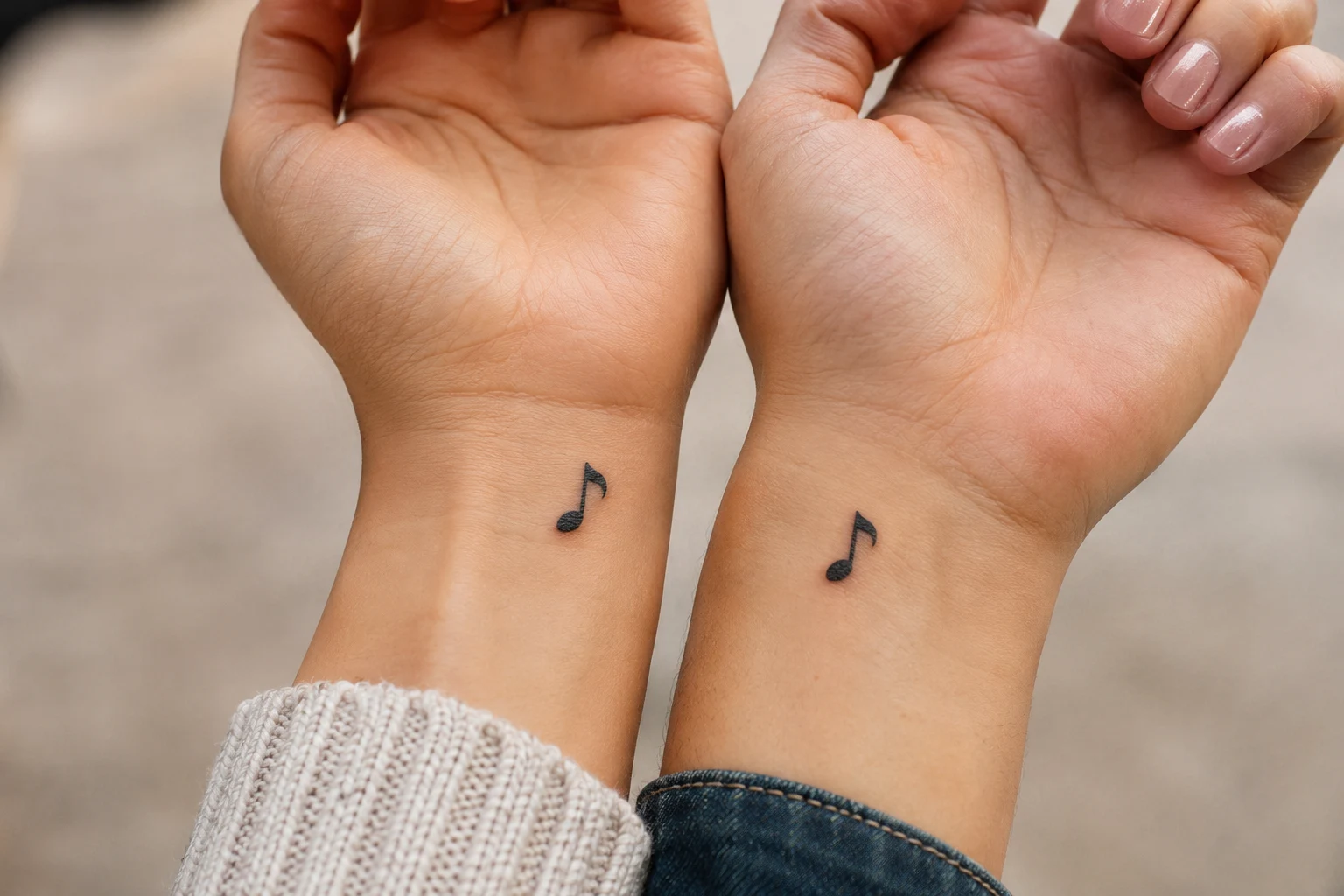
Keep the proportions consistent to connect the designs. Matching wrists make the pairing obvious, but friends who prefer different placements can still share the same symbol.
2. Treble and Bass Clef Partners
Different clefs create a complementary pair with a shared visual style.
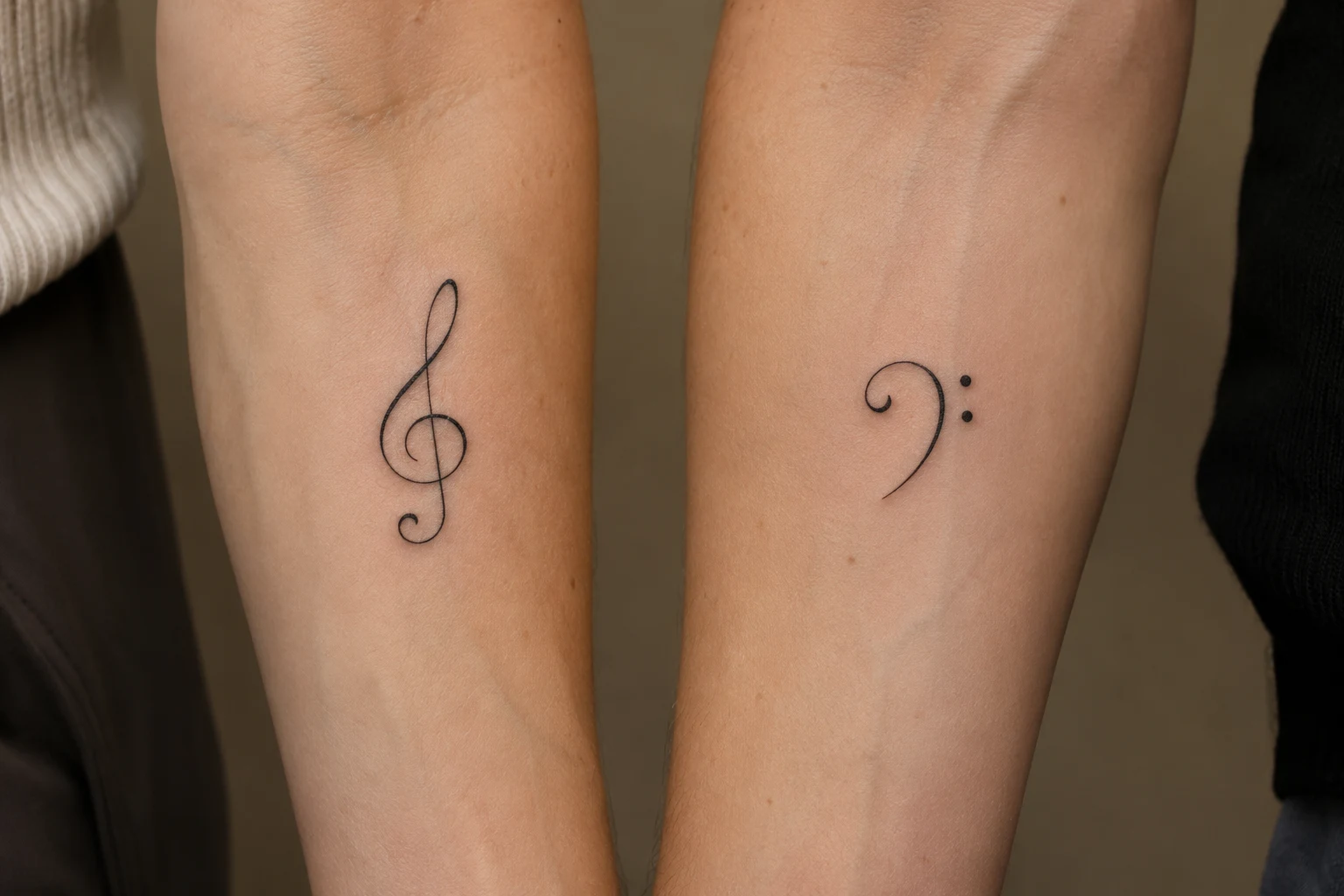
This suits musicians whose parts use the respective clefs. Match their line weight and overall height, while choosing each symbol for its connection to the wearer.
3. A Melody Split Between Two Forearms
A short musical passage continues from one person’s arm to the other’s.
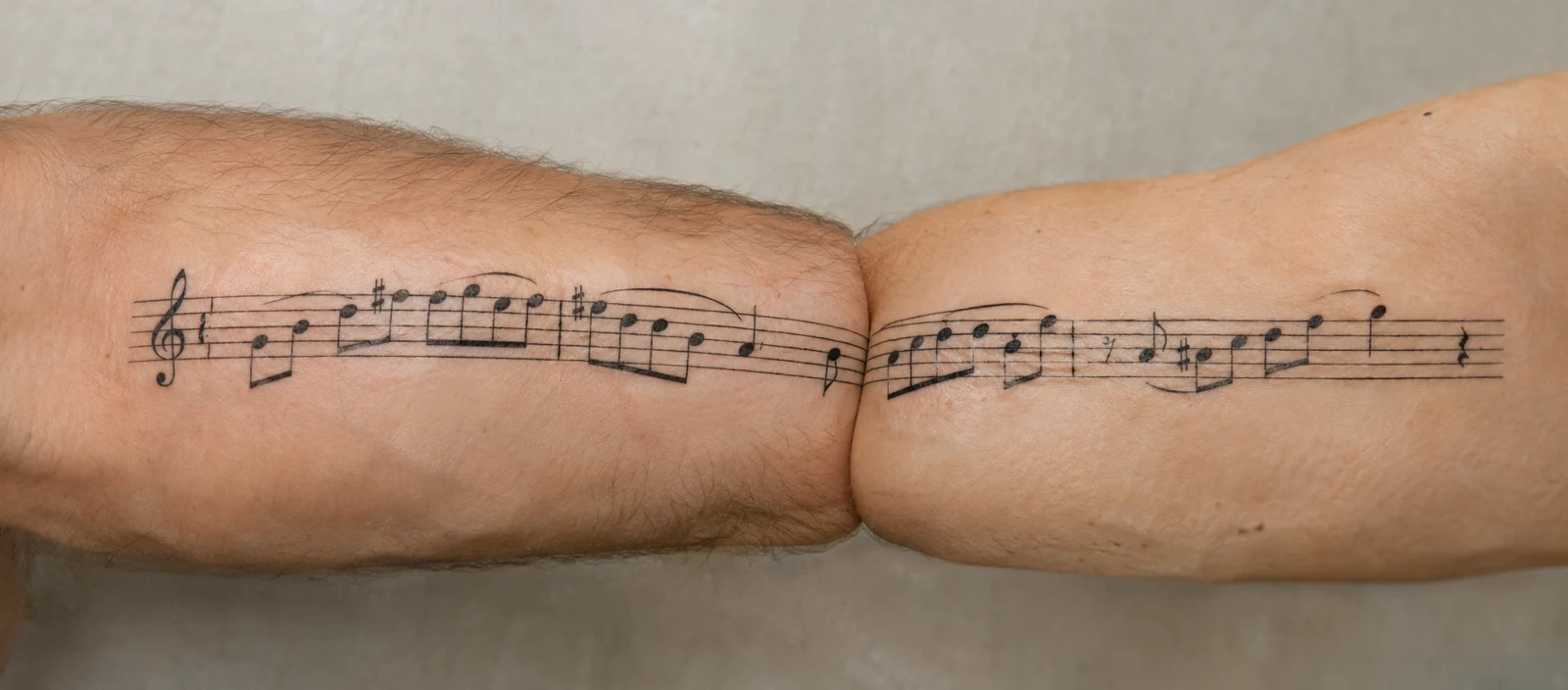
Choose a passage you both value and have its notation checked. Discuss arm position before settling on placement, and make sure each fragment looks intentional by itself.
4. Matching Chord Diagrams for a Shared Song
Identical guitar chord grids recall something you play together.
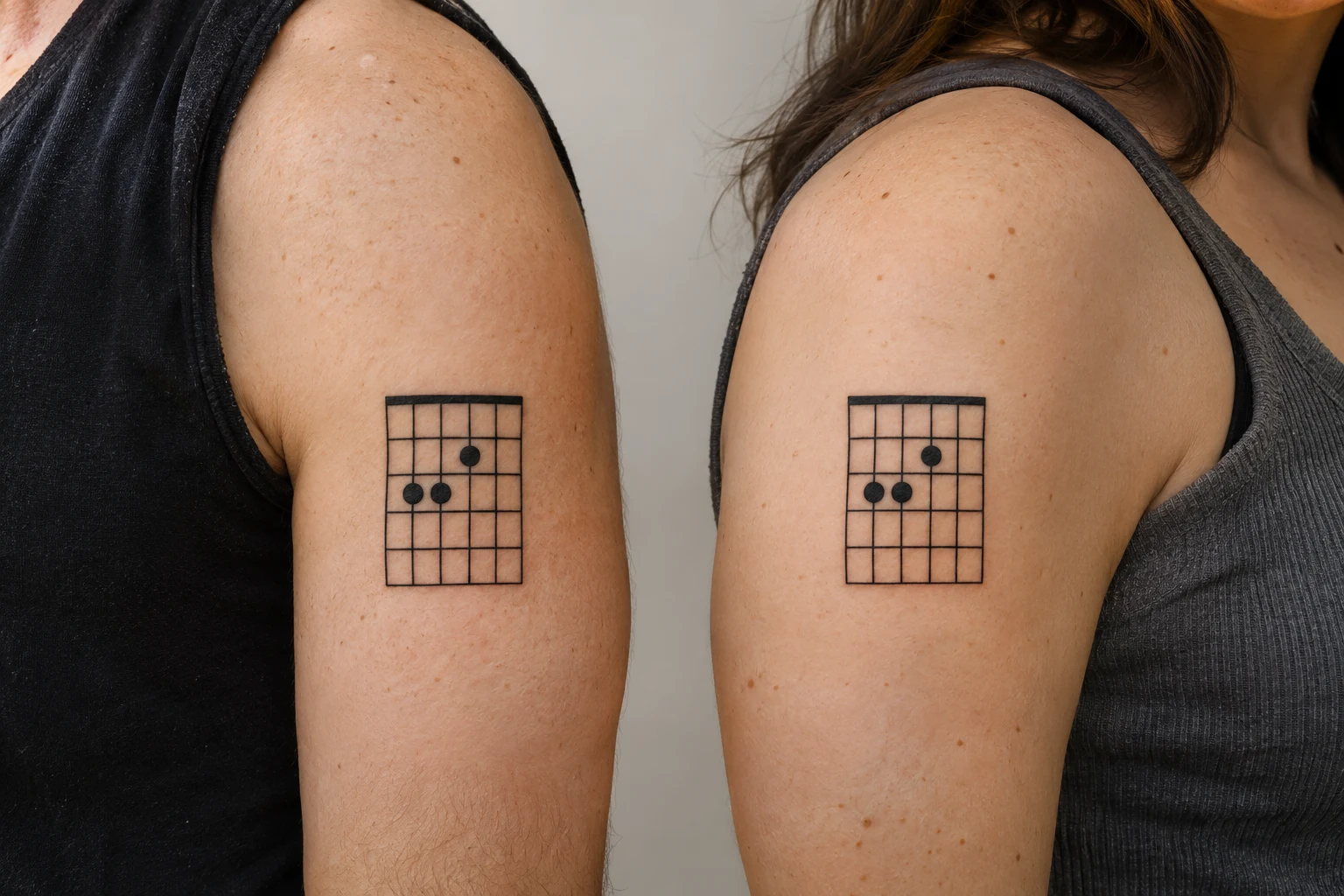
Pick a chord with a specific shared connection. Bring an accurate diagram to your artist and discuss enough space for the grid and finger-position dots to remain distinct.
5. Repeat Signs for a Group of Friends
A shared repeat sign can connect three friends or a larger group.
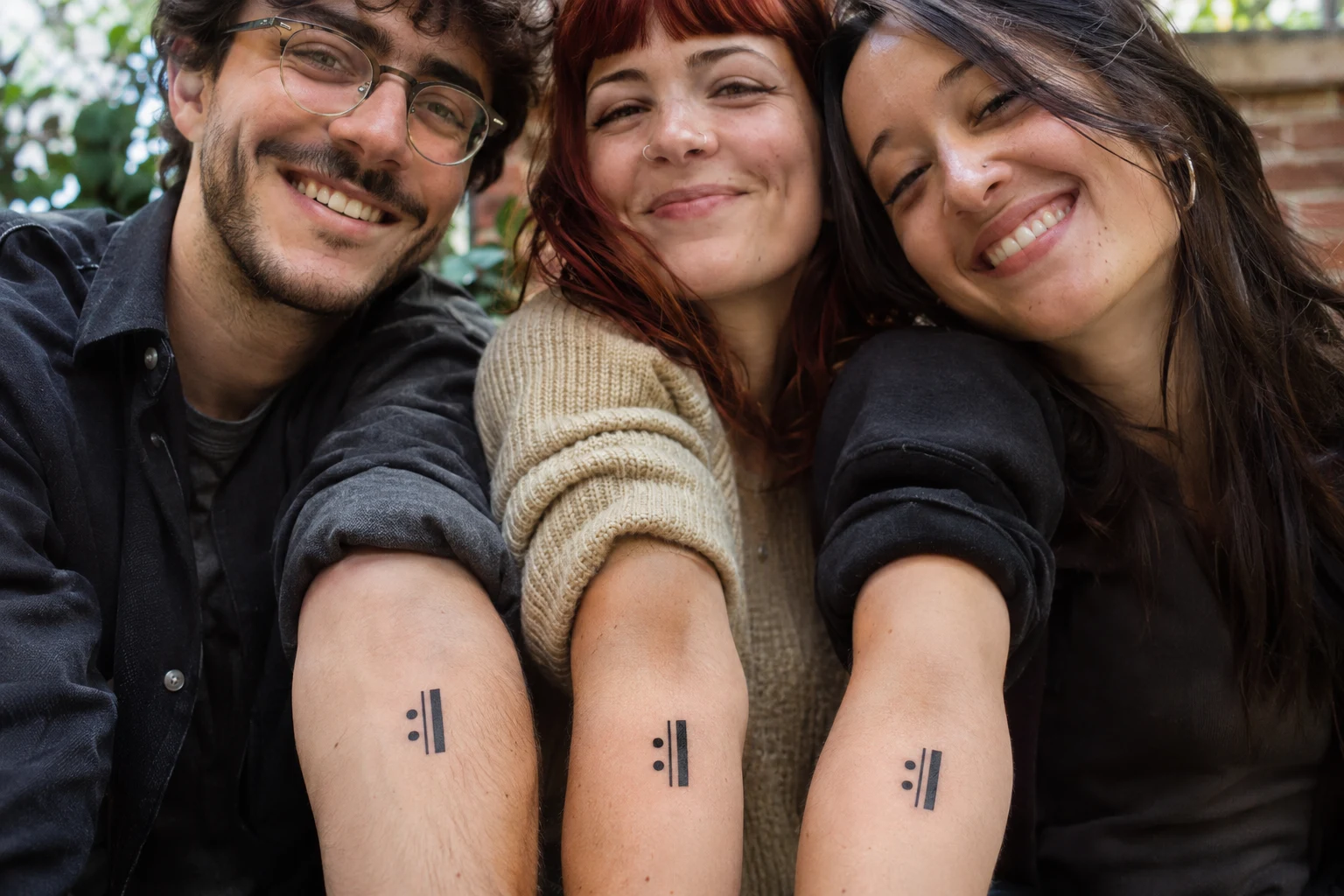
You might choose it as a personal reminder of memories worth replaying. Everyone can wear the same compact motif without agreeing on identical body placement.
6. Sound Waves From One Shared Recording
Matching waveforms turn a meaningful recording into a shared visual reference.
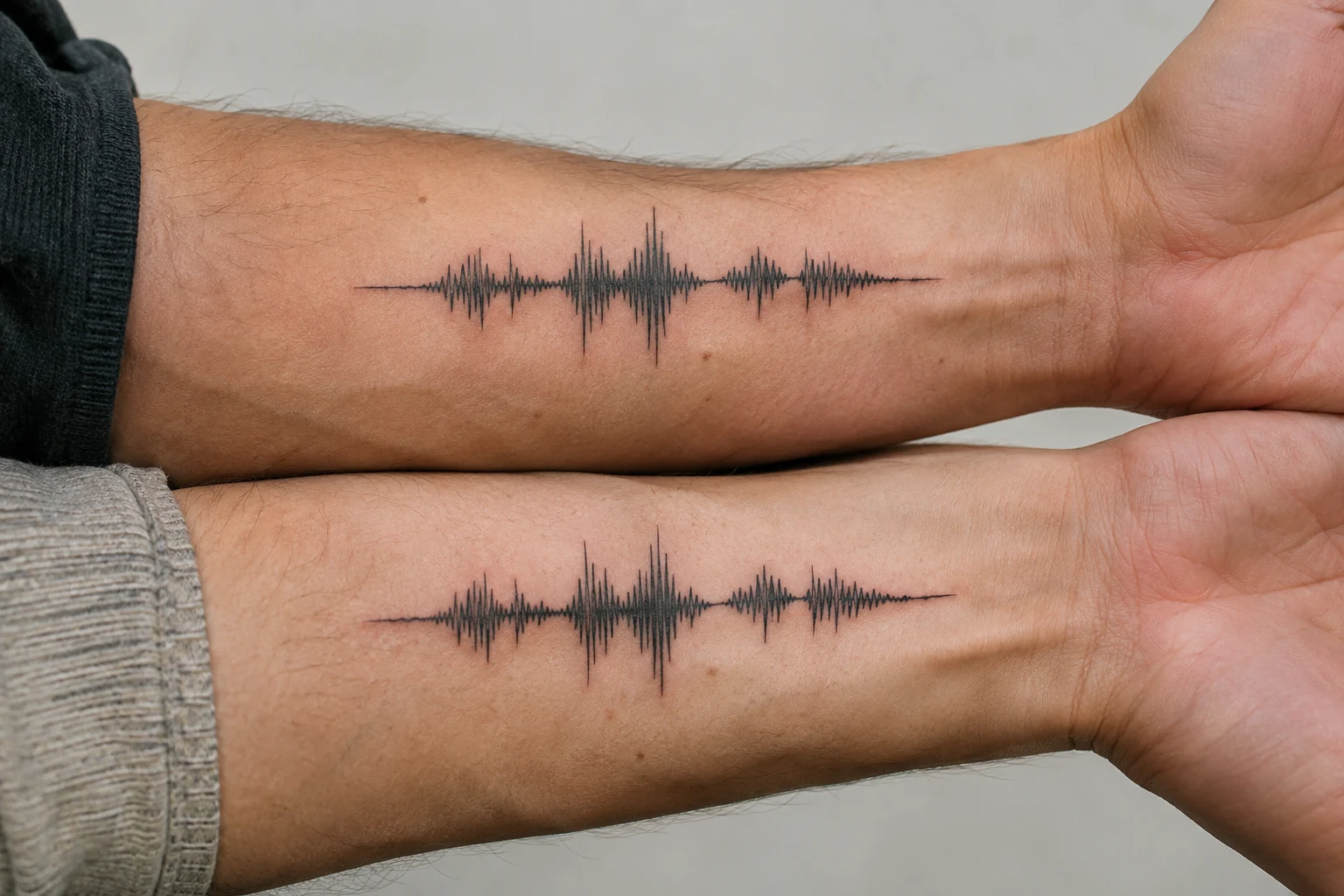
Start with the actual recording, then discuss which details the tattoo can retain at your preferred size. Treat the waveform as an image representing that audio; playback isn’t part of this concept.
7. A Vinyl Record and Its Sleeve
A record and coordinating sleeve give each person a complete object.
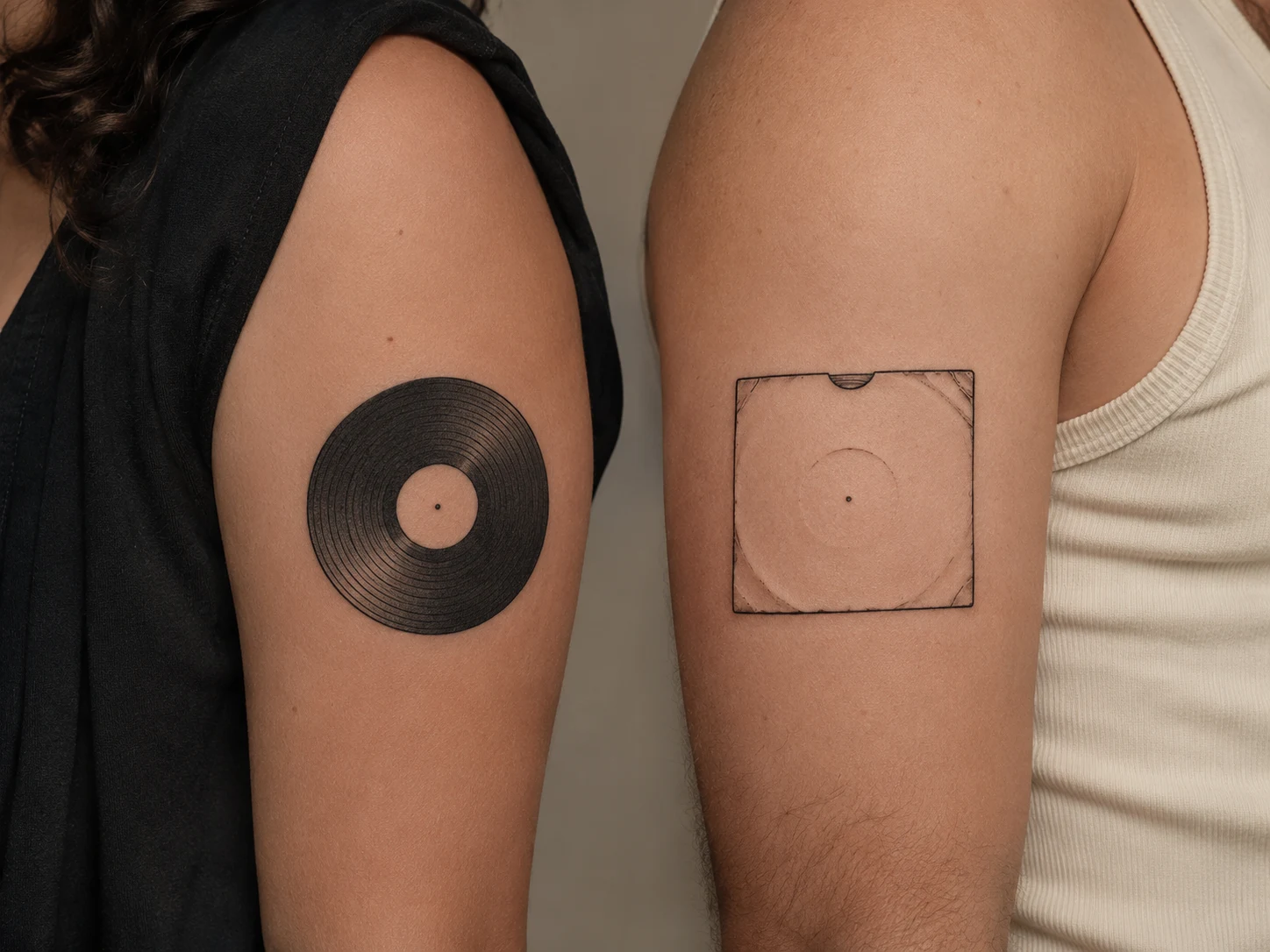
Repeat a small custom motif on the record label and sleeve to connect them. This pairing suits people who share an album or enjoy collecting records together.
8. Mixtapes With Coordinated Labels
Matching cassette outlines leave room for individual labels.
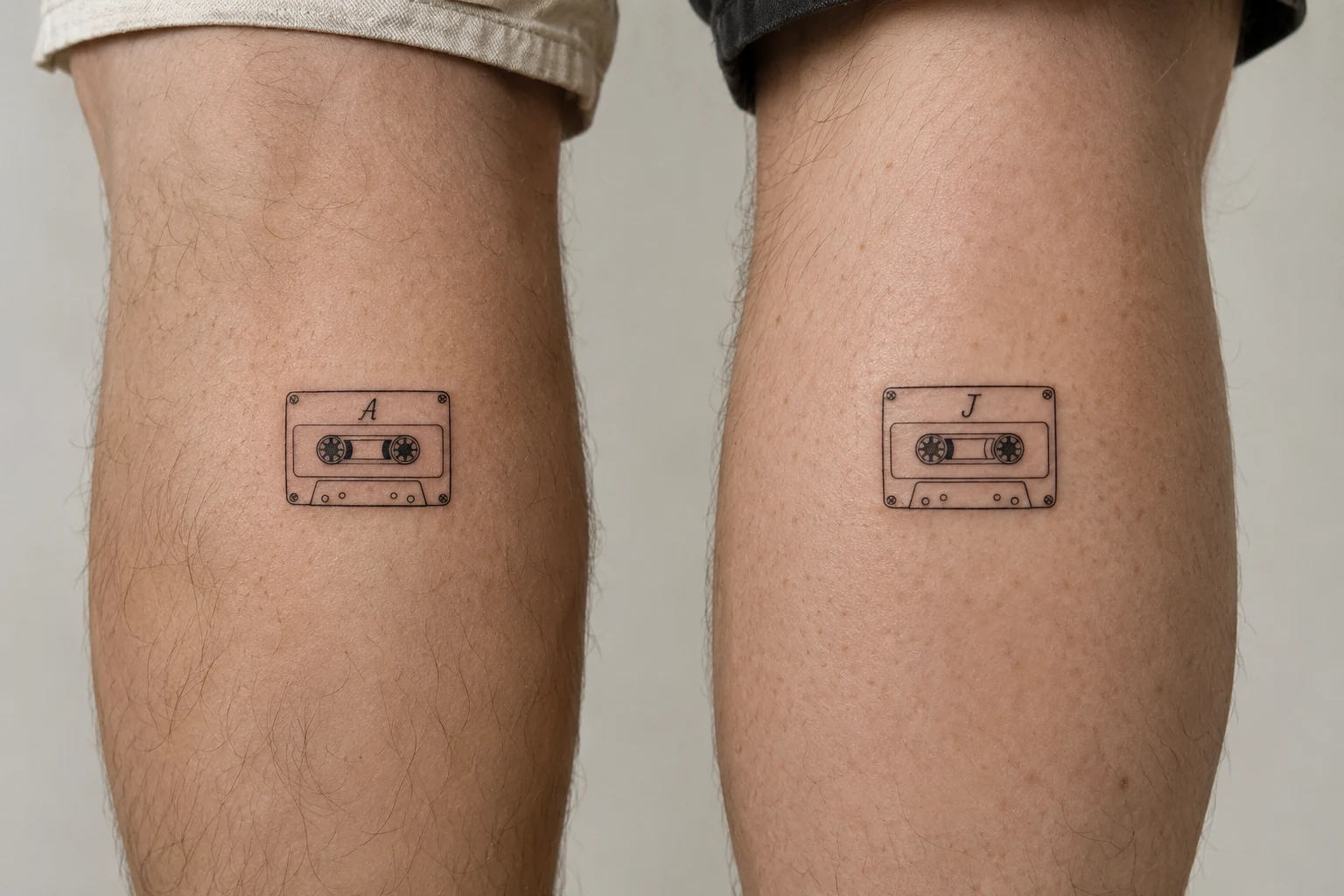
Use the same cassette shape, then change the initials inside each label. Keep lettering brief so the personal detail doesn’t compete with the tape’s recognizable outline.
9. Two Halves of a Headphone Design
A headphone outline comes together when two forearms meet.
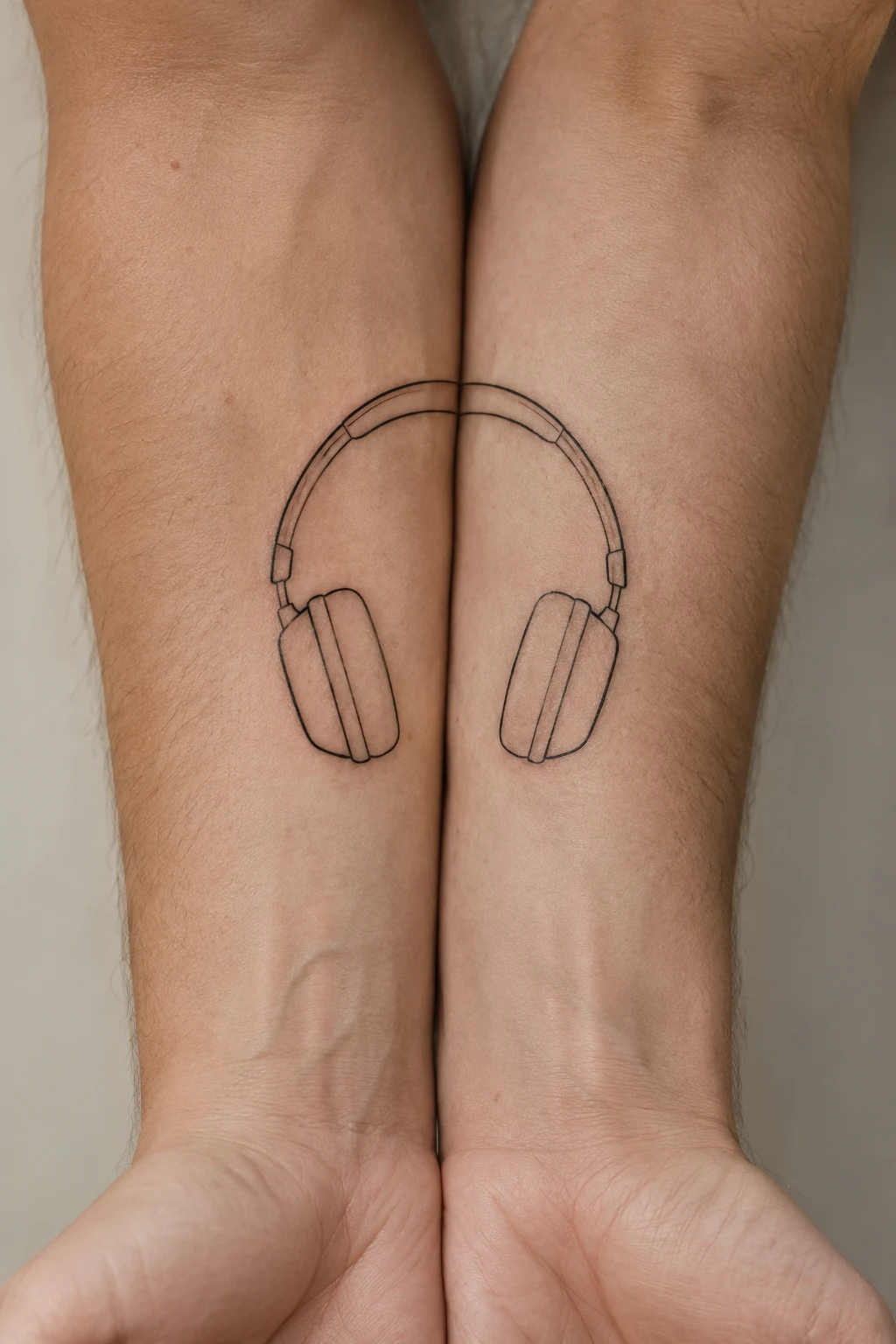
This idea depends on alignment more than most pairs here. Ask to see each half separately as well as together before deciding whether the split design suits you both.
10. Matching Concert Tickets With Personal Details
Coordinated tickets mark one shared show with individual details.
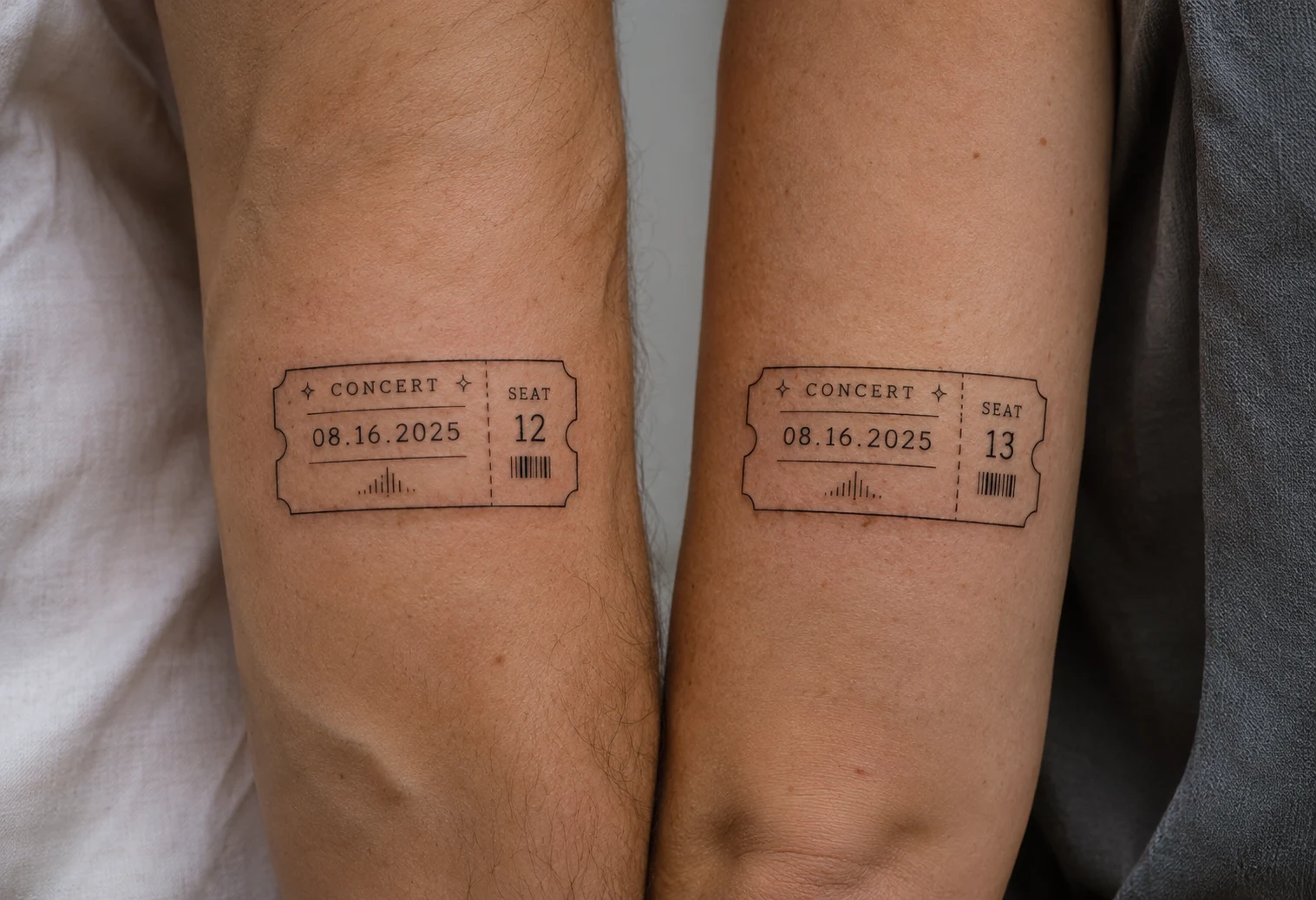
Keep the date and a seat number or initials, rather than recreating every printed detail. Check your original tickets before approving the text and numbers.
11. A Song Title Shared Across Two Tattoos
Matching lettering connects two fragments of a meaningful song title.
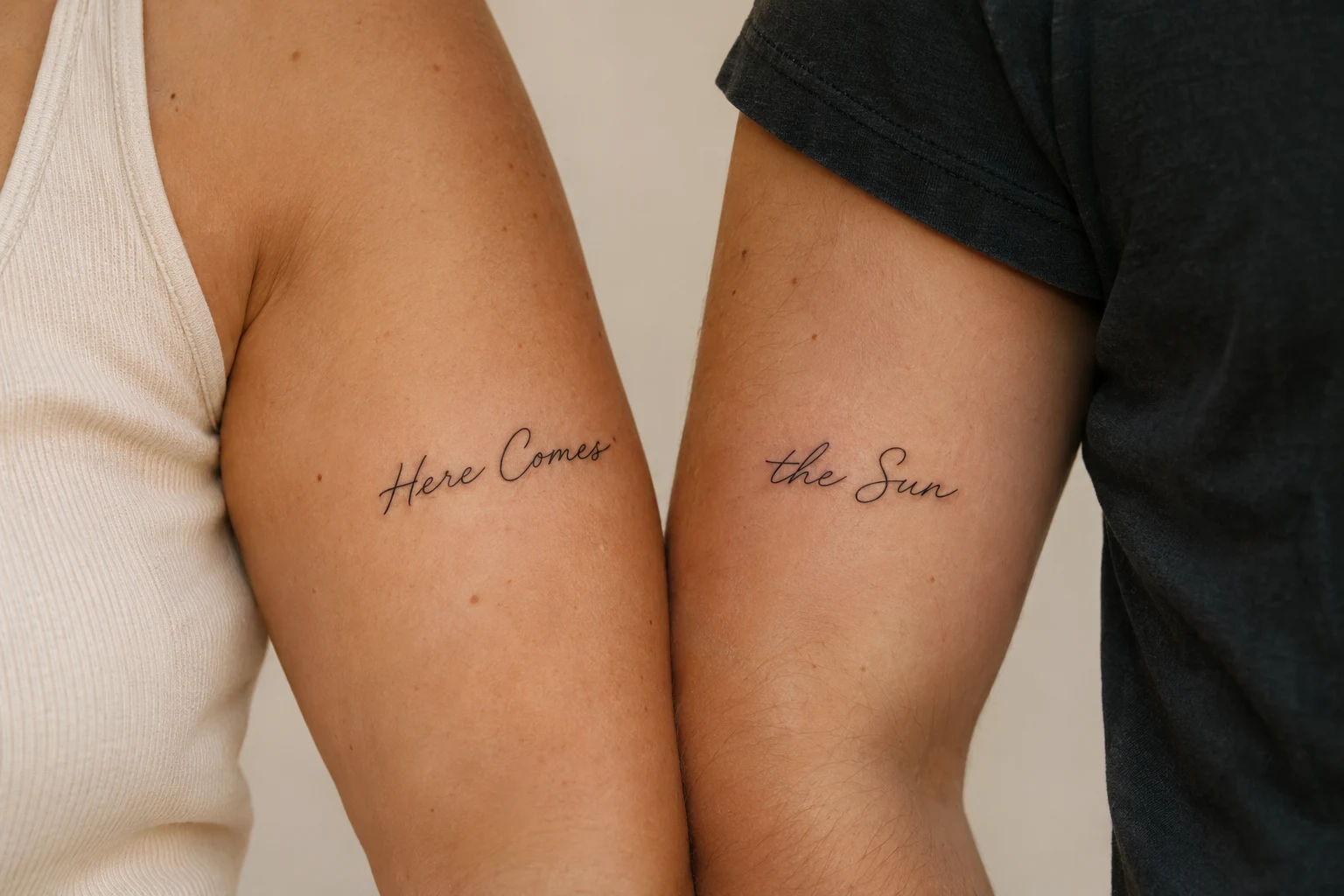
Choose a short title and divide it where the words feel balanced. Each person should also like how their own fragment reads without the other tattoo beside it.
12. Matching Player Controls With Different Song Times
The same playback symbols frame two personally chosen moments.
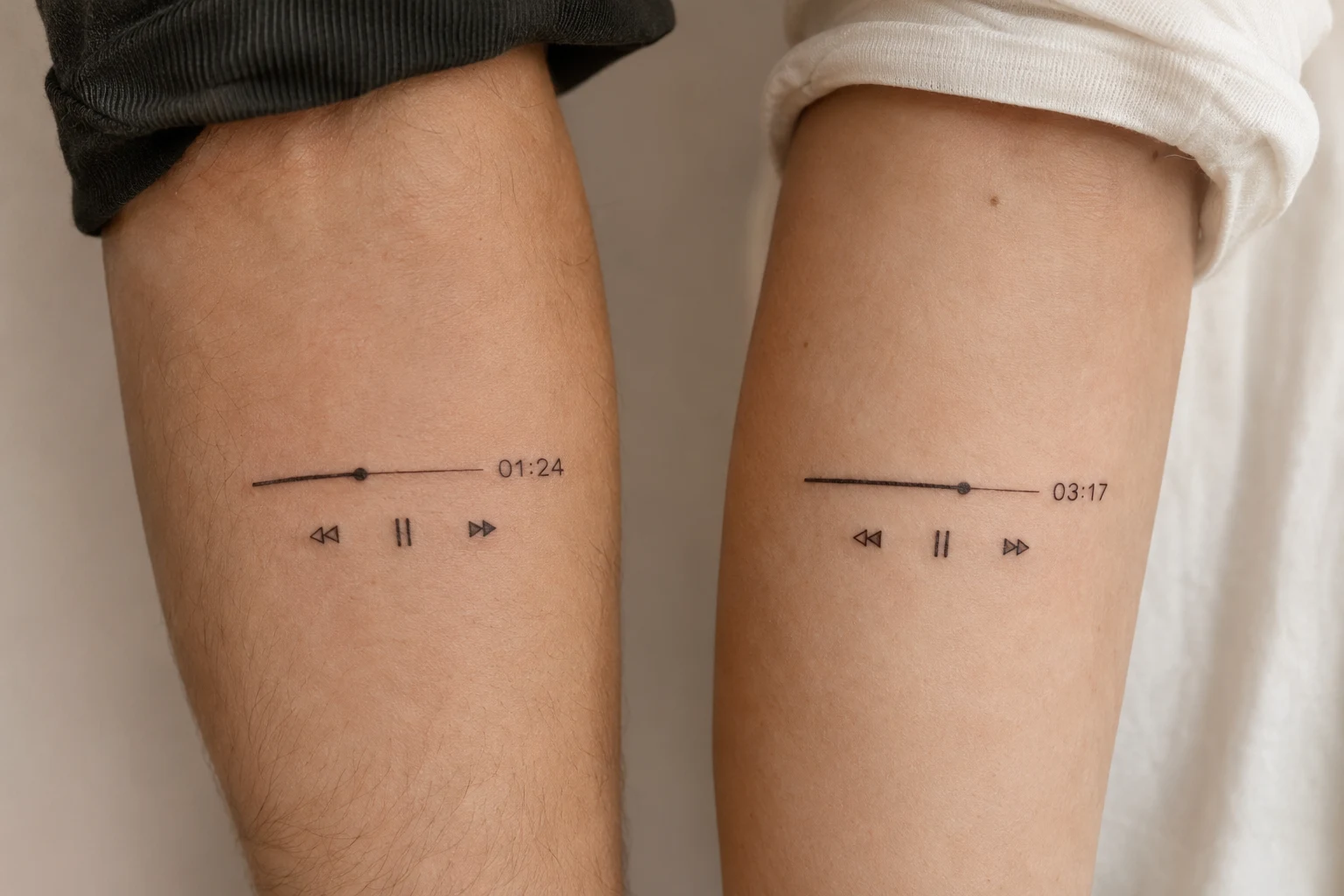
Each timestamp can reference a favorite moment in one shared song. Keep the controls consistent and confirm the times against the same recording version. The design is decorative, not interactive.
13. A Microphone and an Instrument
A microphone and guitar represent two people making music together.
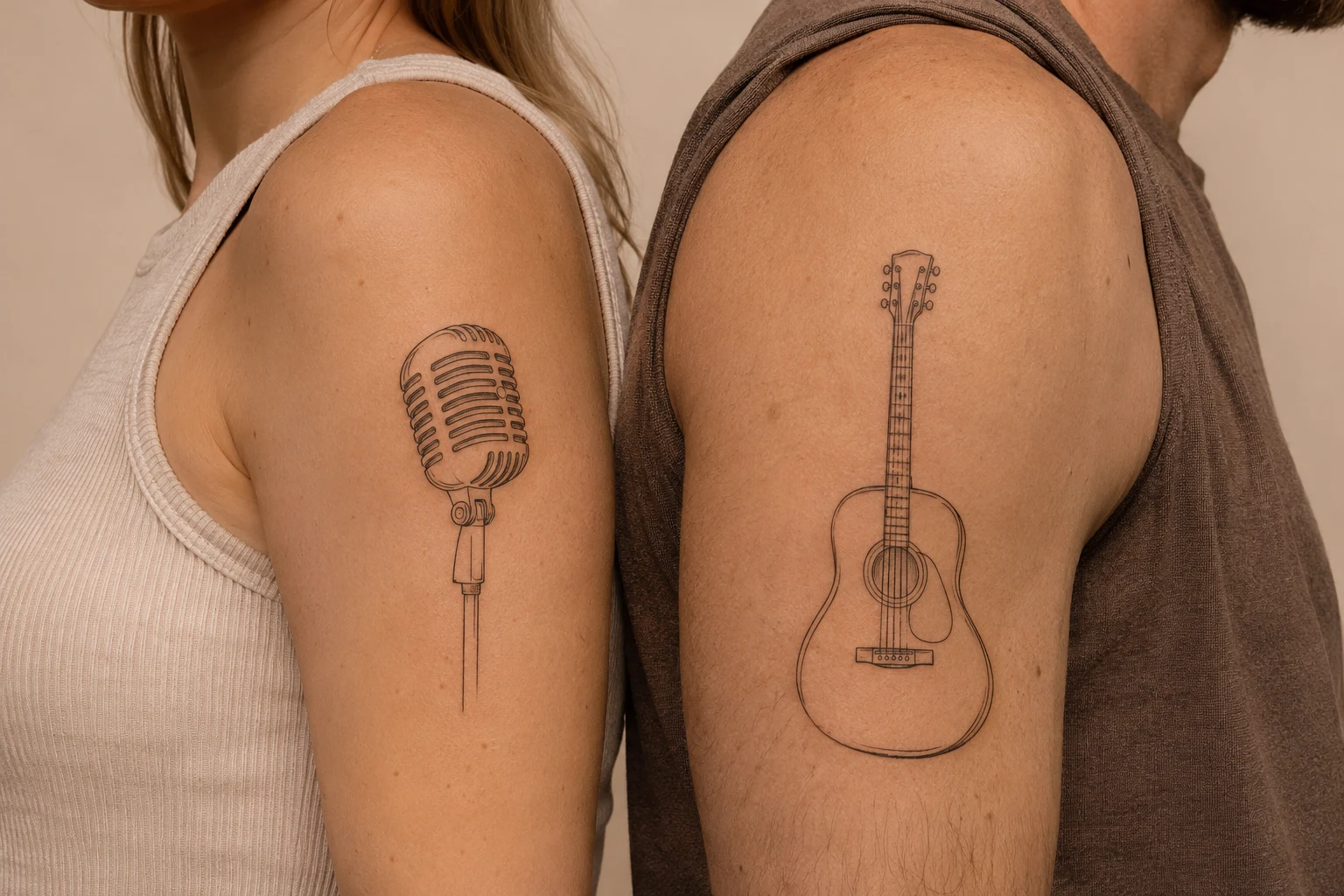
For a singer and guitarist, this pair reflects their musical roles. Similar scale and line weight help connect the tattoos while allowing each person to wear the object associated with their role.
14. Matching Guitar Picks With Individual Initials
One pick silhouette ties together a group of individual initials.
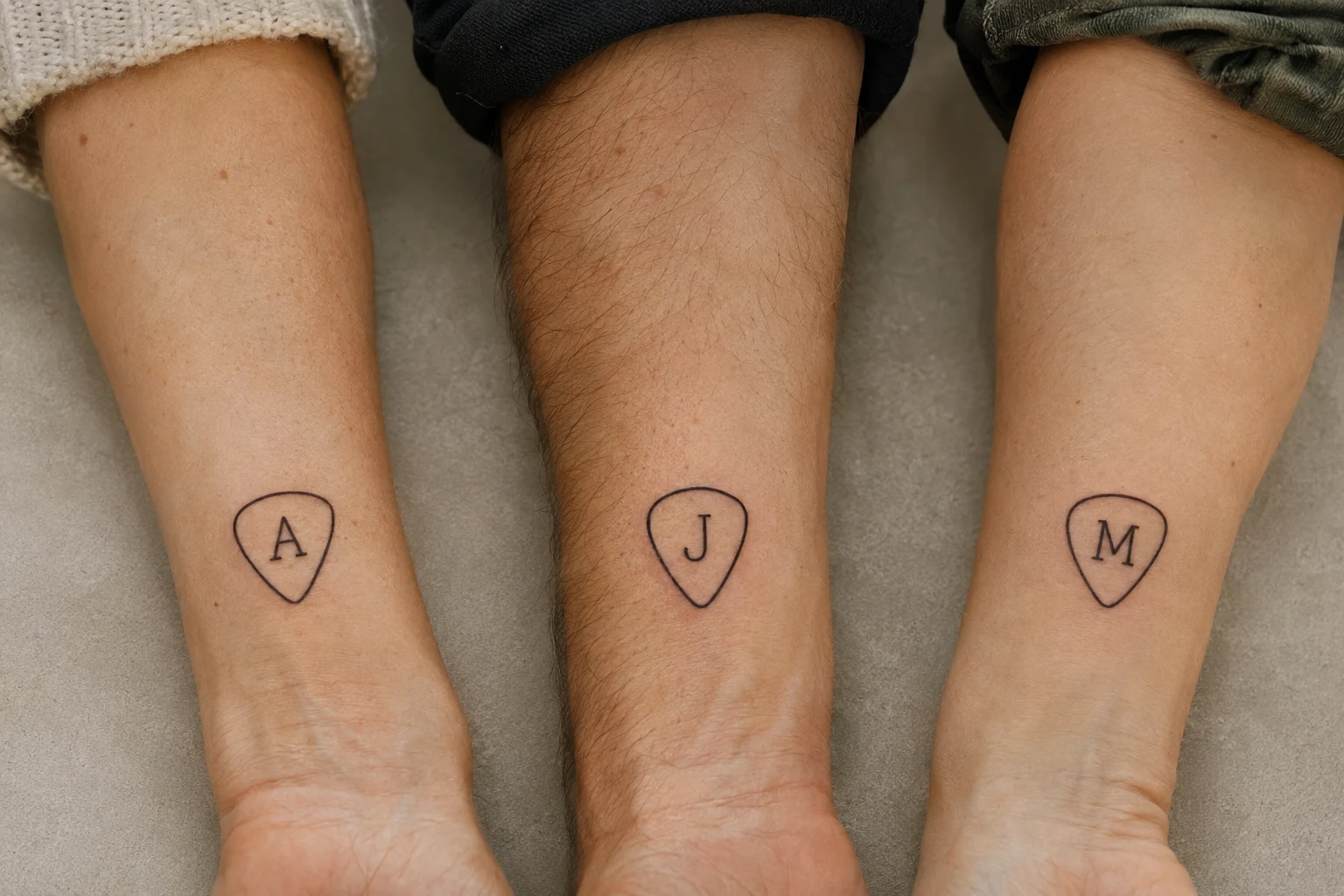
For guitar-playing friends or bandmates, the outline carries the match. Agree on the pick shape and lettering style, then let each person’s initial provide the variation.
15. Drumsticks and a Bass Guitar
Crossed drumsticks and a bass guitar make a complementary rhythm-section pair.
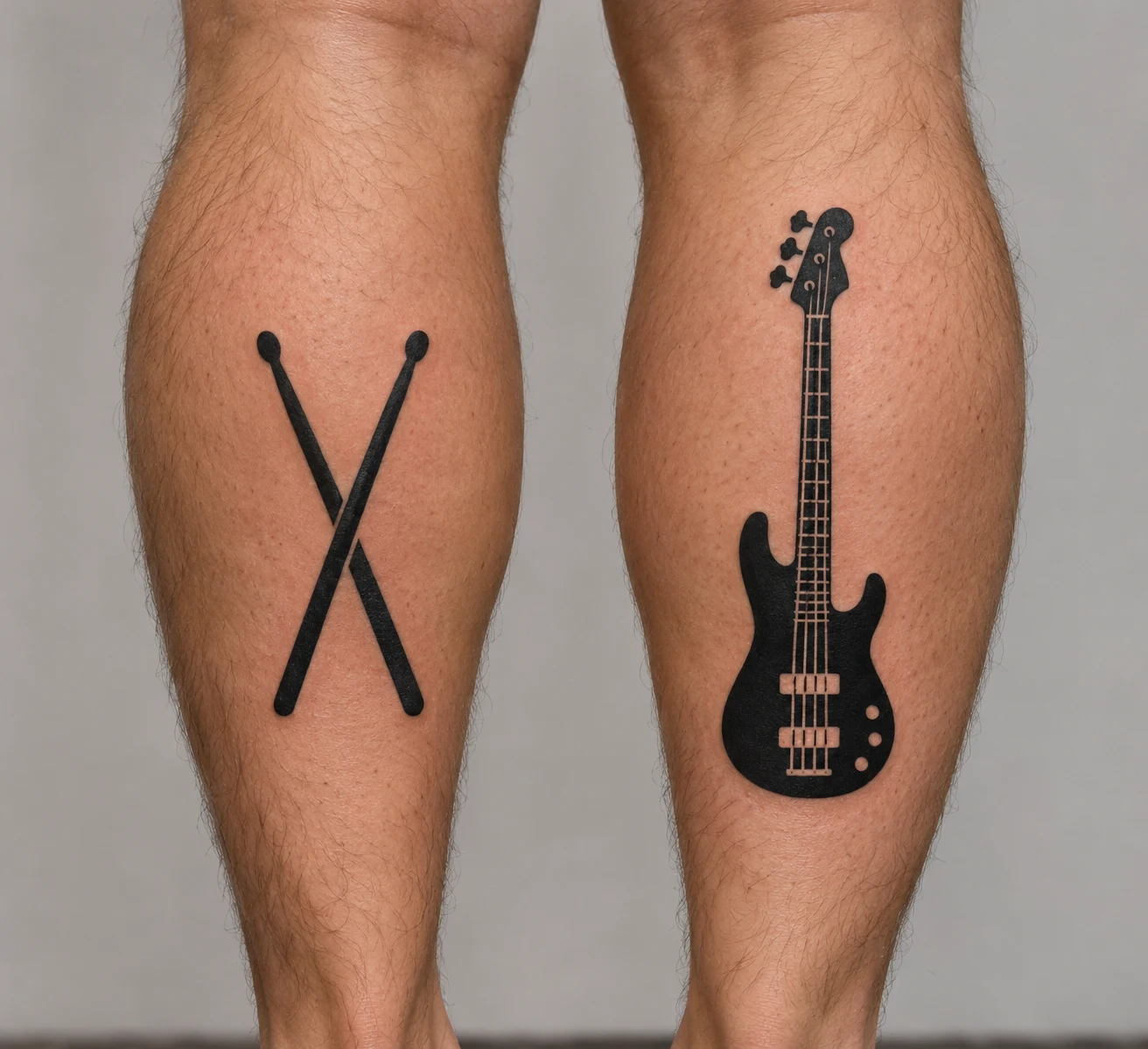
Use the same blackwork treatment to connect the different shapes. Discuss their sizes together so the slender sticks and longer bass silhouette feel visually balanced.
16. Adjacent Piano Key Segments
Two keyboard sections form a longer sequence side by side.
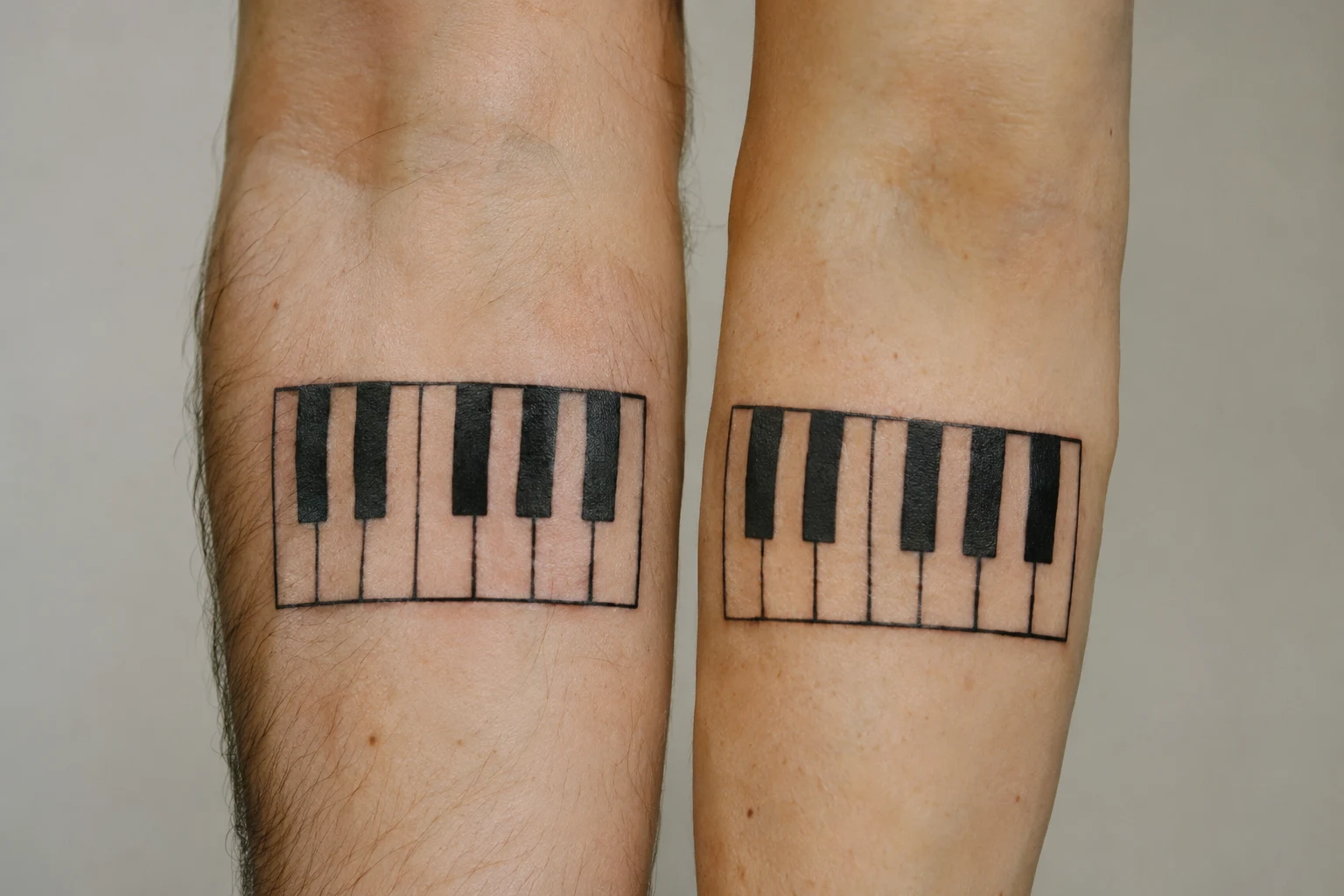
The pattern of black and unfilled keys gives this pair a geometric look. Check the black-key arrangement and where the sections join, then review each segment on its own.
17. Interlocking Audio Cable Ends
A plug and socket visually connect when two arms meet.
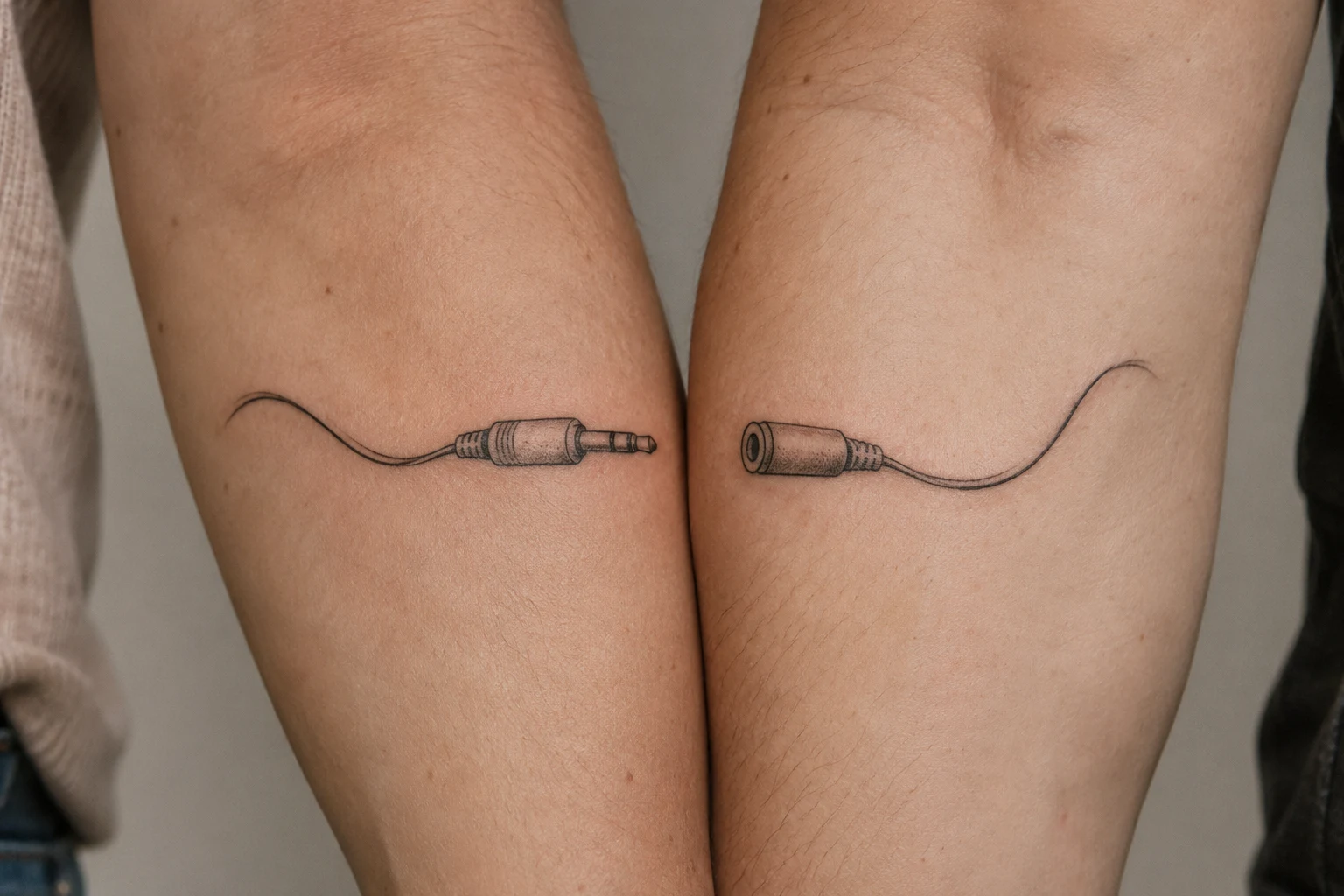
Choose compatible connector types, especially if the design recalls equipment you use together. Curved cables give the artist room to adapt each tattoo to its placement.
18. Matching Tuning Forks With a Shared Pitch
Slender tuning fork outlines offer a restrained matching design.
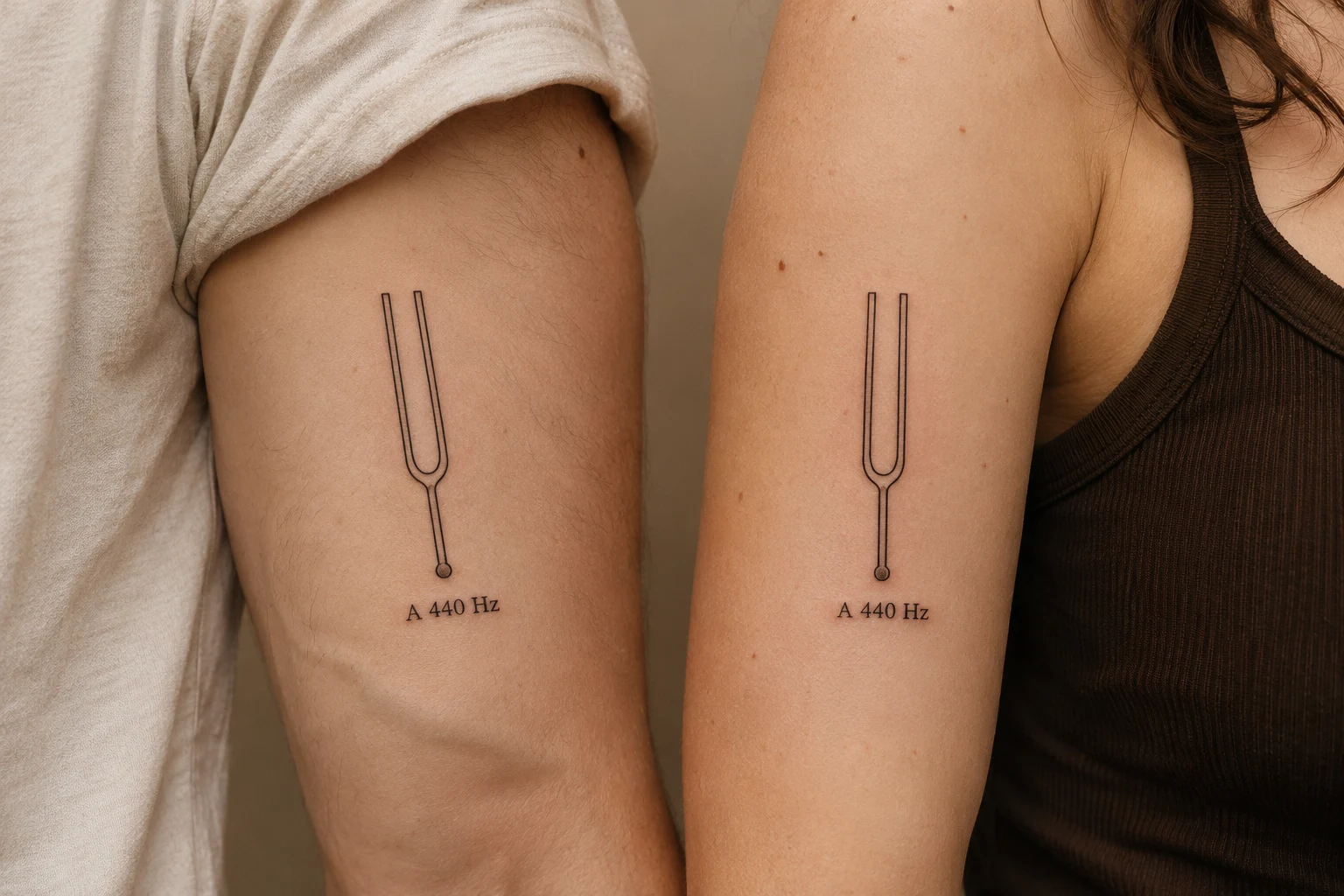
Shared rehearsals or tuning routines can give these outlines a personal connection. Include a pitch label only if it has a shared purpose, and confirm the label before committing to the artwork.
19. A Band’s Instruments in One Shared Frame
Identical circular borders unite different instruments across a band.
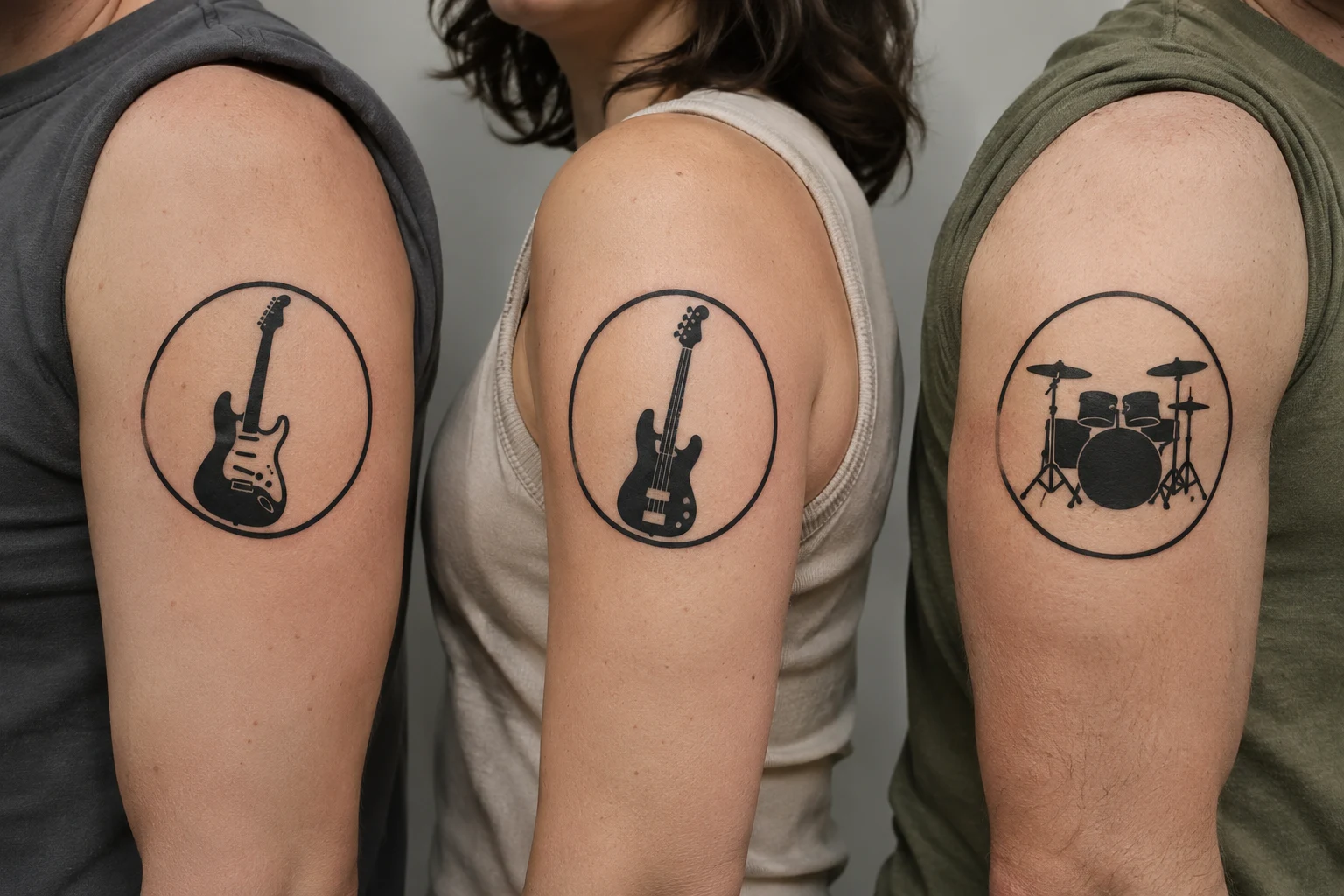
Each member gets their own instrument while sharing the frame, scale, and drawing style. This approach gives a group a coordinated set without asking everyone to wear identical artwork.
20. Matching Metronomes With a Rehearsal Tempo
Mechanical metronomes recall time spent practicing together.
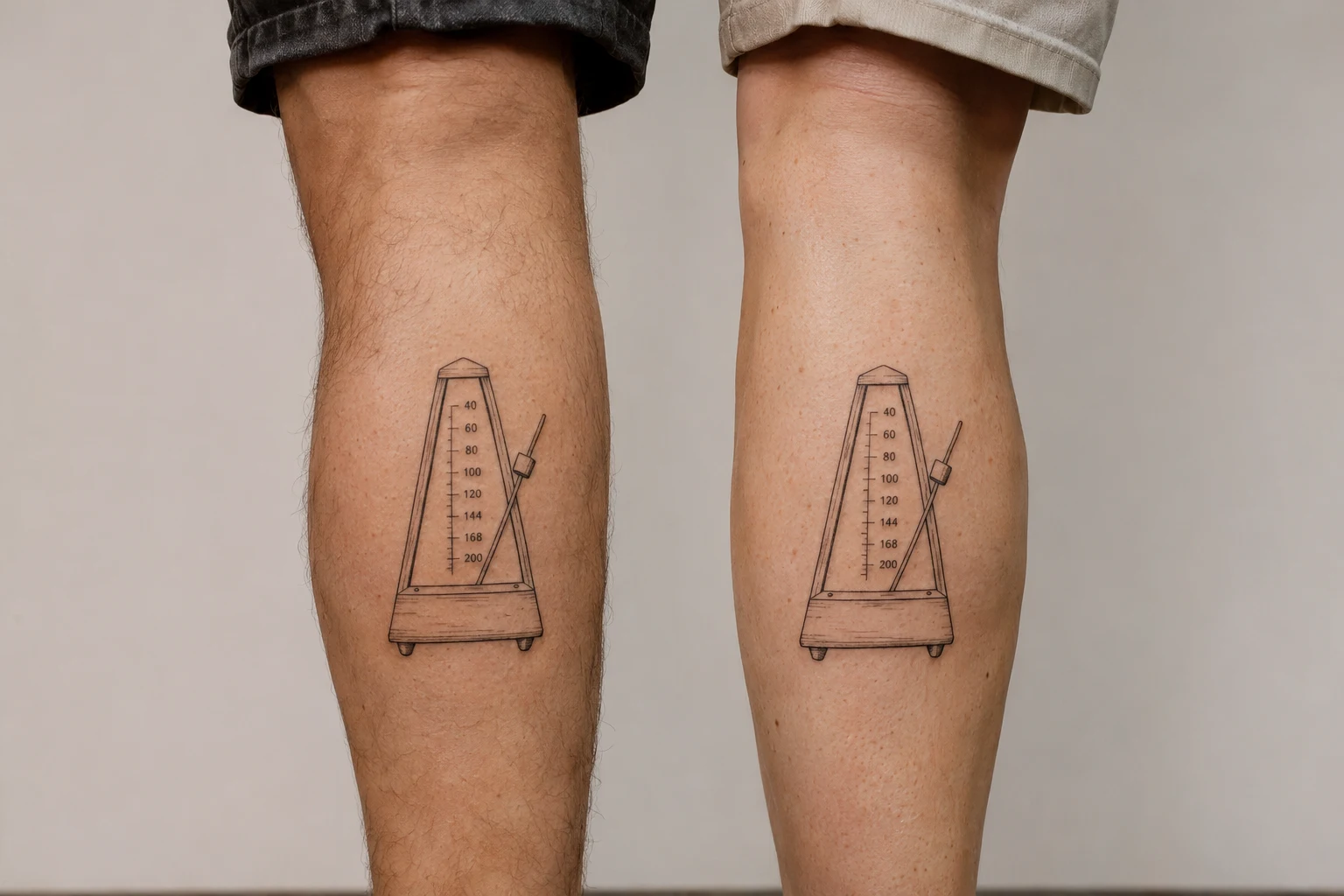
Add a tempo connected to a shared piece or rehearsal memory if you have one. Otherwise, the matching outlines can carry the connection without extra numbers.
Choosing Your Shared Design
Narrow your shortlist to one shared reference, then choose identical, complementary, or aligning artwork. Each person should be comfortable with their own design and placement independently. Bring both concepts to your artist to discuss size, detail, and positioning together.
For broader inspiration beyond paired designs, explore tattoos for music lovers.

