
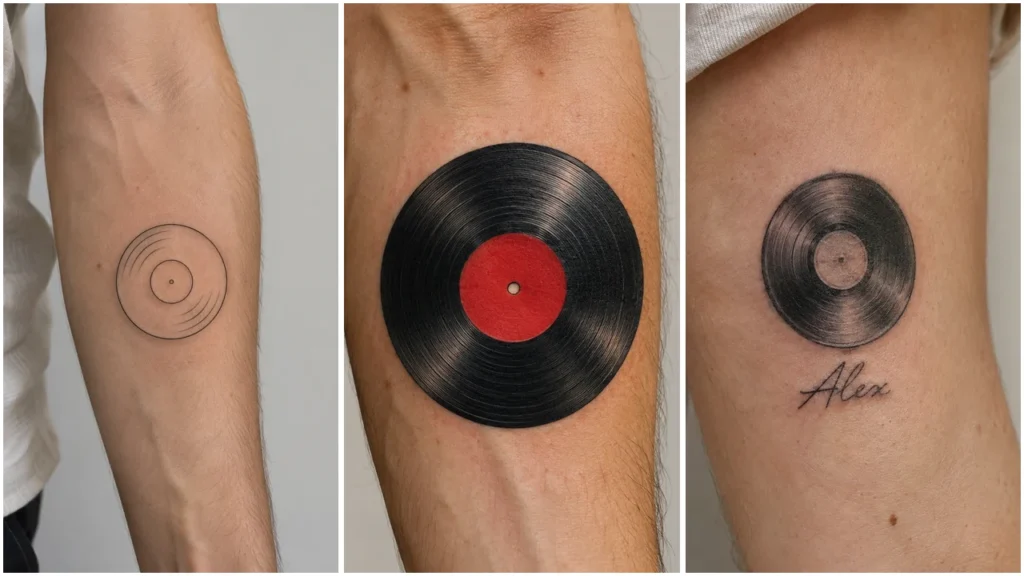
A vinyl record tattoo can capture a favorite listening ritual, a treasured record, or the pleasure of collecting. These 20 ideas move from minimal discs through vintage listening scenes to colorful and decorative designs. Compare the silhouette, label, and placement to find a direction that feels personal.
The planned images are tattoo concepts, not photographs of client work. Labels and sleeve decorations use original, generic designs.
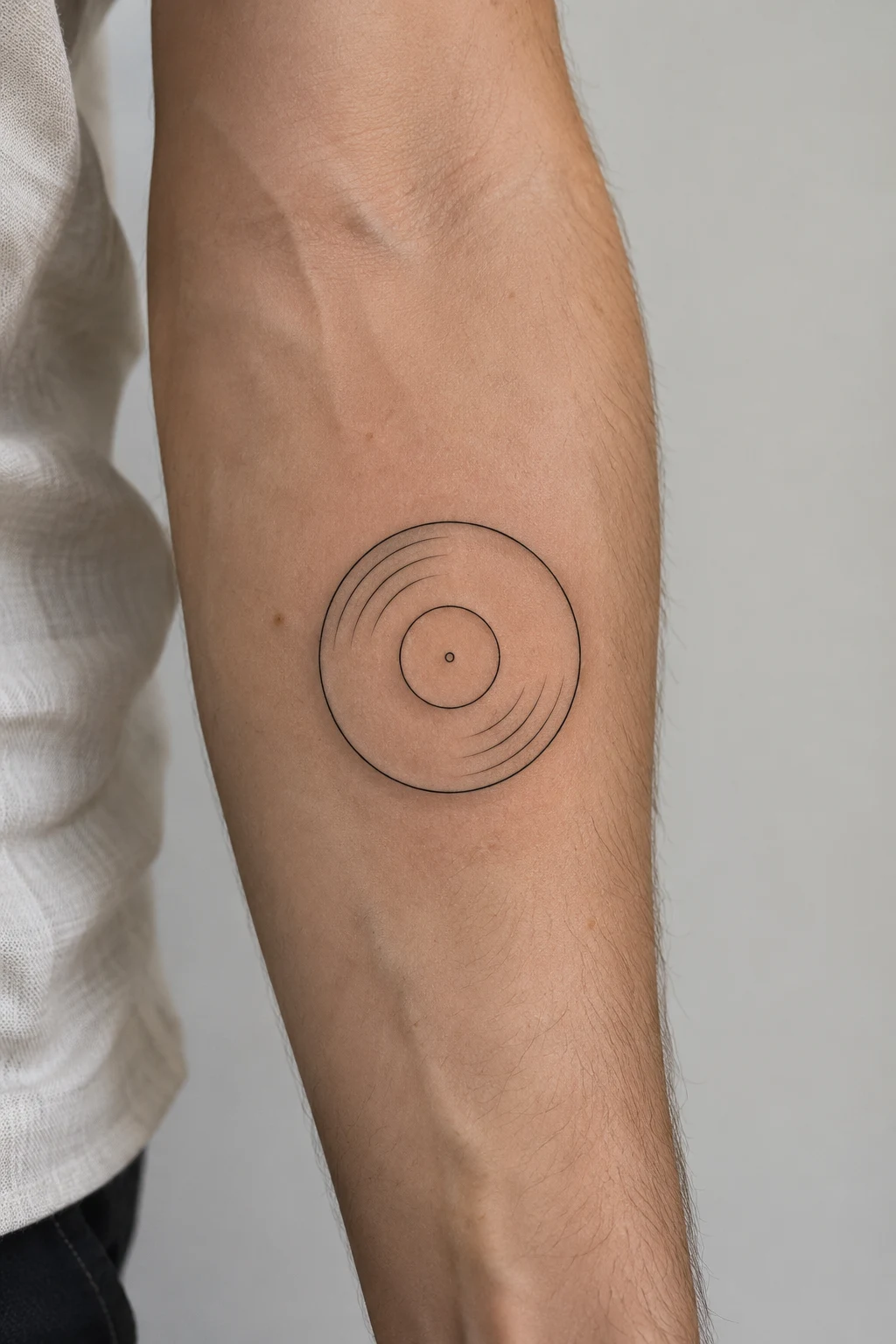
1. Minimal Outline Vinyl Record Tattoo
A circular outline, center hole, and a few spaced groove lines keep this design restrained. Choose it if you like an uncluttered forearm piece with no lettering. An empty center label lets the record’s shape carry the design.
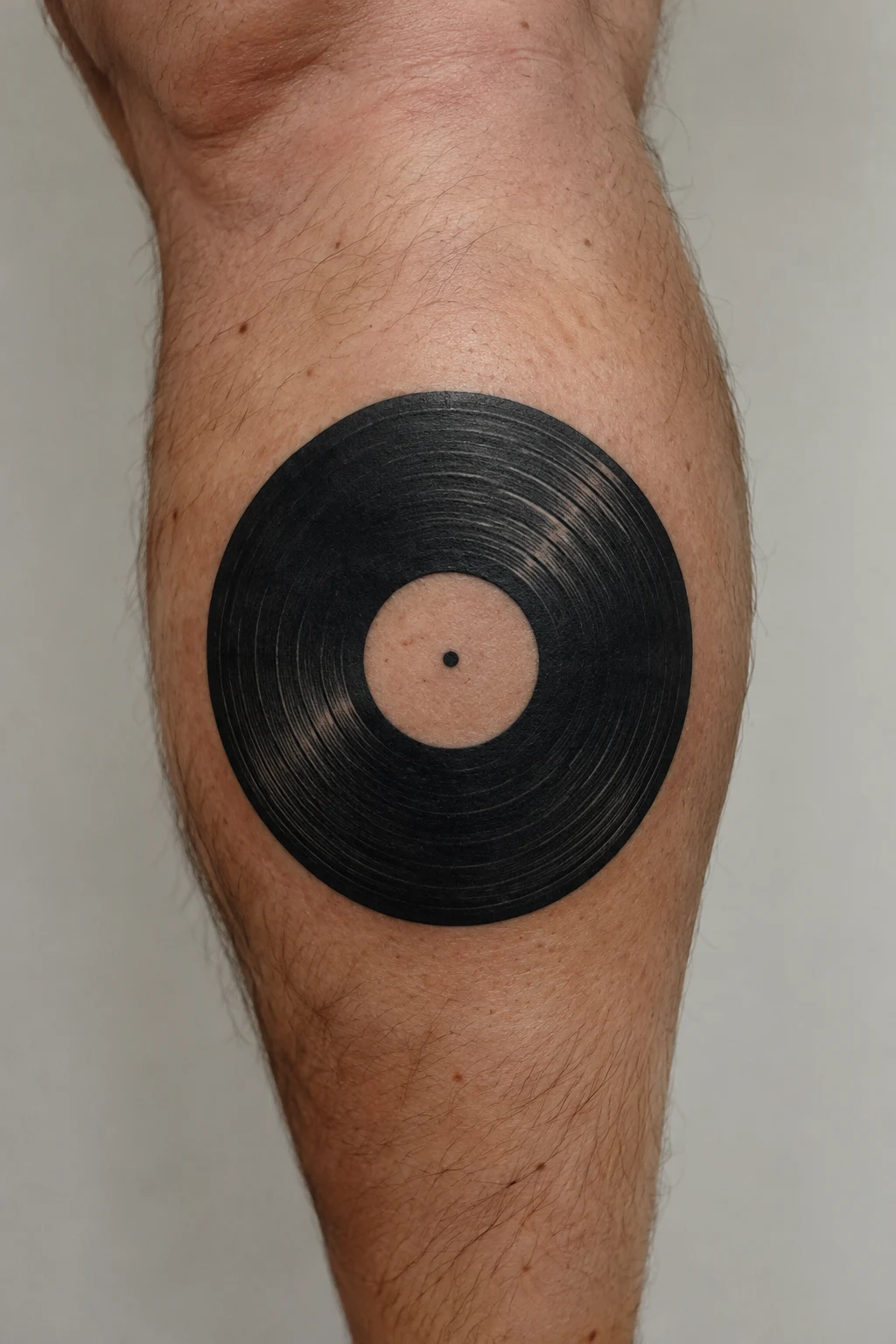
2. Solid Black Record With an Open Center
A filled black disc makes the silhouette the main feature, while an uninked label breaks up the center. This suits a preference for graphic blackwork. Compare different label proportions in the sketch: a larger opening changes the balance considerably.
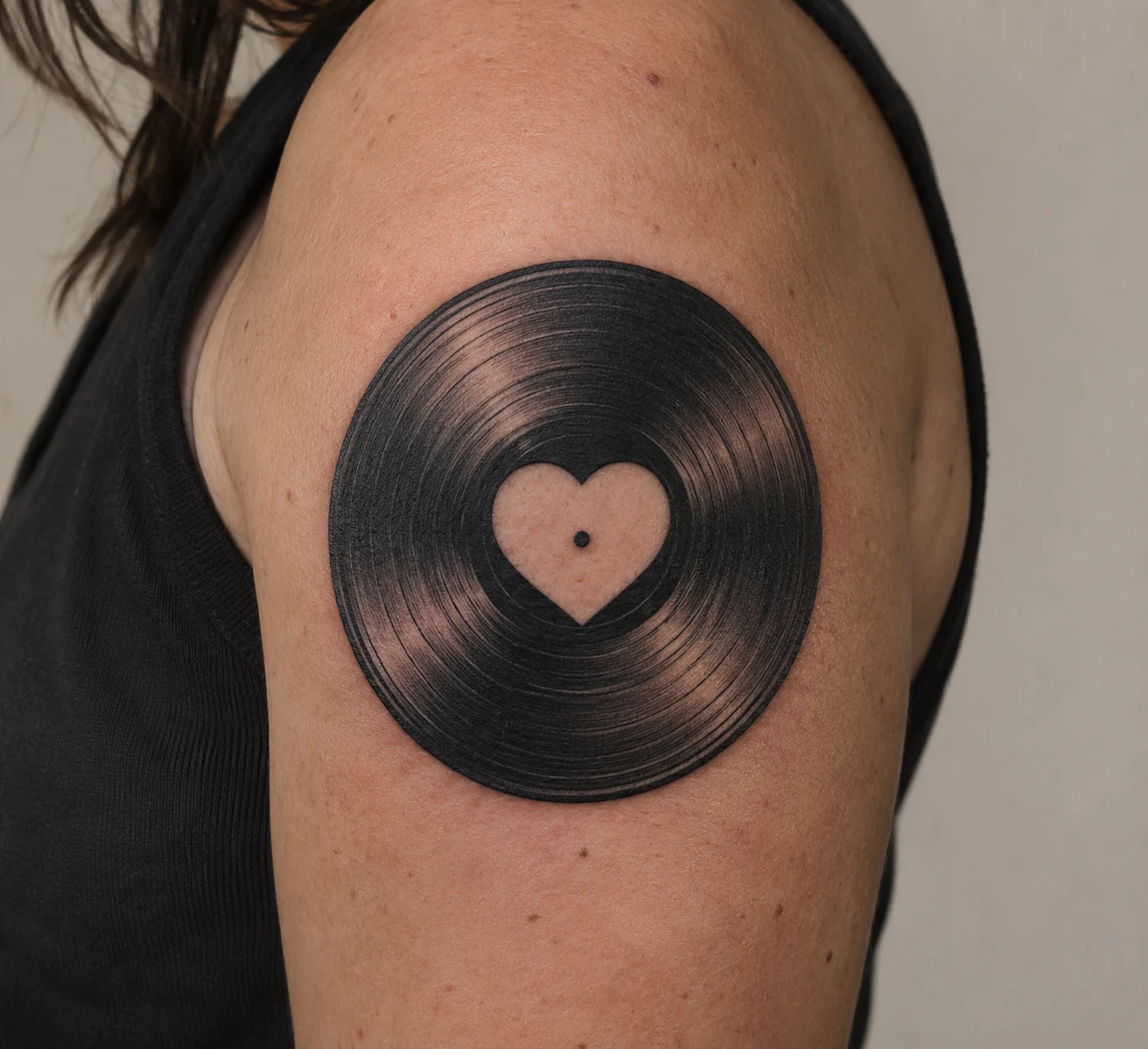
3. Record With a Heart-Shaped Label
Replace the round label with a heart while keeping the grooves simple. It could recall a shared song, someone you love, or your affection for music. Leave the heart uninked for a monochrome design, or make it the only colored element.
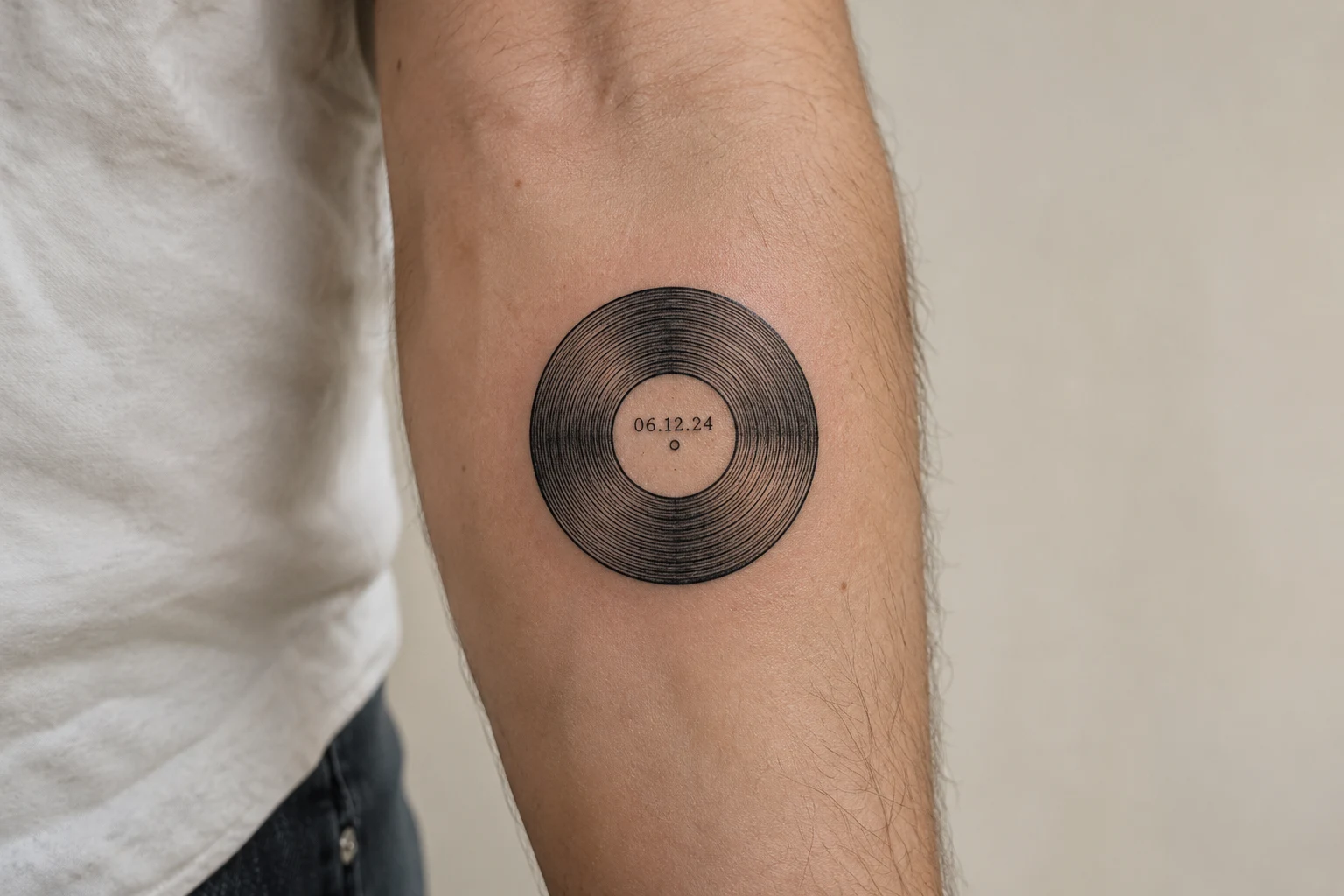
4. Record With a Meaningful Date
Put a concert date, anniversary, or other listening memory inside a plain label. Keep the surrounding disc spare so the numbers have room. Bring the exact date and preferred format to your artist, then discuss lettering at the intended scale.
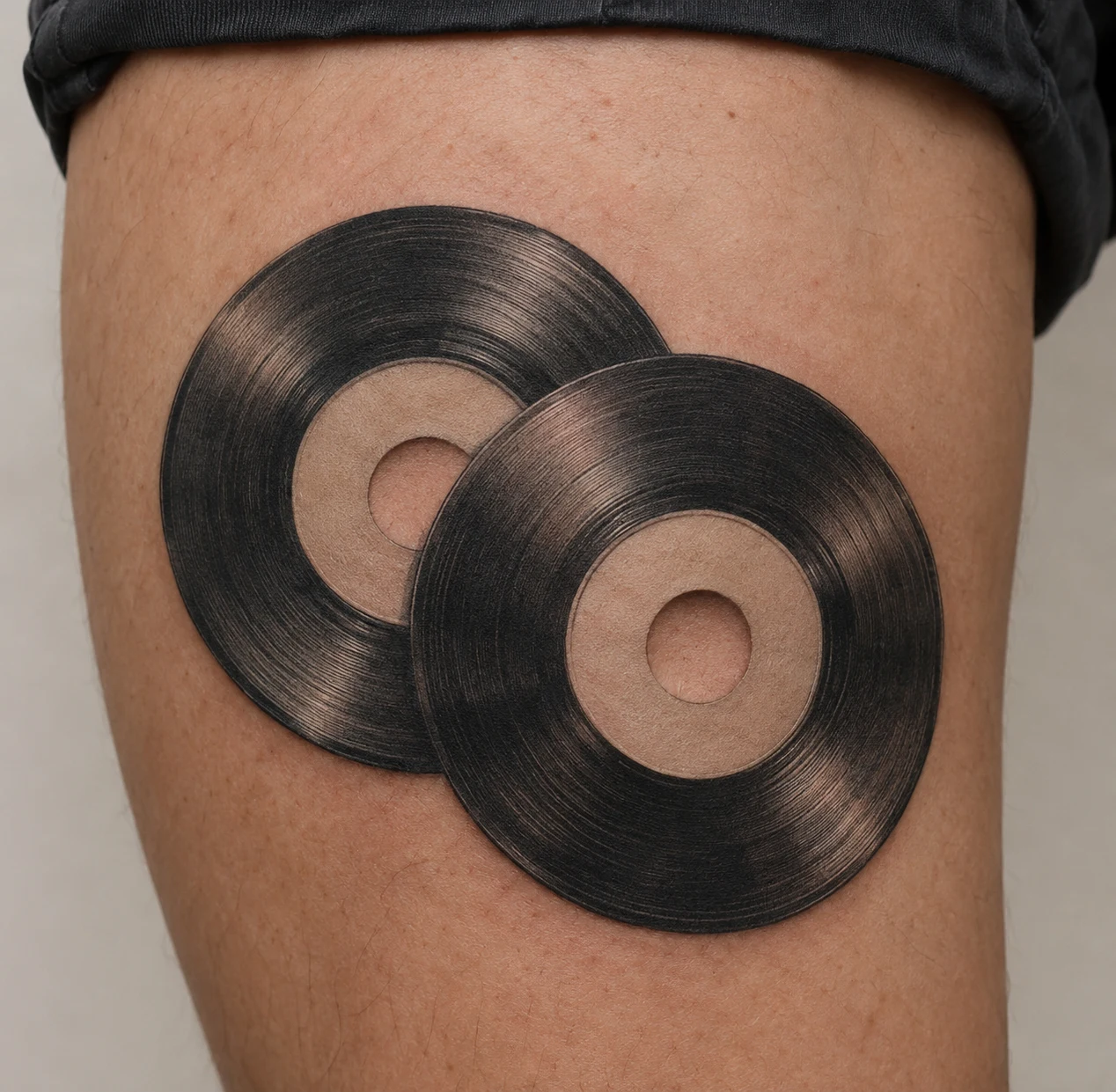
5. Paired Seven-Inch Records
Two overlapping records with large center holes create a compact pairing. Each could represent a person, a song, or a chapter of your life. Matching labels unite them; contrasting labels give each disc its own identity without requiring text.
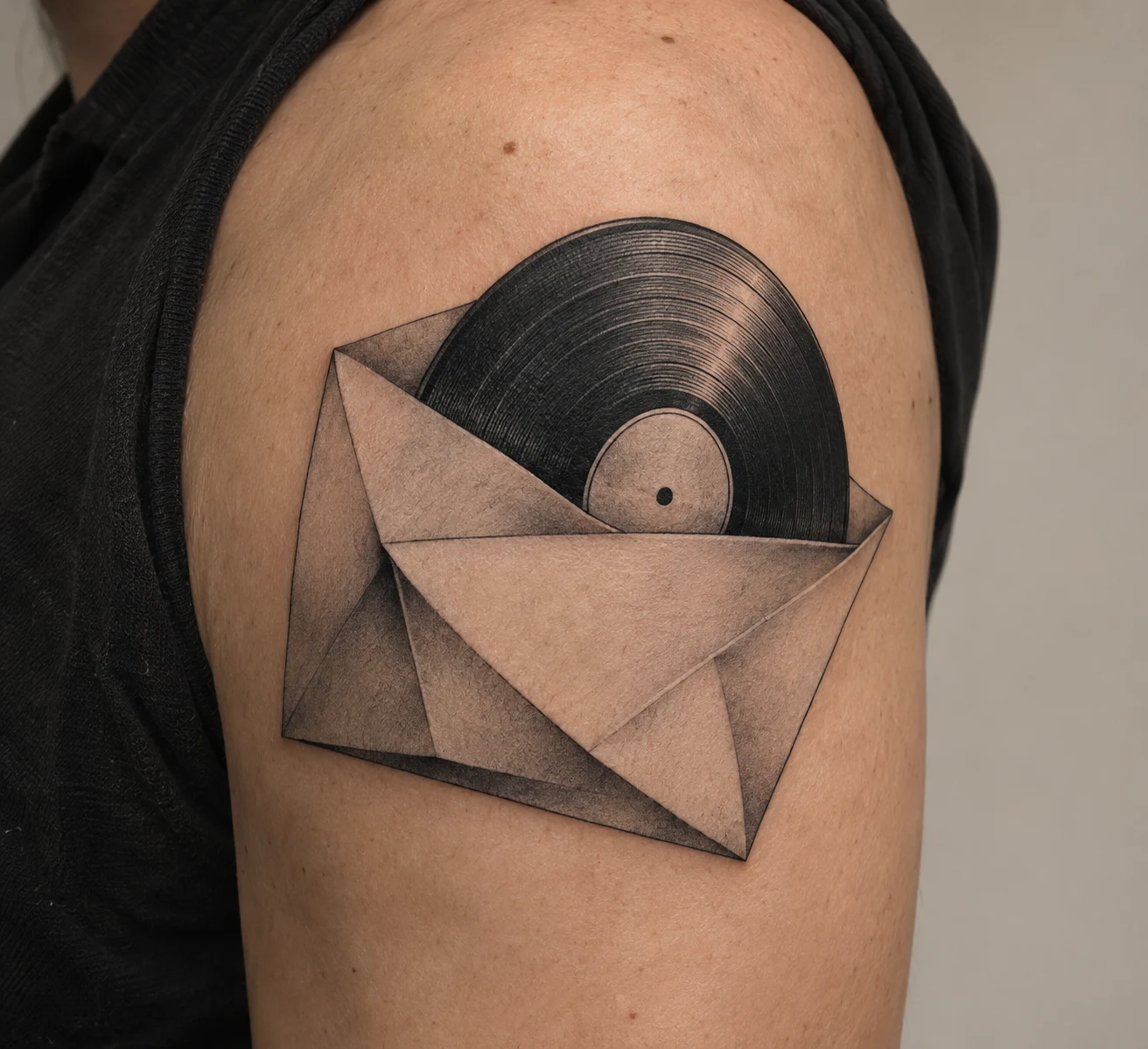
6. Record Halfway Out of Its Sleeve
An exposed disc and geometric paper sleeve bring the collecting ritual into the design. Choose an original stripe, checker, or block pattern for the sleeve. Showing more of the record emphasizes the vinyl; showing more sleeve gives the artwork greater presence.
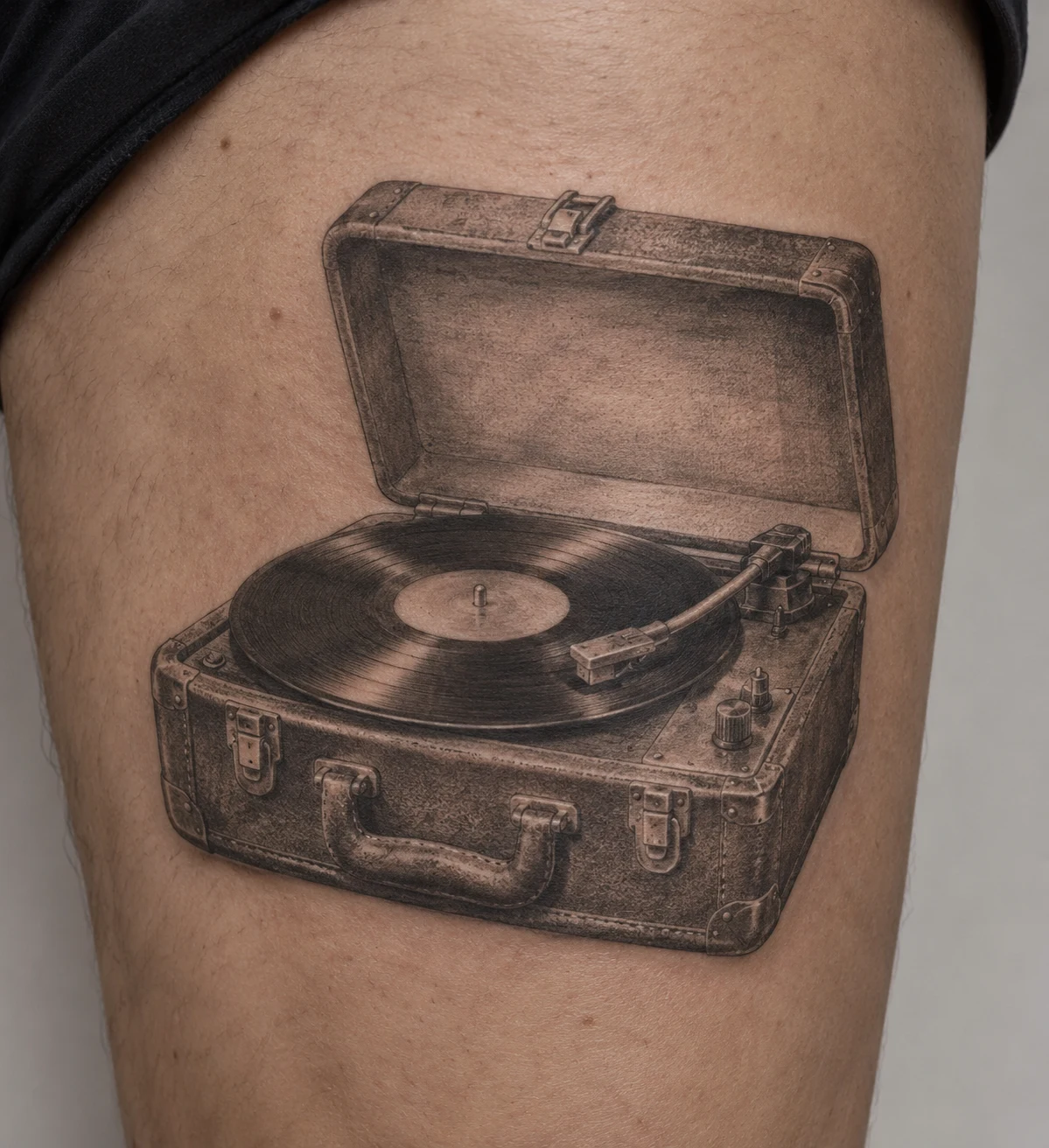
7. Suitcase Record Player
With its raised lid and visible record, an open suitcase player creates a complete listening scene. This is a fitting direction if the player itself holds memories. Start with its outline, platter, and tonearm before deciding which smaller controls to include.
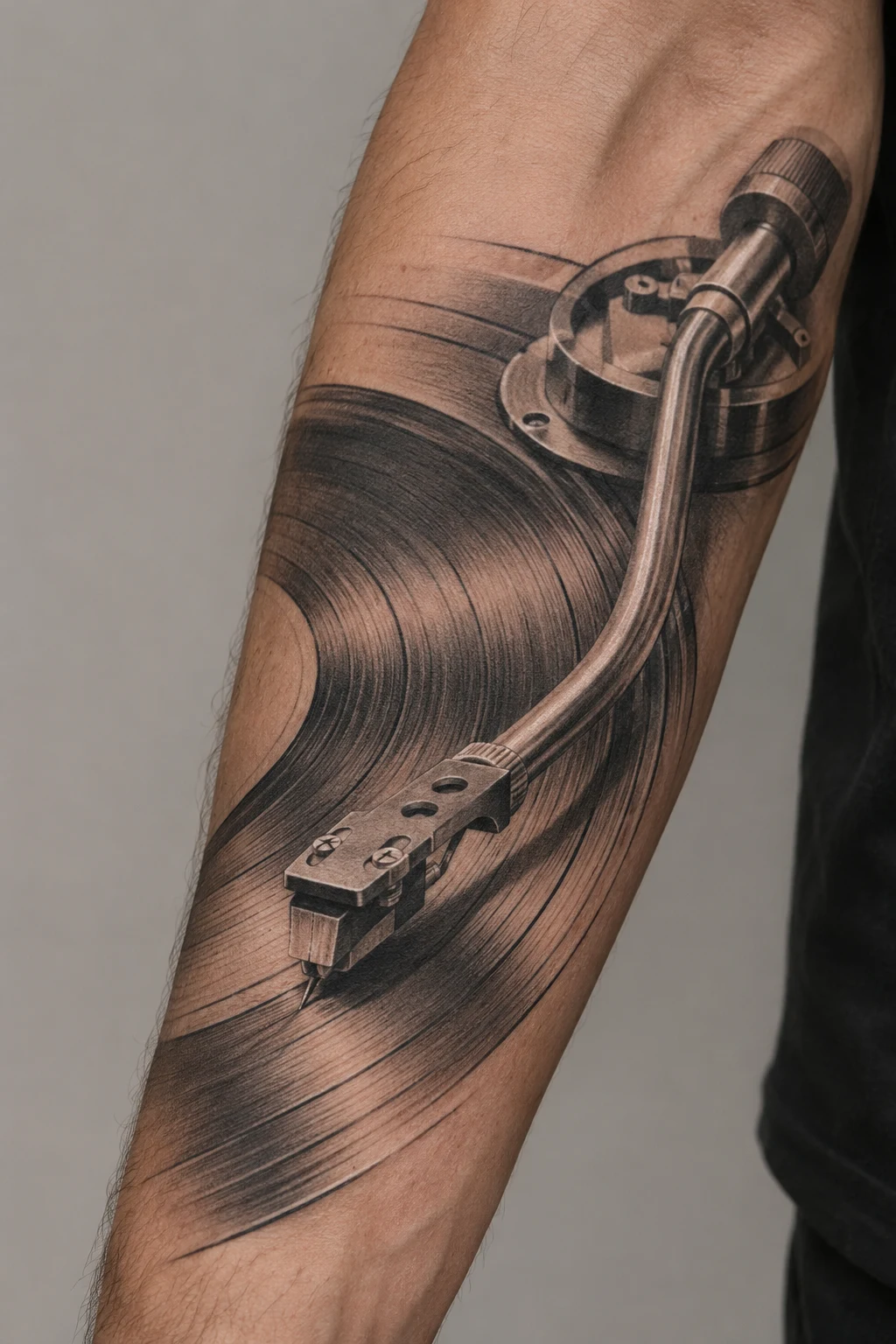
8. Tonearm Across Record Grooves
A cropped view brings attention to the moment of listening. Curved grooves establish the record beneath a diagonal tonearm. Choose this composition if you prefer a close detail to a whole player, and keep enough separation between the arm and groove lines.
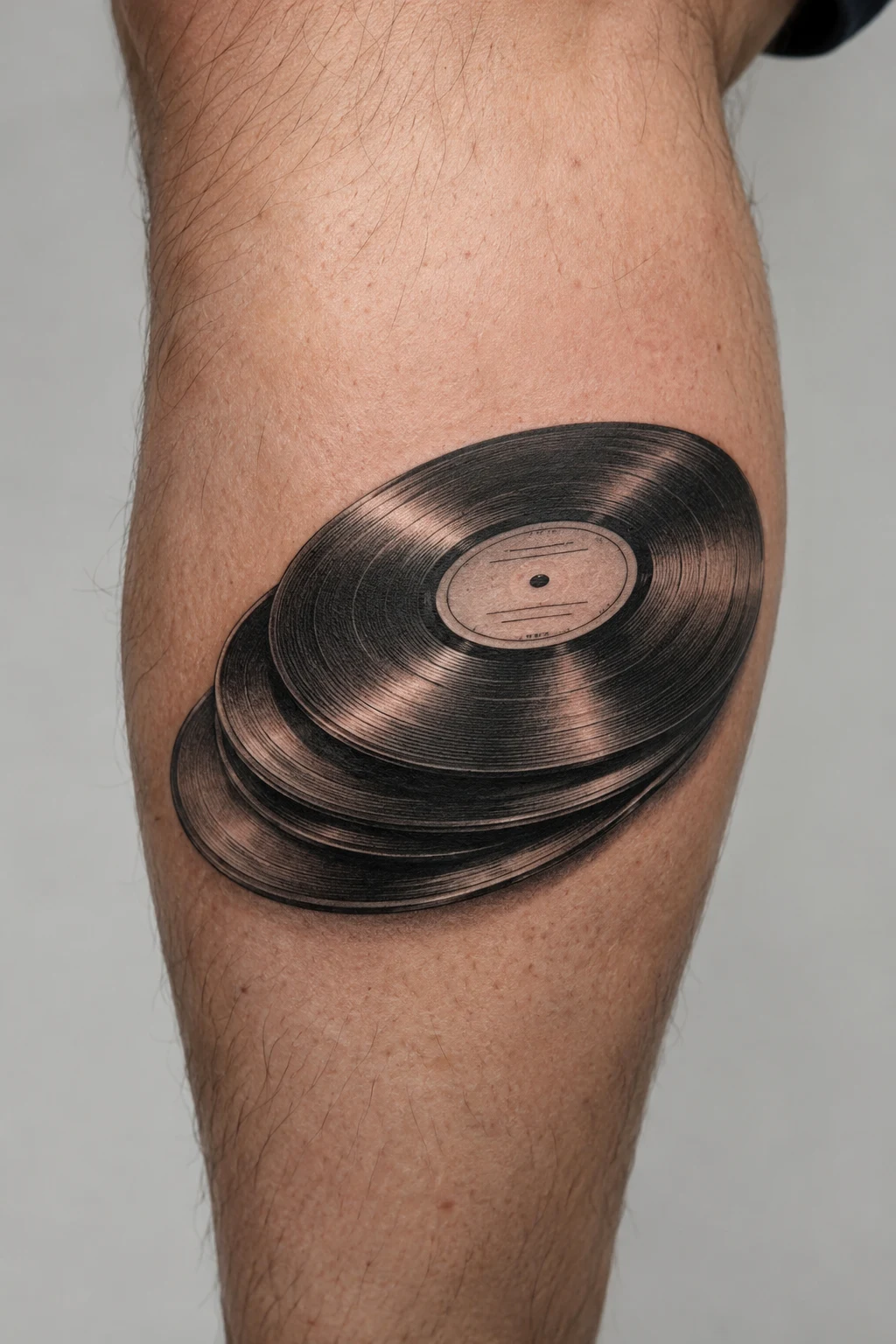
9. Stack of Records
For collectors attached to many records, a tilted stack suggests the collection as a whole. One visible label sits above layered disc edges. An orderly stack feels composed, while slightly offset edges give the arrangement a more casual character.
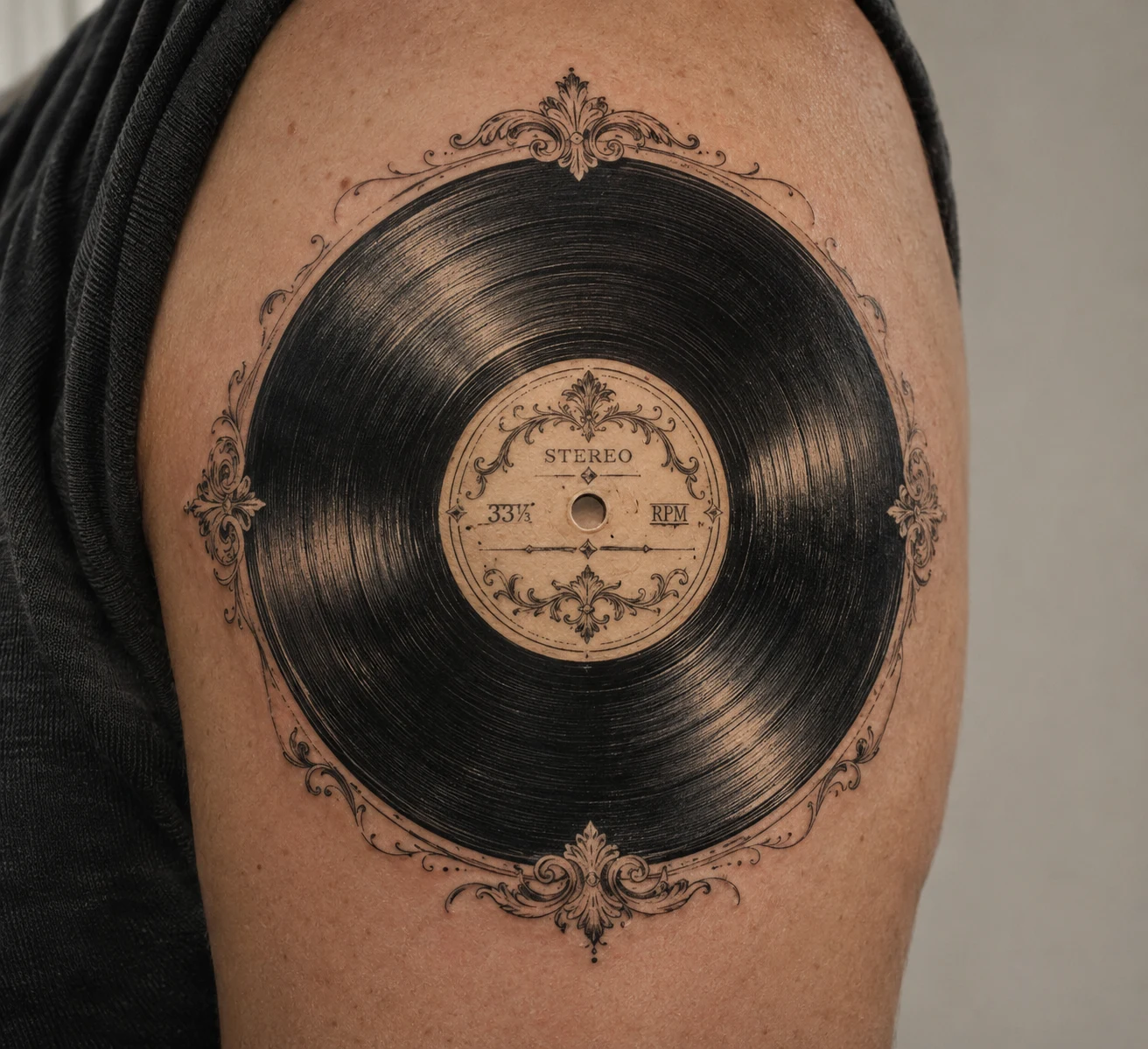
10. Record With an Ornamental Vintage Label
Make the label the focal point with a cream fill and an original decorative border. A short word can complete the design if you want lettering. Decide whether ornament or text matters more before adding both to the limited center space.
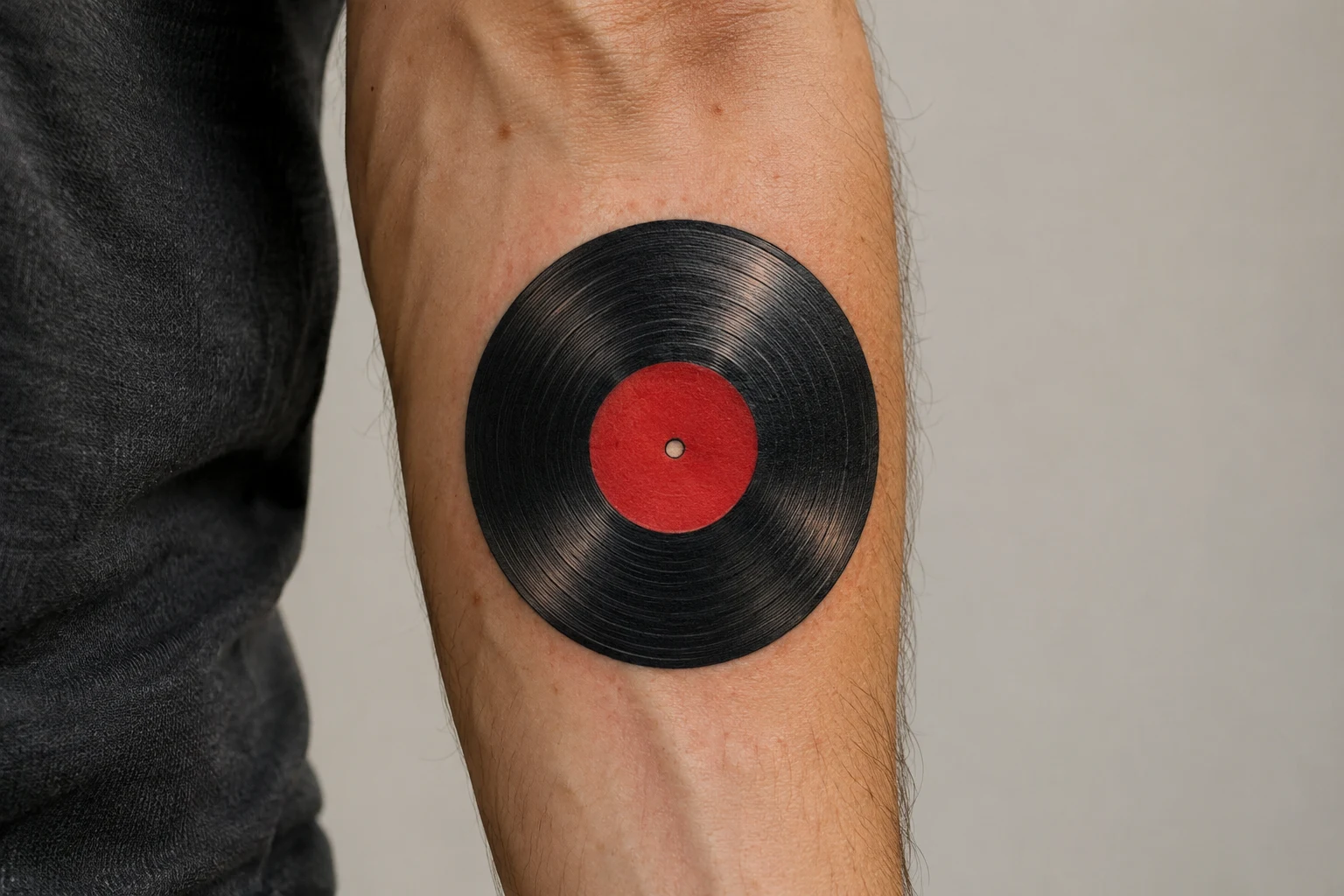
11. Black Record With a Red Label
A plain red center gives a black disc one clear color accent. This suits readers who want color within a simple composition. Sparse grooves keep attention on the label; a mostly solid disc makes the contrast more graphic.
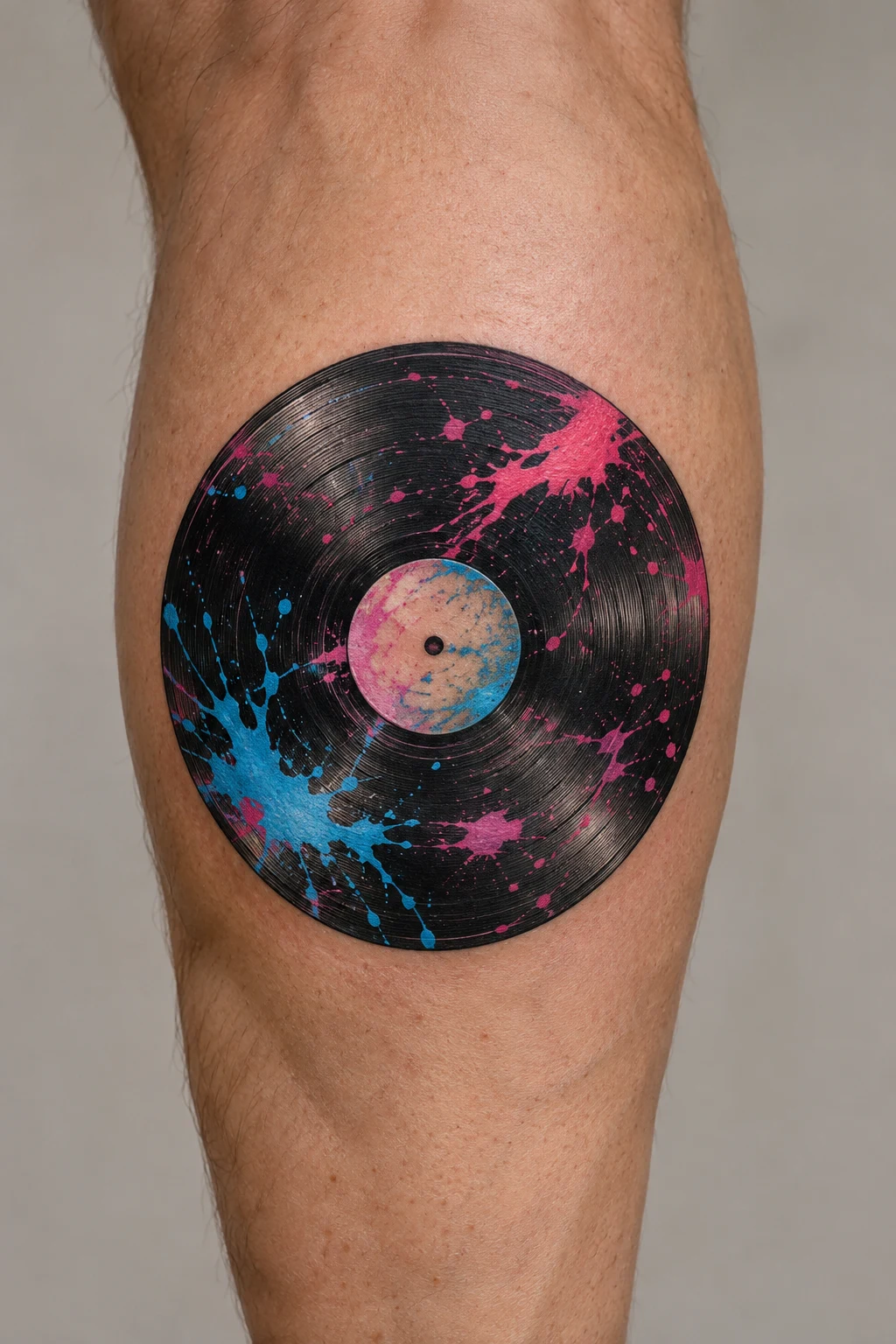
12. Splatter-Color Vinyl
Pink and blue flecks sit inside the disc, echoing the appearance of splatter vinyl. Keep a distinct circular edge and visible spaces between the marks. Choose this if you want the record itself to supply the pattern and color.
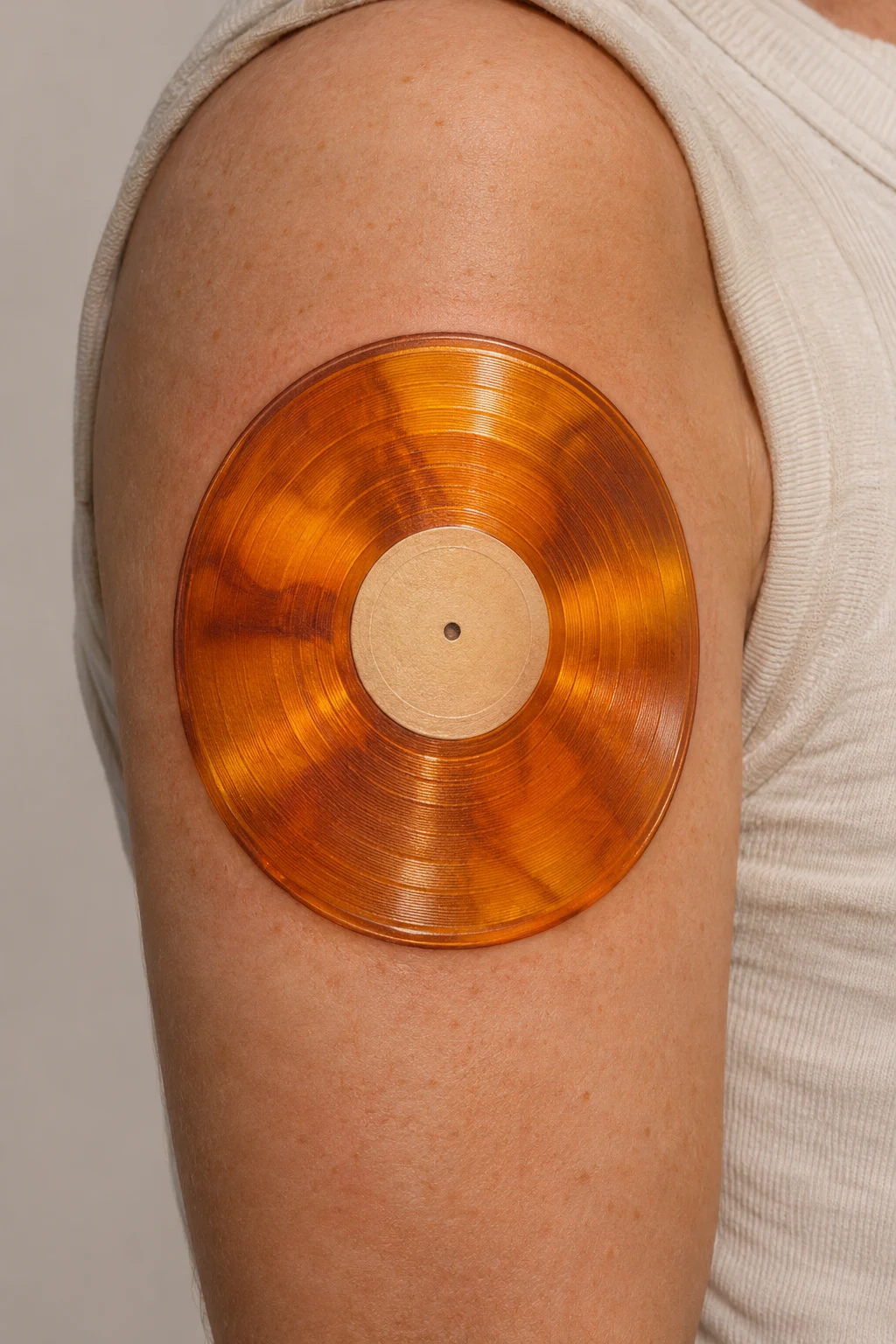
13. Amber Translucent-Look Record
Amber shading and open skin suggest translucent colored vinyl. The effect comes from the illustration, rather than transparent ink. A cream label supports the warm palette; discuss how the outline and shaded areas will distinguish the disc on your skin.
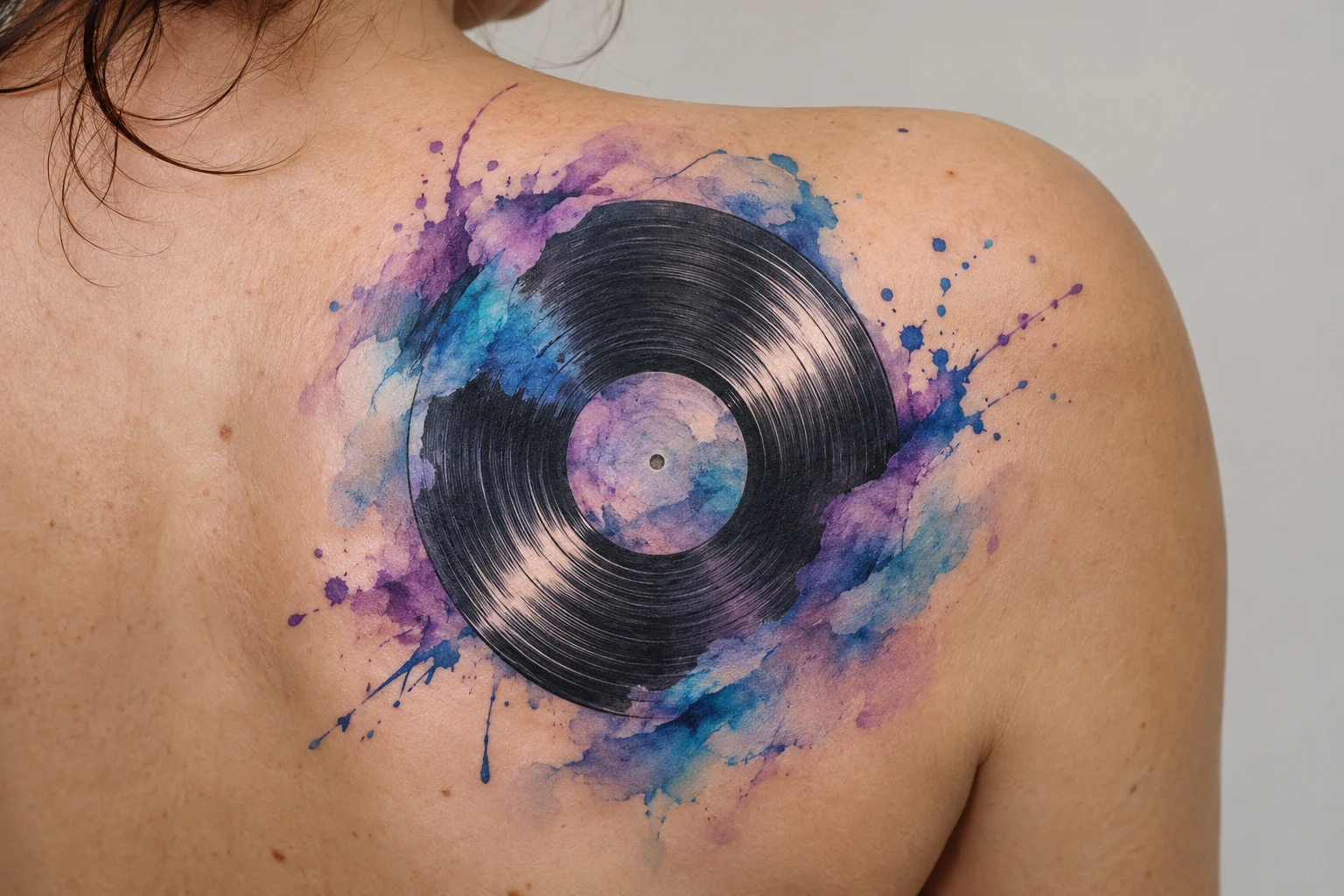
14. Record With a Watercolor Wash
Keep the record black and place loose blue and violet washes around it. Unlike splatter vinyl, the color sits outside the disc. A wash trailing from one side creates an asymmetric composition, while color around the circumference frames the record.
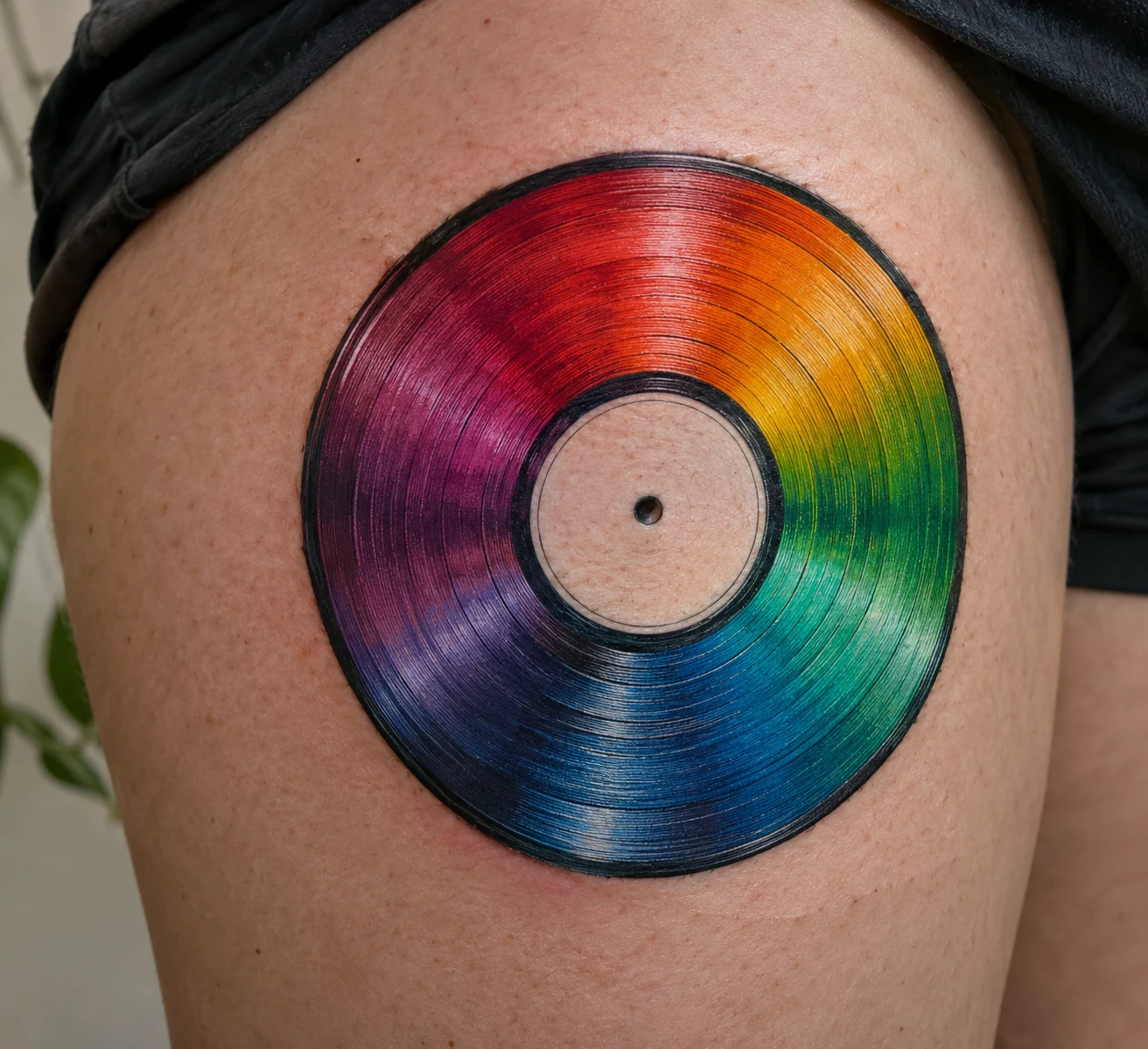
15. Record With Rainbow Groove Bands
Separated rainbow rings replace selected grooves while a black rim holds the circular shape. Choose the palette for your own reasons; it doesn’t need to carry a prescribed meaning. Leave visible gaps between bands so each color has a defined place.
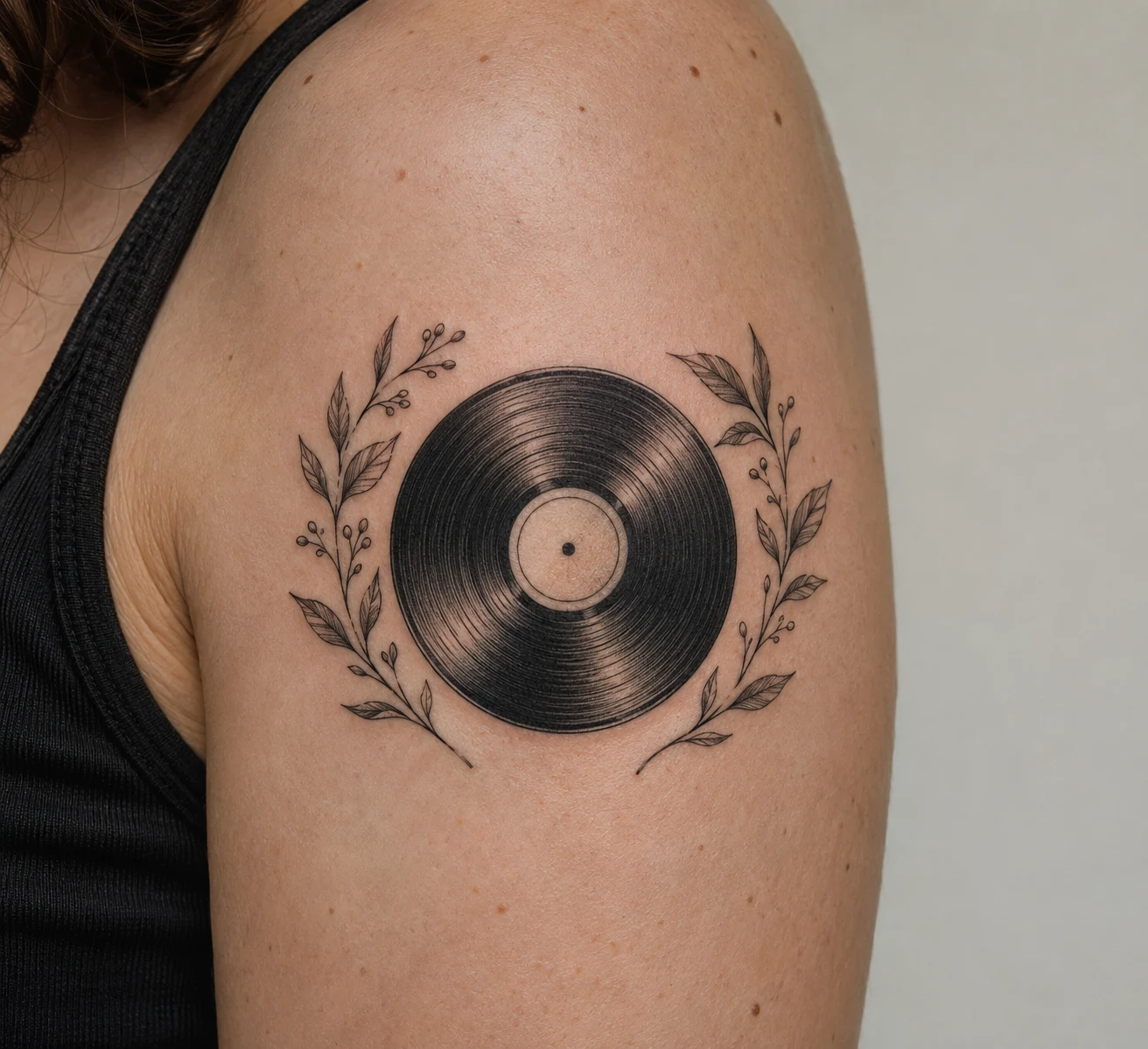
16. Record Framed by Botanical Sprigs
Two leafy sprigs follow the disc’s curve, adding an organic frame to its geometry. Keep them outside the rim for a clear silhouette, or overlap a few leaves for a layered design. A plant connected to your own memories can personalize the pairing.
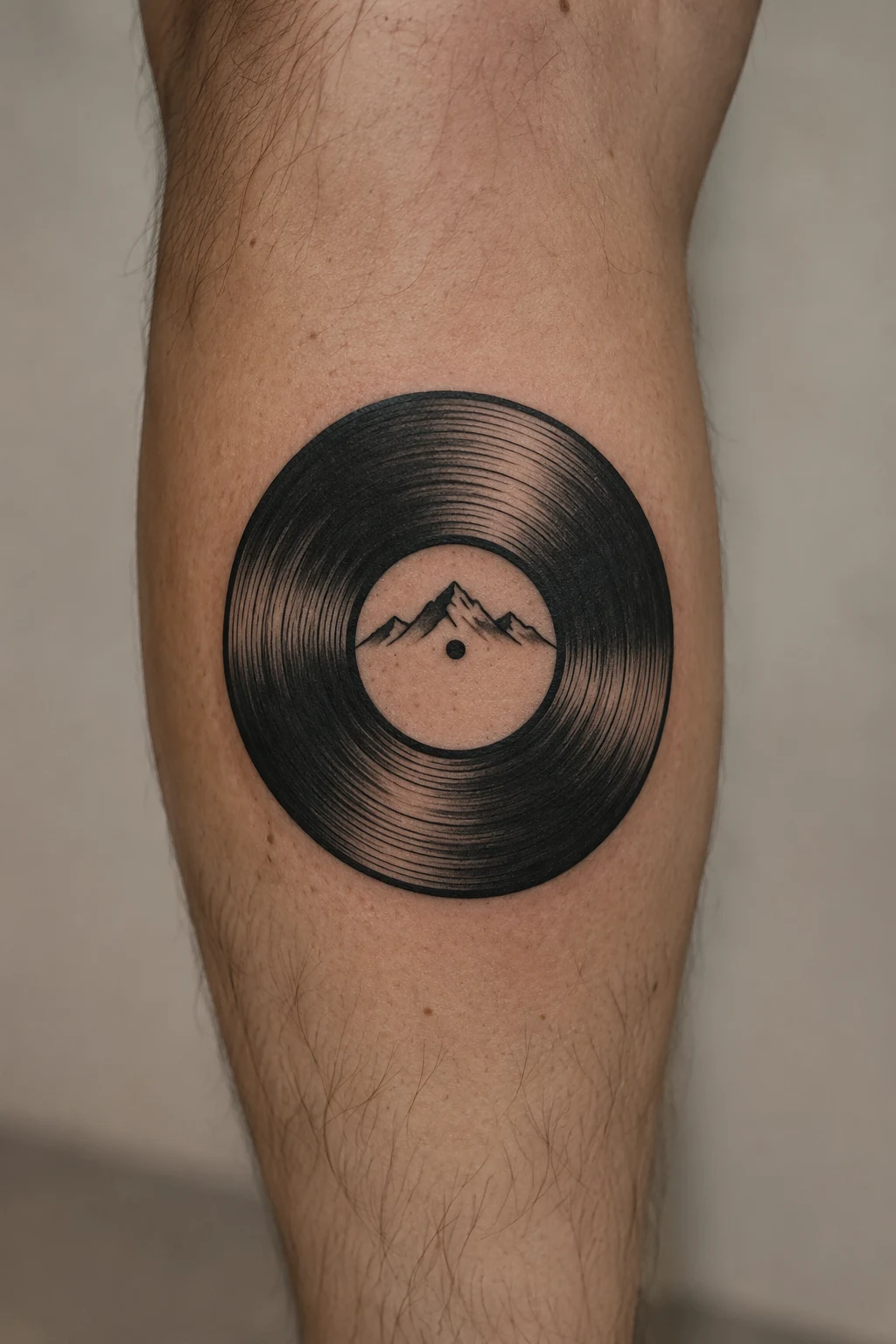
17. Record With a Mountain Label
An enlarged center label holds a simple mountain silhouette, with grooves remaining visible around it. This could connect music with a journey or remembered landscape. Choose one distinctive ridgeline rather than trying to fit a complete scenic view inside the label.
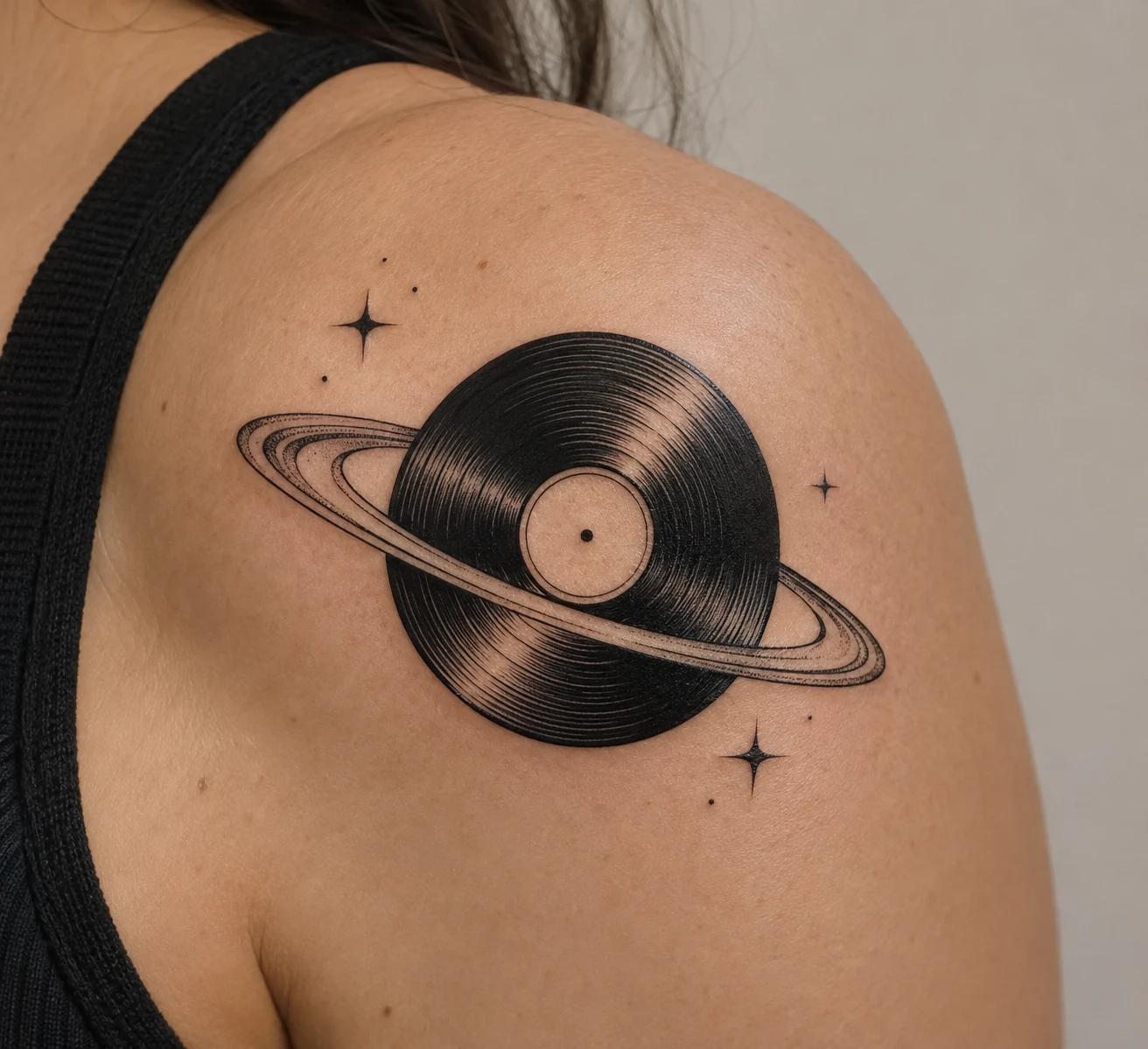
18. Record With an Orbital Ring
Wrap an angled planetary ring around the disc for a space-inspired shape. Keep the center hole and grooves prominent so it still reads as a record. A few small stars extend the theme; the ring alone offers a more restrained version.
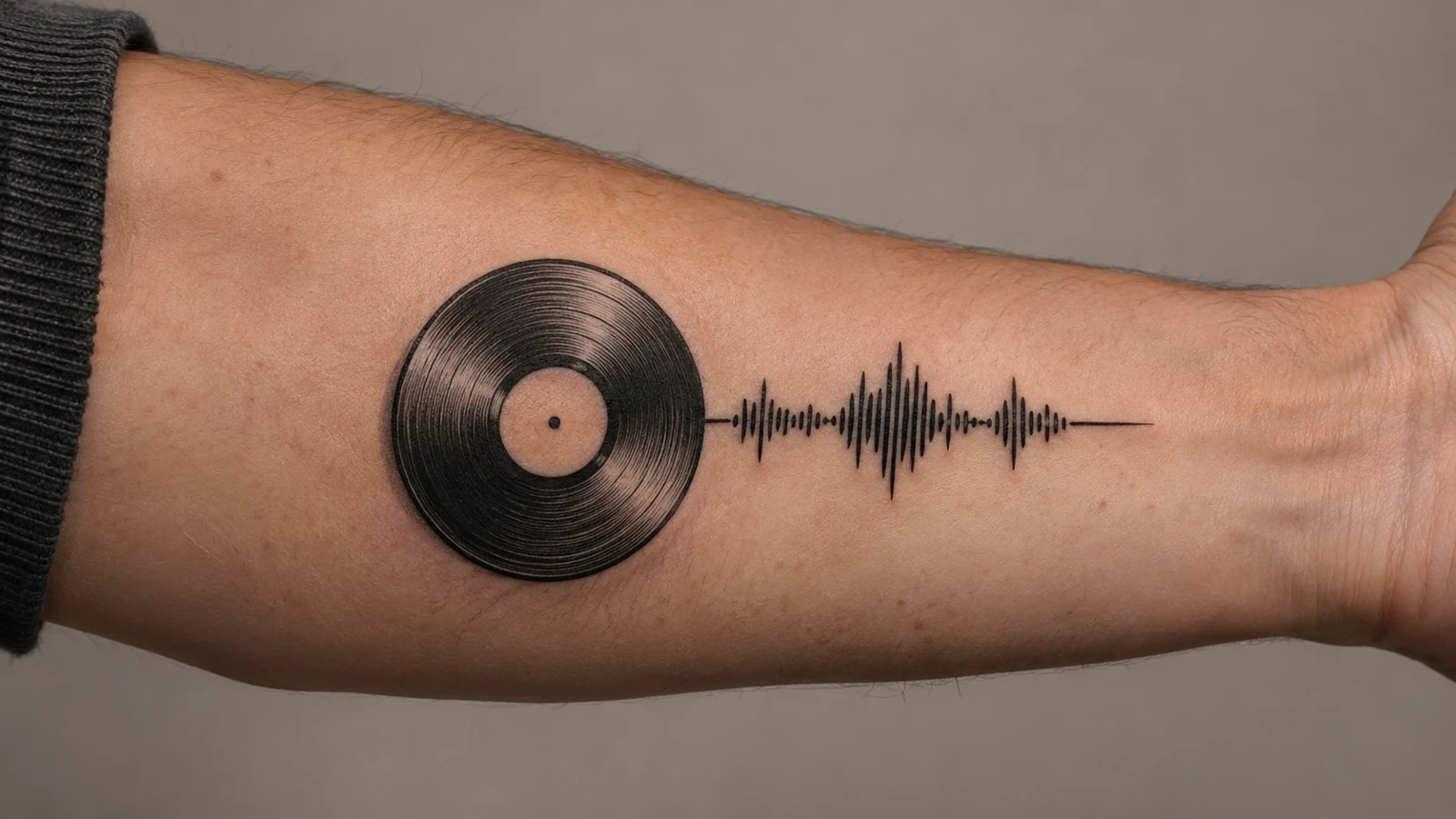
19. Record With a Short Waveform
A waveform extending sideways lengthens the composition, making the forearm a placement to consider. The planned waveform is decorative. If you want one derived from a particular recording, supply an accurate visual reference from that audio excerpt.
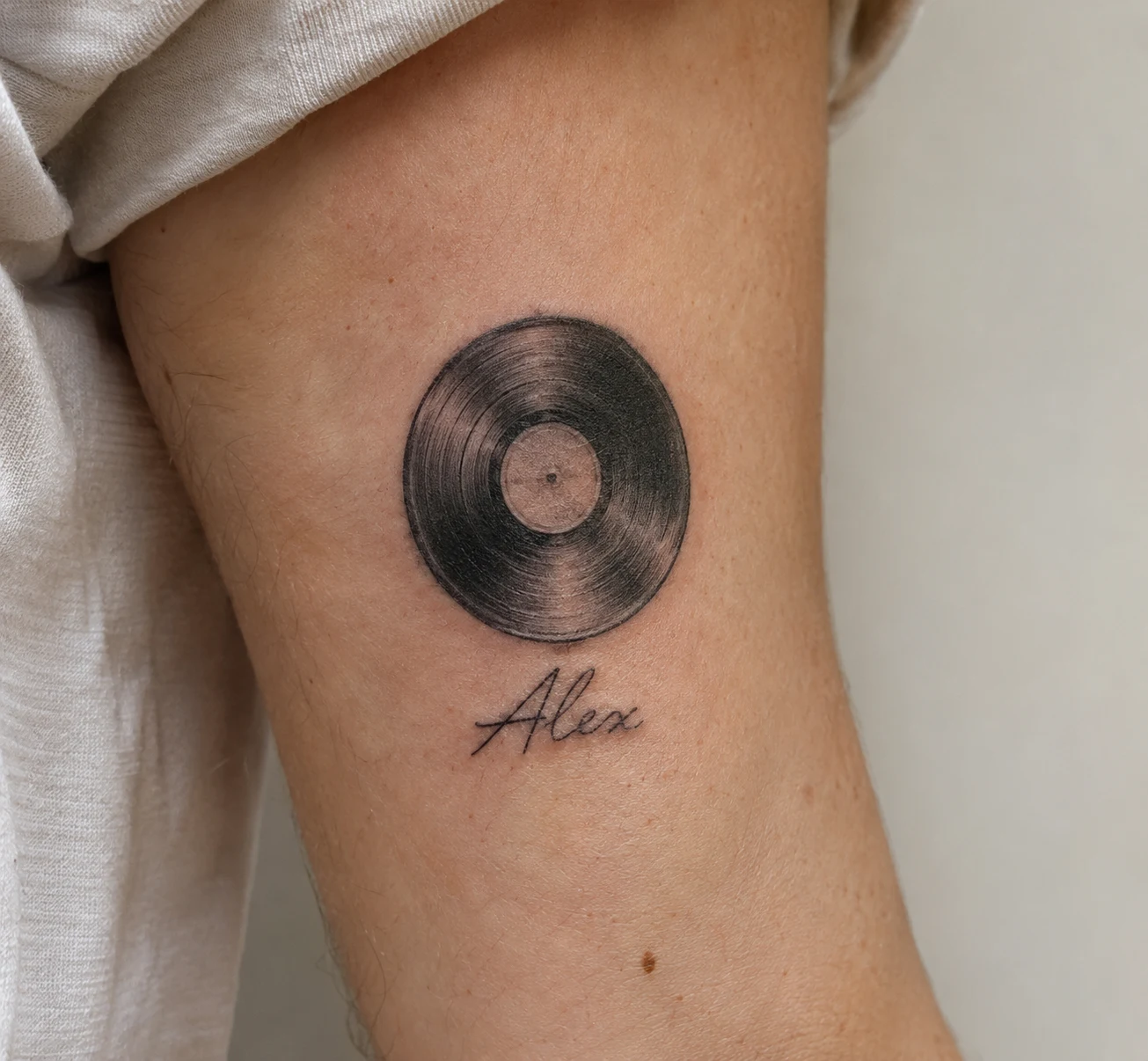
20. Memorial Record With Handwriting
A short handwritten name or phrase beneath the record can honor a shared listening memory. Use an authentic handwriting sample if preserving someone’s script matters to you. Keeping it outside the label gives the words their own space in the composition.
Shortlist two or three favorites, then choose a record treatment, personal detail, and placement. Bring those references to your artist to discuss scale, groove spacing, and lettering. If you’re still comparing musical subjects, explore more tattoos for music lovers.

