
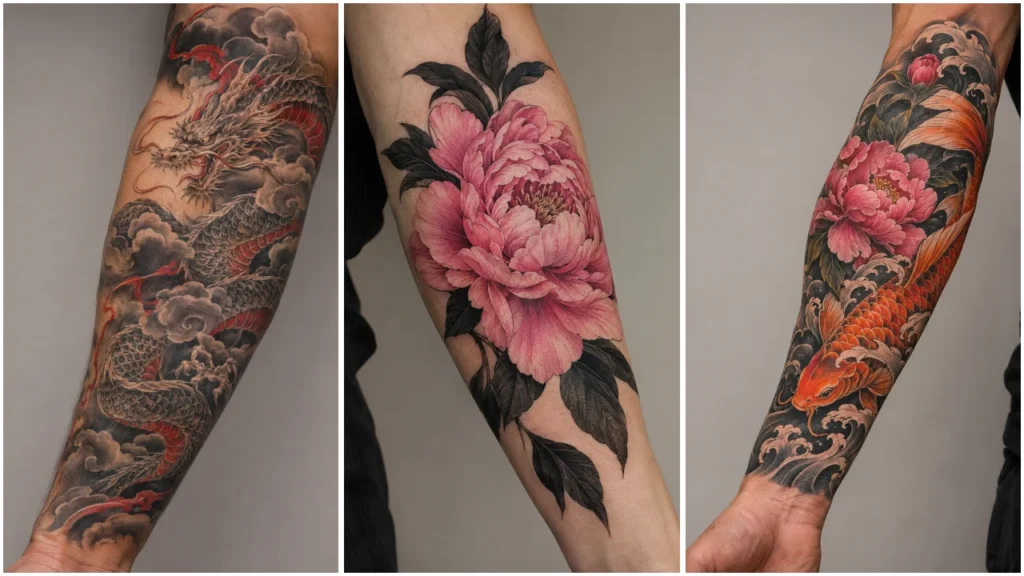
Japanese forearm tattoos can follow the arm with a winding dragon, center on a single flower, or connect several subjects with water and clouds. These 20 concepts help you compare motifs, color, and coverage, from open branches to full forearm compositions.
Some draw on traditional Japanese tattoo imagery; others take a contemporary Japanese-inspired approach. Use them as design directions to discuss with an artist, rather than as fixed templates or universal statements of meaning.
Creatures
1. Japanese Dragon Forearm Tattoo With Clouds
A winding dragon framed by charcoal clouds.
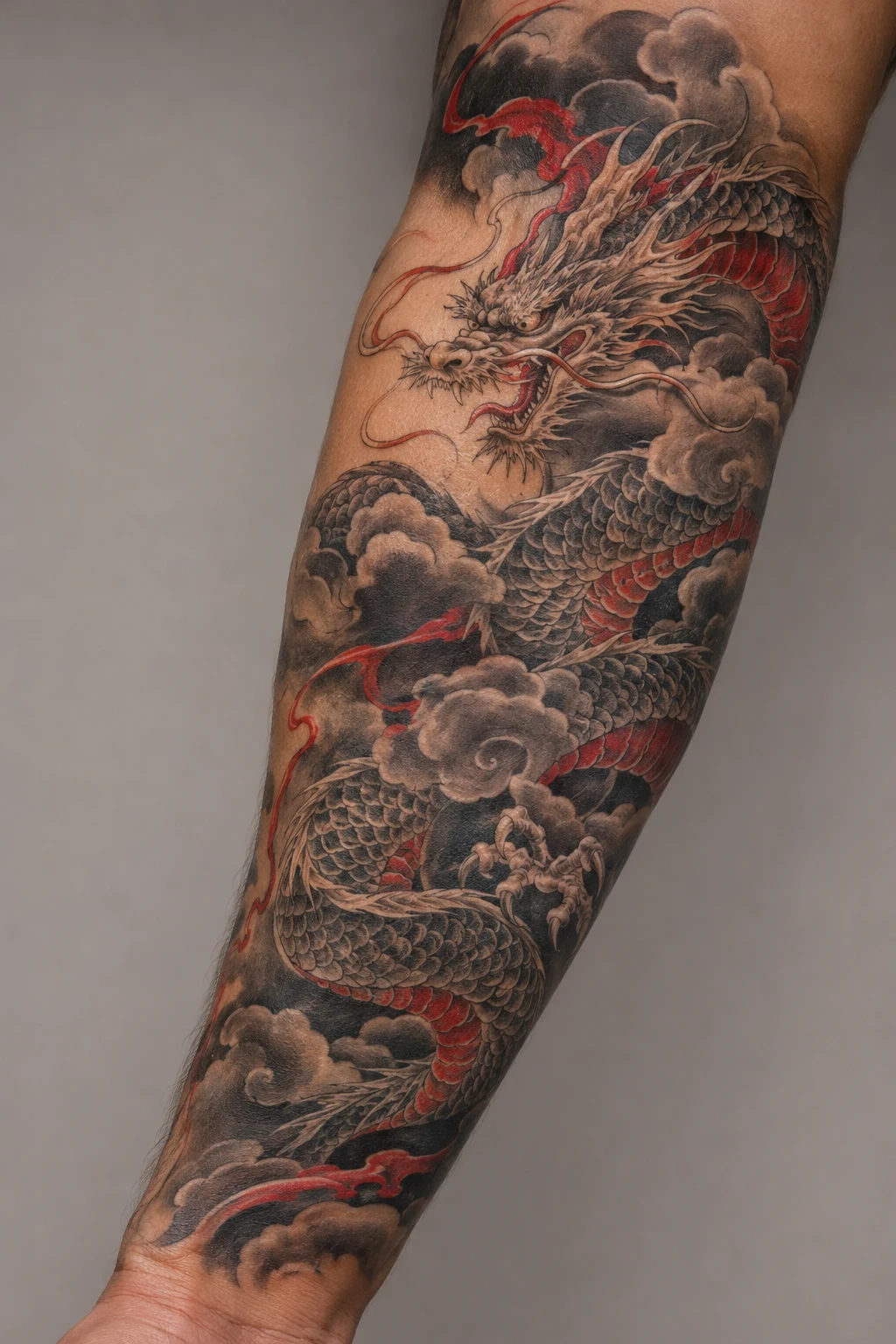
The long body creates a route around the arm, while red accents draw attention to selected details. Choose this direction if you enjoy a design revealed across several views. Decide which features should remain visible when your arm rests.
2. Single Koi With Flowing Water
One orange koi leads a lengthwise composition.
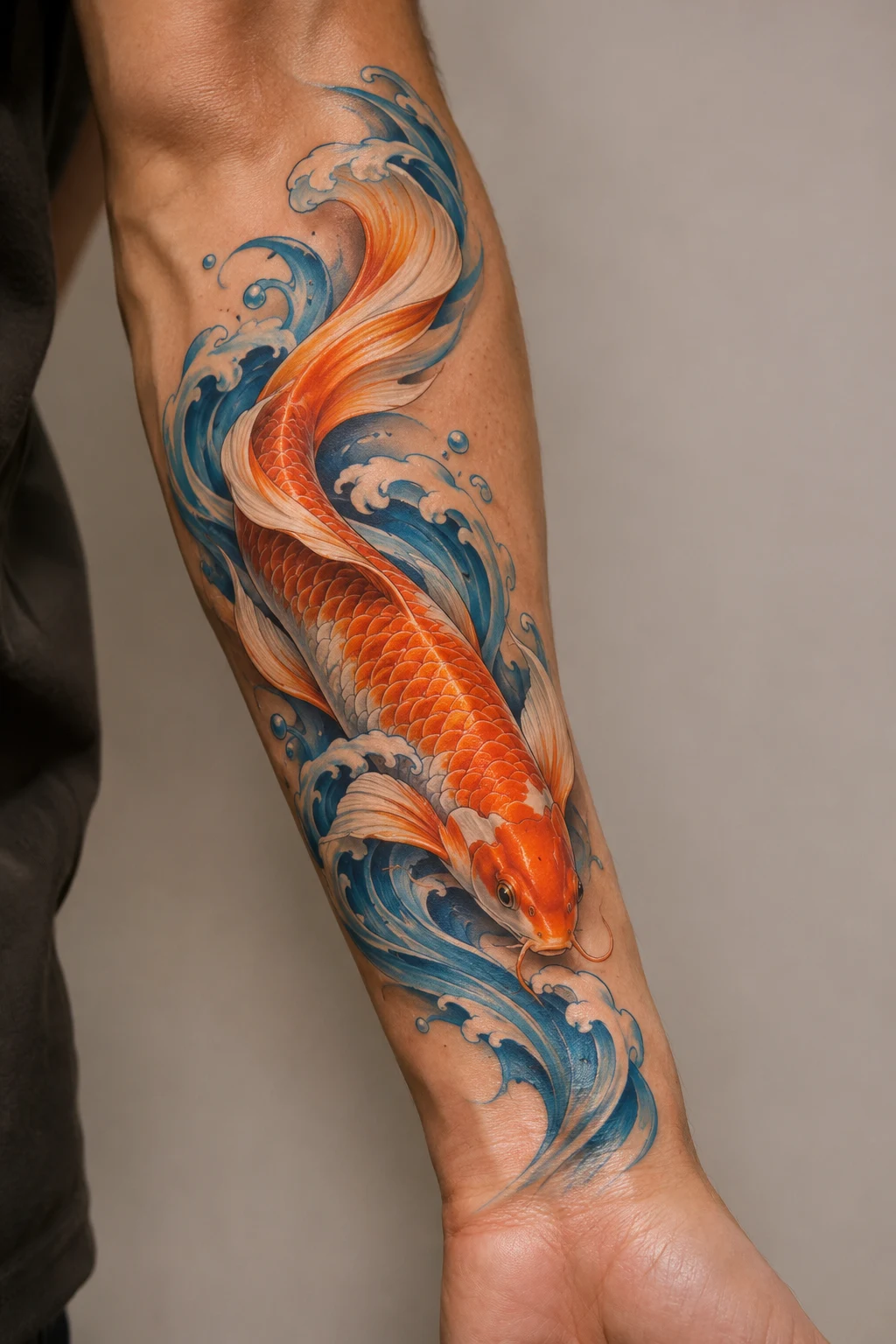
Restrained water framing keeps the focus on the fish if you’d prefer one main subject. Ask the artist to compare orientations on your arm before settling on the fish’s direction.
3. Paired Koi Forearm Wrap
Two koi curve around opposite sides of the forearm.
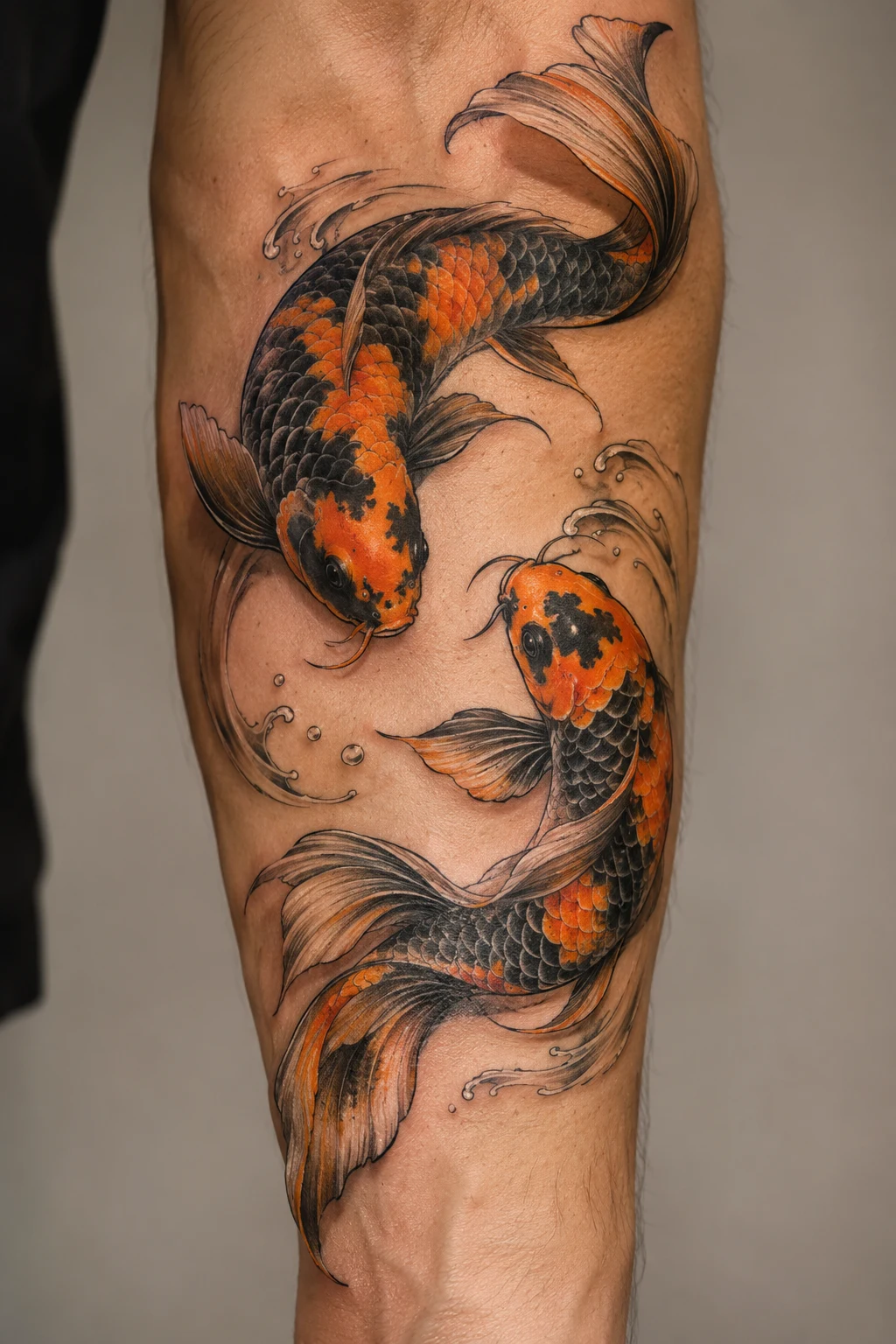
The paired arrangement invites fuller coverage than a single fish. Plan each koi’s position so both have a readable outline, with enough space between fins, tails, and water accents as the arm turns.
4. Snake and Chrysanthemum Forearm Tattoo
A dark snake threads behind a red bloom.
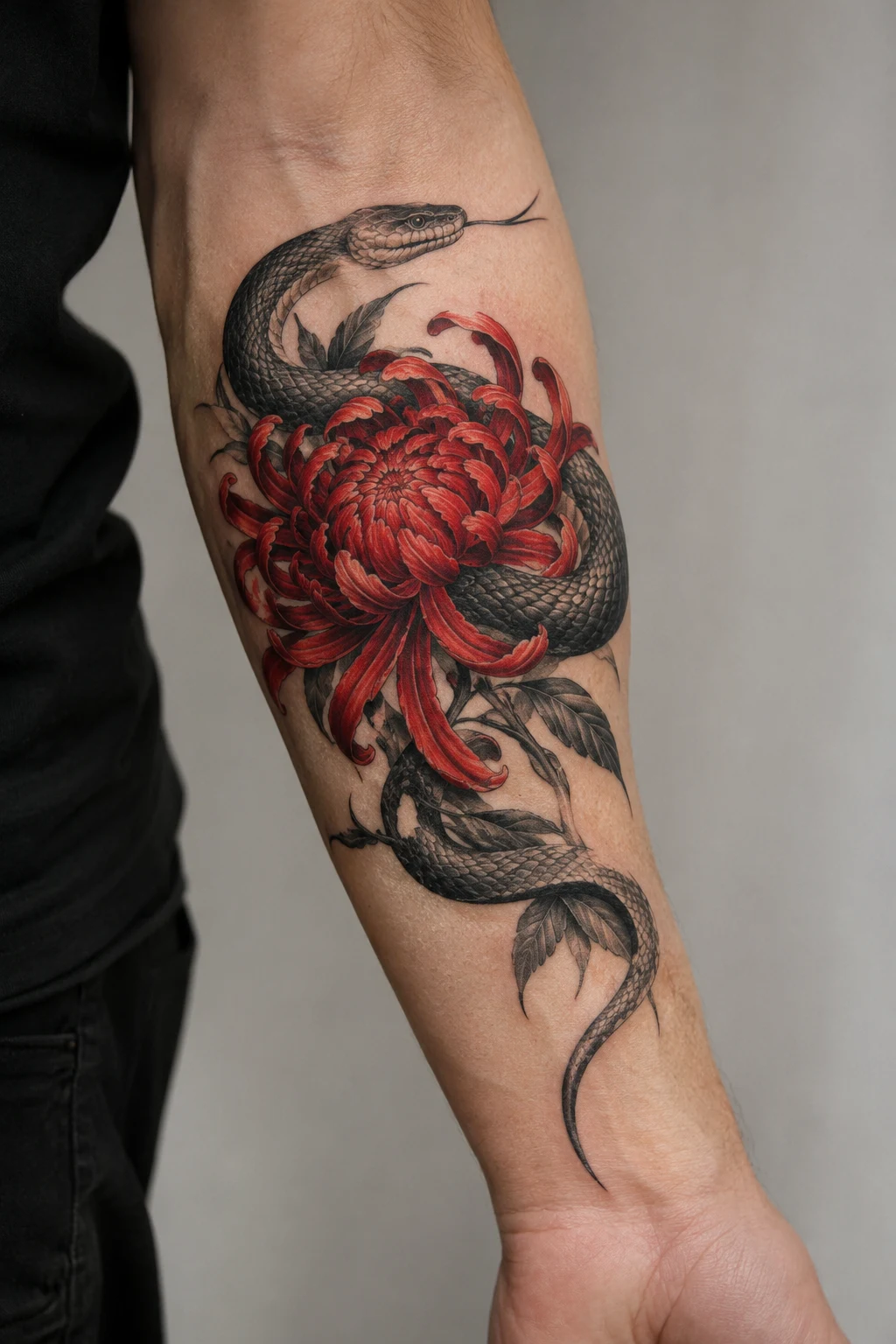
Scales and layered petals offer contrasting textures. Let the flower anchor the composition, with the snake appearing around its edges. This is a useful direction if you want animal and floral elements to feel intertwined.
5. Tiger Among Bamboo
A descending tiger follows diagonal bamboo stems.
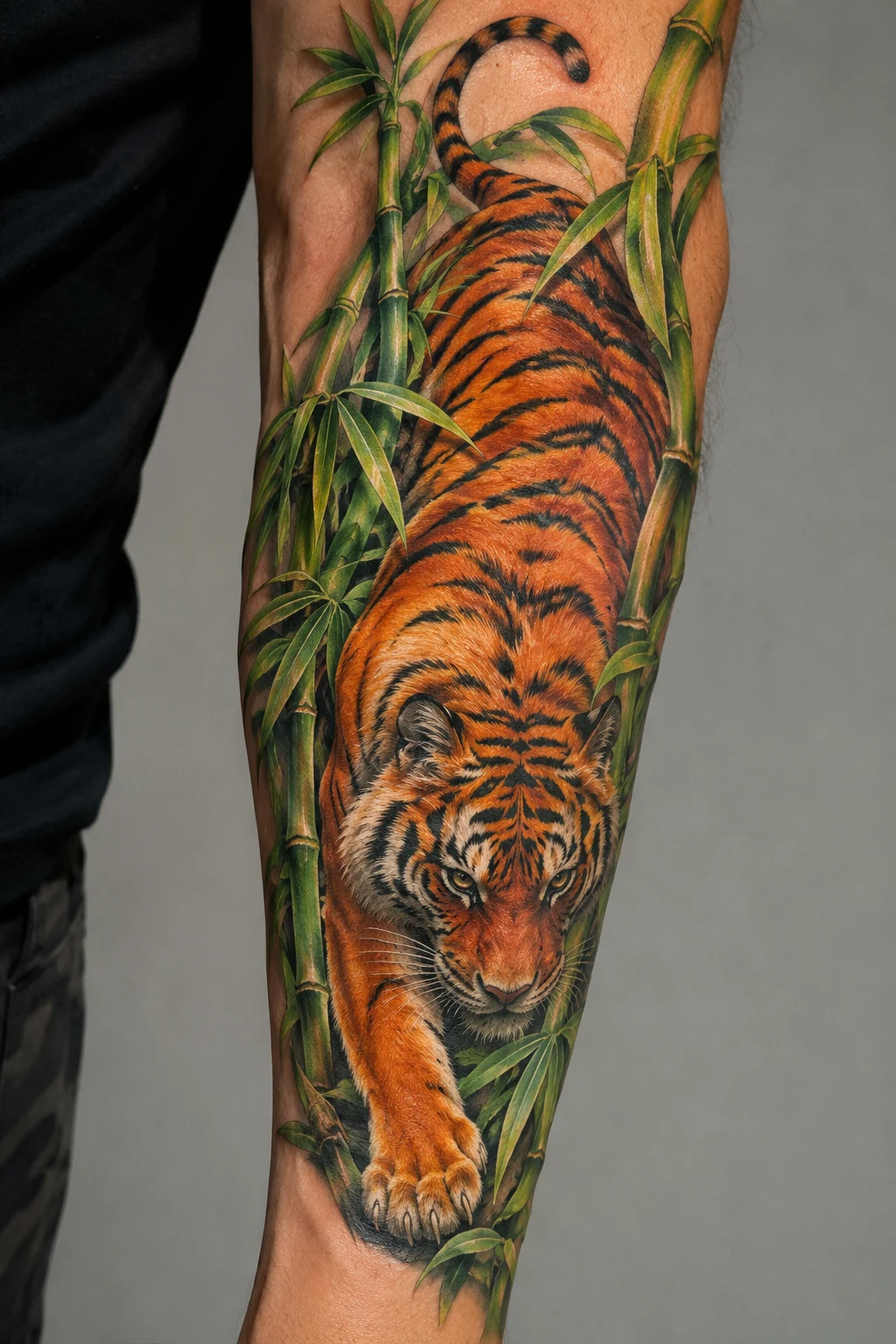
The face, paws, and stripes all compete for room. Choose whether the expression or the whole body matters most, then adjust the scale accordingly. Sparse bamboo can frame the tiger without obscuring its outline.
6. Crane With Open Wings
Angled wings create an airy, feathered composition.
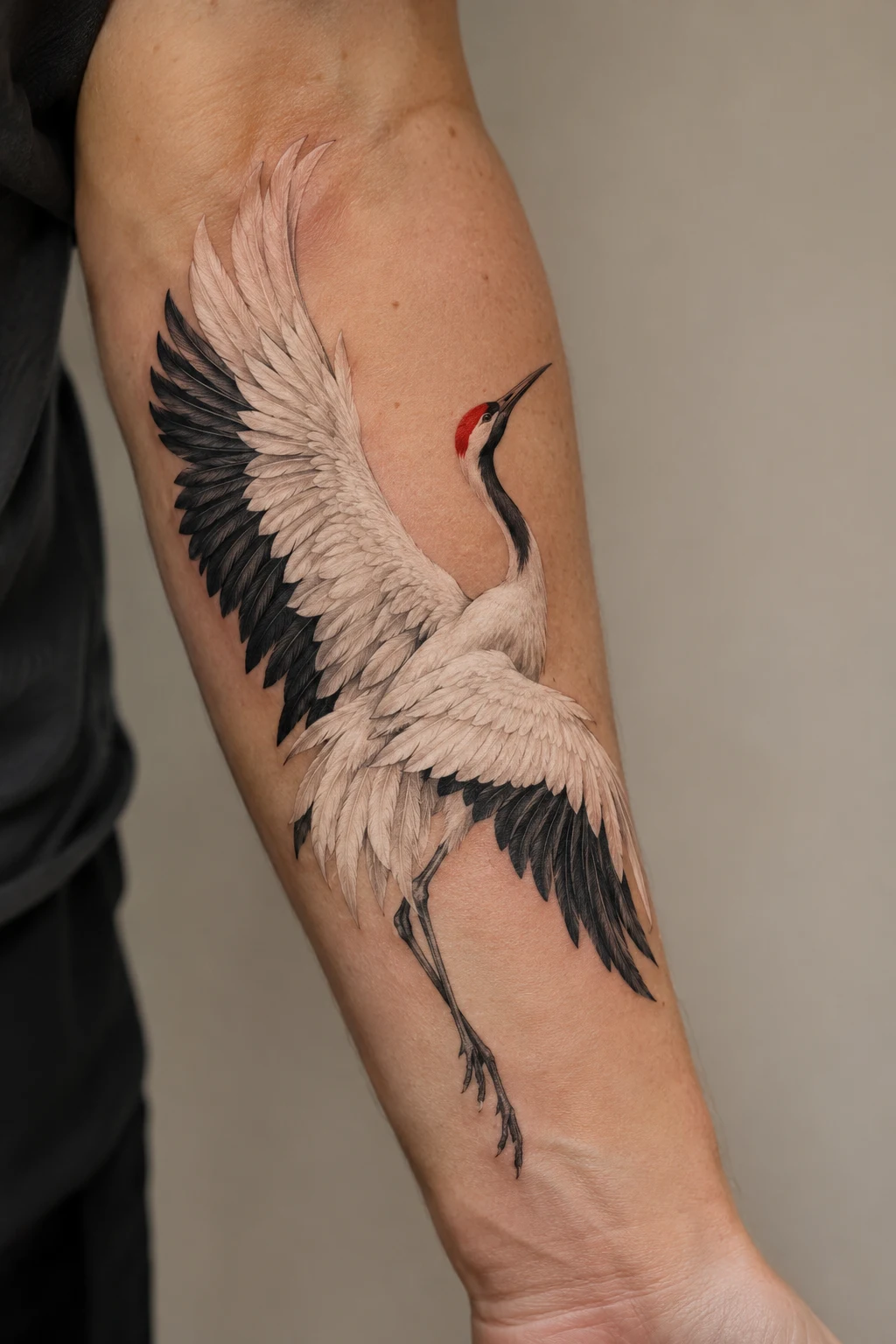
Rather than stretching both wings straight across the arm, angle them along its length. Open skin between feather groups keeps their shapes distinct. Consider this approach if you prefer visible breathing room around the subject.
Masks and Armor
7. Tengu Mask With Wind Bars
A red mask brings a pronounced profile.
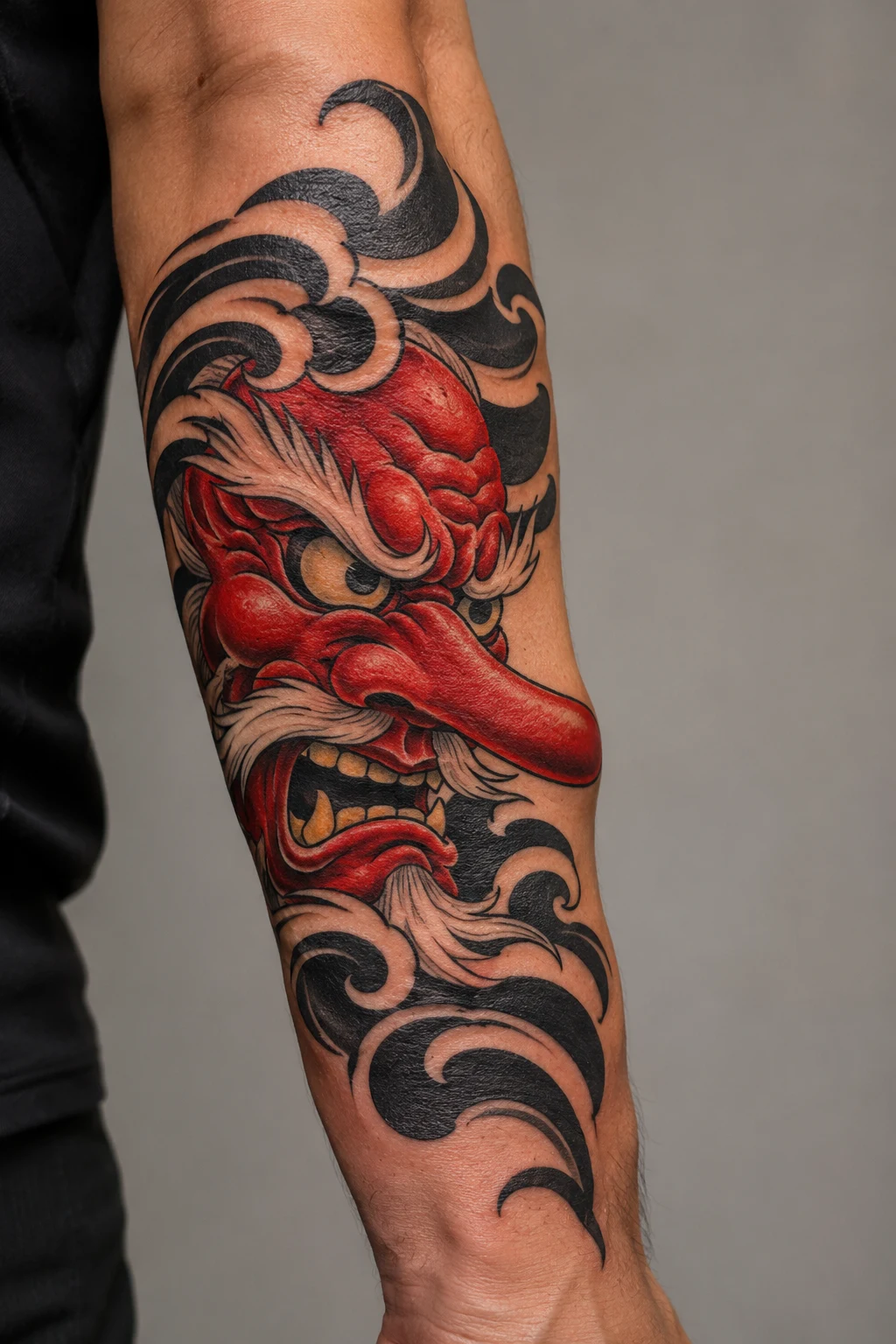
A three-quarter angle can emphasize the long nose while retaining the eyes and mouth. Curved wind bars provide framing. Keep their darkest areas away from facial details you want to stand out.
8. Hannya Mask With Maple Leaves
An angular mask meets softly spreading leaves.
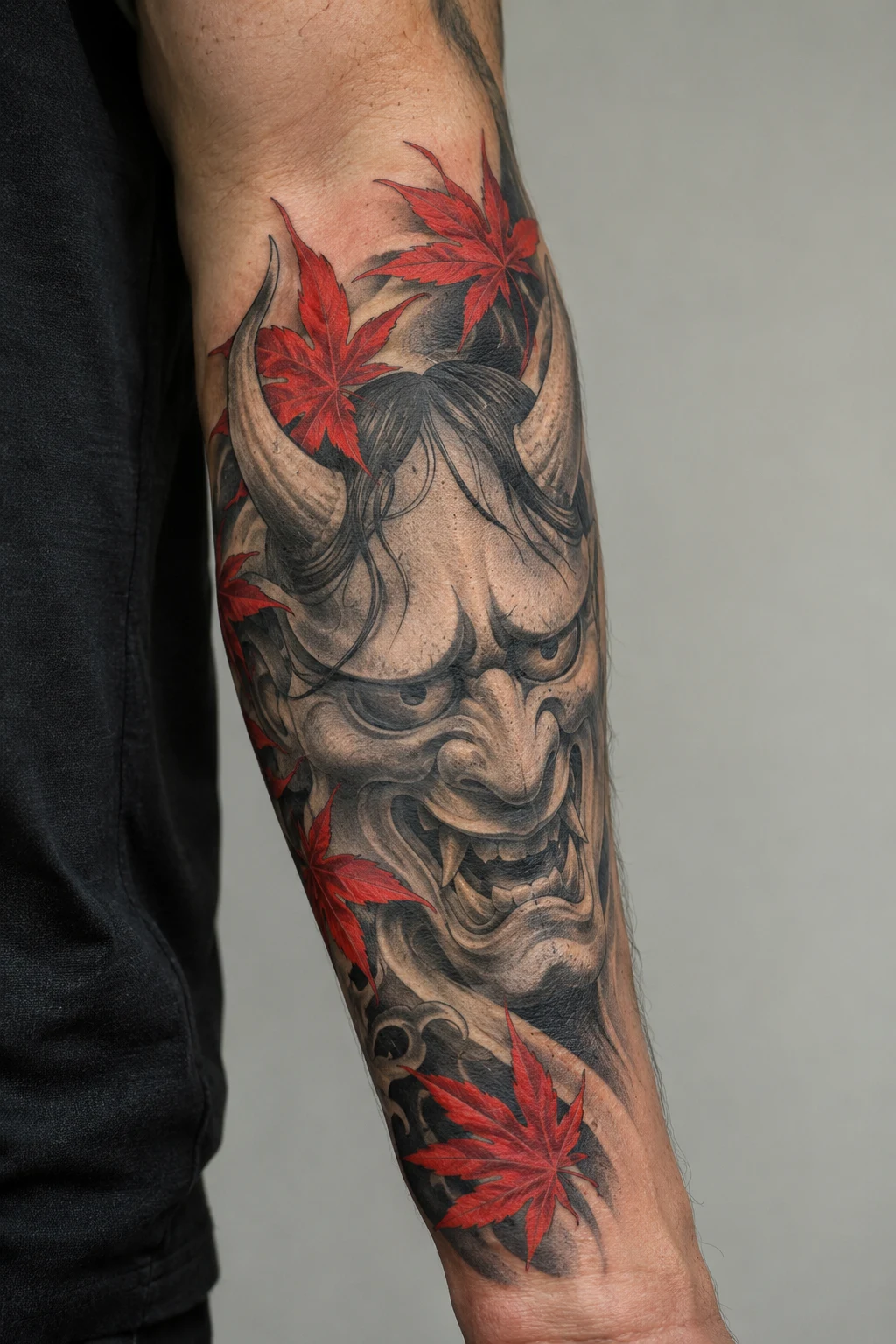
Choose a frontal view for symmetry or a slight turn for a more dimensional composition. Give the horns, eyes, and mouth priority, using a few leaves to introduce color around the face.
9. Samurai Helmet Forearm Tattoo
Dark armor plates frame a compact helmet design.
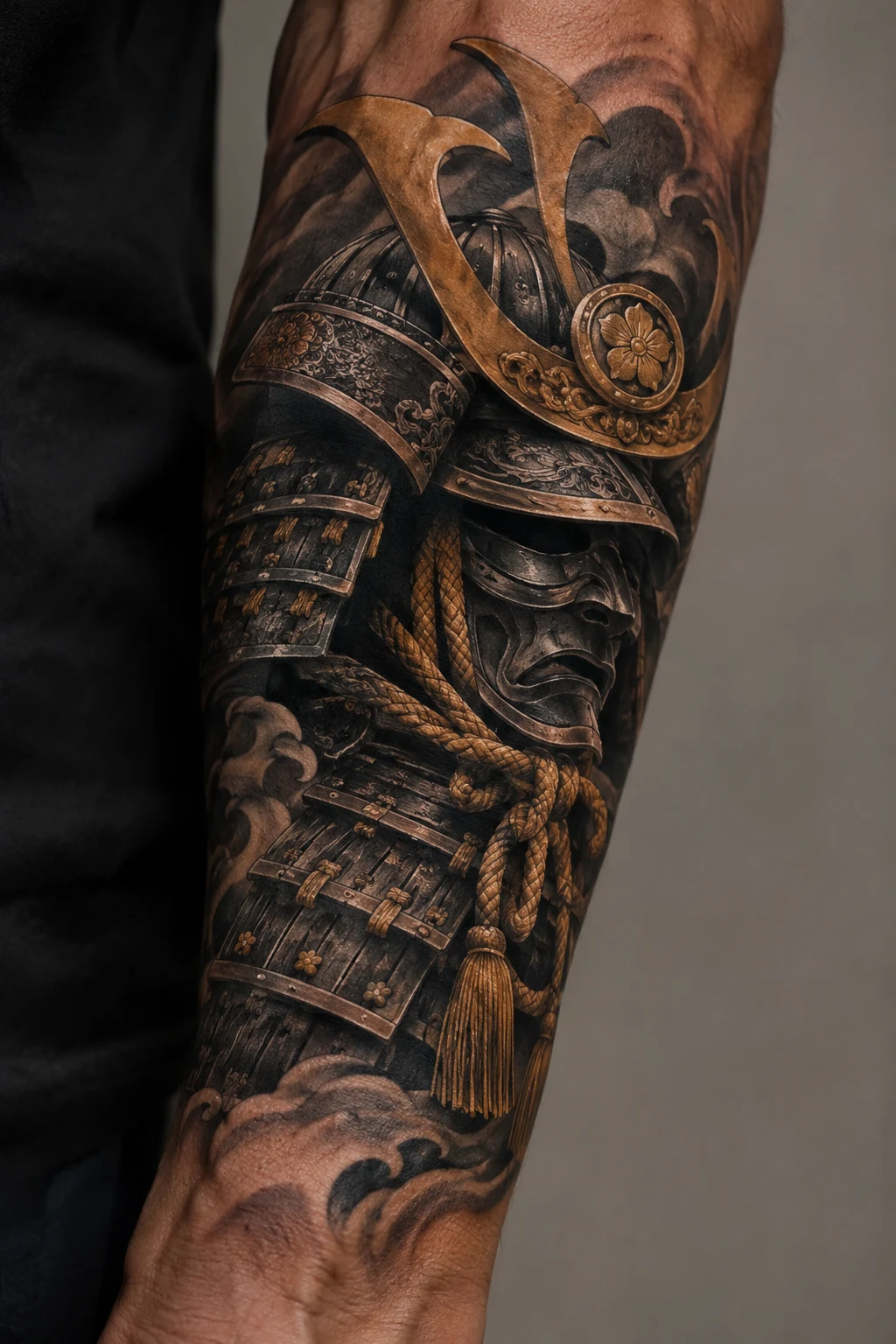
A helmet alone offers a focused alternative to a crowded battle scene. Select a few prominent armor features and let smaller details support them. Muted gold accents can separate overlapping forms without filling every surface with color.
10. Contemporary Kitsune Mask With Red Cord
A pale fox mask trails a narrow red cord.
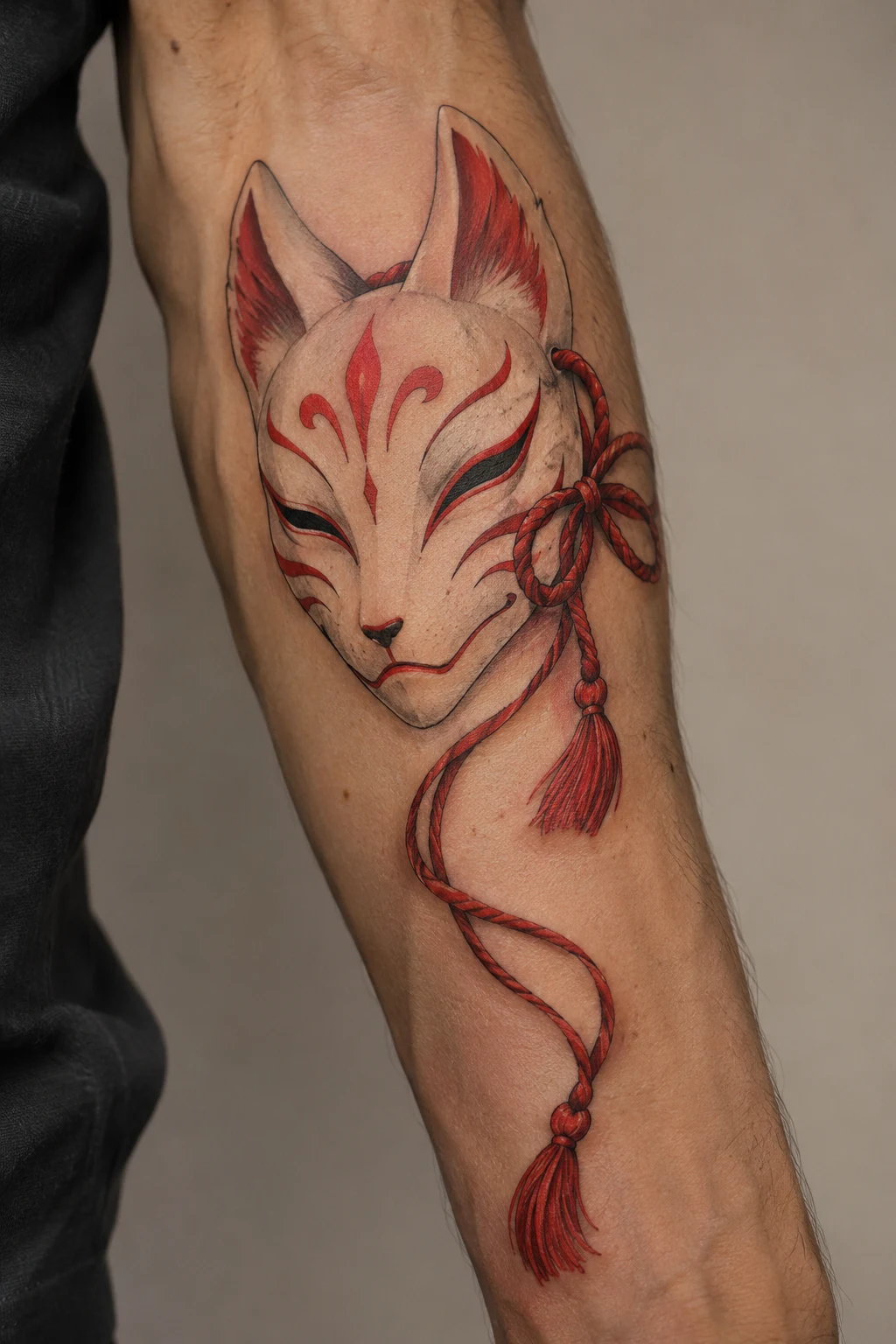
This contemporary Japanese-inspired concept works as a contained centerpiece. A clear outline and selective shading define the pale mask, while the cord extends the composition toward the wrist without requiring a filled background.
Botanicals
11. Peony With Bold Black Shading
A broad pink flower sits against dark leaves.
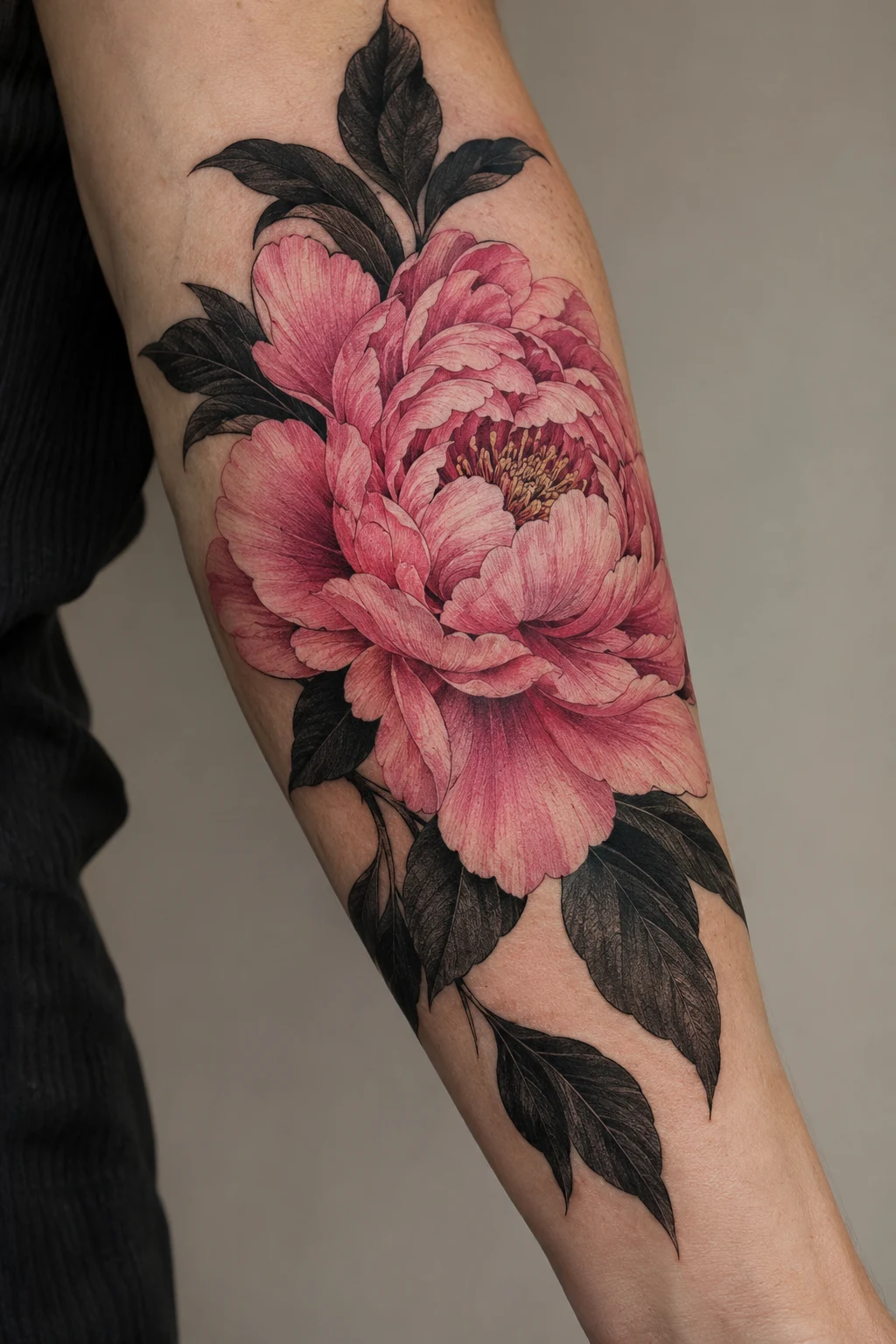
Choose this if you want a floral subject with substantial visual weight. A central bloom emphasizes its layered shape; shifting it slightly around the arm creates an off-center arrangement with room for leaves.
12. Chrysanthemum Along the Inner Forearm
Radiating golden petals become the main subject.
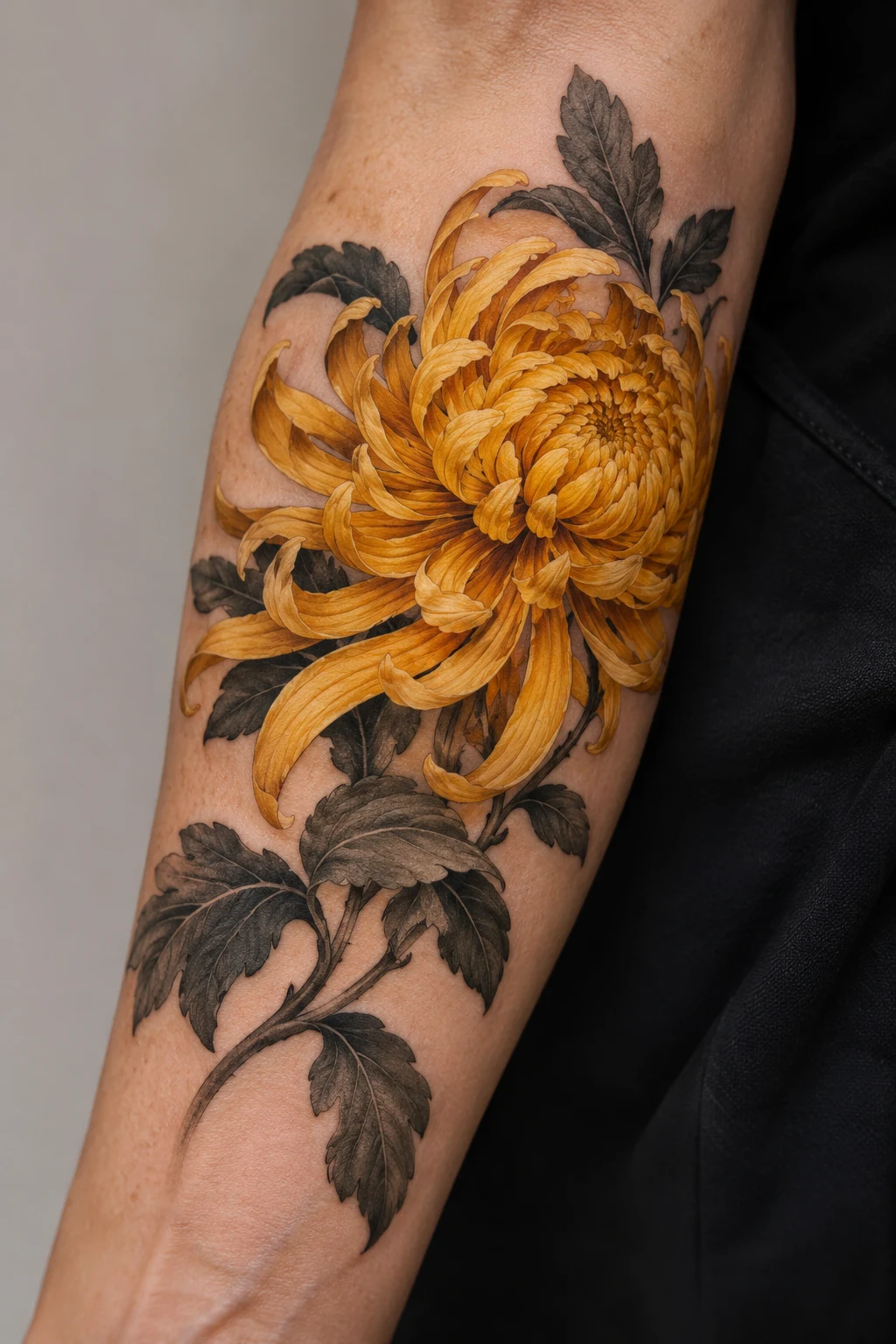
An angled bloom lets the petal pattern follow the forearm’s length. Keep surrounding foliage limited if repeated shapes are the attraction. Discuss scale with the artist so the flower retains clear separation between its layers.
13. Cherry Blossom Branch
Separated blossoms and buds leave open skin visible.
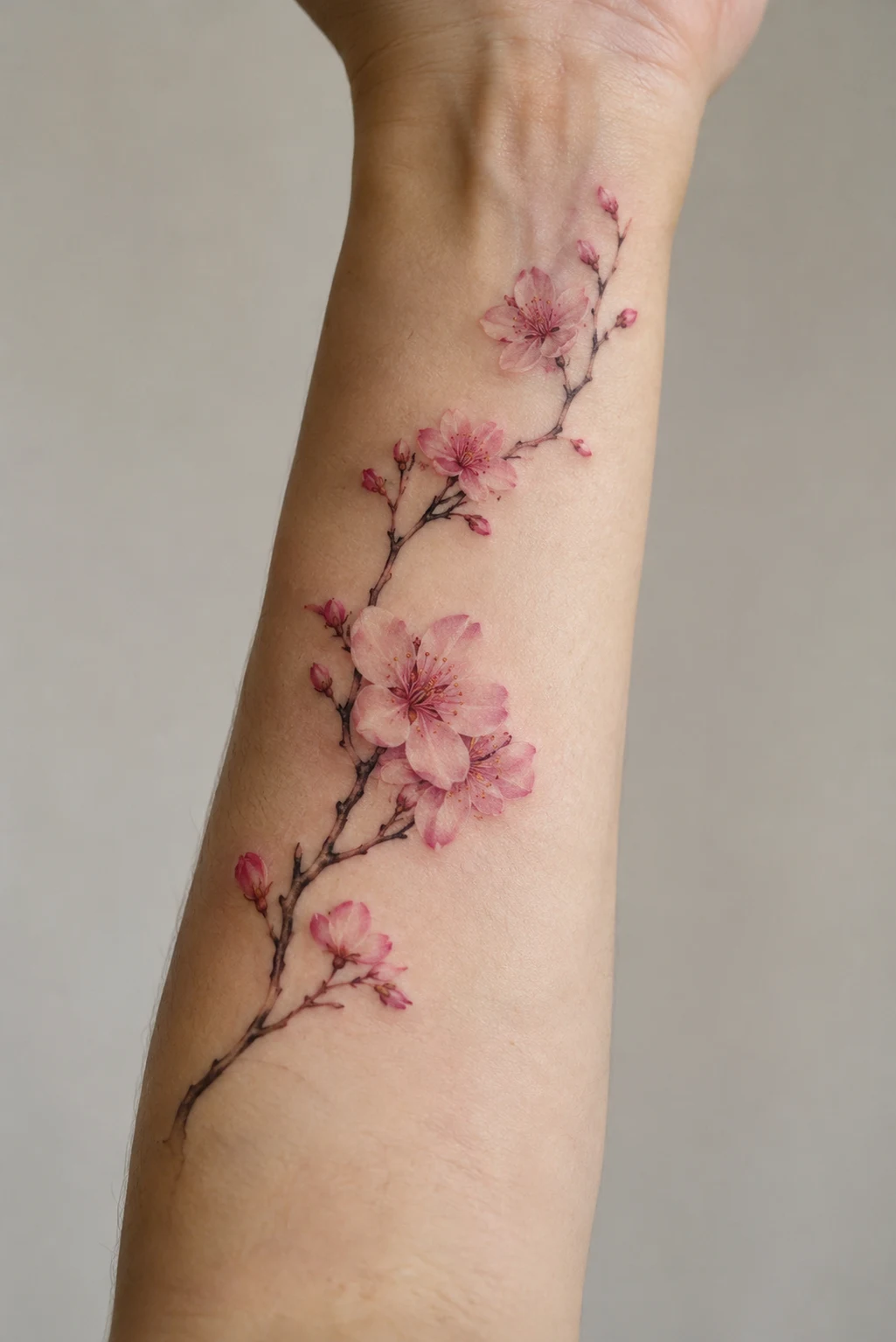
With its asymmetrical branch, this design suits a lighter composition without continuous background shading. Establish its beginning and end first, then distribute flowers unevenly along it. A few buds provide variation without making every gap equally busy.
14. Plum Blossoms on an Angular Branch
Clustered red flowers follow a sharply bending branch.
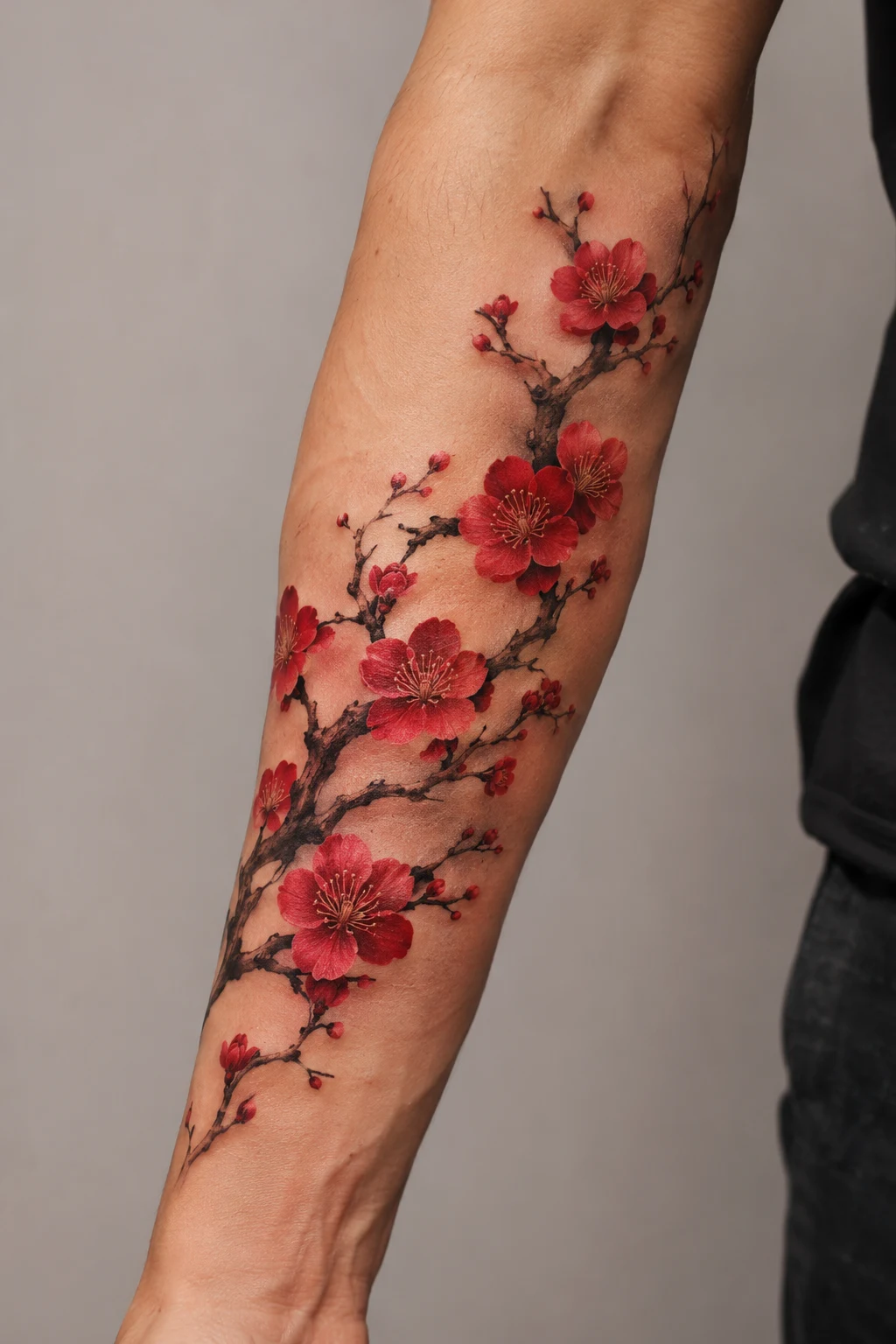
The branch gives this concept a more angular structure than the cherry blossom arrangement. Use accurate botanical references for the flowers, rather than relying on color alone to distinguish them. Vary the clusters around the bends.
15. Maple Leaves in a Flowing Stream
Red and orange leaves drift through narrow currents.
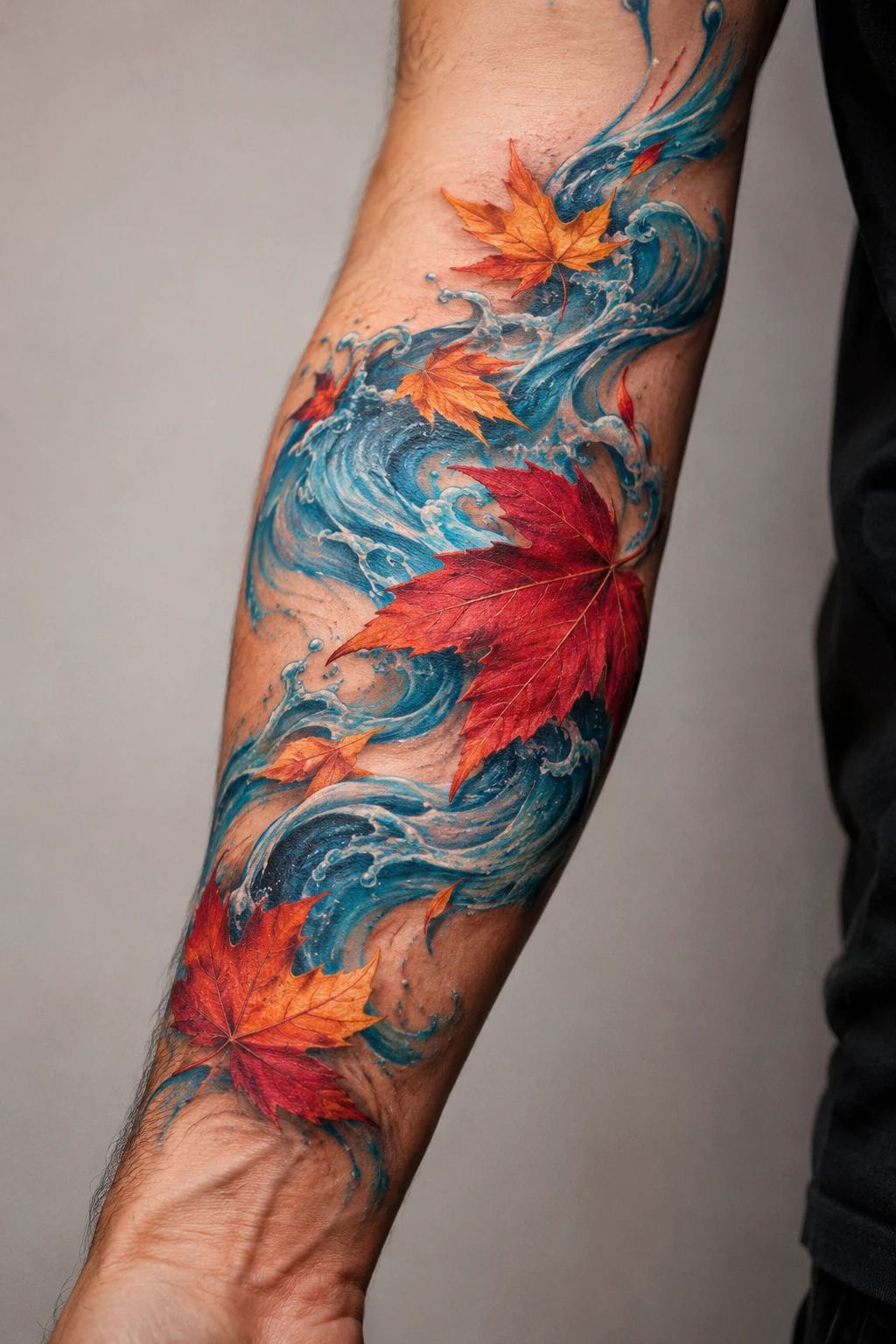
This offers movement without a single large centerpiece. Spread the leaves around the arm for a wrap, or gather them on one surface for a panel. Water connects the separate shapes while leaving gaps between them.
Landscapes and Larger Compositions
16. Japanese Wave Forearm Panel
Curling foam contrasts with blue water and black shading.
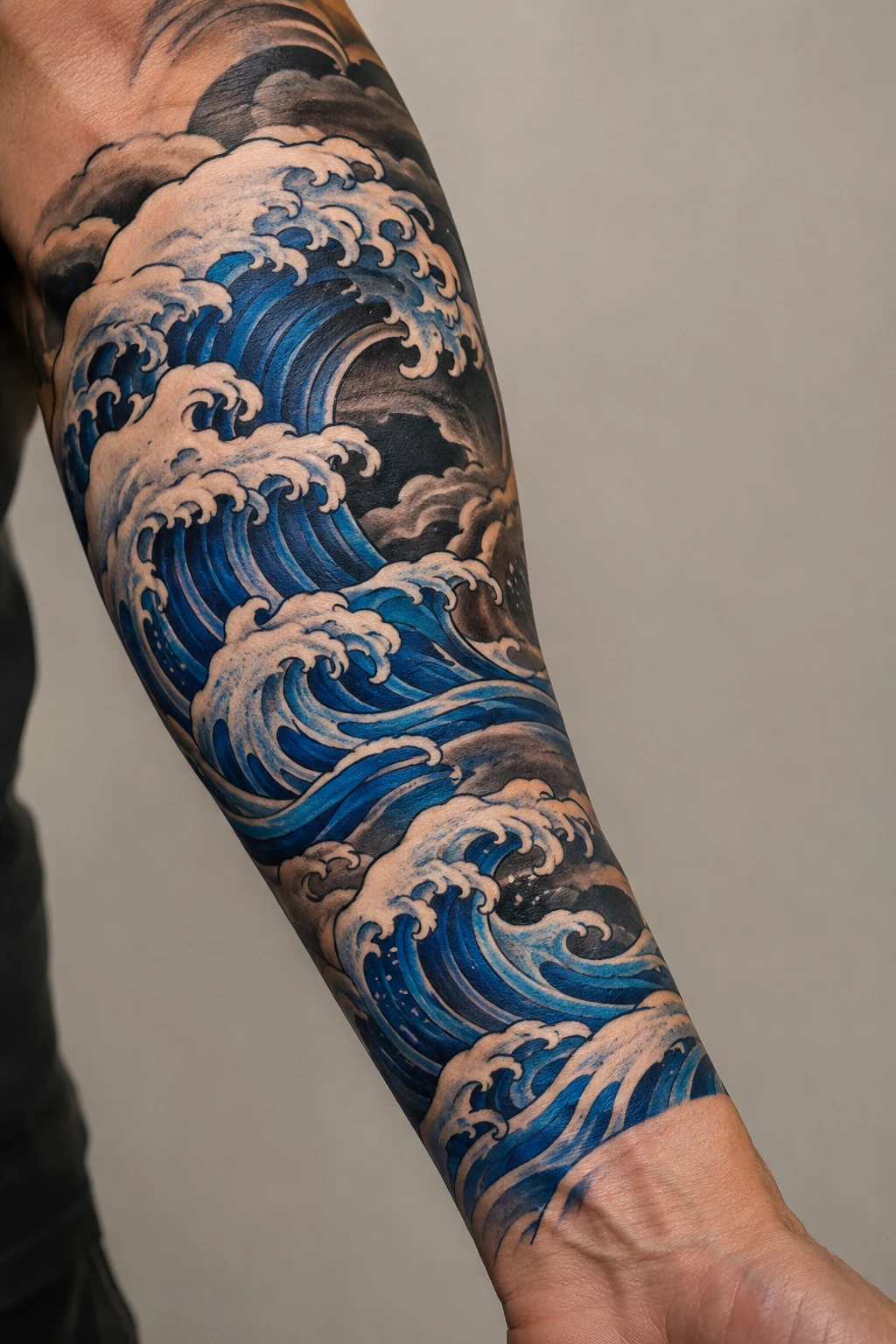
Waves can carry the entire design without an added creature or flower. Decide whether you want one visible panel or movement around the arm. Preserve clear spaces between the foam shapes and darker water.
17. Mount Fuji and a Red Sun
A simple mountain silhouette anchors a compact landscape.
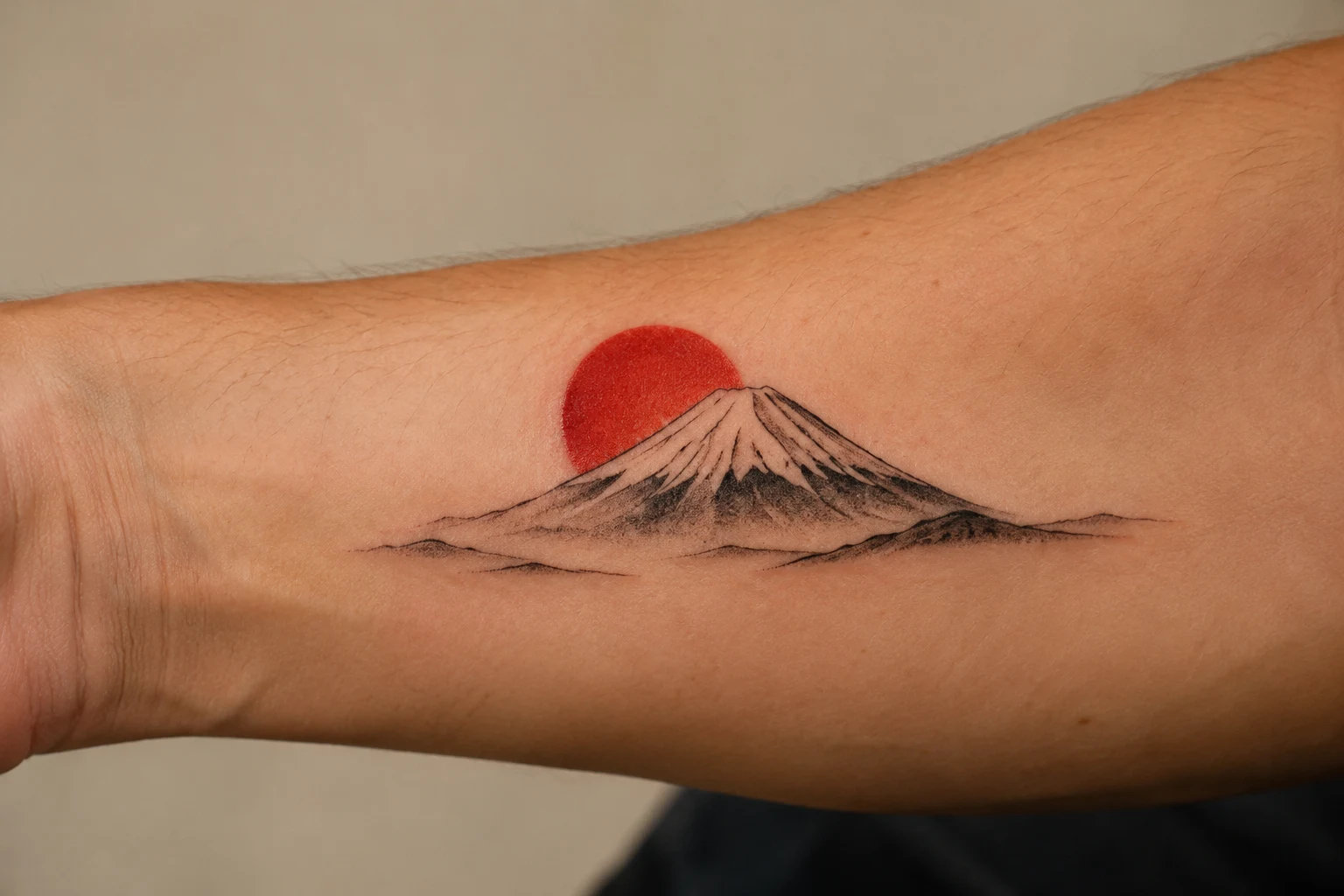
Treat this as a contemporary Japanese-inspired landscape. Keep foothills sparse so the mountain remains prominent. A compact panel suits readers who want a contained scene with visible skin around its edges.
18. Black and Grey Cloud Forearm Wrap
Layered clouds and wind bars form an atmospheric wrap.
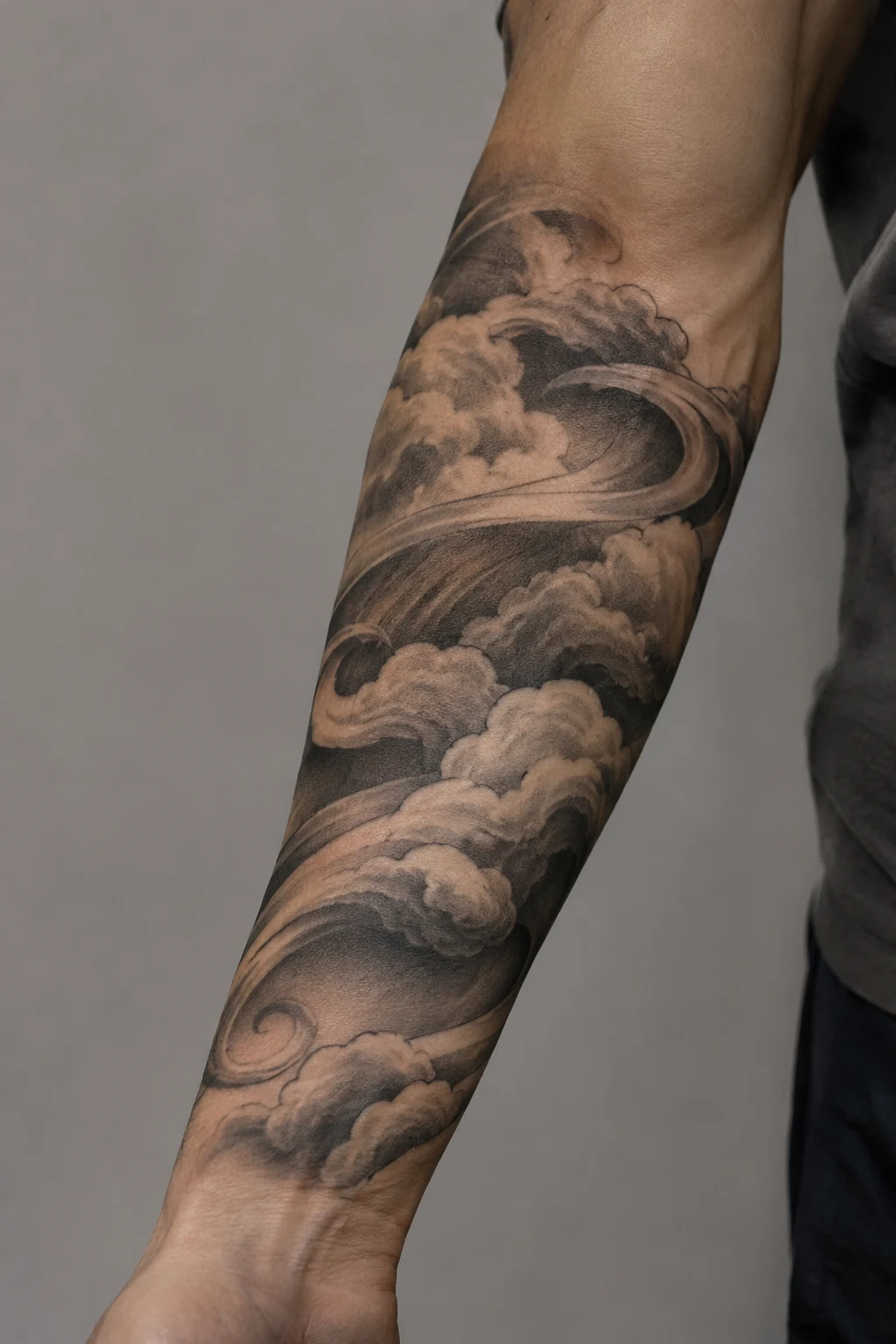
Without a figurative centerpiece, the balance of dark shading and open skin carries the design. Plan the edges deliberately: a defined boundary gives a finished endpoint, while an extendable arrangement leaves options for later work.
19. Blackwork Dragon Head Forearm Panel
Sweeping whiskers frame a close view of the dragon’s face.
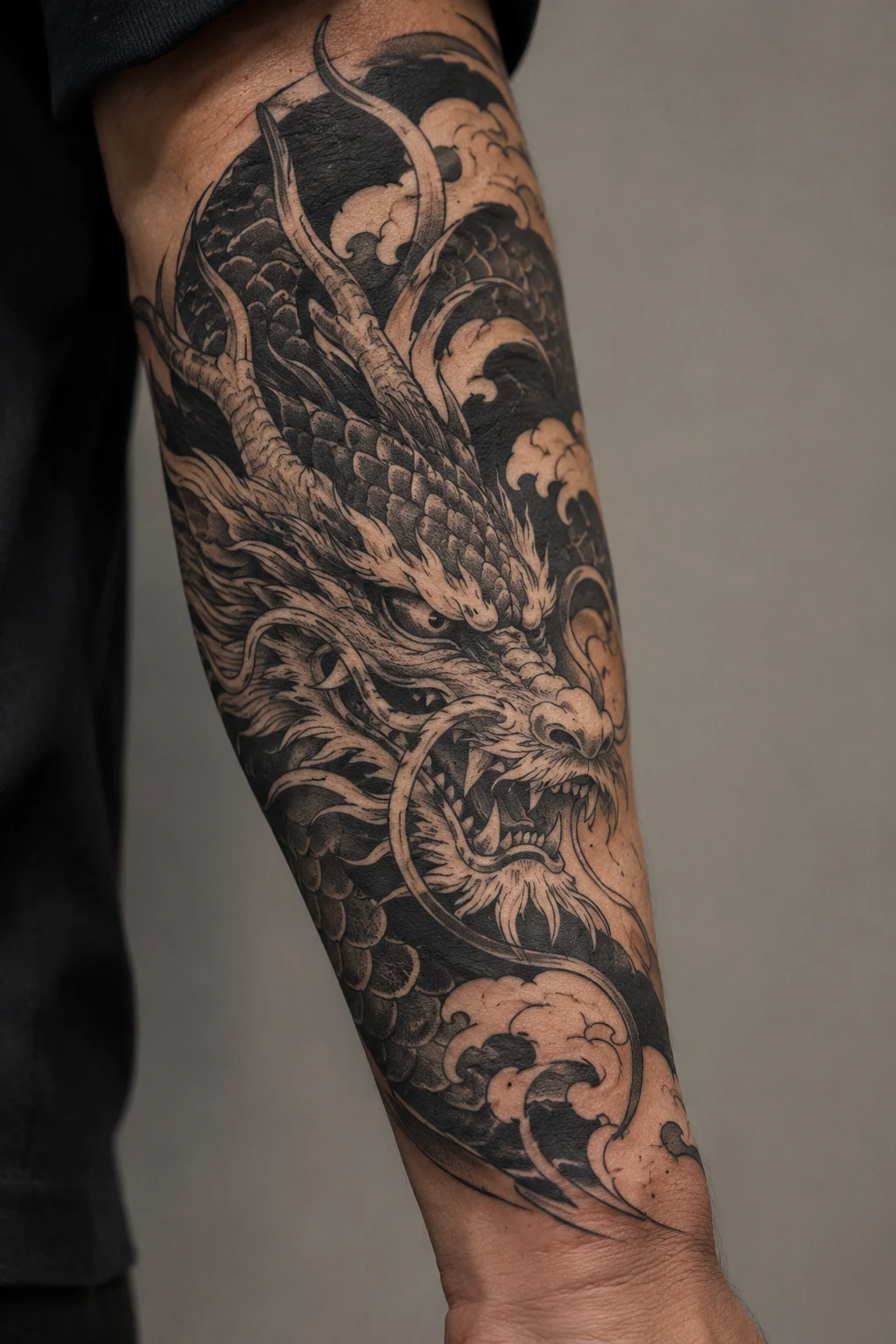
If facial expression matters most to you, focus on the head rather than a full winding dragon. Let the eyes, mouth, and whiskers lead. Surrounding black shapes should support those features without merging them into one dark area.
20. Japanese Forearm Tattoos With a Connected Koi-and-Peony Sleeve
A koi and peony share one connected water background.
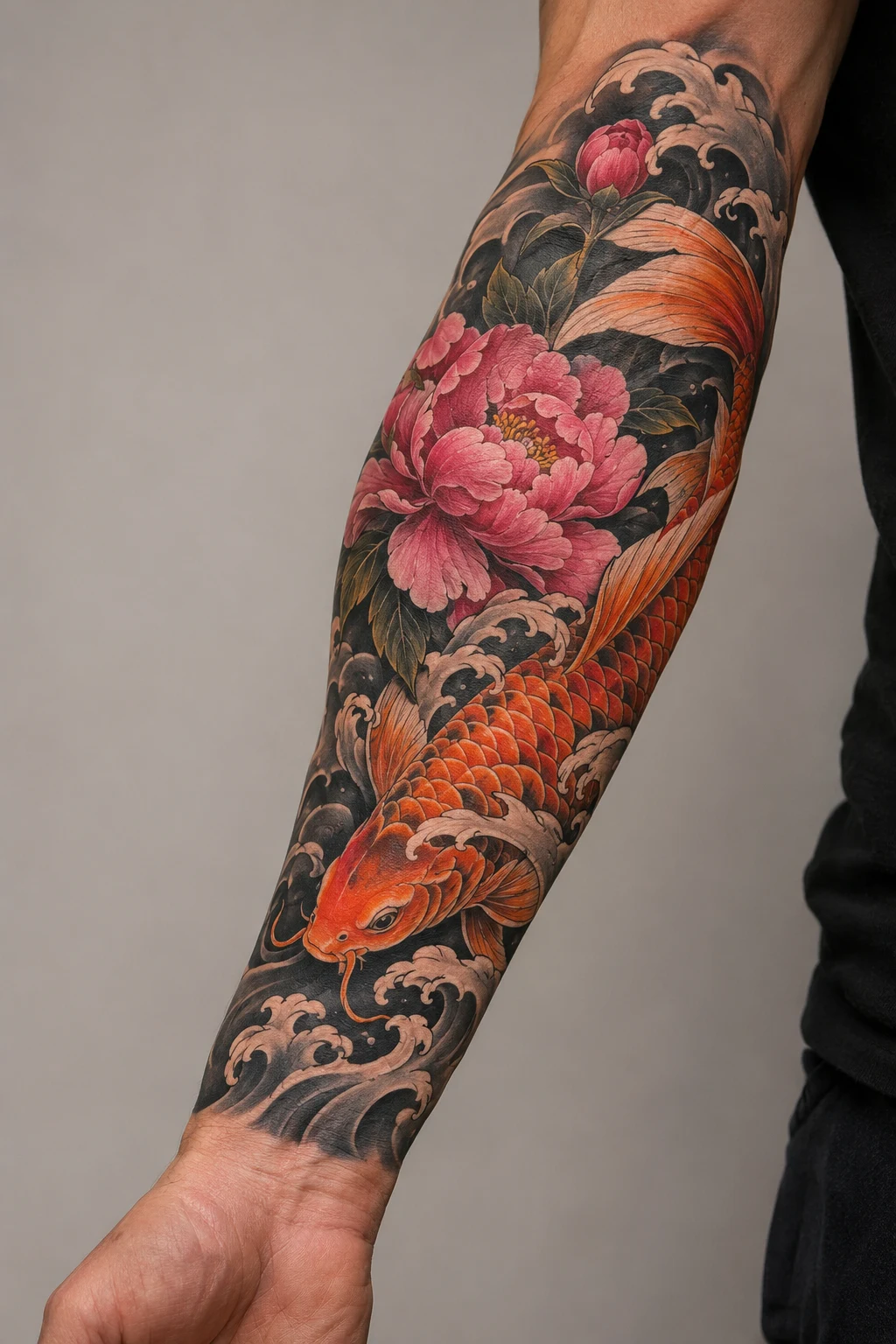
This wrist-to-elbow concept calls for planning the whole forearm together. Decide which subject leads, then use water to connect the remaining space. Discuss wrist and elbow boundaries alongside any intention to extend the tattoo later.
Narrowing Your Choices
Shortlist one main motif, a color approach, and a coverage level. Bring two or three references to your artist and identify the specific features you like: an open branch, a winding silhouette, or a dark background. For a broader placement comparison, explore these forearm tattoos.

