
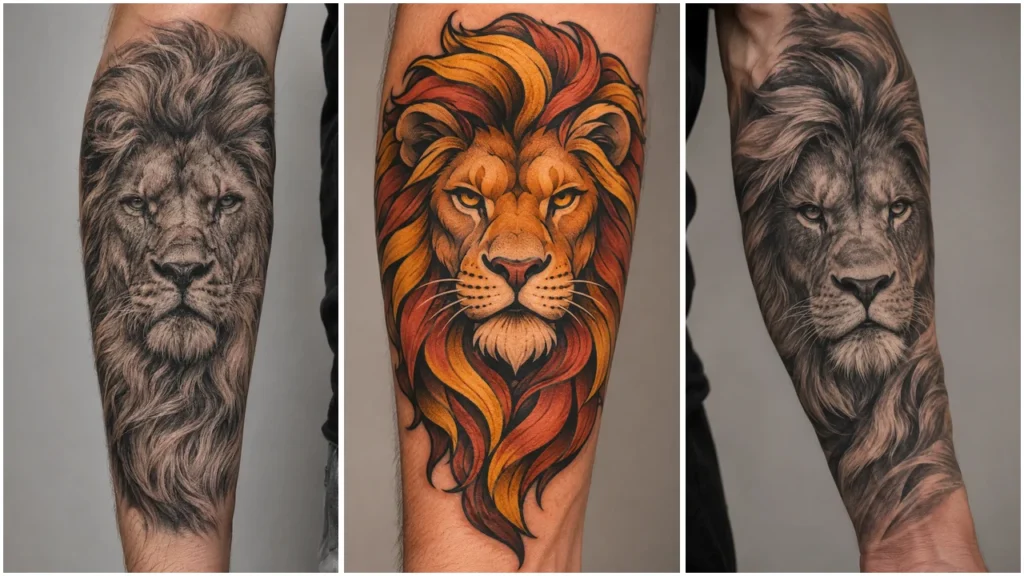
Lion forearm tattoos can feature a direct gaze, a few clean outlines, or a mane that wraps around the arm. These 20 design concepts help you compare expressions, styles, and layouts before choosing a direction. They’re ideas to discuss with an artist, rather than examples of client results.
As you browse, notice whether you prefer the lion’s face alone or a composition with flowers, color, or scenery. That choice can help narrow your shortlist.
Realistic Lion Forearm Tattoos
These five portrait concepts change the mood through expression, viewpoint, and framing.
1. Front-Facing Lion Portrait
A direct gaze framed by a full mane.
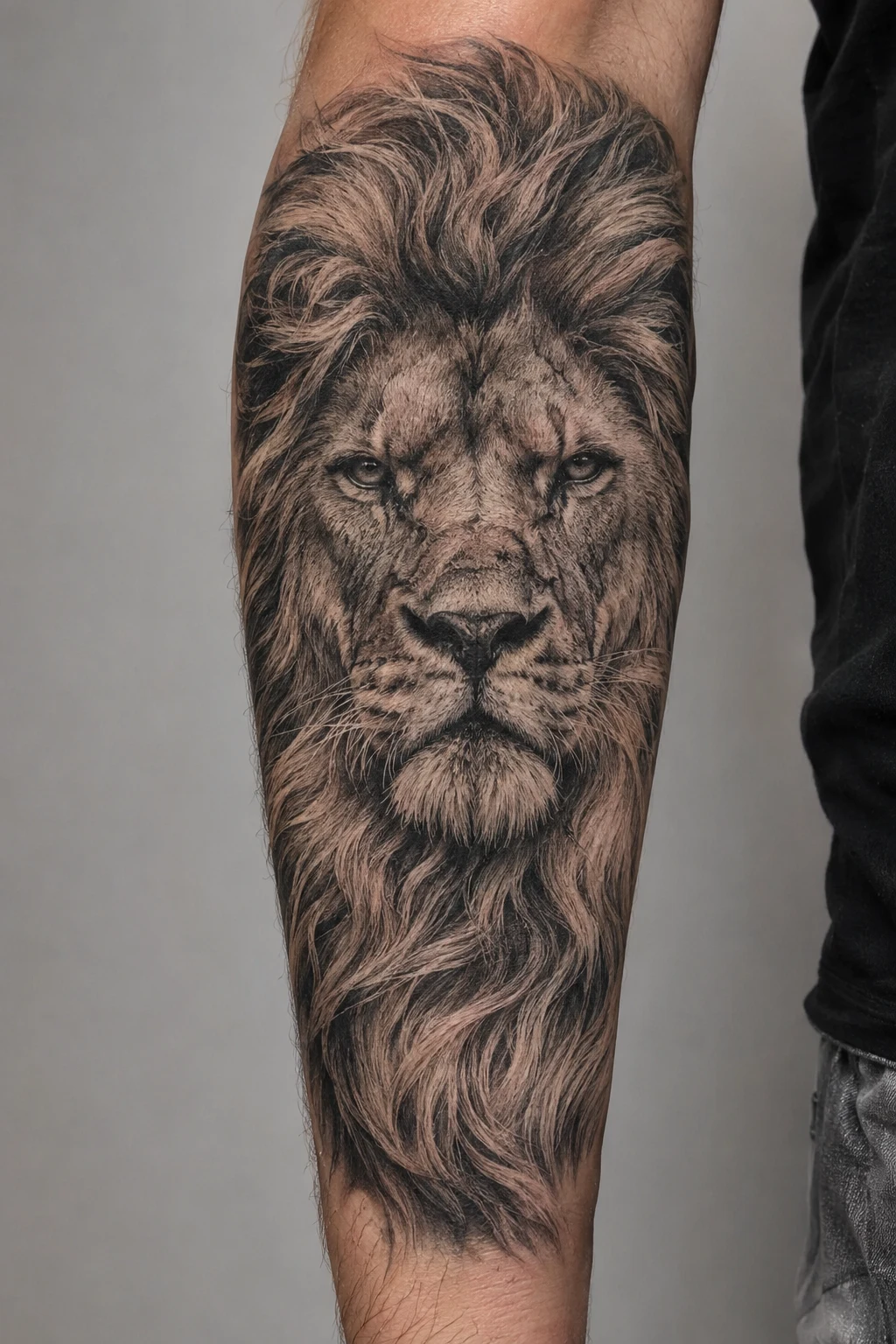
Choose this composition if the face should command attention. A centered nose and balanced mane give the portrait a clear structure, while the eyes set its mood.
2. Lion in Side Profile
A quiet profile with a flowing mane.
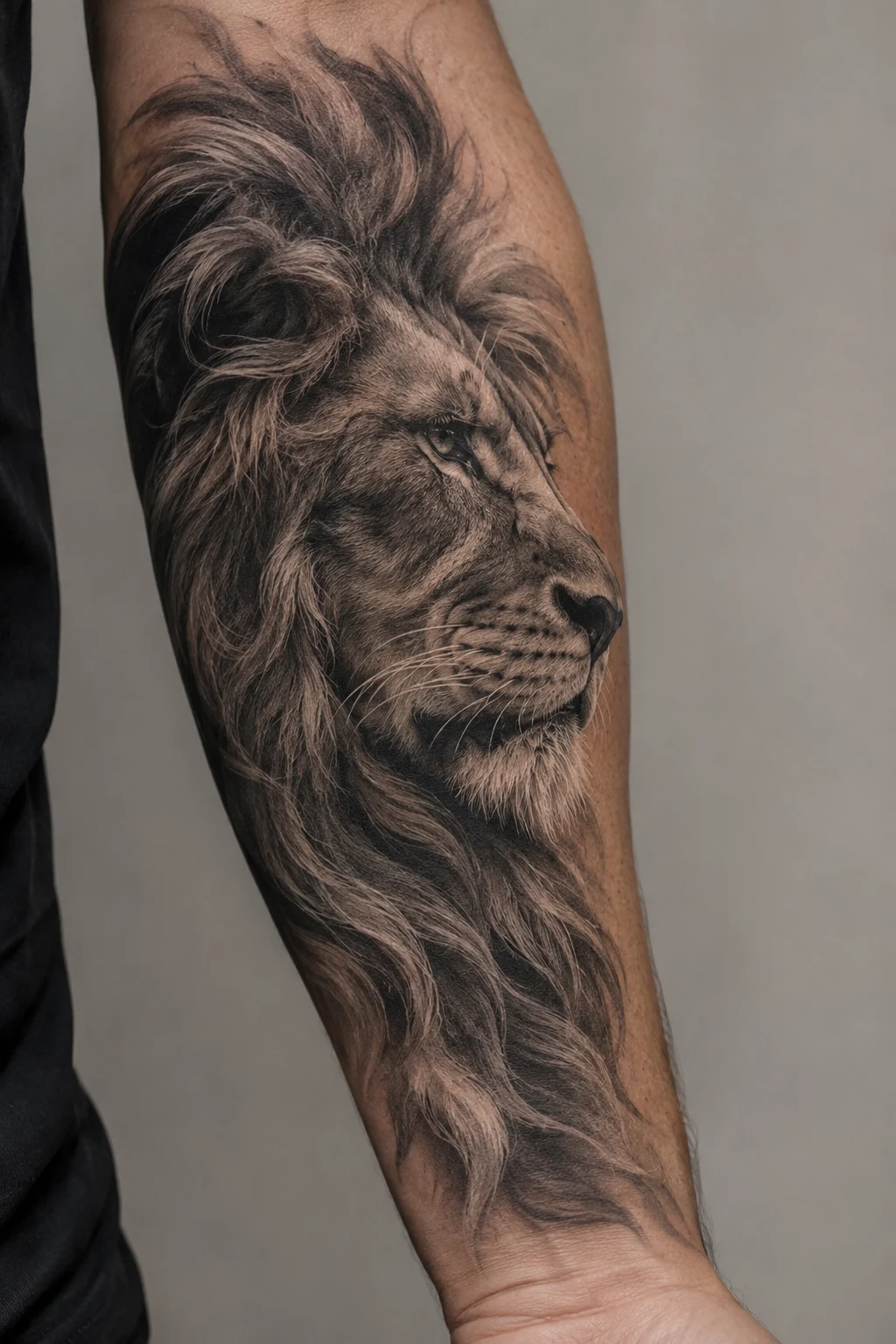
The projecting muzzle creates a distinct silhouette. Letting the mane extend toward the wrist gives the design a lengthwise flow suited to readers who prefer an off-center portrait.
3. Roaring Lion
An open mouth and an intense expression.
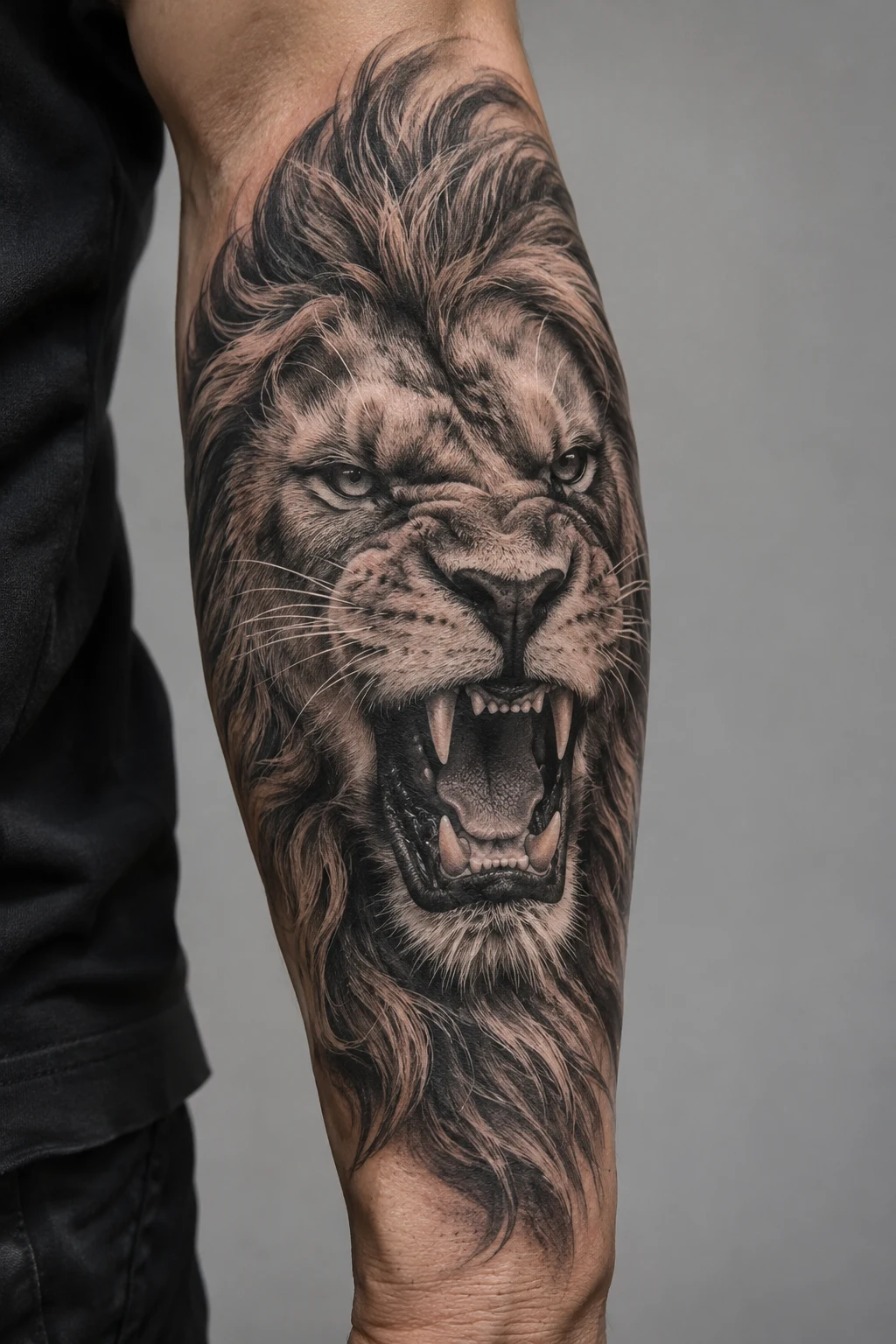
Visible teeth and a creased muzzle make the roar the main feature. Keep surrounding elements sparse if you want that expression to remain the focus.
4. Close-Cropped Lion Eyes
A narrow study of eyes and brows.
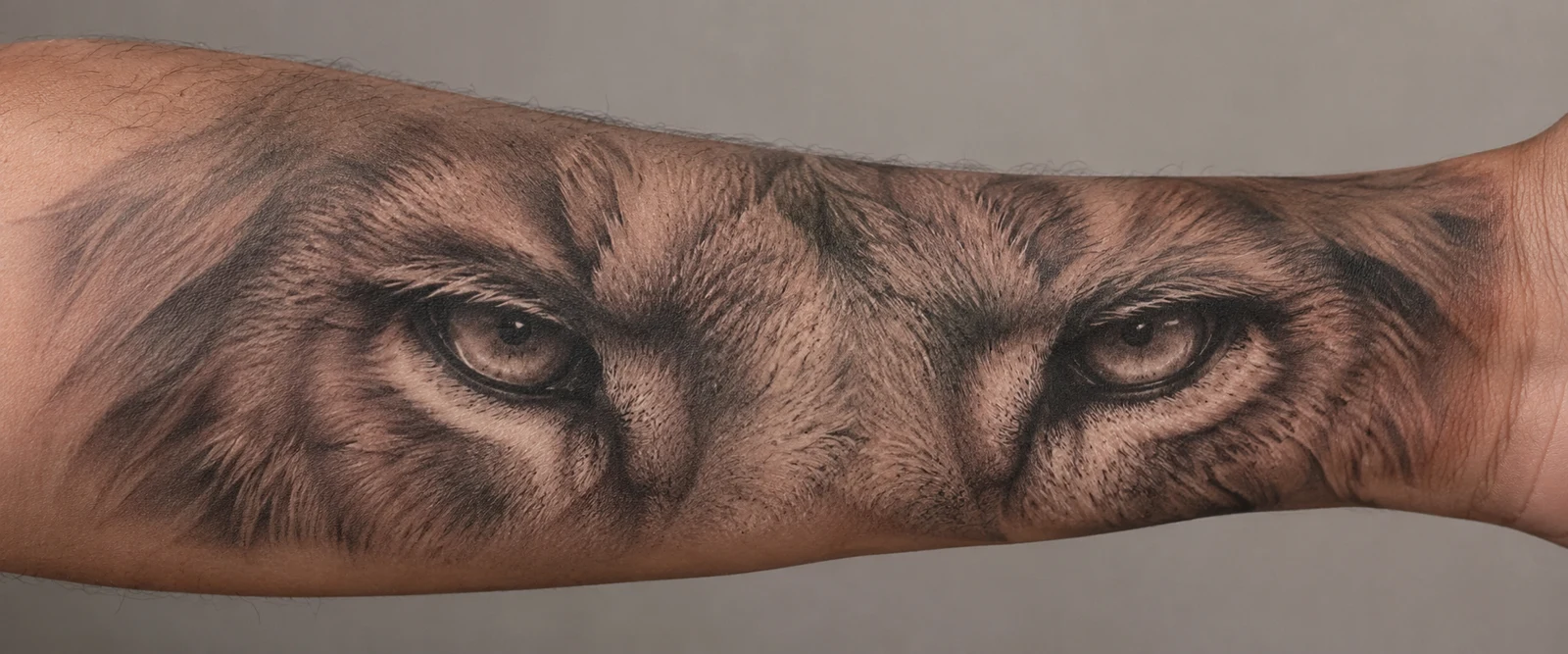
This crop leaves out most of the mane and muzzle. It suits someone drawn to a concentrated gaze; discuss how wide the crop should extend across the arm.
5. Lion and Cub Portrait
Two faces arranged along the forearm.
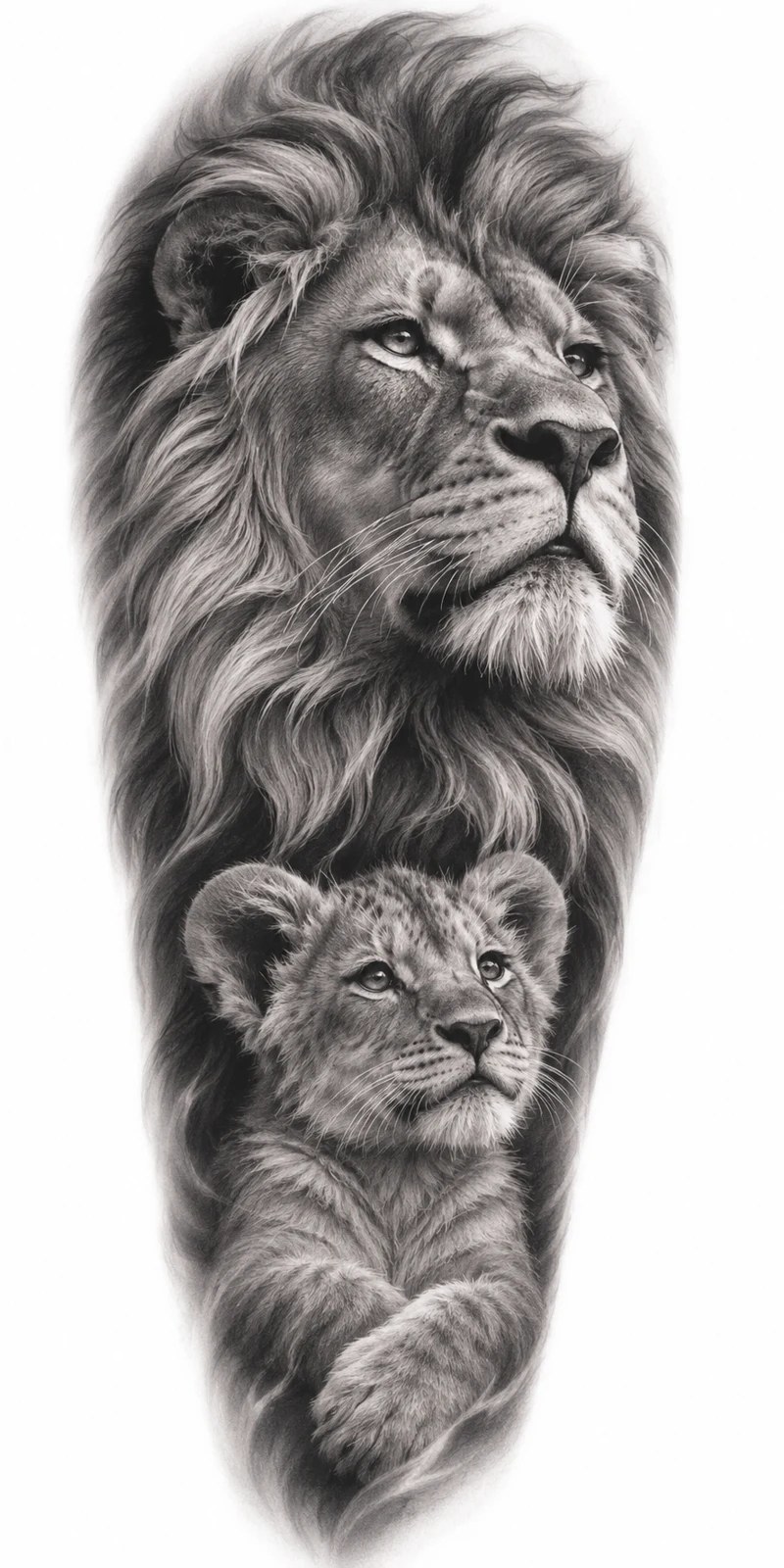
Stacking the portraits gives each face its own space. You might choose the pairing for a personal family connection, though that interpretation is yours to give it.
Linework and Graphic Styles
These designs build the lion from outlines, angular shapes, dots, or solid black areas.
6. Minimal Lion Outline
A simplified face with open skin around it.
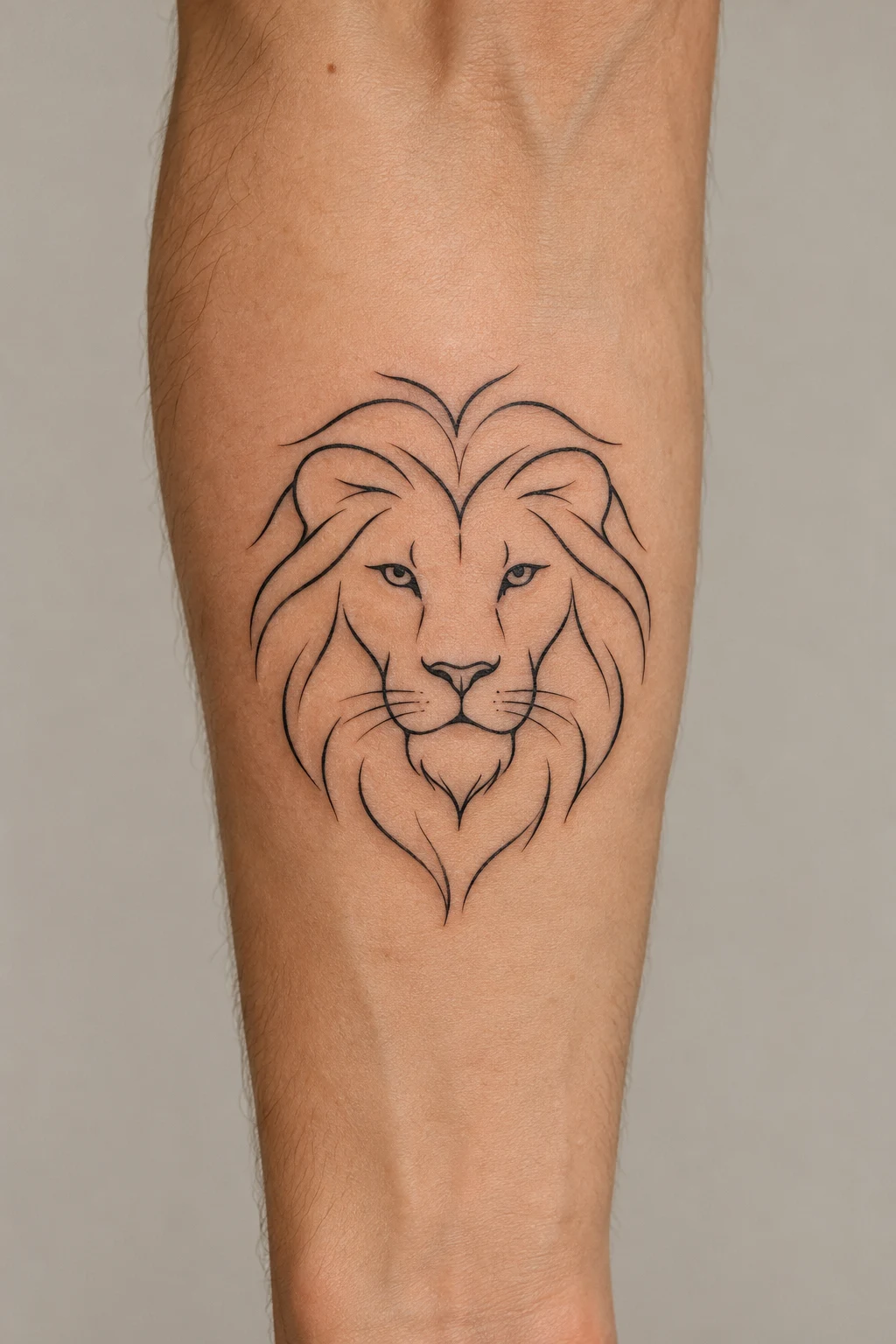
A few deliberate contours suggest the eyes, muzzle, and mane. Choose this direction if you prefer limited detail, and ask your artist which features to retain at your intended size.
7. Geometric Lion Head
An angular face built from polygons.
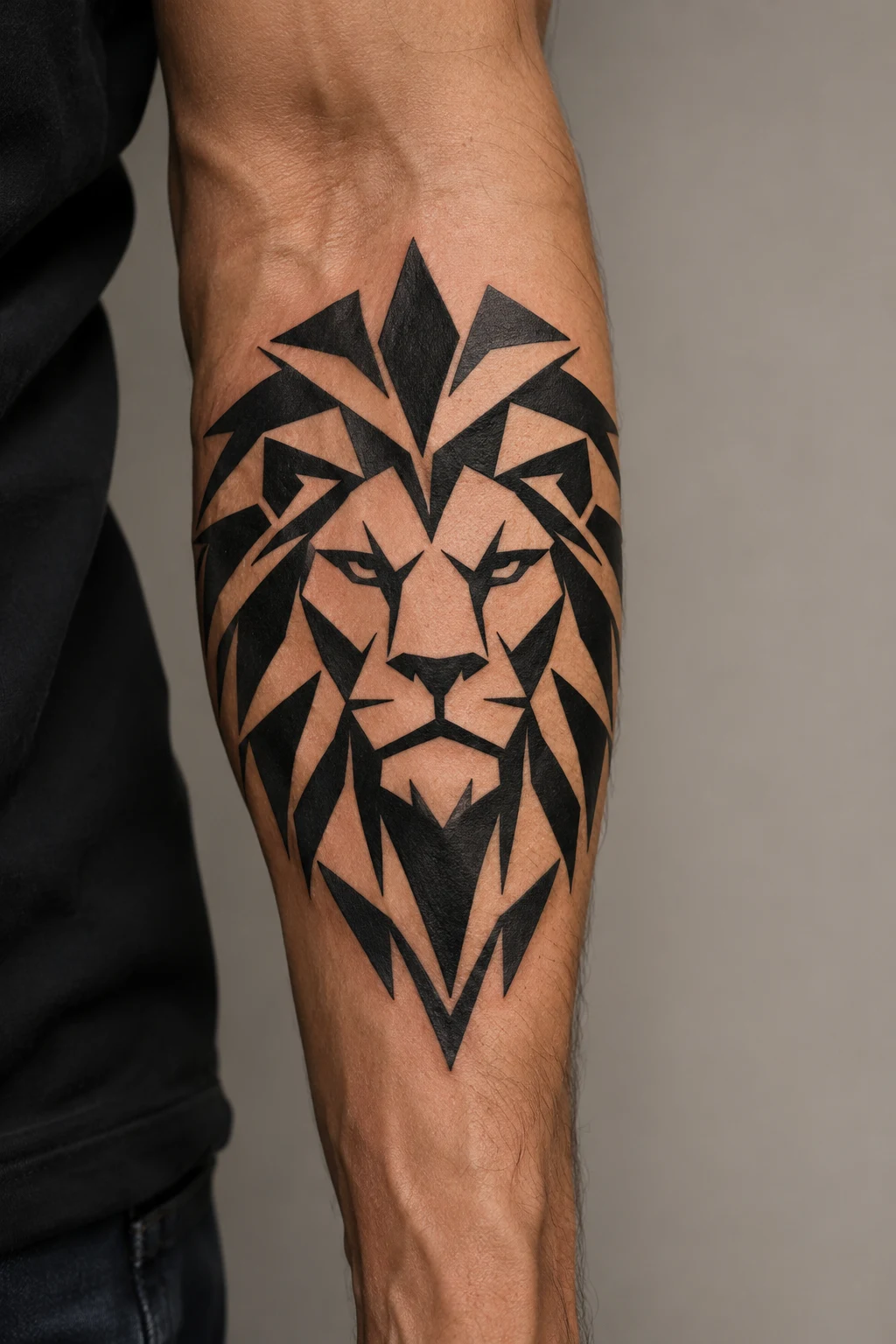
Straight edges replace the curves of fur and facial shading. The repeated shapes suit readers who like a structured, abstract interpretation with a balanced front-facing layout.
8. Half-Realistic, Half-Geometric Lion
One face divided between two styles.
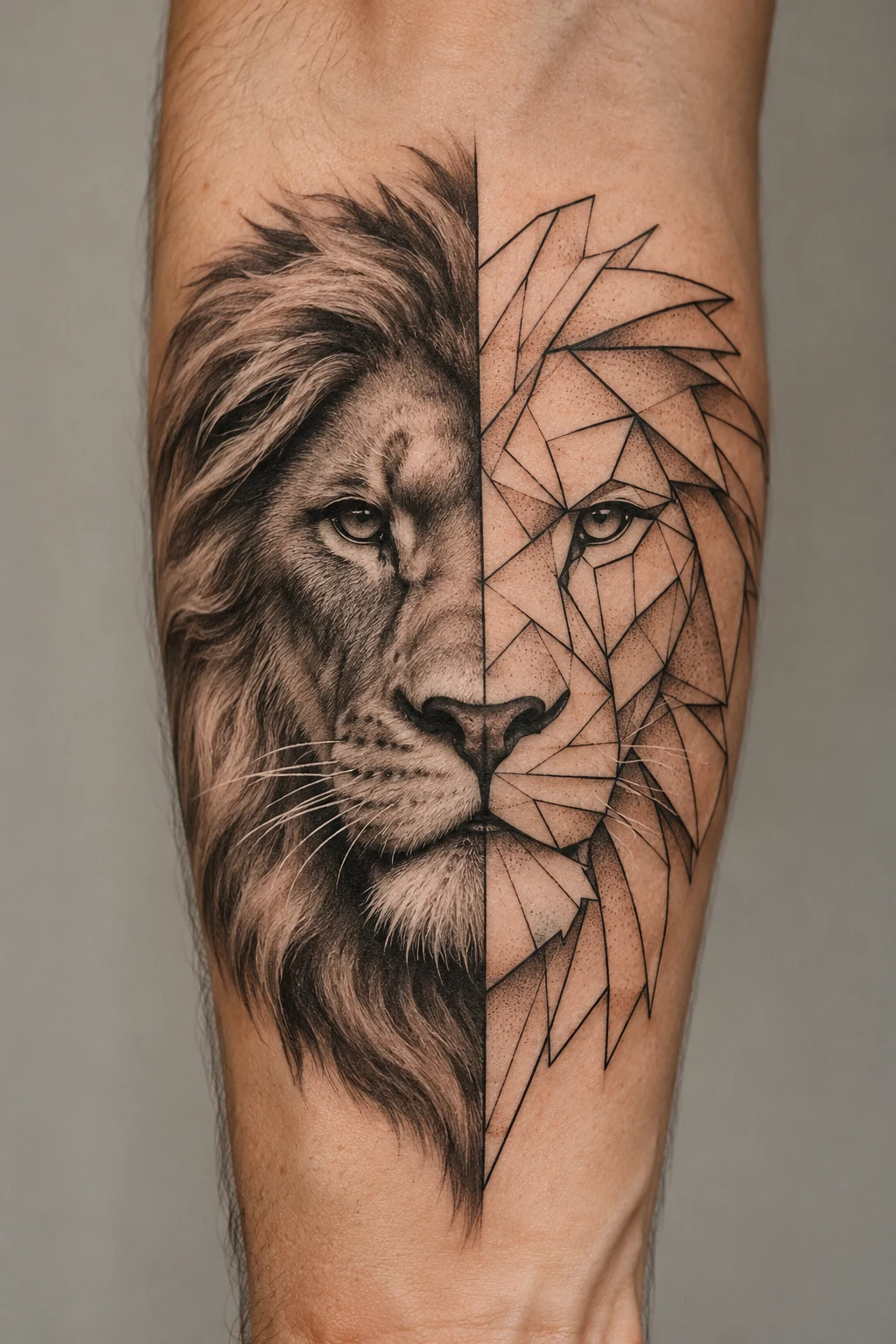
One side carries shaded fur; the other uses angular lines. Aligning the eyes and muzzle across the division helps connect the contrasting treatments into a single portrait.
9. Dotwork Lion
Stippled texture with an open, segmented mane.
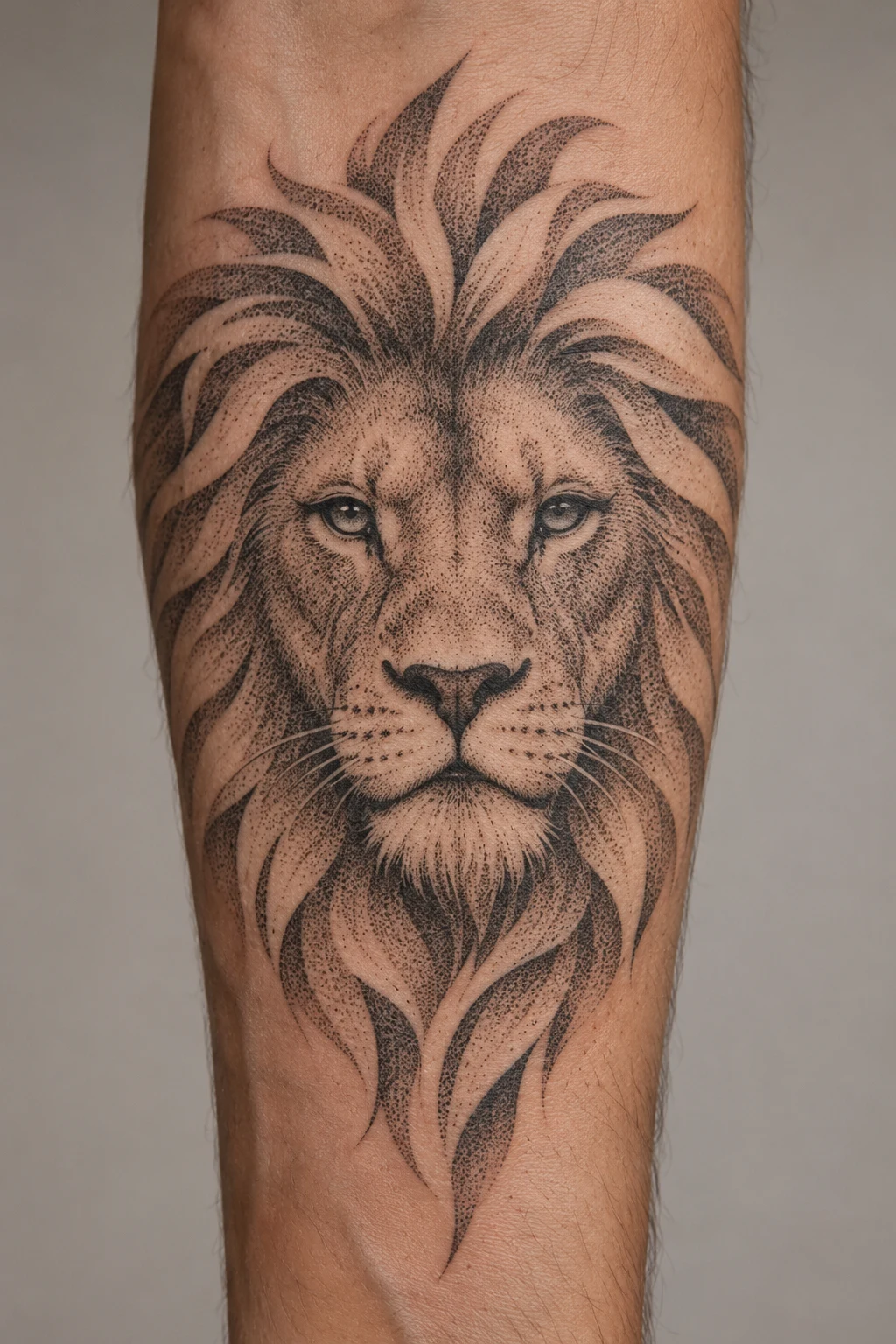
Visible dots create the shading instead of smooth grey transitions. This approach suits readers who enjoy texture, especially when open areas separate the sections of the mane.
10. Blackwork Lion With Negative Space
Solid mane shapes divided by skin breaks.
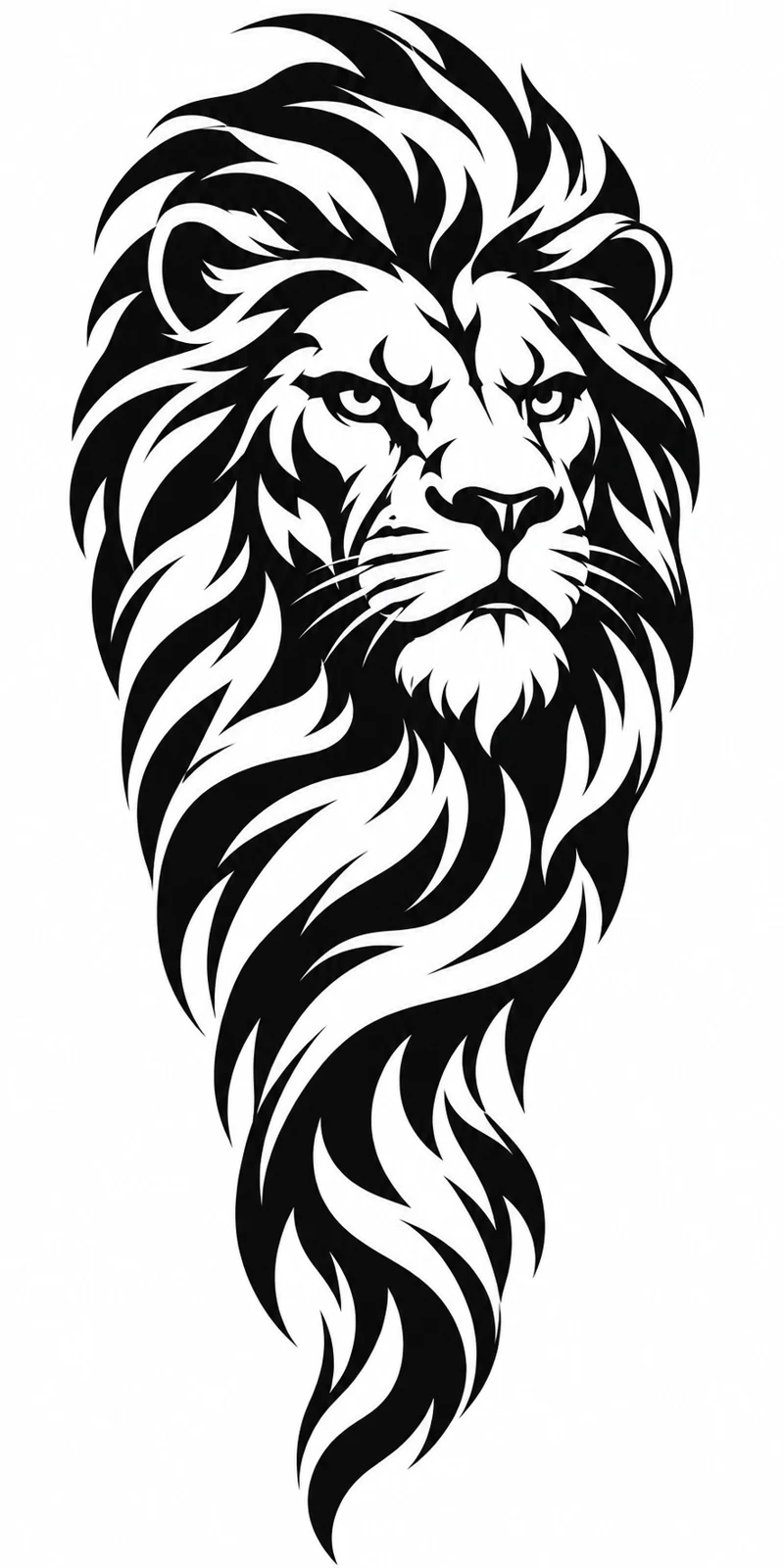
Broad black sections give this lion a graphic presence. Uninked spaces define the features, making it a useful direction if you prefer strong shapes over fine fur detail.
Color and Decorative Compositions
Color, flowers, foliage, and ornament give these five lions a different visual setting.
11. Neo-Traditional Lion
A warm palette inside pronounced outlines.
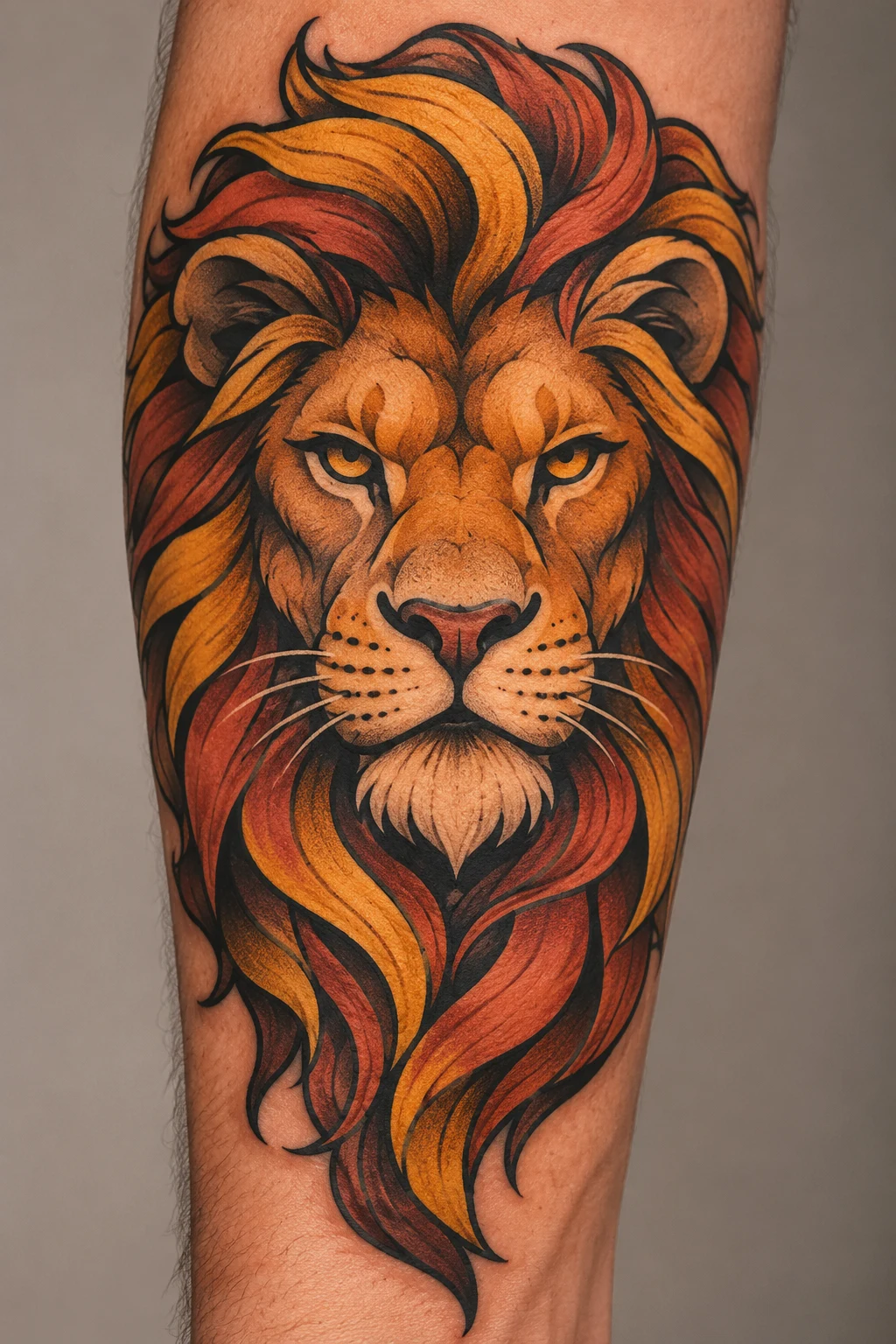
Curved mane sections and a stylized face create a decorative composition. Gold, rust, and black keep the palette focused for someone who wants color with clearly defined shapes.
12. Lion With Watercolor Accents
Loose color washes around a defined face.
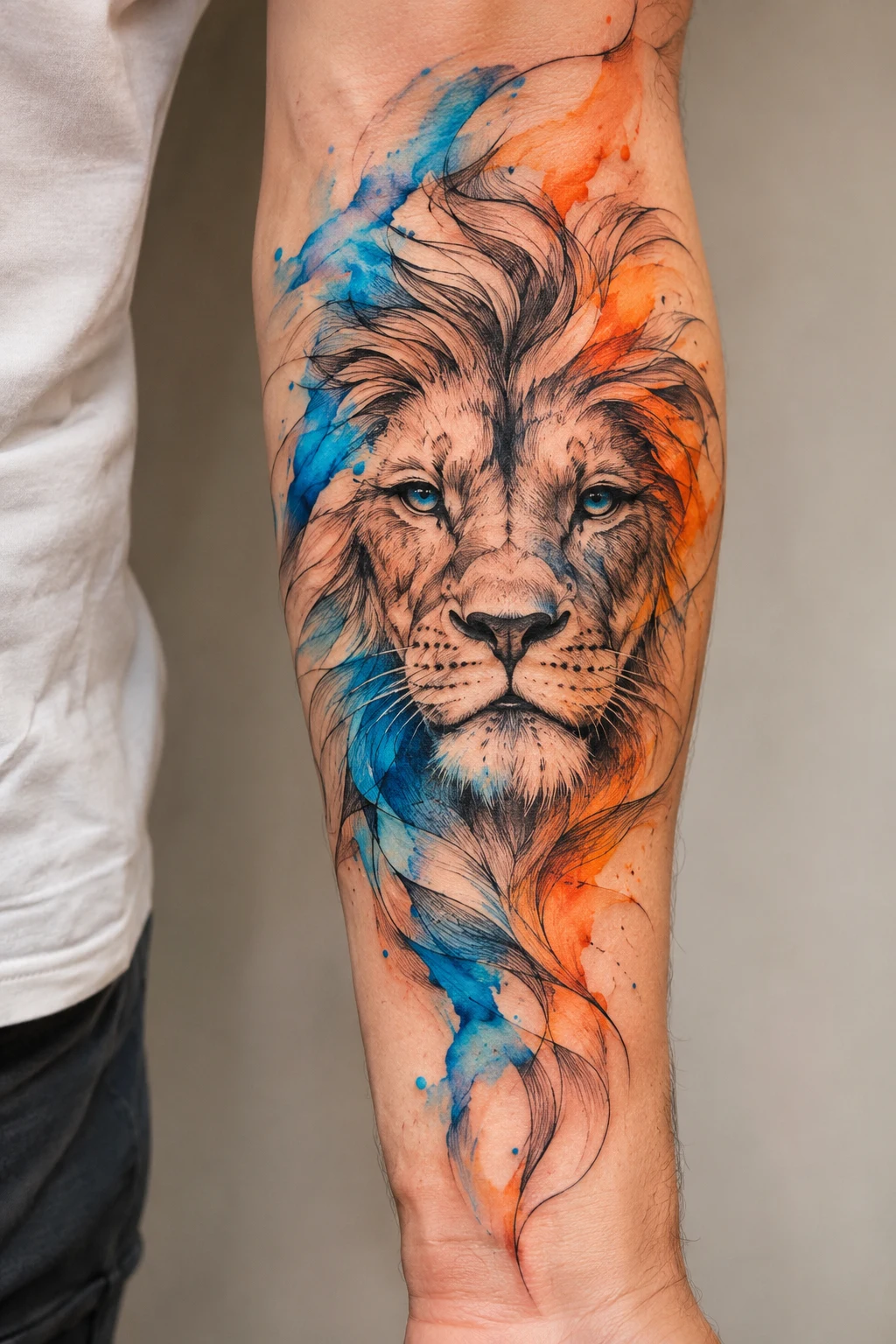
Blue and orange accents extend beyond the lion’s outline. Choose this concept if you want a painterly surround while keeping the central face recognizable through black linework.
13. Lion Framed by Roses
Two roses surrounding a shaded portrait.
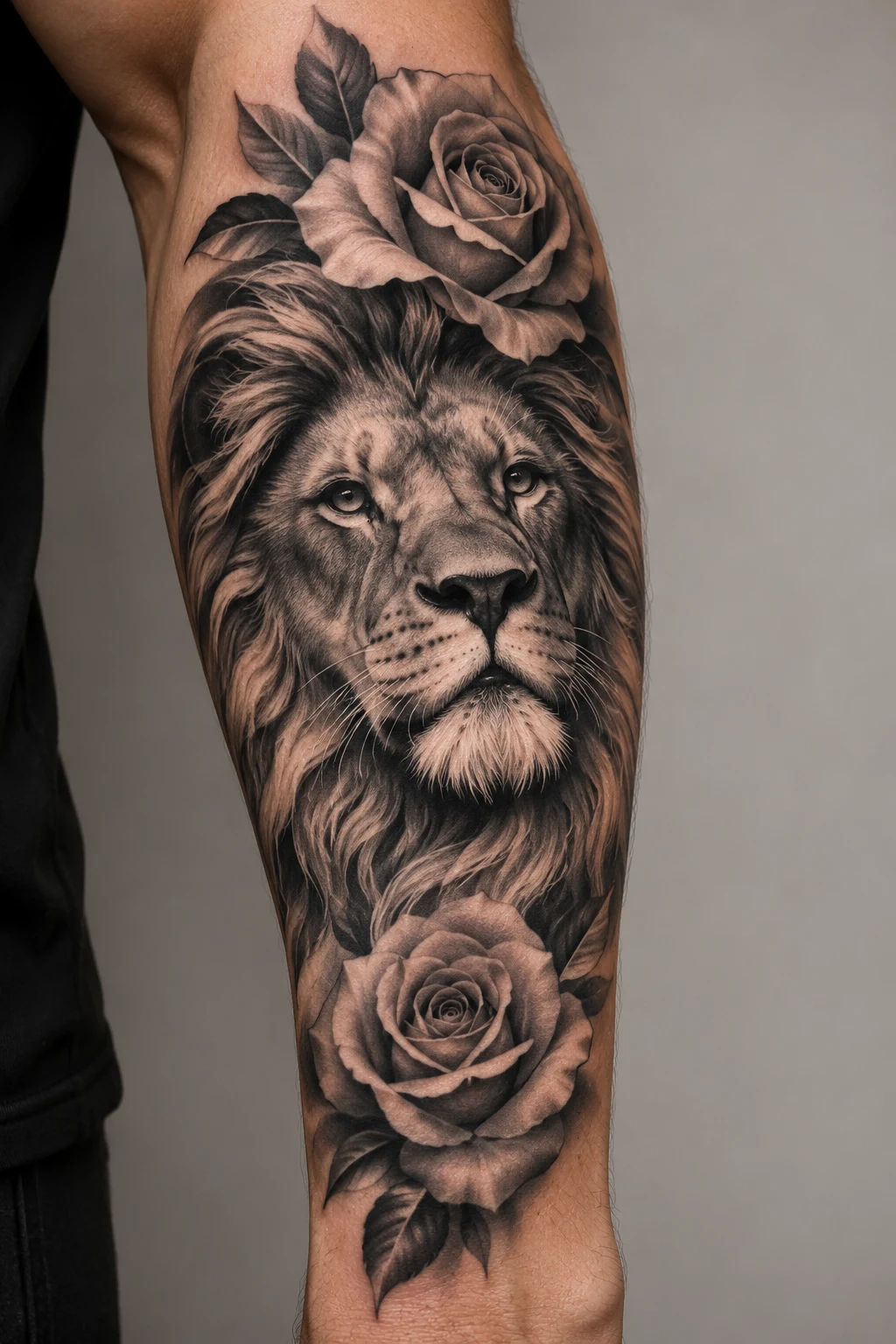
Place the roses above and below the face, or offset them beside the mane. Leaving the eyes and muzzle uncovered keeps the lion prominent within the floral arrangement.
14. Lion With a Leafy Mane
Leaves and branches flowing from the mane.
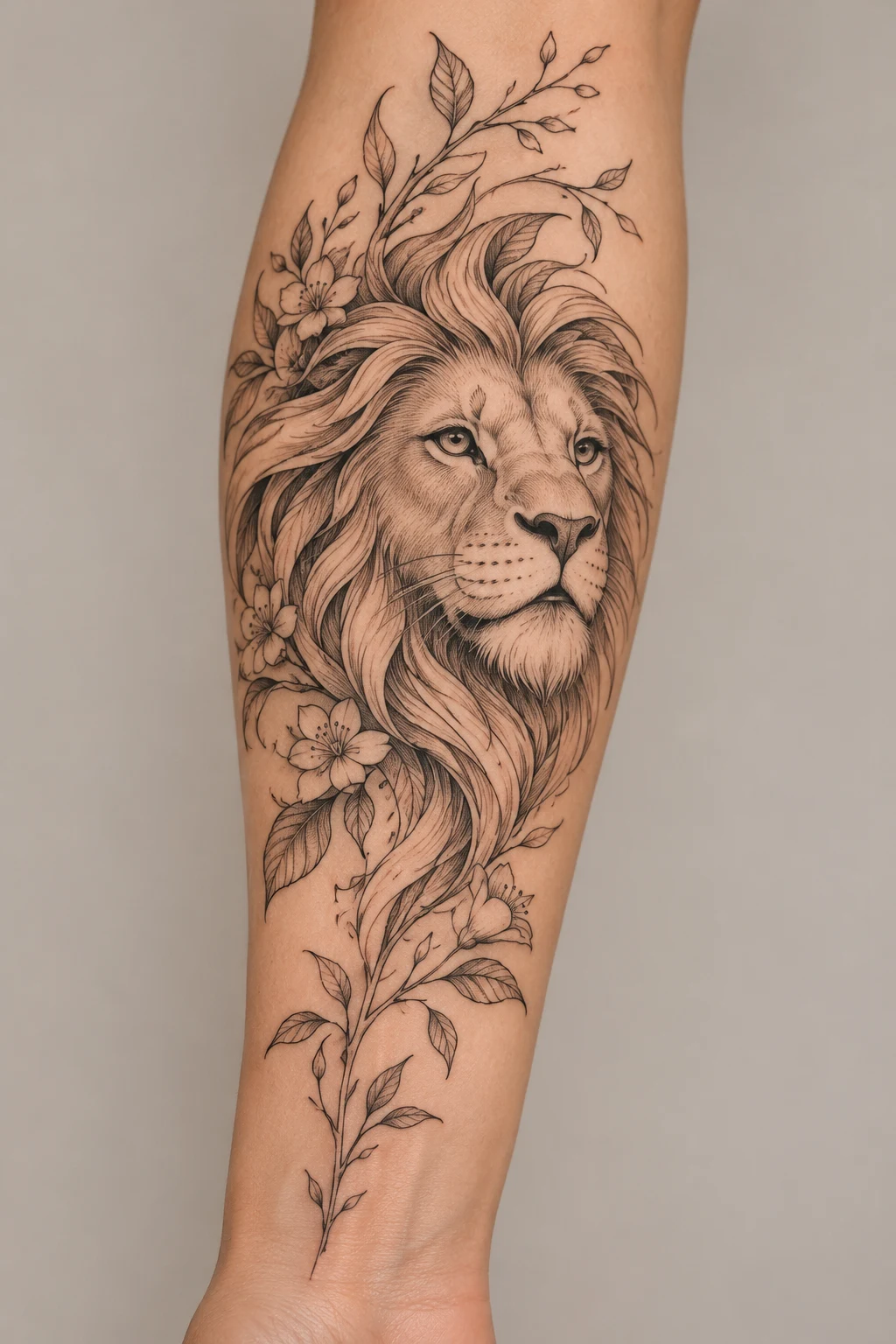
Here, botanical shapes become part of the animal itself. It suits readers who want an integrated nature motif, with fur-like curves gradually giving way to foliage.
15. Crowned Lion
A small crown above a front-facing lion.
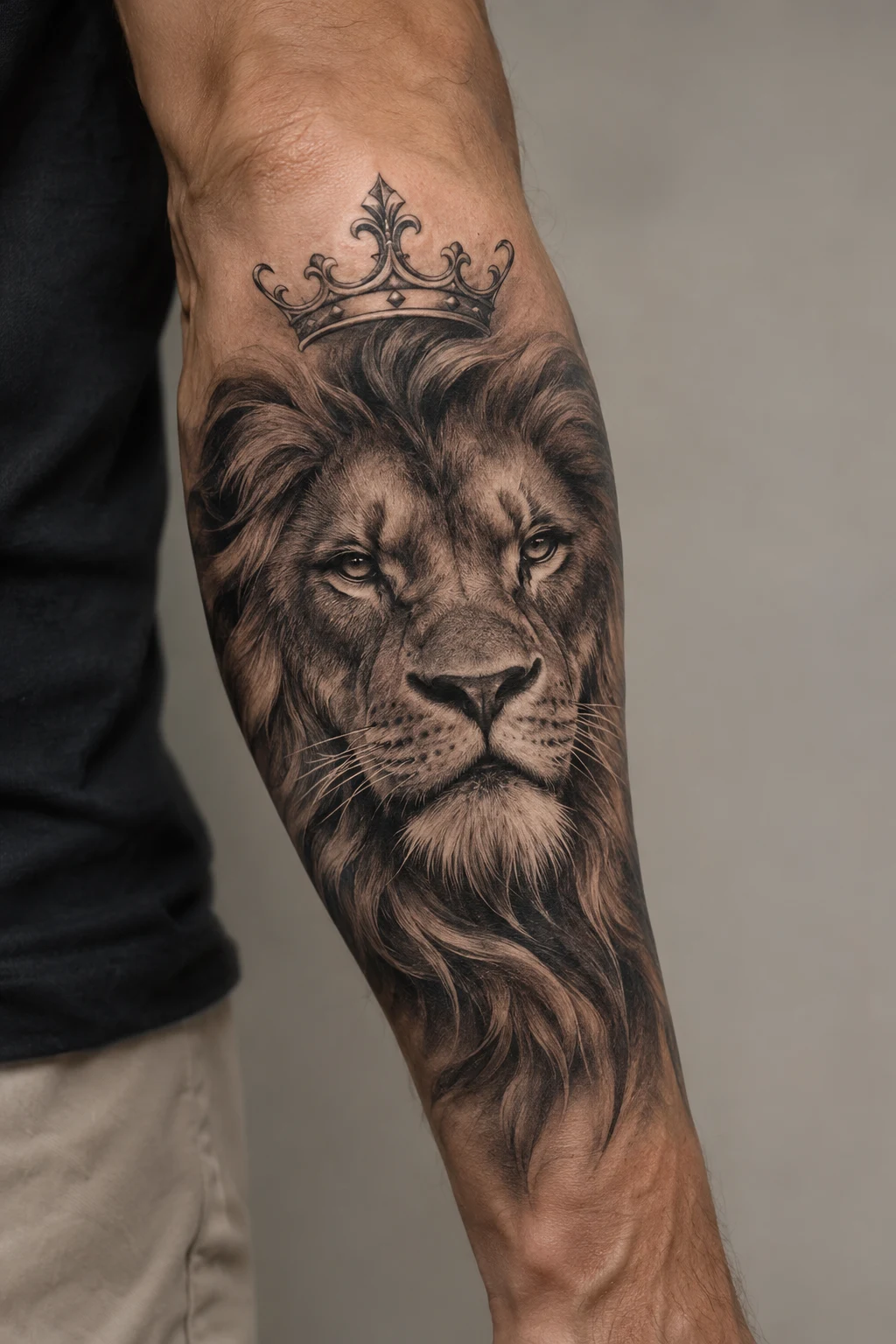
A clear gap separates the crown from the mane. Keep the ornament narrow if the portrait should dominate; leadership or confidence can be personal associations if they resonate with you.
Full-Body Lions and Forearm Layouts
These concepts explore posture, borders, scenery, and designs that continue around the arm.
16. Walking Lion
A full-body silhouette in mid-stride.
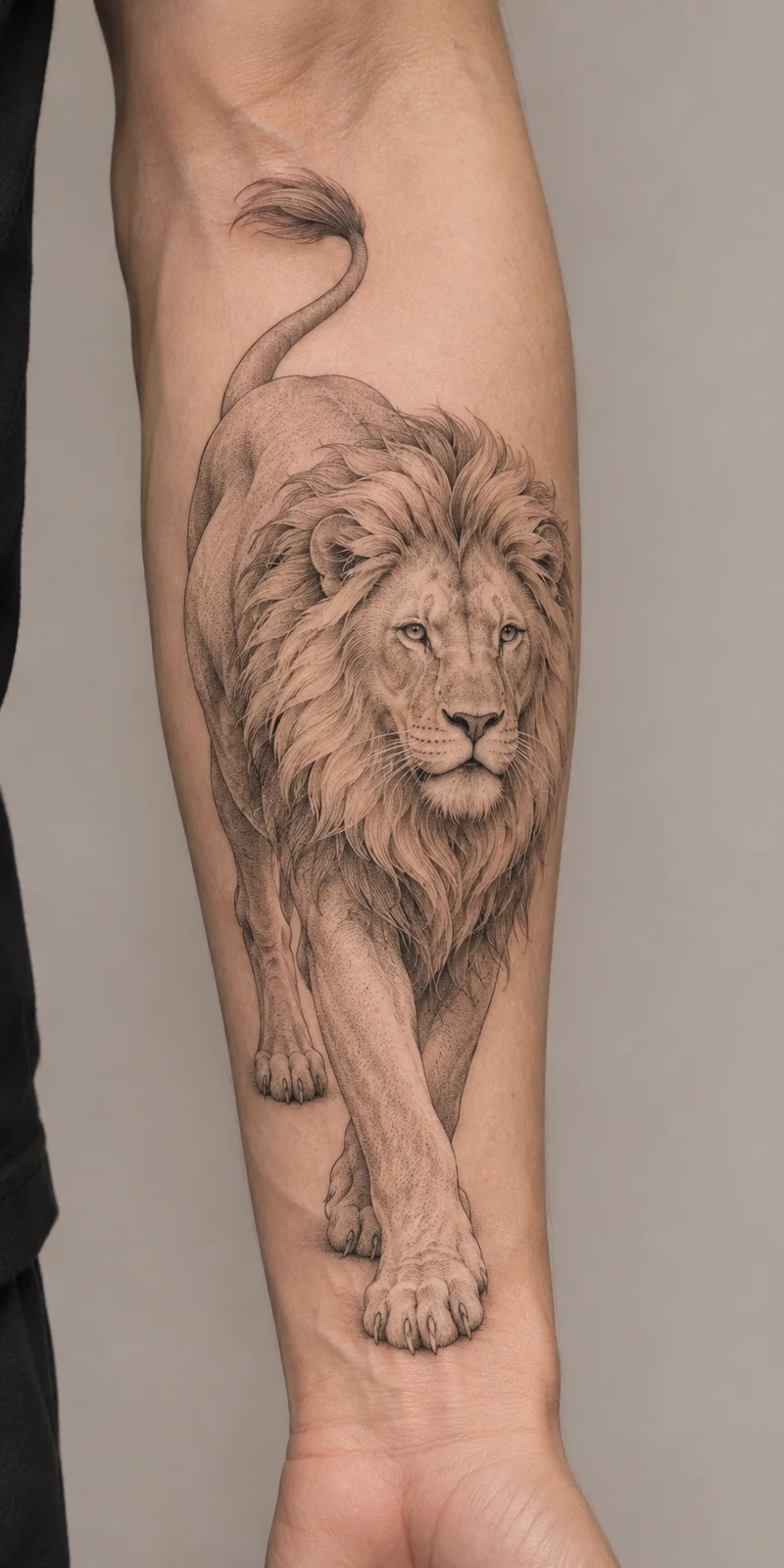
The legs, back, and tail make posture central to this design. Choose it if the animal’s movement interests you as much as its facial expression.
17. Resting Lion
Crossed front paws beneath a raised head.
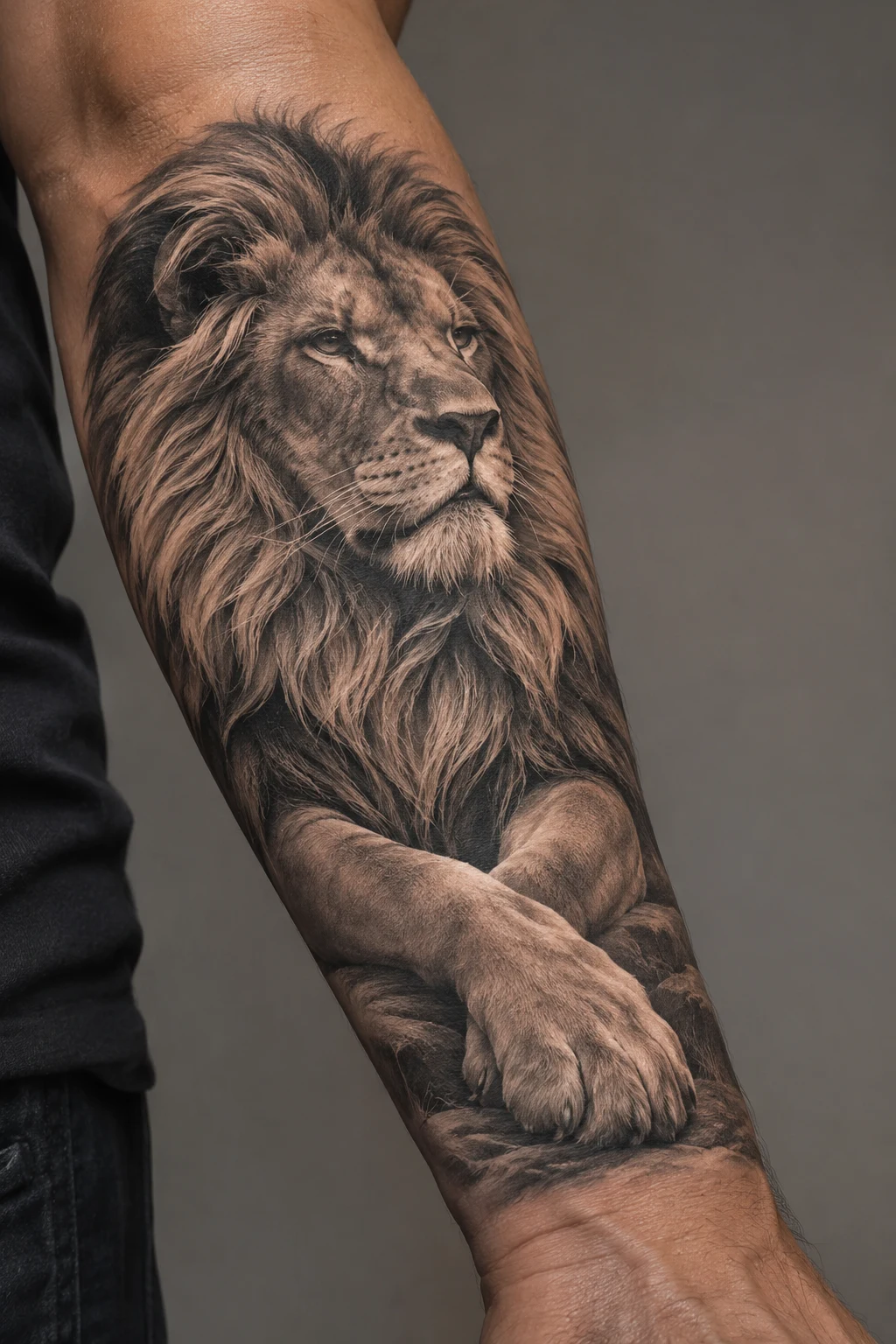
The reclining body gives this concept a relaxed mood. Discuss how the paws and body fit across your forearm, particularly if you want the whole pose visible together.
18. Lion in a Rectangular Frame
A cropped portrait with a defined border.
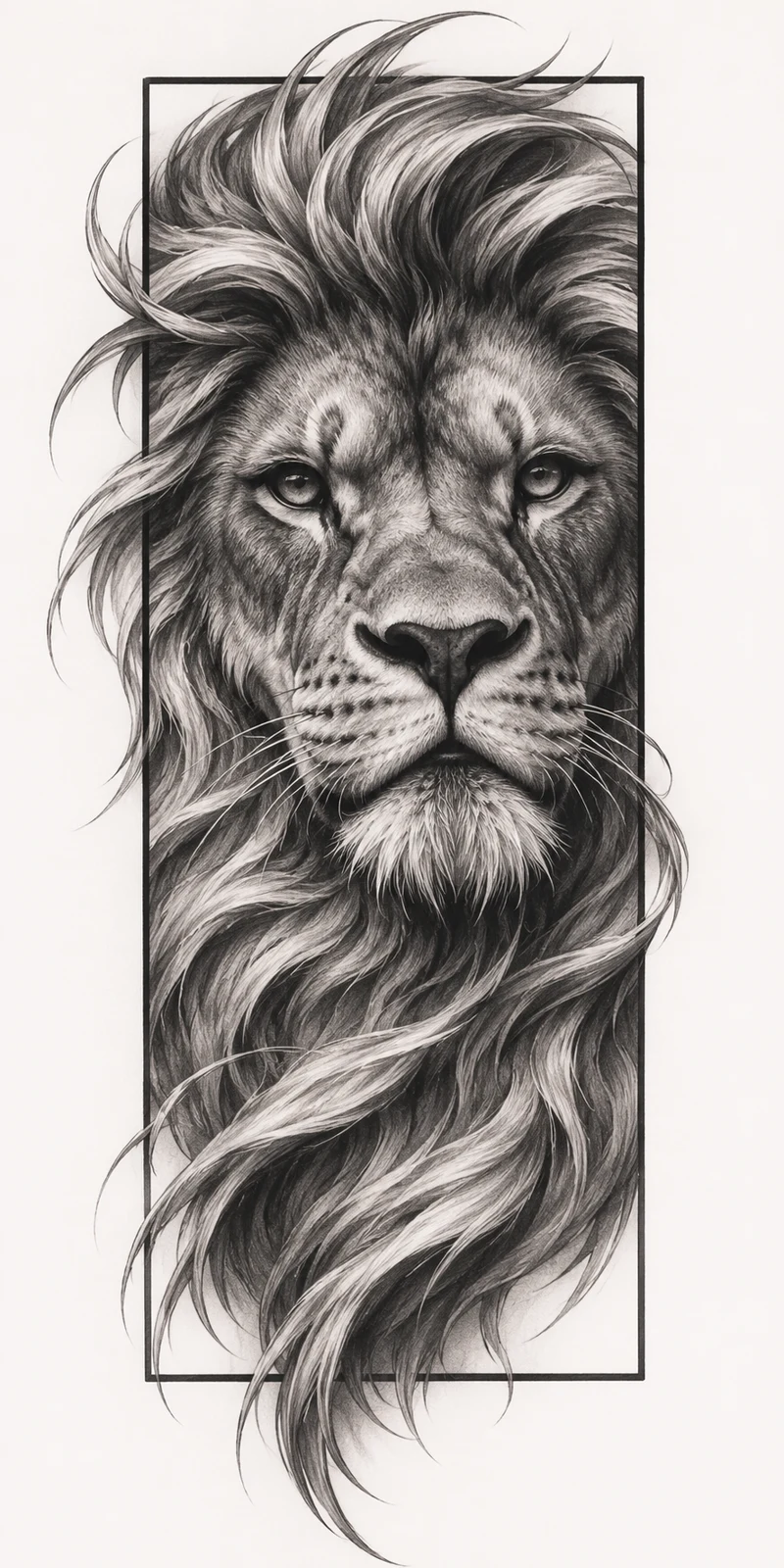
A narrow rectangle contains the face, while a few mane strands cross its edges. This suits readers who like a bounded composition with a small break in its structure.
19. Lion With a Savanna Scene
A portrait above a compact landscape.
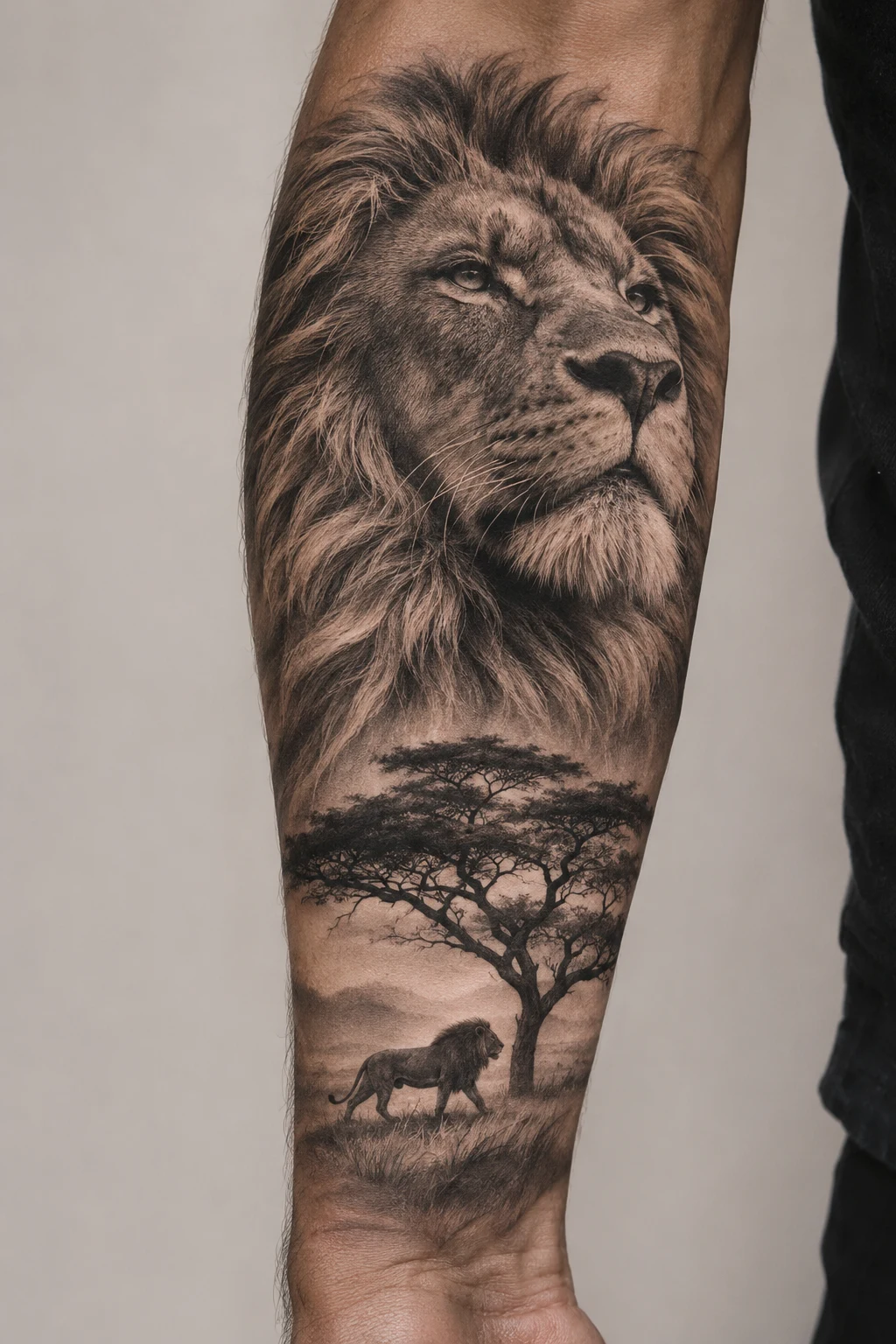
An acacia silhouette and a walking lion add a setting beneath the larger face. Keep the landscape secondary if you want the portrait to remain the first thing you notice.
20. Wraparound Lion Mane
Broad mane sections extending sideways from a central face.
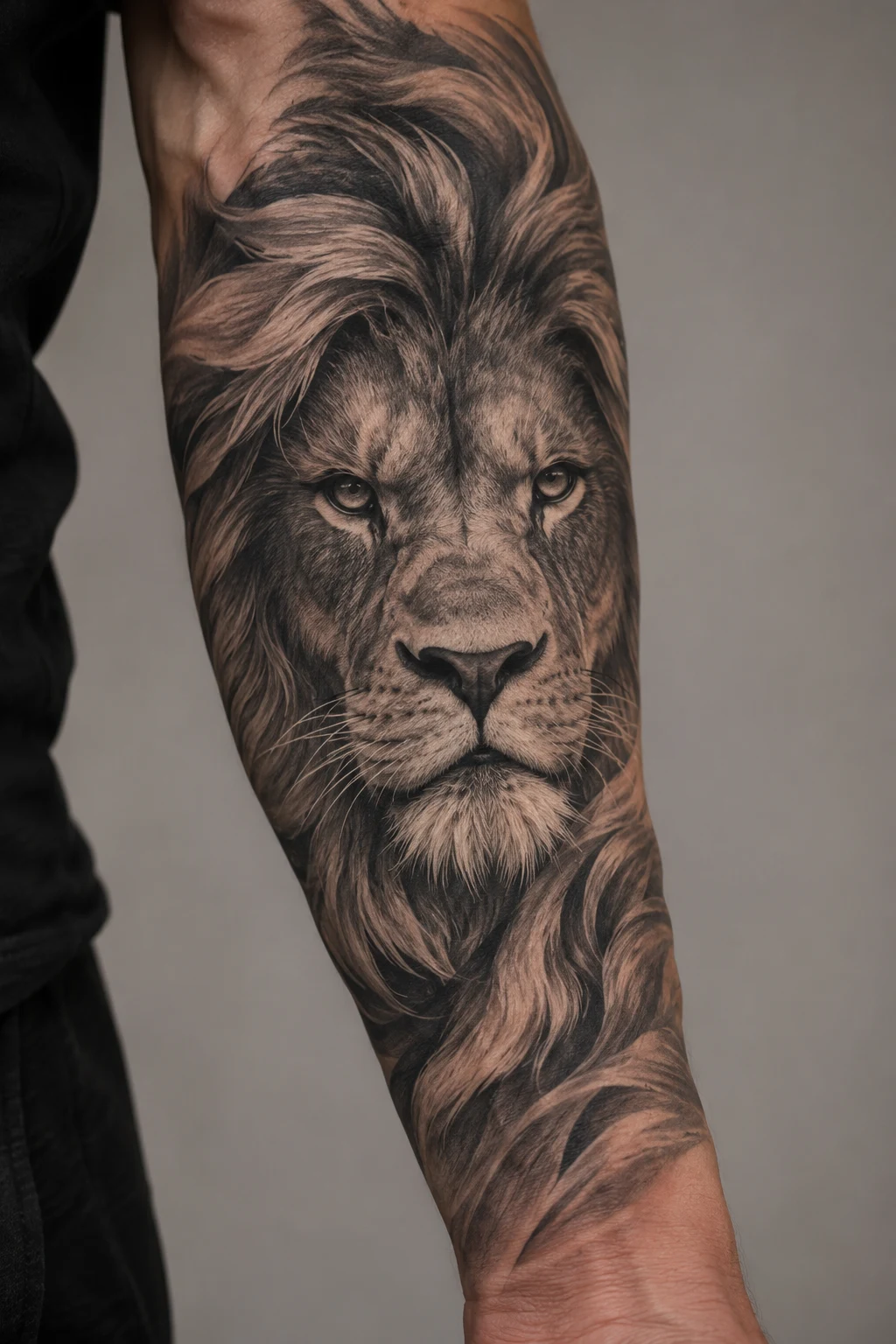
Broad mane sections continue around the forearm instead of ending beside the face. Ask your artist to show how the composition looks as you turn your arm.
Choosing Your Lion Forearm Design
Shortlist two or three ideas by choosing an expression, a rendering style, and a layout. Bring those references to your artist to discuss scale, placement, and which details matter most. For a wider look at placement options, browse the forearm tattoos guide.

