
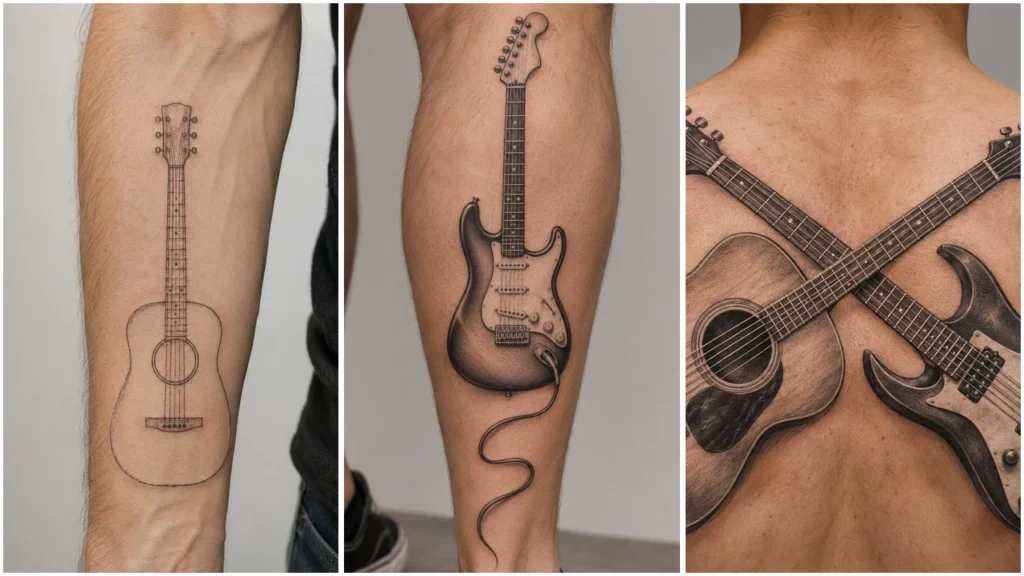
A guitar tattoo can capture your first acoustic, a favorite electric, or a simple outline that brings playing music to mind. These 20 ideas move from acoustic designs to electrics, then minimal and personalized compositions. Start with the body shape you like, then compare detail, color, and placement. The image concepts below are design suggestions to discuss with an artist.
1. Fine Line Acoustic Guitar Tattoo
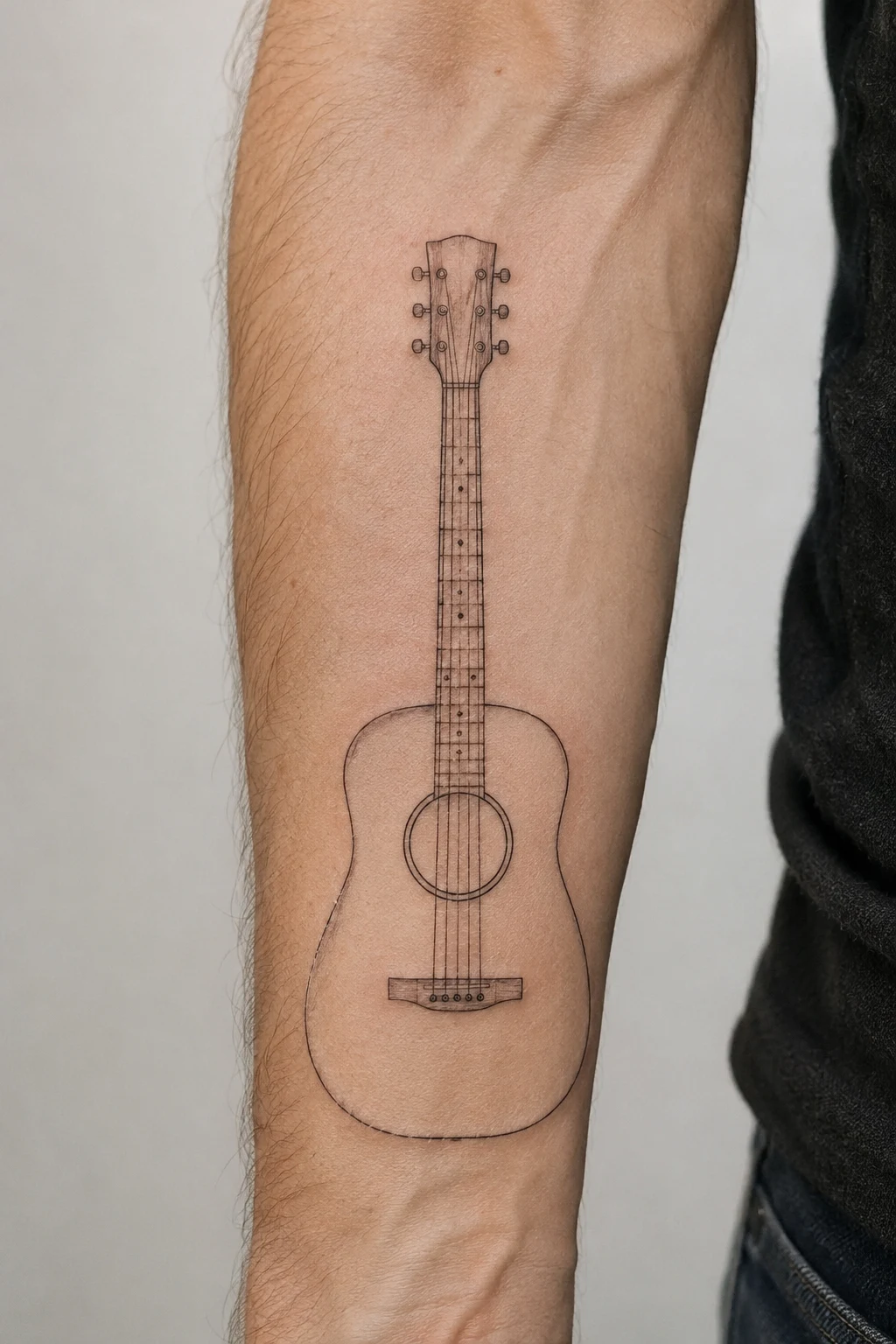
Delicate outlines trace the complete instrument with little shading. The body curves, sound hole, and neck give this understated portrait its shape. Ask your artist how much room the strings and frets need at your preferred size.
2. Shaded Acoustic Guitar With Wood Grain
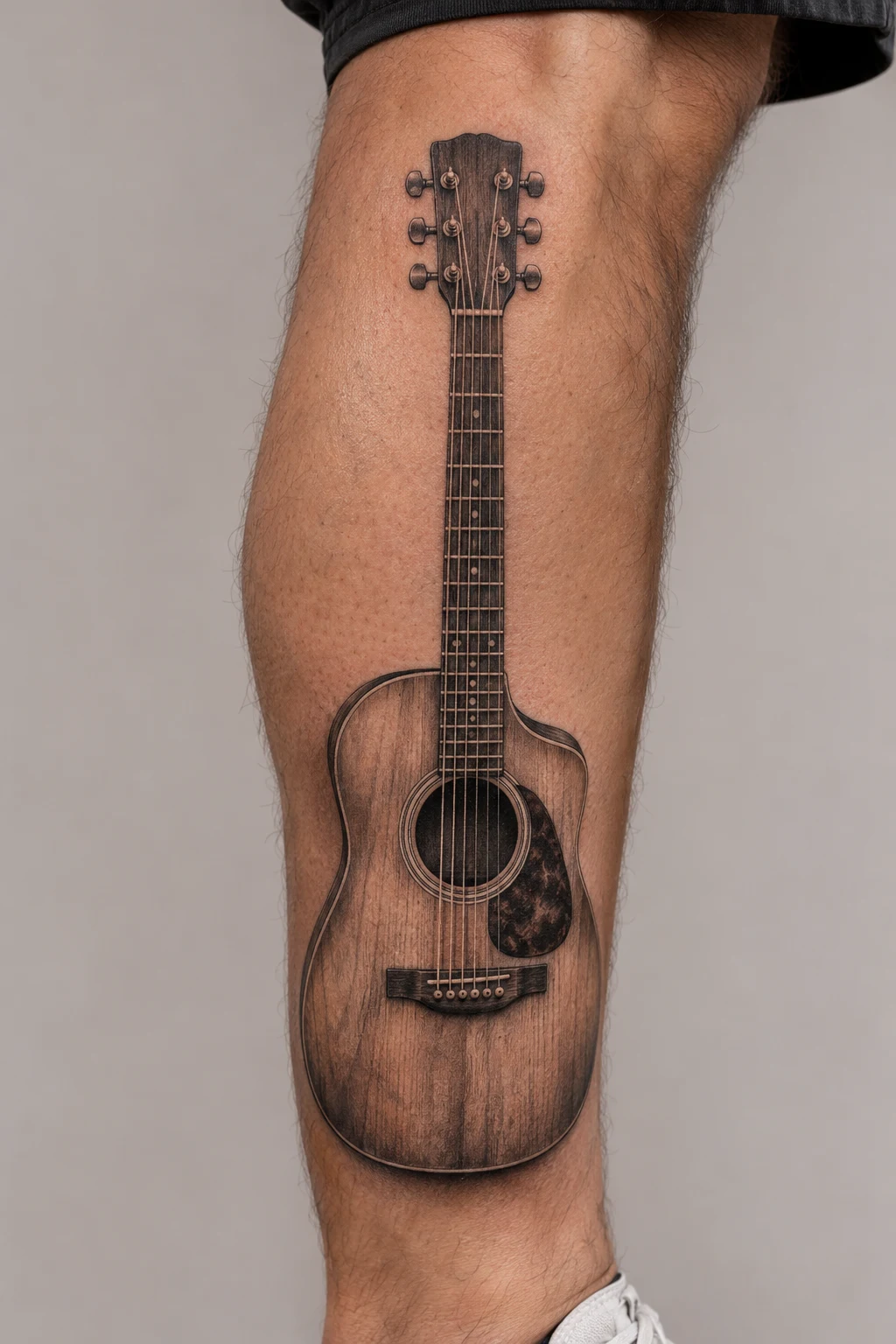
Soft shading adds dimension, while selective grain marks suggest the wooden body. Leave some surfaces free of texture so the grain doesn’t overwhelm the outline. The instrument remains the focus without surrounding decoration.
3. Classical Guitar With Rosette Detail
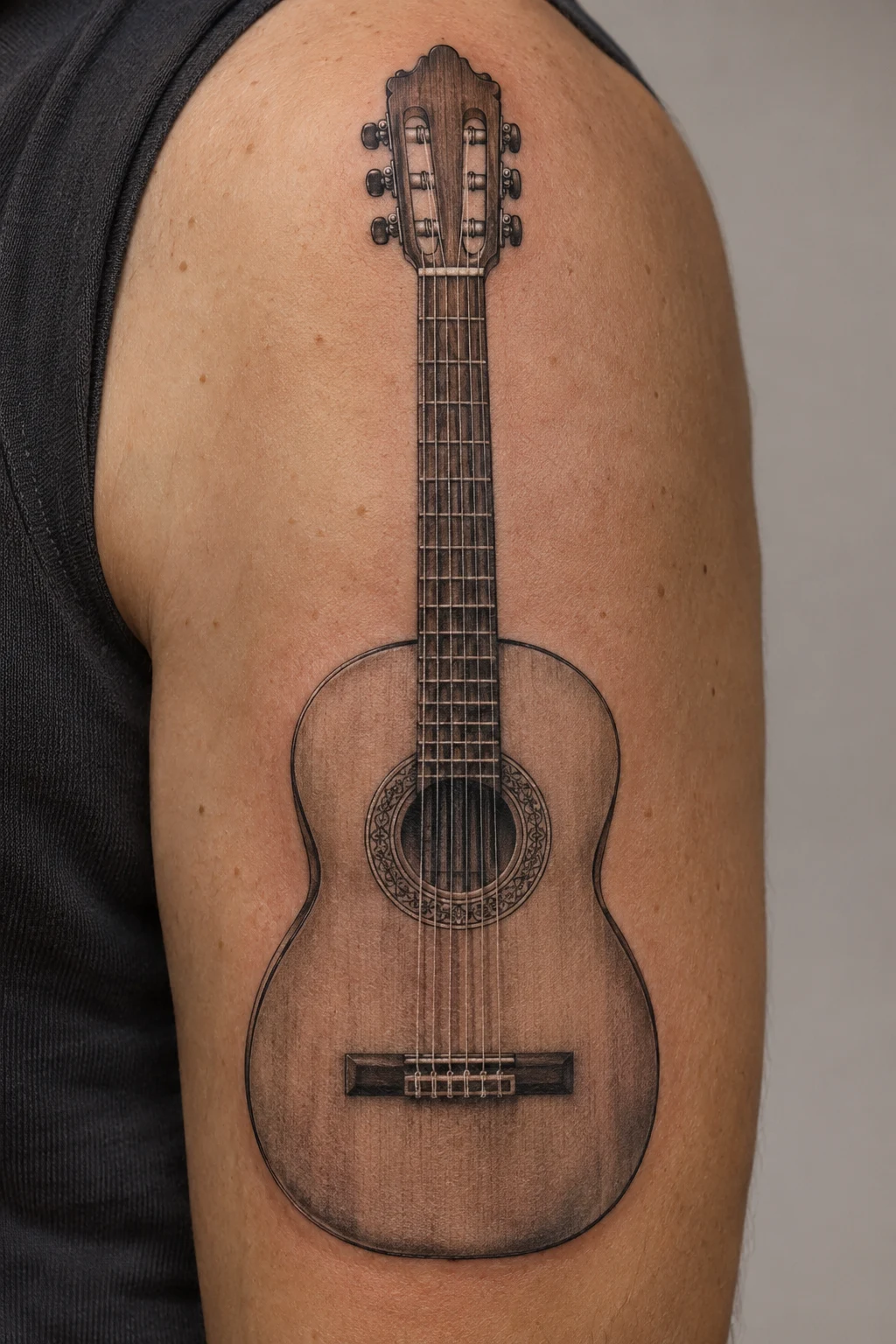
A patterned rosette draws attention to the sound hole. For a portrait of a particular classical guitar, bring a reference showing its decorative ring and headstock. Decide which parts of the pattern matter most before simplifying it for the tattoo.
4. Acoustic Guitar and Wildflower Sprigs
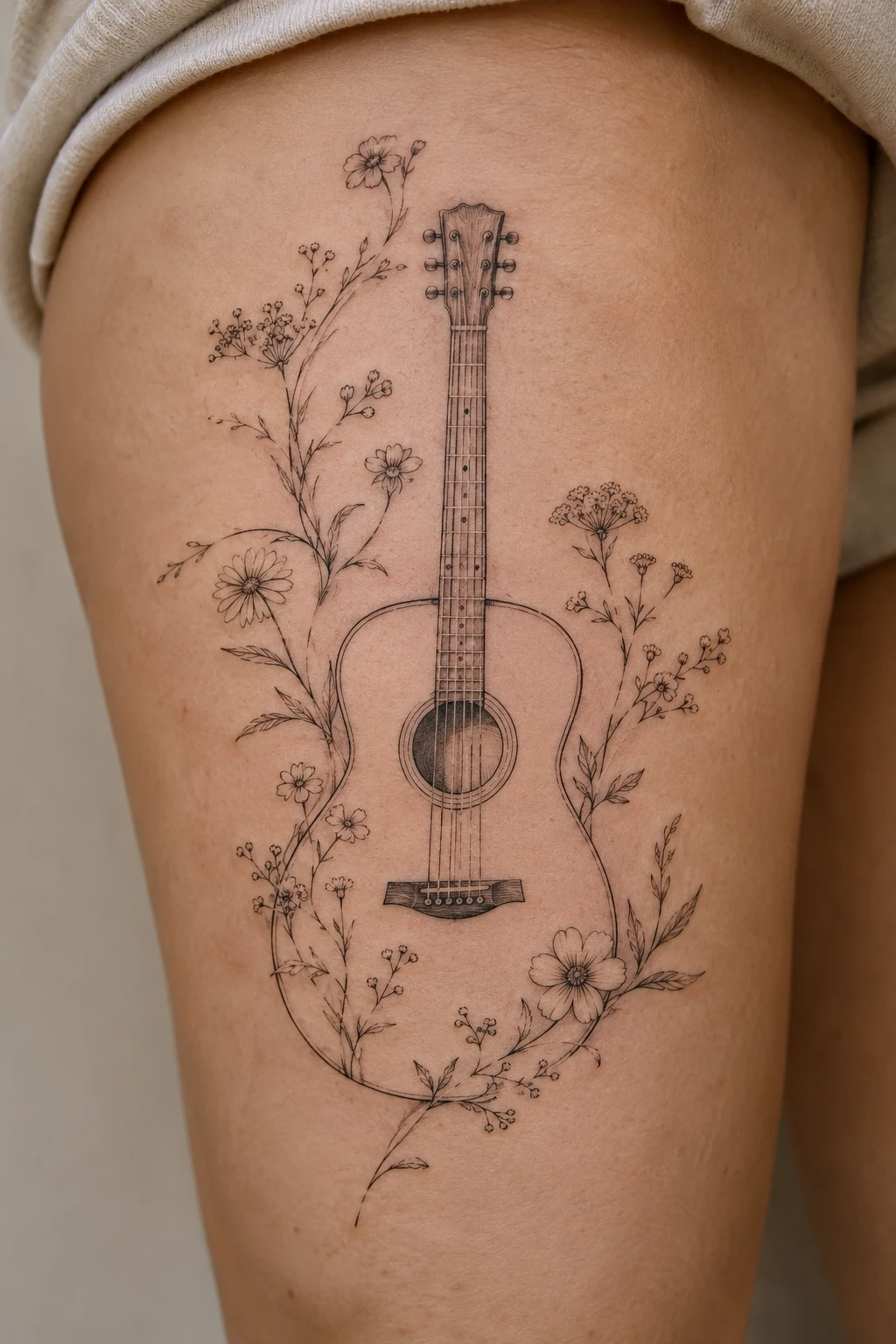
Loose stems frame the guitar without enclosing it. A few sprigs can follow the body curves or reach beside the neck. Choose flowers for their appearance or your own connection to them; the design doesn’t need an assigned symbolic meaning.
5. Watercolor Acoustic Guitar
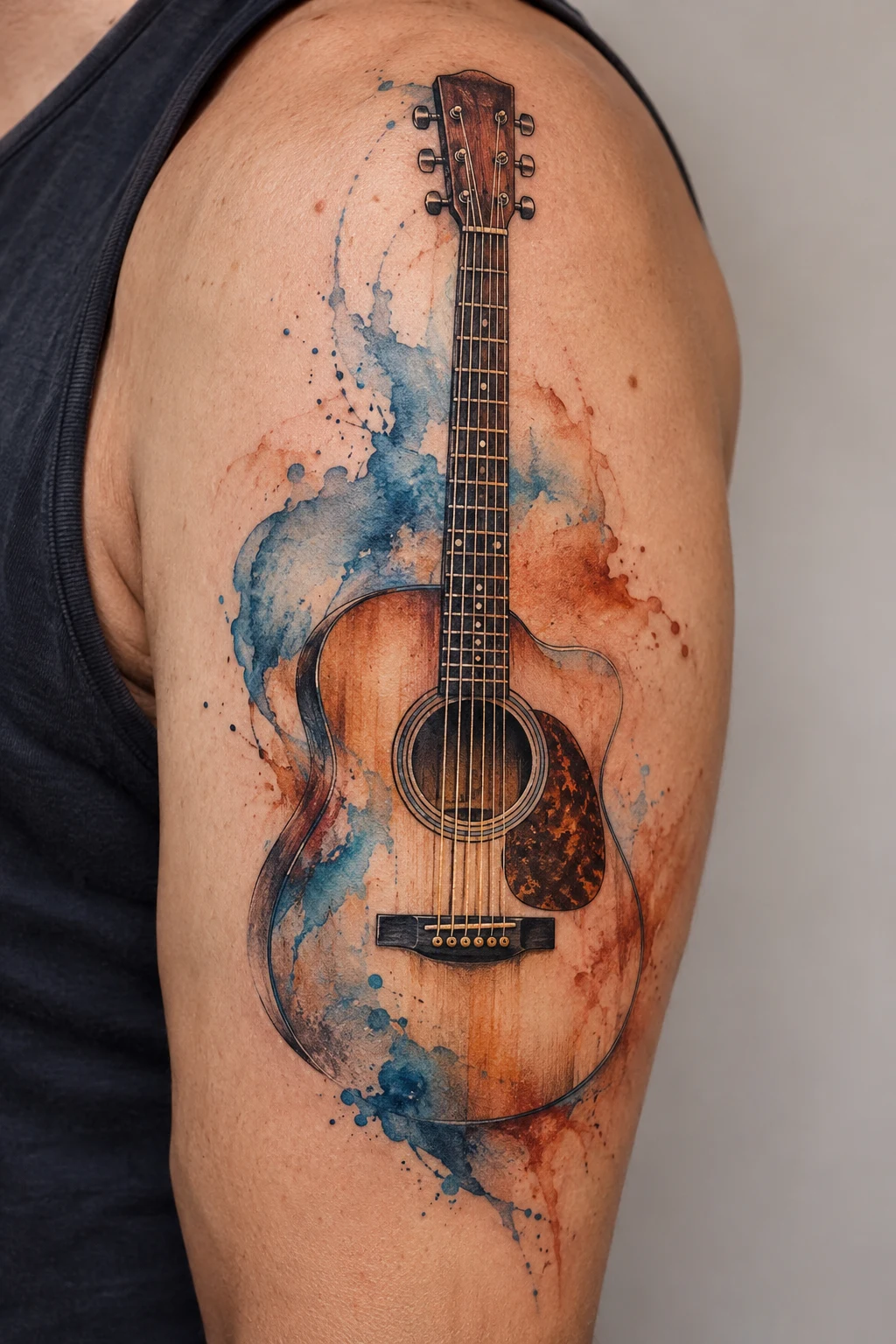
Blue and rust accents bring color around a defined black outline. The contrast separates the instrument from the abstract washes. Choose two or three hues you enjoy, then decide whether they should sit within the body or spread beyond it.
6. Acoustic Guitar in a Mountain Scene
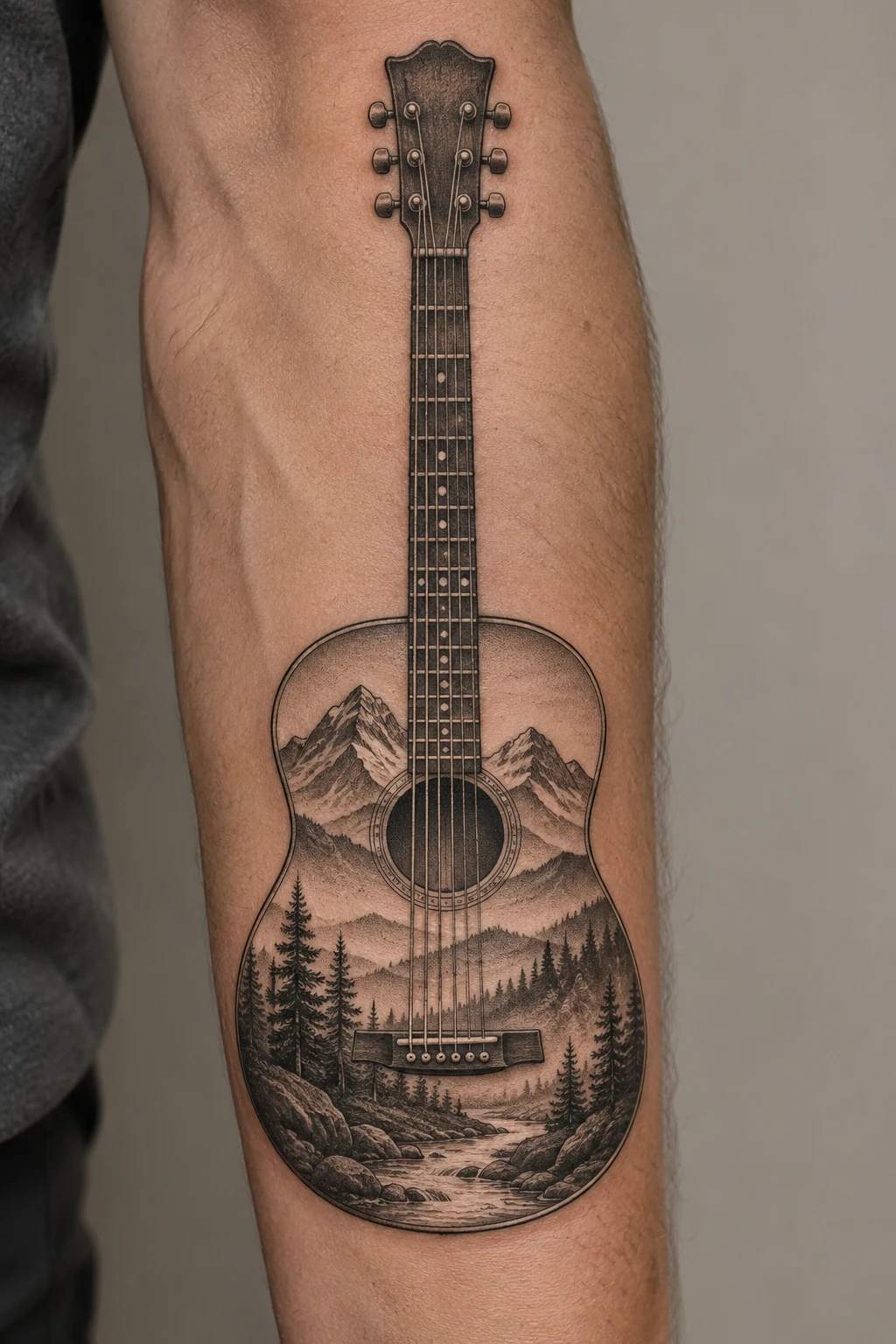
A mountain landscape fills the acoustic body, with the neck extending above it. Use a personally meaningful ridge to guide the drawing. Simplifying smaller scenery details gives both the landscape and the guitar shape room to read clearly.
7. Double-Cutaway Electric Guitar
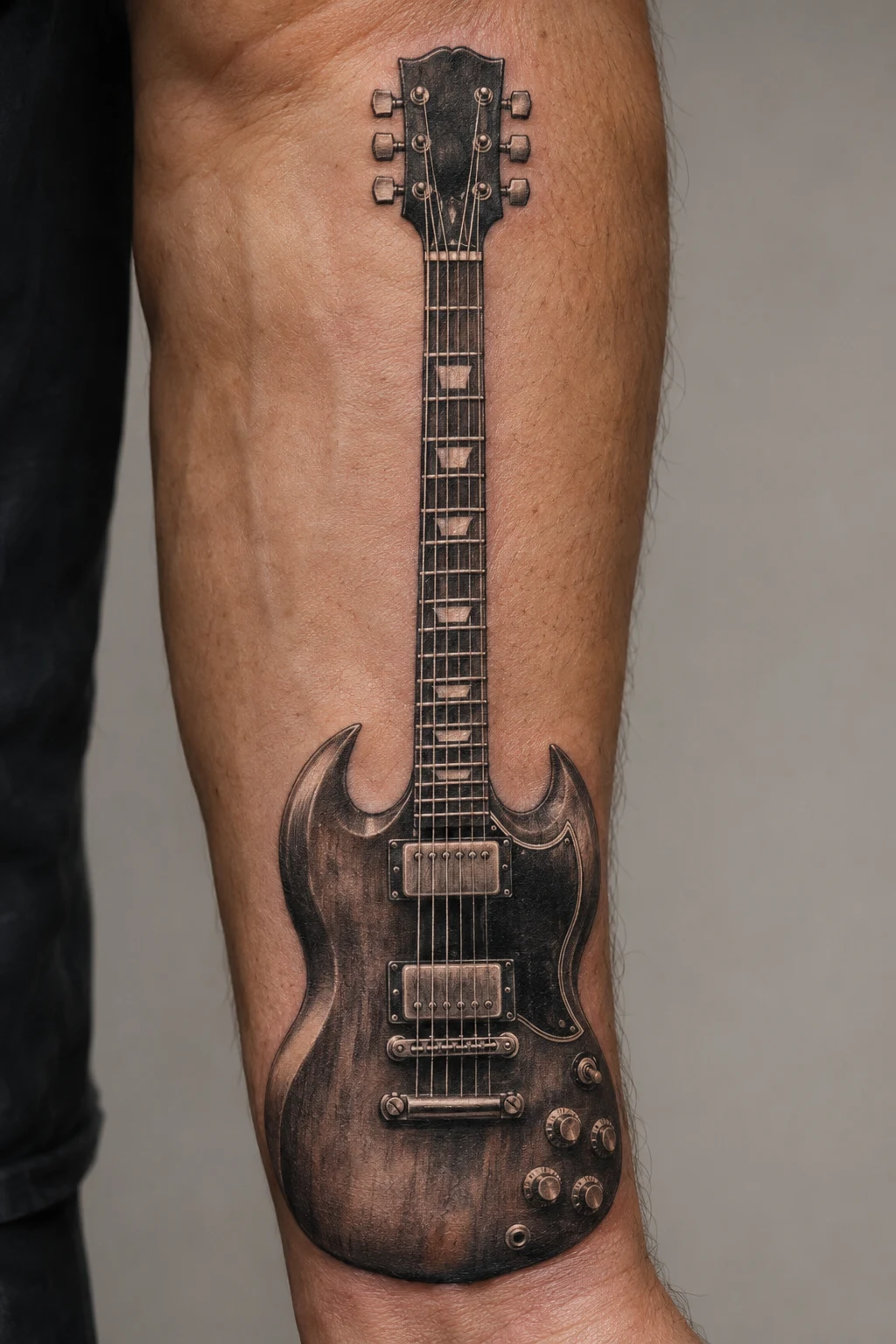
Two cutaways distinguish this outline from the next design. Pickups and control knobs add detail for anyone drawn to the instrument’s hardware. Compare their positions with your reference guitar before settling on the drawing.
8. Single-Cutaway Electric Guitar
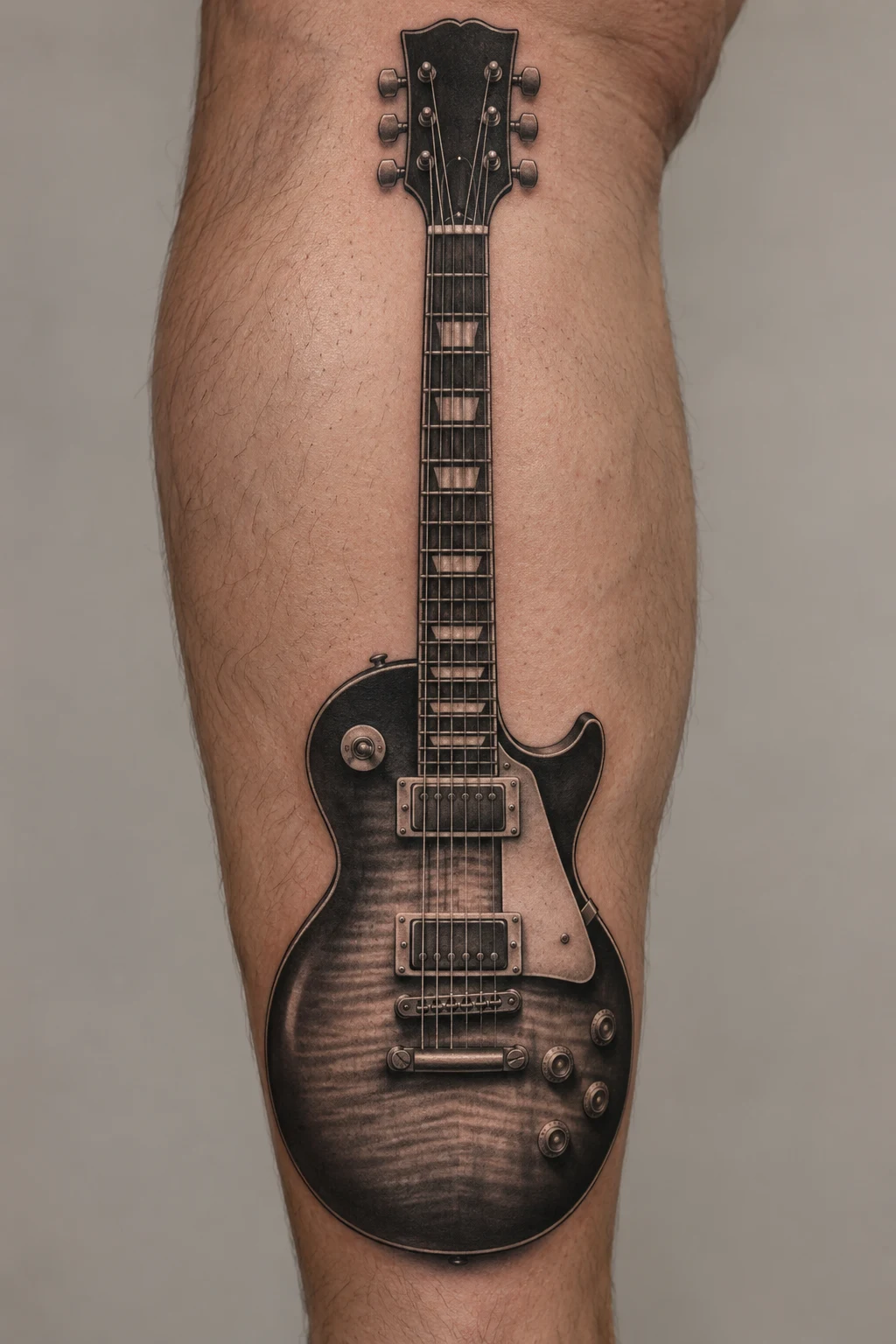
A rounded body and one cutaway create a fuller silhouette. Dark shading gives this example a substantial black and grey treatment. Your own instrument’s finish can guide the shading, with contrast around the hardware to keep it distinct.
9. Angular Electric Guitar
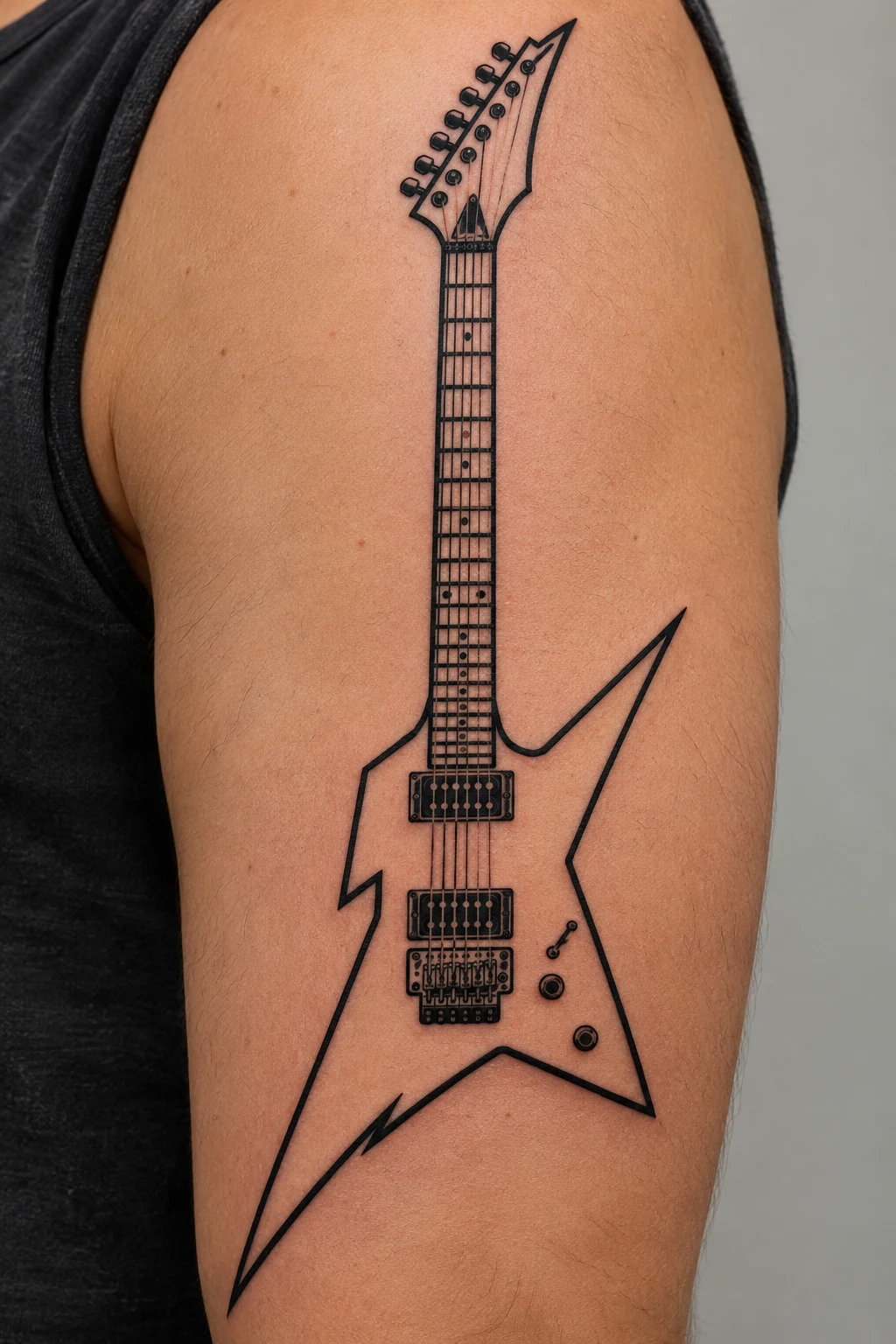
Pointed body contours give this design its graphic character. If the silhouette draws you in, restrained interior details let it stand out. Have the artist sketch how the points sit on your arm within the available space.
10. Semi-Hollow Guitar With F-Holes
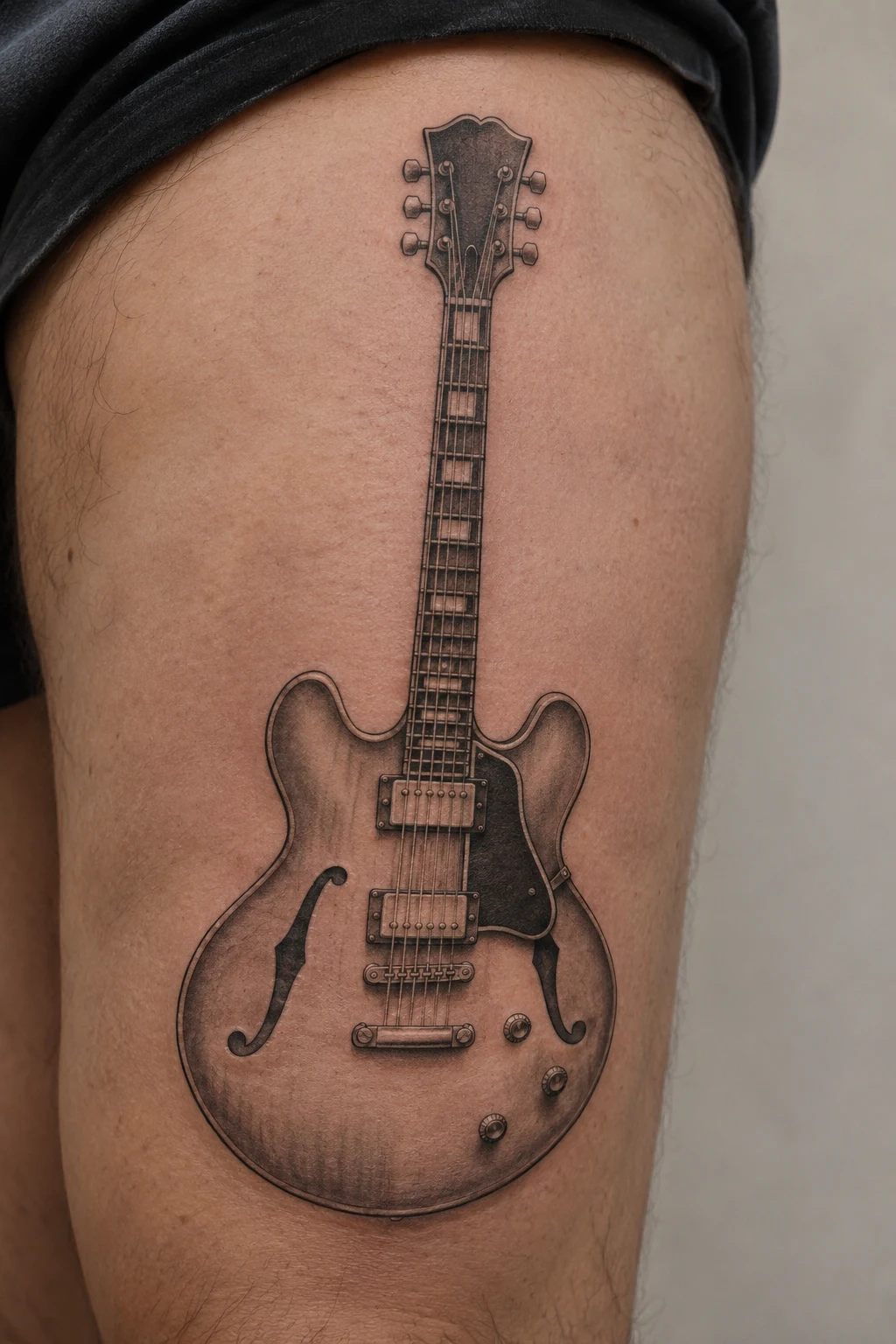
Paired f-holes distinguish this semi-hollow example. Use a specific instrument reference for the body curves, hardware, and opening shapes. Soft shading adds depth; a lighter treatment around the f-holes keeps their outlines prominent.
11. Electric Guitar With a Coiled Cable
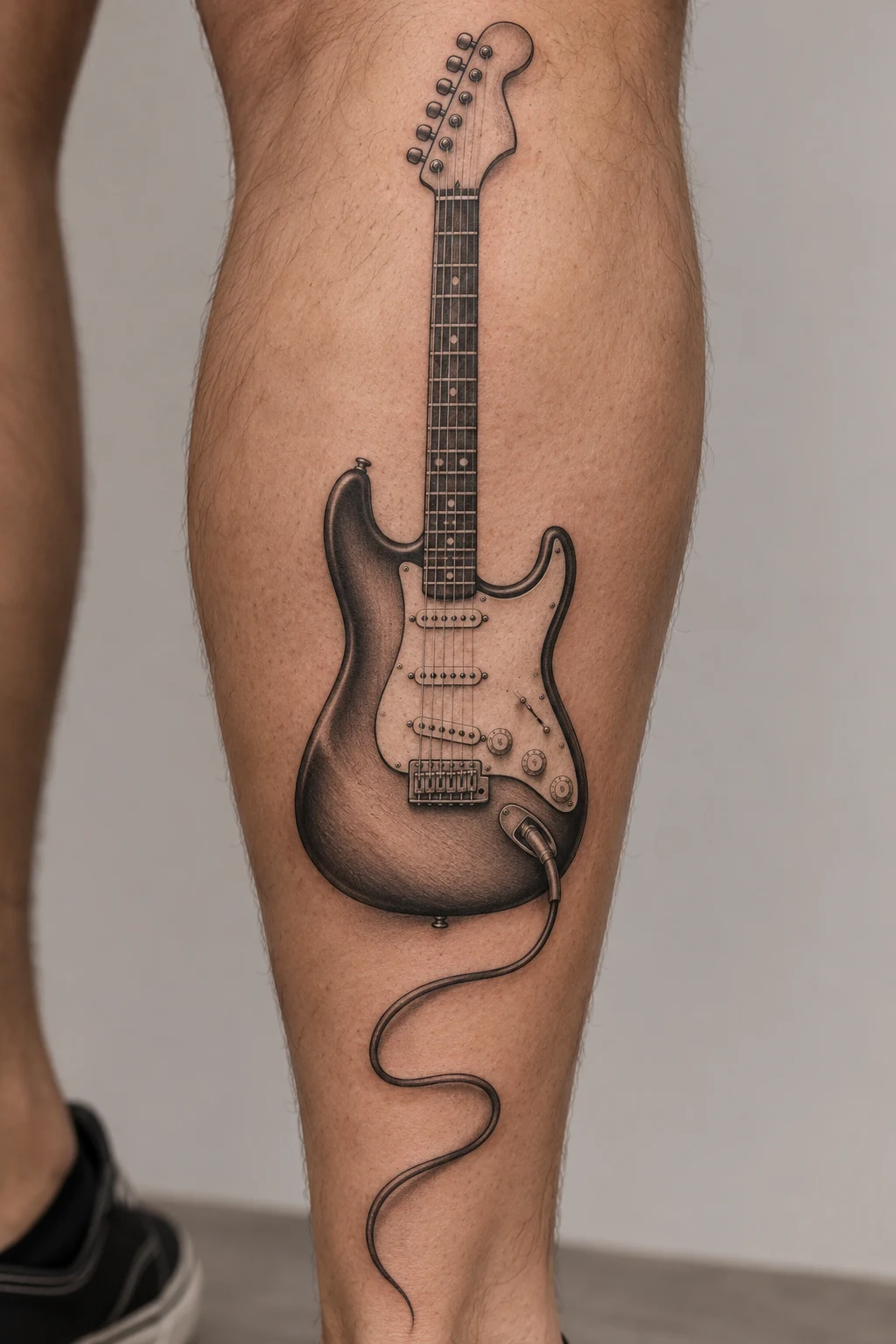
A looping cable extends the composition beneath the instrument. One loose loop leaves the guitar easy to follow along a longer placement such as the calf. Sketch the cable’s endpoint before adding more coils.
12. Bold Traditional Guitar and Rose
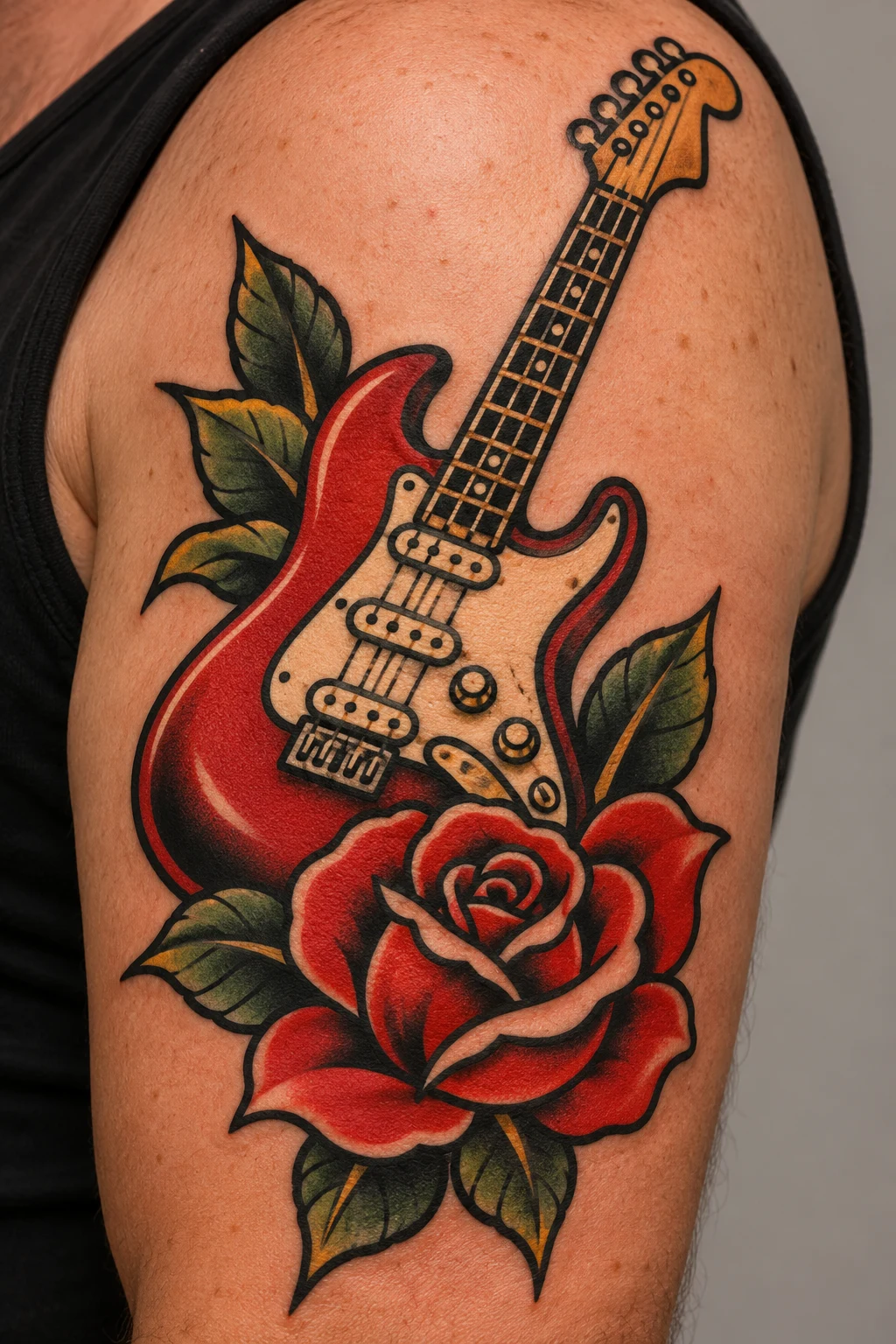
Bold outlines unite an electric guitar and one red rose. The flower can sit beside the body or overlap its lower edge. A limited red and green palette emphasizes the graphic treatment; black ink is another option if color isn’t your preference.
13. Guitar Headstock Close-Up
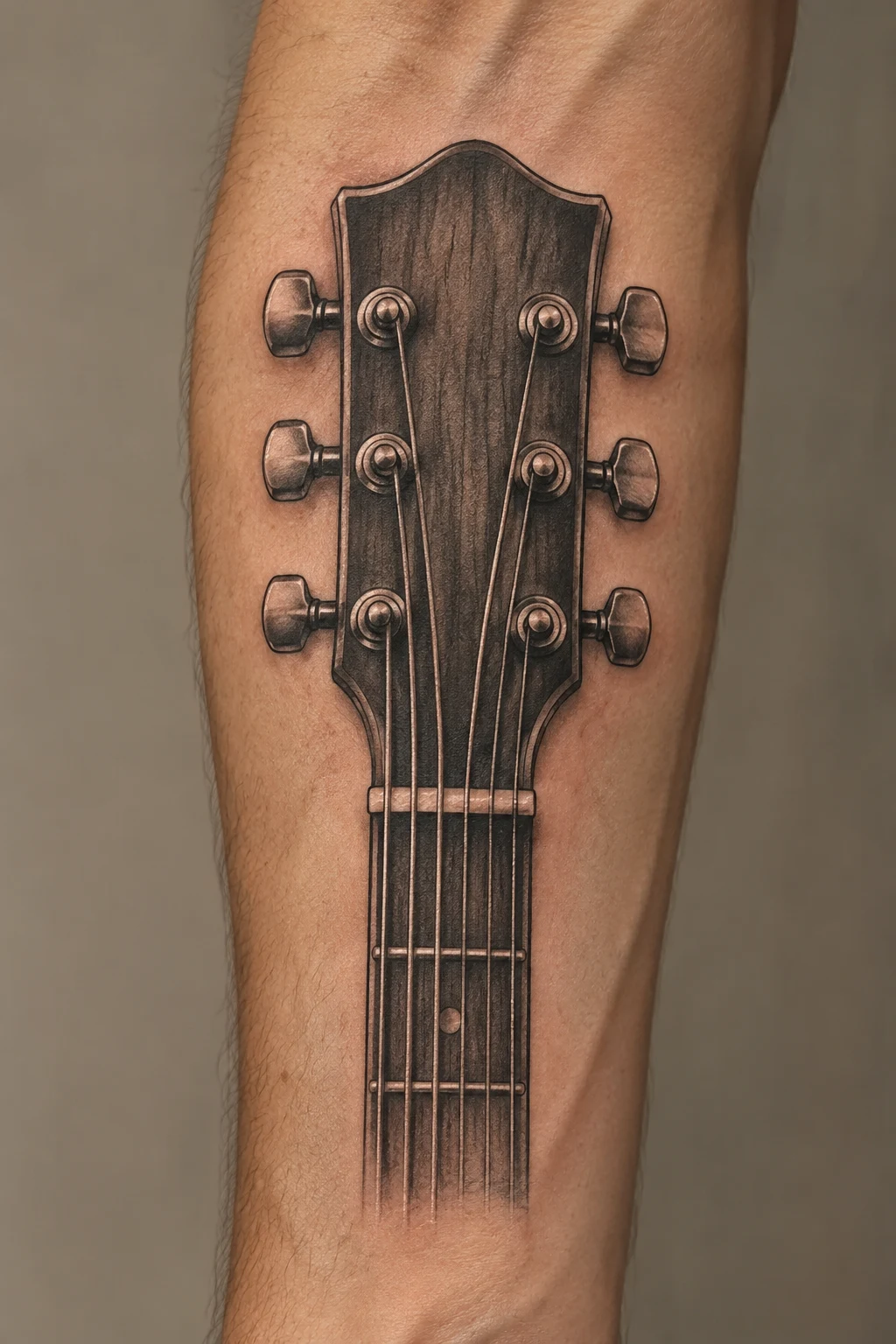
A cropped headstock focuses on one recognizable part of the instrument. Its outline and tuning-peg arrangement offer room for personalization without depicting the whole guitar. Bring a close-up reference so those details match the instrument you have in mind.
14. Small Solid Guitar Silhouette
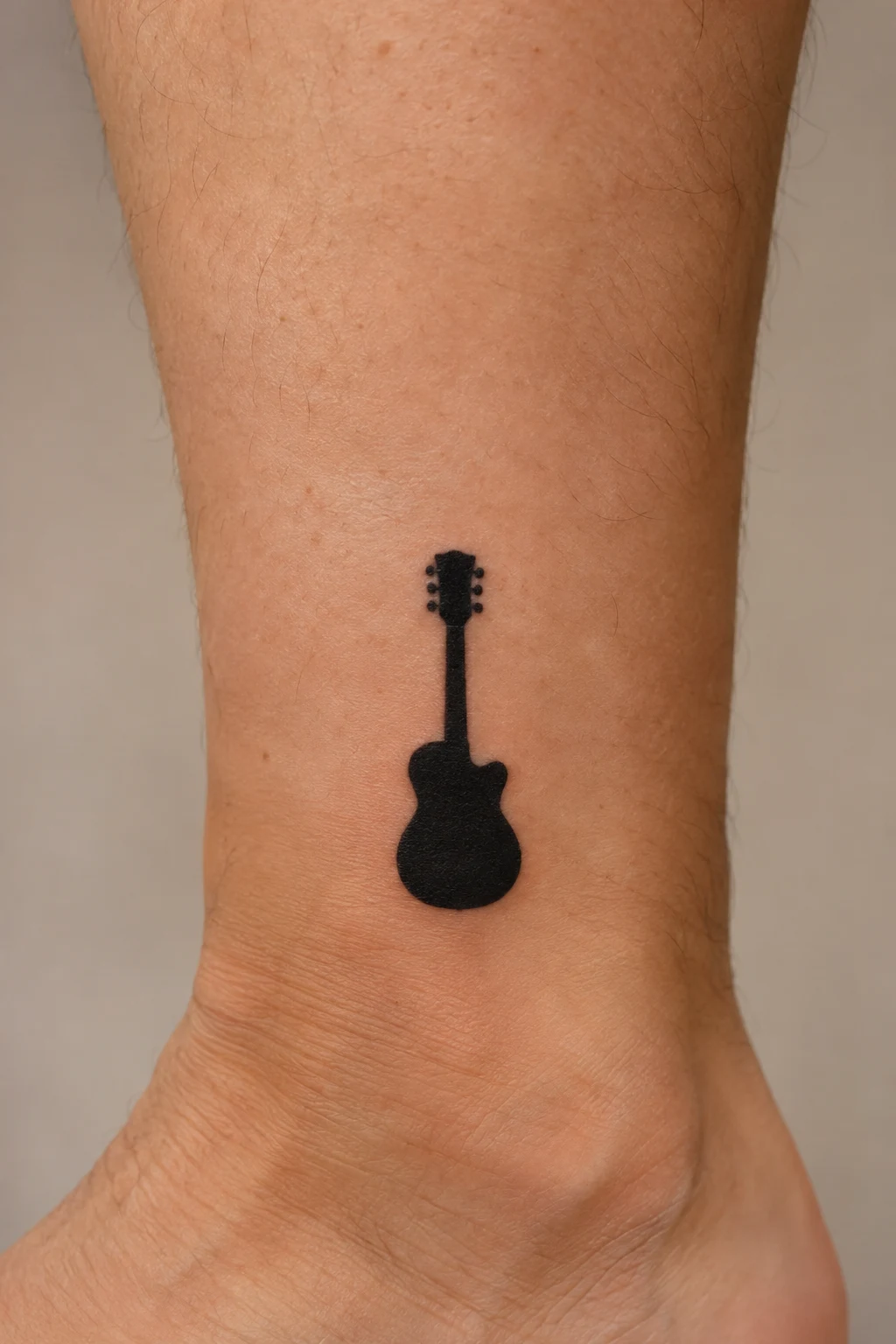
Solid black reduces the instrument to its body and neck. Compare acoustic and electric outlines as solid shapes, then ask your artist how much definition the waist and headstock need at the chosen size.
15. Continuous-Line Guitar
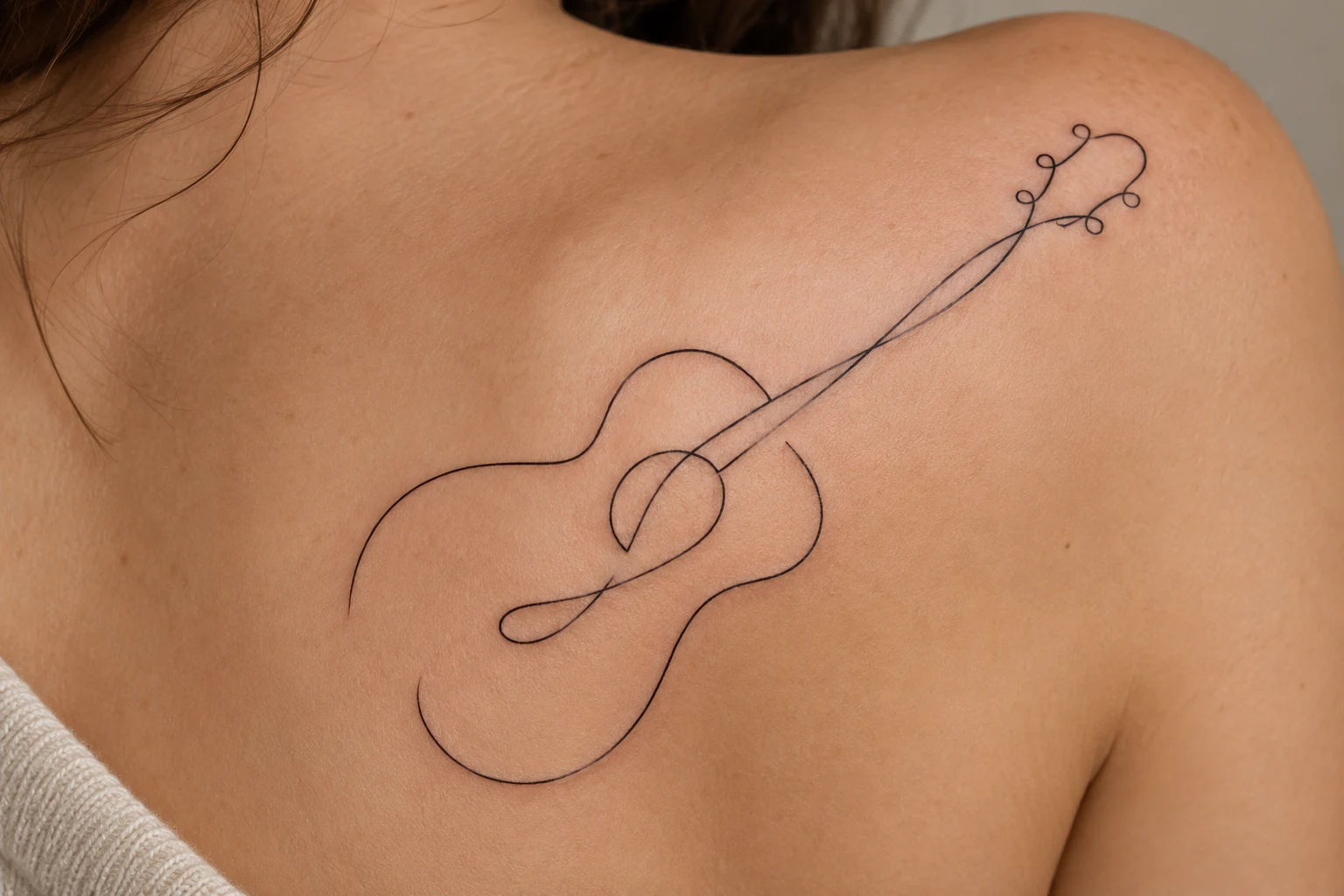
One flowing line suggests the body and neck without describing every string. Decide how abstract you want the result: a few familiar curves may be enough, while extra overlaps can make the instrument harder to recognize.
16. Negative-Space Guitar in a Black Circle
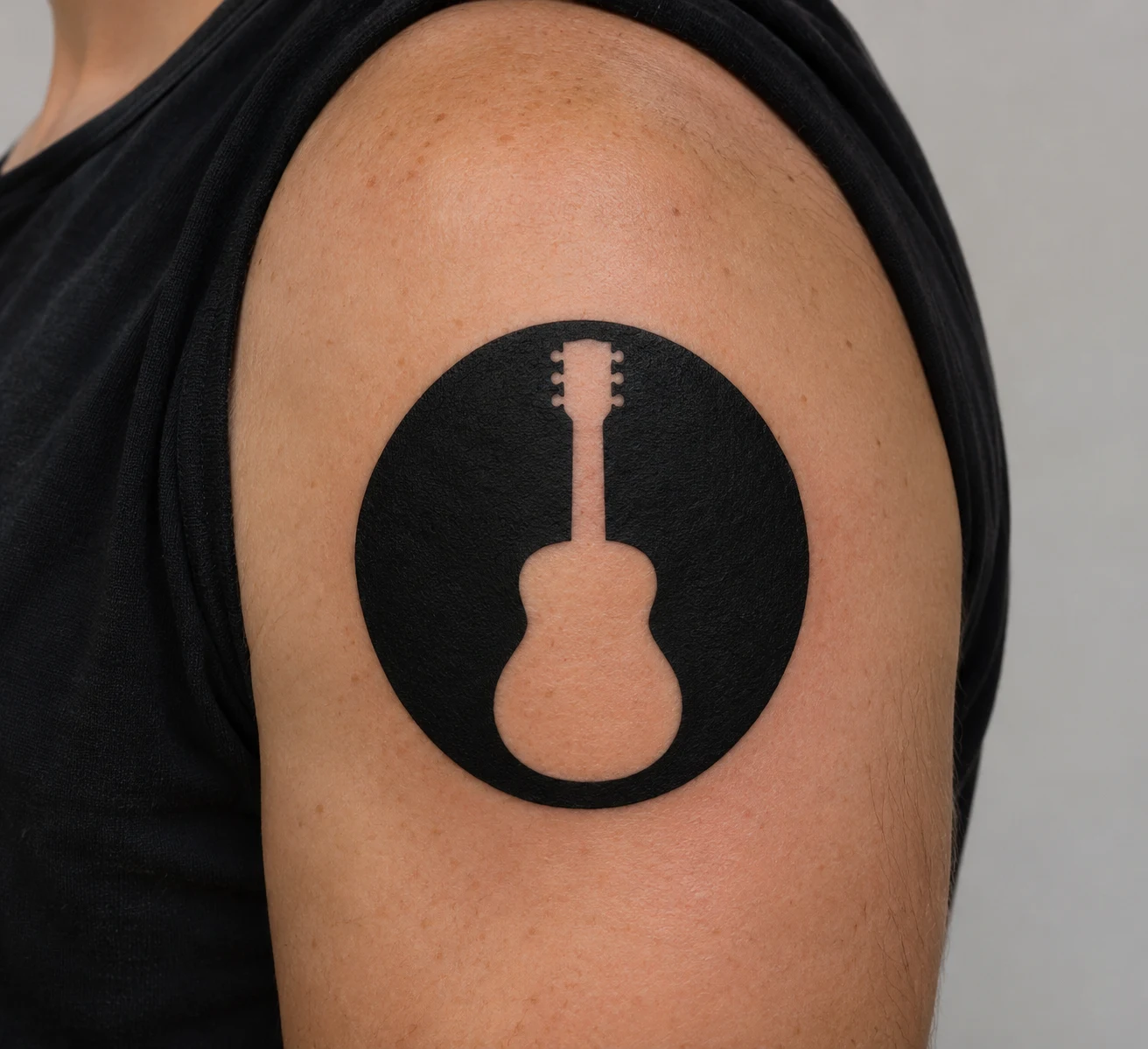
Uninked skin forms the guitar inside a black disc. Keeping the entire silhouette within the circle creates a contained emblem. Compare the amount of solid black with the open guitar shape if you’re considering this alongside a freestanding silhouette.
17. Guitar Pick With an Engraved-Style Guitar
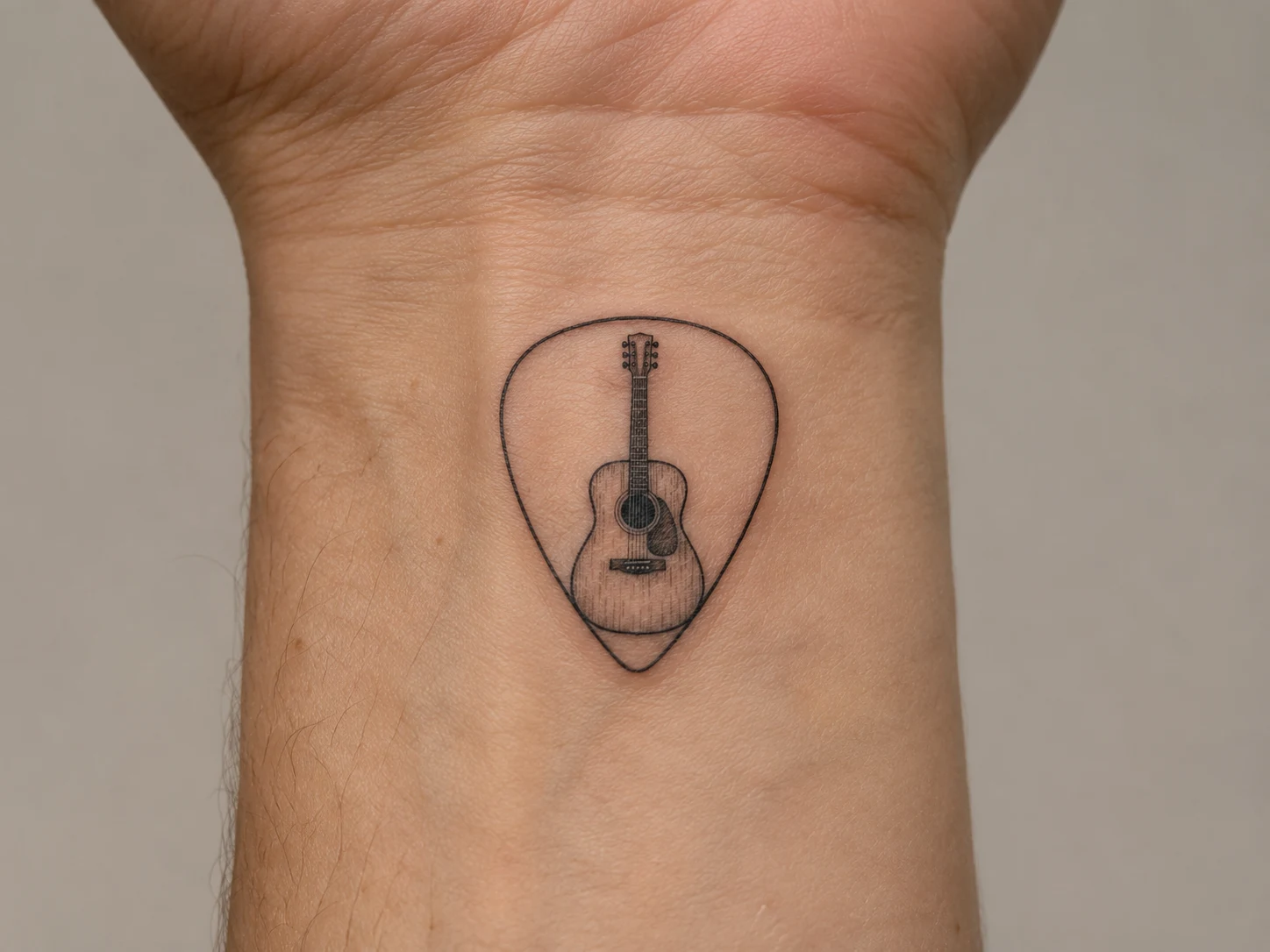
Inside a pick-shaped border sits a small instrument drawing. Choose a rounded or pointed pick outline, then simplify the enclosed guitar to suit the space. If the wrist version feels crowded, discuss a larger design or a roomier placement.
18. Guitar With a Handwritten Date
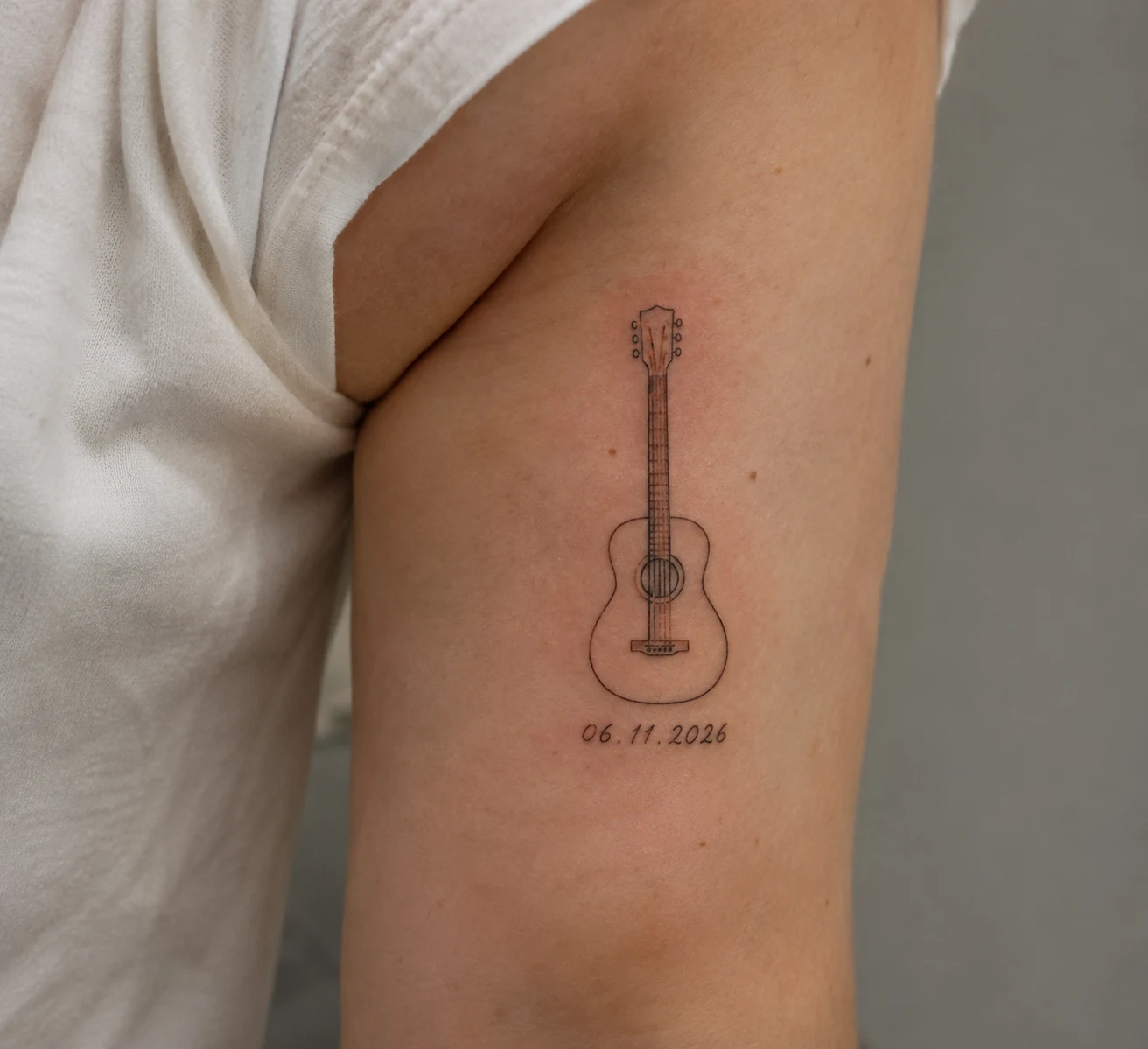
Beneath the guitar, a short date adds a personal reference. It might mark a first lesson, a gift, or another occasion you choose. Supply the exact numerals and any handwriting sample, then check the lettering before approving the design.
19. Portrait of Your Own Guitar
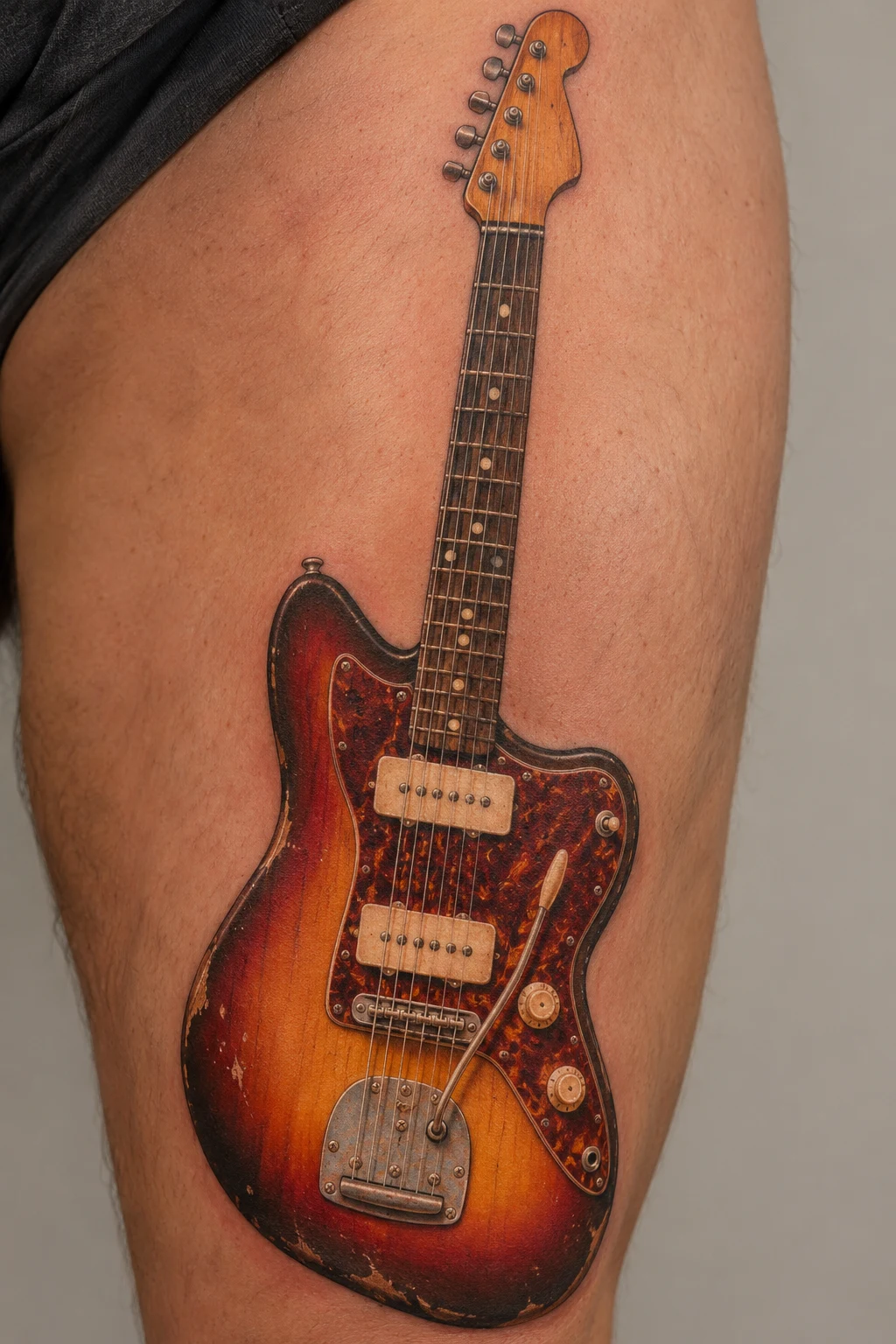
The personal detail might be a familiar finish, pickguard, or wear mark. Bring clear photographs of the whole guitar and close-ups of its defining features. Prioritize two or three details rather than reproducing every small scuff.
20. Crossed Acoustic and Electric Guitars
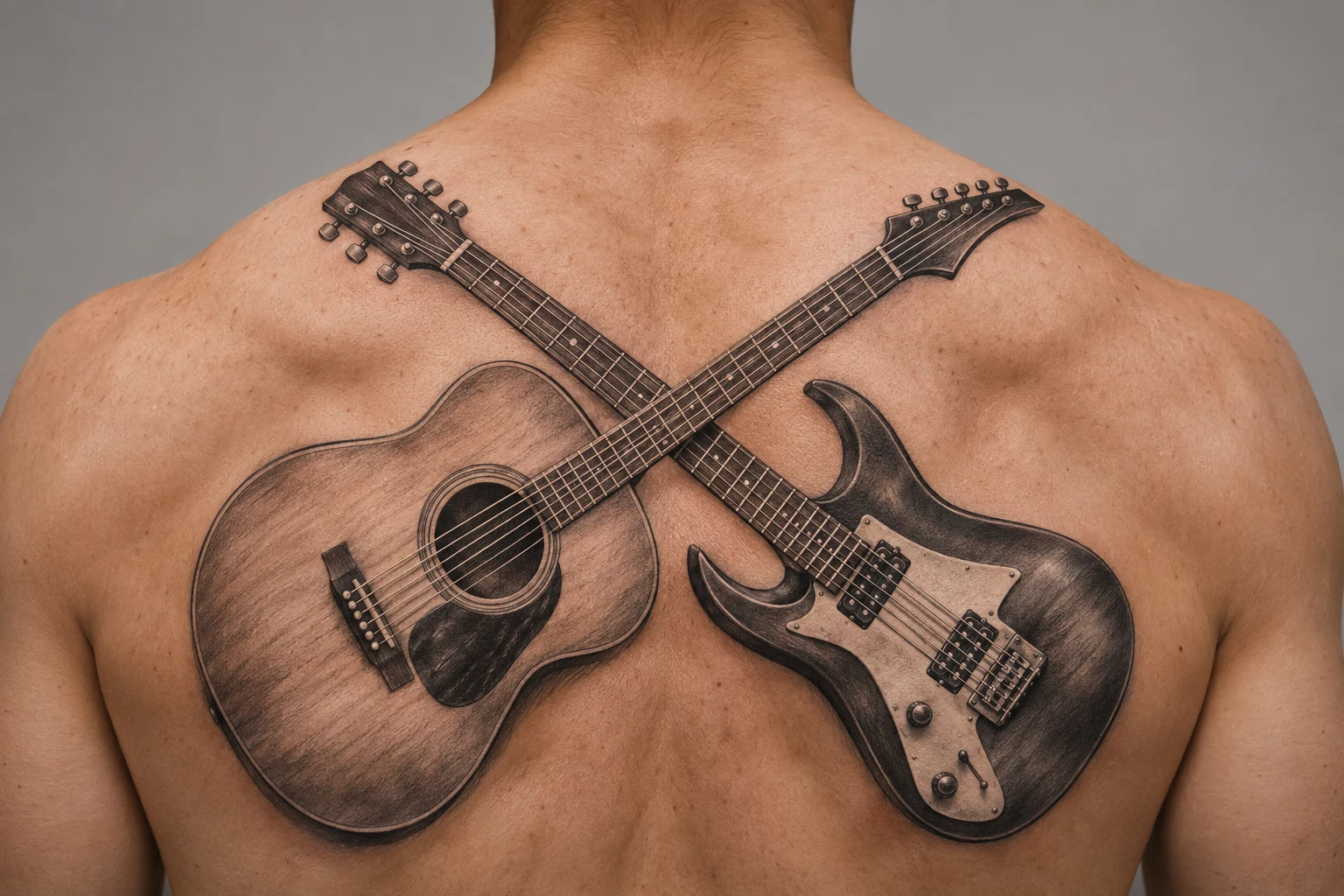
Pairing an acoustic and an electric puts their different silhouettes in one composition. Leave the bodies distinct and check the crossing point so each neck remains easy to follow. References of your own instruments can make the pairing more personal.
Choosing Your Guitar Tattoo
Shortlist one silhouette, one visual treatment, and a placement. A forearm or calf layout can follow the length of a single guitar; the thigh or upper back offers options for flowers, scenery, or crossed instruments. A small ankle silhouette keeps the composition simpler.
Gather instrument references and identify which details matter most before discussing scale with your artist. If you’re still comparing musical subjects, consider whether the guitar itself or another part of making music feels most personal.

