
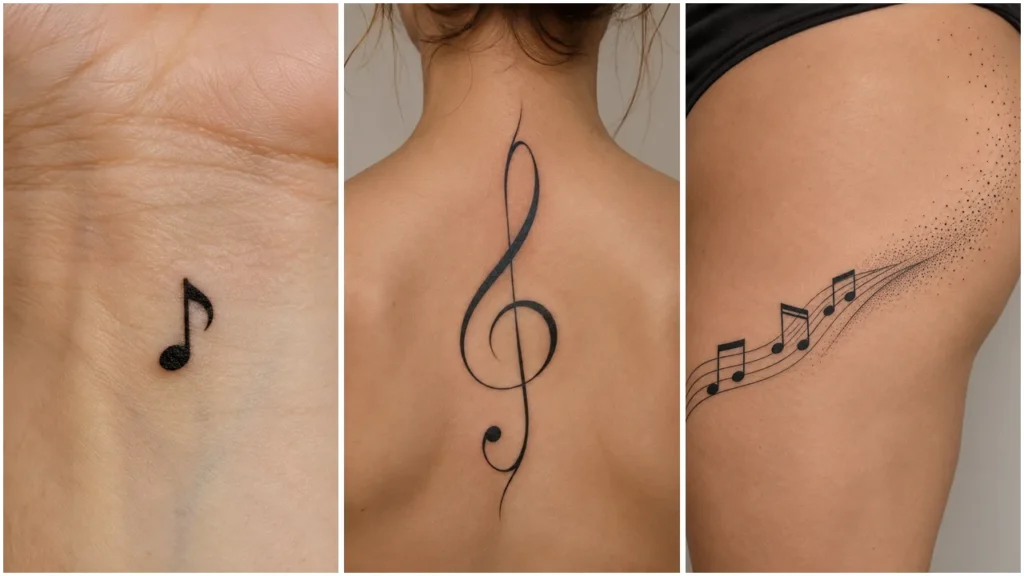
Music note tattoos can be a single small symbol or a passage from a piece you love. These 20 ideas explore individual notes, treble and bass clefs, and fuller musical compositions across different placements. Clefs identify how pitches are read on a staff; they aren’t notes themselves.
As you browse, consider whether you want a recognizable musical symbol, readable notation, or a decorative arrangement. That choice helps narrow both the design and the space it needs.
1. Tiny Eighth Note on the Inner Wrist
One solid black eighth note keeps the design compact.
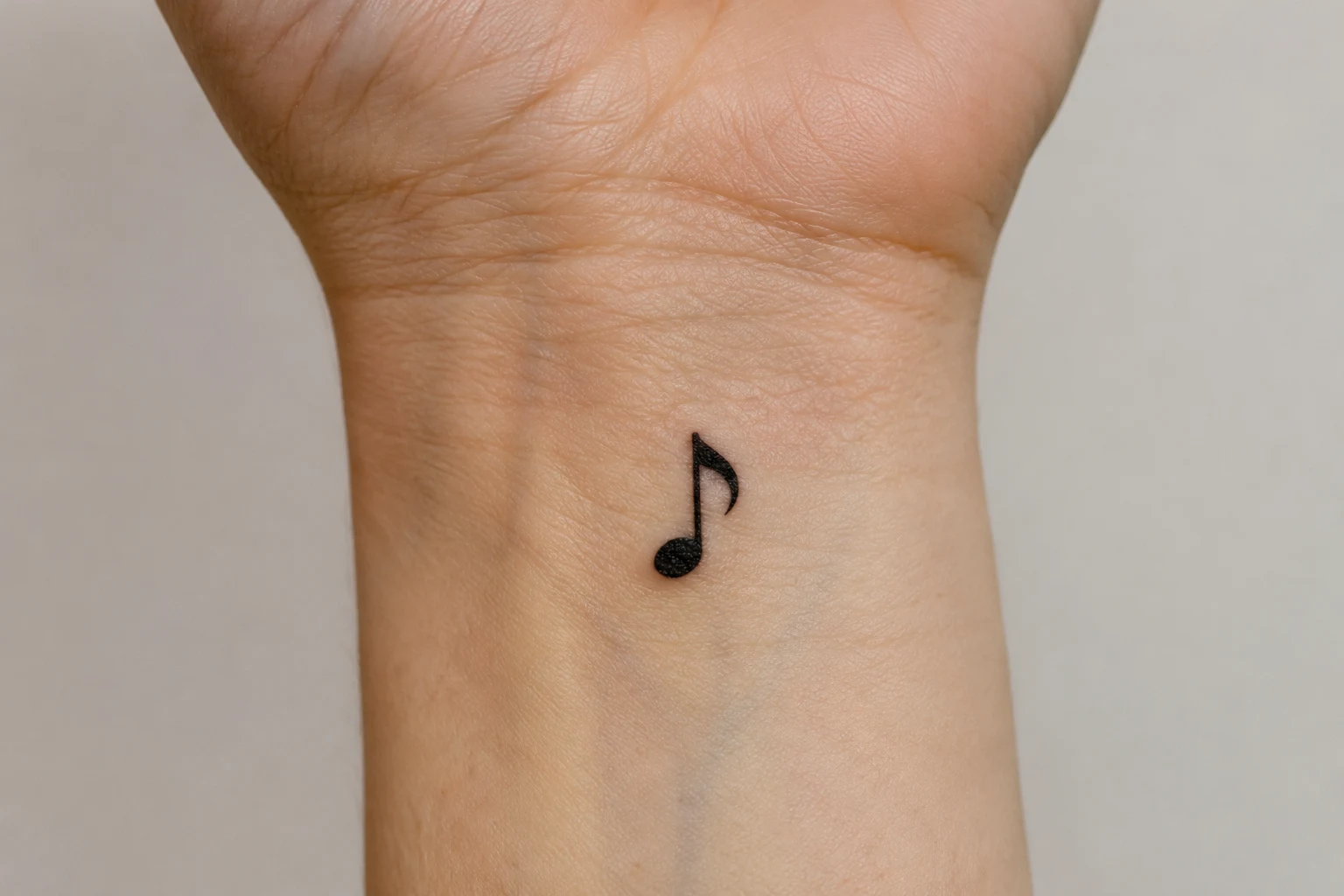
Its filled notehead, stem, and single flag create a distinct silhouette. Choose this direction if you want one simple symbol, then discuss its size and the space inside the flag with your artist.
2. Fine Line Quarter Note Above the Ankle
A filled notehead and slender stem sit above the ankle.
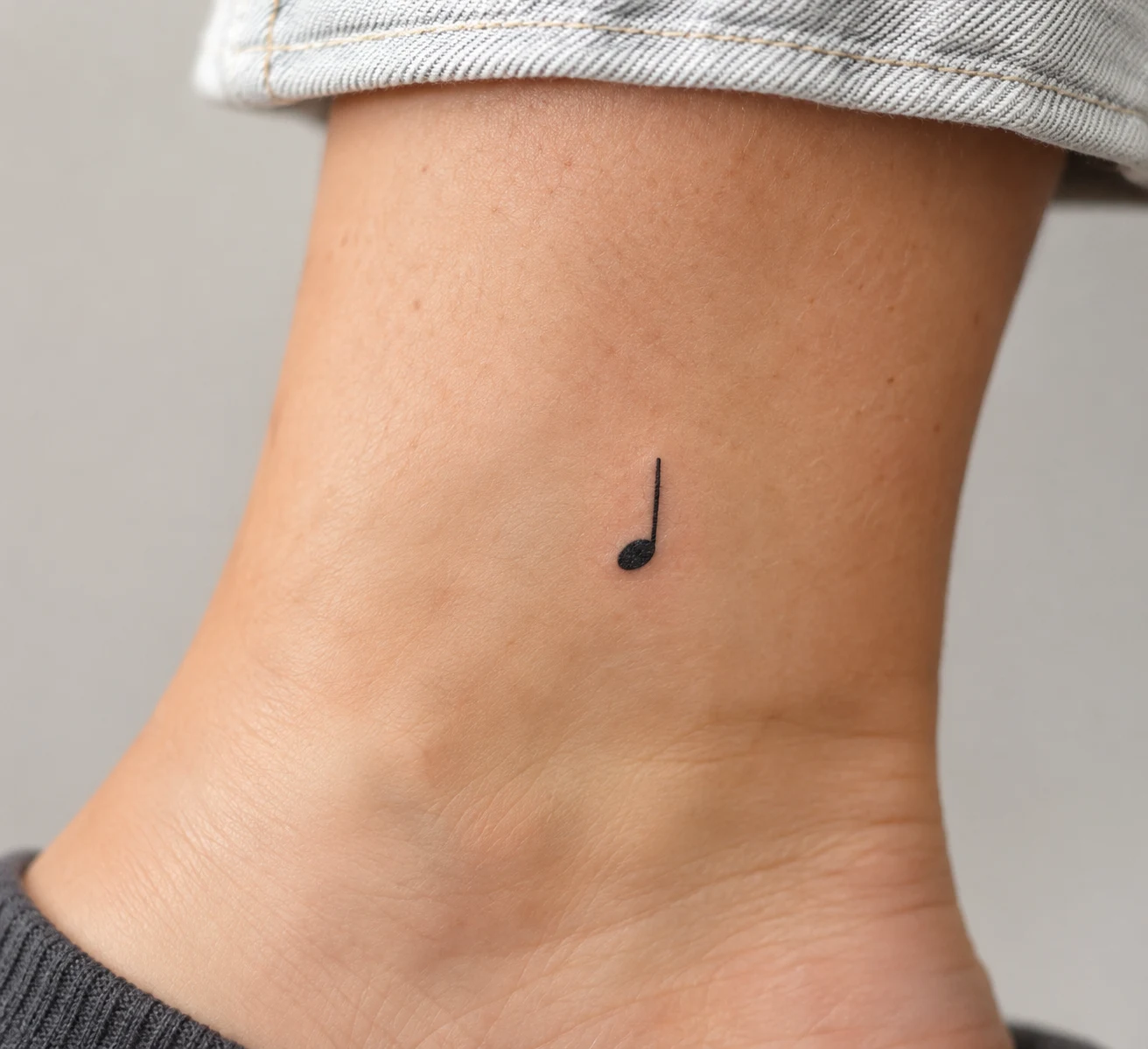
Unlike the eighth note, a quarter note has no flag. That simpler outline suits someone drawn to restrained linework. Keep the notehead clearly defined so the design retains its musical character.
3. Beamed Eighth Notes Behind the Ear
Two eighth notes share a clean black beam.
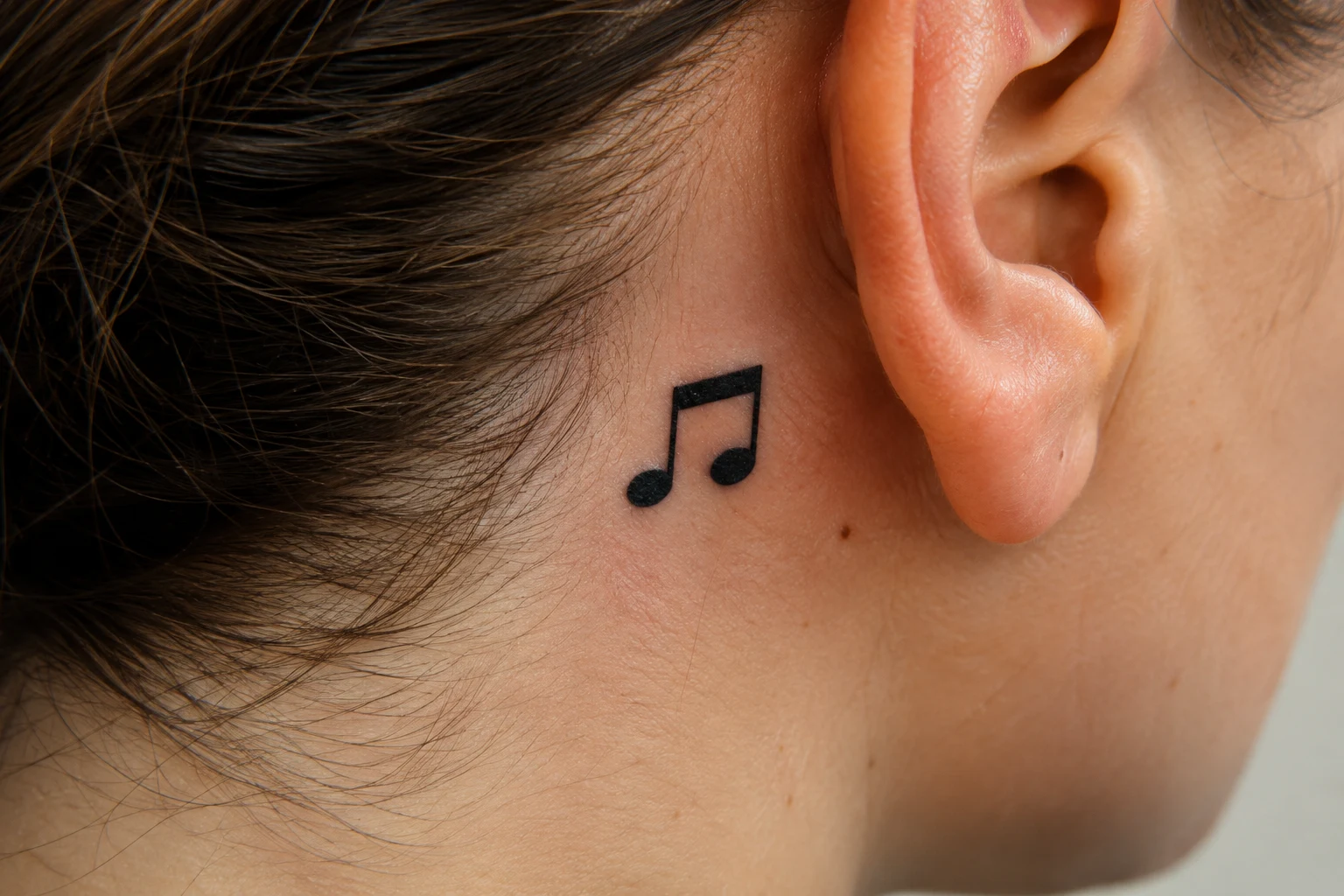
The paired motif adds width while keeping the composition small. Behind the ear, its visibility will depend partly on your hairstyle. Ask your artist how much room the two noteheads and connecting beam need.
4. Bold Sixteenth Note on the Upper Arm
Two distinct flags give this black note its shape.
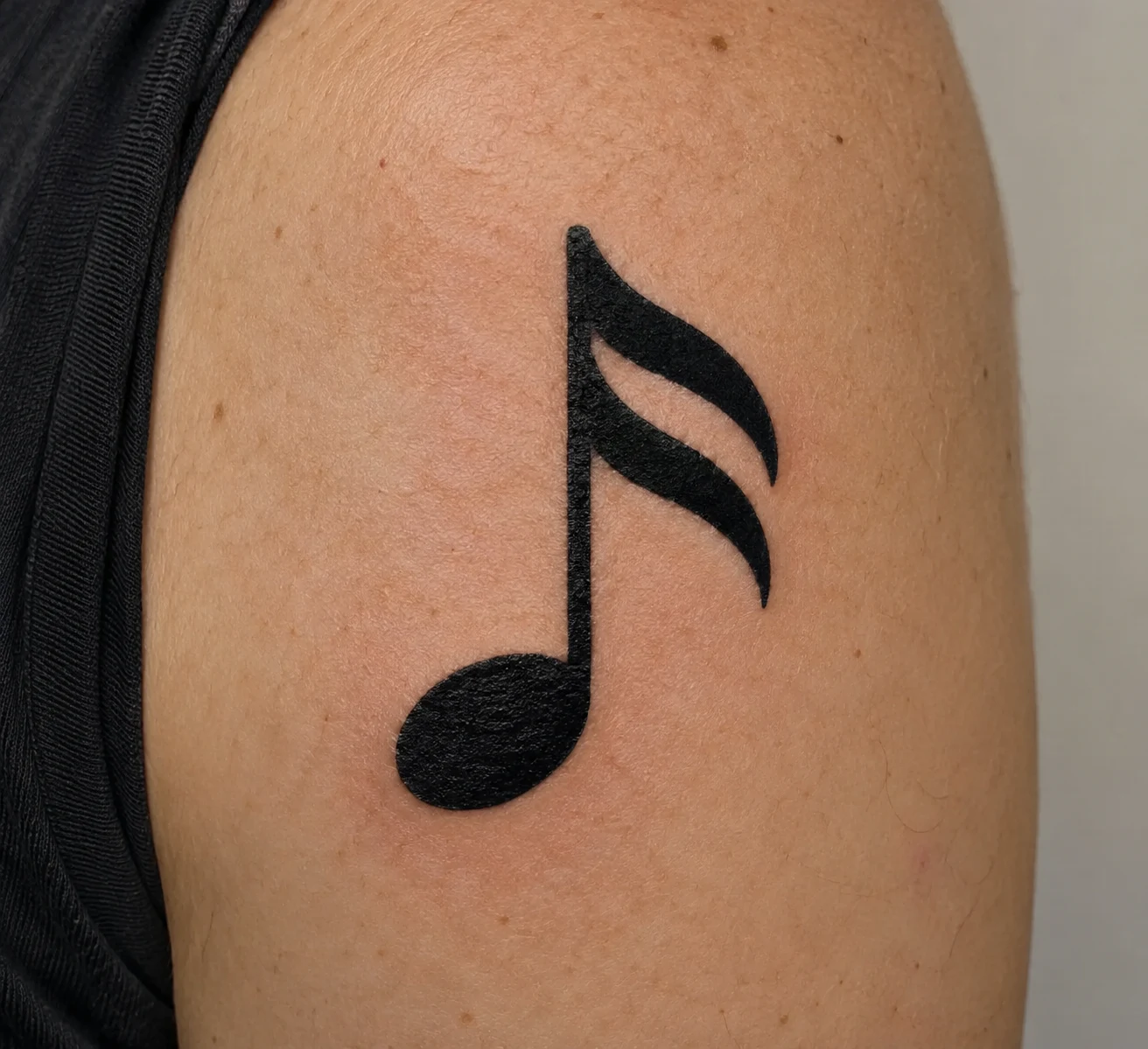
A heavier stem and filled notehead make this a stronger graphic choice than the fine line designs. Preserve separation between the flags, with final proportions fitted to the available upper-arm space.
5. Matching Quarter Note Tattoos
Matching quarter notes create a shared musical detail.
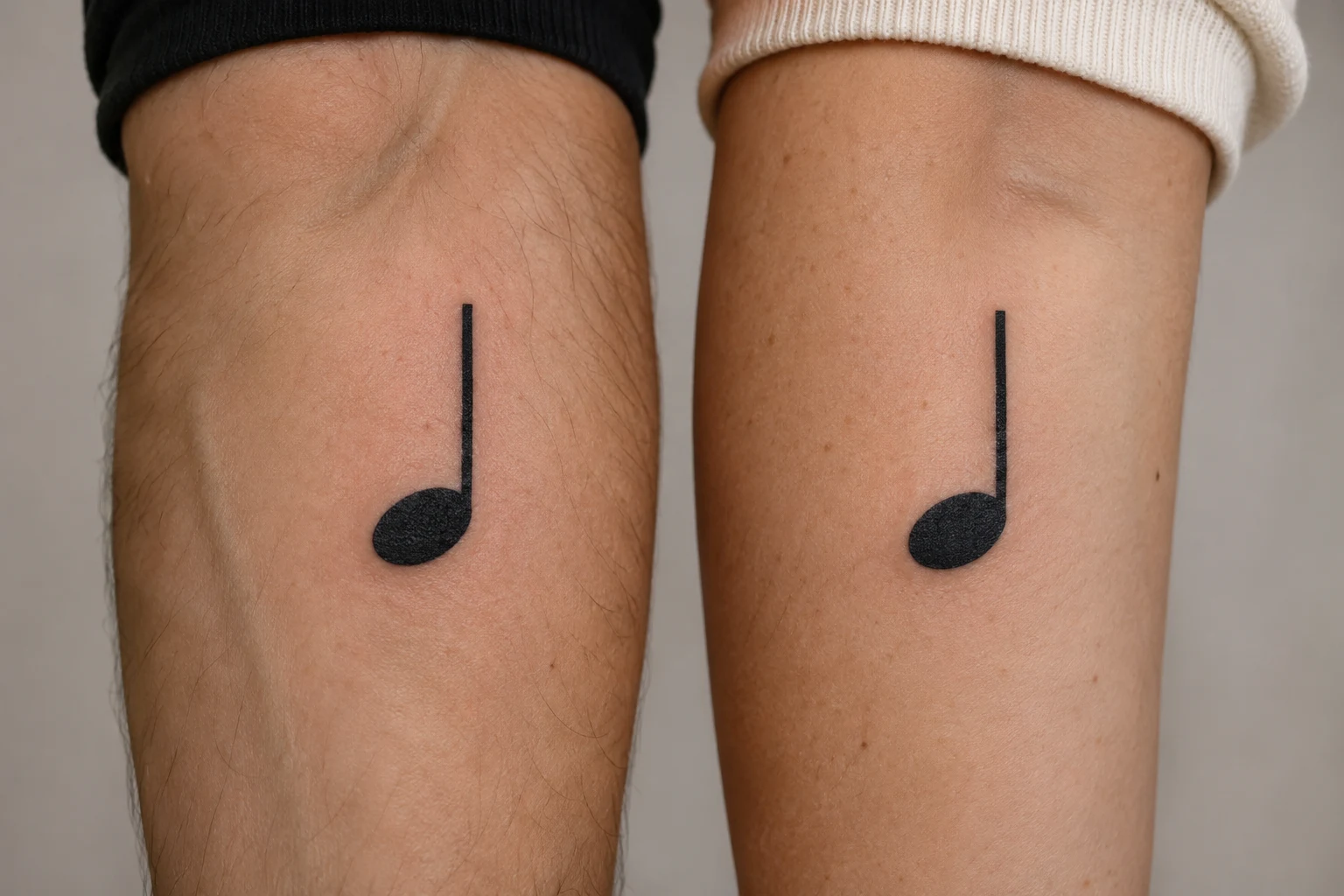
Friends, partners, or relatives could choose the same symbol for a song or experience they share. The meaning comes from that connection. Agree on the shape together while allowing each placement to suit its wearer.
6. Eighth Note With a Watercolor Accent
Blue and violet color surrounds a crisp black note.
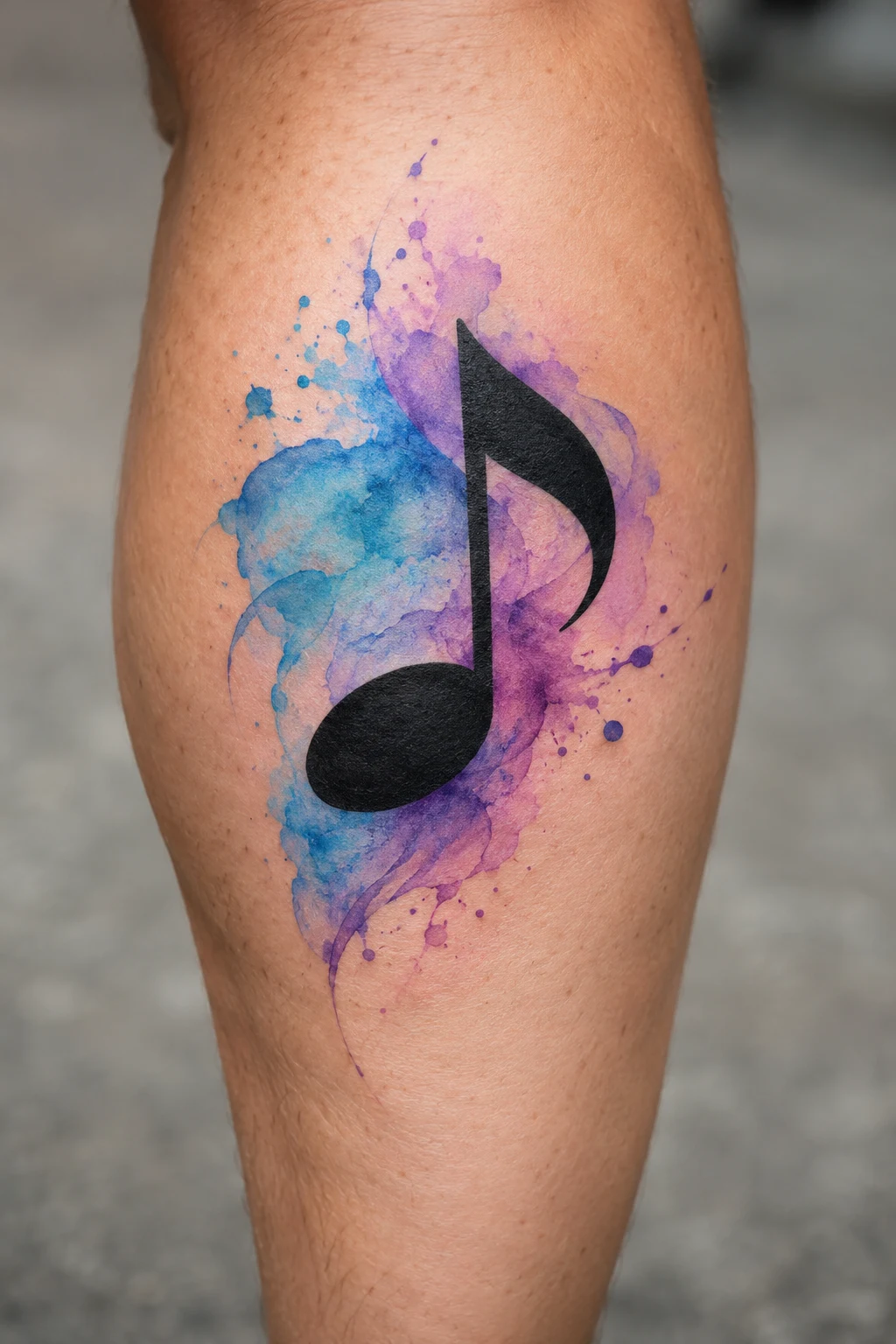
This calf design suits someone who wants color without adding another object. Keep the note visually distinct from the wash, and decide whether you prefer a small accent or a broader patch of color.
7. Eighth Note With a Floral Sprig
A delicate flowering sprig sits beside the note.
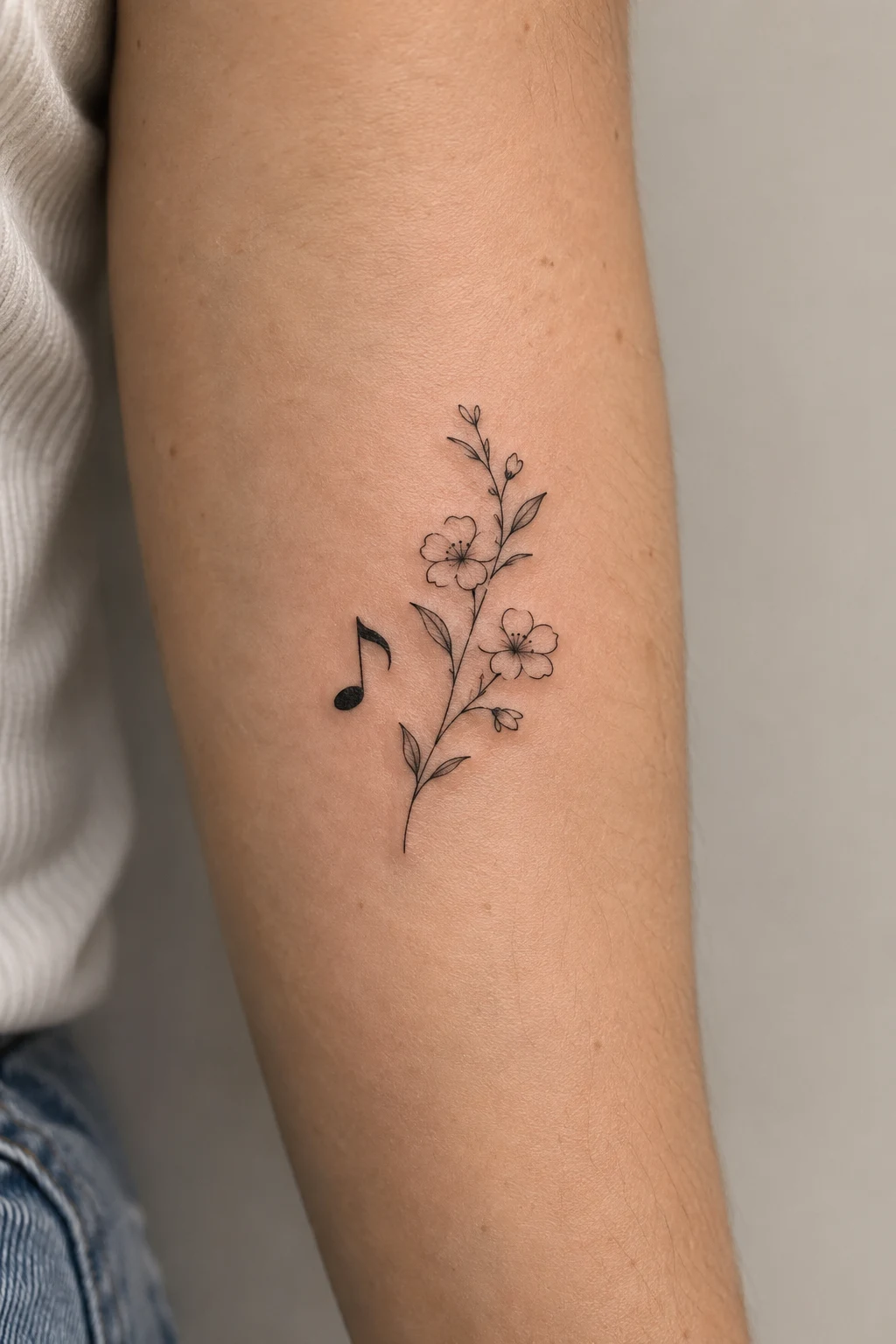
The botanical detail softens the composition while leaving the musical shape recognizable. Choose a flower for its appearance or your own connection to it; the design doesn’t need an assigned symbolic meaning to feel personal.
8. Negative Space Note in a Black Disc
An uninked eighth note stands inside a black circle.
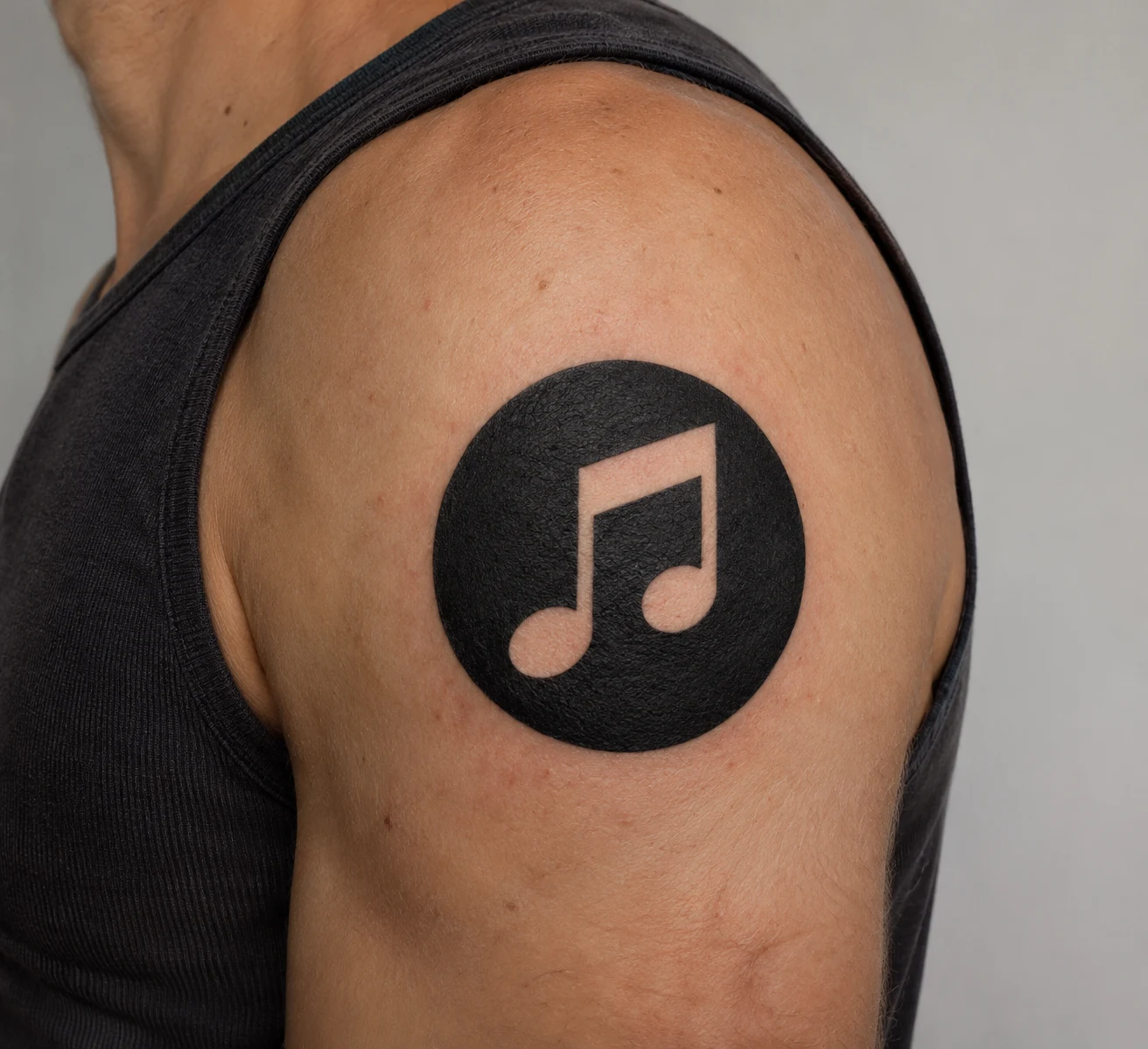
Here, the surrounding ink defines the symbol. The solid disc makes a bold focal point on the upper arm. Discuss enough room for the note’s interior shape before settling on the circle’s diameter.
9. Fine Line Treble Clef on the Forearm
A standalone treble clef follows the inner forearm.
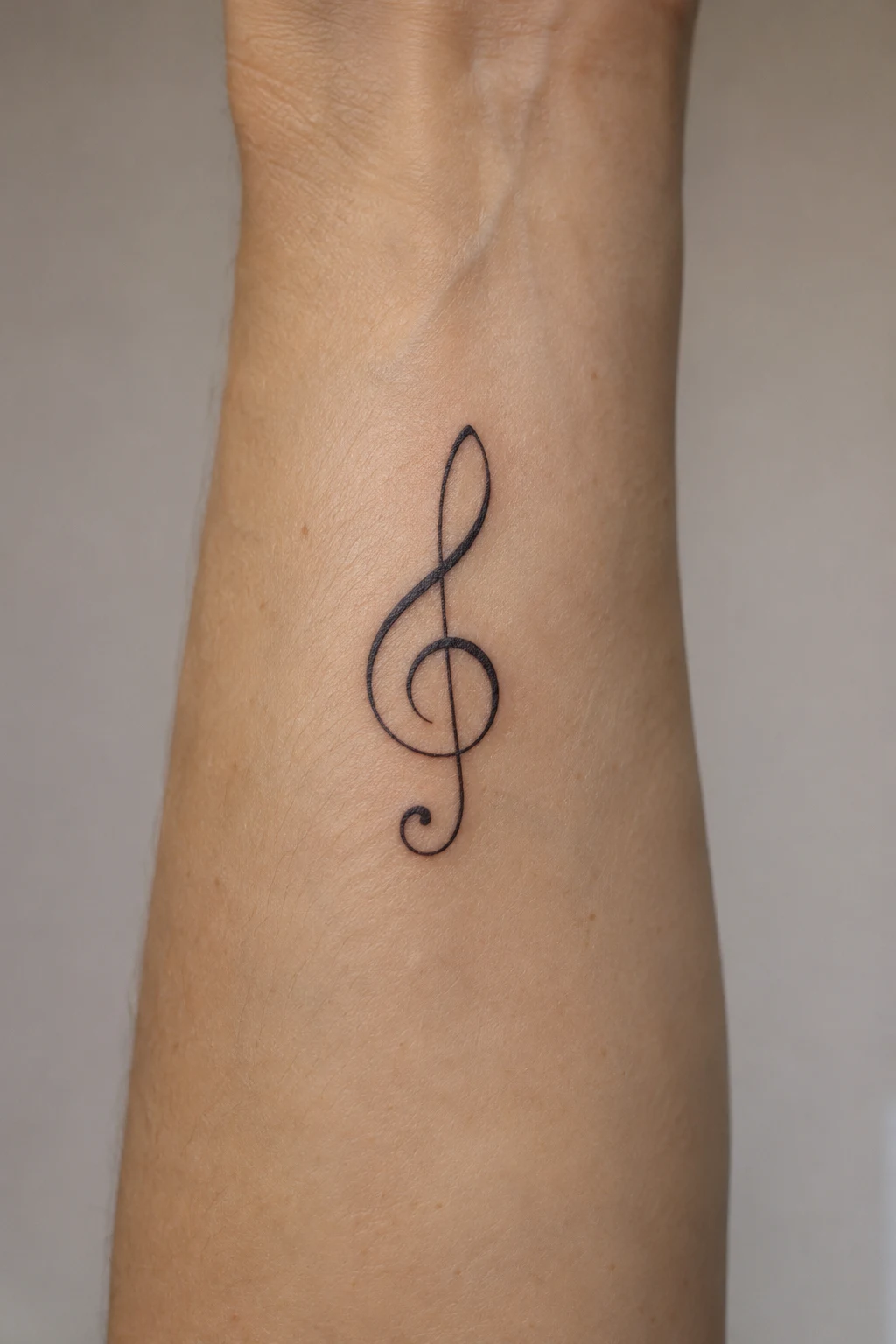
Its looping form offers more movement than a single note. This treble clef tattoo suits someone who likes the symbol itself or connects it with music they read or play. Keep its defining curves recognizable.
10. Treble Clef With a Rose
One shaded rose balances a black treble clef.
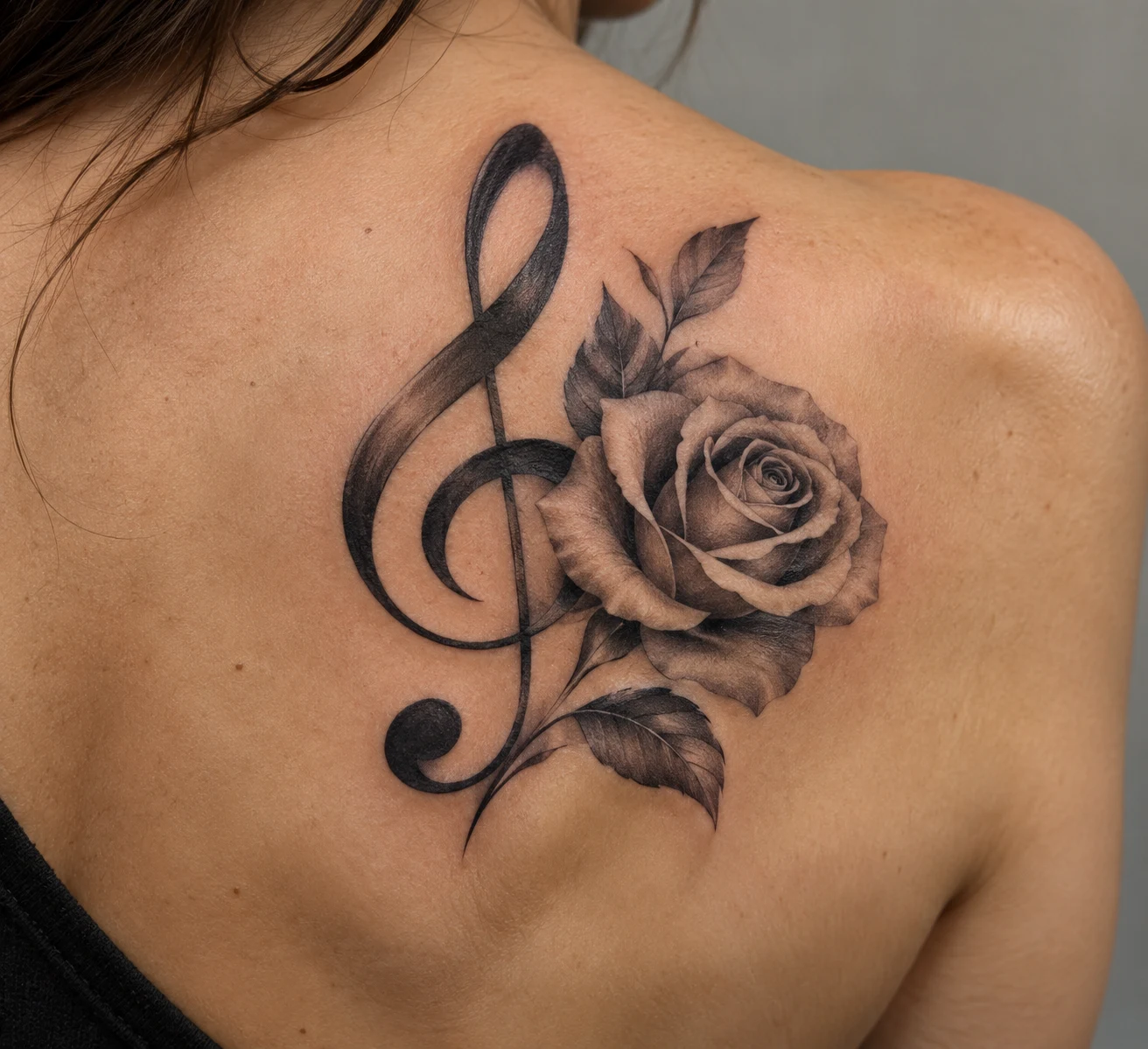
The shoulder-blade composition gives the flower more presence than the small sprig design. Decide which element should lead: a prominent clef with a supporting bloom, or a larger rose with the clef alongside it.
11. Vertical Treble Clef Along the Spine
An elongated treble clef creates a centered back design.
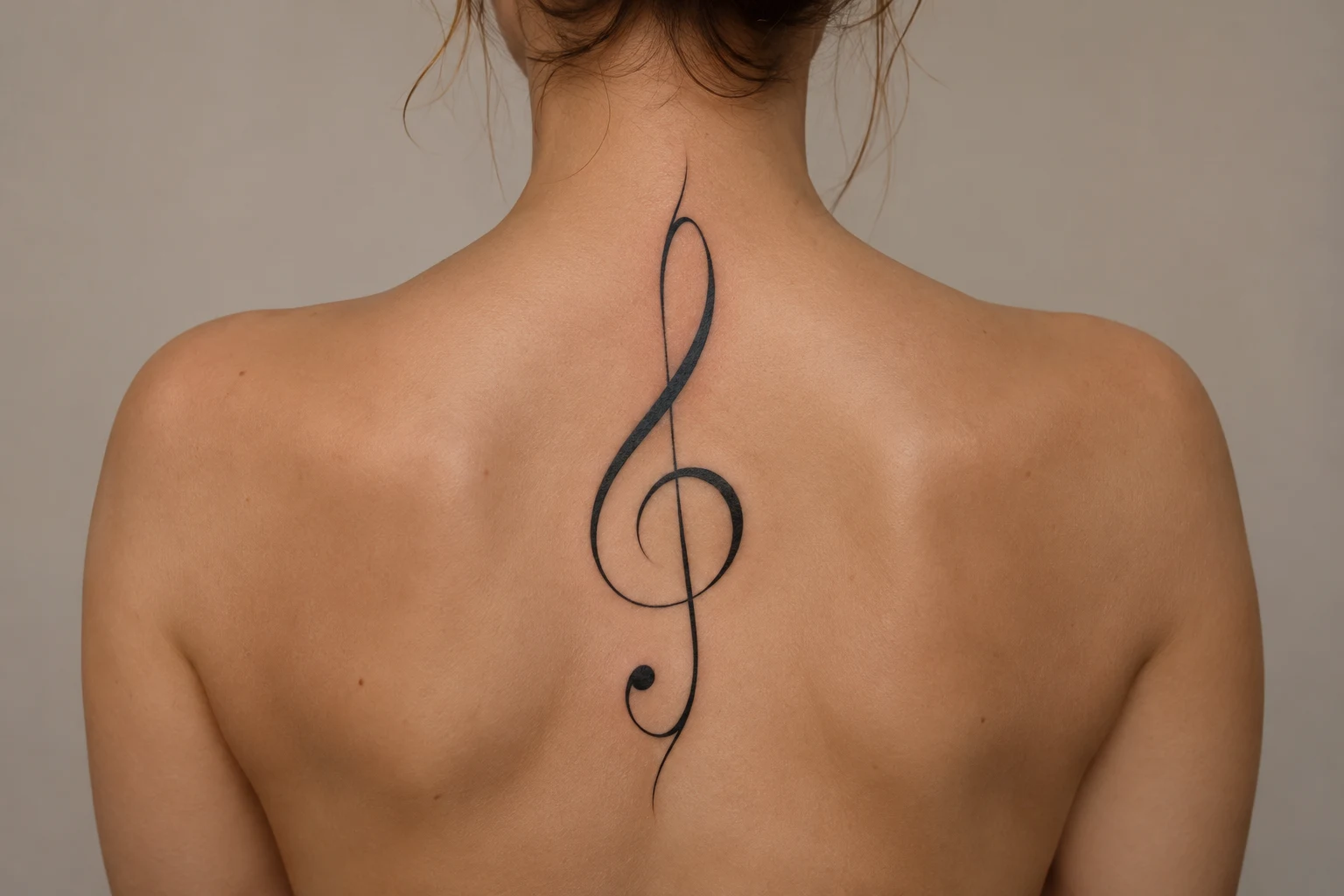
The vertical placement emphasizes the symbol’s long stem and curves. Ask your artist to preserve its recognizable structure when adjusting the proportions, then assess the stencil on your body before committing to its length.
12. Small Bass Clef on the Inner Ankle
A curved mark and two dots form this bass clef.
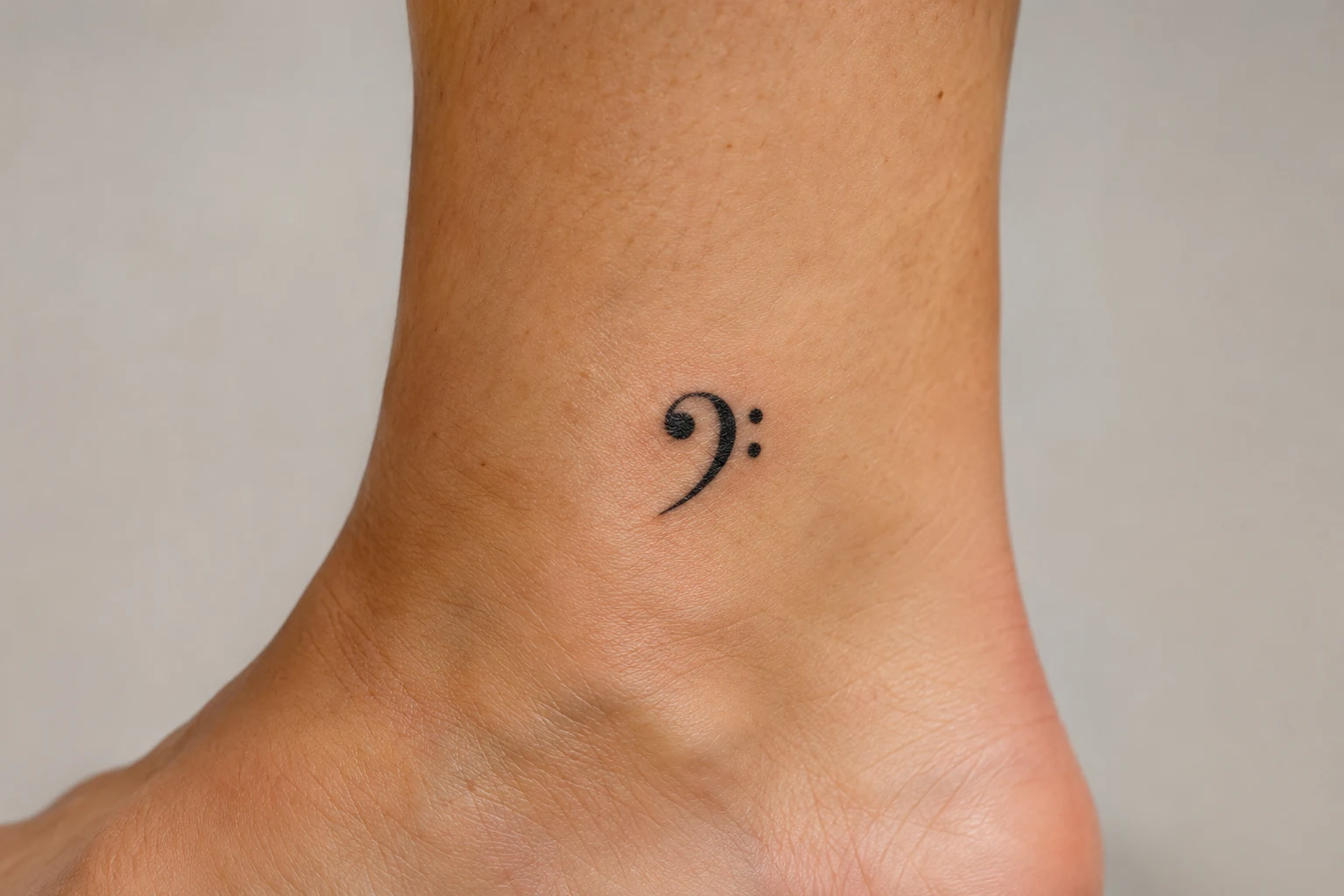
Choose a bass clef tattoo if it connects more closely with your musical interests or visual taste. Keep both dots distinct from the curved body rather than compressing the whole symbol to achieve a smaller size.
13. Bold Bass Clef on the Calf
A thick black curve gives the bass clef more presence.
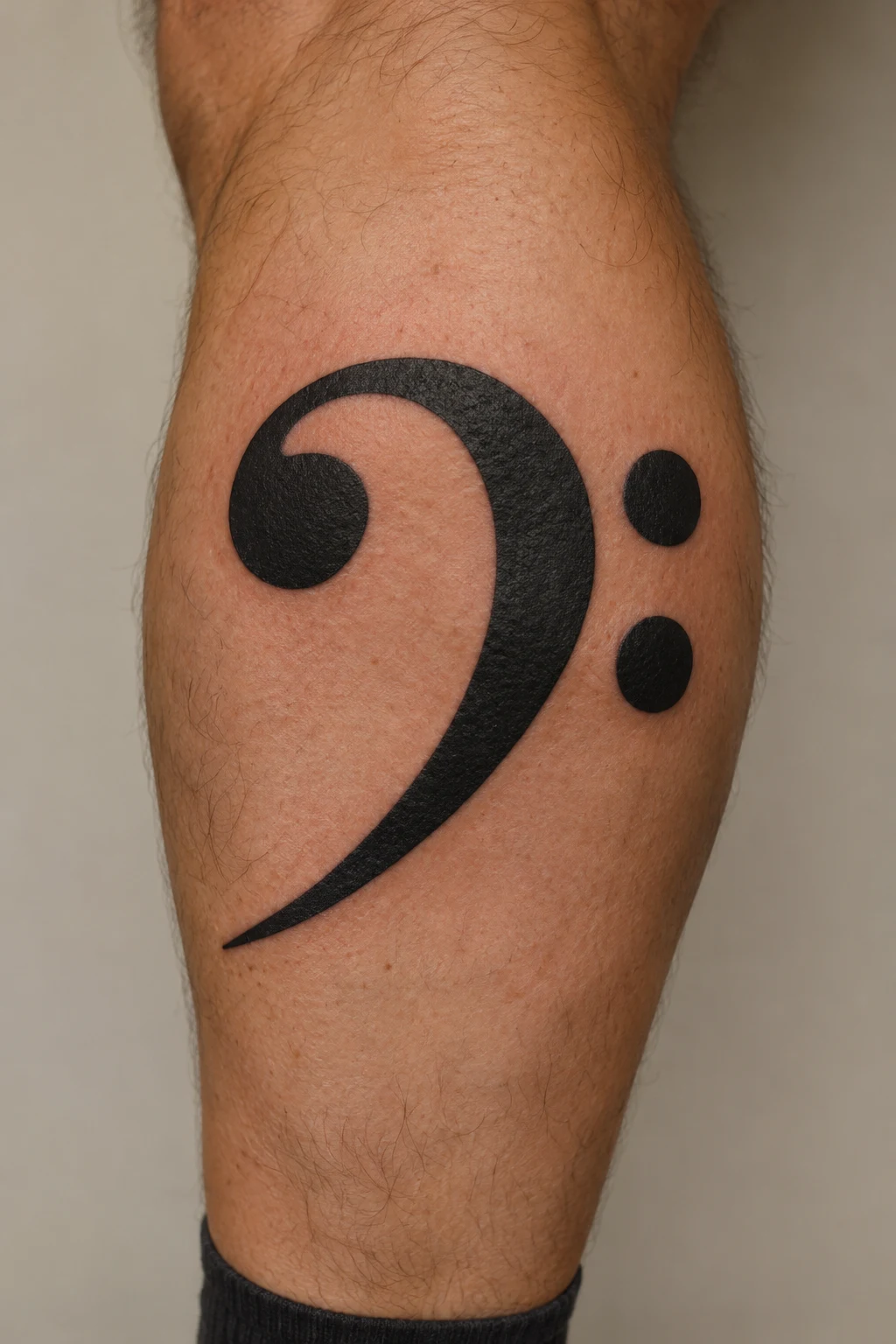
Compared with the ankle version, this design prioritizes scale and visual weight. Generous spacing around the dots helps define the composition. It suits someone who wants the symbol to be a prominent feature.
14. Treble and Bass Clef Heart
Two clefs come together in a heart-shaped arrangement.
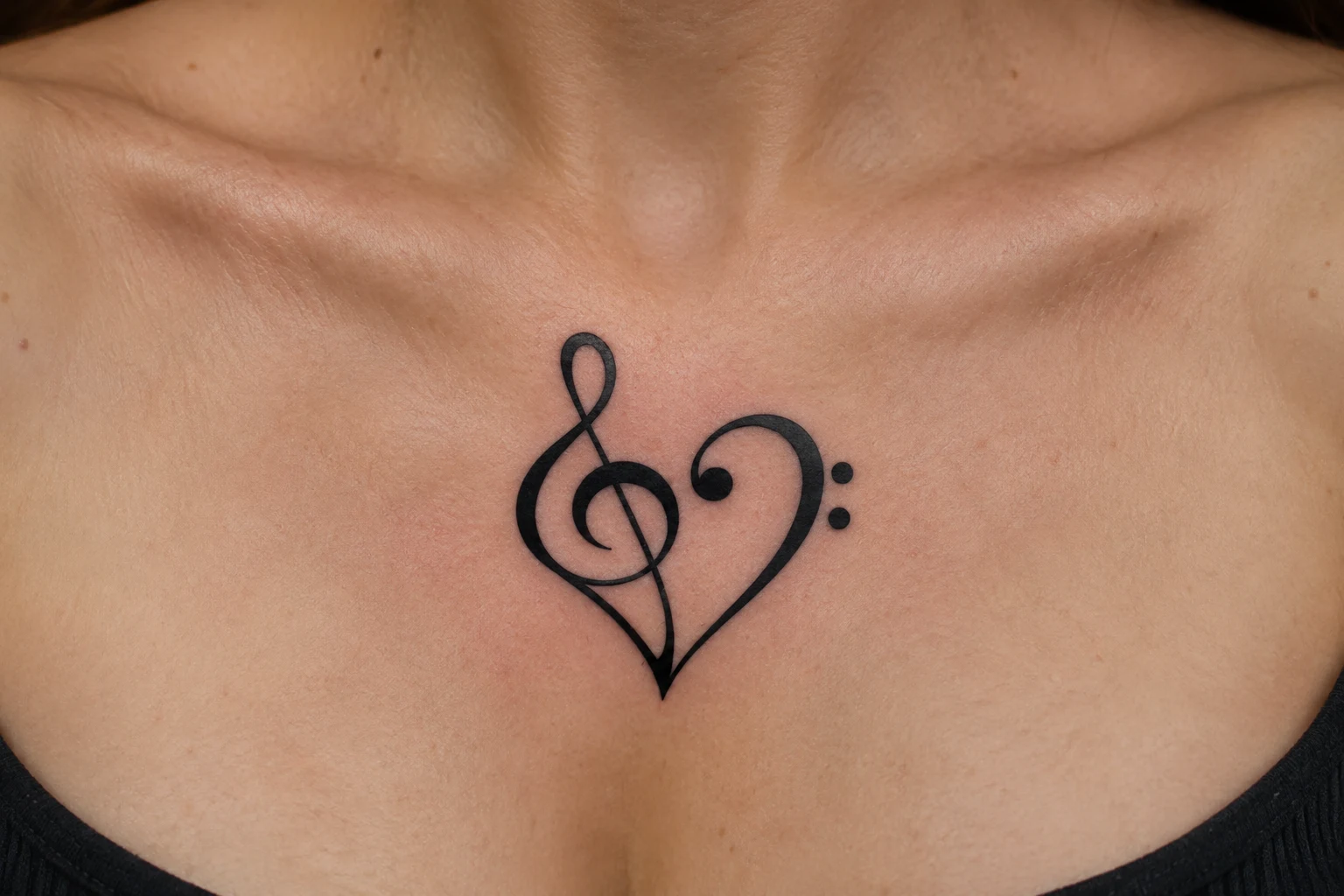
This is decorative symbolism rather than playable notation. Keep enough of each clef’s structure to recognize both symbols. The upper-chest placement offers room to balance the heart’s outline without forcing perfect symmetry.
15. A Meaningful Melody on a Straight Staff
A short musical passage runs across the inner forearm.
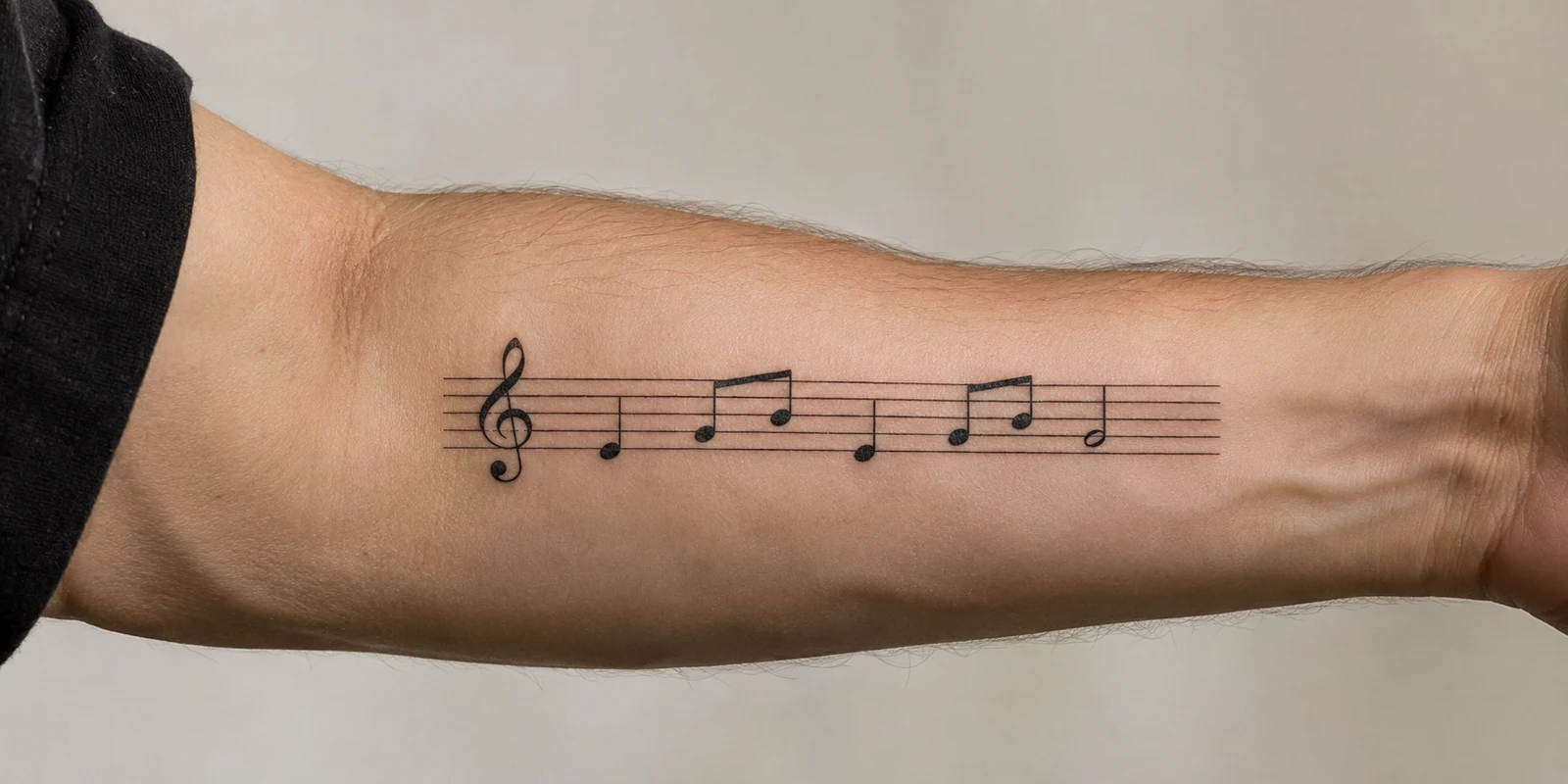
Choose the excerpt before deciding its final length. If you want an accurate melody, have the pitches, rhythm, clef, and necessary signatures checked against your intended passage before the tattoo stencil is approved.
16. A Musical Staff Around the Upper Arm
A five-line staff forms a musical arm band.
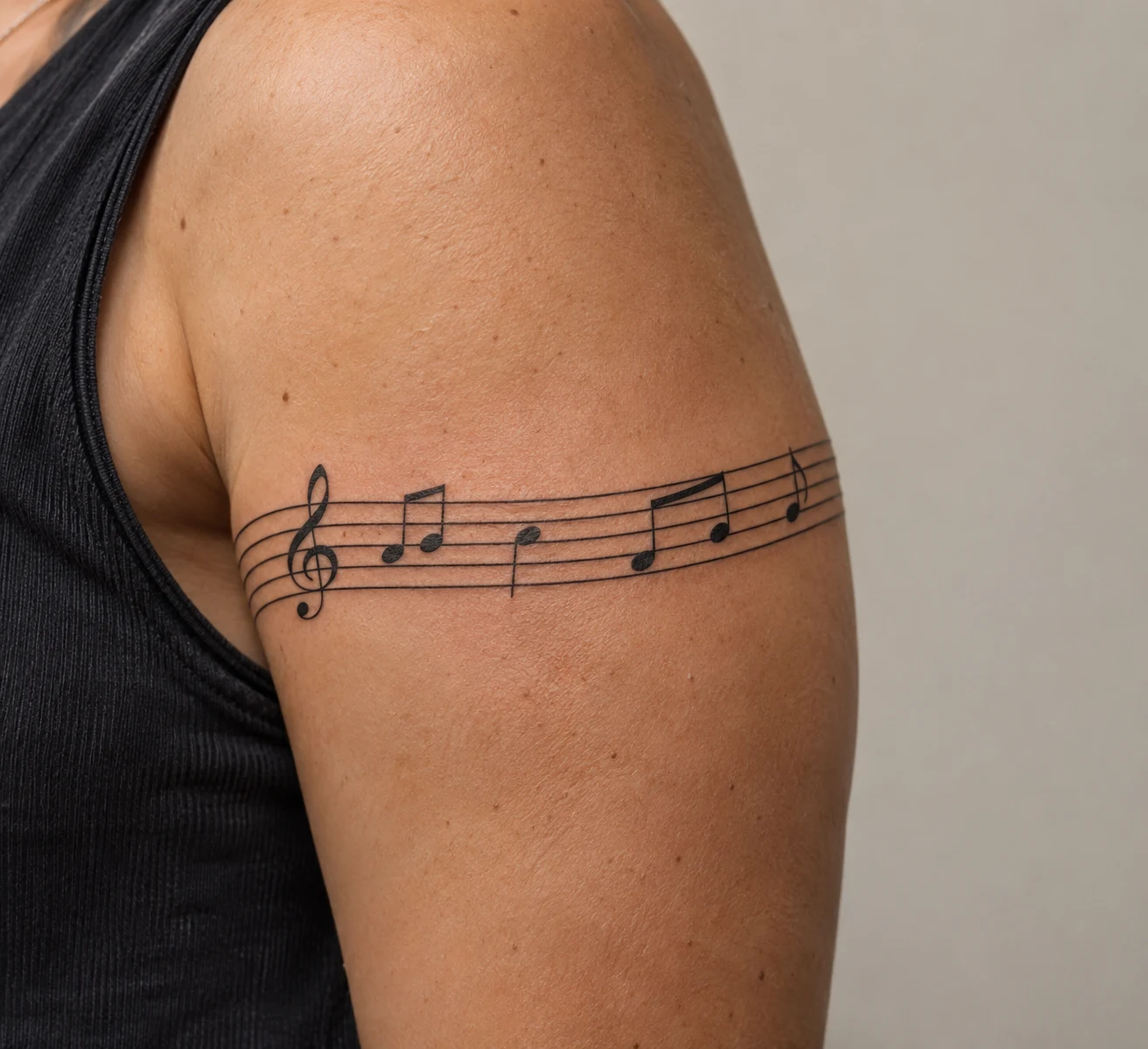
Decide whether the composition should wrap fully around or leave an intentional gap. A fitted stencil helps you assess the join and spacing. Any intended musical passage also needs a separate notation check.
17. A Curved Musical Phrase Along the Collarbone
A short staff follows the collarbone’s gentle curve.
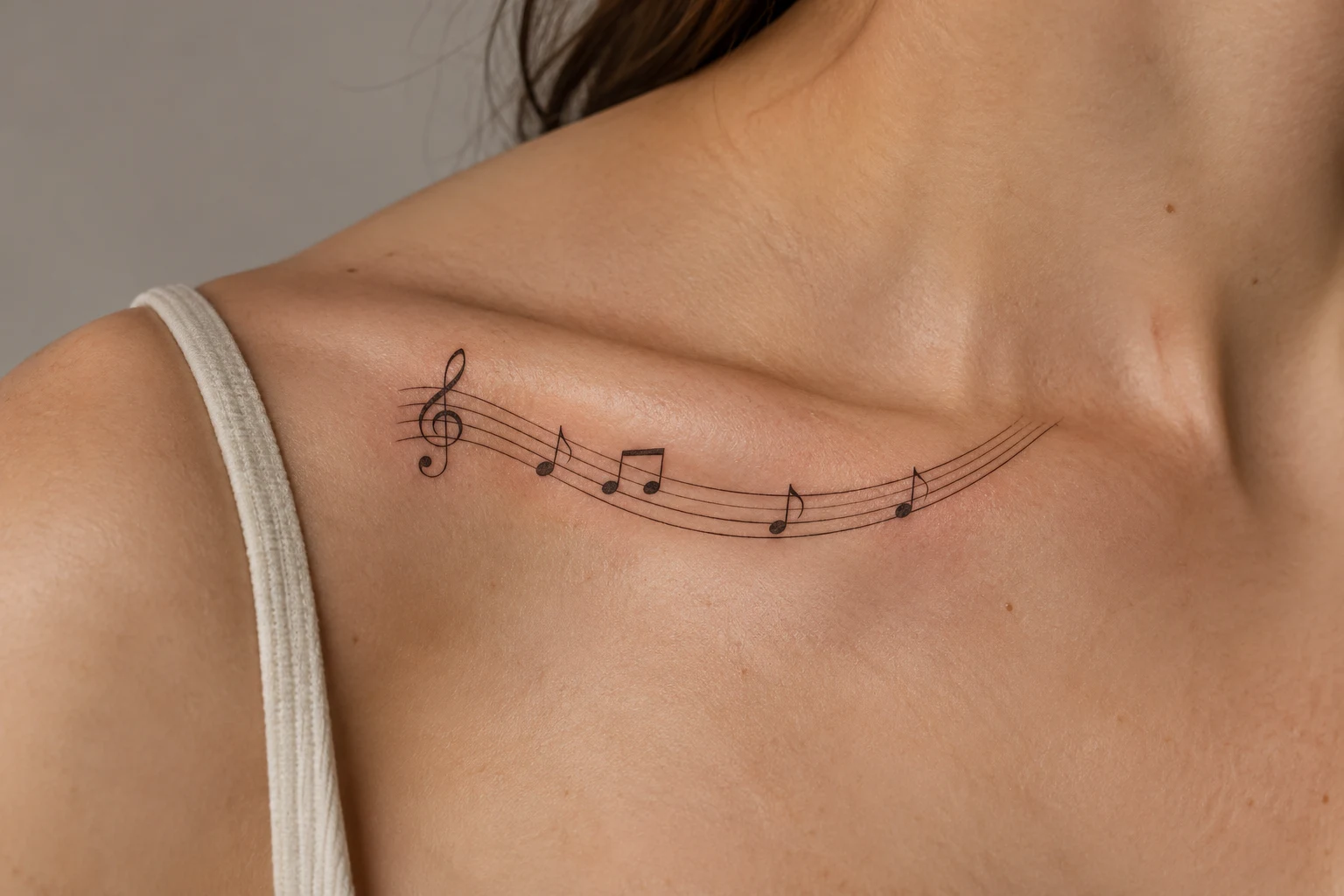
This narrow composition suits a brief phrase with room between its symbols. Keep the notes’ positions relative to the staff clear as it curves. If the excerpt feels crowded, shorten the selection or reconsider its scale.
18. A Circular Staff on the Shoulder
An open circular staff frames the outer shoulder.
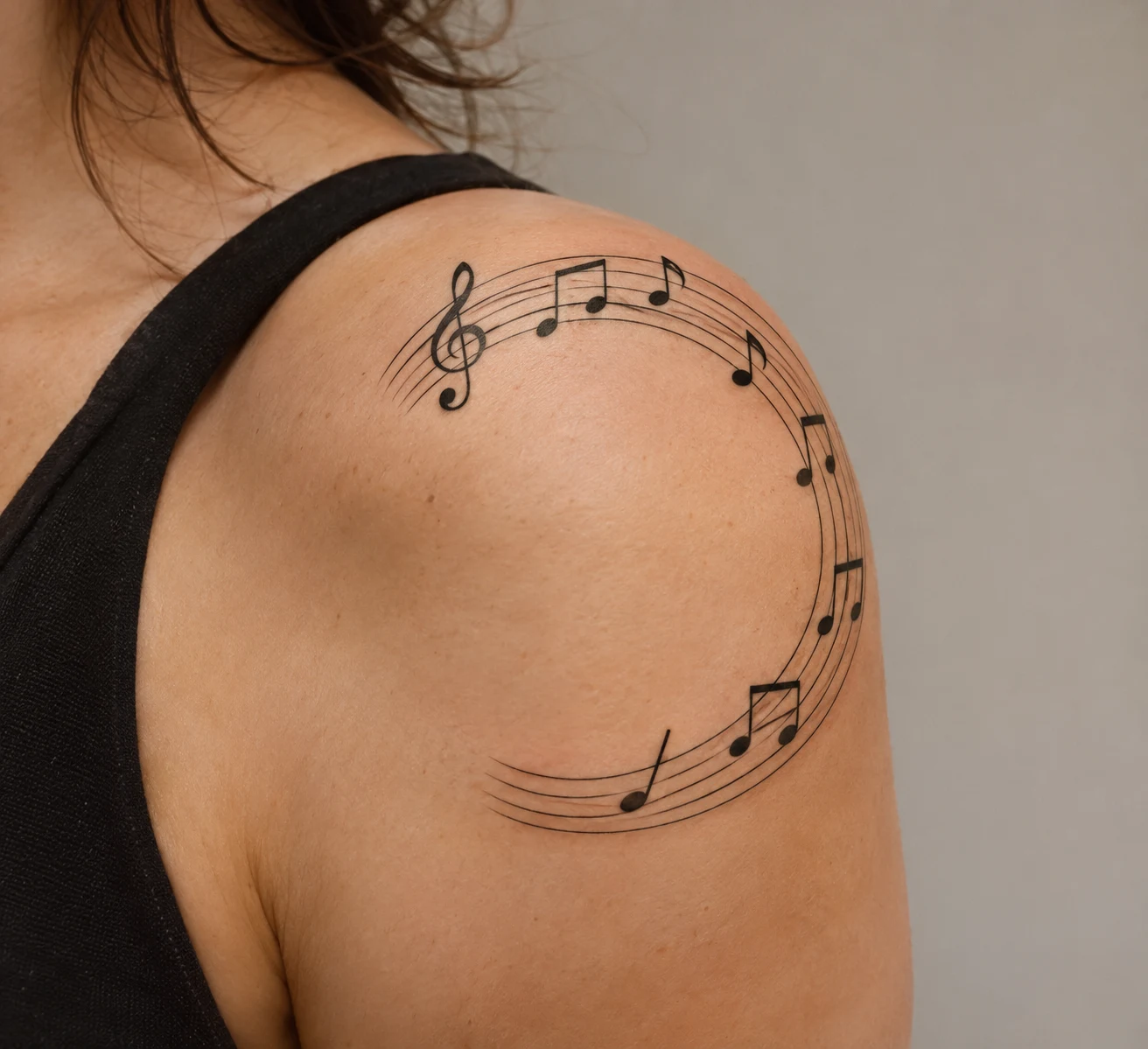
The rounded layout makes the staff itself part of the artwork. Decide whether it will contain a readable melody or decorative notation. For a specific passage, establish its starting point, reading direction, and spacing before fitting the stencil.
19. A Grand Staff on the Upper Back
Treble and bass staves share a larger back composition.
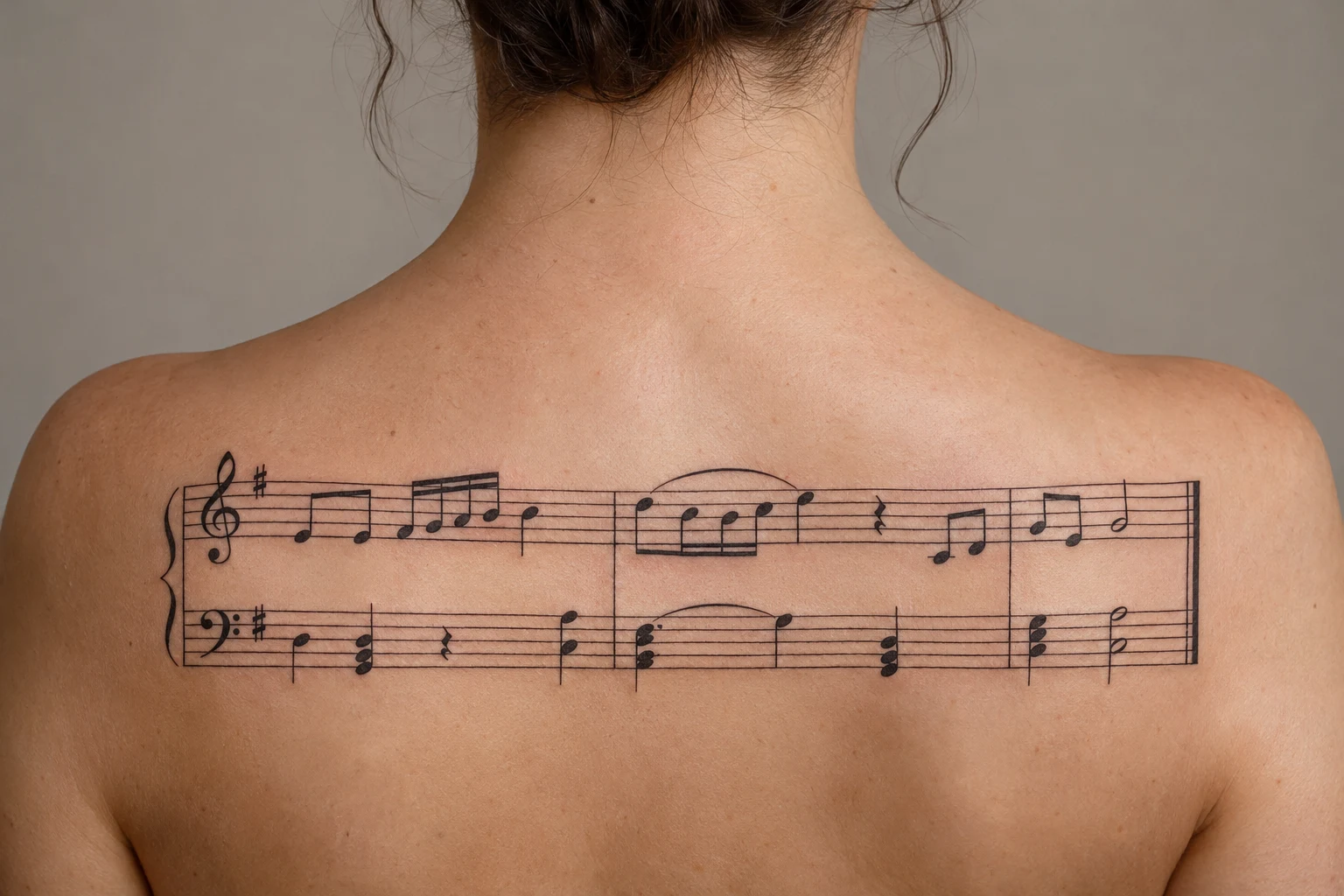
A grand staff pairs the two staves as one musical system. This option suits an excerpt written across both. Select the passage first, then allow its notation to guide the design’s width and spacing.
20. Notes Dissolving Into Dots
Beamed notes transition into scattered stippled dots.
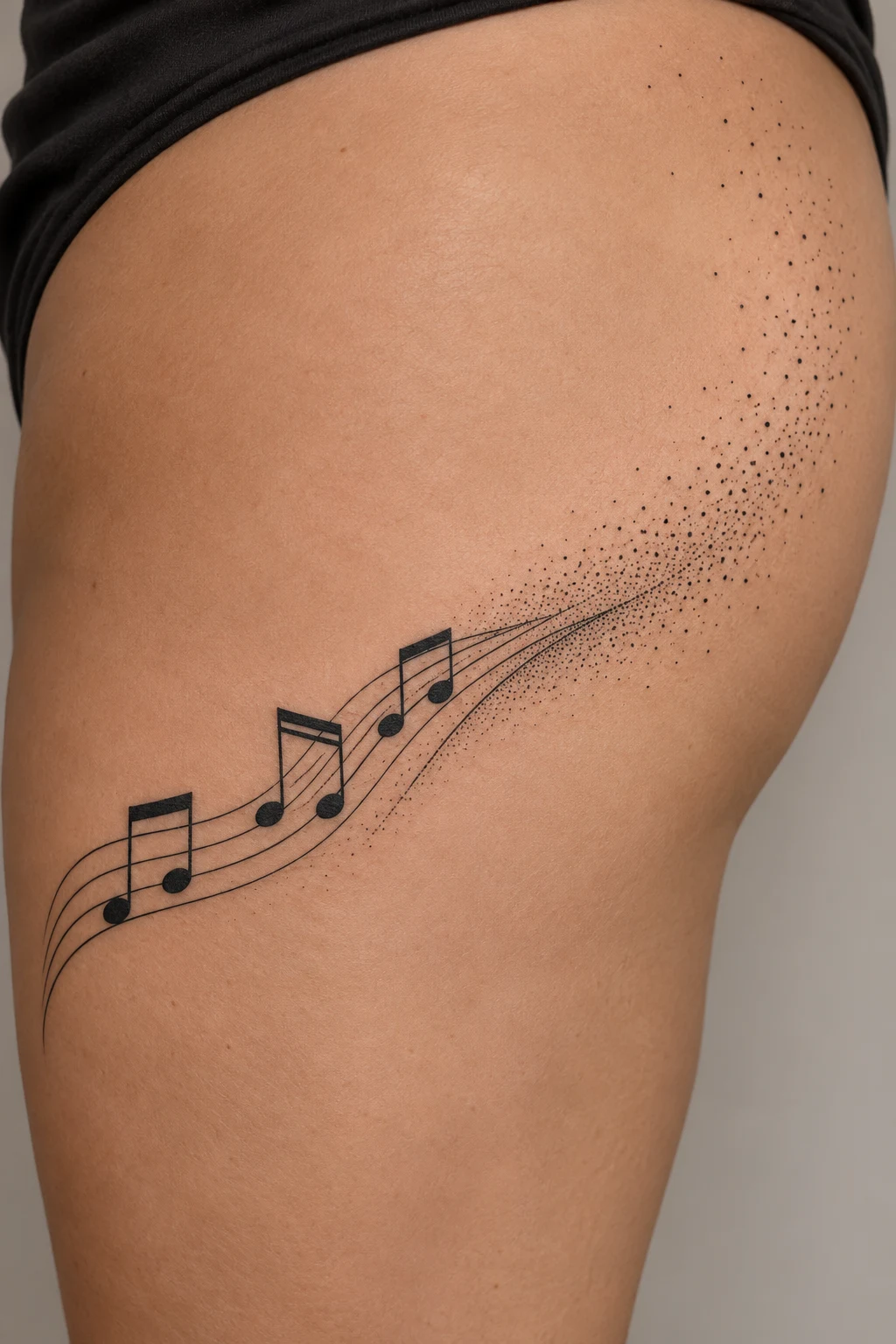
This illustrative design emphasizes movement rather than a continuous playable passage. Keep the first notes recognizable, then let the dots spread outward. The thigh placement allows the transition to stretch across a broader area.
Choosing Your Music Note Tattoo
Shortlist a single note, a clef, or a musical passage, then compare your preferred scale and placement. Bring the concept and any intended sheet music to your artist for a stencil discussion. Have readable notation checked before it becomes permanent.
For ideas beyond notes and clefs, explore tattoos for music lovers.

