
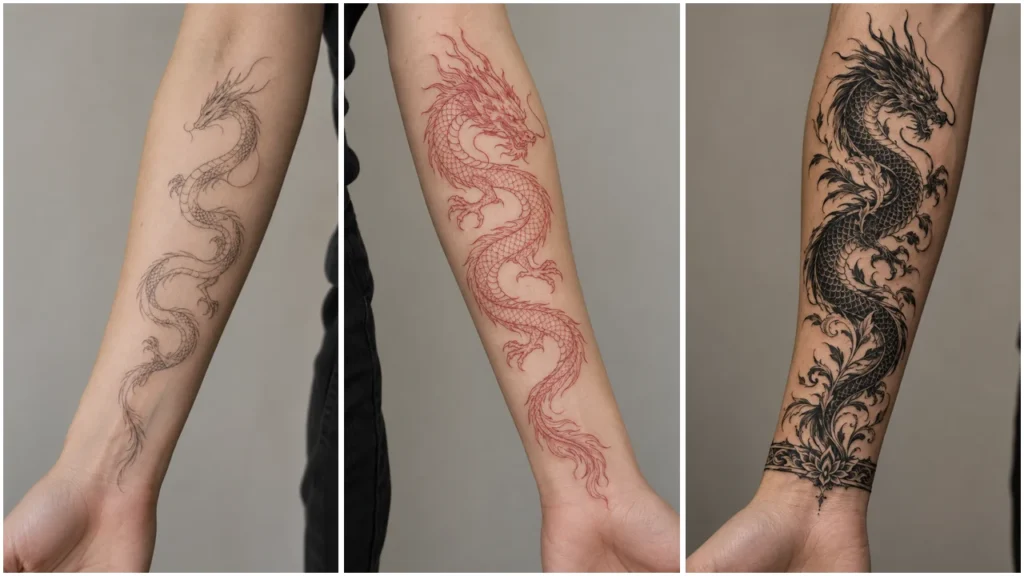
Dragon forearm tattoos can follow the length of your arm, form a compact focal piece or wrap around several sides. These 20 concepts range from spare outlines to textured creatures and colorful compositions. Compare the overall silhouette, coverage and detail to find a direction you’d like to develop with an artist.
Minimal and Graphic Dragon Forearm Tattoos
These five ideas use outlines, solid shapes and open skin to define the creature.
1. Fine Line Dragon Along the Inner Forearm
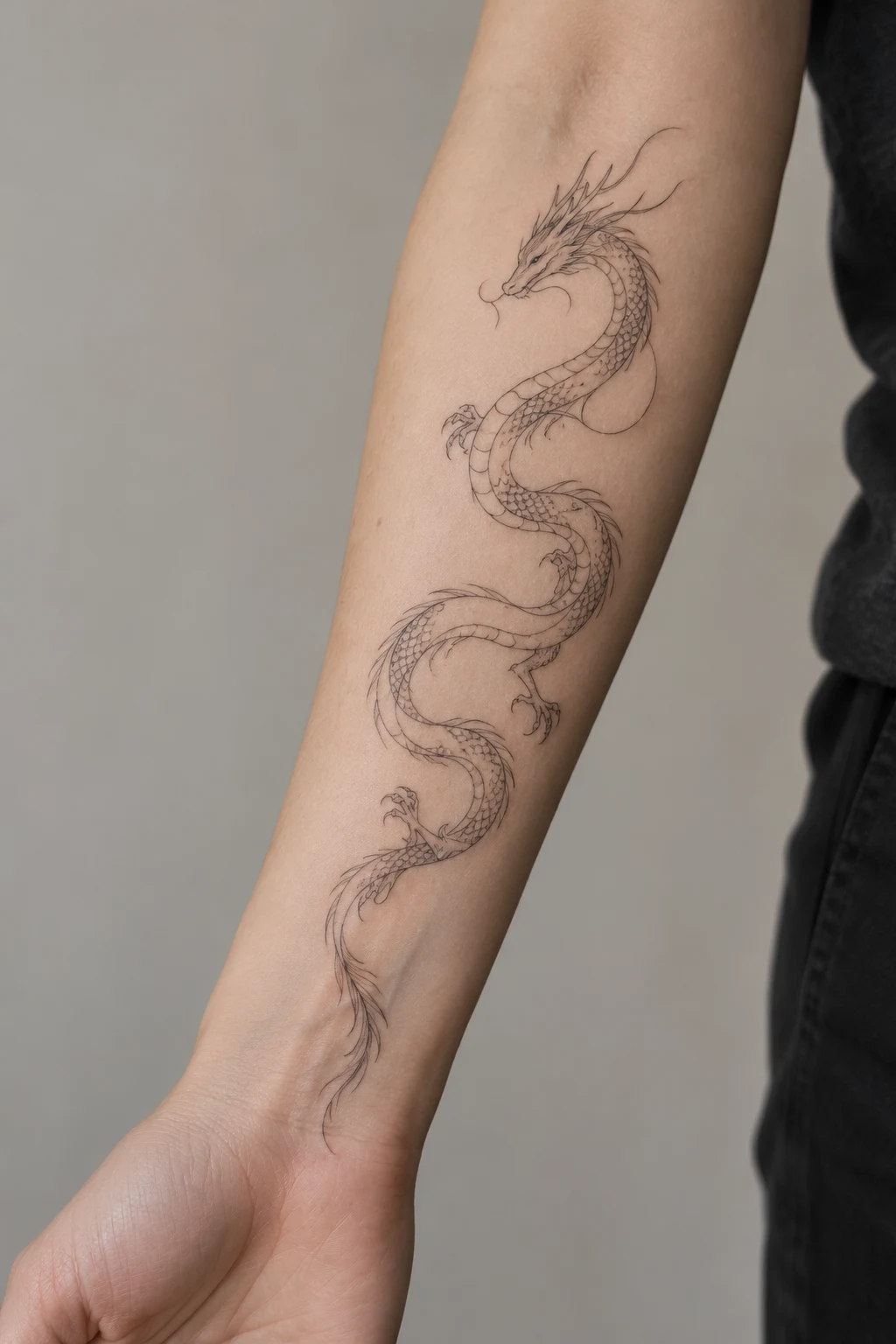
A slender dragon winds along the inner forearm, leaving visible skin between its curves. Sparse scales keep attention on the flowing body. Choose this direction for an elongated outline, and discuss workable size and line spacing with your artist.
2. Single-Line Dragon Profile
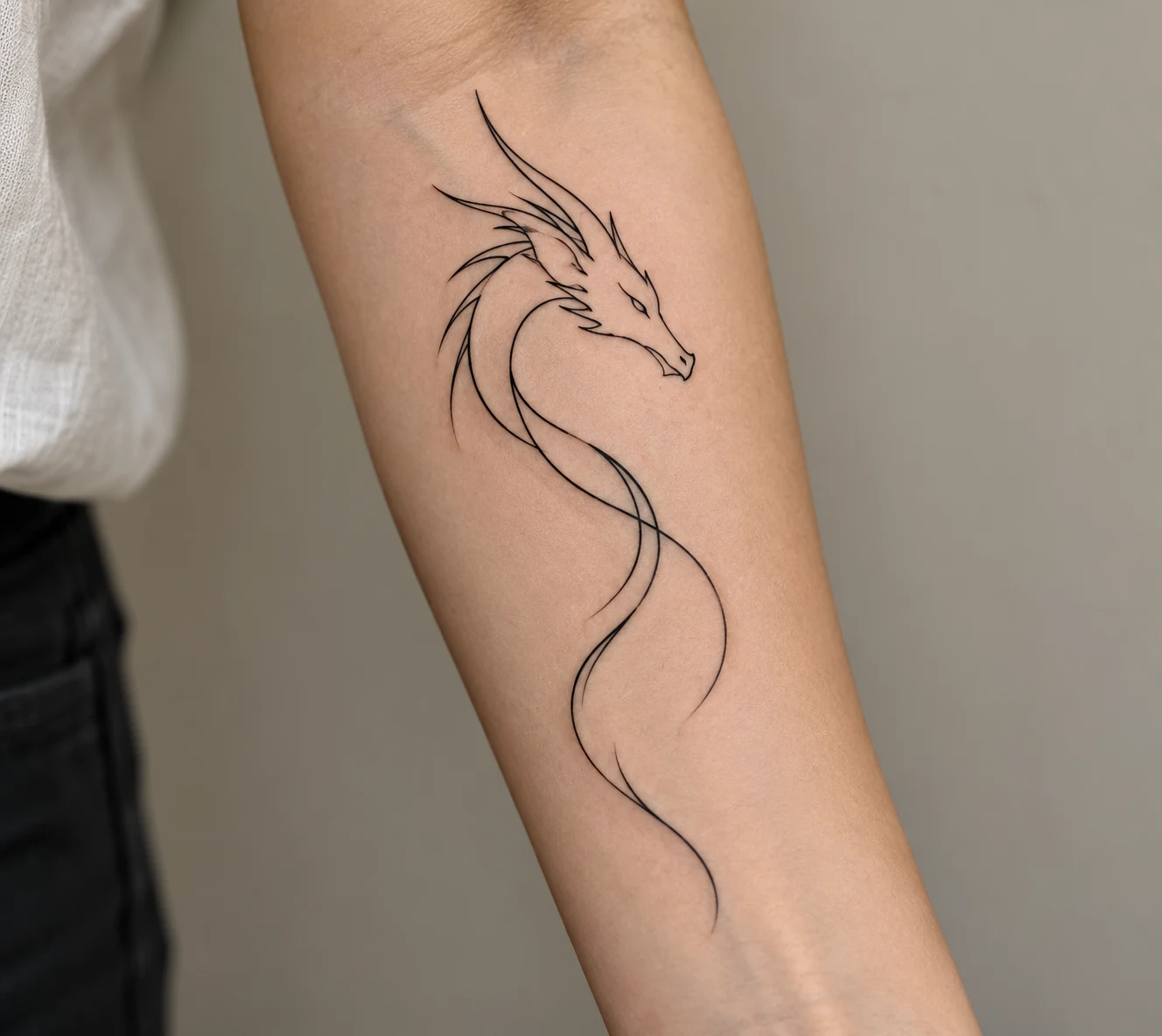
One flowing contour suggests a horn, pointed snout and curled tail. This compact profile suits an abstract approach: its character comes from a few recognizable features. Keep the curves open enough to follow the drawing easily.
3. Solid Black Winged Dragon Silhouette
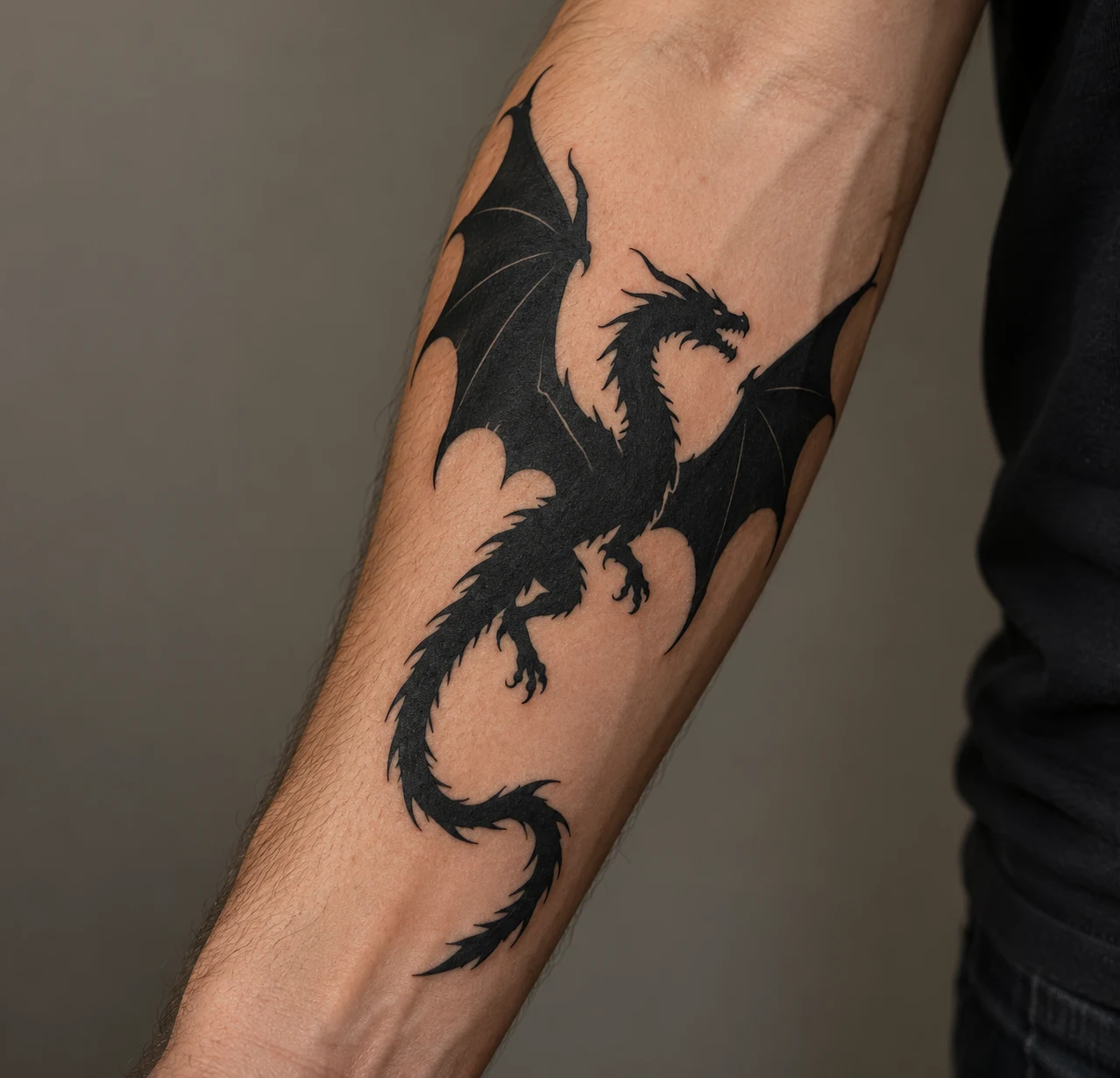
Spread wings give this solid black creature a broad, graphic shape. Clear gaps between the wings, legs and tail make each part distinct. Consider it if you prefer a strong outline without scales or shaded facial features.
4. Angular Geometric Dragon
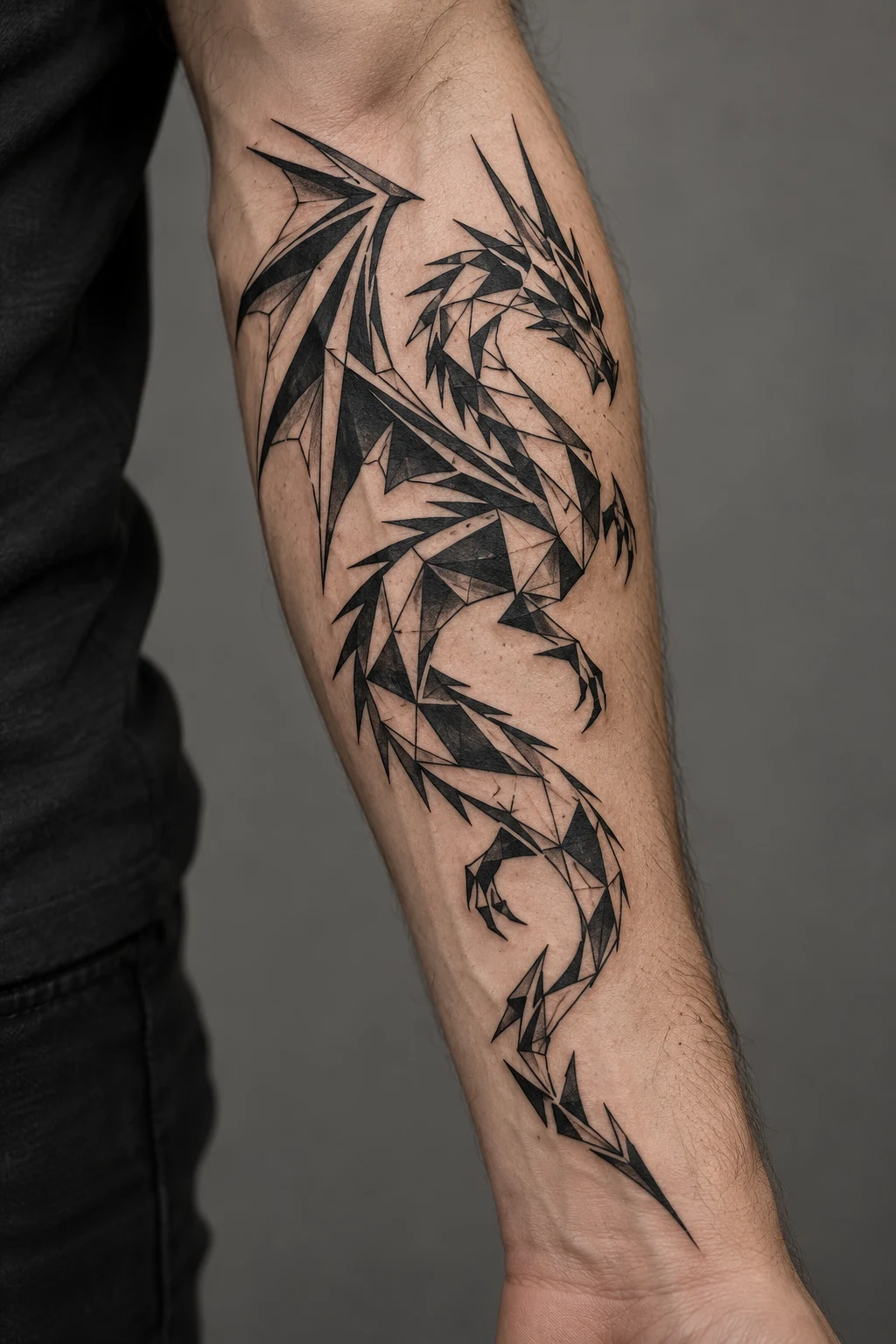
Sharp contours and a few filled triangles build the dragon’s head, wings and tail. The geometry forms the creature itself, keeping the composition focused. This suits a preference for structured shapes and selective areas of solid ink.
5. Negative-Space Dragon in a Black Band
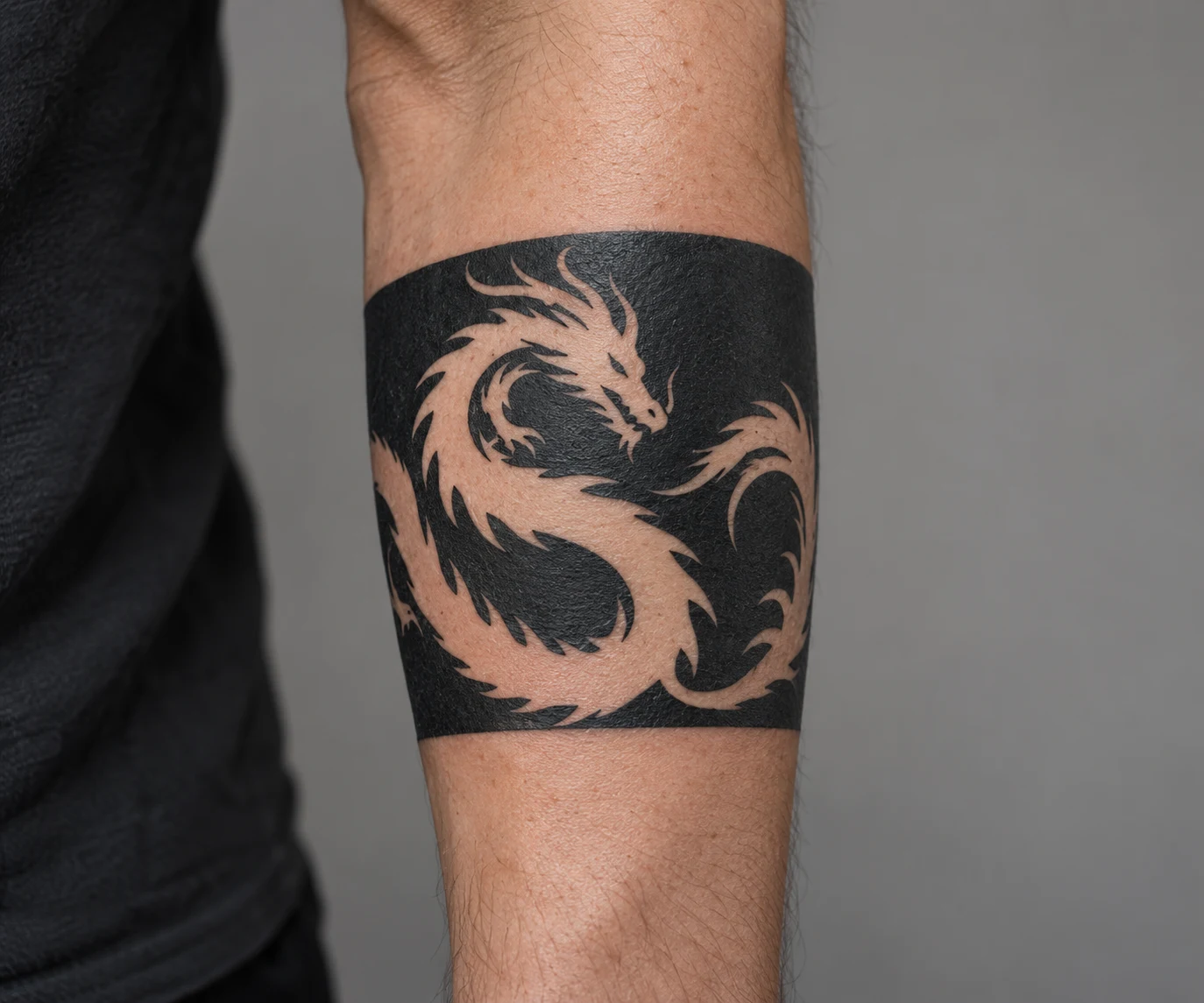
Here, uninked skin defines the dragon inside a broad black band. The surrounding ink becomes a major part of the design. Choose this reverse silhouette if substantial band coverage appeals to you as much as the creature.
Detailed Dragons and Bold Linework
These concepts put facial features, texture or strong outlines at the center of the design.
6. Black and Grey Dragon Head
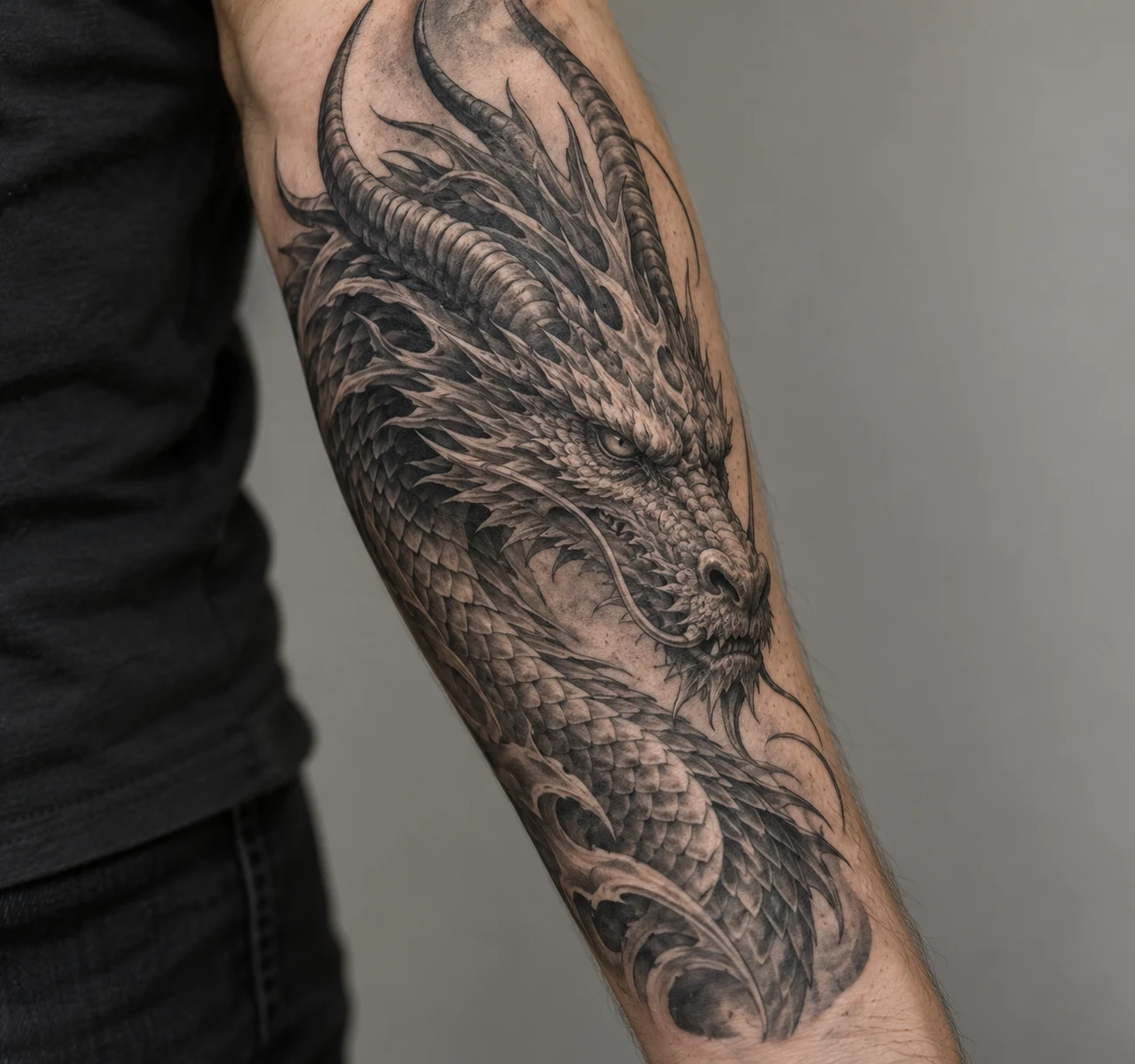
A horned dragon head puts the focus on the face. Layered scales and shaded features create a textured portrait on the outer forearm. Decide whether a narrowed eye, heavy brow or open jaw should carry the expression.
7. Winged Dragon With Folded Wings
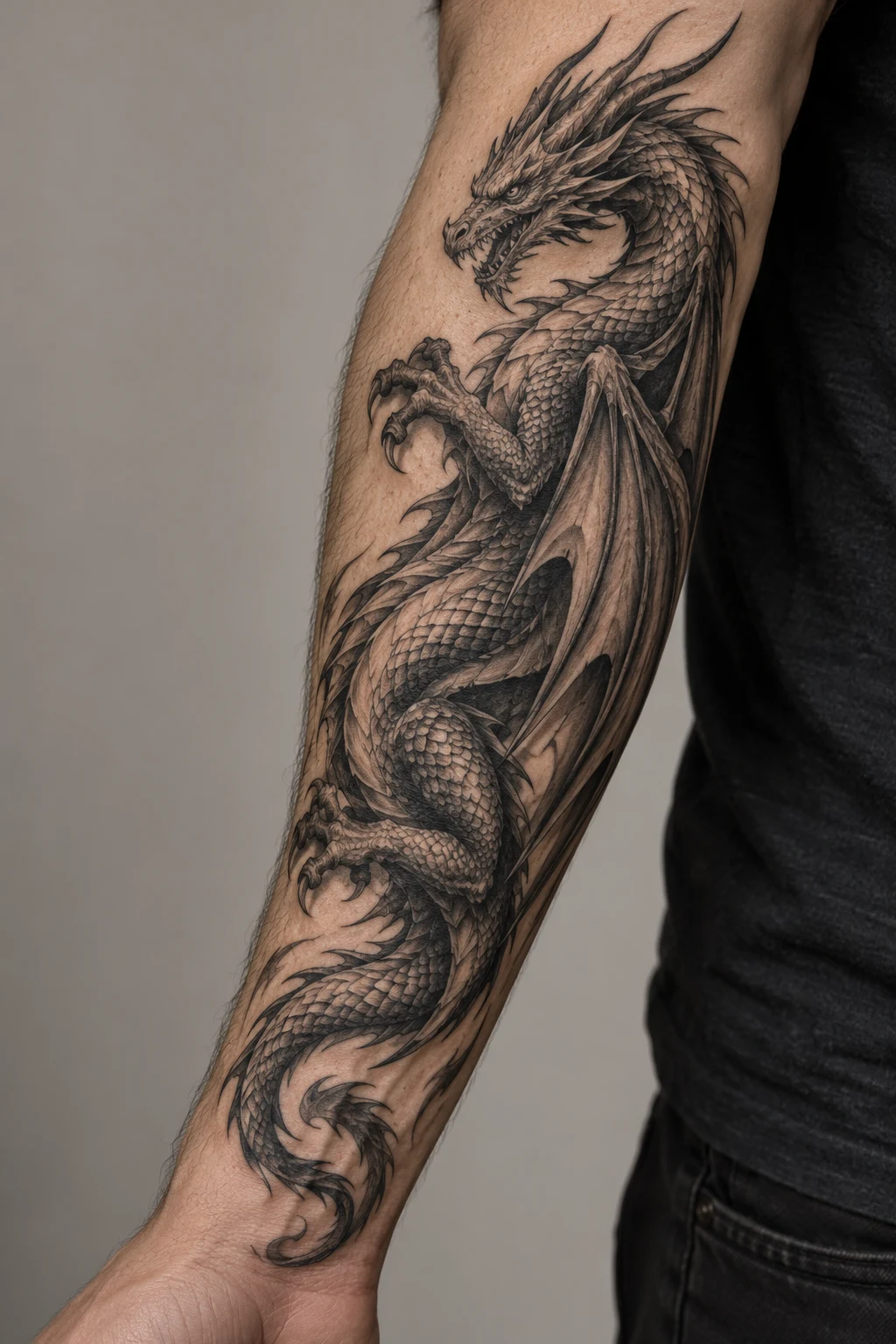
Folded wings create a narrow full-body composition, with claws reaching upward along the arm. This layout brings together limbs, scales and wings without a broad wingspan. Leave visible separation between the folded wings and torso.
8. American Traditional Dragon
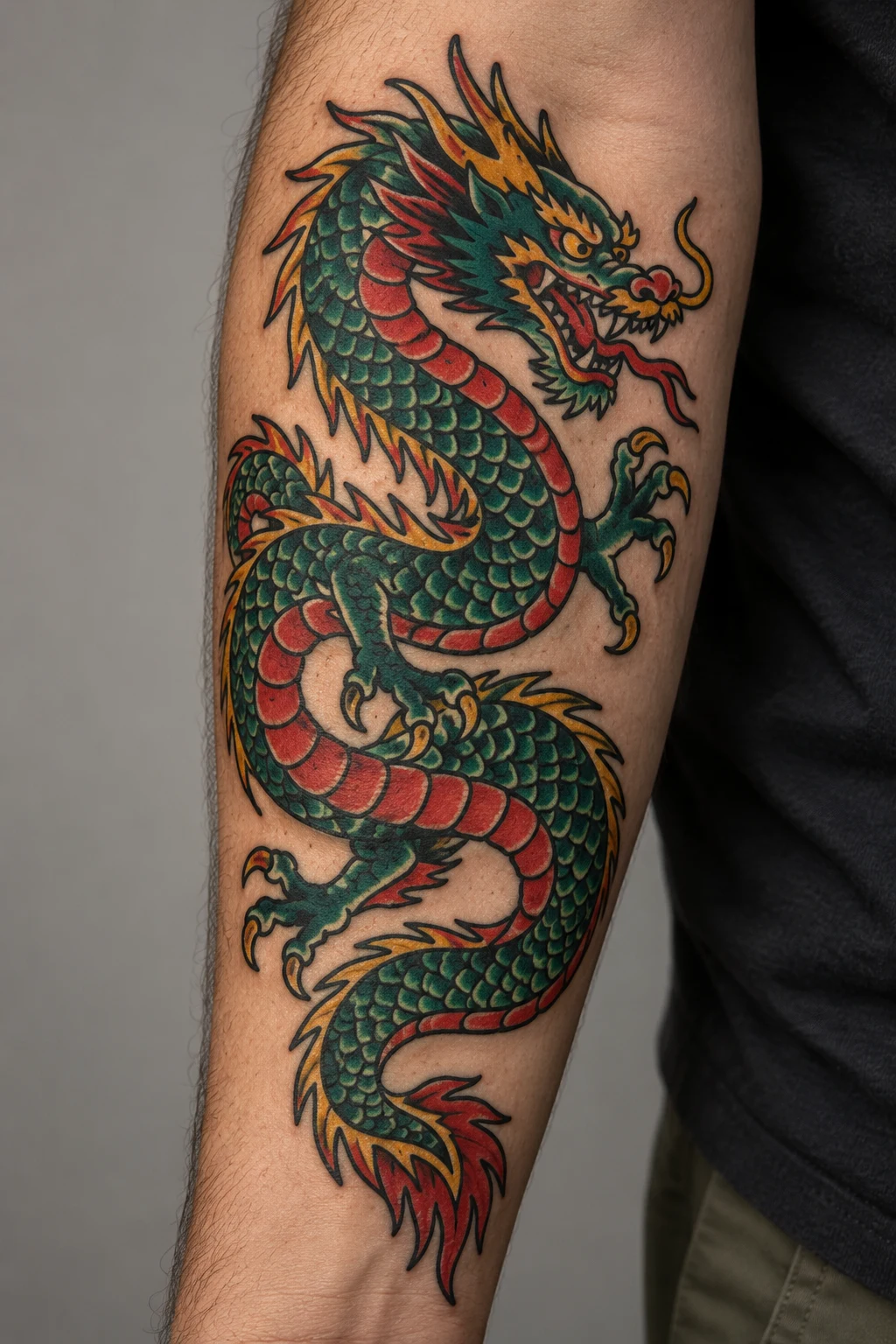
Bold black outlines frame simplified scales and restrained red, green and yellow fills. A compact pose keeps the creature contained. This direction suits readers drawn to strong linework, clear color blocks and a deliberately simplified dragon.
9. Engraving-Style Dragon
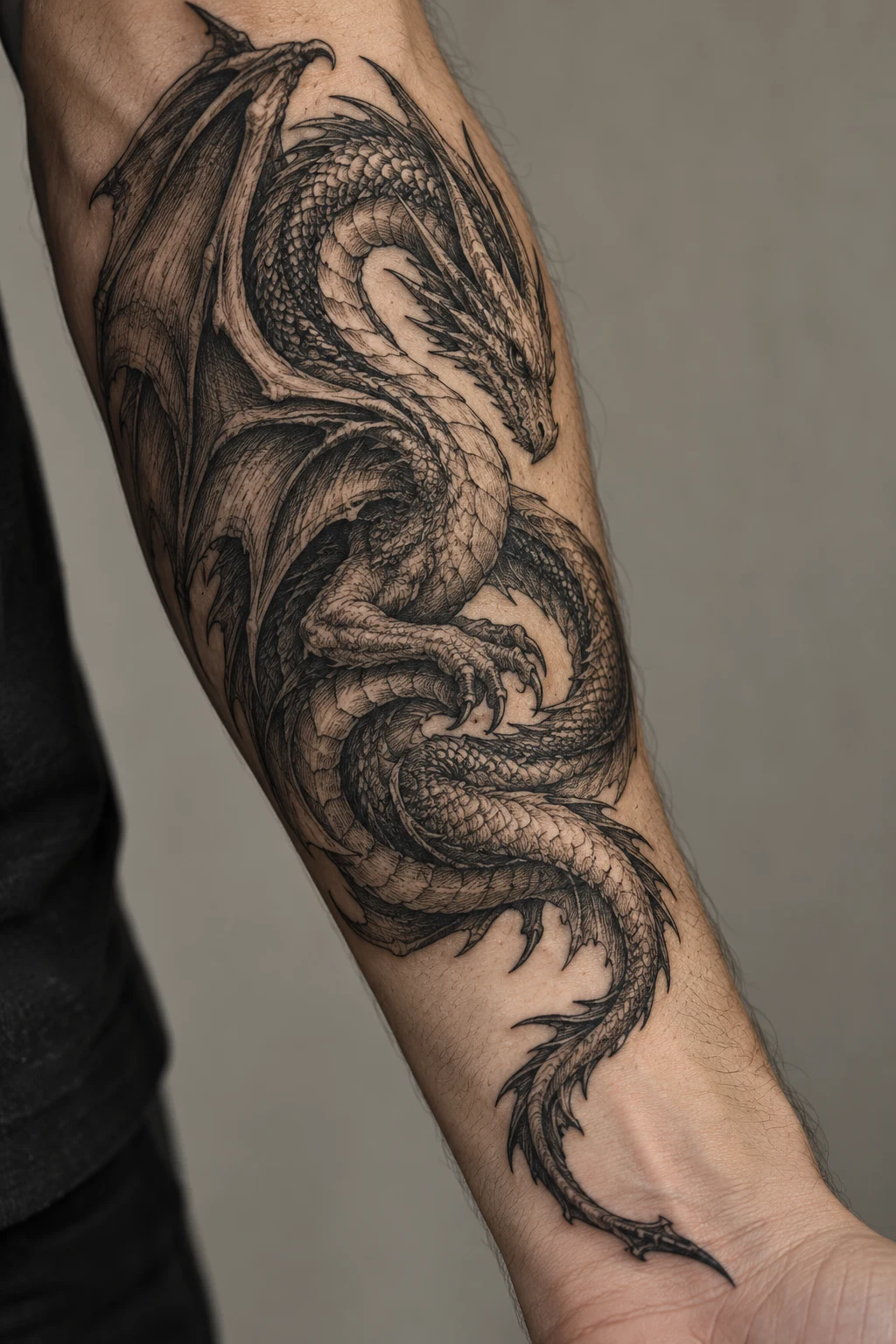
Parallel strokes and crosshatching give this curled dragon a print-like texture. Choose it for an illustrative treatment with visible marks throughout the shading. Discuss where open skin can separate dense hatching, especially around overlapping wings and coils.
10. Dragon Skeleton
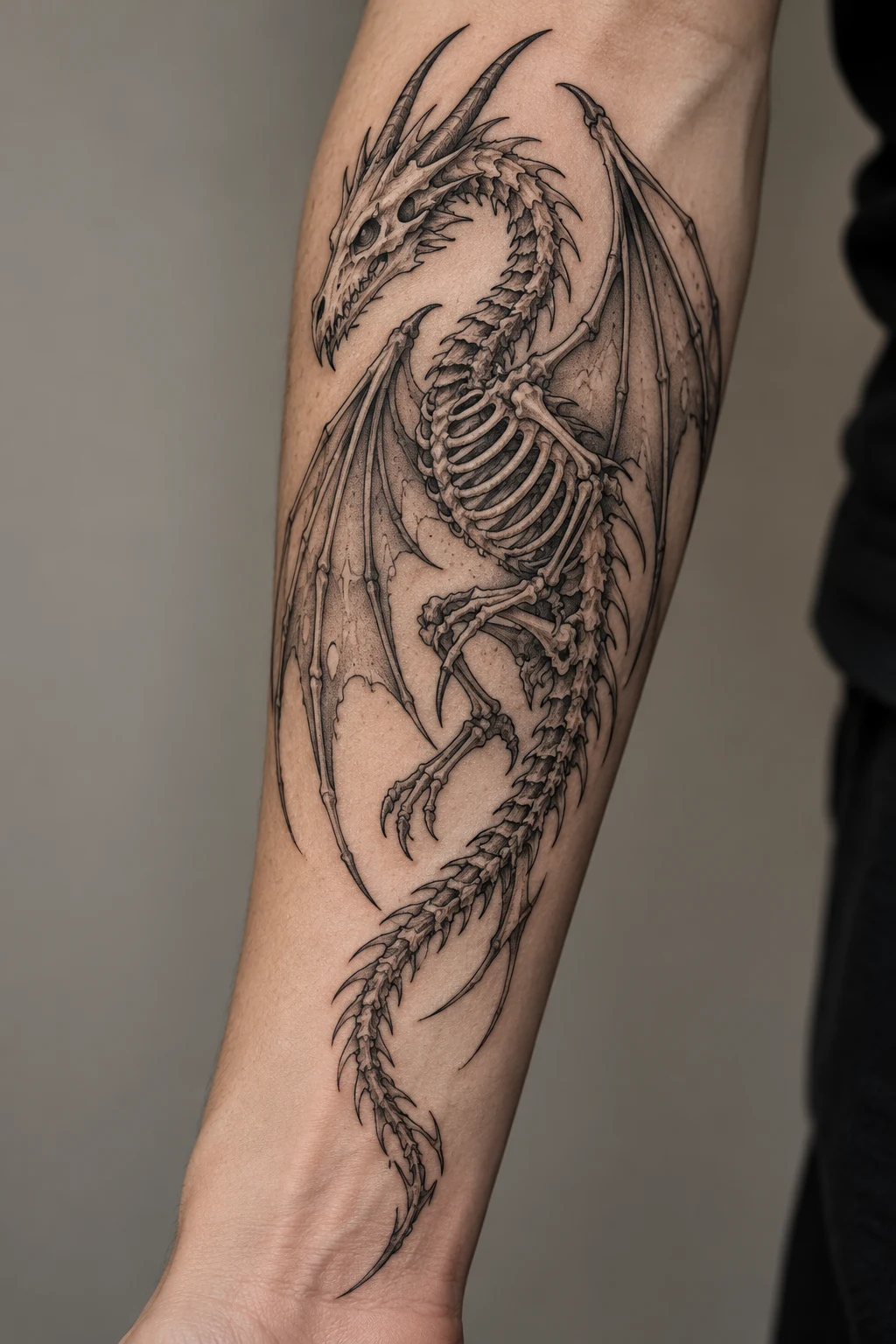
A horned skull, rib cage and bony wings distinguish this creature from a skeletal snake. Its fantasy anatomy follows a curved spine, which provides the main line through the design.
Dragons With Color and Supporting Motifs
Color, clouds, flowers and a sword give these dragons different focal points and surrounding shapes.
11. Red Outline Serpentine Dragon
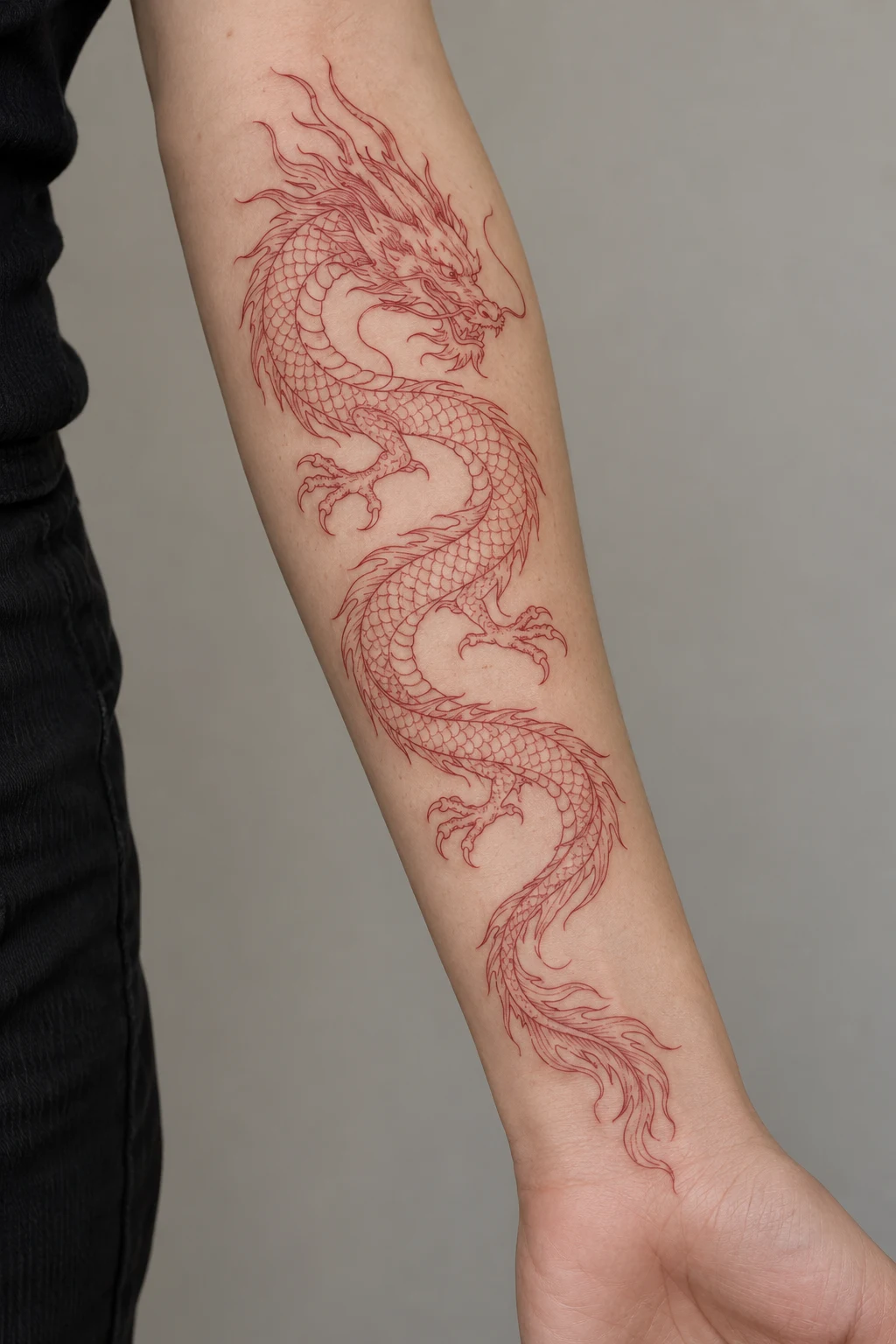
An unfilled red contour traces an S-shaped body, small claws and a defined head. Color carries the drawing without filled sections. Consider this if you like the openness of an outline but want red as its main feature.
12. Watercolor Winged Dragon
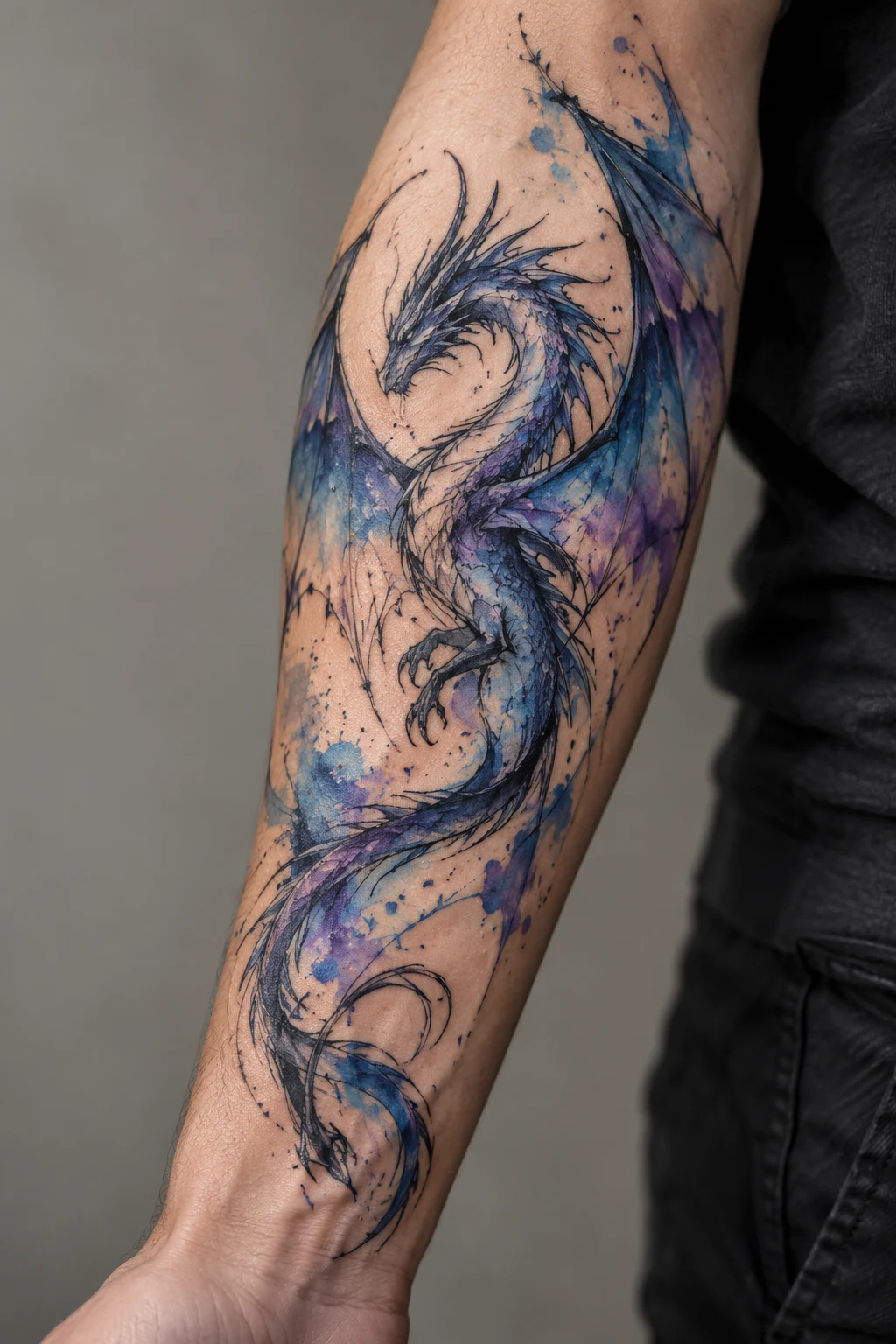
Loose blue and violet washes surround a clearly outlined flying dragon. The black contour anchors the creature while the color extends beyond it. This suits a painterly composition; keep the head and wing edges visually distinct.
13. Japanese-Inspired Dragon With Clouds
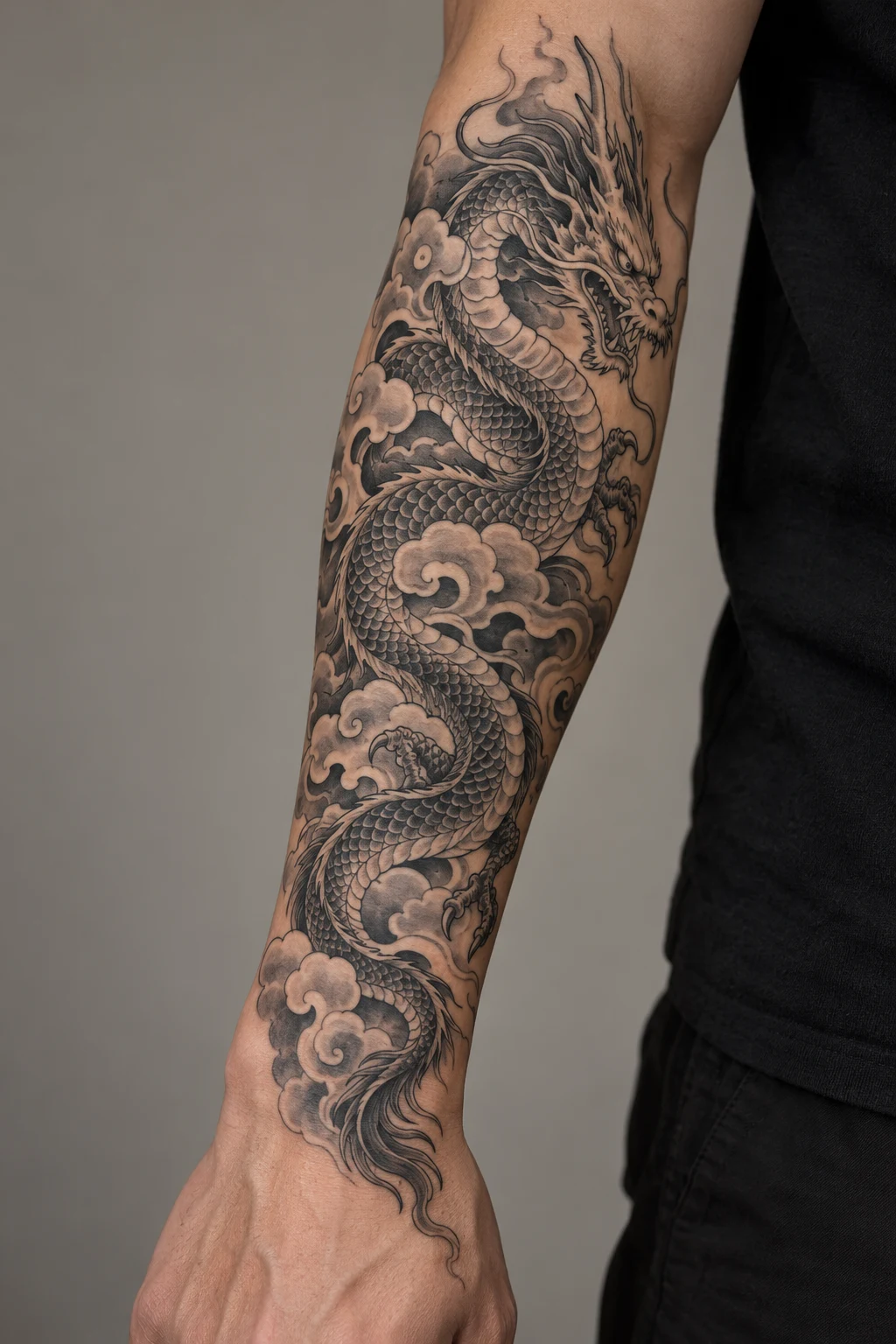
A long-bodied, wingless dragon weaves through stylized cloud curls. The clouds echo its movement while leaving room around the face. Treat this as a Japanese-inspired starting point, with the artist developing the composition and its stylistic details.
14. Dragon Winding Around a Peony

One large pink peony sits within the curves of a narrow black and grey dragon. The open bloom contrasts with the creature’s winding body. Choose whether the flower or dragon’s head should lead, then size the other element to support it.
15. Dragon Coiled Around a Sword
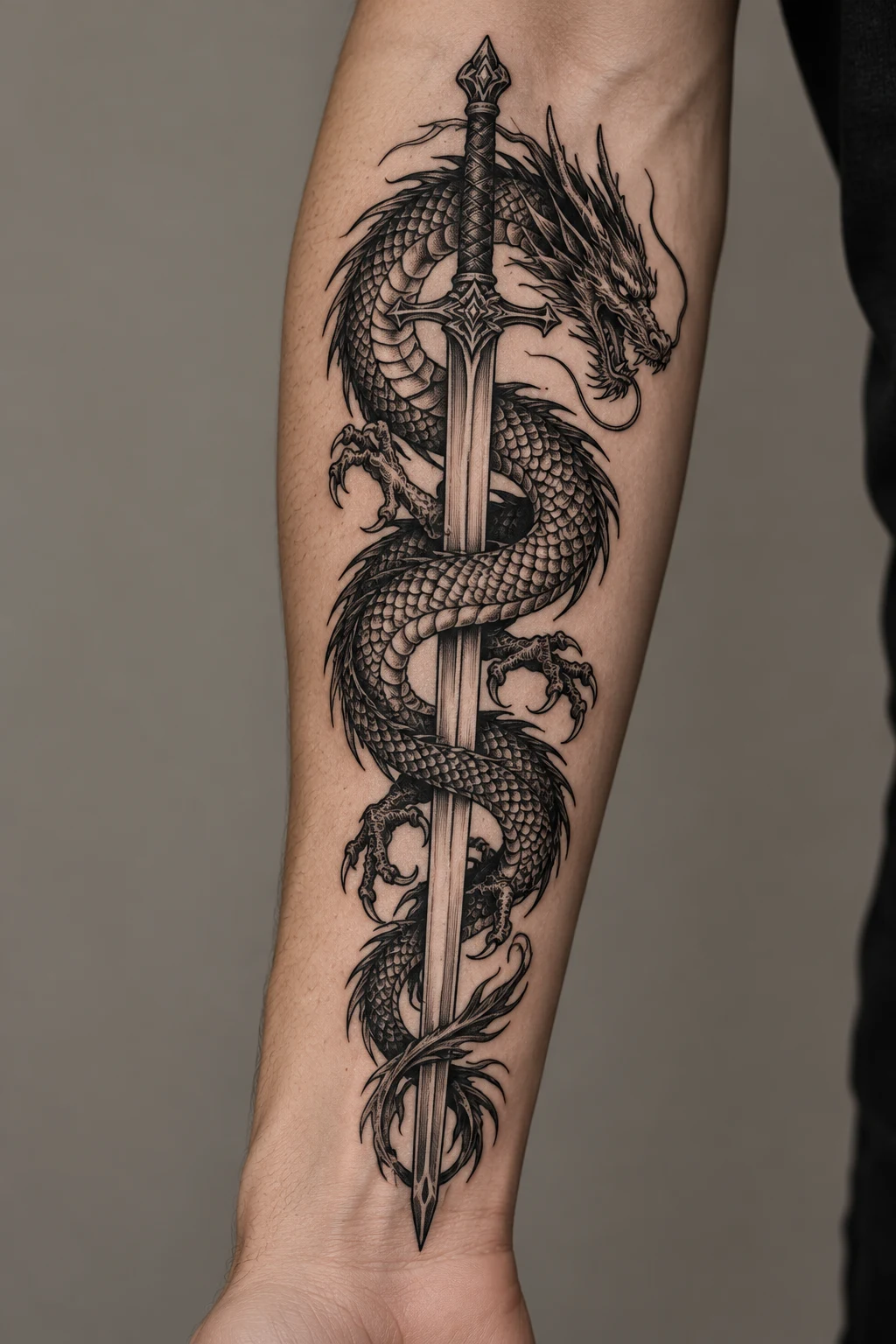
Running through the dragon’s coils, a straight sword gives the composition a central axis. Exposed sections of the sword separate the coils. This suits a structured fantasy pairing where both subjects remain easy to identify.
Forearm Wraps and Connected Compositions
These layouts use the arm’s circumference or connect several elements into one composition.
16. Full Serpentine Dragon Wrap
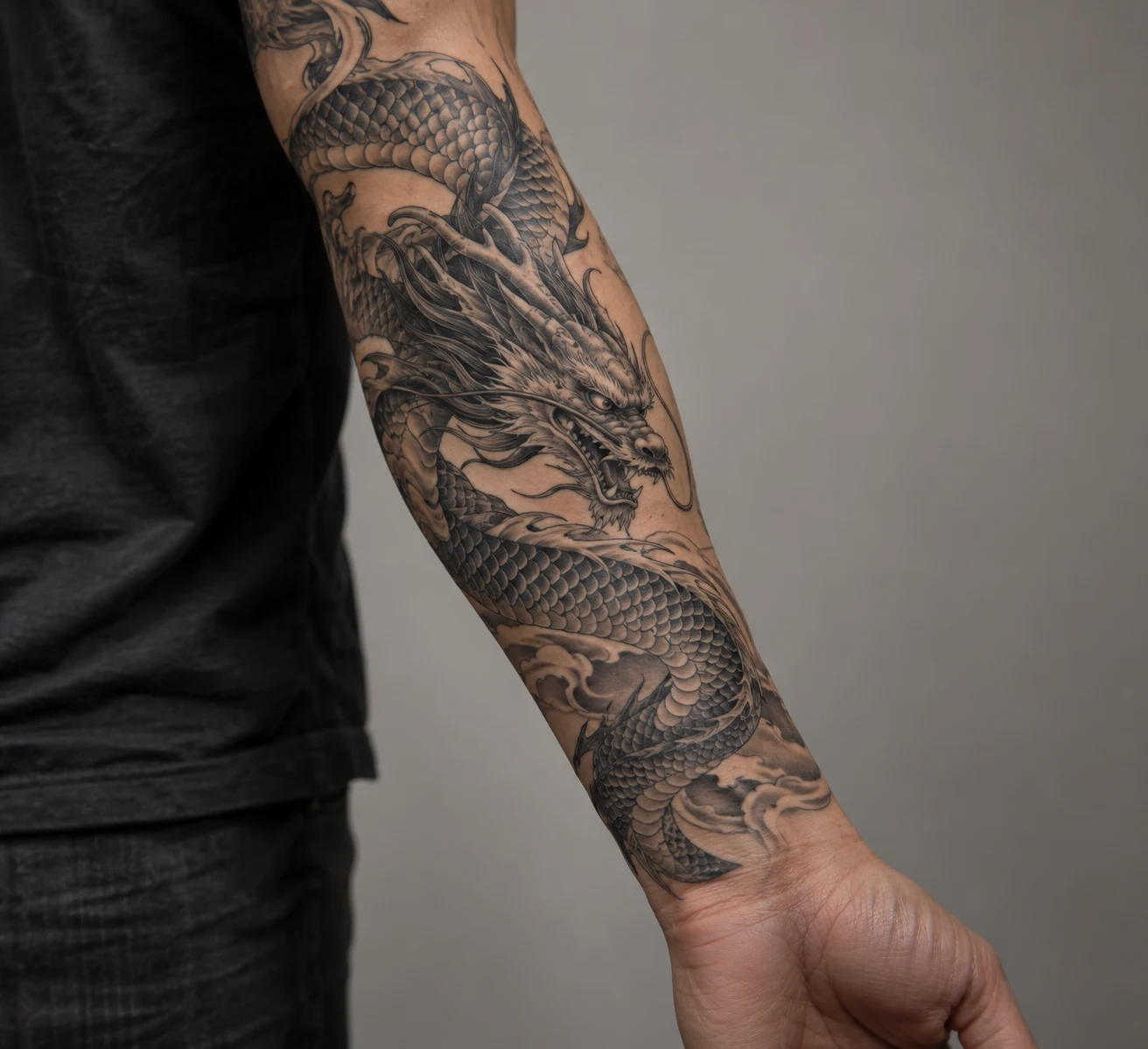
One continuous dragon spirals around the forearm, its tail curving toward the wrist. You’d need several views to see the whole composition. Consider where the head should sit when your arm rests naturally at your side.
17. Intertwined Twin Dragons
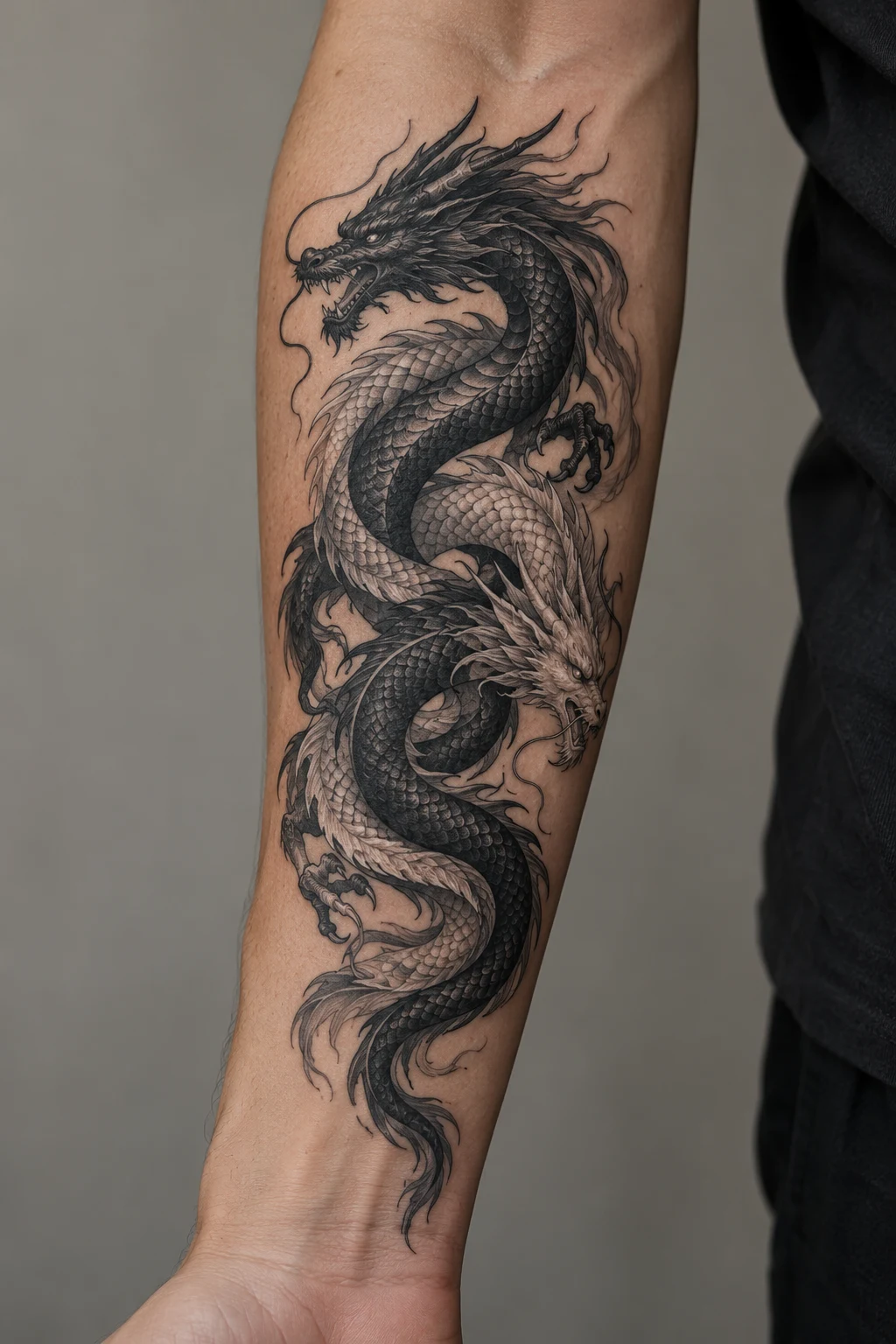
Two dragons cross in winding curves, with opposing heads and contrasting shading. This paired composition suits readers who want two distinct creatures. Trace each body through the crossings to check that the design remains easy to follow.
18. Dragon Head With Wings Wrapping the Sides
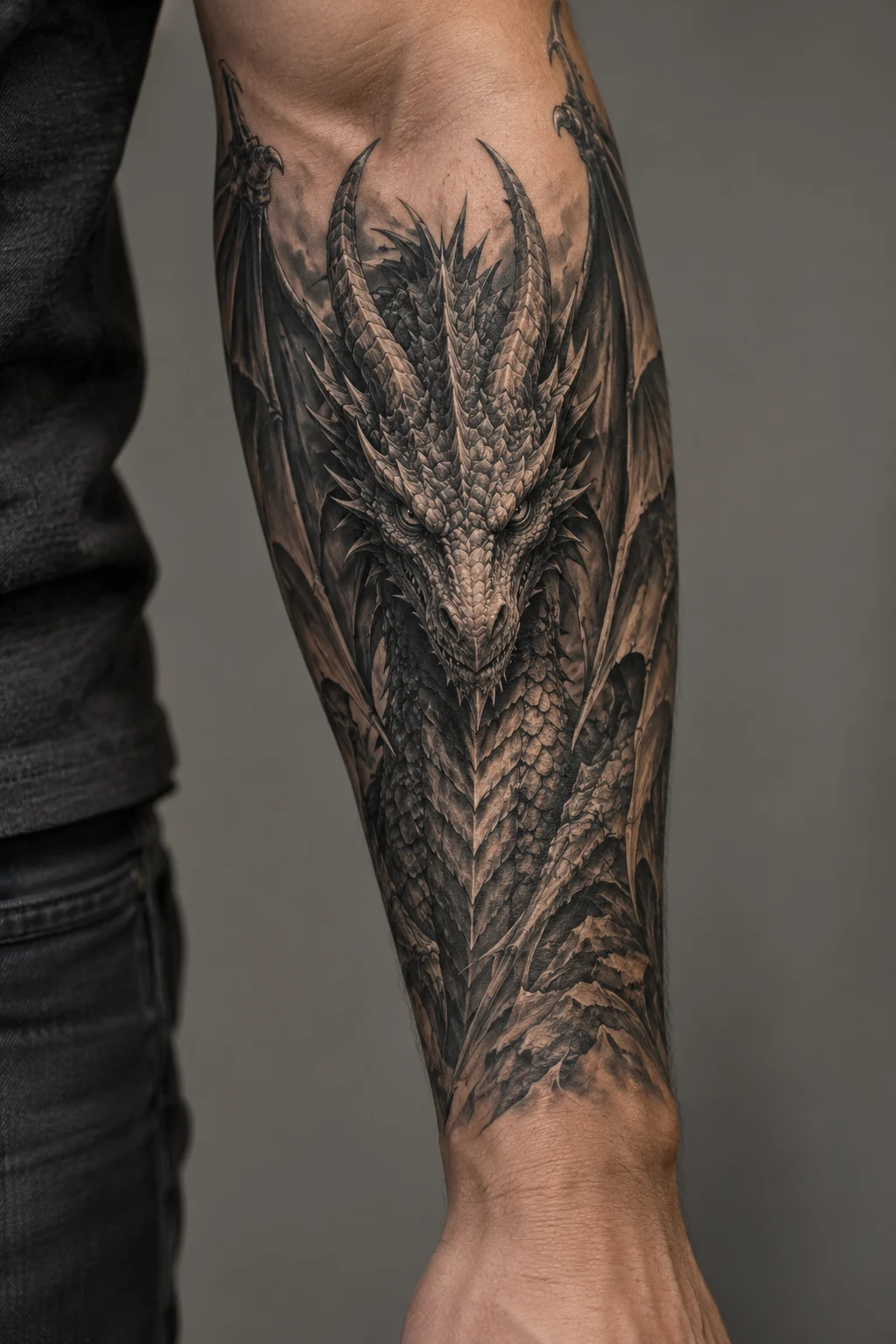
A frontal head anchors the outer forearm while a wing extends around each side. The arrangement gives the face a central position with additional side coverage. Decide how much wing texture should remain visible beside the head.
19. Circular Dragon Near the Elbow
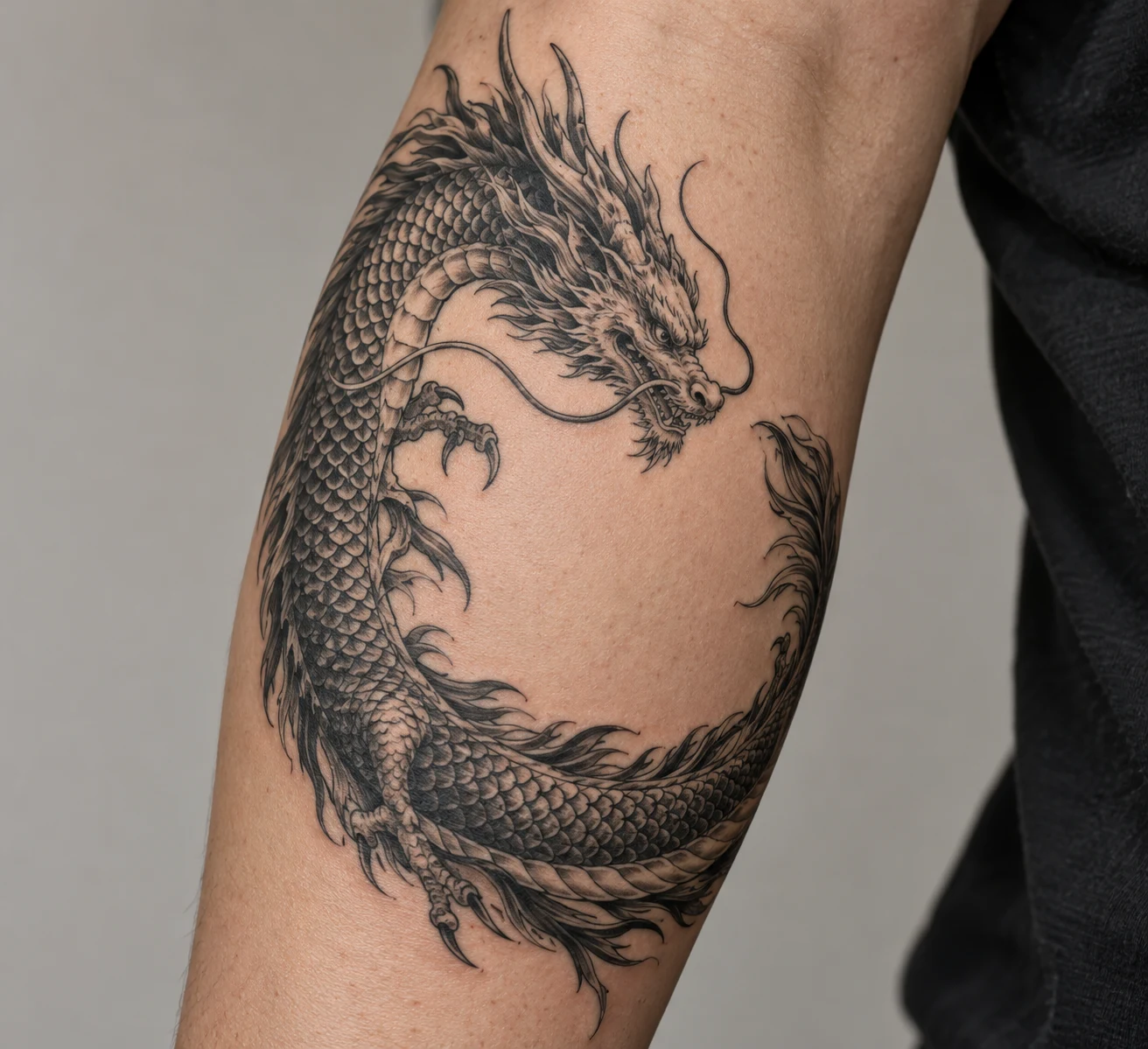
The dragon curves into an open ring on the upper outer forearm, its head facing its tail across a gap. This contained shape suits someone who wants a compact composition while leaving the lower forearm open.
20. Dragon Emerging From a Wrist Cuff

A narrow decorative cuff establishes a lower boundary, with the dragon rising toward mid-forearm. Keep the cuff distinct for a layered effect, or blend its upper edge into the coils for a more connected drawing.
Choosing Your Dragon Design
Shortlist two or three concepts by coverage, detail and color. Bring those references to an artist to discuss scale, spacing and placement on your own forearm. For wraps, ask to assess the layout from several sides before settling on the composition.

