
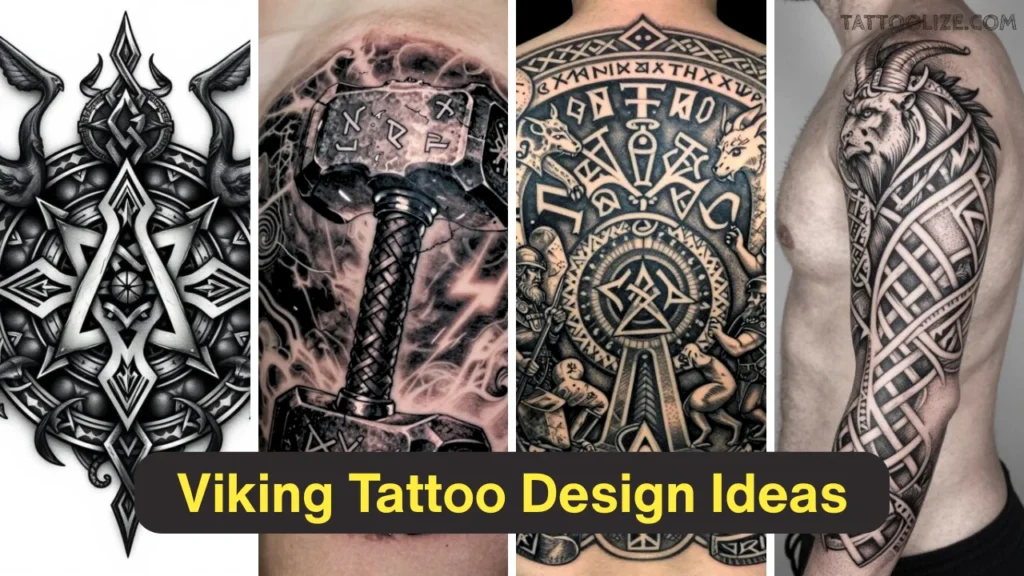
Viking culture has a strong appeal, with its rich history and symbols inspiring many. Viking tattoos are popular for their mix of history and beauty.
Norse traditions and myths have shaped many tattoo designs. These include detailed knotwork and bold symbols.
They show the Vikings’ bravery and their bond with nature and the supernatural.
Looking into Viking tattoo designs is an exciting dive into Nordic symbols and culture.
Whether you’re interested in the myths, history, or the visuals, there’s a lot to explore.
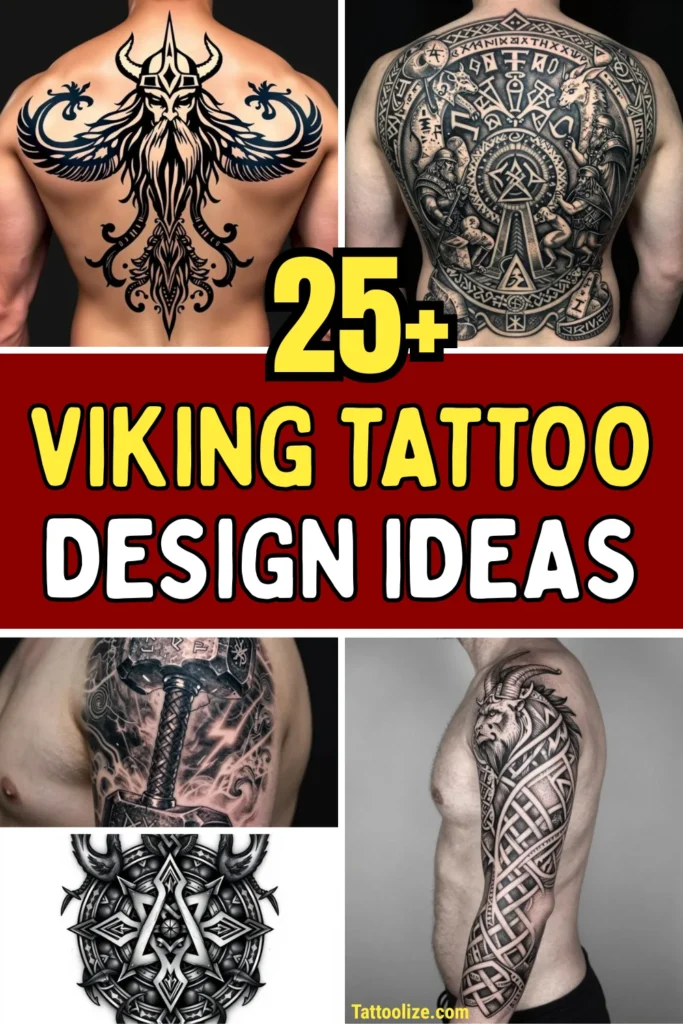
The Rich Heritage Behind Viking Tattoos
Norse body art, like Viking tattoos, was key in Viking culture and spirituality. These tattoos were more than just designs; they held deep meanings. They were a big part of the Viking lifestyle.
Historical Evidence of Norse Body Art
Records and digs show Vikings had tattoos. The Viking Age was a time of exploration, raids, and trade. Tattoos showed status, job, and spiritual views.
Travelers like Romans and Arabs wrote about Viking tattoos. They shared what they saw of Norse body art.
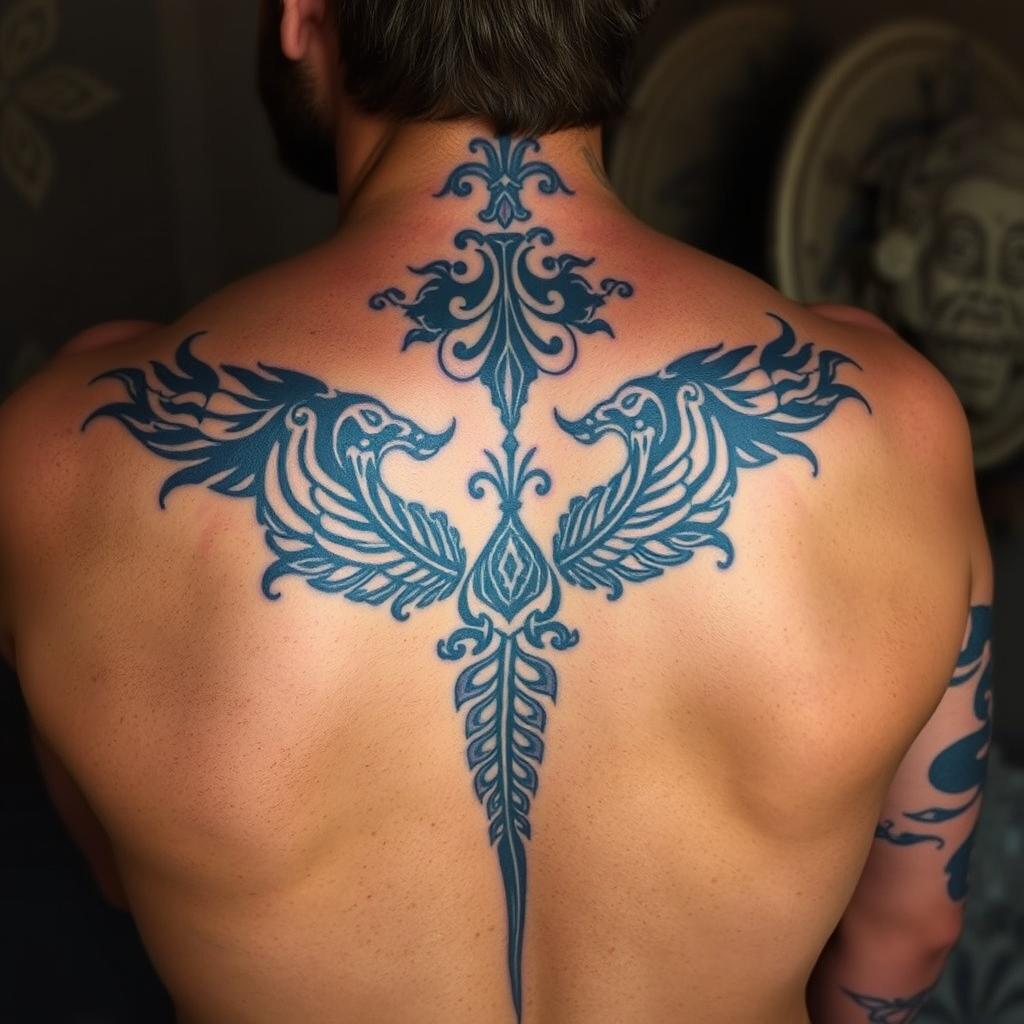
Cultural Significance in Viking Society
In Viking society, tattoos were very important. They marked life events, showed loyalty to gods or leaders, and showed social rank. Warriors might have tattoos of their bravery or battles.
Tattoos also linked Vikings to Norse myths and gods. The designs were thought to protect and give strength.
Evolution of Viking Symbolism Through the Ages
Viking tattoo symbols changed over time. This was due to Christianity and cultural exchanges. As Vikings met new cultures, their tattoos got new symbols.
Yet, tattoos kept their core meaning in Norse culture. Today, people use these symbols in tattoos, keeping the Viking legacy alive.
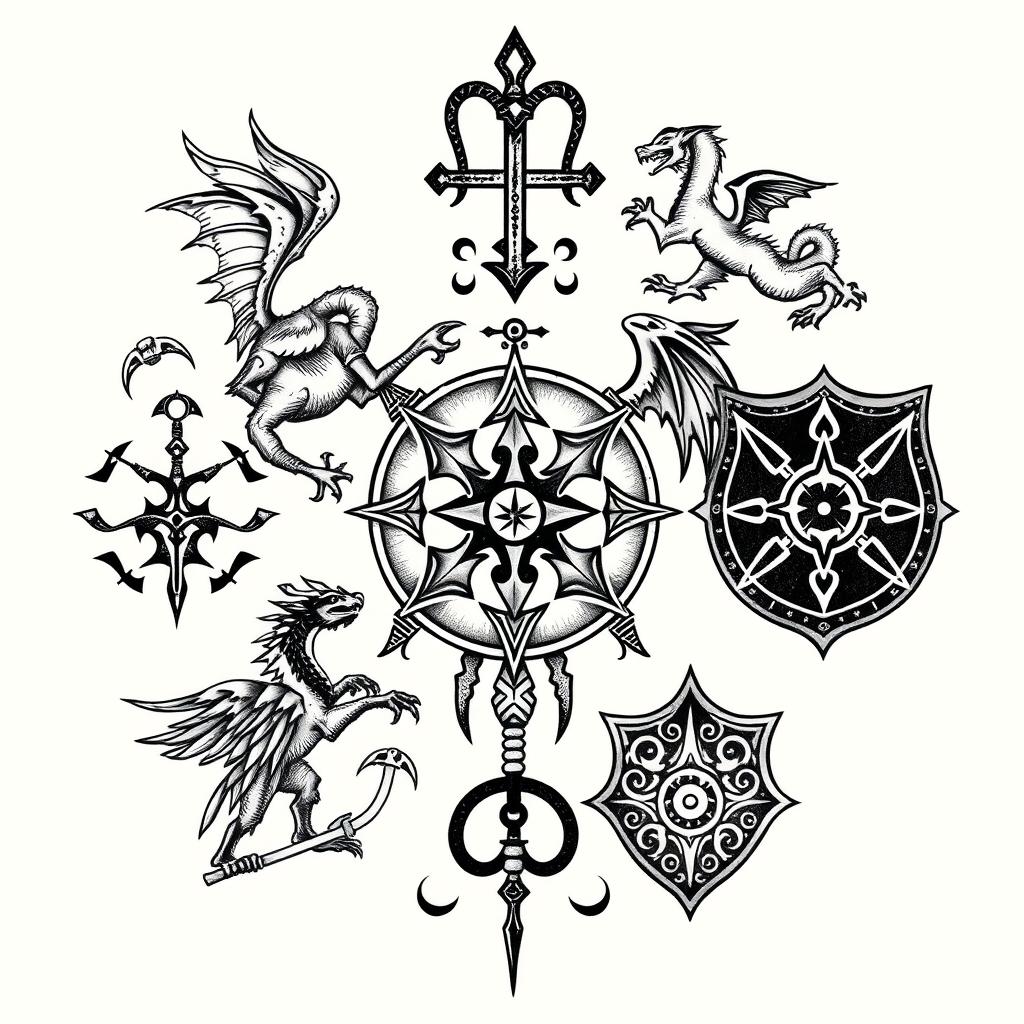
Exploring Popular Viking Tattoo Design Ideas
Viking tattoos are a mix of history and culture. They show the depth of Norse mythology and warrior life. These tattoos feature symbols, creatures, and words that tell stories of old.
Warrior-Inspired Designs and Battle Scenes
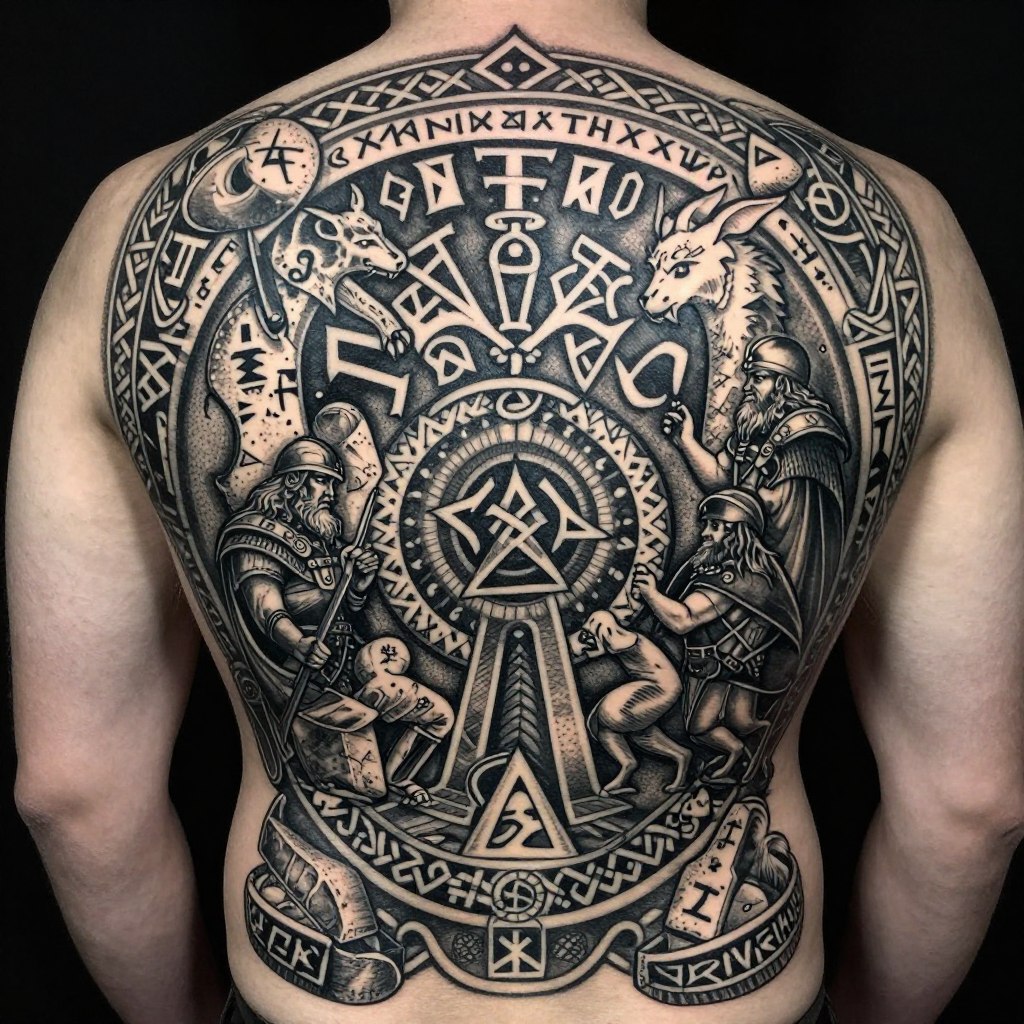
Warrior designs are a top pick for Viking tattoos. They show battles with Norse warriors facing off against foes. You’ll see armor, weapons, and shields, showing their bravery.
These designs come in many styles, from detailed to simple. They symbolize courage, strength, and the warrior’s spirit. This makes them a great choice for those who want to show these qualities.
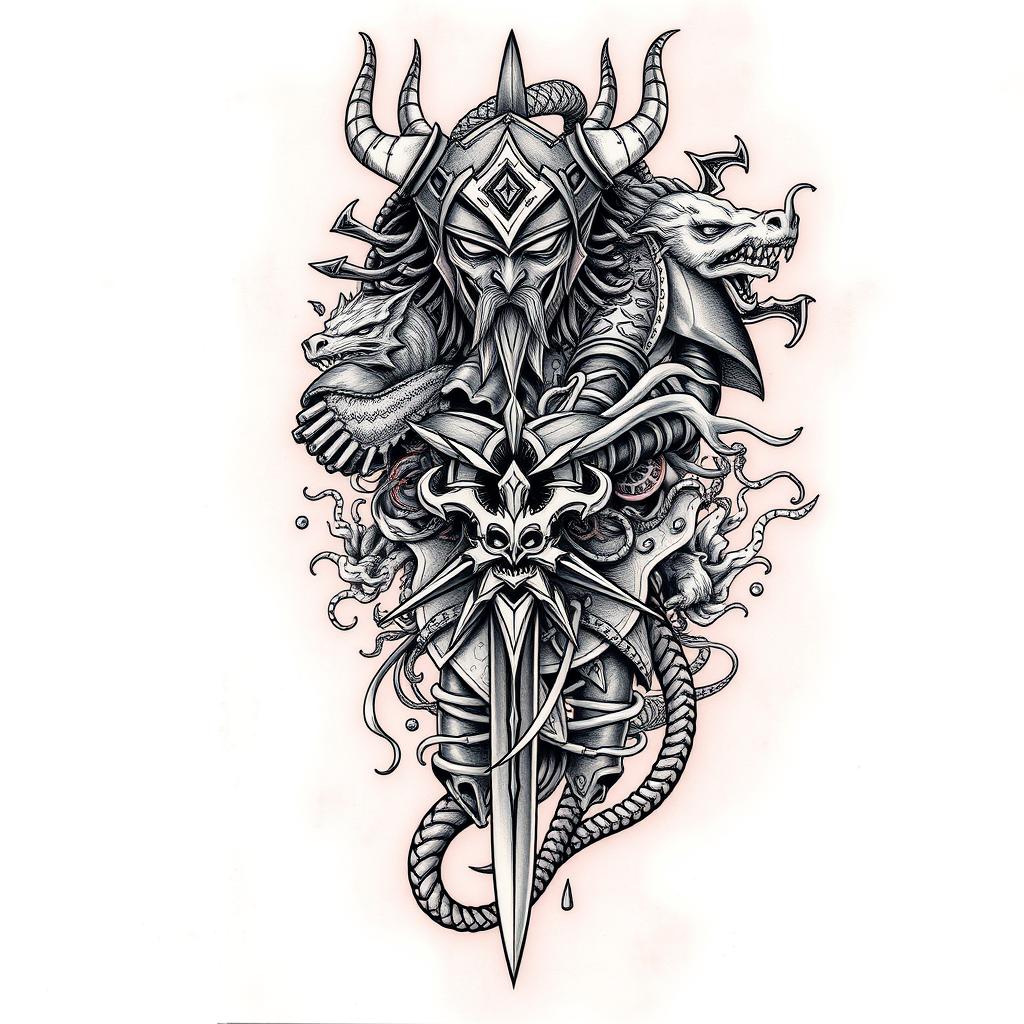
Mythological Creatures and Norse Gods
Norse mythology is full of amazing creatures and gods. Symbols like the Midgard Serpent, Fenrir, and Sleipnir are both beautiful and meaningful. They add depth to Viking tattoos.
The gods, like Odin, Thor, and Freyja, are also favorites. Each god has their own story and meaning. For example, Odin’s ravens, Huginn and Muninn, represent wisdom and insight.
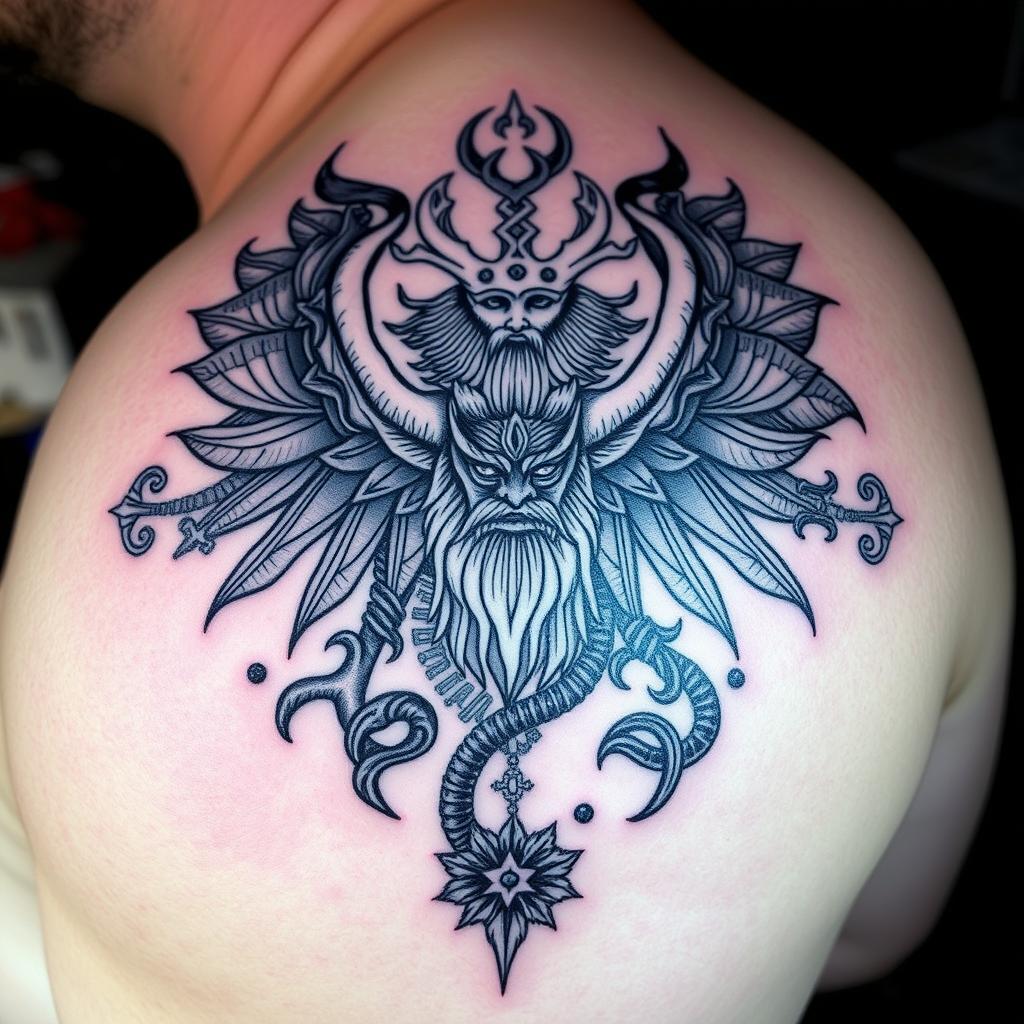
Runic Inscriptions and Protective Blessings
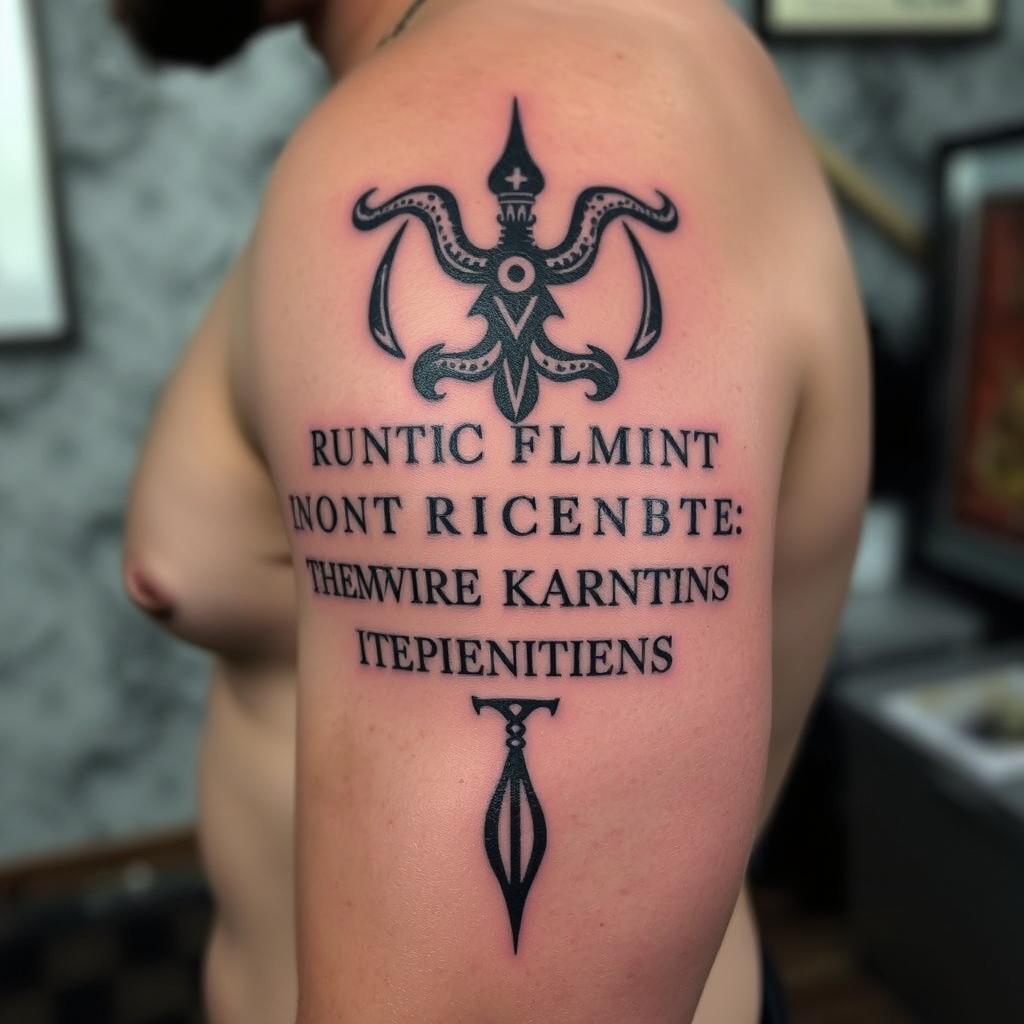
Runic inscriptions are key in Viking tattoos. The runes were used for writing and divination. They can carry messages or wishes for good luck.
Protective blessings from Norse prayers or poems are also used. These inscriptions express personal thoughts and call on the gods and runes for protection.
Essential Norse Symbols and Their Meanings
Norse mythology is full of powerful symbols used in Viking tattoos. These symbols show the Vikings’ strong bond with their heritage. They also inspire tattoo lovers today. Knowing what these symbols mean can make Viking tattoos even more meaningful.
Valknut: The Knot of the Fallen Warriors
The Valknut is a symbol of three triangles, linked to Odin. It stands for a warrior’s fate in battle and the journey from life to death. In tattoos, it shows bravery, strength, and the spirit of a warrior.
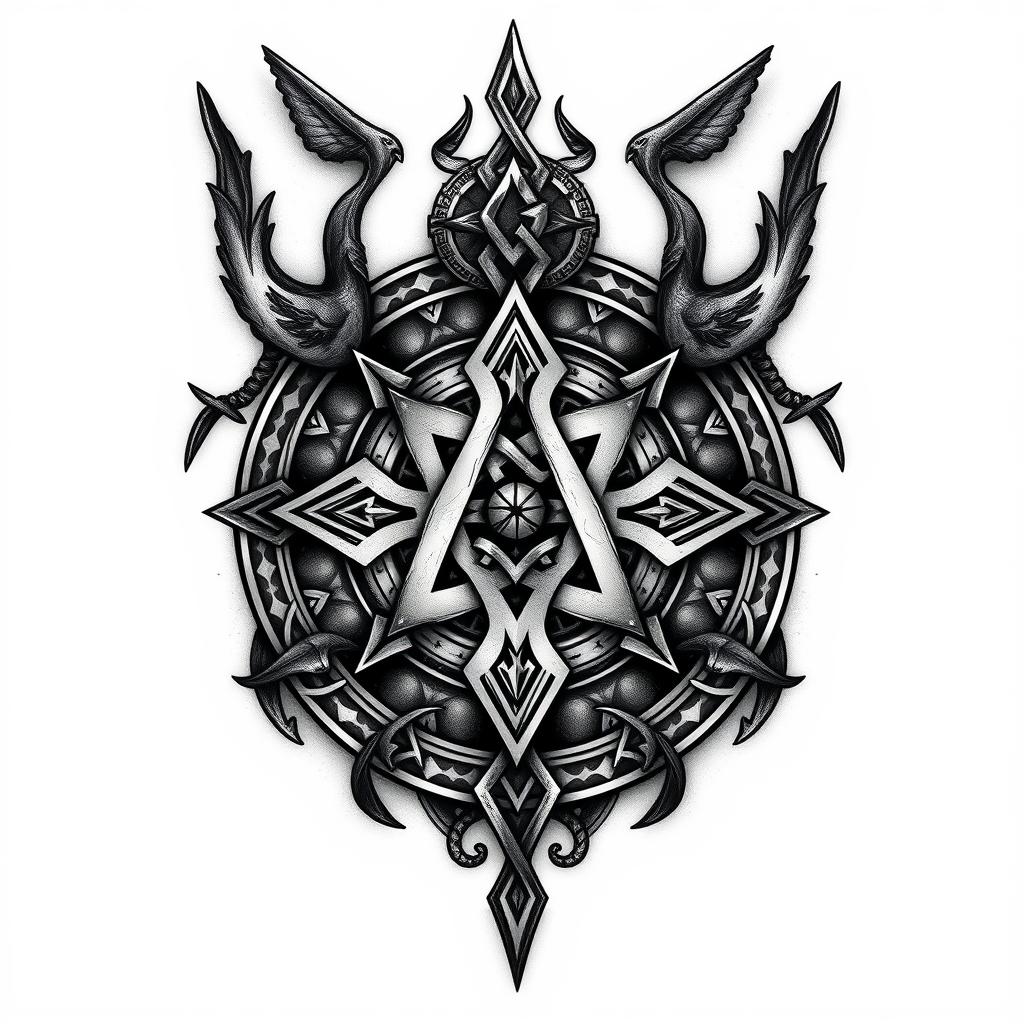
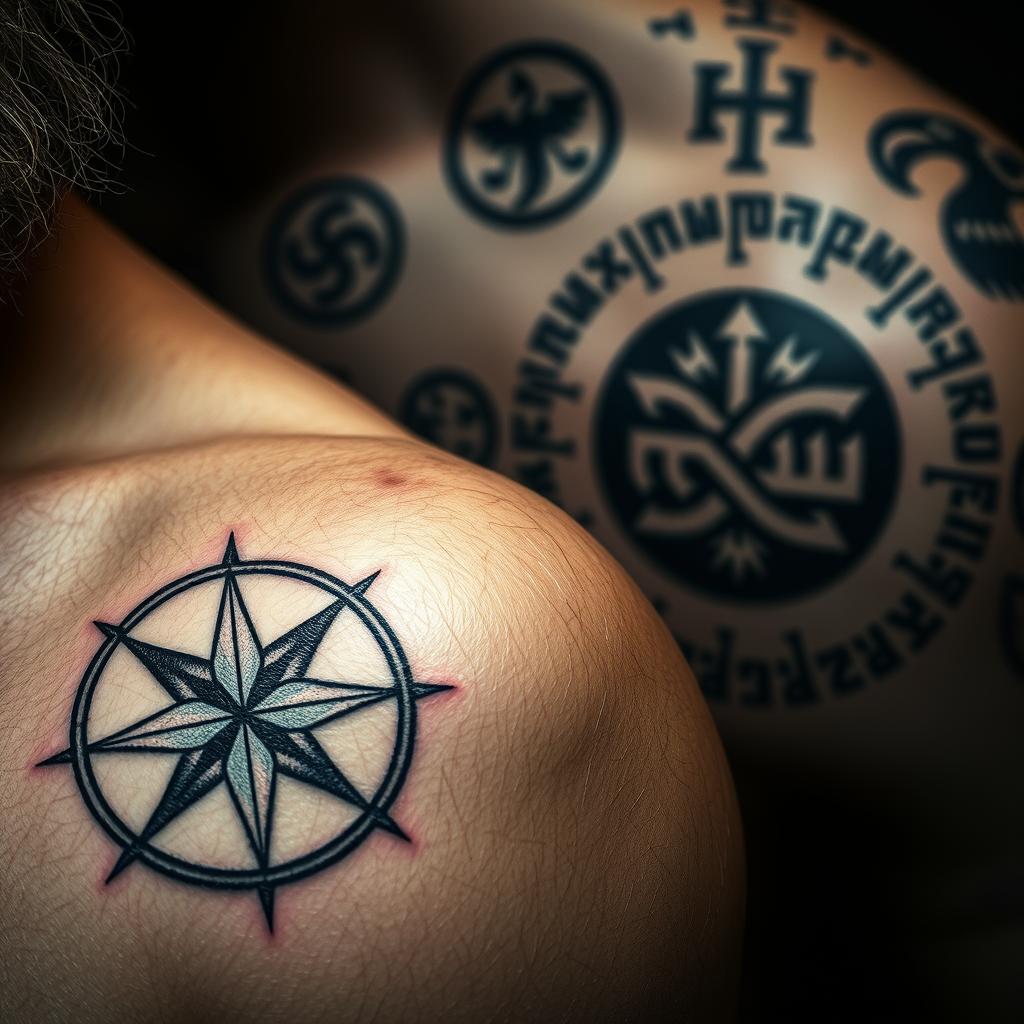
Vegvisir: The Viking Compass for Guidance
The Vegvisir, or Viking Compass, guides people through tough times. It looks like a stave with eight arms from a center point. In Norse stories, it protects and directs, making sure the wearer stays on track. Viking tattoos with the Vegvisir are chosen by those seeking guidance and safety.
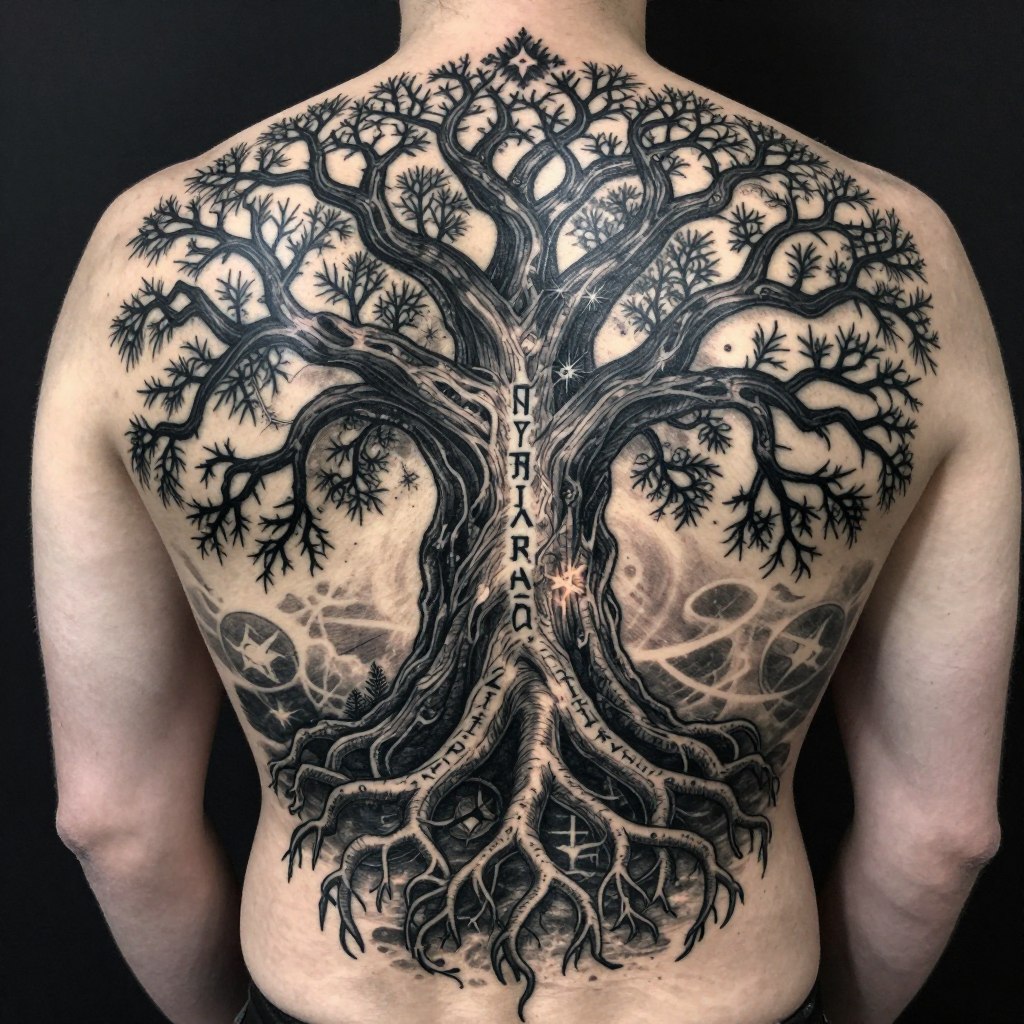
Yggdrasil: The Sacred Tree of Life
Yggdrasil, the World Tree, is key in Norse myths. It shows the connection between the nine worlds. It stands for strength, resilience, and the cycle of life. In tattoos, Yggdrasil is a grand tree, showing the wearer’s bond with nature and the universe.
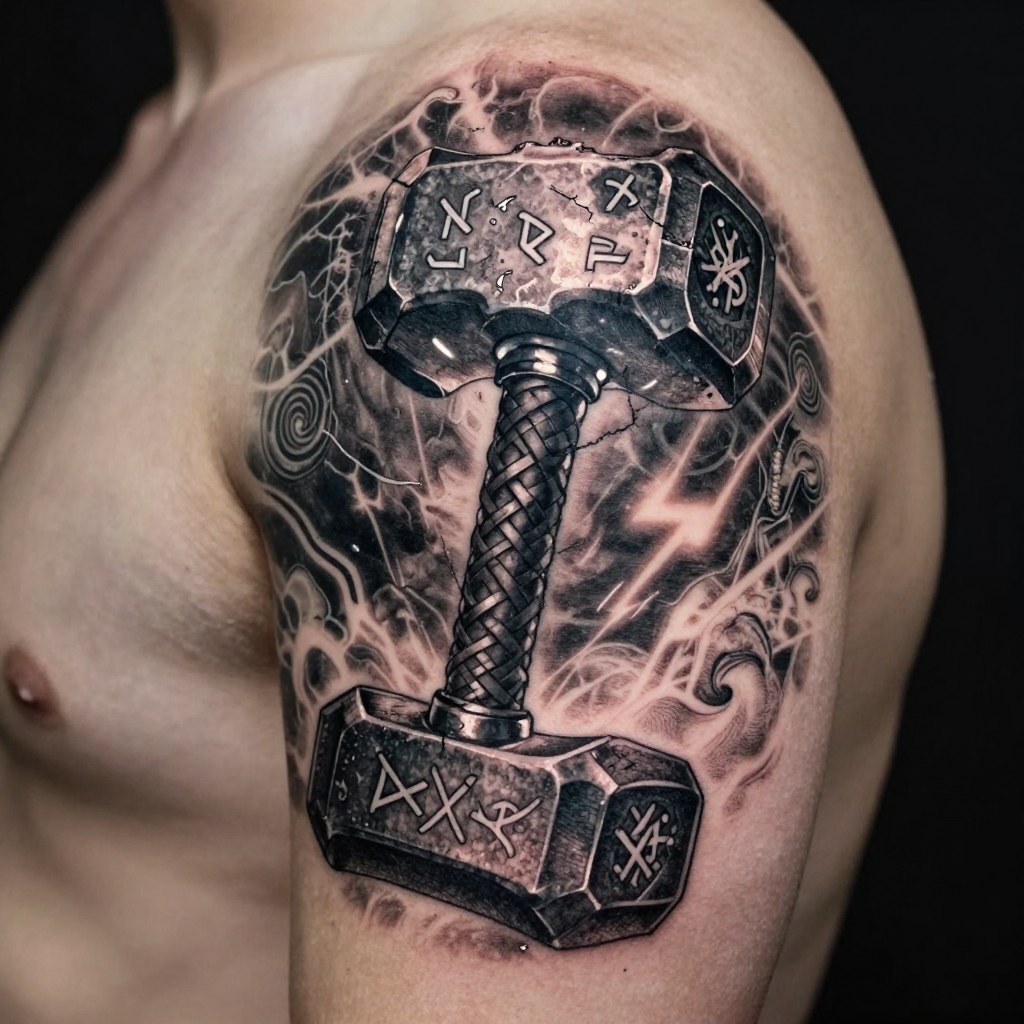
Thor’s Hammer (Mjölnir) and Its Protective Power
Thor’s Hammer, or Mjölnir, is a well-known symbol of protection, strength, and Thor’s power. Viking warriors wore Mjölnir amulets for protection and strength. Today, Mjölnir tattoos are popular, showing the wearer’s toughness and defense.
These Norse symbols, full of history and myth, inspire Viking tattoos today. By knowing their meanings, people can choose tattoos that reflect their style and connect them to Norse culture.
Traditional Viking Tattoo Styles and Techniques
Traditional Viking tattoos show the rich history of the Norse people. They use special techniques and symbols that have been valued for centuries. These tattoos were more than just art; they showed status, loyalty, and cultural identity.
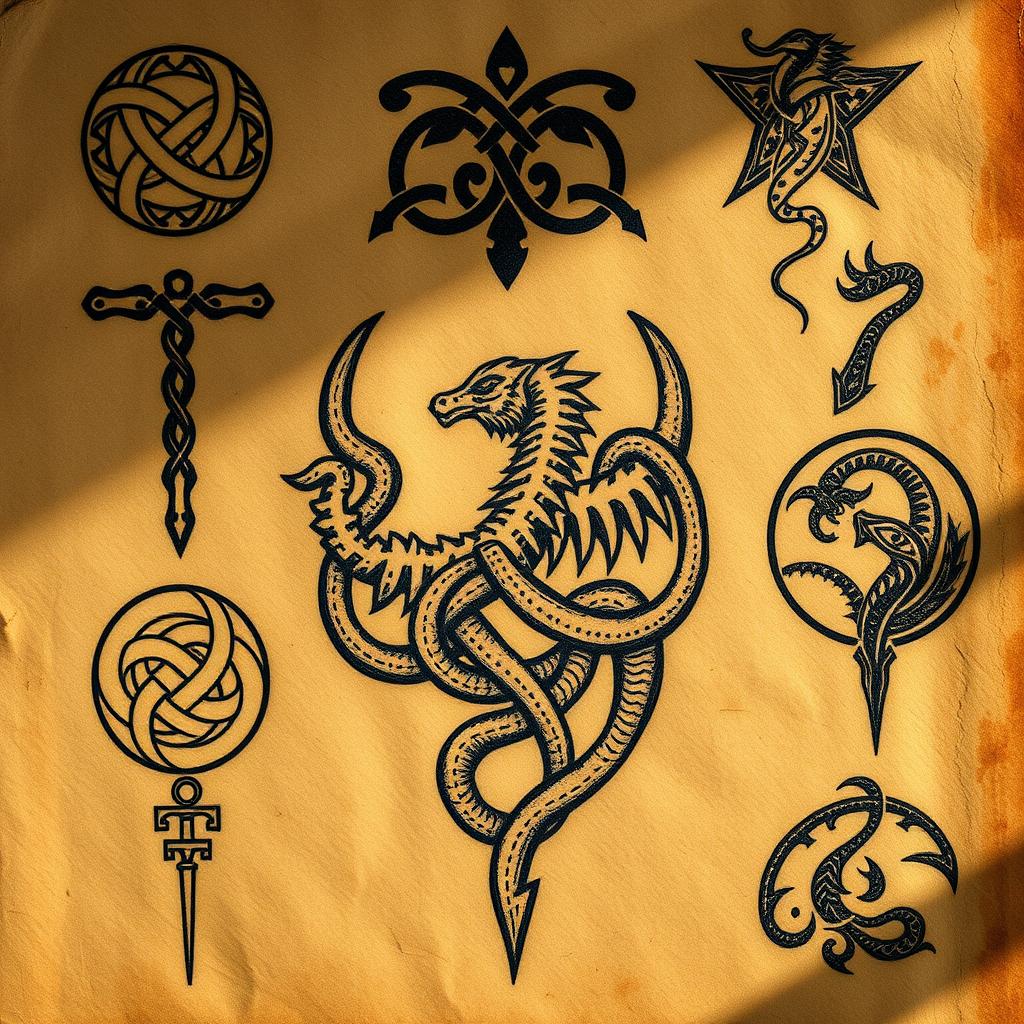
Dotwork and Line Art in Norse Tradition
Dotwork and line art were key in Viking tattooing. Dotwork made detailed, striking designs. Line art used bold lines to draw figures and patterns, often of mythological creatures and gods.
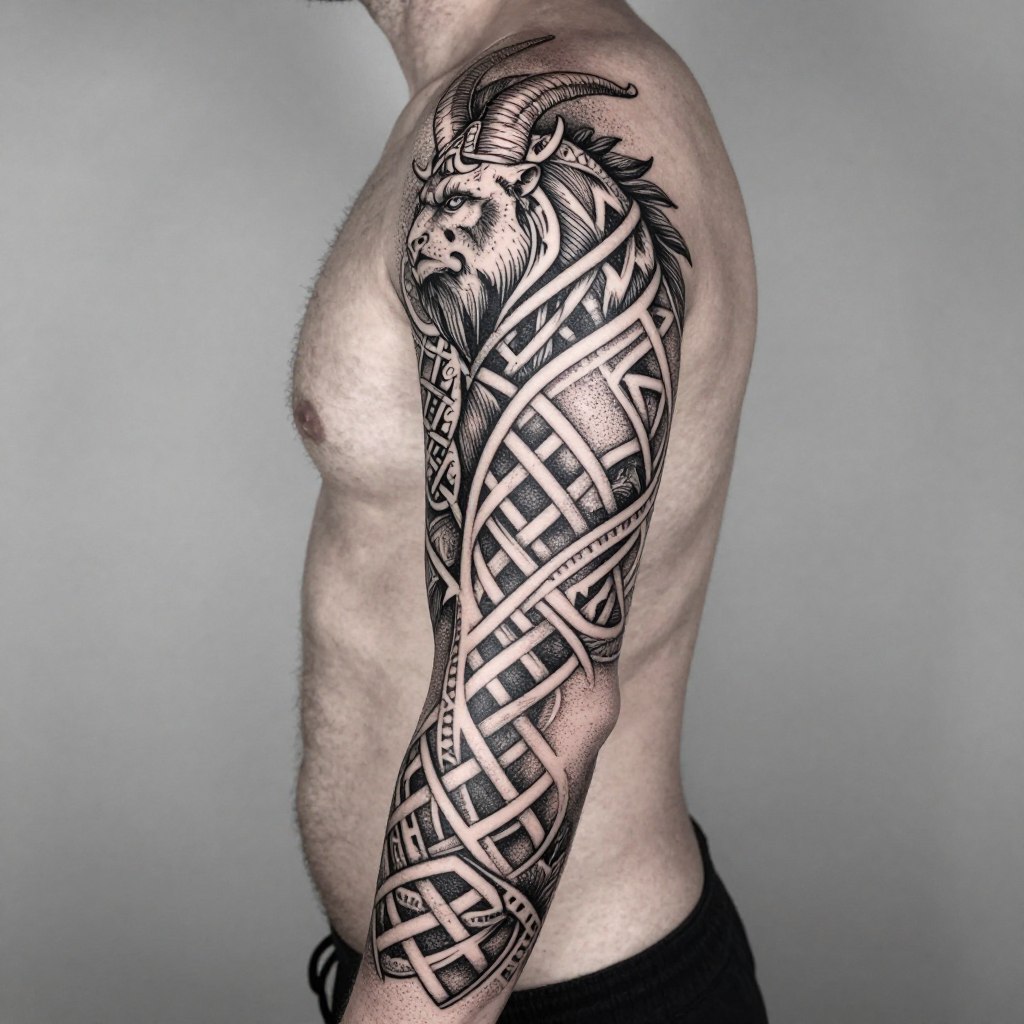
The skill needed for these techniques showed the artist’s talent. They were not just artists but also keepers of cultural traditions. The use of dotwork and line art showed the Norse people’s love for detailed designs and their mythological heritage.
Nordic Knotwork Patterns and Interlacing Designs
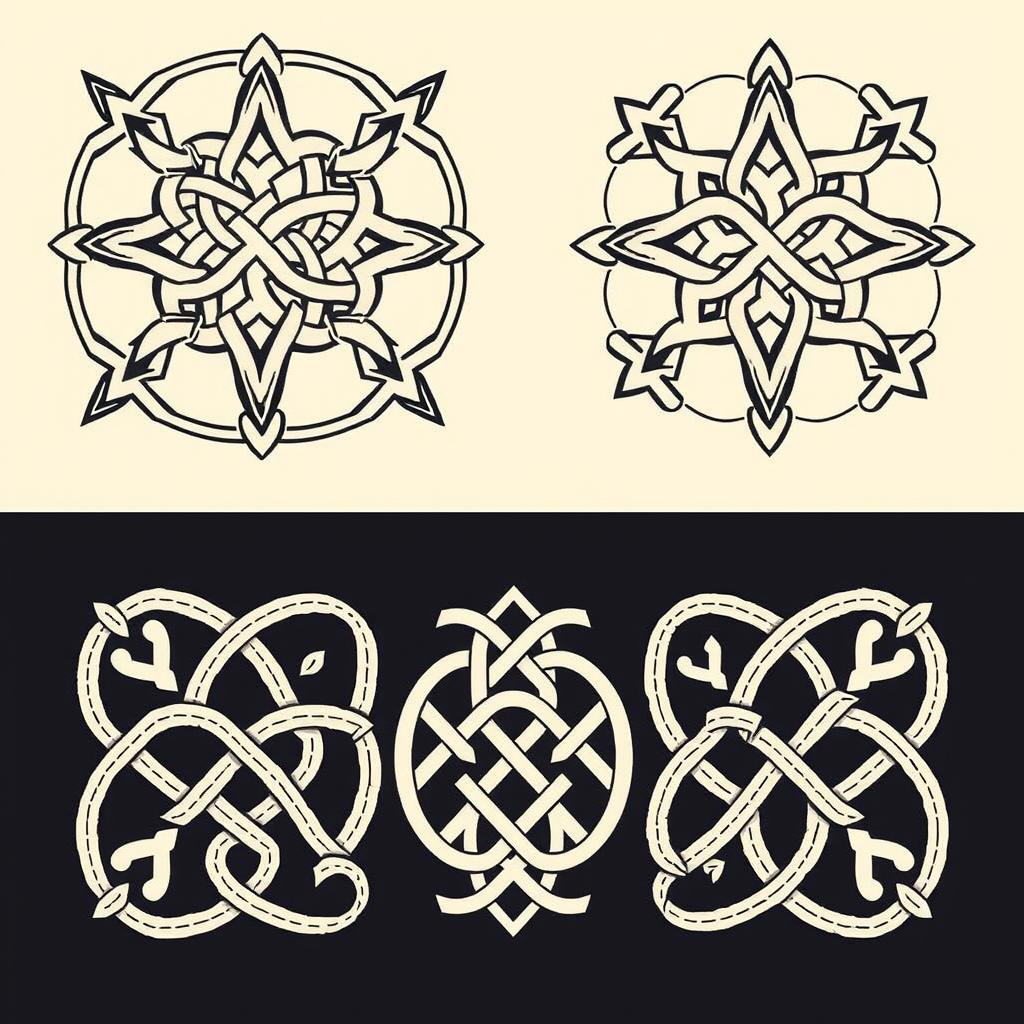
Nordic knotwork patterns and interlacing designs were unique to Viking tattoos. These designs, with snakes and wolves, showed the connection between life and the universe. They also showed the wearer’s status and spiritual depth.
Creating these patterns was a tradition passed down through generations. Each design had its own meaning and story. These motifs added beauty and conveyed messages about the wearer’s values and allegiances.
Traditional Color Palettes and Their Significance
The colors in Viking tattoos came from natural sources like soot, indigo, and ochre. Black meant protection and strength, blue was for the gods and sky, and red was for battle and sacrifice.
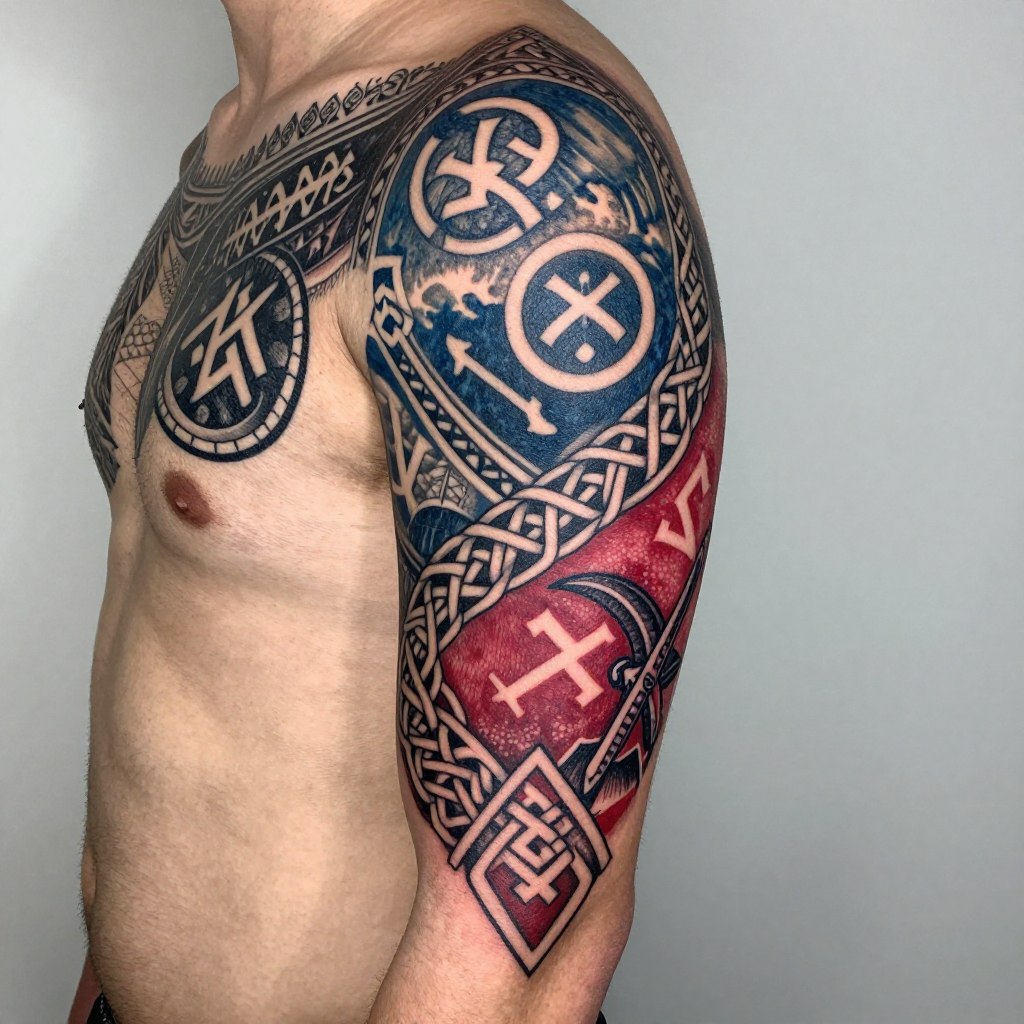
Choosing colors in a Viking tattoo was meaningful. It connected to Norse myths and culture. Colors showed the wearer’s status, job, or spiritual beliefs, making each tattoo unique.
Modern Interpretations of Viking Tattoo Designs
Today, tattoo lovers are mixing old Viking designs with new styles. This mix brings a fresh look to Viking tattoos, keeping their historical roots.
Fusion with Contemporary Tattoo Styles
Viking tattoos are now combining traditional bold lines with modern styles like watercolor and abstract art. This creates unique designs that respect Norse heritage.
Using watercolor in Viking tattoos adds a soft touch to the bold lines. It makes the tattoo even more striking.
Minimalist Norse Designs for Subtle Symbolism
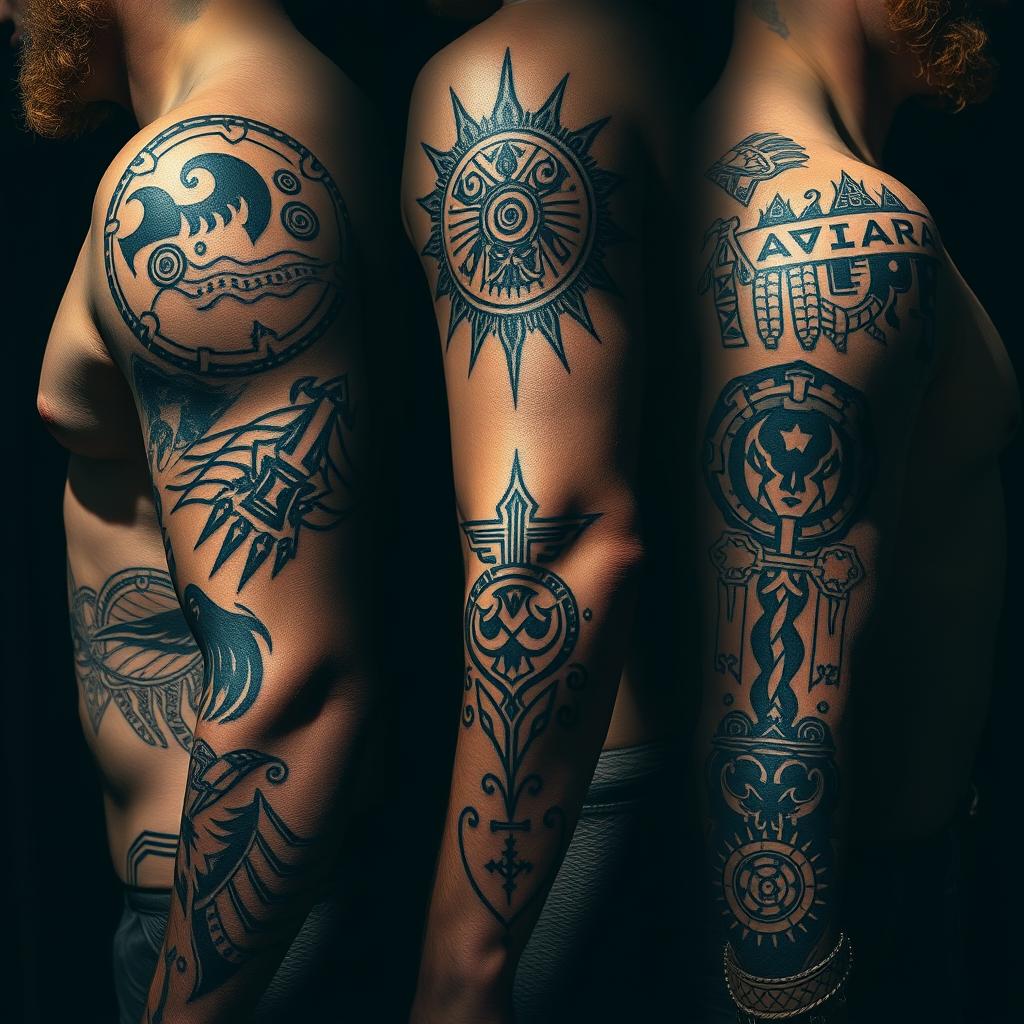
Some prefer smaller, simpler tattoos. Minimalist Norse designs offer a subtle way to show Viking symbols. They use clean lines to carry deep meanings.
These designs often feature symbols like the Valknut or Thor’s Hammer. They keep their importance but are simpler.
Realistic Viking Scene Depictions and Portraits
Those who like detailed tattoos are into Viking scenes and portraits. These can be anything from battle scenes to portraits of Norse gods.
Creating realistic Viking tattoos is a challenge. It requires skill to bring Viking stories to life.
Viking Ship and Ocean-Themed Tattoos
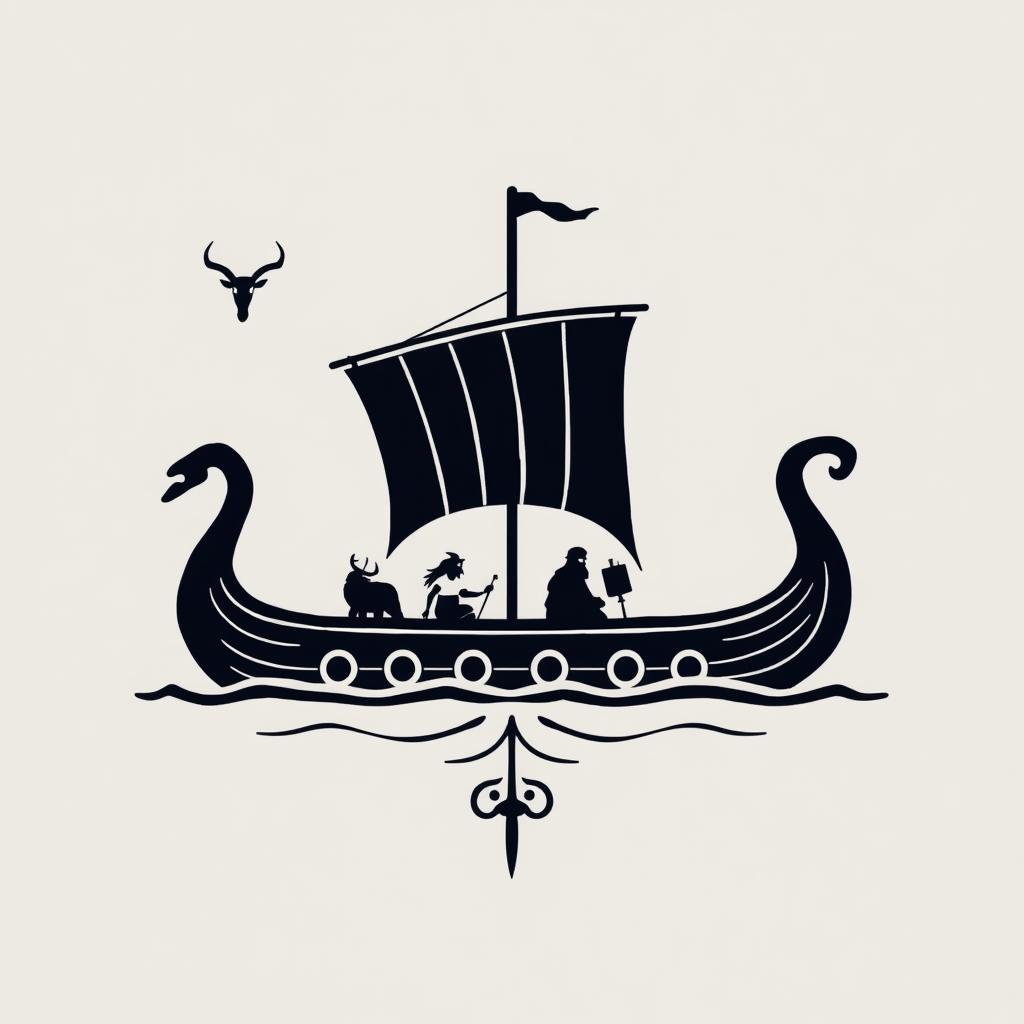
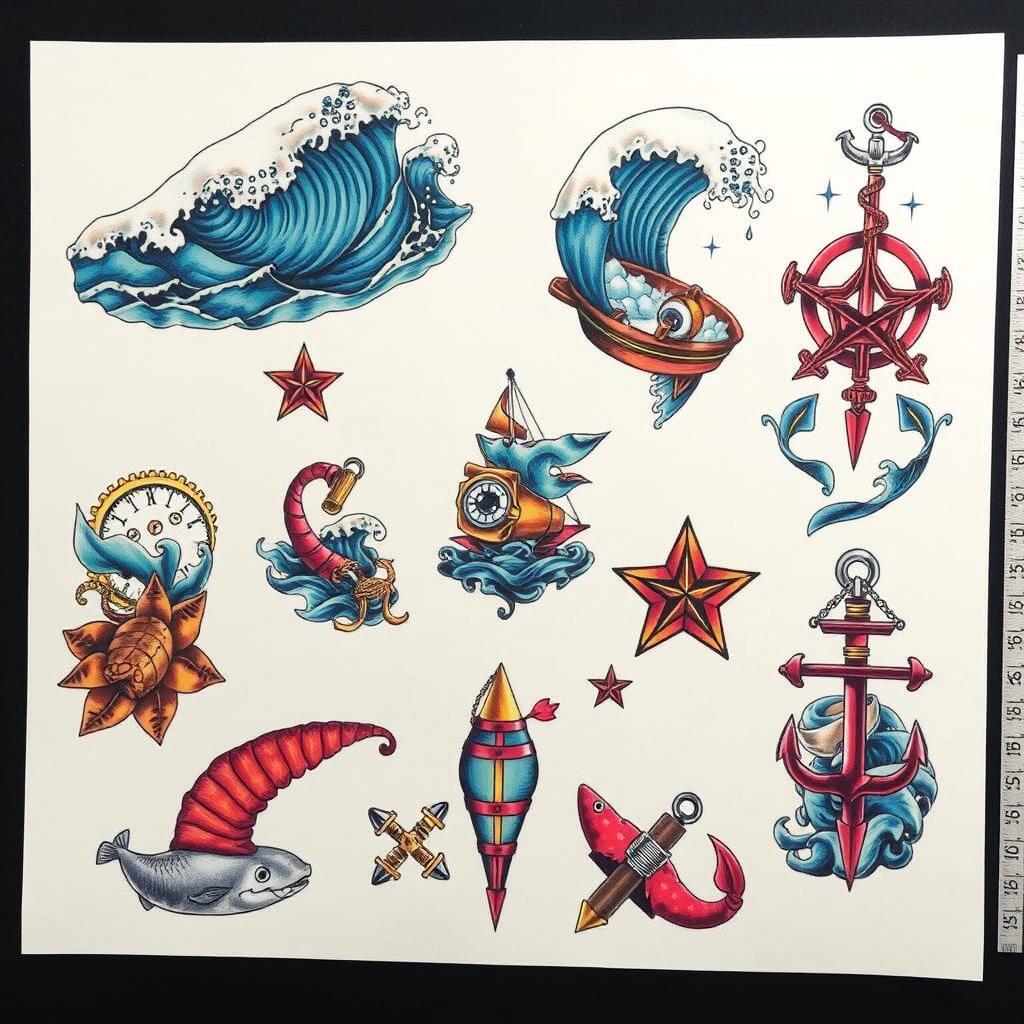
Viking tattoos often celebrate their seafaring culture. Designs range from simple ship silhouettes to detailed ocean battles.
Ocean-themed tattoos can also include Norse mythology elements. This adds more depth and meaning to the design.
Placement Considerations for Viking Tattoos
Choosing where to put a Viking tattoo is as important as the design itself. The spot you pick can change how visible it is, how easy it is to hide, and how it looks with your body’s shape.
Traditional Placement in Norse Culture
In Norse culture, tattoos were often seen in places where they could be noticed. Warriors might have tattoos on their arms or backs to show their battles or loyalty to gods. Knowing these spots can help you understand the cultural meaning of Viking tattoos.
Best Body Areas for Different Viking Design Scales
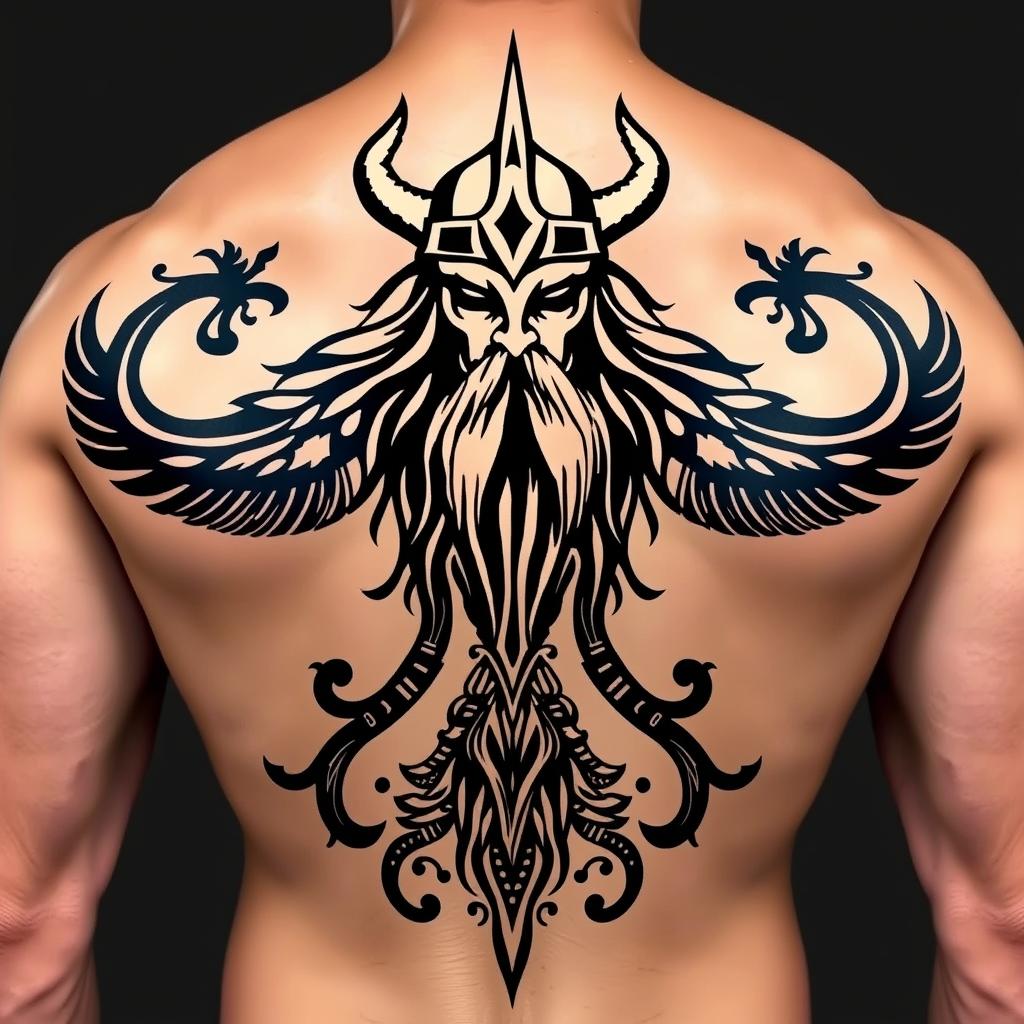
The size of your Viking tattoo design matters when picking a spot. Big designs, like scenes from Norse myths or detailed longships, look best on the back, chest, or thigh. Smaller designs, like simple Norse symbols or small warrior images, work well on the forearm, bicep, or behind the ear.
Adapting Norse Patterns to Body Contours
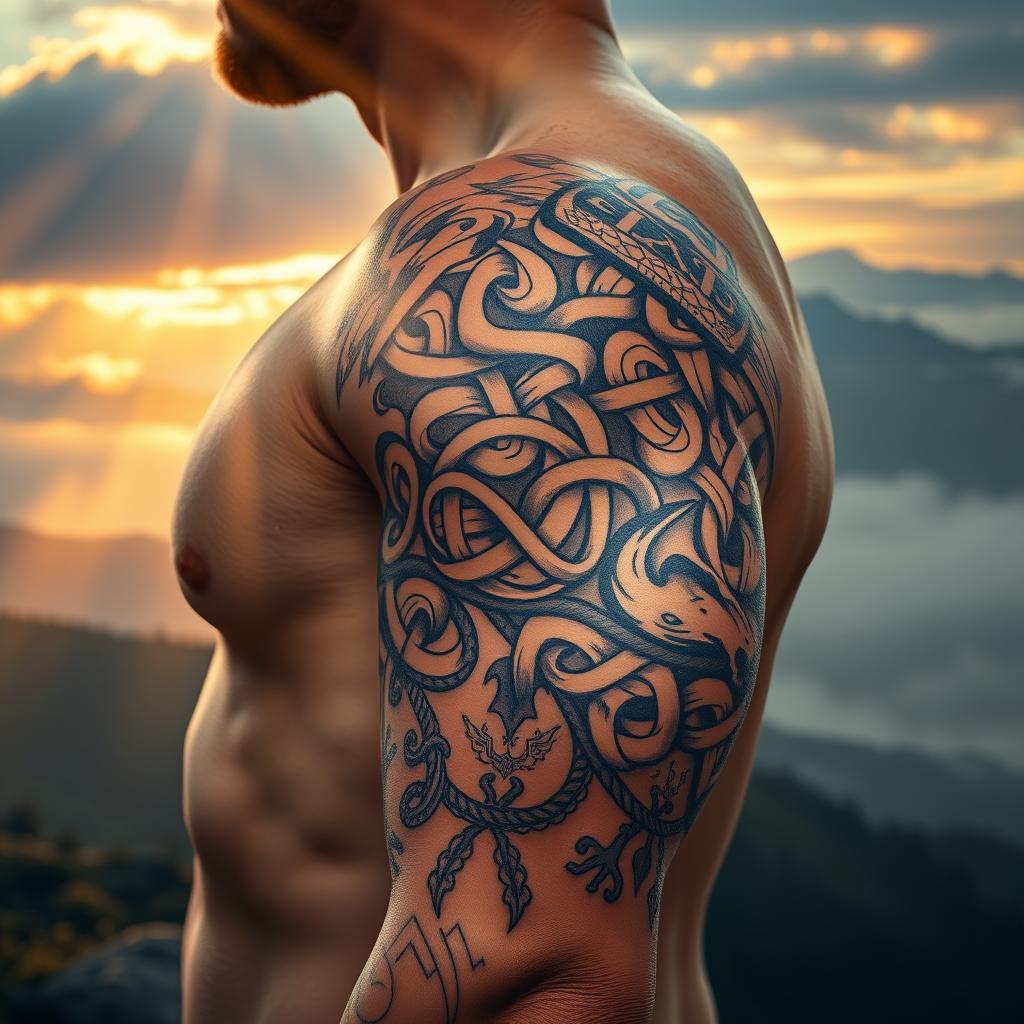
When placing a Viking tattoo, think about how it will fit your body’s shape. For example, a design with Norse knotwork can follow your body’s curves, making it look even better. Tattoo artists can help make sure your Viking tattoo fits your body well, whether it’s on a flat area or a muscular one.
By thinking carefully about where to put your Viking tattoo, you can make sure it looks amazing and carries the meaning you want.
Cultural Appreciation and Respectful Adoption
Getting a Viking tattoo is more than just liking the designs. It’s about respecting their culture deeply. When people get Norse mythology tattoos, knowing the history and meaning of these symbols is very important.
Understanding the Historical Context
Viking tattoos are not just pretty; they come from a rich culture. The Norse gods, creatures, and runes in these tattoos have deep meanings. These meanings are tied to the old Norse beliefs and ways of life.
To really get these symbols, you need to learn about their history. This means studying their roles in Viking culture, their importance in religion and society, and how the Norse people saw them.
Avoiding Misappropriation of Norse Symbols
It’s easy to cross the line between cultural appreciation and misuse, even with Viking tattoos. Using these symbols to honor Norse heritage is good, but doing it in a shallow or wrong way is not.
It’s important to know the true meanings and cultural sensitivities of these symbols. This helps avoid misunderstandings, even among those who know about Norse mythology.
Honoring the Authentic Meaning Behind Designs
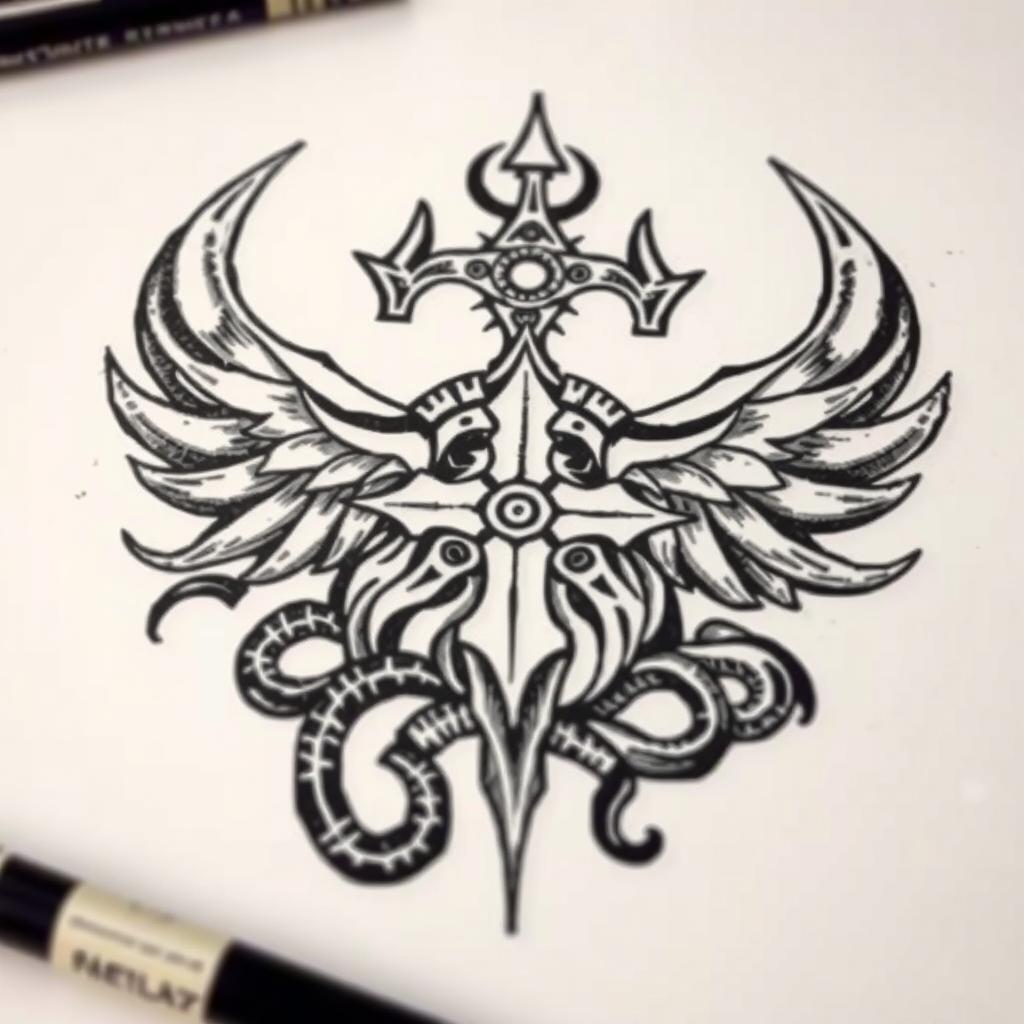
Choosing a Viking tattoo is not just about the look. It’s about connecting with the story and meaning behind it. Whether it’s Thor’s Hammer for protection or Yggdrasil’s mystic power, knowing and respecting these meanings is key.
By understanding and respecting the heritage and history of Norse mythology tattoos, people show true appreciation. This is not just about liking the tattoos but about honoring them deeply.
Conclusion: Embracing Norse Heritage Through Body Art
Viking tattoo designs are a special way to connect with Nordic heritage. They show the rich history of the Norse people. Designs like knotwork and mythological symbols honor the Viking legacy.
Nordic tattoo inspiration comes from symbols like the Valknut, Vegvisir, and Yggdrasil. These symbols add depth and meaning to tattoos. They connect us to the Norse cultural heritage.
When choosing Viking tattoo designs, understanding their history and meaning is key. This ensures your tattoos are not just beautiful but also respectful and meaningful.
Viking tattoos are more than just pretty designs. They are a way to honor and celebrate Norse heritage. Whether you love the patterns or the symbolism, Viking tattoos offer endless inspiration for body art.

