
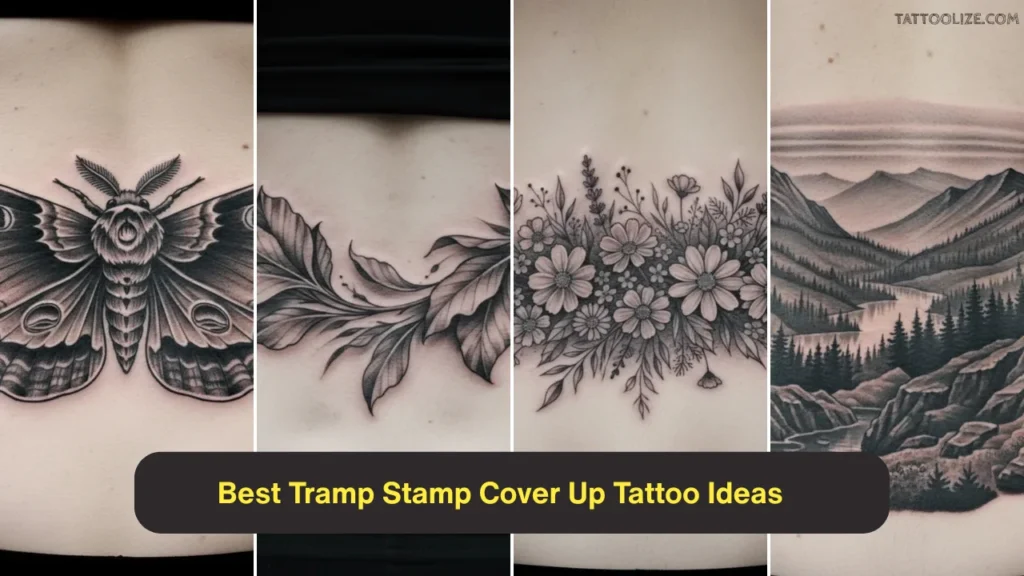
Tramp stamp cover up tattoo ideas have become one of the most searched tattoo topics because many people want artwork that reflects who they are now rather than who they were years ago.
A lower back tattoo doesn’t have to be removed to create a fresh look. With the right design, it can become the foundation for something entirely different.
The best tramp stamp cover up tattoo ideas use larger shapes, darker shading, layered details, and smart placement to hide older ink while creating a design that feels intentional.
Florals, ornamental patterns, wildlife, mandalas, and blackwork pieces are among the most successful cover-up options because they blend existing lines into new artwork.
You’ll find elegant black-and-grey concepts, bold statement pieces, feminine designs, nature-inspired artwork, and modern ornamental styles below.
Each idea includes placement notes, design details, and practical advice that can help you have a more productive conversation with your tattoo artist.
Flowing Peony Garden Tattoo
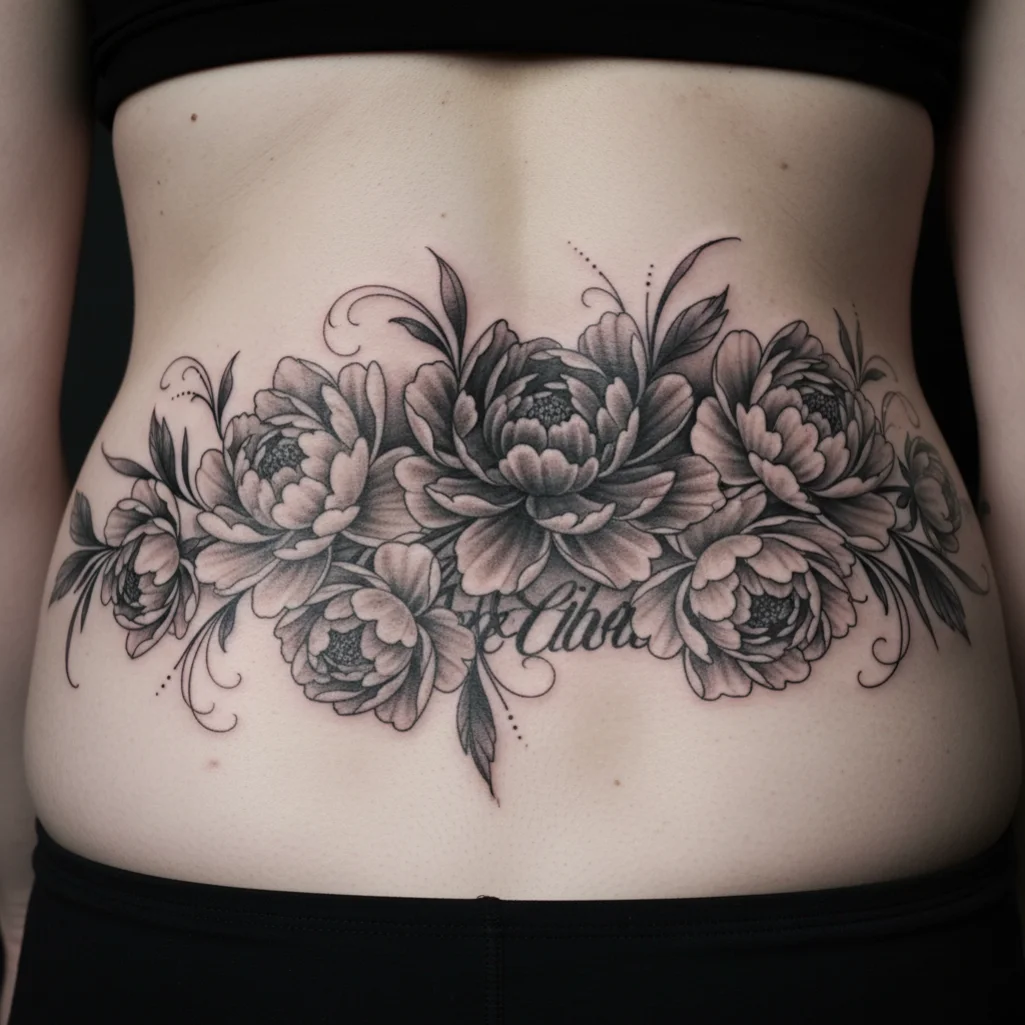
Placed across the entire lower back, large peony blooms create natural coverage while soft leaves and curved stems extend beyond the original tattoo.
The petals can overlap old lines and lettering, making unwanted ink disappear inside layered floral details. Black and grey shading gives the piece depth without making it feel heavy.
Peonies carry themes of growth, confidence, and fresh beginnings. Wearing a design like this can feel less like hiding an old tattoo and more like upgrading it into artwork that matches your current style.
The broad petals create movement that draws attention away from whatever existed underneath.
Ask your artist to place the darkest shading directly over the oldest ink. Cover-up tattoos succeed when the darkest parts of the new design align with the most visible parts of the previous tattoo.
Layered Wildflower Meadow Tattoo
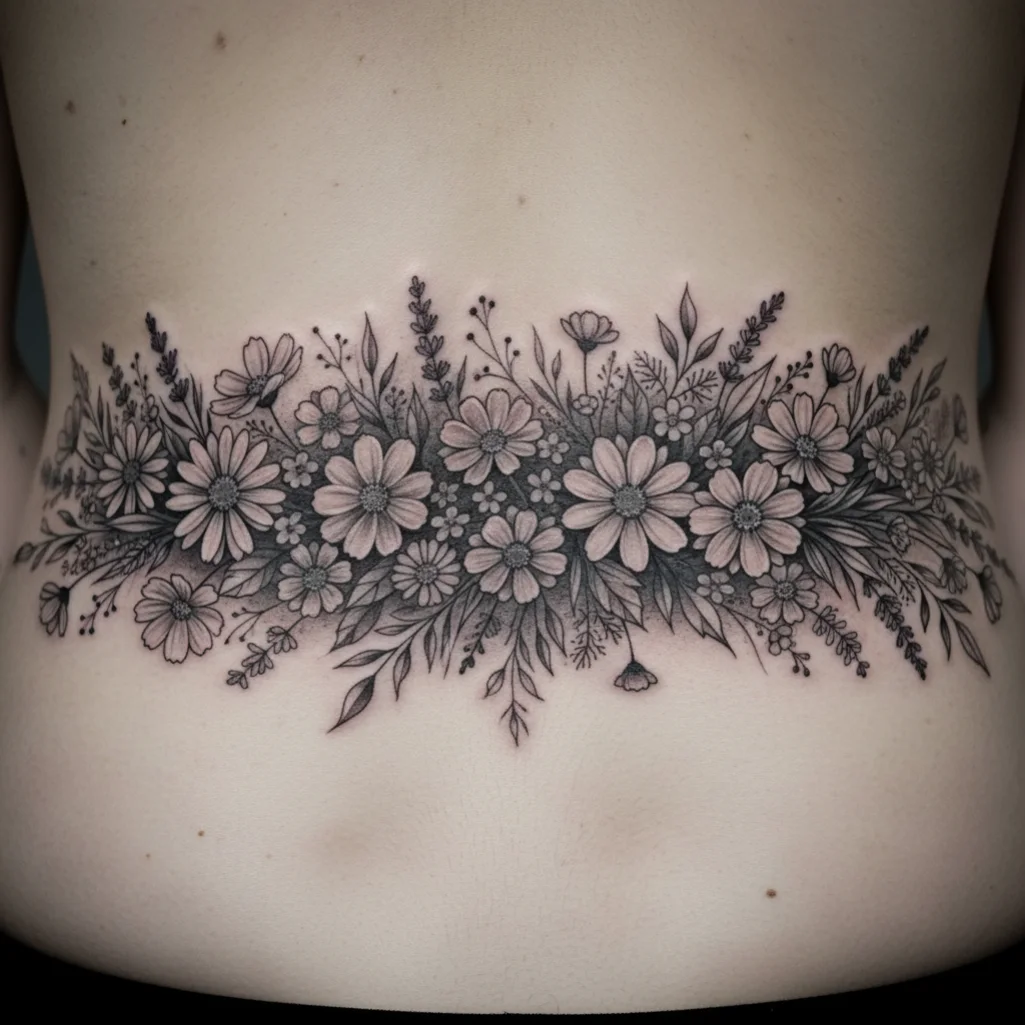
The first thing you notice is the variety of flowers rather than a single focal point. Daisies, cosmos, lavender stems, and small filler leaves stretch horizontally across the lower back. Different flower sizes create visual distraction, which is valuable when concealing older designs with uneven shapes.
A meadow composition feels relaxed and personal. Instead of one dominant symbol, you get a collection of elements working together. The result often feels lighter and less structured than traditional cover-up artwork.
Choose flowers with overlapping petals rather than thin outlines. Dense floral layering gives artists more opportunities to bury old tattoo lines inside natural shadows and texture.
Spreading Vine and Leaf Tattoo
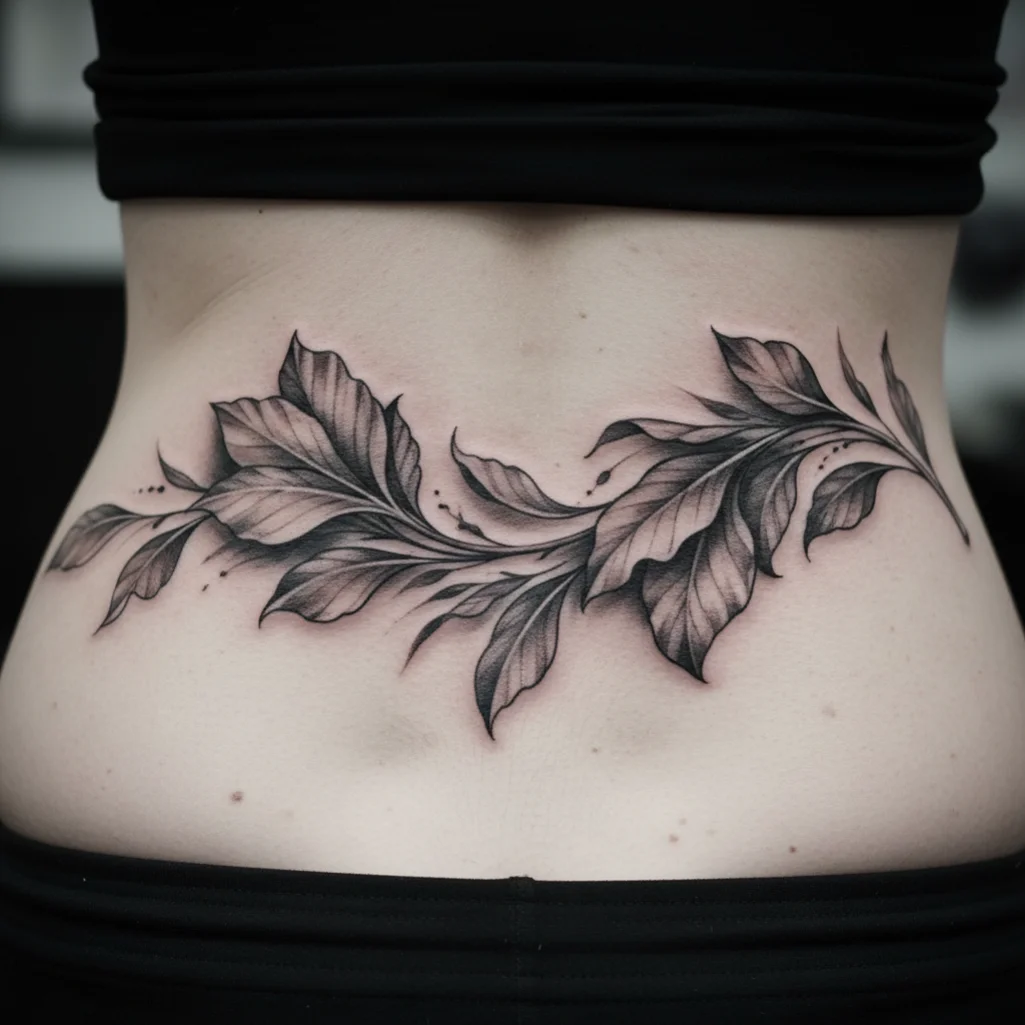
A single winding vine can travel from one hip to the other while broad leaves fan outward across the lower back. Strategic leaf placement allows artists to cover dark sections of old ink without creating a large solid-black patch. Fine stems help connect the design naturally.
Vines suggest movement and change. Because they appear to grow outward, they can transform an outdated tattoo into something that feels alive and current. The flowing shape also flatters the natural curve of the waist.
Placement matters here. Extending the vine slightly onto the upper hips often creates better balance than keeping everything confined to the original tattoo area.
Symmetrical Mandala Waist Tattoo
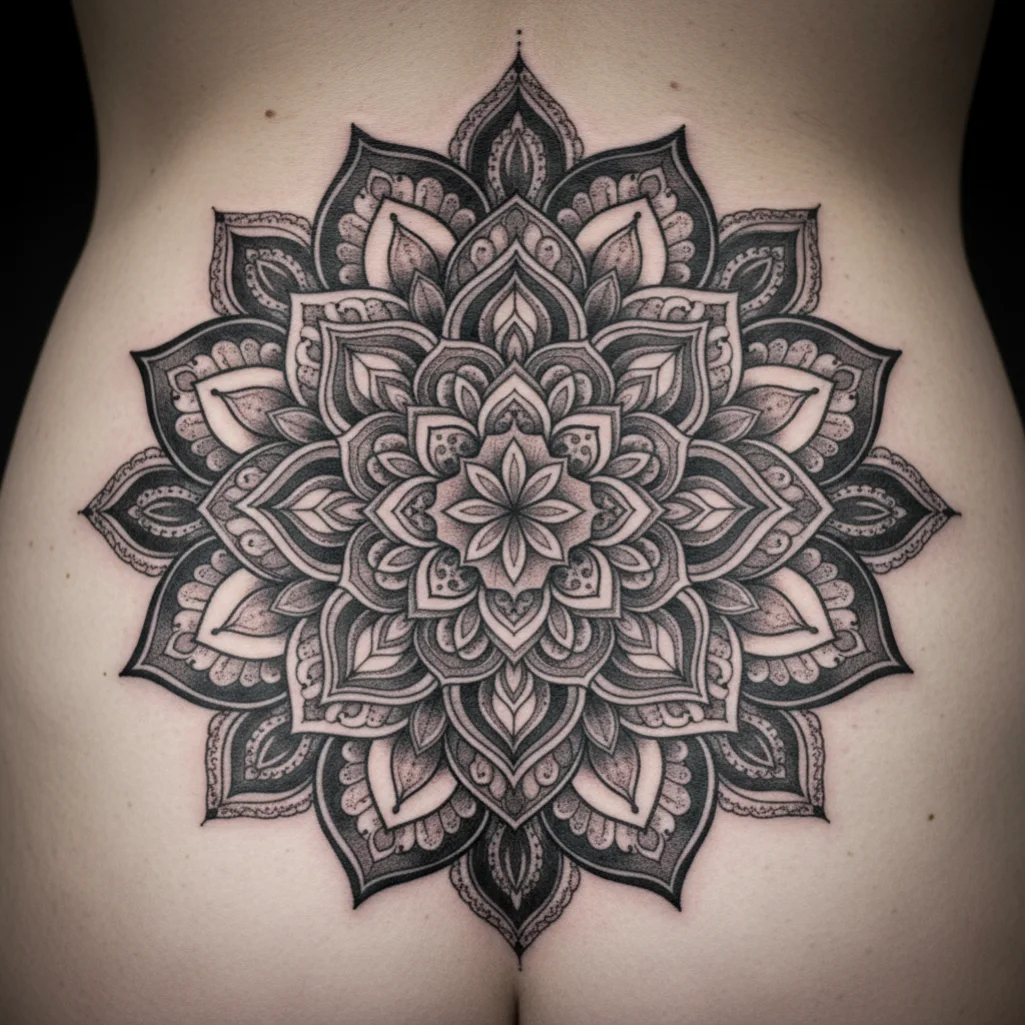
There’s something deliberate about a mandala that spans the full width of the lower back. Repeating geometric shapes radiate outward from a central point while layered petals and decorative patterns create dense visual coverage. The symmetry immediately gives the design structure.
Many people choose mandalas because they represent balance and personal growth. The repeating forms create order from something that may have felt disconnected or outdated before. From a distance, viewers see the overall pattern rather than individual details.
Keep the mandala large. Small geometric elements can blur together over time, especially when they’re placed over older tattoo pigment that already exists beneath the skin.
Detailed Lacework Panel Tattoo
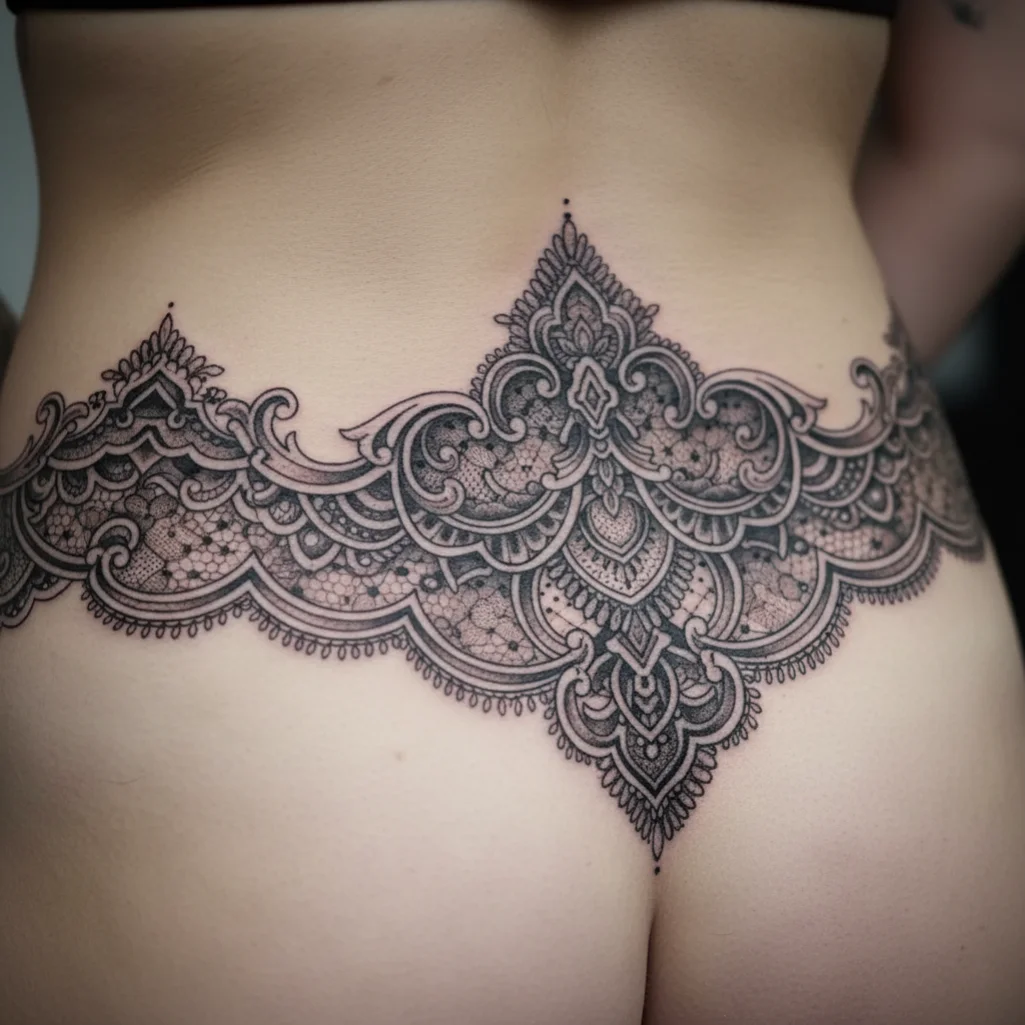
Where most cover-up designs rely on flowers alone, this one borrows inspiration from lace fabric and decorative embroidery. Curved borders stretch across the lower back while ornamental details fill the center. Small dots, scalloped edges, and layered shading create texture throughout the piece.
The appeal comes from its decorative quality. Rather than hiding the lower back area, it celebrates it. Many people appreciate how lace-inspired artwork feels feminine without relying on traditional floral themes.
Request varying line weights throughout the design. Thicker outlines help conceal older ink, while thinner decorative details add depth and prevent the piece from appearing overly dark.
Decorative Filigree Scroll Tattoo
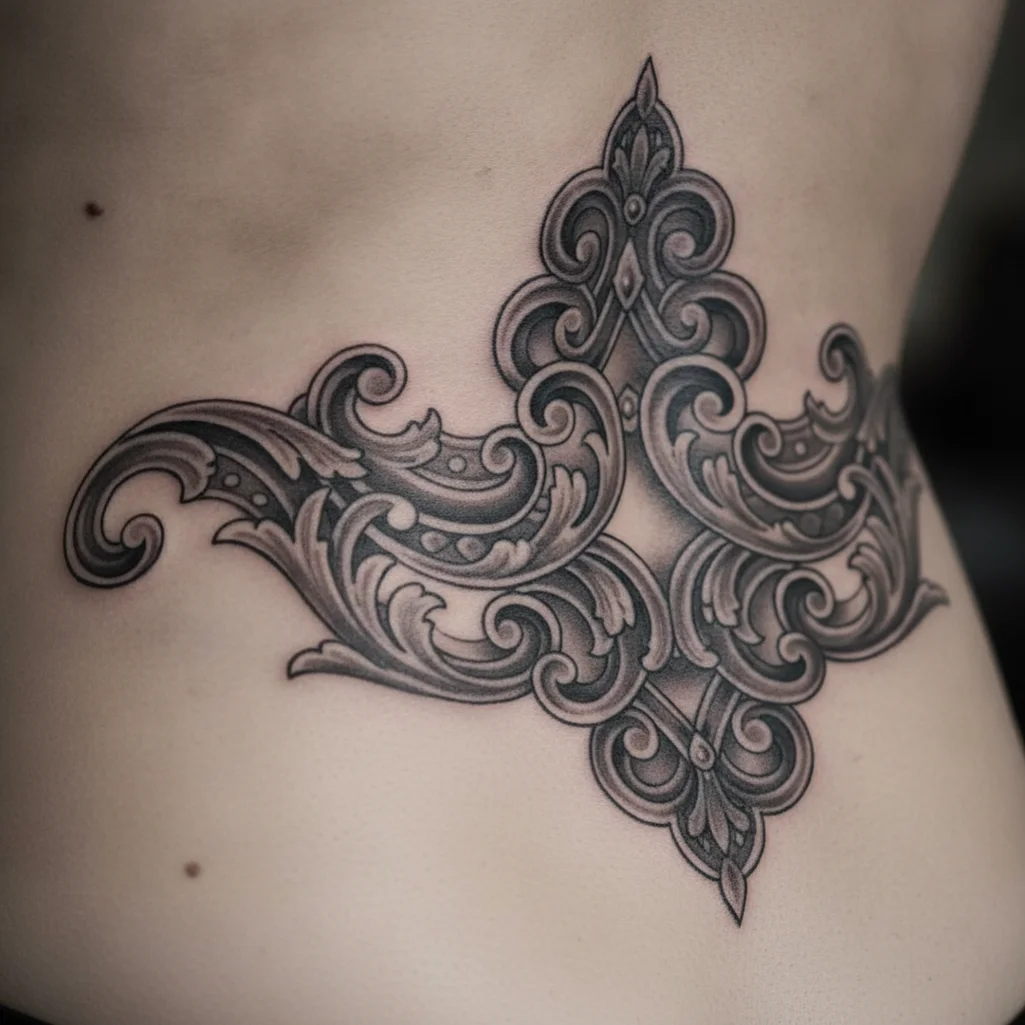
A series of swirling filigree shapes can transform an old lower back tattoo into an elegant ornamental piece. Thick curves anchor the composition while smaller decorative loops fill gaps and soften transitions. Black and grey shading helps create depth without overwhelming the design.
Filigree designs feel refined because they rely on movement rather than recognizable images. Your eye follows the flowing curves across the waistline, making it difficult to identify where the original tattoo once sat.
Avoid requesting extremely thin ornamental lines. Cover-up work benefits from slightly heavier outlines that maintain their shape as the tattoo ages and settles into the skin.
Expansive Moth Wing Tattoo
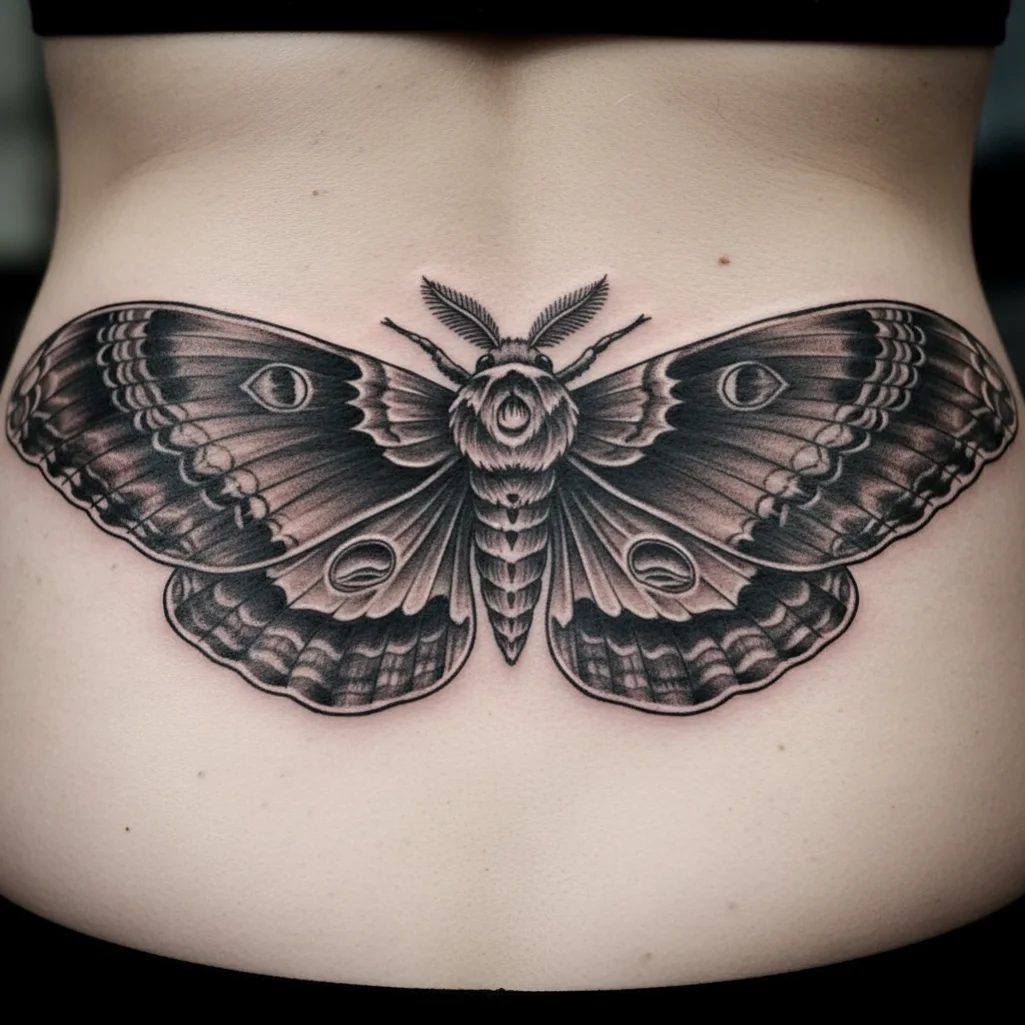
The first thing you notice is the wide wing span stretching from hip to hip. A large moth sits in the center of the lower back while patterned wings extend outward, covering old tattoo lines beneath layered markings. Dark sections near the wing edges create excellent camouflage for stubborn ink, while lighter interior details keep the piece balanced.
Moths often symbolize transformation and moving toward a new phase of life. For a cover-up, that symbolism feels especially fitting. Instead of erasing the past, you’re building something new from it. The symmetrical shape also naturally suits the lower back, creating a design that looks intentional rather than corrective.
Ask your artist to incorporate dense wing patterns where the old tattoo is darkest. Moth wings offer countless opportunities to hide previous lines within spots, bands, and shaded sections.
Fierce Phoenix Rising Tattoo
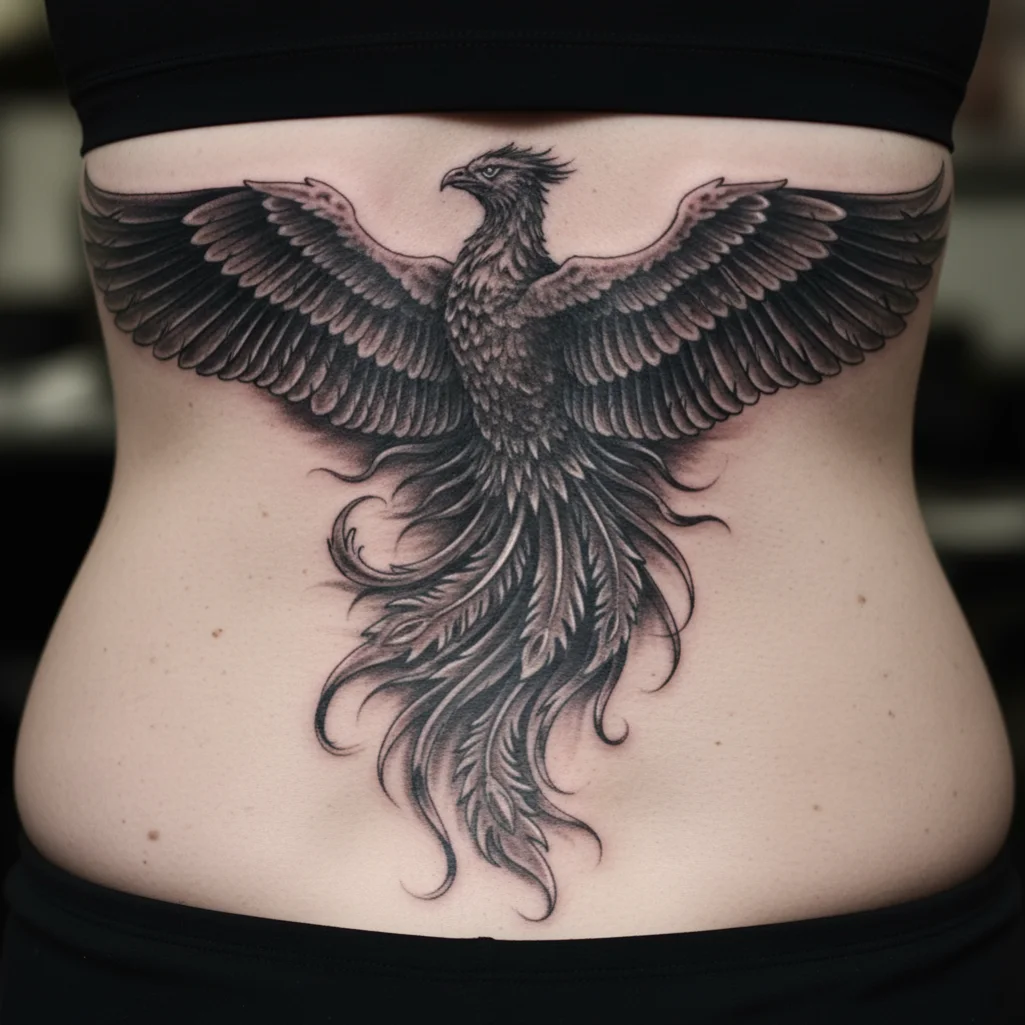
Few designs express personal reinvention as clearly as a phoenix. Starting at the center of the lower back, the bird’s body anchors the composition while sweeping feathers spread outward and upward toward the waistline. Flame-like tail feathers provide plenty of coverage and allow artists to work around oddly shaped existing tattoos.
A phoenix carries themes of renewal, resilience, and starting fresh. Wearing one can feel like claiming ownership of your story rather than trying to hide it. The upward movement of the feathers creates energy that draws attention toward the new artwork.
Black and grey versions usually age better than highly saturated color versions in cover-up situations. Existing pigment can affect how bright colors heal, especially over older tattoos.
Bold Botanical Blackwork Tattoo
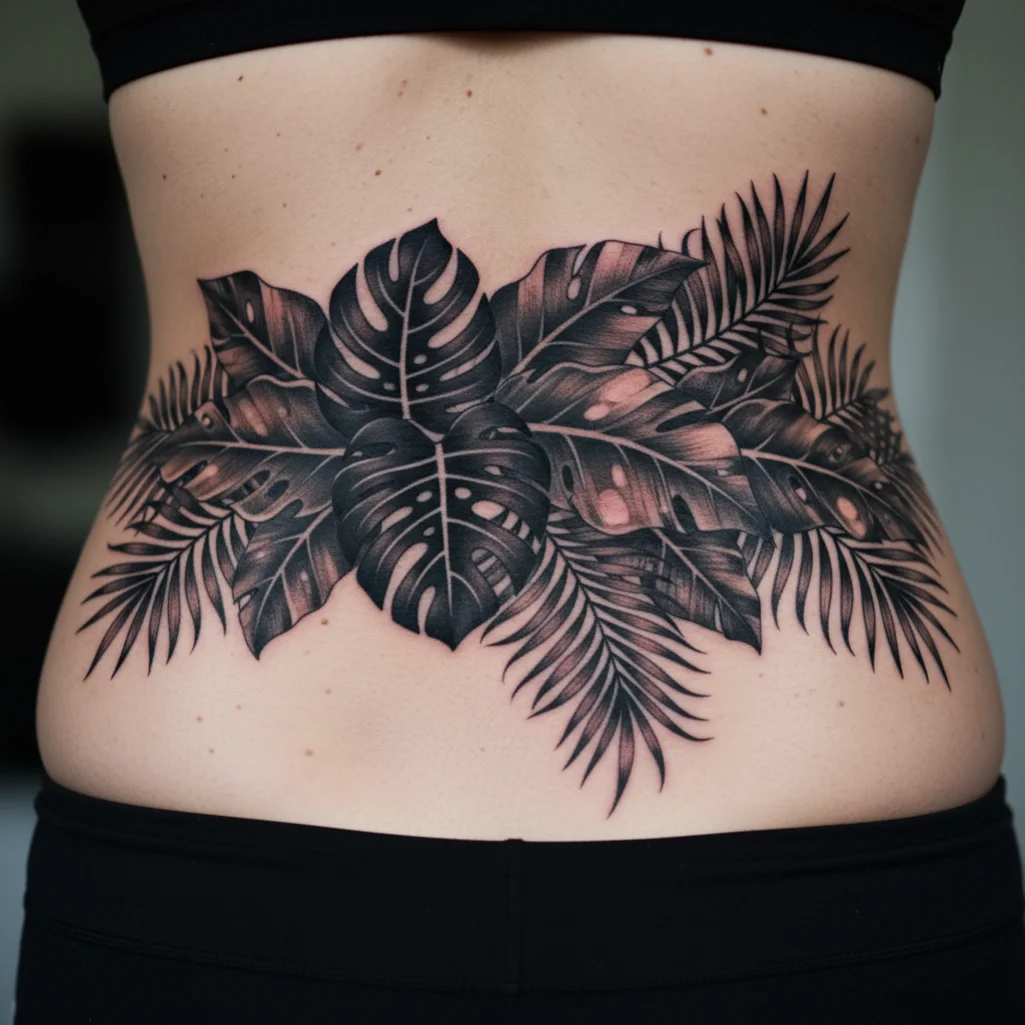
A cluster of oversized leaves creates a dramatic lower back composition. Monstera leaves, palm fronds, and tropical foliage overlap one another, creating deep shadows and strong contrast. Large black sections effectively conceal old ink while negative space keeps the design readable from a distance.
There’s a confidence to blackwork botanical tattoos. Rather than disguising their size, they embrace it. The contrast between dark leaves and untouched skin creates a modern look that feels current without chasing trends.
Leave enough negative space between leaves. When blackwork elements are packed too tightly together, the design can lose definition as it ages over the years.
Geometric Shadow Pattern Tattoo
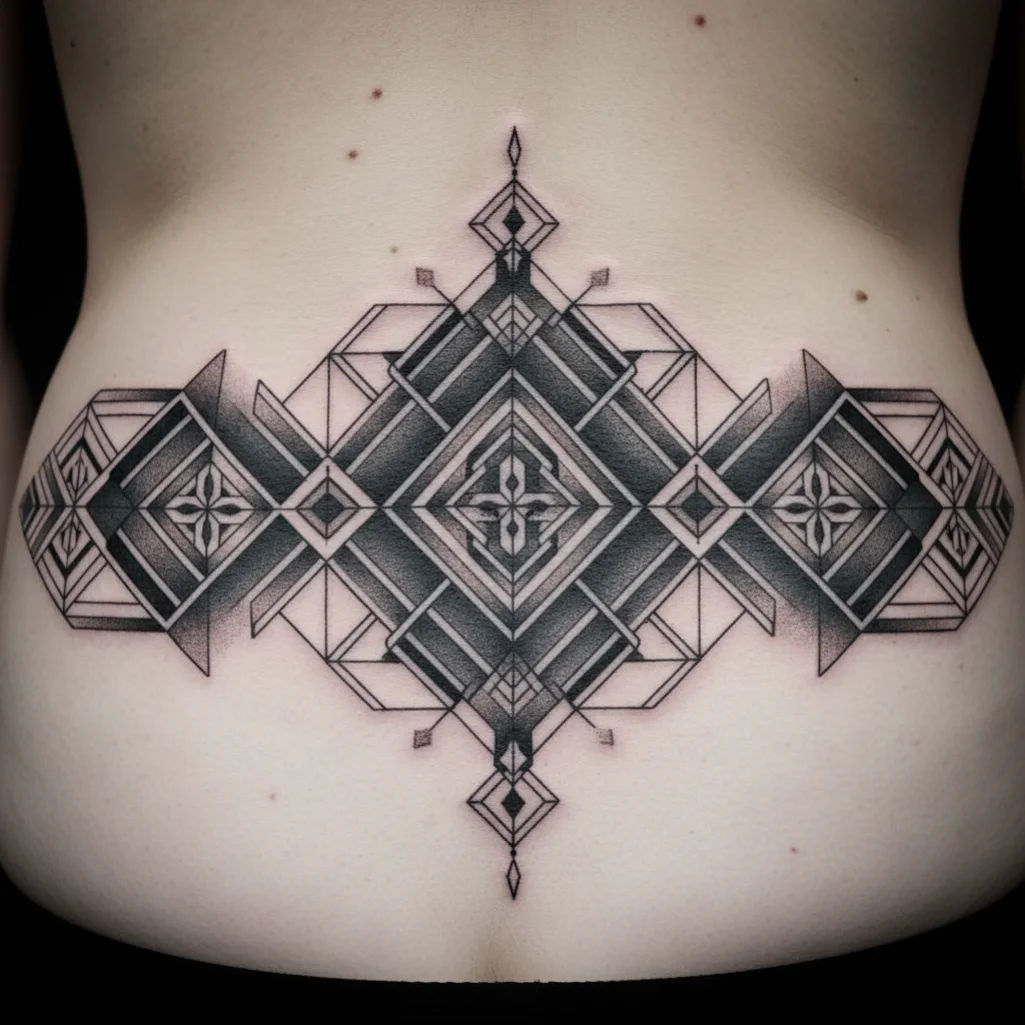
A single thin line rarely succeeds in cover-up work, but layered geometric patterns often do. This design combines repeating diamonds, dotwork gradients, and angular shapes across the lower back. Dark sections alternate with lighter areas, creating a visual rhythm that breaks up the appearance of older ink.
Geometric artwork appeals to people who want structure rather than symbolism. The focus stays on pattern, balance, and precision. From a distance, viewers see the overall composition instead of individual elements.
Choose an artist with a strong geometric portfolio. Even slight inconsistencies become noticeable when working with repeating patterns and straight lines across a broad area.
Full Lower Back Landscape Tattoo
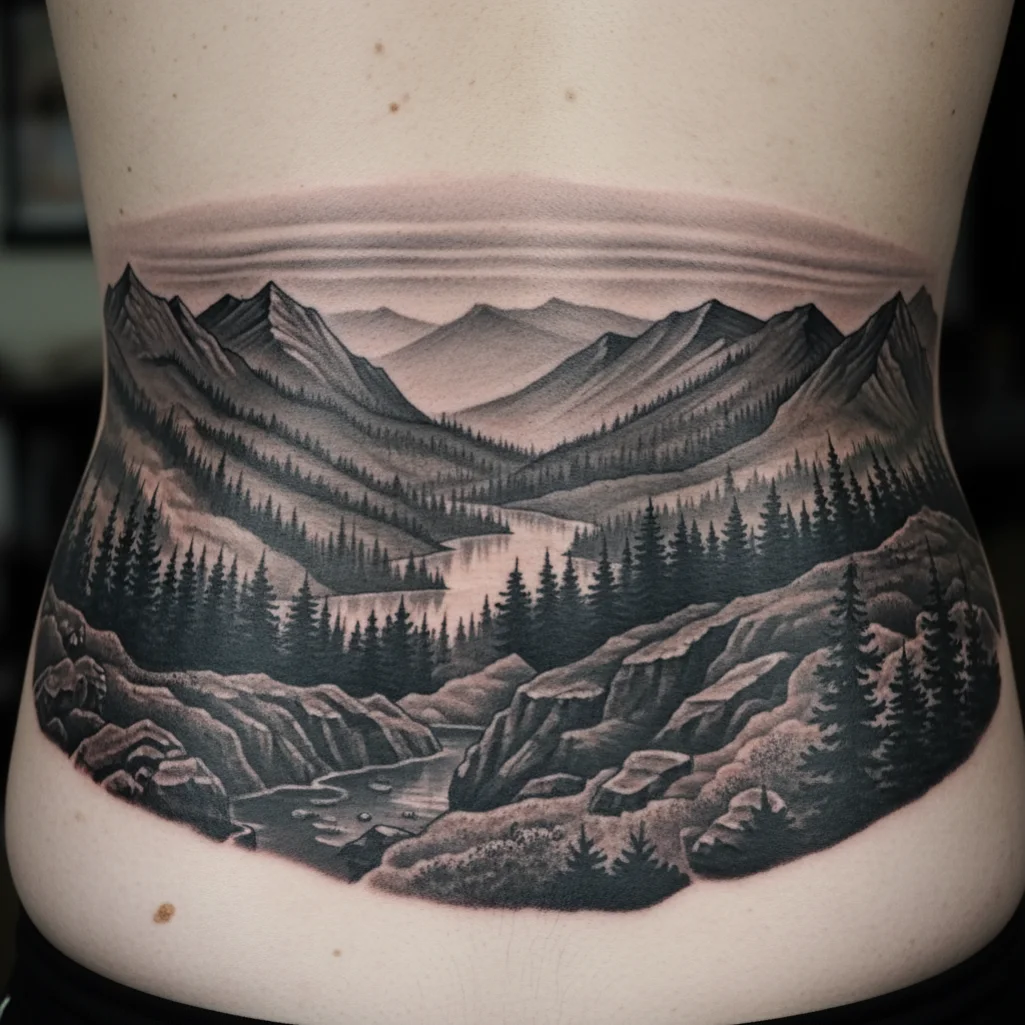
What catches the eye first is the depth. Rolling mountains, pine trees, desert silhouettes, ocean waves, or a sunset horizon stretch across the entire lower back. The layered scenery creates natural opportunities to bury older tattoo elements within shadows, ridgelines, and foreground details.
A landscape tattoo often represents a place that shaped you. It might reference a favorite national park, a memorable trip, or simply a connection to nature. Because the scene spans a wide area, it can transform the lower back into a canvas rather than a single focal point.
Keep the horizon line slightly above the center of the original tattoo. That placement gives artists more room to hide dark areas within foreground shading and textured terrain.
Final Words
Tramp stamp cover up tattoo ideas give you the chance to turn an outdated piece into artwork that feels intentional, personal, and current.Save a few favorites from this list before your consultation so you can discuss size, coverage, and style options with your artist.The right design doesn’t just hide old ink—it creates a new focal point you’ll feel good about wearing for years.

