
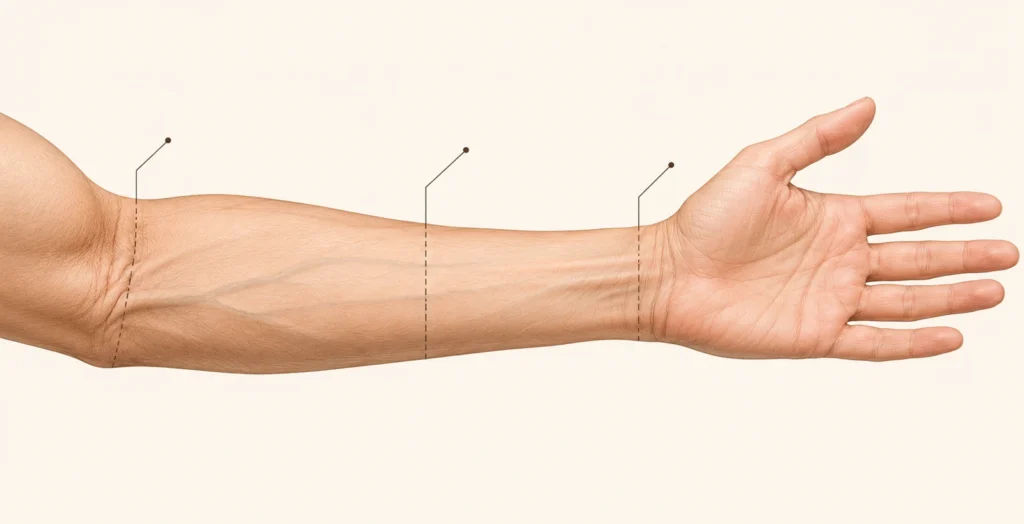
Inner forearm tattoo pain varies from person to person. Expect discomfort during tattooing, but a placement chart or someone else’s experience can’t reliably predict how intense it will feel for you. The useful details are where the design sits, how much work it involves and how you and your artist will manage the appointment.
Inner forearm tattoo pain at a glance
There’s no dependable pain score that applies to everyone’s inner forearm. A small tattoo still involves needle work, and a larger design may involve several different kinds of work across the arm. Use the following points to plan a conversation with your artist.
| Consideration | What to clarify |
|---|---|
| Exact placement | Does the stencil stay in the middle of the forearm or reach the wrist or elbow crease? |
| Coverage and detail | How much line work, shading or solid fill does the design require? |
| Appointment length | What is the estimated tattooing time, and how will breaks work? |
| Individual response | How will you communicate discomfort or ask to stop? |
Treat numerical pain ratings as personal accounts, rather than promises. Someone describing the area as easy may have had a different design, a shorter appointment or a different response to the sensation.
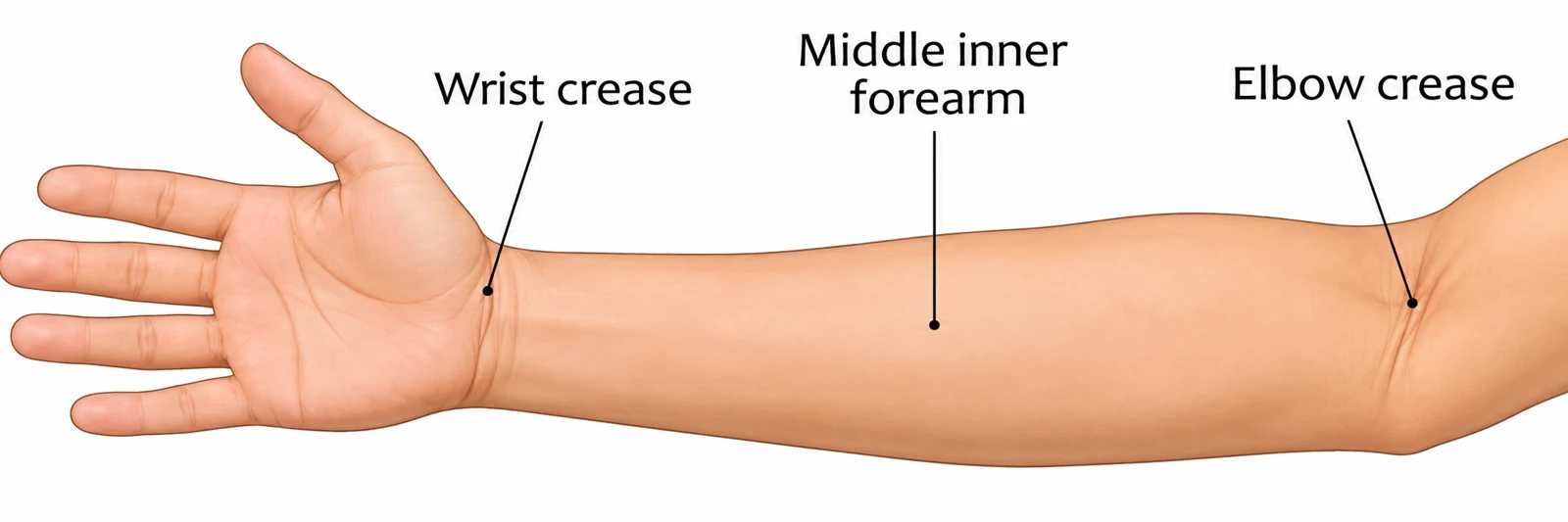
Middle of the forearm, wrist end and elbow crease
Turn your palm upward to locate the inner forearm. The middle is the area between the wrist and elbow; the wrist crease and elbow crease mark its ends. A design described simply as an “inner forearm tattoo” could occupy a small central patch or extend along most of that space.
These distinctions help you describe placement accurately. They don’t establish a universal ranking of which part will hurt most. Avoid choosing a spot solely because a pain map labels it mild.
Before tattooing begins, ask to see the stencil on your arm. Check its full outline: a flower stem, lettering flourish or decorative border may reach farther toward a crease than the main subject suggests. If pain is a concern, ask what moving or resizing the design would change about the work involved.
What the tattooing can feel like
People describe tattooing in different ways, including scratching, stinging or a hot, irritated feeling. These are subjective descriptions, not a sequence everyone experiences. You may find one description familiar and another completely unhelpful.
Your experience may also change during the appointment. Tell the artist how you’re feeling instead of assuming you should tolerate whatever happens because someone else called the placement manageable. You don’t need to match another person’s tolerance.
Discomfort during active needle work is different from tenderness after the appointment. Once tattooing stops, the question becomes how the area feels as it heals and whether symptoms are settling or becoming more concerning. Ask for written aftercare instructions so you have something clear to refer to afterward.
How size, shading and session length affect the experience
Size gives only part of the picture. Two tattoos with similar outlines can require very different amounts of work. An open design with a few lines differs from a piece with dense shading, solid areas and extensive detail.
Have the artist explain what your particular design requires. Useful questions include:
- How much of the appointment will involve outlining, shading or filling?
- Will some areas need more work than others?
- What is the estimated tattooing time, separate from setup and stencil placement?
- Could the design be completed over more than one appointment if needed?
Fine-line work doesn’t guarantee a less painful tattoo, and shading isn’t automatically worse for everyone. Style names alone can’t predict your response. The design’s actual coverage and execution are more useful discussion points.
A longer appointment also means spending more time managing discomfort and holding your arm in position. Discuss breaks and possible session splitting before you begin, while leaving room to adjust the plan during the appointment. Splitting a piece should be a decision made with the artist, taking the design and their working process into account.
Preparing for the appointment and asking for breaks
Request the studio’s preparation instructions ahead of time. Let the artist know if you’re particularly worried about pain or have previously struggled during a tattoo appointment. That gives you both time to discuss a workable plan.
Before the first line, check three practical details:
- Arm support: Tell the artist if the position feels strained or difficult to maintain.
- A pause signal: Agree on a clear word or signal for requesting a break.
- Communication: Ask how to alert them before moving your arm.
If you need a pause, say so clearly and allow the artist to stop safely before you shift position. Tell them immediately if you feel unwell. Continuing silently gives the artist less information to work with.
Discuss numbing products before using anything on the area. Ask the artist about studio requirements and an appropriate healthcare professional about suitability or health concerns. Don’t change prescribed medication or select a product or dose based on a tattoo pain guide.
Pain after the session: when to seek advice
Some tenderness can occur after tattooing, but pain shouldn’t automatically be dismissed as part of healing. Pay attention to changes, particularly discomfort that gets worse instead of settling.
Seek prompt medical advice for worsening pain, spreading redness, fever or other concerning symptoms. These signs need assessment; this guide can’t determine their cause. If symptoms are severe or you feel seriously unwell, seek urgent medical care.
Your artist can clarify the studio’s aftercare instructions, including how to follow its cleaning and dressing guidance. Questions about a possible medical complication belong with a healthcare professional. Avoid relying on photographs of someone else’s healing tattoo to decide whether your own symptoms are normal.
Before booking, ask your artist to review the exact stencil position, amount of work and plan for breaks. For help narrowing down the design and placement you want to discuss, browse these inner forearm tattoos.


