
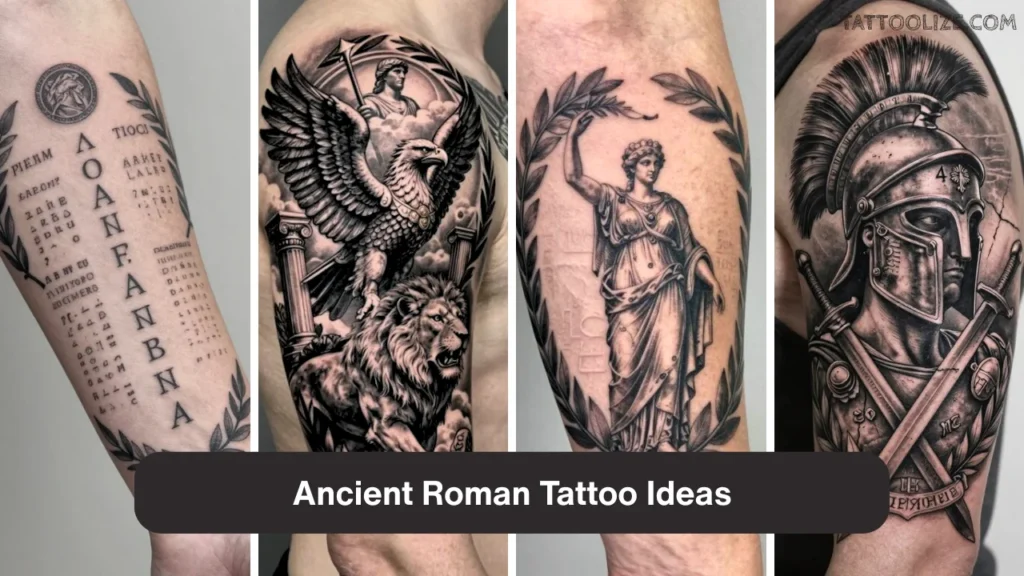
Tattoos have been a way to express oneself for centuries. Many cultures have shaped tattoo art. The Roman Empire’s rich history has greatly influenced tattoos, with symbols and motifs carrying deep meanings.
The history of tattoos in ancient Rome is both fascinating and intriguing. Roman tattoos often include elements from mythology, architecture, and famous figures.
These designs are unique and draw people in.
Let’s dive into the world of Roman-inspired tattoos. We’ll look at the symbols and cultural importance behind these designs.
We’ll see how they’ve become a lasting inspiration for tattoo lovers.
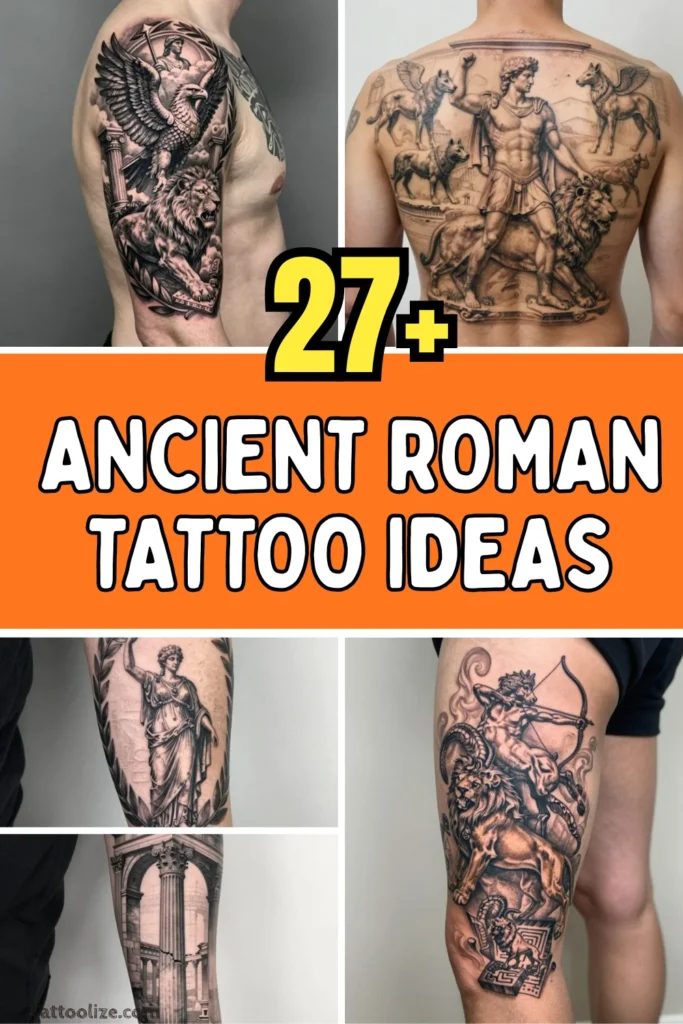
The Historical Significance of Tattoos in Ancient Rome
Tattoos had a big role in ancient Rome, showing honor and punishment. They were used for many things, like marking identity and showing punishment.
Tattoos in Roman Military Culture
In ancient Rome, tattoos were key in military culture. Roman soldiers got tattoos to show who they were and their loyalty. These tattoos often had symbols of their unit or images of their commanders.
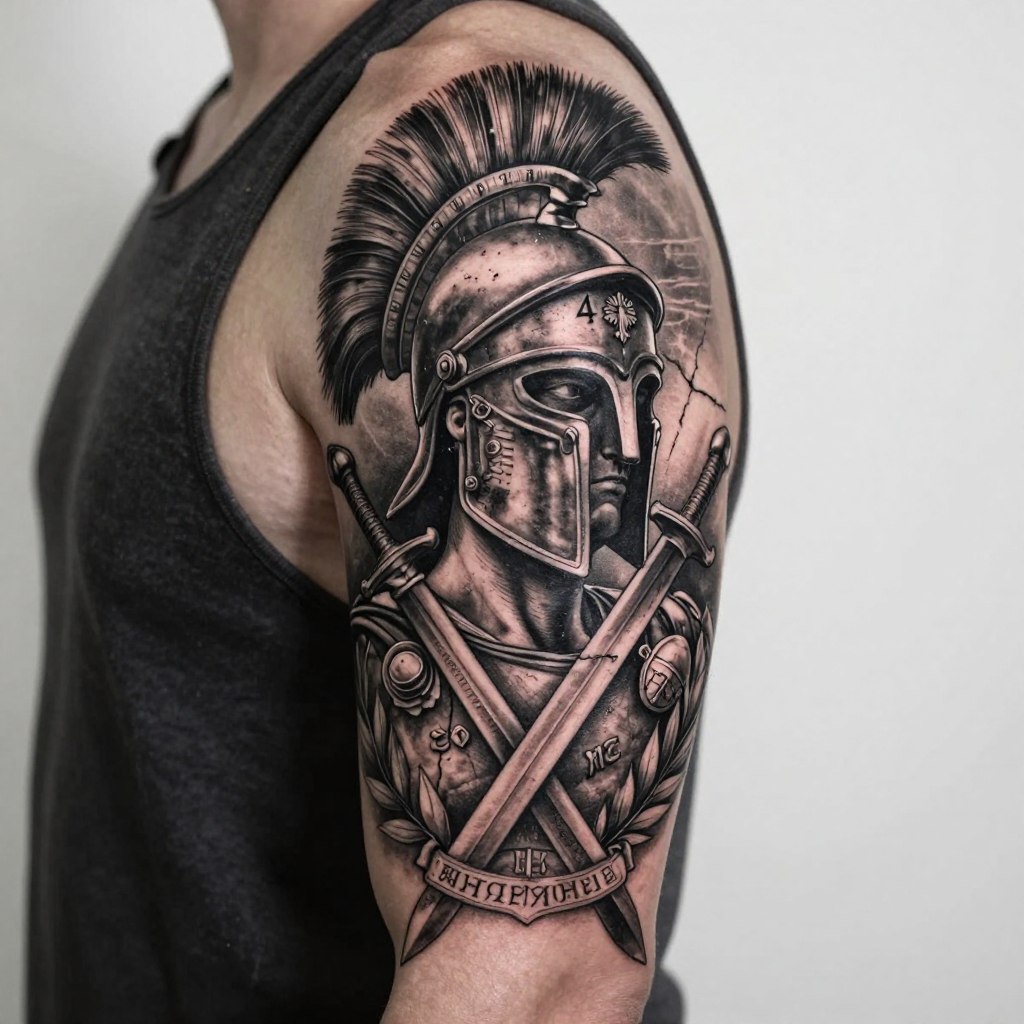
This made tattoos a big part of Roman soldiers’ identity. Tattoos showed bravery and loyalty, important values in the military.
Tattoos as Marks of Punishment and Ownership
But tattoos also meant punishment and ownership in ancient Rome. Slaves and prisoners got tattoos to show they were owned. This was a way to control and identify them.
This shows how tattoos were used in different ways in Roman society. Knowing this history helps us understand tattoos’ role in culture.
Understanding Ancient Roman Design Tattoos
To understand ancient Roman design tattoos, we must explore Roman art and its roots. The Roman Empire was famous for its grandeur and love for art. This is seen in their tattoo designs.
Key Characteristics of Roman Artistic Style
Roman art was heavily influenced by Greek art. This is clear in their tattoo designs. They focused on realistic and detailed depictions of mythological creatures, gods, and goddesses.
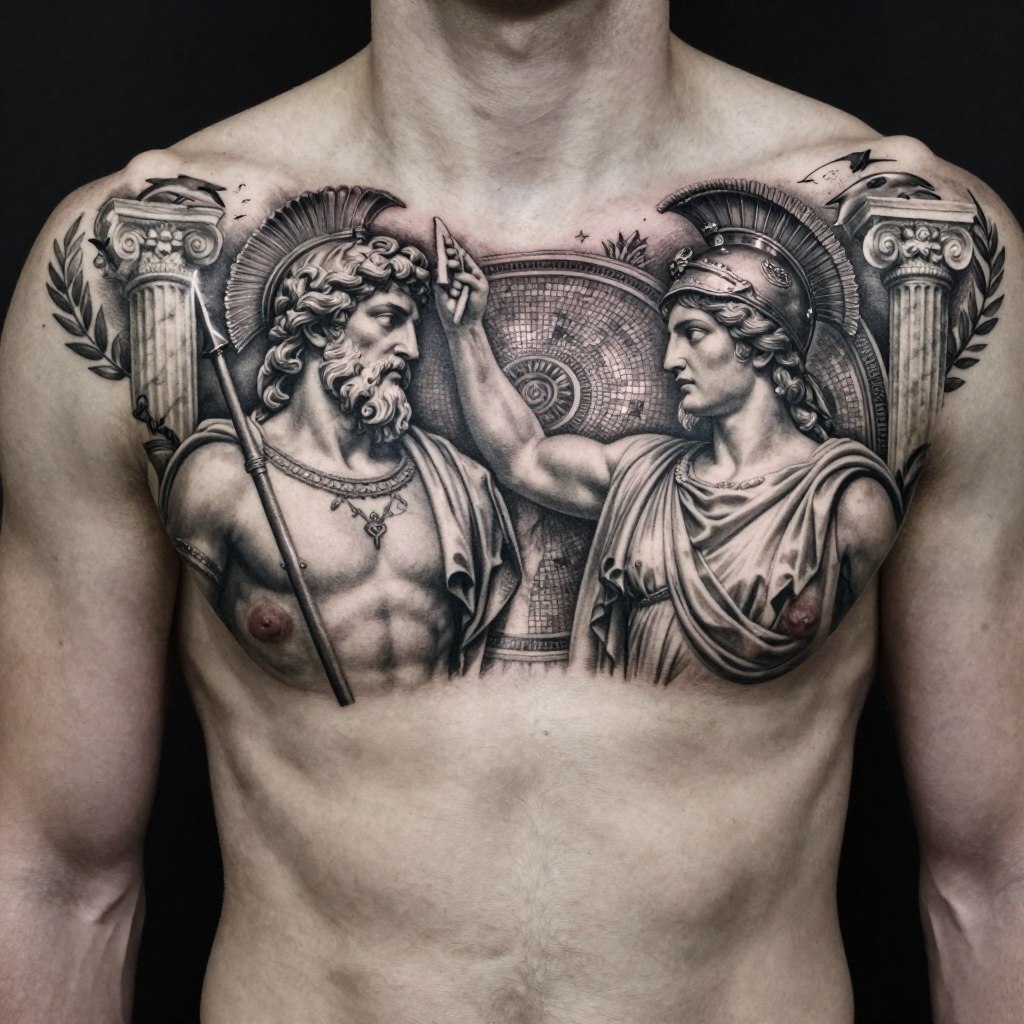
The Romans also mixed in other cultural influences. This created a unique style blend.
Common Motifs and Their Meanings
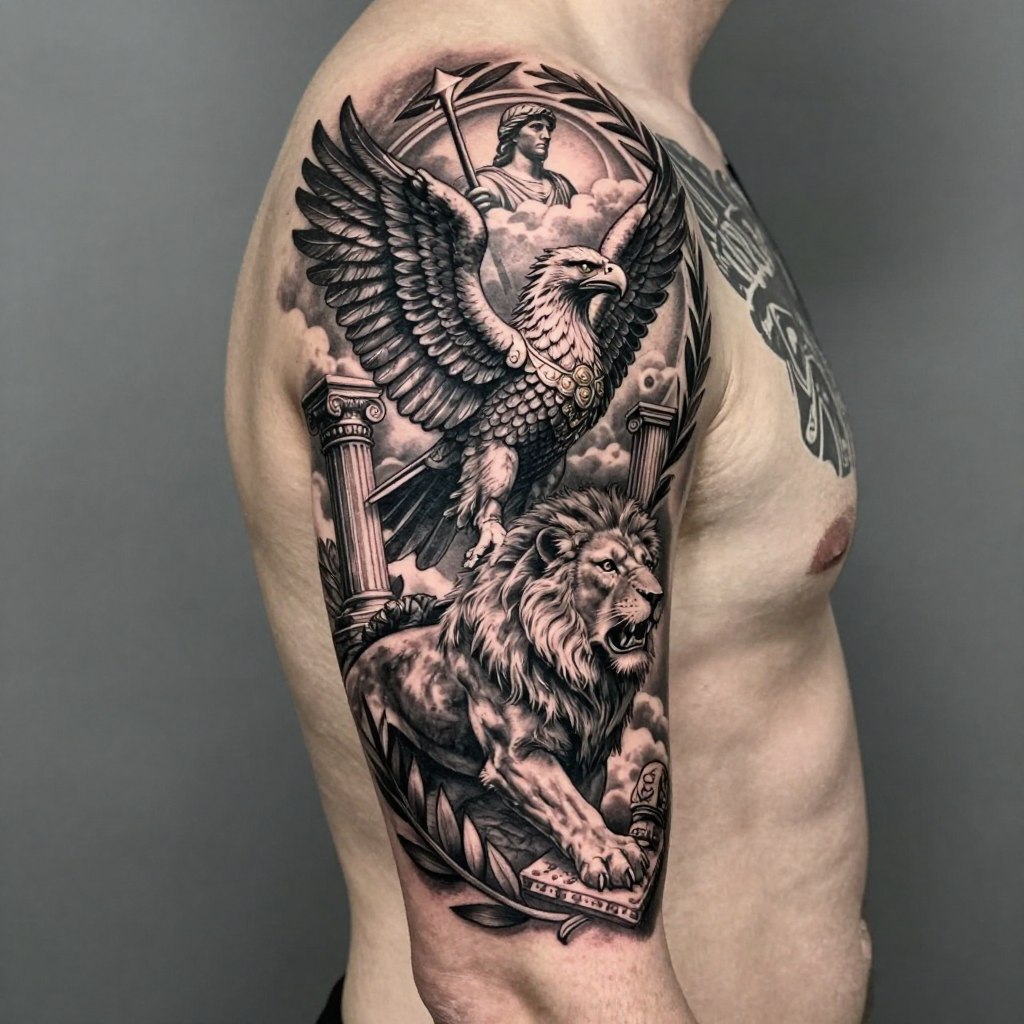
In Roman tattoos, eagles, lions, and laurel wreaths were common. These symbols meant power, strength, and victory. They were used to show status, rank, or achievements.
Mythological creatures and gods were also used. They carried spiritual or mystical meanings.
Evolution of Roman Tattooing Techniques
Roman tattooing techniques evolved over time. This was influenced by cultures like the Greeks and Egyptians. As the Roman Empire grew, they adopted and adapted different tattooing methods.
They also used advanced tools and materials. This made Roman tattoo art sophisticated.
Roman Symbolism in Modern Tattoo Art
Roman symbols are a big part of modern tattoo art. They bring a rich history and culture to tattoos. These symbols honor ancient Rome and carry deep meanings.
SPQR and Roman Numerals
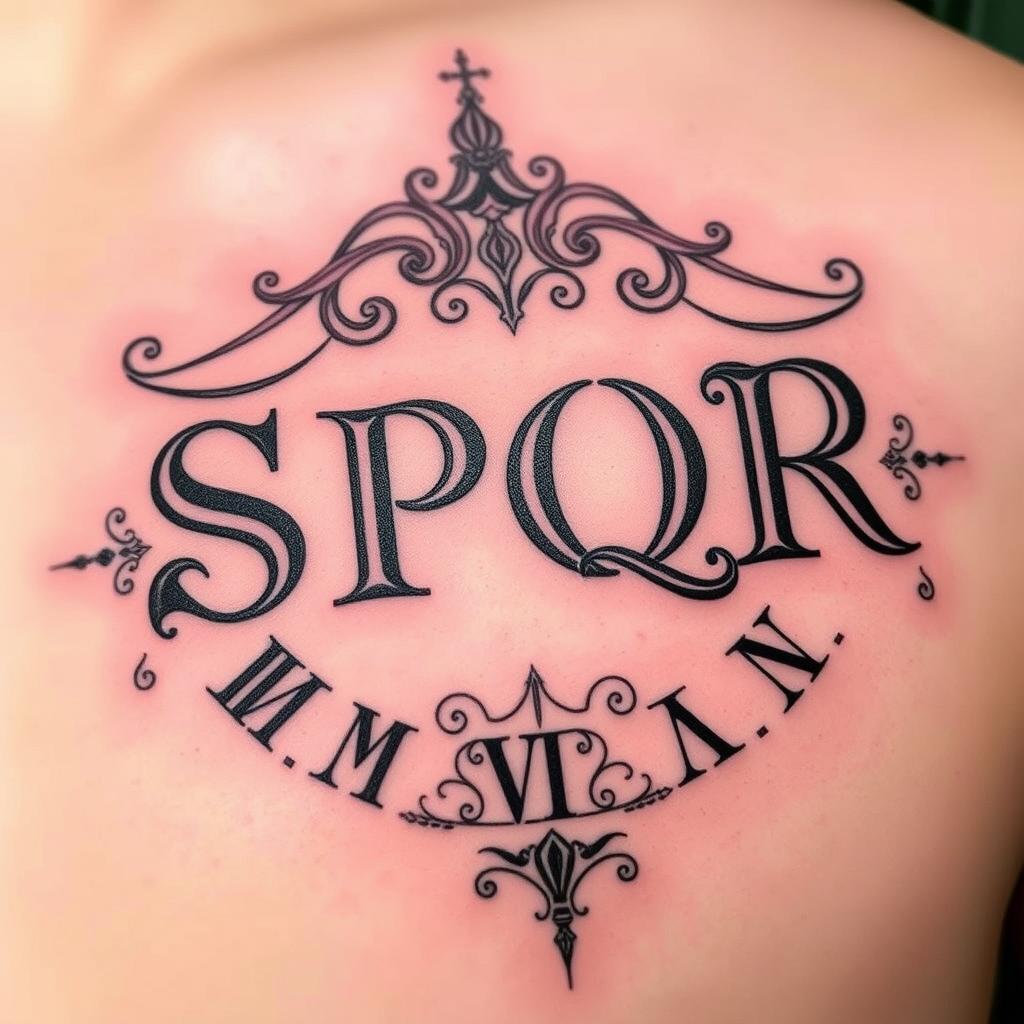
SPQR is a famous Roman symbol in tattoos. It stands for “The Senate and People of Rome.” It symbolizes strength, unity, and a connection to ancient Rome. Roman numerals are also popular, used to mark important dates or events in a person’s life.
Laurel Wreaths and Victory Symbols
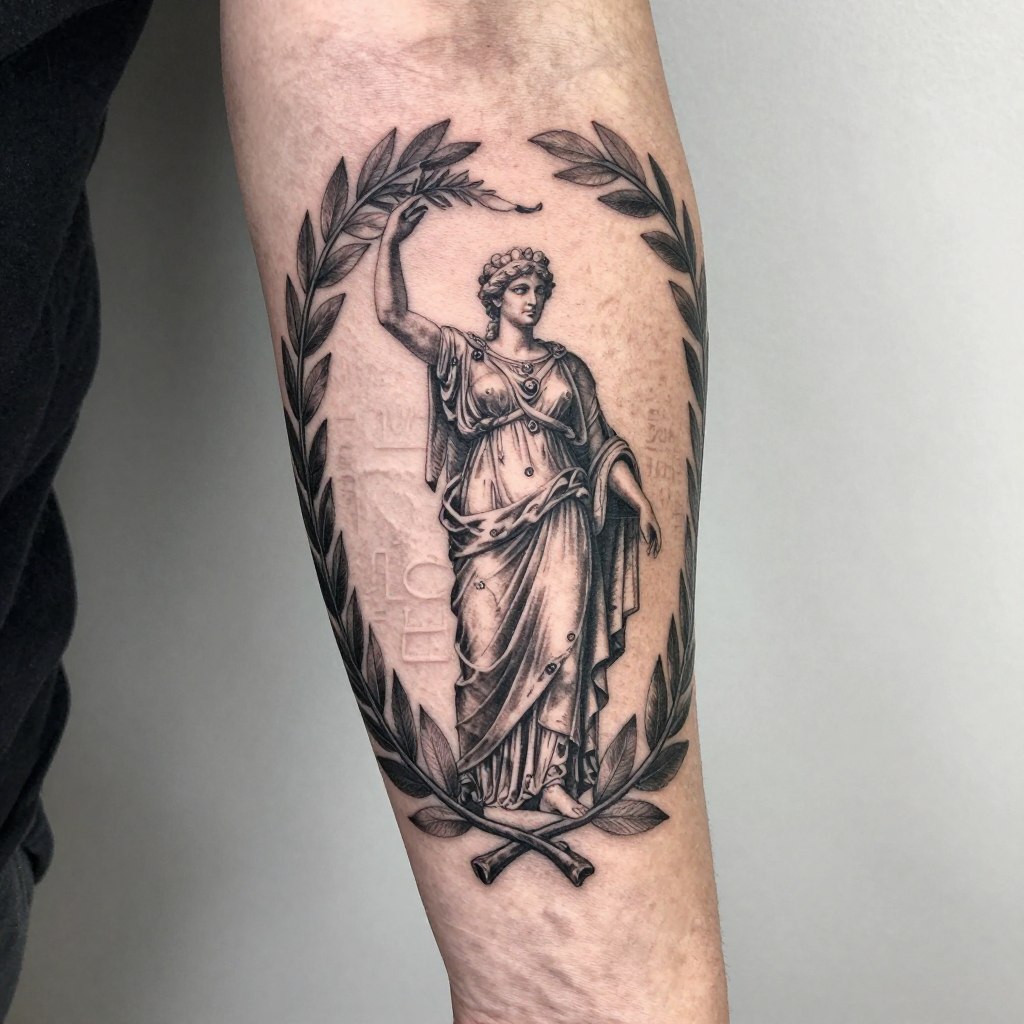
Laurel wreaths were given to winners in ancient Rome. They now symbolize achievement and victory. Often, they’re paired with symbols like the Roman goddess Victoria to add more meaning.
Eagles, Lions, and Power Symbols
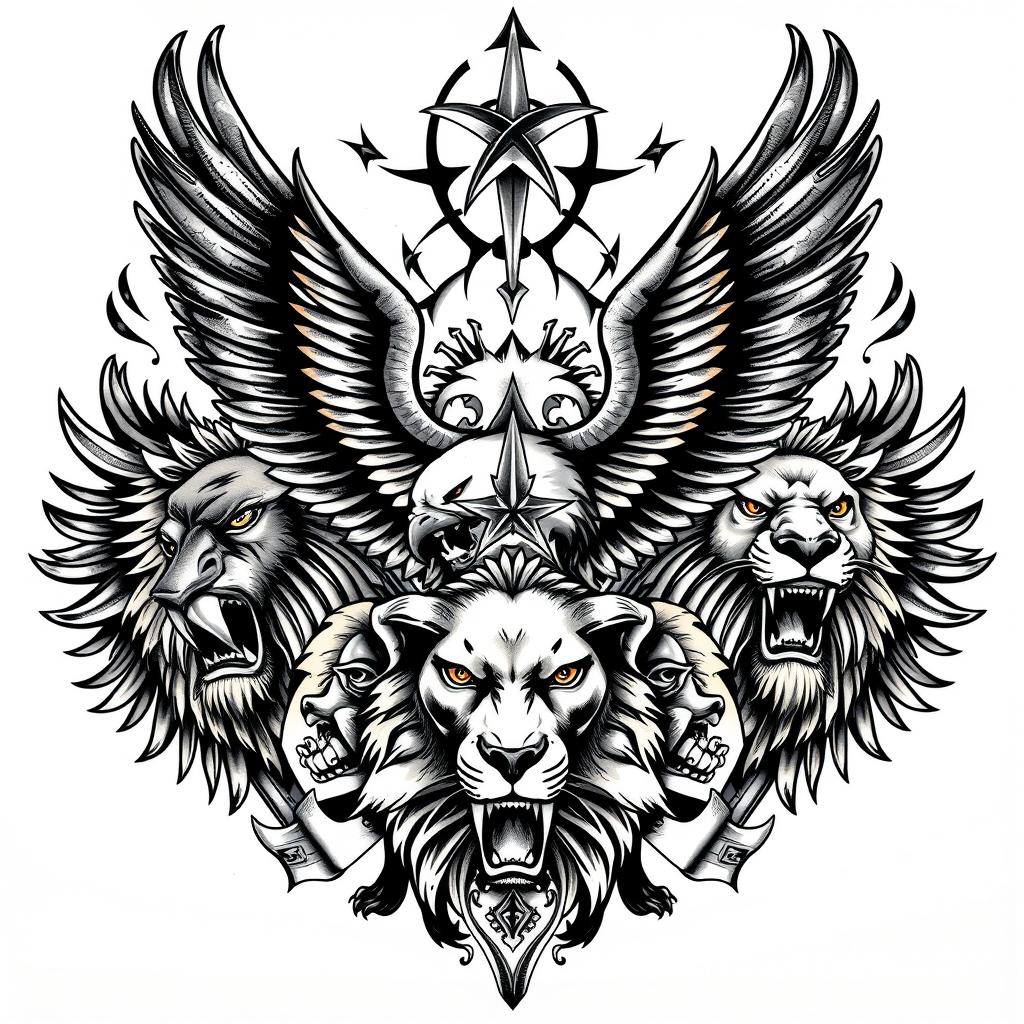
Eagles and lions were symbols of strength in Roman culture. The eagle was a sign of the Roman legions, showing power and dominance. Today, they’re used in tattoos to show courage, resilience, and identity.
Using Roman symbols in tattoos lets people show their values, remember important events, or just enjoy the beauty and history of these symbols.
Roman Mythology Tattoo Designs
Roman mythology tattoos are fascinating because of their rich characters and stories. They include powerful gods and scary creatures. These designs are both beautiful and full of meaning.
Gods and Goddesses
Gods and goddesses from Roman mythology are loved for tattoos. They stand for different qualities. Jupiter, with his lightning bolts, shows power and authority.
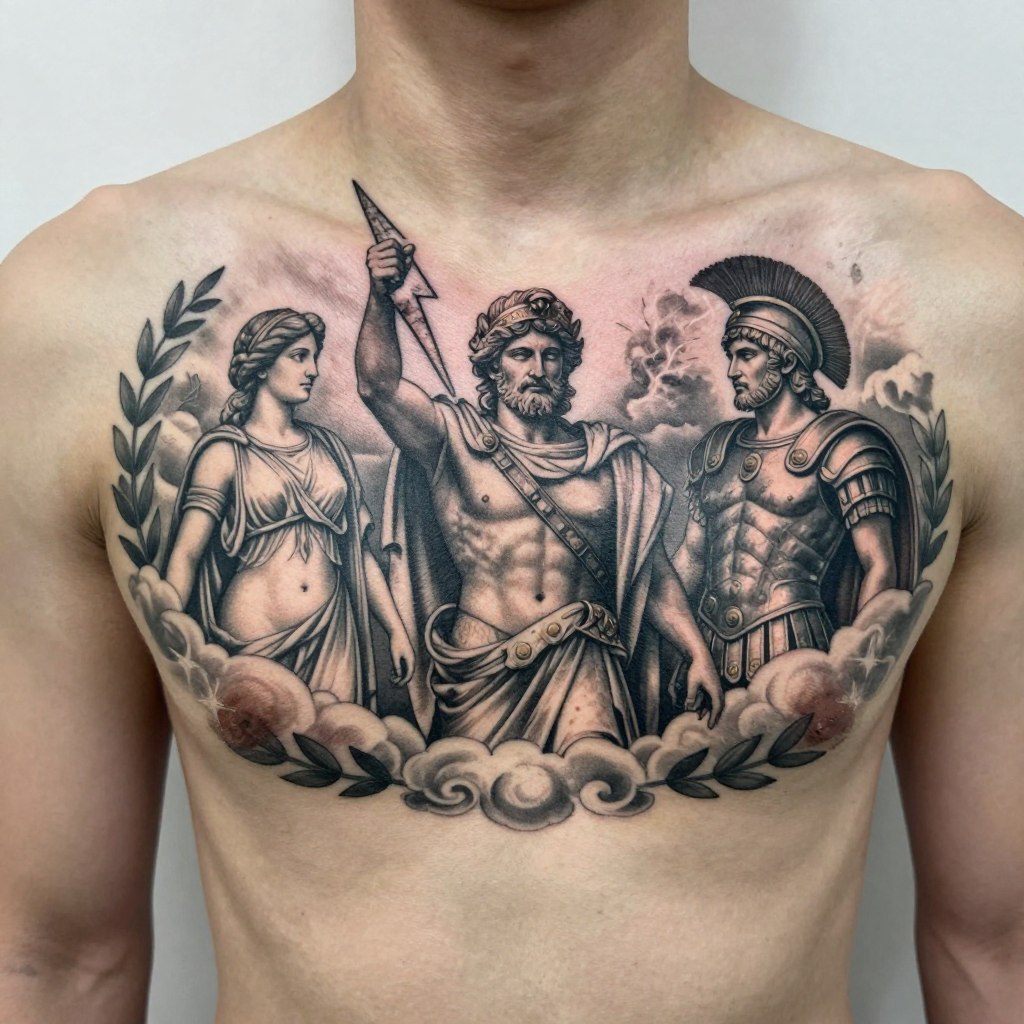
Venus, the goddess of love, is also popular. She represents beauty and desire. Mars, the god of war, is for those who want to show strength and courage.
These deities make tattoos special. They can be personal symbols or good luck charms. They reflect the wearer’s personality or goals.
Heroes and Legends
Heroes and legends from Roman mythology inspire tattoos too. Hercules is known for his bravery and great deeds.
Romulus and Remus, Rome’s founders, symbolize the city’s history and spirit.
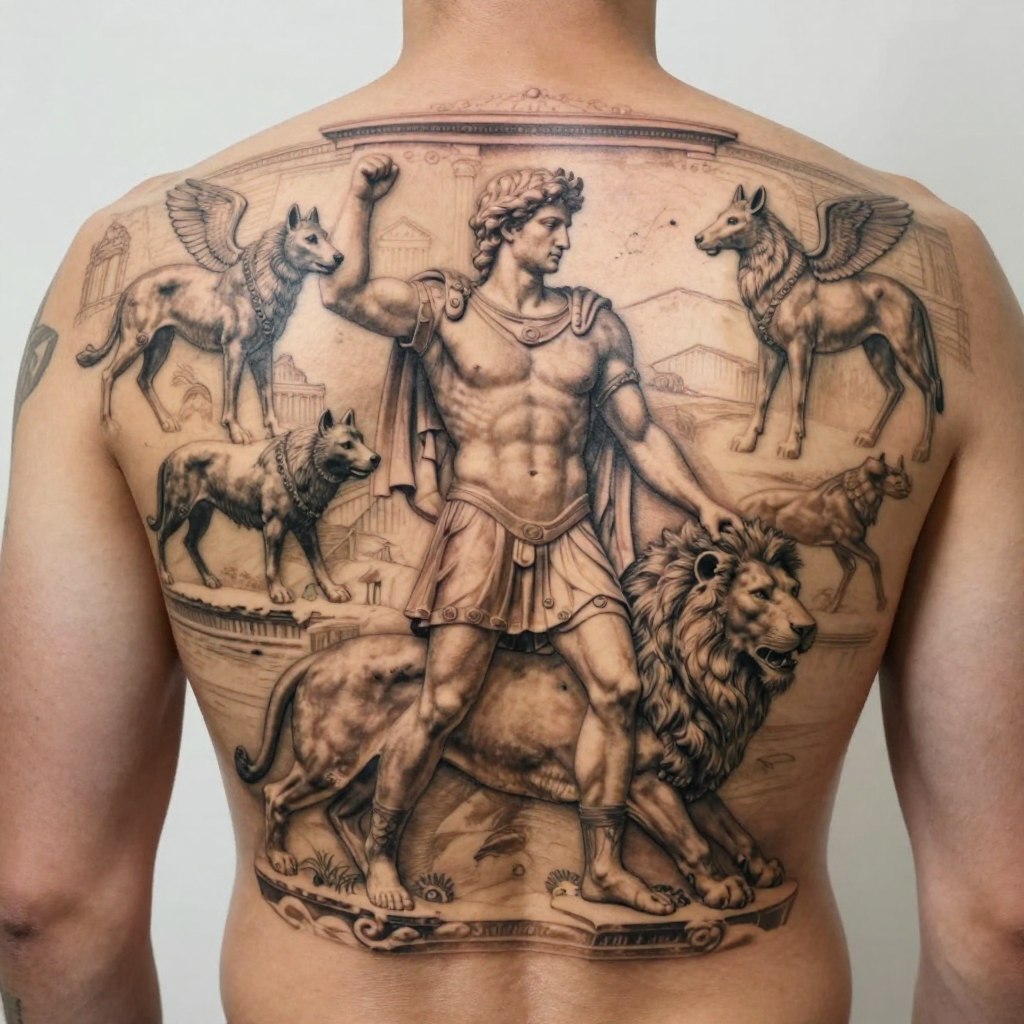
These stories are about more than just characters. They share values and ideals that people today can relate to.
Tattoos of these heroes and legends connect us to history, personal achievements, or guiding principles.
Mythological Creatures
Mythical creatures like centaurs, minotaurs, and chimera are also in Roman-inspired tattoos. They symbolize complex qualities or states of being.
For example, a centaur represents the balance between human and animal.
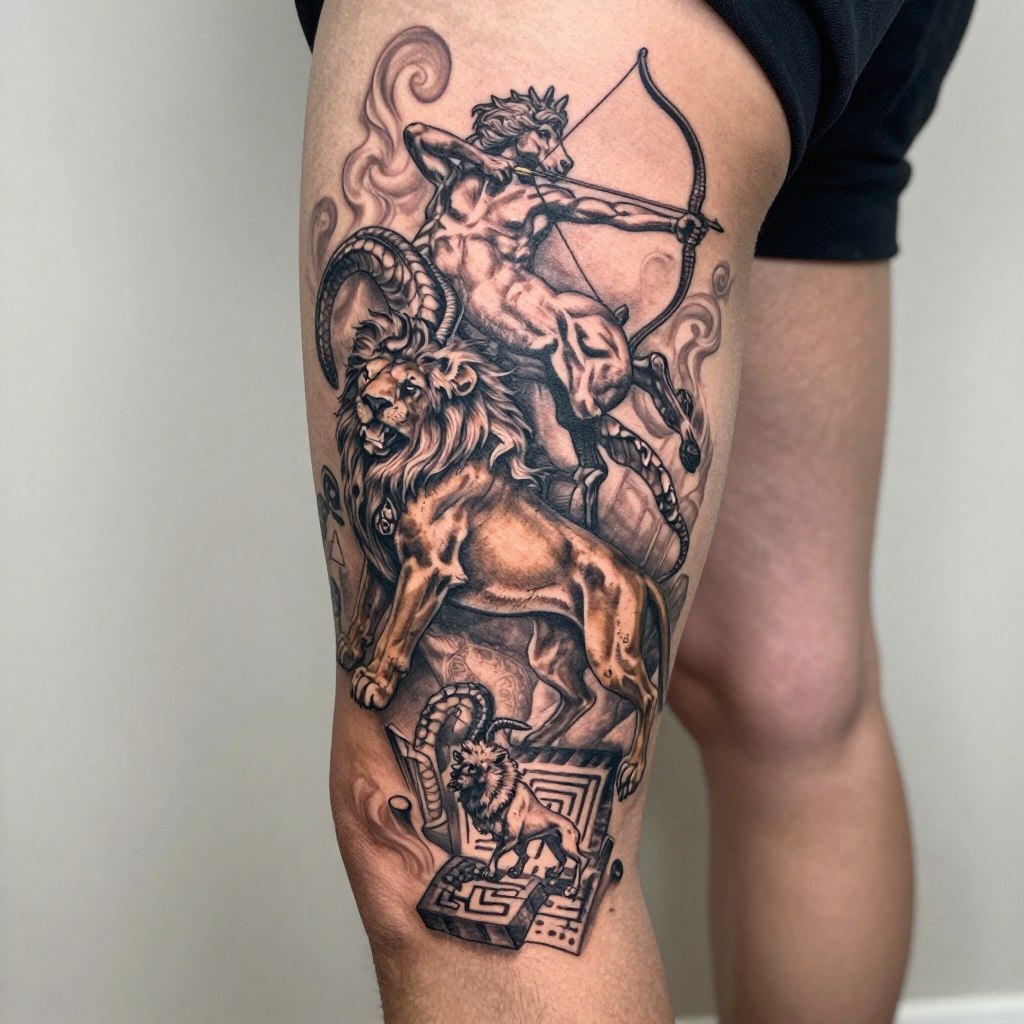
These tattoos show the artistic side of ancient myths. They let the wearer express their identity or personal story. Using these creatures in tattoos keeps Roman mythology alive, blending old stories with modern art.
Roman Architecture Inspired Tattoos
Tattoos inspired by Roman architecture show the lasting impact of ancient Rome. The detailed designs and large structures of Roman architecture have drawn many artists and tattoo fans.
They offer a rich source of inspiration for tattoos that are both unique and meaningful.
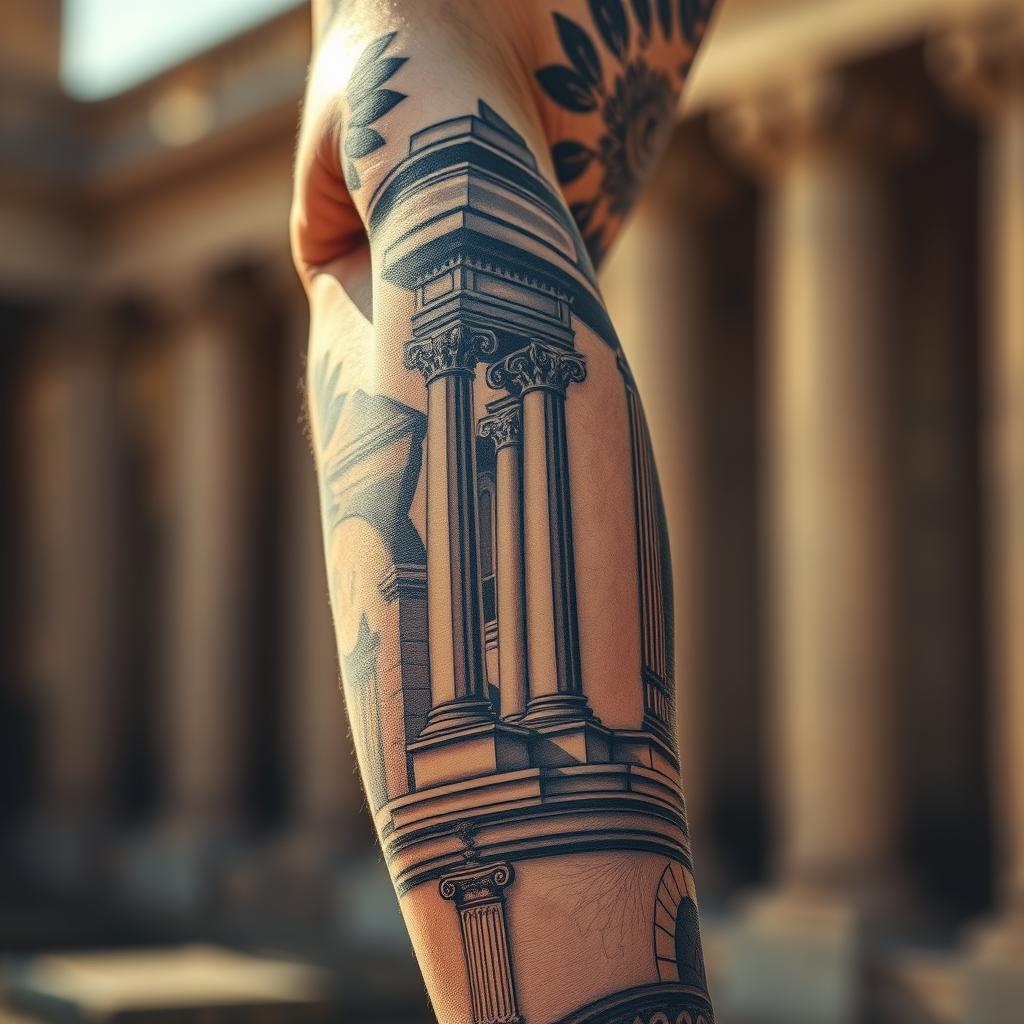
Columns and Arches
Columns and arches are key symbols of Roman architecture, standing for strength, stability, and grandeur. In tattoos, they often symbolize personal values like resilience and determination.
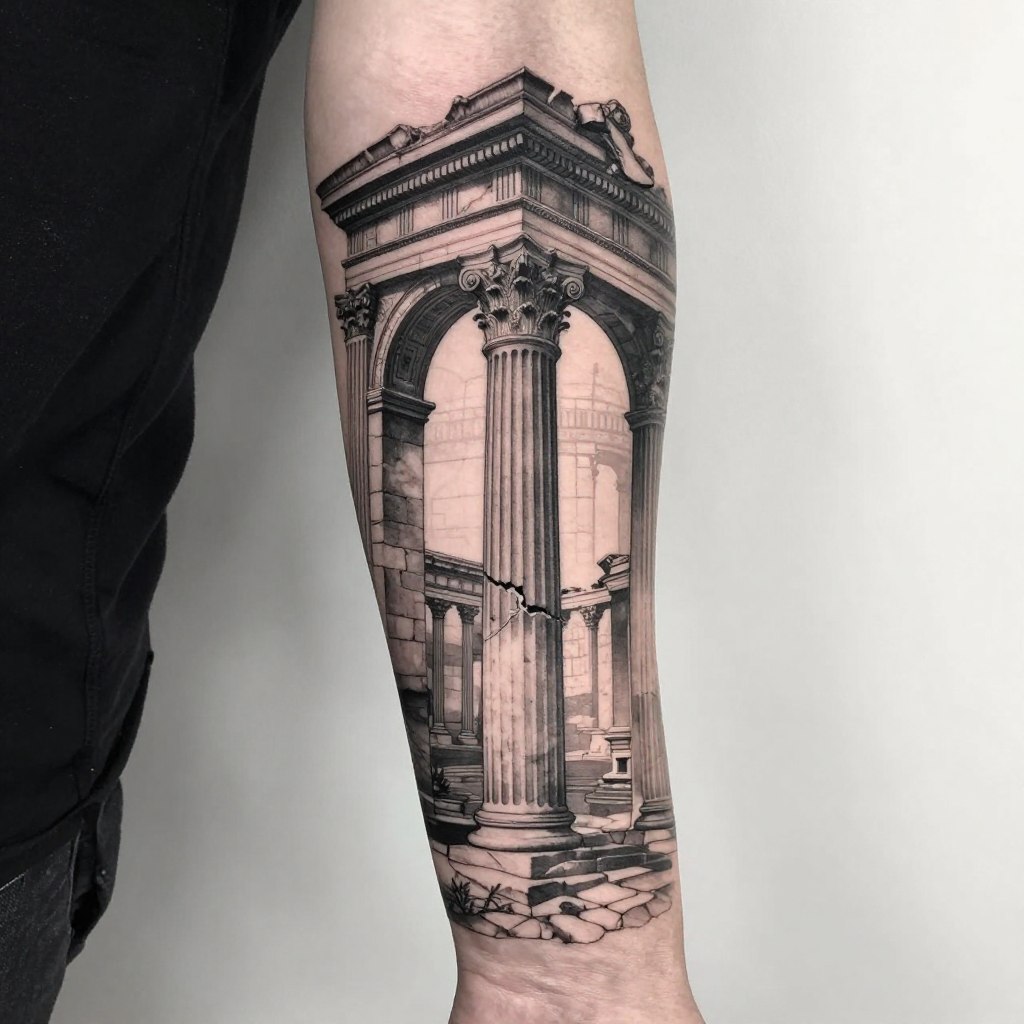
The detailed carvings and ornate details of Roman columns make them a favorite for those who love detailed tattoo designs.
Famous Roman Landmarks
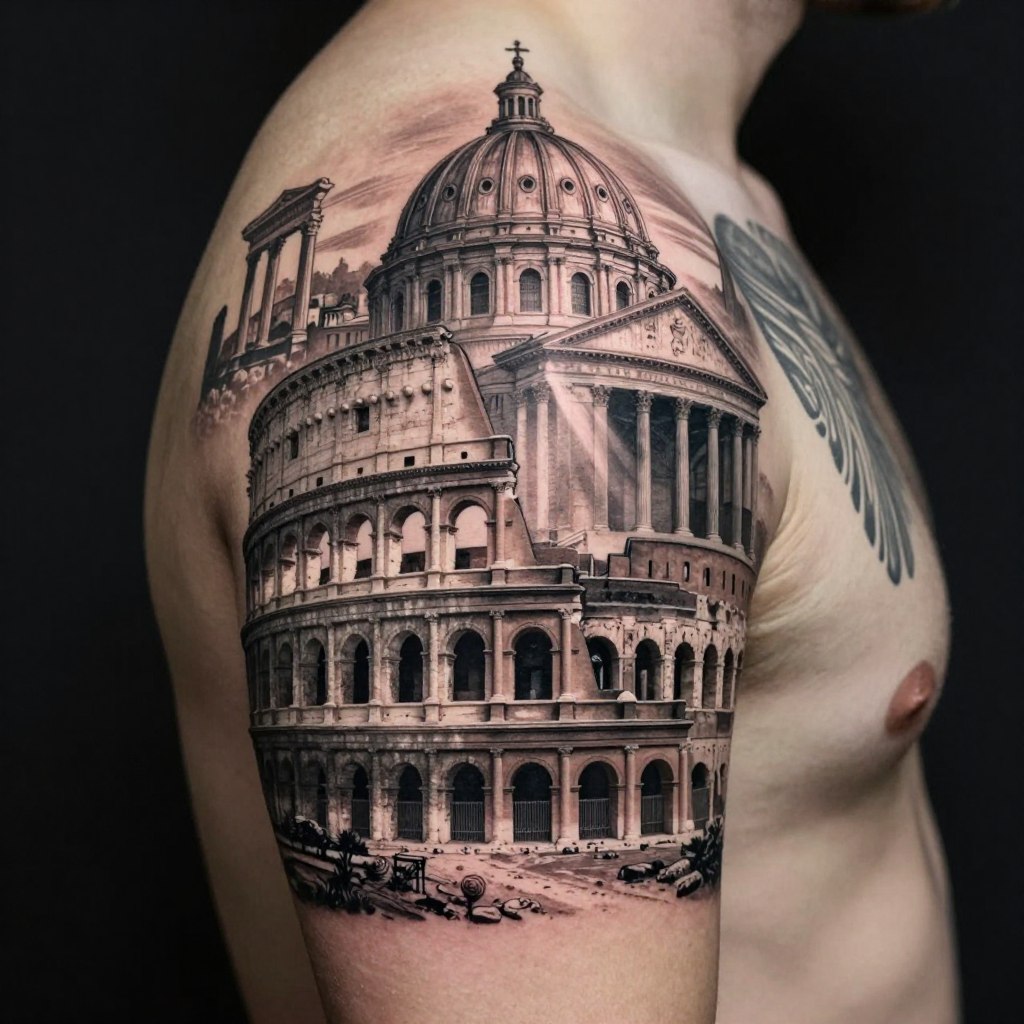
Landmarks like the Colosseum and the Pantheon are symbols of Rome’s rich history and culture.
Tattoos of these landmarks show one’s love for history and connection to ancient civilizations’ achievements.
Mosaics and Decorative Elements
Mosaics and decorative elements were key in Roman architecture, adding color and beauty to buildings. In tattoo art, they create striking designs that reflect Roman artistry.
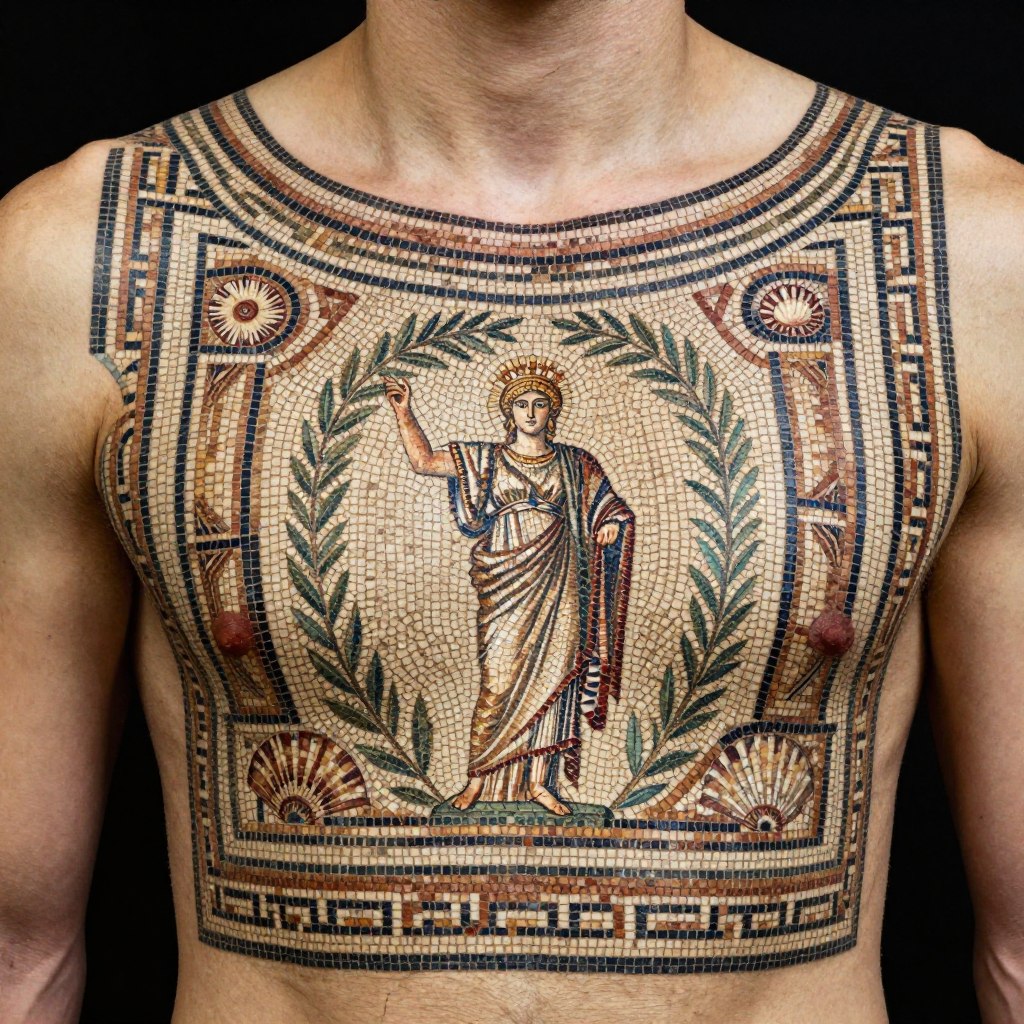
From geometric patterns to figurative mosaics, these designs can be customized to fit individual tastes.
By using Roman architecture elements, people can show their love for history and culture on their skin. This makes for a unique and personal way to express oneself.
Roman Emperor and Historical Figure Tattoos
The legacy of Roman emperors is big in tattoo art. Many designs honor these historical figures. These tattoos are loved by those who value ancient Rome’s rich history and culture.
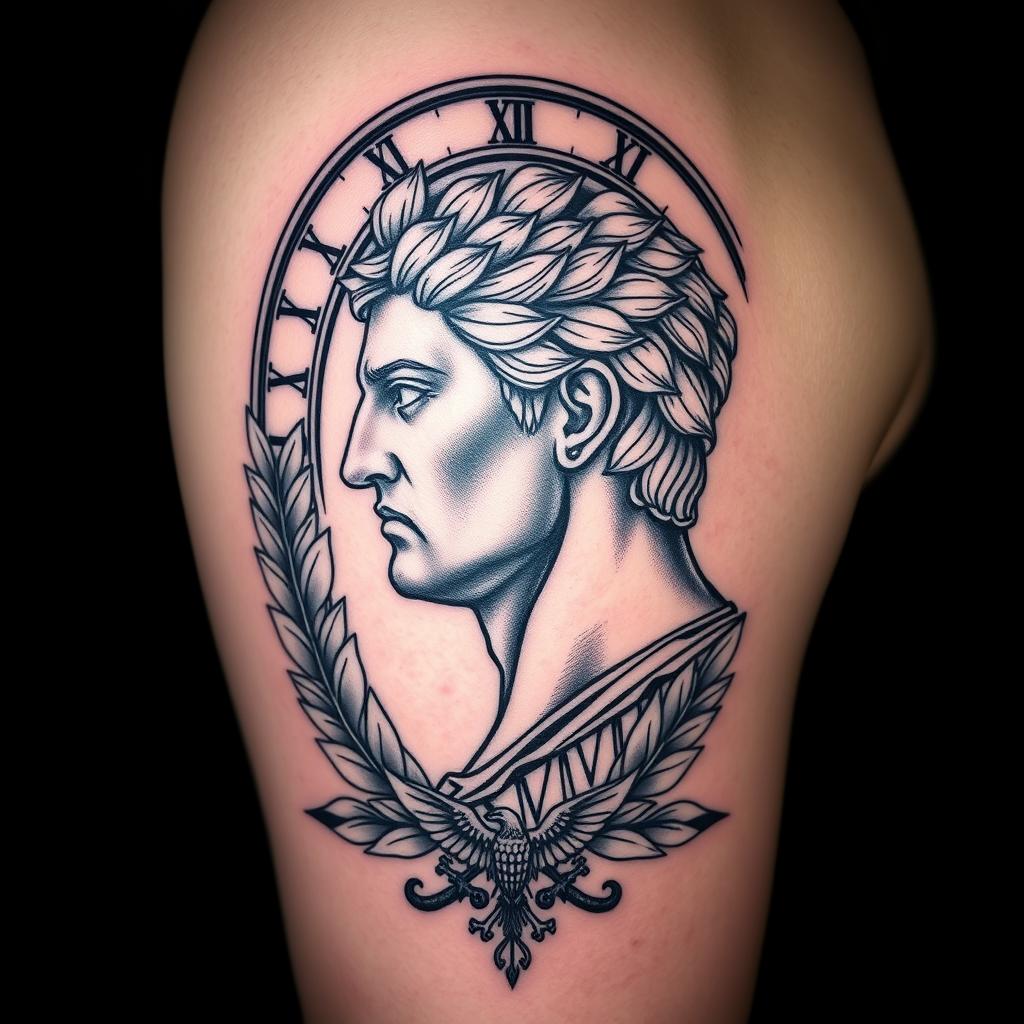
These tattoos show famous leaders, warriors, and notable figures from Roman history. They can be simple or detailed, showing the wearer’s love for Roman culture.
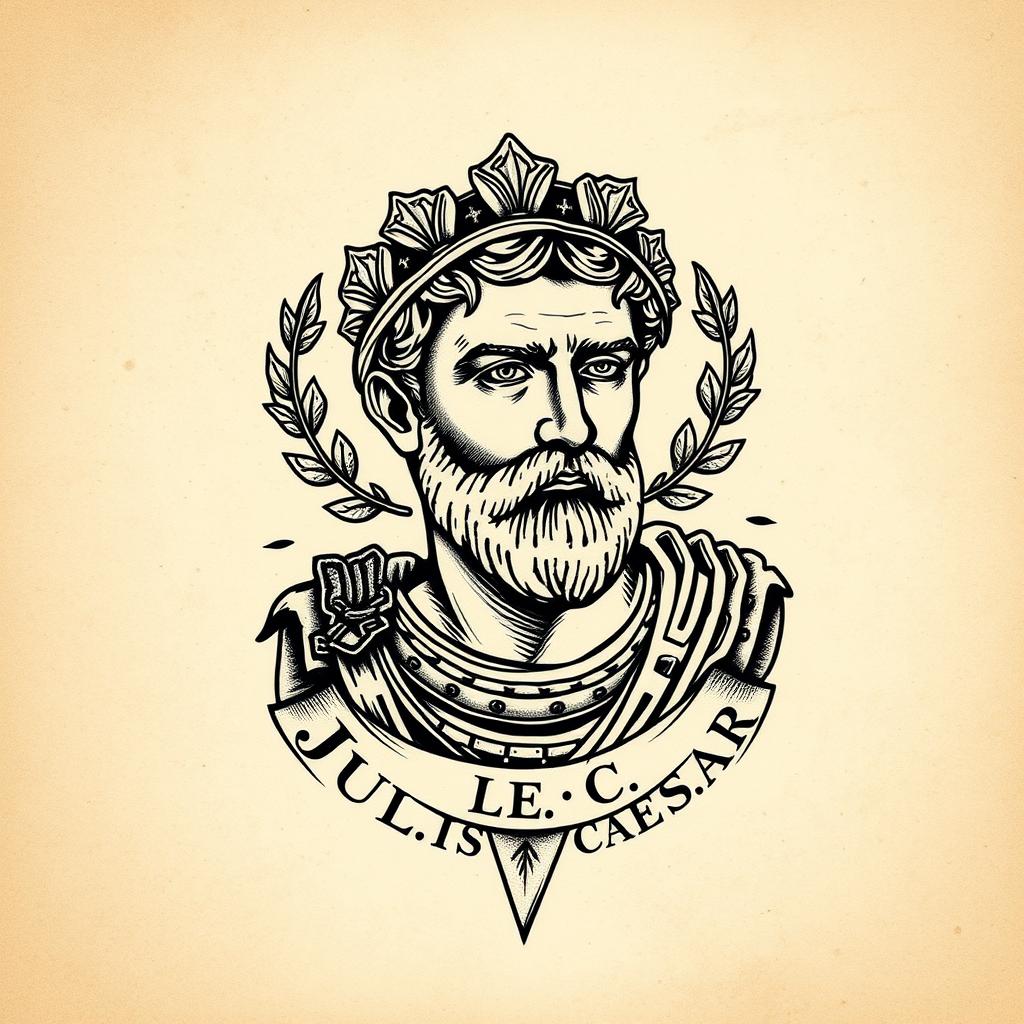
Julius Caesar and Augustus
Julius Caesar and Augustus are famous Roman emperors. They are often seen in tattoos as symbols of power. Julius Caesar is known for his military wins and his role in the Roman Empire’s growth.
Augustus is celebrated for his wise leadership and peace in Rome after war. Tattoos of these emperors show respect for their achievements and legacy.
Warrior Figures and Gladiators
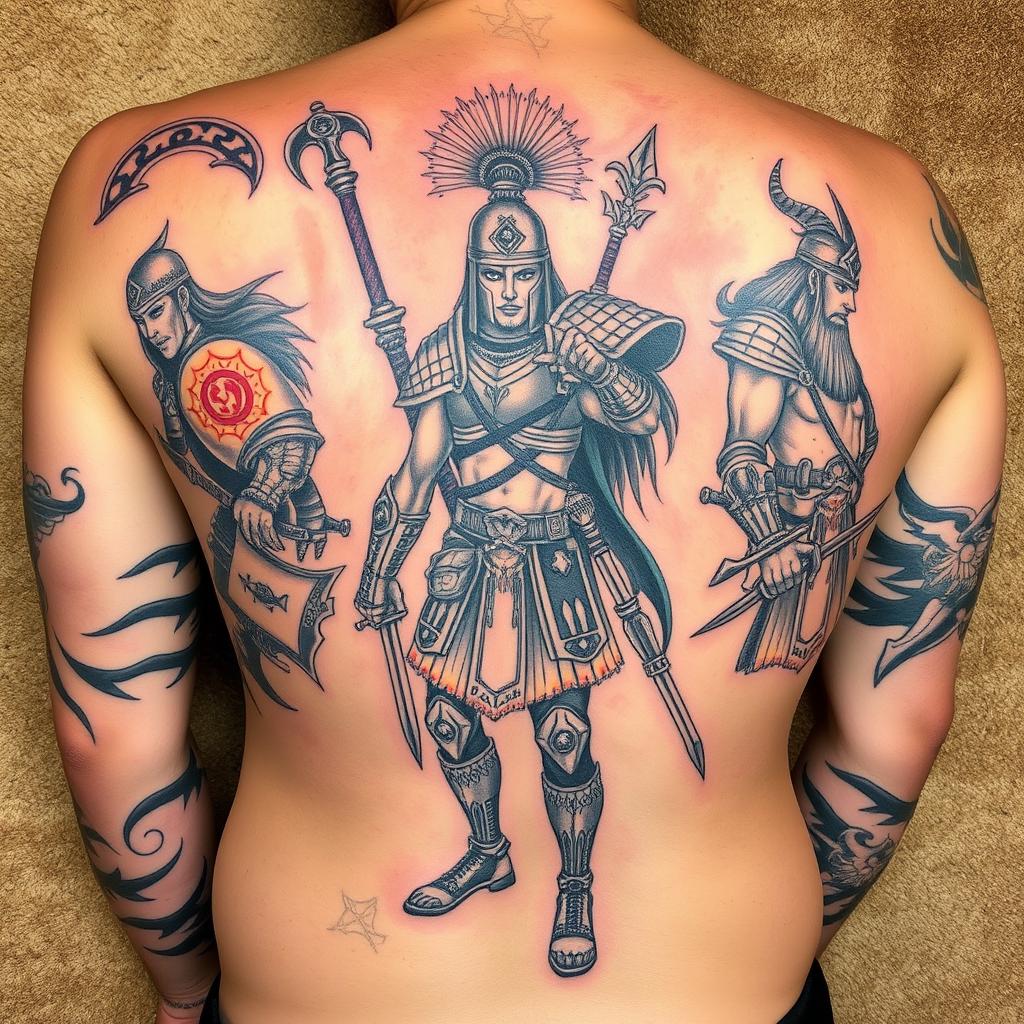
Warrior figures and gladiators are also big in Roman-inspired tattoos. They stand for strength, courage, and martial skill. These values were highly valued in ancient Rome.
Gladiators are a key symbol of Roman history. They show the world of the Colosseum. Tattoos of gladiators are a bold way to show love for ancient Rome’s history and myths.
Other Notable Roman Figures
Other famous Roman figures are also in tattoo art. Cicero, Pompey, and others are in designs. They represent the wearer’s love for history, culture, and the values of these figures.
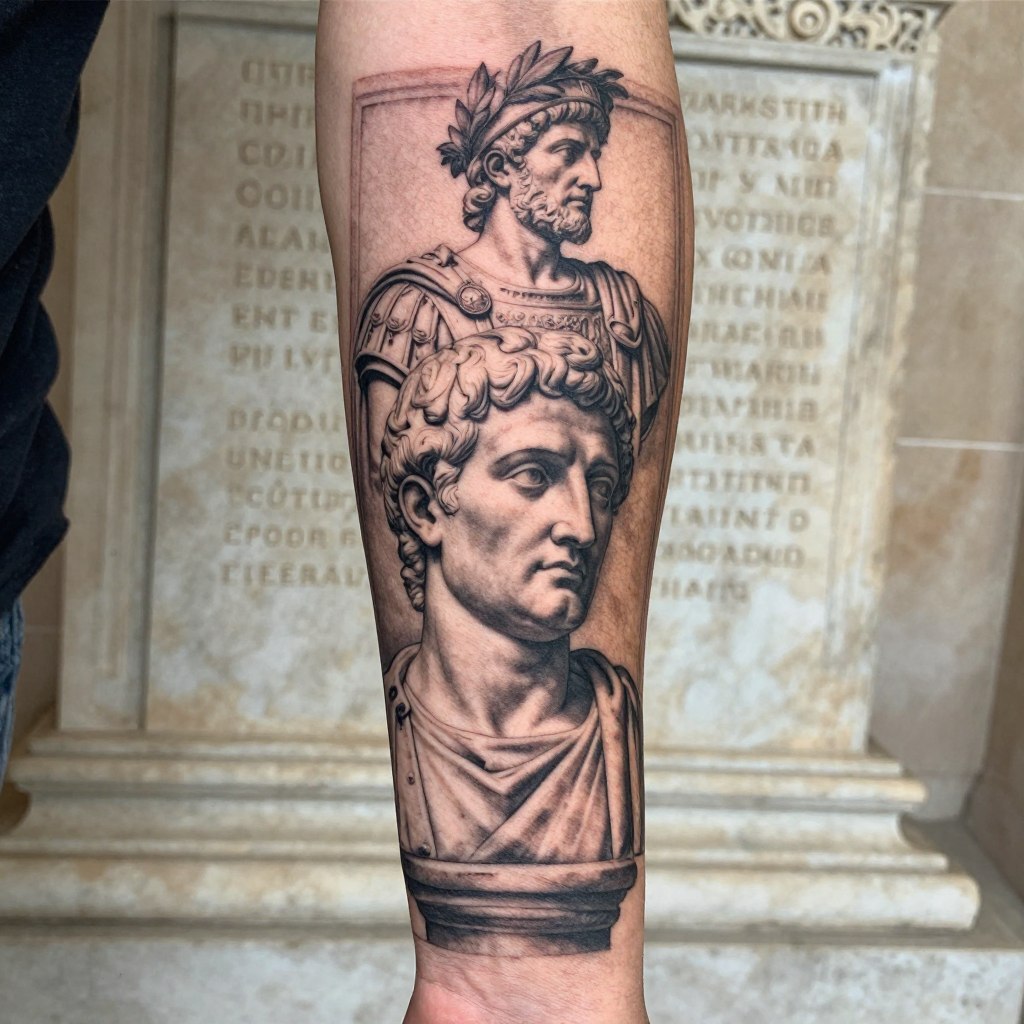
These tattoos are a way to connect with the past. They show personal values and identity.
By using images of Roman emperors and figures, tattoo artists make unique designs that reflect the wearer’s interests and values.
Ancient Roman Inscriptions and Text Tattoos
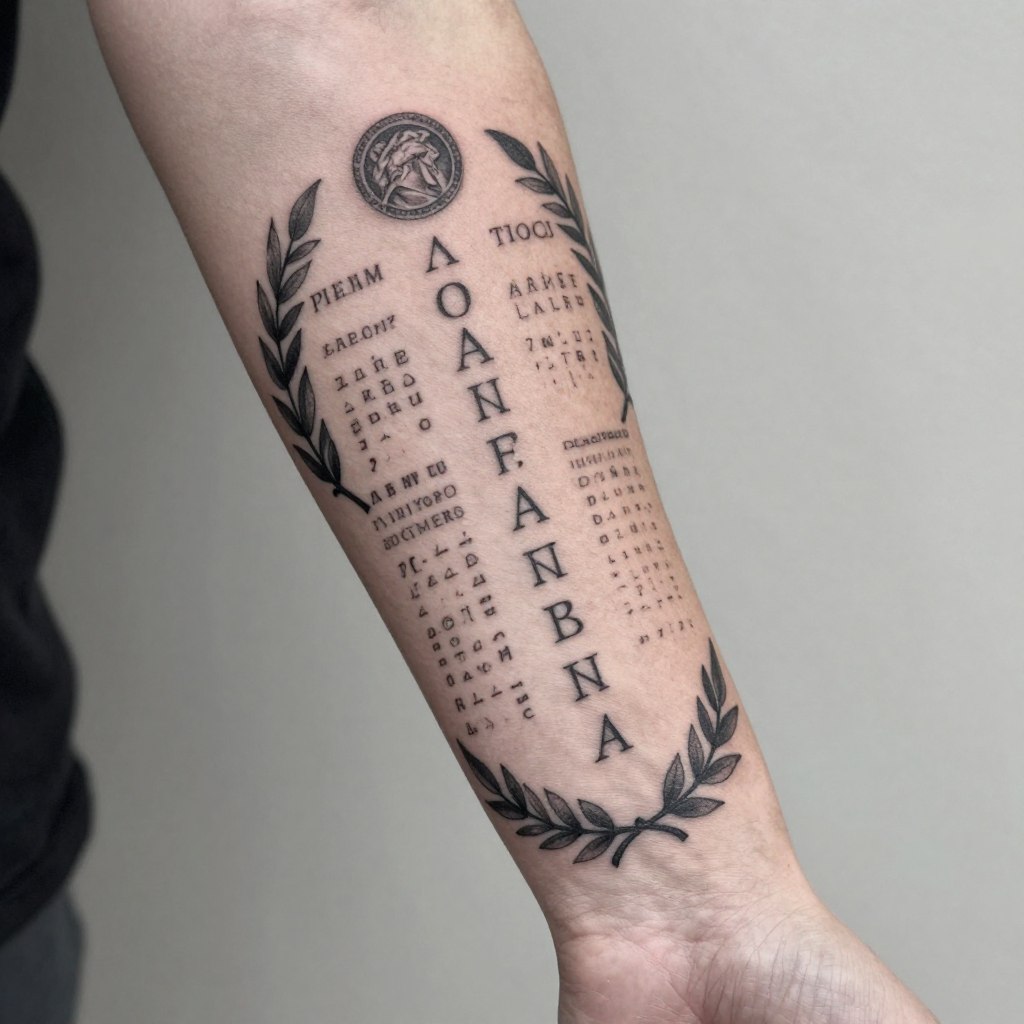
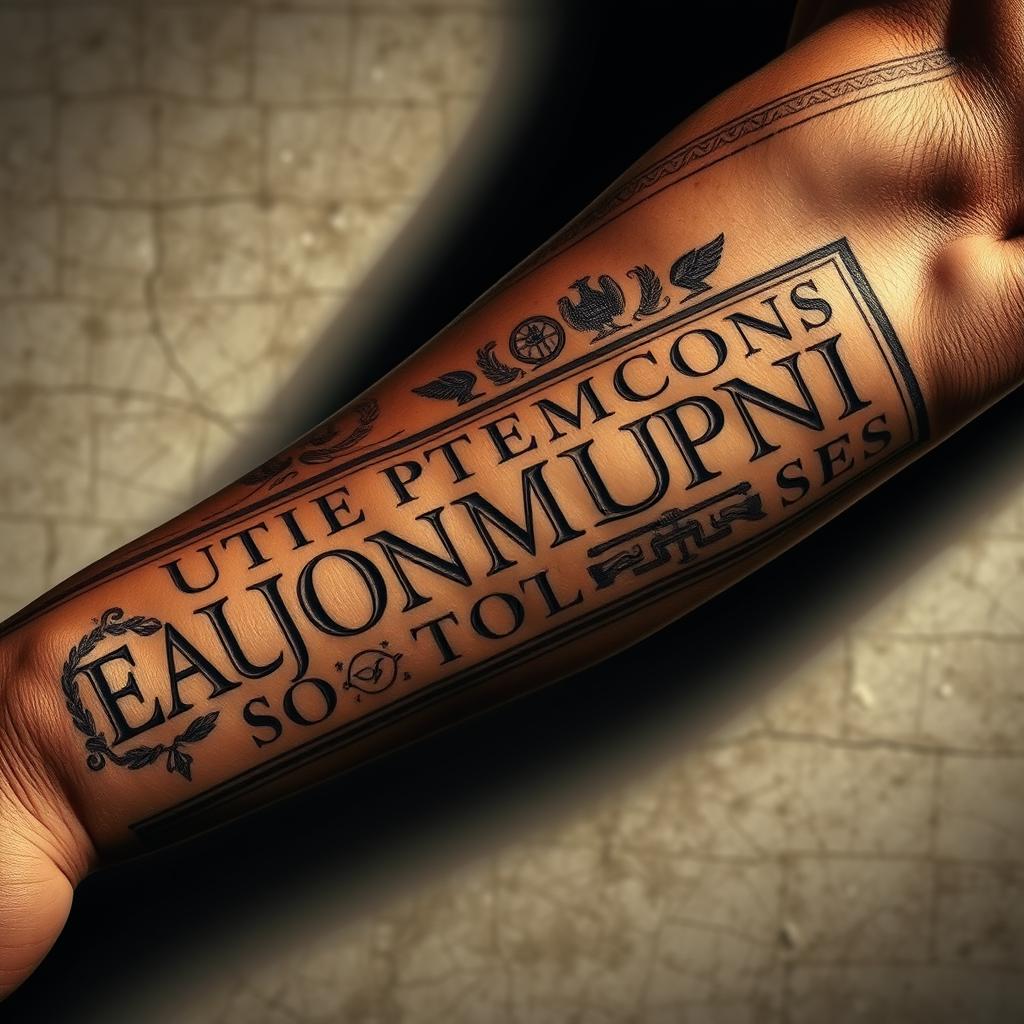
Using ancient Roman inscriptions in tattoos is a way to show respect for Rome’s history and culture. These inscriptions, often in Latin, carry deep meanings. They represent the wearer’s values and beliefs.
Latin Phrases and Their Meanings
Latin phrases like “Carpe Diem” and “Memento Mori” are common in tattoos. They add beauty and carry important messages. These messages reflect the wearer’s outlook on life.
Phrases like “SPQR” symbolize the Roman Republic. They are used to show patriotism or loyalty to Rome’s history. Knowing these meanings helps us understand the importance of Roman inscriptions in tattoos.
Typography and Lettering Styles
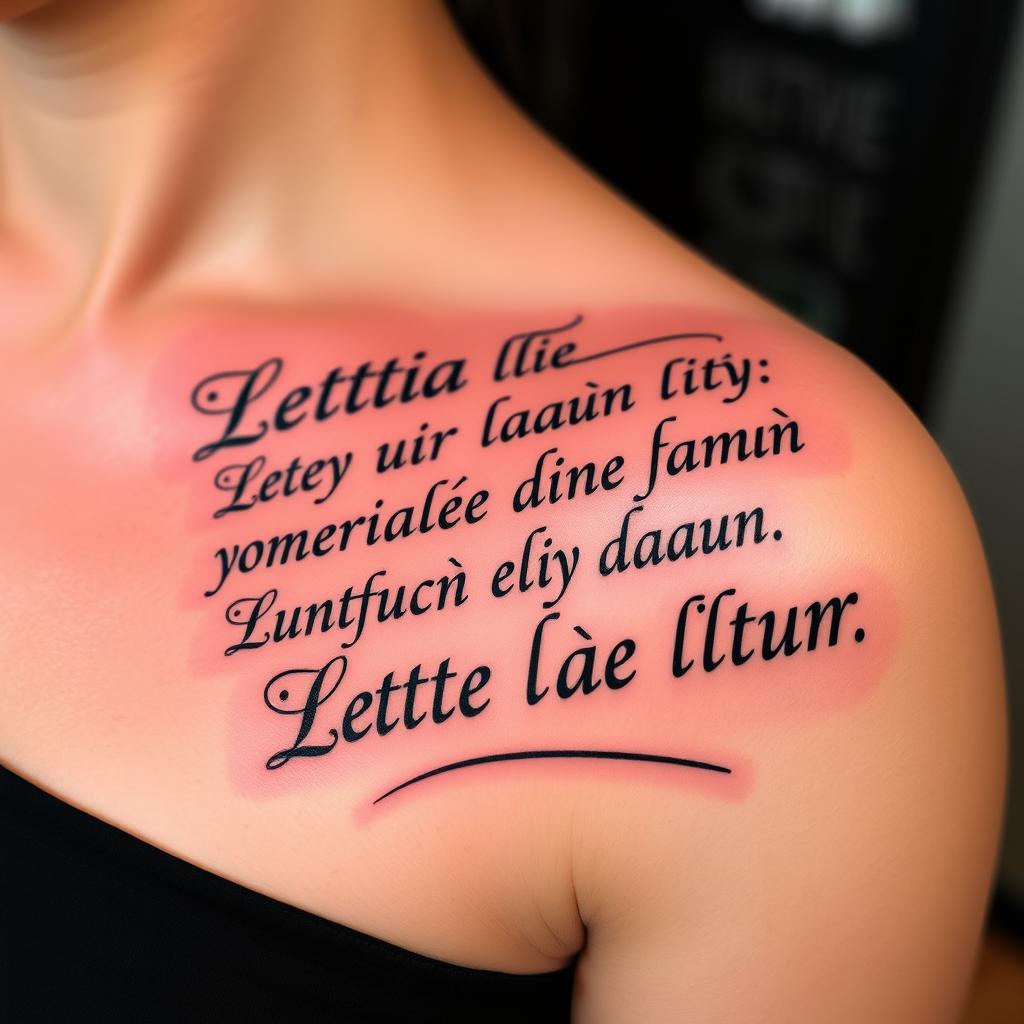
Roman lettering’s elegance and simplicity have influenced tattoo art. It’s a favorite for its beauty and simplicity.
Tattoo artists use Roman lettering to add historical authenticity. They mix serif and sans-serif fonts, inspired by Roman inscriptions, in many tattoos.
Incorporating Roman Numerals in Modern Designs
Roman numerals are used in modern tattoos to represent dates and important events. They add sophistication and historical depth to designs.
Roman numerals can be simple or complex, making them versatile in tattoo art. They enhance the beauty and meaning of tattoos.
Placement and Sizing Considerations for Roman-Inspired Tattoos
Roman-inspired tattoos need careful planning. This includes where and how big to make them. The right size and placement can make a big difference in how the tattoo looks and feels.
Traditional Placement of Roman Symbols
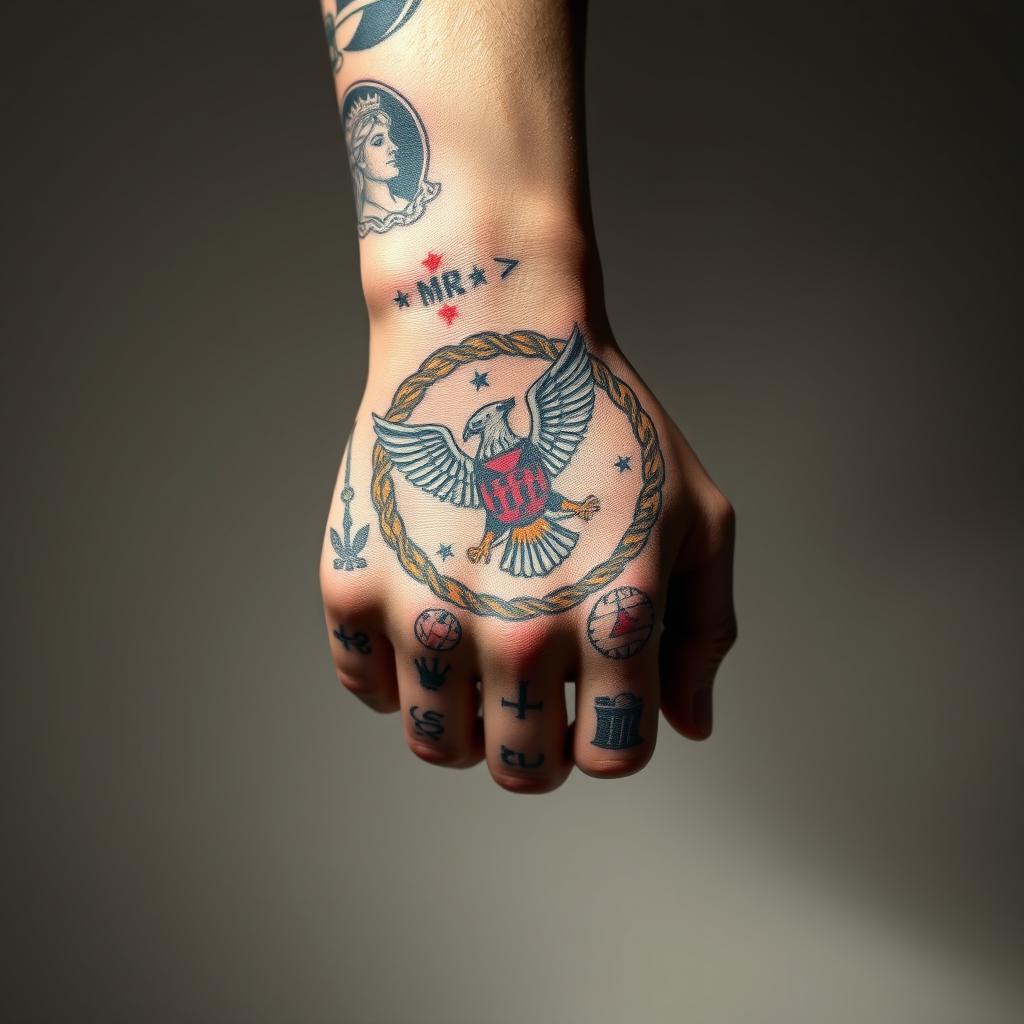
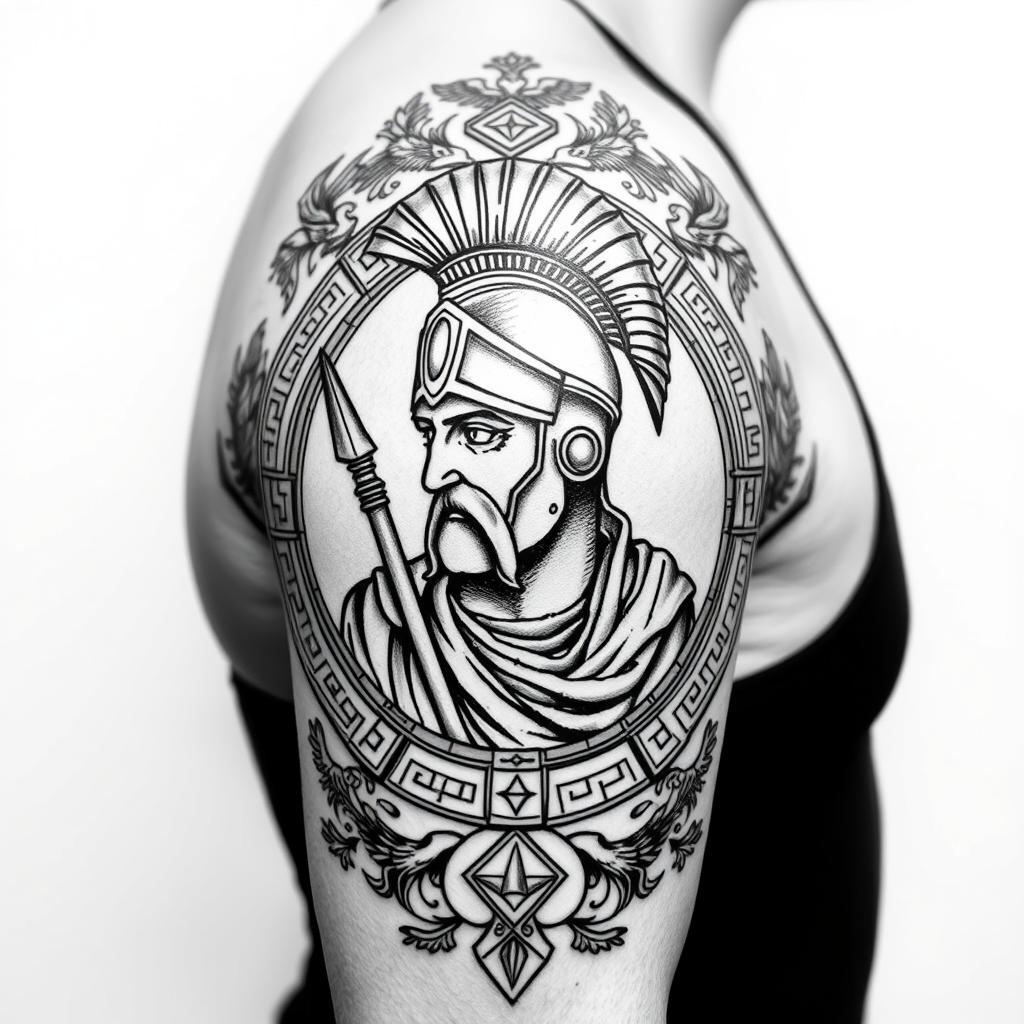
Long ago, Roman symbols were often on the arms, chest, and back. These spots were chosen for looks and to show status or achievements. Roman soldiers, for example, got tattoos to show their rank or victories.
Today, people with Roman tattoos often pick these spots for their meaning and beauty. Arms are great for Roman numerals or SPQR symbols. Chests are good for detailed designs like laurel wreaths.
Large-Scale Roman Scene Tattoos
Large Roman scene tattoos make a big statement. They can show scenes from Roman myths or history, like gladiator fights or Rome’s founding. These tattoos need careful planning to look good on the body.
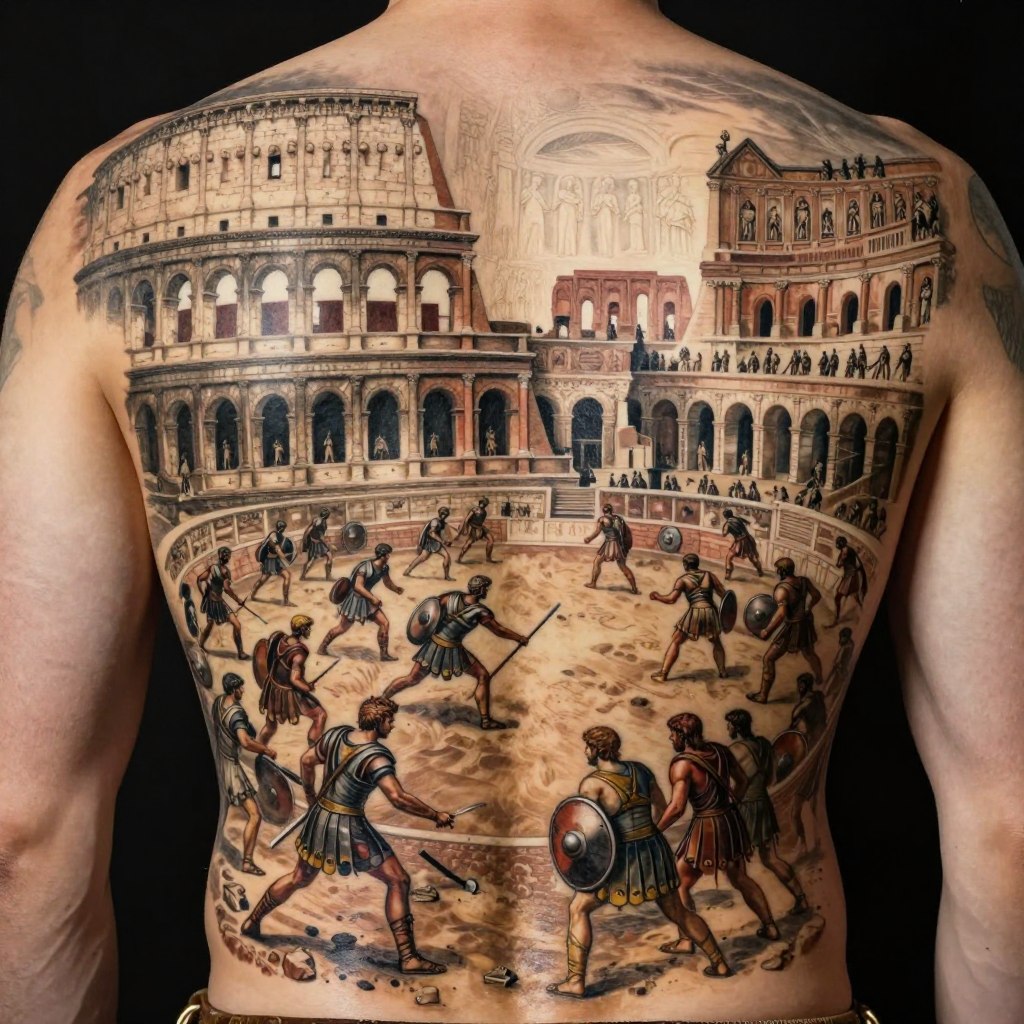
Backs and sleeves are popular for these big tattoos. They let you see all the details of the design.
Subtle and Minimalist Roman Designs
Some people prefer smaller, simpler Roman tattoos. These can be elegant and understated. Small Roman numerals, tiny laurel wreaths, or minimalist god designs can go almost anywhere.
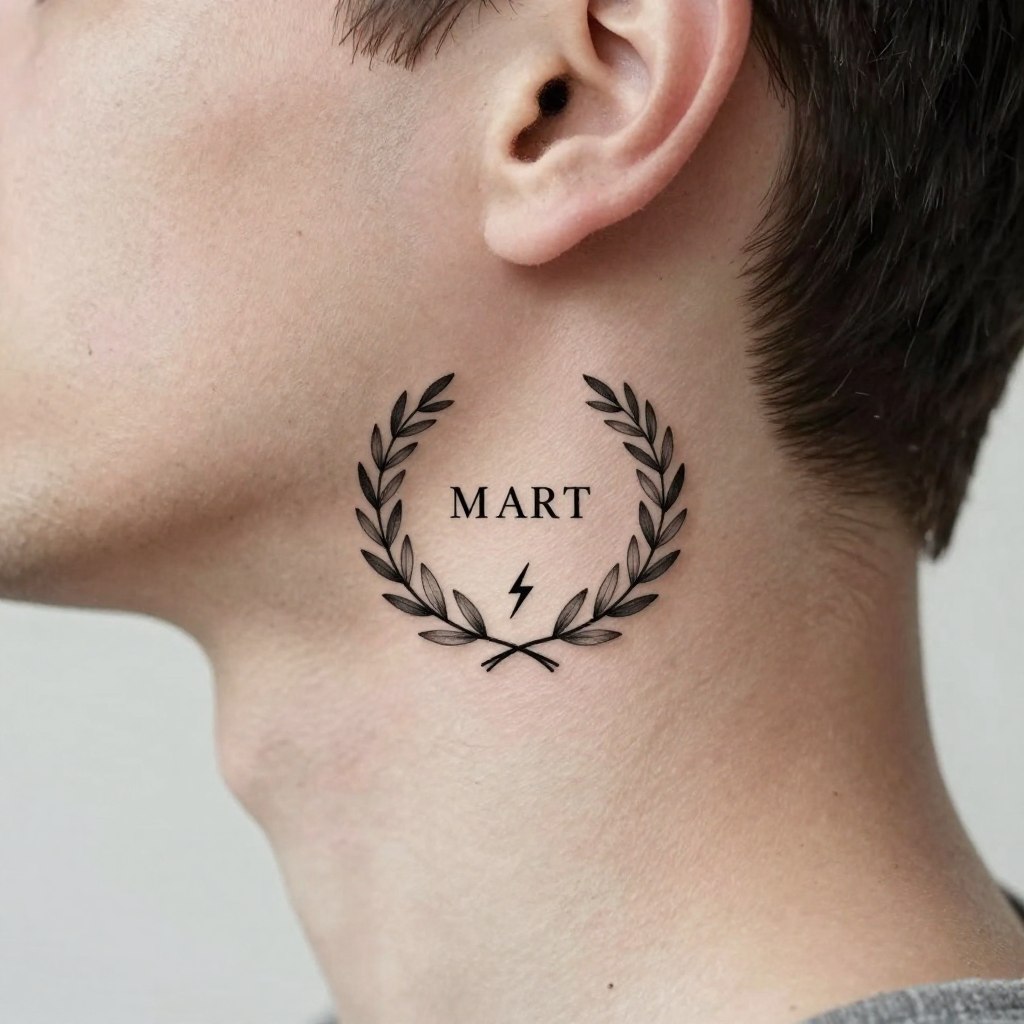
These designs are great for those who want to honor Roman culture quietly. They can be placed behind the ear, on the wrist, or on the ankle.
Choosing the right size and place for a Roman tattoo is important. It should match your style and the tattoo’s meaning. Whether it’s big and bold or small and subtle, think carefully to get a tattoo that’s meaningful to you.
Conclusion: Embracing the Timeless Appeal of Roman-Inspired Tattoos
Roman-inspired tattoos are loved for their deep history and cultural importance. They let people make designs that show who they are and what they believe in. This makes each tattoo special and meaningful.
There’s a wide range of designs to choose from, like roman symbolism tattoos and roman art tattoos. You can pick something that matches your interests, whether it’s Roman myths, buildings, or famous people.
Choosing a Roman-inspired tattoo means you’re picking something that will last.
Think about where you want it, how big, and what it should look like. This way, your tattoo will not only look amazing but also tell a story.
When you look into Roman-inspired tattoos, remember the skill and creativity that goes into them.
The right design can make you feel connected to history. It’s a way to express yourself in a lasting and personal way.

